How Much Caffeine in Coffee? A Cup-by-Cup UK Guide


A single espresso measured 322 mg - more than the entire pregnancy limit in one shot.
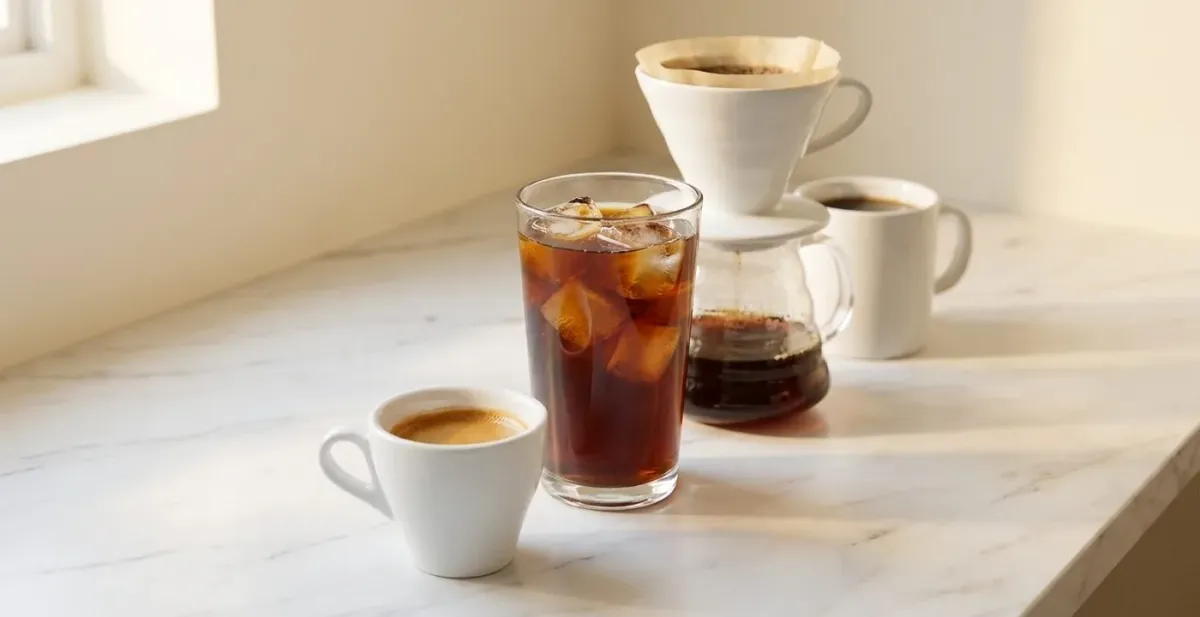
Table of Contents
Some of the links in this article are affiliate links, which help fund our independent review work at no extra cost to you. How we assessed these products is explained in this article and our Editor Lab methodology. No brand pays to appear, and no placement is guaranteed.
A mug of filter coffee holds about 80 to 100 mg of caffeine, a single espresso about 63 mg and a double roughly twice that, while instant runs about 60 to 100 mg a mug and decaf is low but not zero. That is the straight number you came for. The honest footnote is that it still depends exactly which coffee, which shop and which day you mean: UK lab tests have measured single high-street espressos anywhere from 48 mg to over 300 mg.
This guide sorts the real ranges by drink, reconciles the official UK figures where they disagree, and turns the results into a daily total you can check against the EFSA and NHS limits.
If you are a healthy adult, you are advised to stay under 400 mg a day, and under 200 mg a day if you are pregnant.
This guide brings together caffeine figures from the NHS, EFSA, USDA FoodData Central, Nespresso's own customer-care pages and two University of Glasgow laboratory studies of high-street espresso, so you get reconciled ranges rather than one averaged number. Balance Journal did not lab-test any coffee for this article.
My coffee career began in 2012, training the baristas at BaxterStorey, Greggs and Wetherspoons sites for UCC Coffee, which is why I can tell you a "latte" means something different behind every counter you order one from. I hold an SCA barista certification. Clemmie Rose, a registered nutritional therapist and BANT member, reviewed the daily-limit and pregnancy sections below for the health framing, so you are getting a clinical check on top of the coffee side.
How Much Caffeine Is in Coffee? The UK Cup-by-Cup Table
The table below gives you the full range by drink, each figure traced to its source. Where two reputable sources disagree, you get both figures rather than a single pick between them.
| Drink | Typical serving | Caffeine | Source |
|---|---|---|---|
| Filter or brewed coffee | 1 mug, 200-240ml | About 80-100 mg | USDA FoodData Central (derived); Mayo Clinic; BBC Good Food |
| Instant coffee | 1 mug, 200ml | About 60-100 mg | NHS; BBC Good Food; Mayo Clinic |
| Single espresso | About 30ml | About 63-64 mg | USDA FoodData Central (derived); Mayo Clinic |
| Double espresso | About 60ml | About 127 mg (derived) | USDA FoodData Central (derived) |
| Latte, cappuccino or flat white | By shot count | Same as the shots used: about 63 mg (single) or 127 mg (double) | Derived from the espresso figures above |
| Americano | By shot count, plus hot water | Same as the shots used: about 63 mg (single) or 127 mg (double) | Derived from the espresso figures above |
| Cold brew | Varies by steep time | Directionally higher than hot brew from the same grind; no fixed figure | Fuller and Rao, 2017 |
| Decaf, brewed | 1 mug | About 1 mg (lab figure); coffee-shop decaf has measured 0-13.9 mg per 16oz | USDA FoodData Central; Mayo Clinic; McCusker et al., 2006 |
| Decaf espresso | About 30ml | About 1 mg (lab figure); coffee-shop decaf espresso has measured 3.0-15.8 mg per shot | USDA FoodData Central; Mayo Clinic; McCusker et al., 2006 |
| Nespresso Original capsule | 1 cup | About 50-90 mg, varying by capsule and market | Nespresso customer care (Australia, Korea, Romania) |
| Nespresso Vertuo | Espresso 40ml / Double Espresso or Gran Lungo 80-150ml / Mug or Alto 230-414ml | About 60-150 mg / 120-200 mg / 130-200 mg | Nespresso customer care (Canada) |
| Nespresso decaf | 1 cup | About 4-12 mg | Nespresso customer care (Canada) |
Scale any of these by serving size. USDA's brewed coffee figure works out to about 40 mg per 100 ml, so a 250 ml mug lands around 100 mg and a 200 ml mug around 80 mg. The number moves with how much coffee you drink, not with what the cup is called.
If you drink a single espresso, you get less caffeine than a mug of filter coffee, though more per millilitre. Order a coffee-shop latte and you are getting the caffeine of its espresso shots; the milk adds none.
How Much Caffeine Is in an Espresso?
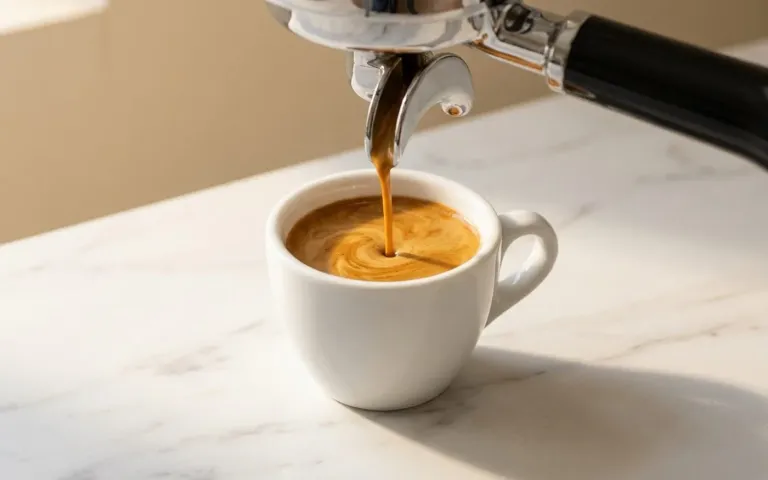
A single espresso, about 30ml, gives you roughly 63 to 64 mg of caffeine, scaled from USDA's figure of 212 mg per 100g of brewed espresso. Make it a double, at about 60ml, and that works out to roughly 127 mg. If you want pod-made espresso instead of a machine, the best espresso pods guide covers which capsules come closest to a real shot.
Order a what is a lungo pull, the same dose with double the water run through it, and you get the same caffeine as the shot it is pulled from. Lungo changes the taste and the volume you drink, not the milligrams you take in.
Those figures describe a shot made to a standard recipe, not necessarily the one you were served. Real espresso rarely matches the recipe exactly, which is the subject of the next section.
Coffee-Shop Drinks: Why the Same Order Varies
“A shot is not a fixed dose. It is a decision made by whoever pulled it.”
A single espresso bought on a Glasgow high street, per one lab study, could have landed you anything from a mild shot to 322 mg of caffeine, more than the entire 200 mg pregnancy daily limit in one cup (Crozier et al., 2012). That study tested 20 commercial espressos and found a six-fold difference in caffeine between them, and three more samples came in above 200 mg.
A larger 2014 study measured 104 espressos from coffee shops in Scotland, Italy and Spain, a shot you might order at any of them, and found caffeine ranging from 48 mg to 317 mg per serving (Ludwig et al., 2014). The researchers concluded that "the term 'one cup of coffee' is not a reproducible measurement." Caffeine stayed broadly stable through roasting in the same study, so roast colour was not the driver of what ended up in your cup.
Having trained baristas myself, I can tell you dose and tamping technique vary far more between shops than any spec sheet suggests, and you cannot taste the difference before you drink it. Crozier's 2012 University of Glasgow team pointed to the same cause: "the predominant factor is likely to be the amount of beans used in the coffee-making/barista processes." Grind size changes the extraction too, and the espresso grind size guide covers why that matters for your own cup.
Order a large coffee-shop drink and you are often getting more shots, not a stronger brew. A chain's "large" size on the cup tells you the volume, not how many shots went into it, and shot count is what moves your caffeine, as the figures above already show.
Lattes, Cappuccinos and Flat Whites
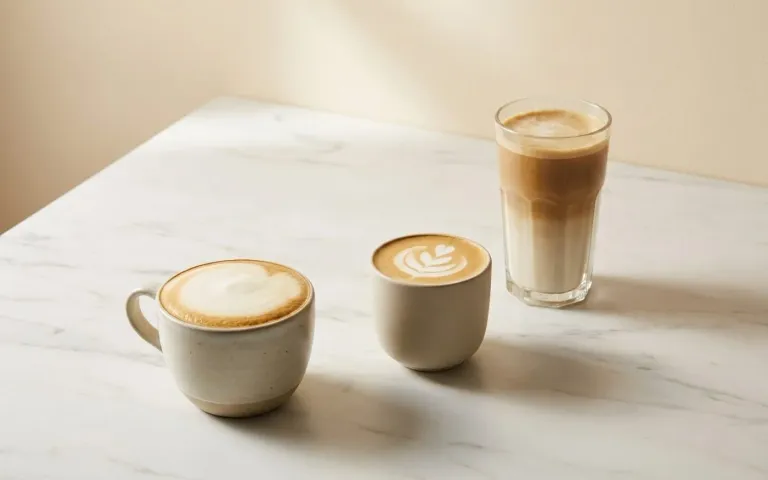
Caffeine comes from the shots, not the milk. Order a latte, a cappuccino or a flat white made with the same number of shots and you get the same caffeine, around 63 mg for a single or 127 mg for a double. What changes between them is the milk volume and foam texture you taste, and that is a flat white vs latte question, not a caffeine one.
Ask for an americano and you get the same shots again, stretched with hot water. The water adds volume and softens the taste you get, not the milligrams, so an americano and a straight double espresso made from the same shots give you identical caffeine, which answers the americano vs long black question on caffeine alone.
If you want the milk-texture breakdown rather than the caffeine one, that is a latte vs cappuccino comparison, covered separately.
How Much Caffeine Is in Decaf Coffee?
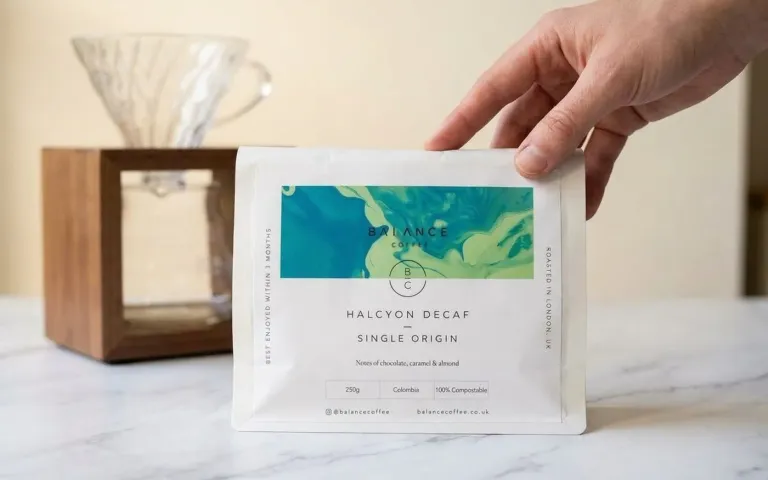
I founded Balance Coffee in 2020. If decaf is the drink you came here to check, that is the one place in this guide where that fact matters, so it only appears here.
Decaf is not caffeine-free, so do not assume your cup holds zero. USDA's lab figure for decaf coffee is about 1 mg per 100g, next to 40 mg per 100g for regular brewed coffee, which is a real reduction but not zero. Mayo Clinic's table gives you the same picture: about 1 mg for a decaf brewed mug against 96 mg for a regular one.
Buying decaf at a coffee shop rather than brewing it yourself shows more spread than the lab figure suggests. A 2006 study of coffee-shop decaf in the US measured 0 to 13.9 mg per 16oz cup across ten different outlets, and decaf espresso from one outlet ranged from 3.0 to 15.8 mg per shot (McCusker et al., 2006). Nespresso states its own decaf capsules at 4 to 12 mg a cup, so your pod will sit somewhere in that band too. The wider decaf coffee statistics picture backs this up: decaf's caffeine spread varies by outlet and brand, not only by the single lab figure above.
For cutting caffeine rather than cutting coffee altogether, Balance Coffee's Halcyon Decaf is tested monthly by an independent lab for mould, pesticides and heavy metals, and the lab results come back all clear. That is one option among several: the independent best decaf coffee beans and best decaf coffee pods rankings cover three or more other brands if you want to compare.
Why the Official Numbers Disagree
Every figure in this guide is real, and they still do not agree with each other, because none of them is measuring a fixed thing. The NHS, BBC Good Food and Mayo Clinic all publish a caffeine-per-mug figure for instant coffee, and those figures sit roughly 40 mg apart from each other. That is not one source getting it wrong. It is three organisations measuring different brands, different scoop sizes and different mug volumes, then rounding to a single number for a drink that was never standardised to begin with.
The same instability shows up inside a single outlet, not between outlets alone. McCusker and colleagues tracked one specialty coffee drink, bought from the same outlet, on six consecutive days, and measured caffeine ranging from 259 mg to 564 mg (McCusker et al., 2003). Nothing about the order changed on paper - the barista, the beans and the stated recipe stayed the same - yet the dose more than doubled across the week.
That is the real reason a "cup of coffee" resists a single figure: the drink itself varies, day to day and outlet to outlet, more than any one published average can capture. Treat every number in this guide as a reliable range for your own cup, not a promise about the exact one in front of you.
How Much Caffeine a Day Is Safe?
The European Food Safety Authority's guidance is built around you as a healthy adult: single doses up to 200 mg, about 3 mg per kilogram of your body weight, from all sources do not raise safety concerns. Intakes up to 400 mg a day do not raise concerns for most healthy adults either, a position EFSA set out in its 27 May 2015 scientific opinion on caffeine.
Is 200 mg of caffeine in a drink a lot for you? Not if you are a healthy adult drinking it once. It becomes your whole day's allowance, though, if you are pregnant: EFSA and the NHS both cap caffeine in pregnancy at 200 mg a day from all sources, because higher intakes have been linked to a greater chance of miscarriage and stillbirth.
Work through a real day of your own: two 240ml mugs of filter coffee at about 96 mg each come to roughly 192 mg, comfortably under your 400 mg adult limit. Two cups of instant coffee at the NHS's 100 mg figure come to exactly 200 mg, which is the full pregnancy limit for the day, before you add any tea, cola or energy drink.
Is 600 mg too much daily for you? Yes, if you are a healthy adult: it sits well above the 400 mg EFSA guidance. What happens if you take 1000 mg is a question this guide has not sourced an answer for; what matters practically is that it is well above both EFSA reference points, and your right next step is NHS 111 or a GP, not a home remedy.
Caffeine from pre-workout supplements counts toward your same daily total. If you take creatine and caffeine together before training, add that dose to whatever coffee you have had that day rather than treating them as separate totals. If the figures above already push you close to your limit, low acid coffee is worth checking, since several of those blends also run lower in caffeine.
Instant, Filter, Cafetiere and Cold Brew
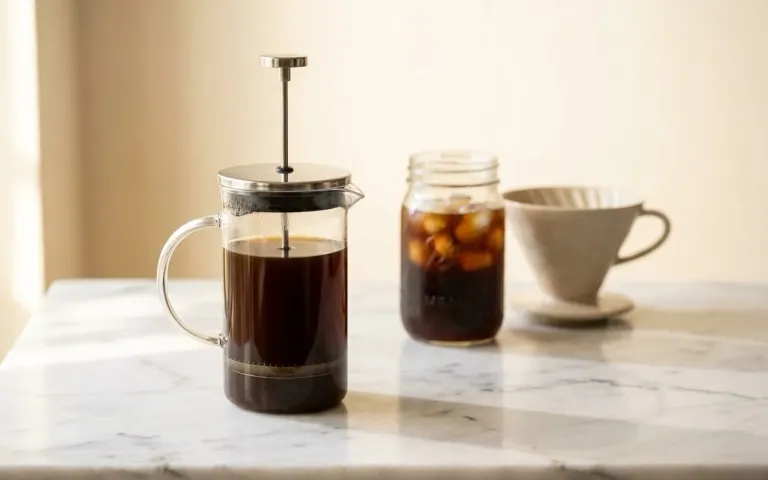
Instant coffee's own figures disagree more than any other drink in this guide, and it is worth naming why rather than hiding it from you. The NHS estimates about 100 mg in your cup of instant coffee.
BBC Good Food, written by a registered nutritional therapist, lists 60 mg per 200ml mug. Mayo Clinic lists 62 mg per 237ml.
The gap is not one source being wrong about your coffee. Instant brands vary in how much powder a cup uses, mug sizes differ between a 200ml and a 250ml fill, and a UK cup of instant is not a standardised measure the way a shot of espresso is meant to be. Treat the 60 to 100 mg range as the honest answer for you rather than picking a single number.
Filter or cafetiere coffee sits in the same 80 to 100 mg range per mug as the cup-by-cup table above. No study in this guide's sources separates cafetiere from drip filter by caffeine content, so there is no separate figure to give you, and inventing one would be worse than telling you so.
Cold brew runs differently, so do not assume it is gentler on you because it tastes smoother. Coarse-grind cold brew showed substantially higher caffeine concentrations than the equivalent hot brew, with the gap widening between six and seven hours of steeping (Fuller and Rao, 2017). No fixed milligram figure exists in the sources this guide used, so treat cold brew as directionally stronger per serving for you, not as a specific number.
Caffeine in Nespresso Pods: Original and Vertuo
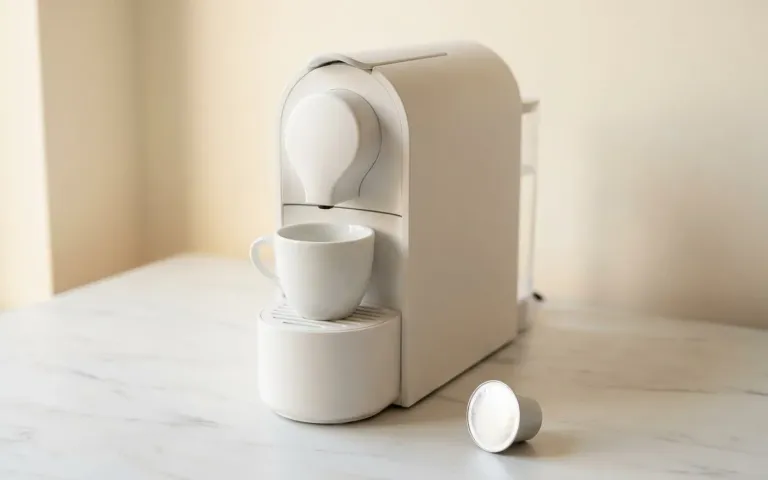
Nespresso's own customer-care pages give you different ranges depending on which country's page you happen to read, and that is worth stating plainly rather than picking one for you. The Australia FAQ puts the Original line at about 50 to 90 mg a cup.
The Korea FAQ gives 50 to 85 mg, except Kazaar, which it states at about 125 mg. The Romania FAQ gives 60 to 90 mg. A pod brand's own published numbers are not consistent with each other, let alone across brands.
If you want the capsule and machine difference in full, the Nespresso Vertuo vs Original comparison covers it, but on caffeine alone, Vertuo generally gives you more per cup: Nespresso's Canada FAQ states 60 to 150 mg for a 40ml Espresso pod, 120 to 200 mg for an 80 to 150ml Double Espresso or Gran Lungo, and 130 to 200 mg for a 230 to 414ml Mug or Alto. Its Half Caffeinato sits around 70 mg, between a full-strength and a decaf pod, if you want something in between.
If you want the fuller ranking across both machines and every compatible brand, best coffee pods and the dedicated best Nespresso pods guide both cover caffeine alongside taste and price.
What Changes the Caffeine in Your Cup
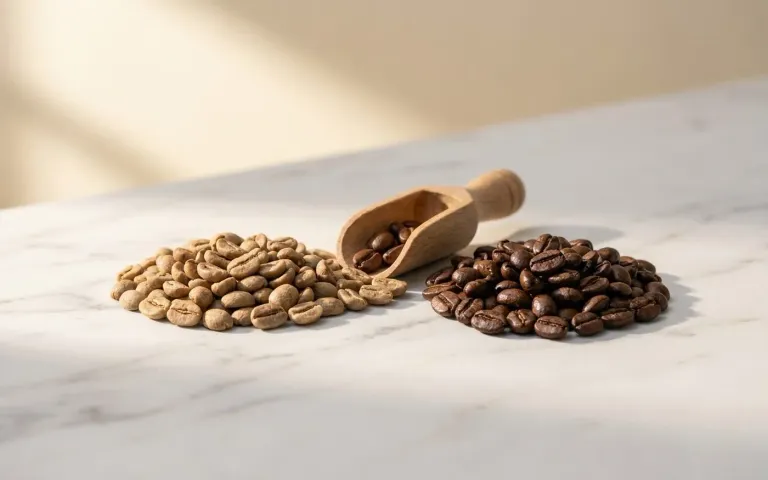
Four things move the number in your cup more than the drink's name does: how much coffee goes in, the bean, the roast and the final size you choose.
Dose and shot count explain most of the spread you have seen already. More beans per cup or more shots per drink means more caffeine, in a straightforward way that the Crozier and Ludwig studies above both confirm.
Bean type matters, though no source in this guide gives a precise ratio: robusta beans carry more caffeine than arabica beans, which is one reason the arabica vs robusta comparison is worth reading if you drink a blend that uses both. Whichever bean you choose, the best coffee beans ranking is where to start, since bean quality changes the taste you get far more than it changes the milligrams. If you are buying beans rather than ordering a drink at a counter, what is speciality coffee explains why grade and origin shape flavour, not the caffeine figure.
Roast colour, by contrast, does less to your cup than you might assume. Having visited almost 300 UK roasteries, I expected roast to move the number more than it does: Ludwig's 2014 study found caffeine held broadly stable through roasting, so a dark roast is not meaningfully lower in caffeine for you than a light one. The light roast vs dark roast guide covers what roast colour changes in your cup, which is flavour, not caffeine.
Size closes the list. Choose a bigger cup at the same strength and you get more caffeine in total, even when nothing else about the brew has changed.
Coffee vs Tea, Matcha and Energy Drinks
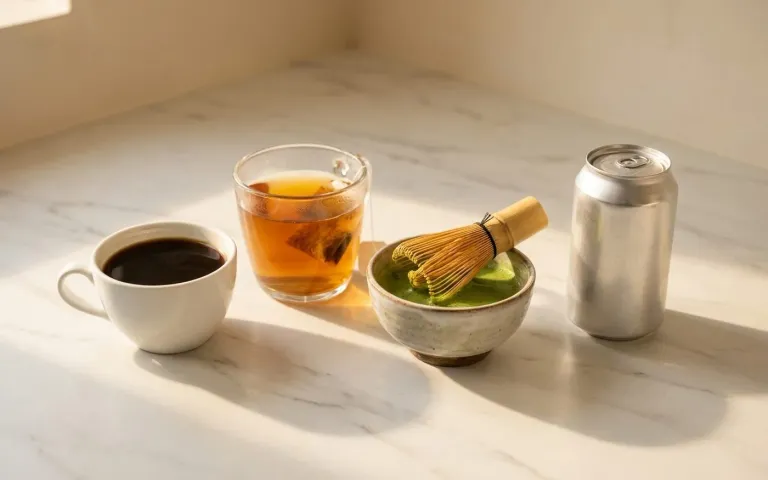
Compare your mug of filter coffee with a can of cola and coffee wins by several times over. Mayo Clinic's caffeine table lists cola well below coffee, and the NHS puts a can at about 40 mg, against 80 to 100 mg for your filter mug.
Tea sits between the two if that is your usual swap: the NHS estimates about 75 mg in a cup, roughly three-quarters of a filter coffee's figure. Energy drinks run close to coffee: a 250ml can holds about 80 mg per the NHS. If you reach for dark chocolate instead, a 50g bar carries less than 25 mg.
Caffeine in matcha has its own gram-for-gram breakdown if tea is your real comparison rather than coffee, since matcha is whisked rather than brewed and the figures do not translate directly from this table. The full matcha vs coffee comparison covers energy and crash alongside the raw milligram figures, if that is the swap you are weighing.
Work Out the Caffeine in Your Own Cup
Count your shots first. One drink can mean one shot or four, and the name on the cup will not tell you which.
Check your mug, not the average. A 200ml mug and a 350ml "large" mug of the same instant coffee are not the same dose, even with identical powder per scoop.
If you are pulling your own shots, how to make espresso at home covers dose and extraction time, both of which move the final milligram count more than the bean you chose.
Try a worked example on your own day. A flat white made from a double shot gives you about 127 mg, and a Nespresso Vertuo Mug afterwards adds up to another 200 mg at the top of its range.
Add an afternoon cup of tea at the NHS's 75 mg and you are already close to 400 mg before dinner, worth knowing if you are also taking a pre-workout or expecting a baby.
If the total still runs high for you, a smaller size, a single shot instead of a double, or switching one drink a day to decaf all move the number down without giving up coffee entirely. Swapping one cup for a mushroom coffee vs regular coffee blend is another lower-caffeine alternative that keeps the coffee habit intact.
Sources and How This Table Was Built
Every figure in this guide is a published number, not a Balance Journal measurement. Caffeine per 100g comes from USDA FoodData Central's analysis of brewed and espresso coffee; health-body limits come from EFSA and the NHS; brand-specific pod figures come from Nespresso's own customer-care pages; the real-world spread comes from five peer-reviewed studies that measured actual cups rather than averages. Figures checked October 2026.
| Source | What it measured | Date checked |
|---|---|---|
| USDA FoodData Central (brewed, espresso, decaf brewed, decaf espresso) | Caffeine per 100g/100ml by coffee type | 2026-10-14 |
| Mayo Clinic caffeine table | Caffeine by 8oz serving across coffee types | 2026-10-14 |
| NHS, foods to avoid in pregnancy | Daily and per-drink caffeine estimates, pregnancy limit | 2026-10-14 |
| BBC Good Food, caffeine spotlight | Per-mug caffeine for coffee and tea | 2026-10-14 |
| EFSA, caffeine topic page and 2015 opinion | Safe daily and single-dose intake levels | 2026-10-14 |
| Crozier et al., 2012, Food & Function | HPLC measurement of 20 commercial espressos | 2026-10-14 |
| Ludwig et al., 2014, Food & Function | 104 espressos across Scotland, Italy and Spain | 2026-10-14 |
| McCusker et al., 2003 and 2006, J Anal Toxicol | Specialty coffee and decaf caffeine variability | 2026-10-14 |
| Fuller and Rao, 2017, Scientific Reports | Cold brew vs hot brew caffeine concentration | 2026-10-14 |
| Nespresso customer care (Australia, Korea, Romania, Canada FAQs) | Per-capsule caffeine by line | 2026-10-14 |
Frequently Asked Questions
How much caffeine is in 1 cup of normal coffee?
A mug of filter or brewed coffee generally holds about 80 to 100 mg of caffeine, scaled from USDA's 40 mg per 100g figure. Instant coffee runs lower, about 60 to 100 mg a mug, depending on how much powder goes into the cup. The spread exists because mug size and brewing strength vary more than the coffee itself.
How much caffeine is in 250ml of coffee?
USDA's brewed coffee figure works out to about 40 mg per 100 ml, so 250 ml of filter or brewed coffee contains roughly 100 mg. That scaling holds for filter and cafetiere coffee specifically. It does not apply to espresso, which is far more concentrated per millilitre than filter coffee is.
Is 200 mg of caffeine in a drink a lot?
It is the European Food Safety Authority's single-dose reference point: up to 200 mg from all sources in one sitting does not raise safety concerns for a healthy adult. It also happens to be the full daily limit the NHS sets in pregnancy, so the same number means something different depending on who is drinking it.
Is 600 mg of caffeine too much daily?
Yes, for a healthy adult. EFSA's guidance puts the daily ceiling at 400 mg from all sources, so 600 mg sits well above it. If you are regularly reaching that level and noticing symptoms such as a racing heart or disrupted sleep, speak to your GP rather than simply cutting coffee and hoping it settles.
How much caffeine is in a coke?
Mayo Clinic's caffeine table lists cola well below what a mug of filter coffee holds, so an 80 to 100 mg mug of coffee carries several times the caffeine of a standard can of cola. Energy drinks sit closer to coffee: the NHS puts a 250ml can at about 80 mg, not far off a filter mug.
What happens if you take 1000 mg of caffeine?
A thousand milligrams sits well above both EFSA reference points: the 400 mg daily guidance for healthy adults and the 200 mg single-dose level. This guide has not sourced specific toxicity thresholds, so it will not describe effects at that dose. If you, or someone you are with, has taken that much, contact NHS 111 or a GP.
Does decaf coffee have caffeine?
Yes, in small amounts. USDA's lab figure for decaf is about 1 mg per 100g, and real coffee-shop samples in the US have measured 0 to 13.9 mg per 16oz cup. Nespresso states its own decaf capsules at 4 to 12 mg a cup. Decaf removes most of the caffeine, not all of it, and the name should not imply otherwise.
How much caffeine is in a Nespresso pod?
Nespresso's own Original line customer-care pages put it at about 50 to 90 mg per cup, varying by market and capsule. Its Vertuo line runs higher: roughly 60 to 150 mg for an Espresso pod, up to 200 mg for a Mug-sized pod, according to Nespresso's Canada FAQ page.
How many coffees can I have a day when pregnant?
The NHS advises no more than 200 mg of caffeine a day from all sources during pregnancy. Using its own instant-coffee estimate of about 100 mg a cup, that works out to roughly two cups of instant coffee a day, less if you are also drinking tea or cola. Talk to your midwife about your own routine.
Does a latte have more caffeine than a cappuccino?
No. Caffeine comes from the espresso shots, not the milk, so a latte and a cappuccino made with the same number of shots contain the same caffeine. The real difference between them is milk volume and foam texture, which is a latte vs cappuccino question, not a caffeine one.

A wellness entrepreneur and biohacker, James explores the intersection of hospitality and health - from clean fuel and recovery tools to mindful routines that build balance into daily life.