16 UK coffee pod brands scored on one five-part scorecard: cup quality, sourcing, purity, value, and machine fit.
Table of Contents
Some of the links in this article are affiliate links, which help fund our independent review work at no extra cost to you. Every recommendation is based on hands-on testing through The Editor Lab methodology. No brand pays to appear, and no placement is guaranteed.
Every guide to the best coffee pods ranks on taste, price or convenience alone. This one adds a purity scorecard too, scoring 16 UK brands on mould and pesticide disclosure. Balance Coffee, the pod brand I founded in 2020, scores highest on it. The full ranking and the scoring behind it are both below - judge the method, not the byline.
Ask a UK coffee forum instead of a guide and the complaints run two ways: stale coffee dressed up in a shiny capsule, or no way to know what is in the ones that are not stale. I ran all 16 through the Editor Lab, our structured tasting and verification method, scoring cup quality, freshness and sourcing, purity and testing transparency, value and machine fit. Because our own pods are scored on the same published terms as everyone else's here, you get a full verdict on all 16, the weighted scorecard that produced it, and an honest column showing which brands publish nothing at all.
How We Tested and Ranked These Coffee Pods
Every brand below is scored against a published, weighted scorecard, and I am showing you the weights before you meet a single pick. This is the fix for a version of this guide that never went out: an earlier draft made lab testing the only axis, which would have let one true criterion do all the work of a conclusion I had already reached. That is not honest ranking, so purity is one scored column among five, not the whole test.
Criterion
Weight
What It Measures
Cup quality
30%
How the pod tastes, black and in milk, tasted across the drink types in the drink-matching section below
Freshness and sourcing transparency
25%
Roast-date or best-before disclosure, named origins, speciality grade
Purity and testing transparency
20%
What the brand publishes on mould, mycotoxins, pesticides and heavy metals, plus organic certification, scored strictly on what is published, never on assumption
Value per pod
15%
UK price per pod at the pack size a normal household buys
Capsule and machine fit
10%
Capsule material, recyclability route, reliability in a Nespresso Original machine
Freshness gets a quarter of the score deliberately. The loudest objection in every UK coffee forum thread I read while researching this guide was not about contamination. It was about staleness: coffeeforums.co.uk members describe third-party pods as hit and miss, with "most pods having old coffee similar to coffee bags in shops" as the recurring complaint. That is a bigger purchase blocker than price for most readers, which is why it sits at 25%, one place below cup quality, and it directly answers whether the pod you buy will taste stale before you have even opened the bag.
I am an SCA-certified barista, and I spent five and a half years at Sanremo UK after training baristas across contract catering and hospitality sites, including BaxterStorey, law firms, McDonald's, Greggs and Wetherspoons pub groups, at UCC Coffee. That background covers extraction and milk-drink consistency at volume. It is also why I went on to build a Nespresso Original compatible pod range from scratch, personally testing 10 pod machines and tasting dozens of competitor pods at the formulation level while developing it, which is where the tasting notes below come from, not a single sitting with a tray of capsules handed to you once and forgotten.
Per-pod prices were checked against brand websites, Amazon UK and supermarket listings in August 2026, and are given per pod, the figure that genuinely compares one brand to another, not the pack price a website advertises. Certifications were checked against each certifying body's own directory where one exists, not against a brand's own marketing claim alone, so you are reading the certifying body's word, not the brand's.
What Coffee Pod Brands Actually Publish About What Is In Your Cup
Of the 16 UK coffee pod brands tested for this guide, one publishes full third-party laboratory results covering mould, mycotoxins, pesticides and heavy metals: Balance Coffee. A handful more hold organic certification, which tells you how the coffee was grown, not what a laboratory found in the finished pod. The rest publish neither, and you deserve to know that before you buy, not after.
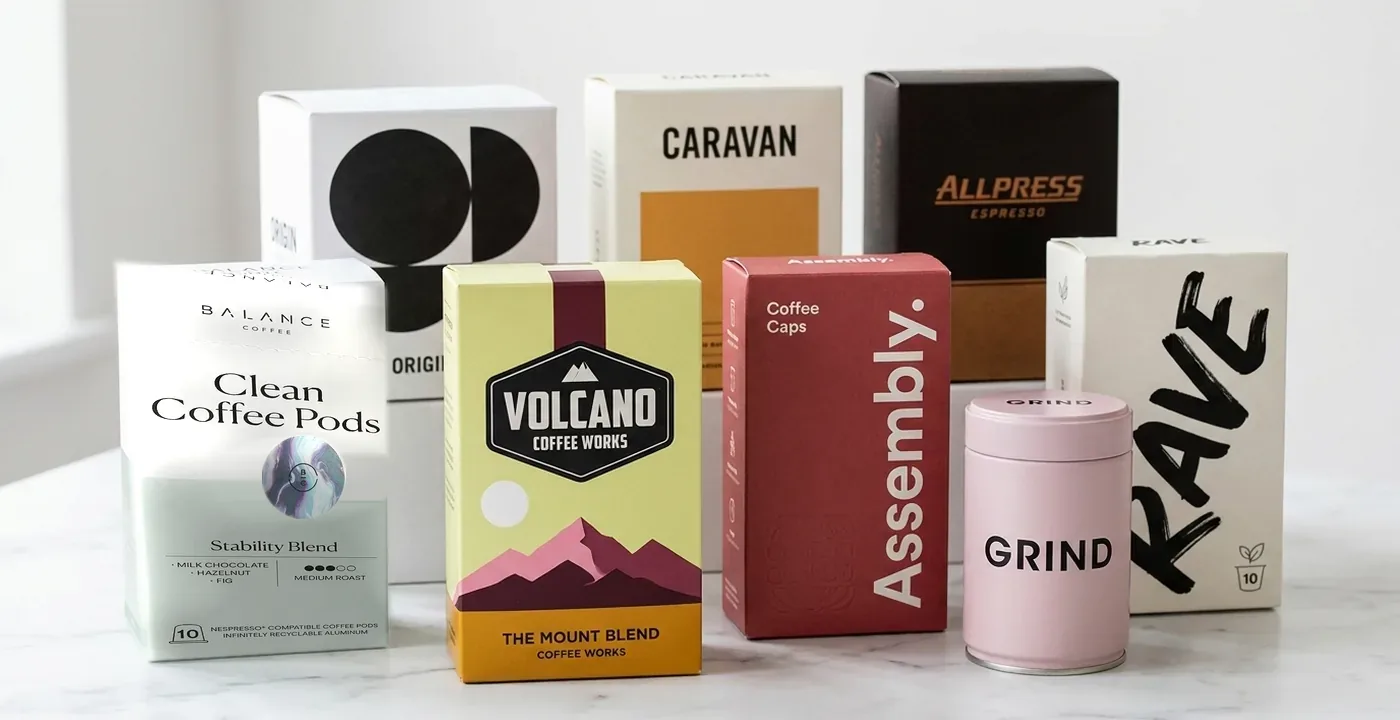
The direct answer to which coffee pod brands publish independent lab test results for mould, mycotoxins and pesticides: Balance Coffee is the only one of the 16 brands here with a full third-party contaminant report behind its pods, run by an ACCREDIA-accredited laboratory. CRU Kafe and Lost Sheep Coffee carry Soil Association organic certification across their ranges. Volcano Coffee Works, Assembly Coffee, Grind, Origin Coffee, Caravan Coffee, Allpress Espresso, Rave Coffee and Colonna Coffee are B Corp, speciality or sourcing-verified on sourcing and roasting practice, which is a real credential but a different one. Lavazza, Illy, CafePod and Nespresso Original publish none of the above on their mainstream capsule ranges, and you will see that stated plainly against each of their names below, not softened into an adjective.
A mycotoxin is a toxic compound produced by mould that can develop on coffee during storage or transport, and Ochratoxin A is the specific mycotoxin regulators test roasted coffee for in the UK and EU. Third-party batch testing means an accredited outside laboratory checks a brand's own product; the brand never grades itself. Organic certification and lab-tested purity are not the same guarantee, and almost every competing guide blurs the two: organic controls what goes onto the farm, while lab testing checks what ends up in your cup. You are entitled to both pieces of information, and this guide is where you get them side by side.
Editor's Note
Before the ranking: I founded Balance Coffee in 2020, and Balance Coffee's own pods are ranked in this guide. I am disclosing that here, before you read a single pick, not after. Balance Coffee appears once, is scored against the same published five criteria as the other 15 brands, and does not win automatically. Judge the scoring, not the byline.
These three cover the fastest route to a genuinely clean, genuinely good cup. Balance Coffee leads on the combined score because it is the only pod here with a published lab report behind it, and it still had to earn cup quality and value marks on their own terms, not on the disclosure alone. Volcano and Assembly earn their places on speciality sourcing, roast-date transparency and consistently high cup scores, both as active affiliate partners once they cleared the editorial bar on quality. Read on for the full 16 and the reasoning behind every position, including the brands that did not make the top 3, so you can see exactly why.
Band A: Lab-Tested and Certified Clean (Picks 1-8)
The eight brands in this band cleared the highest bar on the scorecard: real transparency, whether that is a full lab report, B Corp certification or named, dated sourcing, combined with genuinely strong cup quality. None of them are compromise picks, and you will not be settling for any of the five.
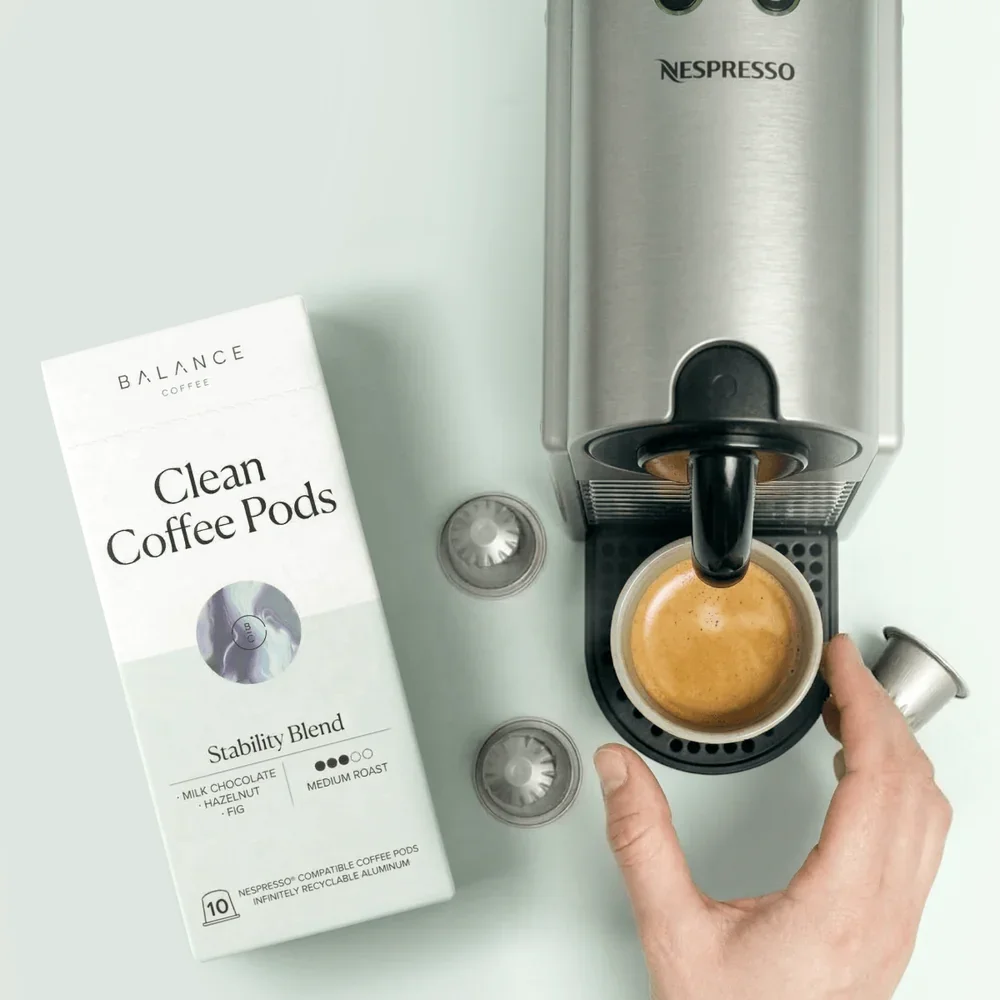
1. Balance Coffee Clean Coffee Pods - The Only Lab-Tested Pod in This Guide
Full disclosure up front: this is our pod, so I held it to a higher bar than anything else on this list before naming it top. Stability Blend is a medium roast with milk chocolate and hazelnut on the nose and a fig sweetness through the body, and that profile holds up whether you drink it black or under a full 150ml of steamed milk.
It is the only pod in this guide with a full published third-party lab report behind it, covering mould, mycotoxins, pesticides and heavy metals, run through an accredited laboratory as part of Balance Coffee's wider published batch-testing programme. The pod product page itself states plainly that the pods are "zero mould, pesticides, or heavy metals," and the pods carry Soil Association organic certification directly, not just the beans. If clean, verifiably tested coffee is your priority, that is genuinely why Balance Coffee exists. If price is your priority, it is not the pod for you: at 71p to 85p per pod on subscription, this is the most expensive pod in the guide, well above Lavazza at 30p to 40p, and it comes in recyclable aluminium only, with no compostable option, a deliberate trade-off for the oxygen barrier that keeps the coffee fresher for longer.
“The only pod here with a published lab report across mould, mycotoxins, pesticides and heavy metals, and a milk chocolate and hazelnut profile that earns its place on taste alone. Not the cheapest, and not pretending to be.”
2. Volcano Coffee Works - Best for Big Milk Drinks
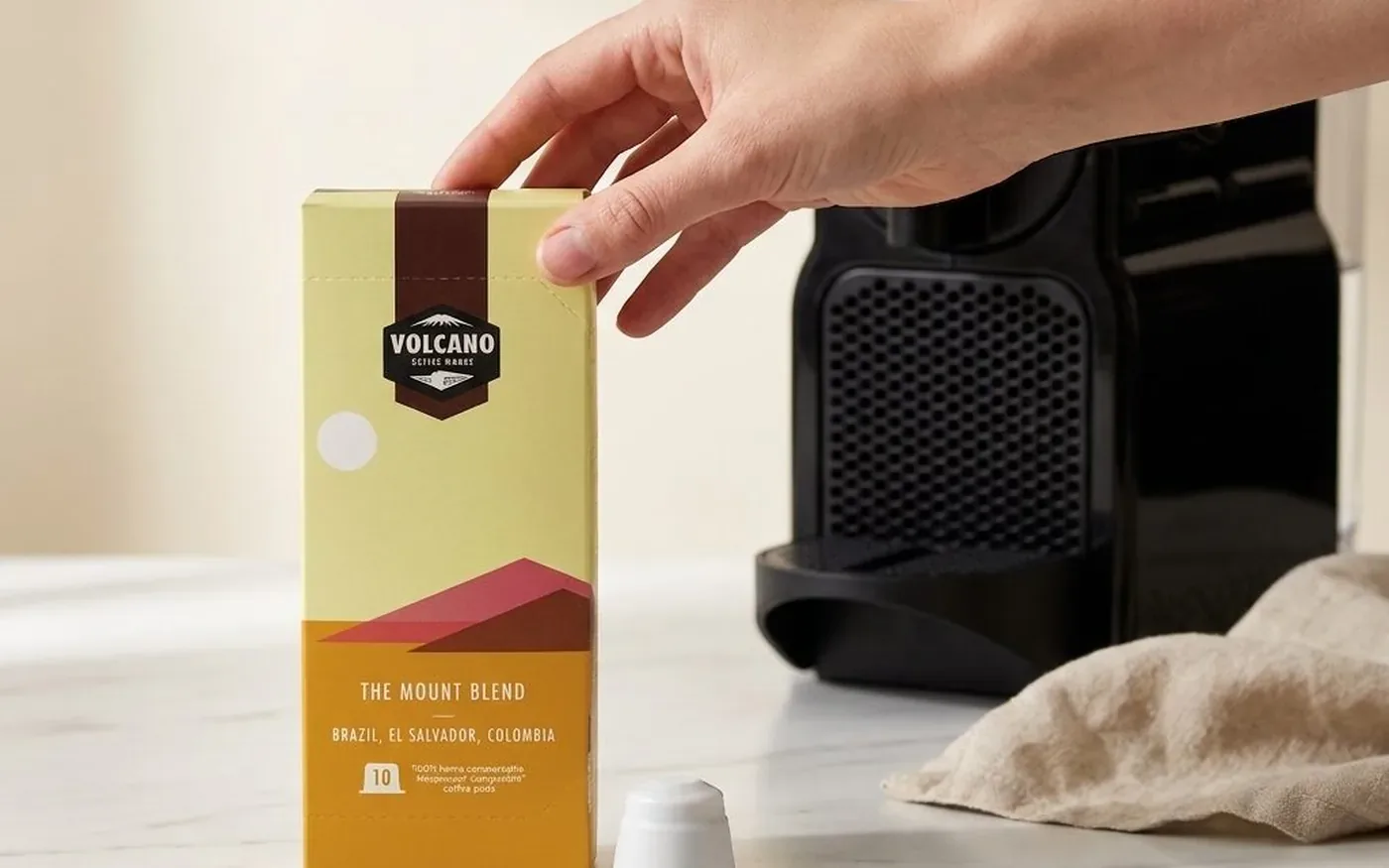
Volcano Coffee Works is B Corp certified, roasts in London, and publishes roast dates on its speciality-grade coffee, which is exactly the freshness transparency the UK forum threads I read were asking for. The profile is dark and intense: rich and chocolatey with a long, weighty finish and a thick crema that holds its shape, and none of that thins out once 150ml of milk goes in, so a big cappuccino or latte will not leave you with a flat cup.
The capsules are certified OK Compost Home, a genuine point of difference if disposal matters to you as much as what is in the cup. At around 50p per pod, checked against volcanocoffeeworks.com in August 2026, it sits mid-tier on price. It has not published a third-party contaminant report, and I am stating that plainly, because the B Corp badge does not cover that gap and should not be read as if it does.
“A genuinely intense, chocolatey pod from a London roaster I rate, with the roast-date transparency this category badly needs. It has not published lab testing, and B Corp status is not a substitute for that.”
Best drink match: Cappuccino and larger milk drinks. Compatible pods: Nespresso Original.
3. Assembly Coffee - Best for Traceable Single Origin
Assembly roasts in Brixton, and its seasonal single-origin sourcing is named and dated on the bag, which is the kind of freshness and sourcing transparency this scorecard rewards directly. The profile leans bright: stone fruit on the nose, a caramel base, and a clean, relatively long finish with consistent crema, closer to what you would expect from a filter brew than a mainstream capsule.
That brightness is the thing to know before you buy it. Speciality roast profiles like this one are lighter and more acidic than the mainstream pods most UK households have been drinking for years, and some readers will find it thin in a large milky drink. Make it a flat white or drink it black, and the fruit character survives properly. At around 55p per pod it sits at the top end of speciality pricing, and like Volcano, it has not published contaminant testing.
“Genuinely exceptional black and in a flat white. Some readers will find the brightness thin in a full latte, so know which drink you are making before you buy it.”
Best drink match: Flat white and espresso-style. Compatible pods: Nespresso Original.
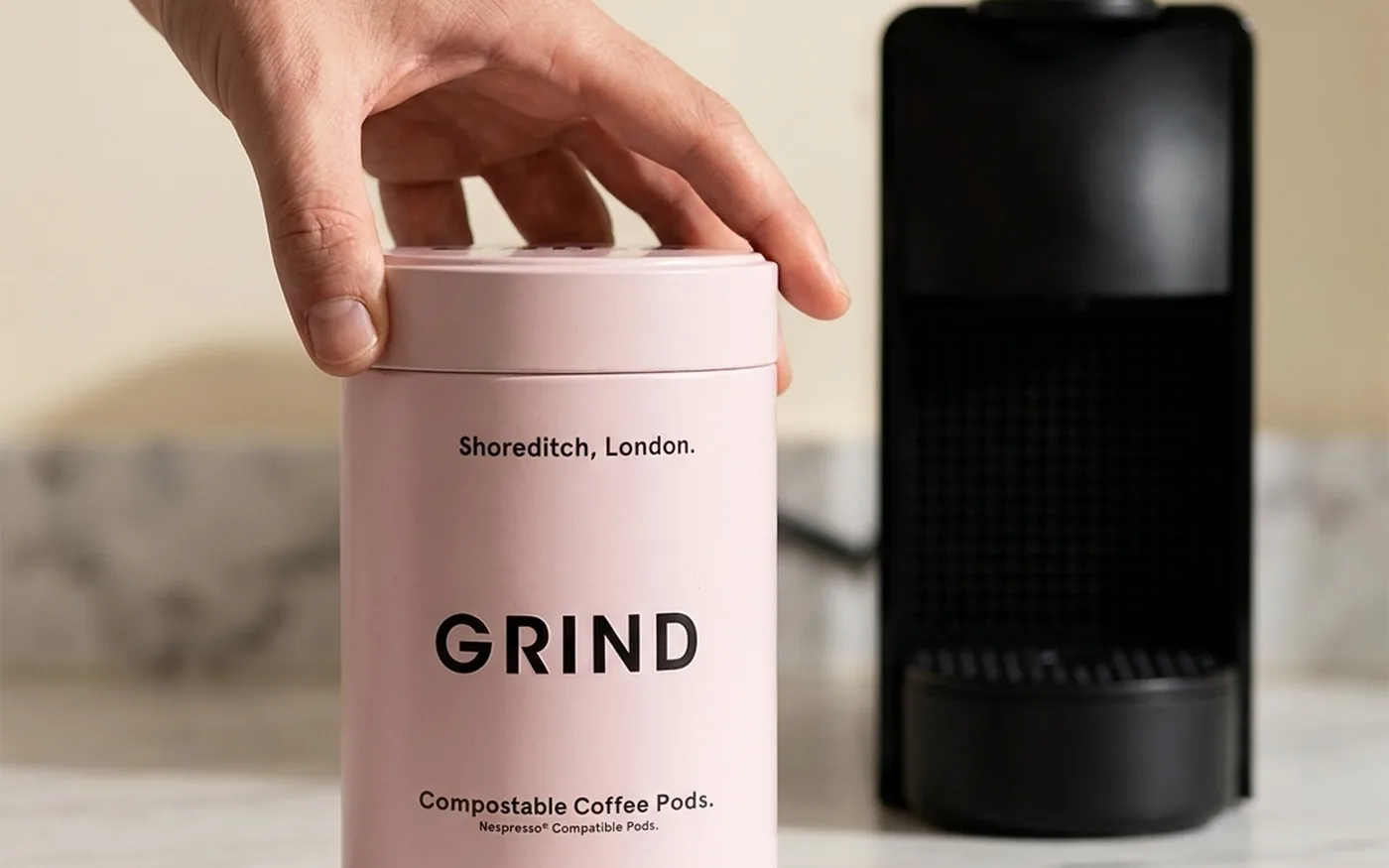
4. Grind - Best B Corp Everyday Pod
Grind holds two credentials most everyday pods do not bother chasing at once: B Corp certification and a compostable capsule, on top of a genuinely consistent cup. House Blend is deliberately approachable, medium roast with milk chocolate and caramel and low bitterness, and it rates an 8 on Grind's own intensity scale, one of the few third-party roasters here that publishes a number at all, which is one less thing you have to take on trust.
Low bitterness matters more in milk than it does black, because milk amplifies any harshness in the cup, and Grind has little to amplify. At roughly 39p to 45p per pod depending on subscription, it sits below the speciality leaders on price while staying well above supermarket own-brand on flavour. If you are weighing Grind directly against our own pods, our Grind vs Balance Coffee pods comparison puts them head to head.
“The everyday B Corp workhorse. Not the most complex pod here, but a genuinely consistent cup most households would happily drink every morning.”
Best drink match: Everyday latte. Compatible pods: Nespresso Original.
5. Origin Coffee - Best Cornish Speciality Pod
Origin Coffee roasts everything it sells in Porthleven, a fishing town in Cornwall, and has done since 2004, long before ethical sourcing became a marketing line for most of the industry. I have worked alongside members of the Origin team on other coverage for this site, and the thing that leaves the strongest impression is consistency: the sourcing relationships are long-term partnerships with named producers, not transactional purchases, the kind of detail you rarely get unless you ask directly.
The pods carry Origin's certified home-compostable format, one of the first coffee capsules in the world built with an oxygen barrier to keep the coffee fresher inside a compostable shell, and part of the wider range carries organic certification, though not confirmed across every pod line. Pricing sits at the speciality tier, checked against origincoffee.co.uk in August 2026. It has not published contaminant lab testing, so weigh that against the compostable and organic credentials you do get.
“A Cornish speciality roaster that backs up its sourcing claims with named, long-term producer relationships, in a genuinely innovative compostable capsule. No published lab testing, and B Corp status does not cover that gap.”
Best drink match: Americano and lungo. Compatible pods: Nespresso Original.
6. Caravan Coffee - Best B Corp Sourcing Disclosure
Caravan started as a single restaurant on Exmouth Market in 2010 and now roasts out of a 10,000 square foot site in London, the kind of scale that let it earn full B Corp certification in 2024, scoring 83.3 against a global average of 50.9. The Daily Coffee pod carries hazelnut, chocolate and caramel through the cup, rounded and approachable rather than sharp, and you will not lose that shape once milk goes in.
The capsule is home compostable, and Caravan discloses more about where the coffee comes from than most brands in this guide bother to: its Female Producer Programme sources at least half its coffee from women-owned farms, named and tracked, not a line on a sustainability page. At around 55p per pod, checked against caravanandco.com in August 2026, it sits mid-table on price. It has not published a third-party contaminant report, so weigh what you are actually getting here: sourcing transparency, not laboratory testing, and you should not confuse the two.
“A genuinely disclosed sourcing story from a roaster that earned its B Corp badge rather than bought the logo. No lab report behind it, and B Corp status does not stand in for one.”
Best drink match: Everyday milk drinks. Compatible pods: Nespresso Original.
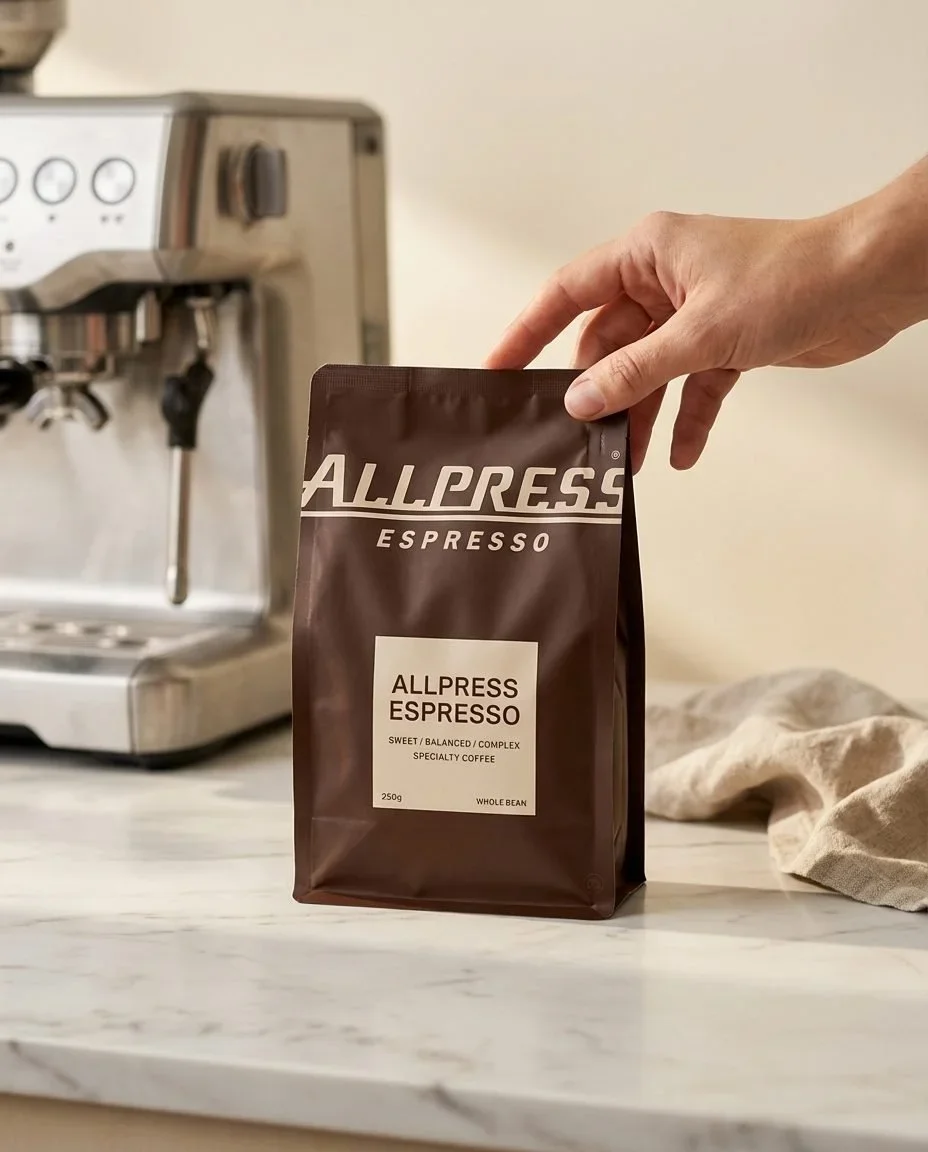
7. Allpress Espresso - Best Antipodean Espresso Pedigree
Allpress built its reputation in New Zealand before opening a Shoreditch roastery that has supplied London's better independent cafes for close to two decades. The Espresso Blend capsule carries that pedigree straight through: Brazil, Colombia, Guatemala and Sumatra combine into a caramel-forward, chocolatey cup with real depth, and you will notice it is closer in character to a professional espresso bar shot than most capsule coffee manages.
The capsules are aluminium, which Allpress states plainly is the material choice for flavour rather than convenience, and they run through the brand's own recycling scheme. At around 63p to 65p per pod, checked against uk.allpress.com in August 2026, it is the most expensive of the three brands added to this guide, and there is no published organic or B Corp certification to justify that against Caravan or Rave. What you are paying for is a specialty roasting reputation, not a transparency document.
“The most polished espresso character of the three brands added here, and priced accordingly. No published certification of any kind, so weigh reputation against disclosure yourself.”
Best drink match: Espresso and flat white. Compatible pods: Nespresso Original.
8. Rave Coffee - Best Value Among the Speciality Picks
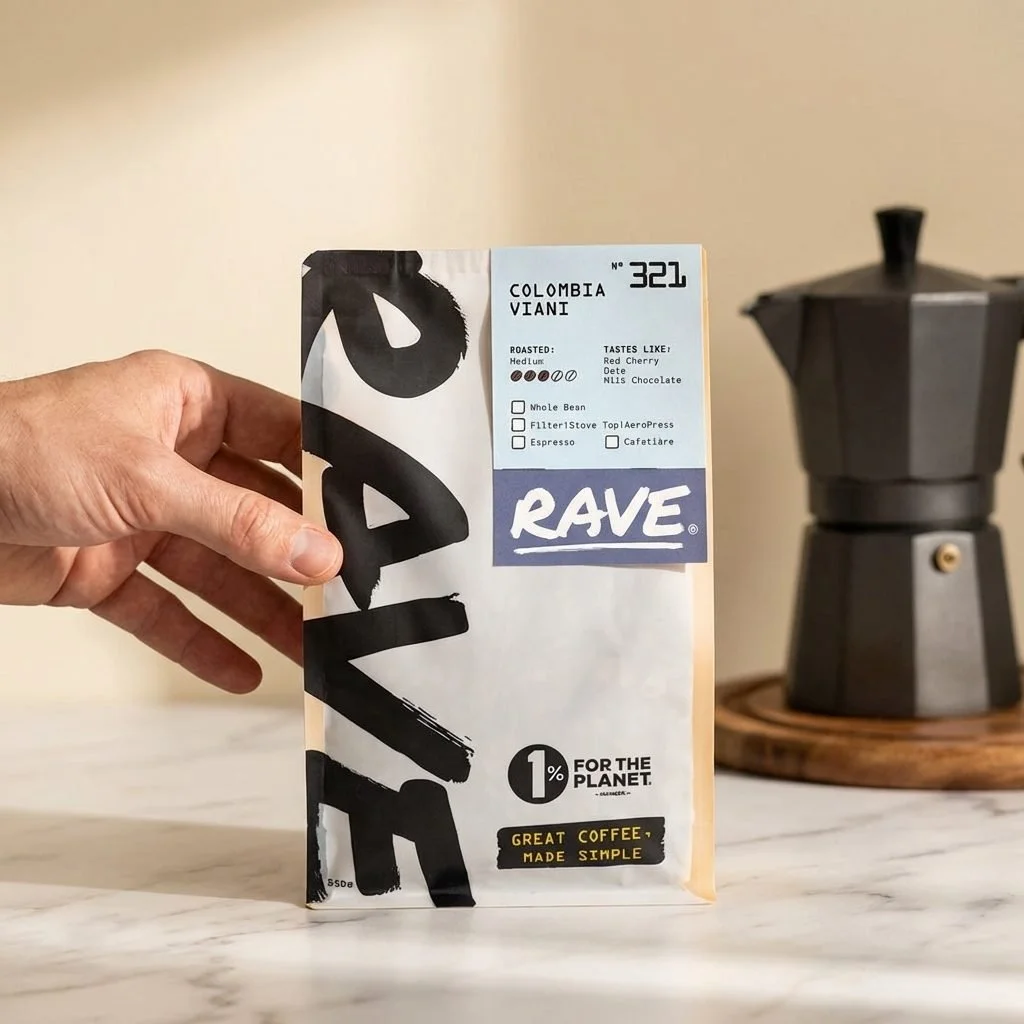
Rave roasts to order out of Cirencester, in the Cotswolds, a family business Rob and Vikki Hodge built from a converted shed in 2011 into a roastery running two Loring roasters today. Roast-to-order is the strongest freshness claim any brand in this guide can make, ahead of any brand that roasts to stock and hopes it sells before it stales. The Signature Blend pod carries caramel, almond and chocolate at a moderate intensity of 4 out of 5, an easy everyday cup you can drink daily rather than a showpiece.
The capsules are home compostable, and at 38p to 42p per pod depending on pack size, checked against ravecoffee.co.uk in August 2026, it is the cheapest of the three brands added to this guide and cheaper than most of Band A. Rave is a 1% for the Planet member and has funded over 22,000 trees, a genuine environmental commitment, though it is not the same as a published contaminant test, so weigh that against your own priority: it has not published one.
“Roast-to-order freshness and the best price of the three new additions here, in an easy, approachable everyday cup. Not the most complex pod in this guide, and it is not trying to be.”
Best drink match: Everyday milk drinks, on value. Compatible pods: Nespresso Original.
Band B: Strong on Sourcing, Smaller Brands (Picks 9-12)
None of the four brands in this band run an affiliate programme, which means nothing about their placement and everything about how small they still are. They earned these positions on genuine organic certification, named and tracked sourcing, roast-to-order freshness or outright industry reputation, not on commission, and you can check exactly which in the table below each one.
9. Lost Sheep Coffee - Best Small-Batch Organic Pod
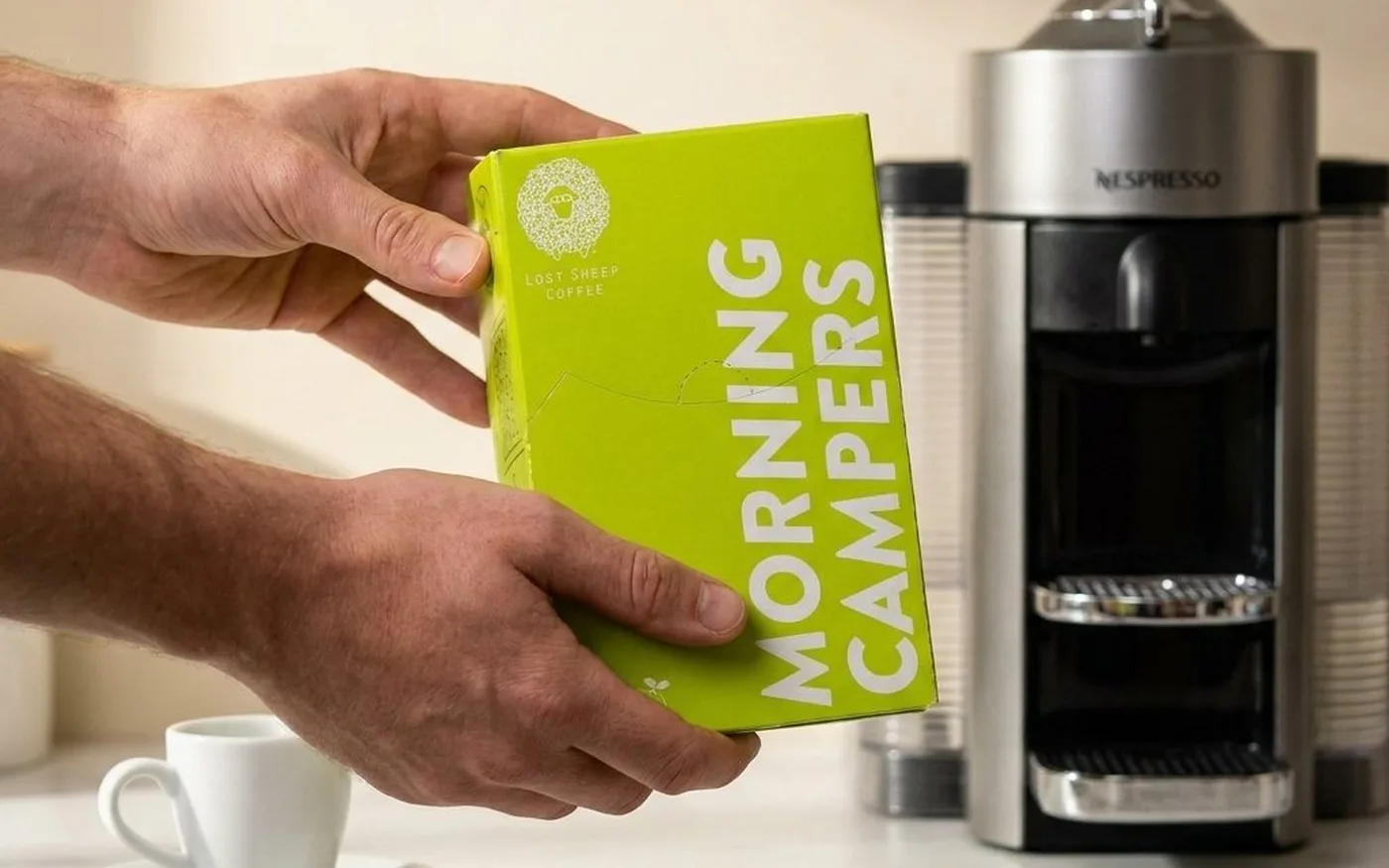
Small-batch and organic rarely show up together in the same pod, and Lost Sheep Coffee, a Kent-based roaster, manages both. On the nose it carries milk chocolate and a ripe red-fruit sweetness, with a rounded caramel weight through the body and a clean finish with tight crema, genuinely one of the better cups in this guide when tasted black, and you will notice the difference from the first sip.
The capsules are home compostable, and the coffee itself carries organic certification, a real purity signal even without a published contaminant lab report. At the speciality price point, around 55p per pod checked in August 2026, you are paying for both the organic status and the small-batch roasting. If you drink cappuccinos rather than full lattes, the red-fruit character survives the smaller milk volume noticeably better.
“Organic, home compostable and genuinely well made. One of the better cups here tasted black, and it holds up best in a cappuccino, less well in a full latte.”
Best drink match: Cappuccino. Compatible pods: Nespresso Original.
10. Colonna Coffee - Best for Purists
In 2018, I visited Colonna and Smalls in Bath, the shop belonging to Maxwell Colonna-Dashwood, three-time UK Barista Champion. He offered me a specialty Nespresso Original compatible capsule. I had assumed pods meant low-grade flavour, and until that cup, that assumption had been fair. What came out was clean, bright and genuinely specialty grade, and it is a large part of why I went on to build Balance Coffee's own pod range, so you can taste for yourself what changed my mind.
This is not a nostalgic anecdote. Colonna is repeatedly named unprompted as the best UK pod on forums I read researching this guide, including r/JamesHoffmann, where one reader wrote plainly that "Colonna make my favourite pods in the uk." The aluminium Foundation Espresso capsules run around 60p per pod, checked against colonnacoffee.com in August 2026, and the sourcing is named and disclosed. It has not published a contaminant lab report, and neither reputation nor a personal favourite of mine should decide it for you.
“The pod that changed what I thought a capsule could taste like, in 2018, before Balance Coffee existed. Reader forums rate it the same way I do, and no published lab testing changes that verdict.”
James Bellis, founder, Balance Coffee
Evaluation Criteria
Our Findings
Full review
Coming soon
Best for
The UK speciality benchmark on cup quality, named and disclosed sourcing
Best drink match: Espresso, for purists. Compatible pods: Nespresso Original.
11. Halo Coffee - Best Full-Bodied Compostable Pod
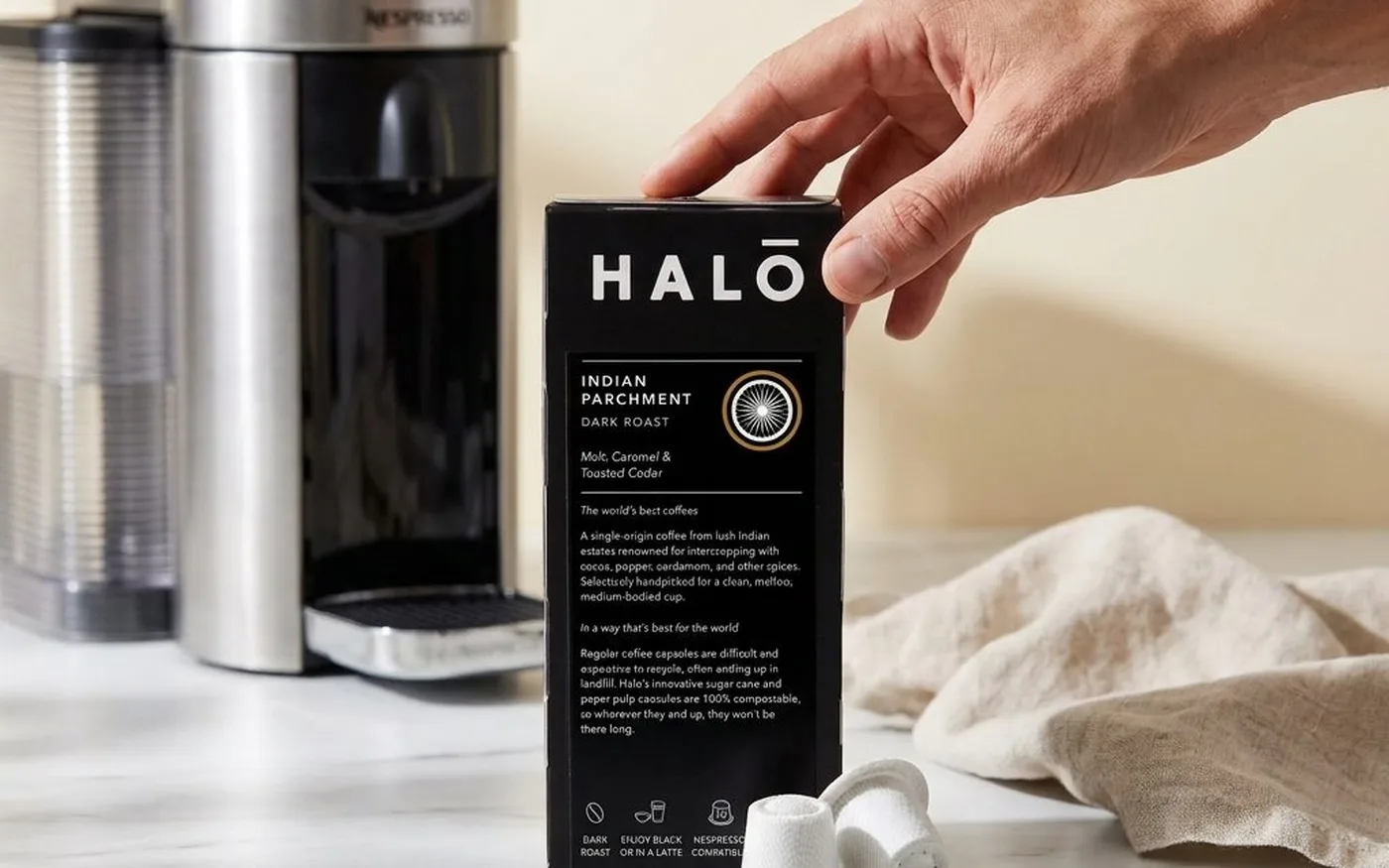
Home-compostable pods usually mean thin, low-intensity coffee once milk gets involved. Halo is the exception: cocoa and toasted nut on the nose, a fuller body and a warm finish, darker and rounder than most compostable speciality pods, which is exactly why it survives milk better than most of its compostable peers, so if compostable matters to you, try this one first.
At around 50p to 60p per pod, checked against halo.coffee in August 2026, it sits at the speciality tier, and the capsules are certified home compostable, which only delivers its environmental benefit if you compost it; binned, it behaves like ordinary waste. It has not published contaminant lab testing, on top of the speciality sourcing it does disclose.
“A genuinely capable milk performer among the compostable field, darker and rounder than most. Honest about what compostable disposal requires from you.”
Best drink match: Lungo. Compatible pods: Nespresso Original.
12. CRU Kafe - Best Fully Organic Range
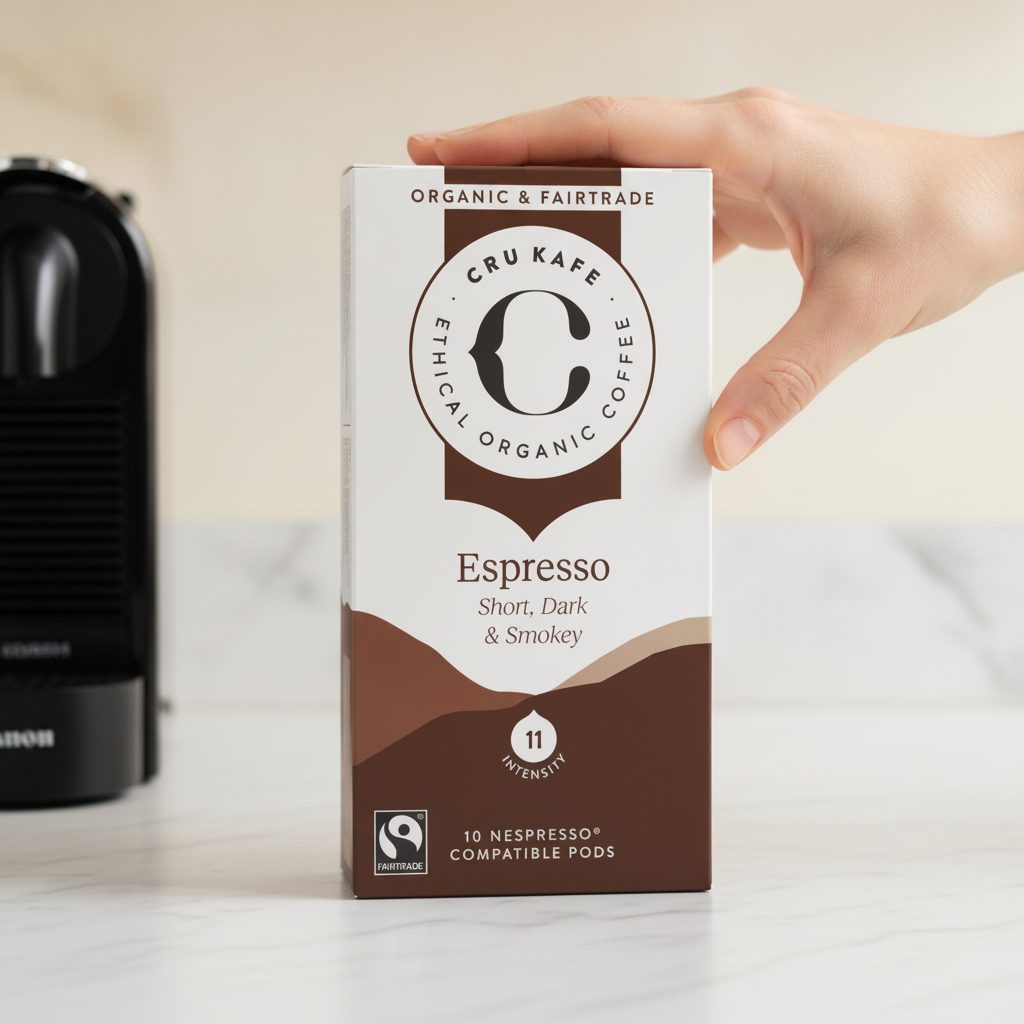
CRU Kafe covers a claim none of the other fifteen brands in this guide can make in full: every product it sells is Soil Association certified organic and Fairtrade, espresso, dark roast, half-caff and a genuine decaf, all under the same certification. That matters if your household has more than one drinker with different needs, because you do not have to check each variant separately.
The espresso blend is smooth with a light acidity and a clean finish, closer to a classic Italian style than to the fruit-forward speciality pods ranked above it here. CRU Kafe was also the first independent coffee company to join the nationwide Podback recycling scheme, ahead of much larger brands. Pricing starts from 33p per pod, with a £22 Discovery Set as the sensible way to try the range before committing. It has not published a contaminant lab report on top of its organic certification, so you get the organic guarantee without the lab data behind it.
“The only brand here with a fully certified organic and Fairtrade range across every roast, including decaf. One brand, every drinker in the house covered.”
Best drink match: Everyday organic. Compatible pods: Nespresso Original.
Band C: Mainstream Benchmarks (Picks 13-16)
The four brands here are the names most UK households already know. None of them publish purity data of any kind, and that is stated as fact, not as a verdict on how the coffee tastes. Three are active affiliate partners, included on editorial merit first, and you can check exactly which in the tables below.
13. CafePod - Best Supermarket Step-Up
Ocado, Waitrose and Amazon all stock CafePod, and none of that convenience would matter if the pod fell apart in the cup. It does not. The Intense Roast featured here sits at 9 on CafePod's own 12-point intensity scale, and the flavour matches that number: dark roast character, bold crema and low acidity, which keeps the cup from turning sharp once milk is added, so your morning latte will not taste bitter by the third sip.
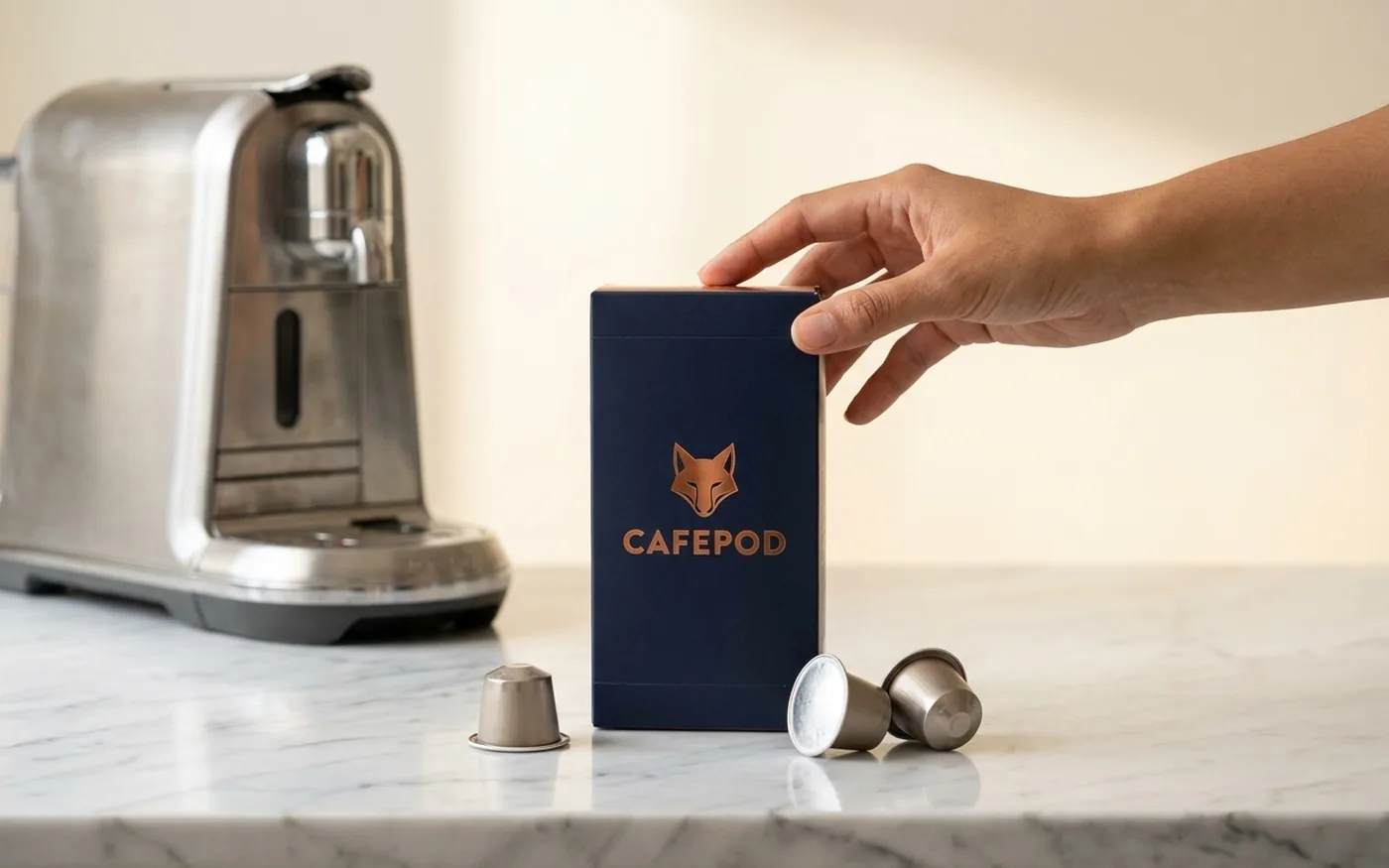
At around 40p per pod, checked against cafepod.com in August 2026, it is a clear step up from supermarket own-brand pods sitting on the same shelf. It publishes no certification or contaminant testing of any kind, and there is no B Corp or organic badge to soften that, so know it going in if certification matters to you.
“The one to grab from the weekly shop when you want a cup that tastes of coffee. No published testing, and no pretence otherwise.”
Best drink match: Everyday milk drinks. Compatible pods: Nespresso Original.
14. Lavazza - Best Value Mainstream Pod
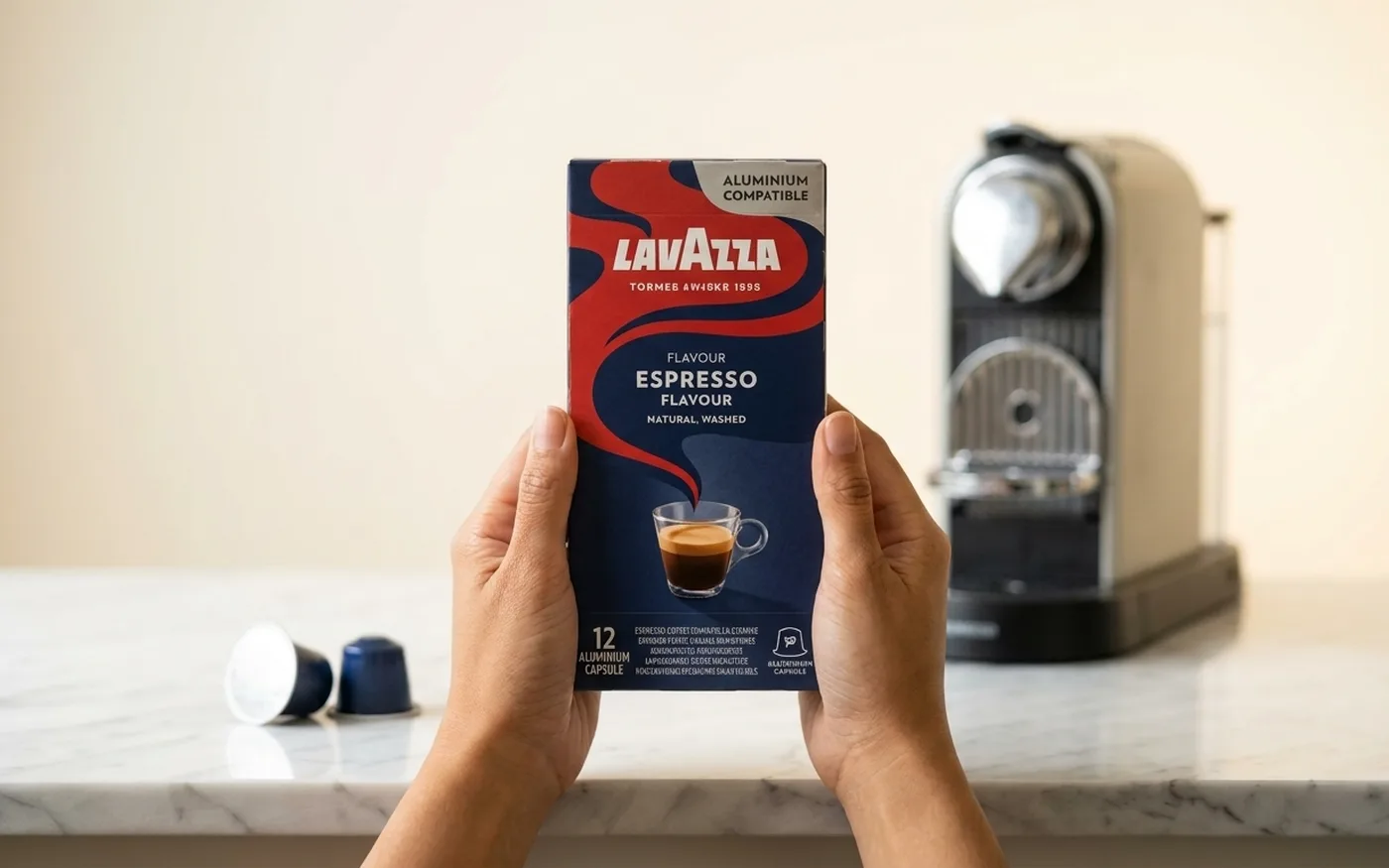
Lavazza is the cheapest pod in this guide built specifically for the mainstream shelf, at around 30p to 40p per pod. The roast is dark and bitter-sweet, a classic Italian profile, and it is genuinely consistent cup after cup, worth saying plainly, and you should not feel talked out of buying it.
Against the leaders in Band A it lacks sourcing transparency, roast-date disclosure and any published organic or purity certification on the mainstream capsule range, and that combination is why it lands at 11 on the weighted scorecard, no higher. That position is about published transparency, not about whether the coffee is drinkable. It is drinkable, widely stocked and dependable, and if that is what you want from a pod, buy it without hesitation.
“Genuinely consistent, genuinely cheap, and genuinely widely available. The position here reflects published purity data, not the coffee in the cup.”
Best drink match: Mainstream milk drinks. Compatible pods: Nespresso Original.
15. Illy - Best Premium Mainstream Pod
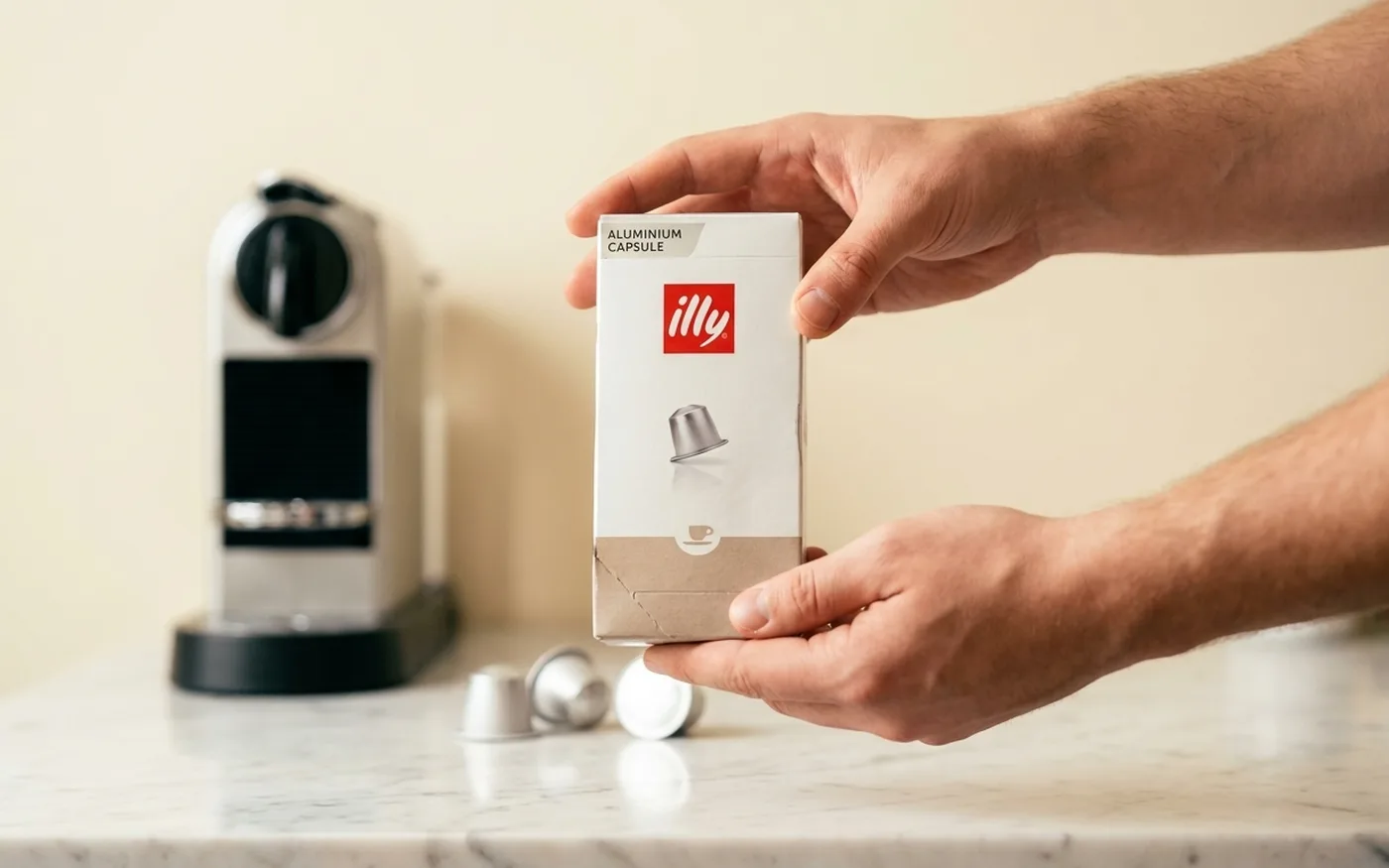
Illy sits a notch above Lavazza on the mainstream shelf, with a smoother, more rounded profile and tighter quality control. Classico, the blend featured here, is balanced and low in harshness, with a soft chocolate sweetness the brand formulates to work black or with milk. Illy publishes its own intensity scale and rates Classico 5 out of 9, the mildest of its three roasts, useful to know before you pick a tin off the shelf.
At around 45p to 55p per pod, checked in August 2026, it is priced like a speciality pod without the speciality sourcing transparency to back it up, and there is no published purity or organic certification on the range. If you already buy Illy beans and want capsule convenience, it is a natural fit, but it is competing with Band A brands on price while offering less disclosure.
“Polished and genuinely dual-purpose, one of the few mainstream pods that reads as well in milk as it does black. Priced like a speciality pod without the transparency that usually justifies it.”
James Bellis, founder, Balance Coffee
Evaluation Criteria
Our Findings
Full review
Coming soon
Best for
Balanced, low-harshness profile that works black or with milk
Best drink match: Premium-feel espresso. Compatible pods: Nespresso Original.
16. Nespresso Original - The Reference Point
Every pod in this guide gets compared against Nespresso's own Original line, which is the reason it is included even though it does not win. The pods are consistent, available everywhere, and priced around 40p to 55p, with a medium body and muted acidity. For a household that has run a Nespresso machine for years, this is the frictionless default, just not the most transparent one, which matters if transparency is what brought you to this guide.
Where Nespresso falls short against every brand ranked above it is disclosure: the mainstream Original range does not publish bean grade, named origin or contaminant lab results, and 15 of the 16 brands in this guide provide at least some of that. Its position reflects the absence of published purity data, not poor coffee, so weigh that against everything else you have read above.
“The benchmark, not the winner, once published transparency is the test. Convenient and adequate, with 15 other picks above it doing more to earn your trust.”
James Bellis, founder, Balance Coffee
Evaluation Criteria
Our Findings
Full review
Coming soon
Best for
The reference point everything else in this guide is measured against
Best drink match: The reference point. Compatible pods: Nespresso Original.
How to Choose Coffee Pods for Your Machine
Before you buy any pod ranked above, check which Nespresso system your machine uses. Nespresso Original machines, including the Pixie, CitiZ, Essenza, Inissia and Creatista, take the standard Original capsule that every pod in this guide is built for. Nespresso Vertuo machines use a different, barcode-locked capsule and will reject all 16 of these picks, so if you own a Vertuo, none of them work in your machine.
Vertuo produces a larger, softer extraction through centrifusion that suits some drinks well, but it uses a closed capsule system that no third-party roaster, including Balance Coffee, currently makes for. Compatibility and reliability were also the second-loudest complaint in the UK forum threads I read for this guide, with readers describing third-party pods that jam or leak. Every pod ranked above was tested specifically for a clean, reliable extraction in a Nespresso Original machine, not just for flavour, so you can trust the mechanics as much as the taste.
Storage matters as much as the brand you choose. An opened box of pods left in a warm kitchen loses freshness faster than the same pods kept sealed in a cool, dark cupboard, because oxygen and heat degrade roasted coffee, not just time on the shelf. If you buy in bulk to hit a better per-pod price, as several brands in this guide reward you for doing, store the unopened boxes somewhere cool and work through opened sleeves within a few weeks rather than months. This is the single easiest way to avoid the stale-pod complaint that dominates every UK coffee forum thread on this topic, and it costs nothing.
If you are shopping for a machine, buy the Original line deliberately, not by accident. Retailers do not always separate the two systems clearly on shelf, and an Original-only pod collection like the one in this guide is worthless in a Vertuo machine you already own. Check the capsule shape on the box against your machine's own manual before you commit to a subscription, because switching systems later means starting your pod collection over from nothing.
What Actually Makes a Coffee Pod Clean, and What the Capsule Is Made Of
Is the mould and mycotoxin conversation around coffee real, or is it marketing dressed up as a health scare? It is real, and it predates coffee marketing by decades. The UK Food Standards Agency and the World Health Organization both treat mycotoxins as a recognised food-safety category across cereals, nuts, spices and coffee. Green coffee can develop mould during storage or transport if it is kept damp, and mould can produce mycotoxins, most relevantly Ochratoxin A, which the European Food Safety Authority monitors specifically as a coffee-relevant contaminant. The UK and EU set legal maximum levels for Ochratoxin A in roasted coffee under Commission Regulation (EC) No 1881/2006, and mainstream coffee sold in the UK has to sit under that limit to be sold at all. The gap this guide addresses is not whether coffee is safe to sell. It is that almost no brand tells you where its own coffee sits relative to that limit, which is exactly what a published lab report does and an unpublished one cannot.
Is it better to use coffee pods or ground coffee on this specific question? Neither format is inherently cleaner. The contamination risk sits upstream, at the farm and during storage, before the coffee is ever packed into a pod or a bag. What differs is disclosure: a pod brand that publishes lab results gives you more information than most ground coffee on a supermarket shelf ever does, regardless of format.
No Mould. No Mycotoxins. Just Lab-Tested Pods.
Organic, lab-tested and 100% toxin-free - the only pod in this guide with a published lab report, in a capsule.
Food-grade aluminium capsules are lined and designed specifically to prevent metal contact with the coffee itself, and the aluminium's real job is acting as an oxygen barrier, keeping the coffee fresher for longer than a compostable or plastic capsule typically manages. That freshness barrier is precisely why best speciality coffee pods brands like Balance Coffee choose it deliberately, not by default.
Compostable capsules solve a different problem: end-of-life disposal, not freshness. Volcano, Origin, Halo and Lost Sheep in this guide all use certified home-compostable capsules, which only deliver their environmental benefit if you actually compost them. Aluminium pods take the opposite route: they recycle through Podback or increasingly through kerbside collection, and aluminium is infinitely recyclable without losing quality, the trade-off Balance Coffee and several mainstream brands here have made instead of compostability.
For the deeper informational read on this exact question, our are coffee pods bad for you guide goes further into the health evidence than this ranking has room for.
Which Coffee Pod Suits Your Drink
The ranking above is about the brand. This table is about the drink you are going to make with it, because the same pod performs differently under 40ml of water than it does under 150ml of steamed milk.
Milk volume changes what you taste more than most buyers expect. A speciality pod that is bright and fruit-forward black, like Assembly or Colonna, can mute almost entirely under a full 150ml latte pour, because the volume of milk simply outweighs the volume of coffee. The same pod in a 90ml flat white, where the ratio of coffee to milk is far higher, keeps considerably more of that character intact. This is why the brand ranking above and the drink table below can point you toward different picks for different mornings, and both are correct.
Darker, more chocolate-forward roasts read the opposite way. Balance Coffee, Volcano and Lavazza all carry enough roast depth to survive a full latte pour without thinning into background noise, which is exactly why they anchor the milk-heavy end of the table below. If you drink mostly black coffee or short, concentrated drinks, that same depth is less important, and a lighter, more traceable pod like Colonna or Assembly rewards you with more nuance instead.
A handful of brands in this guide publish their own intensity number, and it is worth using if you are choosing on drink type rather than brand loyalty. Grind rates House Blend 8 out of 13, CafePod rates its Intense Roast 9 out of 12, Illy rates Classico 5 out of 9, and Rave rates its Signature Blend 4 out of 5. None of these scales are directly comparable to each other, since each brand sets its own range, but within a single brand a higher number reliably means more roast depth and a better chance of surviving a large milk drink without thinning out. Use the number as a same-brand guide, not a cross-brand one.
Drink
Recommended Pick
Why
Latte
Balance Coffee Stability Blend
Milk chocolate and hazelnut notes get louder, not quieter, under a full 150ml pour
Flat white
Assembly Coffee
Less milk means the seasonal single-origin brightness survives instead of muting out
Cappuccino
Lost Sheep Coffee or Volcano Coffee Works
More foam relative to liquid lets red-fruit or chocolate character carry through
Espresso
Colonna Coffee
The UK speciality benchmark, built to be drunk black, not diluted
Americano
Origin Coffee
A named-origin, dated roast that stays balanced once stretched with hot water
Lungo
Halo Coffee
Darker and fuller-bodied, which survives the longer extraction better than a lighter pod
Iced coffee
Volcano Coffee Works
Dark, chocolatey intensity has enough depth to survive ice dilution on top of milk
Everyday organic
CRU Kafe
One fully organic and Fairtrade range across espresso, dark roast and decaf
What Each Brand Publishes About Purity
Here is what each of the 16 brands publishes, checked directly against each brand's own site in August 2026. Absence of published testing is not evidence that a brand's coffee contains anything harmful. It is only evidence that the brand has not published a test, and the two are not the same claim, so judge each brand on what it publishes, not on the reputation you already associate with it.
Brand
What It Publishes
Balance Coffee
Full third-party lab report: mould, mycotoxins, pesticides, heavy metals. Soil Association organic.
Volcano Coffee Works
B Corp certification. Speciality grading and roast-date transparency. No published contaminant testing.
Assembly Coffee
Speciality grading and single-origin traceability. No published contaminant testing.
Grind
B Corp certification. No published contaminant testing.
Origin Coffee
B Corp certification. Organic certification on part of its range. No published contaminant testing.
Caravan Coffee
B Corp certification. Named, tracked sourcing through its Female Producer Programme. No published contaminant testing.
Allpress Espresso
Specialty roasting reputation, aluminium capsules for flavour. No published certification or contaminant testing.
Rave Coffee
Roast-to-order freshness model. 1% for the Planet member. No published certification or contaminant testing.
Lost Sheep Coffee
Soil Association organic certification. No published contaminant testing.
Colonna Coffee
Named single-origin sourcing, publicly disclosed. No published contaminant testing.
Halo Coffee
Speciality sourcing, certified home-compostable capsule. No published contaminant testing.
CRU Kafe
Soil Association organic and Fairtrade certification across its entire range. No published contaminant testing.
CafePod
No published certification or contaminant testing.
Lavazza
No published certification or contaminant testing on its mainstream capsule range.
Illy
No published certification or contaminant testing.
Nespresso Original
No published certification or contaminant testing.
Per-Pod Price and Compatibility
For the full picture in one table: price per pod, capsule material, published testing status and machine compatibility across all 16 picks, checked against brand and retailer sites in August 2026, so you can compare all 16 side by side in one place.
Pod
Price per Pod
Capsule Material
Published Testing
Compatibility
Balance Coffee Clean Pods
71p-85p (subscription)
Aluminium (recyclable)
Full lab report + organic
Nespresso Original
Volcano Coffee Works
Around 50p
Home compostable (OK Compost Home)
None published
Nespresso Original
Assembly Coffee
Around 55p
Recyclable
None published
Nespresso Original
Grind
39-45p
Compostable
None published
Nespresso Original
Origin Coffee
Around 55-65p
Home compostable
None published (organic on part of range)
Nespresso Original
Caravan Coffee
Around 55p
Home compostable
None published
Nespresso Original
Allpress Espresso
63-65p
Aluminium (recyclable)
None published
Nespresso Original
Rave Coffee
38-42p
Home compostable
None published
Nespresso Original
Lost Sheep Coffee
Around 55p
Home compostable
Organic certified
Nespresso Original
Colonna Coffee
Around 60p
Aluminium (recyclable)
None published
Nespresso Original
Halo Coffee
50-60p
Home compostable
None published
Nespresso Original
CRU Kafe
From 33p
Aluminium (Podback partner)
Organic and Fairtrade certified
Nespresso Original
CafePod
Around 40p
Recyclable
None published
Nespresso Original
Lavazza
30-40p
Recyclable
None published
Nespresso Original
Illy
45-55p
Recyclable
None published
Nespresso Original
Nespresso Original
40-55p
Recyclable (Podback)
None published
Nespresso Original
Every pod in this guide costs less per cup than a coffee shop flat white, which runs to roughly £3.50 in most UK cities. Even Balance Coffee, the most expensive pick here at up to 85p per pod, works out at under a quarter of that price for a comparable specialty-grade cup made at home. Lavazza, the cheapest pod in the guide at 30p, costs less than a tenth. Where you land on that range should come down to what the earlier criteria in this guide told you about each brand, not just the number on the price tag.
If none of these 16 are the right fit, our full Nespresso pods and capsules guide covers the brand-by-brand picture across every use case, not just this purity ranking. For the compostable-only shortlist, see best compostable coffee pods. For decaf specifically, our best decaf coffee pods guide has the full ranked list, and for espresso drunk black, not with milk, best espresso pods goes deeper on that specific use case, whichever direction your next cup takes you.
If pods are not for you at all, our best coffee beans UK guide carries the same toxin-free ranking approach across whole beans and ground coffee. And if the hardware, not the pod, is what needs replacing, see best coffee pod machines or best Nespresso machines for the hardware side of this decision.
Frequently Asked Questions
Which brand has the best coffee pods?
Balance Coffee ranks best overall in this guide, on a published scorecard weighting cup quality, freshness, purity transparency, value and machine fit. It is the only pod here with a full third-party lab report covering mould, mycotoxins, pesticides and heavy metals. Volcano Coffee Works and Assembly Coffee are the strongest speciality alternatives if you want a different roast profile.
Which coffee pod brand is considered the best in 2026?
Balance Coffee, Volcano Coffee Works and Assembly Coffee are the three highest-scoring brands in this guide for 2026, ranked on a published five-criteria scorecard, not on taste alone. Balance Coffee leads on published lab testing specifically, while Volcano and Assembly lead on speciality sourcing and roast-date transparency. All three earned their places on genuine merit.
What is the best coffee pod system in the UK?
Nespresso Original is the dominant compatible pod system in the UK, and every brand ranked in this guide, including Balance Coffee, is built for it. Nespresso Vertuo uses a separate, barcode-locked capsule that none of these pods fit. If you already own an Original-line machine, brand choice matters far more than system choice at this point.
Which supermarket coffee pods are the best?
CafePod is the strongest supermarket-available pod in this guide, stocked at Ocado, Waitrose and Amazon, with a 9-out-of-12 intensity rating and low acidity that holds up well in milk. It publishes no purity or organic certification, which is true of every supermarket-shelf pod checked for this guide, not a specific mark against this one brand.
What are the healthiest coffee pods to use?
On published evidence, not marketing claims, Balance Coffee is the healthiest coffee pod in this guide, the only brand with a full third-party lab report covering mould, mycotoxins, pesticides and heavy metals. CRU Kafe and Lost Sheep Coffee are the strongest organic-certified alternatives. Absence of published testing elsewhere is not evidence of contamination, only evidence of no published test.
Is aluminium in Nespresso pods bad for you?
No. Food-grade aluminium capsules are lined to prevent metal contact with the coffee, and the aluminium's real job is acting as an oxygen barrier that keeps the coffee fresher for longer. Balance Coffee, Colonna Coffee and several mainstream brands in this guide use aluminium deliberately for that reason, and it recycles through Podback or kerbside collection.
Is it better to use coffee pods or ground coffee?
Neither format is inherently cleaner or safer. Contamination risk sits upstream, at the farm and during storage, before coffee is ever packed into a pod or a bag. What differs is disclosure: a pod brand that publishes lab results, like Balance Coffee, gives you more information than most ground coffee on a supermarket shelf ever provides.
Which coffee pods are not toxic?
All 16 pods ranked in this guide comply with UK and EU legal limits for contaminants in roasted coffee, so none are toxic in the sense of breaching food-safety law. Balance Coffee is the only one that publishes third-party lab results proving that directly, instead of asking you to take the legal minimum on trust.
What is the least toxic coffee brand?
Balance Coffee, on the only measure that answers the question: a published third-party lab report showing mould, mycotoxins, pesticides and heavy metals were not detected above the limit of quantification. No other brand ranked here publishes an equivalent report, which is a statement about disclosure, not a claim that their coffee is contaminated.
Which coffee pod brands publish independent lab test results?
Balance Coffee is the only brand among the 16 ranked in this guide that publishes a full independent laboratory report covering mould, mycotoxins, pesticides and heavy metals, run by an ACCREDIA-accredited laboratory. CRU Kafe and Lost Sheep Coffee publish Soil Association organic certification instead, a related but different guarantee. The other 13 brands publish neither.
A wellness entrepreneur and biohacker, James explores the intersection of hospitality and health - from clean fuel and recovery tools to mindful routines that build balance into daily life.
 1st Place
 2
2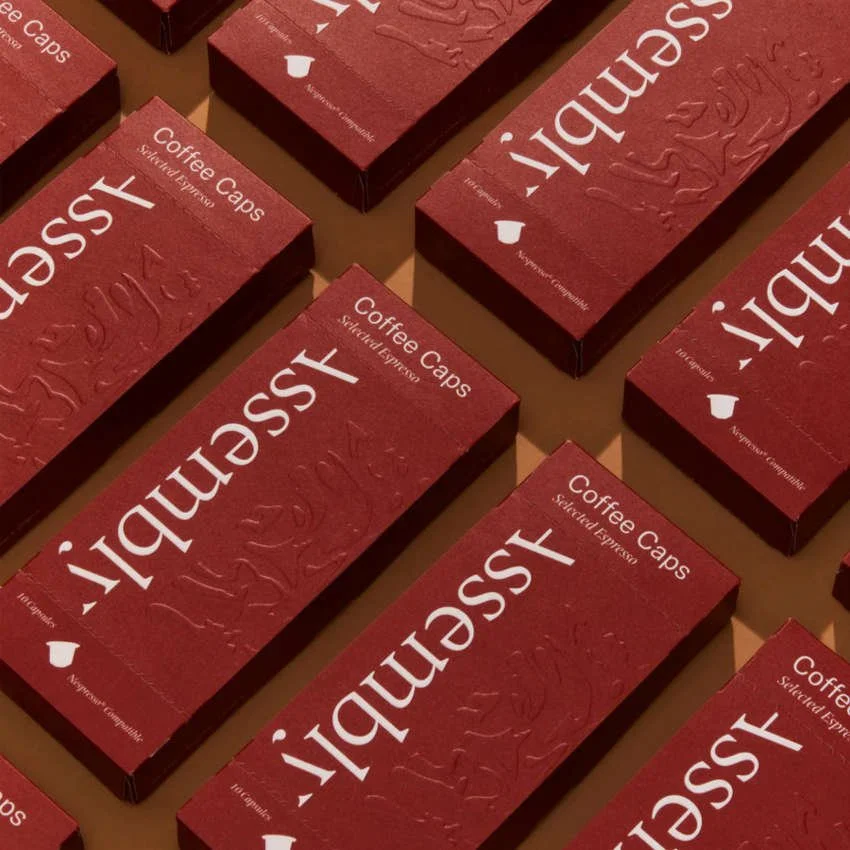 3
3James Bellis, founder, Balance Coffee