A nutritionist's evidence-based guide to caffeine in matcha.
Table of Contents
Some of the links in this article are affiliate links, which help fund our independent review work at no extra cost to you. Every recommendation is based on hands-on testing through The Editor Lab methodology. No brand pays to appear, and no placement is guaranteed.
Matcha contains around 35-70mg of caffeine per serving. That is the number most people come here for, and it is worth getting it on the table immediately before anything else. What surprises people - once they have their answer - is why that caffeine does not feel like coffee. The mechanism behind that difference is what most articles on this topic skip over, and it is the part that changes how you use matcha.
Snita Pandoria has spent more than fifteen years writing about food and drink across London and thirty-plus countries, and has tested matcha in forms ranging from a roadside vendor in Kyoto to a high-end London cafe. As Head of Editorial at Balance Journal, she brings that first-hand experience to every piece she writes on functional food and drink.
How Much Caffeine Is in a Serving of Matcha?
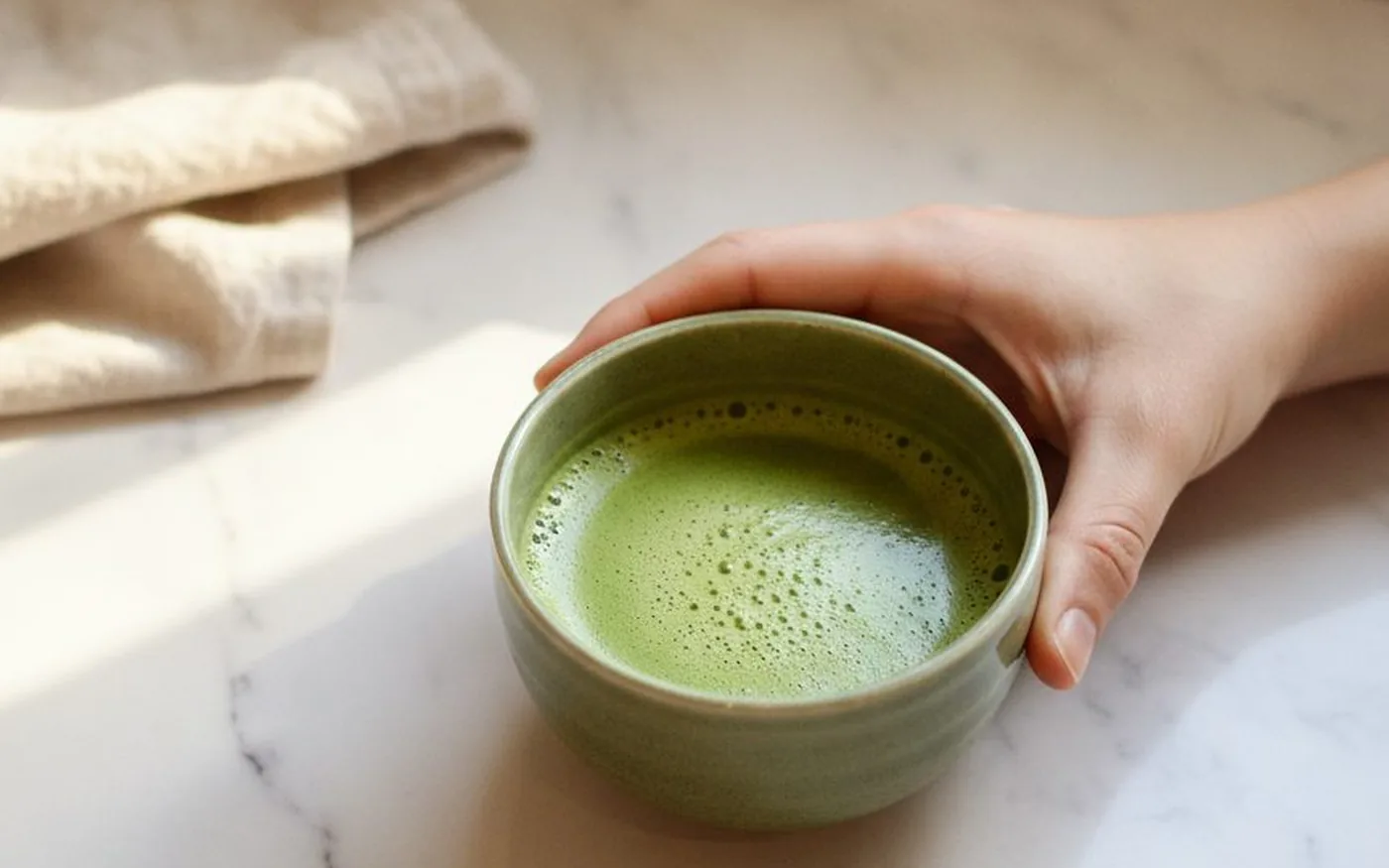
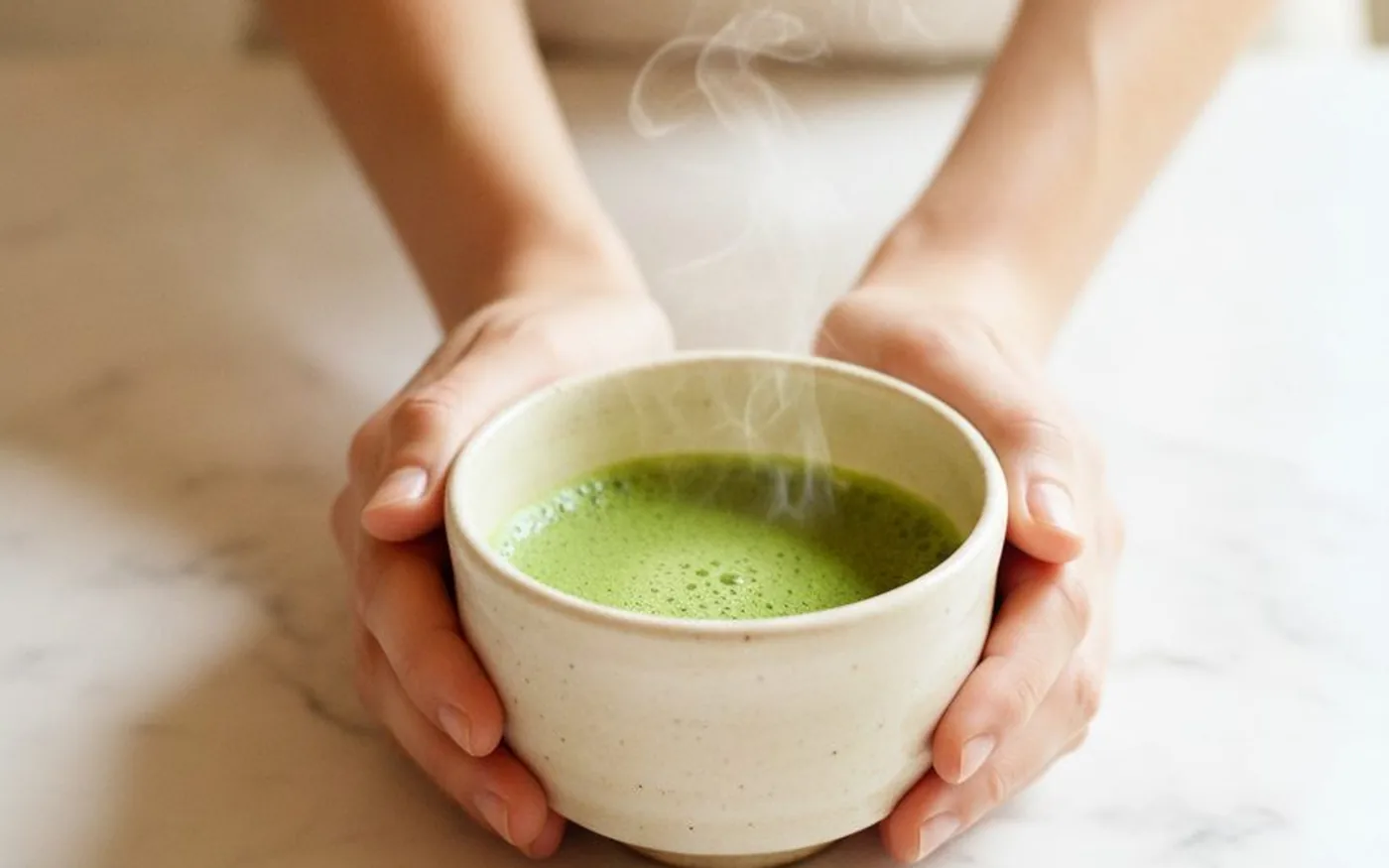
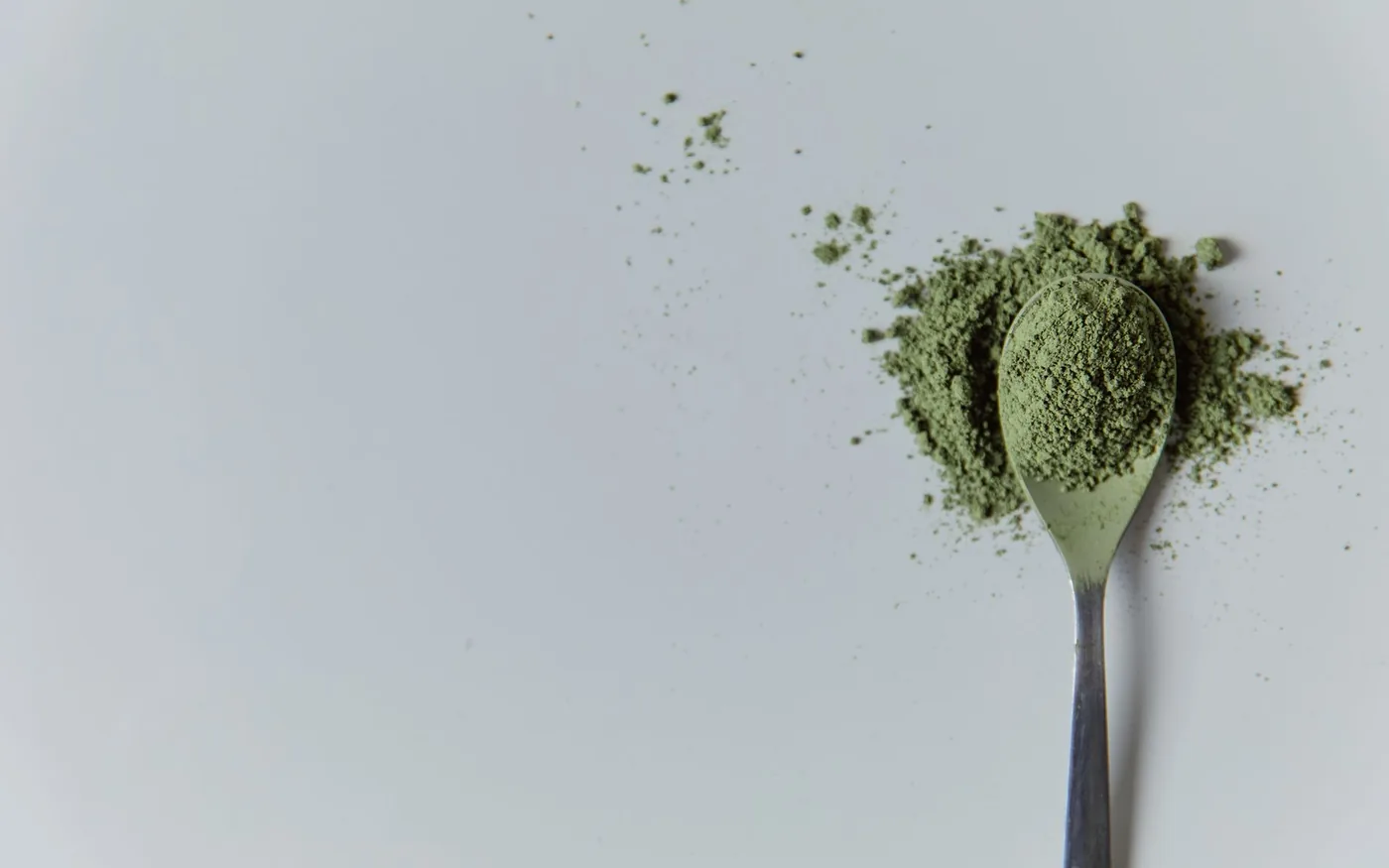
A standard matcha serving uses one to two grams of matcha powder whisked into around 80ml of hot water. At that quantity, you are looking at roughly 35-70mg of caffeine per serving, depending on grade, source, and how much powder you use.
The NHS recommends no more than 400mg of caffeine per day for healthy adults, and advises pregnant women to keep below 200mg. A single matcha sitting at the lower end of that range is well within sensible daily limits even if you drink two or three servings.
The wide range - 35 to 70mg - exists because matcha is a whole-leaf powder and its caffeine content is not fixed the way an espresso shot's extraction is controlled. Ceremonial grade matcha, made from young shaded leaves picked in the first or second flush, tends to sit at the higher end. Culinary grade, made from later pickings and older leaves, typically sits lower. The amount of powder also matters: a traditional single-serving uses 1g; some cafe-style preparations use 2g, which roughly doubles the caffeine.
Two grams of matcha at the higher end could give you close to 70mg in a single cup. That is a meaningful amount, and it is one reason over-serving matcha (the "I'll have three of these" approach) can tip someone who normally handles caffeine well into feeling wired.
According to NHS caffeine guidance, a typical mug of instant coffee provides around 100mg of caffeine and a mug of filter coffee around 140mg. Matcha at one to two grams per serving sits below both on a single-serving basis.
Matcha vs Coffee, Espresso, and Green Tea
Here is the verified comparison, with caffeine figures drawn from NHS guidance and published food composition data:
Drink
Typical serving
Caffeine (approx.)
Matcha (1g powder)
80ml whisked
35-50mg
Matcha (2g powder)
80ml whisked
60-70mg
Matcha latte (2g powder + milk)
250ml
60-70mg
Green tea
200ml brewed cup
25-45mg
Instant coffee
250ml mug
~100mg
Filter coffee
250ml mug
~140mg
Single espresso
30ml shot
~60-80mg
Double espresso
60ml shot
~120-160mg
Black tea
250ml mug
45-75mg
A few things stand out from that table. First, a single matcha serving at 1g sits closer to green tea than to espresso. Second, a 2g matcha is broadly comparable to a single espresso shot in raw caffeine - not dramatically less. Third, the "matcha is mild" assumption holds at 1g serving sizes but starts to blur when you are making a generous cafe-style cup with 2g of powder.
The difference is not primarily in the milligrams. It is in the mechanism - which is where matcha vs coffee caffeine comparisons often get misread.
Why Matcha Caffeine Feels Different (L-theanine)
Matcha is one of the few naturally caffeinated drinks that also contains meaningful levels of L-theanine, an amino acid found in tea leaves that is associated with a calm, focused mental state.
L-theanine does not cancel the caffeine. What it appears to do - based on the published literature on L-theanine and alpha brain wave activity - is moderate the way caffeine affects the nervous system. The result that regular matcha drinkers describe, and that some small studies have explored, is a focused, alert state without the spike-and-drop that many people associate with coffee. This is sometimes called 'calm energy' in wellness writing, though that phrase does not appear in the clinical literature.
Shaded growing conditions are the reason matcha tends to have higher L-theanine than most other green teas. When tea plants are covered for three to four weeks before harvest (a process known as kabuse or tencha cultivation), they produce more chlorophyll and more L-theanine as the plant adjusts to reduced light. This is also why ceremonial grade matcha tastes sweeter and more umami than culinary grade - the leaf chemistry shifts under shade.
Friction moment - the over-serving problem: The calm-energy effect can cause a specific problem. Because matcha does not feel as sharp as coffee, some people conclude they can drink three or four servings across a day without consequences. At 2g per serving and three cups, you are looking at 180-210mg of caffeine - still inside the NHS daily limit but approaching it quickly. If you are caffeine-sensitive, matcha is not a free pass. One to two servings per day is a sensible ceiling for most people.
L-theanine matcha is the compound combination that explains why the experience differs from coffee - not the raw caffeine content.
What Affects Matcha Caffeine (Grade, Amount, Prep)
Grade matters more than most buyers realise. Ceremonial grade matcha uses the youngest shaded leaves, ground into a fine powder. These leaves have more matcha caffeine mg per gram because the plant concentrates its active compounds into young growth - a finding consistent with published research on matcha's bioactive composition. Culinary grade uses later flushes and older leaves - lower in caffeine and L-theanine, rougher in flavour, and significantly cheaper.
For drinking straight, ceremonial grade is the only sensible option. Culinary grade is made for baking and cooking, where the delicate flavour differences are lost in heat and other ingredients. Drinking culinary grade matcha straight tastes bitter and grassy in a way that is unpleasant, and the nutritional profile differs from what most matcha research references.
Water temperature affects extraction but not dramatically. Matcha is a suspension, not a steeped infusion - you are whisking the whole leaf powder into water, not extracting from it. Temperature between 70-80°C is standard. Boiling water can degrade some of the delicate compounds and exaggerate bitterness, but it does not significantly change the caffeine content.
The amount of powder is the single biggest lever. One gram versus two grams makes the most material difference to both caffeine and flavour. For a strong, traditional bowl of matcha (called usucha or koicha depending on concentration), experienced drinkers use 1.5-2g. For a gentler everyday cup, 1g is enough.
For a deeper comparison of grades and what to look for when buying, see our matcha vs green tea guide and the best matcha brands UK roundup.
Is Matcha a Good Coffee Replacement?
For a growing number of people, yes - with some honest caveats. If you drink one or two double espressos each morning and you switch straight to a single 1g matcha, you will feel the caffeine gap. That is not a reason to abandon the idea - it is a reason to set expectations accurately.
The coffee-replacement argument works best for people who are not heavily caffeine-dependent and who find coffee triggers anxiety, digestive discomfort, or the kind of jittery energy that arrives fast and drops hard. Matcha's caffeine curve, modulated by L-theanine, tends to be flatter. It arrives more slowly, holds longer, and does not appear to cause the same cortisol spike that coffee has been associated with in some studies.
Friction moment - the foggy morning fear: This is the most common anxiety among coffee drinkers considering matcha. "Will I get through a meeting without being useless?" At 70mg of caffeine in a 2g ceremonial serving, the honest answer is that most people will feel alert and functional. It is not coffee's 140mg from a mug of filter, but it is enough for a productive morning for most people at a standard serving. Start with a 2g serving if you are making the switch, and give it two to three weeks before you conclude anything - the adjustment period is real.
Matcha caffeine crash is significantly less pronounced than coffee's - this is the other edge of the L-theanine argument. The absence of a hard crash is one of the practical reasons people who have switched from coffee to matcha often report better sustained afternoon energy.
If you are looking at functional alternatives to coffee more broadly - including options that combine adaptogenic ingredients with a caffeine base - see our guide to the best lion's mane coffee UK options, which covers the caffeine-without-jitters angle through a different route.
Balance Journal is published alongside Balance Coffee, founded by James Bellis.
Matcha Caffeine and Sleep / Sensitivity
The half-life of caffeine in the body is roughly five to six hours for most adults, according to NHS guidance on caffeine and sleep. A 70mg matcha at 2pm means around 35mg is still active at 8pm. At 1g and 50mg, you are looking at 25mg active at 8pm - negligible for most people but not for the caffeine-sensitive.
The practical guidance: if you know you are sensitive to caffeine and struggle with sleep, treating matcha as a morning drink only is sensible. The "matcha is gentle, I can drink it in the evening" assumption is one worth questioning. Caffeine is caffeine, and the L-theanine does not neutralise it.
For people with specific health conditions, pregnancy, or high sensitivity to stimulants, the NHS caffeine guidance is the relevant reference point. The NHS recommends that pregnant women keep total daily caffeine intake below 200mg across all sources, including tea, coffee, chocolate, and energy drinks.
Matcha caffeine per gram sits at approximately 35-50mg/g depending on grade. One serving at 1g fits comfortably within morning consumption for most people.
Frequently Asked Questions
Does matcha have more caffeine than coffee?
No - matcha contains less caffeine than a standard mug of coffee. A typical 1-2g matcha serving contains around 35-70mg of caffeine. A mug of instant coffee provides around 100mg, and a mug of filter coffee around 140mg, according to NHS caffeine guidance. A single espresso is a closer comparison at 60-80mg per shot. Matcha and espresso overlap in caffeine range, but matcha contains L-theanine, which affects how the caffeine is experienced rather than how much is present.
How much caffeine is in a matcha latte?
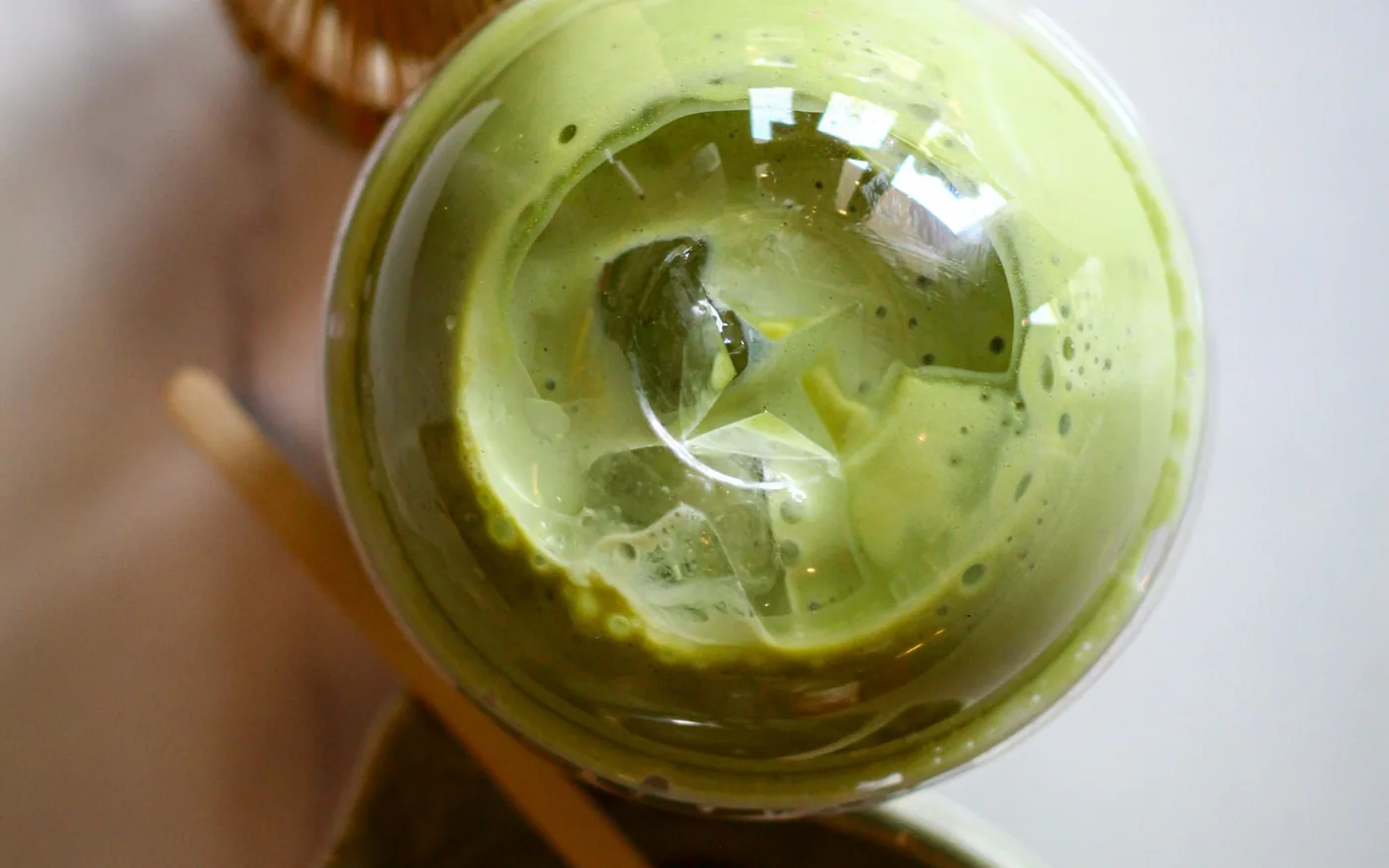
A matcha latte made with 2g of matcha powder contains approximately 60-70mg of caffeine. Adding milk does not change the caffeine content - it changes the volume and flavour of the drink, but the caffeine comes from the powder, not the milk. A coffee shop matcha latte may use anywhere from 1.5g to 3g of powder depending on their recipe, so caffeine can vary. If you are managing caffeine intake carefully, asking about the amount of powder used is worth doing.
How much caffeine is in matcha vs espresso?
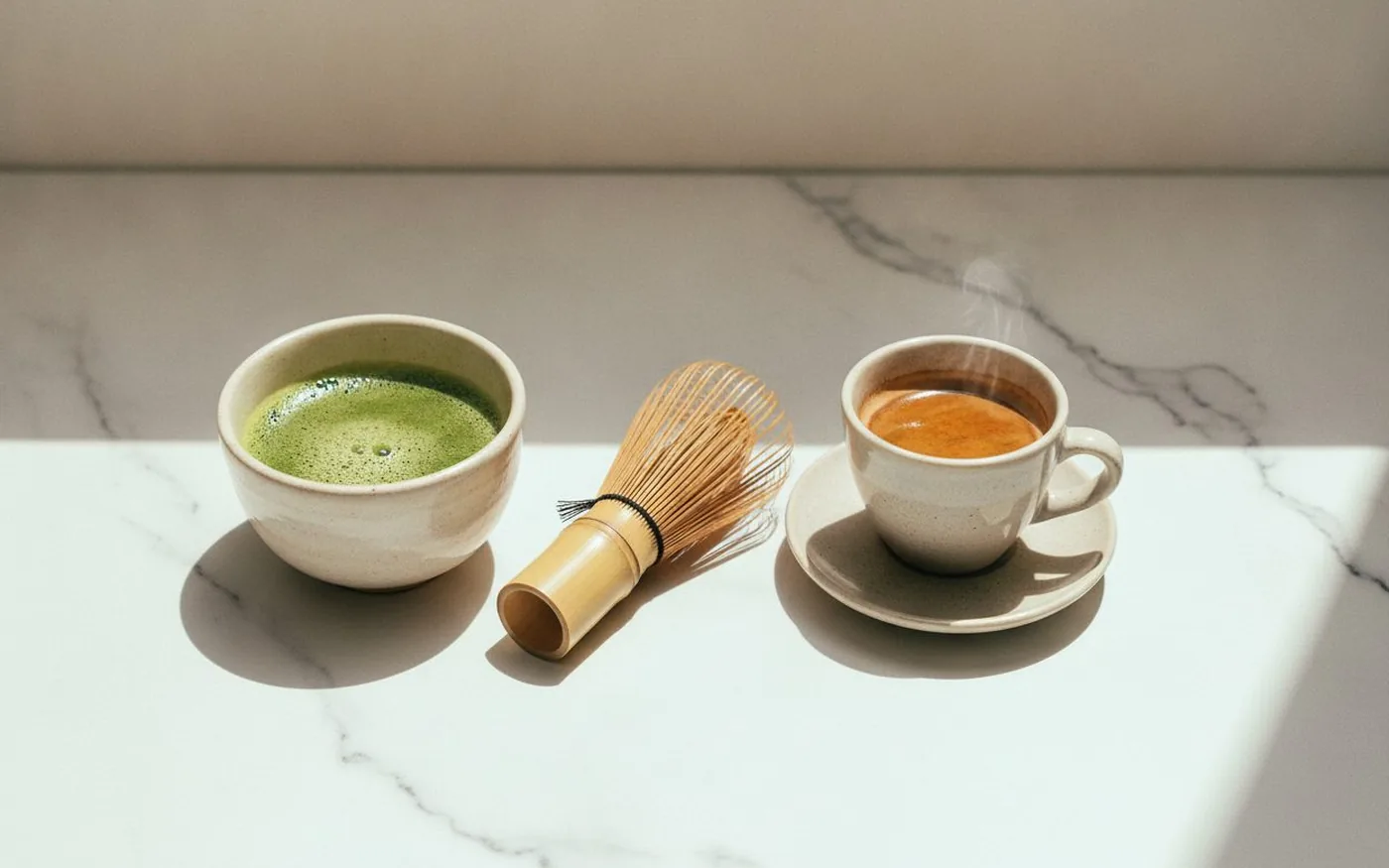
A single espresso shot (30ml) contains approximately 60-80mg of caffeine. A standard 2g matcha serving contains approximately 60-70mg. On a milligram basis they are broadly comparable. The meaningful difference is in the experience: matcha's L-theanine modulates the way caffeine is processed, producing a calmer, more sustained alertness for most people versus espresso's faster, sharper hit. A double espresso at 120-160mg has significantly more caffeine than any standard matcha serving.
Why do I feel high (or wired) after matcha?
The feeling of being unusually alert or calm-focused after matcha comes from the combination of caffeine and L-theanine acting together. L-theanine is associated with increased alpha brain wave activity, which is linked to relaxed alertness. The result tends to be a clearer, less anxious version of alertness than coffee alone. If you feel genuinely wired rather than focused, the most likely cause is the quantity of matcha - more than 2g in a single serving, or multiple servings in a short window, can push the caffeine into territory that feels overstimulating.
Is there a downside to drinking matcha?
Matcha is safe for most healthy adults within sensible quantities, but there are genuine considerations. First, caffeine content adds up across a day - three 2g servings is around 180-210mg before any other caffeine sources. Second, matcha contains oxalates and tannins, which can affect iron absorption when drunk with meals. Third, lead content in matcha powder has been flagged in some food testing, since the whole leaf is consumed rather than steeped and discarded - this is a reason to source from reputable brands that publish heavy-metal testing. Finally, for caffeine-sensitive people or those with anxiety, matcha is not a caffeine-free alternative - it is a lower-caffeine alternative.
How much caffeine is in matcha per teaspoon?
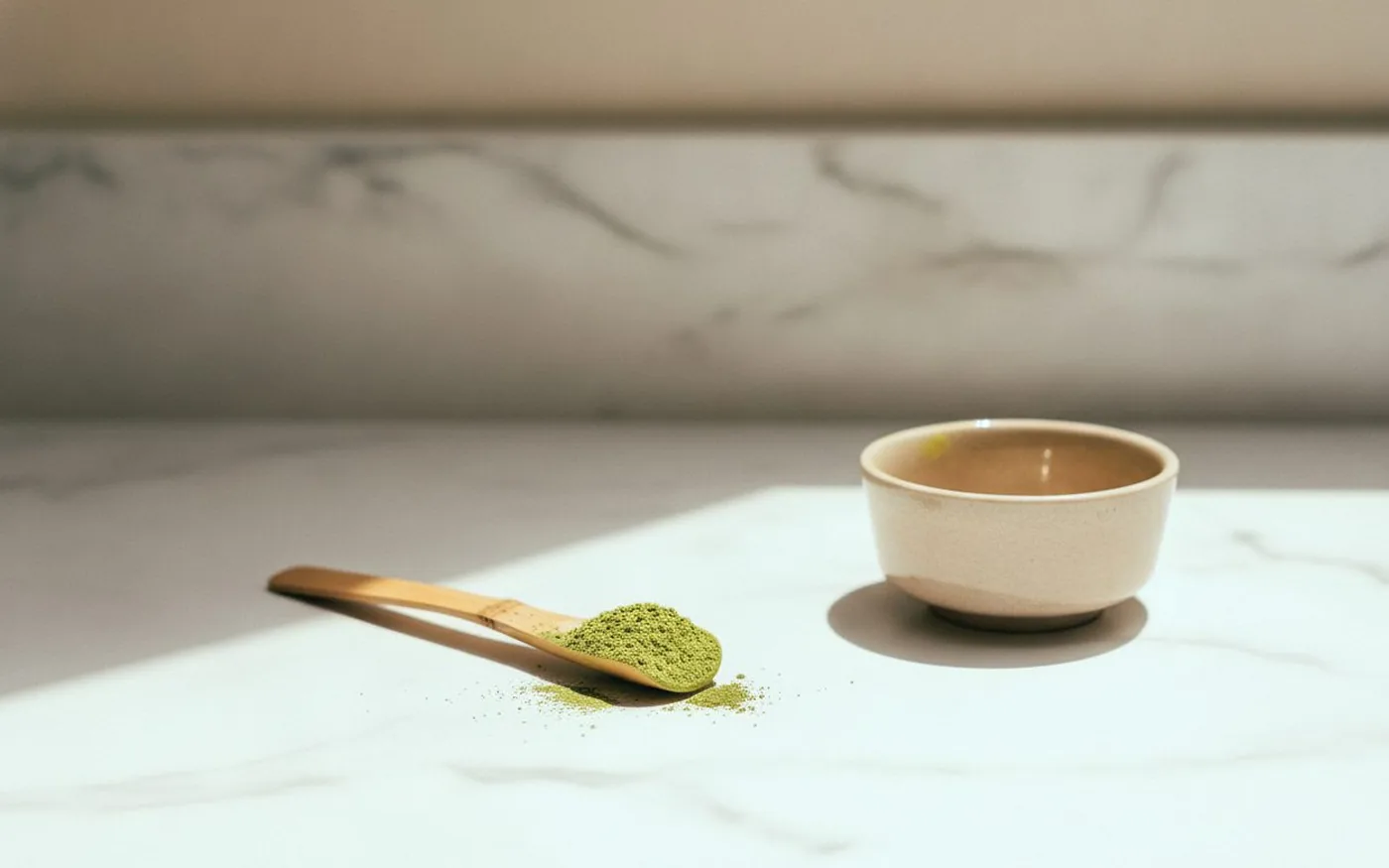
A level teaspoon of matcha powder weighs approximately 2-3g depending on how finely it is ground. At 35-50mg of caffeine per gram, one level teaspoon contains roughly 70-150mg of caffeine - more than some people expect from a 'gentle' drink. Most matcha preparation guides recommend using a measuring scale or the traditional bamboo scoop (chashaku), which holds around 1g, rather than a kitchen teaspoon. Using a teaspoon without weighing is the most common route to an accidental high-caffeine serving.