Best Decaf Coffee Pods UK 2026 - 7 Tested and Ranked
Most lists pad the numbers with filler. Seven made our cut. The rest weren't worth it.
Table of Contents
Some of the links in this article are affiliate links, which help fund our independent review work at no extra cost to you. Every recommendation is based on hands-on testing through The Editor Lab methodology. No brand pays to appear, and no placement is guaranteed.
I did not take decaf seriously for a long time. I spent fifteen years surrounded by single-origin lots and competition-grade espresso, and the decaf section of any roastery felt like an afterthought. A bag in the corner. A concession to people who could not handle the real thing.
That changed around 2022. I started noticing speciality roasters - the ones I had visited, whose regular coffees I rated highly - putting genuine effort into their decaf programmes. Swiss Water Process. Sugarcane decaffeination. Single-origin decaf lots from the same farms supplying their flagship blends. The gap between regular and decaf was closing, and it was closing fast.
We brewed seven decaf pods at least twice each, blind, scoring extraction quality, flavour clarity, body, and aftertaste. Beyond the cup, we dug into each brand's decaffeination process (Swiss Water, sugarcane, or CO2), capsule material, sustainability credentials, and price per pod. If you want a decaf that tastes like coffee rather than a compromise, this is where to start.
James Bellis - Health and Wellness Editor, Balance Journal. Fifteen years in coffee. A decade with Sanremo UK. Sixty-plus UK roastery relationships. Read more about how we test.
Why Decaf Quality Has Changed
Five years ago, decaf coffee pods meant one thing: a flat, lifeless shot with a cardboard finish. The problem was not the concept. It was the execution.
Most decaf on the market used chemical solvent methods - methylene chloride or ethyl acetate derived from industrial sources - applied to commodity-grade beans. The decaffeination stripped out caffeine, but it took most of the flavour compounds with it. Roasters then masked the damage with dark roasts, which added bitterness without complexity.
The shift happened when speciality roasters started treating decaf as a craft product rather than a compromise. UK decaf market data shows how far this has gone. Roasters like Grind, Volcano Coffee Works, and Rave Coffee now source high-quality green beans specifically for their decaf programmes. They use chemical-free decaffeination methods - Swiss Water Process, CO2 extraction, and sugarcane-derived ethyl acetate - that preserve the flavour compounds conventional methods destroy.
The result is a generation of decaf pods that taste like coffee. Not like decaf. Not like a lesser version of something better. Coffee.
If you are exploring the wider pod market, our guide to the best Nespresso pods and capsules covers the full range including caffeinated options.
Decaffeination Methods Explained
Not all decaf is created equal. The method used to remove caffeine directly affects what ends up in your cup. Here is what to look for.
Top 3 Best Decaf Coffee Pods
Swiss Water Process
The gold standard for chemical-free decaffeination. Green coffee beans are soaked in hot water saturated with coffee solubles (everything except caffeine). Because the water is already full of flavour compounds, only caffeine migrates out of the bean. The process removes 99.9% of caffeine and uses zero chemical solvents. It is certified organic-compatible and preserves more of the original flavour profile than any other method.
The Swiss Water Process is the benchmark against which every other decaffeination method should be measured.
Sugarcane Process (Natural Ethyl Acetate)
The most common method among UK speciality roasters. Ethyl acetate - a compound found naturally in fruits and sugarcane - is derived from fermenting Colombian sugarcane, then used to wash green beans and bind to caffeine molecules. It removes approximately 97% of caffeine. Because the ethyl acetate is plant-derived rather than industrially synthesised, the process is marketed as 'natural' and 'chemical-free'. It tends to add a slight sweetness to the cup and is significantly cheaper than Swiss Water.
CO2 Process (Supercritical Carbon Dioxide)
Carbon dioxide is pressurised until it reaches a supercritical state - behaving as both a liquid and a gas - then passed through green coffee beans. The CO2 selectively bonds with caffeine molecules while leaving larger flavour compounds intact. No chemical solvents are involved. This is the method used by Nespresso and CafePod. It is highly effective and scalable, but the equipment cost means it is used primarily by larger producers.
Chemical Solvent Methods (Methylene Chloride / Industrial EA)
The oldest and cheapest approach. Green beans are treated with methylene chloride or industrially produced ethyl acetate to dissolve caffeine. The European Food Safety Authority considers residual levels of these solvents safe for consumption. However, these methods tend to strip more flavour compounds alongside the caffeine, and many speciality roasters have moved away from them entirely. If a brand does not disclose its decaffeination method, chemical solvents are the most likely default.
How We Tested
Seven decaf pods, brewed at least twice each across separate days on a Nespresso Original Line machine. We added a specific test for this category: does it taste like decaf, or does it taste like coffee? Any hollow, cardboard, or flat notes got flagged immediately.
What we assessed:
- Extraction quality: Crema consistency, flow rate, visual assessment
- Flavour clarity: Nose, body, and finish scored independently
- Decaf-specific test: Does it taste like decaf, or does it taste like coffee? Any flat, cardboard, or hollow notes were flagged
- Capsule material and sustainability: Compostable, aluminium recyclable, or neither
- Decaffeination method transparency: Does the brand clearly state how their coffee is decaffeinated?
- Value: Price per pod at standard (non-subscription) pricing
We brewed each pod at the recommended espresso length (25-40ml) and, where the brand suggested lungo compatibility, at lungo length as well. All pods were tested within their use-by window.
Quick View: Our Top 3 Decaf Coffee Pod Picks
The 7 Best Decaf Coffee Pods in the UK
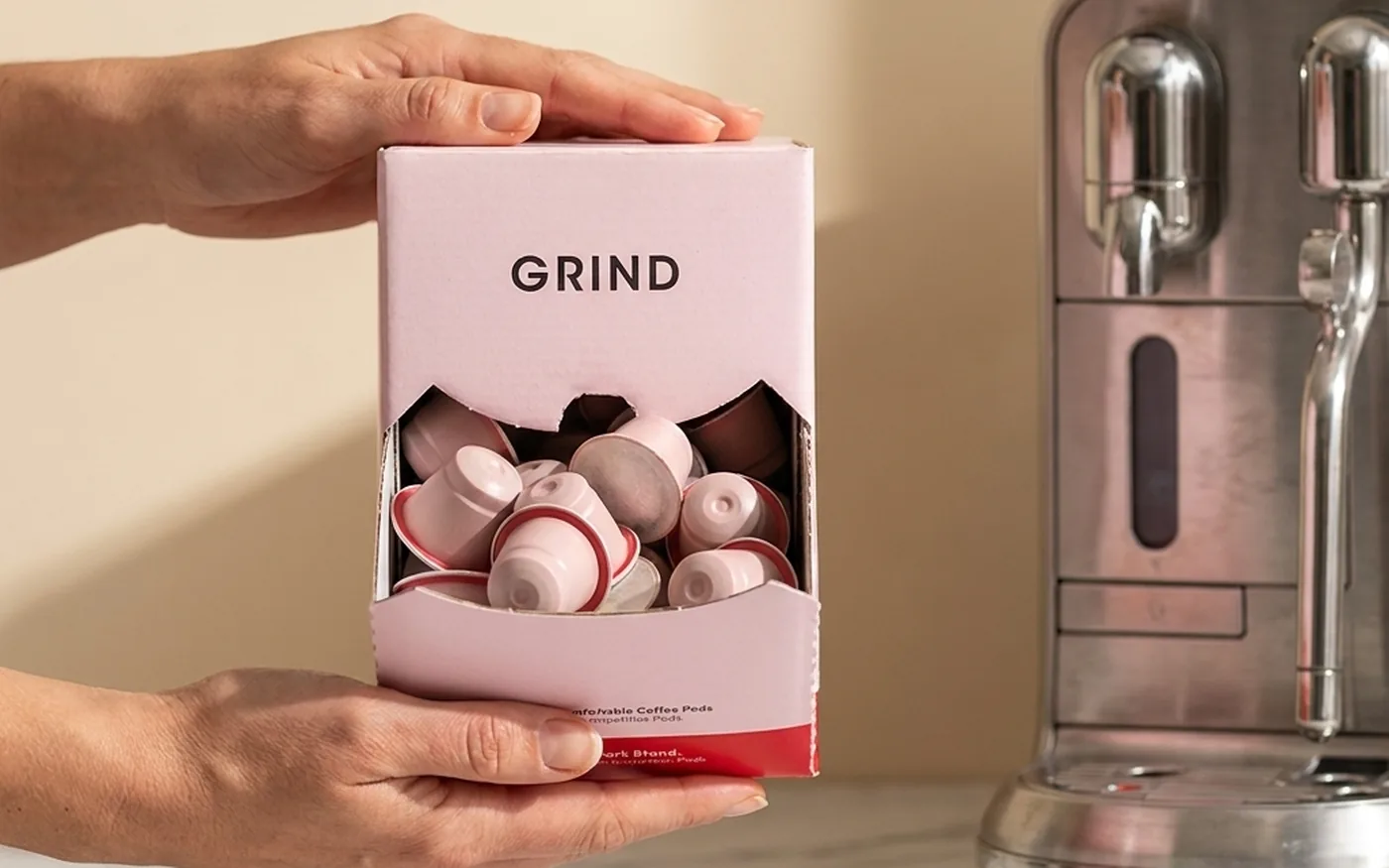
1. Grind - Decaf House Blend
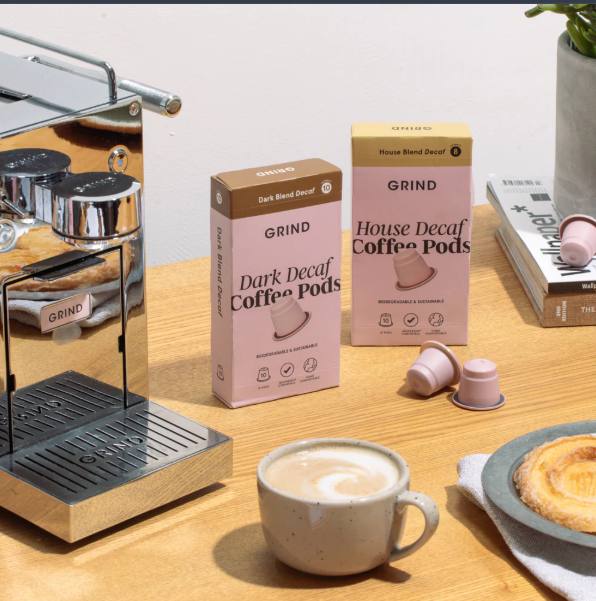
The first time I brewed Grind's decaf, I had to double-check the box. There is a richness here that most decaf pods simply do not deliver.
Grind runs two decaf blends - House Decaf and Dark Decaf - both using the sugarcane decaffeination process. The House Decaf is the one to start with. It is a medium roast built around the same profile as their signature House Blend, with the caffeine removed at origin using plant-derived ethyl acetate.
On the nose: dark chocolate and toasted almond. Through the body: a rounded caramel sweetness with enough weight to hold up in milk. On the finish: clean, with none of the hollow aftertaste that plagues lesser decafs. The crema was consistent across multiple pulls - thick, golden-brown, and stable.
The pods are home compostable, certified industrial compostable, and made from plant-based materials. They fit all Nespresso Original Line machines and the Grind Two machine. You can find them in Tesco, Waitrose, and on Amazon alongside Grind's own site, which makes them one of the most accessible speciality decaf options in the UK.
Grind also offers a subscription at up to 25% off with a free tin and free shipping, bringing the price per pod to around 40p. At that price, with this quality, there is not much to argue with.
“Verdict: The best all-round decaf pod in the UK right now. Compostable, widely available, and genuinely difficult to distinguish from the caffeinated version. Start here.”
| Evaluation Criteria | Our Findings |
|---|---|
| Full Review | Read our Grind Coffee review |
| Best For | Best all-round decaf pod - flavour, value, and accessibility |
| Capsule Type | Home compostable, plant-based, Nespresso Original compatible |
| Flavour Profile | Dark chocolate, toasted almond, caramel sweetness |
| Decaffeination | Sugarcane process (natural ethyl acetate) |
| Price | From 40p/pod (subscription) to 50p/pod (one-off) |
| Shop | Grind Decaf → |
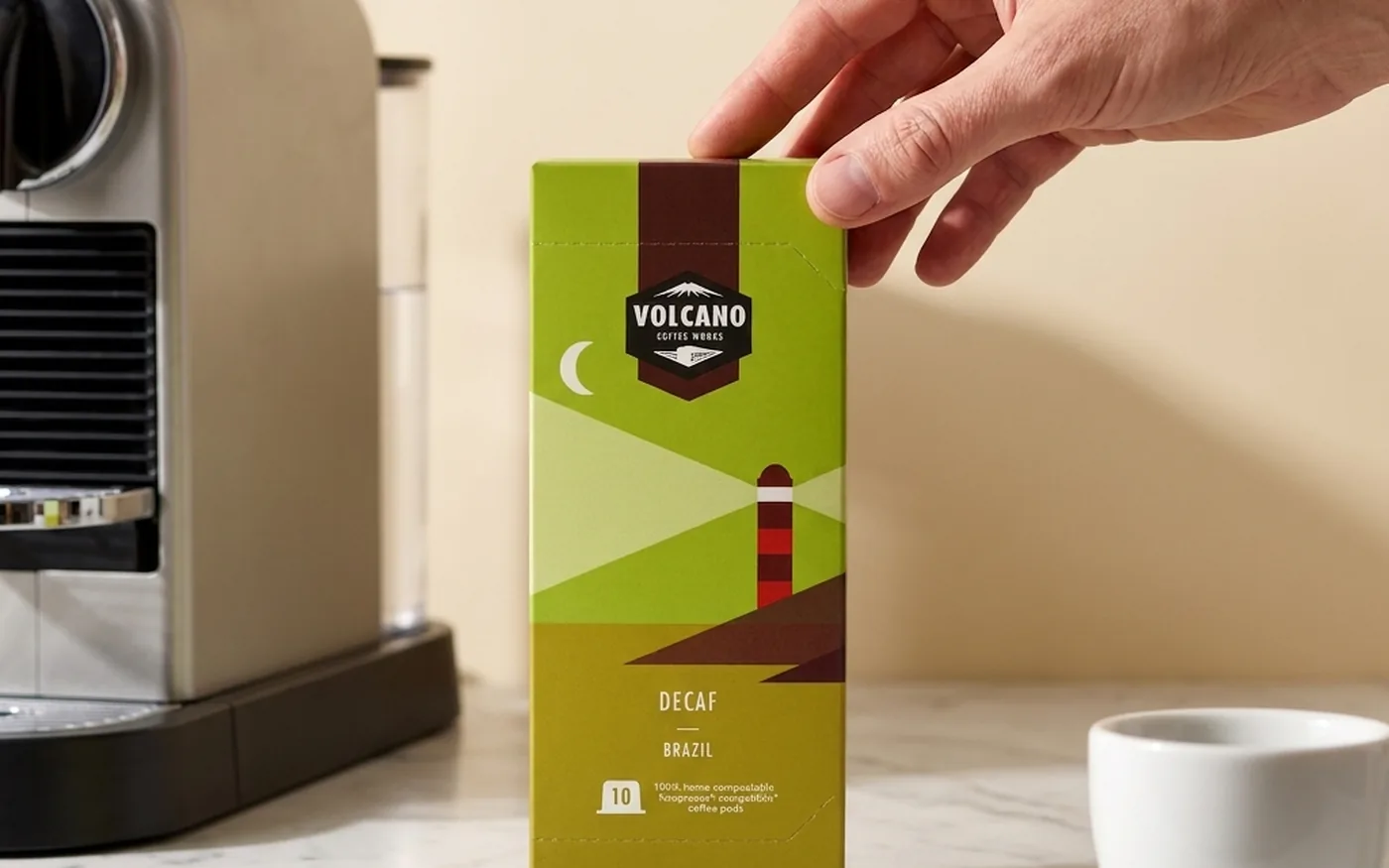
2. Volcano Coffee Works - Decaf
I have visited Volcano's roastery in Brixton more than once, and the care they put into sourcing carries through to their decaf programme.
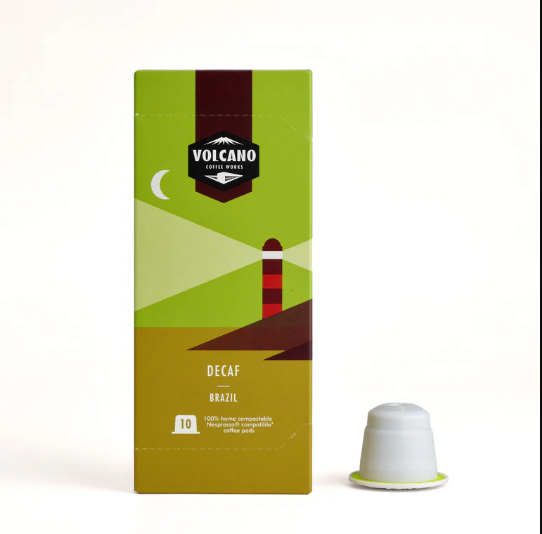
Volcano uses the sugarcane process on single-origin Brazilian beans, and the result is a Great Taste Award-winning pod that performs well above its weight class. The flavour profile lists maple syrup, green grape, and dark chocolate caramel. In our testing, the maple sweetness came through clearly - a distinctive quality that sets this apart from the chocolate-and-nut profiles that dominate the decaf category.
The pods are fully compostable, made from biobased cellulose and vegetal oils, and certified 'OK Compost Home' - meaning they decompose within 180 days at ambient temperature without needing industrial composting facilities. That is a genuine environmental advantage over aluminium pods, even recyclable ones.
At around 65p per pod (standard pricing, 40-pack), Volcano sits at the premium end. A subscription brings that down to approximately 55p. The cost is justified by the single-origin quality and the compostable format.
“Verdict: The decaf for people who care about provenance. Great Taste Award-winning, compostable, and that maple-sweetness finish is unlike anything else in this category.”
| Evaluation Criteria | Our Findings |
|---|---|
| Full Review | Read our Volcano Coffee Works review |
| Best For | Flavour complexity and single-origin provenance |
| Capsule Type | Home compostable (OK Compost Home certified), biobased cellulose |
| Flavour Profile | Maple syrup, green grape, dark chocolate caramel |
| Decaffeination | Sugarcane process (natural ethyl acetate), Brazilian origin |
| Price | 65p/pod (standard) / 55p/pod (subscription) |
| Shop | Volcano Decaf → |
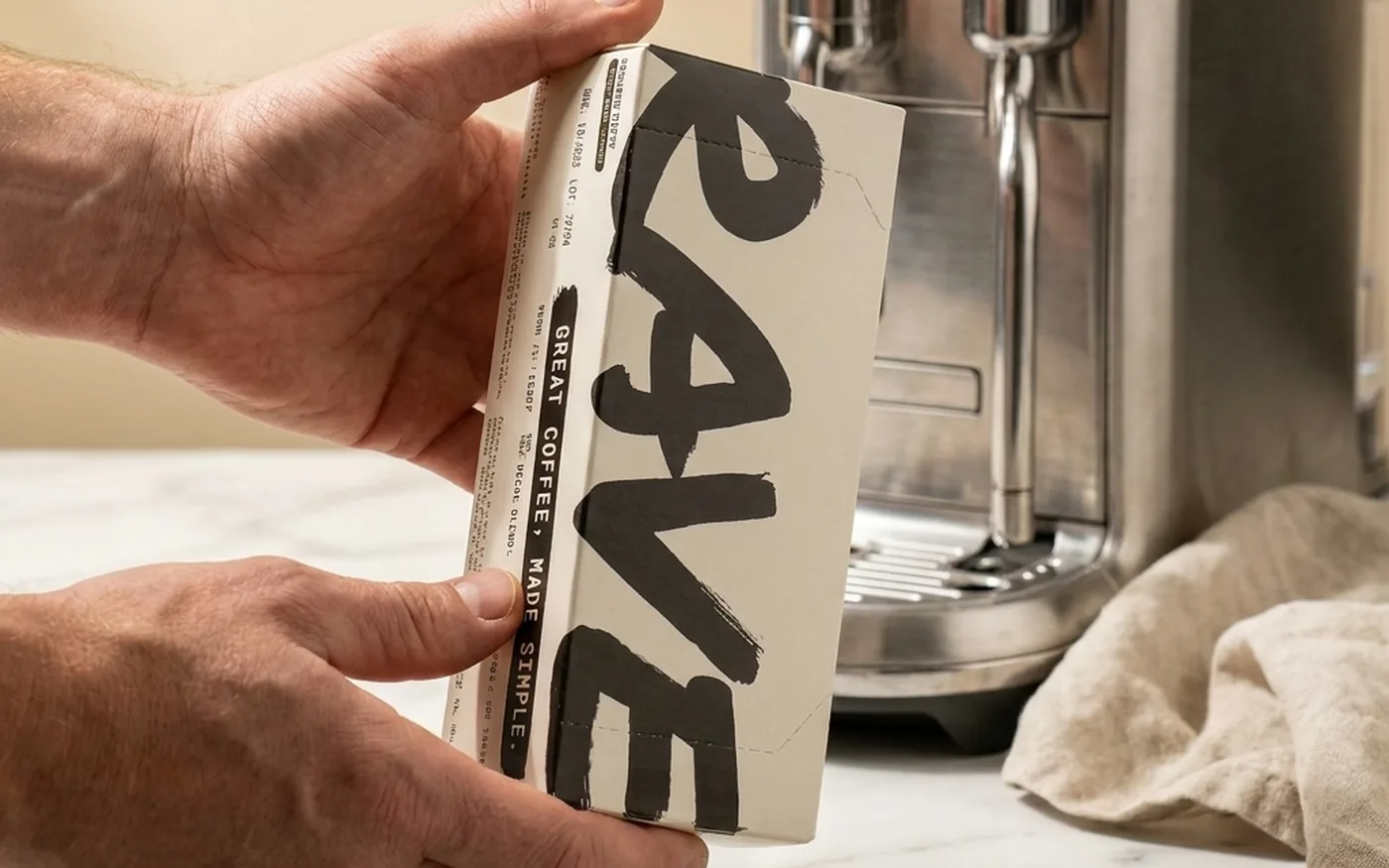
3. Rave Coffee - Swiss Water Decaf
If your priority is a completely chemical-free decaf, Rave is the pick.
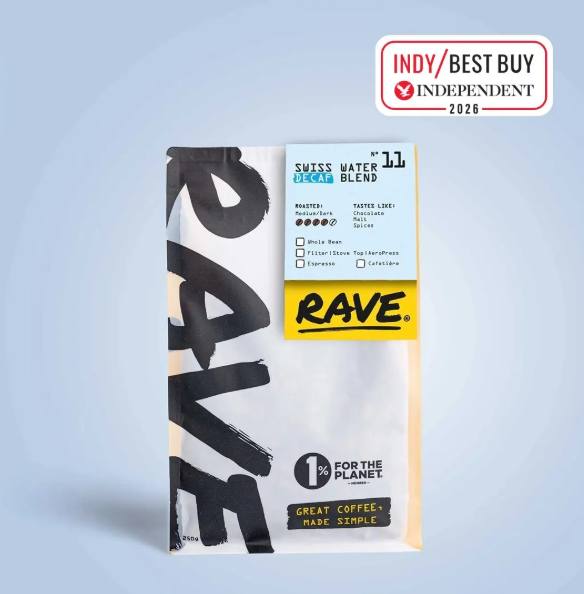
Rave is one of the few UK pod brands using the Swiss Water Process - the method that removes 99.9% of caffeine using only water and no solvents of any kind. Their decaf is a single-origin Colombian that they roast with the same attention as their caffeinated range. That sounds like marketing copy, but in testing, it held up. The flavour profile is chocolate, spice, and malt - a classic Colombian profile that the Swiss Water Process has preserved intact.
On the nose: milk chocolate and a gentle spice. Through the body: rounded and medium-weight with a malty sweetness. On the finish: clean and short, with no bitterness or hollowness. It does not linger the way some decafs do, as though the cup is trying to remind you something is missing.
The pods are 100% home compostable and freshly roasted to order. At approximately 33p per pod for a 10-pack (dropping to 29p for the 100-pack), Rave is the best value speciality decaf pod we tested. Free UK delivery on orders over 25 pounds.
“Verdict: The purest decaf on this list. Swiss Water Process, compostable, and remarkably good value. If chemical-free matters to you, this is the one.”
| Evaluation Criteria | Our Findings |
|---|---|
| Full Review | Read our Rave Coffee review |
| Best For | Chemical-free decaf at the best value |
| Capsule Type | 100% home compostable, Nespresso Original compatible |
| Flavour Profile | Milk chocolate, spice, malt |
| Decaffeination | Swiss Water Process (99.9% caffeine removal, zero solvents) |
| Price | From 29p/pod (100-pack) to 33p/pod (10-pack) |
| Shop | Rave Decaf → |
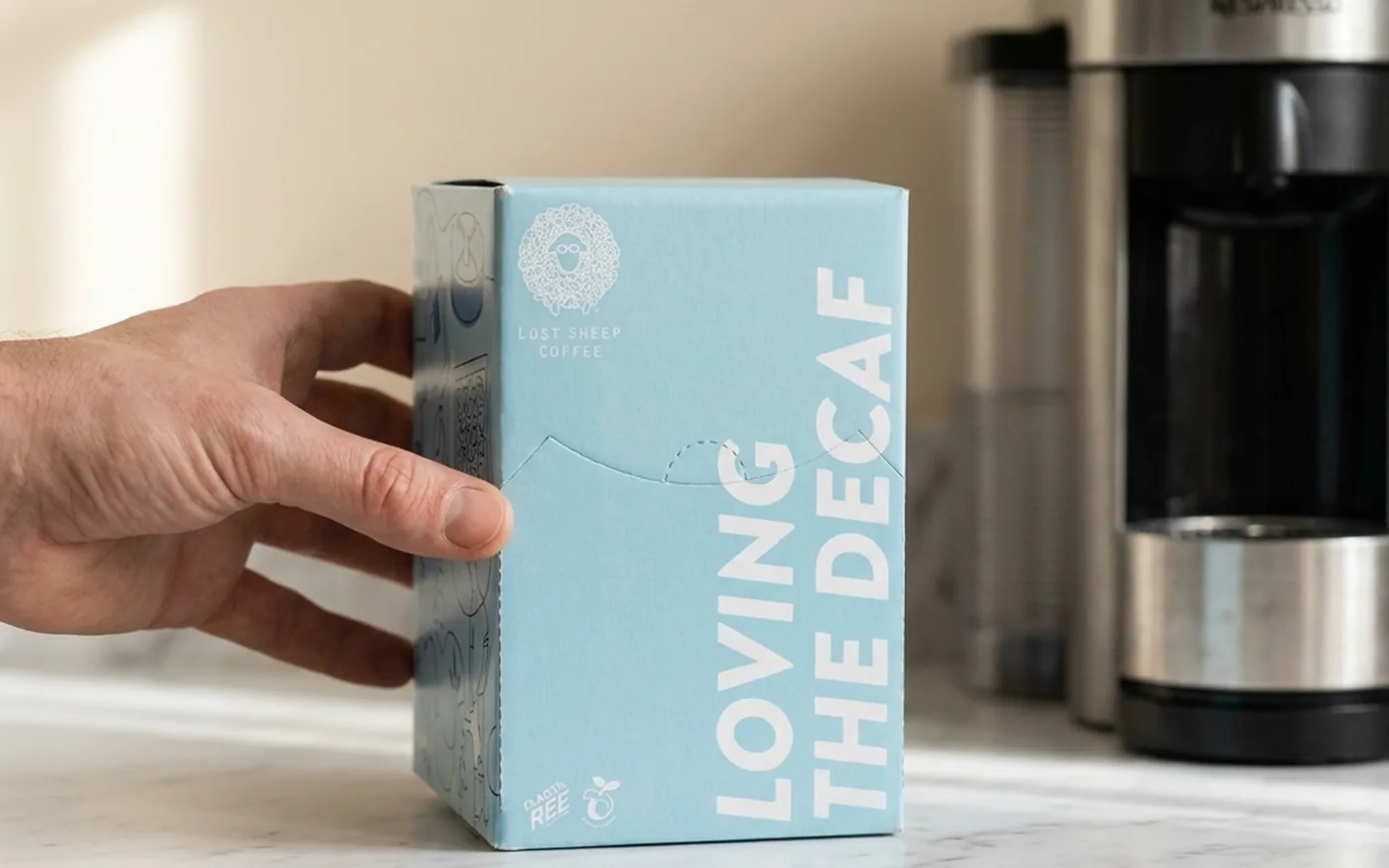
4. Lost Sheep Coffee - Loving the Decaf
Lost Sheep operate out of a small roastery in Whitstable, Kent, and they have built a quietly impressive decaf range.
Their 'Loving the Decaf' pods use the sugarcane process on single-origin Colombian beans. The flavour leans into dark chocolate and sweet orange - bolder and fruitier than the more common caramel-and-nut decaf profiles. In our testing, the orange note was subtle but present, adding a brightness that kept the cup interesting through to the finish.
The pods are fully home compostable and plastic-free, precision-roasted in small batches. At approximately 42p per pod, they sit in the mid-range for speciality decaf.
What makes Lost Sheep worth noting is their Fifty Fifty blend - a half-caf option that combines equal parts caffeinated and decaffeinated beans. If you want to reduce caffeine without eliminating it entirely, this is one of the only speciality pod options in the UK that lets you do that. The Fifty Fifty delivers around 40-50mg of caffeine per cup versus 2-5mg for full decaf and 80-100mg for regular. It is a smart middle ground that more roasters should offer.
“Verdict: Bold, fruity decaf with character. The Fifty Fifty half-caf is a genuinely useful option if full decaf feels like too big a step.”
| Evaluation Criteria | Our Findings |
|---|---|
| Full Review | Read our Lost Sheep Coffee review |
| Best For | Bold flavour and the half-caf option |
| Capsule Type | Home compostable, plastic-free, Nespresso Original compatible |
| Flavour Profile | Dark chocolate, sweet orange, bold body |
| Decaffeination | Sugarcane process (natural ethyl acetate), Colombian origin |
| Price | 42p/pod |
| Shop | Lost Sheep Decaf → |
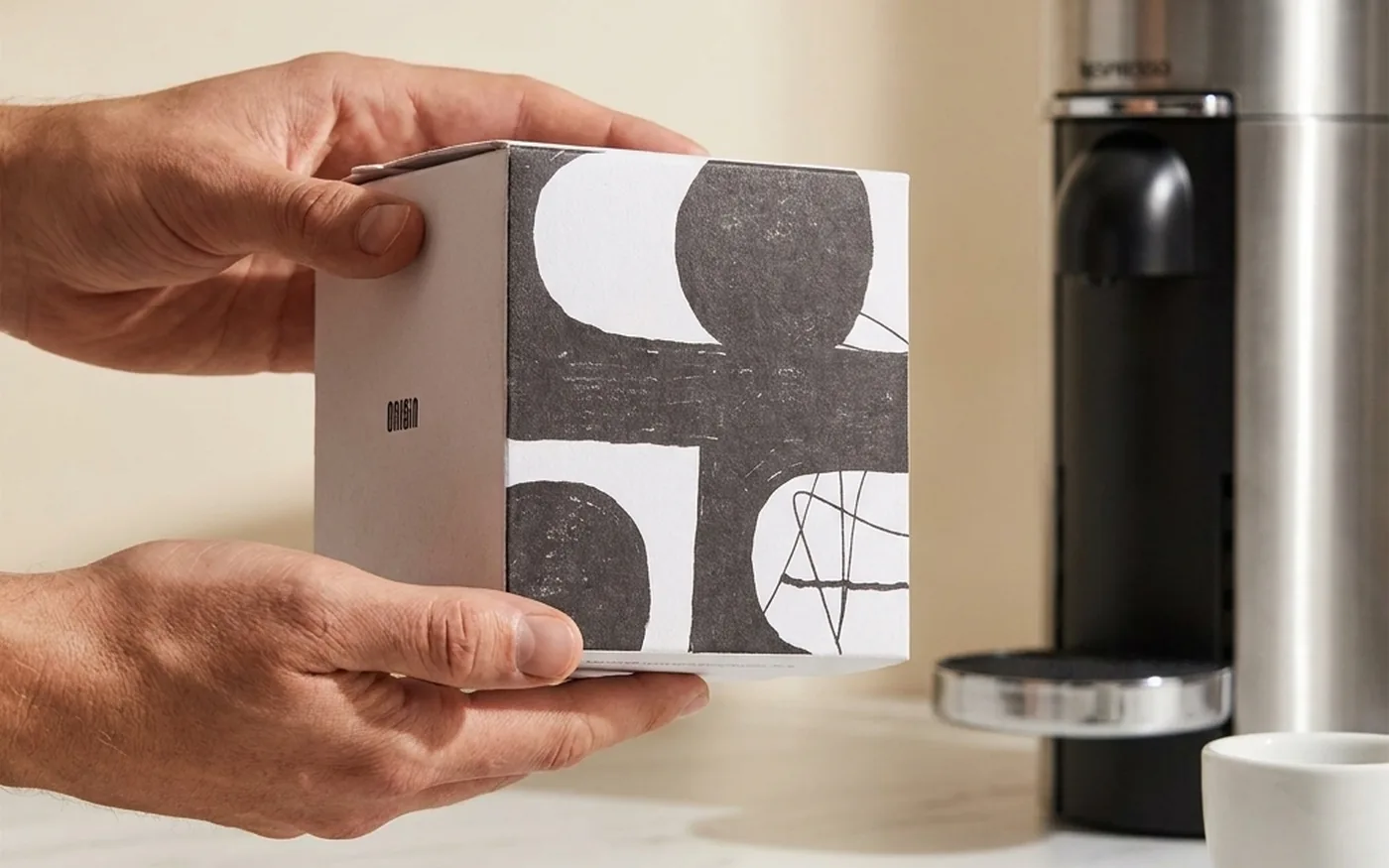
5. Origin Coffee - Decaf Espresso
Origin roast in Cornwall and source directly from producers through their own Direct Trade programme. Their decaf pods use the sugarcane process on beans from their Atlas blend - the same coffee that supplies their flagship range.
The pods are certified home compostable by the European Standards body, plastic-free, and Nespresso Original compatible. On the flavour side, Origin describe a sweet, bold profile. In our testing, the cup delivered a clean body with a gentle sweetness and moderate intensity. It is not the most complex decaf on this list, but it is well-executed and consistent across multiple brews.
Origin also run a pod subscription with tiered rewards - 25% off your first three orders, then a fixed 10% discount. If you are looking for organic coffee pods, their range includes certified organic options too, and sustainability and direct sourcing are clearly priorities for this roaster.
“Verdict: Reliable, clean, and sustainably sourced. A solid choice for anyone who values Direct Trade credentials alongside their decaf.”
| Evaluation Criteria | Our Findings |
|---|---|
| Full Review | Read our Origin Coffee review |
| Best For | Direct Trade sourcing and sustainability |
| Capsule Type | Home compostable (European Standards certified), plastic-free |
| Flavour Profile | Sweet, bold, clean body with gentle sweetness |
| Decaffeination | Sugarcane process (natural EA from non-GMO Colombian sugarcane) |
| Price | around 50-55p/pod (estimated, subscription discount available) |
| Shop | Origin Decaf → |
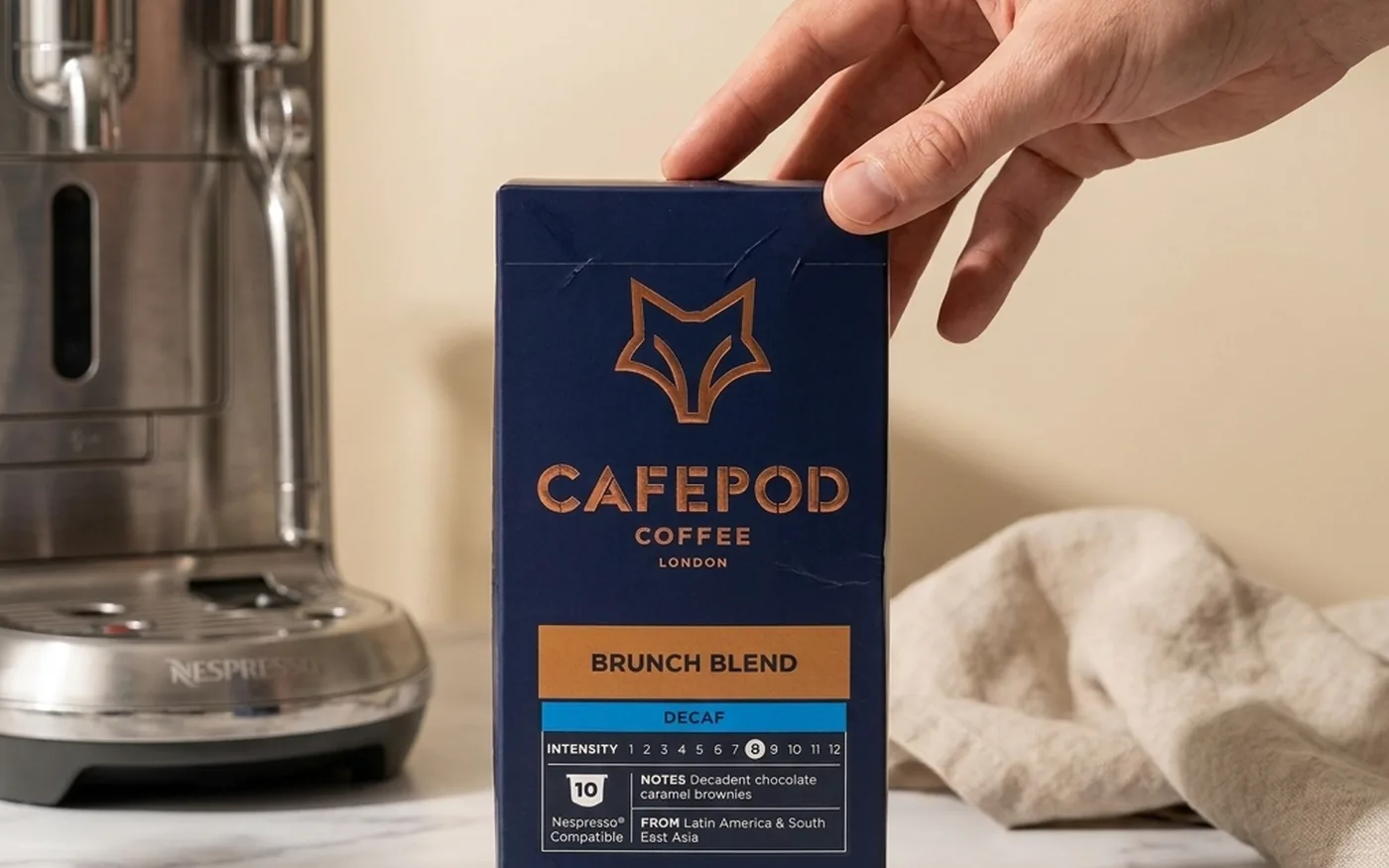
6. CafePod - Decaf Brunch Blend
CafePod take a different approach to most brands on this list. Their pods are aluminium (recyclable via Podback or local collection), their coffee blends Arabica with Robusta for body and depth, and their decaffeination uses the CO2 process.
The Decaf Brunch Blend is an Intensity 8 lungo with notes of milk chocolate and caramel. In our testing, the Robusta component added a depth and crema thickness that pure Arabica decafs sometimes lack. It is not as nuanced as the speciality options higher on this list, but it delivers a satisfying, full-bodied cup that works particularly well with milk.
CafePod also offer a Decaf Supercharger Espresso at Intensity 11 - a stronger, more concentrated option with roasted chestnut and spice notes. If you drink your decaf as a flat white or cappuccino, the Supercharger is the better pick.
The pods are Rainforest Alliance sourced, and CafePod is widely available in UK supermarkets. Free delivery on orders over 35 pounds from their own site.
“Verdict: The best decaf pod for milk drinks. The Arabica-Robusta blend and CO2 decaffeination deliver body and crema that pure Arabica pods struggle to match.”
| Evaluation Criteria | Our Findings |
|---|---|
| Full Review | Read our CafePod review |
| Best For | Milk-based decaf drinks and supermarket availability |
| Capsule Type | Aluminium, recyclable via Podback, Nespresso Original compatible |
| Flavour Profile | Milk chocolate, caramel, toffee notes with milk |
| Decaffeination | CO2 process (supercritical carbon dioxide) |
| Price | around 35-40p/pod (varies by retailer and pack size) |
| Shop | CafePod Decaf → |
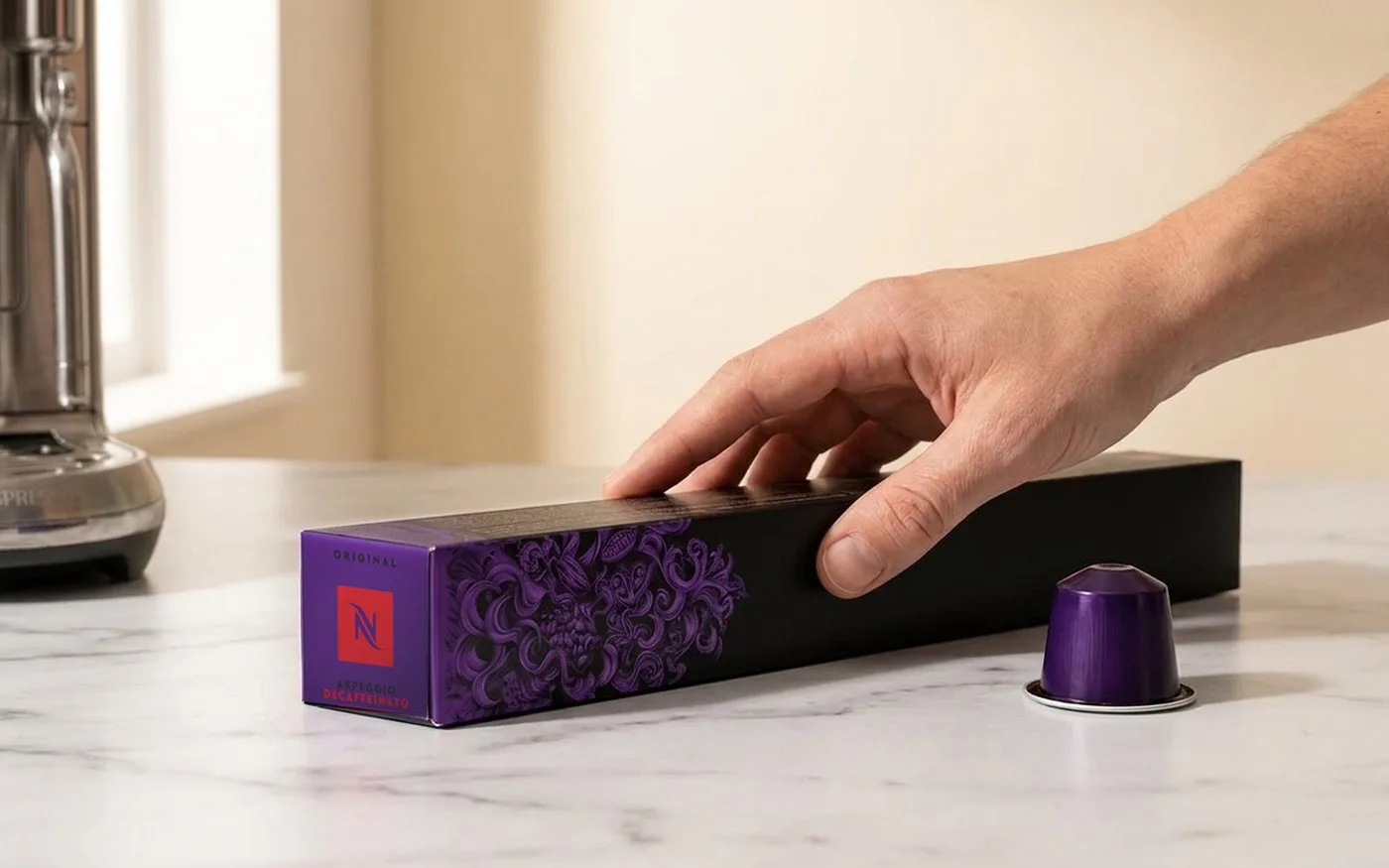
7. Nespresso - Ispirazione Firenze Arpeggio Decaffeinato
The benchmark. Not because it is the best decaf pod available, but because it is the one most people try first - and it is the standard against which every third-party pod is measured.
Nespresso use their own water and CO2 decaffeination processes. The Arpeggio Decaffeinato is an Intensity 9 espresso with a cocoa and woody character. It is smooth, consistent, and predictable in the way that Nespresso does well. You know exactly what you are getting every time.
Where Nespresso falls behind the speciality brands on this list is transparency and flavour complexity. They do not disclose single-origin sourcing for their decaf range. The flavour profile is clean but one-dimensional - good for a reliable daily shot, but it does not reward attention the way Grind or Volcano do.
The pods are aluminium and recyclable through Nespresso's own collection scheme or Podback. Pricing sits at approximately 42-50p per pod depending on the variant and pack size.
Nespresso also released a limited-edition French Lavender and Vanilla Decaffeinato in January 2026 at 85p per pod. It is a novelty, not a daily driver.
“Verdict: Reliable, consistent, and available everywhere. A safe starting point, but the speciality brands above offer more for similar or less money.”
| Evaluation Criteria | Our Findings |
|---|---|
| Full Review | Read our Nespresso review |
| Best For | Consistency and widest availability |
| Capsule Type | Aluminium, recyclable via Nespresso scheme or Podback |
| Flavour Profile | Cocoa, woody notes, smooth body |
| Decaffeination | Water and CO2 processes |
| Price | around 42-50p/pod |
| Shop | Nespresso Decaf → |
Caffeine Content: Decaf vs Regular vs Half-Caf
One of the most common questions about decaf: how much caffeine is actually left?
| Evaluation Criteria | Our Findings |
|---|---|
| Regular espresso pod | 60-80mg |
| Regular drip/filter coffee | 95-100mg |
| Half-caf pod (e.g. Lost Sheep Fifty Fifty) | 40-50mg |
| Decaf pod (sugarcane process) | 3-7mg |
| Decaf pod (Swiss Water Process) | 1-3mg |
| Decaf pod (CO2 process) | 2-6mg |
No decaf is truly zero caffeine. The Swiss Water Process removes the most (99.9%), followed by CO2 (97-99%), followed by sugarcane (approximately 97%). For most people, the difference is negligible. For those who are highly caffeine-sensitive or pregnant, Swiss Water offers the lowest residual caffeine.
Who Benefits from Decaf
Decaf is not a compromise. For several groups, it is the smarter choice.
Pregnant women and those trying to conceive. The European Food Safety Authority recommends a maximum of 200mg of caffeine per day during pregnancy. A single regular espresso pod delivers 60-80mg, leaving little room for tea, chocolate, or other caffeine sources throughout the day. Switching to decaf - especially Swiss Water Process decaf with its 99.9% caffeine removal - provides the ritual without the risk.
People managing anxiety. Caffeine stimulates the central nervous system and can amplify anxiety symptoms. If you experience jitteriness, racing thoughts, or disrupted sleep, decaf lets you keep the habit without the physiological trigger.
Evening coffee drinkers. Caffeine has a half-life of approximately five to six hours. An espresso at 4pm means half the caffeine is still in your system at 10pm. Decaf after midday is a practical solution for anyone who values both their evening coffee and their sleep.
Anyone reducing caffeine gradually. The half-caf option (like Lost Sheep's Fifty Fifty) is worth considering if you want to step down rather than cut off. Going from three regular coffees a day to three half-cafs halves your intake without changing your routine.
What to Avoid
Not every decaf pod deserves your money. Here is what our testing flagged.
Pods that do not disclose their decaffeination method. If a brand will not tell you how the caffeine was removed, assume the cheapest chemical solvent method. Speciality brands are transparent about this because their methods are a selling point.
Commodity-grade decaf with dark roast masking. An Intensity 12 decaf pod is often hiding low-quality beans behind aggressive roasting. Look for medium roasts from named origins - they have nothing to hide.
Pods marketed as 'naturally decaffeinated' without specifics. 'Natural' is not a regulated term. It could mean Swiss Water (genuinely chemical-free) or sugarcane EA (plant-derived solvent). Both are good options, but the vagueness is a red flag.
Stale pods. Decaf beans are more porous than regular beans after processing, which means they go stale faster. Check roast dates where available and avoid bulk-buying more than you will use in two to three months.
Final Verdict
The quality gap between decaf and regular coffee pods has narrowed dramatically. The best decaf pods in the UK now come from the same speciality roasters, use the same quality beans, and deliver cups that reward attention rather than demanding compromise.
For the best all-round decaf pod: Grind Decaf House Blend. Compostable, widely available, and the flavour holds up against their caffeinated range.
For the cleanest decaf process: Rave Coffee Swiss Water Decaf. Zero solvents, 99.9% caffeine removal, and the best value on this list.
For provenance and flavour complexity: Volcano Coffee Works Decaf. Great Taste Award-winning, single-origin, and that maple-sweetness finish.
For milk-based drinks: CafePod Decaf Brunch Blend. The Arabica-Robusta blend delivers crema and body that pure Arabica pods lack.
For reducing caffeine gradually: Lost Sheep Coffee Fifty Fifty. The only speciality half-caf pod we found in the UK.
If you are building a pod collection alongside these, our guide to the best organic coffee pods covers other corners of the market. And if you are new to pods entirely, our coffee pods complete guide walks through everything from machine compatibility to capsule types.
Decaf used to mean settling. It does not anymore.
Frequently Asked Questions
Is Decaf Coffee Completely Caffeine-Free?
What Is the Healthiest Decaffeination Method?
Do Decaf Pods Work in All Nespresso Machines?
Are Compostable Decaf Pods Better Than Aluminium?
Can I Drink Decaf While Pregnant?
Why Does Some Decaf Taste Bad?
Can I Use These Decaf Pods in a Nespresso Vertuo Machine?
Does Decaf Coffee Affect Sleep?
How Should I Store Decaf Coffee Pods?
Is Decaf Coffee Better for People With Acid Reflux?
Related Guides
- Best Nespresso Pods for Latte, Cappuccino and Flat White
- Aluminium vs Compostable Coffee Pods: Which Is Better?
- Are Coffee Pods Bad for You? What the Evidence Says
- 11 Best Nespresso Capsules 2026 - Tried, Tested and Ranked by Coffee Expert
- 10 Best Organic Coffee Pods 2026: Ranked for Purity, Sustainability and Flavour
- Coffee Pods: The Complete Guide (2026)

A wellness entrepreneur and biohacker, James explores the intersection of hospitality and health - from clean fuel and recovery tools to mindful routines that build balance into daily life.