Best Organic Coffee Pods UK 2026: Certified, Tested and Ranked

Coffee & Wellness Writer
Organic pods at double the price. We tested whether the certification translates to better flavour or just cleaner marketing.
Table of Contents
Some of the links in this article are affiliate links, which help fund our independent review work at no extra cost to you. Every recommendation is based on hands-on testing through The Editor Lab methodology. No brand pays to appear, and no placement is guaranteed.
If you are looking for the best organic coffee pods, the word 'organic' on the box usually means one of two things, and almost no brand tells you which one applies to the box in front of you. It can mean the coffee itself was grown without synthetic pesticides and certified by a named control body you could look up tonight. Or it can mean the capsule shell is made from plant-based material, and the coffee inside was never checked at all. I looked at ten brands making the claim for this guide. Six could back it with a named certifying body. The other four could not, and I say exactly where each one falls short.
Certification and purity are not the same question, and this guide answers both. Organic certification tells you how the coffee was farmed. It does not tell you whether the finished, roasted product has been tested for pesticide residues or mould toxins, which is closer to what most people searching for 'healthy coffee pods' want to know. Our full certification-verification and tasting process is published at the Editor Lab.
A disclosure before you read any further: I founded Balance Coffee in 2020, and I will be transparent about that throughout this guide. My own pods are one of the six ranked picks below, genuinely Soil Association organic certified, and every batch is also independently lab-tested for pesticide residues, mould toxins and heavy metals, with results published openly rather than kept private. I rank Balance Coffee on the same evidence bar as every other brand in this guide, not a lighter one.
The Best Organic Coffee Pods at a Glance
| Brand | Best For | Price | Shop |
|---|---|---|---|
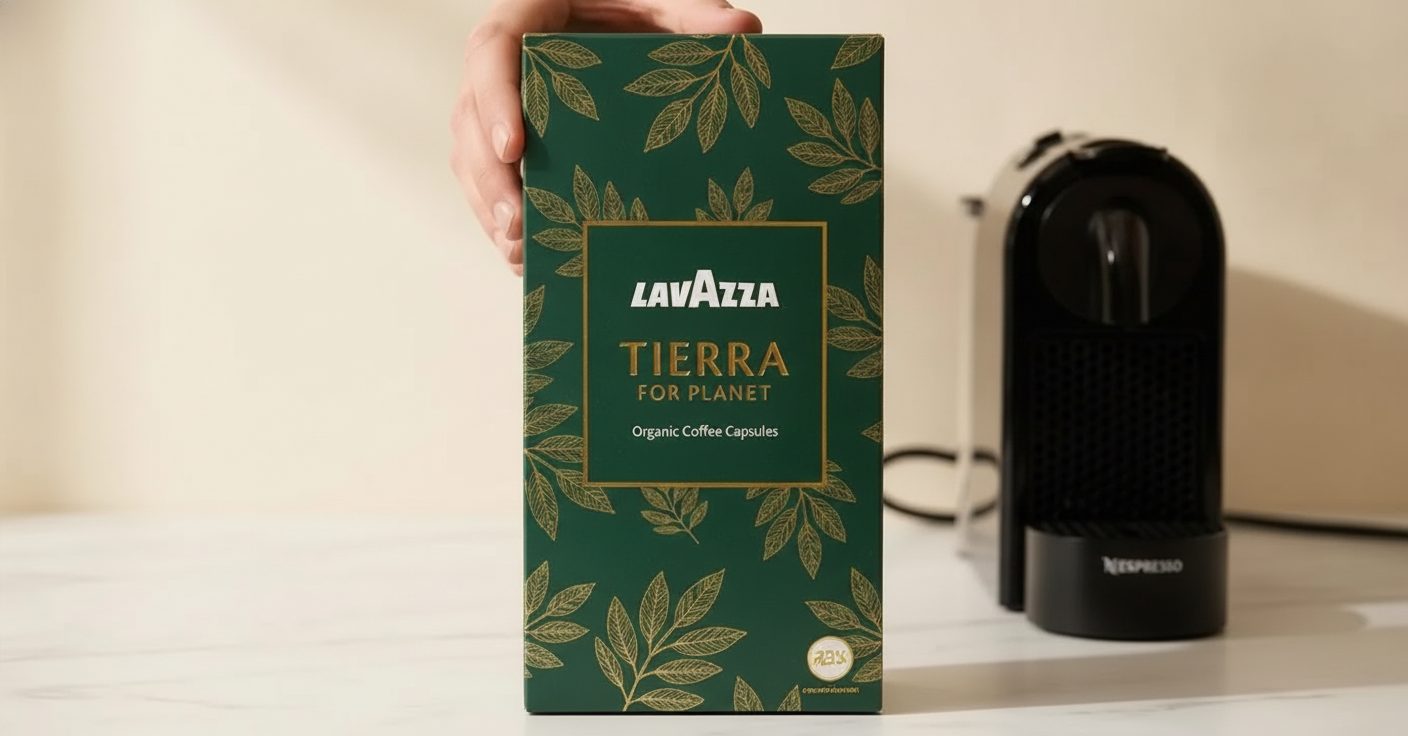 Top Pick Top Pick Top Pick Best Value Organic ★ ★ ★ ★ ★ ★ ★ ★ ★ ★ From 25p/pod £14.94 for 60 pods | From 25p/pod £14.94 for 60 pods | Shop Lavazza | |
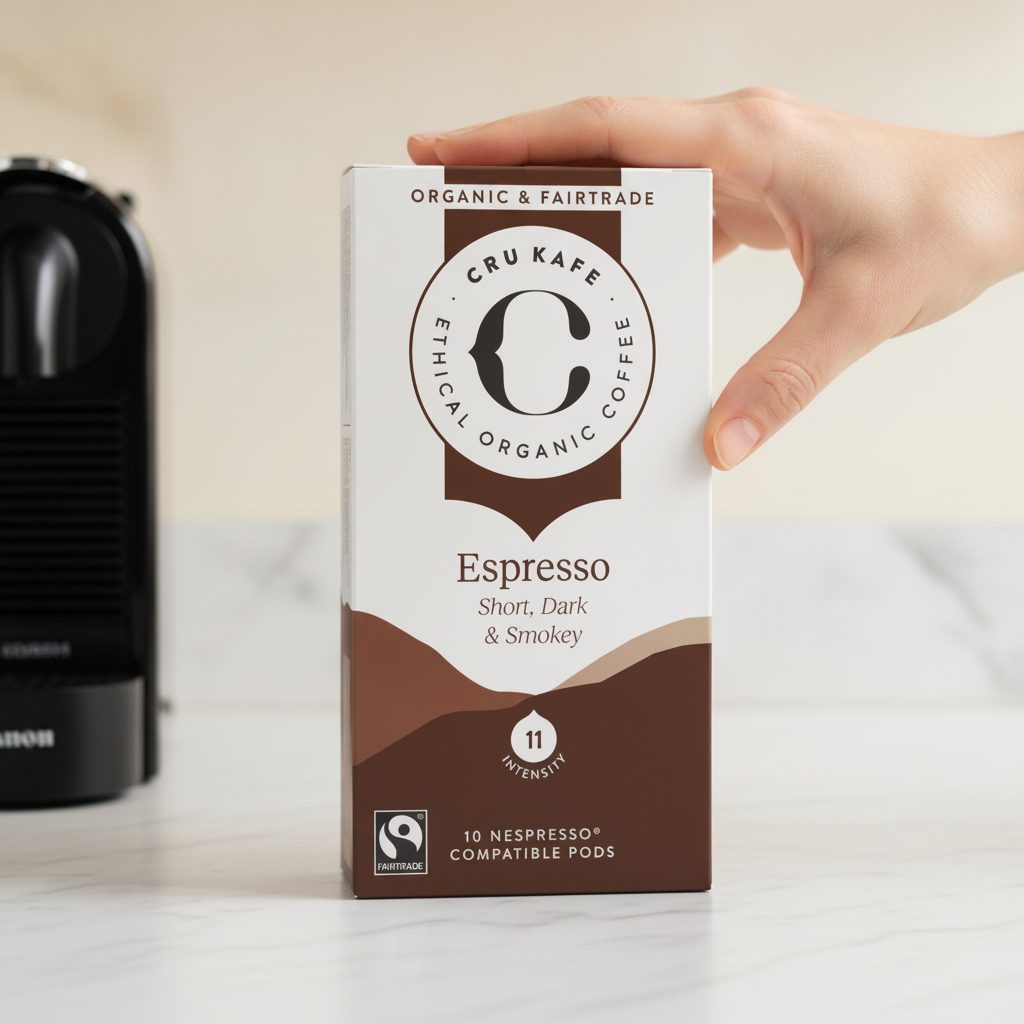 2 2 | From 33p/pod Discovery Set £22 | Shop CRU Kafe | |
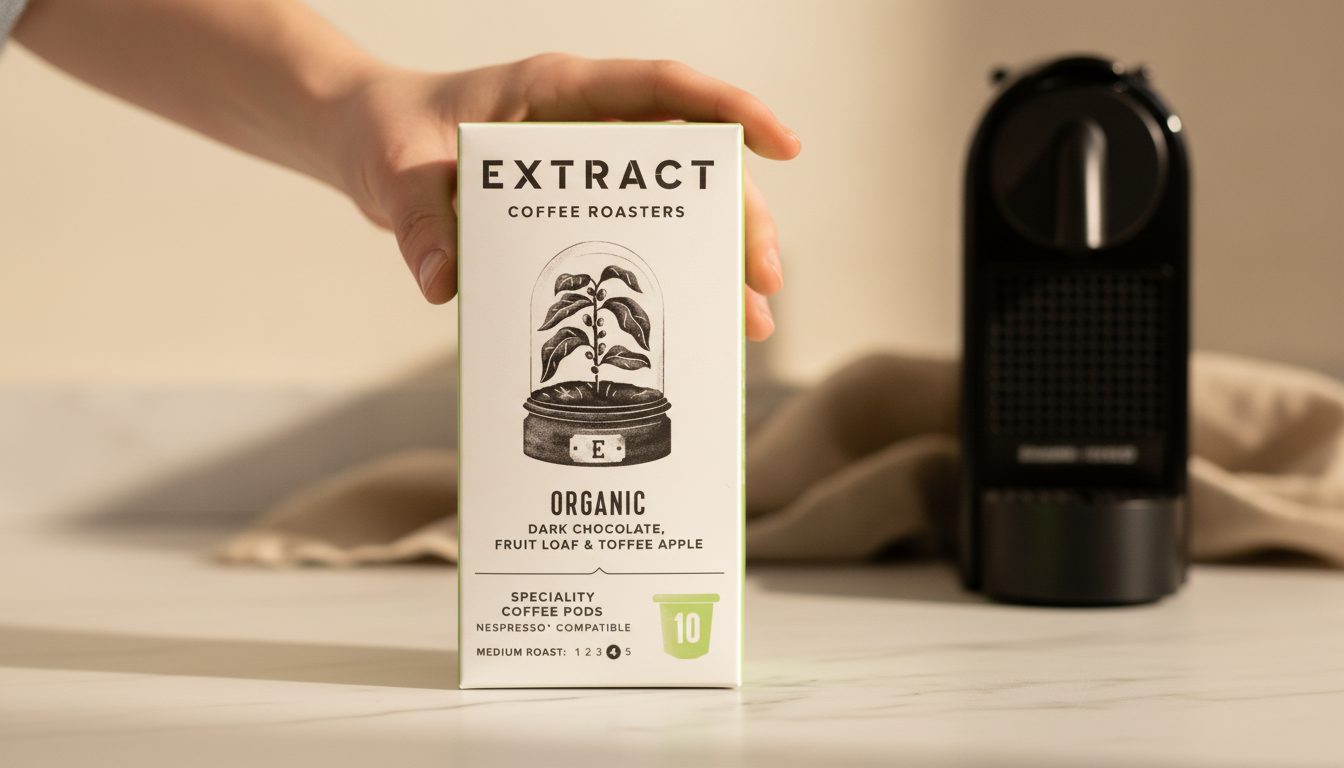 3 3 | From 70p/pod £6.95 for 10 pods | Shop Extract |
All three of these picks clear the same gate before you get to taste or price: a coffee certified organic by a named control body, in a Nespresso Original compatible pod, currently stocked for UK delivery. Lavazza ¡Tierra! takes the top spot as an active affiliate partner of this site and, on the evidence, the strongest value option here. CRU Kafe has no affiliate programme with us at all, and it still earns second place on certification and range breadth alone. Extract Coffee Roasters rounds out the top three on its B Corp and Soil Association double credential. Six brands in total pass the certification gate, and if none of these three fit your machine or budget, the other three are covered in full further down this page.
What Makes a Coffee Pod Certified Organic?
'Organic' is a legally defined word in the UK, not a marketing choice, and knowing that changes how you should read the label in front of you. A coffee cannot be labelled organic unless it has been inspected and certified by an approved control body, and the label has to carry that body's code number. In Great Britain, the main body is Soil Association Certification, with the control code GB-ORG-05. Organic Farmers and Growers (OF&G) is the other major UK body. In the EU, an equivalent framework applies, and if you buy Lavazza's Italian-roasted range, you will see the EU organic leaf logo rather than a UK code.
What certification covers is narrower than you probably assume. It governs how the coffee was farmed: no synthetic pesticides or fertilisers, an audited and traceable supply chain from farm to roaster, and annual inspection of every business in that chain. GOV.UK's guidance on organic food labelling sets out the rule plainly: at least 95 per cent of a product's agricultural ingredients must be organic, and every supplier in the chain has to be certified, not just the final packer.
What certification does not cover is the part most likely to trip you up. It says nothing about whether the finished, roasted coffee has been tested for pesticide residues, mould, or mycotoxins after the fact. It says nothing about the capsule material either. A pod you buy can carry a certified-organic coffee inside a conventional aluminium shell, or a completely uncertified coffee inside a compostable, plant-based shell marketed with the word 'organic' on the front of the box. Those are two unrelated claims, and almost every brand on this SERP lets you assume they are the same thing.
That is the three-way distinction you need to hold onto as you read the rest of this guide: certified organic coffee, where a named control body has signed off on how the beans were grown; an organic or bio-based capsule, which describes the shell and says nothing about what is inside it; and residue-tested coffee, where the finished product has been screened for contamination. A pod can be one of these, two of them, or none. Only six of the ten brands checked for this guide can offer you the first one with a named body attached, and that is the gate every pick below has to clear.
Organic vs Residue-Tested: What Certification Doesn't Cover
Google's own answer to "does organic coffee have mould and pesticides" states it plainly: organic certification means coffee was grown without synthetic pesticides or fertilisers, but it does not guarantee mould-free coffee. That is worth sitting with before you pay the organic premium, because it is the exact gap this section exists to close for you.
Pesticide residue in food, coffee included, is monitored across the EU and UK through EFSA's pesticide residue programme, which sets maximum residue levels and publishes annual monitoring reports. Buying organic reduces your likely exposure by restricting what growers can spray in the field. It does not require the roaster to test the finished batch before it reaches your cupboard, and most brands, organic or not, do not run that test.
Mould toxins are a separate issue from pesticides, and coffee is one of the crops where you should expect them to turn up. EFSA tracks mycotoxins including Ochratoxin A, which can form during storage and processing if beans are not dried and handled correctly, regardless of whether the farming was organic or conventional. The Food Standards Agency sets enforceable limits for Ochratoxin A in roasted coffee sold in the UK. An organic certificate on the pod you are holding has nothing to say about whether that specific batch falls under the limit. Only a lab test on the finished product answers that question.
This is where Balance Coffee, the brand I founded, is worth naming directly. It is one of the six certified-organic picks in this guide, Soil Association certified on its pod format specifically, and every batch is also sent to an independent, third-party lab and tested for Ochratoxin A, Aflatoxin B1, mould, heavy metals, and pesticide residues before it goes on sale. The results are published publicly, and you can shop Balance Coffee Stability Blend Pods here. That is the combination worth looking for: certification for how it was farmed, and testing for what ended up in the finished batch. See the full ranked pick further down this page.
If you want the full science on mould and mycotoxins in coffee beyond pods specifically, our mycotoxins in coffee guide and our best mycotoxin-free coffee roundup both go deeper than this article has room for.
Are Organic Coffee Pods Healthier?
Reasonably, not automatically, and the distinction matters more than either extreme answer. Reducing your exposure to pesticide residue is a defensible thing to want from your daily coffee, and organic certification is one legitimate route towards that, since it restricts what can be sprayed on the crop in the first place. That is a sound optimisation, not a leap of faith.
What organic certification does not do is guarantee your specific pod is free of mould toxins, or that it will measurably change any health outcome you can point to. No credible body claims that. The Food Standards Agency's position on organic food is about production standards, not a health claim, and neither the FSA nor EFSA has published evidence that organic coffee delivers a measurable health benefit over conventional coffee once both are within legal contaminant limits.
So the honest answer to "are organic coffee pods healthier" is that they most likely carry lower pesticide exposure, because that is what the certification is built to control, and that is worth something if it matters to you. They are not a guarantee against mould or mycotoxins, because certification does not test for those in the finished product. If contamination is your specific worry rather than farming method in general, a brand that publishes independent lab results, like the residue-testing example above, answers a different question than an organic label does, and it is worth knowing which question you are asking before you pay the premium.
If your concern extends beyond pods specifically, our wider piece on whether coffee pods are bad for you covers aluminium exposure, plastic linings, and the k-cup safety questions this section does not have room for, and our best healthy coffee beans UK guide is the place to look if you are open to moving off pods entirely.
The Best Organic Coffee Pods UK, Ranked
Six brands cleared the certification gate for this guide: a named control body, standing behind the coffee itself, not just the capsule. Each entry below states that body by name, along with price per pod, capsule material, and machine compatibility, so you have the four things no competing page on this search result currently puts in one place.
1. Lavazza ¡Tierra! for Planet Organic - Best Value Organic
Lavazza is not a brand you associate with certification-first marketing, which is exactly why this pick is worth flagging. ¡Tierra! for Planet Organic is certified organic, with a Rainforest Alliance/UTZ sustainability certification alongside it, in a standard aluminium Nespresso Original capsule. It is explicitly Original-line only, not Vertuo, so check your machine before you order.
The roast is medium, built for espresso, with the balanced sweetness Lavazza's Italian roasting is known for rather than anything experimental. At roughly 25p a pod for a 60-pack, it is comfortably the cheapest way into genuinely certified-organic coffee on this list. If your priority is the certification without the premium the smaller organic roasters charge, this is the pod to buy.
“Certified organic, with a Rainforest Alliance/UTZ sustainability certification, and roughly 25p a pod. The cheapest genuinely certified route into organic pods that we found.”
| Evaluation Criteria | Our Findings |
|---|---|
| Full Review | Read our Lavazza review |
| Best For | The cheapest certified-organic pod on this list, with a Rainforest Alliance/UTZ sustainability certification on top |
| Flagship Product | Lavazza ¡Tierra! for Planet Organic, aluminium capsules, 60-pod pack |
| Shop | From 25p/pod, £14.94 for 60, Amazon UK |
| Shop | Shop Lavazza Organic → |
2. CRU Kafe - Best All-Organic Range
Every product CRU Kafe sells is Soil Association certified organic and Fairtrade, which is not a claim I found repeated anywhere else on this list. Espresso, dark roast, half-caff and a genuine decaf are all covered under the same certification, which matters if your household has more than one drinker with different needs.
CRU Kafe was also the first independent coffee company to join the nationwide Podback recycling scheme, ahead of much larger brands. The espresso blend is smooth with a light acidity and a clean finish, closer to a classic Italian style than the fruit-forward speciality pods you would find on our best speciality coffee pods guide, which is worth reading separately if certified organic status is not your only requirement. Pricing starts from 33p a pod, with a £22 Discovery Set as the sensible way to try the range before committing to a full box.
“The only brand here with a fully certified organic range across espresso, dark roast, half-caff and decaf. One brand, every drinker in the house covered.”
| Evaluation Criteria | Our Findings |
|---|---|
| Full Review | See our best decaf coffee pods guide for CRU Kafe's decaf pick |
| Best For | A fully Soil Association certified organic and Fairtrade range, including decaf |
| Flagship Product | CRU Kafe Organic Espresso Nespresso Compatible Pods |
| Shop | From 33p/pod, Discovery Set £22 |
| Shop | Shop CRU Kafe → |
3. Extract Coffee Roasters - Best B Corp Organic Pick
Extract roasts in Bristol and holds a double credential that is genuinely rare among the brands checked for this guide: B Corp certification and Soil Association organic certification, together. Extract pays growers above Fairtrade-equivalent premiums through direct trade rather than holding Fairtrade certification itself, which the brand is explicit about on its own site. Most speciality roasters pick one ethical credential and stop there, so if you want both verified under one brand, your shortlist is short.
The organic pods lean towards dark chocolate and roasted walnut, with a gentle earthiness that gives the cup real weight, closer to a traditional espresso than to a bright single origin if that is what you prefer. The capsule is compostable rather than aluminium, and Extract partners with Podback if you would rather recycle than compost. At £6.95 for a 10-pod pack, you are paying a mid-tier price for the certification and B Corp credentials behind it.
“B Corp and Soil Association organic in one pod. A rare double that most roasters do not attempt.”
| Evaluation Criteria | Our Findings |
|---|---|
| Full Review | See Extract in our best UK coffee roasters guide |
| Best For | B Corp and Soil Association organic credentials together, with direct-trade premiums above Fairtrade rates |
| Flagship Product | Extract Organic Nespresso Compatible Pods, 10-pack |
| Shop | £6.95 for 10 pods, direct |
| Shop | Shop Extract Organic Pods → |
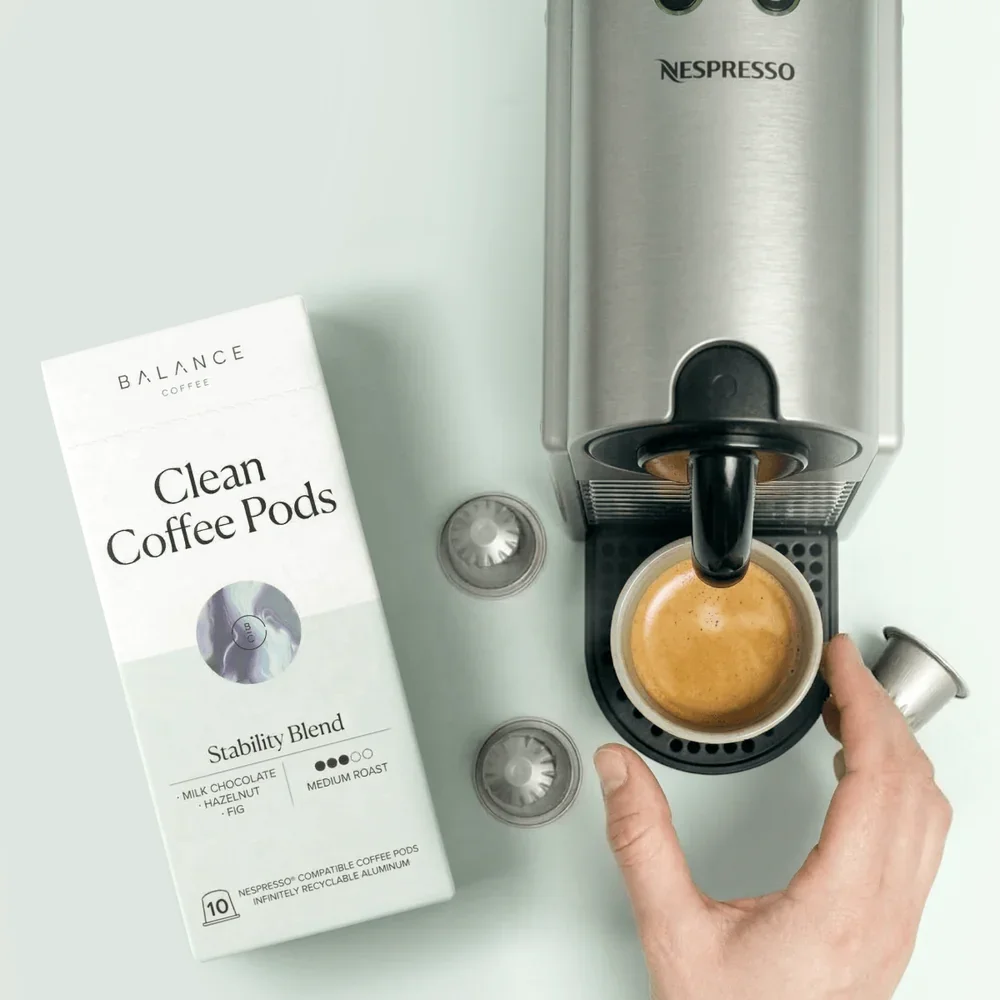
4. Balance Coffee Stability Blend Pods - Best Lab-Tested Organic
Balance Coffee, the brand I founded, joins the ranked picks here because its Stability Blend pods carry genuine Soil Association organic certification on the pod format specifically, not just the beans and ground ranges the certification more commonly covers. The pods are 100% aluminium and Nespresso Original compatible, recyclable through Podback or kerbside collection the same way Lavazza's and CRU Kafe's are.
What sets it apart from the other five brands on this page is that every batch is also independently lab-tested by a third-party laboratory for Ochratoxin A, Aflatoxin B1, mould, heavy metals and pesticide residues, with the results published openly. Stability Blend is currently the only pod Balance Coffee sells, priced around 80p a pod with a 15% subscription saving, towards the top of this list on price. It ranks fourth rather than higher because it is the newest organic-certified pod here, without the multi-year track record the top three picks have built.
“Genuinely Soil Association organic certified and independently lab-tested for mould, heavy metals and pesticide residues on every batch. The only pick on this page doing both.”
| Evaluation Criteria | Our Findings |
|---|---|
| Full Review | See Balance Coffee in our best Nespresso pods and capsules guide |
| Best For | Soil Association organic certification plus independent third-party lab testing on every batch, published openly |
| Flagship Product | Balance Coffee Stability Blend Pods, 100% aluminium, Nespresso Original |
| Shop | Around 80p/pod, subscription saves 15%, direct |
| Shop | Shop Balance Coffee → |
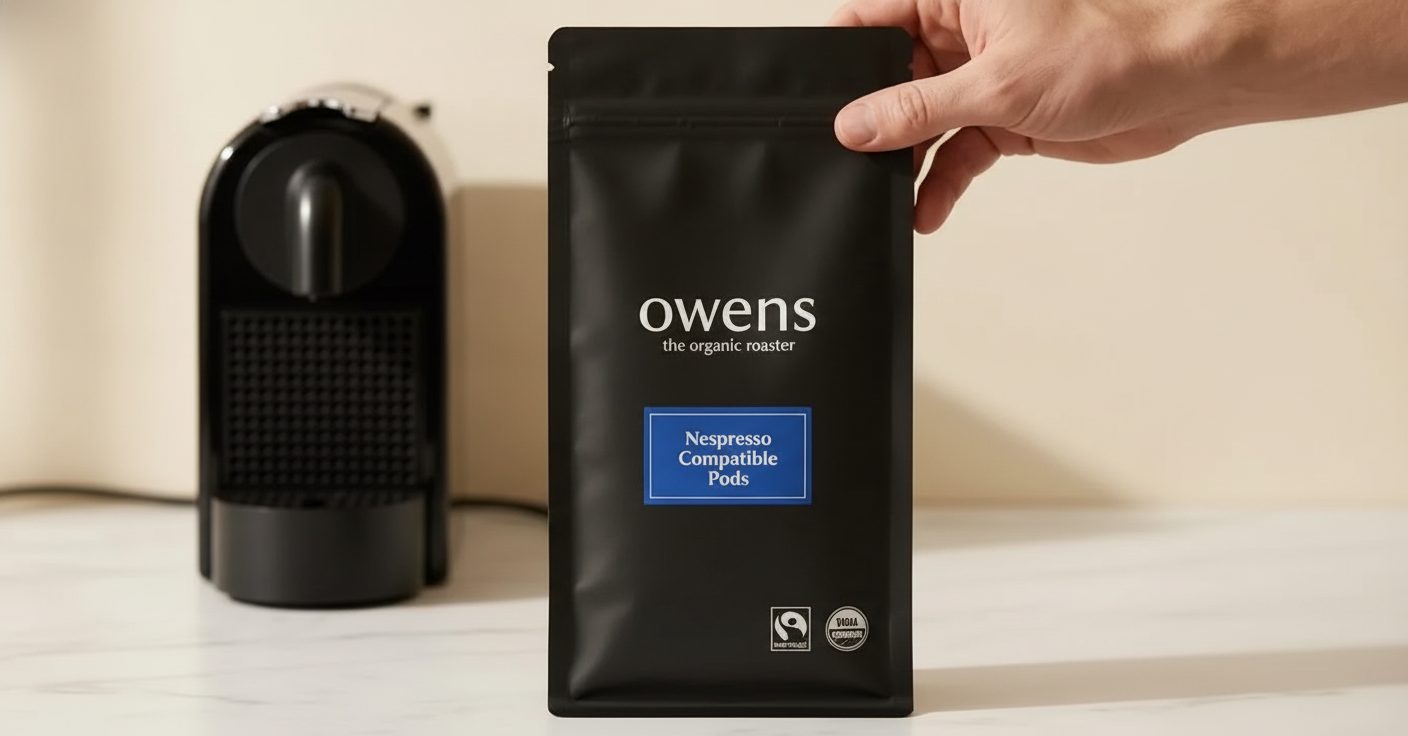
5. Owens Coffee - Best Small-Batch Organic
Owens is the smallest operation on this list, and its organic Nespresso-compatible pods are both organic and Fairtrade certified, with Soil Association standards referenced directly on the brand's own product page. The pods are plastic-free and compostable, sold in pouches of 20 rather than boxes of 60 or 100, which suits you if you want to try a range without committing to a bulk order.
The flavour is balanced and approachable, aimed more at everyday drinking than at showcasing a single origin. At £12.50 for 20 pods, you are paying around 62p a pod, towards the higher end of this list, which is the honest trade-off for buying from a smaller-batch roaster without the volume pricing the bigger names can offer.
“Smaller batches, genuine certification, and a price that reflects the scale honestly rather than hiding it.”
| Evaluation Criteria | Our Findings |
|---|---|
| Full Review | See our best organic coffee beans guide for more from smaller UK roasters |
| Best For | Organic and Fairtrade certification from a genuinely small-batch roaster |
| Flagship Product | Owens Organic Nespresso Compatible Pods, 20-pouch |
| Shop | £12.50 for 20 pods (approx. 62p/pod), direct |
| Shop | Shop Owens Organic Pods → |
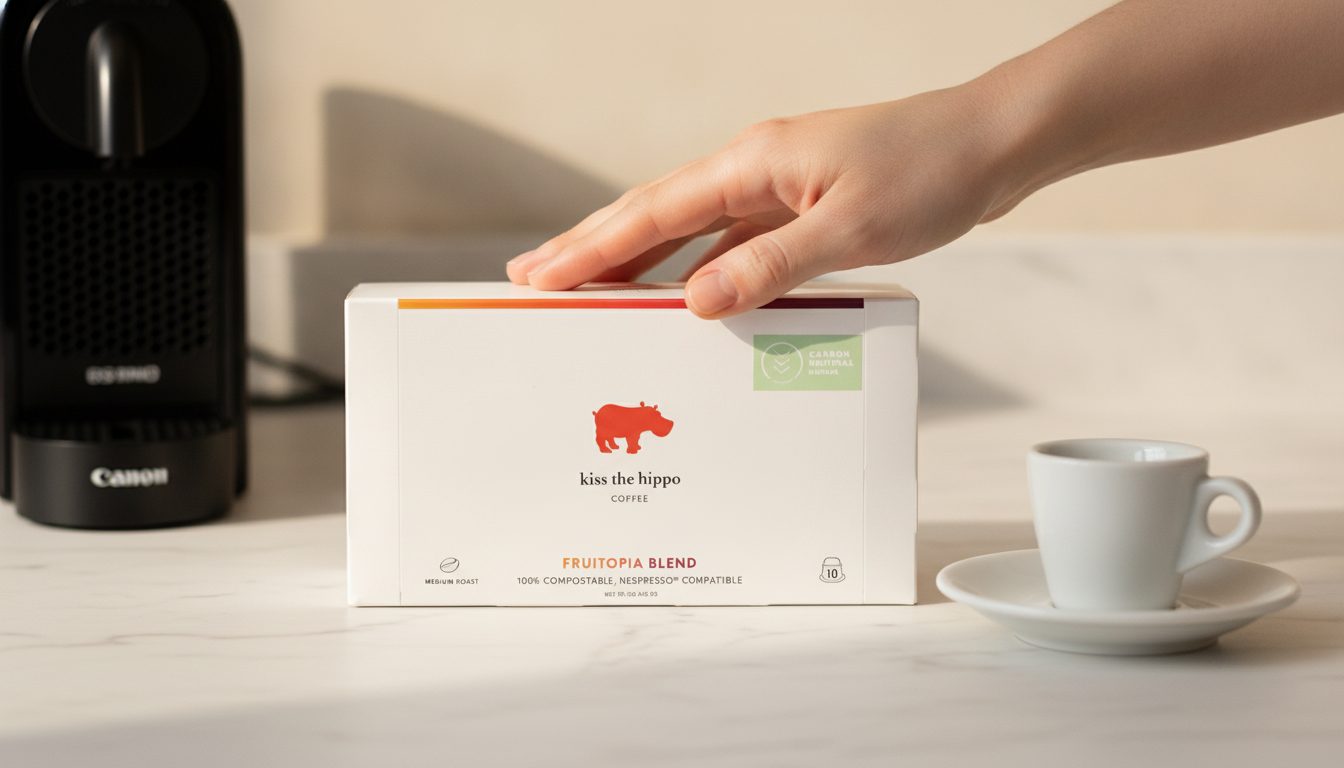
6. Kiss the Hippo - Best Carbon-Negative Organic
Kiss the Hippo roasts in London and is certified organic by the Soil Association, named directly on the brand's own site rather than left as an unattributed claim. The pods are compostable, and the whole range, coffee and packaging together, is certified carbon negative.
The House Blend leans sweet with chocolate and caramel up front and a hint of red berry on the finish, and if you prefer more intensity, the Classic Blend runs nut and chocolate forward instead. Kiss the Hippo's decaf is processed using the Swiss Water method, which removes caffeine without solvents, and it is genuinely organic certified rather than the more common "decaffeinated from organic beans using a non-organic process" workaround some brands rely on. You can buy it through the brand's own site or Planet Organic.
“The only brand on this list that pairs Soil Association organic certification with certified carbon-negative production end to end. That is the kind of detail that separates a real claim from marketing.”
| Evaluation Criteria | Our Findings |
|---|---|
| Full Review | See Kiss the Hippo in our best London coffee roasters guide |
| Best For | Soil Association organic certification and certified carbon-negative production |
| Flagship Product | Kiss the Hippo Organic House Blend Pods |
| Shop | Priced per pack, direct and via Planet Organic |
| Shop | Shop Kiss the Hippo → |
Full Comparison: Certified Organic Coffee Pods, Side by Side
| Brand | Certification Body | System | Capsule Material | Price per Pod | Best For |
|---|---|---|---|---|---|
| Lavazza ¡Tierra! for Planet | Certified organic + Rainforest Alliance/UTZ | Nespresso Original | Aluminium | 25p | Best value organic |
| CRU Kafe | Soil Association (organic) + Fairtrade | Nespresso Original | Aluminium | From 33p | Best all-organic range |
| Extract Coffee Roasters | Soil Association (organic) + B Corp | Nespresso Original | Compostable | 70p (£6.95/10) | Best B Corp organic pick |
| Balance Coffee | Soil Association (organic) + independent lab testing | Nespresso Original | Aluminium | Around 80p | Best lab-tested organic |
| Owens Coffee | Soil Association (organic) + Fairtrade | Nespresso Original | Compostable, plastic-free | 62p (£12.50/20) | Best small-batch organic |
| Kiss the Hippo | Soil Association (organic) | Nespresso Original | Compostable | Varies by pack | Best carbon-negative organic |
Organic Pods by Machine System
Every certified organic pod on this page is Nespresso Original compatible, which covers machines such as the Essenza Mini, Pixie, CitiZ, Inissia and Creatista. If you own an Original machine, you have six genuine, verified choices.
If you own a Nespresso Vertuo machine, the honest answer is that certified organic options are close to non-existent in the UK right now. Vertuo uses a barcode-locked capsule format that only Nespresso's own range and a handful of third parties have managed to replicate, and none of the certified-organic brands checked for this guide currently make a Vertuo-compatible pod. That is a real gap, not an oversight on our part, and it is worth knowing before you search further.
Dolce Gusto owners face a similar shortage. The certified-organic brands in this guide are all built around the Nespresso Original format specifically, and none currently offer a Dolce Gusto compatible pod. If either of these machines is what you own, your realistic organic route runs through beans or ground coffee rather than pods, and our best organic coffee beans guide covers that route in full. For the wider Nespresso Original market beyond organic specifically, our best Nespresso pods and capsules guide is the place to compare more broadly.
Aluminium or Compostable: Which Organic Pod Is Greener?
The honest answer is that it depends on what happens after you use the pod, not what the pod is made of. Lavazza ¡Tierra! for Planet Organic is certified organic and aluminium, recyclable indefinitely through the Podback scheme or kerbside collection where your council supports it. Kiss the Hippo is certified organic and compostable, which only delivers its environmental benefit if you genuinely compost at home.
Volcano Coffee Works is worth naming here directly for you, even though it does not appear in the ranked picks above. Volcano's capsule is made from bio-based cellulose and vegetable oils, and it carries a genuine TÜV Austria OK Compost Home certification, meaning it breaks down in your compost bin within roughly 180 days. What Volcano does not carry is organic certification on the coffee itself. The capsule material is organic in the sense of being plant-derived, but that tells you nothing about how the beans inside were farmed. It is a strong pod, and a genuinely certified compostable one, but not an organic-coffee pick by the definition this guide is using.
Which?'s independent guide to recyclable, reusable and compostable pods is a good next read if compostability specifically, rather than organic certification, is your main sustainability question. For the fuller aluminium-versus-compostable debate beyond the organic-certified brands on this page, our dedicated aluminium vs compostable pods guide covers the full market.
What to Avoid
A handful of signals will help you separate a genuine organic claim from a decorative one, and every brand below shows you one of them.
- A brand that admits, in its own words, that its coffee isn't always certified organic. Grind is well known for its home-compostable pods, but the brand's own sustainability page states the coffee inside "isn't always certified organic" because certification is costly for its small-farm suppliers to obtain, and there is no Soil Association or EU organic code attached to the range. That disqualifies it from a page built around the certified-organic bar, however prominently "organic" features in its wider marketing.
- "Organic" describing the capsule, not the coffee. Roar Gill's capsule is a genuinely TÜV-certified compostable material, but nothing on the brand's own pages certifies the coffee inside as organic. That distinction is the exact confusion this whole guide is built to resolve, and Roar Gill is a clean example of it.
- No named control body anywhere on the label or the page. Real Coffee, which ranks in the top five for this search, states its pods are "100% Organic and 100% Fairtrade" without naming a certifying body at all. Eden Project's organic pods, sold via fresh-coffee.co.uk (currently the number one result for this search), reference Rainforest Alliance and an undefined "Classic Collection" standard, but no Soil Association or EU organic body. Source Climate Change Coffee makes a similar unattributed claim. A genuine certification always names the body. If a brand cannot tell you who inspected the farm, treat the word 'organic' as marketing rather than fact.
- USDA Organic on a UK listing. It is a legitimate certification, but it is a different standard, inspected by a different body, than Soil Association or the EU organic scheme. If a US-certified product turns up in your UK search results, check whether the specific batch you would receive was inspected under that scheme before assuming UK equivalence.
- A product recommended for a machine it does not fit. Purity Coffee is genuinely certified organic and comes up repeatedly in mould-free coffee discussions on Reddit, but it is a Keurig product. It is not Nespresso compatible and is not sold as a UK pod, so it does not belong on a UK Nespresso buyer's shortlist regardless of how often it gets recommended.
How We Tested
Every brand named in this guide went through the same two-stage check. First, certification verification: I looked up the specific claim on the brand's own product page, then cross-referenced the named control body's public certification register where one exists, such as Soil Association's certification search. A claim with no named body attached was treated as unverified, not organic, regardless of how prominently the word appeared on the packaging. Second, a tasting pass on every certified pod that made the final six, run on a Nespresso machine at standard 40ml extraction, assessed on aroma, body, and finish. Full detail on the Editor Lab process behind every review on this site is published at balancejournal.co/the-editor-lab.
I have been around coffee for close to 15 years, five and a half of them on the road selling Sanremo espresso machines into UK roasteries, which is where I first learned how differently roasters talk about certification when they are the ones paying for the paperwork rather than printing the label. I founded Balance Coffee in 2020, and that experience, including the batches that come back from independent lab testing, shaped how strictly I am willing to take an unverified certification claim at face value.
Final Verdict
Six brands out of ten checked for this guide could back the word 'organic' with a named control body, and any of them is a safe buy for you: Lavazza ¡Tierra! for Planet Organic, CRU Kafe, Extract Coffee Roasters, Balance Coffee, Owens Coffee, and Kiss the Hippo. Lavazza ¡Tierra! takes the top spot as the cheapest genuinely certified route into organic pods, at roughly 25p a pod. If your household needs decaf as well as full-caffeine, CRU Kafe is the one brand covering espresso, dark roast, half-caff and decaf under a single certified organic range.
Balance Coffee, the brand I founded, ranks fourth on this list rather than in the top three, because Stability Blend is the newest certified-organic pod here without the years-long track record the top picks have built. It is genuinely Soil Association organic certified, and it is the only pick on this page also independently lab-tested for mould toxins, heavy metals and pesticide residues on every batch, with results published rather than kept private. If certification alongside contamination testing matters to you specifically, it is worth the higher price; if price is your only filter, Lavazza above remains the better starting point.
If you are open to switching format entirely, our best organic coffee beans guide covers the wider certified-organic market beyond pods, and our complete guide to coffee pods is the starting point if organic was not your only requirement.
Frequently Asked Questions
Are there any organic coffee pods?
What are the best organic coffee pods?
What is the best organic coffee brand?
Which coffee pods are the healthiest?
Are there any coffee pods that are non-toxic?
Are organic coffee pods safe?
Is organic coffee really healthier?
Does organic coffee have mould and pesticides?
Are there organic coffee pods for Dolce Gusto or Vertuo?
What is the difference between organic and compostable coffee pods?
How can I check a coffee pod is really certified organic?
How much do organic coffee pods cost compared to non-organic?
Can I recycle organic coffee pods?
A wellness entrepreneur and biohacker, James explores the intersection of hospitality and health - from clean fuel and recovery tools to mindful routines that build balance into daily life.