Best Healthy Coffee Beans UK 2026 - Lab-Tested and Ranked


Every brand makes the claim now. We checked the proof and matched each to its buyer.
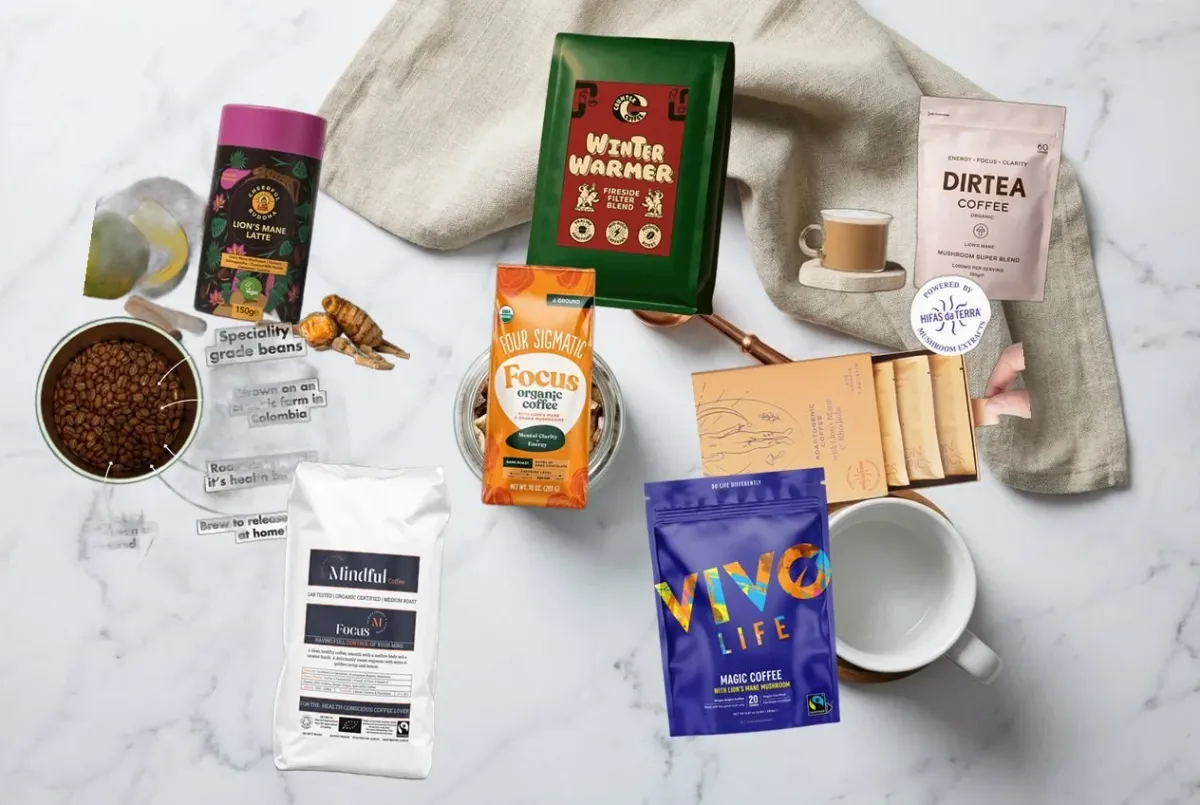
Table of Contents
Some of the links in this article are affiliate links, which help fund our independent review work at no extra cost to you. How we assessed these products is explained in this article and our Editor Lab methodology. No brand pays to appear, and no placement is guaranteed.
“Editor's Insight: The word 'healthy' on a coffee bag means nothing unless it is backed by independent lab data. Organic is the floor, not the ceiling. The brands ranked highest in this guide are the ones that can prove their claims with published test results. But 'healthy coffee' in 2026 also means functional - mushroom blends, adaptogens, and caffeine transparency all earn a place when backed by real evidence.”
What Makes Coffee 'Healthy'? The Health Hierarchy
This is the framework that structures every ranking in this guide. Most articles treat 'healthy' and 'organic' as interchangeable. They are not. We use a three-level hierarchy that moves from baseline to best-in-class. The higher a brand scores on this hierarchy, the higher it ranks.
Level 1 - Organic Certification (The Baseline)
Organic certification - whether from the Soil Association, USDA Organic, or EU Organic - means the coffee was grown without synthetic pesticides, herbicides, or chemical fertilisers. This is a meaningful starting point. It reduces your exposure to agricultural chemicals at the farm level.
But organic certification has a blind spot. It certifies the farming process, not the finished product. It does not test for mycotoxins that develop during storage and transport. It does not screen for heavy metals absorbed from soil. It does not measure mould levels in the roasted bean. Organic is necessary. It is not sufficient. If you are looking for the best organic coffee beans, see our dedicated organic coffee guide - but understand that organic alone does not equal healthy.
Level 2 - Third-Party Lab Testing (The Differentiator)
Healthy coffee beans that sit at Level 2 have been independently tested for contaminants that organic certification does not cover. This includes mycotoxins (specifically Ochratoxin A and Aflatoxin B1), mould counts, pesticide residues, and heavy metals. The EU regulation from January 2023 tightened the maximum limit for Ochratoxin A in roasted coffee from 5.0 micrograms per kilogram to 3.0 micrograms per kilogram. That tells you regulators take this seriously.
The problem is that most coffee brands in the UK do not test at all. They rely on the assumption that roasting kills everything harmful. It does not. Mycotoxins are heat-stable. They survive roasting temperatures. A brand that lab-tests every batch and publishes the results is operating at a fundamentally different level of transparency than one that simply stamps 'organic' on the bag.
Top 3 Healthy Coffee Beans
Level 3 - Full Processing Transparency (The Gold Standard)
The top tier of healthy coffee combines organic certification, independent lab testing, and complete transparency about processing: roast date printed on every bag, origin and altitude disclosed, storage conditions controlled, and freshness guaranteed. This is the standard that separates a genuinely health-conscious brand from one that has simply adopted the language of wellness.
As of our testing in March 2026, only one brand in this guide operates at Level 3 with published evidence. Most sit at Level 1 or Level 2 with strong practices but without full public data to verify every claim.
The Difference Between 'Organic' and 'Healthy'
This article exists alongside our best organic coffee beans guide for a specific reason. The organic guide ranks brands on certification, sourcing ethics, and flavour. This guide asks a harder question: is this coffee actively good for you, or just less bad? Organic means fewer chemicals went into growing it. Healthy means the final product has been verified as free from contaminants that could affect your wellbeing - or it adds functional ingredients (adaptogens, mushrooms, caffeine precision) that deliver a measurable benefit. One is a farming standard. The other is a health standard. You need both.
Quick View: Our Top 3 Healthy Coffee Bean Picks
Category 1: Lab-Tested Clean Coffee
These brands sell actual coffee beans or ground coffee that have been independently tested for contaminants. This is the highest tier of 'healthy coffee' because you are drinking real coffee, verified clean, with no added ingredients masking what is in the cup.
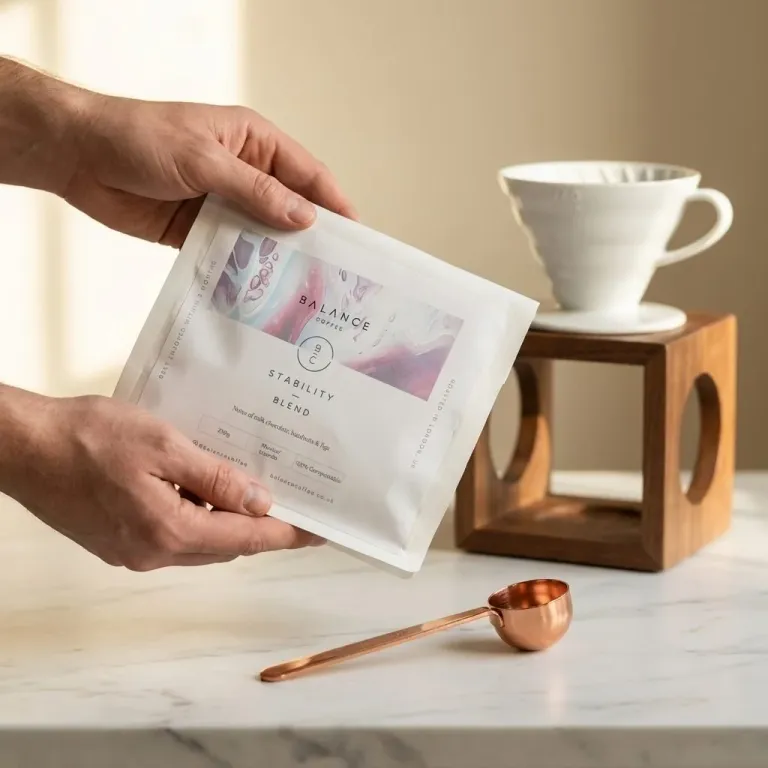
1. Balance Coffee Stability Blend - Best Overall (Lab-Tested and Organic)
Location: London | Founded: 2020
I founded Balance Coffee in 2020 because I could not find a single UK roaster that tested every batch of coffee for mycotoxins, mould, pesticides, and heavy metals - and then published the results. Stability Blend is the product that started it all: a blend of 60% Brazil, 20% Mexico and 20% Uganda beans, organic, roasted in small batches in London.
What puts Stability Blend at number one is not just the flavour - though in the cup, it delivers a clean, smooth body with notes of dark chocolate, hazelnut, and a gentle sweetness that finishes without bitterness. It is the fact that every single batch is independently tested by a third-party laboratory for Ochratoxin A, Aflatoxin B1, mould, heavy metals, and pesticide residues. The results are published on the Balance Coffee website for anyone to check. No other brand on this list does that at the same level of batch-by-batch transparency.
Roasted hazelnut and a faint cocoa warmth greet you in the aroma. The cup is medium-weight, balanced, and consistent across brewing methods - cafetiere, pour-over, or espresso. A mild caramel sweetness fades clean without lingering acidity. If you are looking for the most healthy coffee you can buy in the UK with published evidence to back it up, this is the benchmark. For a deeper look at the brand, read our full Balance Coffee review.
“Editor's verdict: The only UK roaster publishing full lab results per batch. Organic, traceable, and genuinely the cleanest we've tested.”
| Evaluation Criteria | Our Findings |
|---|---|
| Full Review | Read our Balance Coffee review |
| Best For | Health-conscious drinkers who want published lab evidence |
| Flagship Product | Stability Blend (Brazil 60% / Mexico 20% / Uganda 20%) |
| Tasting Notes | Dark chocolate, hazelnut, caramel sweetness |
| Certification | Organic (no certifier), published independent lab tests |
| Price | From £14.99 / 250g (subscription saves 15%) |
| Shop | Shop Balance and save 20% → |
2. Exhale Coffee - Best Alternative Lab-Tested Brand
Location: Brixton, London | Founded: 2020
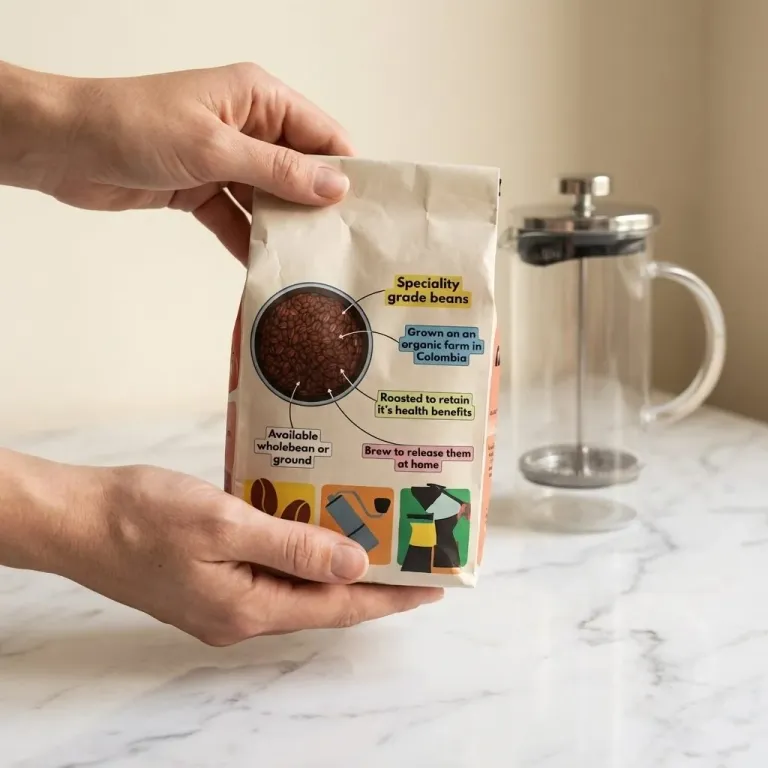
If you want a second opinion on lab-tested coffee, Exhale is the brand to try. Founded by Kirsty and Al in 2020 - the same year as Balance Coffee - Exhale takes a similarly rigorous approach to contaminant testing. Every shipment undergoes nine independent lab tests covering mycotoxins, mould, yeasts, pesticides, and heavy metals. The coffee is single origin, sourced from an organic farm in Odo Shakiso, Ethiopia, and roasted in small batches in Brixton. They hold both Soil Association organic and B Corp certification, and the packaging is 100% plastic-free.
Exhale's House Roast leads with bright berry notes and a floral lift that signals its Ethiopian origin. It is lighter than Stability Blend - medium-bodied with a citrus acidity that stays clean rather than sharp. Stone fruit sweetness lingers in the finish, rewarding slower sipping. Where Exhale falls behind Balance Coffee is in published transparency: while they state their coffee is lab-tested, the individual batch results are not published on their website in the same way Balance Coffee's are. The testing is there. The public proof is not as accessible.
For drinkers who prioritise single origin Ethiopian coffee with a health-first approach, Exhale is a strong pick among clean coffee brands in the UK. With over 6,600 Trustpilot reviews and a five-star rating, their customer base speaks for itself.
“Editor's verdict: Nine lab tests per shipment is exceptional. Single-origin Ethiopian with serious purity credentials. A strong runner-up.”
| Evaluation Criteria | Our Findings |
|---|---|
| Full Review | Read our Exhale Coffee review |
| Best For | Single origin Ethiopian coffee with lab-tested purity |
| Flagship Product | Organic House Roast (Ethiopia, Odo Shakiso) |
| Tasting Notes | Berry, citrus, stone fruit, floral |
| Certification | Soil Association organic, B Corp, 9x lab-tested per shipment |
| Price | From £20.00 / 450g |
| Shop | Shop Exhale Coffee → |
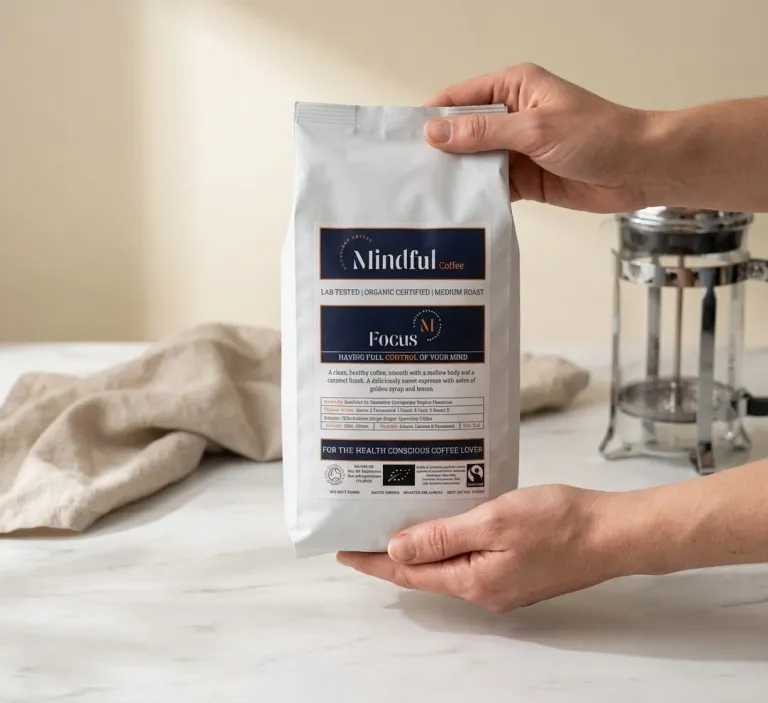
3. Mindful Coffee - Best Budget Lab-Tested Option
Location: London | Founded: 2018
Not every lab-tested coffee needs to cost a premium. Mindful Coffee is a London-based roaster that sources single origin beans from the COCAFELOL co-operative in the Ocotepeque region of western Honduras - high altitude, organic, and Fairtrade certified. What sets them apart from most organic brands is that they publish a certificate of analysis on their homepage showing no Aflatoxin or Ochratoxin A detected at parts-per-billion sensitivity. That is Level 2 on our health hierarchy, verified and public.
Milk chocolate warmth and a nutty sweetness greet you first, both carrying the signature of the Honduran altitude. The cup is medium-weight, smooth, and clean - the kind of coffee you can drink three times a day without fatigue. It closes with a gentle caramel fade and no harshness. More traditional and approachable than Exhale's bright Ethiopian character.
At around £10 for 250g on their website (and widely available on Amazon UK), Mindful Coffee is the most accessible lab-tested option on this list. They print the roast date on every bag and offer beans, ground for cafetiere, filter, espresso, and AeroPress. For drinkers who want mycotoxin-free coffee without the price tag of the top two brands, Mindful is the entry point into genuinely tested clean coffee.
“Editor's verdict: Lab-tested and organic at under £10. The proof that clean coffee doesn't have to cost a premium.”
| Evaluation Criteria | Our Findings |
|---|---|
| Full Review | Read our Mindful Coffee review |
| Best For | Budget-conscious drinkers who want verified mycotoxin-free coffee |
| Flagship Product | Focus (Honduras, Ocotepeque single origin) |
| Tasting Notes | Milk chocolate, nutty sweetness, caramel |
| Certification | Organic, Fairtrade, lab-tested with published COA |
| Price | From £9.99 / 250g |
| Shop | Shop Mindful Coffee → |
Category 2: Mushroom and Functional Coffee
These brands add functional ingredients - adaptogenic mushrooms, nootropics, or botanical extracts - to coffee. The health angle is different from Category 1: instead of removing contaminants, they are adding compounds with documented cognitive or physiological benefits. If you are exploring mushroom coffee UK options, this is where to start. For a deeper comparison, see our best mushroom coffee brands guide.
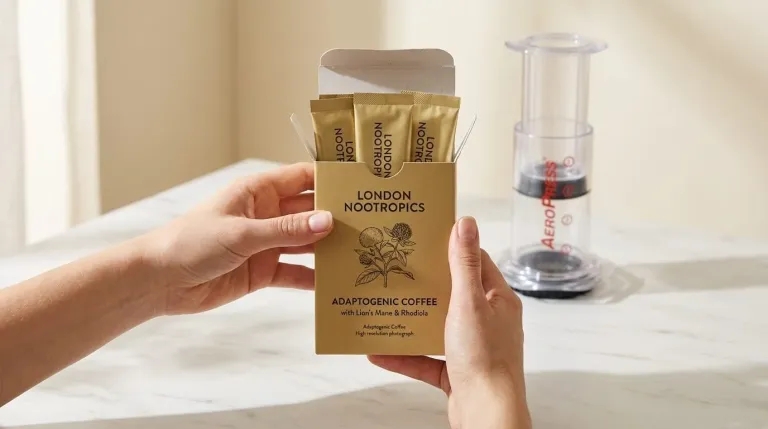
4. London Nootropics - Best Adaptogenic Coffee
Location: London | Founded: 2020
In February 2022, co-founders Shez and Zain walked into the Dragons' Den and walked out with offers from Deborah Meaden and Sara Davies. That endorsement was not for a novelty product. London Nootropics makes single-serve adaptogenic coffee sachets that blend speciality coffee with functional mushrooms and herbs - and the format is genuinely clever. No measuring, no blending, no mess. Tear open a sachet, add hot water, and you have a cup of coffee infused with clinically studied adaptogens.
The range consists of three blends, each targeting a different outcome. Flow combines Lion's Mane mushroom with Rhodiola for mental clarity. Zen pairs Ashwagandha with L-Theanine for calm alertness. Mojo uses Cordyceps for physical energy. Each blend uses organic coffee as the base, and the adaptogen dosing is disclosed on the packaging.
On the nose, Flow opens with a smooth, slightly earthy warmth underneath the coffee. Through the body, it is lighter than a standard filter but surprisingly full for an instant format. On the finish, a clean fade with no bitter mushroom aftertaste. The sachets retail at around £1.25 per serving, and the brand is now stocked in Selfridges, Harrods, and Healf. For drinkers who want functional benefits without committing to a full bag of mushroom coffee, London Nootropics offers the most convenient entry point in the UK.
“Editor's verdict: The most convenient way to get adaptogens in your coffee. Sachets that actually taste good - a genuine daily upgrade.”
| Evaluation Criteria | Our Findings |
|---|---|
| Full Review | Read our London Nootropics review |
| Best For | Busy professionals who want adaptogenic benefits in a convenient sachet |
| Flagship Product | Flow (Lion's Mane + Rhodiola for focus) |
| Tasting Notes | Smooth coffee base, subtle earthiness, clean finish |
| Certification | Organic coffee base, Dragons' Den backed (Meaden + Davies) |
| Price | £1.25 per serving (sachet format) |
| Shop | Shop London Nootropics → |
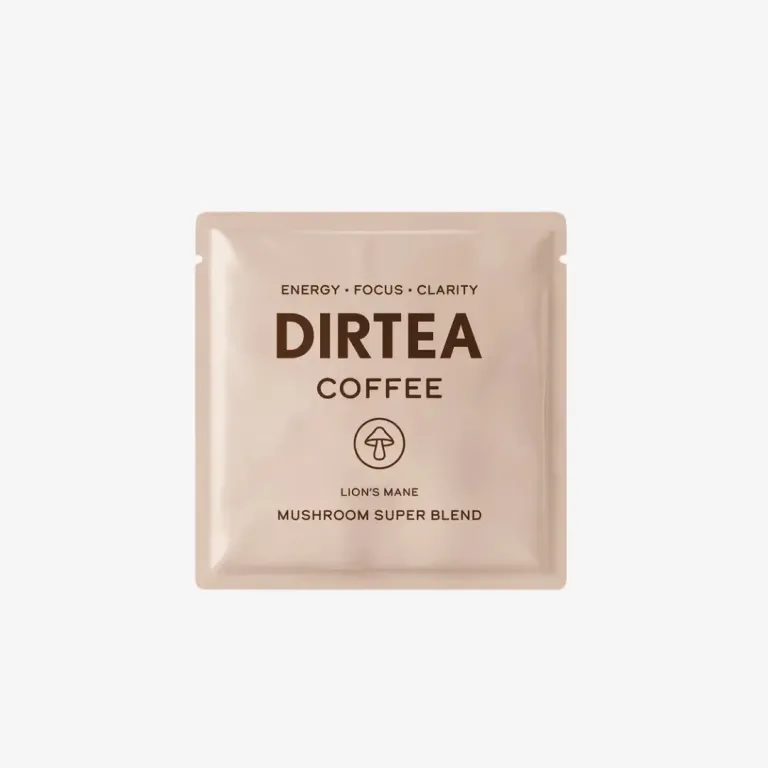
5. Dirtea - Best High-Street Mushroom Coffee
Location: UK | Founded: 2020
Walk into any Boots or Holland and Barrett in the UK and you will probably see Dirtea on the shelf. That kind of distribution, in a category as niche as mushroom coffee, says something about how far functional coffee has come. Dirtea's Mushroom Coffee Super Blend combines Arabica coffee (56%) with 1,000mg of Lion's Mane extract from organic dual-extracted fruiting bodies, plus maca root powder, ashwagandha, and a vitamin B complex including B6, B12, and folic acid.
The format is instant sachets, and each serving contains up to 80% less caffeine than a standard cup. That is not a weakness - it is the point. Dirtea is designed for people who want the ritual and focus of coffee without the jittery energy crash. The brand has built a significant social media following, and the DAKKS-certified lab testing on every batch adds a layer of verification that many functional coffee brands skip.
A mild roast character with a faint earthiness from the mushroom extract sets the tone. The cup itself is lighter than you would expect from a coffee-first product - closer to a strong latte than a double espresso. It finishes smooth and clean with no lingering mushroom taste. At around £0.40 per serving on subscription (seven-sachet boxes available in-store), Dirtea is the most affordable way to try mushroom coffee from a brand you can physically pick up on your next shopping trip.
“Editor's verdict: High-street availability and DAKKS lab testing set Dirtea apart. The most accessible mushroom coffee in the UK.”
| Evaluation Criteria | Our Findings |
|---|---|
| Full Review | Read our Dirtea review |
| Best For | Shoppers who want mushroom coffee available on the high street |
| Flagship Product | Mushroom Coffee Super Blend (Lion's Mane + maca + B vitamins) |
| Tasting Notes | Mild roast, subtle earthiness, smooth and clean |
| Certification | DAKKS lab-tested, organic mushroom extracts |
| Price | £0.40 per serving (subscription), £1.00 per serving (one-off) |
| Shop | Shop Dirtea → |
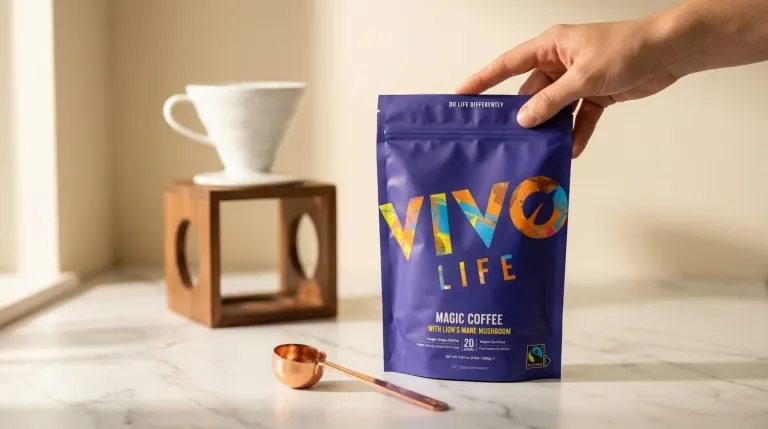
6. Vivo Life Magic Coffee - Best Ground Mushroom Coffee
Location: Bristol | Founded: 2015
Most mushroom coffees come as instant sachets or powders. Vivo Life took a different path. Magic Coffee is actual ground coffee - Fair Trade Ethiopian beans from the Lekempt region, hand-harvested, sun-dried, and roasted in small batches at their Bristol roastery - blended with 4,000mg of Lion's Mane mushroom (from a concentrated 8:1 extract, yielding 500mg of active compounds per serving). You brew it like normal coffee. Cafetiere, filter, AeroPress. That is the appeal: real coffee ritual, real mushroom dosing.
Vivo Life states that every batch undergoes third-party testing for mycotoxins, pesticides, and herbicides. That is a Level 2 claim on our hierarchy, and it places Magic Coffee in rare territory as a functional coffee that also takes contaminant testing seriously. Most mushroom coffees focus on the functional ingredients and ignore what is in the base coffee. Vivo Life does not.
On the nose, it opens with the familiar Ethiopian brightness - berry and stone fruit - layered with a deeper earthiness from the Lion's Mane. Through the body, it brews fuller than you would expect given the mushroom addition. On the finish, clean and smooth with a lingering warmth. At around £22 for 280g (20 servings), it is not cheap, but you are getting a genuine ground coffee with a clinically relevant mushroom dose. For drinkers who want functional coffee that still tastes like coffee, this is the strongest option.
“Editor's verdict: 4,000mg Lion's Mane per serve in real ground coffee. The highest functional dose we've seen in a coffee product.”
| Evaluation Criteria | Our Findings |
|---|---|
| Full Review | Read our Vivo Life Magic Coffee review |
| Best For | Drinkers who want real ground coffee with a serious Lion's Mane dose |
| Flagship Product | Magic Coffee (Ethiopian + 4,000mg Lion's Mane) |
| Tasting Notes | Berry, stone fruit, earthy depth, smooth finish |
| Certification | Fair Trade, third-party tested for mycotoxins and pesticides |
| Price | £22.00 / 280g (20 servings) |
| Shop | Shop Vivo Life → |
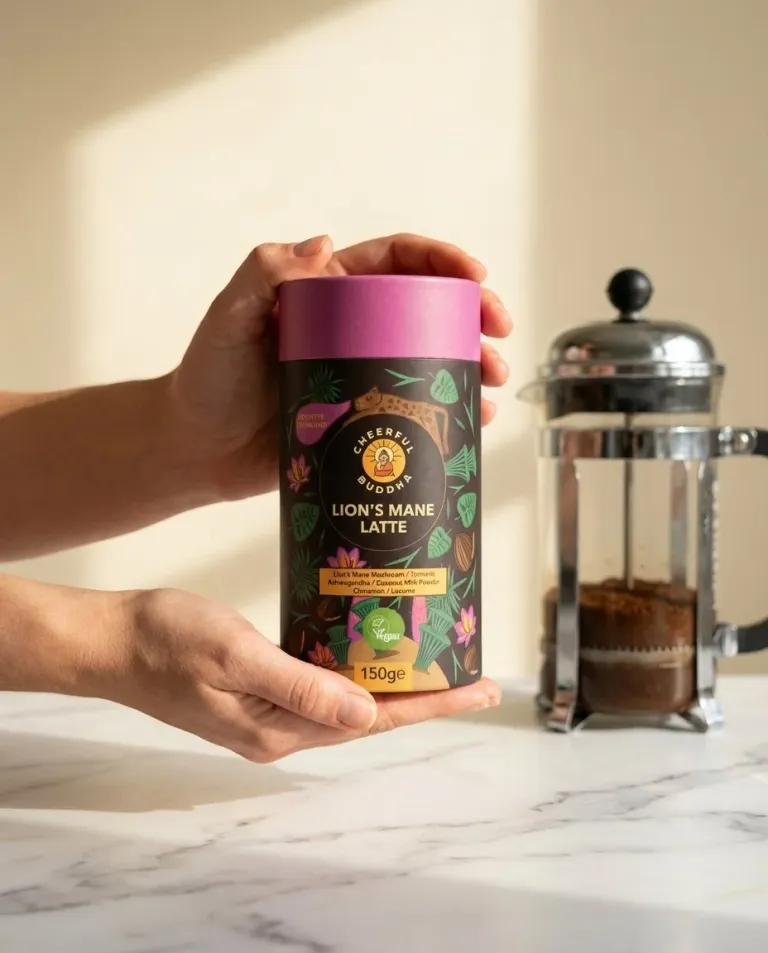
7. Cheerful Buddha - Best Mushroom Coffee for Beginners
Location: UK | Founded: 2019
Some people are curious about mushroom coffee but not ready to commit to a £20-plus bag. Cheerful Buddha solves that problem. Their Lion's Mane Mushroom Coffee Blend is stocked in Holland and Barrett stores across the UK, priced at around £13.99 for 150g, and it combines ground coffee with Lion's Mane extract, ashwagandha root powder, raw cacao powder, and MCT coconut oil. That ingredient combination targets focus, stress reduction, and sustained energy - all in a format that brews in a standard cafetiere.
The cacao and MCT additions are worth noting. The cacao adds a natural richness that masks the earthy mushroom flavour (a common barrier for first-time buyers), and the MCT provides a source of medium-chain fatty acids that some biohacking communities credit with improved mental clarity. Whether you buy the MCT science or not, it makes the coffee taste richer.
The first impression is chocolate-forward warmth, closer to hot chocolate than straight coffee. The MCT oil adds a creaminess that smooths out any harshness, giving the cup a medium-weight, rounded character. It closes with a gentle cacao sweetness and no bitter aftertaste. For anyone who has been reading about Lion's Mane coffee and wants to try it without a big financial commitment, Cheerful Buddha is where to start. They also offer a decaffeinated version for evening drinkers.
“Editor's verdict: MCT, ashwagandha, and cacao alongside coffee. The gentlest entry point into functional coffee for beginners.”
| Evaluation Criteria | Our Findings |
|---|---|
| Full Review | Read our Cheerful Buddha review |
| Best For | First-time mushroom coffee buyers who want an accessible starting point |
| Flagship Product | Lion's Mane Mushroom Coffee Blend (+ MCT, ashwagandha, cacao) |
| Tasting Notes | Chocolate warmth, creamy body from MCT, gentle sweetness |
| Certification | 100% natural ingredients, Holland and Barrett stocked |
| Price | £13.99 / 150g |
| Shop | Shop Cheerful Buddha → |
8. Four Sigmatic - Best Global Pioneer
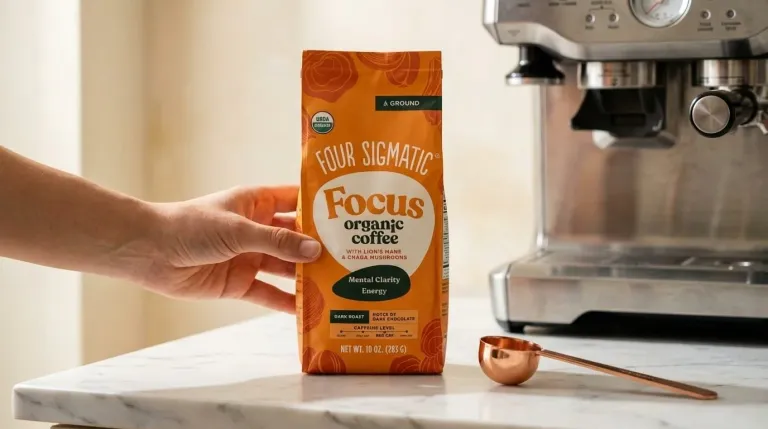
Location: Los Angeles (available in UK via Planet Organic, Healf) | Founded: 2012
Four Sigmatic did not invent mushroom coffee. But they are the brand that made the rest of the world pay attention. Founded in Finland in 2012 (now headquartered in LA), Four Sigmatic was the first major brand to combine organic Arabica coffee with functional mushrooms at scale. Their product range spans instant sachets, ground coffee, and pods, all built around combinations of Lion's Mane, Chaga, Cordyceps, and Reishi. The ingredients are organic, lab-tested, vegan, and gluten-free.
In the UK, Four Sigmatic is available through Planet Organic and Healf. The Mushroom Coffee with Lion's Mane and Chaga (10 sachets) retails at around £12.49, and their Immune Support Ground Coffee with Vitamin D and Chaga (340g) is around £19.99. These are not the cheapest options in this category, but Four Sigmatic has more published research supporting their ingredient sourcing than most competitors.
The Lion's Mane and Chaga instant blend opens with a rounded coffee aroma - earthier than a standard instant but not aggressively so. In the cup, it is surprisingly smooth for a sachet format, light-bodied without feeling watery. A mild nuttiness carries through to a clean, fading finish. For UK drinkers who want the original functional mushroom coffee brand with the deepest track record, Four Sigmatic is the reference point that every other brand in this category is measured against.
“Editor's verdict: The global pioneer that started it all. Organic, lab-tested, and widely available - a trusted baseline.”
| Evaluation Criteria | Our Findings |
|---|---|
| Full Review | Read our Four Sigmatic review |
| Best For | Drinkers who want the most established mushroom coffee brand globally |
| Flagship Product | Mushroom Coffee with Lion's Mane and Chaga (10 sachets) |
| Tasting Notes | Rounded coffee, mild earthiness, nutty finish |
| Certification | Organic, lab-tested, vegan, gluten-free |
| Price | From £12.49 / 10 sachets (Planet Organic) |
| Shop | Shop Four Sigmatic (UK) → |
Category 3: Mindful Caffeine
Not every health concern about coffee is about what is in the bean. For many drinkers, the question is how much caffeine they are consuming and whether they can control it. This category is for brands that approach coffee health through precision and transparency about caffeine content.
9. Counter Coffee - Best for Caffeine Transparency
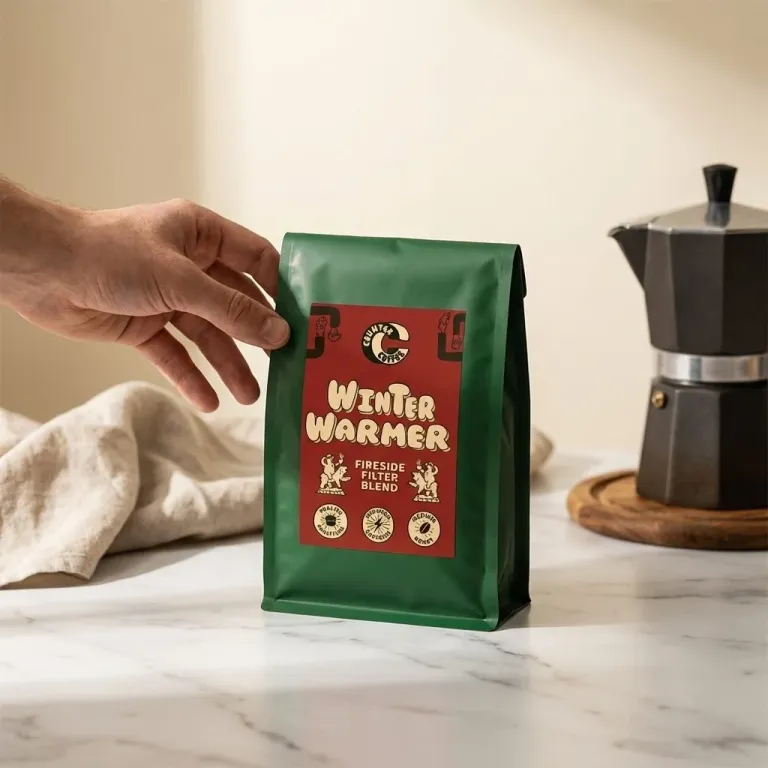
Location: UK | Founded: 2022
Counter Coffee approaches healthy coffee from a completely different angle. Instead of focusing on what is not in the cup, they focus on what is - specifically, the exact amount of caffeine. Every blend is lab-certified to provide precise milligram measurements for different brewing methods. You know exactly how much caffeine you are consuming with every cup. No other UK brand does this.
The brand was born when the founder had a daughter and needed to manage caffeine intake around sleep without giving up good coffee. That personal origin story translates into a product range where you can choose your caffeine level - from a high-caffeine wake-up espresso to a half-caf afternoon cup to a gentle decaf - with full transparency on what you are getting. They also maintain a UK Caffeine Database on their website, a free resource that lists the caffeine content of common drinks.
Counter does not hold organic certification and does not test for mycotoxins or mould. On our health hierarchy, they sit at Level 1. But caffeine management is a legitimate health concern - particularly for anyone dealing with anxiety, sleep disruption, or pregnancy. The European Food Safety Authority recommends a maximum of 400mg of caffeine per day for adults, yet most coffee drinkers have no idea how much they are actually consuming. Counter is the only brand with a verified answer to that question. If the health question you are asking is not "what contaminants are in my coffee?" but "how much caffeine am I actually drinking?", this is the brand to explore.
“Editor's verdict: The only brand that tells you exact caffeine per cup. If caffeine control matters, nothing else comes close.”
| Evaluation Criteria | Our Findings |
|---|---|
| Full Review | Read our Counter Coffee review |
| Best For | Drinkers who want to control and know their exact caffeine intake |
| Flagship Product | Counter blends (choose by caffeine level) |
| Tasting Notes | Varies by blend and caffeine level |
| Certification | Lab-certified caffeine content on every blend |
| Price | From £9.95 / 250g |
| Shop | Shop Counter Coffee → |
Category 4: Budget Functional
Functional coffee does not have to break the bank. This category is for brands that offer adaptogenic mushroom coffee at accessible price points through mainstream retailers.
10. Innermost - Best Premium Adaptogenic Blend
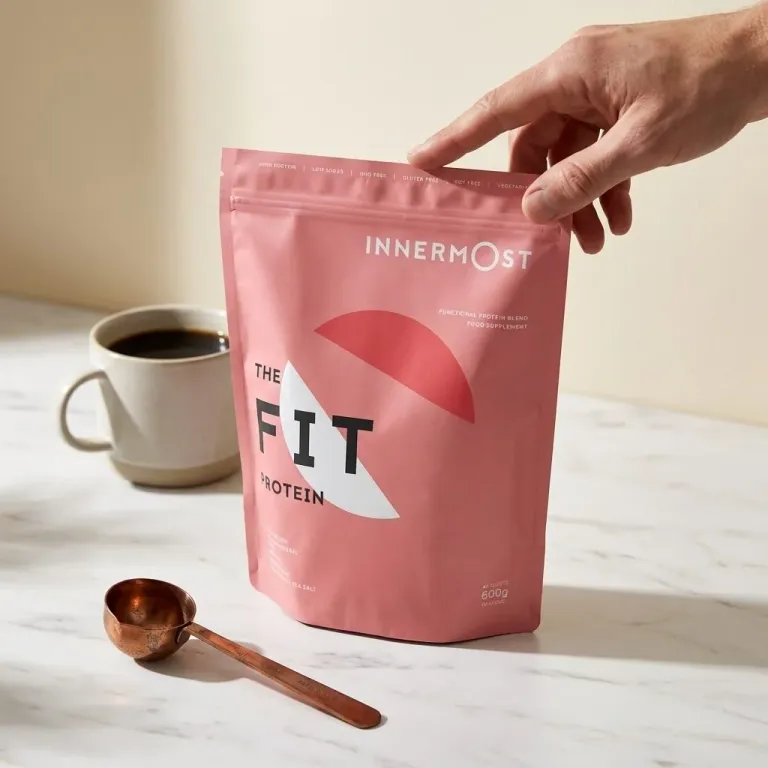
Location: London | Founded: 2016
Innermost approaches mushroom coffee with the broadest functional mushroom spectrum on this list. Their Wellness Blend combines premium Arabica coffee with six adaptogenic mushrooms - Chaga, Reishi, Maitake, Shiitake, Cordyceps, and Tremella - targeting brain health, energy, skin quality, and immune support in a single product. That is more mushroom diversity than any other brand in this guide, and each extract is included at a declared dose.
The brand is stocked in John Lewis (priced at £39.99 for 150g) and Waitrose, which gives it a level of high-street credibility that most functional coffee brands lack. At roughly £1.30 per serving, it sits at the premium end of the functional category, but the six-mushroom formulation and the quality of the retail distribution justify the price for serious supplement users.
On the nose, the Wellness Blend opens with a smooth coffee aroma with a subtle woody, earthy layer from the mushroom complex. Through the body, it is medium-weight with a rounded character that does not taste medicinal. On the finish, clean and balanced with no lingering bitterness. Innermost is not for the casual shopper who wants to try mushroom coffee for the first time. It is for the drinker who has already decided that adaptogenic mushrooms are part of their daily routine and wants the most comprehensive formulation available. For a wider look at the best adaptogenic mushroom supplements, see our dedicated guide on Balance Coffee.
“Editor's verdict: Six adaptogens in one blend, stocked at Waitrose. Premium pricing but the widest mushroom spectrum available.”
| Evaluation Criteria | Our Findings |
|---|---|
| Full Review | Read our Innermost review |
| Best For | Supplement-savvy drinkers who want the widest mushroom spectrum |
| Flagship Product | The Wellness Blend (6 adaptogenic mushrooms + Arabica) |
| Tasting Notes | Smooth coffee, subtle woody depth, clean and balanced |
| Certification | John Lewis and Waitrose stocked, declared mushroom doses |
| Price | £39.99 / 150g (£1.30 per serving) |
| Shop | Shop Innermost → |
Comparison Table
| Brand | Category | Lab-Tested | Organic | Health Level | Price |
|---|---|---|---|---|---|
| 1. Balance Coffee | Clean Beans | Yes (monthly, published) | Yes (no certifier) | Level 3 | £14.99 / 250g |
| 2. Exhale Coffee | Clean Beans | Yes (9x per shipment) | Soil Association | Level 2 | £20.00 / 450g |
| 3. Mindful Coffee | Clean Beans | Yes (published COA) | Organic + Fairtrade | Level 2 | £9.99 / 250g |
| 4. London Nootropics | Functional | No (adaptogen focus) | Organic base | Functional | £1.25 / serving |
| 5. Dirtea | Functional | DAKKS certified | Organic extracts | Functional | £0.40-1.00 / serving |
| 6. Vivo Life | Functional | Yes (mycotoxins + pesticides) | Fair Trade | Level 2 + Functional | £22.00 / 280g |
| 7. Cheerful Buddha | Functional | No | Natural ingredients | Functional | £13.99 / 150g |
| 8. Four Sigmatic | Functional | Yes (lab-tested) | Organic | Functional | £12.49 / 10 sachets |
| 9. Counter Coffee | Mindful Caffeine | Caffeine only (lab-certified) | No | Level 1 | £9.95 / 250g |
| 10. Innermost | Functional | No (declared doses) | Arabica base | Functional | £39.99 / 150g |
What to Avoid - Red Flags in 'Healthy' Coffee Marketing
The term clean coffee has no legal definition. Any brand can print it on a bag without proving anything. Here are the red flags to watch for when a coffee brand claims to be healthy.
- 'Mould-free' without test data. If a brand claims their coffee is free from mould or mycotoxins but does not publish independent lab results, you have no way to verify that claim. Ask for the data. If they cannot provide it, the claim is marketing.
- 'Toxin-free' or 'chemical-free' as a blanket statement. All coffee contains naturally occurring compounds. The question is not whether a coffee is 'chemical-free' (it cannot be), but whether specific harmful contaminants are below safe thresholds. Look for brands that name the contaminants they test for and cite the limits they test against.
- Organic certification used as the sole health claim. Organic is Level 1 on our hierarchy. It is a good start. It is not evidence that the roasted coffee in your bag is free from mycotoxins, heavy metals, or mould. Any brand that treats organic certification as proof of health is oversimplifying.
- No roast date printed on the bag. Freshness matters for health, not just flavour. Coffee stored in warm, humid conditions develops mould. A brand that does not print a roast date is hiding something - even if that something is just a slow supply chain. Once you open a bag, see how to store coffee beans to keep mould out.
- Undisclosed mushroom doses in functional blends. A label that says 'with Lion's Mane' means nothing if it does not tell you how much. Clinical research on Lion's Mane typically uses doses of 500mg to 3,000mg per day. If a product does not declare the milligram dose per serving, you cannot know whether you are getting a functional amount or a marketing sprinkle.
- No independent lab results when the brand makes health claims. A brand that uses 'clean', 'pure', or 'healthy' in its marketing but cannot link to a third-party certificate of analysis is making an unverified claim. Lab results should be publicly accessible - not just available on request. If the only evidence is a branded badge or a vague reference to testing, treat the claim with scepticism.
Final Thoughts
The best healthy coffee brands in the UK in 2026 fall into four distinct categories: lab-tested clean beans, functional mushroom blends, mindful caffeine, and budget-friendly adaptogens. The right choice depends on which health question matters most to you. If it is contaminant purity, start with the lab-tested brands in Category 1. If it is cognitive performance or stress management, explore the functional brands in Category 2. If it is caffeine control, Counter Coffee in Category 3 has the answer.
If you take one thing from this article, let it be the health hierarchy: organic is the baseline, lab testing is the differentiator, and full transparency is the gold standard. Most brands in the UK sit at Level 1. A handful are pushing toward Level 2 and Level 3. The gap between those levels is where the real health benefit lies.
For our broader rankings, explore the best coffee beans in the UK guide. If you are interested in the best coffee roasters UK has to offer, see our dedicated guide. And for pod options that carry lab-tested credentials, see our best Nespresso pods guide.
Frequently Asked Questions
What Is the Healthiest Coffee to Drink?
Is Organic Coffee Really Healthier?
What Is Clean Coffee?
Does Mushroom Coffee Actually Work?
Does Healthy Coffee Taste Different?
Are Mycotoxins in Coffee Dangerous?
What Coffee Certifications Should I Look For?
Is Single Origin Coffee Healthier Than a Blend?
How Much Healthy Coffee Is Safe to Drink Per Day?
Why Does Coffee Origin Affect Its Health Profile?
Related Guides
- 15 Best Coffee Beans UK (2026) | Expert-Tested by Coffee Expert
- Best Decaf Coffee Beans UK 2026 - Tested and Ranked
- Top 10 Best Organic Coffee Beans 2026
- Best Coffee Beans for Espresso UK 2026 - Tested and Ranked
- Best Coffee For Moka Pots
- Caffeinate with Clarity: Inside Balance Coffee’s Clean Energy Revolution
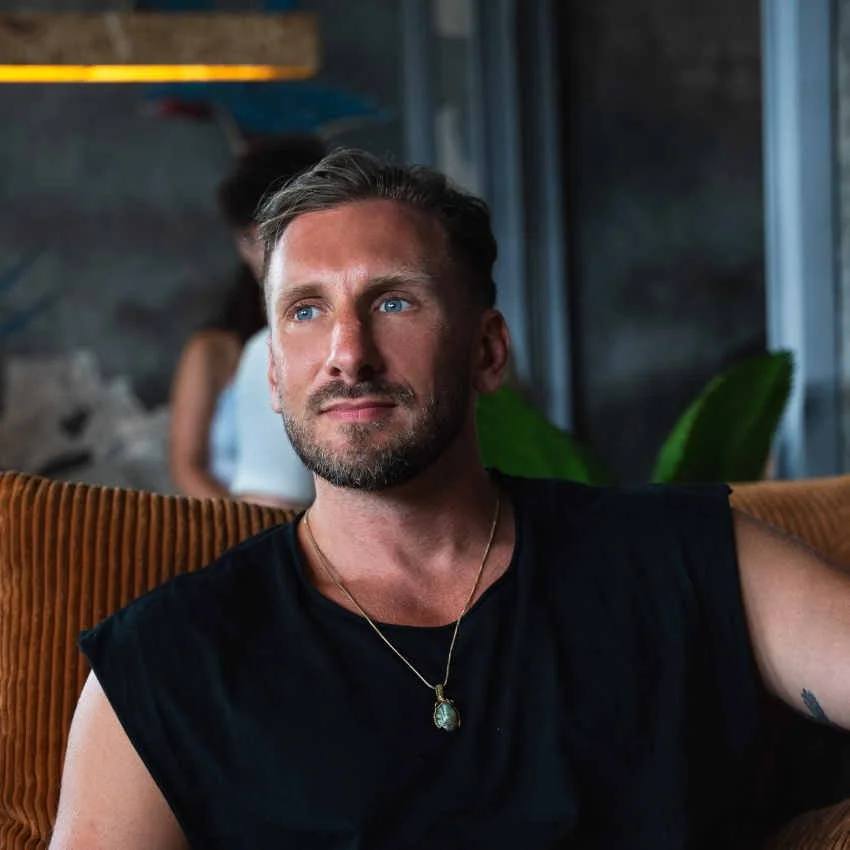
A wellness entrepreneur and biohacker, James explores the intersection of hospitality and health - from clean fuel and recovery tools to mindful routines that build balance into daily life.