6 Best Speciality Coffee Pods UK 2026 - Tested and Ranked
Only four UK options qualify. The rest use the word loosely. We tasted the difference.
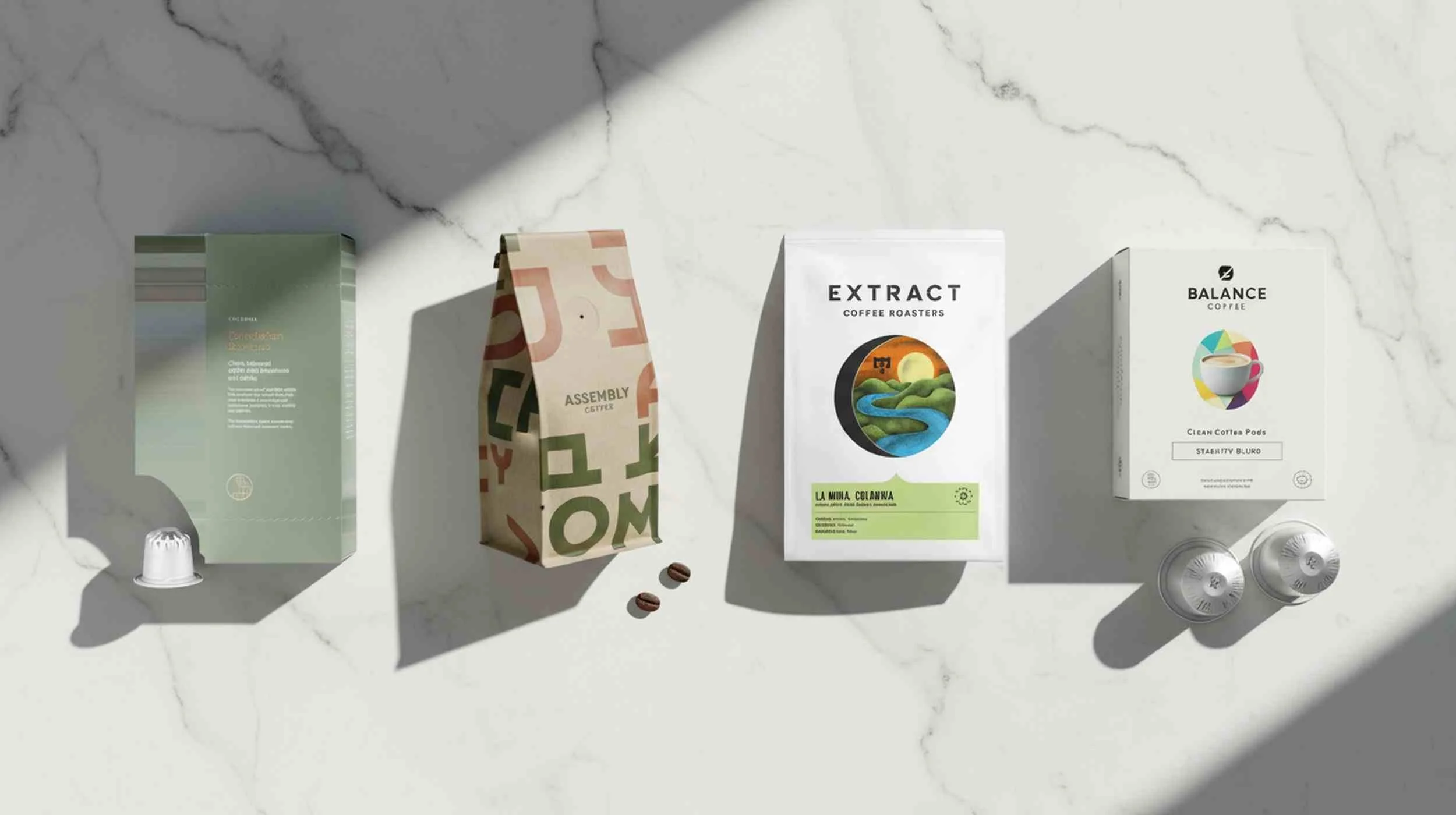
Table of Contents
Some of the links in this article are affiliate links, which help fund our independent review work at no extra cost to you. Every recommendation is based on hands-on testing through The Editor Lab methodology. No brand pays to appear, and no placement is guaranteed.
The best speciality coffee pods in the UK come from a small group of roasters who treat the format seriously. I started in coffee in 2012, spent five and a half years selling Sanremo espresso machines to roasters across the UK, and visited close to 300 roasteries in that time. I know what speciality coffee tastes like because I have been drinking it at source for over a decade. For this guide, we sourced speciality-grade Nespresso-compatible pods from every UK roaster producing them, stripped the branding, and blind-tasted each one on aroma, body, finish, and aftertaste.
Speciality coffee pods are a small category. Most pods on supermarket shelves use commercial-grade beans that score well below the 80-point threshold set by the Specialty Coffee Association for 'speciality grade' classification. The four brands in this guide all roast coffee that meets or exceeds that standard, and each brings something distinct to the capsule format.
This is not a list of every pod brand in the UK. It is a short list of the ones that genuinely deserve the word 'speciality'. For a broader view of the full market, see our guide to the best Nespresso pods and capsules.
A disclosure: I founded Balance Coffee in 2020, and we make one of the pods in this guide. I evaluated it on the same criteria as the rest.
Quick View: Our Top 3 Picks
| Brand | Best For | Price | Shop |
|---|---|---|---|
 1st Place 1st Place | Save 20% | ||
 2 2 | From £0.60per pod | Explore | |
 3 3 | From £0.80per pod | Explore |
How We Tested
We sourced speciality-grade Nespresso-compatible pods from every UK roaster we could find and blind-tasted them side by side. Each capsule was pulled at both the 40ml espresso and 110ml lungo settings on a Nespresso Original machine, using filtered water throughout. Pods were labelled by number only - no brand names visible until scoring was finished.
We scored blind. No brand names visible during tasting. Each pod was assessed across four dimensions: aroma (nose), body and mouthfeel, flavour clarity, and finish. We then brewed a second round with milk to test performance in flat whites and lattes, because most pod users in the UK drink milk-based coffee at least some of the time.
We also assessed each brand on sourcing transparency, capsule material, environmental credentials, and whether the roaster publishes verifiable quality data. In 2026, claiming 'speciality' is easy. Proving it is not.
What Makes a Coffee Pod 'Speciality Grade'?
Speciality coffee is coffee that scores 80 or above on the Specialty Coffee Association 100-point scale, graded by certified Q Graders who evaluate aroma, flavour, acidity, body, balance, sweetness, and overall impression. It is the top tier of coffee quality, representing roughly 5-10% of global production.
A speciality coffee pod, then, is a capsule filled with coffee that meets this standard. The distinction matters because the vast majority of pods sold in the UK - including many marketed as 'premium' or 'artisan' - use commercial-grade beans that fall below the 80-point threshold. The language on the box does not always match the coffee inside.
Three things separate a genuine speciality pod from a marketing claim. First, the roaster should be able to tell you where the coffee comes from - not just the country, but the region, the farm or cooperative, and ideally the processing method. Second, the roast date should be recent. Coffee is a perishable product, and pods filled with beans roasted months ago will taste flat regardless of the starting quality. Third, the roaster should have a track record in speciality coffee outside of pods - roasting for cafes, competing in industry events, or publishing cupping scores.
The brands in this guide meet all three criteria.
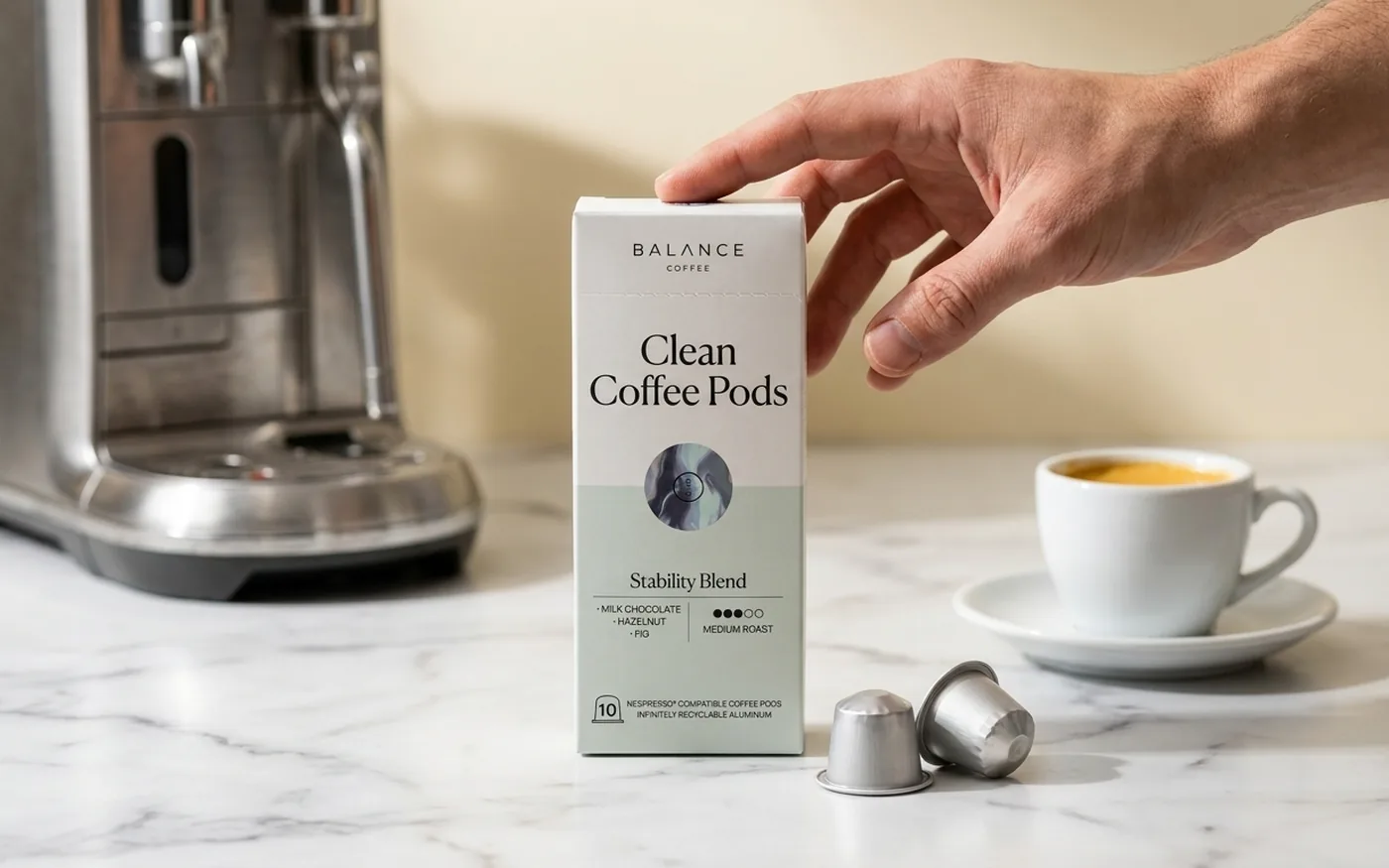
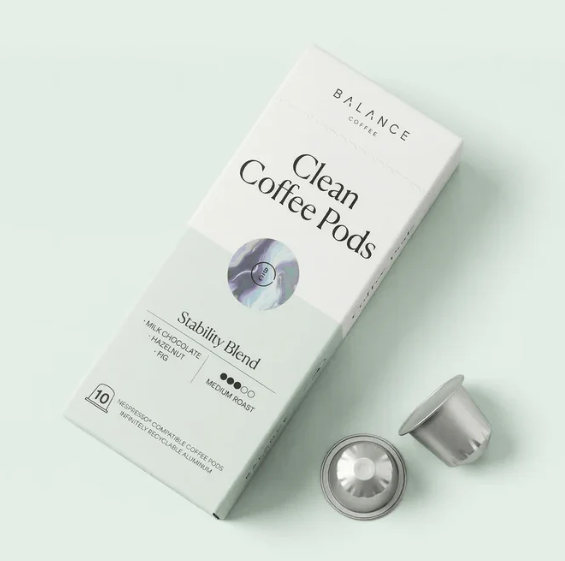
1. Balance Coffee
I founded Balance Coffee in 2020, and I will be transparent about that throughout. It sits at the top of this list because no other pod brand in the UK publishes independent lab results for contaminant levels alongside their speciality scores.
Balance Coffee tests every batch of beans for mycotoxins, heavy metals, and pesticide residues through an independent laboratory before roasting. That level of transparency is standard in pharmaceuticals. In coffee pods, it is practically unheard of. For more on health and purity, see our analysis of whether are coffee pods bad for you. The company sources speciality-grade beans scoring 82 and above, roasts in small batches, and fills 100% recyclable aluminium Nespresso Original-compatible capsules.
In the cup, their signature blend opens with milk chocolate and hazelnut on the nose. Through the body, there is a rounded sweetness - fig and brown sugar - with enough structure to hold up under milk. The finish is clean. No bitterness. No ashy tail. It is the kind of pod that makes you forget you are drinking from a capsule.
The contaminant data is not a marketing exercise. It is published, verifiable, and updated with each new batch. I built the testing protocol specifically because no other roaster was doing it. In a category where 'clean coffee' is often a slogan rather than a standard, that transparency is the entire point.
With milk, the blend performs well in flat whites. The chocolate notes carry through without drowning, and the body holds rather than collapsing into wateriness - a common problem with cheaper pods at the lungo setting.
“Editor's verdict: The benchmark. Lab-tested transparency, speciality-grade sourcing, and a recyclable aluminium capsule that actually delivers in the cup. Start here.”
| Evaluation Criteria | Our Findings |
|---|---|
| Full Review | Read our Balance Coffee review |
| Best For | Clean, lab-tested espresso - zero mould, zero toxins, zero pesticide residues (500+ contaminants screened every batch) |
| Capsule Type | Nespresso Original compatible, 100% recyclable aluminium |
| Flavour Profile | Milk chocolate, hazelnut, fig and brown sugar sweetness, clean finish |
| Certification | Speciality grade (SCA 82+), third-party lab-tested by TUV SUD Group - ALL CLEAR on mycotoxins, pesticides, heavy metals |
| Price | From 75p/pod (60-pod pack, code JOURNAL) | From 67p/pod (120-pod pack, code JOURNAL) | Subscription: 15% off |
| Shop | Shop Balance Clean Pods - save 20% →Code auto-applied at checkout |
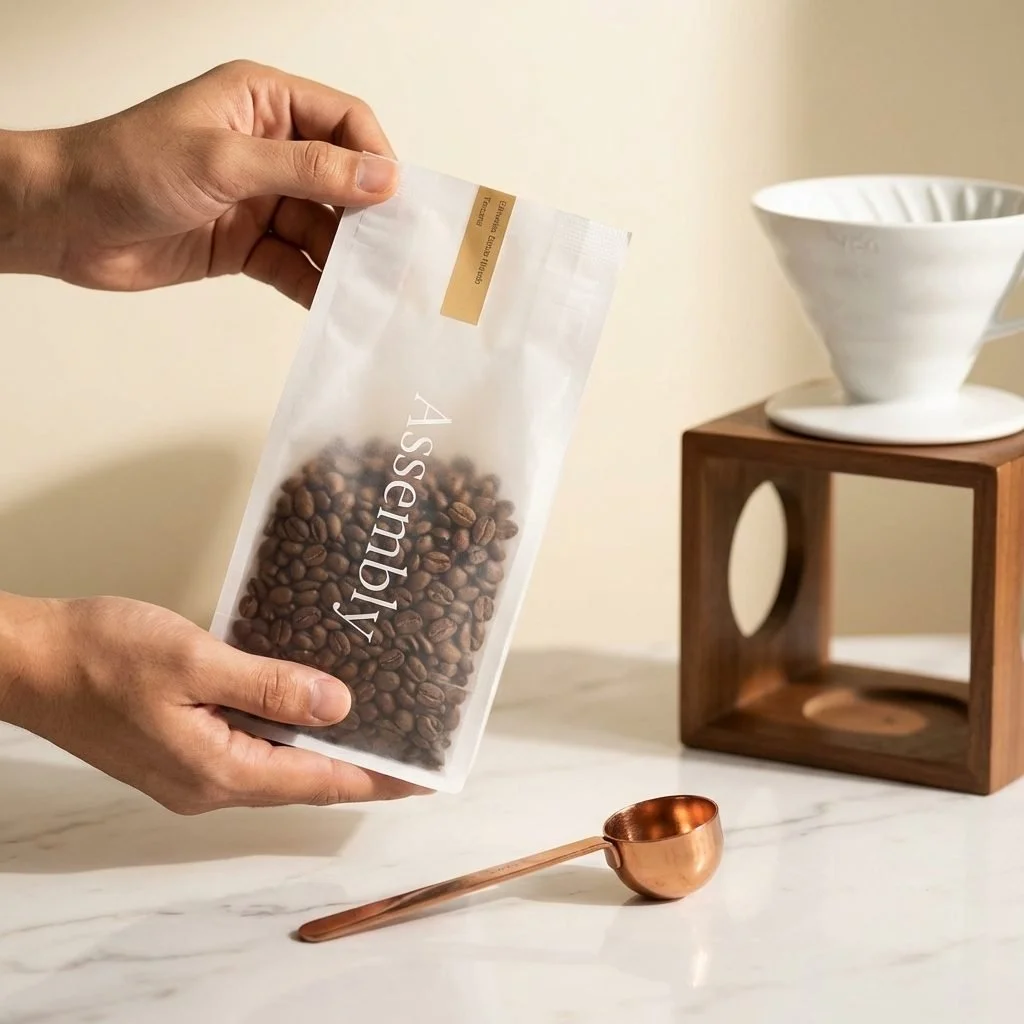
2. Assembly Coffee
I have visited Assembly's Brixton roastery more times than I can reasonably justify on a review budget. The space is small, precise, and exactly what you would expect from a team that has been quietly producing some of London's best coffee since 2015.
Assembly is a single origin roaster first. Their pods reflect that philosophy. Rather than blending for consistency, they rotate seasonal single origins through their capsule range, which means the flavour profile shifts throughout the year. In March 2026, we tasted their Colombian lot - washed process, sourced from Huila.
On the nose: stone fruit and raw cane sugar. Through the body, a juicy acidity - plum and dried apricot - that is more delicate than what you typically find in a Nespresso capsule. The finish has a gentle citrus quality that fades cleanly. It is bright coffee that rewards attention.
This is not the pod for someone who wants a rich, chocolatey espresso base for a latte. Assembly's single origins are built for black drinking or a long black at most. If you add milk, the delicate acidity gets buried. That is not a flaw. It is a design choice.
Assembly's capsules are aluminium, which means they are infinitely recyclable through the Podback scheme, though they are not compostable. The roast is lighter than most pod brands - closer to what you would find in a speciality cafe than on a supermarket shelf.
“Editor's verdict: The purist's choice for single origin quality in a pod. Seasonal, transparent, and roasted with the same care Assembly applies to their wholesale programme. Drink it black.”
| Evaluation Criteria | Our Findings |
|---|---|
| Full Review | Read our Assembly Coffee review |
| Best For | Single origin purists who drink black and want seasonal, rotating speciality coffee |
| Capsule Type | Nespresso Original compatible, aluminium (recyclable via Podback) |
| Flavour Profile | Stone fruit, raw cane sugar, plum and dried apricot acidity, gentle citrus finish |
| Certification | Speciality grade, single origin sourcing with full traceability |
| Price | Speciality tier (£0.60-£0.80 per pod) |
| Shop | Shop Assembly Coffee → |
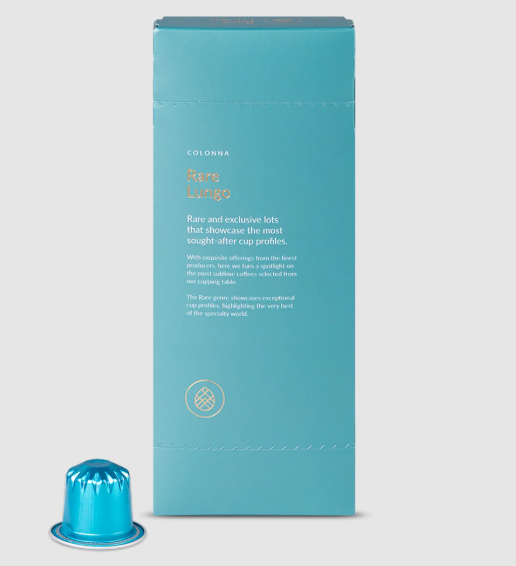
3. Colonna Coffee
Maxwell Colonna-Dashwood has won the UK Barista Championship three times. That is not a detail you bury in the footnotes. It is the reason Colonna Coffee exists as a brand - the entire operation is built around competition-level precision applied to every product they release, including pods.
Based in Bath, Colonna sources micro-lots and competition-grade coffees that most roasters cannot access. Their Nespresso-compatible capsules use these same lots, which puts them in a category of their own. You are not getting a 'premium blend' here. You are getting the kind of coffee that wins national titles, ground and sealed into an aluminium capsule.
We tasted their Discovery range. On the nose, jasmine and bergamot. The body is light but textured - almost tea-like in its elegance, with a white grape acidity that lingers into a long, sweet finish. This is refined coffee. If Assembly is the purist's choice, Colonna is the connoisseur's.
The challenge is accessibility. Colonna's flavour profiles lean heavily toward light roasts with floral and fruit-forward notes. If you are used to darker, more traditional espresso flavours, this will taste like a different drink entirely. That is the point.
Capsules are aluminium and recyclable through the Podback scheme. Pricing sits at the top of the range, which reflects the sourcing.
“Editor's verdict: Competition-grade coffee in a capsule. Three-time UK Barista Champion credentials, micro-lot sourcing, and flavours that challenge what you thought a pod could do. Not for beginners, but nothing at this level ever is.”
| Evaluation Criteria | Our Findings |
|---|---|
| Full Review | Colonna Coffee review |
| Best For | Coffee connoisseurs seeking competition-grade micro-lot quality in a capsule |
| Capsule Type | Nespresso Original compatible, aluminium (recyclable via Podback) |
| Flavour Profile | Jasmine, bergamot, white grape acidity, tea-like elegance, long sweet finish |
| Certification | Three-time UK Barista Champion credentials, competition-grade micro-lot sourcing |
| Price | Premium tier (£0.80+ per pod) |
| Shop | Shop Colonna Coffee → |
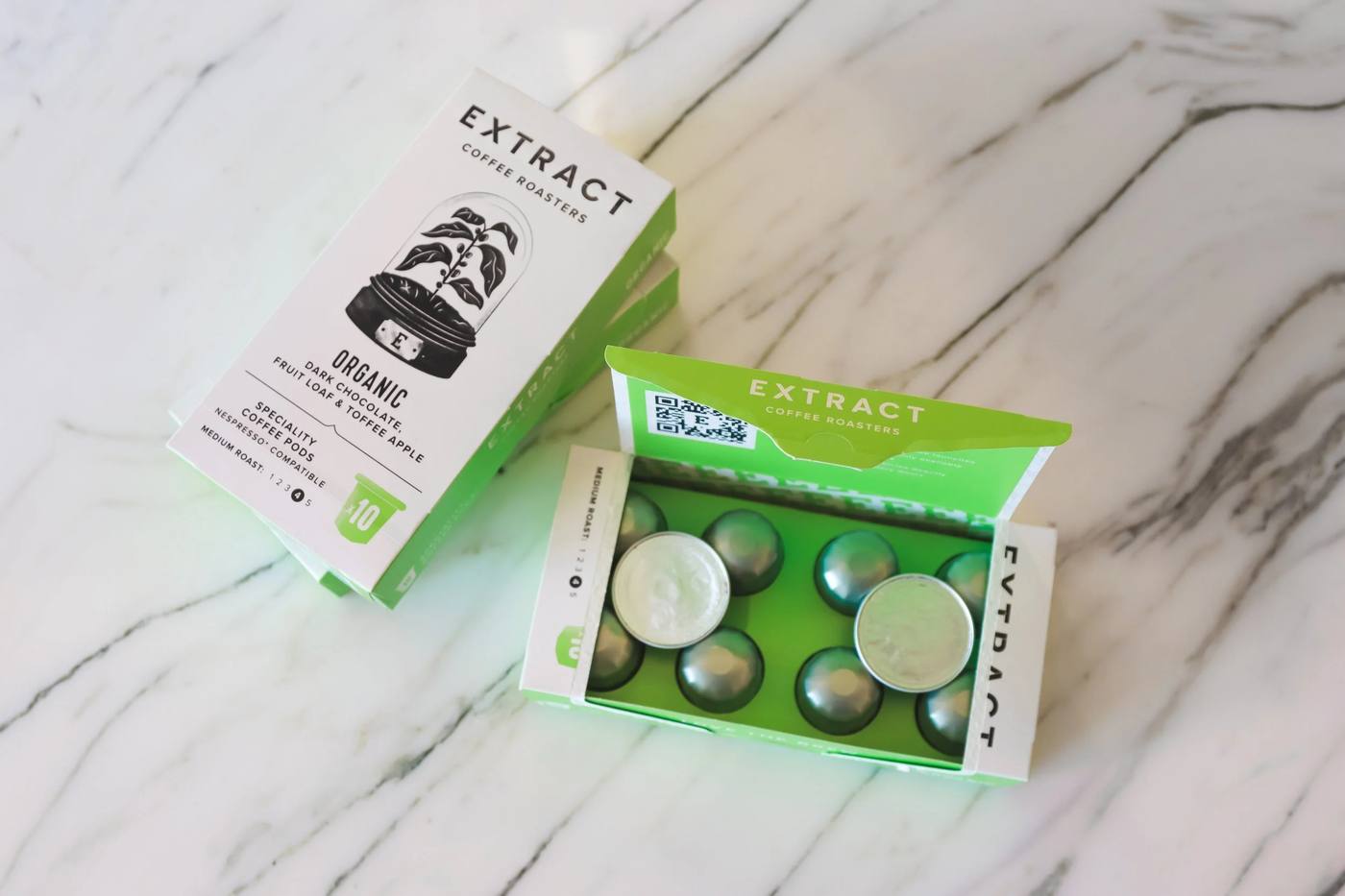
4. Extract Coffee
Walk into Extract's Bristol roastery and the smell hits you before anything else. Roasting coffee, chocolate, and something earthy underneath. They have been operating since 2007, which in UK speciality coffee terms makes them veterans.
Extract holds B Corp certification, Soil Association organic certification, and Fairtrade accreditation. That is a rare triple. Most speciality roasters pick one ethical credential and stop. Extract stacks them because their model is built around it - the sustainability is not a marketing layer added after the fact.
Their Nespresso-compatible pods use organic, speciality-grade beans in a compostable capsule. In the cup, the flavour profile leans toward dark chocolate, roasted walnut, and a gentle earthiness that gives it weight. This is a fuller-bodied pod than Assembly or Colonna - closer to a traditional espresso profile but with more clarity and sweetness than you get from commercial-grade alternatives.
Through milk, Extract performs well. The darker roast profile and heavier body mean the flavour cuts through in a flat white or cappuccino without disappearing. The finish carries a hint of molasses - not bitter, just warm.
The pricing is competitive for speciality grade. At roughly £0.45-0.55 per pod, Extract sits below Balance Coffee and significantly below Colonna, making it the most accessible entry point to genuine speciality pods in the UK.
“Editor's verdict: The best value route into speciality coffee pods. B Corp certified, organic, compostable, and roasted by a team with nearly two decades of speciality experience. A strong daily driver.”
| Evaluation Criteria | Our Findings |
|---|---|
| Full Review | Read our Extract Coffee review |
| Best For | Best value entry into speciality pods, with B Corp, organic, and Fairtrade credentials |
| Capsule Type | Nespresso Original compatible, compostable capsule |
| Flavour Profile | Dark chocolate, roasted walnut, gentle earthiness, molasses warmth on the finish |
| Certification | B Corp, Soil Association organic, Fairtrade |
| Price | £0.45-£0.55 per pod |
| Shop | Shop Extract Coffee → |
5. Volcano Coffee Works
Volcano Coffee Works roasts in Brixton, south London, with a focus on depth and body over brightness. Their Mount Blend is the pod to try: a full, rounded espresso with cacao on the nose, dark fruit mid-palate, and a warm, long-lasting finish that performs consistently across different machines.
What sets Volcano apart in this lineup is value. At approximately 50p per pod, it delivers specialty-grade complexity without the premium pricing of Balance Coffee or Assembly. Specialty credentials are confirmed: Volcano sources to SCA quality standards and their review reputation bears this out. Crema is well-formed and holds well through extraction. The Volcano Coffee Works roastery review covers the full sourcing and production context if you want to go deeper.
One practical note: the subscription flow on the Volcano website required more navigation steps than Assembly or Balance Coffee during our testing. The pods are worth the effort - just be aware the purchase UX is a work in progress.
“Value specialty with real body and depth. At around 50p a pod, this is the best-value route into specialty espresso pods in the UK.”James Bellis, Balance Journal
| Evaluation Criteria | Our Findings |
|---|---|
| Full Review | Read our Volcano Coffee Works review |
| Best For | Value specialty espresso with genuine body and depth |
| Capsule Type | Nespresso Original compatible, aluminium |
| Flavour Profile | Full body, cacao on the nose, dark fruit and walnut mid-palate, warm finish |
| Certification | Specialty grade, SCA quality standards |
| Price | Approximately 50p per pod |
| Shop | Shop Volcano Coffee Works → |
6. Grind Coffee
Grind is the most recognisable name in home compostable pods in the UK, and the House Blend is a genuine quality option for drinkers who want to minimise packaging impact without compromising on flavour. Medium roast, accessible profile with caramel and milk chocolate notes, smooth extraction, and low bitterness. If you want a compostable pod that actually tastes good, Grind delivers.
One caveat worth stating clearly: compostable certification means these pods break down in a composting environment - it does not mean they break down in a kitchen bin or general waste. WRAP data indicates that less than 11% of compostable packaging in the UK currently reaches industrial composting facilities. If your home does not have an active compost heap or a food waste collection that accepts compostable packaging, these pods will likely go to landfill despite the certification. Our Grind Coffee review goes into the sustainability trade-offs in full. If you have a genuine composting setup, Grind is the clear pick in this category.
“The best compostable specialty pod option in the UK. Strong flavour, and the honest sustainability trade-off is worth reading before you buy.”
| Evaluation Criteria | Our Findings |
|---|---|
| Full Review | Read our Grind Coffee review |
| Best For | Home compostable format with solid specialty-grade coffee |
| Capsule Type | Home compostable (Nespresso Original compatible) |
| Flavour Profile | Caramel, milk chocolate, smooth body, clean and low bitterness |
| Certification | Home compostable certified |
| Price | From £0.60 per pod |
| Shop | Shop Grind Coffee → |
What to Avoid
Not every pod that uses the word 'speciality' deserves it. Here is what to watch for.
Unverifiable quality claims. If a brand calls itself 'speciality grade' but cannot tell you the SCA score, the origin farm, or the roast date, treat the claim with scepticism. Genuine speciality roasters publish this information willingly.
Old roast dates or no roast dates. Coffee is at its best within weeks of roasting, not months. Many supermarket pod brands roast in bulk and fill capsules that sit in warehouses for extended periods. If there is no roast date on the box, the coffee inside is almost certainly stale by speciality standards.
'Premium' branding without substance. Brands like Nespresso's own Grand Cru range and several supermarket 'finest' lines use sophisticated packaging and high price points to imply quality. The coffee inside is typically commercial grade. Premium pricing does not equal speciality sourcing.
Flavoured pods masquerading as quality. Vanilla, caramel, and hazelnut flavoured pods exist to mask the taste of low-quality base coffee. No speciality roaster needs to add flavouring. The coffee speaks for itself.
The simplest test: can the brand name the farm, the region, and the processing method? If not, it is not speciality.
How to Get the Best from Speciality Pods
Descale your machine regularly. Limescale buildup changes water temperature and flow rate, both of which affect extraction. If you live in a hard water area, descale monthly. Filtered water is even better.
Use the espresso setting for tasting. The 40ml espresso extraction concentrates flavour and gives you the clearest read on a pod's quality. The lungo setting (110ml) dilutes lighter roasts too much. If you want a longer drink, pull an espresso and add hot water for an americano.
Store pods in a cool, dry place. Not the fridge. Capsules are sealed, but temperature fluctuations can affect the coffee inside. A cupboard away from the hob is ideal.
Drink it fresh after opening. If you buy pods in bulk, work through them within four to six weeks of the roast date. Even sealed capsules lose flavour complexity over time.
Preheat your cup. Run a blank cycle (no pod) to heat the machine and the cup before pulling your shot. Cold ceramic drops the temperature of the espresso immediately, which dulls the aromatics.
Final Verdict
The speciality coffee pod market in the UK is small but growing. For readers also exploring the best espresso pods or best compostable coffee pods, those guides cover different angles of the same market. As of early 2026, only a handful of roasters are putting genuinely speciality-grade coffee into Nespresso-compatible capsules, and the four brands in this guide represent the best of them.
Balance Coffee leads for overall quality, transparency, and the added reassurance of published lab testing data. Assembly Coffee is the pick for single origin enthusiasts who drink black. Colonna Coffee delivers competition-grade complexity for those willing to pay for it. Extract Coffee offers the best value entry point with strong sustainability credentials.
If you are new to speciality pods, start with Balance Coffee or Extract Coffee. Both deliver the speciality difference in a format that works with milk. If you already know you prefer lighter, fruit-forward flavours, Assembly and Colonna will push your expectations of what a pod can do.
For the full picture of every Nespresso-compatible option on the market, including non-speciality brands, see our complete guide to the best Nespresso pods and capsules. And if organic certification matters to you, our best organic coffee pods guide covers that angle in depth.
Frequently Asked Questions
Are Speciality Coffee Pods Worth the Extra Cost?
What is the Difference Between Speciality and Regular Coffee Pods?
Can You Get Single Origin Coffee in Nespresso Pods?
Do Speciality Pods Work in All Nespresso Machines?
How Much Should I Pay for Speciality Coffee Pods?
What Does SCA Score Mean for Coffee Pods?
How Should I Store Speciality Coffee Pods?
Are Speciality Coffee Pods Better for the Environment?
Can Coffee Pods Taste as Good as Cafe Espresso?
Which Speciality Coffee Pod Brand Should I Choose?
Related Guides
- Best Nespresso Pods for Latte, Cappuccino and Flat White
- 11 Best Nespresso Capsules 2026 - Tried, Tested and Ranked by Coffee Expert
- 10 Best Organic Coffee Pods 2026: Ranked for Purity, Sustainability and Flavour
- How to Recycle Coffee Pods in the UK: Complete Guide
- Aluminium vs Compostable Coffee Pods: Which Is Better?
- Best Espresso Pods UK: Tested and Ranked
A wellness entrepreneur and biohacker, James explores the intersection of hospitality and health - from clean fuel and recovery tools to mindful routines that build balance into daily life.