Aluminium vs Compostable Coffee Pods: Which Is Better?
The green debate is murkier than brands admit. One material has an edge nobody mentions.
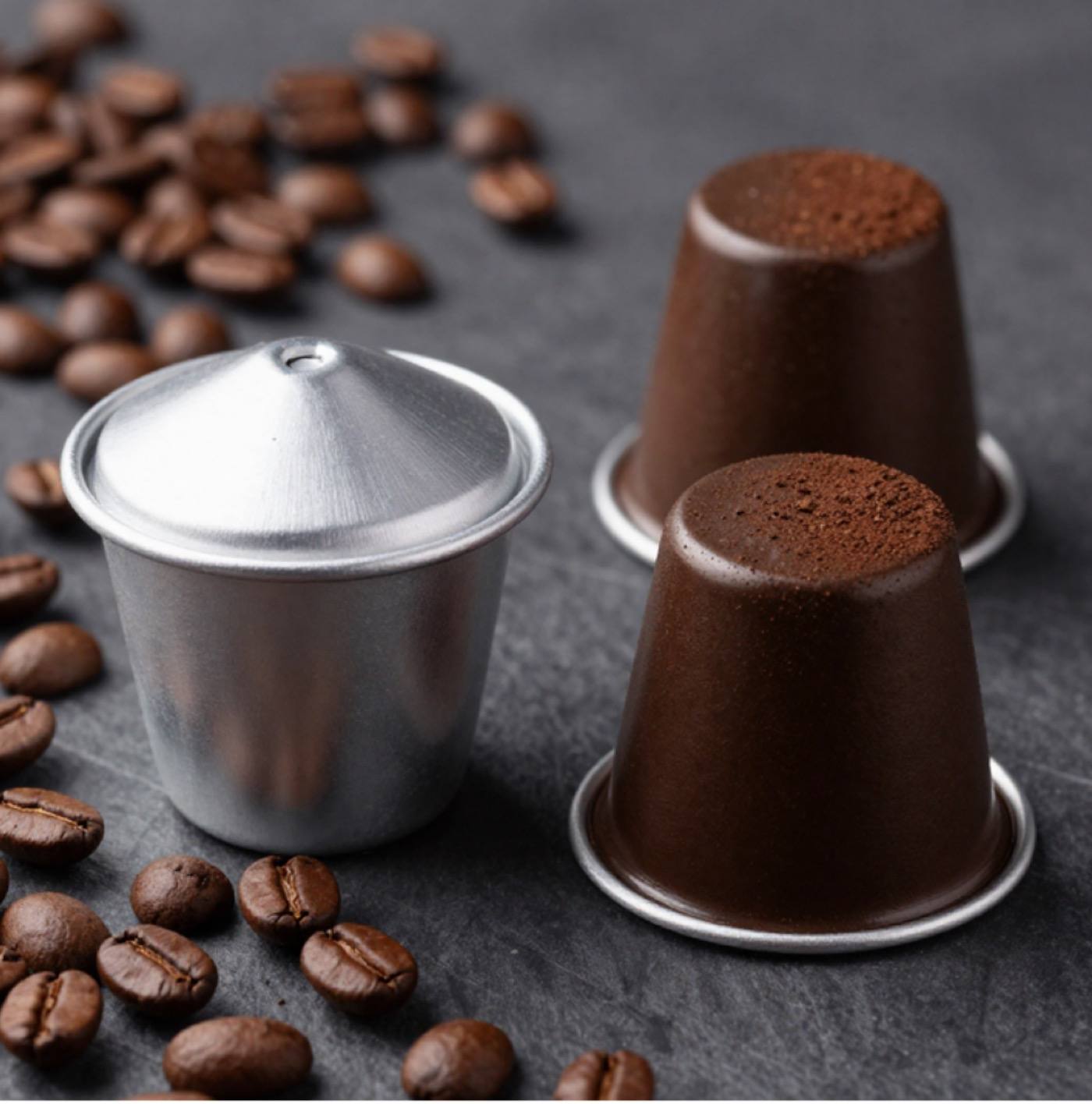
Table of Contents
Some of the links in this article are affiliate links, which help fund our independent review work at no extra cost to you. Every recommendation is based on hands-on testing through The Editor Lab methodology. No brand pays to appear, and no placement is guaranteed.
The pod you put into your machine is more than a delivery system for ground coffee. The material surrounding those grounds affects how long the coffee stays fresh, how it extracts under pressure, and what happens to the capsule after you have finished your cup.
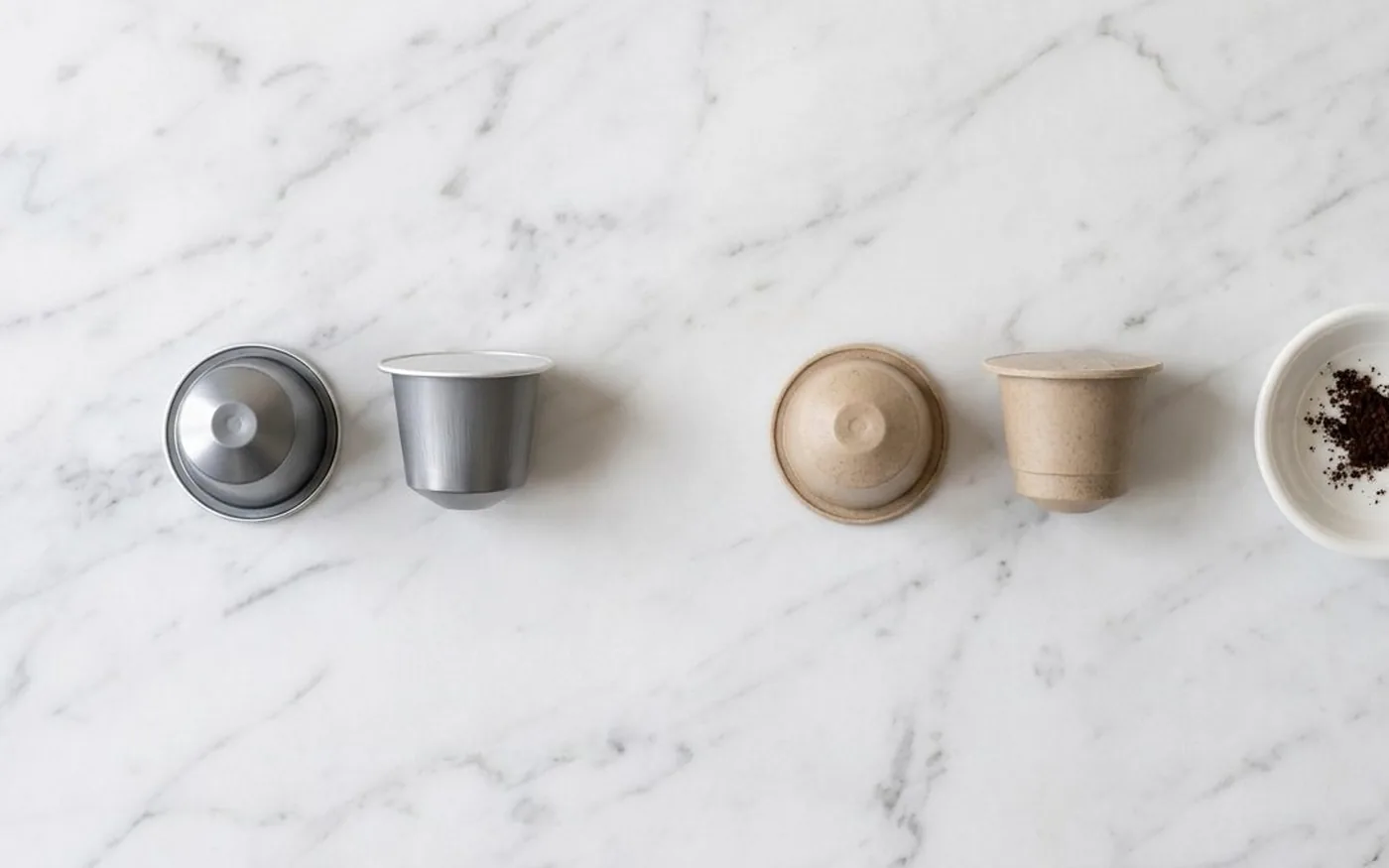
Most Nespresso Original-compatible coffee pods fall into two camps: aluminium and compostable. The marketing from both sides is confident. Aluminium brands emphasise infinite recyclability. Compostable brands promise a return to the earth. The reality, as with most things in sustainability, is more complicated than either story suggests.
For anyone trying to make a genuinely informed choice, the comparison needs to go beyond the packaging claims and into what actually happens - in the cup, at the recycling plant, and at the composting facility. That is what this article sets out to do.
If you are looking for our full pod recommendations, see our guide to the best Nespresso pods and capsules or our roundup of the best organic coffee pods.
Aluminium Pods - How They Work
An aluminium coffee pod is a sealed capsule made from a thin layer of aluminium, typically between 0.05mm and 0.1mm thick. The aluminium is pressed into shape, filled with ground coffee, and sealed with an aluminium foil lid. When the pod is inserted into a Nespresso Original machine, a needle punctures the foil and pressurised water passes through the coffee bed.
Aluminium is the same material Nespresso chose when it invented the single-serve capsule system in the 1980s. The reason was straightforward: aluminium creates a near-perfect oxygen barrier. It blocks light, moisture, and air from reaching the coffee grounds, which means the coffee inside can maintain its freshness for months without preservatives or nitrogen flushing.
Recyclability and the Podback Scheme
Aluminium is, in principle, infinitely recyclable. The European Aluminium Association confirms that aluminium can be melted down and reformed without any loss of quality, and that recycling aluminium uses approximately 95% less energy than producing it from raw bauxite ore.
The practical challenge in the UK has been collection. Aluminium pods are too small and too contaminated with coffee grounds for most kerbside recycling systems to process. This is where Podback comes in.
Podback is a UK-wide recycling scheme launched by Nespresso in partnership with Podback Ltd. It provides free collection bags that consumers fill with used aluminium pods and return via Royal Mail or their kerbside collection, depending on local council participation. As of early 2026, Podback covers approximately 90% of UK local authorities. The aluminium is separated from the coffee grounds at dedicated facilities. The grounds go to anaerobic digestion, producing biogas and fertiliser. The aluminium goes back into the supply chain.
The scheme is not perfect. It requires consumer action: you need to request the bags, collect your pods, and post or bin them separately. Podback's own data suggests participation remains a fraction of total pod sales. But the infrastructure exists and is expanding.
Freshness and Flavour Preservation

This is where aluminium has a measurable advantage. The oxygen transmission rate of aluminium is effectively zero. No oxygen gets through the barrier, which means the volatile aromatic compounds in the coffee are preserved from roast to brew.
In testing through The Editor Lab, we have consistently found that aluminium pods deliver more aromatic complexity and a cleaner, more defined flavour profile than equivalent compostable pods from the same roaster. The difference is not subtle. When we pulled espresso shots from both formats side by side, the aluminium pod produced a richer crema and more pronounced top notes.
Compostable Pods - How They Work
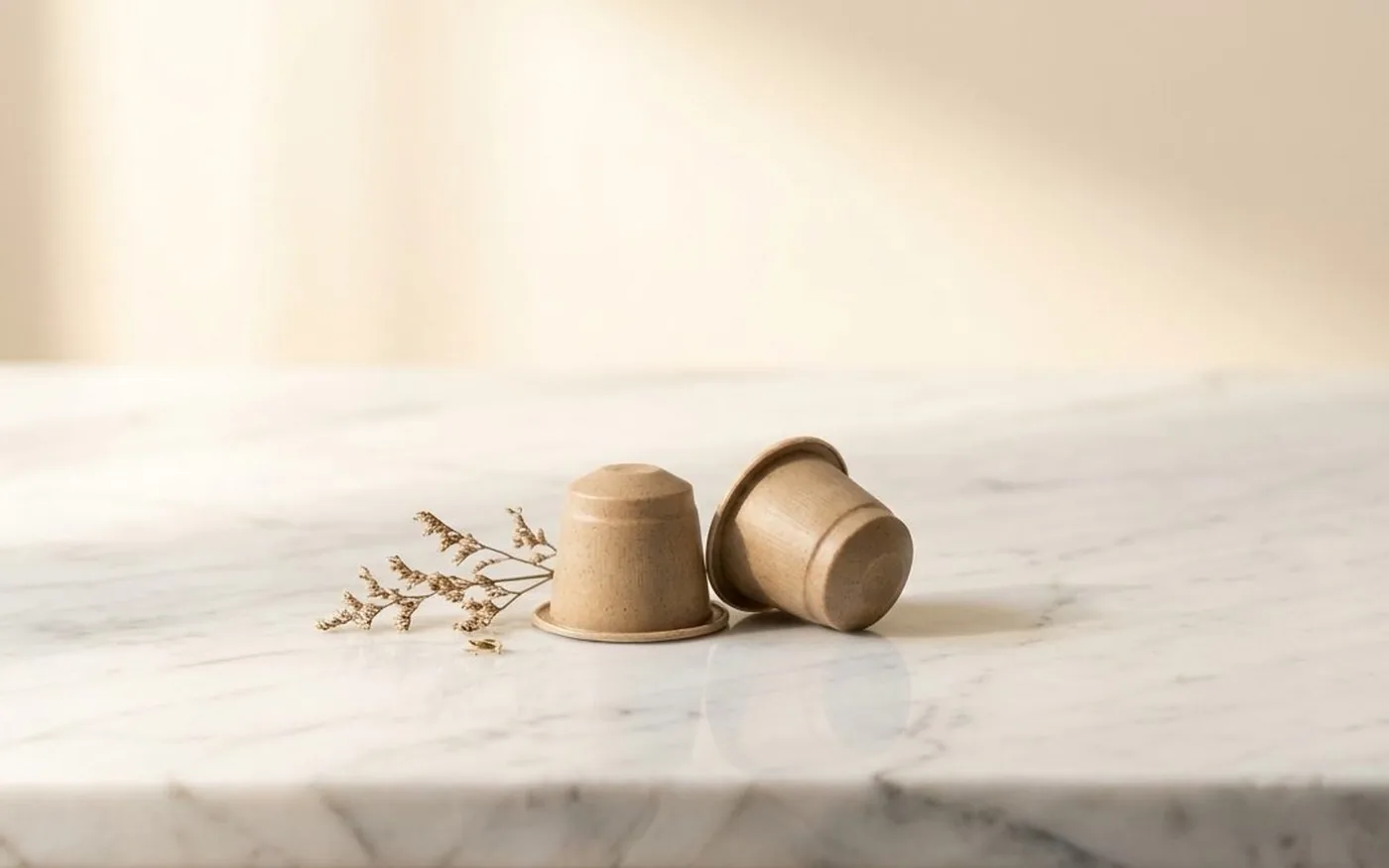
A compostable coffee pod is made from plant-based materials, typically a combination of PLA (polylactic acid, derived from corn starch or sugarcane), cellulose, and other bioplastics. The pod is designed to break down into organic matter under composting conditions.
The appeal is intuitive. Instead of a metal capsule that needs industrial recycling, you get a pod that theoretically returns to the earth. Several UK brands have built their identity around this promise, with Grind being one of the most visible.
What 'Compostable' Actually Means
The term 'compostable' in the context of coffee pods refers to a specific industrial standard: EN 13432. This European standard requires that the material disintegrates within 12 weeks and fully biodegrades within six months under industrial composting conditions. Those conditions are precise: sustained temperatures of 55-60C, controlled moisture, and active microbial management.
This is industrial composting. It is not your garden compost bin.
The Soil Association has noted that consumer confusion between home composting and industrial composting remains one of the biggest barriers to proper disposal. A pod certified to EN 13432 will not break down meaningfully in a home compost heap, where temperatures rarely exceed 30C.
Some brands have pursued home-compostable certification (the TUV OK Compost HOME standard), which requires breakdown at ambient temperatures. As of 2026, very few Nespresso-compatible pods hold this certification, and those that do typically take 12-26 weeks to decompose even under ideal garden conditions.
The Industrial Composting Problem
Even if every consumer understood the difference between industrial and home composting, the UK infrastructure is not equipped to handle the volume. WRAP has documented that less than 11% of compostable packaging in the UK reaches an industrial composting facility. The rest ends up in general waste, where it goes to landfill or incineration.
The reasons are structural. Most UK local authorities do not accept compostable packaging in food waste collections. Composting facilities often reject compostable plastics because they cannot reliably distinguish them from conventional plastics on the sorting line. The result is that the majority of compostable coffee pods sold in the UK are not actually composted.
This is not a criticism of the brands. It is a criticism of the infrastructure. The intention behind compostable pods is sound. The execution depends on a waste management system that does not yet exist at scale in the UK.
Environmental Impact Compared
Carbon Footprint
The carbon footprint of a coffee pod depends on its full lifecycle: raw material extraction, manufacturing, transport, use, and end-of-life treatment.
Aluminium production from raw bauxite is energy-intensive, with a significant carbon footprint per kilogram. However, recycled aluminium cuts that footprint by roughly 95%. The environmental case for aluminium pods rests almost entirely on whether the pod actually gets recycled. If it does, the lifecycle emissions are substantially lower than virgin production. If it does not, the embedded carbon is high.
Compostable pods have a lower manufacturing carbon footprint, as plant-based bioplastics require less energy to produce than primary aluminium. However, if the pod ends up in landfill rather than an industrial composter, it can produce methane as it degrades anaerobically - a greenhouse gas approximately 80 times more potent than CO2 over a 20-year period.
Neither material has a clean environmental story. Both depend on post-consumer infrastructure that is inconsistently available in the UK. For practical disposal steps, see our guide on how to recycle coffee pods.
End-of-Life Reality
Here is the honest summary, based on the best available UK data as of early 2026:
- Aluminium pods with Podback: the aluminium is recycled into new products, the coffee grounds produce biogas. Participation requires consumer effort. Coverage is approximately 90% of UK councils.
- Aluminium pods without Podback: if placed in general waste, the aluminium goes to landfill. Some energy-from-waste facilities recover the metal, but this is inconsistent.
- Compostable pods in industrial composting: full breakdown within six months, returning nutrients to soil. But fewer than 11% of compostable pods in the UK reach this destination.
- Compostable pods in general waste: landfill or incineration. No composting benefit. Potential methane generation in landfill.
- Compostable pods in home compost: extremely slow breakdown unless certified to TUV OK Compost HOME standard. Most are not.
Aluminium vs Compostable Pods - the Full Comparison
The table below compares aluminium and compostable coffee pods across the factors that matter most. For the full breakdown of each factor, see the sections above and below.
[Comparison table - inserted via Squarespace Code Block]
Taste and Freshness - Does the Material Affect the Cup?
Yes. The material of the pod has a measurable effect on what ends up in your cup, and this is not a marginal difference.
Aluminium creates an oxygen barrier that is, for practical purposes, complete. Coffee sealed in aluminium retains its aromatic compounds for 12-18 months from the roast date, assuming the seal is intact. This means the volatile oils responsible for the top notes in espresso - the floral, citrus, and fruit characteristics that distinguish speciality coffee from commodity blends - are still present when you brew.
Compostable materials are permeable to varying degrees. PLA and cellulose-based pods allow small amounts of oxygen and moisture to pass through the barrier over time. The rate depends on the specific formulation and any additional barrier coatings the manufacturer has applied. In practice, this means compostable pods have a shorter optimal flavour window - typically three to six months from roast - and a more muted aromatic profile at the point of brewing.
In our Editor Lab testing, we brewed identical coffee from the same roaster in both aluminium and compostable formats. The aluminium pod delivered a more complex aroma, brighter acidity, and a longer finish. The compostable pod was clean and pleasant but flatter, with less distinction between the top and mid notes. The difference was particularly pronounced with lighter roasts, where the delicate aromatics are most vulnerable to oxidation.
This does not mean compostable pods taste bad. It means aluminium preserves more of what the roaster intended. If you are paying for speciality-grade coffee in pod form, the material of the capsule determines how much of that quality reaches your cup. For readers wondering are coffee pods bad for you, the material is a secondary concern compared to the coffee itself.
Cost Comparison
Aluminium pods and compostable pods occupy a similar price range in the UK market, though the specifics vary by brand and roast quality.
As of early 2026, the typical price ranges are:
- Aluminium pods (speciality tier): £0.35-£0.55 per pod
- Compostable pods (speciality tier): £0.35-£0.60 per pod
- Nespresso own-brand aluminium: £0.30-£0.42 per pod
The small premium on some compostable pods reflects the higher raw material cost of plant-based bioplastics compared to aluminium sheeting, and the smaller production volumes of most compostable brands.
When factoring in the total cost of ownership, aluminium pods have a marginal advantage: their longer shelf life means less waste from expired stock, and the Podback recycling scheme is free to use. Compostable pods may require purchasing compostable caddy liners or paying for specialist waste collection if your council does not accept them in food waste.
The cost difference between the two materials is unlikely to be the deciding factor for most buyers. Quality of the coffee inside the pod, ethical sourcing, and personal values around waste will carry more weight.
Why Balance Coffee Uses Aluminium Pods
When we developed the Balance Coffee pod range, the material decision was one of the longest conversations we had. We chose aluminium, and I want to be transparent about why.
Freshness was the primary driver. Balance Coffee is built on clean, speciality-grade coffee with full traceability and independent lab testing for contaminants. If the pod material allows oxidation to degrade the coffee between roast and brew, we are undermining the quality we work to achieve at every other stage of the supply chain. Aluminium gave us the confidence that the coffee reaching our customers would taste the way it did when it left the roaster.
Recyclability was the second factor. Through the Podback scheme, our aluminium pods have a clear, established recycling pathway. We include Podback information with every order and encourage customers to use the scheme. It is not perfect - participation rates across the industry remain lower than they should be - but the infrastructure is real, funded, and expanding.
We considered compostable. We tested compostable formats. The flavour degradation over the shelf life we needed was not acceptable. And the reality that fewer than 11% of compostable pods in the UK actually reach industrial composting facilities meant the environmental advantage was, for most consumers, theoretical rather than practical.
This is our reasoning, not a universal prescription. If you have access to industrial composting and you prefer to support plant-based materials, a good compostable pod is a legitimate choice. I would rather you made that choice with the full picture than with the marketing version.
You can try our pods here: Balance Coffee pods (Balance Journal readers get 20% off).
| Evaluation Criteria | Our Findings |
|---|---|
| Best for | Aluminium pods with a working UK recycling route via Podback |
| Material | Recyclable aluminium, oxygen barrier keeps the coffee fresher |
| End of life | Podback kerbside or drop-off collection |
| Shop | Shop Balance Coffee pods → |
| Evaluation Criteria | Our Findings |
|---|---|
| Best for | Home-compostable pods where kerbside recycling is not an option |
| Material | Plant-based bioplastic, certified compostable |
| End of life | Best in an industrial composting stream |
| Shop | Shop Grind pods → |
Which Should You Choose?
Choose Aluminium if:
- Flavour preservation is your top priority
- You are willing to use the Podback scheme for recycling
- You buy in larger quantities and need a longer shelf life
- You want the widest selection, including the best espresso pods and best speciality coffee pods
Choose Compostable if:
- You have access to industrial composting (check with your local council)
- You prefer plant-based materials on principle
- You consume pods quickly, within three to four months of roast
- You are uncomfortable with aluminium mining, even with recycling
Frequently Asked Questions
Are Compostable Coffee Pods Really Compostable?
Can You Recycle Aluminium Coffee Pods in the UK?
Which Coffee Pod Material is Better for the Environment?
Do Compostable Pods Affect the Taste of Coffee?
What is the Podback Scheme?
Are Aluminium Pods Bad for the Environment?
How Long Do Aluminium and Compostable Coffee Pods Last?
Are Compostable Coffee Pods Compatible with All Nespresso Machines?
What Happens to Coffee Pods That Go in the General Waste?
Do Compostable Coffee Pods Cost More Than Aluminium?
Related Guides
- Best Nespresso Pods for Latte, Cappuccino and Flat White
- 11 Best Nespresso Capsules 2026 - Tried, Tested and Ranked by Coffee Expert
- 10 Best Organic Coffee Pods 2026: Ranked for Purity, Sustainability and Flavour
- Are Coffee Pods Bad for You? What the Evidence Says
- 6 Best Compostable Coffee Pods UK 2026 - Tested and Ranked
- Best Decaf Coffee Pods UK 2026 - 7 Tested and Ranked
- How to Recycle Coffee Pods in the UK: Complete Guide

A wellness entrepreneur and biohacker, James explores the intersection of hospitality and health - from clean fuel and recovery tools to mindful routines that build balance into daily life.