6 Best Compostable Coffee Pods UK 2026 - Tested and Ranked
They sound green. Most won't break down in your home compost. We checked which ones do.
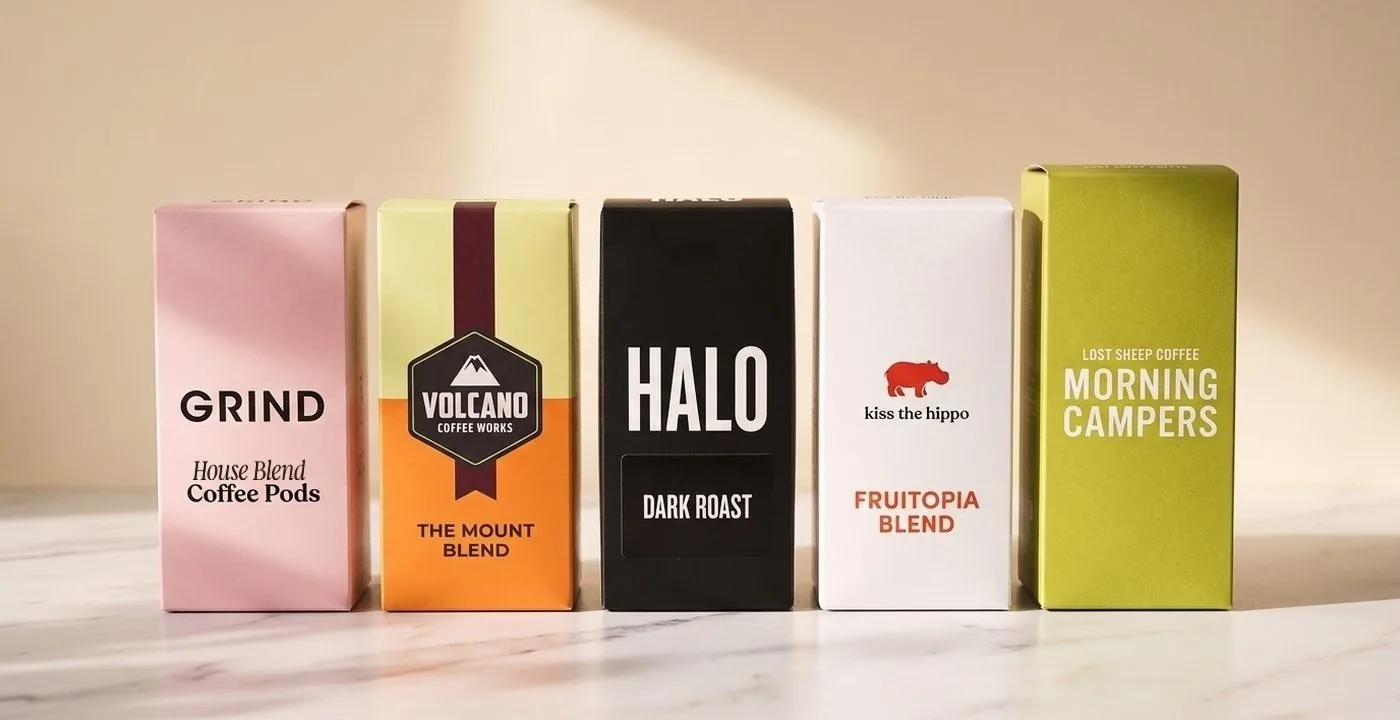
Table of Contents
Some of the links in this article are affiliate links, which help fund our independent review work at no extra cost to you. Every recommendation is based on hands-on testing through The Editor Lab methodology. No brand pays to appear, and no placement is guaranteed.
About the Editor
I have spent 15 years in the coffee industry. A decade of that was with Sanremo, working with commercial espresso systems across Europe, before launching Balance Coffee in 2019. Since then I have visited over 60 UK roasteries, tested hundreds of pods, and built an independent lab testing programme that screens for mycotoxins, mould, heavy metals, and pesticide residues.
Compostable coffee pods are the fastest-growing segment in UK coffee, and the marketing around them is the least honest. I wrote this guide because I wanted to separate the brands doing it properly from the ones slapping a green leaf on the box and hoping nobody checks. Every pod here was blind-tasted, assessed on coffee quality first, and then checked against its composting certification to see whether the claim actually holds up in practice.
For the full pods landscape, see our best Nespresso pods and capsules in the UK guide. For certified organic options, see our best organic coffee pods guide.
Top 3 Compostable Coffee Pods
What Makes a Coffee Pod Compostable?
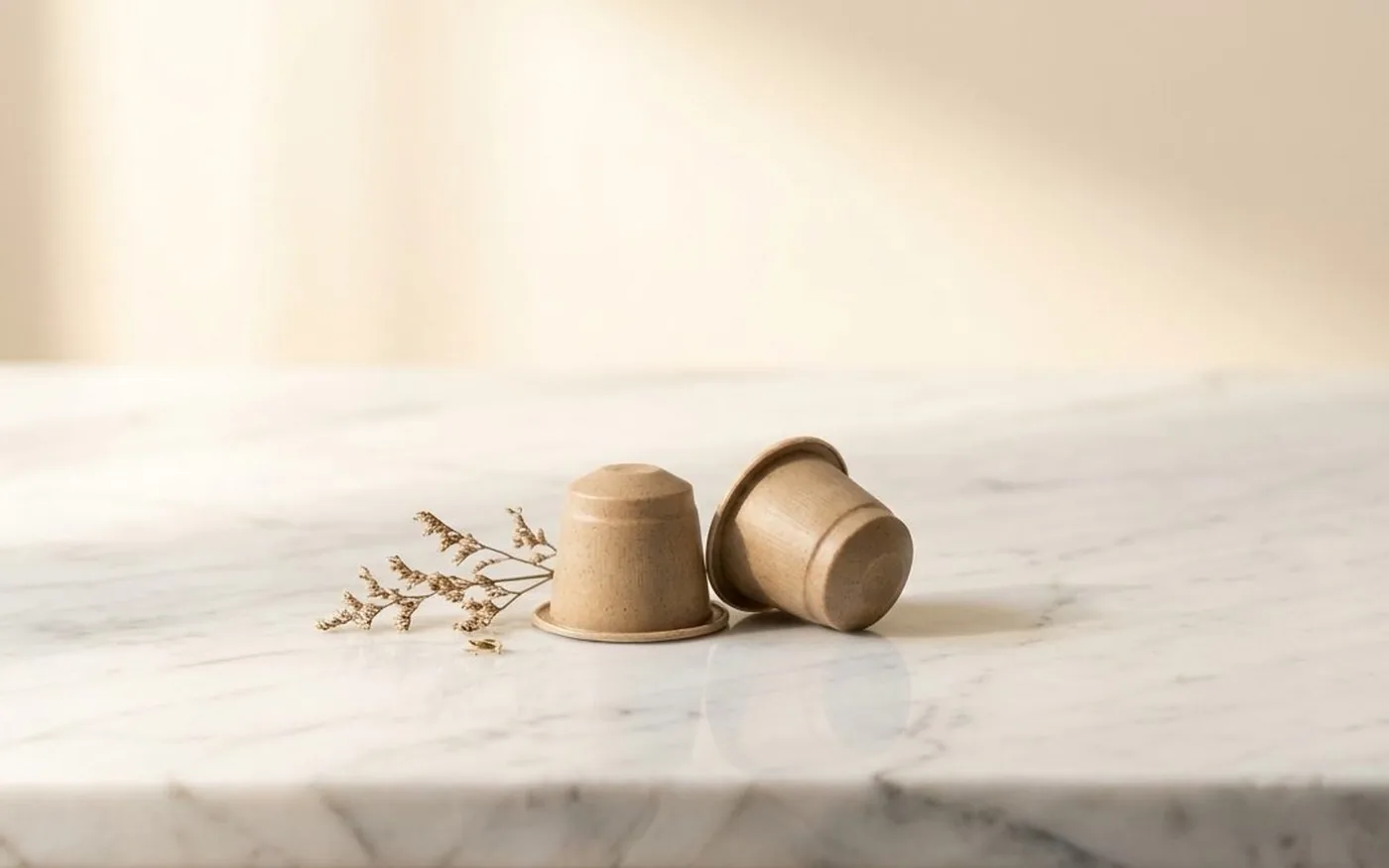
A compostable coffee pod is a single-serve capsule made from plant-based materials designed to break down into organic matter under composting conditions. Unlike conventional plastic or aluminium capsules, compostable pods use bioplastics derived from sources such as sugarcane, cornstarch, or polylactic acid (PLA), combined with paper-based lids and filters.
The critical distinction is between 'compostable' and 'biodegradable'. Biodegradable simply means a material will break down eventually, with no time limit and no requirement for it to become useful compost. Compostable means the material will break down within a defined period under specific conditions, leaving no toxic residue. The European standard EN 13432, maintained by European Bioplastics, sets the benchmark: 90% disintegration within 12 weeks under industrial composting conditions at 55-60C.
Home Compostable vs Industrial Compostable
This is where most of the confusion sits. Industrial composting facilities maintain temperatures of 55-60C consistently, which is far hotter than any home compost bin reaches. Most compostable coffee pods on the UK market are certified for industrial composting only. They will not break down in a home compost heap within any reasonable timeframe.
A smaller number of brands hold home compostable certification (typically TUV Austria's OK Compost Home mark), meaning the pod will break down at ambient temperatures over 6-12 months. If a brand does not specify 'home compostable', assume it requires industrial facilities. Several brands in this guide - Grind, Kiss the Hippo, Lost Sheep, and Halo - hold genuine home compostable certification, which is a meaningful distinction.
The Disposal Problem
Here is the uncomfortable truth. WRAP data shows that less than 11% of compostable packaging in the UK actually reaches an industrial composting facility. Most councils do not accept compostable pods in food waste collections. The infrastructure gap means the majority of compostable pods sold in Britain end up in general waste, where they behave no differently from conventional plastic in landfill conditions.
Podback offers an alternative collection route for both aluminium and compostable pods, operating through Royal Mail and selected retailers. It is worth checking whether your postcode falls within the Podback collection area. If it does, this solves the disposal question regardless of pod material.
The honest assessment: compostable pods are better for the environment only if they actually get composted. If your local authority does not accept them in food waste and you are not using Podback, the environmental benefit is largely theoretical. That said, the shift toward home compostable certification - led by brands like Grind and Halo - is changing the equation. A pod that breaks down in your garden compost bin does not need council infrastructure at all.
How We Tested
We ordered compostable pods from six UK roasters, removed all branding, numbered the capsules, and ran a three-day blind tasting using a Nespresso Creatista Plus at factory espresso settings (25ml, 25-30 seconds). Each pod got three pulls on different days. Three tasters scored independently before we compared notes.
Tasting methodology. Each pod was pulled as a standard espresso (25ml, 25-30 seconds) using a Nespresso Creatista Plus at factory settings. We ran three shots per pod across different days to account for extraction variation. Tasting was blind: pods were labelled with numbers only. Three tasters scored independently on aroma, body, finish, and overall impression before scores were averaged.
Compostability verification. We checked each brand's composting certification (EN 13432, OK Compost Industrial, OK Compost Home, TUV Austria Home Compostable), verified the certifying body, and noted whether the brand provides clear disposal instructions on packaging.
Value assessment. Price per pod calculated from the brand's own website at the subscription rate where available, since most brands offer 10-20% savings on subscription. One-off pricing noted separately.
1. Volcano Coffee Works
I walked into Volcano's Brixton roastery on a Tuesday morning in 2023, and the smell of freshly roasted Ethiopian Yirgacheffe hit before I had reached the counter. That memory comes back every time I pull one of their pods. There is a connection between what happens in that roastery and what ends up in the cup that most pod brands simply cannot replicate.
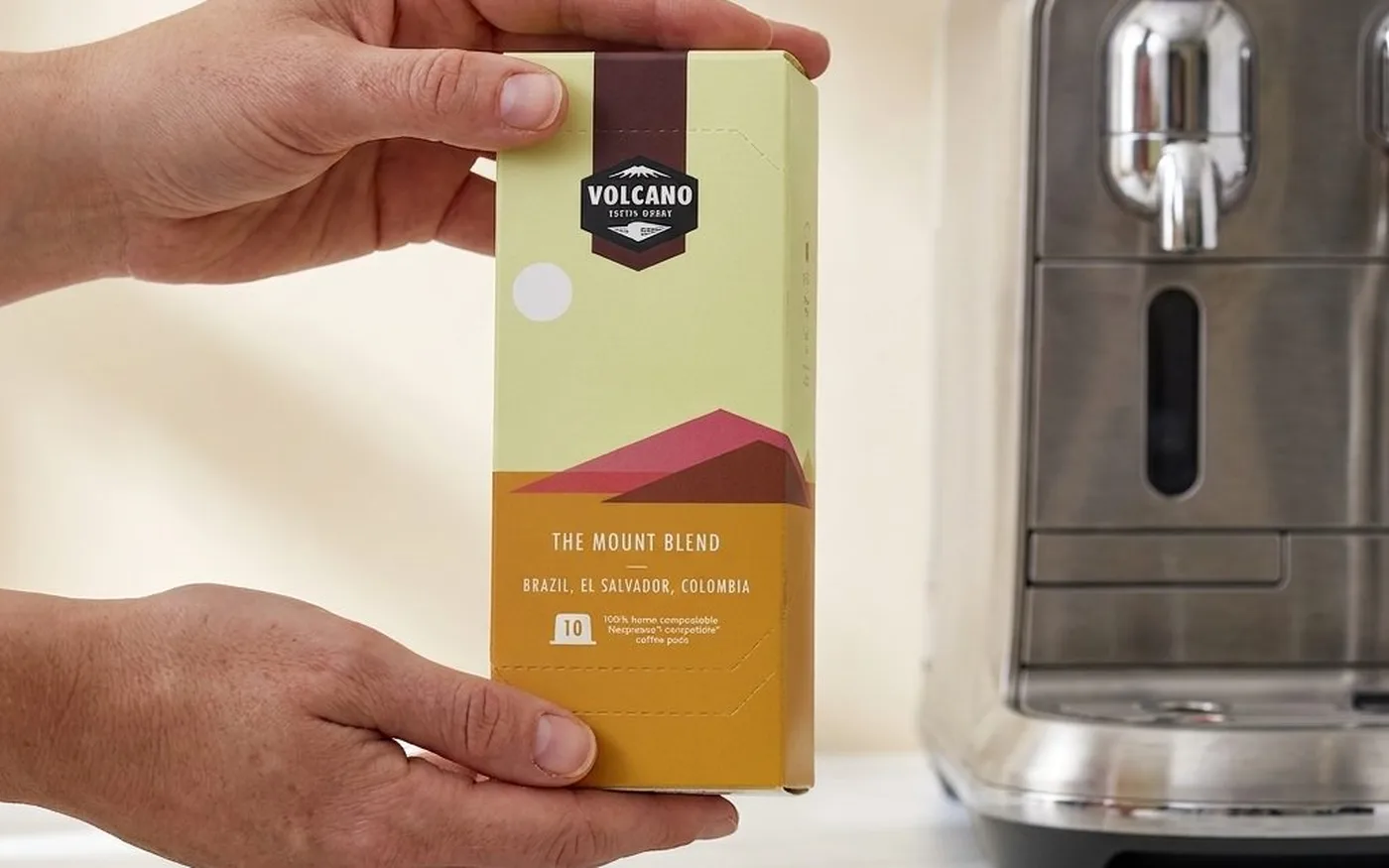
Volcano Coffee Works has been roasting speciality coffee in South London since 2012. They were early to compostable pods, and critically, they did not sacrifice coffee quality to get there. Their capsules use a plant-based biopolymer made from starch, glucose, and lignin, with an OK Compost Home certification. That is not a marketing claim - it is a verified standard meaning the pod breaks down in a home compost bin. Every blend is Rainforest Alliance certified.
In the cup. The Rich Espresso blend opens with dark chocolate and toasted hazelnut on the nose. Through the body, there is a rounded sweetness - dried fig, a touch of molasses - with enough weight to carry milk if you want a flat white. The finish is clean without drifting into bitterness, which is harder to achieve in a compostable capsule than most people realise. The biopolymer shell creates a slightly different extraction dynamic to aluminium, and Volcano have clearly calibrated their grind to compensate.
Their single-origin range is where things get genuinely interesting. The seasonal offerings rotate, and the quality stays high. I tested their Colombian and the Ethiopian across multiple brews, and the consistency surprised me. That is the mark of a roaster who understands extraction, not just packaging.
“Editor's verdict: The best compostable pod in the UK. Speciality-grade coffee, transparent sourcing, and a home compostable capsule that does not compromise the cup. Start here.”
| Evaluation Criteria | Our Findings |
|---|---|
| Full Review | Read our Volcano Coffee Works review |
| Best For | Overall quality - speciality-grade home compostable pods with single-origin range |
| Capsule Type | Nespresso Original compatible, plant-based biopolymer (starch, glucose, lignin), OK Compost Home certified |
| Flavour Profile | Dark chocolate, toasted hazelnut, dried fig sweetness, clean finish |
| Certification | Rainforest Alliance, OK Compost Home certified |
| Price | From £0.70 per pod (subscription) |
| Shop | Volcano Coffee Works → |
2. Origin Coffee
Origin have been sourcing and roasting speciality coffee in Cornwall since 2004. That makes them one of the longest-running speciality roasters in the country, and their move into compostable pods feels like it was done on their own terms rather than as a reaction to market pressure.
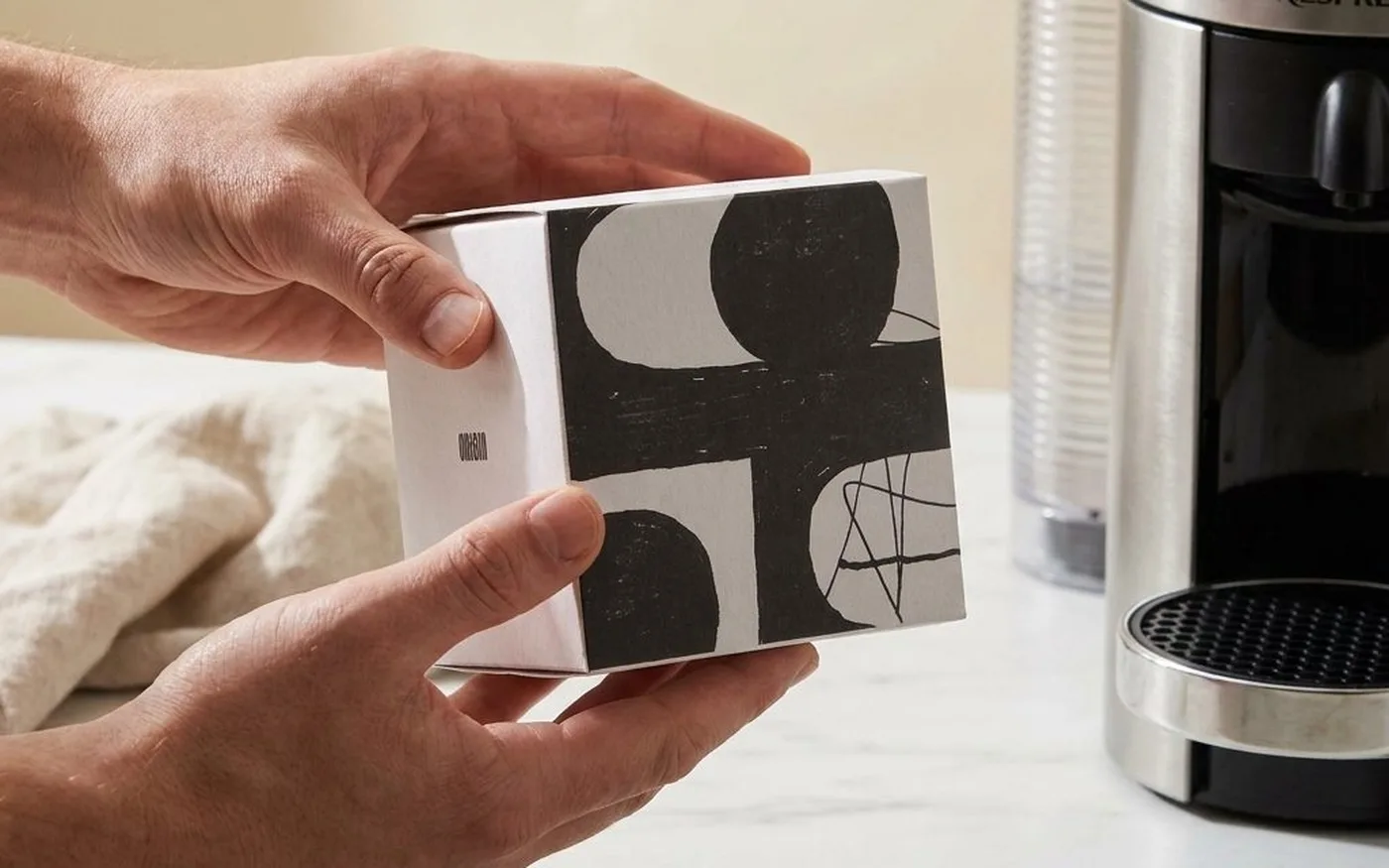
Their capsules are Nespresso Original compatible and certified compostable. What sets Origin apart is their oxygen barrier technology - a technical approach to pod construction that preserves freshness without relying on aluminium or conventional plastic barriers. The result is a compostable pod that protects the coffee inside from oxidation as effectively as most aluminium alternatives. Origin source directly from farms across Central and South America, East Africa, and Southeast Asia, and they publish their sourcing relationships openly.
In the cup. The No.1 blend delivers stone fruit and milk chocolate on the nose, with a medium body that carries more clarity than weight. There is a brightness through the mid-palate - a clean acidity that lifts the cup without sharpness. The finish is smooth and gently sweet, with a nuttiness that lingers. Their single-origin pods rotate seasonally, and the Ethiopian washed I tested had a floral, almost jasmine quality that is rare to find in a capsule format.
Origin's approach is less flashy than Grind's and less London-centric than Volcano's. They let the sourcing and the roasting do the work. For anyone who values traceability and wants speciality coffee pods that happen to be compostable rather than the other way around, this is the brand to try.
“Editor's verdict: Cornwall's quiet overachiever. Speciality-grade sourcing, oxygen barrier technology that preserves freshness, and a flavour profile that rewards attention. The best pick for single-origin pod drinkers.”
| Evaluation Criteria | Our Findings |
|---|---|
| Full Review | Read our Origin Coffee review |
| Best For | Single-origin pod drinkers - oxygen barrier technology, Cornwall roasted since 2004 |
| Capsule Type | Nespresso Original compatible, compostable with oxygen barrier technology, certified compostable |
| Flavour Profile | Stone fruit, milk chocolate, clean acidity, smooth nutty finish |
| Certification | Certified compostable, direct trade verified |
| Price | From £0.65 per pod (subscription) |
| Shop | Origin Coffee → |
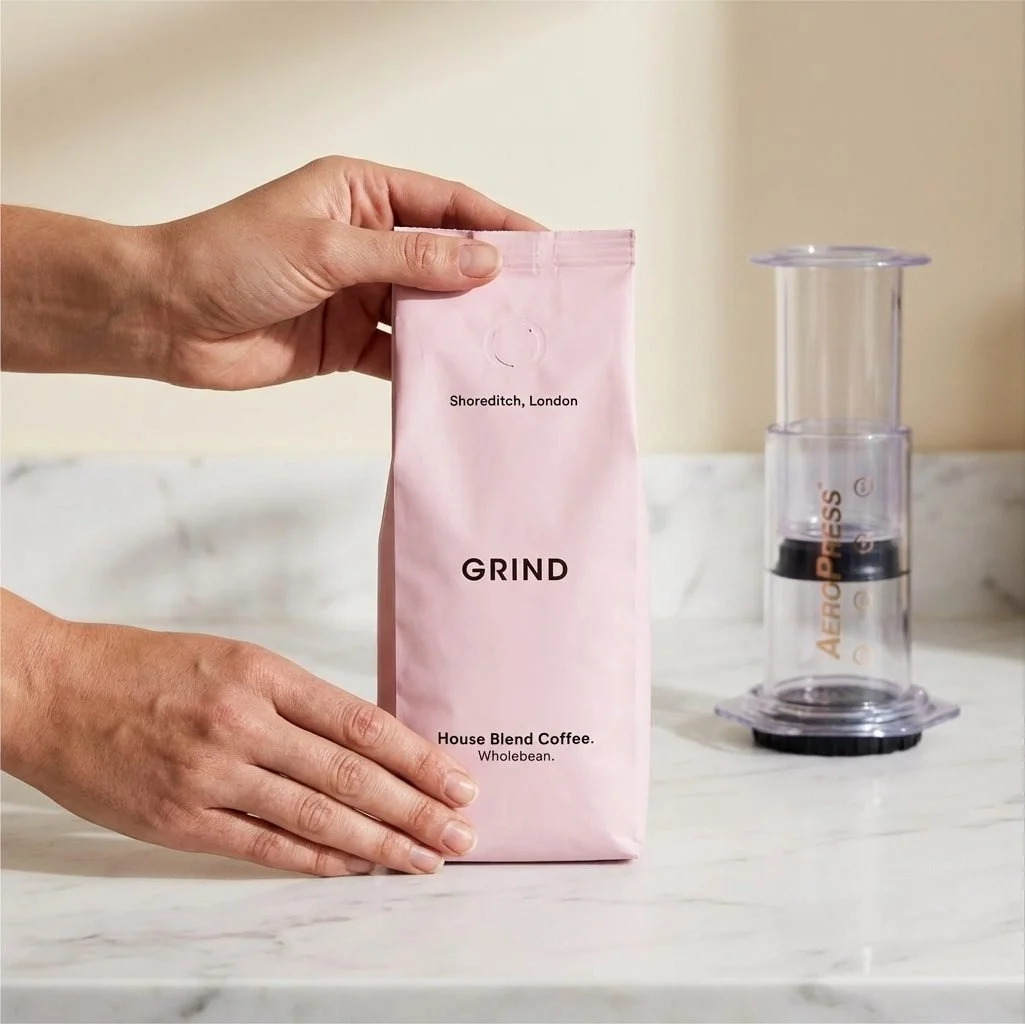
3. Grind Coffee
The branding is sharp. The pods are everywhere. Grind has become the most visible compostable pod brand in the UK, and that level of exposure usually makes me skeptical. Visibility is not the same as quality.
But here is the thing: the coffee is good. Not exceptional in the way Volcano's single origins land, but consistently solid across their core range. Grind roast in London, their pods are Nespresso Original compatible, and every capsule is made from PHA bioplastic - a material that breaks down in both home and industrial composting environments. They were the first UK coffee brand to achieve TUV Home Compostable certification for their pods. The packaging is fully recyclable.
In the cup. Their House Blend delivers caramel and milk chocolate on the nose, with a medium body that sits in comfortable territory for daily drinking. Not a lot of complexity, but no off-notes either. Smooth through the mid-palate and an even finish. Their Espresso blend pushes darker - more cocoa, a slight roasted nuttiness - and performs well with milk.
The subscription model is competitive, and the pods arrive in letterbox-friendly packaging. For someone who wants a reliable compostable daily driver without chasing single-origin nuance, Grind does the job well.
“Editor's verdict: The strongest all-rounder for daily drinking. Reliable, well-packaged, and the first UK brand to achieve TUV home compostable certification. Not the most complex cup, but that is not what most people are after at 7am.”
| Evaluation Criteria | Our Findings |
|---|---|
| Full Review | Read our Grind Coffee review |
| Best For | Daily drinking - reliable, well-priced, first UK home compostable pod |
| Capsule Type | Nespresso Original compatible, PHA bioplastic, TUV Home Compostable certified |
| Flavour Profile | Caramel, milk chocolate, medium body, smooth even finish |
| Certification | TUV Home Compostable, carbon-neutral certified |
| Price | From £0.55 per pod (subscription) |
| Shop | Grind Coffee → |
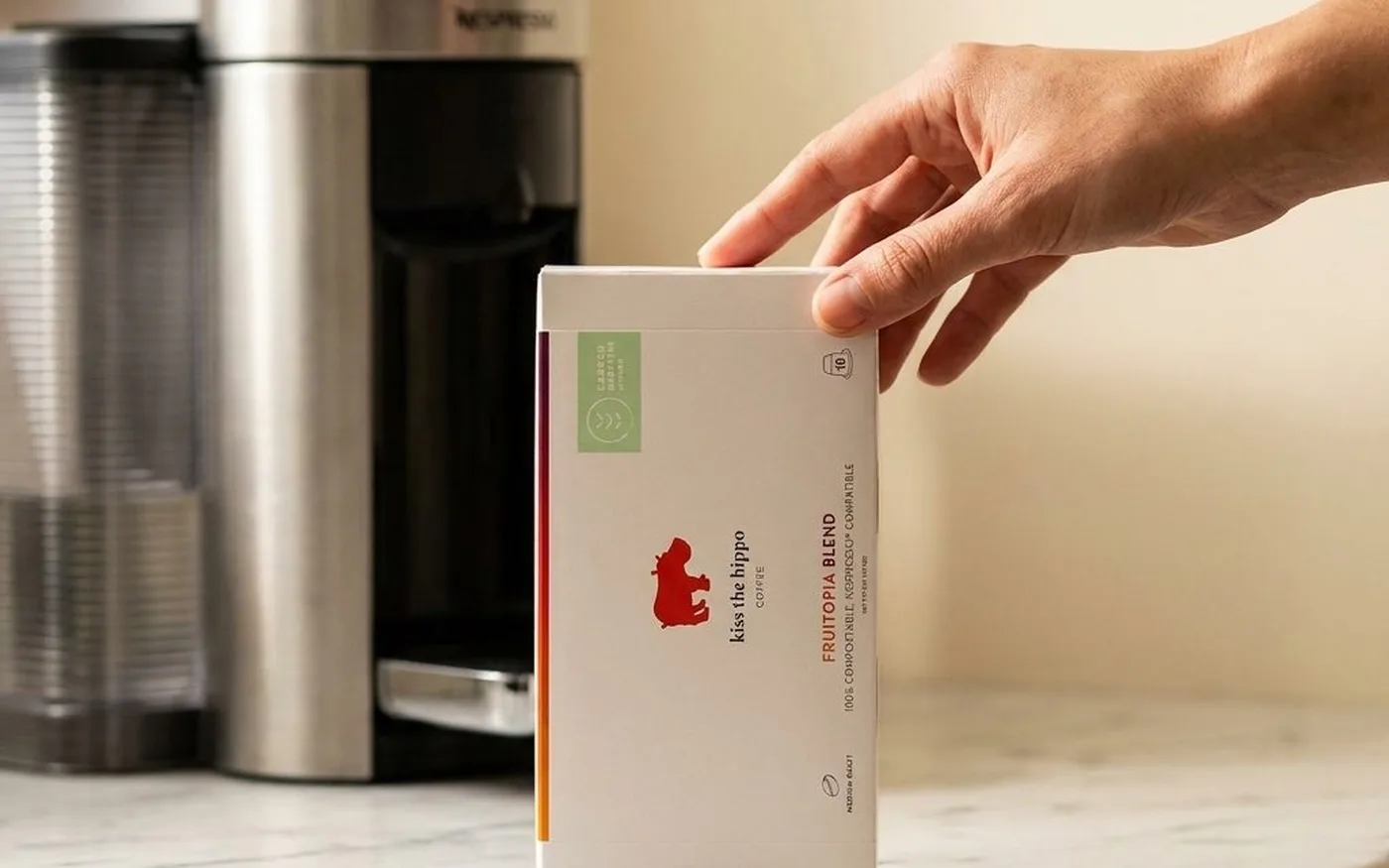
4. Kiss the Hippo
I first encountered Kiss the Hippo at their Richmond roastery, where the combination of carbon-neutral roasting and certified organic sourcing made me pay closer attention than I might have otherwise. There are plenty of brands making environmental claims. Fewer are willing to get certified across every part of the process.
Kiss the Hippo's pods are Nespresso Original compatible and home compostable. Their coffee is certified organic by the Soil Association, which means no synthetic pesticides or fertilisers at any point in the supply chain. The roasting operation runs on renewable energy, and the pods themselves break down in a home compost bin without requiring industrial facilities. For buyers who want organic coffee pods that are also compostable, this is one of the few brands that delivers both.
In the cup. Their George Street Blend opens with ripe berry and dark chocolate on the nose. The body is full without heaviness - a velvety texture that works well as both straight espresso and with milk. Through the mid-palate there is a plum sweetness, with a finish that carries a subtle spice note and fades cleanly. The organic sourcing does not come at the expense of flavour complexity, which is not something I can say for every organic pod I have tested.
Kiss the Hippo occupies a specific space: premium, organic, home compostable. The price reflects that positioning. But the quality in the cup justifies it.
“Editor's verdict: The best compostable pod for organic coffee drinkers. Home compostable, Soil Association organic certified, carbon-neutral roasting. Premium pricing, but the cup quality earns it.”
| Evaluation Criteria | Our Findings |
|---|---|
| Full Review | Read our Kiss the Hippo review |
| Best For | Organic coffee drinkers - home compostable, Soil Association organic certified, carbon-neutral roasting |
| Capsule Type | Nespresso Original compatible, home compostable, organic certified |
| Flavour Profile | Ripe berry, dark chocolate, plum sweetness, subtle spice finish |
| Certification | Soil Association organic, home compostable, carbon-neutral roasting |
| Price | From £0.75 per pod |
| Shop | Kiss the Hippo → |
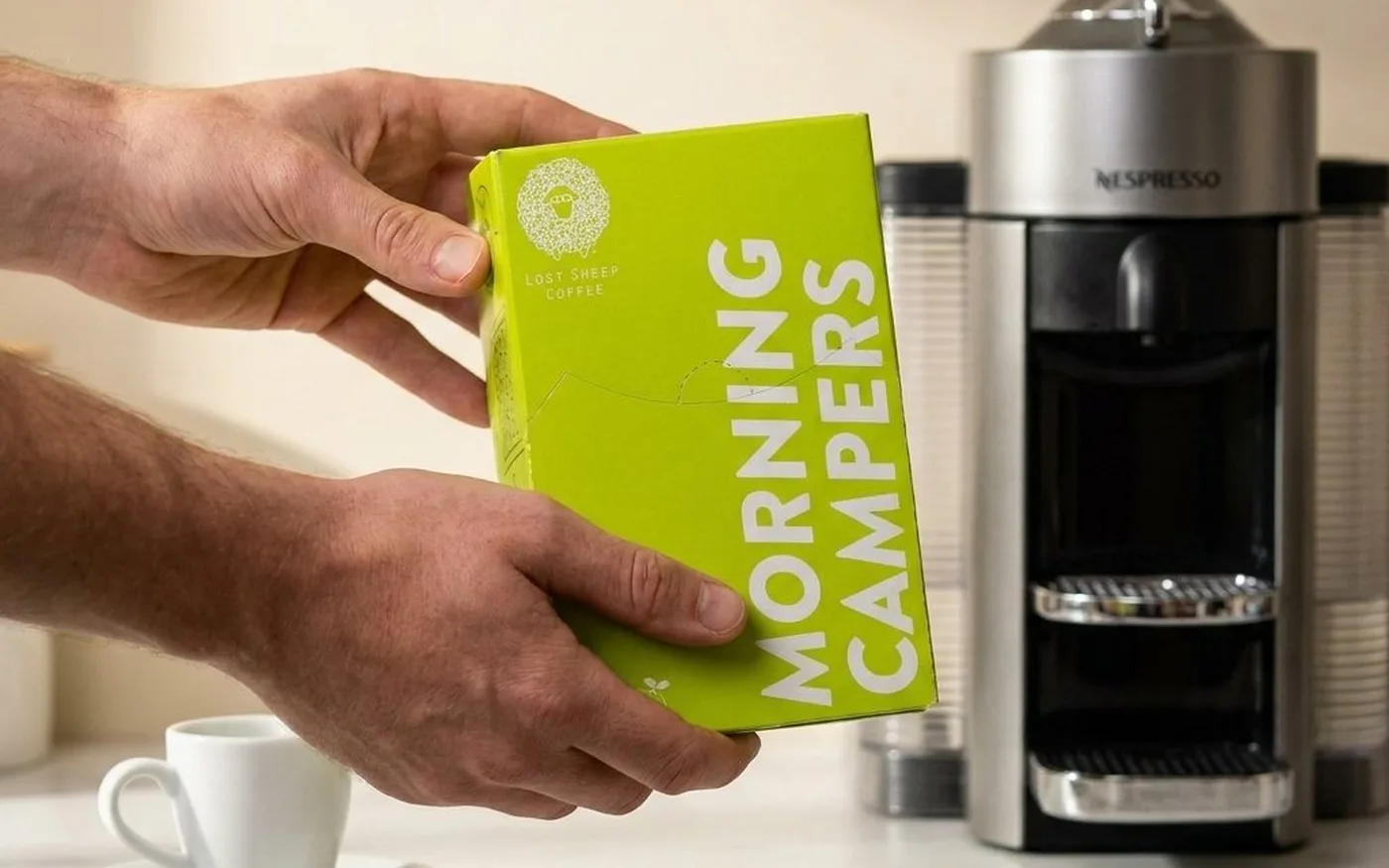
5. Lost Sheep Coffee
A small roastery in the Lake District making compostable pods. That sentence alone should tell you something about priorities. Lost Sheep are not chasing scale. They are chasing coffee quality from a corner of England that most pod brands have never heard of.
Their pods are Nespresso Original compatible and home compostable, made from wood-based material derived from paper industry waste. That is a different approach to the sugarcane and PLA routes that dominate the market - Lost Sheep have found a use for material that would otherwise be discarded. They source from Rainforest Alliance and Soil Association organic certified farms, depending on the blend, and they roast in small batches at their Ambleside facility.
In the cup. Their Kickstarter Espresso blend is bold without being aggressive. Dark chocolate dominates the nose, with dried stone fruit underneath. The body is full - heavier than Grind, less nuanced than Volcano - and the finish carries a pleasant bittersweet character that works well as a morning espresso. The Colombiano single origin is worth trying separately: a cleaner, brighter cup with caramel sweetness and a citrus lift.
The packaging is straightforward, the branding is unpretentious, and the coffee punches above what the price suggests. Lost Sheep is the kind of brand that gets overlooked in London-centric roundups, and that is exactly why it belongs here.
“Editor's verdict: Quietly impressive. Small-batch quality, honest sourcing, and a wood-based home compostable pod that turns paper industry waste into something useful. The Lake District's best-kept coffee secret.”
| Evaluation Criteria | Our Findings |
|---|---|
| Full Review | Read our Lost Sheep Coffee review |
| Best For | Value and bold flavour - small-batch Lake District roastery, wood-based home compostable pod |
| Capsule Type | Nespresso Original compatible, wood-based (paper industry waste), home compostable |
| Flavour Profile | Dark chocolate, dried stone fruit, full body, bittersweet finish |
| Certification | Home compostable, Rainforest Alliance and organic certified (blend dependent) |
| Price | From £0.55 per pod |
| Shop | Lost Sheep Coffee → |
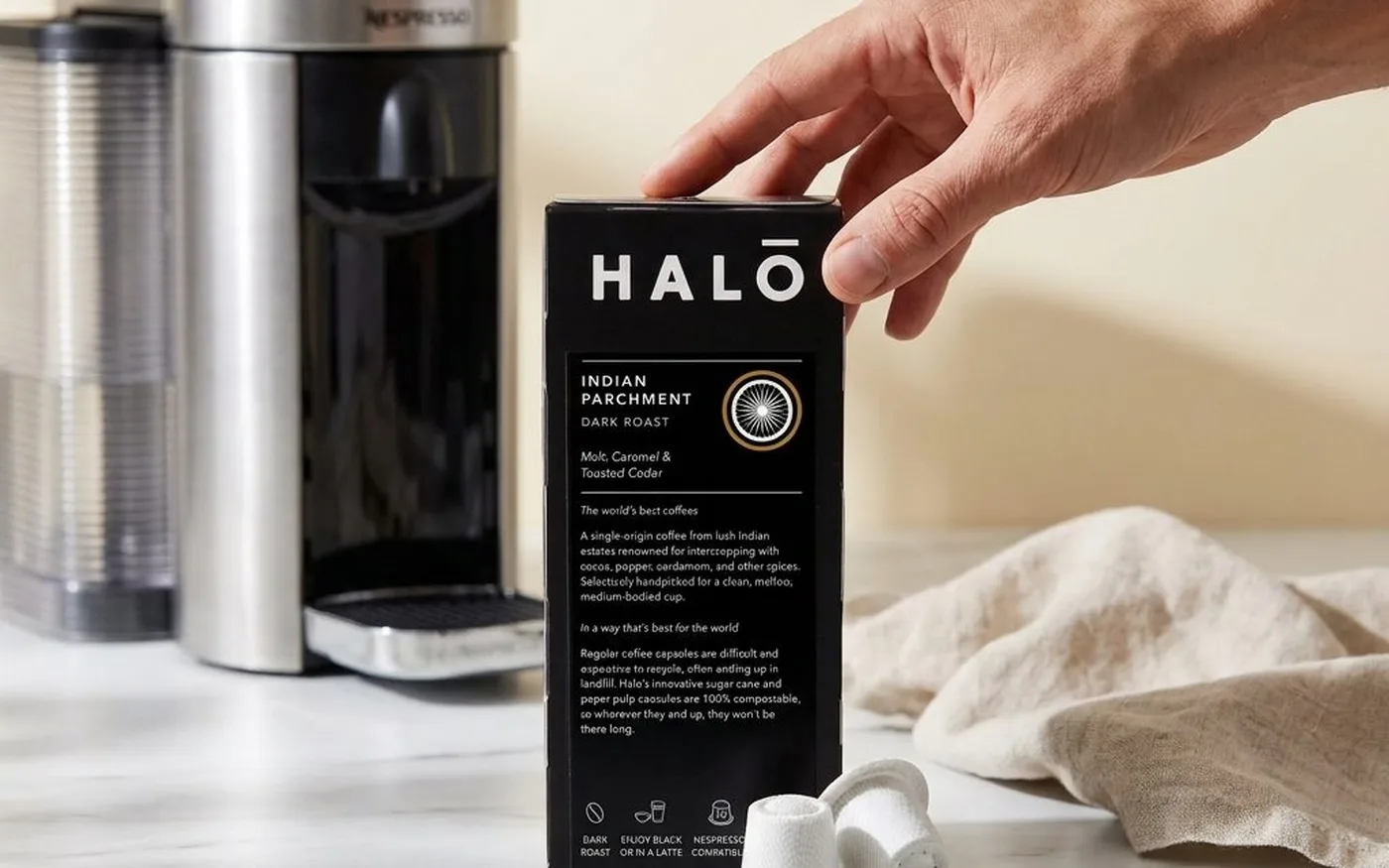
6. Halo Coffee
Halo launched in 2018 with a specific claim: the world's first fully compostable coffee capsule. That is a bold statement, and it got attention. The capsule material is made from sugar cane bagasse - the fibrous residue left after sugar extraction - designed to break down in both home and industrial composting. They hold TUV Austria Home Compostable certification, which means the claim has been independently verified.
The coffee is sourced from farms in Colombia, Ethiopia, and Indonesia, and roasted in the UK. Halo offer both blends and single origins across the Nespresso Original compatible format. Their sustainability commitment extends beyond the pod itself, with carbon-neutral shipping and plastic-free packaging throughout.
In the cup. The Classic Italian blend targets the traditional espresso drinker: dark roast, heavy body, smoky undertone. On the nose, there is roasted walnut and bitter chocolate. Through the body, it is dense and punchy, built for milk drinks rather than straight espresso purists. The finish is long but leans slightly into ashy territory on occasion, which I noticed across multiple brews.
Their single-origin Ethiopian is more refined - lighter roast, berry notes, tea-like body - and shows what Halo can do when they move away from the Italian template. For anyone who gravitates toward bolder, darker profiles, the core range delivers. For those who prefer brighter, more complex cups, the single origins are the better entry point.
“Editor's verdict: A genuine compostable pioneer with TUV-certified home compostable pods and improving coffee quality. The single origins show more promise than the blends. Worth watching as the range develops.”
| Evaluation Criteria | Our Findings |
|---|---|
| Full Review | Read our Halo Coffee review |
| Best For | Bold espresso drinkers and sustainability-first buyers - sugar cane bagasse home compostable pioneer |
| Capsule Type | Nespresso Original compatible, sugar cane bagasse, TUV Austria Home Compostable certified |
| Flavour Profile | Roasted walnut, bitter chocolate, dense body, long finish (blends); berry, tea-like (single origins) |
| Certification | TUV Austria Home Compostable, carbon-neutral shipping, plastic-free packaging |
| Price | From £0.60 per pod |
| Shop | Halo Coffee → |
What to Avoid
Not every pod labelled 'compostable' deserves the description. Here is what to watch for.
Vague disposal claims. If a brand says 'eco-friendly' or 'plant-based' without citing a specific composting certification (EN 13432 or OK Compost), the claim is unverifiable. Marketing language is not a composting standard.
No certification body named. A genuine compostable pod will name the certifying body, whether that is TUV Austria, Din Certco, or equivalent. If the packaging says 'compostable' but does not tell you who certified it, treat that with suspicion.
'Biodegradable' used interchangeably with 'compostable'. These are not the same thing. A plastic bag is technically biodegradable given enough centuries. Compostable means a defined breakdown period under specific conditions, verified by a third party. Any brand conflating the two is either confused or hoping you are.
Home compostable claims without certification. Some brands suggest their pods can go in a home compost bin without holding the OK Compost Home or TUV Home Compostable certification. Without that mark, the claim is untested. Your home compost may not reach the temperatures or microbial activity needed to break the capsule down.
Greenwashing through packaging alone. A compostable pod filled with low-grade commodity coffee is still a low-grade product. Sustainability credentials do not compensate for poor sourcing. The best brands in this guide combine both.
Aluminium pods marketed as sustainable. Some brands use aluminium pods and promote recyclability as an environmental credential. Aluminium is infinitely recyclable and has its own merits, but it is not compostable. If you are specifically looking for a pod that breaks down into organic matter, check the capsule material before buying. For a deeper look at this distinction, see our guide on aluminium vs compostable coffee pods.
Final Verdict
Volcano Coffee Works is the best compostable coffee pod in the UK for 2026. Speciality-grade coffee, transparent sourcing, a genuine Brixton roastery behind every batch, and a home compostable capsule that does not compromise the cup. It is the standard.
Grind is the best daily driver - consistent, well-priced, and the first UK brand with TUV Home Compostable certification. Origin Coffee is the pick for single-origin drinkers who value traceability and flavour complexity. Kiss the Hippo stands alone for anyone who wants organic and home compostable in one pod. Lost Sheep and Halo round out the field with genuine quality, credible sustainability credentials, and home compostable certification across both.
The compostable pod market is improving fast, with brands now competing directly with the best espresso pods and best speciality coffee pods in the UK. Two years ago, the gap between compostable and aluminium pods on flavour quality was obvious. As of early 2026, the best compostable pods have closed that gap almost entirely. The shift toward home compostable certification makes the environmental argument more compelling too - your garden compost bin is now a viable disposal route.
One thing to keep in mind: compostable only matters if the pod actually gets composted. For step-by-step disposal guidance, see our guide on how to recycle coffee pods. Check your local authority's food waste policy, register with Podback, or choose a home compostable pod and use your own compost bin. The material is only half the equation. Disposal is the other.
For the full ranked list across all pod types, see our best Nespresso pods and capsules guide. For certified organic options specifically, see best organic coffee pods. And for a deeper look at the aluminium vs compostable coffee pods debate with full lifecycle data, that guide is coming soon.
Frequently Asked Questions
Are Compostable Coffee Pods Actually Composted?
Can You Put Compostable Coffee Pods in Your Home Compost?
Are Compostable Pods Better Than Aluminium Pods?
How Long Do Compostable Coffee Pods Take to Break Down?
What Is the Podback Scheme?
Do Compostable Pods Affect Coffee Taste?
Are Compostable Coffee Pods Compatible with Nespresso Machines?
What Certifications Should I Look for on a Compostable Coffee Pod?
How Much Do Compostable Coffee Pods Cost Compared to Regular Pods?
Does Balance Coffee Make Compostable Pods?
Related Guides
- Best Nespresso Pods for Latte, Cappuccino and Flat White
- Aluminium vs Compostable Coffee Pods: Which Is Better?
- Halo Coffee Review: Are the Compostable Pods Any Good?
- 11 Best Nespresso Capsules 2026 - Tried, Tested and Ranked by Coffee Expert
- 10 Best Organic Coffee Pods 2026: Ranked for Purity, Sustainability and Flavour
- Coffee Pods vs Capsules: What Is the Difference?
- 4 Best Speciality Coffee Pods UK 2026 - Tested and Ranked
- How to Recycle Coffee Pods in the UK: Complete Guide

A wellness entrepreneur and biohacker, James explores the intersection of hospitality and health - from clean fuel and recovery tools to mindful routines that build balance into daily life.