Grind vs Balance Coffee Pods: The Health Test
One brand chases lab results, the other branding. One panel for both. They diverge fast.
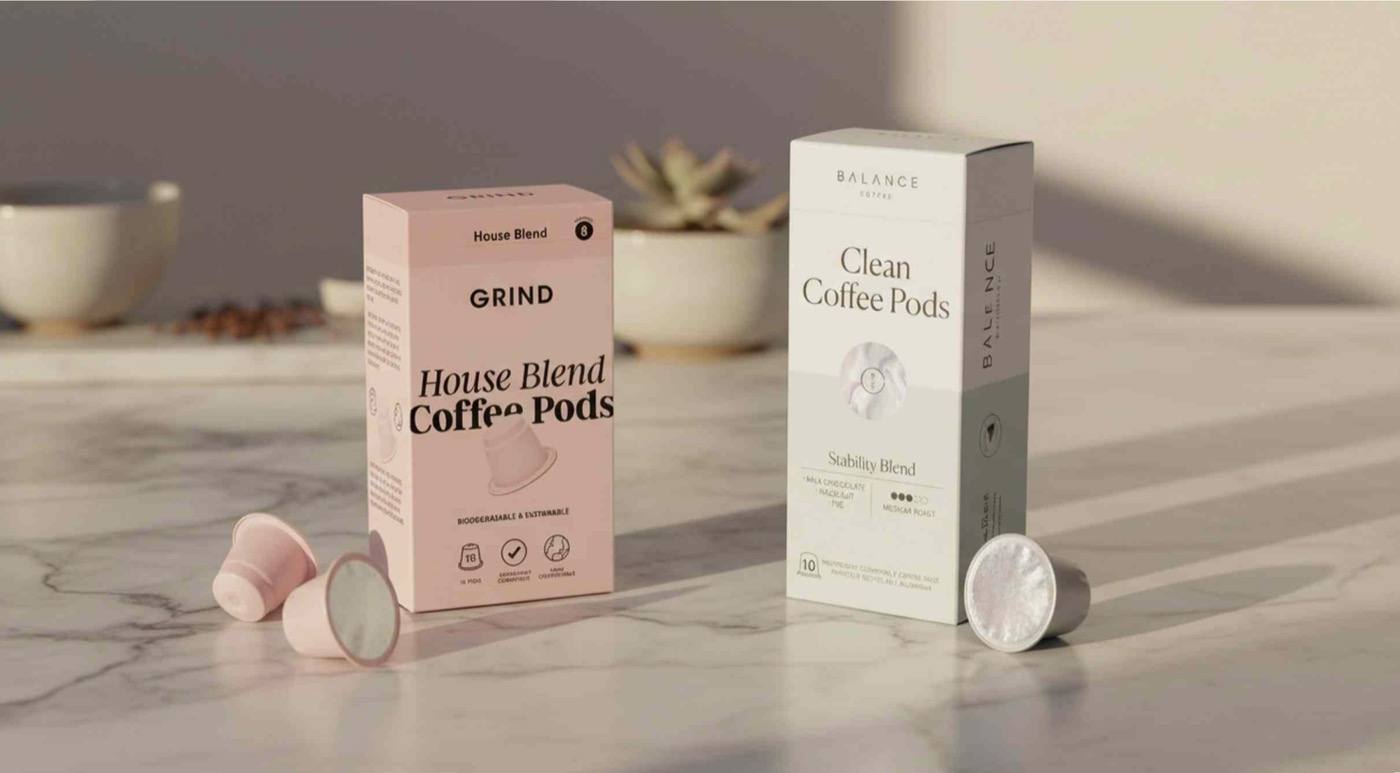
Table of Contents
Some of the links in this article are affiliate links, which help fund our independent review work at no extra cost to you. Every recommendation is based on hands-on testing through The Editor Lab methodology. No brand pays to appear, and no placement is guaranteed.
I have tested both Grind and Balance Coffee pods extensively over the past two years through our Editor Lab methodology. This is not a sponsored comparison. I am the founder of Balance Coffee, and I will be transparent about that throughout. But this article exists because the question keeps coming up, and the answer is more interesting than most people expect.
These two brands sit at opposite ends of the same market. Both make Nespresso Original compatible coffee pods. Both target a quality-conscious UK audience. But they differ fundamentally on one thing: what they test for, and what they tell you about it. I wanted to put that difference under a lens.
James Bellis, Coffee Writer & Biohacker, Balance Journal
Why This Comparison Matters
Grind and Balance Coffee are two of the most visible independent pod brands in the UK. Both are subscription-friendly, both use Nespresso Original compatible capsules, and both position themselves as premium alternatives to supermarket pods.
But the similarities end at the surface. This comparison exists because the two brands represent fundamentally different approaches to what 'quality' means in a coffee pod.
Grind leads with design, branding, and retail presence. You have seen their pods in Selfridges, on Instagram, in hotel rooms. The packaging is distinctive. The marketing is polished.
Balance Coffee leads with health transparency. Third-party lab testing for mycotoxins, mould, heavy metals, and pesticide residues. Organic certification through the Soil Association. Published batch results. That is a fundamentally different value proposition, and one that is hard to evaluate from a product page alone.
If you are choosing between these two brands, the decision depends on what you prioritise. This article gives you the data to make that call.
For context on where both brands sit in the wider market, see our full guide to the best Nespresso pods and capsules in the UK.
How We Tested
Both brands were tested through our Editor Lab methodology over a four-week period. The process is standardised across all pod reviews on Balance Journal.
Equipment: Nespresso Essenza Mini, descaled and flushed between brands. All shots pulled at factory settings (25ml espresso, 40ml lungo where applicable). Water filtered through a Brita Pro system for consistency.
Tasting protocol: Blind tasting with three members of our editorial team. Each pod brewed twice, on separate days, to account for batch variation. Tasting notes recorded independently before comparison. Scores averaged across sessions.
Health and transparency assessment: We reviewed published lab results, certification documentation, ingredient sourcing claims, and contacted both brands with identical questions about contaminant testing. One responded with data. The other did not.
Pricing: All prices verified on brand websites in March 2026. Subscription pricing used where available, as both brands offer subscription models.
Head-to-Head: Grind vs Balance Coffee
| Criteria | Grind | Balance Coffee |
|---|---|---|
| Capsule Material | Plant-based compostable | Recyclable aluminium |
| Organic Certified | No | Yes - Soil Association |
| Lab Tested | Not confirmed | Yes - mycotoxins, heavy metals, mould, pesticides. Published results |
| Contaminant Transparency | No published data | Full batch results available |
| Coffee Grade | Not specified | Speciality-grade, single-origin options |
| Flavour Profile | Dark chocolate, roasted nut, moderate body | Ethiopian: stone fruit, jasmine, citrus. Blend: milk chocolate, hazelnut, fig |
| Price (with code JOURNAL) | around 35-40p per pod | 67-75p per pod with code JOURNAL |
| Sourcing Detail | General origin descriptions | Named farms, altitude, processing method, variety |
| Sustainability Cert | None listed | Soil Association organic |
| Compatibility | Nespresso Original | Nespresso Original |
Grind Coffee Pods: What is in the Box
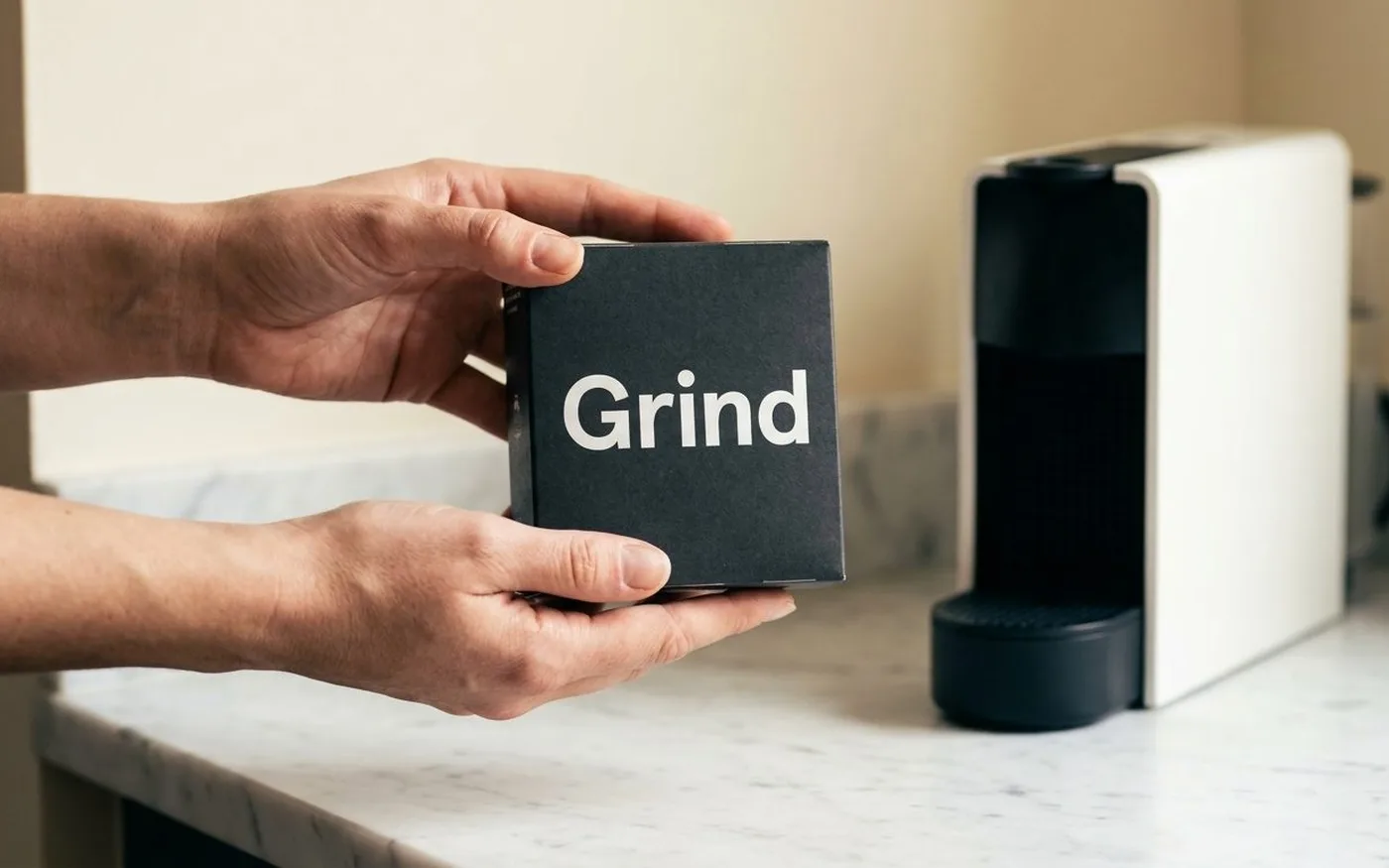
Grind launched in Shoreditch in 2011 as a restaurant group before expanding into packaged coffee. The pods arrived later, but they arrived with momentum. Strong branding, clean design, and a retail distribution strategy that put the product in front of a wide audience quickly.
The capsules are compostable, made from plant-based materials, and Nespresso Original compatible. The range includes several blends and a decaf option. Intensity levels span from medium to bold. The packaging is recyclable card.
In the cup, Grind is consistent. Their house blend delivers a dark chocolate and roasted nut profile with moderate body. It is a solid, reliable espresso. Not challenging, not thin. The kind of pod that performs well in milk drinks and does not offend anyone drinking it black.
What Grind does not offer is transparency on the health side. The pods are not organic certified. There are no published lab results for contaminant testing. We contacted Grind directly asking whether they test for mycotoxins, heavy metals, or pesticide residues. We did not receive a response that confirmed independent third-party testing.
That is not unusual. Most pod brands do not test for these things, and there is no legal requirement to do so. But it is a gap, and it becomes a meaningful one when you compare directly against a brand that does.
The sourcing is described as 'ethical' and 'sustainably sourced', but without specific certification (Organic, Rainforest Alliance, or Fairtrade) it is difficult to verify those claims independently.
For a full breakdown, read our Grind coffee review.
Balance Coffee Pods: What is in the Box
Balance Coffee launched in 2020 with a single focus: clean, lab-tested coffee. The brand was built around a health-first proposition before health-first became a category trend. I should be transparent: I founded Balance Coffee, and I am writing this comparison because I believe the comparison is editorially valuable, not because I want to sell you something.
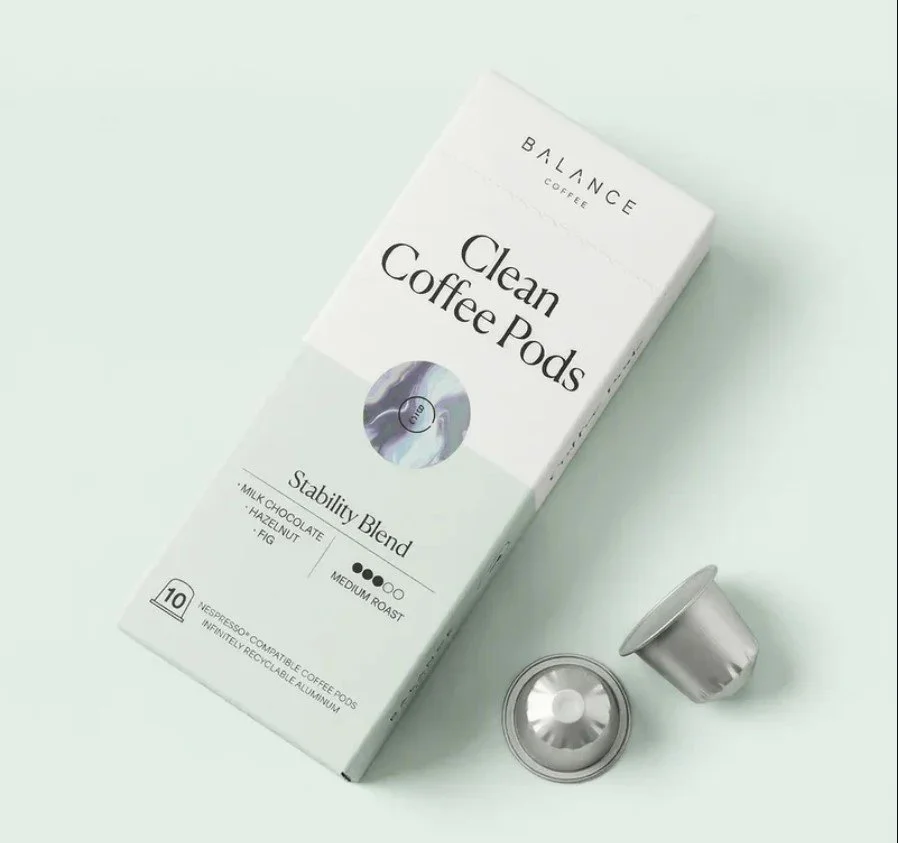
The pods are aluminium, Nespresso Original compatible, and filled with 100% organic, speciality-grade coffee certified by the Soil Association. Every batch is screened by an independent third-party laboratory for mycotoxins (including ochratoxin A and aflatoxins), mould, heavy metals, and pesticide residues. The results are published and available to customers.
That testing matters because coffee is a crop susceptible to contamination at multiple supply chain points. The European Food Safety Authority (EFSA) sets limits for ochratoxin A at 5 micrograms per kilogram, but testing is not mandatory for brands selling in the UK. Balance Coffee tests voluntarily and publishes the results. According to data from the Clean Label Project, detectable levels of mycotoxins have been found in several major coffee brands, which underlines why independent testing adds genuine value.
In the cup, the single-origin offerings are where Balance Coffee separates. The Ethiopian lot I tested most recently opened with stone fruit and jasmine on the nose, a honeyed sweetness through the body, and a clean citrus finish that lingered without bitterness. The blend is rounder, with milk chocolate and hazelnut, and performs well in milk drinks. Both are roasted to a medium profile that preserves origin character rather than masking it.
For a full breakdown, read our Balance Coffee review.
The Health Test: Contaminants, Lab Testing, and Transparency
This is the section that prompted the article. If you are searching "grind vs balance coffee", there is a reasonable chance you care about what is actually in your pod, not just how it tastes.
Mycotoxin and Contaminant Testing
Balance Coffee runs independent third-party lab testing on every batch. The tests screen for ochratoxin A, aflatoxins, mould counts, heavy metals (lead, cadmium, arsenic, mercury), and pesticide residues. Results are published and available to customers on request.
Grind does not publish lab results for contaminant testing. We contacted them directly and could not confirm that independent third-party testing is conducted. This does not mean Grind coffee contains contaminants. It means there is no published evidence either way.
For a daily drinker, the cumulative exposure question matters. One pod is negligible. Three hundred and sixty-five pods per year is a different calculation. Knowing that your coffee has been screened for mycotoxins and heavy metals is not a marketing gimmick. It is a health data point.
Organic Certification
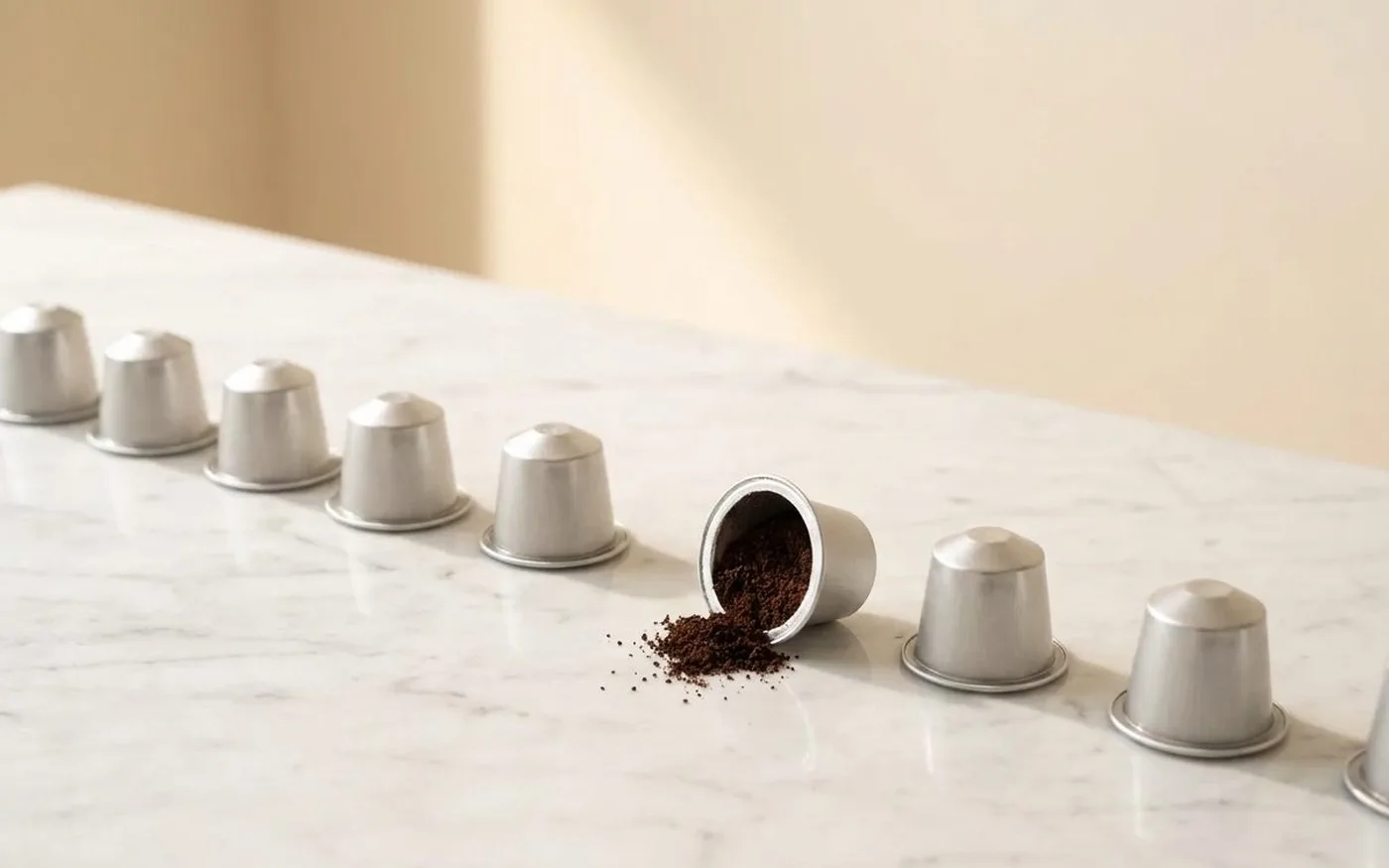
Balance Coffee is certified organic by the Soil Association. This means the beans are grown without synthetic pesticides, herbicides, or chemical fertilisers. The certification is independently audited annually.
Grind's coffee is not organic certified. The brand describes sourcing as 'ethical' and 'sustainable', but without formal certification the claims cannot be independently verified.
Ingredient Transparency
Balance Coffee lists single-origin lots with specific farm or cooperative details, altitude, processing method, and variety. The blend provides a full ingredient breakdown.
Grind describes blends in general terms. Origin information is broad rather than specific.
What This Means Practically
If are coffee pods bad for you is a question you have asked, the answer depends largely on what is inside them. The capsule material is not the health risk. The coffee inside is. A brand that tests and publishes results removes the uncertainty. A brand that does not leaves it open.
Taste and Quality: Side by Side
Both brands produce drinkable, consistent espresso. The difference is in ambition.
Grind house blend: Dark chocolate on the nose. Roasted almond through the body. A short, slightly ashy finish that rounds off in milk drinks. Intensity sits around 7-8 on the Nespresso scale equivalent. This is a dependable everyday espresso. It does what it says.
Balance Coffee Ethiopian single origin: Stone fruit and jasmine on the nose. Honeyed sweetness through the body. A clean citrus finish that extends without bitterness. This is a more complex cup. The kind of pod that rewards drinking it black, slowly.
Balance Coffee blend: Milk chocolate and hazelnut on the nose. Rounded fig sweetness through the body. A clean close. Sits well in both black and milk drinks.
The quality gap is most noticeable black. In a flat white, both brands perform adequately, though the Balance Coffee blend carries more sweetness through steamed milk. For anyone chasing flavour complexity in a pod format, the speciality-grade, single-origin approach delivers more.
Grind's strength is consistency and familiarity. It is a pod that suits people who want reliable results without thinking about it. Balance Coffee's strength is flavour depth and range. It is a pod for people who treat their morning coffee as something worth noticing.
Sustainability and Packaging
Capsule Material
Grind uses compostable capsules made from plant-based materials. The environmental benefit depends entirely on disposal. Compostable pods require industrial composting facilities operating at 55-60 degrees Celsius. Home compost bins do not reach these temperatures. WRAP data indicates that less than 11% of compostable packaging in the UK reaches appropriate industrial composting facilities. If a compostable pod goes in general waste, it goes to landfill. The intention is good. The infrastructure is not there yet.
Balance Coffee uses aluminium capsules. Aluminium is infinitely recyclable through the Podback scheme, which provides free collection bags and drop-off points. The recycling rate for aluminium in the UK is significantly higher than the industrial composting rate for bioplastics. The environmental calculation is not straightforward, but on current UK infrastructure, aluminium with Podback has a more reliable end-of-life pathway.
For a full breakdown of this debate, we will be publishing a dedicated guide on aluminium vs compostable coffee pods.
Broader Sustainability
Both brands use recyclable outer packaging. Grind's branding leans heavily into the sustainability narrative. Balance Coffee's sustainability messaging is more focused on the health testing and organic certification angle, with the aluminium recyclability as a secondary point.
Neither brand is perfect. But on verifiable environmental outcomes, the recyclability data currently favours aluminium through Podback over compostable through underdeveloped UK composting infrastructure.
Price and Value
Pricing as of March 2026 (subscription prices where available):
| Evaluation Criteria | Grind | Balance Coffee |
|---|---|---|
| Price per pod (with code JOURNAL) | Approximately 35-40p | 67-75p (£44.79 for 60, £79.99 for 120) |
| Price per pod (one-off) | Approximately 40-50p | 83-93p (£55.99 for 60, £99.99 for 120) |
| Pod tiers | 10-pod packs (Nespresso) | 60 pods (£55.99) or 120 pods (£99.99) |
| Free delivery | Varies by subscription tier | Check at checkout |
| Evaluation Criteria | Our Findings |
|---|---|
| Best for | Buyers who want lab-tested, transparent speciality coffee |
| Capsule | Recyclable aluminium |
| Testing | Contaminant and mycotoxin tested |
| Shop | Shop Balance Coffee pods → |
| Evaluation Criteria | Our Findings |
|---|---|
| Best for | Buyers who want a home-compostable capsule |
| Capsule | Biodegradable plant-based |
| Format | 60 or 100 capsule packs, Nespresso Original compatible |
| Shop | Shop Grind pods → |
Balance Coffee costs more per pod. That is the straightforward answer. The premium pays for organic certification, speciality-grade sourcing, and independent lab testing. Whether that is worth it depends on what you are buying the pod for.
If you want a reliable, affordable everyday espresso with strong branding, Grind is competitive. It sits in the mid-market.
If you want organic, lab-tested, speciality-grade coffee with published health data, Balance Coffee is priced at the premium end of the independent pod market. For context, that 67-75p per pod with code JOURNAL is comparable to other best organic coffee pods on the market and below what most speciality coffee shops charge for a single espresso.
Which Should You Buy?
Choose Grind if: You want a dependable, well-branded everyday espresso at a mid-range price point. You are not particularly concerned about contaminant testing or organic certification. You prefer compostable capsules on principle, even knowing the infrastructure limitations. You like the design and the retail presence.
Choose Balance Coffee if: Health transparency matters to you. You want to know your coffee has been independently lab tested for mycotoxins, mould, heavy metals, and pesticide residues. You value organic certification from the Soil Association. You care about flavour complexity and single-origin options. You are willing to pay a premium for verifiable quality data.
The honest summary: Grind is a solid mid-market pod with strong branding. Balance Coffee is a premium, health-tested pod with speciality-grade coffee and full ingredient transparency. They are not really competing for the same customer. The person who cares about lab testing and organic certification is not choosing between these two. They are choosing whether to pay the premium for it.
Shop Balance Coffee pods (20% off for Balance Journal readers)
Final Verdict
This comparison comes down to a single question: do you want to know what is in your coffee, or are you comfortable not knowing?
Grind makes a reliable everyday pod with strong branding and wide availability. If you are exploring other options, see our guides to the best compostable coffee pods and best espresso pods. It is a fine choice for anyone who wants consistent espresso without thinking too hard about it.
Balance Coffee makes a premium, lab-tested, organic pod with genuine health transparency. If you are drinking coffee every day, and most pod users are, knowing that each batch has been screened for mycotoxins and heavy metals is not a small thing. It is a data point that no amount of branding replaces.
Both brands deserve their place in the market. But if health is part of the decision, the data only runs one way.
For the full UK pod landscape, see our guide to the best Nespresso pods and capsules in the UK.
Frequently Asked Questions
Is Grind Coffee Tested for Mycotoxins?
Are Balance Coffee Pods Organic?
Which Coffee Pods Are Healthiest?
Is Grind or Balance Coffee Better Value?
Are Grind Pods Compostable?
Can You Use Grind and Balance Coffee Pods in Any Nespresso Machine?
How Does Grind Coffee Compare to Balance Coffee in Milk Drinks?
What Caffeine Strength Are Grind and Balance Coffee Pods?
Do Grind and Balance Coffee Offer Subscriptions?
Should I Choose Grind or Balance Coffee?

A wellness entrepreneur and biohacker, James explores the intersection of hospitality and health - from clean fuel and recovery tools to mindful routines that build balance into daily life.