Coffee Pods vs Capsules: What Is the Difference?
Most articles treat the two terms as one. Your machine doesn't, and that matters.
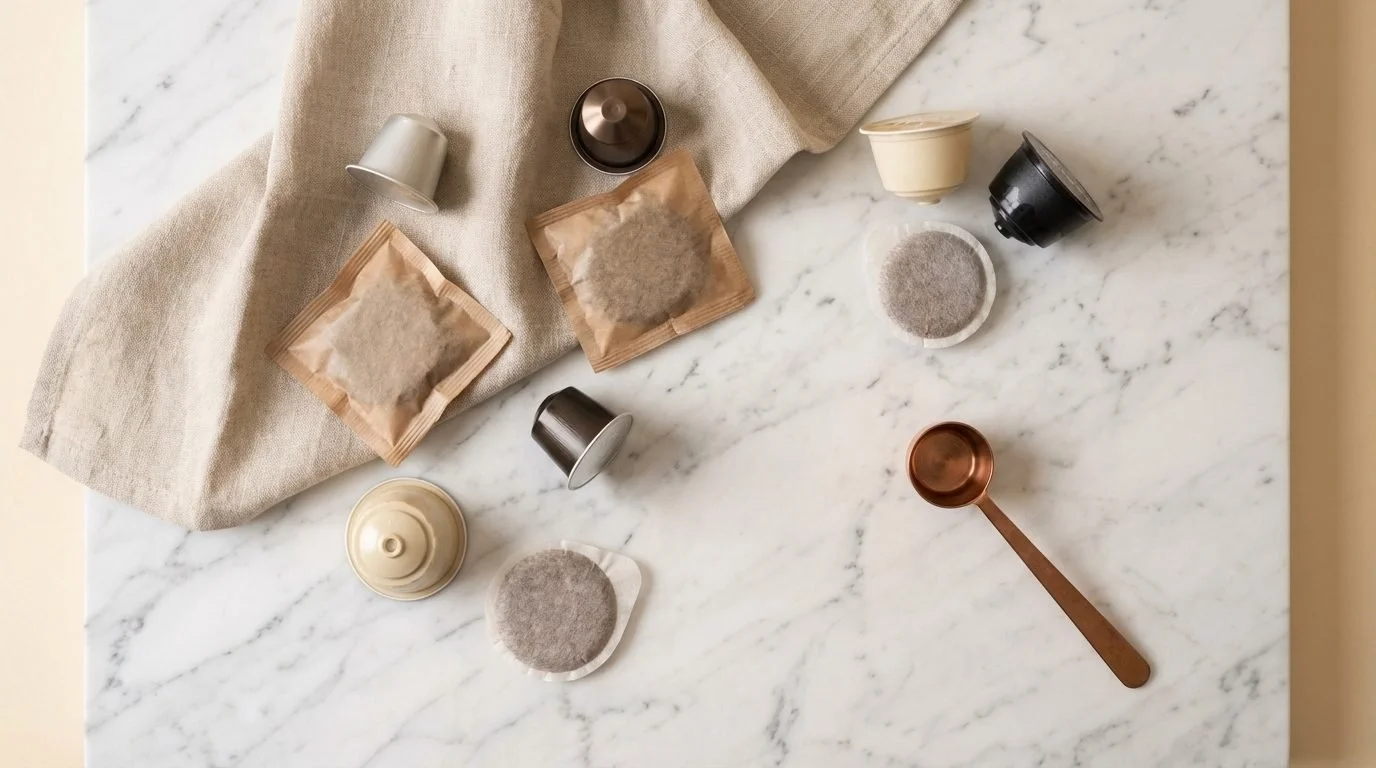
Table of Contents
Some of the links in this article are affiliate links, which help fund our independent review work at no extra cost to you. Every recommendation is based on hands-on testing through The Editor Lab methodology. No brand pays to appear, and no placement is guaranteed.
James Bellis, Health and Wellness Editor
I started in coffee back in 2012 and have spent the years since sourcing, roasting, selling, and obsessing over it. Five years with Sanremo UK took me to almost 300 roasteries across the country, and I made a habit of finding the best specialty cafe in every city the job sent me to. I now lead coffee and wellness product testing at Balance Journal through The Editor Lab. I also founded Balance Coffee in 2020.
The question behind this article is one I get asked constantly. The answer is far simpler than most websites make it seem.
Coffee pods and capsules are the same thing. If you have landed on this page expecting a detailed technical comparison between two different products, here is the honest version: in everyday UK English, 'pod' and 'capsule' are interchangeable terms for pre-ground coffee sealed in a container designed for a specific machine. Nespresso calls them capsules on the box. Everyone who owns a Nespresso machine calls them pods. Retailers, search engines, and coffee brands treat both words as synonyms.
That one-sentence answer already puts you ahead of most articles ranking for this search term. The rest of this guide covers what actually matters: which pods fit which machine, which ones taste best, what they cost per cup, and how to recycle them. If you already know your machine and want tested recommendations, see our guide to the best Nespresso pods and capsules.
The Short Answer: Pods and Capsules Are the Same Thing
Coffee pods and capsules are the same thing. Both terms describe pre-ground coffee sealed in a container designed for a specific machine. The only exception is the ESE (Easy Serving Espresso) format, a flat paper disc used in portafilter machines.
In the UK market, 'pod' dominates casual conversation. 'Capsule' appears more often on packaging and in manufacturer marketing. Neither term implies a different product. When someone searches 'difference between pods and capsules,' they are usually looking for reassurance that they are not missing something important before buying. They are not.
ESE pods deserve a brief mention because they are the one genuinely distinct format. ESE pods are 44mm paper discs containing 7g of compressed ground coffee, developed in the 1990s by the Italian consortium E.S.E. and designed for portafilter espresso machines. Market share in the UK is tiny. Most readers will never encounter one, and we will cover them properly in the compatibility section below.
For the rest of this article, pod and capsule mean the same thing.
Which Pods Work in Which Machine?
The real question is not pod versus capsule. It is which pod format fits your machine. Every major pod system uses a proprietary shape, and pods from one system will not physically fit another. Getting this wrong means wasted money and a capsule sitting on the kitchen counter with nowhere to go.
Nespresso Original
Nespresso Original is the most open ecosystem in the UK pod market. Nespresso designed the capsule format, but when key patents expired in 2012, the market opened up. As of April 2026, more than 50 brands sell Nespresso Original compatible capsules in the UK, from supermarket own-label to specialty roasters producing single-origin, organic, and lab-tested options.
This is where the quality ceiling sits highest. The competition between brands has driven standards upward across the board. Balance Coffee, for example, produces speciality-grade aluminium pods in this format with independent lab testing for mycotoxins, mould, and pesticide residues on every batch.
Machines in the Original range include the Pixie, CitiZ, Essenza Mini, Creatista, and the original Lattissima line.
Nespresso Vertuo
Nespresso Vertuo is a closed system. Every Vertuo capsule carries a barcode printed on the rim. The machine reads it and adjusts water volume, temperature, and spin speed accordingly. Only Nespresso's own Vertuo capsules work.
The format brews larger cups (up to 535ml for the Alto size), which suits filter-style coffee drinkers. The trade-off is zero third-party competition. You pay what Nespresso charges, and your flavour options are limited to their range. Nespresso added some limited-edition Vertuo capsules in 2025, but the selection remains narrow compared to Original.
Dolce Gusto
Dolce Gusto uses chunky plastic pods. The format supports milk-based drinks through a two-pod system: one pod for coffee, one for milk. Some supermarket own-brand compatible pods exist, but the third-party range is thin.
Machine prices start from around £40 as of April 2026, making Dolce Gusto a common first pod machine. Coffee quality sits in the mid-range. Consistent, convenient, but not specialty grade.
Tassimo
Tassimo uses a closed T-Disc system with barcode technology. Each disc tells the machine how to brew. The range extends beyond coffee into tea, hot chocolate, and branded drinks from Costa, Cadbury, and L'OR. No third-party T-Discs exist.
This system suits households that want variety across drink types rather than the best possible espresso. Machine prices are similar to Dolce Gusto.
Lavazza A Modo Mio
Lavazza's proprietary system uses its own capsule shape. Third-party options are extremely limited. Lavazza offers a compostable capsule variant (Eco Caps, requiring industrial composting), which is a genuine differentiator if sustainability is a priority.
Coffee quality is consistent and sits above Dolce Gusto and Tassimo. The limitation is range: you are largely restricted to what Lavazza produces.
ESE Pods
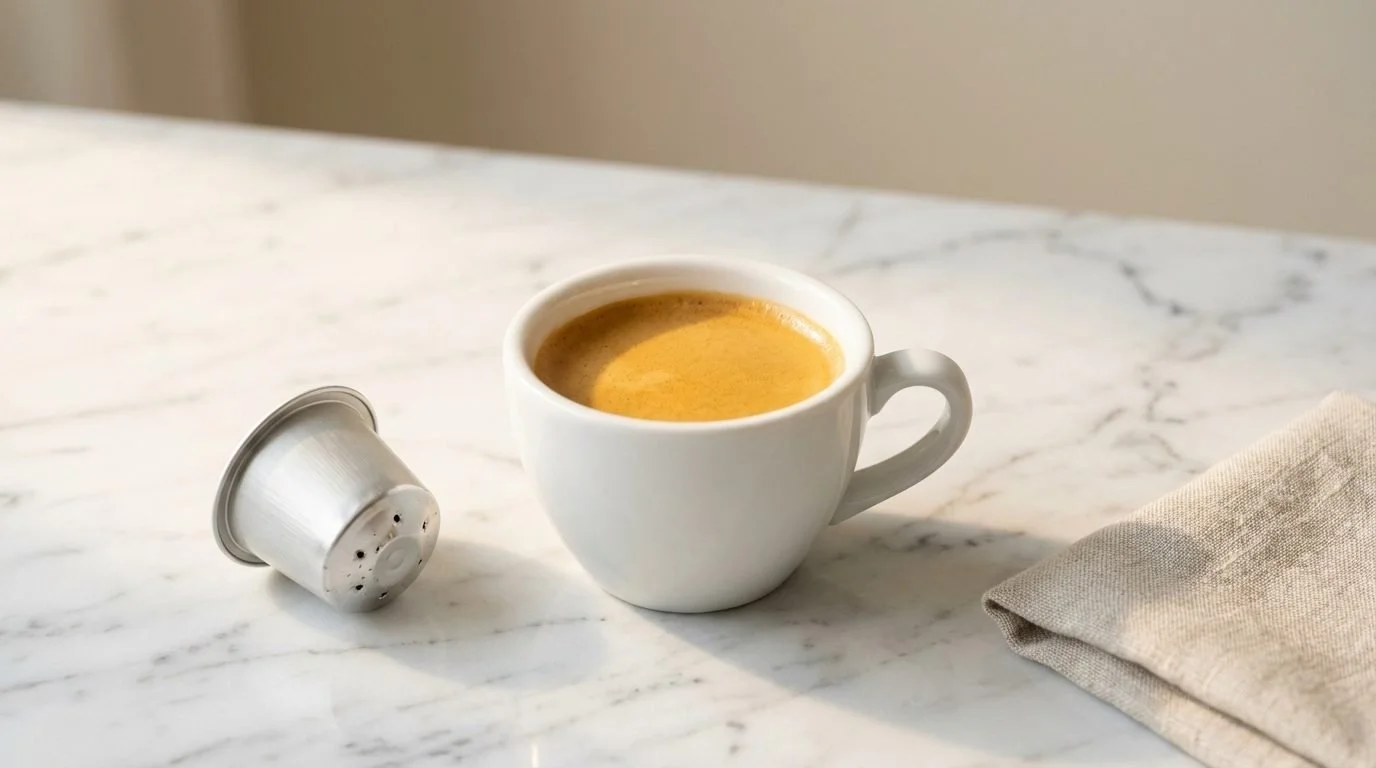
ESE (Easy Serving Espresso) pods are the only format that genuinely differs from sealed capsules. They are flat, 44mm paper discs designed for portafilter espresso machines with an ESE adapter. The paper is fully home compostable.
The market is small. Few UK retailers stock ESE pods, and the selection is a fraction of what Nespresso Original offers. Freshness is the weak point: paper provides no oxygen barrier, so the coffee degrades faster than aluminium-sealed capsules. For portafilter owners who want single-serve convenience without capsule waste, ESE makes sense. For everyone else, it remains a niche.
Compatibility Quick-Reference Table
| System | Pod Shape | Third-Party Compatible? | Drink Types | UK Availability |
|---|---|---|---|---|
| Nespresso Original | Small aluminium/plastic capsule | Yes (50+ brands) | Espresso, lungo | Widest range |
| Nespresso Vertuo | Large barcode capsule | No (Nespresso only) | Espresso to alto (535ml) | Nespresso only |
| Dolce Gusto | Large plastic pod | Limited | Coffee, milk drinks, tea | Moderate |
| Tassimo | Barcode T-Disc | No (licensed brands only) | Coffee, tea, chocolate | Moderate |
| Lavazza A Modo Mio | Lavazza capsule | Very limited | Espresso, lungo | Limited |
| ESE | 44mm paper disc | Yes (open standard) | Espresso only | Niche |
| Evaluation Criteria | Our Findings |
|---|---|
| Best for | The widest third-party pod choice in the UK, 50+ brands |
| Pod type | Small aluminium capsule, espresso and lungo |
| Cost per cup | £0.25 to £0.85 |
| Shop | Shop Essenza Mini → |
| Evaluation Criteria | Our Findings |
|---|---|
| Best for | Milk drinks and tea from one machine at the lowest cost per cup |
| Pod type | Large plastic pod, limited third-party choice |
| Cost per cup | £0.15 to £0.35 |
| Shop | Shop Genio S → |
| Evaluation Criteria | Our Findings |
|---|---|
| Best for | Nespresso Original machines, speciality-grade coffee |
| Pod type | Recyclable aluminium, Nespresso Original compatible |
| Why it is here | Third-party pods are where pod coffee gets good |
| Shop | Shop Balance Coffee pods → |
Which Pods Taste Best?
The capsule format is a container. What matters is the coffee inside it. That said, the format does influence quality in two measurable ways: freshness protection and competitive pressure.
Sealed aluminium capsules in the Nespresso Original format preserve freshness better than any other pod type. Aluminium creates a complete oxygen barrier, and most capsules are nitrogen-flushed before sealing. In our Editor Lab testing, we have consistently found that aluminium-sealed capsules outperform other formats on aroma retention and flavour clarity across multiple brews.
The Nespresso Original ecosystem also benefits from competition. Fifty-plus brands producing compatible capsules means the quality ceiling keeps rising. The best speciality coffee pods now deliver cup quality that would have been unthinkable in pod form five years ago. Specialty roasters offering single-origin options in this format have pushed the entire category forward.
Closed systems cannot match this. When one manufacturer controls the entire range, there is no competitive pressure to improve. The coffee is consistent but rarely exceptional.
If you care about what ends up in the cup, Nespresso Original compatible pods offer the broadest quality range. For tested rankings, see our guides to the best espresso pods and best speciality coffee pods.
How Much Do Coffee Pods Cost?
Pod pricing varies more by system than by brand. Here is what you can expect to pay per cup across the major formats, with all prices as of April 2026.
Cost-Per-Cup Comparison Table
| System | Price Per Cup (range) | Subscription Savings | Machine Cost (entry-level) |
|---|---|---|---|
| Nespresso Original | £0.25 - £0.85 | 10-20% (varies by brand) | From £80 |
| Nespresso Vertuo | £0.35 - £0.65 | Up to 20% (Nespresso subscription) | From £80 |
| Dolce Gusto | £0.15 - £0.35 | Limited | From £40 |
| Tassimo | £0.20 - £0.40 | Limited | From £40 |
| Lavazza A Modo Mio | £0.25 - £0.45 | Limited | From £60 |
| ESE | £0.20 - £0.50 | Rare | From £150 (portafilter machine) |
The widest price range belongs to Nespresso Original. Supermarket own-brand capsules start from around £0.25 per cup. Specialty and organic options sit at the higher end, typically £0.65 to £0.85. Subscriptions from most brands reduce this by 10-20%.
Dolce Gusto and Tassimo offer the lowest per-cup cost, but the machine locks you into a limited coffee range. ESE pods themselves are affordable, but the portafilter machines they require cost significantly more upfront than capsule machines.
Are Coffee Pods Recyclable?
Recyclability depends on what the pod is made from, not whether you call it a pod or a capsule.
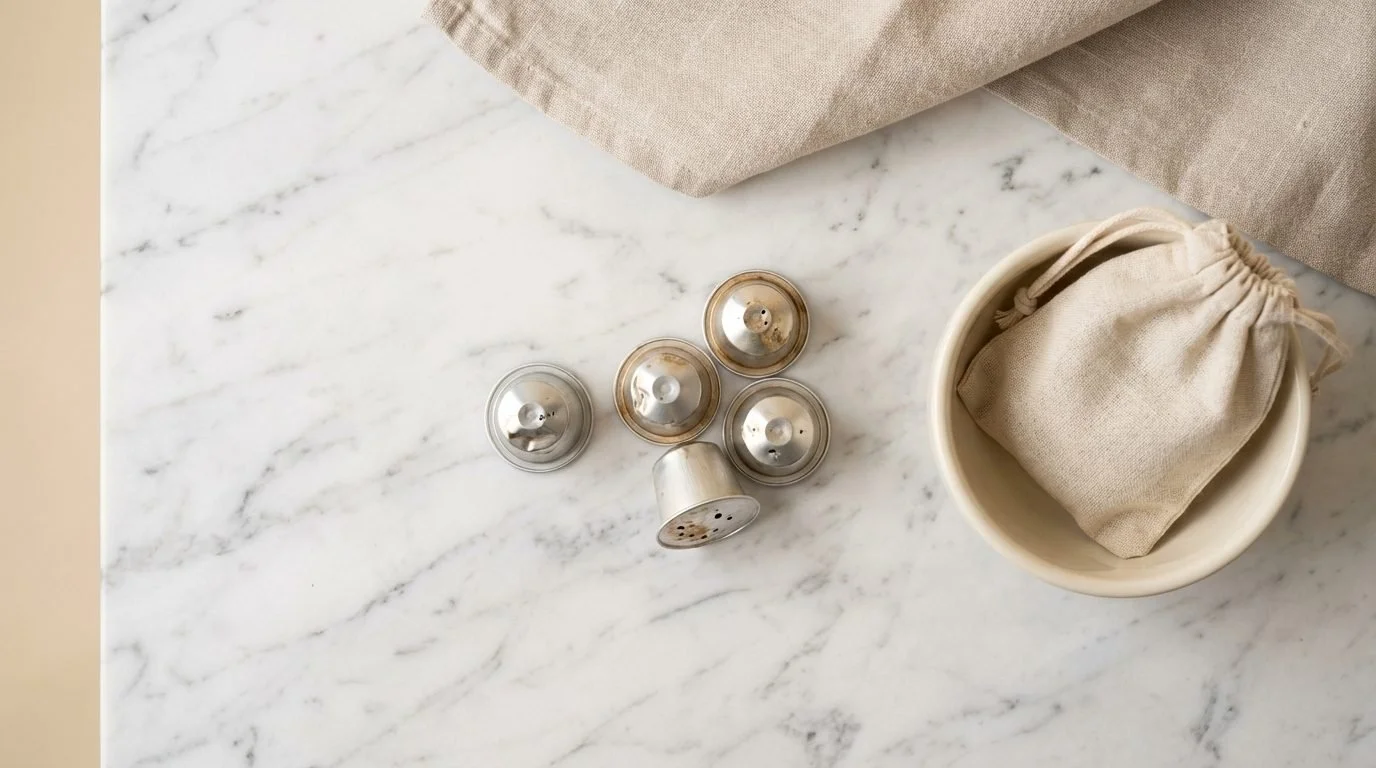
Aluminium capsules are infinitely recyclable. Aluminium retains its properties through unlimited recycling cycles. The Podback scheme provides free collection bags for used aluminium pods across the UK, and some local councils now accept them in kerbside recycling. This is the strongest long-term environmental case among pod materials.
Compostable capsules require industrial composting at 55-60 degrees Celsius. According to WRAP, less than 11% of compostable packaging in the UK reaches industrial composting facilities. Most compostable pods end up in general waste or home compost bins where they do not break down fully. The intention is sound. The infrastructure is not there yet. For a deeper look, see our guide to the best compostable coffee pods.
ESE paper pods are fully home compostable. Paper and coffee grounds break down in a standard garden compost bin. This is the simplest recycling story of any pod format, though ESE's tiny market share limits its overall environmental impact.
Plastic capsules (Dolce Gusto, some third-party brands) are the hardest to recycle. The combination of plastic shell, foil lid, and coffee grounds makes separation difficult. Most end up in general waste.
For more on sustainable options, including aluminium vs compostable pods, see our guide to the best eco-friendly coffee pods.
Which Pod System Should You Choose?
This depends on what you value most. After testing pods across every major system through The Editor Lab, here is how I would frame the decision.
For the best coffee quality: Nespresso Original. The open ecosystem means you can choose from specialty roasters, organic options, and lab-tested brands. The quality ceiling is highest here, and the recycling infrastructure via Podback is well established.
For the lowest cost per cup: Dolce Gusto or Tassimo. Entry machine prices are low and pods are cheap. The trade-off is limited coffee quality and closed ecosystems.
For the simplest sustainability story: ESE pods, if you already own a compatible portafilter machine. Fully home compostable with no collection scheme to sign up to. The selection is small, and freshness protection is weaker than aluminium.
For variety beyond coffee: Tassimo. Tea, hot chocolate, branded drinks. Not the best at any single thing, but the broadest range of drink types from one machine.
For most people: Nespresso Original remains the default recommendation. Widest choice, strongest competition driving quality up, best recycling infrastructure, and the only system where specialty-grade coffee is genuinely available in pod form.
Frequently Asked Questions
Are Coffee Pods and Capsules the Same Thing?
Can You Use Pods in a Nespresso Machine?
Which Is Better, Pods or Capsules?
Do Nespresso Original Pods Fit Vertuo Machines?
What Is the Cheapest Coffee Pod System in the UK?
Are ESE Pods Better Than Nespresso Capsules?
How Do You Recycle Coffee Pods and Capsules?
How Long Do Coffee Pods Last Before They Go Stale?
Do Coffee Pods Make a Good Espresso?
Are Coffee Pods More Expensive Than Ground Coffee?
Related Guides
- Best Nespresso Pods for Latte, Cappuccino and Flat White
- Aluminium vs Compostable Coffee Pods: Which Is Better?
- Are Coffee Pods Bad for You? What the Evidence Says
- 6 Best Compostable Coffee Pods UK 2026 - Tested and Ranked
- Best Eco-Friendly Coffee Pods UK 2026 - Tested and Ranked
- Best Espresso Pods UK 2026 - Tested and Ranked

A wellness entrepreneur and biohacker, James explores the intersection of hospitality and health - from clean fuel and recovery tools to mindful routines that build balance into daily life.