Matcha Latte Recipe: How to Make a Matcha Latte, Hot or Iced

Head of Editorial
Our matcha latte recipe, calibrated against Ippodo Tea's own method, fixes the three reasons a home matcha latte turns out bitter, grassy or clumpy.
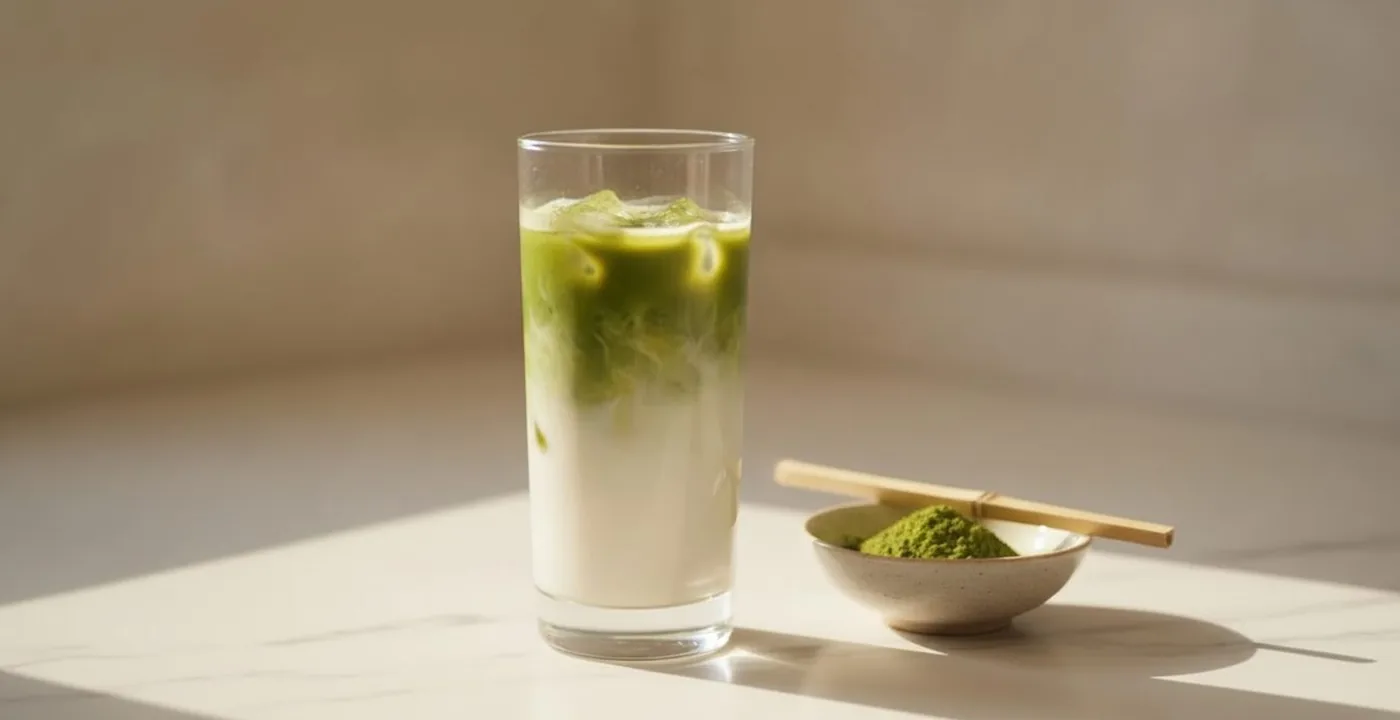
Table of Contents
Some of the links in this article are affiliate links, which help fund our independent review work at no extra cost to you. Every recommendation is based on hands-on testing through The Editor Lab methodology. No brand pays to appear, and no placement is guaranteed.
Your home matcha latte tastes bitter and grassy, and the coffee shop's does not. The gap is rarely the matcha itself: usually it is water too hot, too much or too little powder, or matcha stirred into cold milk with no concentrate first. This recipe gives exact grams and millilitres for an everyday hot version, a stronger one, and an iced version, so you know why each works.
Editor's Note
Snita Pandoria, who has run her food and travel blog Herfavfood since 2010 and is Head of Editorial at Balance Journal, compared these ratios against the published methods of Ippodo Tea in Kyoto, BBC Good Food and a certified tea sommelier's recipe before calibrating the versions below. The troubleshooting draws on eight reader threads on Reddit and Mumsnet from people whose matcha lattes came out bitter, clumpy or flat.
What Is a Matcha Latte?
A matcha latte is made by whisking powdered Japanese green tea into hot water to form a concentrate, then topping it with steamed or cold milk. You drink the whole leaf rather than a steeped infusion, so matcha carries more flavour and colour than an ordinary cup of green tea. Every recipe here starts with that concentrate - getting it right, not the milk, is what separates a smooth matcha latte from a clumpy one.
Wikipedia records Starbucks introduced a matcha latte in 2006, and it now sits on most UK café menus, made the same basic way: concentrate topped with milk. UK interest in matcha has grown sharply, a trend our matcha UK statistics report covers in full.
Matcha Latte Ratios at a Glance
The three ratios below cover an everyday hot latte, a stronger one for when two grams tastes thin, and an iced version needing slightly more matcha, since cold milk and ice mute sweetness and aroma. Weigh matcha where you can rather than measuring by teaspoon - density varies by brand, so a coarse matcha delivers noticeably less per teaspoon than a fine, dense one, often why two people follow "the same" recipe and get different results.
| Style | Matcha | Water (80°C) | Milk | Sweetener (optional) |
|---|---|---|---|---|
| Everyday hot | 2g | 40ml | 200ml, steamed | 0-5g |
| Stronger hot | 3g | 60ml | 180ml, steamed | 0-5g |
| Iced | 2-3g | 40ml | 180ml, cold, plus ice | 0-5g, dissolved in the concentrate |
For reference, Ippodo Tea's own method uses 3g of matcha to 90ml water at 80°C, and BBC Good Food's uses roughly one teaspoon to 250ml of milk. Our everyday row sits between the two, closer to a café latte than either alone.
How to Make a Matcha Latte (Hot)
Ingredients
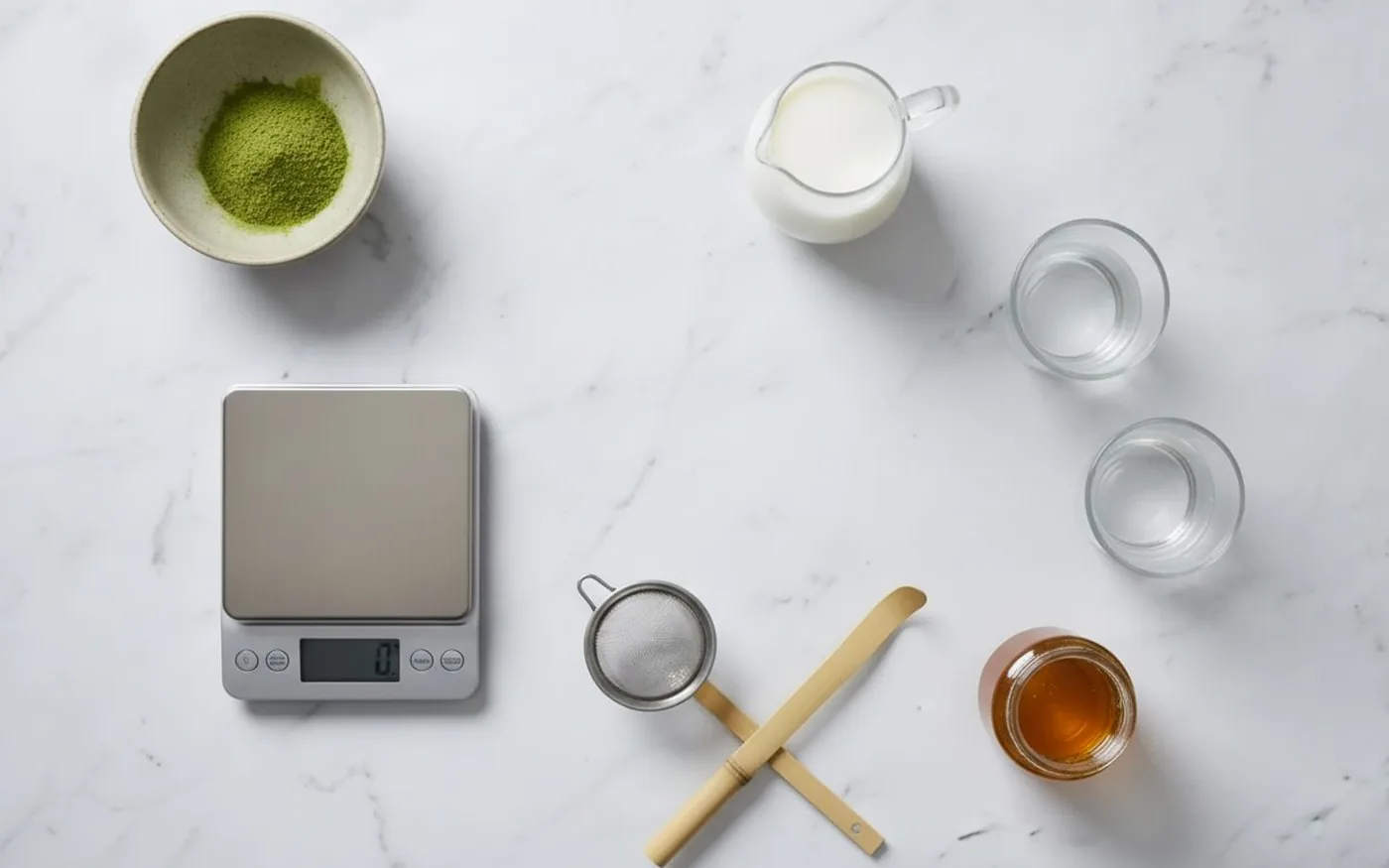
- 2g matcha (about one heaped teaspoon, weighed where possible)
- 40ml water, boiled then left to stand until about 80°C
- 200ml milk, steamed or heated until hot
- 0-5g sweetener, if using
- Equipment: a fine sieve, a bamboo matcha whisk or handheld frother, and a mug
Method
- Sift 2g of matcha into a bowl or mug, breaking up clumps before liquid goes in - the step most rushed recipes skip.
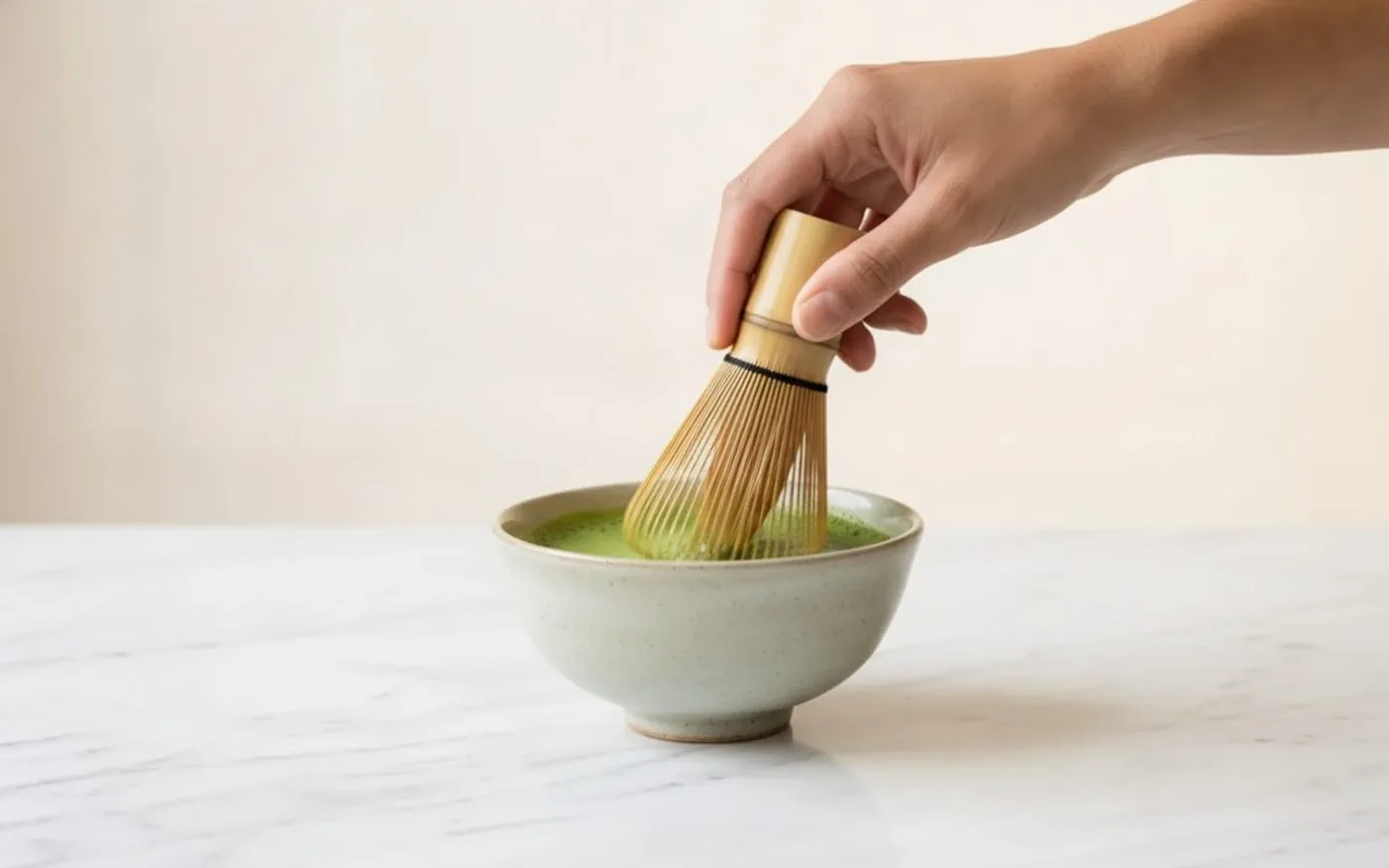
- Add 40ml of water at about 80°C and whisk in a brisk zigzag "W" motion, not circular, until no clumps remain and a fine foam sits on top, 15-20 seconds - the core of how to make matcha into a smooth concentrate. No whisk: shake matcha and water in a sealed jar for 30 seconds.
- Stir your sweetener in now, while the concentrate is warm, so it dissolves rather than clumping.
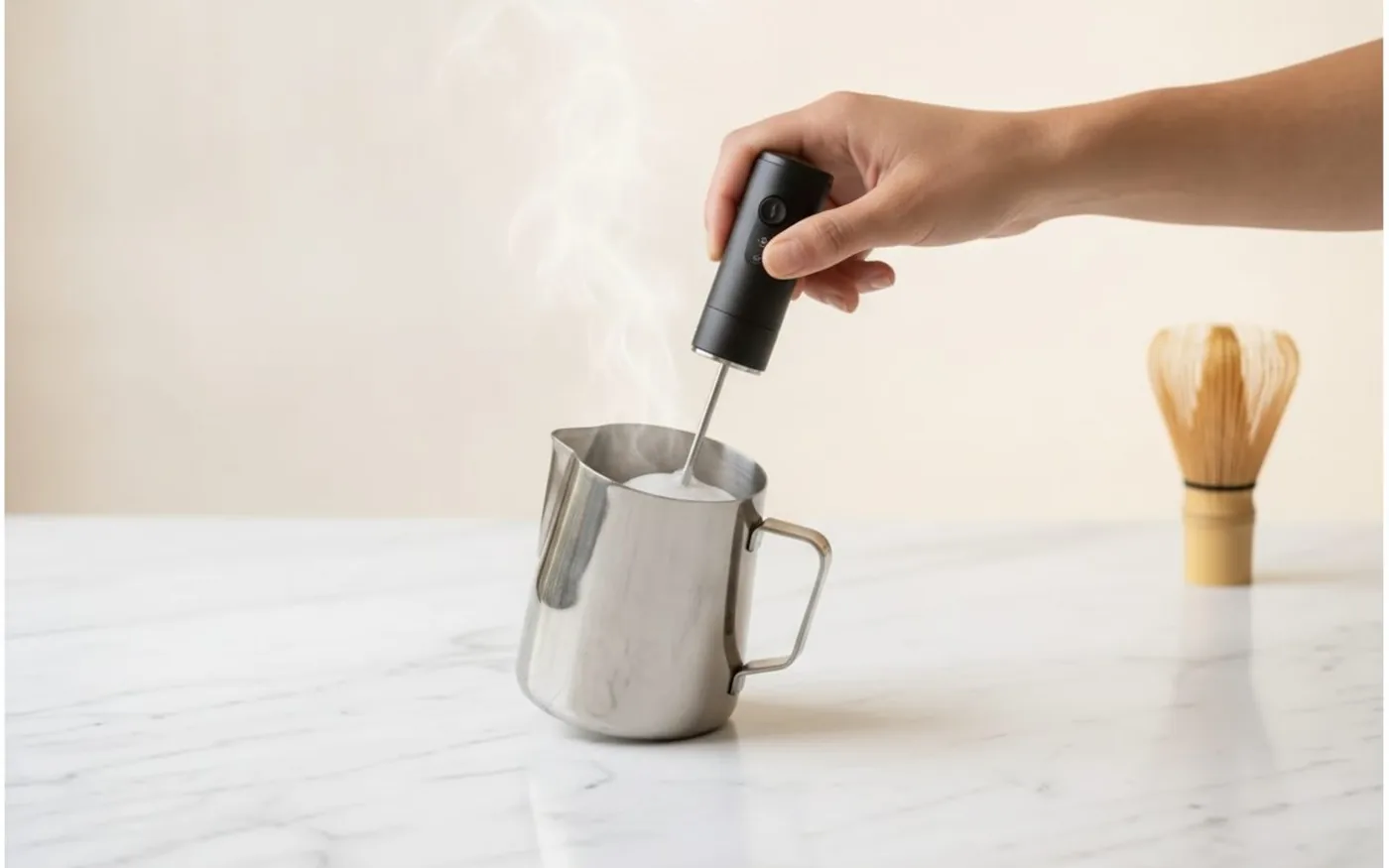
- Heat 200ml of milk until steaming, not boiling, and froth with a handheld frother or steam wand. Our best milk frother guide and how to froth milk explainer cover the equipment.
- Pour the hot milk over the concentrate, or the concentrate into the milk, for the layered look or a fully mixed drink.
How to Make an Iced Matcha Latte
Ingredients
- 2-3g matcha, weighed where possible
- 40ml water at about 80°C, or room-temperature if shaking
- 0-5g sweetener, if using
- 180ml cold milk
- Ice
Method
- Sift 2 to 3g of matcha into a bowl or jar - your iced latte uses slightly more than the hot version, because cold milk and ice mute sweetness and aroma.
- Whisk with 40ml of water at about 80°C until smooth, or shake in a sealed jar for 30 seconds instead.
- Dissolve your sweetener into the warm concentrate now - it will not dissolve properly once the drink is cold.
- Fill a tall glass with ice and 180ml of cold milk.
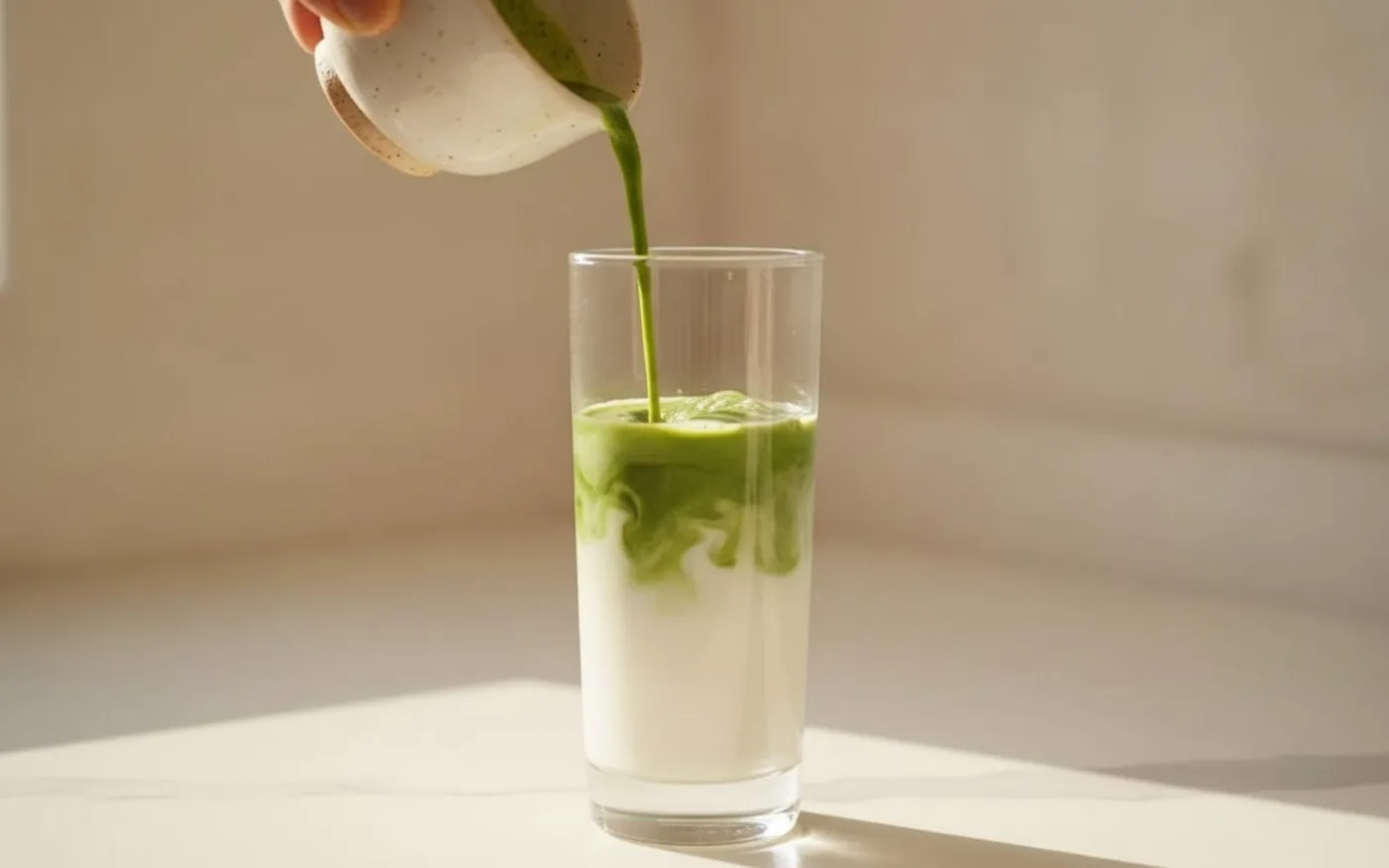
- Pour the concentrate over the ice and milk. Do not stir it in straight away for the layered look, which holds for a minute or two before it settles.
Why Your Matcha Latte Tastes Bitter, Grassy or Clumpy
Water too hot is the most common cause. Matcha is delicate, and water near boiling scorches it, pulling out bitter compounds 80°C water leaves behind. Ippodo Tea's own method uses 80°C for this reason - no thermometer needed, boil the kettle and let it stand a minute before you pour.
Too much matcha, or low-quality matcha, is the second cause. One matcha drinker on r/Matcha described a café latte as coming out "dark green" and unpleasantly bitter - a sign of overloading the cup, or of dull, yellow-brown powder rather than a fresh, bright green one. Good matcha should look vivid, almost like fresh grass, not khaki.
Clumping is almost always a step problem, not a powder problem. One reader on r/Matcha said they were "struggling with getting the powder to become frothy" and stuck with clumps - the fix is nearly always the same: sift the matcha, whisk it into hot water until smooth, then add the milk. Stirred straight into a mug of milk, matcha will not properly incorporate however hard you froth it.
Which Milk Makes the Best Matcha Latte?
Whole dairy milk is the richest option, tasting sweetest against your latte. It has enough natural sweetness and fat to soften matcha's grassiness, and froths reliably with a steam wand or handheld frother.
Oat milk is the closest texture match to a café matcha latte, and what most UK coffee shops default to. Barista-style oat milks foam like dairy, so your coffee favourite works here too. Our best oat milk for coffee guide covers the options.
Soy milk froths almost as well as dairy and adds more protein than any milk here, worth knowing if you want your latte to feel like a meal. Almond and coconut milk are lighter, their flavour competing with matcha, so use the stronger ratio if you choose either.
Heat whichever milk you choose until steaming, not boiling - boiled milk changes the foam's texture and can make a well-made concentrate taste flat. Our best alternative milk for coffee guide applies just as well here.
How to Sweeten a Matcha Latte
Your matcha latte needs less sweetener than most assume, because milk is naturally a little sweet. Honey, maple syrup, golden syrup and simple syrup all work, and vanilla syrup is the closest match to UK cafés. Dissolve it into the warm concentrate, not the cold milk - it will not dissolve well once cold.
The NHS recommends adults have no more than 30g of free sugars a day, roughly seven sugar cubes, and honey and syrups count toward that limit while your milk's natural sugar does not. The 0-5g sweetener above keeps your matcha latte well inside it, even with more than one.
Copying a Starbucks-Style Matcha Latte at Home
Starbucks UK lists a Matcha Latte and a Vanilla Protein Matcha Latte, evidence matcha is now a permanent UK menu fixture. To match that sweeter café taste, start with 5g of sweetener or a dash of vanilla syrup. We have not verified Starbucks' own calorie, sugar or caffeine figures, so this guide does not repeat them.
Which Matcha to Use for Lattes
"Ceremonial" and "culinary" are marketing labels, not a regulated grade, so a higher price does not always buy better matcha for a latte. Buy matcha sold for drinking, not baking, and save ceremonial-grade powder for plain matcha, where its flavour is not competing with milk. Our explainer on ceremonial vs culinary matcha goes further into what the labels mean.
One reader on r/Matcha asked whether they were wasting expensive matcha in a latte - the honest answer is milk and sweetener mute the subtlety a top-tier ceremonial matcha is built for. A mid-range, bright green matcha tastes better here than an expensive one, at a fraction of the cost.
Our roundup of the best matcha brands and guide to the best ceremonial grade matcha cover specific recommendations, and our matcha starter kit guide covers the equipment worth buying first.
Is a Matcha Latte Good for You?
Matcha measures roughly 18.9 to 44.4mg of caffeine per gram, per a 2020 review in the journal Molecules, so your 2g everyday latte contains roughly 38 to 89mg of caffeine - against the NHS's 75mg in a cup of tea and 100mg in a cup of instant coffee, anywhere from noticeably less to roughly the same as a coffee.
A stronger or iced latte, made with 3g of matcha, is not automatically gentler: it can reach roughly 57 to 133mg on the same measurements, more than the NHS figure for instant coffee. Our guide to caffeine in matcha covers the full range across every matcha drink.
Matcha's caffeine is paired with L-theanine, an amino acid credited with the calmer feeling many associate with matcha over coffee. A 2008 study of 27 participants found 50mg of caffeine combined with 100mg of L-theanine improved speed and accuracy on attention-switching tasks - the closest evidence for why your latte can feel focused, not wired. That describes alertness, not evidence matcha gets you high.
Milk may work against one reason you drink matcha. In a study of 24 women, adding skimmed milk to green tea extract cut absorption of the catechin EGCG to 68% of the no-milk amount, though two other catechins increased.
An earlier study on black tea found milk blunted its effect on blood vessel dilation, and a 2017 review calls the evidence on milk and tea conflicting. If catechins matter to you, some cups should be plain.
The bigger health lever in a café matcha latte is usually sugar, not matcha. Caffeine also adds up across a day of anything caffeinated: EFSA sets 400mg a day as the ceiling for healthy adults and 200mg during pregnancy.
Neither figure is a reason to avoid a well-made matcha latte, but both are worth knowing before a second cup. Our fuller guides to matcha benefits and matcha side effects cover the wider evidence.
Frequently Asked Questions
What exactly is a matcha latte?
A matcha latte is a drink made by whisking powdered Japanese green tea into a small amount of hot water to form a concentrate, then topping it with steamed or cold milk. Because you drink the whole leaf rather than a steeped infusion, matcha carries more flavour and colour into the cup than ordinary green tea.
Are matcha lattes actually good for you?
Made unsweetened or lightly sweetened, a matcha latte is a reasonable daily drink, carrying caffeine and catechins from the whole tea leaf. Milk can reduce absorption of some of those catechins, and sugar is the main drawback of a café version. The matcha itself is rarely the part worth worrying about.
Is a matcha latte healthier than coffee?
Neither drink is clearly healthier. Your matcha latte made with 2g of matcha contains roughly 38 to 89mg of caffeine, against 100mg in a cup of instant coffee according to the NHS. Read our full matcha vs coffee comparison for the caffeine, catechin and focus differences, and see our guide to a best coffee alternative for other options.
Why do I feel high after matcha?
Matcha does not contain anything intoxicating. The pairing of caffeine with L-theanine has been linked in research to focused, alert attention rather than a stimulant spike, which some people describe as feeling different from coffee. A stronger or iced latte, made with more matcha, also simply carries more caffeine than you might expect.
What is the downside of matcha?
Caffeine adds up across cups, and EFSA sets 400mg a day as the ceiling for healthy adults and 200mg during pregnancy. Café matcha lattes can carry a lot of added sugar, and good matcha powder costs more than a box of tea bags. None of that makes an occasional home matcha latte unreasonable, and our guide to matcha side effects covers the fuller picture.
How much caffeine is in a matcha latte?
Matcha measures roughly 18.9 to 44.4mg of caffeine per gram, based on a 2020 review in the journal Molecules. That works out to roughly 38 to 89mg for your 2g everyday latte and roughly 57 to 133mg for a stronger 3g version. Milk adds no caffeine of its own.
Does milk cancel out the benefits of matcha?
Not entirely, but it does change things. In one study, skimmed milk cut absorption of the catechin EGCG to 68% of the no-milk amount, though two other catechins increased. A 2017 review calls the overall evidence on milk and tea conflicting, so treat this as a genuine trade-off in your cup rather than a settled answer.
What is the best milk for a matcha latte?
Whole dairy milk and barista-style oat milk give the creamiest matcha latte and the most reliable foam. Soy milk froths almost as well and adds more protein. Almond and coconut milk are lighter, and their own flavour competes more with the matcha, so they suit a stronger ratio better than an everyday one.
Why is my matcha latte bitter?
The usual cause is water that is too hot: aim for about 80°C rather than straight off the boil. Too much powder, or dull, low-quality matcha, is the second most common cause. Sift your matcha and make a smooth concentrate before adding milk, rather than stirring powder straight into your mug.
A seasoned food and lifestyle writer with over a decade in London's hospitality scene, Snita explores the culture of dining, drink, and connection.