Ceremonial vs Culinary Matcha: What's the Difference?
A straight answer on ceremonial vs culinary matcha — what genuinely differs and which to choose.
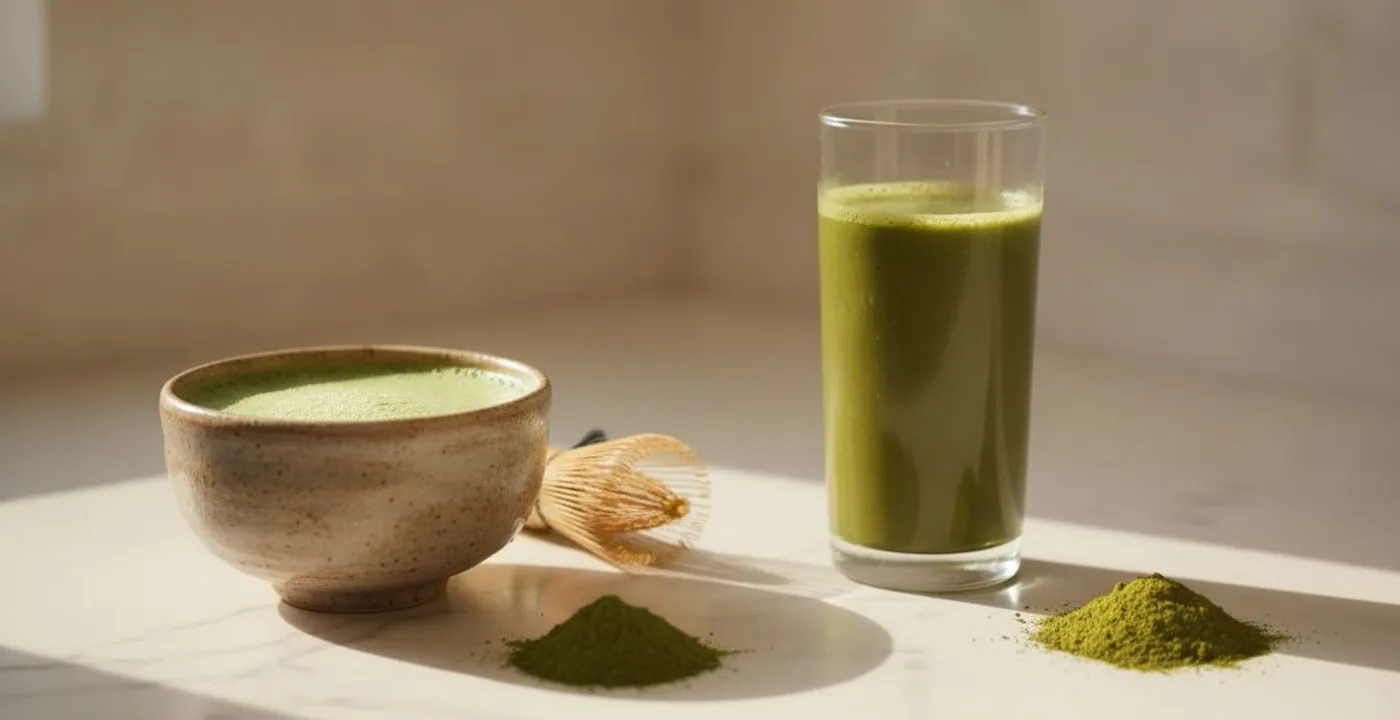
Table of Contents
Some of the links in this article are affiliate links, which help fund our independent review work at no extra cost to you. Every recommendation is based on hands-on testing through The Editor Lab methodology. No brand pays to appear, and no placement is guaranteed.
The conventional framing you will find across most matcha content is that ceremonial grade is the premium option and culinary grade is what you use when you cannot afford it. That framing is wrong. After testing both grades plain in a bowl and in milk-based lattes across more than a dozen brands during the past year, I can say clearly: the grade question is not about quality. It is about fit for purpose.
The difference between ceremonial vs culinary matcha comes down to when the leaves were harvested, how they were processed, and what you plan to do with them. Get the grade wrong and you either waste money on ceremonial matcha in a latte where its nuance disappears, or you buy culinary grade for a plain bowl drink and wonder why it tastes bitter.
This guide settles the question with a use-case-first answer.
“Snita Pandoria is the Head of Editorial at Balance Journal, with over fifteen years of food and drink writing spanning thirty-plus countries across two continents. She has personally tested more than thirty functional and tea brands as part of Balance Journal's editorial review programme, comparing grades, origins, and processing methods first-hand.”
The Short Answer
Ceremonial grade matcha comes from the youngest, shade-grown first-harvest leaves and is designed for whisking with water in a traditional bowl. Culinary grade comes from later-harvest leaves and is designed to hold its flavour against milk, heat, and other ingredients.
Neither is categorically better. One is correct for your use case and the other is a mismatch.
| Factor | Ceremonial Grade | Culinary Grade |
|---|---|---|
| Harvest timing | First harvest (Ichibancha), early May | Second or later harvest |
| Shade-growing period | 20-30 days before harvest | Often shorter or none |
| Colour | Vivid jade green | Darker green, sometimes yellow-green |
| Flavour profile | Sweet, umami-forward, low bitterness | Stronger, more bitter, earthier |
| Texture | Silky, fine | Slightly coarser; varies by brand |
| Best use | Plain in a bowl with water | Lattes, baking, smoothies, cooking |
| UK price range (2026) | From £20 to £45 per 30g | From £8 to £18 per 30g |
| Worth paying extra? | Yes, if drinking plain | No, for anything with milk or other ingredients |
What Ceremonial Grade Actually Is
Ceremonial grade matcha comes from the first flush of tea leaves harvested in spring - typically early May in Uji (Kyoto prefecture) and Nishio (Aichi prefecture), Japan's two main ceremonial matcha regions. Before harvest, the bushes are shaded for 20 to 30 days, blocking sunlight and forcing the plant to produce more chlorophyll and L-theanine while reducing the catechins that create bitterness.
The youngest leaves - called Tencha before grinding - are picked at the peak of this shading cycle. They are steamed immediately to halt oxidation, dried, and then stone-ground into a fine powder at very low speeds (sometimes just 30 to 40 grams per hour per stone) to preserve delicate aromatic compounds and avoid heat damage to the flavour. Slow stone-grinding at this speed is what distinguishes ceremonial-tier production from faster industrial milling methods - and it is one of the primary reasons ceremonial matcha costs significantly more than culinary grade.
The result is a powder that is visually distinctive: bright jade green, almost luminous. When whisked with hot water (not boiling - around 70 to 80 degrees Celsius), it produces a creamy froth and a taste profile that is sweet, deeply umami, with almost no bitterness on a good example. The shade-grown tea process and stone-grinding method are what create these sensory qualities, and both add significant cost to the final product.
In traditional Japanese tea ceremony (chado), ceremonial grade is the only grade used. The experience of drinking it plain - no milk, no sweetener, just the matcha and water - is the point. The complexity comes through when nothing else is competing with it.
A note on labelling: the term 'ceremonial grade' has no regulated definition in UK retail. Some brands use it loosely for any premium matcha. What you are actually looking for is: first harvest, shade-grown (20+ days), stone-ground, Uji or Nishio origin, and vibrant green colour. Those specifics tell you more than the grade name alone.
What Culinary Grade Actually Is
Culinary grade matcha is not a downgrade. It is a different tool.
It comes from later harvests - second flush, third flush, or from different parts of the same plant (older, tougher leaves with higher catechin content). The shading period is typically shorter or may not happen at all. These leaves have higher bitterness compounds, a stronger vegetal flavour, and a darker, sometimes yellow-green colour in the ground powder.
The processing is usually faster - ball-milled rather than stone-ground in most cases - which produces a slightly coarser texture that is still fine enough for mixing but lacks the silkiness of ceremonial grade at the same temperature.
None of this matters when you are making a matcha latte. Milk - whether dairy or oat - competes directly with the delicate umami notes that distinguish ceremonial grade. Heat above 80 degrees (common in latte preparation) diminishes aromatic compounds. Sweeteners adjust the flavour baseline entirely. In that environment, paying £35 for 30g of ceremonial grade instead of £12 for a good culinary grade produces an indistinguishable result.
Culinary grade is also the correct choice for baking (matcha cookies, cakes, ice cream), smoothies, and mixed drinks where its stronger, more robust flavour anchors the profile rather than disappearing. It is also what most cafes, including Starbucks, use in their matcha drinks - a point we cover in the FAQ below.
Within culinary grade there is a range. Cafe-grade or 'latte grade' is the baseline - functional, reliable, built for volume and heat stability. Premium culinary grade sits one step below ceremonial and works well in high-quality lattes where you want more flavour intensity without the ceremonial price point.
Taste, Colour, and Texture Side by Side
I tested six matched pairs across three price tiers - a ceremonial and culinary option from the same brand where possible - and compared both preparation methods: plain bowl (whisked, 80ml water, 75 degrees) and oat milk latte (steamed to 65 degrees, no sweetener).
Colour: In the bowl, the difference is immediately visible. Ceremonial grade is a vivid, almost electric jade. Culinary grade tends toward a darker, more muted olive green. In a latte, both lose definition when milk is added - the colour distinction essentially disappears.
Flavour plain: This is where ceremonial grade justifies its cost. A good ceremonial grade - tasted without milk - has a sweetness that appears without added sugar, a sustained umami note (the savouriness from L-theanine and amino acid content), and almost no bitterness if prepared correctly. Culinary grade plain in a bowl is noticeably more bitter and earthier. Not undrinkable, but not what the bowl format is designed to showcase.
Flavour in milk: In an oat milk latte, I could not reliably identify which grade I was drinking by taste alone. The oat milk's natural sweetness and the heat of the preparation obscured the qualities that differentiate them. This is consistent with what tea professionals note about the latte format.
Texture: Ceremonial grade froths more readily when whisked with a chasen (bamboo whisk). The finer stone-ground particle size creates a more stable emulsion with water. Culinary grade is still smooth in a latte blended with a frother or milk steamer.
The friction worth naming directly: the persistent idea that using culinary grade for lattes is 'settling.' It is not. It is the correct choice for the format. The person spending £40 on ceremonial grade for their morning oat latte is not getting a better drink - they are paying a premium for qualities the preparation method cannot deliver.
Which Should You Buy by Use Case
Use this as your decision framework.
| Use case | Recommended grade | Why |
|---|---|---|
| Traditional bowl, whisked with water | Ceremonial | The quality differential is real and noticeable in this format |
| Oat milk or dairy latte at home | Culinary or premium culinary | Milk obscures ceremonial-grade nuance; save the money |
| Matcha in smoothies | Culinary | Strong flavours from other ingredients make grade irrelevant |
| Baking (cakes, cookies, ice cream) | Culinary | Heat and sugar dominate; ceremonial grade is wasted |
| First-time buyer, not sure yet | Culinary | Learn what you like before investing in ceremonial |
| Gift for a matcha enthusiast | Ceremonial | If they already drink it plain, they will notice and appreciate the quality |
| Daily drinker who mixes preparation styles | One of each | Ceremonial for occasional plain bowls; culinary for everyday lattes |
| Evaluation Criteria | Our Findings |
|---|---|
| Best for | Drinking plain, whisked with water in a bowl |
| Grade | First-harvest ceremonial, Kyoto |
| Why pay more | The quality differential is genuinely noticeable without milk |
| Shop | Shop ceremonial matcha → |
| Evaluation Criteria | Our Findings |
|---|---|
| Best for | Lattes, smoothies and baking |
| Grade | Premium culinary, organic, grown in Uji |
| Why pay less | Milk and sugar mask ceremonial-grade nuance |
| Shop | Shop culinary matcha → |
The upgrader's mistake. The most common error among readers who write in about matcha is buying ceremonial grade after enjoying matcha lattes in a cafe, then being disappointed their home latte does not taste noticeably better despite costing more. The cafe version likely used culinary grade. The ceremonial grade they bought will taste better in a plain bowl, not in a latte.
The budget buyer's mistake. Using culinary grade in a plain bowl and concluding that matcha is bitter and they do not like it. They may like it fine - but they need the right grade for that preparation.
For UK buyers in 2026, reputable ceremonial grade matcha is available from brands such as Ippodo, Encha, Ceremonial Matcha (London), and several others reviewed in our guide to the best ceremonial grade matcha UK brands. For culinary grade, the range is wider and the price differential more significant - worth comparing per-gram cost rather than headline pack price.
If you rotate between matcha and other functional drinks for your morning routine, our guide to the best lion's mane coffee UK covers another caffeine-adjacent option that is growing in interest among the same readership.
Price and Value: Is Ceremonial Worth It?
Ceremonial grade costs more for identifiable reasons: first-harvest leaves represent a smaller yield per plant, the shading programme adds cost, and stone-grinding at low speed is slow and equipment-intensive. These are real production costs, not marketing premiums alone.
In the UK market in 2026, ceremonial grade typically runs from around £20 to £45 per 30g tin. Culinary grade runs from around £8 to £18 per 30g. The per-serving difference on a daily drinker routine adds up: if you consume one gram per day, ceremonial costs roughly 65p to £1.50 per serving versus 25p to 60p for culinary.
Where ceremonial justifies the cost: If you drink matcha plain in a bowl at least some of the time, the quality is genuinely worth it. The taste profile of a good ceremonial grade is distinct enough that experienced matcha drinkers can consistently identify it. It is not a placebo effect or marketing.
Where it does not: Baking with ceremonial matcha is a reliable way to spend three times as much for an identical outcome. Heat above 80 degrees begins to degrade the delicate aromatic compounds that ceremonial grade is optimised to preserve. A recipe calling for 10g of matcha uses a third of a tin of ceremonial for a result that culinary grade replicates.
A note for UK buyers: grade labelling remains inconsistent in UK retail. Some products labelled 'ceremonial' are second-harvest powder at ceremonial prices. Check the origin (Uji or Nishio preferred), harvest date or season, and look for a vivid green rather than yellow-green colour as indicators of genuine first-harvest quality. The best matcha brands UK pillar covers how to evaluate specific brands.
What to Avoid
- Ceremonial grade for baking or hot-mixed recipes. The qualities you pay for are destroyed by heat and competing ingredients.
- Culinary grade for traditional bowl preparation. Bitterness will dominate in a format that strips away the ingredients that offset it.
- Any matcha with added sugar or flavourings in the tin. These are neither grade - they are flavoured matcha beverages and should not be compared to pure powder on taste.
- 'Organic' as a quality indicator on its own. Organic certification tells you about farming practices, not harvest timing or grade. A first-harvest stone-ground non-organic matcha can still outperform an organic culinary-grade product in a bowl.
- Very cheap 'ceremonial' grade from unverified sources. Genuine first-harvest ceremonial matcha from Japan has real production costs. A 100g tin labelled ceremonial for under £10 is almost certainly mislabelled.
Frequently Asked Questions
Is culinary or ceremonial matcha better?
Neither is categorically better - they are optimised for different purposes. Ceremonial grade is better for plain bowl preparation where its sweet, umami-forward flavour is the point. Culinary grade is better for lattes, baking, and recipes where it is mixed with other ingredients. Choosing the wrong grade for your preparation method is the most common mistake new matcha buyers make.
Should I buy ceremonial or culinary matcha?
Buy ceremonial grade if you plan to drink matcha plain, whisked with hot water in a bowl. Buy culinary grade if you are making lattes, smoothies, or baking with it. If you are new to matcha and unsure how you will drink it, start with a mid-range culinary grade, find a preparation you enjoy, and upgrade to ceremonial if you settle on the plain bowl format.
Is ceremonial matcha healthier than regular matcha?
Not meaningfully. Both grades contain L-theanine, antioxidants including EGCG, and caffeine. Ceremonial grade has slightly higher L-theanine from the extended shading period, and younger leaves may have marginally higher catechin concentrations. The practical health difference between grades is small. The NHS advises moderation across caffeinated products regardless of grade. The grade question is primarily about flavour, not health outcome.
What grade of matcha is the healthiest?
The evidence on matcha's health associations - primarily linked to L-theanine and EGCG content, as noted in NCBI research on green tea catechins - does not strongly differentiate by grade. Both grades come from the same plant (Camellia sinensis) with the same active compounds. Shade-growing increases L-theanine content, giving ceremonial grade a marginal advantage on that specific compound. For general antioxidant intake, both grades in normal quantities provide comparable health profiles.
Does Starbucks use ceremonial or culinary matcha?
Starbucks uses a culinary-grade matcha powder blended with sugar in their matcha drinks. It is a sweetened matcha mix, not a pure matcha powder at either grade. This is standard for volume cafe operations - culinary grade suits high-temperature, milk-mixed, high-volume preparation, and sweetened blends mask bitterness that would otherwise be noticeable. It is a different product category from pure ceremonial or culinary powder sold for home use.
Does ceremonial matcha have more caffeine than culinary matcha?
Approximately the same. Both grades contain roughly 30 to 40mg of caffeine per gram of powder, depending on cultivar and harvest conditions. Shade-growing slightly increases caffeine in ceremonial grade leaves, but not enough to meaningfully affect intake. NHS guidance on caffeine recommends a maximum of 400mg per day for adults - a typical one to two gram matcha serving sits well within that. The higher L-theanine in ceremonial grade may produce a more sustained, less spiked caffeine effect.
Can you use culinary matcha for drinking plain?
Yes, with adjusted expectations. Culinary matcha prepared in a plain bowl will be noticeably more bitter and earthier than ceremonial grade in the same format. It is drinkable, and some people prefer stronger flavour. However, if you have not yet developed a taste for matcha, starting with culinary grade plain may put you off it - the bitterness is more pronounced without milk or sweetener to offset it. Try ceremonial grade in a bowl first before deciding whether the premium is worth it for your routine.
What does ceremonial matcha taste like?
A good ceremonial grade matcha, whisked with water at around 75 degrees, tastes sweet without added sugar, with a deep umami note - similar to the savouriness of a quality dashi broth, but in a drink. Good examples have very little bitterness. The finish is clean and lingers gently. The flavour is notably different from a matcha latte, which is why new buyers are sometimes surprised by how much they prefer one format over the other.
Balance Journal is published alongside Balance Coffee, founded by James Bellis.
For readers comparing matcha to green tea as a daily drink, our matcha vs green tea comparison covers the key differences in caffeine, preparation, and flavour. For specific brand recommendations, see our best matcha brands UK guide.
Related Guides

A seasoned food and lifestyle writer with over a decade in London's hospitality scene, Snita explores the culture of dining, drink, and connection.