Best Oat Milk for Coffee


What works in a café won't always work in your kitchen. Seven barista picks, ranked.
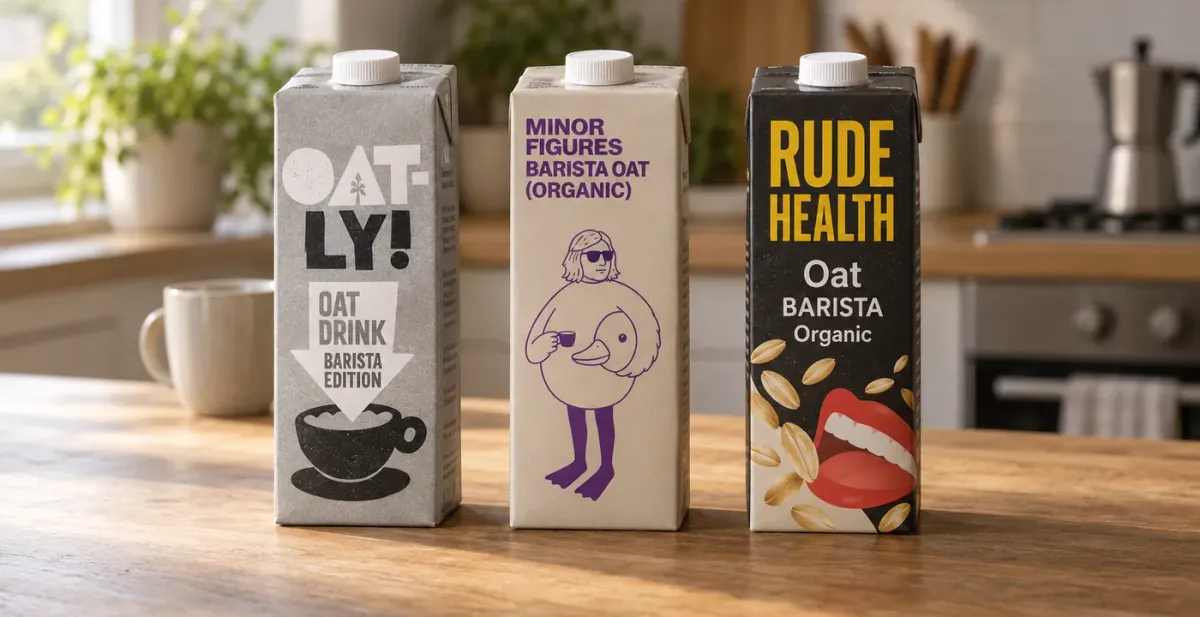
Table of Contents
Some of the links in this article are affiliate links, which help fund our independent review work at no extra cost to you. How we assessed these products is explained in this article and our Editor Lab methodology. No brand pays to appear, and no placement is guaranteed.
Seven oat milks, compared on formulation, frothing and split resistance for UK home coffee setups. The differences between the best and worst options are larger than most guides admit, and standard supermarket oat milks are not built to survive a hot espresso.
Oatly Barista Edition remains the best oat milk for coffee for most UK home setups, but the gap above Minor Figures Organic has narrowed significantly, and if the rapeseed-oil debate matters to you, Rude Health Barista changes the calculation entirely.
I am a Nutritional Therapist holding a Diploma from the College of Naturopathic Medicine (BANT member), and I have run dairy-free transition clinics at The Wellness Clinic at Harrods and at The Kyros Project (Google DeepMind). I have spoken at the Global Healthspan Summit in Riyadh. The oil and additive analysis in this review reflects clinical training, not brand marketing.
Our Top 3 Oat Milks at a Glance

The right pick depends on your setup and your priorities. For steam wand users who want the most reliable foam, Oatly Barista Edition is the benchmark. For specialty coffee drinkers where flavour neutrality and organic certification both matter, Minor Figures Organic is the closer call. For health-conscious buyers specifically avoiding rapeseed oil, Rude Health Barista is the only barista-formulated pick on this list that uses sunflower oil instead.
How We Assessed
Each oat milk was assessed on its formulation (oil, emulsifiers and oat base), the brand's own barista guidance, and published independent tests such as the Vegan Review's UK oat milk test, against the criteria below.
Criteria assessed:
- Microfoam quality: stretch and texture density
- Frothed volume: how much foam the formulation can build
- Splitting resistance: how quickly it separates in a hot cup
- Taste neutrality: oaty, sweet, or genuinely neutral in a finished espresso drink
- Oil and additive profile: rapeseed oil, sunflower oil, or oil-free
- Price per litre (UK retail, July 2026)
For the full methodology, including how we weight evidence quality, see how we test at The Editor Lab.
Best Oat Milk for Coffee 2026 - Reviewed
1. Oatly Barista Edition - Best Overall
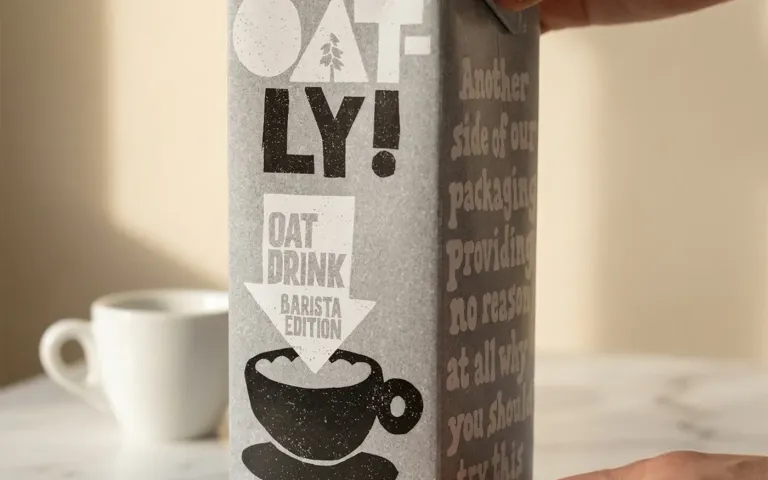
Oatly Barista Edition is formulated for heat stability, and it is the oat milk most UK coffee drinkers have already had in a cafe. Baristas widely regard its foam as tight and glossy enough to pour a flat white, and it is built to avoid the thin, airy result you get from most standard oat milks.
Oatly Barista Edition has held the top position in this category for several years, and it still earns that rank - though the margin above Minor Figures Organic has tightened. What Oatly does better than any other oat milk at this price is consistency. Its barista formulation is built for foam that stretches predictably. That reliability matters more for everyday home baristas than the precision-feel differences that professionals notice in Minor Figures.
Oatly Barista is widely described as mildly sweet, which complements espresso-based drinks but is more present in filter or Aeropress. If you want something more neutral behind a lightly roasted natural, Minor Figures is the better call. If you want the most forgiving foam performer for everyday lattes, Oatly remains the answer.
The ingredient question: Oatly Barista Edition contains rapeseed oil, which is how it achieves its heat stability. The seed oil debate is addressed in the health section below. If you are specifically avoiding rapeseed, Rude Health Barista is the oil-free alternative to consider.
Pairs well with: Balance Coffee Stability Blend (medium roast; milk chocolate, hazelnut, fig) - a flagship-to-flagship pairing where Oatly's gently sweet body and Stability's clean medium-roast profile produce a daily flat white that needs no added sugar. Balance Coffee is the company founded by James Bellis, who reviewed this article. Shop Stability Blend here. Balance Coffee is independently lab-tested and proven free of mould, mycotoxins and pesticide residue.
“"If you have been struggling with oat milk that splits the moment espresso hits it, Oatly Barista Edition is the fix. The rapeseed oil is doing real work here - it is not just an additive, it is what gives the formula its heat stability.”
| Evaluation Criteria | Our Findings |
|---|---|
| Full review | See section above |
| Best for | Home steam wand frothing, everyday lattes, beginners to oat milk |
| Flagship product | Oatly Barista Edition Oat Drink 1L (from £1.85/litre) |
| Shop | https://www.amazon.co.uk/Oatly-Barista-Oat-Drink-1L/dp/B07B3BQDXQ?tag=balancejourna-21 |
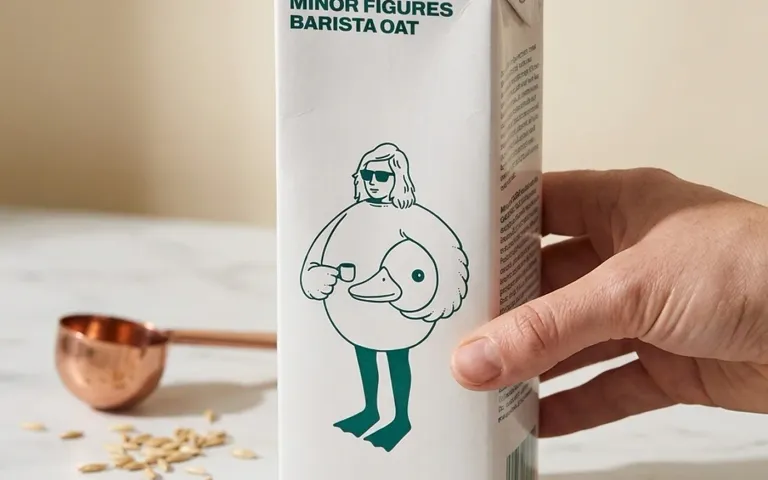
2. Minor Figures Organic - Best for Latte Art
What latte art demands is a tighter bubble structure than most oat milks produce. Minor Figures Organic is built for it. Where Oatly's microfoam is known for being stable and forgiving, Minor Figures is formulated for something closer to dairy, and baristas widely favour it for latte art.
Minor Figures launched as a barista-focused brand, and it is widely described as more neutral than Oatly. That matters for specialty coffee drinkers: in a lightly roasted natural Ethiopian where the fruit notes are the point, a sweeter oat milk competes, and a neutral one stays out of the way. If you have spent money on specialty beans and found oat milk flattening the cup, this comparison is worth making.
The organic certification covers oats (certified organic), and the label is cleaner than Oatly's: water, organic oats, organic rapeseed oil, sea salt. The oil is still rapeseed - certified organic rather than standard, which is a meaningful distinction for some buyers, but it is not an oil-free alternative. For people avoiding rapeseed entirely, the choice is Rude Health Barista.
Pairs well with: Balance Coffee Darkfire Energy (dark roast) - Minor Figures is described as the more neutral oat milk, so a bold dark roast keeps the coffee to the fore rather than getting muted behind the milk. Shop Darkfire Energy here.
“"The professional barista community has largely shifted toward Minor Figures for latte art, and the formulation explains why - it is built for a finer bubble structure, which is what you need for clean pours. The flavour neutrality also pays off when you are using high-quality single-origin espresso and do not want the milk adding sweetness on top."”
| Evaluation Criteria | Our Findings |
|---|---|
| Full review | See section above |
| Best for | Latte art, specialty coffee, organic certification, flavour-neutral preference |
| Flagship product | Minor Figures Organic Oat M*lk 1L (from £1.90/litre) |
| Shop | https://www.amazon.co.uk/dp/B086S7L9RJ?tag=balancejourna-21 |
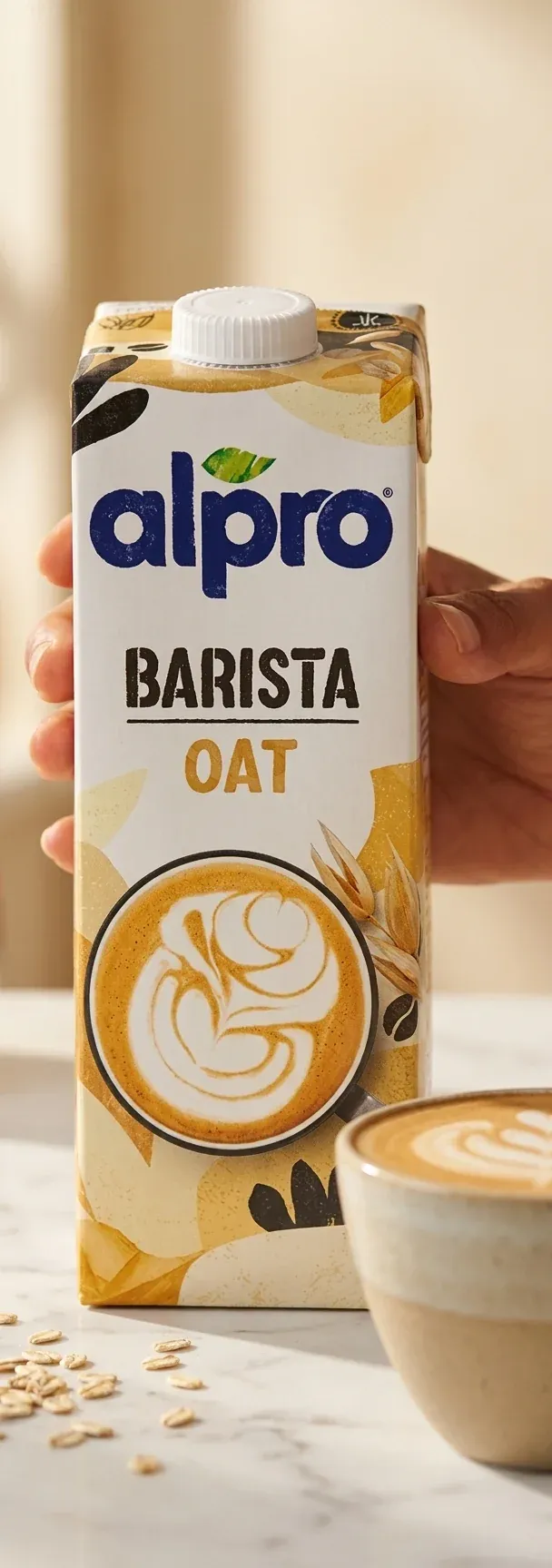
3. Alpro Barista - Best Budget / Best Availability
A question worth asking before buying: do you need barista-grade foam, or do you need something that foams acceptably at a price that makes two lattes a day sustainable? For the second question, Alpro Barista is the honest answer. It is in every major UK supermarket, it typically costs £1.40-1.60 per litre against Oatly's £1.85+, and it is formulated to give foam that is adequate for a handheld frother cappuccino.
Alpro Barista contains added rapeseed oil in common with Oatly. Expect it to sit below Oatly or Minor Figures for steam wand microfoam. If you are using an Aeroccino or a handheld frother for daily lattes, that gap matters less. If you are pulling shots through a best burr coffee grinder and dialling in a flat white, it is more likely to matter.
As a barista formulation with added oil, it is built to resist splitting in a hot cup. For households where oat milk is a practical dairy replacement rather than a specialty ingredient, Alpro Barista earns its place by being the product you can always get.
Pairs well with: Balance Coffee Aurora Single Origin (bright Brazilian single origin) - Alpro's lighter, more neutral profile is a good canvas for an aromatic single origin that adds character where the neutral base would otherwise leave the cup flat. Shop Aurora here.
“"Alpro Barista is the one I recommend when someone wants to commit to oat milk daily but cannot justify specialist pricing every week. It is not built to the level of Oatly or Minor Figures for a steam wand, but for a handheld frother it does the job and costs meaningfully less per litre."”
| Evaluation Criteria | Our Findings |
|---|---|
| Full review | See section above |
| Best for | Budget daily use, handheld frothers, supermarket accessibility |
| Flagship product | Alpro Barista Oat Drink 1L (from £1.40/litre) |
| Shop | https://www.amazon.co.uk/dp/B08998KT95?tag=balancejourna-21 |
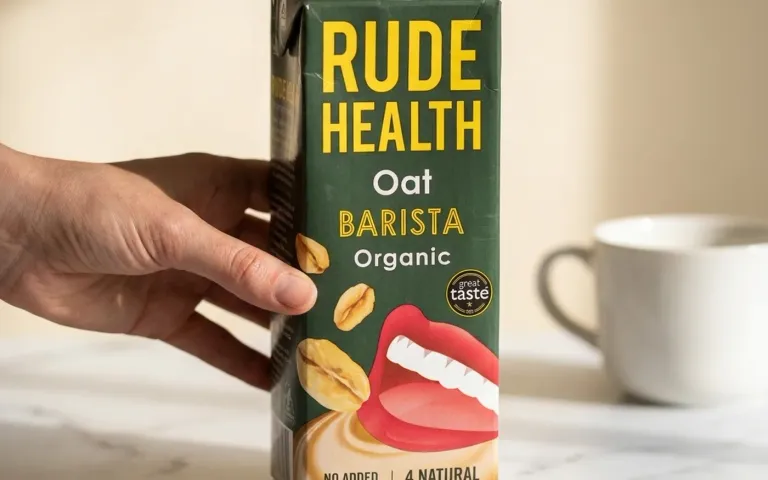
4. Rude Health Barista - Best Oil-Free
Here is the trade-off stated plainly: Rude Health Barista is formulated to froth, but it is not built to the stability of Oatly or Minor Figures. Expect better foam than a standard (non-barista) oat milk, but more open bubbles and less split resistance than Oatly or Minor Figures.
Most mainstream barista oat milks achieve stability through rapeseed oil - Oatly and Alpro both use it. Rude Health Barista uses sunflower oil rather than rapeseed, which is a meaningful distinction for anyone specifically avoiding that ingredient. The formula is also simpler than many competitors: water, gluten-free oats (13%), sunflower oil, sea salt, stabiliser (gellan gum). No dipotassium phosphate, no tricalcium phosphate.
The British Dietetic Association guidance on plant-based drinks notes that formulation varies widely across the category and that consumers should check labels for added fats and fortification levels. Rude Health Barista is the product for clients who have genuine concerns specifically about rapeseed oil - whether evidenced or precautionary - and do not want to give up foam quality entirely. For those who want to eliminate all added oils, Plenish is the step further, with the accompanying foam trade-off.
Pairs well with: Balance Coffee Lion's Mane Mushroom Coffee (smooth, chocolatey; ground/filter format only) - Rude Health's clean-label, health-forward buyer is the natural fit for the functional Lion's Mane blend. Note: this is ground coffee for filter or French press use - not an espresso format. Shop Lion's Mane Mushroom Coffee here.
“"Rude Health Barista is not the most convenient choice - harder to find than Alpro and more expensive per litre. It is the one I recommend when a client is specifically avoiding rapeseed oil and does not want to sacrifice foam quality entirely.”
| Evaluation Criteria | Our Findings |
|---|---|
| Full review | See section above |
| Best for | Rapeseed-oil avoiders, clean-label buyers, steam wand use |
| Flagship product | Rude Health Barista Oat Drink 1L (from £2.20/litre) |
| Shop | https://www.amazon.co.uk/dp/B07Z53ZRST?tag=balancejourna-21 |
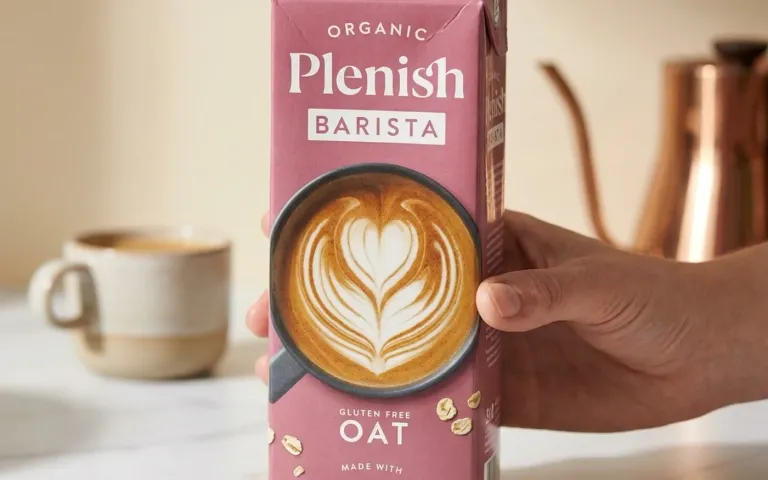
5. Plenish - Best Minimal-Ingredient
Three ingredients: oats, water, sea salt. Plenish has the shortest ingredient list in this roundup by a significant margin, and for the buyer whose primary criterion is "show me what is in it", nothing else comes close. No rapeseed oil, no sunflower oil, no emulsifiers, no fortification additives.
The honest trade-off is foam. Without added fat or emulsifiers, frothing is difficult. Expect a thin froth that collapses quickly. On a steam wand, some texture is achievable, but latte art and a glossy flat white are not realistic expectations. The product works well in Aeropress, French press, or filter coffee where frothing is not the goal - in those applications, it contributes a distinct oaty body to the cup.
With nothing added, expect a more oaty, less processed character than the barista-edition products. In a cafetiere or a pour-over, that contributes something genuinely different. In an espresso drink, the lack of emulsification is likely to show from the first pour.
“"Plenish is for the person who has read every oat milk label and wants nothing added at all. The foam trade-off is real and significant - this is not a foam-forward choice.”
| Evaluation Criteria | Our Findings |
|---|---|
| Full review | See section above |
| Best for | Minimal-ingredient preference, filter coffee, cafetiere, no-frother setups |
| Flagship product | Plenish Oat Drink 1L (from £2.00/litre) |
| Shop | https://www.amazon.co.uk/dp/B0CG9RW43R?tag=balancejourna-21 |
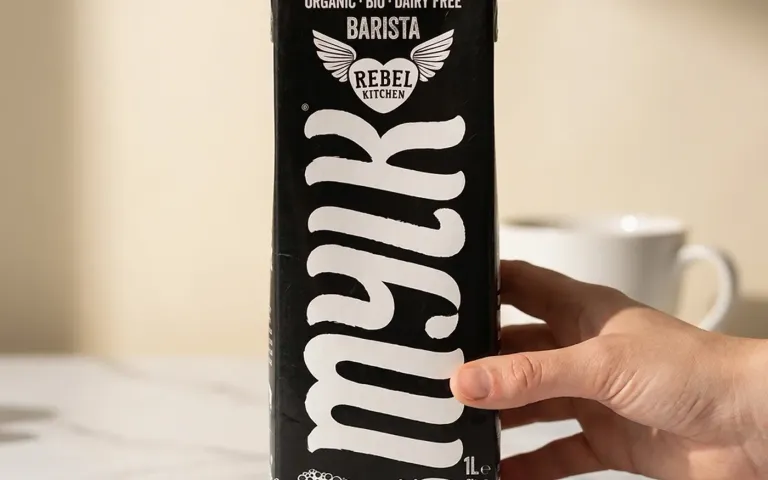
6. Rebel Kitchen Organic - Best for Creaminess
Where most oat milks aim for neutrality, Rebel Kitchen Organic leads with richness. It is generally described as fuller-bodied than Oatly or Minor Figures - closer to semi-skimmed dairy than the thinner body of standard oat milks. If you switched from whole milk and miss that coating richness in your latte, Rebel Kitchen Organic sits in a different register from the rest of this list.
Rebel Kitchen is a UK brand with certified organic credentials, and the oat character is reported to be more pronounced than in the barista-optimised picks. It suits everyday cappuccinos rather than the precision work Oatly or Minor Figures are built for.
The flavour profile that makes Rebel Kitchen appealing for creaminess seekers is also the thing that makes it a less neutral canvas for specialty coffee. It suits a strong espresso; in a lighter-roasted single origin, a pronounced oat character is likely to dominate the cup. It is worth knowing which type of coffee drinker you are before putting this in position six on your shortlist rather than the more neutral options above.
“"Rebel Kitchen Organic suits the person who switched from whole milk and specifically misses the richness - not the neutrality.”
| Evaluation Criteria | Our Findings |
|---|---|
| Full review | See section above |
| Best for | Creaminess, dairy-richness seekers, espresso drinks, organic certification |
| Flagship product | Rebel Kitchen Organic Oat Mylk (from £1.80/litre) |
| Shop | https://www.amazon.co.uk/s?k=rebel+kitchen+organic+oat+milk&tag=balancejourna-21 |
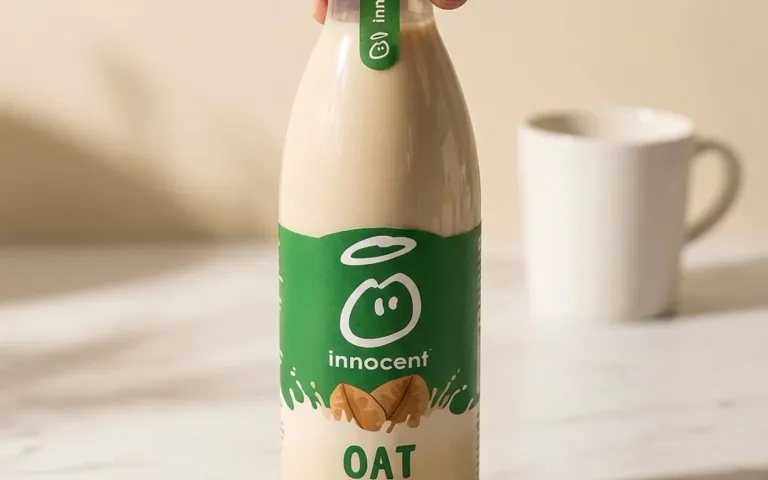
7. Innocent Oat - Best Supermarket Standard
Innocent Oat is not a barista edition. That distinction matters for this roundup, and it is worth stating directly: it is not designed to be steamed, it does not contain the emulsifiers that barista formulations use for heat stability, and it is likely to separate in a hot espresso faster than any of the picks above.
What it does well is taste and value, which independent taste tests back up. In filter coffee, French press, or a cold-brew application where splitting behaviour is irrelevant, it performs well. It is available in every major UK supermarket, often on promotion, and at around £1.30-1.50 per litre it is the most affordable option in this review.
The Vegan Review's UK oat milk test found meaningful variation in how oat milks perform in different applications - and Innocent's standard formulation scores well in taste tests where temperature and foam are not the variables. For households where one person occasionally wants oat milk in their tea or filter coffee, it is the practical choice.
“"Innocent Oat is the one to buy when you are not yet committed to barista-edition pricing - it is honest about what it is. For filter coffee and the occasional latte with a basic frother, it works.”
| Evaluation Criteria | Our Findings |
|---|---|
| Full review | See section above |
| Best for | Filter coffee, tea, basic frothers, budget supermarket pick |
| Flagship product | Innocent Oat Drink 1L (from £1.30/litre) |
| Shop | https://www.amazon.co.uk/s?k=innocent+oat+drink&tag=balancejourna-21 |
Full Oat Milk Comparison Table
| Brand | Best for | Froth (by formulation) | Splits? | Added oil | Price/litre | Where to buy |
|---|---|---|---|---|---|---|
| Oatly Barista Edition | Overall / steam wand | Excellent | Rarely | Rapeseed | From £1.85 | Amazon, Tesco, Waitrose, Ocado |
| Minor Figures Organic | Latte art / neutral taste | Excellent | Rarely | Rapeseed (organic) | From £1.90 | Amazon, Ocado, independents |
| Alpro Barista | Budget / availability | Good | Rarely | Rapeseed | From £1.40 | Tesco, Waitrose, Sainsbury's |
| Rude Health Barista | Rapeseed oil-free | Good | Yes | Sunflower | From £2.20 | Amazon, Ocado, health stores |
| Plenish | Minimal ingredients | Poor | Yes | None | From £2.00 | Amazon, Ocado, health stores |
| Rebel Kitchen Organic | Creaminess / richness | Fair | Rarely | Sunflower (organic) | From £1.80 | Amazon, health stores, Ocado |
| Innocent Oat | Budget / filter coffee | Poor | Yes | None stated | From £1.30 | All major supermarkets |
Barista vs Standard Oat Milk: Why Barista Froths and Standard Splits
The most important label check when buying oat milk for coffee is whether it says 'barista edition'. That word describes a genuine formulation difference, not a marketing category.
Standard oat milks are designed to taste good poured cold. They are not formulated to be heated, stretched, or to maintain stability when a hot espresso shot hits them. The result in the cup: separation, thin foam that collapses quickly, or a drink that looks visibly curdled.
Barista editions are formulated differently in three ways. First, added emulsifiers or fats (typically rapeseed or sunflower oil) stabilise the liquid when heated and create the foam structure required for microfoam. Second, modified or higher oat concentration changes the viscosity so the milk stretches under heat rather than seizing. Third, heat-stable carbohydrate and protein profiles reduce the curdling reaction when oat milk meets hot, acidic espresso. The Clive Coffee oat milk science breakdown covers the formulation differences in detail, including how oat beta-glucan concentration affects frothing behaviour.
None of these changes make the milk taste radically different from the same brand's standard range. The bigger flavour differences in this category come from oat origin, processing method, and whether flavourings are used - not from the barista formulation itself.
If you have been using standard oat milk and finding that it splits or produces flat, airy froth, switching to a barista edition is the single highest-impact change you can make - before adjusting your machine, your technique, or your best coffee beans UK choice.
How to Choose an Oat Milk for Coffee
Always start with the barista edition. For any setup involving a steam wand or handheld frother, a barista-formulated product is not optional. The performance gap between barista and standard is too large to work around through technique.
Decide your position on seed oils before you buy. Oatly, Minor Figures, Alpro, and Rebel Kitchen all use rapeseed or sunflower oil. If you have no strong view on seed oils, Oatly Barista Edition offers the strongest overall performance. If you are avoiding rapeseed specifically, Rude Health Barista uses sunflower oil instead - the only option on this list that makes that swap without eliminating added fat entirely. If you want no added oils at all, Plenish is the only choice, with a significant foam performance trade-off.
Match to your brew method. Steam wand users benefit most from Oatly or Minor Figures. Handheld frother users: Oatly or Alpro are the practical choices. Filter coffee or French press with no frothing: Plenish or Innocent Oat are appropriate and significantly cheaper.
Price scales with performance. The gap between Alpro Barista (around £1.40-1.60) and Oatly or Minor Figures (around £1.85-1.90) is real but modest per cup. At two lattes a day, the annual difference is around £25-35. Whether that is worth it depends on how much the foam texture matters in your routine.
Check fortification on the specific product. If oat milk is your primary dairy replacement rather than just a coffee addition, the calcium, vitamin D, and B12 content matters. Fortification levels vary significantly between brands, and some brands fortify their standard range but not their barista variant. Always check the specific product label rather than the brand range.
Oat milk and the pairing principle. The oat milk you choose also affects which coffee works best in the cup. Neutral oat milks (Minor Figures, Alpro) give your coffee more room to express itself. Fuller, sweeter oat milks (Oatly, Rebel Kitchen) pair better with medium-dark roasts that have their own caramel and chocolate notes. For a full breakdown, see our guide to the best coffee for oat milk.
The Healthiest Oat Milk for Coffee: An Honest Answer
'Healthiest' in the oat milk category means different things depending on what you are optimising for. The social media discourse has made this harder to navigate than it needs to be.
From a nutritional standpoint, all seven products are broadly similar in their macronutrient contribution to a cup of coffee: around 40-60 kcal per 100ml for barista editions, primarily from carbohydrates, with small amounts of fat and protein. None of them are health foods in the supplement sense. None of them are harmful at normal consumption levels.
The real nutritional differences worth knowing:
Oil type. Rapeseed oil (Oatly, Alpro, Minor Figures Organic) provides a better omega-3 to omega-6 ratio than sunflower oil (Rude Health Barista). Minor Figures uses certified organic rapeseed; Oatly and Alpro use standard rapeseed. If you are drinking several oat-milk coffees daily, this distinction has modest relevance.
Additives. Dipotassium phosphate and tricalcium phosphate are used in some barista formulations as emulsifiers. They are food-safe at the concentrations in oat milk, but they are additives. Rude Health and Plenish use neither.
Fortification. A fortified oat milk contributes calcium and vitamins to your diet; an unfortified one does not. This matters if you rely on oat milk as your primary dairy replacement.
The seed oil question. The concern about linoleic acid and omega-6 in processed foods has grown in online health communities, and oat milk seed oils come up regularly. My clinical view: the evidence against moderate seed oil consumption at the concentrations present in oat milk - where you are adding 100-150ml to a cup of coffee - is weaker than the online discourse suggests. The mycotoxins in coffee question is more evidence-based and more consistently overlooked by the same audiences worried about seed oils. If you are optimising your coffee routine for health, clean coffee quality (independently lab-tested and mould-free) is a more evidence-backed priority than the choice between rapeseed and sunflower oil in your oat milk.
FAQ
Frequently Asked Questions
Which is the best oat milk for coffee?
Oatly Barista Edition is the best oat milk for coffee for most UK home setups. It foams consistently on steam wands and handheld frothers, splits rarely when added to hot espresso, and its neutral-sweet flavour sits cleanly behind medium and dark roast coffee. Minor Figures Organic is the better pick if you use specialty coffee and want more flavour neutrality, or if organic certification matters to your buying decision.
Why is everyone ditching oat milk?
The oat milk backlash is driven mainly by concerns about rapeseed and sunflower oil in barista formulations, and by the broader seed oil controversy online. Some specialty coffee drinkers also find barista editions too sweet for lighter roasts. Seed oil volumes per oat milk serving are small, and the evidence against them at these concentrations is weaker than the online discourse suggests.
Which oat milk does Starbucks use?
Starbucks UK uses Oatly Barista Edition as its standard oat milk, which is consistent with most UK coffee chains. The Oatly partnership covers a significant portion of the UK out-of-home coffee market, which is part of why Oatly Barista Edition is the reference point for what oat milk in a coffee is supposed to taste like - most UK coffee drinkers have had it without knowing the brand name.
Is Alpro or Oatly better?
Oatly Barista Edition is built for higher foam quality and microfoam precision on a steam wand than Alpro Barista. Alpro Barista is significantly cheaper per litre and available in all major UK supermarkets, making it the practical choice when budget matters more than barista-grade performance. For steam wand users making flat whites at home, Oatly is worth the price difference. For handheld frother users, the performance gap narrows considerably.
What's the difference between barista oat milk and regular oat milk?
Barista oat milk is formulated to be heated and frothed without splitting. It contains added emulsifiers or fats (usually rapeseed or sunflower oil) and a modified oat concentration that stretches under steam rather than seizing. Standard oat milk lacks these modifications and separates when it meets hot espresso. The label word 'barista' reflects a real formulation difference backed by the ingredient list, not a marketing category.
Is oat milk good for your coffee?
Yes, in a barista edition. Oat milk has a naturally sweet, neutral flavour that complements medium and dark roast coffee well, and barista formulations produce functional microfoam. The main limitation versus dairy is that oat milk foam is less flexible for latte art (except Minor Figures), less stable at very high temperatures, and more pronounced in flavour behind lighter roasts. For most home setups, the trade-off is manageable.
What is the healthiest oat milk in the UK?
Plenish has the cleanest ingredient list - oats, water, sea salt only - but does not froth well. Among barista editions, Rude Health Barista uses sunflower oil (not rapeseed), has no emulsifiers, and uses certified organic oats. Nutritional differences between barista options are small at typical serving sizes - two or three lattes daily puts you at modest intake levels for any of the additives involved.
Is there a downside to drinking oat milk?
Oat milk is higher in carbohydrate than other plant milks (almond, coconut, soy) because oats are primarily a carbohydrate food. Most barista editions contain added oils which some people prefer to avoid. Oat milk is not suitable for coeliacs without confirmed gluten-free certification. Fortification varies widely, so if you rely on it as a dairy replacement, always check the calcium and vitamin D content of the specific product you buy.
Why does my oat milk curdle or split in coffee?
Oat milk splits for three main reasons. First, you are using a standard formula rather than a barista edition - barista formulations resist heat-induced separation. Second, temperature shock: cold oat milk meeting a very hot espresso shot speeds up splitting. Third, high acidity in the coffee: very lightly roasted, high-acid coffees cause faster splitting in all plant milks. A medium roast and warming the milk slightly both reduce this.
Is oat milk or almond milk better for coffee?
Oat milk is better for frothing and for drinks where you want a creamy, fuller mouthfeel. Almond milk foams less reliably and many almond milks have a distinct nut flavour that competes with specialty coffee. Oat milk's neutral sweetness complements espresso more cleanly in most setups. Almond milk contains fewer carbohydrates per serving, which matters if you are managing blood sugar. For latte texture, oat milk is the stronger choice.

A registered Nutritional Therapist and member of BANT, Clemmie blends science with a holistic approach to wellbeing.