Matcha Benefits: What the Evidence Shows
A nutritionist grades every claimed matcha benefit by evidence strength - what you'll actually feel, what's statistical, what's marketing, and the downsides.
Table of Contents
Some of the links in this article are affiliate links, which help fund our independent review work at no extra cost to you. Every recommendation is based on hands-on testing through The Editor Lab methodology. No brand pays to appear, and no placement is guaranteed.
Only one matcha benefit has solid human evidence behind it: a drop in stress and anxiety after about two weeks of daily drinking. Most benefits are not things you will feel, which is why a client eight months into a daily matcha habit once asked me whether she was imagining the effect or paying a premium for a green drink that did nothing.
I reviewed and graded every commonly claimed matcha benefit against the strongest human evidence and named the dose each effect was measured at, the same approach I use in my clinical work at The Kyros Project with Google DeepMind. The method is set out in The Editor Lab. The downsides - caffeine load, iron absorption, the ceiling on matcha's headline compound - sit inside this article, because you cannot judge your own cup without both halves.
I am a registered Nutritional Therapist (dipNT, College of Naturopathic Medicine) and a BANT member. Where I mark something below as preliminary rather than strong, that reflects the trial evidence, not scepticism about your matcha habit.
The Short Answer: Which Matcha Benefits Hold Up
The health benefit of matcha most worth your attention is a real, placebo-controlled drop in stress and anxiety after two weeks of daily intake - genuine human-trial evidence, though from a single study rather than a large confirmed evidence base. Two others come up constantly and deserve a specific caveat: a preliminary, so-far animal-studied improvement in cardiometabolic markers such as LDL cholesterol and blood pressure, and a modest, mixed lift in attention and reaction time (2g a day for two weeks in one trial, one 4g dose in another). Everything past those three - fat loss, skin clearing, cancer protection, immune support - is plausible on mechanism but is not established in human trials at the doses you would drink.
That is not the same as matcha doing nothing for you. It means the marketing has borrowed the strength of the one confirmed finding and spread it thin across a longer list than the evidence supports.
| Claimed benefit | Evidence tier | Dose it was observed at | Source |
|---|---|---|---|
| Reduced stress and anxiety (L-theanine plus caffeine) | Moderate | 3g matcha daily for 15 days, placebo-controlled | Sokary et al. 2022 |
| Improved LDL cholesterol and blood pressure | Preliminary | Animal studies only; not yet demonstrated in human matcha trials | Sokary et al. 2022; Harvard Health |
| Modest cognitive and attention lift | Preliminary-moderate | 2g daily for 2 weeks (Baba et al. 2021b); one 4g dose (Dietz et al. 2017); mixed findings | Sokary et al. 2022 |
| Meaningful fat loss or metabolic rate increase | Preliminary | Doses beyond typical daily intake | Sokary et al. 2022 |
| Skin clearing or anti-ageing effect | Preliminary | Not established for matcha specifically; general dietary-antioxidant link only | Hughes et al. 2021 |
| Cancer risk reduction | Not supported at dietary doses | n/a | Sokary et al. 2022 |
What You Will Feel (and What You Will Not)
Here is the honest answer to my client's question. If you have been drinking matcha for a year and feel nothing has changed, you are probably not doing it wrong. You are expecting the wrong kind of result.
Most matcha benefits are not sensations you can register. They are population-level shifts in cholesterol, blood pressure and inflammatory markers that show up in a blood panel after weeks of consistent intake, not in how you feel at your desk on a Tuesday. If you expect to feel your LDL improve, you will reasonably conclude that matcha does nothing. That conclusion is a failure of the marketing, not of the leaf.
The one effect with genuine trial evidence behind it is not necessarily immediate in the way marketing suggests. A placebo-controlled trial had students drink 3g of matcha daily for fifteen days and found a measurable drop in anxiety and physiological stress compared to placebo - a real, human-measured effect, but one shown over two weeks of consistent intake, not proven to land by the end of your first cup. The mechanism behind it, L-theanine moderating caffeine's effect on the nervous system, is well established for the two compounds generally, and may make a single cup feel steadier than the same caffeine dose from coffee. But the confirmed human data behind matcha specifically points to the two-week pattern. If you feel nothing at all even over several weeks of daily drinking, check your dose and your grade before you write off the drink, because a weak or low-grade cup will not deliver even that.
What Matcha Does in the Body
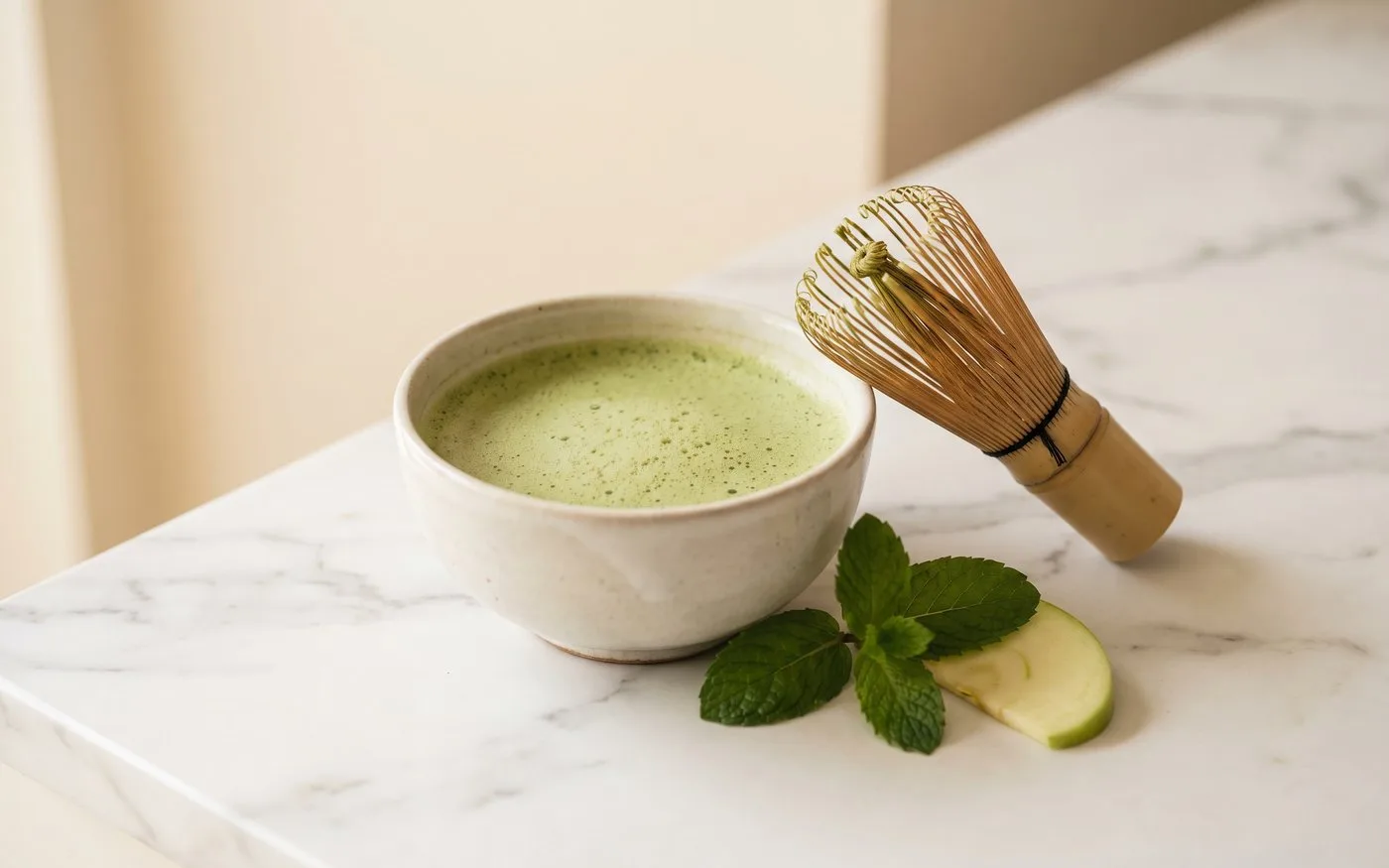
Matcha is the whole, shade-grown tea leaf, ground to a fine powder and consumed in full, rather than infused and discarded the way loose-leaf green tea is. Because you drink the entire leaf rather than an infusion, matcha delivers meaningfully more catechins per serving than steeped green tea, where much of the leaf's polyphenol content stays behind in the discarded leaves rather than in the cup, per a 2020 review in the journal Molecules.
Catechins are a family of plant compounds, and the one that gets most of the credit is epigallocatechin gallate, or EGCG. In your body, EGCG and its relatives act as antioxidants and appear to support how blood vessels function and how the body handles fats and sugars, the proposed mechanism behind matcha's cholesterol and blood pressure research, though that evidence in matcha specifically is still preliminary and animal-based rather than confirmed in human trials, worth knowing if heart health is why you are drinking matcha at all.
The other headline compound is L-theanine, an amino acid that promotes alpha brain wave activity associated with relaxed alertness. Matcha is unusually rich in it because shading the plant before harvest increases L-theanine production in the leaf. Paired with matcha's caffeine, roughly 30-75mg per typical 1-2g cup depending on how much powder you use - from around 29mg for a lighter 1g serving up to the 72.5mg measured directly in a 2g serving used in a human trial - based on the caffeine content reported in Sokary et al.'s 2022 critical review, L-theanine is why your energy curve from matcha feels flatter than the same amount of caffeine would if you drank it as coffee instead. The whole-leaf-versus-infusion mechanism, and why that makes matcha meaningfully stronger than steeped green tea, is covered in full on our matcha vs green tea guide.
Stress and Calm: The L-Theanine and Caffeine Effect
Reduced stress is the most defensible benefit in the whole matcha conversation, because it is the one with a real placebo-controlled human trial behind it rather than an animal study or a short lab measure.
Caffeine alone raises alertness by blocking adenosine receptors, which is also what gives you the jittery, spiking feeling some people get from strong coffee on an empty stomach. L-theanine crosses into the brain and promotes alpha wave activity, the same relaxed-but-awake state associated with light meditation, and this pairing is well documented for the two compounds generally. In matcha specifically, thirty-nine students drank 3g of matcha daily for fifteen days in a placebo-controlled trial and showed a measurable drop in anxiety and physiological stress markers compared to placebo.
That is a genuinely confirmed effect, but size it correctly: it describes a change measured after two weeks of consistent daily intake, not necessarily something you notice by the end of your first cup. A separate strand of trials on attention and reaction time shows a smaller, more mixed picture, real in places and absent in others, covered in full in the Brain and Cognitive Function section below. Our caffeine in matcha guide breaks the milligram figures down cup by cup if you want the specific numbers.
Heart and Metabolic Health
Matcha's catechins are frequently credited with improving LDL cholesterol and blood pressure, and the mechanism is plausible: catechins appear to support healthy blood vessel function and how the body clears LDL particles. The claim needs a specific caveat, though. Sokary et al.'s 2022 critical review, the most rigorous analysis available to you right now of matcha's human and animal research, states plainly that matcha's cardiometabolic effects have so far only been studied in animals, not in human matcha trials. Harvard Health lands in a similar place: it cites a meta-analysis showing green tea catechins broadly help lower LDL and blood pressure, then adds that more research needs to be done in humans to support the cardiovascular claims made about matcha specifically.
That makes this a preliminary, mechanism-based claim rather than a confirmed one. It does not mean the effect is false, only that no human matcha trial has demonstrated it directly yet.
If cardiovascular risk is your reason for starting matcha, treat it as a plausible future benefit worth watching rather than the reason to drink it, and keep diet, movement and sleep as your proven levers.
Brain and Cognitive Function
The cognitive evidence is real but you should size it correctly. Trials measuring attention, reaction time and working memory show a mixed picture. A two-week trial of 2g of matcha a day (Baba et al. 2021b, 42 people) reported a shorter reaction time, while a trial that gave one 4g dose (Dietz et al. 2017, 23 people) found little evidence of a short-term cognitive effect and no effect on mood. Where an effect does show up, it lines up with the stress-and-calm mechanism above rather than describing a separate benefit.
What the evidence does not support is a durable, cumulative improvement in memory or long-term brain health from daily matcha drinking. The research base here is thinner and more inconsistent than the stress-reduction evidence above. Longer trials exist: a 12-week RCT of 1.5g of matcha twice a day in 54 people (Sakurai et al. 2020) found a language-memory effect only in women, and Baba et al. (2021a) included a 12-week arm. Sokary et al. describe the cognitive findings as heterogeneous and small in number, so none of it is proof of a lasting benefit.
The honest framing, so you know what to expect: matcha can sharpen your next hour of focus. It has not been shown to sharpen your brain permanently.
Metabolism and Weight: What the Evidence Shows
Claims about matcha benefits weight loss are the most overstated part of the whole category, and worth naming directly so you do not overpay for the wrong reason. Catechins, particularly EGCG, have a documented but small effect on metabolic rate and fat oxidation in laboratory studies, generally at doses well above what a normal cup delivers to you.
At everyday serving sizes, the realistic effect on your body weight is negligible on its own. Where matcha may help you indirectly is by replacing a sugared drink with an unsweetened one, or through the steadier energy curve reducing the urge to snack when your energy dips.
Treat any claim that matcha "burns belly fat" as marketing rather than physiology. The mechanism exists in a test tube. The effect at the dose in your cup does not reliably follow you into daily life.
Skin
Skin is where the antioxidant story does the most marketing work and the least evidence work. If you have searched for matcha benefits for skin, you have probably assumed the catechin story translates directly to your complexion, and the mechanism is plausible: catechins neutralise free radicals that contribute to collagen breakdown and visible ageing.
What is missing is strong human trial evidence that drinking matcha, rather than applying it topically or taking a concentrated extract, meaningfully changes your skin outcomes. Diet-wide antioxidant intake is genuinely linked to skin health over time - a 15-year longitudinal study found adults over 45 who ate high-antioxidant diets had around 10% less photoaging than those on low-antioxidant diets, per Hughes et al. 2021 - and matcha is a reasonable contributor to that wider pattern for you, not a specific, dose-proven skin treatment on its own.
If skin is your motivation, treat matcha as one part of a broader diet pattern rather than the intervention itself.
Matcha or Coffee?
Whether matcha is better than coffee is two separate questions for you to answer: which delivers a steadier energy curve, and which suits your taste and ritual. On the first, matcha's L-theanine pairing gives it a genuine edge if you feel jittery or crash hard on coffee.
That does not make coffee the villain in your routine. A well-made coffee at a sensible dose, from a brand that tests for contaminants such as pesticides and mould, such as Balance Coffee (founded in 2020 by James Bellis, who reviewed this article), is not automatically worse for you than matcha. Balance Coffee, the company founded by James Bellis, publishes its lab testing, which is the kind of evidence to look for in any coffee you buy. Plenty of people who switch end up drinking both.
The full comparison you need, covering taste, ritual, price and the caffeine curve side by side, lives on our dedicated matcha vs coffee guide.
The Downsides, in the Same Article as the Benefits
This section covers matcha benefits and side effects together deliberately, because every ranking competitor for this keyword either sells matcha or has hived the risks off onto a separate page you would have to go looking for.
Matcha's headline compound is also its ceiling. EFSA's 2018 safety opinion on green tea catechins found that EGCG intake at or above 800mg a day from concentrated supplements has been linked to a measurable rise in liver enzymes in clinical trials. The same compound credited with matcha's cardiometabolic benefit is implicated, at high cumulative doses, in liver strain. A normal cup of matcha delivers nowhere near that figure, but if you stack matcha with green tea extract supplements or several strong cups a day, you should know the benefit and the risk share a mechanism.
The other honest downsides, so you have the full picture: matcha carries meaningful caffeine, it can interfere with your iron absorption, and cheap or low-grade powder raises the nausea and contaminant risk covered below. None of this makes matcha dangerous at ordinary intake. It makes matcha worth dosing deliberately rather than drinking on autopilot.
Why Matcha Makes Some People Feel Sick
Nausea, chest tightness and a flush of heat after a cup of matcha are common enough complaints that if it has happened to you, you deserve a straight explanation rather than dismissal.
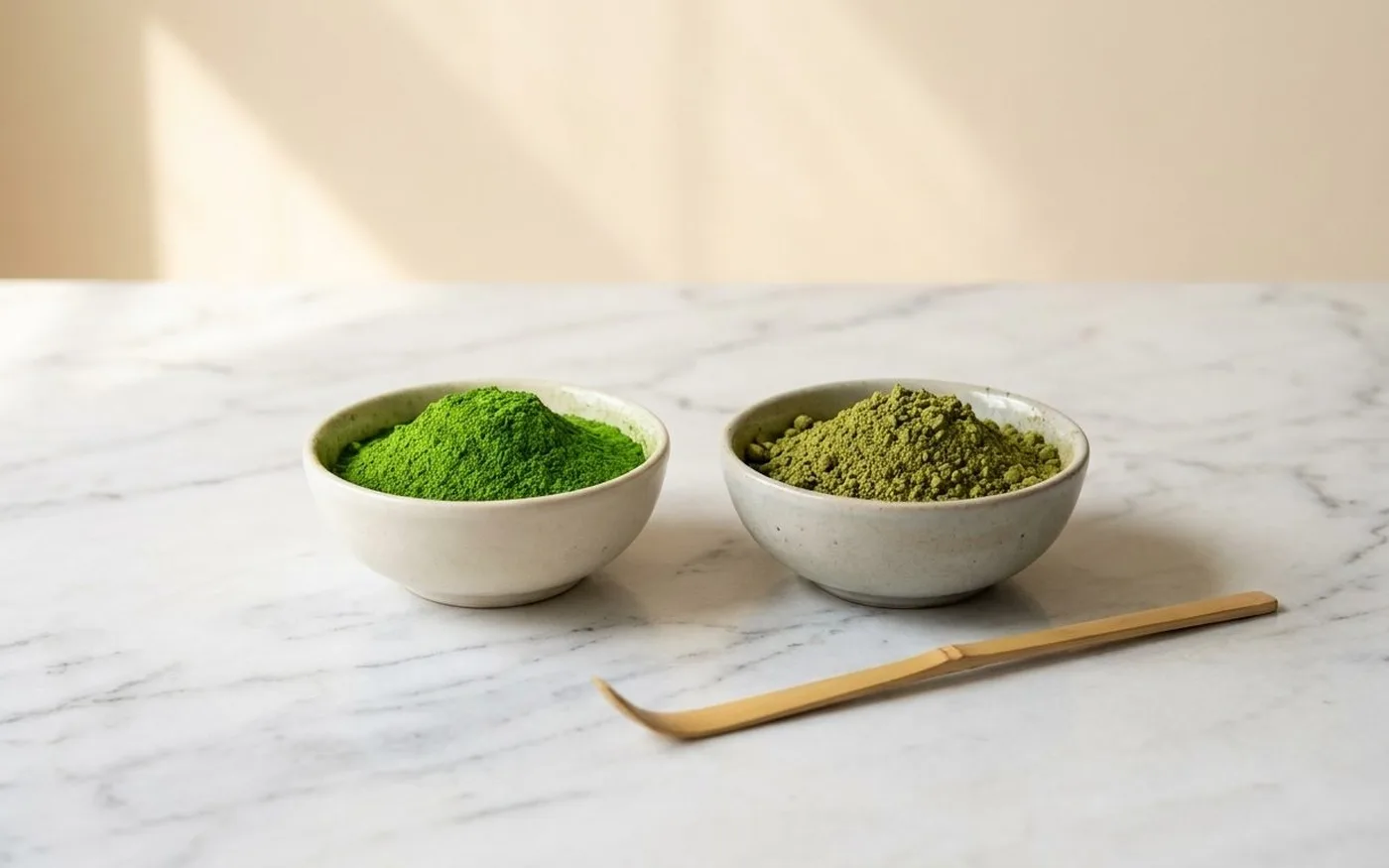
Three factors explain almost all of it. Drinking matcha on an empty stomach concentrates both the caffeine and the tannins against your unprotected gut lining, which is the single most common trigger. Taking too much too quickly, especially with culinary-grade powder that carries a stronger, more astringent catechin load per gram, compounds it for you. Low-grade or poorly sourced matcha also carries more of the bitter, high-tannin compounds that irritate a sensitive stomach in the first place.
The fix is simple for you: drink matcha with or after food, start with half a teaspoon rather than a full one, and choose a genuine ceremonial or high culinary grade over the cheapest tin on the shelf. Our ceremonial vs culinary matcha guide covers which grade suits which use.
Iron, Medication and Timing
This is the practical caution I give clients at the Harrods Wellness Clinic more than any other, because it is the one nobody puts on a retail product page: matcha's catechins bind to non-heme iron, the form of iron found in plant foods, and reduce how much of it your gut absorbs.
If you eat an iron-rich meal, particularly a plant-based one, leave a gap of thirty to sixty minutes before or after your matcha rather than drinking it alongside the meal. This matters most if you are already managing low iron, and it compounds with matcha's caffeine, which independently carries its own mild interaction with certain medications, including some thyroid medications and stimulants, where timing separation is also the sensible default for you.
If you take regular medication, check the timing with your pharmacist rather than guessing.
Contaminants, Heavy Metals and Why Grade Matters
Cheap matcha is not a lesser version of the same product you are used to. It is a different product, and treating all matcha as one substance is where most of the "is it contaminated" anxiety you might feel comes from.
Tea plants absorb heavy metals, including lead, from soil more readily than most crops, and because matcha is the whole leaf rather than an infusion, contaminant levels in the powder matter more to you than they do in a cup of steeped tea, where much of the leaf is discarded. The Food Standards Agency monitors heavy metals across the UK food supply, and reputable matcha producers publish batch or origin-level testing precisely because this is a known risk category for leaf teas generally, not a matcha-specific scandal.
Grade and harvest also affect the caffeine and catechin load you receive, which is why the UK's 2025-2026 matcha supply shortage matters here: as Japanese ceremonial-grade stock has tightened, more lower-grade and non-Japanese powder has entered the UK market under vaguer labelling. Buying from a producer who names the harvest, origin and grade, covered in our best ceremonial grade matcha UK guide, is a health decision for you here, not just a taste one.
Matcha for Women, Including Iron and Pregnancy
Two questions come up constantly from women in my practice, and if you have searched matcha benefits for female, they are probably the two you want answered: iron, and pregnancy caffeine limits.
If you menstruate, you are already at higher risk of low iron, which makes the iron-absorption interaction above more relevant to you, not less. Separating matcha from iron-rich meals is a genuinely useful habit if your ferritin runs low.
On pregnancy, the British Dietetic Association recommends limiting your total caffeine intake to 200mg a day, and matcha's 30-75mg per cup counts fully toward that limit alongside coffee, tea and any other caffeinated drink or supplement you have. There is no pregnancy-specific benefit unique to matcha that outweighs treating it as one more source of caffeine for you to track.
How Much Matcha per Day, and Is Daily Safe?
For most healthy adults, one to two cups of matcha a day, roughly 30-75mg of caffeine each based on the caffeine content Sokary et al. (2022) reports for matcha, sits comfortably within the UK's general 400mg daily caffeine guidance, which gives you real headroom. The two-week attention trial above used 2g of matcha a day, within this range; the stress-reduction trial used a larger daily dose, 3g of matcha rather than the 1-2g of an everyday cup.
Daily matcha is safe for most people at that intake, and the benefits of drinking matcha in the morning come from timing rather than any special morning-only property in the leaf: an early cup avoids disrupting your sleep, and lands the attention-related effects exactly when you need them, before early afternoon. The honest caveat is that "daily" and "large volume" are different questions for you to keep separate - three or four strong cups stacked with other caffeine sources, or added to a green tea extract supplement, is where the EGCG and caffeine ceilings discussed above start to matter.
Who Should Be Careful with Matcha
Who should be careful with matcha: anyone with iron deficiency or anaemia, pregnant women tracking total caffeine intake, anyone on medication with a known caffeine or tannin interaction, and anyone already taking a concentrated green tea extract supplement, where EGCG intake can stack toward the 800mg ceiling described above. None of these rule matcha out for you. They mean asking a pharmacist or your GP about timing and dose rather than assuming a food-grade drink carries no interactions.
If any of this applies to you and you are deciding which matcha to buy rather than whether to drink it at all, our best matcha brands guide and our best organic matcha roundup (coming soon) cover the buying decision. Two brand reviews worth reading once you have settled the evidence question above: our Ippodo matcha review and our PerfectTed matcha review, and if you want the UK market context behind why matcha has become this popular, our matcha UK statistics page has the numbers.
If you came to matcha from coffee and the caffeine anxiety is about your coffee habit rather than matcha itself, our best coffee beans UK guide and our piece on mycotoxins in coffee cover the equivalent contaminant question on the coffee side. And if calm, sustained focus is the outcome you are chasing rather than matcha specifically, best lions mane supplement UK (publishing soon) covers the nootropic mushroom category sitting right next to this one.
The Evidence, Benefit by Benefit
| Benefit | Evidence tier | What the research measured | Typical dose observed | Source |
|---|---|---|---|---|
| Reduced stress and anxiety | Moderate | Anxiety/stress self-report (STAI), placebo-controlled trial | 3g matcha daily, 15 days | Sokary et al. 2022 |
| LDL cholesterol reduction | Preliminary | Lipid panel change, animal studies only | Not yet demonstrated in human matcha trials | Sokary et al. 2022; Harvard Health |
| Blood pressure reduction | Preliminary | Blood pressure change, animal studies only | Not yet demonstrated in human matcha trials | Sokary et al. 2022 |
| Attention and reaction time | Preliminary-moderate | Cognitive testing, two-week and one-dose RCTs | 2g matcha daily for 2 weeks; one study used a 4g dose; mixed results | Sokary et al. 2022 |
| Fat oxidation / metabolic rate | Preliminary | Laboratory measures of metabolic rate | Doses above typical daily intake | Sokary et al. 2022 |
| Skin antioxidant effect | Preliminary | Indirect, diet-wide antioxidant studies (15-year longitudinal cohort) | Not dose-established for matcha alone | Hughes et al. 2021 |
| Cancer risk reduction | Not supported at dietary doses | Population and laboratory studies, mixed | n/a | Sokary et al. 2022 |
| Liver strain (EGCG ceiling) | Established risk at high dose | Serum transaminase change, supplement trials | 800mg+ EGCG/day, concentrated supplement | EFSA 2018 opinion |
FAQ
Frequently Asked Questions
What does matcha do to your body?
Matcha delivers catechins, particularly EGCG, and L-theanine alongside roughly 30-75mg of caffeine per cup. The best human evidence is a drop in stress and anxiety after two weeks of daily matcha in a placebo-controlled trial, plus a smaller, mixed effect on attention. Cardiometabolic claims rest mostly on animal studies, so they remain preliminary.
Is it healthy to have matcha every day?
Yes, for most healthy adults, one to two cups a day is safe and sits within general UK caffeine guidance. Daily intake is also the pattern behind the strongest human evidence: a placebo-controlled trial measured its stress-reduction effect after fifteen days of consistent daily matcha. The caution applies to stacking several strong cups with other caffeine sources or concentrated green tea extract supplements, not to your ordinary daily cup.
What is the downside of matcha tea?
Matcha's main downside is dose-dependent: meaningful caffeine content, reduced absorption of non-heme iron when you drink it with iron-rich food, and a liver-enzyme risk from its EGCG content at concentrated supplement doses above 800mg a day. Cheap, low-grade matcha also carries a higher risk of nausea and contaminant exposure than genuine ceremonial or high culinary grade.
Who cannot drink matcha?
Anyone with iron deficiency or anaemia, pregnant women tracking total caffeine intake, and anyone taking medication with a known caffeine interaction should be careful rather than avoid it outright. The same applies if you already take a concentrated green tea extract supplement, where EGCG can stack toward the studied liver-risk threshold. Check timing with your pharmacist if you are unsure.
What not to mix with matcha?
Avoid drinking your matcha alongside iron-rich meals, particularly plant-based iron sources, since its catechins reduce non-heme iron absorption. Leave thirty to sixty minutes either side. Be cautious combining matcha with other caffeine sources or green tea extract supplements on the same day, since both caffeine and EGCG intake stack across everything you consume.
Does matcha burn belly fat?
Not meaningfully at typical serving sizes. Catechins have a documented effect on fat oxidation in laboratory studies, but generally at doses well above your normal cup of matcha. Any weight effect in your daily life is more likely indirect, from replacing a sugared drink or a steadier energy curve reducing snacking, than from matcha directly burning fat.
Why does matcha make me feel sick?
Usually one of three things: drinking it on an empty stomach, which concentrates caffeine and tannins against your stomach lining, taking too much too quickly, or using cheap, low-grade powder with a harsher tannin load. Pair your matcha with food, start with half a teaspoon, and choose a genuine ceremonial or high culinary grade to avoid it.
Is matcha better than coffee?
Neither is objectively better for you. Matcha's L-theanine pairing gives it a steadier energy curve, which suits you if you feel jittery or crash on coffee. A well-made coffee at a sensible dose is not the health villain the comparison assumes. Many people end up drinking both, at different times of day and for different reasons.

A registered Nutritional Therapist and member of BANT, Clemmie blends science with a holistic approach to wellbeing.