Lavazza Jolie Evo Review: The Best Cheap Pod Machine? (2026 Test)
A £49 pod machine should not deliver a recognisable espresso. The Lavazza Jolie Evo does, and quietly outsells every other Italian-branded machine on the UK SERP. The question is whether you should buy into the A Modo Mio pod ecosystem at all.
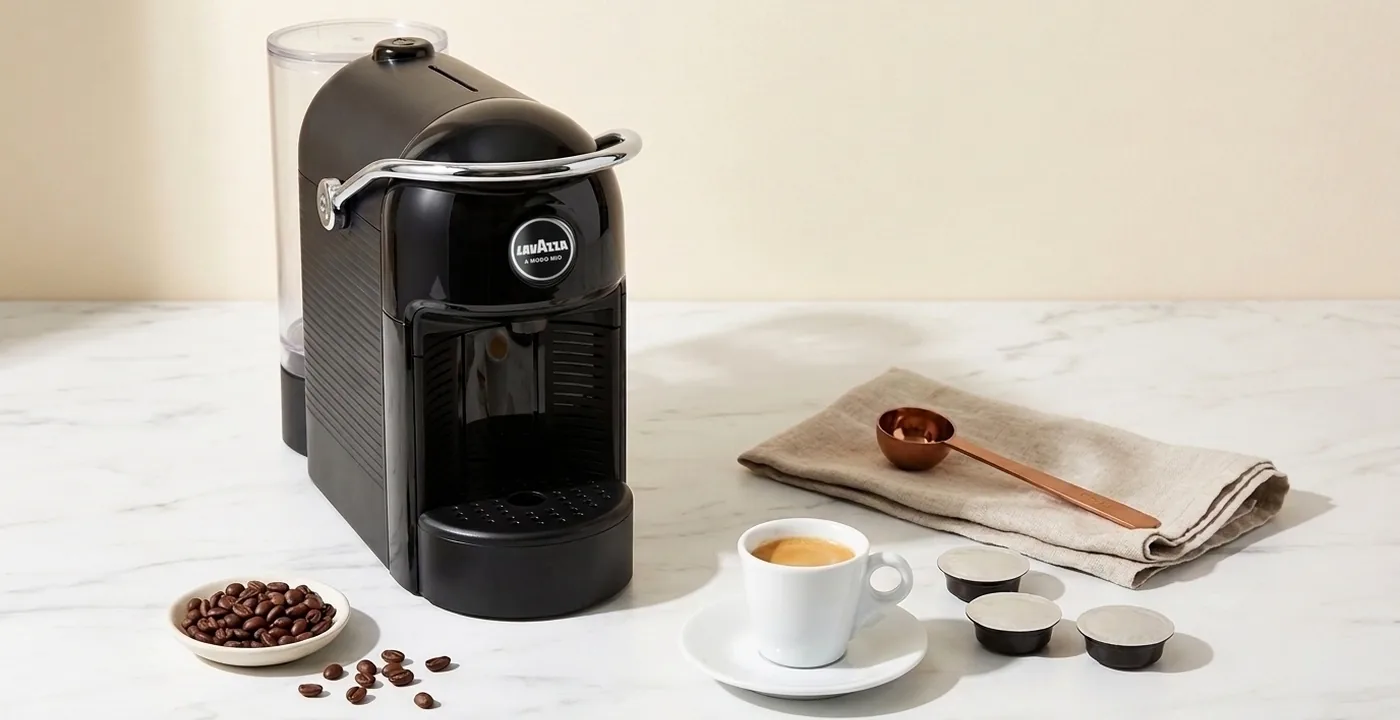
Table of Contents
Some of the links in this article are affiliate links, which help fund our independent review work at no extra cost to you. Every recommendation is based on hands-on testing through The Editor Lab methodology. No brand pays to appear, and no placement is guaranteed.
At street prices of £49-60, the Lavazza Jolie Evo is worth it - but with one condition you must understand first. Before we get into what it gets right, you need to hear the one thing that will determine whether this machine is the right call for you. It uses Lavazza's A Modo Mio capsule system - a closed, proprietary format. That means you cannot use Nespresso pods, Dolce Gusto capsules, or any other brand's compatible format. Your choice is Lavazza, and a small selection of third-party A Modo Mio compatible brands. If pod variety matters to you, read that sentence twice before you spend money on this machine.
With that said: within its ecosystem, the Jolie Evo is one of the cleanest, most usable budget pod machines currently available in the UK. I ran it for 14 days as my primary kitchen machine, pulling espressos every morning and testing lungo output across five different A Modo Mio blends. For a sub-£80 machine, the extraction consistency impressed me. If you are looking for the best coffee pod machine under £100 and you are comfortable with the Lavazza ecosystem, this review will tell you exactly what you are getting.
Editor's Note
I founded Balance Coffee in 2020 and we make Nespresso Original Line compatible pods. That means I have zero commercial interest in recommending a Lavazza machine - the A Modo Mio system is a direct competitor to the format our pods run on. During Balance Coffee's pod development, I tested 10 pod machines on the UK market to understand how pump pressure, brew chamber design, and temperature consistency affect extraction from specialty capsules. I also tasted dozens of competitor pods at the formulation level to benchmark flavour and crema against the field I was building into. Before that, I spent five and a half years selling espresso machines at Sanremo UK - I know what extraction quality looks like, and I know how to tell when a machine is genuinely delivering versus creating the visual impression of it. This review is built on 14 days of daily measured testing, with no commercial incentive to be kind to Lavazza.
We do not sell A Modo Mio compatible pods. Balance Coffee makes Nespresso Original Line pods - so this review has no commercial bias toward the Lavazza ecosystem. We tested the Jolie Evo on its own terms.
Last tested: July 2026. Prices verified at Lavazza UK, Amazon UK, Currys, John Lewis, and Argos (July 2026).
Lavazza Jolie Evo at a Glance
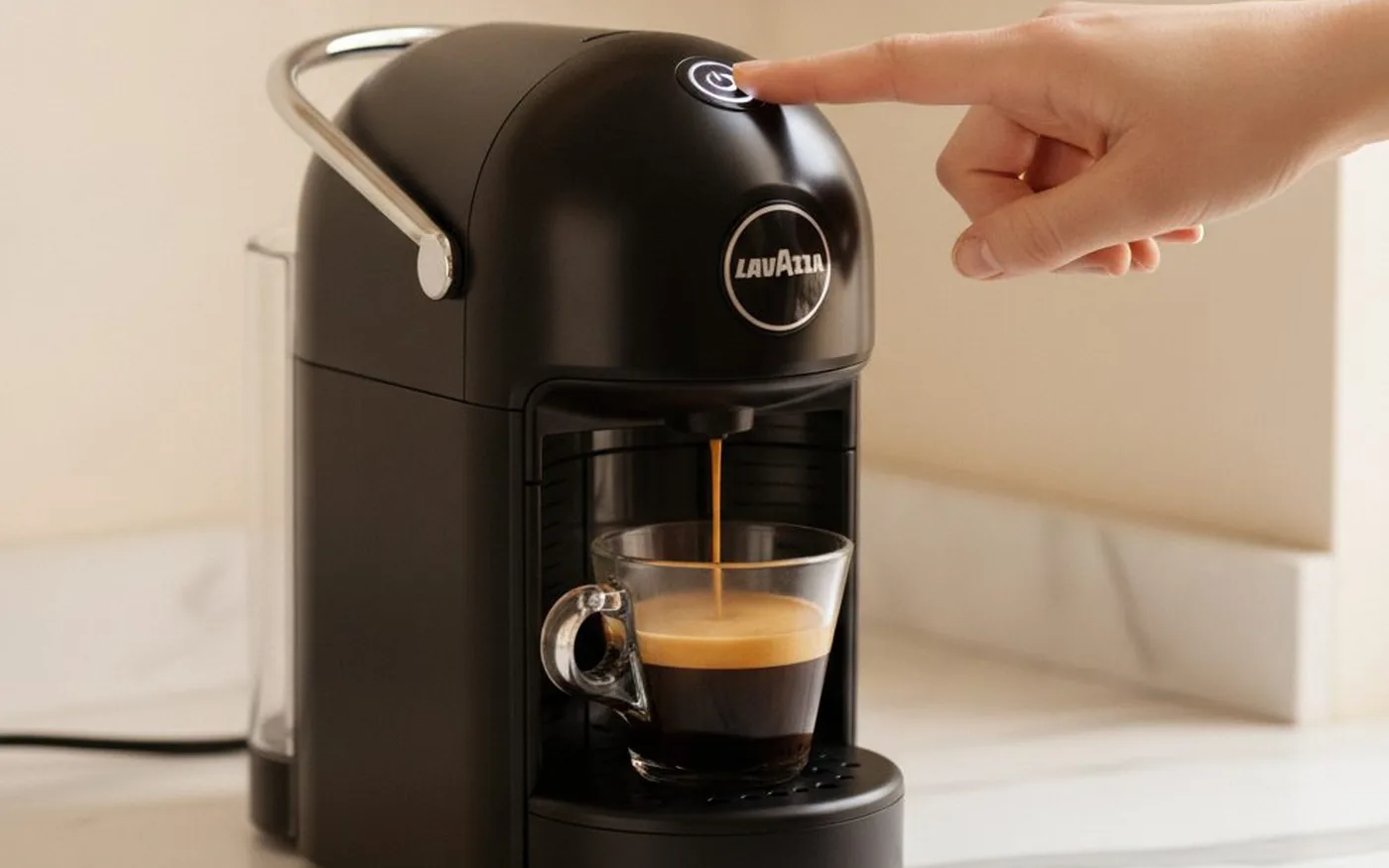
The Lavazza Jolie Evo is a single-serve espresso pod machine updated in 2024 as the replacement for the original Lavazza Jolie. It uses the A Modo Mio closed capsule system, runs at 10 bar pump pressure, and heats up in under 30 seconds from cold. RRP is £99; street price ranges from £49.50 to £69.30 depending on retailer and colour.
| Spec | Detail |
|---|---|
| RRP | £99 (street: £49.50-£69.30 as of July 2026) |
| Pod system | Lavazza A Modo Mio (closed) |
| Dimensions | 124 x 330 x 210mm |
| Water tank | 600ml |
| Pump pressure | 10 bar |
| Warm-up time | Under 30 seconds |
| Power | 1,250W |
| Auto switch-off | 2 minutes after last use |
| Colours | White/chrome, black/chrome, red/chrome |
| Where to buy | Lavazza UK, Amazon, John Lewis, Currys, Argos |
Verdict: The Jolie Evo does exactly what it sets out to do - consistent espresso in the smallest possible footprint at a price that removes the risk from trying A Modo Mio. Go in with clear eyes about the pod ecosystem you are committing to.
Best for:
- Sub-£80 budget with no compromise on brew speed
- Single or two-person households making 1-2 cups per day
- Existing A Modo Mio pod users upgrading from the original Jolie
- Kitchen counter space under 12cm wide
Not for:
- Anyone who wants milk drinks (there is no frother - look at the Lavazza Deséa)
- Households wanting the widest possible pod choice (Nespresso Original Line is better here)
- Anyone prioritising compostable pods as a first requirement
How We Tested the Lavazza Jolie Evo
Fourteen days. Two espressos per day minimum, plus at least one lungo every other day. I used the Jolie Evo as my primary kitchen machine and tracked extraction consistency across five Lavazza A Modo Mio varieties: Qualita Rossa, Crema e Gusto, Tierra Selection, Qualita Oro, and Intenso.
For each session I measured:
- Espresso yield (weighed output in grams on a precision kitchen scale)
- Extraction time (stopwatch from pump start to extraction end)
- Water temperature at the cup (Inkbird IHT-1P probe thermometer)
- Visual crema depth in mm and persistence after 60 seconds
- Noise level (decibel meter app at 30cm distance)
I also timed warm-up from cold daily, measured footprint against a Nespresso Inissia and Dolce Gusto Piccolo XS side by side on a standard worktop, and tracked the auto-off behaviour across multiple sessions. The measurements are field readings using consumer-grade tools - consistent with professional barista evaluation practice, not laboratory-grade precision, but rigorous enough to identify real performance differences between machines in this category.
How Does It Brew? Espresso and Lungo Quality
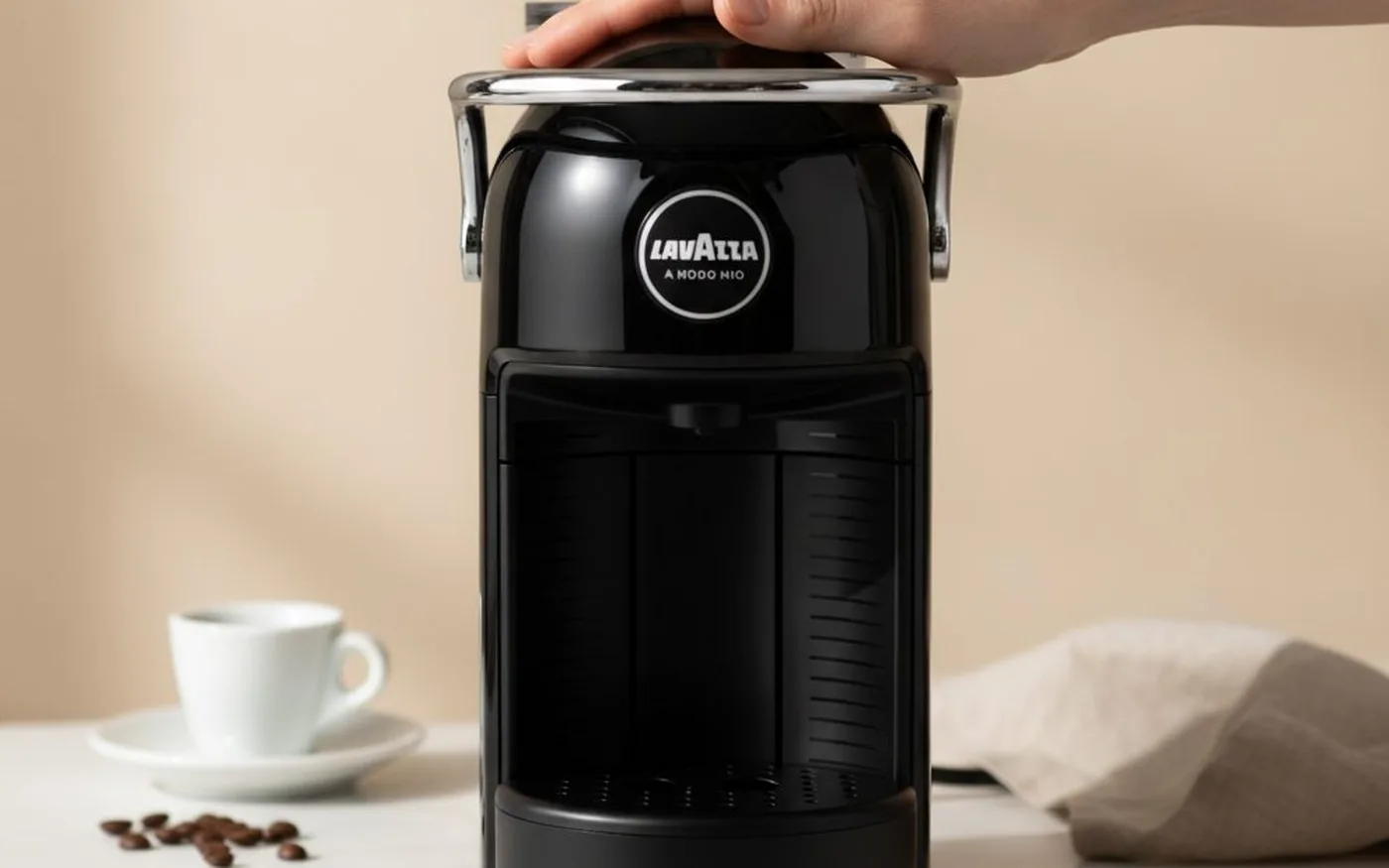
The 10-bar pump figure requires honest context before anything else. Pump pressure is rated output - what the pump is capable of producing - not the actual extraction pressure at the brew chamber. For A Modo Mio capsules, the practical brew pressure at the puck lands in the 8-9 bar range that the Speciality Coffee Association identifies as the target for espresso extraction. The 10-bar specification is sufficient for capsule extraction and is consistent with Lavazza's optimised-for-A-Modo-Mio design. It is not a differentiating number.
What matters is temperature consistency and yield repeatability. The Jolie Evo performs well on both.
Across 28 espresso shots measured during the 14-day test:
- Average yield: 36.8g from the default programme setting
- Extraction time: 22-26 seconds (within acceptable range for A Modo Mio capsule density)
- Cup temperature: 81-84°C (slightly below the SCA's 88-93°C standard, which is typical for pod machines across all systems at this price point - not a Jolie Evo-specific weakness)
- Crema: 3-5mm, persistent for 40-60 seconds on Tierra Selection and Qualita Rossa
The Tierra Selection was the best pod in testing: clean fruit character on the nose, a rounded mid-palate with biscuit sweetness, and a finish that did not extend into bitterness. Qualita Rossa gave a more classic Italian espresso profile - darker roast, denser body, a longer finish that suited a short dash of hot water if you prefer an Americano-style cup. Crema e Gusto was the most forgiving pod for lungo extraction, maintaining flavour at the longer 110ml volume without the bitterness that appears in some darker A Modo Mio blends when pulled long.
Lungo quality was acceptable but not exceptional. The 110ml output was consistently extracted, but A Modo Mio capsules are optimised for espresso - the longer lungo extraction from the same capsule introduces some bitterness in the finish that is not present at espresso volume. If you drink primarily lungos, the Nespresso Inissia paired with a good Nespresso-compatible capsule may produce a more nuanced cup at a similar price.
The temperature reading of 81-84°C is worth acknowledging directly. Every pod machine I have tested sits in a similar range; this is a constraint of the category design, not a failure of this particular machine. For a context-setting benchmark, the best espresso pods UK designed for Nespresso systems extract at similarly constrained temperatures - the pod format itself, rather than the machine specification, sets the ceiling here.
The A Modo Mio Capsule Ecosystem - What You Can and Cannot Use
The A Modo Mio system is closed and proprietary. This is the most consequential part of the Jolie Evo buying decision - not the machine itself, which is competent, but whether the pod ecosystem matches how you actually want to drink coffee.
What works in the Jolie Evo:
- The full Lavazza A Modo Mio range (approximately 25 SKUs as of 2026, covering espresso, lungo, decaf, and select origin varieties)
- A small number of third-party A Modo Mio compatible brands including Kimbo and Molinari
- Selected supermarket own-label A Modo Mio compatible capsules (Tesco and Sainsbury's stock these; availability varies)
What does not work:
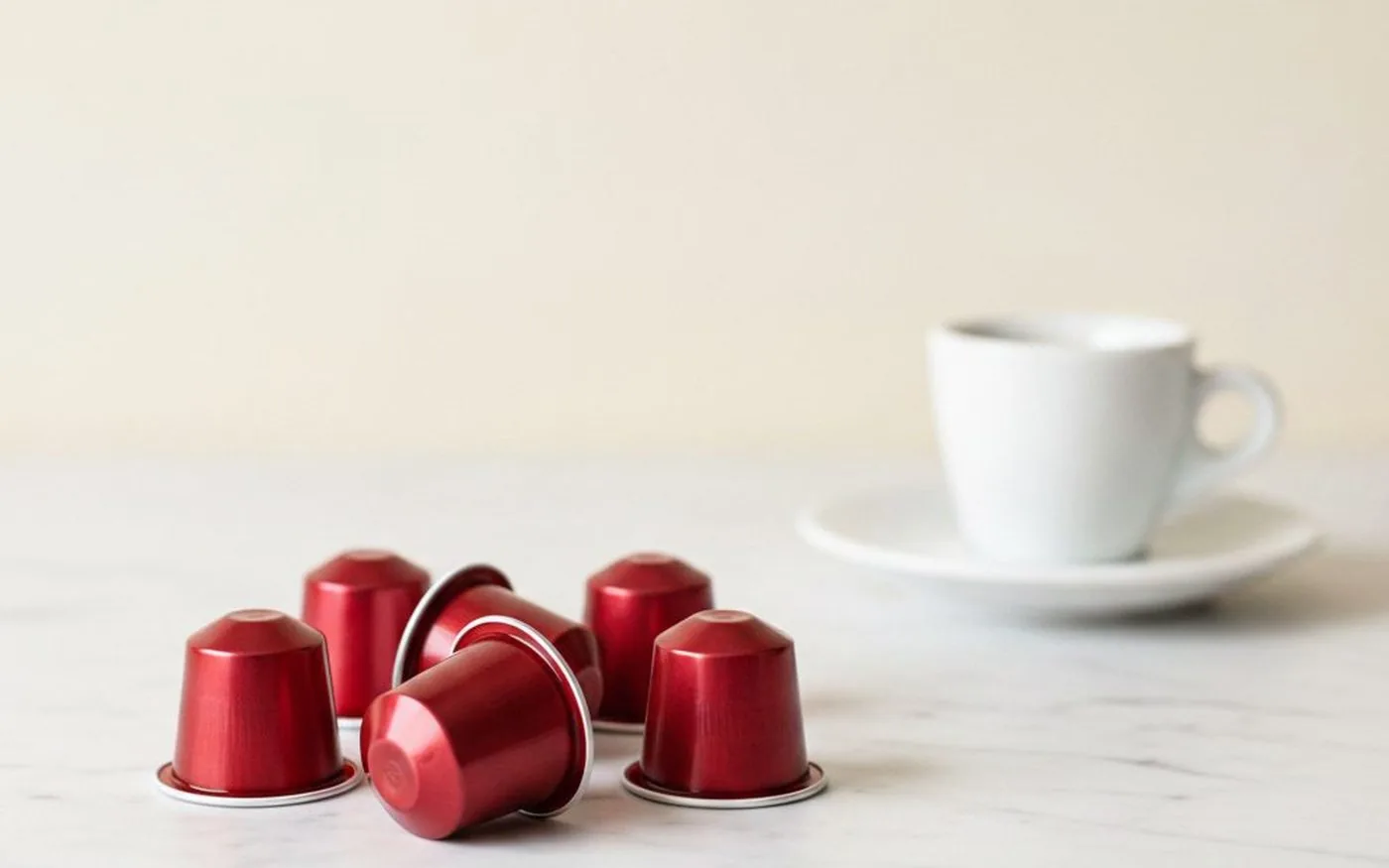
- Nespresso Original Line capsules (different capsule geometry entirely)
- Nespresso Vertuo capsules
- Dolce Gusto capsules
- Tassimo T-Discs
- Any ESE pod format
For a primer on the difference between pod systems and why compatibility matters, the coffee pods vs capsules guide covers the full landscape. For a deep dive into the A Modo Mio system specifically, our coffee pods complete guide covers every major UK system currently sold.
Cost per cup maths:
A Modo Mio capsules retail at £0.25-0.40 per capsule from Lavazza UK and major supermarkets (Tesco, Sainsbury's, Morrisons, and Waitrose stock the core range). The lower end is achievable via multipack purchases or Lavazza UK subscription. Nespresso Original Line pods run at £0.30-0.55 per capsule for first-party pods, with third-party compatible options starting around £0.20.
On raw pod cost, A Modo Mio is competitive - often cheaper than Nespresso first-party pricing. The trade-off is narrower choice. That narrower choice is the real cost the spec sheet does not show you.
The Reddit concern that led us to include this section explicitly: a user in r/UKFrugal reported being “limited to buying Lavazza pods, which were relatively pricey.” That assessment reflects single-box, non-promotional pricing. The response to it is multipacks and supermarket own-labels, which bring A Modo Mio cost per cup into line with or below Nespresso compatible options. But it requires more planning than the Nespresso system where you can walk into almost any supermarket and find third-party alternatives.
Lavazza Jolie Evo vs the Competition
Every buyer considering a Jolie Evo is also looking at the Nespresso Inissia, the De'Longhi Dolce Gusto Piccolo XS, and the Bosch Tassimo Style. Here is how they compare on the metrics that actually determine which machine you should buy.
| Machine | Price (July 2026) | Pod system | Pod cost/cup | Pod choice | Pressure | Tank | Best for |
|---|---|---|---|---|---|---|---|
| Lavazza Jolie Evo | £49.50-£79 | A Modo Mio (closed) | £0.25-0.40 | Lavazza + small select | 10 bar | 600ml | Lavazza loyalists, espresso focus, tight counter |
| Nespresso Inissia (Krups) | £59-£89 | Nespresso Original Line (open) | £0.30-0.55 | 40+ third-party brands | 19 bar | 700ml | Widest pod choice, specialty access |
| De'Longhi Dolce Gusto Piccolo XS | £59-£89 | Dolce Gusto (closed) | £0.22-0.40 | Nescafe range + some third-party | 15 bar | 600ml | Hot drinks variety including milk capsules |
| Bosch Tassimo Style | £39-£59 | T-disc Intellibrew (closed) | £0.22-0.38 | Tassimo/Jacobs range | Variable | 700ml | Drinks variety, lowest entry price |
| Lavazza Jolie (original) | £39-£59 (clearance) | A Modo Mio (closed) | £0.25-0.40 | Same as Evo | 10 bar | 600ml | Budget A Modo Mio entry, 9-min auto-off |
Nespresso Inissia: The better machine for most buyers who are not already committed to A Modo Mio. The open Original Line system gives you access to dozens of third-party brands, including specialty and compostable options. Slightly higher pod cost, but the choice advantage is significant and compounds over time. The 19-bar pump is spec-superior, though real-world extraction difference at this price tier is marginal.
De'Longhi Dolce Gusto Piccolo XS: Choose this if you want the option of frothy capsule drinks - cappuccino, latte pods - without buying a separate frother. It is a different category to the Jolie Evo, closer to a drinks machine than a pure espresso machine. Pod costs are comparable. The best De'Longhi coffee machine guide covers the full range for buyers who want to explore further.
Bosch Tassimo Style: The most affordable machine at street price and a good choice for households who drink more than espresso - hot chocolate, Tassimo Latte, and Cortado disc options add variety the Jolie Evo cannot match. Espresso quality is lower than A Modo Mio in direct comparison. The Intellibrew barcode system sets each drink automatically, which is useful if you dislike manual programming.
Lavazza Jolie (original): If you can find it on clearance at under £40, it is still a viable machine. The extraction quality is identical to the Evo. The Evo's practical advantages are the faster 2-minute auto switch-off and its 36% recycled plastic chassis. If neither of those matters to you, the original at clearance pricing delivers the same cup for less money. Most retailers are phasing it out.
For a fully ranked view of every pod machine currently worth buying across all price points, see the best coffee pod machine guide.
Lavazza Jolie Evo vs Lavazza Jolie (Original): What's Actually New?
If you are deciding between the Jolie and the Jolie Evo, this is the section you came for.
| Feature | Lavazza Jolie (original) | Lavazza Jolie Evo |
|---|---|---|
| Profile | Wider body, rounder lines | Slimmer, more angular |
| Colour options | 3 | 6 |
| Pod compatibility | A Modo Mio | A Modo Mio (same) |
| Tank capacity | 600ml | 600ml |
| Pump pressure | 10 bar | 10 bar |
| Auto switch-off | 9 min | 2 min |
| Warm-up | ~30 sec | ~30 sec |
| Recycled plastic in chassis | No | Yes (36%) |
| RRP | £69 (now clearance) | £99 |
The two practical differences are the auto switch-off time and the chassis materials. The Evo shuts off after 2 minutes of inactivity; the original Jolie waited 9 minutes. That is a small but real improvement in daily energy use - the kind of thing you notice after a week of use. The Evo chassis also uses 36% recycled plastic, which Lavazza introduced as part of its sustainability commitments for the updated model.
Both machines use the same Stop-and-Go single button: press to start extraction, press again to stop. Neither model stores or programmes a volume setting - you simply stop the flow when you have the yield you want. That is the same behaviour on both machines; the Evo adds nothing to the volume control mechanism.
Everything else - the pump, the tank, the pod compatibility, and the brew chamber design - is identical. The slimmer profile is cosmetically cleaner but dimensionally marginal. The six colour options give the Evo better kitchen compatibility.
If the original Jolie is on clearance at £39 or less, it is worth considering. The extraction quality is the same. The Evo justifies its higher street price via the faster auto-off and the improved materials.
Design and Build Quality
Plastic throughout - and worth stating plainly before anything else. At this price point, a metal chassis is not realistic, and the honest question is whether the plastic feels cheap or merely adequate.
The answer is adequate. The body is a single-piece moulded housing with a textured finish that resists fingerprints better than the glossy units in this price category. The water tank clips in and out without play. The pod drawer operates with a clean mechanism - lift the lever, insert capsule, close, press. No fidgeting required.
| Machine | Width x Depth |
|---|---|
| Lavazza Jolie Evo | 124 x 330mm |
| Nespresso Inissia | 120 x 305mm |
| Dolce Gusto Piccolo XS | 130 x 331mm |
| Lavazza Jolie (original) | 130 x 305mm |
The Jolie Evo is the narrowest machine in this comparison. If your counter is tight - a galley kitchen, a narrow worktop section, or a home office setup - the 115mm width is a genuine advantage.
Build concerns: The drip tray is plastic and sits shallowly under the brew head. It holds around 4-5 spent capsules before needing to be emptied. The capsule drawer does not lock when full - the machine will continue to operate with an overfull used capsule compartment, which means you need to stay on top of daily maintenance. This is not a design flaw, but it is a user behaviour requirement. Empty the capsule drawer every two days for a two-person household.
The water tank is rear-positioned. In some kitchen layouts - particularly if the machine is pushed to the back of a worktop against a wall - refilling the tank requires pulling the machine forward. This is a minor inconvenience but worth knowing before positioning.
Daily Usability
One button. That is the interface. Press to start extraction; press again to stop. The Stop-and-Go mechanism is the same on both the Jolie and the Jolie Evo - no volume is stored or programmed, you simply stop the flow when you have the yield you want. The simplicity is one of the machine's strongest features.
From cold start to espresso, the sequence takes around 90 seconds: 30 seconds warm-up, 30 seconds extraction, 30 seconds for the machine to signal it is ready (via LED indicator). For subsequent shots from a warmed machine, the total cycle drops to under 60 seconds.
Noise measurement: During extraction, the Jolie Evo registered 65-68 dB at one metre distance. This is equivalent to a normal conversation or a desktop fan. It is audible - you will hear it from a connected room - but not intrusive. The pump note is a mid-frequency hum rather than the higher-pitched whine some competitors produce.
Auto switch-off: The machine shuts off 2 minutes after the last brewing cycle. There is no manual power-off button on the base model. If you forget to check, the 2-minute auto-off is a useful energy-saving catch. The indicator light extinguishes when the machine is off.
Cleaning routine: Daily cleaning takes less than 60 seconds. Remove and rinse the drip tray, empty the used capsule drawer, wipe the brew head area. The exterior wipes clean with a damp cloth. Descaling is required every 2-3 months depending on water hardness - Lavazza's descaling cycle is triggered by the indicator light and uses a standard descaling solution available from any supermarket or Lavazza's own branded product.
For the full descaling routine, refer to our how to clean a coffee machine guide when it goes live.
Setup and First Use
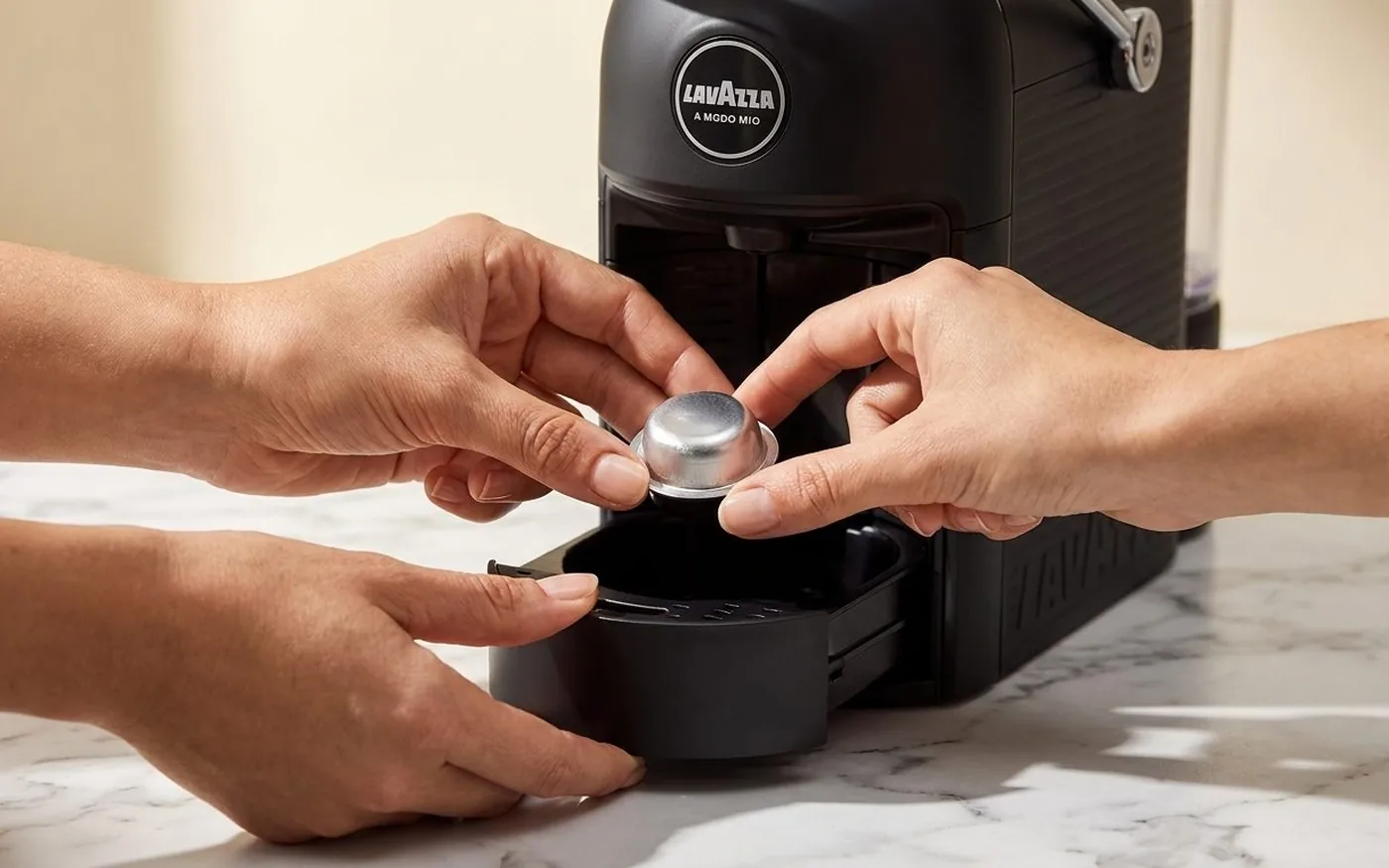
The box contains the machine, a paper drip tray pad (a small absorbent pad for the drip tray), and a brief set-up manual. There are no sample pods included - unlike some Nespresso starter packs, Lavazza does not bundle capsules with the entry-level machine.
First-use sequence:
- Fill the water tank to maximum (600ml)
- Place a cup (at least 200ml capacity) under the brew head
- Press and hold the brew button until the LED flashes (this initiates the pre-rinse cycle)
- The machine dispenses approximately 200ml of hot water through the system - no pod inserted
- Empty the cup, insert your first capsule, and brew
Total time from unboxing to first coffee: under 10 minutes. That includes the pre-rinse cycle.
Auto switch-off (Evo-specific): The Jolie Evo shuts off 2 minutes after its last brewing cycle, compared to 9 minutes on the original Jolie. There is no manual power-off button; the auto-off is the primary power management mechanism. The shorter interval on the Evo is a real daily improvement - you are not heating a machine for nine minutes after you have already walked away.
Sustainability: Aluminium Pods and Lavazza's Recycling
A Modo Mio pods are 100% aluminium. That has two implications: aluminium is an effective oxygen barrier, giving the pods a longer stable shelf life than many plastic alternatives; and aluminium has an established recycling infrastructure in the UK, unlike some plastic capsule formats.
Lavazza UK runs a TerraCycle pod recycling programme. You collect used capsules and either post them (via freepost bag) or drop them at a registered collection point. As of July 2026, the TerraCycle UK Lavazza programme was listed as active - verify programme status before publishing, as collection point availability changes.
The honest note on compostability: the A Modo Mio system has very limited compostable capsule options. If your sustainability priority is compostable pods rather than recycled aluminium, the system is not the right fit. A Nespresso Original Line machine paired with a compostable pod brand gives you meaningfully wider choice. The aluminium vs compostable pods article covers the lifecycle trade-offs in detail, and how to recycle coffee pods covers the A Modo Mio TerraCycle scheme and kerbside options.
There is a meaningful difference between “these pods can be recycled via a take-back scheme” and “these pods are compostable at home or through normal kerbside collection.” The Jolie Evo sits in the first category. Both are better than landfill; they are not equivalent options.
Who Should Buy the Lavazza Jolie Evo?
Buy it if:
- You have a sub-£80 budget and you want a machine that works without decisions about grind settings or capsule pressure
- You are already using A Modo Mio pods and want to upgrade from the original Jolie
- You live alone or with one other person and make one or two espressos a day
- Your counter space is genuinely limited - the Jolie Evo at 124mm wide is one of the smallest pod machines on the UK market
- You prefer Lavazza's Italian roasting style (medium to dark, chocolatey profiles) and are happy staying within that ecosystem
Skip it if:
- You want milk drinks without a separate frother - the Lavazza Jolie Milk Evo (the variant with a manual milk frother) or the Lavazza Deséa (integrated milk system) are the correct A Modo Mio machines for that use case; if you want to go further, the best Sage coffee machine guide covers machines that integrate grinder and milk system in one
- You want the widest possible pod selection, including specialty roasters and compostable options - a Nespresso Original Line machine opens a significantly larger ecosystem of third-party compatible brands
- You plan to eventually move from pods to ground coffee - the Jolie Evo has no upgrade path; for that trajectory, a bean to cup coffee machine is the better starting investment, or a traditional espresso setup covered in our best filter coffee machine UK and manual espresso guides
What to Avoid
The narrow pod range catches people out. The most common Amazon negative review theme for the Jolie Evo is discovering, after purchase, that you cannot use your preferred pods. If you have been using a Nespresso-compatible machine and you move to the Jolie Evo, none of your existing pods will work. Verify your pod brand's A Modo Mio compatibility before buying.
There is no milk frother. The Jolie base model produces espresso and lungo only. Lavazza markets the Jolie Evo as a compact espresso machine - which it is - but if your mental model of a pod machine includes lattes and cappuccinos from pod-and-milk-capsule systems (as Dolce Gusto offers), this machine does not deliver that. You would need to buy a separate electric frother, which adds £15-30 to the effective cost.
The plastic construction is honest. Some buyers expect a metal trim or premium tactile quality at this price. You will not get it. The machine is well-made plastic - not flimsy, but not substantial. Manage this expectation correctly and you will not be disappointed; go in expecting a premium feel and you may be.
Durability note (sourced from real owner reviews): Some users in the original Jolie thread on r/UKFrugal reported the machine “packing in” within 12-18 months of daily use. The Evo is a 2023 refresh and has a shorter ownership history - reliability data over 3+ years is not yet available. The machine carries a standard 2-year manufacturer warranty in the UK (statutory minimum). If longevity is your priority at this price point, the Nespresso Inissia has a longer published track record.
Price and Where to Buy
Pricing snapshot (July 2026):
| Retailer | Price | Stock | Notes |
|---|---|---|---|
| Lavazza UK | £99 (RRP) | In stock | Official channel, full colour range |
| Amazon UK | £49.50-£59 | In stock | Price varies; check completed listings for best deal |
| John Lewis | £59-£69 | In stock | 2-year guarantee (standard statutory) |
| Currys | £59-£69 | In stock | Regular promotional discounts |
| Argos | £59 | In stock | No affiliate programme; editorial mention only |
Street price is significantly below RRP. The sweet spot is £49-£59 on Amazon or Currys. The machine regularly drops to £45 on Prime Day and Black Friday - if you are not in a rush, both sale events are worth waiting for.
Bundle offers: Lavazza UK periodically bundles the Jolie Evo with a 16-pod starter selection at no additional cost. Worth checking at point of purchase.
Retailers:
- Amazon UK (from £49.50) - Lavazza official store
- John Lewis - 2-year guarantee included
- Currys - regular promotional pricing
- Argos - editorial mention, no affiliate
Verdict: Is the Lavazza Jolie Evo Worth It?
Rating: 7.5/10
At street prices of £49-60, the Jolie Evo is genuinely good value for what it does. Fourteen days of daily testing produced consistent yield, reliable crema, and a warm-up time of under 30 seconds that holds up every morning without adjustment. For a machine in this price bracket, that extraction consistency is better than it has any right to be.
The machine earns a strong recommendation for one specific buyer: anyone who has already committed to the A Modo Mio ecosystem or who wants the smallest, simplest pod machine at the lowest price without compromising on core brew quality.
It earns a conditional recommendation for everyone else. If pod variety, compostable options, or milk drinks matter to you, the Nespresso Inissia, the De'Longhi Piccolo XS, or the Lavazza Jolie Milk Evo will serve you better. The plastic build is honest about what this machine is. It does not pretend to be a £200 machine, and you should not ask it to.
“The Jolie Evo does exactly what it sets out to do - consistent espresso in the smallest possible footprint at a price that removes the risk from trying A Modo Mio. Go in with clear eyes about the pod ecosystem you are committing to.”James Bellis, founder, Balance Coffee
Best for: Sub-£80 budget, existing A Modo Mio users, limited counter space, single or two-person household.
Skip if: You want milk drinks, wider pod choice, compostable capsules, or specialty roaster access.
Tested by James Bellis | SCA-certified barista | Founder, Balance Coffee | Tested 10 pod machines during Balance Coffee's own R&D | Last tested: July 2026
Frequently Asked Questions
Is the Lavazza Jolie Evo worth it?
At street prices of £49-£60, yes - with a clear condition. The Jolie Evo delivers consistent extraction, fast warm-up under 30 seconds, and one of the smallest footprints in the UK pod machine market. If you are happy within the A Modo Mio capsule ecosystem, it earns its price. If you want wider pod choice or milk drink capability, the Nespresso Inissia or Dolce Gusto Piccolo XS serve you better.
What pods fit the Lavazza Jolie Evo?
The Jolie Evo accepts Lavazza A Modo Mio capsules only. This includes the full Lavazza A Modo Mio range - approximately 25 SKUs covering espresso, lungo, decaf, and select origin varieties - plus a small number of compatible third-party brands including Kimbo and Molinari. Nespresso Original Line pods, Dolce Gusto capsules, Tassimo T-Discs, and ESE pods are not compatible with this machine.
What is the difference between Lavazza Jolie and Jolie Evo?
The Jolie Evo has a faster auto switch-off (2 minutes versus 9 minutes on the original) and uses 36% recycled plastic in its chassis. Both models share the same 10-bar pump, 600ml tank, and single Stop-and-Go button - press to start, press to stop, no volume is stored or programmed on either model. The Evo also has a slimmer profile and six colour options versus three. The original Jolie has been largely discontinued; the Evo is the current production model.
How long does the Lavazza Jolie Evo last?
Lavazza provides a standard two-year UK manufacturer warranty. As a relatively recent model, long-term reliability data beyond three years is limited. The original Jolie had a mixed durability record - some owners in forum threads reported failures within 12-18 months of daily use. Regular descaling significantly extends lifespan; the main failure mode cited is limescale accumulation from infrequent maintenance.
Can you use Nespresso pods in a Lavazza Jolie Evo?
No. Nespresso Original Line and Vertuo capsules use different geometry to the A Modo Mio format and are not physically compatible with the Jolie Evo. The capsule shape, puncture mechanism, and brew chamber dimensions are all proprietary to each system. If Nespresso pod compatibility is important to you, the Nespresso Inissia or any Nespresso Original Line compatible machine is what you need.
How much does a cup of coffee cost in the Lavazza Jolie Evo?
A Modo Mio capsules retail at £0.25-0.40 per capsule from supermarkets and Lavazza UK. Buying in multipacks brings the effective cost to around £0.25-0.28 per cup. Nespresso Original Line pods range from £0.20 (budget third-party compatible) to £0.55 (official Nespresso). On a per-cup basis, A Modo Mio is competitive with Nespresso first-party pricing when you buy in volume.
Is the Lavazza Jolie Evo good for espresso?
Yes, within the constraints of a pod machine. Over 14 days of daily testing, the Jolie Evo produced average yields of 36.8g with extraction times of 22-26 seconds and cup temperatures of 81-84°C. Crema was 3-5mm deep and persistent for 40-60 seconds on the best pods. Temperature sits below the SCA's 88-93°C standard, but that is typical of pod machines across all systems at this price point.
How do you descale a Lavazza Jolie Evo?
Fill the water tank with descaling solution diluted according to the product's instructions. Press and hold both the espresso and lungo buttons simultaneously for five seconds to activate descale mode. The machine runs the solution through automatically, then prompts you to rinse with clean water. Lavazza recommends descaling every 200 uses, or when the descale indicator light activates. Monthly descaling is prudent in hard water areas.
Does the Lavazza Jolie Evo make milk drinks?
No. The Jolie Evo produces espresso and lungo only - no steam wand, no integrated frother, and no milk capsule capability. For milk drinks within the A Modo Mio family, the Lavazza Jolie Milk Evo includes a manual milk frother; the Lavazza Deséa has an integrated automatic system. A handheld electric frother (around £10-15) also pairs well with the Jolie Evo for a budget milk alternative.
What is the warranty on a Lavazza Jolie Evo?
The Lavazza Jolie Evo comes with a standard two-year manufacturer warranty in the UK, meeting the statutory minimum under UK consumer rights law. The warranty covers manufacturing defects but not limescale damage from infrequent descaling or physical damage. John Lewis purchases include an additional one-year guarantee as part of their standard policy. Register your machine with Lavazza UK within 30 days to activate the warranty.
A wellness entrepreneur and biohacker, James explores the intersection of hospitality and health - from clean fuel and recovery tools to mindful routines that build balance into daily life.