Best Sage Coffee Machine UK
Tested the full Sage espresso range over years of professional and home use. Which machine is actually worth buying in 2026, from Bambino Plus to Oracle Touch.
Table of Contents
Some of the links in this article are affiliate links, which help fund our independent review work at no extra cost to you. Every recommendation is based on hands-on testing through The Editor Lab methodology. No brand pays to appear, and no placement is guaranteed.
During my years at Sanremo UK, the road took me into roasteries from Edinburgh to Exeter, almost every week for five and a half years. The pattern I saw most consistently was this: a professional machine worth £15,000 or more behind the espresso bar, and a Sage on the roaster's kitchen counter at home. The same people pulling competition-standard shots at work were choosing Sage for everything they made for themselves. Seeing that from the inside, as someone selling Sanremo equipment to those same buyers, told me something useful about what Sage gets right at the domestic level.
The question this guide answers is not whether Sage is worth it. You have already decided on the brand. You are working out which machine. Across all our coffee machines coverage, Sage generates more questions than any other single brand in the category. The range spans £399 to over £2,000 across nine current machines in 2026, and each serves a genuinely different buyer. There are also models in the lineup that represent questionable value relative to the machine sitting right beside them. This guide covers both. If you are earlier in the decision, start with our overview of coffee machine types.
We have tested the Sage range over several years, including hands-on time with the Barista Pro, Barista Express, and Bambino Plus at professional and home settings. Prices were verified from Sage UK product range and John Lewis as of April 2026. The best Sage coffee machine for most home users is the Sage Barista Pro: it delivers the highest extraction quality ceiling in the core range without charging you for workflow automation you may not need.
Quick Comparison: Best Sage Coffee Machine at a Glance
Prices correct as of April 2026. Verify before buying. Sage revises pricing regularly.
Top 3 Best Sage Coffee Machines
| Rank | Machine | Approx. Price | Best For | Our Score |
|---|---|---|---|---|
| 1 | Sage Barista Pro | £750 | Serious home baristas, learning espresso | 9.2/10 |
| 2 | Sage Barista Express | £600 | One-machine workflow, built-in grinder | 8.8/10 |
| 3 | Sage Oracle Touch | £2,000 | Fully automated premium espresso | 8.8/10 |
| 4 | Sage Barista Express Impress | £700 | Auto-tamping upgrade on Barista Express | 8.7/10 |
| 5 | Sage Bambino Plus | £399 | Complete beginners | 8.5/10 |
| 6 | Sage Oracle | £1,699 | Hands-off semi-automatic espresso | 8.5/10 |
| 7 | Sage Creatista Plus | £500 | Nespresso-compatible with real milk | 8.3/10 |
| 8 | Sage Barista Touch Impress | £1,000 | Touchscreen with auto-tamping | 8.2/10 |
| 9 | Sage Barista Touch | £900 | Touchscreen interface | 8.0/10 |
“I spent five and a half years as Sales and Marketing Manager at Sanremo UK, one of the espresso machine manufacturers competing directly with Sage in the UK market. During that time I was trained by authorised Sanremo engineers on PID control, multi-boiler systems, and temperature stability. I visited over 280 UK roasteries on the road and saw how serious home baristas use Sage equipment at the prosumer level alongside professional commercial machines. I also own a Sage Barista Pro, bought for my parents during lockdown and dialled in over weeks of daily use in their kitchen. I know this range from the engineering side and the consumer side simultaneously.”James Bellis, founder, Balance Coffee
How We Tested
The Sage range is assessed here from two positions most reviews do not occupy simultaneously: someone trained by espresso machine engineers on the systems Sage builds into these machines, and someone who has lived with the Barista Pro in a real home environment over weeks of daily use. Each machine in this guide was assessed through The Editor Lab, Balance Journal's structured evaluation framework for coffee equipment. Dimensions include extraction quality across espresso and milk drinks, grinder calibration, heat-up performance, build quality, and the learning curve for new users. Where direct testing is supplemented by professional assessment of machine architecture, that is stated clearly in the relevant section. Which? independently tests these machines against consumer standards; our assessment adds a layer of technical evaluation informed by manufacturer-side training.
Sage Bambino vs Bambino Plus: Which Should You Buy?
Before you read the individual Bambino Plus section below, this comparison matters if you are deciding between the two Bambino models.
At approximately £200, the standard Sage Bambino gives you the same 54mm portafilter, the same thermocoil heating, and the same manual steam wand as the Bambino Plus. The price difference - roughly £200 less - is real and meaningful if your budget is tight. What you give up is the auto milk texturing system. On the standard Bambino, you hold the jug and manage the wand yourself from the start. On the Bambino Plus, the machine does that step for you automatically.
For someone who has no intention of developing steam wand technique and wants consistently textured milk without learning how, the Bambino Plus is worth the extra spend. The auto texturing produces reliable results for flat whites and lattes with no practice required. If you are confident you will learn the wand - or if you already know how to use one - the standard Bambino saves you £200 that could go towards a grinder.
One practical detail worth flagging: both machines include a pressurised basket and a non-pressurised basket. The pressurised basket works with pre-ground coffee and forgives a lot. The non-pressurised single-wall basket is where you will eventually want to work, but it requires freshly ground coffee to extract correctly. This is not a Bambino Plus limitation - it applies to both models.
If your budget is £200, buy the standard Bambino. If your budget is £350 to £400 and milk drinks matter to you, buy the Bambino Plus. The Bambino section below covers the Bambino Plus specifically because it represents the better long-term purchase for most buyers.
Best Sage Coffee Machine for Beginners: Sage Bambino Plus
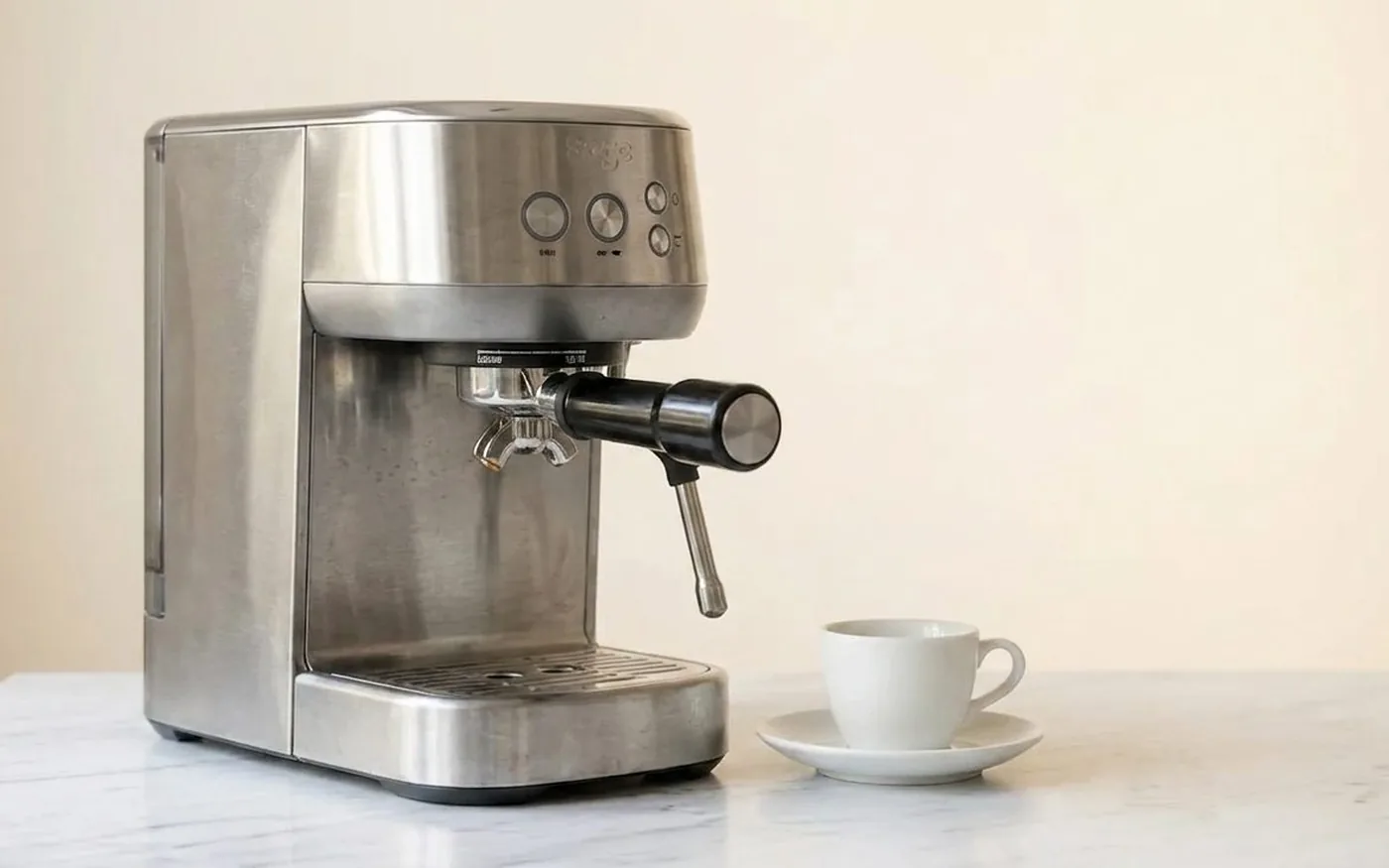
At around £399, the Bambino Plus is where most people entering the Sage range should start. The price point is low enough that you are not overcommitting before you know how much espresso at home will actually become part of your routine. The machine is capable enough that it will not limit you in the first year of use.
Two things drive most new buyers to this machine specifically. First, the auto milk texturing system means you do not need to learn steam wand technique in week one. Flat whites and lattes come out consistently textured without the muscle memory that manual steaming requires. Second, the non-pressurised basket is included in the box, which means you can progress to freshly ground single-wall extraction without buying additional accessories. Most entry-level machines make you buy that upgrade separately.
Plan for one thing before you pull your first shot: the pressurised basket that ships as the default is designed to work with pre-ground coffee and forgive inconsistencies in grind size and dose. It produces decent espresso. The non-pressurised basket produces noticeably better espresso, but it requires freshly ground coffee and a reasonably consistent dose to extract cleanly. Most buyers discover the difference within the first four to six weeks of daily use. If you are already planning to invest in a grinder alongside the Bambino Plus, this progression happens faster than you expect. If you are relying on pre-ground, use the pressurised basket until you are ready to upgrade the coffee first. For grinder pairings and what the freshly ground difference actually feels like in the cup, our Sage Bambino comparison covers this in detail.
I have worked on commercial machines - Sanremo Opera, La Marzocco, Victoria Arduino - where the boiler runs at considerably higher pressure than anything in the domestic Sage range. The honest framing on the Bambino's steam wand is this: lower pressure does not mean more forgiving. It means a slower feedback loop. On a commercial wand, the higher pressure gives an experienced barista faster, more responsive milk texturing. On the Bambino Plus auto system, the machine removes that variable from the equation entirely - which is exactly the right decision for the buyer this machine is built for. Do not think of the auto texturing as a step down from a commercial wand. Think of it as a different tool for a different context.
At £399 with the non-pressurised basket and auto milk texturing included, the value-per-pound in the Bambino Plus is the strongest of any machine in the Sage range.
| Spec | Detail |
|---|---|
| Boiler | Single thermocoil |
| Portafilter | 54mm |
| Built-in grinder | No |
| Auto milk texturing | Yes |
| Heat-up time | around 30 seconds |
Best Sage Coffee Machine for Home Baristas: Sage Barista Express
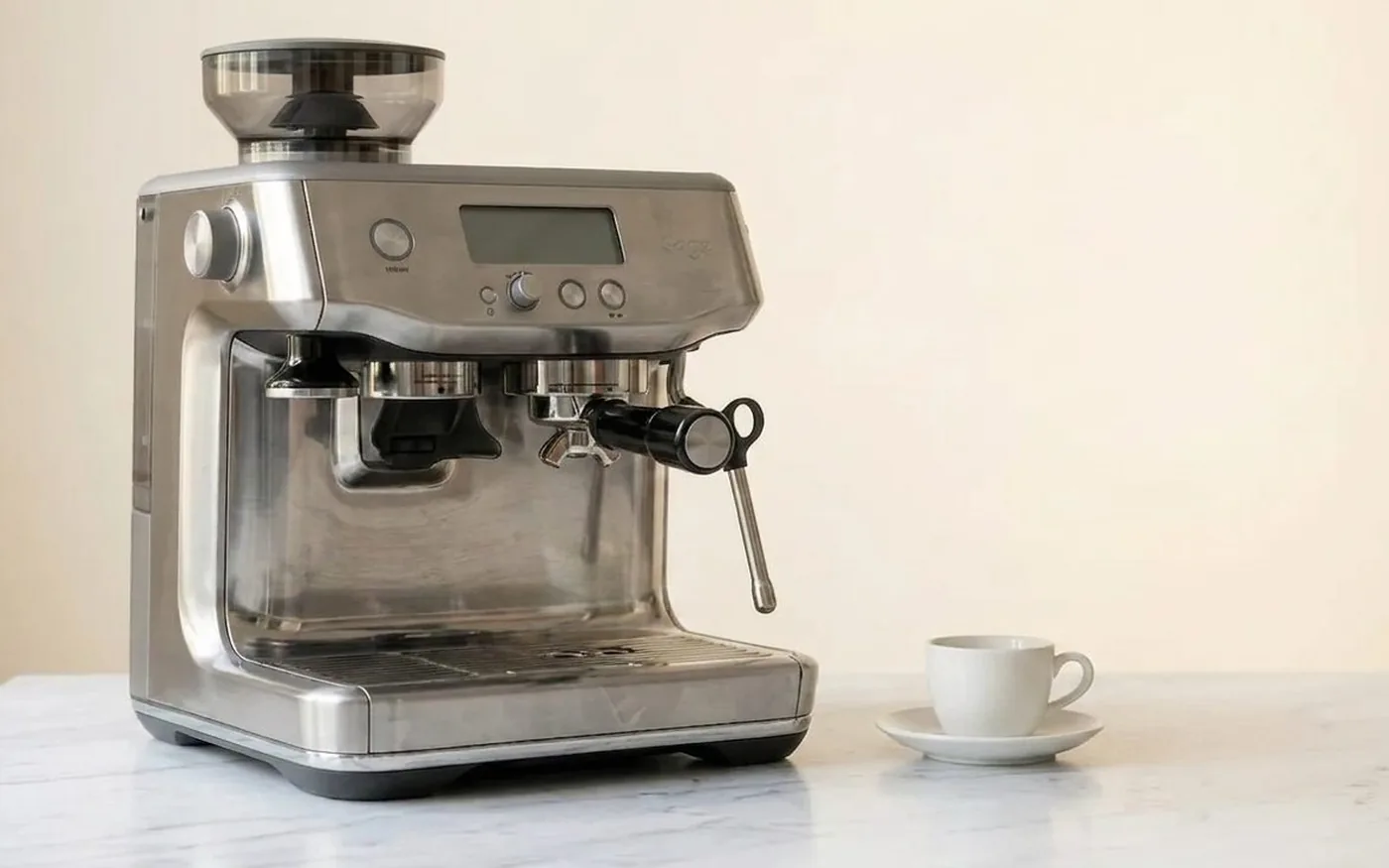
Can you have freshly ground espresso without a second appliance on your counter? The Barista Express answers that question by integrating a conical burr grinder directly into the machine body. One footprint, one power cable, one purchase covers everything from whole bean to finished espresso. For buyers weighing a Bambino Plus plus a separate grinder, the arithmetic lands at a combined spend of roughly £480 to £550 depending on the grinder. The Barista Express at £600 is a genuine alternative at that number, not a stretch.
The built-in grinder is not the strongest standalone unit available at this price if you were spending the same on a dedicated grinder. You will not get the particle distribution consistency of a Baratza Encore or similar. What you get is good enough: consistent, freshly ground espresso that outperforms anything pre-ground, with dose control that becomes intuitive within a few sessions. Dialling it in does take time. That learning curve is part of the value, and our Sage Barista Express review covers the calibration process shot by shot if you want the detail.
Here is the tradeoff worth understanding before you commit: the thermocoil heating system means the machine switches between brew and steam modes. You feel that pause. On a busy morning, making three milk drinks back to back, the mode-switching accumulates into a real workflow friction point. It is not a dealbreaker for a single-person household or for someone who pulls one espresso at a time. For a two- or three-person household where everyone wants a latte and nobody wants to wait, the Barista Pro addresses this with a different heating architecture entirely.
Think of the Barista Express as the right machine if you want to own one thing, learn on it properly, and not spend more than £600. It produces genuinely good espresso and teaches you the grind-dose-extract relationship because you make those adjustments manually. For buyers who know they want to progress beyond the basics, the Barista Pro section below is worth reading before you decide.
| Spec | Detail |
|---|---|
| Boiler | Single thermocoil |
| Portafilter | 54mm |
| Built-in grinder | Yes (conical burr) |
| Milk texturing | Manual steam wand |
| Heat-up time | around 3 minutes |
Best Upgrade: Sage Barista Express Impress
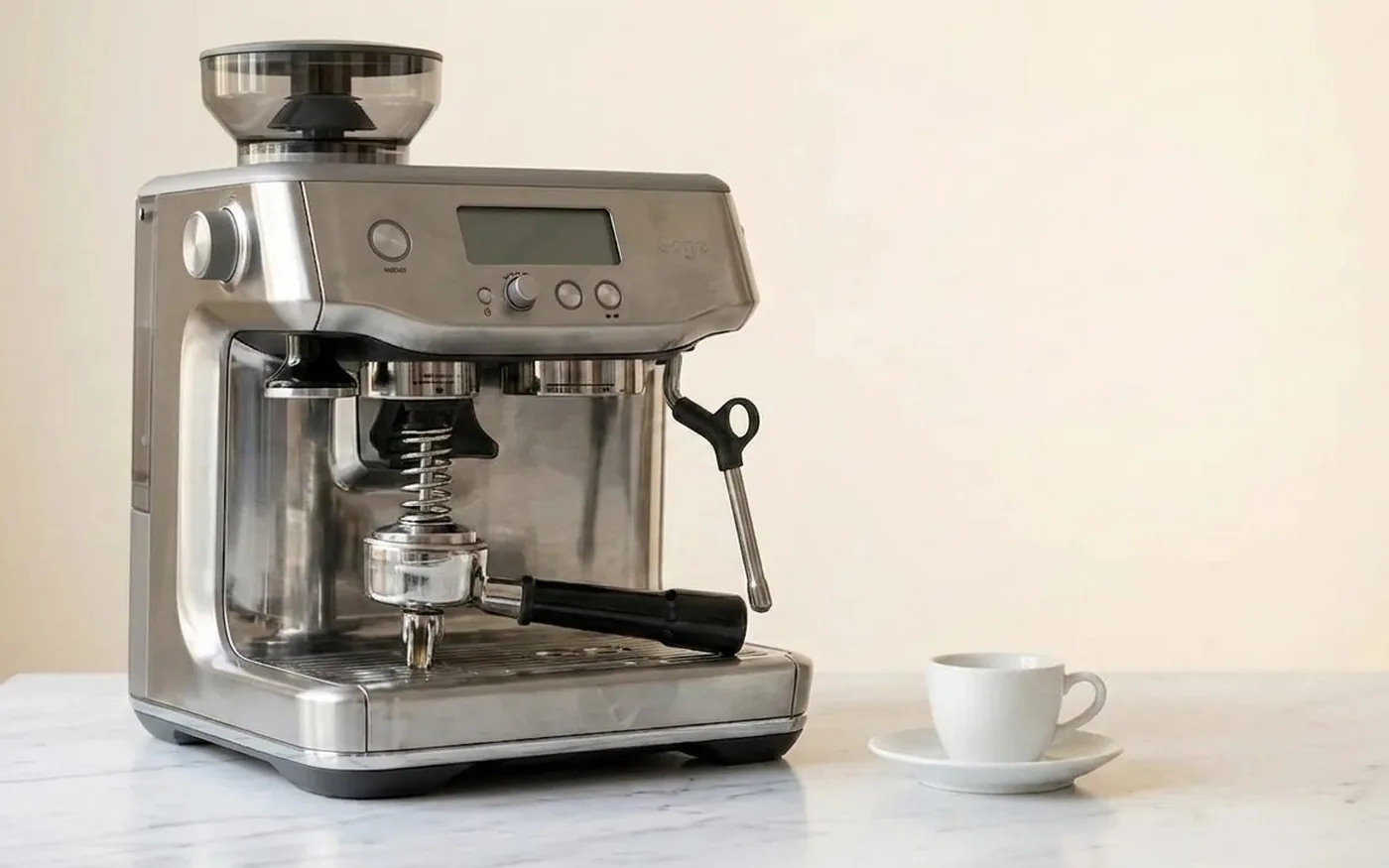
Why does tamp consistency matter more than most home espresso guides admit? Because when you tamp unevenly, the water finds the path of least resistance through the puck. The shot channels. The extraction is uneven. The cup tastes thin on one side and over-extracted on the other - and most beginners blame the coffee rather than their technique. The Barista Express Impress solves this by integrating an auto-tamper directly into the grinder output, applying a consistent 10kg of pressure with a seven-degree twist before the grounds reach the portafilter. That variable disappears.
For a buyer stepping up from a pressurised basket machine - or addressing inconsistency they can taste but cannot trace - the £100 premium over the standard Barista Express earns its place quickly. Shot quality becomes more consistent across different hands on the machine. For a household where more than one person makes coffee, that matters more than it might seem when you are evaluating specs alone. The sage barista express impress review will cover the tamping mechanism in full technical detail when it publishes. The short version: it works as described, the consistency improvement over a manual tamp at the beginner and intermediate level is measurable, and the spring-loaded mechanism ages well in testing.
Where the Impress argument weakens is for buyers who have already developed reliable manual tamping. If you can consistently apply level, 15kg tamping pressure and your shots are still variable, the inconsistency is coming from somewhere else - grind distribution, dose weight, or puck preparation. The auto-tamper cannot fix those variables. At £700, this machine also sits within £50 of the Barista Pro. If your priority is extraction quality rather than tamping convenience, the Barista Pro section below is worth reading before you choose.
The Barista Express Impress uses the same thermocoil heating system as the standard Barista Express. The brew-to-steam mode pause applies here equally. You gain tamping consistency and lose nothing else compared to the Express.
| Spec | Detail |
|---|---|
| Boiler | Single thermocoil |
| Portafilter | 54mm |
| Built-in grinder | Yes (conical burr) |
| Auto-tamping | Yes (Impress system, 10kg, 7-degree twist) |
| Milk texturing | Manual steam wand |
Best Sage Coffee Machine for Advanced Home Use: Sage Barista Pro
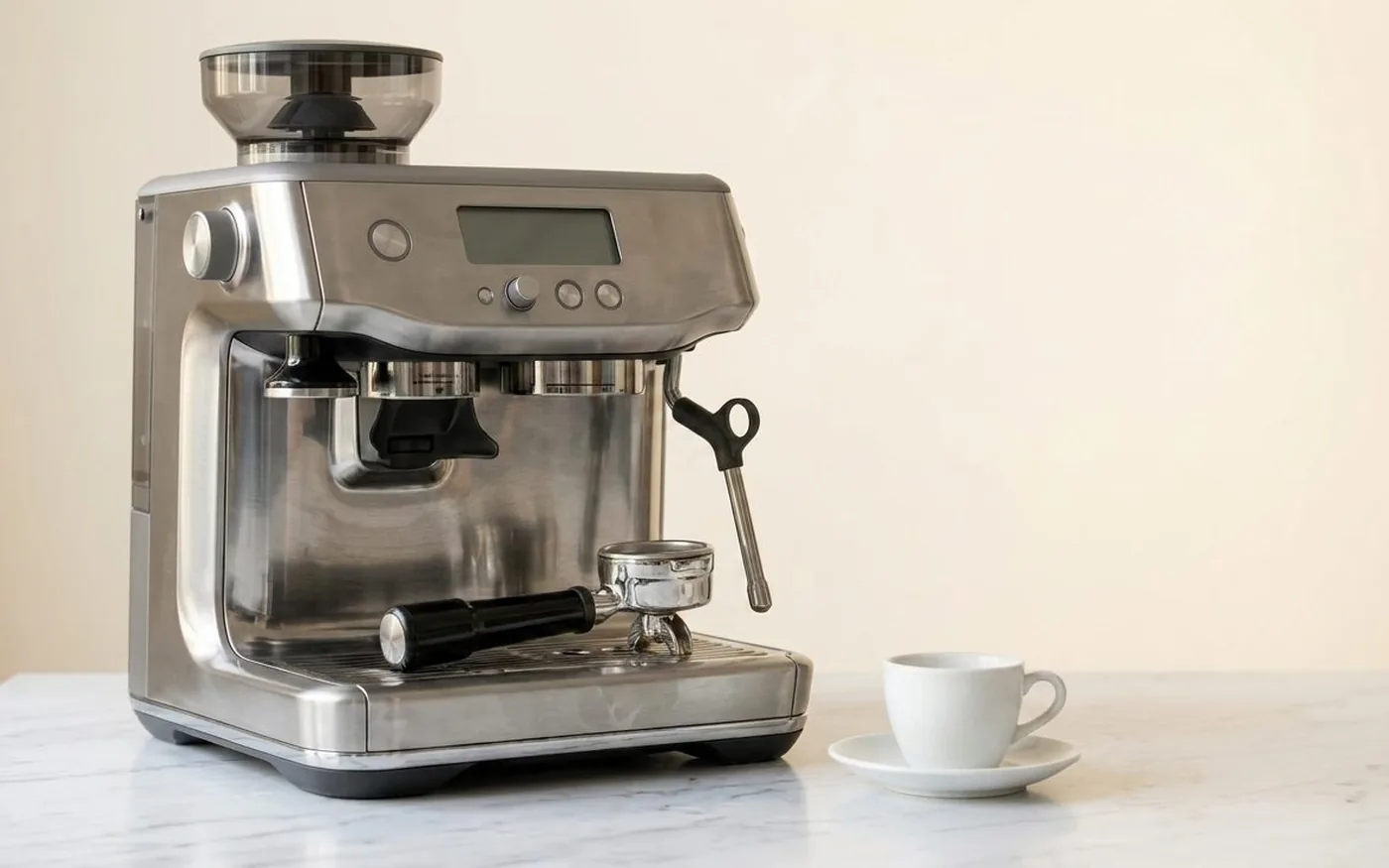
The Barista Pro is the machine I bought for my parents during lockdown and spent several weeks dialling in at their kitchen counter. That experience gave me something most reviews of this machine cannot offer: an understanding of how it performs for a non-expert user in a real home environment, alongside the technical training I already had from Sanremo on the engineering principles behind machines like it.
What separates the Pro from the Barista Express is the ThermoJet heating system. It reaches brew temperature in around three seconds and switches between brew and steam modes without the noticeable pause you feel on thermocoil machines. For a household pulling multiple milk drinks in a session, the difference is immediately apparent. In practice, it changes how the morning routine feels: you steam milk while the shot pulls rather than waiting for the machine to catch up. The Barista Pro also offers more individual grind settings than the Barista Express - 30 settings versus the Express's 18 - which gives you finer calibration over particle size when dialling in a new coffee. That extra granularity matters more than the spec sheet suggests when you are working with a light roast and chasing extraction precision.
This is where extraction quality in the Sage range genuinely increases, not just workflow convenience. The ThermoJet's temperature stability is measurably better than the thermocoil systems below it. When I ran the Barista Pro through extended daily use in my parents' kitchen, the consistency shot to shot was noticeably tighter than what you get from the Barista Express at equivalent grind settings - particularly on lighter roasts where temperature variance shows up most clearly in the cup. The full technical assessment of that testing is in our Sage Barista Pro review.
The Barista Pro is the machine I would put in front of most buyers who are serious about espresso. It rewards the time you invest dialling it in. It does not automate away the variables you want to learn to control. And it gives you the thermal performance to work with the full range of specialty coffees, not just the forgiving medium roasts that make any machine sound good. For beans that justify this machine's extraction capability, our best coffee beans UK guide is the starting point.
| Spec | Detail |
|---|---|
| Boiler | Single ThermoJet |
| Portafilter | 54mm |
| Built-in grinder | Yes (conical burr, 30 settings) |
| Milk texturing | Manual steam wand |
| Heat-up time | around 3 seconds |
Best Touchscreen Sage Machine: Sage Barista Touch
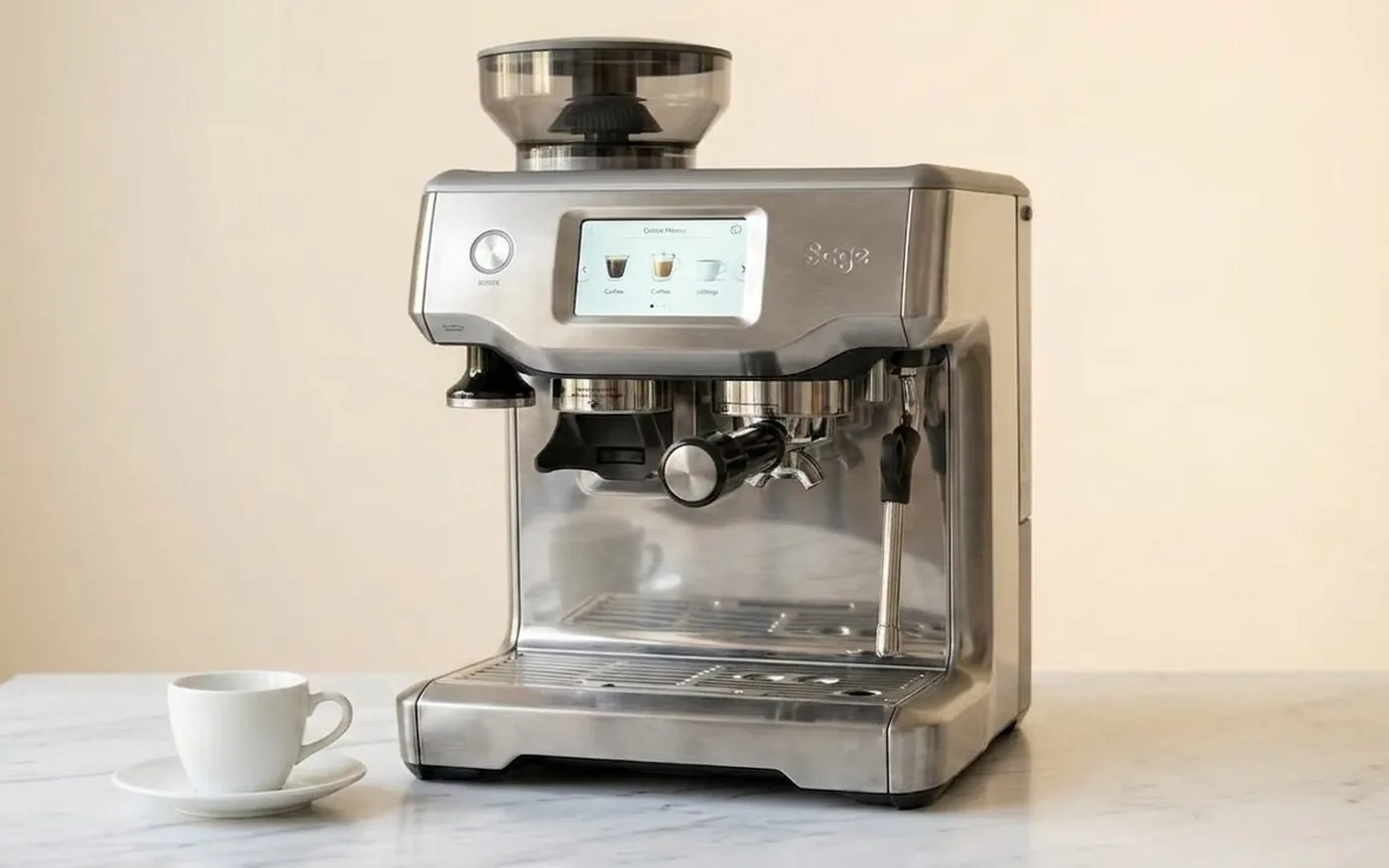
The friction moment worth naming directly: the espresso quality ceiling on the Barista Touch is no higher than the Barista Pro at nearly £200 less. The machine internals are the same - ThermoJet heating, the same grinder, the same portafilter. What changes is the interface. The 4.3-inch colour touchscreen lets you save up to eight drink profiles, navigate settings without entering any menus, and run the guided start function that walks new users through the extraction workflow step by step.
For a specific type of household, that interface difference is worth the premium. If you share the machine with people who would not engage with the Barista Pro's dial-and-button navigation, and if the thought of explaining grind settings to a partner or flatmate every morning is genuinely part of your calculus, the Barista Touch earns its position. The saved drink profiles mean each person's preferred espresso volume, milk ratio, and grind setting is stored and repeatable at a single tap. For households where multiple people want good coffee from the same machine without learning how to dial in extraction settings manually, that is a real functional improvement - not just a cosmetic one.
Where the argument for the Touch weakens is in the context of extraction quality development. The touchscreen guided mode is less useful as a learning environment than the Barista Pro's manual approach, because the machine handles settings decisions you would benefit from making yourself in the early months of ownership. If your goal is to become a better home barista, the Pro's interface teaches you more. If your goal is consistently good coffee with minimal daily friction for everyone in the household, the Touch makes a stronger case.
At £900 versus the Barista Pro's £750, you are paying for interface convenience and profile storage. The espresso in the cup is equivalent when both machines are dialled in correctly. The sage barista touch review will walk through this comparison in full when it publishes.
| Spec | Detail |
|---|---|
| Boiler | Single ThermoJet |
| Portafilter | 54mm |
| Built-in grinder | Yes |
| Touchscreen | Yes (4.3-inch colour) |
| Saved drink profiles | Yes (up to 8) |
Best Touchscreen Upgrade: Sage Barista Touch Impress
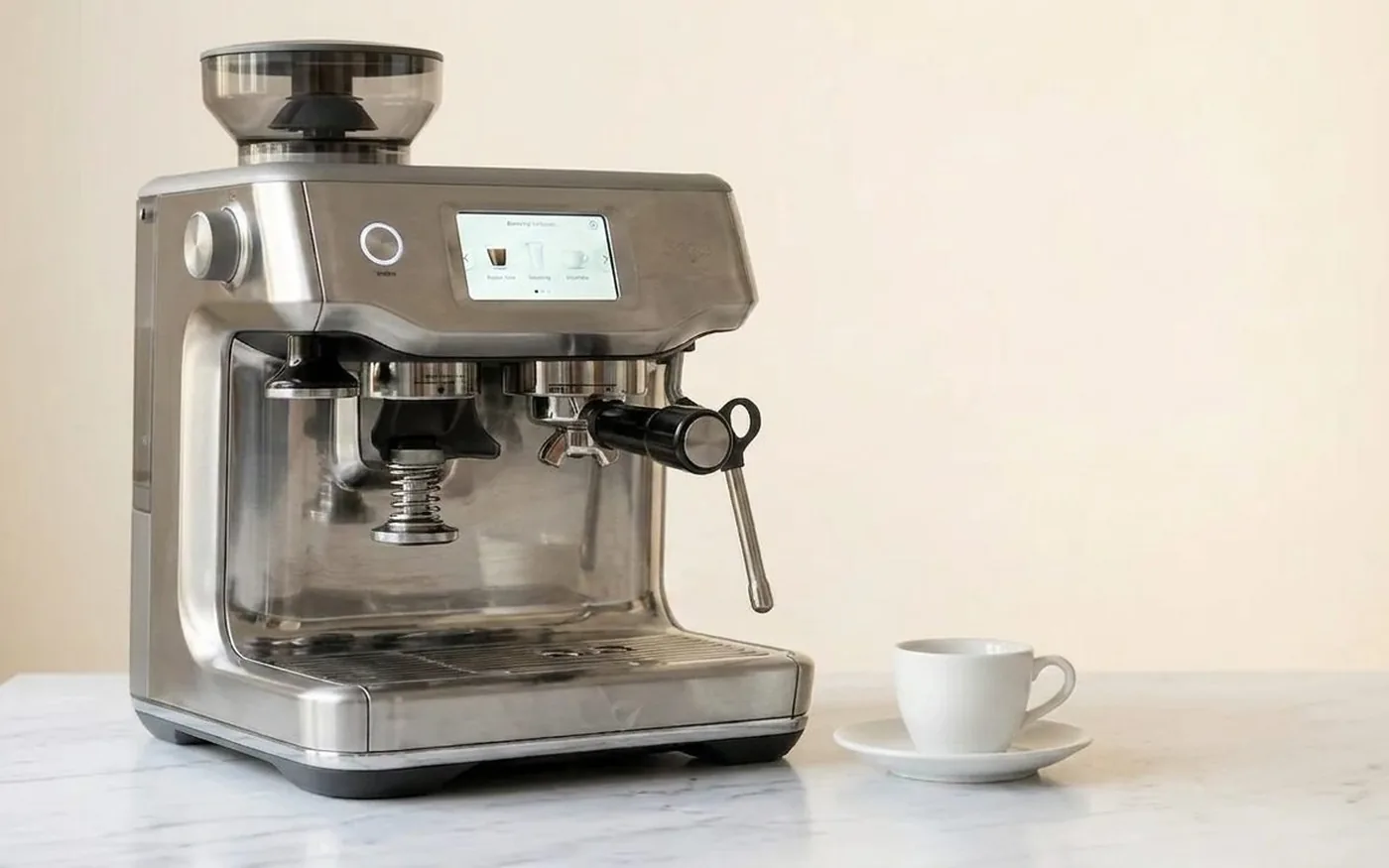
At around £1,000, the Barista Touch Impress combines the Barista Touch's touchscreen interface with the Impress auto-tamping mechanism from the Barista Express Impress. The combination is coherent: if you want guided workflow from a touchscreen machine and find consistent manual tamping difficult, this machine removes both sources of friction simultaneously. The auto-tamping handles puck preparation, the touchscreen handles profile selection, and you manage extraction through a clean interface without manual settings navigation.
Buyers at this price point often find themselves comparing the Barista Touch Impress against the Oracle range. That comparison deserves a direct answer: at £1,000, you are £699 away from the Oracle. The Oracle adds automatic grinding, dosing, and tamping alongside Auto MilQ hands-free milk texturing - a fundamentally different level of automation where the machine prepares the full drink sequence rather than just removing one manual step. If the Barista Touch Impress appeals because you want to reduce manual involvement, the honest question is whether the extra £700 would eliminate the remaining friction entirely. The Oracle section below addresses that.
This machine also includes cold extraction capability, which lets you pre-infuse coffee with cold water before the standard brew cycle for a smoother, less bitter extraction profile. It is a useful feature for warm weather drinking or for buyers who find standard espresso too sharp - but it requires pre-planning (ice and pre-infusion time) rather than on-demand pull like standard espresso.
The extraction quality ceiling for the Barista Touch Impress remains equivalent to the Barista Pro and the standard Barista Touch. At £1,000 you are paying for convenience of operation, not meaningfully better espresso. If you want genuinely different espresso performance and are spending this much, consider the Oracle section.
| Spec | Detail |
|---|---|
| Boiler | Single ThermoJet |
| Portafilter | 54mm |
| Built-in grinder | Yes |
| Auto-tamping | Yes (Impress system) |
| Touchscreen | Yes |
| Cold extraction | Yes |
Cold Extraction and Specialist Modes: What You Need to Know
Two machines in the current Sage range - the Barista Touch Impress and the Oracle Touch - include cold extraction modes not found in the rest of the lineup. It is worth understanding what these do before they factor into your buying decision.
Cold extraction on the Barista Touch Impress involves pre-infusing ground coffee with cold water before the standard extraction cycle runs. The result is a smoother, lower-bitterness espresso concentrate suited to serving over ice or as the base of a cold milk drink. It is not a cold brew process - it takes minutes, not hours. The tradeoff is that it requires advance preparation: chilled water, pre-infusion time, and a willingness to plan rather than pull on demand. For a specific buyer profile - someone who makes iced lattes daily and values a less bitter base - this is genuinely useful. For most buyers, it is a feature they will use occasionally.
The Oracle Touch's cold extraction operates at the same principle but within a fully automated workflow. Neither machine produces instant cold brew. Both require some setup. If cold drinks are a priority rather than an occasional use case, this feature is worth factoring in. If not, neither machine's cold extraction capability should carry significant weight in your decision.
Best Semi-Automatic: Sage Oracle
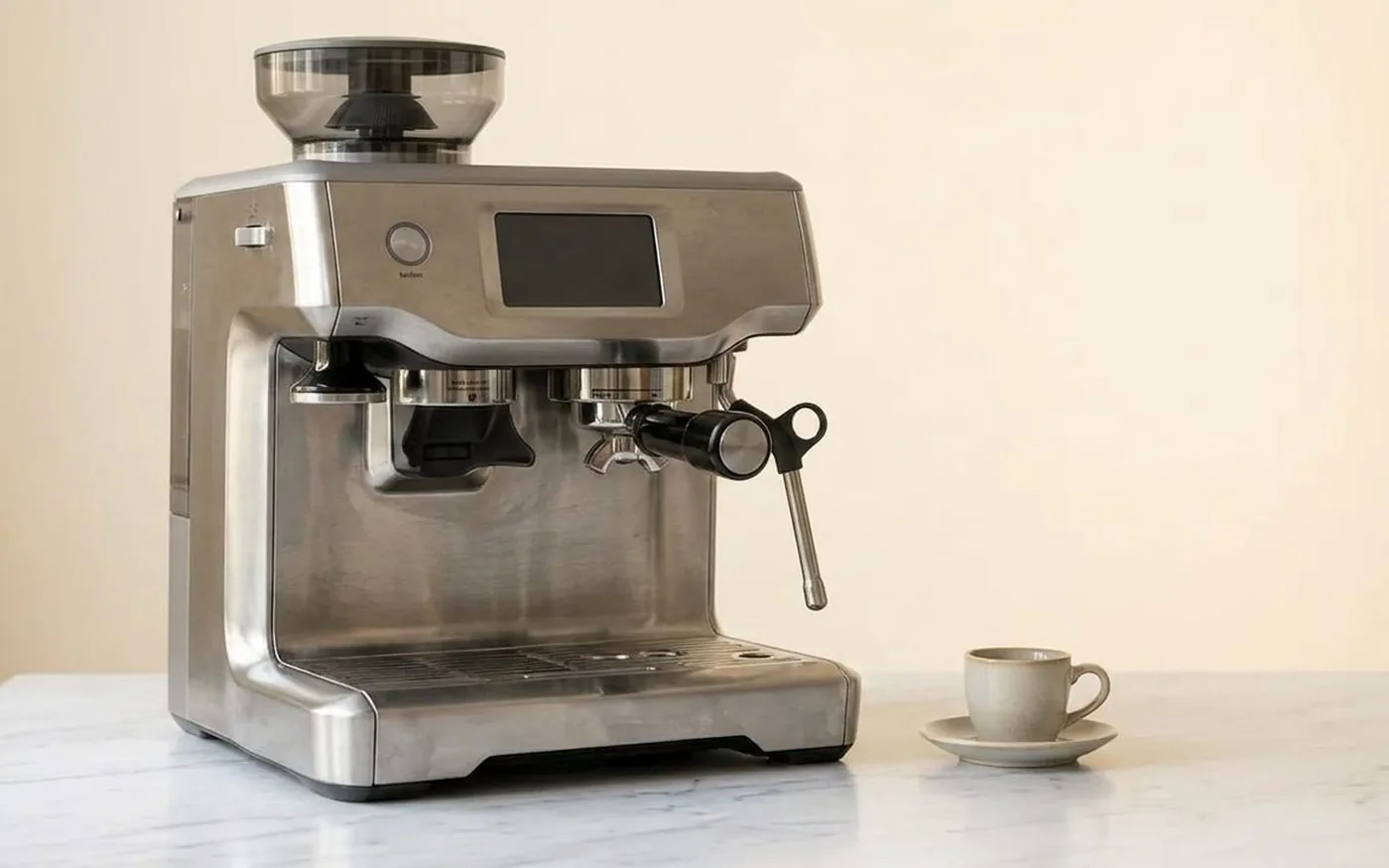
The Oracle marks the point in the Sage range where the machine begins managing the three most variable steps of espresso preparation automatically. It grinds to your set dose, distributes the grounds, and applies consistent tamping pressure before the portafilter locks in. Extraction remains in your hands. That division of responsibility is deliberate and well-suited to a specific buyer: someone who understands espresso well enough to want clean, consistent puck preparation without performing it manually, but who still wants to manage the extraction itself.
The current model is the 2025 Oracle Jet, updated from the previous dual-boiler Oracle. It runs on ThermoJet heating - two sequential ThermoJet elements rather than the true simultaneous dual boiler of the Oracle Touch. In practice, this means brew and steam operate sequentially rather than at the same time. For most users making one or two drinks at a time, this is not a significant limitation. For a household regularly producing multiple milk drinks in one session, the distinction between sequential and simultaneous matters and is worth understanding before you spend £1,699.
The Auto MilQ milk texturing system handles steaming without you holding the jug. You set your milk temperature and texture preference, and the machine produces consistent results automatically while you manage the espresso side. At the Oracle price point, this automation combination - auto-grinding, auto-dosing, auto-tamping, Auto MilQ - is coherent. You retain control over the most important variable (extraction) while removing the variables most home baristas manage least consistently.
The friction moment with the Oracle is worth working through honestly: this is a machine that takes over decisions an experienced home barista would want to make themselves. If your goal is to develop espresso skills and build an intuition for the grind-dose-tamp relationship, the Barista Pro remains the better teacher. The Oracle removes that feedback loop with automation - which is a genuine advantage if you already understand espresso and want consistent results without the full setup process each time. The full comparison appears in the sage oracle review when it publishes.
At £1,699, the Oracle also introduces a 58mm portafilter - the commercial standard - versus the 54mm across every machine below it. That portafilter upgrade is meaningful for extraction evenness at higher dose weights.
| Spec | Detail |
|---|---|
| Boiler | ThermoJet (sequential) |
| Portafilter | 58mm |
| Auto-grinding | Yes |
| Auto-dosing and tamping | Yes |
| Milk texturing | Auto MilQ (hands-free) |
| Interface | 5-inch touchscreen |
| Manual extraction control | Yes |
Best Premium Sage Machine: Sage Oracle Touch
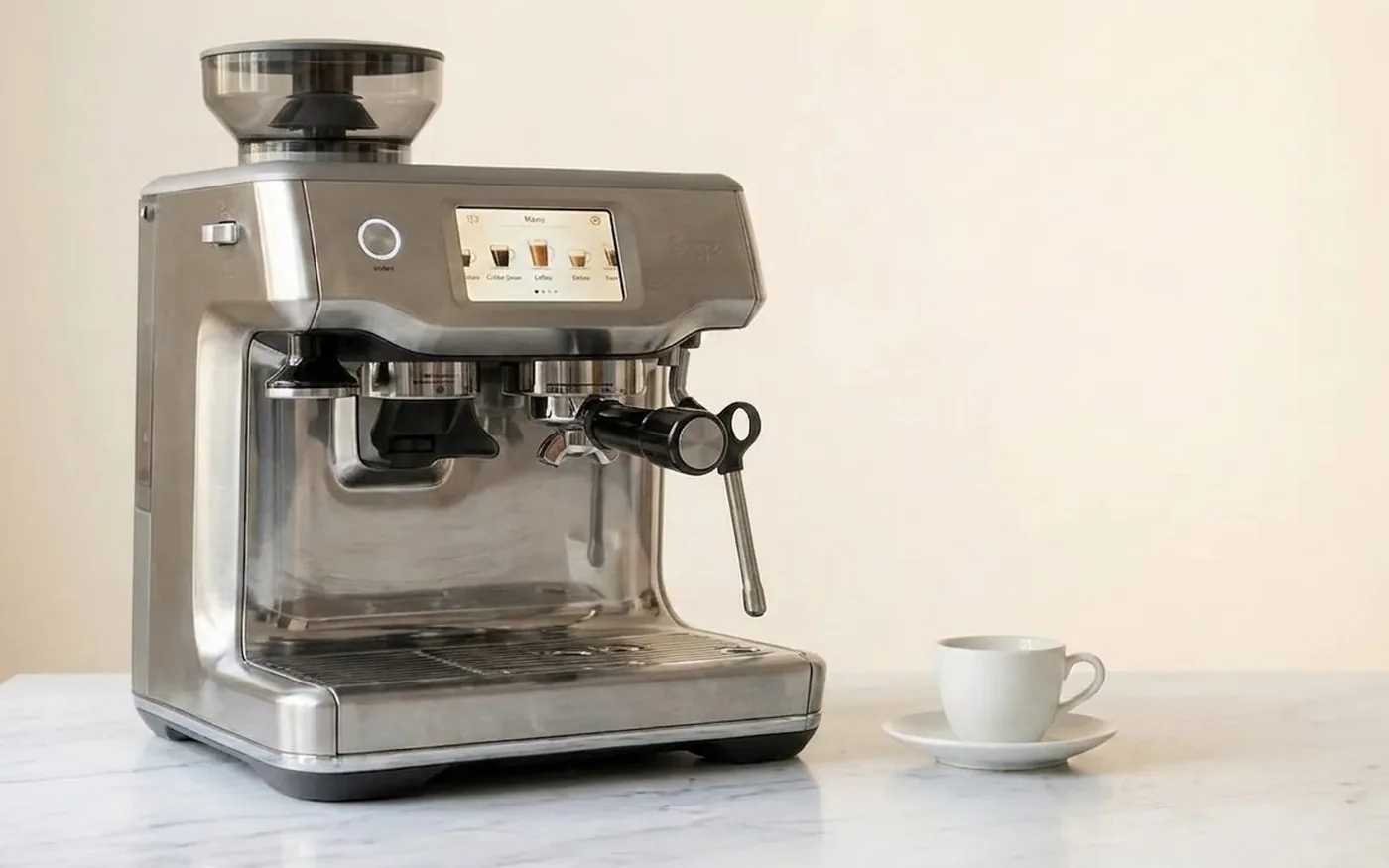
The Oracle Touch puts the full Oracle automation behind a touchscreen interface that makes the machine's capabilities navigable without any technical knowledge of espresso. Saved drink profiles cover the full range - espresso length, milk volume, temperature, texture - and each profile runs the complete sequence automatically from grind through to poured drink. At around £2,000, it is the flagship in the current Sage home range.
The specification change that makes the biggest real-world difference here is the true dual boiler. Unlike the Oracle Jet's sequential ThermoJet heating, the Oracle Touch runs separate 0.3-litre brew and 0.95-litre steam boilers simultaneously. You can steam milk at exactly the same time as pulling a shot. For a household making multiple milk drinks per session, that capability changes how the machine functions in daily use - the workflow difference is not marginal. On every single-boiler machine below this point, the mode-switching introduces a wait. On the Oracle Touch, it does not.
The 58mm portafilter and simultaneous brew-and-steam dual boiler also mean the Oracle Touch competes more directly with entry-level prosumer machines than with the rest of the Sage range. At £2,000 you are approaching the territory of Rocket Espresso and ECM semi-commercial machines. The Oracle Touch wins that comparison on automation and workflow convenience rather than on raw espresso quality ceiling - a distinction worth being honest about. If your priority is maximum extraction quality ceiling and you are comfortable with a traditional lever-and-grinder workflow, prosumer options exist at this price. If your priority is the best automated home espresso experience at this price point, the Oracle Touch is the clearest answer.
The 5.7-inch touchscreen and full profile automation make this the most accessible machine in the Sage range to hand to someone with no espresso knowledge and expect good results from. Whether that accessibility justifies £1,250 more than the Barista Pro depends entirely on how you want to engage with making coffee at home.
| Spec | Detail |
|---|---|
| Boiler | True dual boiler (0.3L brew + 0.95L steam) |
| Portafilter | 58mm |
| Auto-grinding, dosing, tamping | Yes |
| Milk texturing | Auto MilQ (hands-free) |
| Interface | 5.7-inch touchscreen |
| Simultaneous brew and steam | Yes |
Best Nespresso-Compatible Sage: Sage Creatista Plus
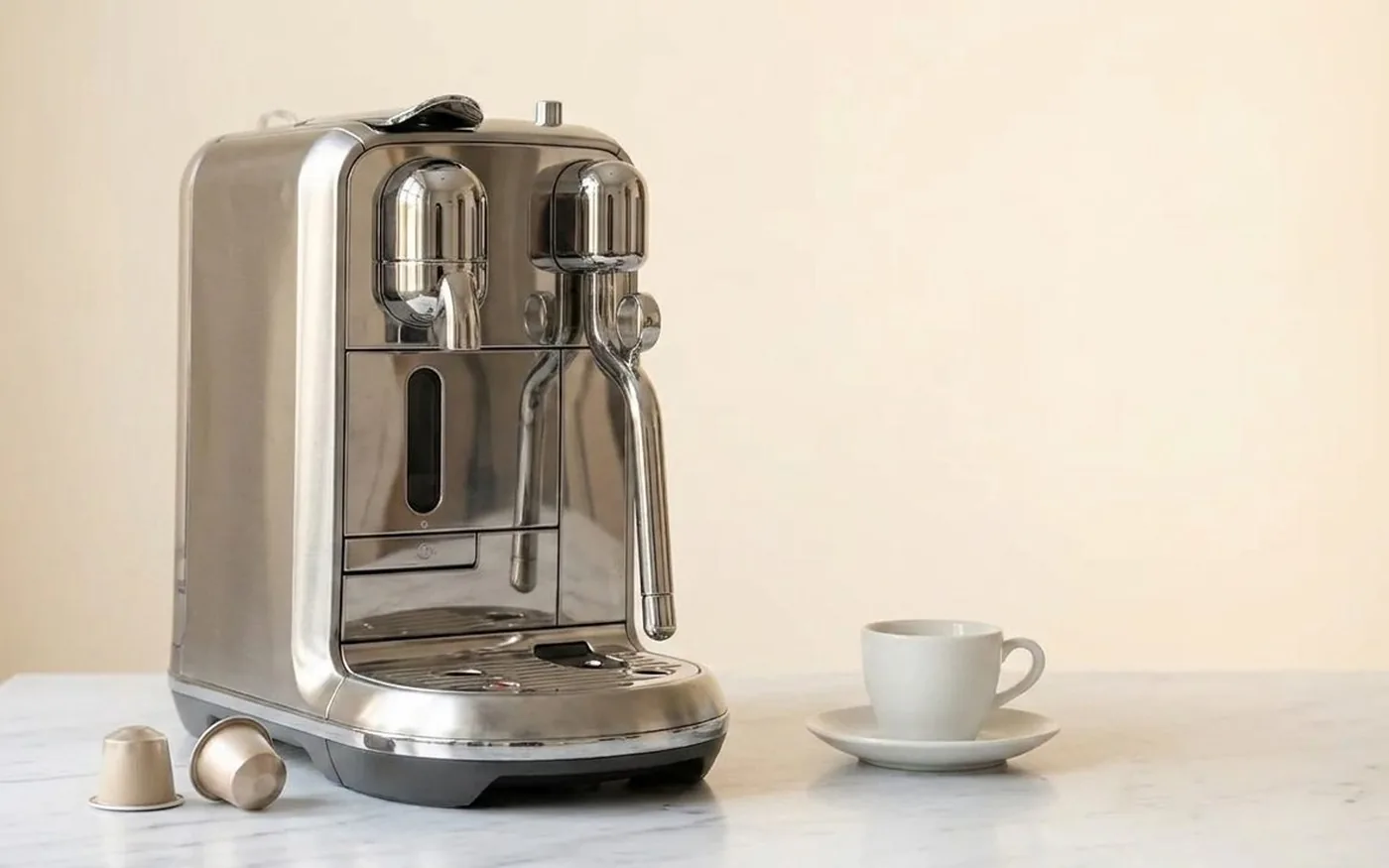
The Creatista Plus belongs in a separate conversation from every other machine on this list, because you are not comparing it against the espresso range at all. Its direct competitors are other Nespresso Original-compatible machines - and against those, it holds a clear advantage. The manual steam wand produces genuinely textured microfoam that makes latte art possible. Standard Nespresso machines with built-in frothers produce frothed milk, which is not the same thing. If you want the visual presentation and texture of a proper flat white from a pod machine, the Creatista Plus is the only Nespresso-compatible machine that delivers it without moving to a traditional espresso setup.
What you accept with this machine is that extraction quality is set by the capsule format, not the machine itself. A Nespresso Original pod runs at around 19 bars of pressure, producing an espresso-style concentrate. The coffee quality ceiling is therefore determined by the pod you choose, not by anything Sage has built into the machine. For pod choice, our guides to the best Nespresso pods and best speciality coffee pods cover what is available in the Nespresso-compatible format.
At around £500, the Creatista Plus sits above the Bambino Plus in the Sage range. That comparison is not the right frame: the Bambino Plus produces better espresso when paired with freshly ground specialty coffee, but it requires you to own ground coffee, manage dose and extraction, and learn milk texturing manually. The Creatista Plus requires none of that. The trade is extraction quality for genuine convenience, and for the right buyer - someone who wants latte art quality from their pods without changing their relationship with coffee-making - it is an honest trade.
The steam wand requires some learning. It is not fully automatic like the Oracle's Auto MilQ system. You hold the jug, you manage the angle, and you develop the micro-level technique over the first few weeks. The learning curve is shorter than a traditional espresso steam wand because the lower volume and pressure of pod extraction gives you more time to respond. But this machine does reward practice rather than eliminating the skill requirement entirely.
| Spec | Detail |
|---|---|
| Capsule type | Nespresso Original compatible |
| Built-in grinder | No (pod machine) |
| Steam wand | Manual, professional style |
| Latte art capability | Yes |
| Boiler | Thermoblock |
Which Sage Coffee Machine Should You Buy?
The Sage range divides into five distinct use cases. Identifying yours narrows the decision quickly.
You are starting from scratch with a budget under £450. The Bambino Plus at £399 is the right starting point. It produces genuinely good espresso, the auto milk texturing removes the steaming learning curve early on, and you can invest in a grinder later when you understand what you want from the machine.
You want one machine that grinds and brews. The Barista Express at £600 is the machine the arithmetic argues for most clearly. One counter footprint, one purchase, freshly ground espresso from day one. The built-in grinder is not the finest available at this price standalone, but it is good enough and the convenience is real.
You are serious about learning espresso and want the best extraction quality in the core range. The Barista Pro at £750 is the right call. This is where the Sage engineering genuinely earns the premium: ThermoJet heating, broader grinder settings, and a machine that responds to dialling in with noticeable results.
You want to remove as much manual process as possible. The Oracle at £1,699 automates grinding, dosing, and tamping while keeping extraction in your hands. The Oracle Touch at £2,000 adds a touchscreen, true dual boiler, and full simultaneous brew-and-steam capability. Both are for buyers who understand what good espresso is and want consistent results without repeating the full setup manually.
You drink Nespresso pods and want real milk texturing. The Creatista Plus at £500 is in its own category. The comparison is against other pod machines, not the espresso range.
| Your Situation | Best Machine | Approx. Price |
|---|---|---|
| Complete beginner, limited budget | Bambino Plus | £399 |
| Nespresso pods, real milk texturing | Creatista Plus | £500 |
| One machine with built-in grinder | Barista Express | £600 |
| Auto-tamping on a grinder machine | Barista Express Impress | £700 |
| Best extraction, learning espresso | Barista Pro | £750 |
| Touchscreen interface | Barista Touch | £900 |
| Touchscreen with auto-tamping | Barista Touch Impress | £1,000 |
| Fully automated, manual extraction control | Oracle | £1,699 |
| Fully automated, touchscreen, true dual boiler | Oracle Touch | £2,000 |
For comparisons beyond the Sage range, see our guide to the best De'Longhi coffee machine and best espresso machine UK.
Do You Need a Separate Grinder?
If you are buying a Sage Bambino Plus or Creatista Plus, this question applies directly to you. Every other current Sage machine includes a built-in grinder, so the decision is already made by the machine.
For Bambino Plus buyers, the choice sits between two options:
Option 1: Pre-ground espresso coffee. The pressurised basket that ships with the Bambino Plus is designed to work with pre-ground. You can use it immediately without any additional purchase. The limitation is freshness: ground coffee stales quickly after opening, and espresso is particularly sensitive to it. Most buyers notice the quality difference within the first month of daily use.
Option 2: Buy a separate grinder. A capable entry-level espresso grinder adds £80 to £150 to your setup. Whole beans stay fresh significantly longer, and the quality difference in the cup is not marginal. If budget allows, buying the grinder alongside the machine is the better setup. If budget is the constraint, start with pre-ground and upgrade when you feel the difference yourself.
“Before you commit to both: If you are planning to spend on a Bambino Plus plus a separate grinder at £80 to £150, your total spend arrives at £480 to £550. At that range, the Barista Express at £600 is worth a second look. The gap closes to £50 to £120, but you gain a machine designed around an integrated grinder rather than a machine paired with one as an afterthought. The best grinder for sage barista express covers standalone grinder pairings if the Express does not suit.”
For recommendations on which beans to use in a new espresso machine, see our best coffee beans UK guide.
Full Sage Machine Specs: All Nine Models (2026)
Prices are approximate and should be verified at the Sage UK product range before purchasing. Sage revises pricing regularly and models may be updated between writing and publish date.
| Machine | Approx. Price | Boiler | Portafilter | Built-in Grinder | Auto Milk | Interface |
|---|---|---|---|---|---|---|
| Bambino Plus | £399 | Thermocoil | 54mm | No | Yes (auto) | Buttons |
| Creatista Plus | £500 | Thermoblock | N/A (pod) | No (pod machine) | Semi-auto | Buttons/dial |
| Barista Express | £600 | Thermocoil | 54mm | Yes | No | Buttons |
| Barista Express Impress | £700 | Thermocoil | 54mm | Yes + auto-tamp | No | Buttons |
| Barista Pro | £750 | ThermoJet | 54mm | Yes | No | LCD display |
| Barista Touch | £900 | ThermoJet | 54mm | Yes | No | 4.3-inch touchscreen |
| Barista Touch Impress | £1,000 | ThermoJet | 54mm | Yes + auto-tamp | No | 4.3-inch touchscreen |
| Oracle | £1,699 | ThermoJet (sequential) | 58mm | Yes (auto-grind/dose/tamp) | Auto MilQ | 5-inch touchscreen |
| Oracle Touch | £2,000 | True dual boiler | 58mm | Yes (auto-grind/dose/tamp) | Auto MilQ | 5.7-inch touchscreen |
The Best Sage Coffee Machine: Our Verdict
The Sage Barista Pro is the machine I would recommend to most buyers who are serious about espresso. At £750 as of 2026, it sits at the point in the range where the engineering quality begins to justify the price on extraction grounds, not on interface grounds or automation grounds. The ThermoJet heating system, the broader grinder settings, and the machine's responsiveness to technique all represent a meaningful step up from the thermocoil machines below it. I bought this machine for my parents and spent weeks dialling it in. I know how it behaves in a real kitchen, not a test setting.
For buyers who want one machine that grinds and brews without a second appliance, the Barista Express earns its ranking. The arithmetic at £600 is hard to argue with, and the built-in grinder produces consistently better results than pre-ground coffee in the same cup.
The Bambino Plus is the honest answer for anyone starting out with a limited budget. Buy it, learn on it, and upgrade when you are ready.
Sage is not the right answer for every buyer. If you want fully automated coffee at the touch of a button with no portafilter management, De'Longhi's bean-to-cup range is a more direct answer. If your budget is firmly under £200, look at broader best espresso machine UK options before committing to Sage. If you want pod coffee without learning espresso workflow at all, the Creatista Plus is the Sage answer, but compare it against other Nespresso machines rather than the espresso range.
The range is genuinely well built across every price point. The question has always been which machine in it matches how you actually want to make coffee at home.
Frequently Asked Questions
Which Sage coffee machine has a built-in grinder?
As of 2026, all Sage espresso machines except the Bambino Plus and the Creatista Plus include a built-in grinder. The Barista Express, Barista Express Impress, Barista Pro, Barista Touch, and Barista Touch Impress all have integrated conical burr grinders. The Oracle and Oracle Touch go further: they grind, dose, and tamp automatically. The Bambino Plus requires you to supply ground coffee, and the Creatista Plus uses Nespresso Original pods.
Should I buy Sage or De'Longhi?
They suit different buyers. Sage machines give you direct control over grind settings, extraction time, and steam wand technique, built for people who want to develop as home baristas. De'Longhi's bean-to-cup range (Magnifica, Dinamica) delivers consistent automated coffee without engaging the extraction process. Choose Sage to build espresso skills over time; choose De'Longhi for reliable coffee at a button press with no workflow management.
What is the cheapest Sage espresso machine?
The cheapest Sage espresso machine available in the UK as of 2026 is the standard Sage Bambino, priced at approximately £180 to £200 depending on retailer. The Bambino Plus, at around £399, adds auto milk texturing and the non-pressurised basket option. If your budget is firmly under £250, the standard Bambino is the entry point to the Sage espresso range.
Does Sage make a bean-to-cup machine?
Sage does not make a fully automatic bean-to-cup machine in the same category as De'Longhi's Magnifica or Jura's range. The Oracle and Oracle Touch come closest: they automate grinding, dosing, and tamping, but extraction still runs manually through a portafilter. If you want coffee made entirely hands-off with no portafilter management, Sage is not the right brand for that use case.
What are the most common problems with Sage coffee machines?
The most common problems with Sage machines are pump failure on older Barista Express models (typically after five to seven years), flow restriction from descaling neglect, steam wand blockage from dried milk residue, and grinder calibration drift on integrated grinder models. Most of these are preventable with regular maintenance. Sage covers all UK machines with a two-year warranty.
What is the Rolls Royce of Sage coffee machines?
In the Sage range, the Oracle Touch (around £1,900) is the most premium domestic model - it automates grinding, dosing, tamping, and milk texturing. Beyond Sage, La Marzocco and Slayer Espresso occupy genuine prosumer territory above £4,000. For domestic Sage buyers, the Oracle Touch is the flagship. The Oracle Dual Boiler sits above it in the current range for pure espresso performance.
Is a Sage coffee machine worth the money?
Yes, for buyers who want to develop espresso skills at home. The Barista Pro (£750) is the strongest price-quality position in the range - you get ThermoJet heat-up, digital temperature control, and a grinder without paying for full automation. If you want one-button coffee and no workflow management, a De'Longhi bean-to-cup machine suits that use case better than any Sage.
What's the difference between the Sage coffee machines?
Sage machines split across three heating systems: ThermoCoil (Bambino Plus, entry-level), ThermoJet (Barista Pro, Barista Touch range, fast heat-up), and dual boiler (Oracle Touch, independent brew and steam circuits). Grinder integration ranges from none (Bambino Plus) to built-in manual (Barista Express, Barista Pro) to fully automatic (Oracle range). Milk system: manual wand, Auto MilQ, or Oracle auto-texturing.
What's the difference between the Sage Bambino and Bambino Plus?
The standard Sage Bambino and the Bambino Plus share the same 54mm portafilter and the same thermocoil heating system, so extraction quality is identical. The roughly £200 price difference buys auto milk texturing: the Bambino Plus froths and pours milk automatically, while the standard Bambino requires you to hold the jug and manage the steam wand manually from the start.
Do I need to buy a separate grinder for the Sage Bambino Plus?
Not necessarily. The Bambino Plus ships with a pressurised basket designed for pre-ground coffee, so you can start brewing immediately without buying anything extra. A separate entry-level espresso grinder adds £80 to £150 to your setup, but whole beans stay fresher and the difference in the cup is noticeable. Start with pre-ground and upgrade to a grinder once you notice the quality gap.
A wellness entrepreneur and biohacker, James explores the intersection of hospitality and health - from clean fuel and recovery tools to mindful routines that build balance into daily life.