How to Use a Moka Pot: Method, Ratio and Fixes

Coffee Writer & Biohacker
The box, the roasters and Google disagree, so I ruled on each point.
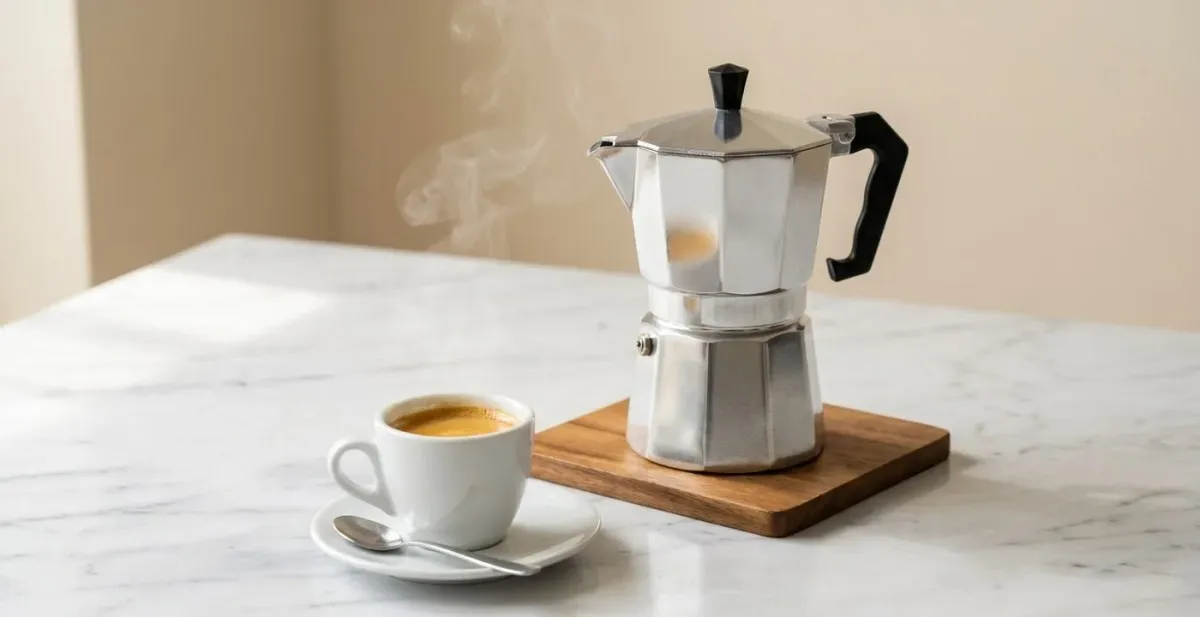
Table of Contents
Some of the links in this article are affiliate links, which help fund our independent review work at no extra cost to you. How we assessed these products is explained in this article and our Editor Lab methodology. No brand pays to appear, and no placement is guaranteed.
You can learn how to use a moka pot in about a minute: fill the base with just-boiled water, level the coffee in the basket, heat it gently with the lid open, and pull the pot off the heat when the stream turns pale. The rest of this guide is for the cup that still tastes wrong. It also rules on the three points where the box, the roasters and Google disagree, which are water temperature, when to stop, and soap.
Here are the six steps you need, and they work with supermarket pre-ground coffee or a bag of speciality coffee:
- Boil the kettle, then fill the base with just-boiled water to just below the safety valve.
- Fill the basket with medium-fine coffee, level to the rim, and do not tamp it.
- Wipe any grounds off the rim, then screw the top on, holding the hot base with a folded tea towel.
- Set the pot on medium-low heat with the lid open.
- Take the pot off the heat when the stream turns from dark brown to pale, before the sputter.
- Cool the base under a cold tap, then pour all of it straight away.
I compared Bialetti's own printed instructions with a published UK roaster method and my own years of using a moka pot at home, and where they disagree I say which I follow and why. How we test is set out in The Editor Lab.
How to Use a Moka Pot, Step by Step
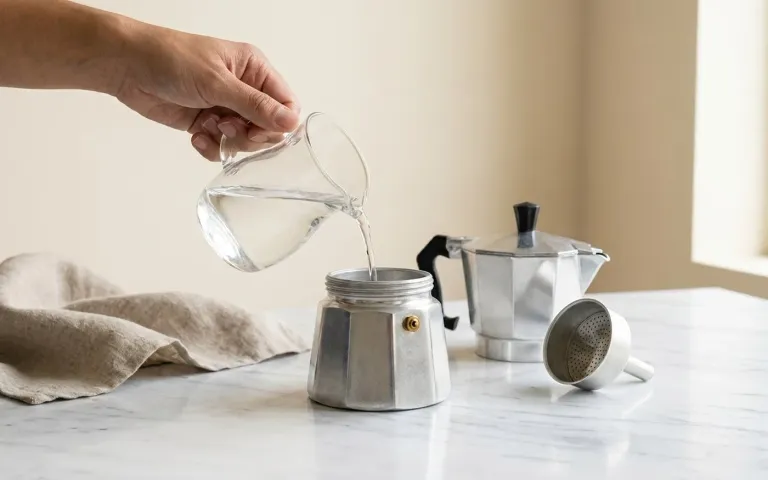
Start with the kettle, because the water goes in first. Fill the base to just below the safety valve, which Bialetti says "acts as a measuring cup", and never above it. Bialetti warns that going over that level can make the coffee watery, so you lose strength before you start.
Next comes the coffee. Fill the basket with medium-fine grounds until they sit level with the rim. Bialetti says to fill the funnel "without pressing the coffee", so you never tamp, and you wipe the rim clean so the two halves screw together properly.
Put the pot on medium-low heat with the lid open, so you can watch the stream. When it turns from dark brown to pale, take the pot off the heat, cool the base under the cold tap, and pour all of it at once instead of leaving it in the hot pot.
"I wish the box had come with some instructions," wrote a commenter called Sue on a coffee forum in 2009, and you may well agree. The table below lines up what each source tells you, so you can see where the advice splits.
| Instruction | Bialetti (maker) | Steampunk Coffee (UK roaster) | Google AI Overview | My call |
|---|---|---|---|---|
| Water | Room temperature | Boiling water | Hot or pre-boiled | Just-boiled, every time |
| Fill level | To the safety valve, no higher | Just below the valve | - | Just below the valve |
| Tamping | Fill without pressing | - | - | Level, never tamp |
| Heat | Low, and take your time | - | - | Medium-low, lid open |
| When to stop | When the coffee has completely percolated | Steam pushes through at about 65-70 percent of the water you put in | At the first gurgle | At the colour change, before the sputter |
| Cleaning | Rinse with water, no detergent | No detergent, hot water, dry every part | - | Rinse every time, dry fully |
A dash means the source gave no instruction I could quote. The method you read above follows the box on fill level, tamping and cleaning, and departs from it on water, heat and the stop point, which the next sections explain.
How a Moka Pot Works (in 100 Words)
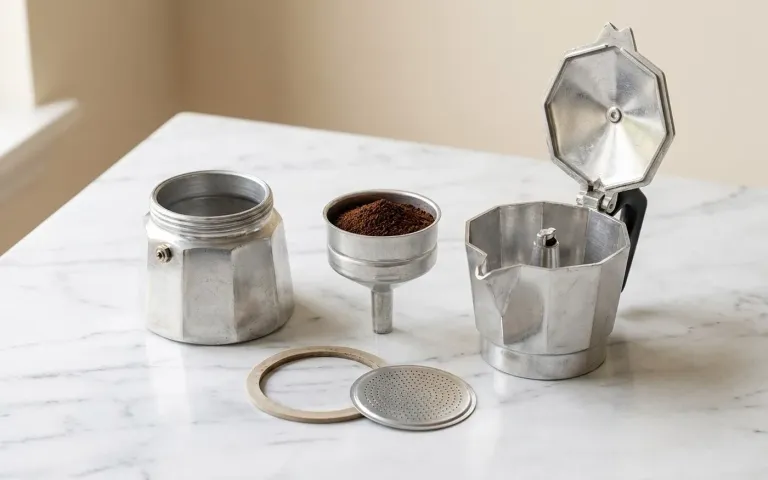
A moka pot is a three-chamber stovetop brewer, introduced by Bialetti in 1933, that pushes hot water up through ground coffee using pressure in the lower chamber. The base holds your water, the funnel-shaped basket holds your coffee, and the top chamber collects the brew.
Bialetti puts it simply: "Unlike the Neapolitan and Milanese coffee makers, the Moka uses pressure rather than gravity." As the water heats, steam builds pressure in the base and forces the water through the grounds. The sputter you hear near the end is steam escaping once the base is almost empty, according to Bialetti's explanation of how the Moka works.
Hot or Cold Water? The Box and the Roasters Disagree
You will get three different answers depending on where you look. Bialetti's Moka Express page says "Start by pouring room-temperature water into the Moka boiler". Google's AI Overview says to pour in hot or pre-boiled water, and it cites illy, whose own guide says "Fill the base with fresh cold water up to the safety valve level" as quoted in that same summary.
I use just-boiled water from the kettle, every time, first brew included. This departs from the instructions in the box, and you should know I am comfortable with that.
The reason is time. A pot that starts cold sits over the flame for minutes while your water warms, and the coffee in the basket warms with it.
Steampunk Coffee makes the same case: "Using water at this temperature rather than starting with cold water prevents the coffee grounds from becoming too hot in the basket while the water is heating up." Fill the base to just below the valve, hold it with a folded tea towel while you screw the top on, and you will not burn your fingers.
Grind and Dose
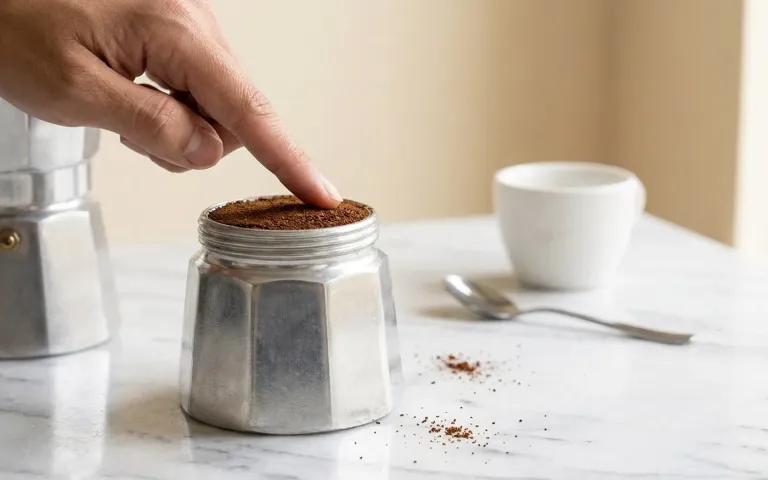
Medium-fine is the answer, and it sits between two grinds you may already own. It is finer than filter and coarser than espresso, and you can see the espresso end of that range in our espresso grind size guide. Bialetti asks for coffee that is "Moka-ground, and not too fine", and Steampunk Coffee recommends medium-fine, which is finer than filter but short of espresso fineness.
A commenter called Andrew asked on a coffee forum in 2008 whether a fine grind would block the filter. Go too fine and you risk exactly that, so if your pot struggles to push water through, loosen the grind before you change anything else. Pre-ground coffee sold for moka pots is a sensible place to start.
The pot sets the dose for you. The valve sets the water, and the basket sets the coffee, so you never need a scale. For a worked example, Steampunk Coffee puts 18-20g of coffee in the basket and 200g of water in the base for a four-cup pot.
A burr grinder is optional here. If you want one, our guide to the best burr coffee grinder is the place to look.
When to Take It Off the Heat
Here the sources split three ways. Bialetti says "When the coffee has completely percolated into the collector, turn off the heat." Google's AI Overview says to stop at the first gurgle. Steampunk Coffee says steam starts to push through the grounds once the upper chamber holds about 65-70 percent of the water you put in, and it runs the base under a cold tap to stop the brew.
I pull the pot earlier than Bialetti does, and you should too. Take it off when the stream turns from dark brown to pale, before the sputter, and cool the base. Bialetti explains that the sputter is steam escaping once the water is almost gone, so by then you are collecting the harshest part of the brew.
Timing depends on your pot, so watch the stream instead of a clock. Steampunk Coffee gives roughly 2 minutes 30 seconds to 3 minutes for a stainless steel four-cup brewer, and about 5 minutes 30 seconds for a six-cup aluminium one.
Bitter, Sour, Weak or Metallic: Diagnose Your Cup
Search for help and you find thread titles such as "I bought a moka pot and my coffee tastes terrible." on r/mokapot and "[moka pot] what the hell am I doing wrong???" on r/Coffee. My first job in coffee, in 2012, was training baristas for UCC Coffee. With nearly 15 years in the trade and an SCA barista certification behind me, I can tell you that diagnosing a bad extraction is mostly a matter of matching the taste to the cause.
Use the table to find your cup, then make the one change in the right-hand column.
| Symptom | Most likely cause | The one change |
|---|---|---|
| Bitter or burnt | Too much heat, or brewing past the sputter | Lower the heat, pull at the colour change, cool the base |
| Sour or thin | Grind too coarse, or a cold start on a light roast | Go finer within medium-fine, start with just-boiled water |
| Weak or watery | Basket not full, water above the valve, or filter grind | Fill the basket level, keep the water below the valve |
| Metallic | Limescale from hard water, or old grounds left in the pot | Use softer water, rinse and dry the pot fully |
| Slow, or will not flow | Grind too fine, or coffee pressed down | Loosen the grind and never tamp |
| Spits and sputters early | Heat too high | Lower the heat so the stream stays slow and steady |
Bitter and sour are the two you will meet most, and roast level shifts both. Our light roast vs dark roast guide explains why, so check your roast before you blame your method. If the cup still tastes flat after you fix the method, the coffee may be old, and our guide on how to store coffee beans covers that.
Water matters in the UK. Thames Water says "Most of the water in the South-East of England is hard in nature", and its hardness bands run from soft, up to 100 mg/l of calcium carbonate, to the top band above 300 mg/l. Bialetti advises you to avoid hard water because the minerals produce limescale, and it warns that limescale can block the hole in the valve.
If your pot leaks at the seam, steams from the valve, or never pushes water up despite a correct grind, you have a hardware fault, not a technique problem. Our Bialetti Moka Express review covers the common faults, and the care section of our best moka pot guide covers upkeep.
Which Coffee to Use
You can use regular coffee, as long as the grind suits the pot. Pre-ground coffee labelled for moka pots works, and so does an espresso grind, and filter grind will taste weak. Medium to medium-dark roasts are the forgiving choice, because they tolerate a little too much heat better than a light roast does.
Check the roast date before anything else. Having visited almost 300 UK roasteries during my Sanremo years, I would still pick a bag with a roast date over one without, and so should you. Our guide to the best coffee for moka pot lists the bags worth buying, and the best coffee beans UK guide covers the wider market.
Freshness is the point, and it is why I mention one example. I founded Balance Coffee in 2020. Darkfire Energy is sold with a 'Grind for Espresso' option that works in a moka pot, and that is the option to pick if you want your moka pot coffee ready to brew.
Gas, Electric and Induction Hobs
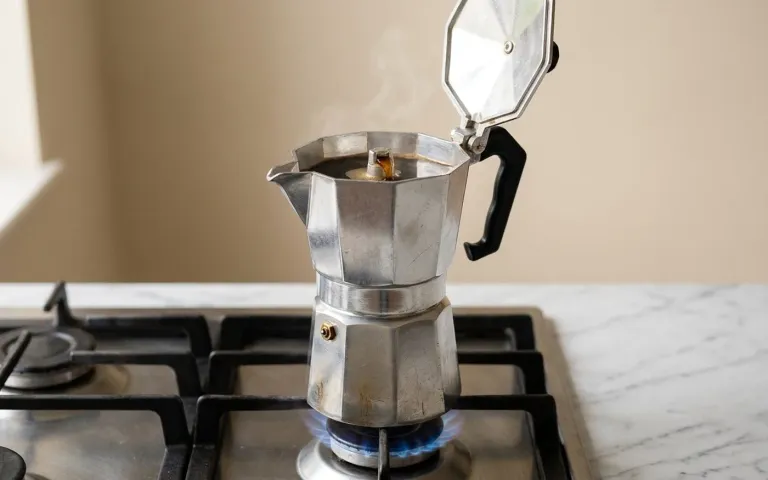
The method is the same on every hob, and only the heat control changes. On gas, keep the flame under the base so it does not lick the handle. On electric, use medium-low and give the plate a minute to settle before you judge the stream.
Induction is the exception. Bialetti lists the Moka Express as "Compatible with electric and gas hobs; Suitable for induction hobs only when used with the Bialetti induction plate." If you cook on induction and want a pot made for it, our best moka pot guide covers the pots that suit induction.
Before Your First Brew
Wash your pot in hot water and dry it, because Bialetti says to rinse it with water only. After that, expect the first brews to taste off. A commenter called Lauren wrote in 2009 that she "just needed to be a little more patient and give it some time to season better".
Brew a few pots and throw them away. This is common practice among moka pot owners rather than a Bialetti instruction, so treat it as a habit that works for you, not a rule from the box. Do not judge the pot on its first cup.
Cleaning: The Soap Argument, Settled
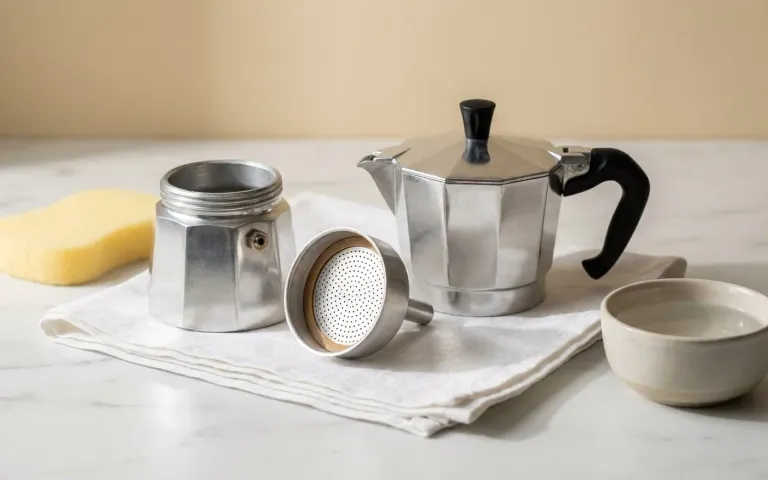
You will find endless arguments about this on coffee forums. A commenter called Tom wrote in 2008: "Never ever use soap. Think of it as you would seasoning a heavy pan or griddle."
A commenter called Mike answered in 2009: "Use soap and water. Seasoning is for cast iron, where you use saturated oils that don’t easily spoil."
For an aluminium pot like yours, the maker sides with Tom. Bialetti says the Moka Express "should only be rinsed with water after use. Do not use detergents", and it must not go in the dishwasher.
Steampunk Coffee agrees: "You don’t need detergent", and it asks you to use hot water with a gentle brush, cloth or sponge and to dry every part thoroughly before reassembly.
Tom is still wrong about one thing. Seasoning is not an excuse for a dirty pot. Rinse it every time, dry every part before you put it back together, and never leave old grounds or damp coffee sitting in a pot you rarely use.
What a Moka Pot Is Not (and Is Not Good At)
A moka pot is not an espresso machine: it makes a strong, concentrated stovetop coffee, but not espresso. You get no true crema, and the pot is fiddly to judge by eye. It also punishes high heat, so you cannot walk away from it.
If you want espresso, buy an espresso machine, and start with our guide on how to make espresso at home. If you want a milk drink, you can add milk to moka coffee, and our guide on how to froth milk covers it. If you want a filter-style cup, the how to use a cafetiere guide is the better route.
Naming what the pot cannot do is how you decide whether it suits you. For a strong, simple morning coffee from a cheap pot you already own, it is hard to beat.
Frequently Asked Questions
Should I use hot or cold water in a moka pot?
Use just-boiled water from the kettle, every time, including your first brew. Steampunk Coffee says hot water stops the grounds getting too hot in the basket while the base heats up, whereas Bialetti's box says room-temperature water, so this departs from the instructions. Hold the hot base with a tea towel when you screw the top on.
How do you know when a moka pot is done brewing?
Watch the stream from the spout. When it turns from dark brown to pale, you take the pot off the heat, just before the sputter. Bialetti says to wait until the coffee has "completely percolated into the collector", which is later than I pull it, so cool the base and pour straight away.
Do you leave the moka pot lid open?
Leave the lid open while it brews, so you can see the stream and spot the colour change. That change is the signal you are waiting for, so stay at the hob. Close the lid when you pour, then pour all of it at once instead of leaving it in the hot pot.
What is the ideal ratio of coffee to water for a moka pot?
The pot fixes the ratio for you: water to just below the valve, and a level basket of coffee. As a worked example, Steampunk Coffee uses 18-20g of coffee and 200g of water in a four-cup pot. Do not change the amounts to chase strength, because the valve and the basket are your measures.
Do you put regular coffee in a moka pot?
Yes, if the grind is right. A supermarket pack labelled for moka pots works, and so does an espresso grind, while filter grind tends to run weak. Check the roast date as well, and see our best coffee for moka pot guide if you want help choosing a bag.
What are the negatives of a moka pot?
A moka pot is not an espresso machine, it makes no true crema, and it is easy to over-heat. It brews small batches, and Bialetti says an aluminium Moka Express must not go in the dishwasher. On induction, you also need Bialetti's induction plate for that pot.
Is a moka pot as strong as espresso?
No. A moka pot makes a strong, concentrated stovetop coffee, stronger than filter, but it is not espresso and has no true crema. I do not quote pressure or caffeine figures for it, because I have no source I trust for either, and if you want espresso, our espresso at home guide covers the machines.
How long should you boil coffee in a moka pot?
You are heating water, not boiling coffee. Steampunk Coffee gives roughly 2 minutes 30 seconds to 3 minutes for a stainless steel four-cup pot, and about 5 minutes 30 seconds for a six-cup aluminium one. Treat those as a guide and watch the stream instead, because your hob and pot size change the time.
How do you fill a moka pot with coffee?
Fill the basket with medium-fine coffee until it is level with the rim, and do not tamp it. Bialetti says to fill the funnel "without pressing the coffee". Wipe any grounds off the rim before you screw the top on, so the two halves close cleanly and nothing sticks in the thread.
Can I use my moka pot on an induction hob?
Only if the pot is made for induction. Bialetti says the classic aluminium Moka Express is "Suitable for induction hobs only when used with the Bialetti induction plate". If you want a pot built for induction, our best moka pot guide covers the pots made for it.

A wellness entrepreneur and biohacker, James explores the intersection of hospitality and health - from clean fuel and recovery tools to mindful routines that build balance into daily life.