Bialetti Moka Express Review: Is the 1933 Italian Classic Still Worth Buying in 2026?
Five UK sizes, one aluminium design, and a clear answer on whether it earns its place.
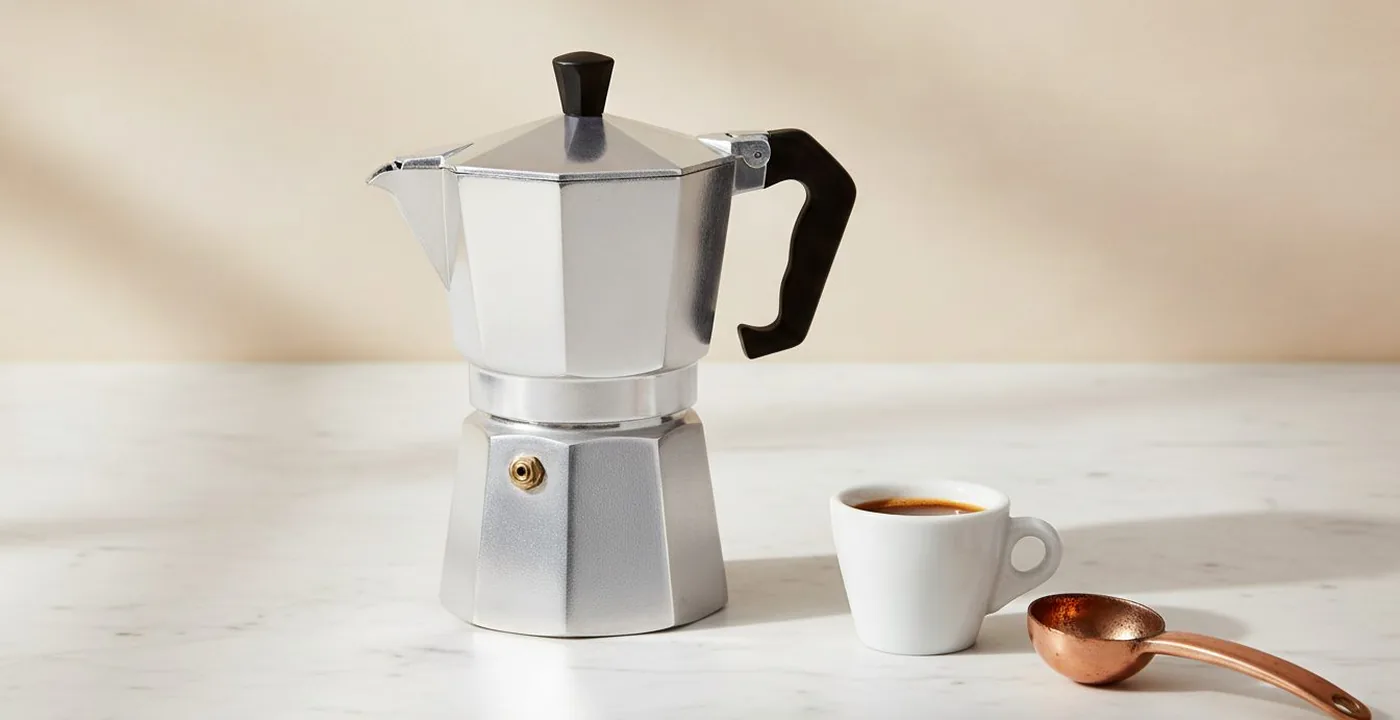
Table of Contents
Some of the links in this article are affiliate links, which help fund our independent review work at no extra cost to you. Every recommendation is based on hands-on testing through The Editor Lab methodology. No brand pays to appear, and no placement is guaranteed.
Yes. The Bialetti Moka Express is worth buying in 2026. I expected thin, bitter coffee. After years at Sanremo UK surrounded by the best traditional espresso machines in the world, I came to the Bialetti Moka Express expecting little. The moka pot felt like a compromise. What came out of that aluminium pot was not a compromise. It was concentrated, complex, and nothing like the acrid stovetop coffee most people know. That cup changed how I thought about this category.
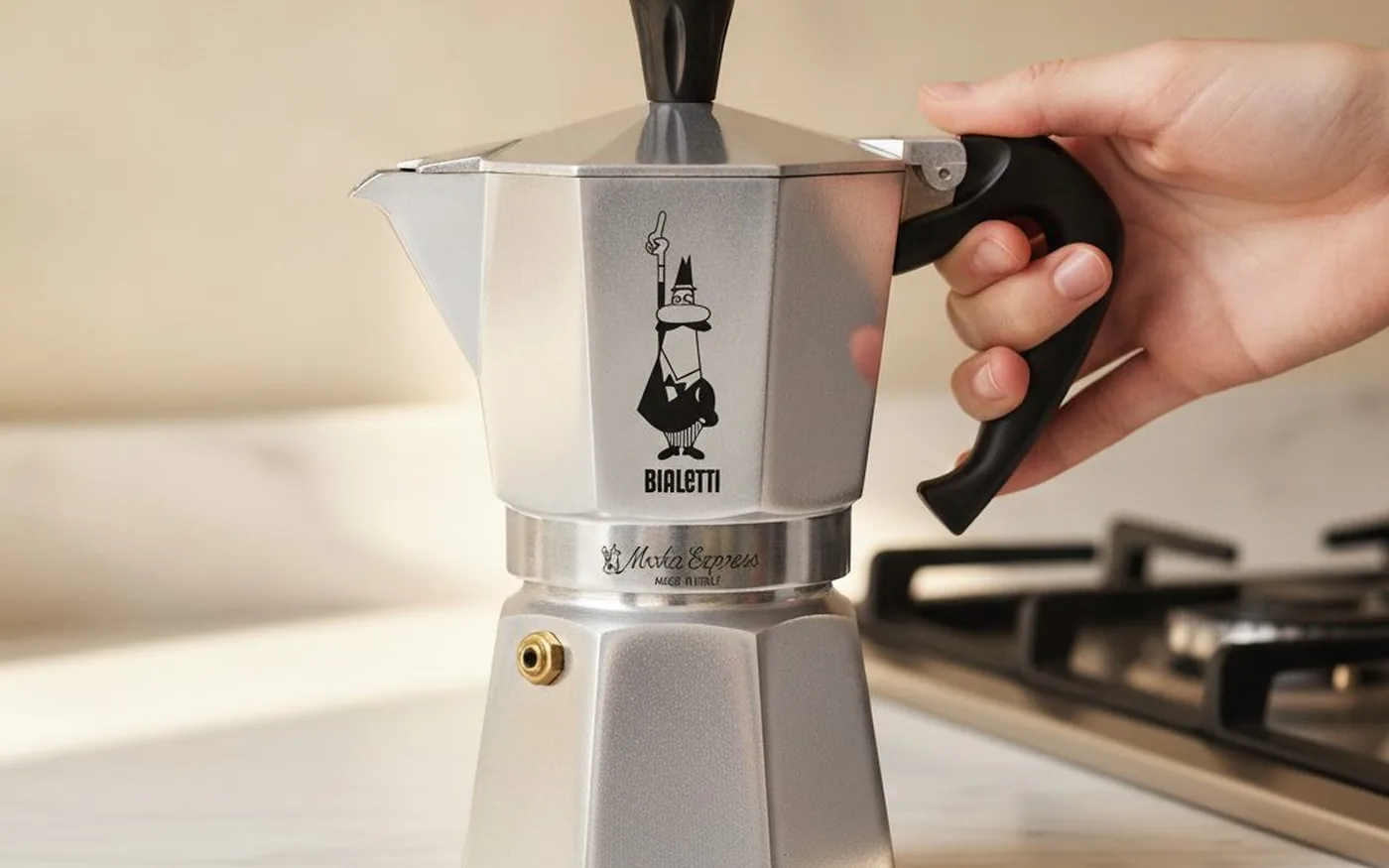
The Bialetti Moka Express is the original aluminium stovetop brewer. Alfonso Bialetti first produced the design in 1933, and according to Wikipedia's Moka pot entry, more than 200 million have been sold since. It sits in the MoMA permanent collection as a design object. It is the default moka pot against which every other stovetop brewer is measured.
For this review, I compared every UK-available size variant on both gas and induction with several ground coffees. Full testing methodology: The Editor Lab.
Editor's Note
The Bialetti Moka Express at a Glance
The Bialetti Moka Express is a pressure-brewed stovetop coffee maker that produces a strong, concentrated cup from ground coffee. It is not an espresso machine, it does not produce crema, and it does not belong on an induction hob without an adapter or a different model. What it does is produce a genuinely excellent, characterful cup in under five minutes for around £25-40. If you are weighing a manual brewer against an electric one, our guide to the main types of coffee machine covers espresso, bean-to-cup, pod and filter options.
Quick verdict: Buy it. It is one of the best-value coffee brewers available in the UK, and testing across five sizes confirmed there is nothing wrong with the 90-year-old design.
| Evaluation Criteria | Score |
|---|---|
| Build quality | 8/10 |
| Brew quality | 8/10 |
| Ease of use | 9/10 |
| Value for money | 10/10 |
| Longevity | 7/10 |
| Overall | 8.4/10 |
Who the Bialetti Moka Express Is For (and Who Should Skip It)
Buy the Moka Express if you want strong, concentrated stovetop coffee and you cook on a gas or electric hob. It is the right call for someone who wants espresso-strength coffee without the cost of an espresso machine, someone who travels and wants a reliable compact brewer, or someone who grew up in an Italian household and knows exactly what this machine is.
Skip it if you need crema. The Bialetti Brikka exists for that. Skip it if you have an induction hob and you do not want to buy an adapter disc or a different model - the standard Moka Express has an aluminium base and does not work on induction. Skip it if you want push-button simplicity; this requires some technique and attention at the stove.
The Moka Express is not trying to replicate espresso. Buyers who understand that from the start will be happy with it. Buyers who expect a £30 stovetop pot to produce nine-bar espresso shots will be disappointed - and that is not the machine's fault.
Bialetti Moka Express Specs and What You Get in the Box
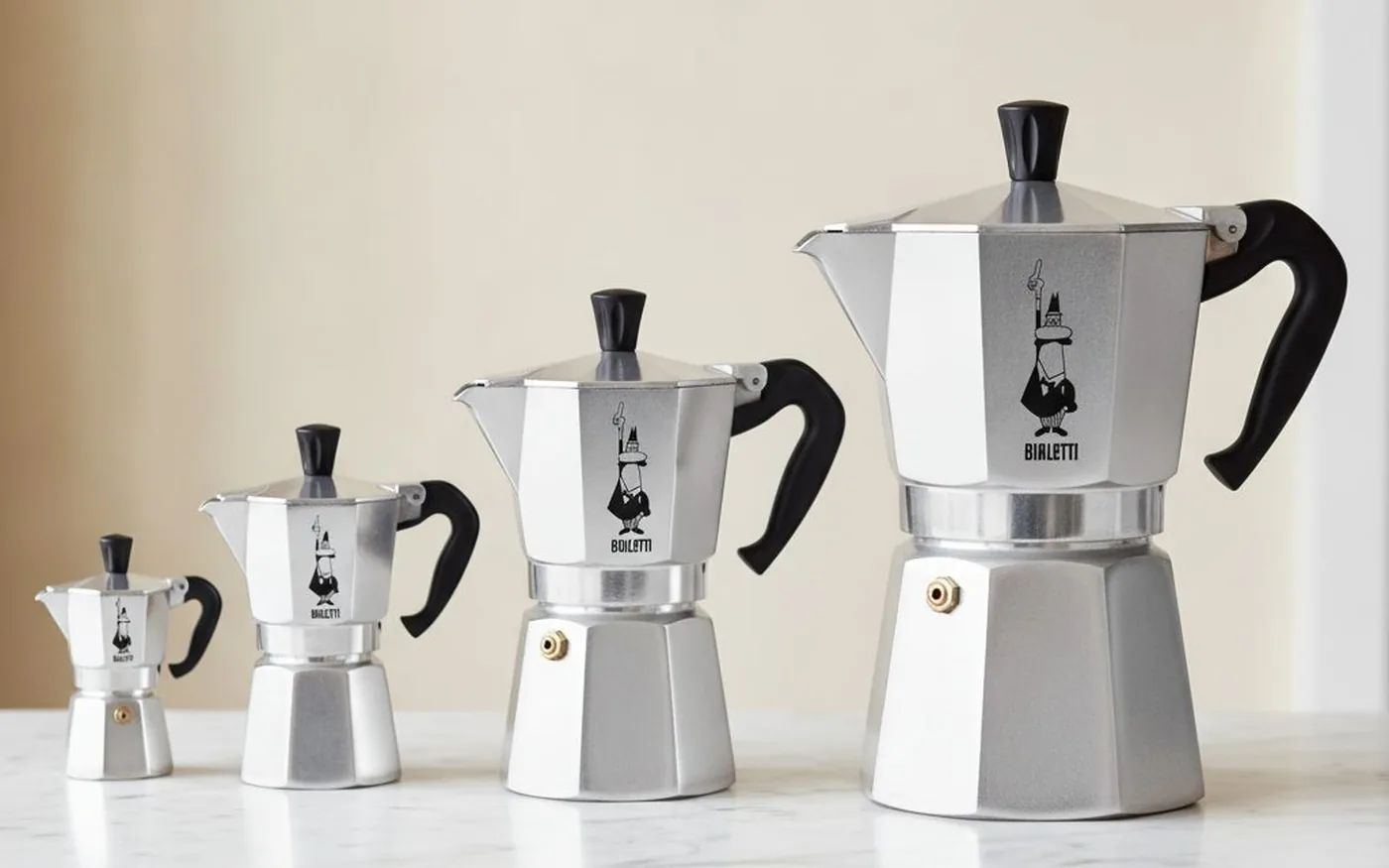
The Bialetti official product page lists the Moka Express in five sizes for the UK market. The box contains the assembled brewer plus a paper instruction sheet. There is no tamper, no scoop, no additional accessories.
Important note on Bialetti 'cups': Bialetti defines a 'cup' as roughly 50-60ml. This is a smaller cup than UK buyers typically expect. A '6-cup' Moka Express produces approximately 270ml of coffee, which most UK households would consider three large cups or six small Italian-style servings.
| Size | Water capacity | Coffee output | Recommended dose | Weight | Height |
|---|---|---|---|---|---|
| 1-cup | 60ml | 50-60ml | 7g | 180g | ~12cm |
| 3-cup | 200ml | 130ml | 15g | 285g | ~17cm |
| 6-cup | 450ml | 270ml | 30g | 450g | ~20cm |
| 9-cup | 650ml | 400ml | 45g | 600g | ~23cm |
| 12-cup | 900ml | 560ml | 60g | 750g | ~26cm |
Specs sourced from Bialetti official product page. Coffee output figures are approximate.
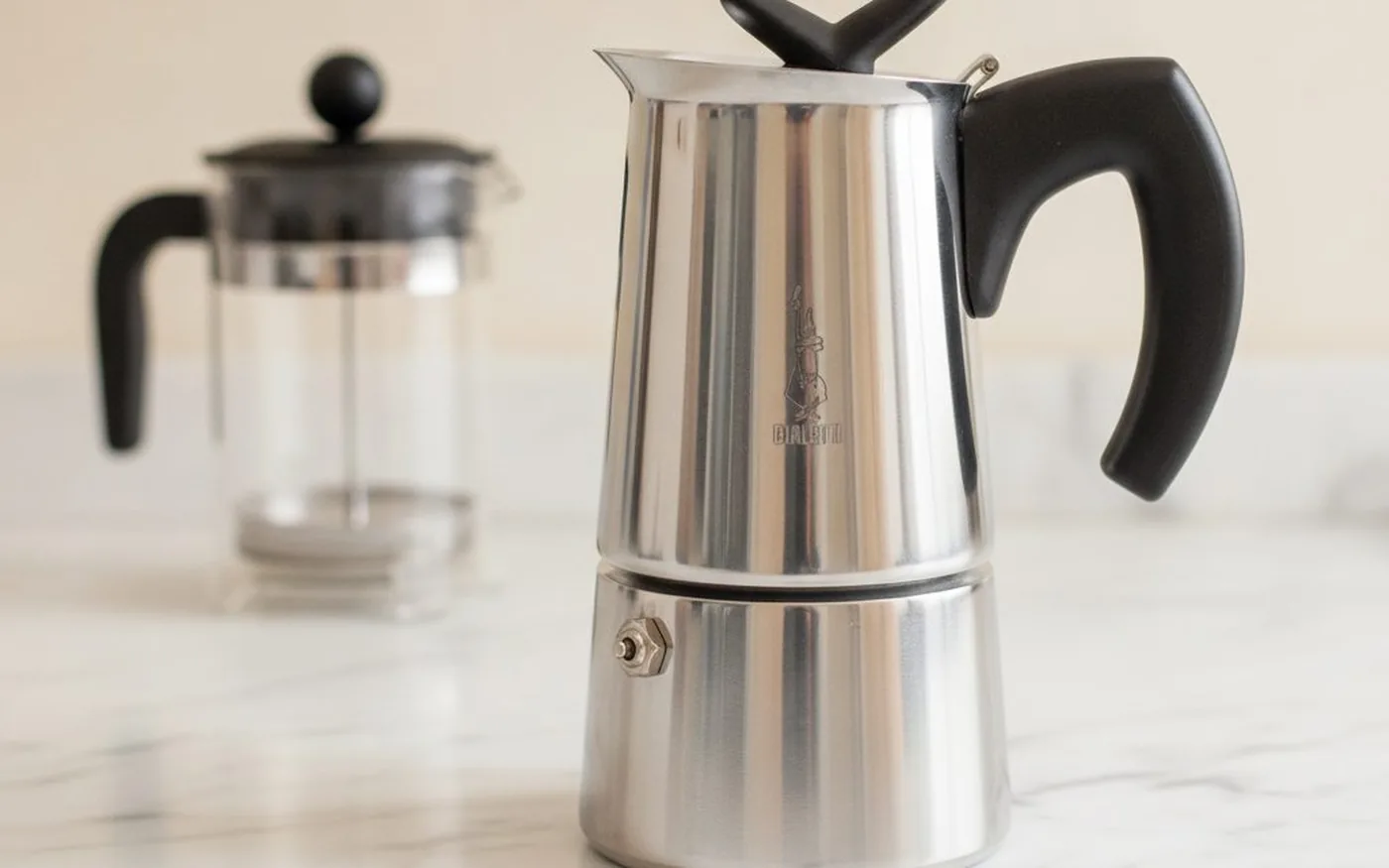
Build Quality: Why Aluminium Is Both the Genius and the Catch
The Moka Express is made from die-cast aluminium with a Bakelite handle. The aluminium construction is what makes it so light, so fast to heat, and so inexpensive to produce. It is also the detail that generates the most debate.
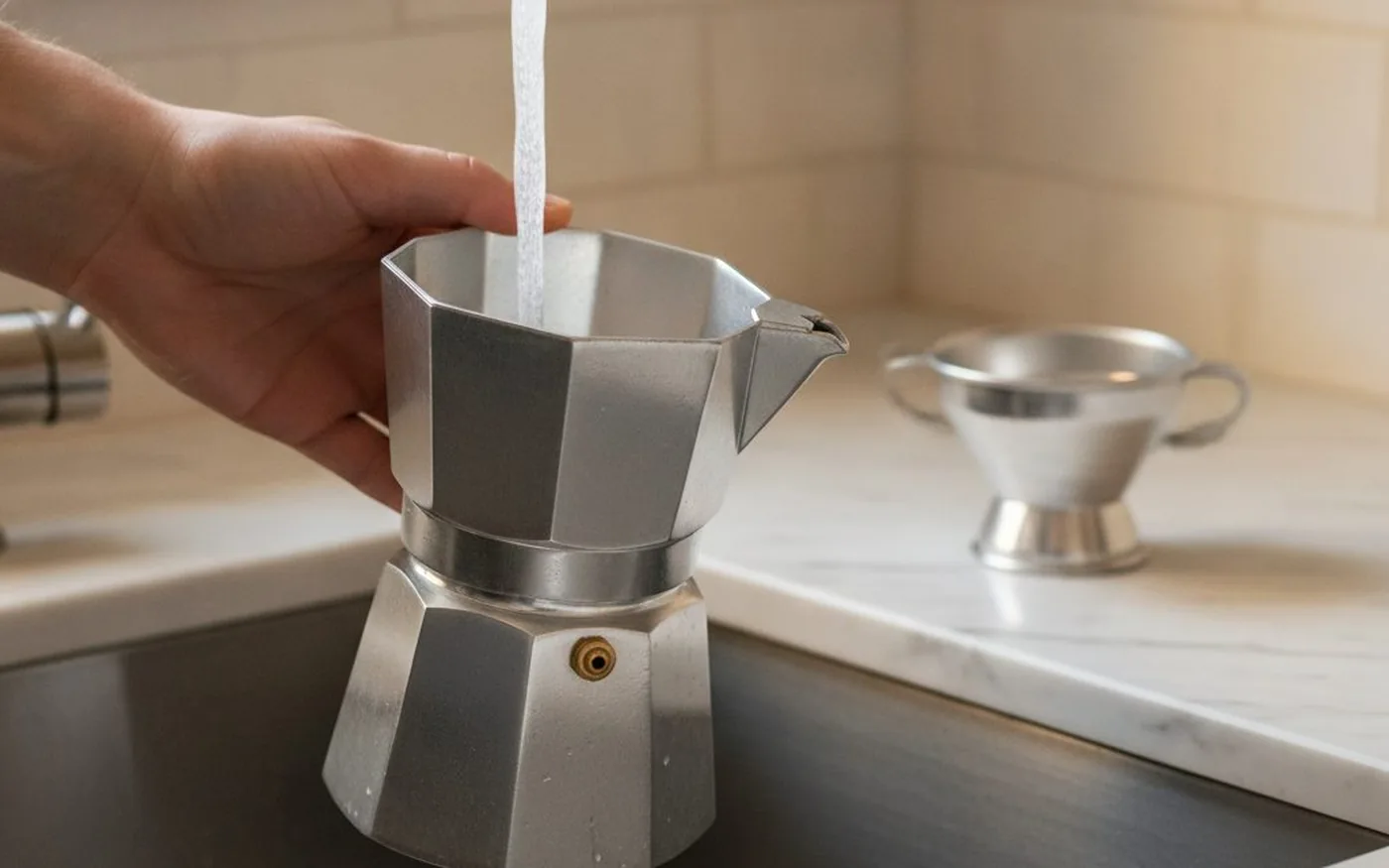
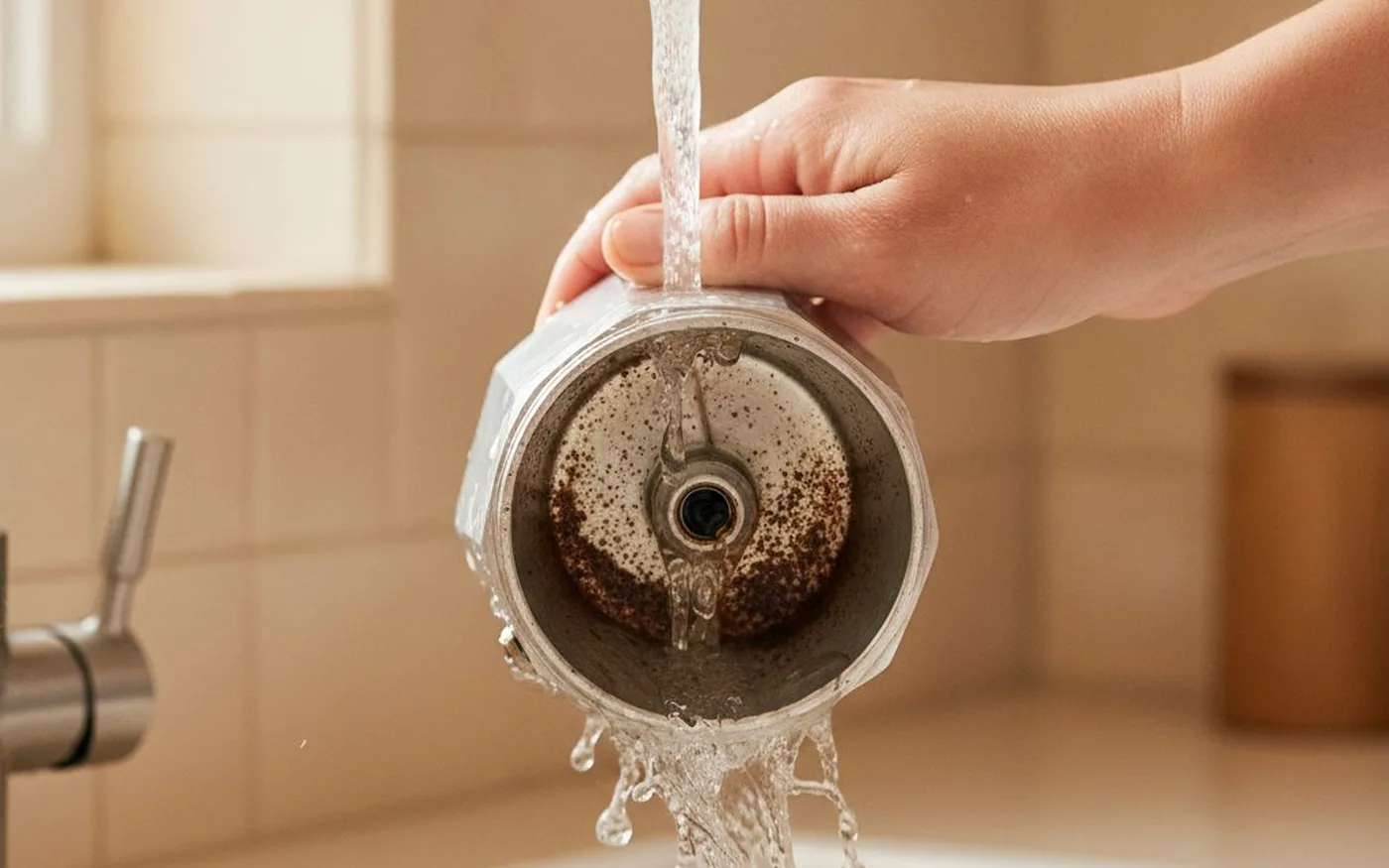
The aluminium body develops a patina with use - a dark oxide layer that Bialetti calls 'seasoning'. This layer is part of the brew character and Bialetti explicitly advises against scrubbing it away. Cleaning instructions matter here: the Moka Express is not dishwasher safe and should be rinsed with warm water only, not soap. First-time owners who wash it with dish soap are removing a layer that took months to build.
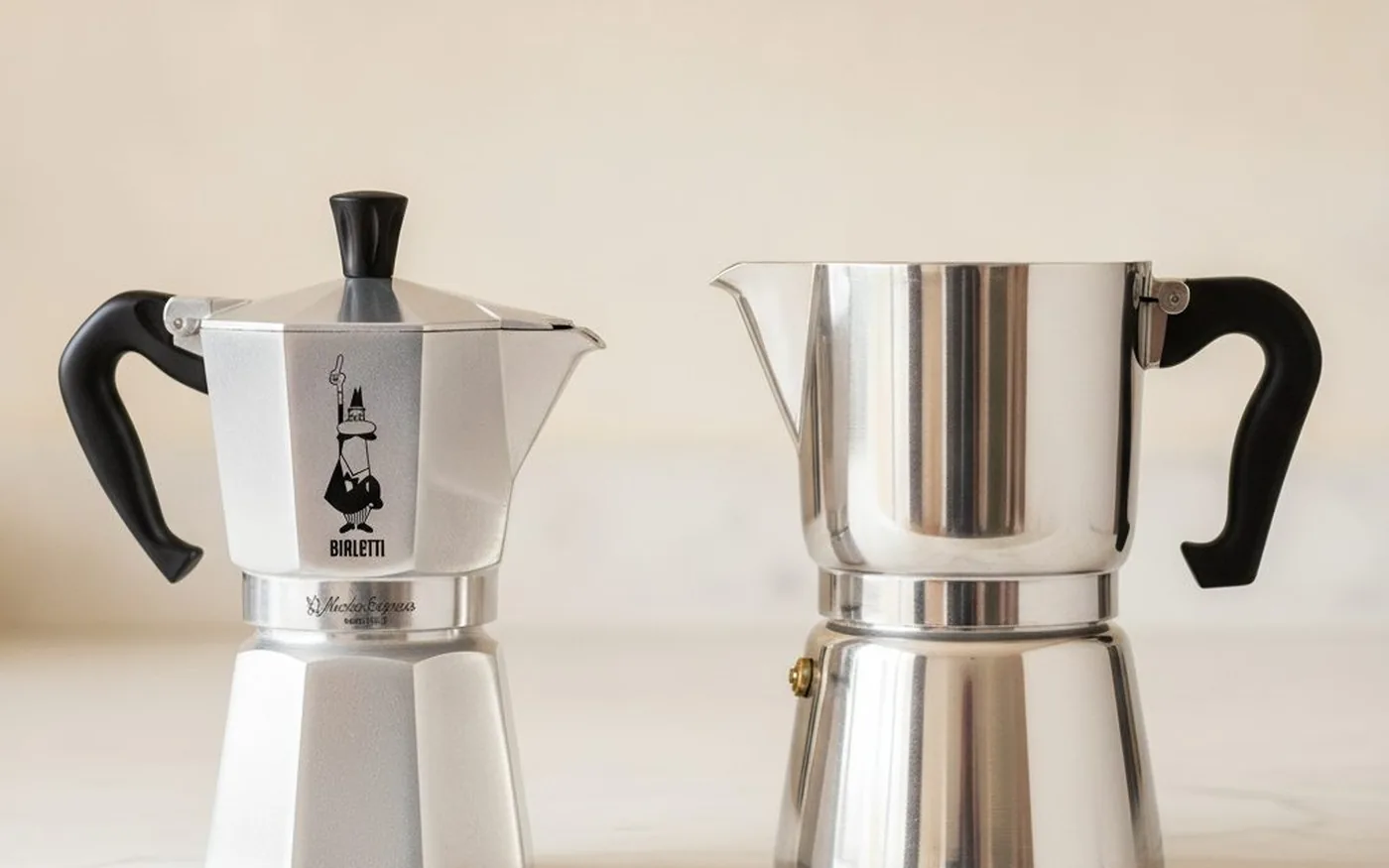
The design lives in MoMA's permanent collection for a reason. The octagonal base, the stepped waist, and the tapered spout have not changed since 1933 because they do not need to. The octagonal shape creates the flame-spreading geometry that heats the base evenly on a gas hob. It is not decorative.
The handle heats up over a long brew. After nearly 90 years, Bialetti has not resolved this. Handle with a tea towel or silicone grip. That is an honest criticism worth naming.
Regarding aluminium safety: the aluminium vs compostable pods debate in the coffee world has drawn attention to metal contact in coffee brewing. The current FSA UK guidance confirms that aluminium cookware, including moka pots, does not present a health risk in normal use. The oxide layer that forms with use further reduces aluminium migration. Bialetti has manufactured this product for generations and it remains approved for food contact use across the EU and UK.
How the Moka Express Actually Brews Coffee
The Moka Express works by forcing boiling water through a pressure-sealed chamber. Water in the lower chamber heats and creates steam pressure - roughly 1.5 bar, as the SCA glossary defines for stovetop moka brewing, compared to the 9 bar required for true espresso. That pressure pushes water up through the coffee grounds in the filter basket and into the upper chamber.
The brewing process is not fully passive. The key variables are heat level, grind size, and the moment you remove the pot from the heat. James Hoffmann's moka pot technique video remains the best single resource for getting the most from any moka pot, and his advice aligns with what our testing found.
Seven-step brewing guide:
- Fill the lower chamber with cold or hot pre-boiled water to just below the safety valve. Hot water reduces extraction time and prevents the coffee from stewing on the stove.
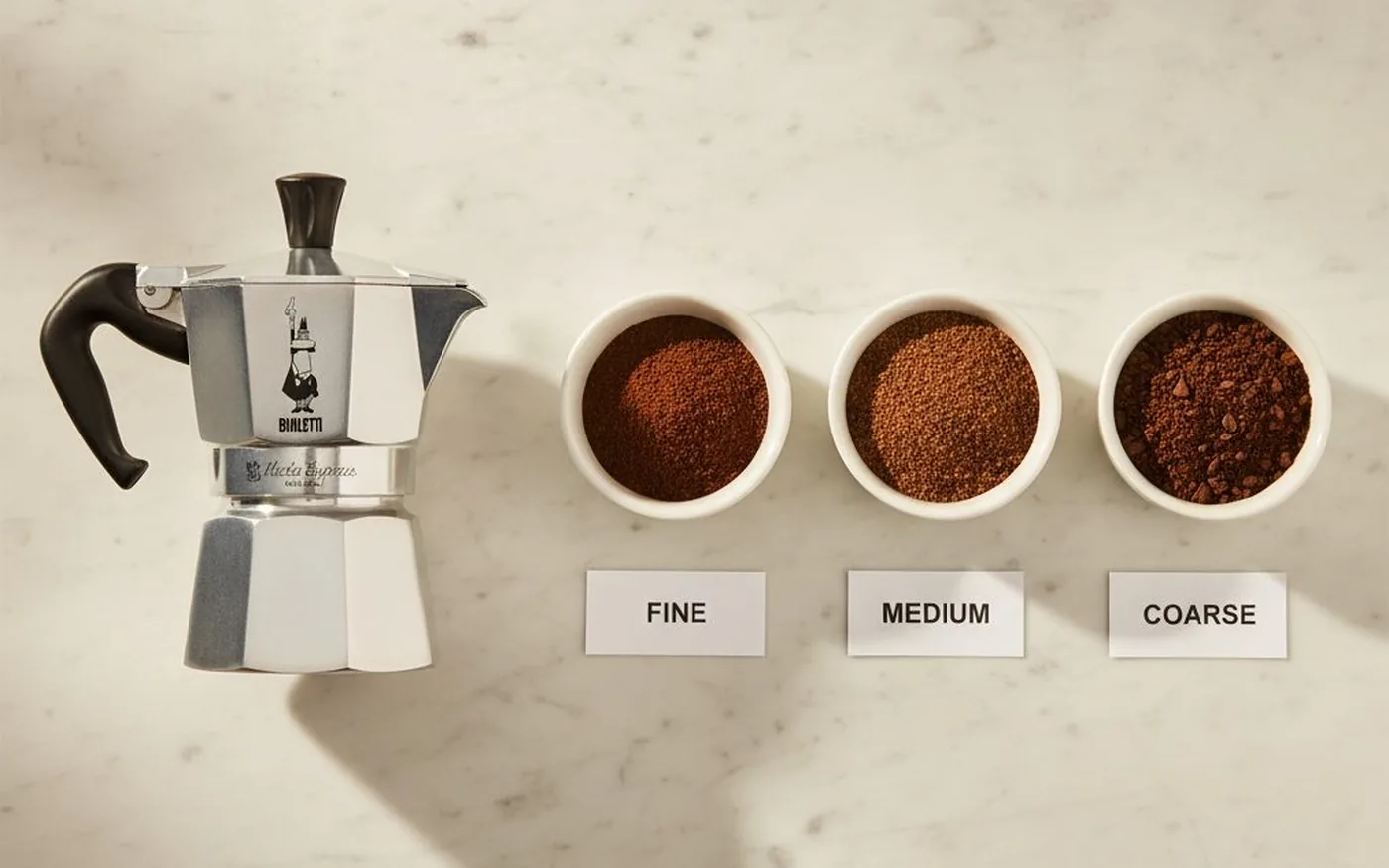
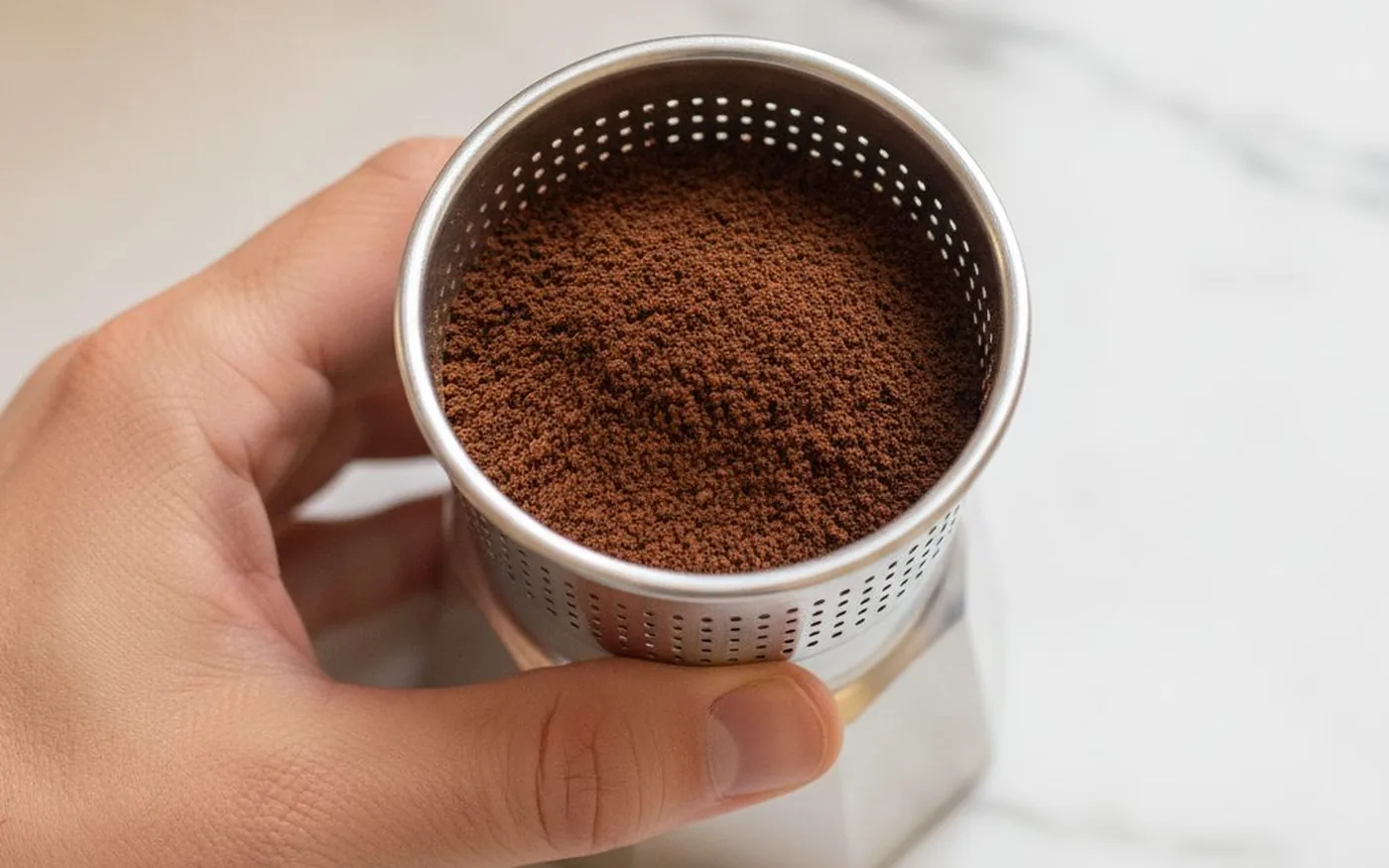
- Fill the filter basket with medium-fine ground coffee - coarser than espresso, finer than filter. Do not tamp. A loose, level fill.
- Wipe the rim of the filter basket clean before screwing the top chamber on. Coffee grounds on the gasket seal will cause leaks.
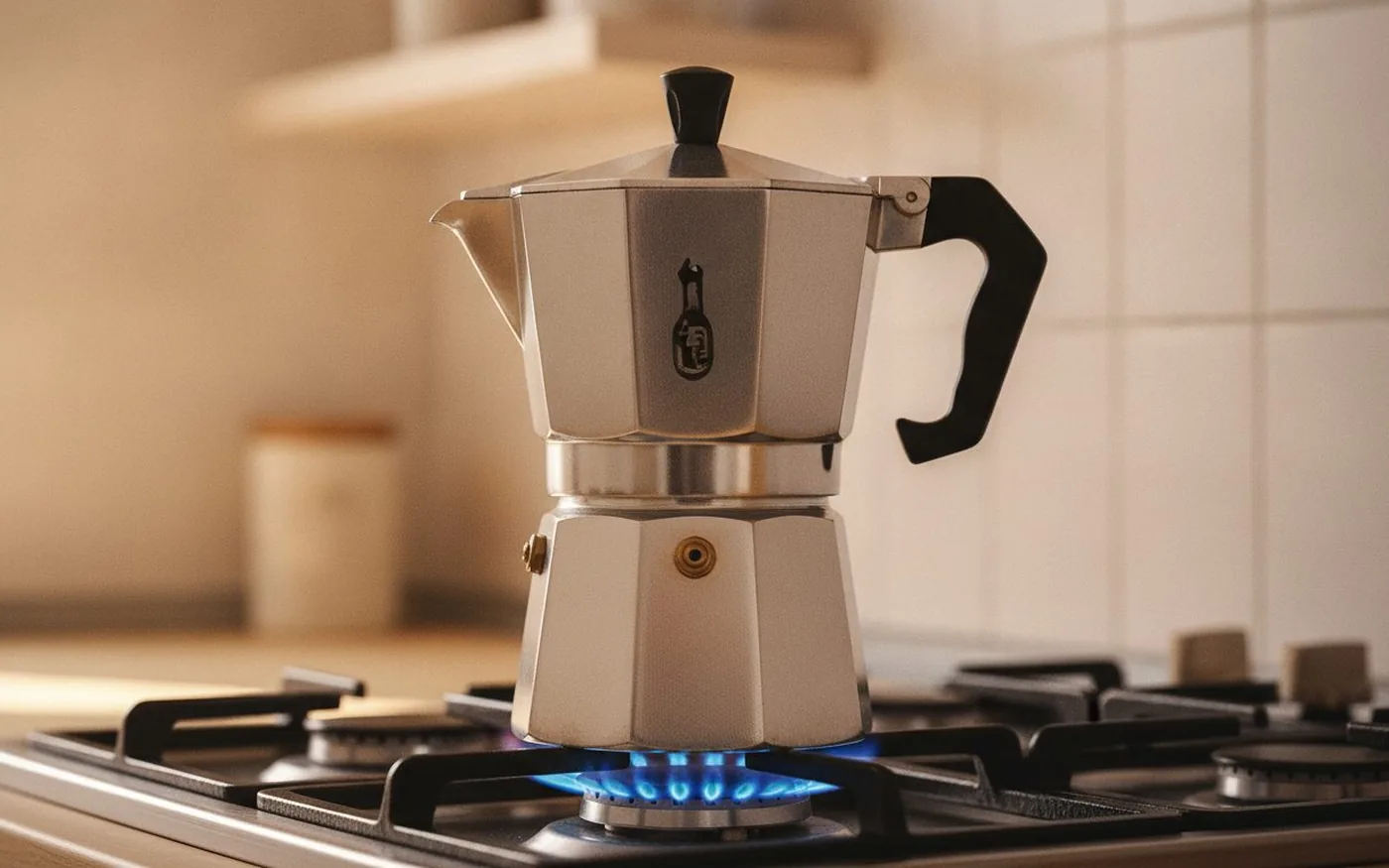
- Place on a medium heat. If using gas, ensure the flame does not spread wider than the base of the pot.
- Keep the lid open and watch the spout.
- As the coffee begins to flow into the upper chamber, reduce the heat to low. This slows extraction and reduces bitterness.
- When you hear a gurgling sound and the flow turns from coffee-brown to pale and spluttering, remove from the heat immediately. Run the base under cold water to stop extraction.
The biggest mistake most people make with a Moka Express is leaving it on full heat until the coffee is done. That final minute of high-heat extraction is what produces the bitter, acrid flavour that gives moka pot coffee a bad reputation. A how to make espresso at home guide will tell you the same about espresso: heat control and timing are the variables that separate a clean cup from a burnt one.
Taste Test: What the Moka Express Delivers in the Cup
I brewed every size variant with these ground coffees during testing: Lavazza Crema e Gusto (a widely available Italian commercial blend), Illy Classico (medium roast, Italian benchmark), and Balance Coffee's Darkfire Energy ground (Brazil 60% / Colombia 40%, darker roast with a chocolate-forward profile).
Full transparency: I founded Balance Coffee, so I am naming my own beans here. I included them because Darkfire Energy was the best performer of the three in the moka pot, not to promote it.
Lavazza Crema e Gusto: Strong, chocolatey, one-dimensional. Exactly what the tin promises. Good everyday value for moka pot use. Tasted fine in all five sizes.
Illy Classico: Cleaner than Lavazza, more nuanced. The brightness came through in the 3-cup size where the brew time is shorter. A step up at a corresponding step up in price.
Balance Coffee Darkfire Energy: The Brazil profile suited the moka pot method well. Milk chocolate on the nose, a rounded fig sweetness through the body, and a short clean finish with no bitterness when the technique was right. If you want a recommendation: Darkfire Energy ground or any medium-dark single-origin Brazilian ground for moka brewing. The high-acid, lighter roast profiles (Ethiopian natural, Kenyan) can taste sharp and green at moka pressure and temperature.
The moka pot is not espresso. Anyone who tells you the Moka Express makes espresso has not pulled an espresso shot. What it makes is a coffee that is stronger than filter, more concentrated than AeroPress, and genuinely satisfying if you let it be what it is.
For those wanting to pair their Moka Express with the right beans, exploring best healthy coffee beans uk options that include medium-dark Brazilian or Colombian ground coffees will give you the most consistent moka pot results.
Bialetti Moka Express Sizes Compared (1, 3, 6, 9, and 12 Cup)
The size question is the most common one I hear about the Moka Express. The short answer: buy the size that matches how many people you brew for, not the largest one in case.
| Size | Best for | Price (as of June 2026) | Induction compatible |
|---|---|---|---|
| 1-cup | Solo brewing, travel, concentrated base for espresso-style drinks | From £20 | No |
| 3-cup | 1-2 people, daily use, standard UK home | From £25 | No |
| 6-cup | 2-4 people, office use, larger servings | From £30 | No |
| 9-cup | 4-6 people, entertaining | From £40 | No |
| 12-cup | Large households, events | From £50 | No |
A common sizing mistake: buying a 6-cup for one person and running it with less than a full basket. The Moka Express performs worst when under-filled. The filter basket is designed to be used full. If you brew for one, buy the 1-cup or 3-cup. The 3-cup is the best all-round buy for most UK households.
Prices checked on Amazon UK and John Lewis, June 2026.
Bialetti Moka Express Induction: What UK Buyers Need to Know
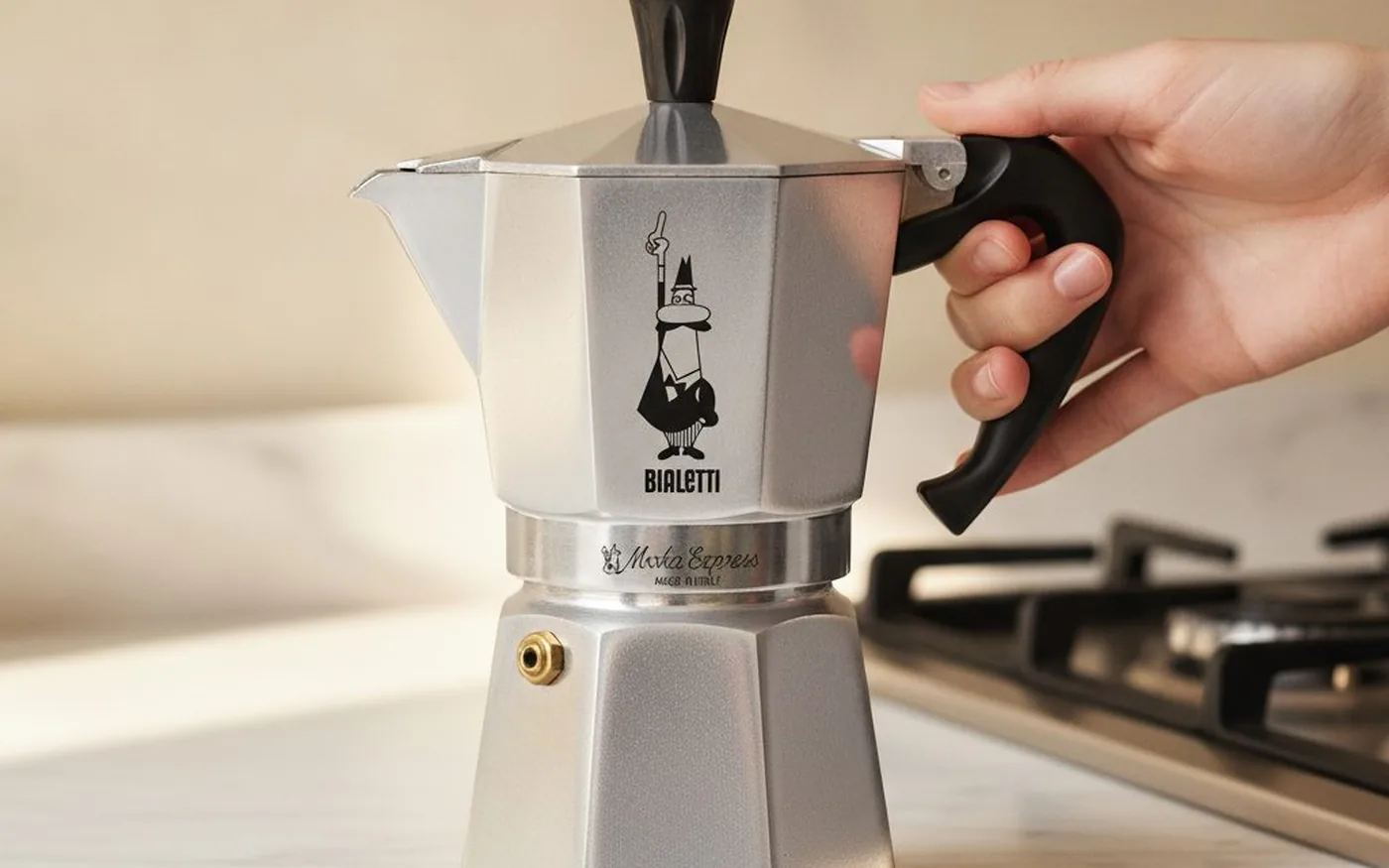
The standard Bialetti Moka Express has an aluminium base. Aluminium does not respond to induction hobs. If you cook on induction and you want a Bialetti, you have three options.
Option 1 - Buy the Bialetti Moka Express Induction. This is a stainless steel base variant available in 3, 4, and 6-cup sizes. It is induction-compatible out of the box. It costs slightly more than the standard model. It does not have the full size range (no 1-cup, 9-cup, or 12-cup variants).
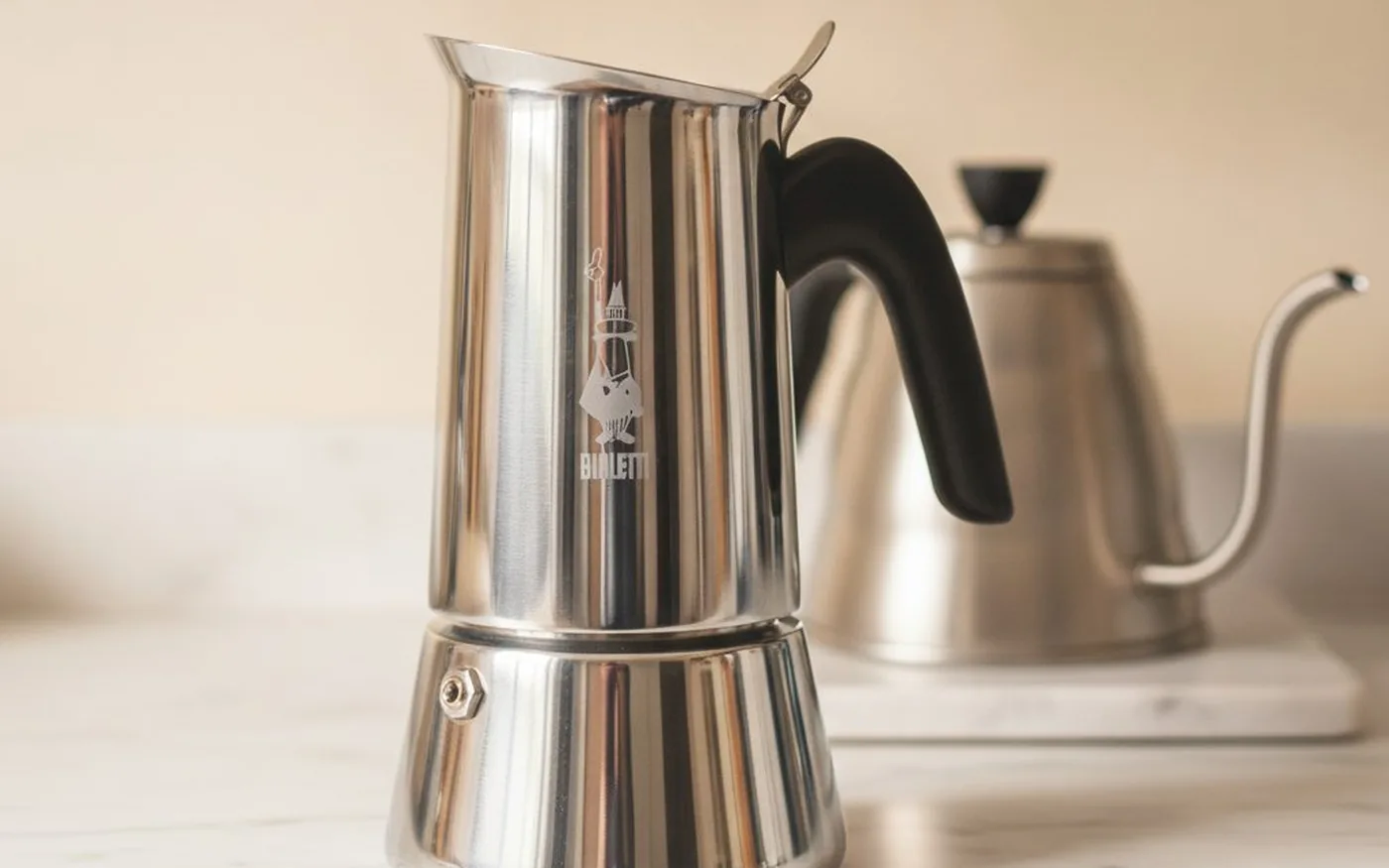
Option 2 - Buy the Bialetti Venus or Bialetti Musa. Both are full stainless steel, both are induction-compatible, and both are available in a wider size range. The Venus has the traditional moka pot silhouette. The Musa has a modern straight-sided design. Either is the better choice over the induction adapter workaround.
Option 3 - Use an induction adapter disc. A flat steel disc placed between the hob and the aluminium base transfers heat by conduction. It works. It slows down heat transfer compared to a direct induction connection, adds about 60-90 seconds to the brew, and adds one more piece of kit to clean and store. If you have an induction hob, just buy the Venus or the Moka Express Induction. The adapter disc is a faff and the end result is inferior.
Cleaning and Maintenance: The Three Rules That Keep It Alive
The Moka Express will last decades if you follow three rules. Ignore them and you will be buying a replacement gasket within 18 months.
Rule 1: No dishwasher, no soap. Rinse with warm water only after each use. The dark patina inside the brewer is the 'seasoning' layer - it develops with use and contributes to the flavour. Soap strips it. The dishwasher warps the seal.
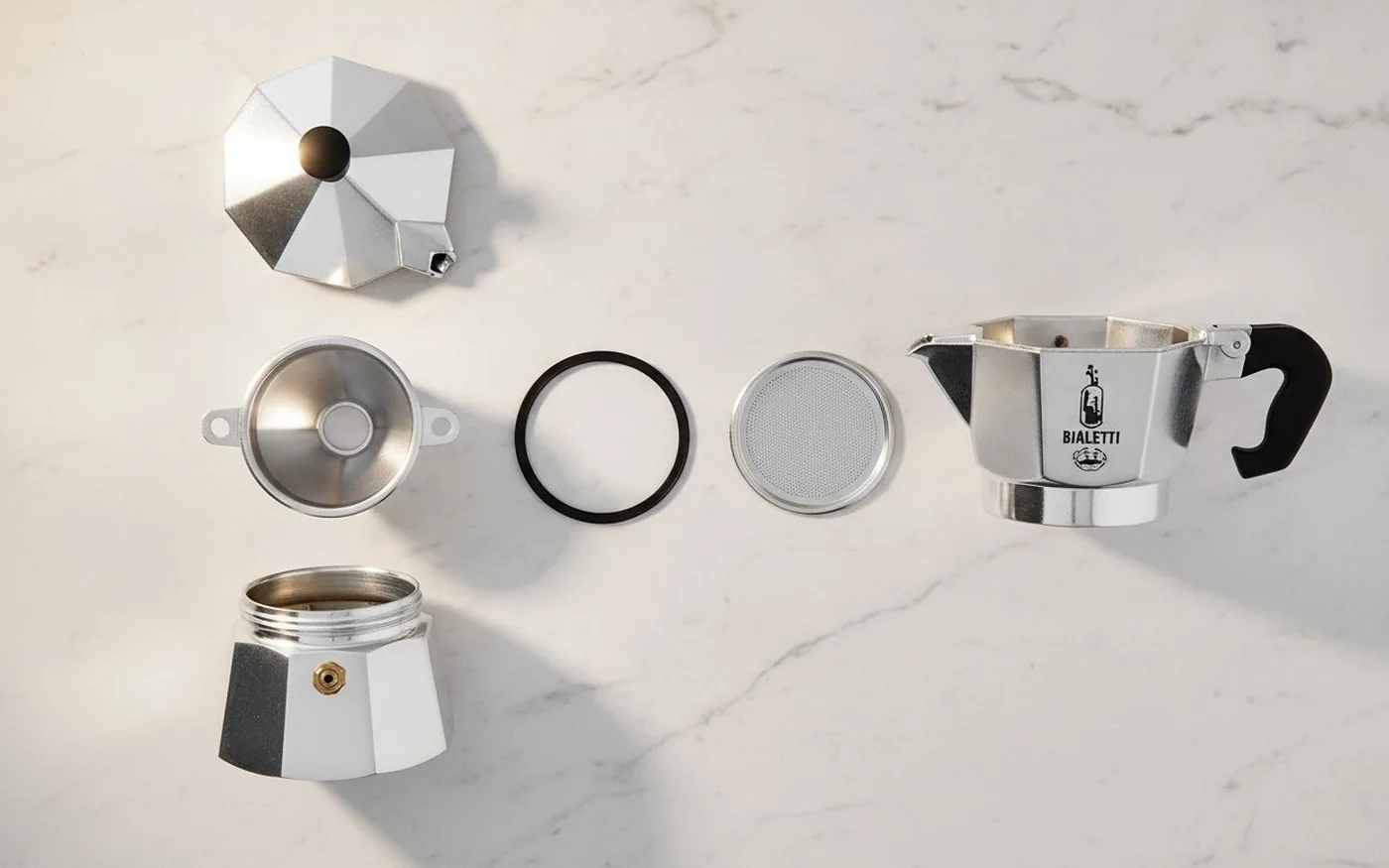
Rule 2: Replace the rubber gasket every 12-18 months. The gasket is the only wearable part. When coffee starts leaking from the seal between the upper and lower chambers, the gasket needs replacing. Bialetti sells replacement gaskets on their UK site and they are available on Amazon for under £5. A leaking seal is not a reason to buy a new pot.
Rule 3: Store it assembled but dry. Do not store with the lid closed tight when wet. Moisture trapped in the seal accelerates gasket degradation. A quick air-dry with the lid tilted and the basket removed adds years to the gasket lifespan.
With near-daily use, the gasket is the part that wears; the pot itself does not. The gasket is a consumable; the pot is not. For those interested in best burr coffee grinder options, grind quality is the other variable that most affects moka pot output - a consistent medium-fine grind produces visibly cleaner cups.
Common Bialetti Moka Express Problems and How to Fix Them
Problem: Coffee tastes bitter. The most common complaint. Cause: heat too high for too long, or grind too fine. Fix: reduce heat after the first coffee appears at the spout, switch to a coarser grind, and start with pre-boiled water to reduce total time on the stove.
Problem: Coffee leaks from the seal. Cause: the gasket is worn, or there are grounds on the gasket rim. Fix: replace the gasket (£5 on Amazon) or check that the rim is clean before screwing the chambers together.
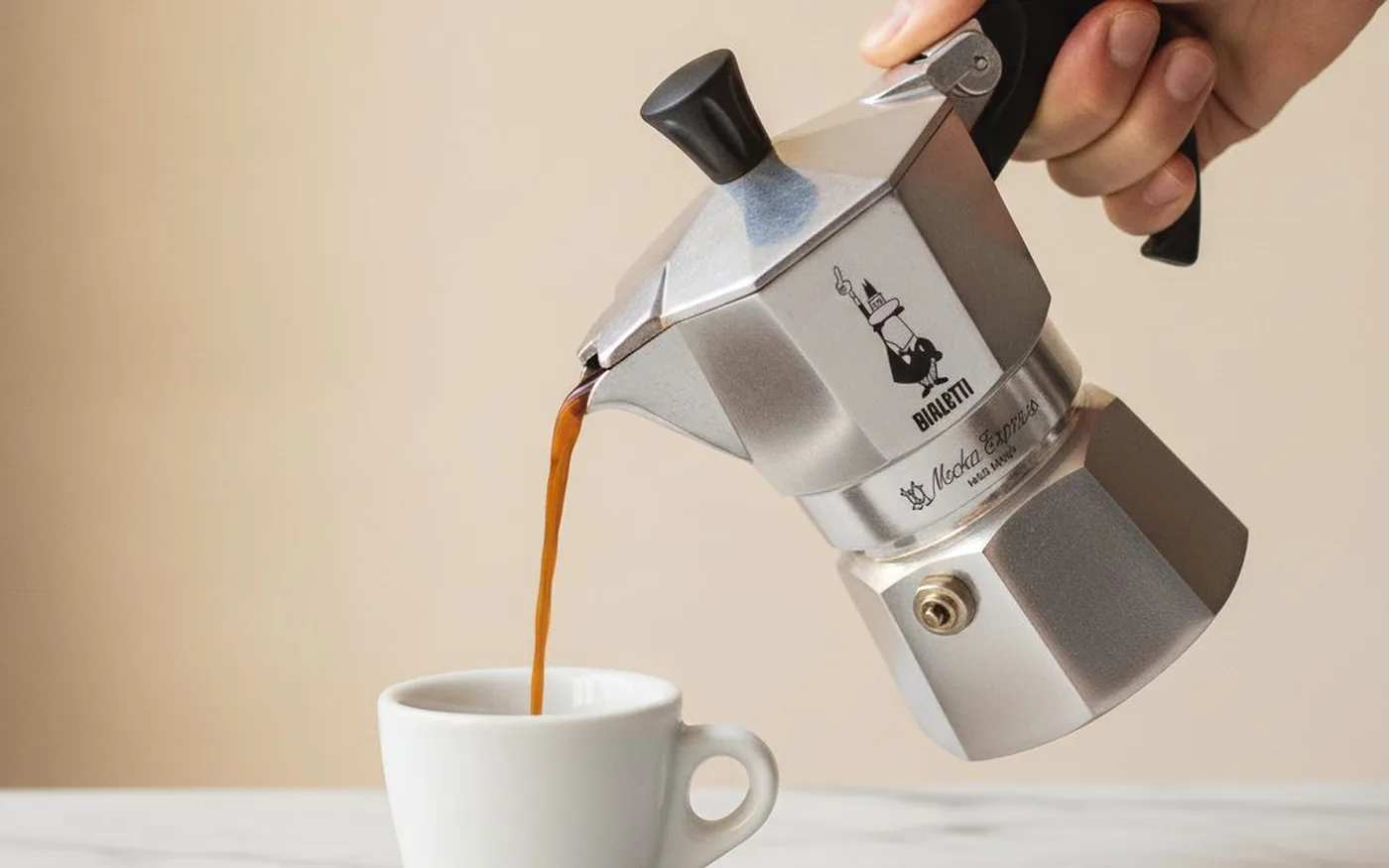
Problem: Coffee spurts and spatters rather than flowing smoothly. Cause: heat too high, which causes rapid steam pressure rather than a controlled flow. Fix: reduce heat to medium-low once brewing starts.
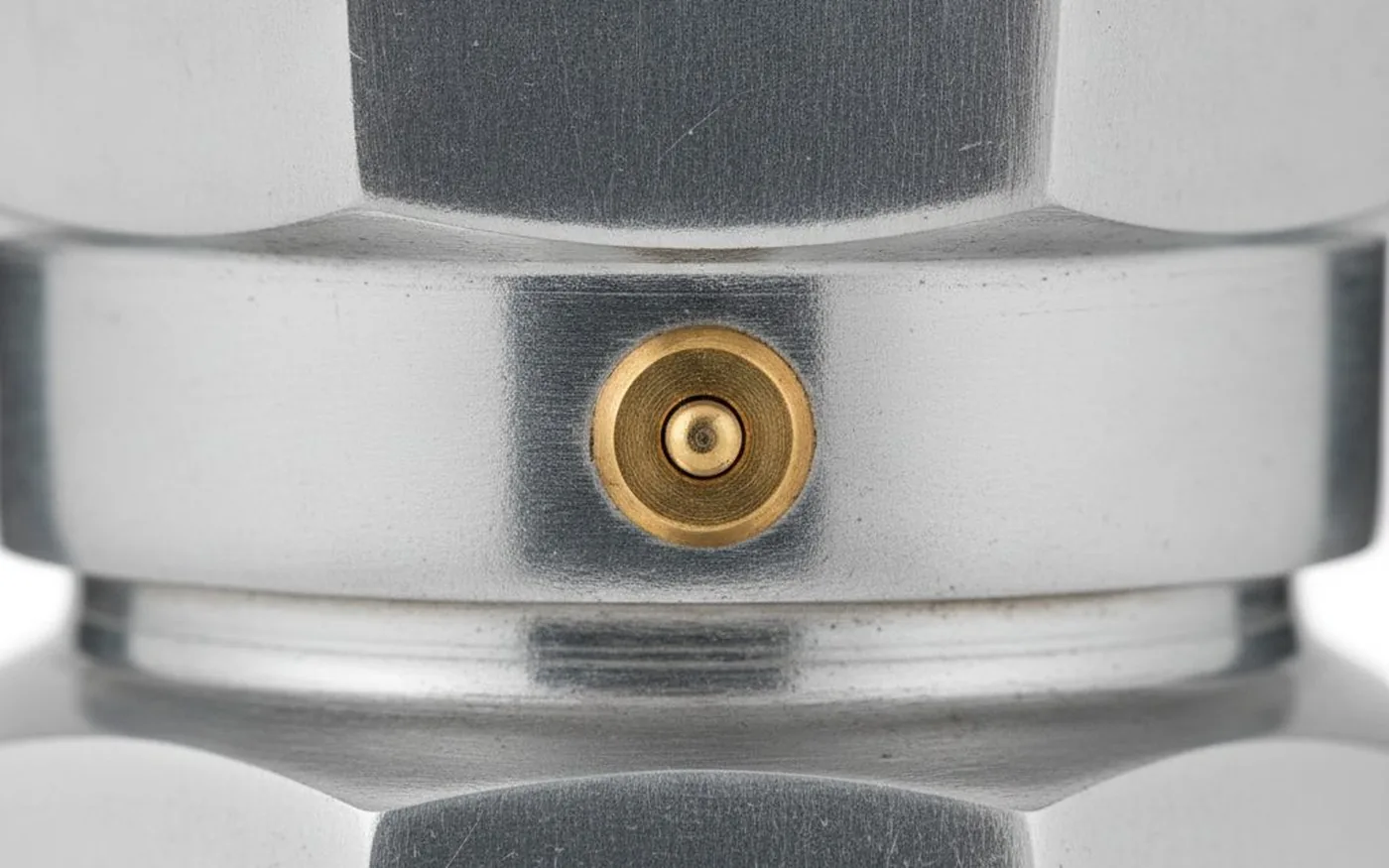
Problem: No coffee comes out. Cause: the valve in the lower chamber is blocked, or the grind is too fine (creating a water-impermeable puck). Fix: check the safety valve is clear of coffee grounds, and use a coarser grind.
Problem: Metallic taste in early brews. Cause: new aluminium releasing into the brew before the seasoning layer forms. Fix: run the first three brews as 'throwaway' brews using cheap coffee. Do not drink them. Discard and repeat. The metallic note resolves by the fourth brew in most cases.
The Bialetti SpA business went through a restructuring process in 2024-2025 following financial difficulties, but UK spare parts supply - gaskets, filter baskets, valves - remains available through Amazon UK and Bialetti's own UK stockists. This is worth knowing before buying: replacement parts are accessible and affordable.
Bialetti Moka Express vs Brikka vs Venus vs Competitors
The moka pot category is not complicated. There are four genuinely different products in the Bialetti range, and two meaningful competitors outside it.
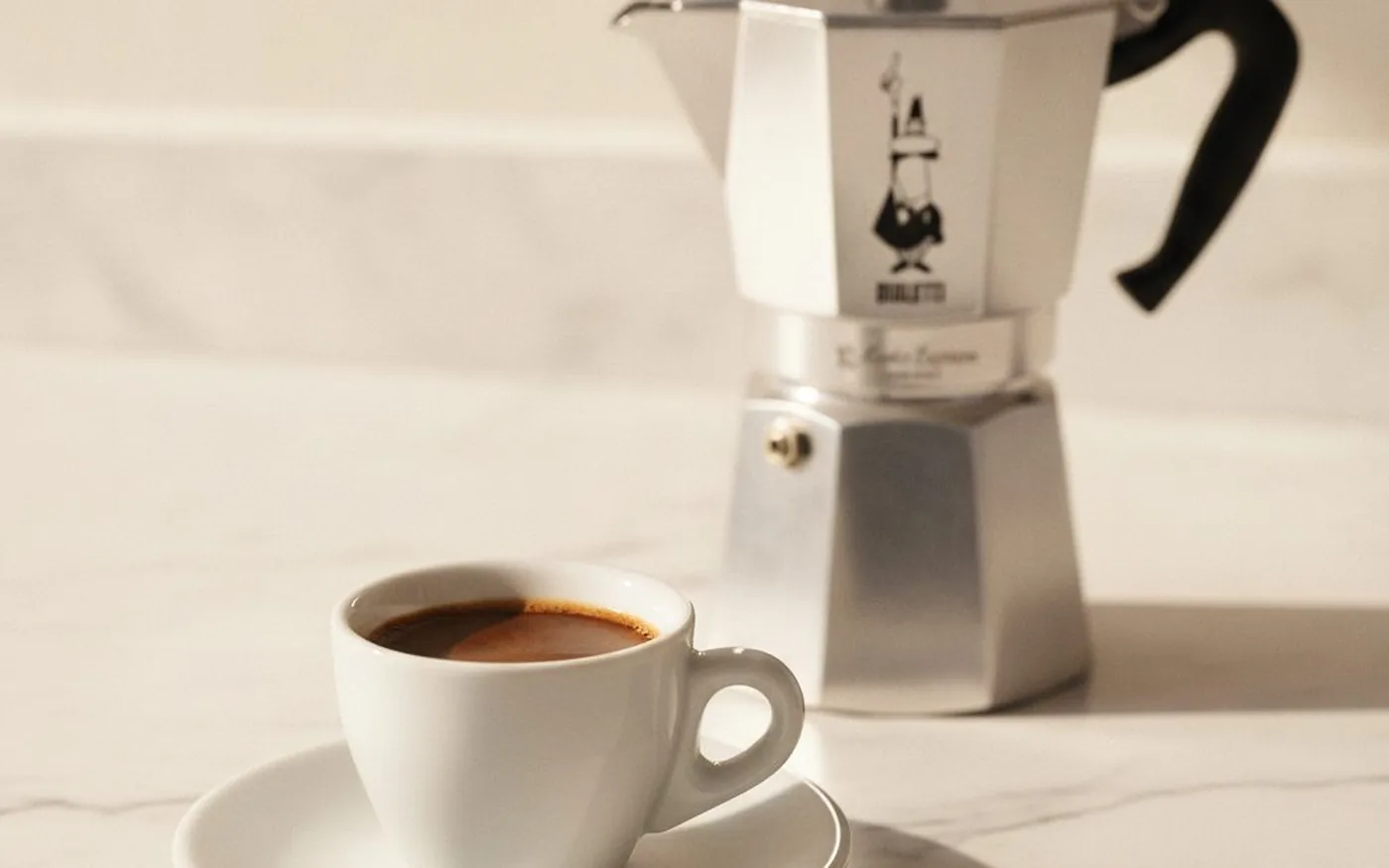
| Product | Material | Induction | Crema | Key difference | Price from |
|---|---|---|---|---|---|
| Bialetti Moka Express | Aluminium | No | No | The original. Widest size range. | £20 |
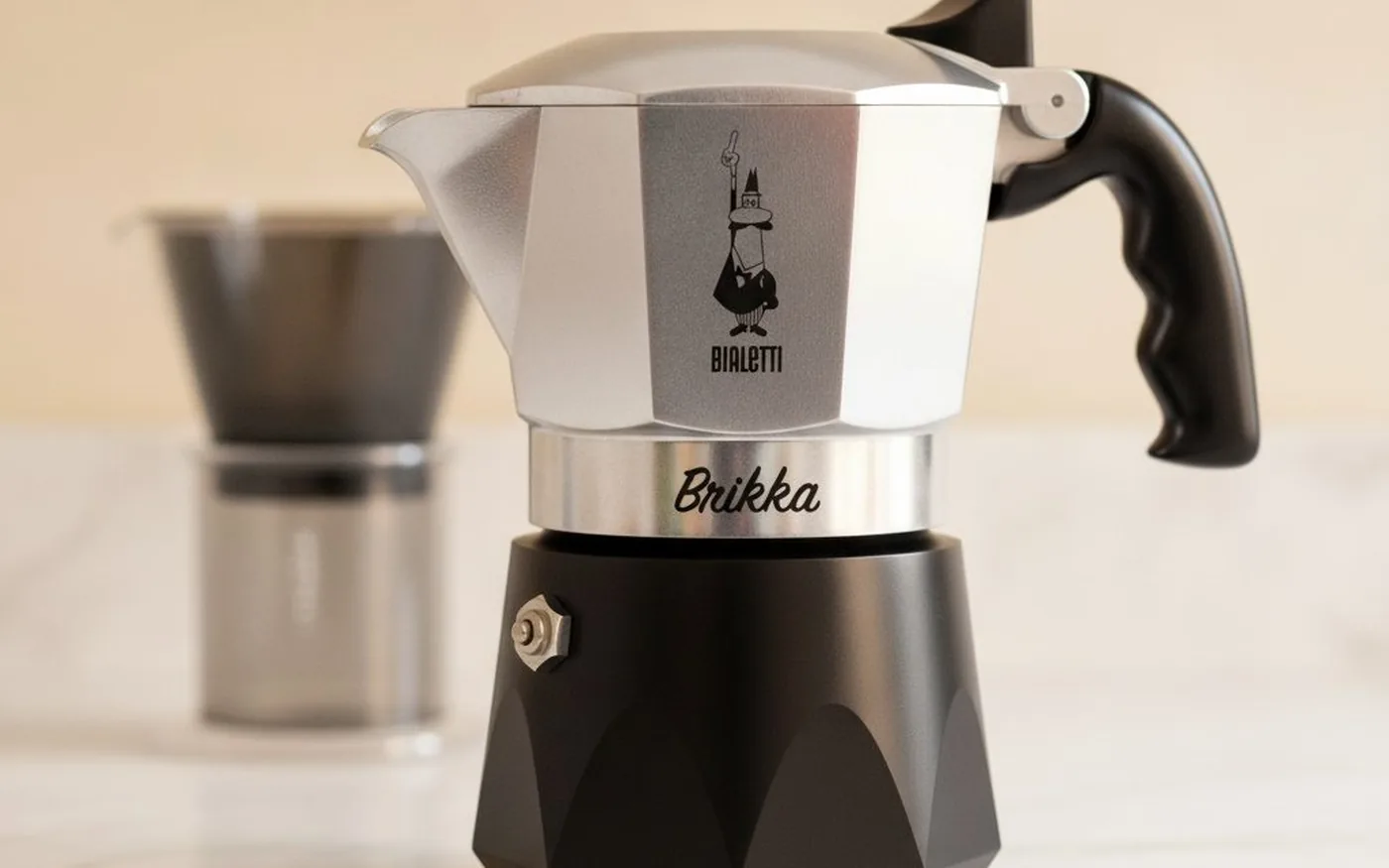
| Bialetti Brikka | Aluminium | No | Yes | Pressurised valve creates crema layer. Crema is thinner than espresso crema but present. | £30 |
| Bialetti Venus | Stainless steel | Yes | No | Induction-compatible version of the Moka Express. Same brew principle. | £30 |
| Bialetti Musa | Stainless steel | Yes | No | Modern straight-sided design. Induction-compatible. Dishwasher safe. | £35 |
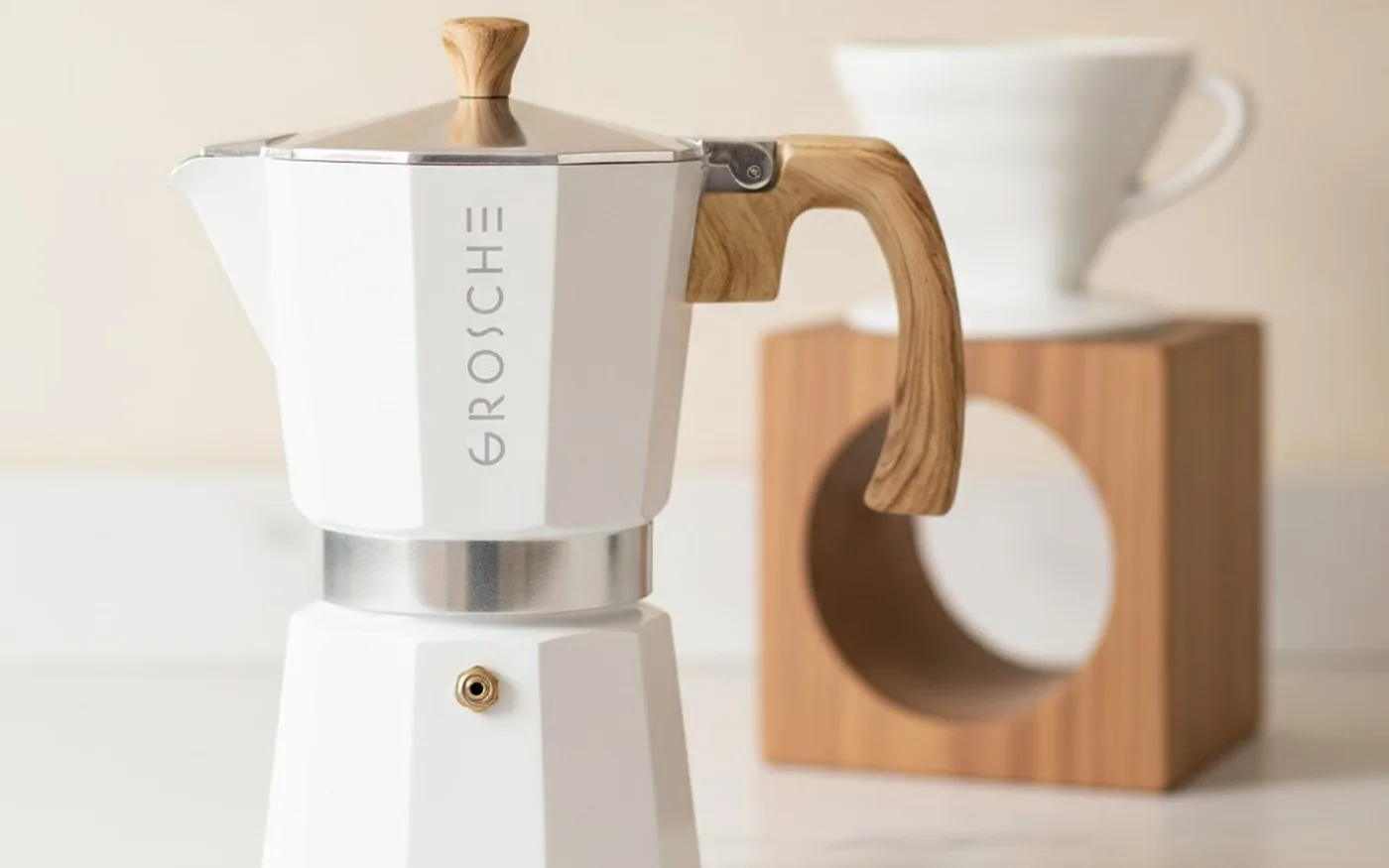
| Grosche Milano | Aluminium | No | No | Budget alternative. Similar build quality to the Moka Express. Less brand heritage, lower cost. | £15 |
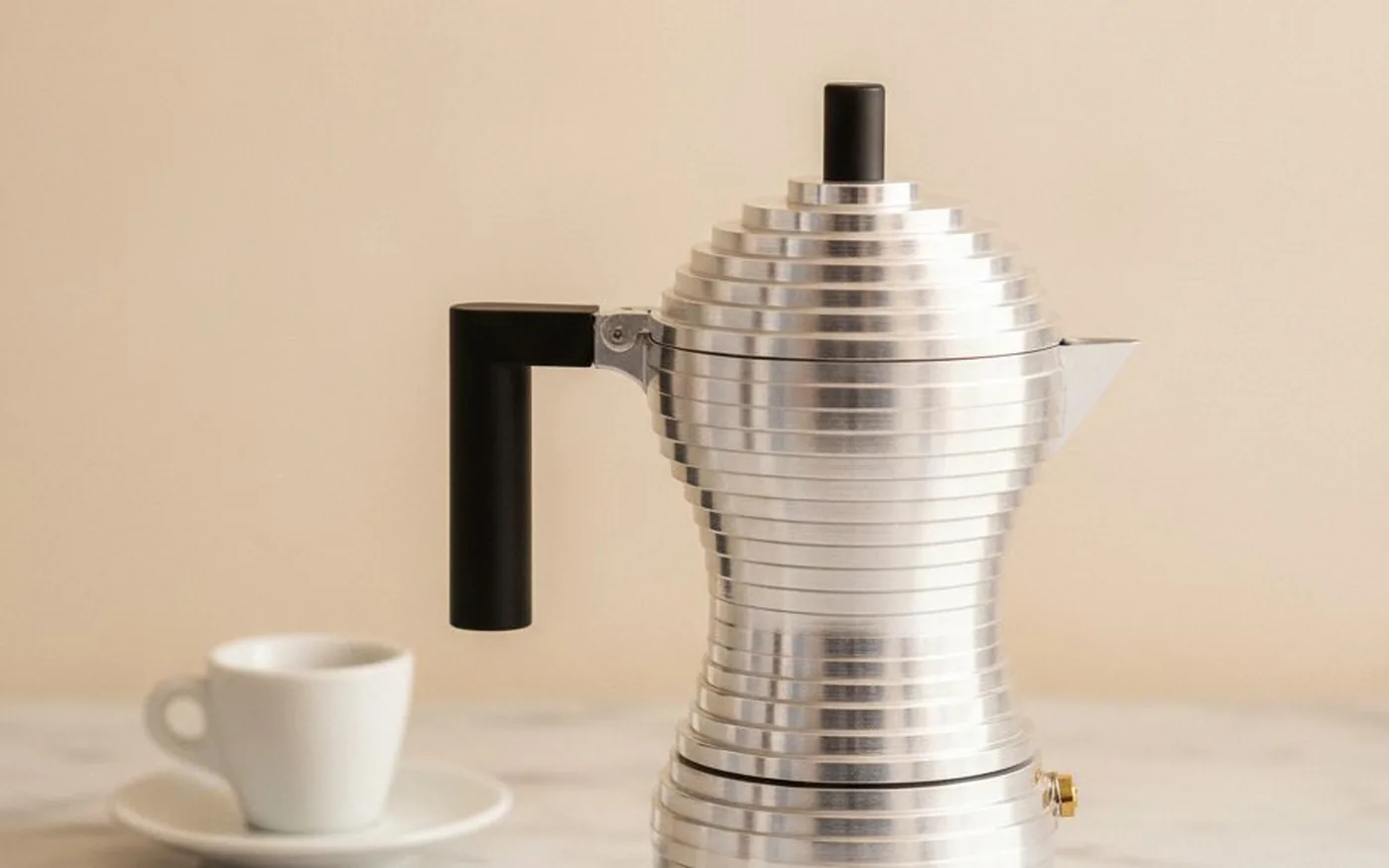
| Alessi Pulcina | Aluminium | No | No | Designed by Michele De Lucchi. Design statement. Brews well. Costs significantly more. | £65 |
If you want a French press alternative rather than a stovetop brewer, the best cafetiere options serve a different cup profile - fuller body, lower concentration, no pressure involved.
The honest summary on Bialetti vs Brikka: the Brikka's crema is a marketing feature that some buyers genuinely value and others find indistinguishable from the Moka Express output after a few days. If crema matters to you, spend the extra £10. If it does not, save it.
The Alessi Pulcina is a beautiful brewer. The brew quality is not meaningfully different from the Moka Express output. You are paying for Michele De Lucchi's design and the Alessi name. That is a legitimate reason to buy it if design matters to you - it is not a reason to buy it on brew quality grounds.
What Bialetti Could Do Better (Honest Criticisms)
Three genuine criticisms, in order of importance.
The handle heats up. This has been true since 1933. Bialetti has had 90 years to fit a better heat-resistant handle design. Bakelite handles on the lid and body accumulate heat over a long brew. Use a tea towel or a silicone sleeve. This should not be necessary on a £30 product in 2026.
The gasket lifespan is shorter than stainless alternatives. The Cuisinox Roma and similar heavy-gauge stainless moka pots use silicone gaskets that outlast the Bialetti rubber seal by years. The Moka Express gasket needs replacing every 12-24 months with regular use. At £5 a replacement it is not expensive, but it is a faff that stainless competitors avoid.
No induction compatibility on the standard model. The Venus and the Moka Induction model exist as solutions, but they do not cover the full size range. A buyer who wants a 9-cup or 12-cup induction-compatible Bialetti has no official option.
These are real criticisms. They do not change the overall verdict, but they are worth naming.
Bialetti Moka Express Price and Where to Buy in the UK
At under £26 for the most-used 3-cup size, the Moka Express undercuts every comparable stovetop brewer from a named brand. Current prices as of June 2026:
- Amazon UK (affiliate link): 3-cup from £25.99, 6-cup from £29.99, all five sizes available
- John Lewis: similar pricing, with reliability of returns policy and in-store availability
- Lakeland: stocks selected sizes, often with cookware bundles
- Selfridges: stocks the full range including gift packaging
For the standard 3-cup, Amazon UK offers the best price point and fastest delivery. For a gift purchase, the Selfridges or John Lewis gift packaging options are worth the slight premium.
Prices correct at time of writing, June 2026. Prices vary by size and retailer.
Frequently Asked Questions
Does Bialetti Moka Express work on induction?
The standard Bialetti Moka Express has an aluminium base and does not work on induction hobs. Only the Bialetti Moka Express Induction model (stainless base, available in 3, 4, and 6 cup) and the Bialetti Venus (full stainless steel) are induction-compatible. If you cook on induction, you need one of those two models, or an induction adapter disc - though the adapter disc workaround is slower and less efficient than simply buying the induction-specific model.
What grind size for Bialetti Moka Express?
Use a medium-fine grind - coarser than espresso, finer than filter. A good starting point is the same setting you would use for AeroPress, or finer. Do not tamp the grounds in the filter basket. A level, untamped fill allows water to flow through at the right rate. Grinding too fine creates over-extraction and bitterness. Grinding too coarse produces a thin, under-extracted cup.
Why is Bialetti so expensive?
The Bialetti Moka Express starts at around £20, which is not expensive for a brewer that lasts decades. The perception of cost may come from comparison with £8 unbranded copies on Amazon. The Bialetti premium reflects the Italian manufacturing heritage, quality control, and the availability of replacement parts. Unbranded copies may cost half as much but frequently fail at the seal, use lower-grade aluminium, and have no replacement part supply. Over a five-year ownership horizon, the Bialetti is cheaper.
How do I use my Bialetti Moka Express?
Fill the lower chamber with cold water to just below the safety valve. Fill the filter basket with medium-fine ground coffee, level but not tamped. Screw the top chamber on tightly and place on medium heat. Keep the lid open and watch the spout. When coffee starts flowing, reduce to low heat. Remove from heat when the flow turns pale and you hear gurgling. The full process takes three to five minutes. For the first two or three brews, discard the output - new aluminium benefits from seasoning.
Is the Bialetti Moka Express real espresso?
No. The Bialetti Moka Express brews at approximately 1.5 bar of pressure. True espresso requires 9 bar. The result is a concentrated coffee that is stronger than filter and closer to espresso in character than most other brew methods, but it lacks the crema, the emulsification, and the precise extraction that define espresso. It is moka coffee - a category of its own.
How long does a Bialetti Moka Express last?
Decades, with basic maintenance. The aluminium body does not wear out under normal use. The only consumable part is the rubber gasket, which needs replacing every 12-18 months with daily use. Replacement gaskets cost under £5 and are widely available. A well-kept pot keeps its body unchanged for years; only the gasket needs replacing. Bialetti pots from the 1970s still brew excellent coffee when re-gasketed.
Final Verdict: Should You Buy the Bialetti Moka Express in 2026?
Yes. The Bialetti Moka Express is one of the most reliable, longest-lasting, and best-value coffee brewers you can buy in the UK. Testing all five size variants confirmed what my earlier moka pot brewing had already suggested: the 90-year-old design is still correct.
Buy the 3-cup unless you are regularly brewing for more than two people. Buy the Venus if you have an induction hob. Read the technique section before your first brew and you will have excellent coffee on the first attempt.
The honest caveats: it is not espresso, the handle gets hot, and you will replace the gasket every year or two. None of those things should stop you buying it.
For a broader view of stovetop brewing alternatives, the best moka pot guide covers the full category including stainless, induction, and premium options. For whole-bean grinding to accompany your moka pot, the best espresso grinder under £250 roundup includes grinders that dial into the medium-fine range the Moka Express needs.
“The Bialetti Moka Express is a 90-year-old design that still does exactly what it promises. Buy the right size, learn the technique, and it will outlast the coffee trend it inspired.”James Bellis, founder, Balance Coffee
A wellness entrepreneur and biohacker, James explores the intersection of hospitality and health - from clean fuel and recovery tools to mindful routines that build balance into daily life.