Mushroom Tincture Benefits: What the Research Says
Not one trial behind these findings tested a tincture.
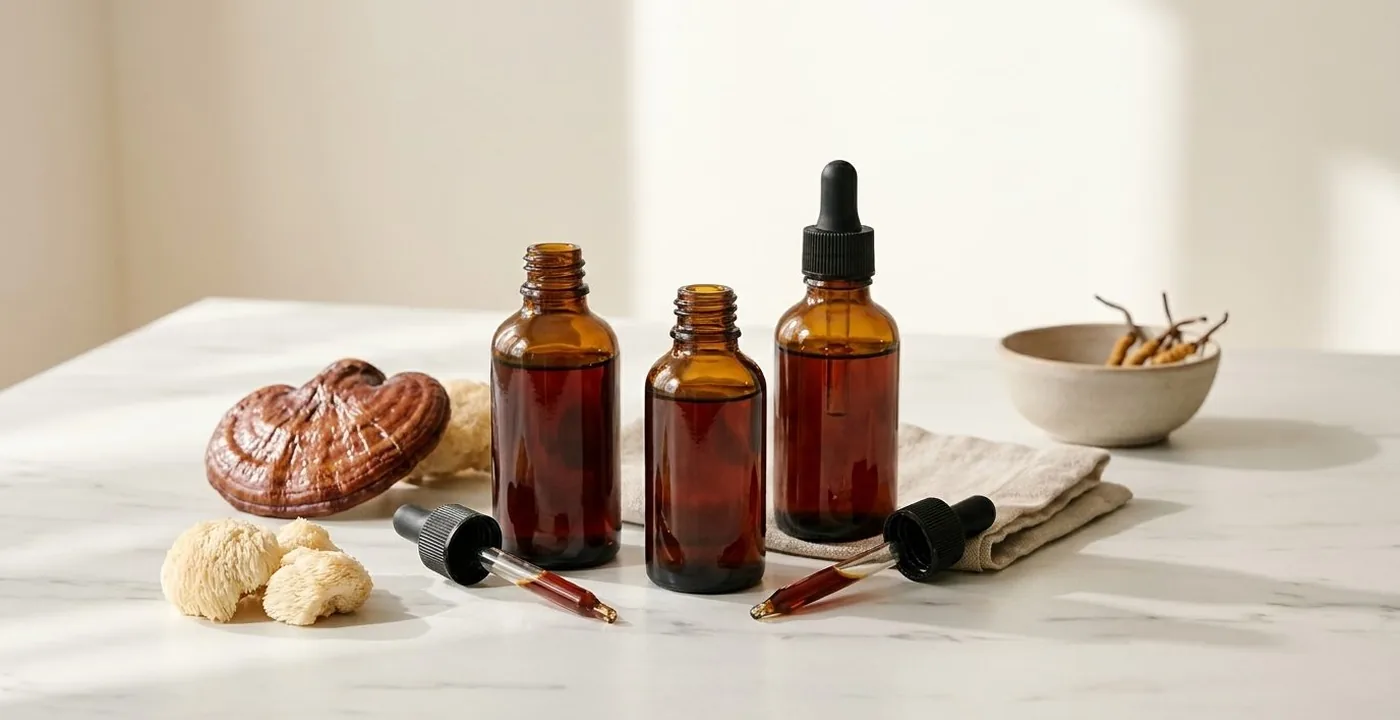
Table of Contents
Some of the links in this article are affiliate links, which help fund our independent review work at no extra cost to you. Every recommendation is based on hands-on testing through The Editor Lab methodology. No brand pays to appear, and no placement is guaranteed.
Not one human trial behind mushroom tincture benefits tested a tincture, which changes how you should read every label. The best evidence is for reishi on immune-cell markers and cordyceps on submaximal exercise capacity, while lion's mane does best in people who already have cognitive impairment.
I am a registered Nutritional Therapist (dipNT) and a BANT member, and I have run nutrition clinics at The Wellness Clinic at Harrods. People arrive with a bottle they were sold and cannot judge, and this guide is the answer I would give you.
I reviewed 10 studies, nine in people and one in cells and mice, and graded each claim by who was studied, what type of study it was and the format given. Trials in people stay separate from work in rodents and cell cultures, and every study is linked so you can check my reading.
What the Evidence Actually Supports
Here is the graded version, so you can see the whole picture before the detail. Reishi has the strongest healthy-adult evidence, and it is measured in immune cell counts, not in how often people get ill. Cordyceps raised the point at which exercise starts to feel hard, but it did not change maximum aerobic capacity. Lion's mane did best in people with mild cognitive impairment or early Alzheimer's disease, and the one trial in healthy adults found a memory measure got worse.
Several trials found nothing, or something worse than nothing, and I report each one below. If you are deciding what to buy rather than whether the research holds up, our tincture buying guide covers that side.
UK law matters because it limits what the label on your bottle may say. Only claims on the Great Britain nutrition and health claims register may be made in Great Britain, and I searched its 19 May 2026 edition in October 2026. It lists no authorised health claim for reishi, lion's mane or cordyceps. It records non-authorised claims for Cordyceps sinensis (endurance performance and antioxidant activity) and for reishi ('physical well-being'), and it has no entry for lion's mane.
The Format Nobody Has Tested
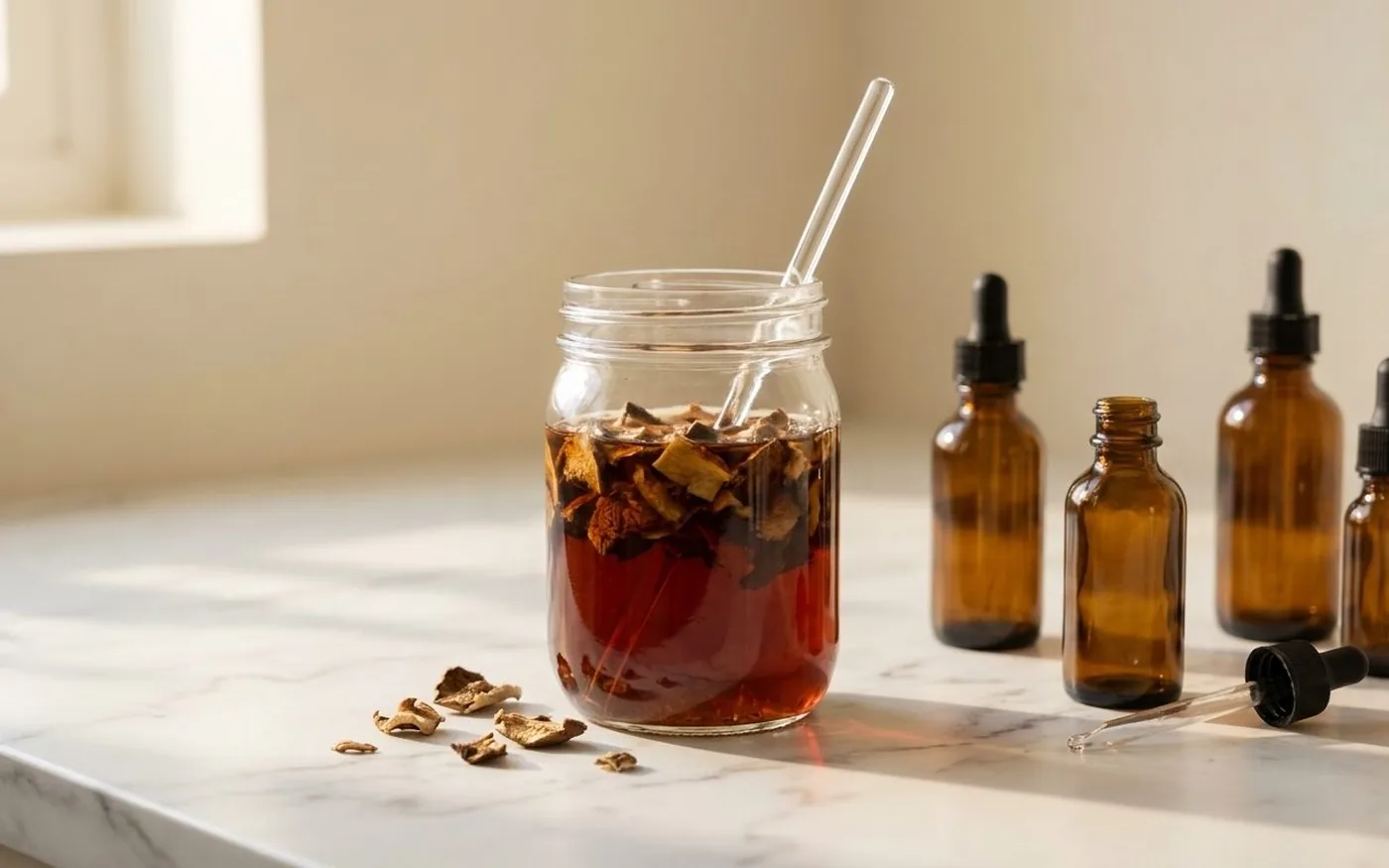
A tincture is an alcohol or alcohol-and-water extract of mushroom material, sold as liquid drops that you take by the dropper. Every one of the nine human trials gave something else: capsules, tablets, powder or a simple oral supplement. That is the most important fact in this guide, and no brand page ranking for this search says it.
It does not mean tinctures are useless. It means nobody has shown that the liquid does what the capsule did, and nobody has shown that it does not. What you can check is the dose and the extract, because the trials dosed in milligrams of a named material.
The part of the mushroom matters too. One Alzheimer's trial used mycelium (the root-like growing network), not the fruiting body (the part you would cook), so a label that says 'lion's mane' does not tell you which one you are buying. Some makers use dual extraction, which combines water and alcohol, and that guide explains what it changes. The reishi immune trial below used isolated beta-glucan (a fibre-like carbohydrate), not a whole mushroom extract, which is another reason to read a label for what is actually in the bottle.
You may suspect a tincture is mostly water and alcohol. These trials cannot settle that, because none compared a liquid with a capsule at matched doses.
Format changes your dose in other products as well. Mushroom powder and functional coffee are the other ways you may be weighing this, and our guide to the best lion's mane coffee covers that format.
Lion's Mane: Focus, Memory and One Result That Went the Wrong Way
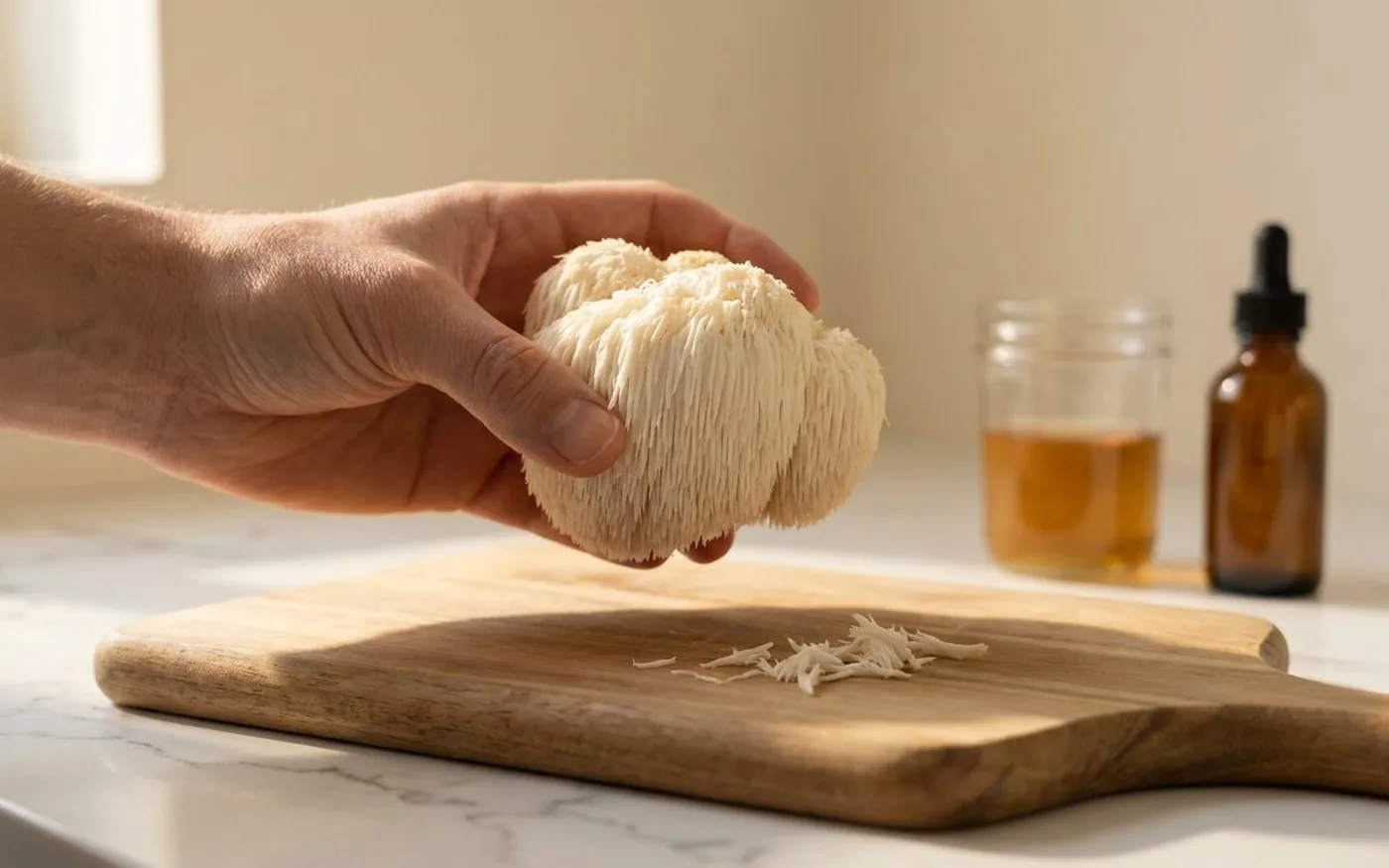
I start with the result that may surprise you. Docherty and colleagues gave 41 healthy adults aged 18 to 45 lion's mane capsules (1.8 g a day) or placebo, in a small pilot trial. An hour after one dose, the lion's mane group answered a Stroop task (a test of mental speed) more quickly (p = 0.005), but immediate word recall was worse (p = 0.013).
Over 28 days, stress scores trended lower without reaching significance (p = 0.051), and delayed word recall favoured placebo (p < 0.001). The speed-up was a one-dose result, and the 28-day arm gave a trend plus a memory measure that went the wrong way. If you were hoping for a lasting boost, this trial does not show one.
The better results sit in people who already had cognitive problems. A trial in 30 Japanese adults aged 50 to 80 with mild cognitive impairment used tablets for 16 weeks, and scores beat placebo at weeks 8, 12 and 16. Four weeks after the tablets stopped, scores fell significantly, so you should not expect a benefit to outlast the supplement.
A 49-week pilot trial in people with mild Alzheimer's disease gave 1,050 mg a day of erinacine A-enriched mycelium. Of 41 completers, the active group's MMSE (a standard memory and thinking score) rose from 21.75 to 23.2 (p = 0.035). The authors call it a pilot and say a larger study is required, so read it as a signal, not proof, for you.
The usual explanation is nerve growth factor, a protein that supports nerve cells. A cell and mouse study found lion's mane extract raised its expression, but the compounds usually credited did not in the human cell line, and the active ones remain unidentified. None of the human trials measured it, so you cannot say it is how lion's mane works in people. Our guide to lion's mane benefits goes further.
Reishi: Immune Markers, Sleep and Stress
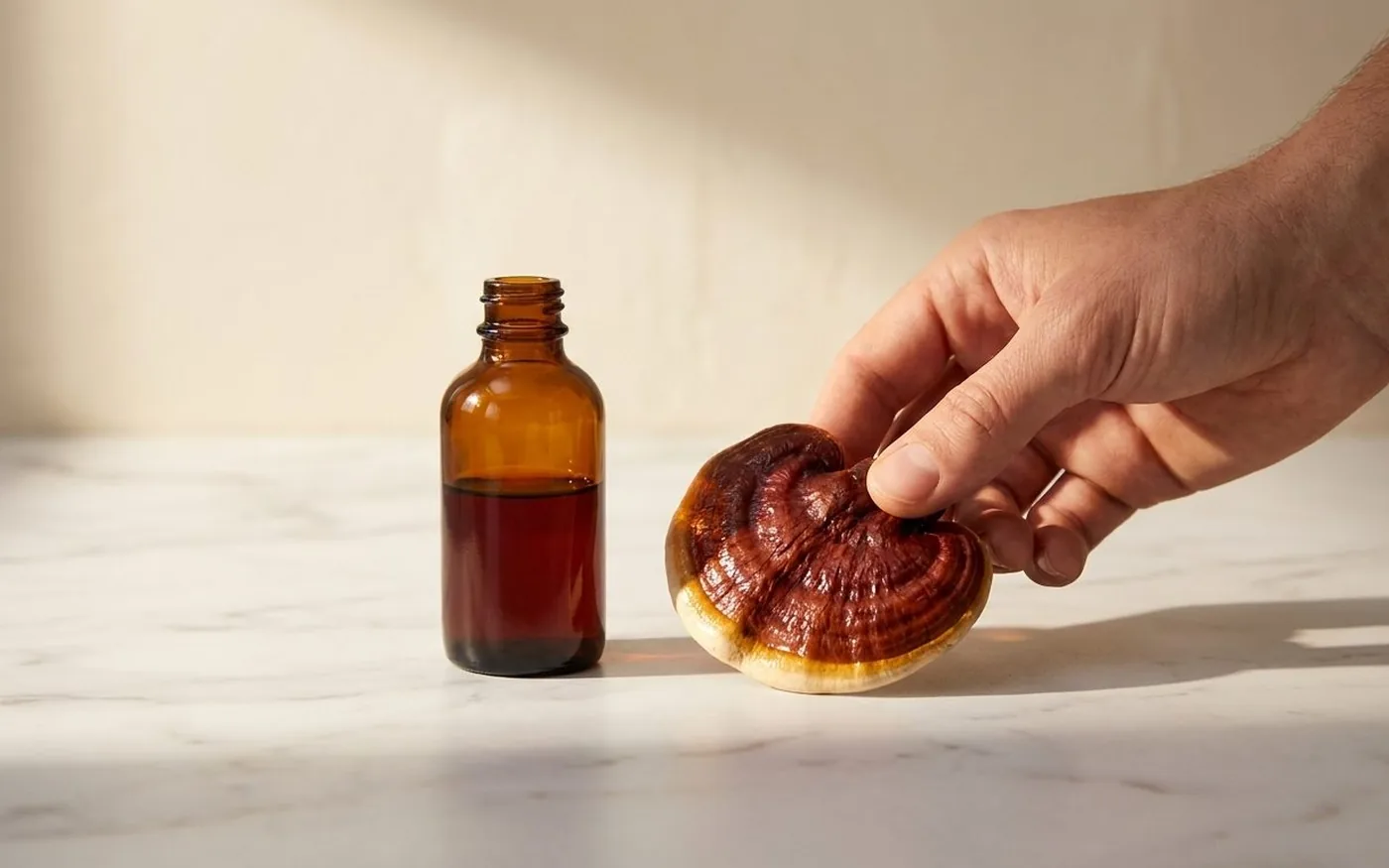
I found no trial in this evidence that tested reishi for sleep or for stress, so I make no claim on either. What you can lean on is immune and safety work in healthy adults, and the strongest piece is a 2023 randomised trial. It gave 135 analysed adults aged 18 to 55 either 200 mg a day of reishi beta-glucan (an isolated fibre from the mushroom, not a whole extract) or placebo for 84 days.
At 12 weeks the reishi group had higher total lymphocytes, CD4 cells, natural killer (NK) cell counts and NK cytotoxicity (67.4% against 35.8%, p = 0.001). Liver and kidney markers did not change, which matters if you are weighing safety.
Every one of those results is a measure you cannot feel, an immune biomarker, not a health outcome. The trial did not measure colds, infections or sick days, and higher NK counts are not the same as being ill less often. The paper's conflict of interest statement says the authors "work as independent scientists/clinicians for the study and have contributed to the preparation of the manuscript."
The counterweight is a 10-day trial in 16 healthy volunteers using a 2 g oral extract twice a day. It found no adverse effects, but no clear change in CD4, CD8 or CD19 cells. NK cells rose, and the authors state the rise was not statistically significant, so you should not count it as a result.
A six-month crossover trial in 42 healthy people using 225 mg capsules improved antioxidant markers and lowered the liver enzymes GOT and GPT. Those are laboratory markers, not symptoms you would notice.
Cordyceps: Energy and Exercise
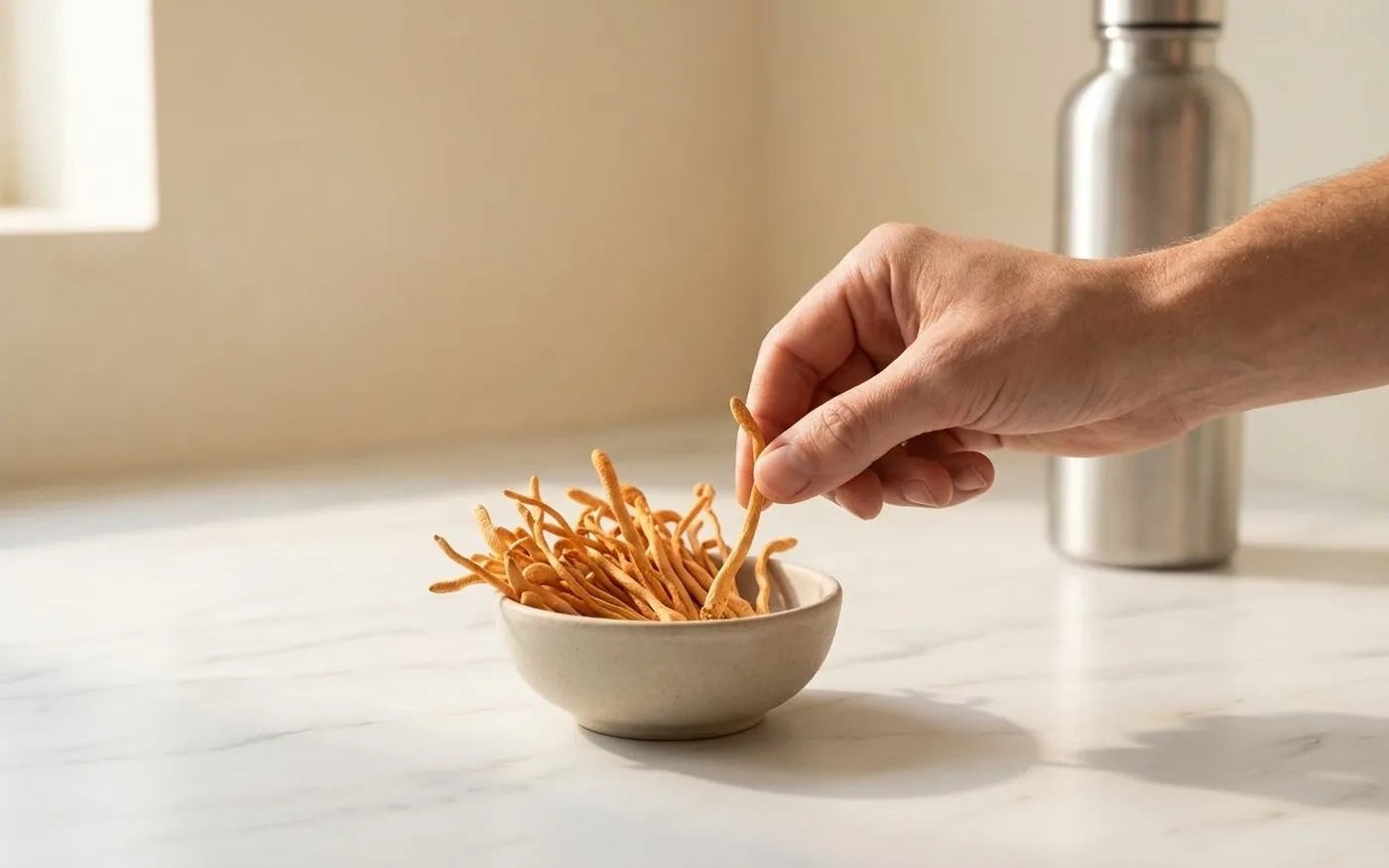
The cordyceps evidence is about exercise, and the detail matters for what you can expect. A 12-week pilot trial in 20 healthy adults aged 50 to 75 gave 999 mg a day of Cs-4 capsules. The metabolic threshold, the point where lactate starts to build, rose 10.5% (p < 0.02), and the ventilatory threshold rose 8.5%.
VO2 max, your maximum aerobic capacity, did not change in either group. So cordyceps improved submaximal endurance, not your ceiling.
In everyday terms, you could work at a steadier pace before your breathing climbed, which is not the same as going faster or further at your limit. The authors say the result "suggests" improved performance, and I would read it the same way.
A second trial tested Cordyceps militaris in 28 young adults with a mean age of 22.7. They took 4 g a day of a mushroom blend, not pure cordyceps, against maltodextrin. After one week nothing changed on six measures, including VO2 max (p = 0.364) and time to exhaustion (p = 0.540). If you gave a blend a week and felt nothing, this trial saw the same.
After three weeks VO2 max rose in the supplement group (p = 0.042). Only 10 of the 28 people reached that phase, and the blend contained other species, so I would not credit cordyceps alone. Read it as a hint. If you stopped at week one, you would have seen the null, and that null is as informative as the three-week positive.
What 'It Did Nothing' Usually Means
If you took a bottle for a few weeks and felt nothing, the trials suggest you are not unusual. A 96-person trial gave students a commercial cordyceps and reishi supplement at a high dose, a low dose or placebo for 30 days. Across global cognition, memory, executive function, attention, processing speed, visuospatial ability, verbal function and motor skills, there were no significant differences between any group. The authors concluded it "did not enhance cognitive function domains in young healthy participants."
That is the largest healthy-adult trial in this guide, and it found nothing. If you bought a mushroom blend for focus, it is the result to hold on to.
Feeling nothing has a few common causes, and none of them is your fault.
Healthy people showed no lasting cognitive gain in two trials. Timing matters too: the cordyceps blend showed nothing at one week, and the lion's mane benefit in cognitive impairment was first significant at week 8. The reishi results are cell counts you could never feel, and a label without a dose cannot be compared with any trial.
Nothing here means you wasted your money by being sensible.
Who Should Be Careful
Cancer Research UK covers mushrooms in cancer treatment on its own page. That is a different population from the healthy adults in most trials here, so evidence does not carry across in either direction. If you are managing cancer or any other condition, or you take prescribed medication, talk to your GP before you start.
On the liver, the reishi trials above are reassuring but limited. Liver markers (AST and ALT) did not change in 135 healthy adults over 84 days, and the 10-day trial found no adverse effects. That is small trials in healthy adults over short periods, so it says little about long-term use or existing liver disease. Do not read an absence of reported problems as proof of safety for you.
The reishi trial also excluded smokers, pregnant or nursing women, and people with respiratory illness, hypertension, peripheral vascular disease, eating disorders or liver disease. If one of those describes you, the trial did not study you. Our guide to who should avoid lion's mane covers that species in detail.
Dose, Briefly
The trials gave set amounts: 1.8 g a day of lion's mane capsules, 1,050 mg of erinacine A-enriched mycelium, 200 mg of reishi beta-glucan and 999 mg of Cs-4 cordyceps. Those are weights of a named material, not millilitres of liquid. To compare your bottle with a trial, the label must state the extract and the dose per serving. Check that the dose is per serving, not per bottle.
Our guide to how to take mushroom tinctures walks you through dropper dosing. On morning or night, no trial tested timing, so any advice is convention, not evidence.
Where to Go Next
If you want the wider picture, our mushroom supplement buying guide covers the wider category. If you want an example of a UK four-species range, Balance Coffee sells an Elixir range in Lion's Mane, Cordyceps, Reishi and Chaga, including its Reishi Elixir. None of the studies above tested a Balance Coffee product.
Balance Journal is published alongside Balance Coffee, founded by James Bellis.
The Species With No Human Tincture Evidence
You will see chaga, shiitake and maitake sold as tinctures, and none of the 10 studies here involved them.
The same register that has no authorised claim for reishi lists non-authorised immune claims for shiitake and maitake, and it has no chaga entry at all, so a label you read for these species is not leaning on an authorised claim.
Where I found no human trial, I make no claim. Treat any benefit list you see for these three as marketing until a trial says otherwise.
Even for the three species with trials, none used a tincture. If you are looking at a UK producer, our Bristol Fungarium review is one example of how a seller presents its range. It is an example, not a recommendation.
Who the Research Has and Has Not Studied
Every trial that reports ages enrolled adults, from 18 to 80. Three studied healthy people under 45, three studied people over 50, and two studied people with cognitive impairment or Alzheimer's disease, so find the group closest to you. I found no trial in children, and the reishi trial excluded pregnant and nursing women.
If you came here asking about women, the answer is thin. The 96-person trial included 43 women and the 42-person antioxidant trial included 20, but none of the 10 studies reports an outcome specific to women, such as menopause or hormones.
The longest trials ran 49 weeks and six months per arm, and most ran 10 days to 16 weeks. Nobody has tested these mushrooms over years, so what happens if you take them for years is unknown.
The Evidence at a Glance
Here is every study in one place, so you can see who was tested, how much they took and in what form. The Format column is the one to look at first. It is the reason this guide exists.
| Study | Species | Who | Size | Dose and length | Format | Result |
|---|---|---|---|---|---|---|
| Docherty 2023 | Lion's mane | Healthy adults 18 to 45 | 41 | 1.8 g a day, 28 days | Capsules | Quicker Stroop after one dose; worse word recall |
| Mori 2009 | Lion's mane | Adults 50 to 80 with mild cognitive impairment | 30 | Four 250 mg tablets, three times a day, 16 weeks | Tablets | Scores beat placebo; fell after stopping |
| Li 2020 | Lion's mane | Mild Alzheimer's disease | 41 | 1,050 mg a day, 49 weeks | Capsules, mycelium | MMSE rose; pilot study |
| Mori 2008 | Lion's mane | Cells and mice | None | Not applicable | Extract | NGF rose in cells; no human data |
| Chen 2023 | Reishi | Healthy adults 18 to 55 | 135 | 200 mg a day, 84 days | Capsules, beta-glucan | Immune markers rose; no illness outcomes |
| Wicks 2007 | Reishi | Healthy volunteers | 16 | 2 g twice a day, 10 days | Oral extract | Safe; NK rise not significant |
| Chiu 2017 | Reishi | Healthy adults | 42 | 225 mg, six months | Capsules | Antioxidant and liver markers improved |
| Chen 2010 | Cordyceps | Healthy adults 50 to 75 | 20 | 999 mg a day, 12 weeks | Capsules | Thresholds rose; VO2 max unchanged |
| Hirsch 2017 | Cordyceps blend | Young adults | 28 | 4 g a day, three weeks | Blend | Week 1 null; week 3 VO2 max up in 10 people |
| Tsuk 2017 | Cordyceps and reishi | Healthy students | 96 | 30 days | Commercial supplement | No cognitive effect |

Frequently Asked Questions
What are the benefits of mushroom tincture?
No trial tested a tincture, so the benefits below come from capsules, tablets and powders. Reishi raised immune-cell markers in healthy adults, which is not the same as fewer infections. Cordyceps raised submaximal exercise capacity in a small trial of healthy over-50s. Lion's mane helped people with existing cognitive impairment, and in healthy adults it made one memory measure worse.
Do mushroom tinctures actually work?
The mushrooms have human evidence, but the tincture format itself has not been tested in any trial I reviewed. So the honest answer is that it depends on the extract and the dose, not on the liquid. Reishi and cordyceps changed measurable markers in small trials, and a 96-person trial found no cognitive benefit from a cordyceps and reishi blend.
How much mushroom tincture should I take?
Dropper dosing makes this hard to answer, because a label rarely tells you how much extract is in each dose. The trials dosed in milligrams of a named extract, so you can only compare a bottle with them if the label gives the same detail. Our guide to how to take mushroom tinctures covers the practical side, so I give no protocol here.
What do you do with mushroom tincture?
Most people take it under the tongue or stir it into a drink. No trial I reviewed tested either route, because every trial used capsules, tablets, powder or an oral supplement. Pick the route you will stick with, and follow the serving size on the label rather than guessing the dose.
Which mushroom tincture is the best?
I do not name a winner on this page, because it grades evidence and no trial tested a tincture. Look for a label that states the species, the extract and the dose per serving. If you want products compared on those details, our tincture buying guide is the place to start.
What to avoid when taking mushroom supplements?
Avoid products with undisclosed doses, uncharacterised 'proprietary blends', and any label promising a result the research has not shown. Do not start several species at once, because then you cannot tell what did what. If you take prescribed medication or manage a condition, check with your GP first.
Are mushroom supplements hard on your liver?
In the reishi trials I reviewed, no. Liver markers (AST and ALT) did not change versus placebo in 135 healthy adults over 84 days, and a separate 10-day trial in 16 volunteers found no adverse effects. The limits are real: healthy adults, short durations and small groups, so they say little about long-term use or liver disease.
Should I take mushroom supplements in the morning or at night?
No trial I reviewed tested timing, so there is no evidence to choose between them. The usual convention is morning for lion's mane and cordyceps, which people take for focus and energy, and evening for reishi, which people take to wind down. That is convention, not evidence, so pick a time you will remember.
Who should avoid lion's mane?
I found no trial that names a group who must avoid lion's mane, but the research does not cover everyone either. If you manage a condition, take prescribed medication, or are pregnant or breastfeeding, speak to your GP first. Our guide on who should avoid lion's mane covers the detail.

A registered Nutritional Therapist and member of BANT, Clemmie blends science with a holistic approach to wellbeing.