Is Mushroom Coffee Good for You?
Six months formulating mushroom coffee. Here is what the science actually supports at the doses in your cup.
Table of Contents
Some of the links in this article are affiliate links, which help fund our independent review work at no extra cost to you. Every recommendation is based on hands-on testing through The Editor Lab methodology. No brand pays to appear, and no placement is guaranteed.
If you have asked the internet whether mushroom coffee is good for you, you have probably hit a wall of glossy wellness sites on one side and sceptical Reddit threads on the other. The honest answer sits between the two, and almost nobody publishing on this topic has actually formulated a mushroom coffee, sold a regular one, or tested both side by side for years.
This article does what the Harvard Health and Cleveland Clinic explainers cannot: it judges the category from the coffee bench, not just the clinic. You will get a straight answer on what mushroom coffee can and cannot do for your health, what the evidence really says, where the marketing runs ahead of the science, and whether your money is better spent on a different kind of coffee entirely.
Editor's Note
Is Mushroom Coffee Good for You? The Honest Answer
Mushroom coffee is fine for most healthy adults, modestly useful in two specific ways, and overhyped on almost everything else. If you are caffeine-sensitive, drink coffee late in the day, or want a small antioxidant top-up, it has a real place. If you are buying it because a creator promised sharper focus, less stress, or a stronger immune system, you are paying a premium for evidence that does not yet exist at the doses involved.
Here is the part that gets lost in the marketing. Almost every benefit you read about mushroom coffee comes from research on concentrated mushroom extracts in test tubes or animals, not from trials on the small amount of mushroom actually brewed into your cup. The most cited human studies use 1,000 to 3,000mg of standardised Lion's Mane extract daily. Most mushroom coffees deliver 250 to 500mg per serving, and many brands do not disclose the exact dose at all. Anyone telling you it is a proven health upgrade is ahead of the evidence.
The single measurable benefit you can actually count on is lower caffeine, typically around half a standard cup. That is genuinely useful if your nervous system does not get on with strong coffee. It is also something you can replicate by brewing a smaller normal coffee, which is worth naming before you sign up to a subscription. For the deeper category overview and brand rankings, see our guide to the best mushroom coffee brands UK.
What Mushroom Coffee Actually Is
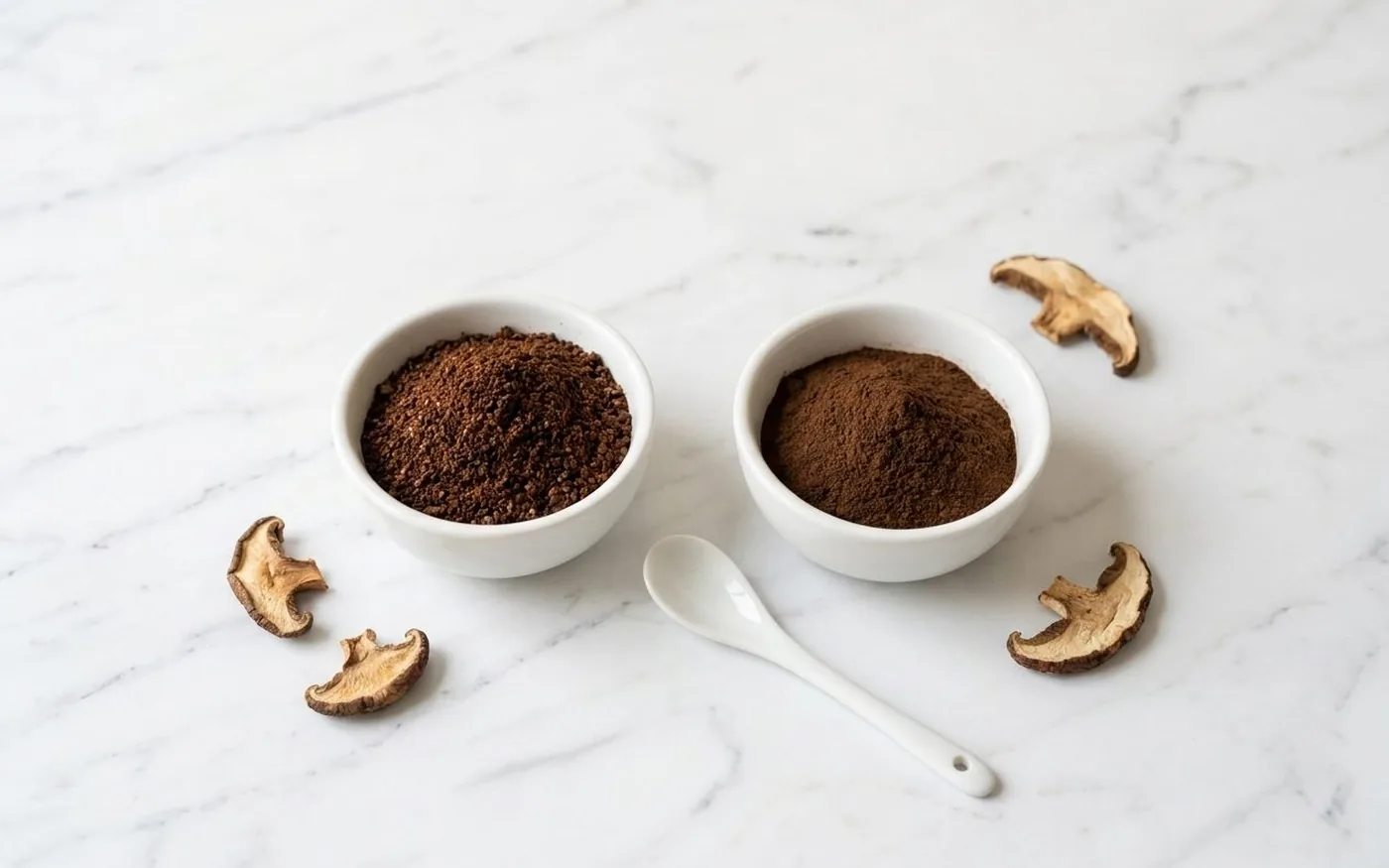
Mushroom coffee is a drink that blends ground coffee or instant coffee with powdered functional mushroom extracts, usually at a ratio of around 80 percent coffee to 20 percent mushroom. The mushroom portion is not the kind you would slice into a pan. It is a concentrated extract of mushrooms grown specifically for their bioactive compounds, dried, milled, and stirred into the coffee.
A functional mushroom is a fungus used for its health-supporting compounds rather than as food. The most common ones in this category are Lion's Mane, Chaga, Reishi, Cordyceps, and Turkey Tail. Each has a different supposed effect: Lion's Mane is sold for focus, Chaga and Turkey Tail for immune support, Reishi for stress and sleep, and Cordyceps for energy and stamina.
An adaptogen is a herb or fungus claimed to help the body manage stress without sedating or stimulating it. Reishi, Cordyceps, and Lion's Mane all sit in this category. The term is used liberally in marketing. The clinical evidence for adaptogenic effects in food-sized doses is thin, which matters more than the word itself.
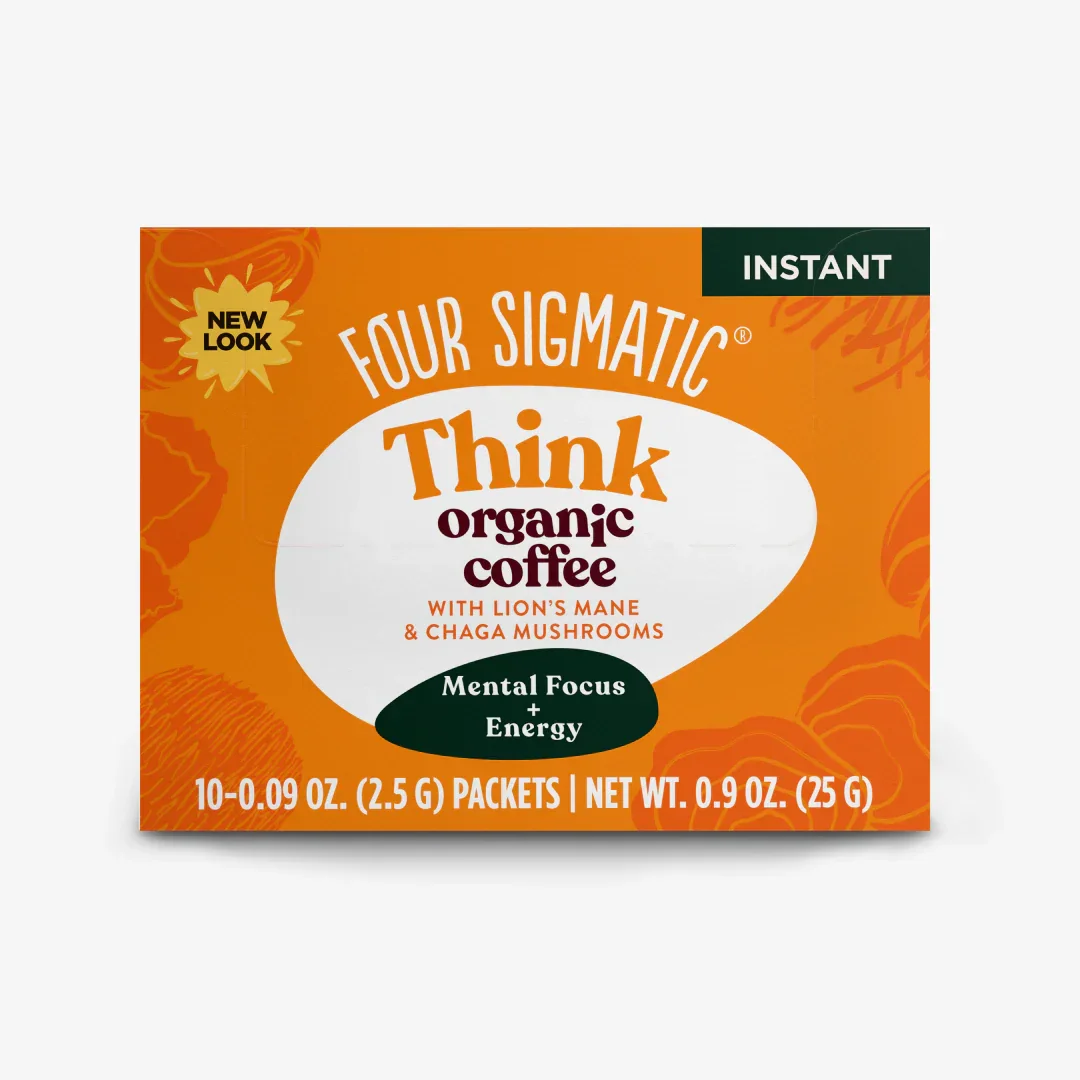
The brands you see most often in the UK include Four Sigmatic, Dirtea, Ryze mushroom coffee, London Nootropics, and a handful of smaller players. The format ranges from instant sachets to ground coffee blends. We have reviewed several in detail, including our Four Sigmatic review.
The Health Claims, and What the Evidence Says
The claims made for mushroom coffee fall into five buckets: focus, immunity, lower stress and cortisol, antioxidants, and steady energy without the crash. The strength of evidence varies wildly between them, and almost none of it has been tested in the form that ends up in your cup. Harvard Health's own review of the category concluded the science was interesting but inconclusive at the doses found in coffee blends.
Here is what each claim actually rests on:
| Claim | What the evidence shows | Strength |
|---|---|---|
| Focus and cognition (Lion's Mane) | Small human trials suggest a modest cognitive benefit at extract doses of 1,000 to 3,000mg daily for 8+ weeks. Mushroom coffee typically delivers 250 to 500mg per serving. | Weak at coffee doses |
| Immune support (Chaga, Turkey Tail) | Beta-glucans in these mushrooms show immune-modulating activity in lab and animal studies. Human data at consumer doses is minimal. | Weak |
| Lower stress and cortisol (Reishi) | Adaptogenic effects rest on small studies, mostly with concentrated extract, and animal models. No reliable evidence at coffee-blend doses. | Weak |
| Antioxidant content | Coffee itself is one of the largest sources of antioxidants in the UK diet. Mushrooms add polyphenols but the marginal gain over a normal coffee is small. | Moderate (driven mostly by the coffee) |
| Steady energy without jitters | Plausible and partly testable. Lower caffeine reduces nervous-system stimulation in sensitive drinkers, which lines up with what people report. | Strong, mostly because of the lower caffeine |
Does mushroom coffee actually work? At the doses used in a typical cup, you are unlikely to feel a sharp cognitive lift from the mushroom content alone. What you will feel is the lower caffeine, smoother by comparison to a strong espresso, and that is real. If you are layering mushroom coffee on top of a separate, properly dosed functional mushroom supplement, you may stack the effects. If the coffee is your only source, treat the mushroom content as a small bonus rather than a primary actor.
The comparison to normal coffee matters here. Regular coffee has a stronger evidence base for several health outcomes than mushroom coffee currently does: associated with lower risk of type 2 diabetes, reduced risk of Parkinson's disease, and lower all-cause mortality at moderate intake. Switching to mushroom coffee does not erase these benefits, because the coffee is still there. It does mean you are paying a premium without strong evidence that you are gaining anything you did not already have from a good cup of coffee.
The Genuine Upsides
There are two upsides worth taking seriously. The first is lower caffeine. A typical mushroom coffee delivers around 50 to 80mg of caffeine per serving, roughly half a standard 95 to 165mg cup. The Cleveland Clinic notes this as one of the more genuinely useful properties of the category.
For context, the European Food Safety Authority's 2015 opinion on caffeine puts the safe daily intake for healthy adults at up to 400mg, so the lower dose in mushroom coffee gives you a real margin if you tend to drink several cups. If caffeine gives you jitters, racing thoughts, or wrecks your sleep when consumed after lunchtime, this matters.
The second is a smoother extraction profile, which is more about the bean origin and roast than the mushroom. Most reputable mushroom coffee brands use arabica beans roasted on the lighter side, which produces a less bitter cup. If you are coming from a supermarket robusta blend, you will notice this. If you already drink quality specialty coffee, the difference is smaller.
Antioxidants are often quoted as a benefit, and they are real, but the contribution from the coffee itself does most of the work. A standard cup of coffee already provides a significant share of UK adults' daily polyphenol intake. The mushroom portion adds polyphenols of a different profile, which is a modest plus rather than a category change.
There is also a behavioural upside that the studies do not capture. People who switch to mushroom coffee often pay more attention to what is in their cup, drink less of it, and replace a stale tin of supermarket instant with something better sourced. The ritual itself can be a net positive, even if the mushroom content is not doing what the label implies. Best coffee beans UK options can deliver a similar quality jump at a lower cost. Best lions mane coffee uk options are worth considering if focus is your specific goal.

The Downsides and Who Should Be Careful
Mushroom coffee usually costs at least twice what good regular coffee costs, and the single most measurable benefit, lower caffeine, is something you can get for free by brewing a smaller normal coffee. That is worth being honest about before you commit to a subscription. At £25 to £40 per 100g equivalent, the category sits in supplement territory rather than coffee territory.
The evidence base is thinner than the marketing suggests, particularly for cognitive, immune, and stress claims at the doses involved. If you are buying mushroom coffee on the strength of an Instagram reel that promised a productivity transformation, you are likely to be disappointed.
Digestive side effects are uncommon but real. Some people report bloating or loose stools when first introducing functional mushrooms, particularly with higher-dose blends. Starting with a smaller serving and increasing it over a week is sensible.
Chaga deserves a specific caveat. It contains naturally high oxalate levels, and UCLA Health flagged a documented case of kidney damage linked to daily Chaga consumption. If you have a history of kidney stones or kidney disease, chaga-heavy blends are not for you.
Undisclosed doses are the other quiet problem. Many brands do not tell you how much actual mushroom is in each serving, which makes it impossible to compare products or judge whether you are getting close to the doses used in clinical research. Look for products that publish both the mushroom species and the milligram dose per serving.
If you are pregnant, breastfeeding, taking blood thinners, immunosuppressants, or blood-sugar medication, talk to your GP before adding mushroom coffee. Functional mushrooms can interact with medications in ways the wellness marketing rarely flags.
Is Mushroom Coffee Good for You? Who It Suits
Mushroom coffee suits you if you are caffeine-sensitive, want a small antioxidant top-up, and treat the mushroom content as a bonus rather than the reason you are drinking it. It suits you less if you are buying it on the promise of sharper focus or stronger immunity from a single cup. For the focus angle specifically, a separate Lion's Mane supplement at clinical dose is more likely to do something than a coffee blend.
If you decide to try the category, look for transparency on both the coffee side and the mushroom side. Brands that disclose origin, lab testing, and exact mushroom dose are doing the basic work of letting you judge what you are buying. Our own Balance Coffee Lion's Mane Mushroom Coffee is one example of a transparent, lab-tested option, alongside competitors like Four Sigmatic, Dirtea, and Ryze mushroom coffee. Compare them honestly, not on whoever shouts loudest about cortisol.
If you want a deeper read on the head-to-head, our mushroom coffee vs regular coffee guide goes through the trade-offs cup by cup.
Frequently Asked Questions
Is it safe to drink mushroom coffee every day?
For most healthy adults, yes. The caffeine is lower than a standard coffee, and the mushroom portion is generally regarded as safe at the doses found in blends. Pregnant or breastfeeding women, anyone on blood thinners or immunosuppressants, and people with kidney stones (particularly with chaga blends) should speak to a GP first.
Does mushroom coffee have caffeine?
Yes, most mushroom coffees contain caffeine, typically around 50 to 80mg per serving. That is roughly half the 95 to 165mg of a normal cup. A small number of decaffeinated mushroom blends exist if you want the mushroom content without any caffeine, but they are the exception rather than the rule.
Can mushroom coffee upset your stomach?
It can, particularly when you first introduce it. Some people report bloating, loose stools, or mild discomfort during the first week. This usually settles. Start with half a serving for the first three or four days, then build up. If symptoms persist beyond two weeks, the blend is probably not for you and you should stop.
Is mushroom coffee good for gut health?
The honest answer is that the evidence is thin. Some mushrooms, particularly Turkey Tail and Chaga, contain beta-glucans that act as prebiotics in lab settings. Whether the small amounts in a typical cup do anything meaningful in the human gut is not established. Treat any gut-health claim on a mushroom coffee label with healthy scepticism.
Who should not drink mushroom coffee?
Pregnant or breastfeeding women, people on blood thinners, immunosuppressants, or blood-sugar medication, and anyone with a history of kidney stones if the blend contains chaga. Children and teenagers should also skip it. If you have an autoimmune condition, consult a GP first, since some functional mushrooms modulate immune activity in ways that can interact with your treatment.
Is mushroom coffee good for weight loss?
There is no reliable evidence that mushroom coffee causes weight loss. The lower caffeine content means it is not a stronger metabolic stimulant than regular coffee, and the mushroom content does not have proven fat-burning effects at consumer doses. Anyone selling it as a weight-loss product is misreading the science.
Does mushroom coffee taste like coffee?
At an 80 to 20 blend ratio, yes, most of what you taste is coffee. The mushroom portion adds a slightly earthy, sometimes nutty undertone, which is mild and not unpleasant. Cheaper or higher-mushroom blends taste muddier, while lighter blends from specialty roasters taste close to standard ground coffee. The format matters too. Instant mushroom coffees taste more like the instant base than the mushroom.
Is mushroom coffee actually good for you, or is it just a wellness trend?
Both. It is genuinely useful for caffeine-sensitive drinkers and anyone wanting a small antioxidant top-up, a real but narrow benefit. The wider claims about focus, immunity, and stress relief are oversold at typical doses. Buy it if you would choose the coffee anyway, wellness halo aside. If that halo is the only reason, your money is probably better spent elsewhere.

A wellness entrepreneur and biohacker, James explores the intersection of hospitality and health - from clean fuel and recovery tools to mindful routines that build balance into daily life.