Lions Mane Benefits: What the Evidence Shows
A nutritionist grades every lion's mane benefit by study type, separating human trials from animal research, and reports what competitors leave out.
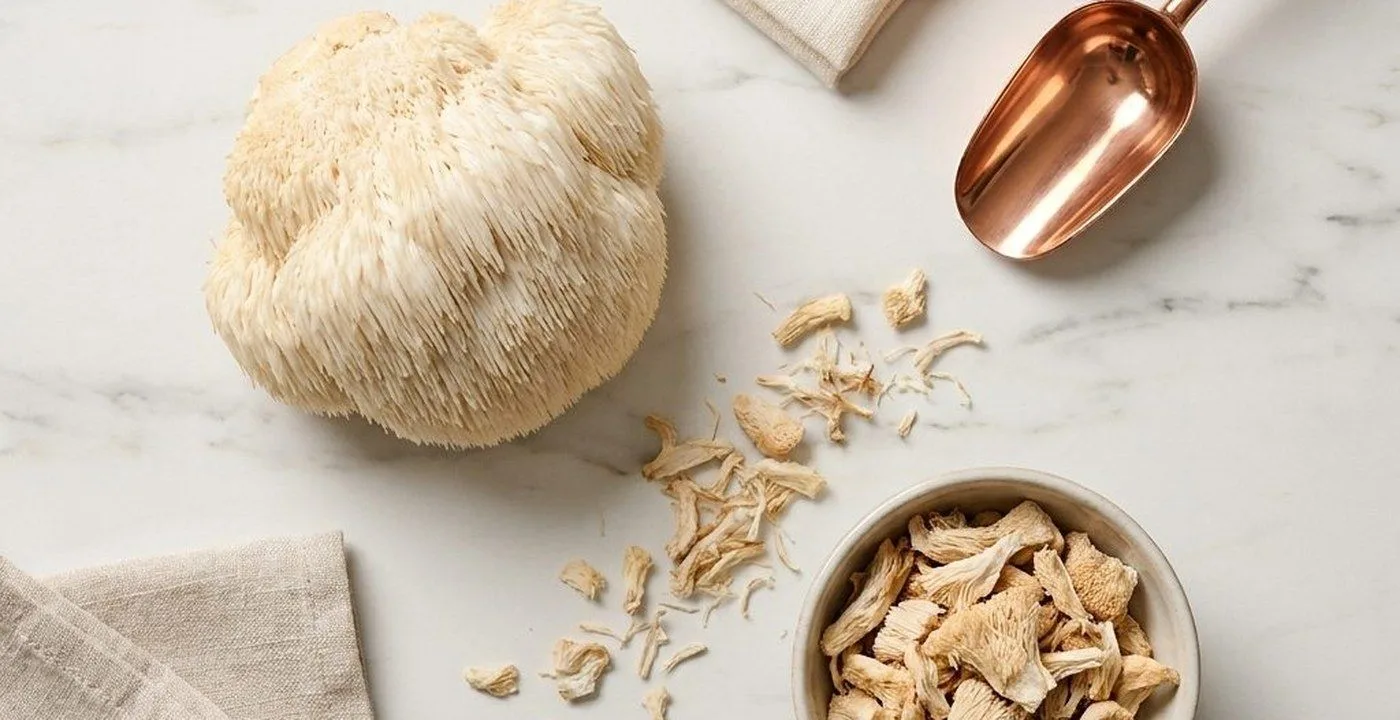
Table of Contents
Some of the links in this article are affiliate links, which help fund our independent review work at no extra cost to you. Every recommendation is based on hands-on testing through The Editor Lab methodology. No brand pays to appear, and no placement is guaranteed.
I used to recommend lion's mane on instinct, sharper focus, a calmer mood, a settled gut, it sounded like exactly what stressed-out people needed. Then I read the trials instead of the marketing, and the picture turned out far patchier: real, replicated benefit in older adults with diagnosed cognitive decline, little to show elsewhere.
This is not about writing off lion's mane, and it is not about finding one mushroom that fixes everything either. It is about matching what you expect from it to what the evidence supports, not chasing a single supplement to solve everything at once.
In healthy adults, the human trial data is thin, and on one measure it favoured the group taking a dummy capsule instead of lion's mane. The gut and immune claims you will see repeated across most wellness sites are drawn almost entirely from mice, rats and cells in a dish, not from people.
Every claim in this article is graded by who was studied and how. Human randomised trials are kept separate from rodent studies, and both are kept separate from cell-culture work, because you cannot treat those three as interchangeable evidence. This sits inside our wider guide to the best mushroom supplements in the UK, and focuses specifically on what the evidence says about this one species.

Editor's Note
Editor's Note: I am a registered Nutritional Therapist and BANT member, and I have written this article the way I would answer the question in clinic: by grading each claim against the population and study design it came from, not by listing benefits and hoping the reader does not check the source. Every study named below is linked to its primary source.
What Lion's Mane Benefits Are Actually Supported by Evidence
Lion's mane (Hericium erinaceus) is an edible mushroom, eaten fresh and taken as a supplement, studied mainly for its effects on memory, focus and nerve function, with a smaller and much weaker body of work on gut bacteria and immune markers. If you strip away the marketing and look only at what has been tested in people, three things hold up, one does not, and two remain open questions.
You will not find this level of nuance in most lion's mane marketing, but it is what the trials show. What holds up: cognitive scores improving over weeks of daily use in older adults with diagnosed mild cognitive impairment or early Alzheimer's disease, replicated across two separate small trials. What does not hold up, at least not yet: any clear cognitive benefit in healthy young adults over a comparable timeframe, where the best-designed trial available found no advantage and one measure favoured placebo. What remains open: gut microbiota changes and anti-inflammatory activity, both plausible from laboratory and animal work but not yet properly tested in a controlled human trial.
You will see lion's mane described elsewhere as a universal nootropic. The evidence does not support that framing. It supports a narrower, more useful one: a supplement with genuine, replicated signal in one specific population, and considerably less to show for it everywhere else.
How to Read the Evidence on Lion's Mane
This is where a nutritional therapist's training matters more than an ingredient list. I am a registered Nutritional Therapist and BANT member, whose clinical work has spanned The Kyros Project at Google DeepMind and the Wellness Clinic at Harrods, and the first question I ask about any supplement claim is not whether a study exists but what kind of study, in what population, at what dose. Those details change what a finding means for you.

Three tiers of evidence appear across the lion's mane research, and this article labels every claim by which tier it belongs to. Human randomised controlled trials sit at the top: real people, a comparison group, a measured outcome. Animal studies come next, useful for working out mechanisms, but rodent physiology does not map cleanly onto yours. Cell and tissue studies sit at the bottom of the human-relevance ladder, informative for biochemists, but a long way from a supplement working in your body.
Independent corroboration matters here too. The Alzheimer's Drug Discovery Foundation's Cognitive Vitality programme has reviewed seven randomised controlled trials of lion's mane and describes the cognitive effects across them as mixed, small and short in duration, which lines up with what this article finds when it goes to the primary papers directly.
What Lion's Mane Does in the Body
The best human evidence for lion's mane sits with two small trials in older adults with diagnosed cognitive problems. In a Japanese trial of thirty adults aged 50 to 80 with mild cognitive impairment, Mori and colleagues (2009) found cognitive scores rose significantly against placebo at weeks 8, 12 and 16 of daily use. The effect did not last. Four weeks after the supplement stopped, scores fell back down significantly, which tells you this looks like something that supports cognition while you take it, not something that changes your brain permanently.
A second trial went further into disease, testing an erinacine-A-enriched mycelium extract in 41 adults with mild Alzheimer's disease over 49 weeks. Li and colleagues (2020) reported real improvement on a standard cognitive test, from 21.75 to 23.2 against no change on placebo, and on a daily-living-skills measure. The authors, to their credit, called it a pilot study and said a larger trial is needed before anyone treats this as settled.
The mechanism you have probably heard, that lion's mane boosts nerve growth factor in your brain, is not what the primary research shows in humans. The source study exposed a human astrocytoma cell line and rat cells to lion's mane extract, not people, and found that hericenones C, D and E, the compounds usually credited with the effect, failed to promote NGF gene expression in the human cell line tested. The extract did raise NGF activity through some other, still unidentified route. No human study in this article's evidence base has measured NGF in a living person's brain.
Gut and immune claims are the weakest part of the lion's mane story you will encounter. The only human gut study is a 13-person, seven-day trial with no placebo group and no control arm, which found increases in beneficial gut bacteria, a genuinely interesting early signal but not proof of anything durable. The anti-inflammatory and immune data is rat-based, from an induced bowel disease model, with no human trial behind it at all.

What Daily Use Actually Shows
The most rigorous trial in healthy adults is also the one most lion's mane marketing quietly ignores. Docherty and colleagues (2023) ran a double-blind, placebo-controlled study in 41 healthy adults aged 18 to 45, testing both a single acute dose and 28 days of daily use. One hour after a single dose, reaction time on a Stroop task was significantly faster, and that acute result is real. It is also the only positive finding in the entire trial, gone within a day rather than a lasting daily-use effect.
Over the following 28 days, the picture got worse for lion's mane, not better. Delayed word recall accuracy significantly favoured the placebo group, meaning the people not taking lion's mane remembered more words correctly than the people taking it. A separate stress rating trended lower in the lion's mane group but did not reach statistical significance. No other cognitive measure moved. If you are a healthy adult without diagnosed cognitive decline, this is currently the best human trial available, and it does not show what the supplement aisle implies it shows.
Put the two trials side by side and a pattern appears. Every positive, replicated cognitive result in this evidence base comes from adults with an existing cognitive problem, tested over 8 weeks or more. Nothing in the healthy-adult data holds up past 24 hours. That gap between population types is the single most important distinction in the whole lion's mane conversation, and it is the one detail most lion's mane content you will read online skips entirely.
Where UK Regulation Actually Stands
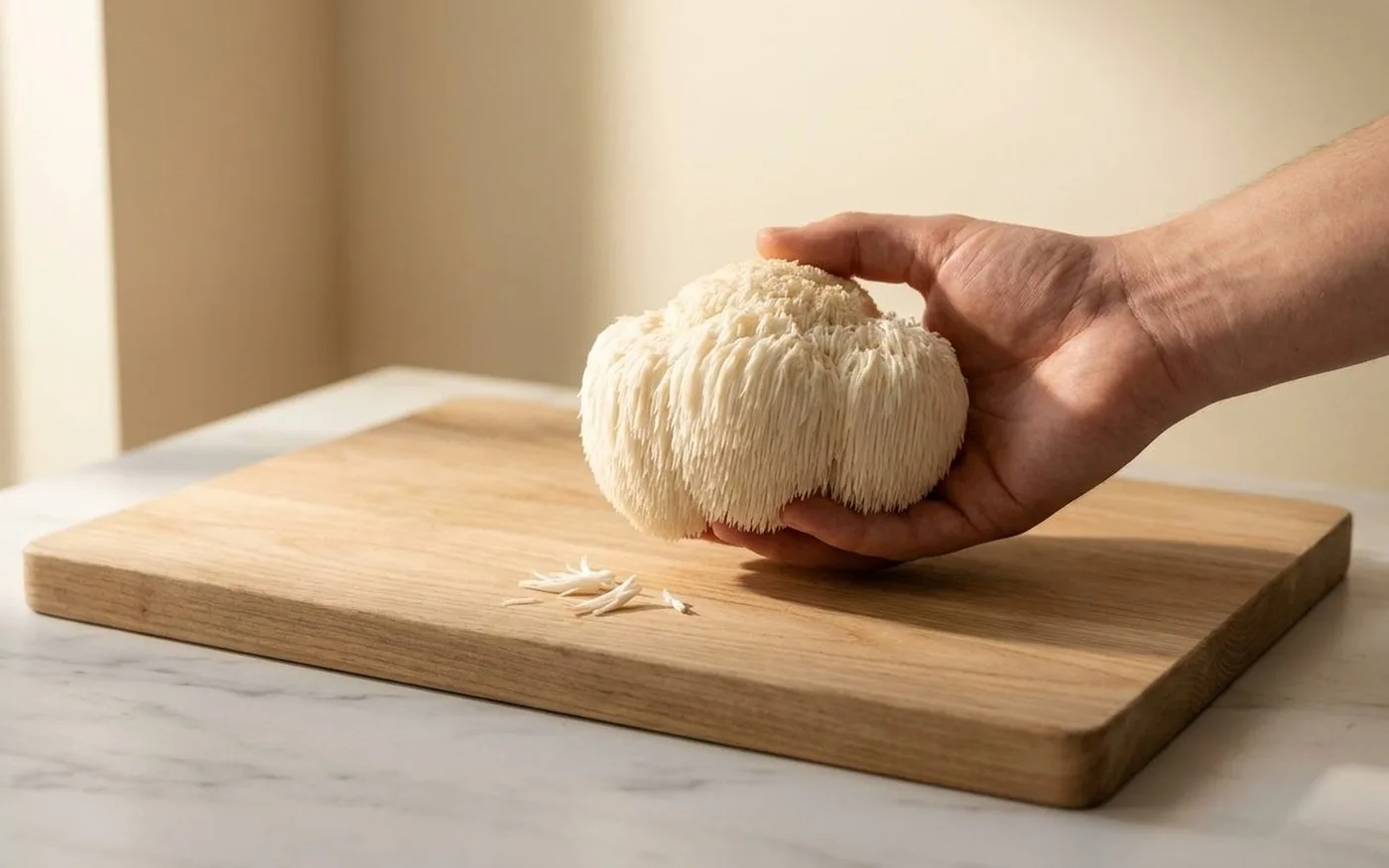
Great Britain regulates lion's mane products unevenly, and the difference is worth knowing before you read a label. Fruiting body powder and its hot water extracts have a documented history of consumption before the 15 May 1997 cut-off used by the GB novel food regime, which puts them outside the authorisation requirement. Dehydrated mycelium powder, the substrate-grown form used in many budget products, is treated differently and requires novel food authorisation.
In practice, that means the fruiting body and the mycelium form of the same mushroom sit on different regulatory footing in the UK, and that is genuinely useful for you to know when you are comparing two bottles on a shelf. This is not a statement about any specific brand's compliance, and no product named in this article has been checked against the novel foods register here. It is a general point about the category: know which part of the mushroom you are buying, because the regulatory status is not the same for both.
Why the Product You Buy Changes the Answer
Every trial in this article used a specific form of lion's mane at a specific dose, and that detail gets lost the moment the results reach a marketing page you might be reading. The healthy-adult trial used 1.8 grams a day of fruiting body powder. The mild cognitive impairment trial used four 250mg tablets, three times daily, of 96 percent Yamabushitake dry powder. The Alzheimer's trial used mycelium standardised to erinacine A. None of those doses transfer directly to a product that does not state what part of the mushroom it contains, or at what concentration.
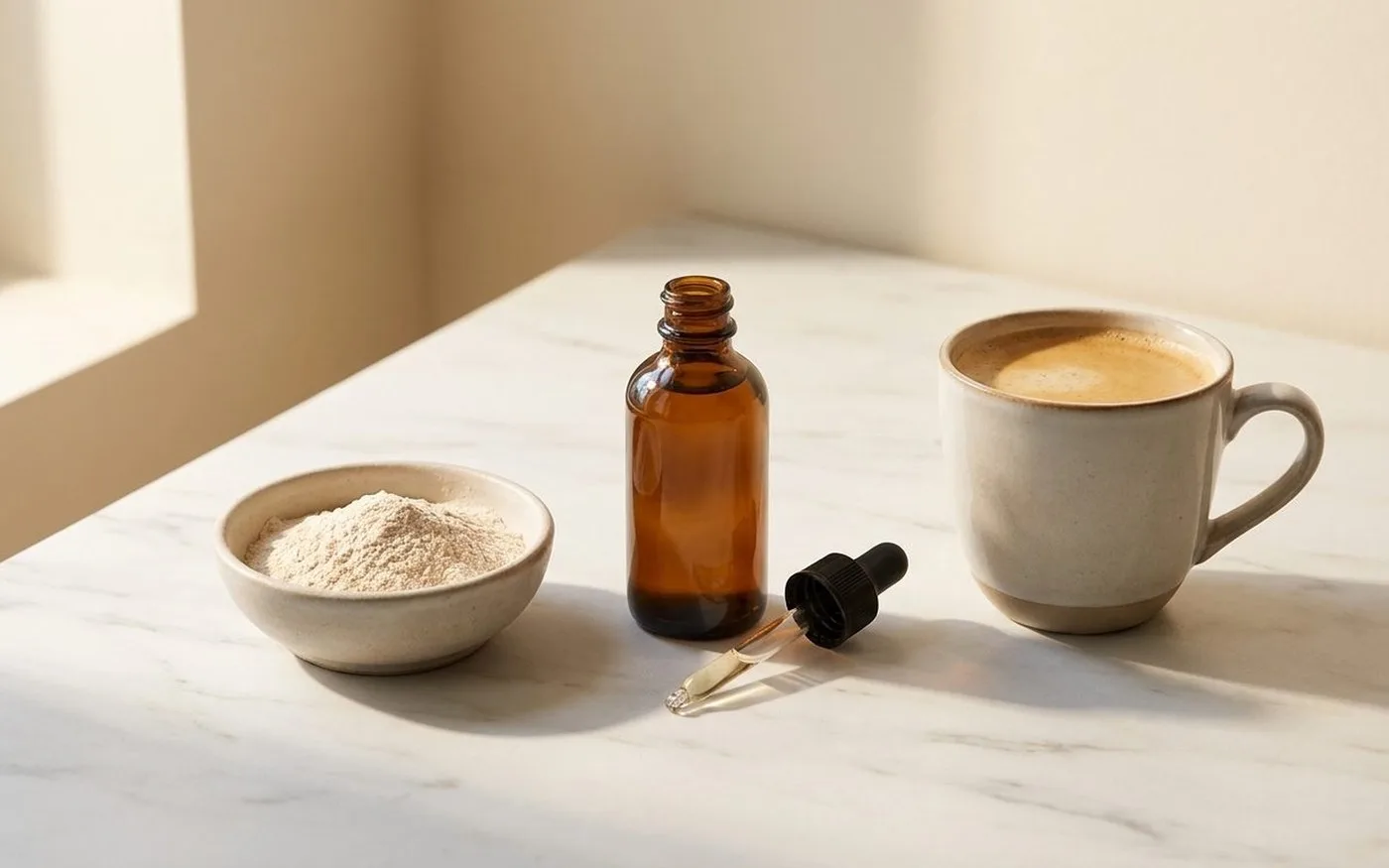
Format matters as much as species here. A mushroom powder made from ground fruiting body is a different product from a tincture, and a dual-extraction mushroom tincture pulls both the water-soluble and alcohol-soluble compounds out of the mushroom, which a simple hot water extract does not. If you want the full detail on what dual extraction changes, our dedicated guide to the best mushroom tinctures in the UK covers it properly.
You will find lion's mane sold as capsules, powders, tinctures, coffee blends and more, and the format you choose changes how much of the studied compound you are getting. Bristol Fungarium sells a UK-grown fruiting body extract, DIRTEA sells a mycelium and fruiting body powder blend, and London Nootropics sells it as part of a wider nootropic stack rather than a standalone extract. Balance Coffee, founded by James Bellis who reviewed this article, sells a dual-extracted Lion's Mane Elixir - another example of the format, not a recommendation over the others named here.
Blended coffee products are worth a specific mention, because the dose is usually diluted against what the trials above tested. We cover that dilution effect directly in is mushroom coffee good for you, worth reading if your lion's mane comes mixed into your morning brew rather than as a standalone supplement. If a specific brand and dose matter to you, our ranked guide to the best lion's mane supplements in the UK covers that ground.
The Honest Limits
Every supplement conversation skips the downside until someone asks directly, so ask directly. The realistic risks with lion's mane fall into three groups for you to weigh: it might simply do nothing, since a meaningful share of trial participants report no noticeable effect; the long-term human safety data is thin, because most trials run for weeks, not years; and it can interact with other things you are taking. Memorial Sloan Kettering Cancer Center's integrative medicine team notes that herbal supplements including lion's mane can interact with medications, and recommends speaking to a healthcare provider before starting one, particularly if you take prescription medication or have a diagnosed condition.
You should avoid lion's mane outright if you have a mushroom allergy, and MSKCC is explicit that its clinical evidence in humans does not extend to cancer treatment, despite that claim circulating online. Some people report feeling unusual after starting lion's mane, from mild digestive changes to skin reactions. This is genuinely under-researched territory: human safety data here is thinner than for most mainstream supplements, and that gap deserves to be named rather than smoothed over.
None of this is a reason to panic, and it is not the full picture either. What it means practically for you, who specifically should be cautious, and what to watch for, is covered properly rather than summarised in two lines in our guide to lion's mane side effects, which is where the six safety questions people search alongside this one get a proper answer.
How to Give It a Fair Trial
At my clinic within the Wellness Clinic at Harrods, the question I hear most from you and people like you about functional mushrooms is not whether they work but how quickly. Most people expect too much too fast, and lion's mane is a slow-acting supplement even by the standard of that category. The trial data backs this up directly: the clearest cognitive results appeared at week 8, not week 1, and built further by week 12 and 16. Judging lion's mane after a week of use is judging it before the evidence says it has had a chance to do anything.
A fair trial for you means a minimum of eight weeks of consistent daily use, at a dose that states what part of the mushroom you are taking and at what concentration, not just a milligram figure on its own. How much lion's mane to take is a genuinely separate question from whether it works, and it gets a full answer, dose by dose, in our safety guide. If tincture format is specifically what you are using, how to take mushroom tinctures covers dosing drops, timing and stacking properly.
Many people fold lion's mane into a routine they already have rather than adding a new ritual, and the most common version of that is a scoop stirred into morning coffee. That works logistically for you, though it is worth remembering the dose is usually lower than what the trials above tested. It is also worth remembering the baseline the NHS states for supplements generally: most people get what they need from a varied and balanced diet, and a supplement is something added on top of that, not a substitute for it.
Who the Research Has and Has Not Studied
The lion's mane research base is small, and it has gaps that matter if you are searching for your specific situation rather than a general answer. No trial in the evidence behind this article studied attention-deficit hyperactivity disorder. If you are looking for lion's mane and ADHD, the honest answer is that there is no human trial to point to either way, not a quiet yes.
The same gap applies to sex differences. None of the trials cited here reported outcomes separately for women and men, so there is currently no evidence that lion's mane works differently, better or worse, depending on your sex. Anyone telling you otherwise is going beyond what the trials measured.
Sleep and anxiety sit in a similar place for you if that is what brought you here. The closest data point is the stress rating in the Docherty 2023 trial, which trended lower in the lion's mane group over 28 days but did not reach statistical significance, and no trial in this evidence base measured sleep quality directly or diagnosed anxiety as an outcome. If you came here searching lions mane for anxiety specifically, that is the honest state of the evidence: plausible, unproven, and worth revisiting as more trials are published.
What has been studied, repeatedly, is older adults with diagnosed cognitive impairment. What has not been studied is almost everyone else's specific question: children, pregnancy, most chronic conditions, and long-term use beyond a year. That gap is not a reason for you to assume lion's mane is unsafe for those groups. It is a reason to say plainly that nobody has checked yet. Demand for lion's mane and other functional mushrooms in the UK has grown quickly regardless of that evidence gap, a trend covered in full in our analysis of UK mushroom supplement statistics.
The Evidence at a Glance
The table below summarises every human and animal trial referenced in this article: who was studied, what was tested, and what the result was. Use it to check any claim above against its source in one place before you decide anything for yourself.
| Study | Population | Type | Dose and Duration | Key Outcome |
|---|---|---|---|---|
| Docherty et al., 2023 | 41 healthy adults, aged 18-45 | Human RCT | 1.8g/day; single dose, then 28 days | Acute reaction time improved; 28-day delayed word recall favoured placebo |
| Mori et al., 2009 | 30 adults, aged 50-80, mild cognitive impairment | Human RCT | 3g/day (four 250mg tablets, three times daily), 16 weeks | Cognitive scores rose vs placebo at weeks 8, 12 and 16; fell after stopping |
| Li et al., 2020 | 41 adults, aged 50+, mild Alzheimer's disease | Human RCT (pilot) | 1,050mg/day erinacine-A-enriched mycelium, 49 weeks | MMSE and daily-living scores improved vs placebo |
| Mori et al., 2008 | Human astrocytoma cell line, rat cells, mice | Cell and animal study | Not applicable (in-vitro/in-vivo) | Raised NGF activity; named hericenones did not promote NGF in the human cell line |
| Xie et al., 2021 | 13 healthy adults | Human pilot, no control group | Three sequential one-week phases | Increased gut bacterial diversity; uncontrolled, preliminary |
| Diling et al., 2017 | Rats (induced bowel disease model), mice | Animal study | 150mg/kg enema, 2 weeks | Reduced inflammatory markers in a gut disease model |
Frequently Asked Questions
What does lion's mane do to the body?
The best-evidenced effect is on cognition in older adults who already have mild cognitive impairment, where trials show real improvement over 8 to 16 weeks of daily use. In healthy adults, the human evidence is much weaker. The nerve growth factor mechanism often quoted is supported only by cell and animal studies, not by any human brain measurement.
What happens if you take lion's mane every day?
In the trial with the clearest results, cognitive scores rose significantly with daily use by week 8, kept improving through week 16, then fell back down significantly within four weeks of stopping. A separate trial in healthy adults found no cognitive benefit after 28 days of daily use, and one memory measure favoured the placebo group.
What is the downside of lion's mane?
The realistic downsides are that it may simply do nothing for you, since human evidence is inconsistent outside older adults with cognitive impairment, and that long-term human safety data barely exists beyond a few months of trial use. Cost is also a factor if the dose or format is wrong for what you need. Our guide to lion's mane side effects covers the full detail.
Who should avoid lion's mane?
Anyone with a mushroom allergy should avoid lion's mane outright. Memorial Sloan Kettering Cancer Center advises speaking to a healthcare provider before starting it if you take prescription medication or have a diagnosed medical condition, since herbal supplements can interact with other treatments. Our guide to lion's mane side effects sets out the specific groups who need extra caution.
What not to mix with lion's mane?
There is no confirmed specific interaction list for lion's mane, but Memorial Sloan Kettering Cancer Center's general guidance is that herbal supplements can interact with prescription medications, so it is worth checking with a healthcare provider if you take any regular medication. Our lion's mane side effects guide covers what is known about interactions in more detail.
Why do I feel weird after taking lion's mane?
Some people report mild digestive changes or skin reactions after starting lion's mane, and this is genuinely under-researched in humans, so a definitive explanation does not exist yet. If a reaction feels significant, stop taking it and speak to a healthcare provider. Our lion's mane side effects guide covers reported experiences in more depth.
How long does lion's mane take to work?
In the strongest human trial, significant cognitive improvement appeared by week 8 of daily use and continued through week 16. Judging lion's mane after a week or two is judging it before the evidence suggests it has had time to act. A fair trial means a minimum of eight weeks of consistent daily use.
Is lion's mane good for ADHD?
No trial behind the evidence in this article tested lion's mane for ADHD, so there is currently no human data to answer this either way. This is a genuine evidence gap, not a quiet yes waiting to be confirmed. If ADHD is your specific reason for considering lion's mane, treat any claim of benefit as unproven until a trial tests it.
Does lion's mane work differently for women and men?
No trial in the evidence behind this article reported cognitive outcomes separately by sex, so there is no data showing lion's mane works differently, better or worse, depending on whether you are a woman or a man. Any claim to the contrary is going beyond what has been measured. This is a genuine gap in the research, not a settled answer either way.
Does lion's mane actually work?
Graded honestly: yes, for cognitive scores in older adults with existing mild cognitive impairment or early Alzheimer's disease, across two small but real randomised trials. Weak and partly negative in healthy young adults, where the best trial found no benefit and one measure favoured placebo. Largely unproven for gut and immune claims, which rest on animal work and a single uncontrolled human study.


A registered Nutritional Therapist and member of BANT, Clemmie blends science with a holistic approach to wellbeing.