Mushroom Coffee Side Effects: Who Should Avoid It

Coffee Writer & Biohacker
Most mushroom coffee side effects are mild. Chaga and reishi carry the real risks, and some people should check first.

Table of Contents
Some of the links in this article are affiliate links, which help fund our independent review work at no extra cost to you. How we assessed these products is explained in this article and our Editor Lab methodology. No brand pays to appear, and no placement is guaranteed.
Most healthy adults tolerate mushroom coffee well, and the side effects you hear about are usually mild: bloating, looser stools, and headaches that trace back to the caffeine or the switch.
A small number of species carry documented risks for specific people, though, and you should know which ones before your next cup. I founded Balance Coffee in 2020, and it sells a Lion's Mane coffee and mushroom tinctures, so read my take with that in mind. Every risk below is sourced to clinical or regulatory references, not to the Balance Coffee product pages.
Search for mushroom coffee side effects and you get forum threads, brand blogs, and one liver-injury abstract. Few of them tell you whether your symptom comes from the coffee, the mushroom, or the change in your routine. I reviewed every risk in this guide against the evidence behind it, from case reports in medical journals to Memorial Sloan Kettering's herb database, NHS and EFSA caffeine guidance, and the side effects drinkers describe on Reddit.
If you want the upside instead, our guide on whether mushroom coffee is good for you covers it.
“I tested mushroom coffee recipes in my roastery for over six months. That is recipe testing, not clinical expertise.”
Mushroom Coffee Side Effects in Short
The most common side effects of mushroom coffee are digestive, such as bloating, gas, and looser stools, and caffeine-related, such as jitters and poor sleep, plus headaches when you switch from stronger coffee. Rarer, species-specific risks are kidney damage from high long-term chaga intake in case reports, liver injury reported with reishi powder, and possible interactions with blood thinners and blood-sugar medication. People who are pregnant, take anticoagulant, diabetes, or immunosuppressant medication, or have kidney disease or a mushroom allergy should check with a GP or pharmacist first.
The Common Side Effects and Why They Happen
Three different things can make you feel odd after a cup, and each one has its own fix: the digestive effect of the coffee and the mushroom, the caffeine, and the change from what you drank before. Separating them is the fastest way to work out what is happening to you. Most of the evidence below rests on case reports, lab work, and drinker reports, not trials of people drinking mushroom coffee, so treat every cause as a likely explanation rather than a proven one.

Digestive Upset
Bloating, gas, and loose stools are the complaints you will read about most. One r/MushroomCoffee user described being 'super nauseous, EXTREMELY bloated, diarrhea for the 1st two days' after switching to Ryze. Our Ryze mushroom coffee review covers that brand in detail.
Coffee itself stimulates your gut, and the added mushroom fibre can loosen your stools in the first days. Cleveland Clinic notes that mushrooms can sometimes cause digestive issues, especially for people with kidney issues or trouble with grains. If you are in your first week, halve your serving and see whether your gut settles.
If it does not settle, or you have pain, speak to your GP.
Caffeine Effects
Mushroom coffee is still coffee, and a cup still contains caffeine. Patient.info states that mushroom blends typically contain around 50mg against around 100mg in an average cup, so you are getting less, not none. I have spent nearly 15 years around coffee, and brew strength and serving size move your caffeine more than the label does.

EFSA puts the safe limit for healthy adults at 400mg a day from all sources, with single doses up to 200mg raising no concern. It adds that 100mg close to bedtime can affect your sleep. If you are sensitive, our mushroom coffee vs regular coffee comparison and our best decaf coffee beans guide give you lower-caffeine routes.
| Source | Caffeine figure |
|---|---|
| Cup of instant coffee (NHS) | 100mg |
| Average cup of coffee (Patient.info) | Around 100mg |
| Typical mushroom coffee blend (Patient.info) | Around 50mg |
| Single dose, healthy adult (EFSA) | Up to 200mg raises no safety concern |
| Daily limit, healthy adult (EFSA) | 400mg from all sources |
| Daily limit, pregnant or breastfeeding (EFSA, NHS) | 200mg from all sources |
Headaches and Tiredness When You Switch
The headache and the tiredness you may blame on the mushrooms usually come from cutting your caffeine. A reader on r/adhdwomen wrote of caffeine, 'it makes me really nauseous and gives me a bad headache', and the pattern in the threads is the same: the symptoms start when the old coffee stops. The product that feels like it made you sick may be doing exactly what it advertises.
I found no trial on mushroom coffee drinkers that measures this, so it is a reading of how caffeine works, not a measured result. It can still be a reason to taper rather than switch overnight. Replace one cup at a time over a week and your head has time to catch up.
Allergic Reactions
A mushroom allergy is the one common effect you should not wait out. Patient.info quotes Gervacio that some people have allergies to specific mushrooms, with reactions such as skin rashes or digestive issues. One r/MushroomCoffee user reported an irritating rash around the eye and warned readers off the brand.
You cannot tell from a forum post whether the mushroom, the coffee, or another ingredient caused a rash, and neither can I. Stop the product if one appears, and speak to your GP or pharmacist before you try another.
Side Effects by Mushroom Species
Each species carries a different risk profile, and you can only match the risk to your cup if you know which species is in it. The table grades the evidence behind each entry, because a case report and a forum comment do not weigh the same.

| Species | Reported effects | Evidence type | Who should be careful |
|---|---|---|---|
| Lion's mane | Digestive upset and allergy, as for mushrooms in general | General clinical commentary (Patient.info, Cleveland Clinic) | Anyone with a mushroom allergy |
| Chaga | Oxalate kidney damage, kidney stones, bleeding risk, additive blood-sugar lowering | Three case reports, one lab finding, MSK guidance | Kidney disease or stones, blood thinners, diabetes medication |
| Reishi | Nausea, insomnia, dry mouth, constipation, itching, vertigo, liver injury | Case reports of liver injury, MSK guidance | Blood thinners, immunosuppressants, liver problems |
| Cordyceps | Few reports in the clinical literature | No case report cited here | Check with a GP if you are on medication |
| Turkey tail | Few reports in the clinical literature | No case report cited here | Check with a GP if you are on medication |
Lion's Mane
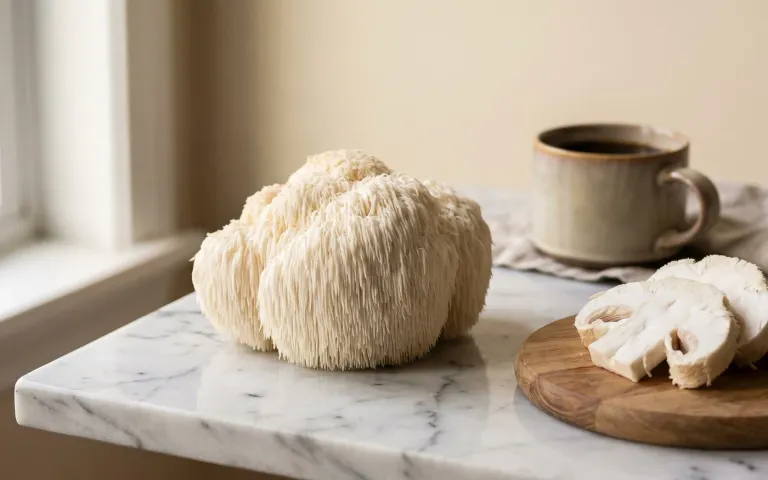
Cleveland Clinic lists lion's mane among the most popular mushrooms found in these blends, and I cite no clinical figure for it in this guide. The general warnings about allergy and digestive upset apply to you, and our dedicated guide to lion's mane side effects goes further. If you want a lion's mane coffee, see our best lion's mane coffee ranking.
Chaga
Chaga carries more documented risk than lion's mane because of its oxalate content. Cleveland Clinic says chaga mushrooms are high in oxalates and are known to affect and increase kidney stones. Memorial Sloan Kettering's chaga monograph adds that chaga may increase your risk of bleeding if you take blood thinners such as warfarin.
I have to be plain about this one, because Balance Coffee sells a Chaga Elixir. Chaga is the species with the most serious documented harm in this guide, and the next section gives you the doses so you can judge it yourself.
Reishi
Reishi has the longest list of reported effects. The MSK patient guidance lists nausea, insomnia, and liver injury, and its professional section adds dry mouth, constipation, itching, and vertigo. Read the reishi monograph if you take regular medication.
Cordyceps and Turkey Tail
Both species appear in multi-mushroom blends, and there are few reports in the clinical literature for either. That is not proof of safety, only a gap. Check the label of your blend before you assume you are only drinking lion's mane, and look for the milligrams of each species per serving.
Rare but Serious: What the Case Reports Show
A case report tells you that an event is possible, not how often it happens or to whom. Three published chaga cases describe kidney damage from oxalate. Two of the three state a dose: 4-5 teaspoons of chaga powder a day for 6 months, and 10-15g a day with vitamin C at 500mg for 3 months.
The third reports years of chaga powder use and gives no dose. You can look all three up yourself.
If you want the sources, Kikuchi and colleagues reported chaga mushroom-induced oxalate nephropathy in Clinical Nephrology in 2014. Lee and colleagues described end-stage renal disease after long-term chaga ingestion in the Journal of Korean Medical Science in 2020. Kwon and colleagues described a 69-year-old man in Medicine in 2022 who took chaga powder at 10-15g a day, with vitamin C at 500mg a day, for 3 months and developed acute kidney injury.
MSK summarises the same literature for you. A 72-year-old woman took 4-5 teaspoons of chaga powder daily for 6 months, needed hemodialysis, and her kidney function did not recover. The 69-year-old man's kidney function improved after hemodialysis and high-dose steroids, and a third man developed end-stage renal disease after long-term chaga use for atopic dermatitis.
Put those doses next to your cup. A coffee serving holds a fraction of those amounts, and I found no case report involving mushroom coffee at serving size. The risk is real for heavy, long-term chaga powder use, and you should not read it as a warning about one cup.
MSK also records hepatotoxicity with powdered reishi mushroom, leading to death in one instance, which is why you should treat reishi powder with care.
A 2025 abstract in the American Journal of Gastroenterology, titled 'When Healthy Turns Harmful: Mushroom Coffee-Induced...', states that adverse effects, particularly acute liver injury, have been increasingly reported. The full text is paywalled, so I cite the title and that sentence only. If the term is new to you, oxalate nephropathy means kidney damage caused by oxalate crystals building up in the kidney.
Medication Interactions
If you take prescription medicine, the species matters more than the coffee, and the interaction notes below come from MSK and Patient.info. Never stop a prescribed medicine because of anything you read here. Ask your pharmacist whether your mushroom product is safe alongside it.
- Blood thinners and antiplatelets: MSK says both chaga and reishi can increase your risk of bleeding if you take blood thinners such as warfarin.
- Blood-sugar medication: in a lab study, chaga had additive effects in lowering blood sugar, and MSK states that the clinical significance is unknown.
- Immunosuppressants: MSK tells you to talk to your healthcare provider about reishi if you are on immunosuppressants, which is the question a transplant forum thread about tacrolimus was asking.
- Blood pressure medicines: Patient.info says reishi can interact with medicines affecting blood pressure and blood clotting.
One r/AmazonVine reader worried that a mushroom variety would interfere with the absorption of a husband's medication. I found no clinical source for that mechanism in the references reviewed, so ask your pharmacist about your own medicine rather than relying on a thread.
Who Should Check With a GP First
Check with your GP or pharmacist before you start mushroom coffee if any of these apply to you. This is not a list of people who must avoid it, only the people whose risk is highest.
- Pregnant or breastfeeding: the NHS says not to exceed 200mg of caffeine a day, and a cup of instant coffee holds 100mg. I found no safety data for medicinal mushroom extracts in pregnancy, so the evidence is thin in both directions.
- Kidney disease or kidney stones: chaga's oxalate content is the concern.
- On blood thinners: chaga and reishi can raise bleeding risk.
- On diabetes medication or immunosuppressants: see the interactions above.
- A mushroom allergy: rashes and digestive reactions are reported.
- IBS or a sensitive gut: the first-week upset can be worse for you.
- Caffeine sensitivity or anxiety: the cup still holds caffeine.
How to Lower Your Risk
The routine that suits most people is simple: change one input at a time and know your species and your dose. Start at half a serving for a week, then move to a full one. Use one species at a time, and avoid stacking chaga or reishi from a coffee, a tincture, and a capsule on the same day.

Read the label for the species and the milligrams per serving. Multi-species blends such as the one in our DIRTEA review and our Four Sigmatic review make it harder to see what you are getting. A single-species label, like the one in our London Nootropics review, is easier to judge.
If you want one example of a labelled dose, Balance Coffee Lion's Mane Coffee, which I founded, is a ground-only blend of 80% coffee and 20% lion's mane with 1,800mg of lion's mane per the label. I founded Balance Coffee, which sells a Lion's Mane coffee and mushroom tinctures, so read my take with that in mind.
It is sold on 20% less caffeine, which still counts toward your 200mg limit if you are pregnant and toward your 400mg total if you are not, and no product is free of side effects. If you want the mushroom without the caffeine, read our best mushroom supplement guide and our upcoming piece on mushroom tincture benefits. You can also compare loose mushroom powder options.
When to Stop and Get Help
Stop the product and seek help if you notice any of these signs. A rash, swelling, or difficulty breathing needs urgent medical help, so call 999 or go to A&E.
- Yellowing of your skin or eyes
- Dark urine
- Persistent abdominal pain
- Passing much less urine than usual
Speak to your GP about anything else that does not settle after your first week, or that worries you at any point. Take the product packaging with you so your GP can see the species and the dose.
The Verdict
Mushroom coffee side effects are mostly mild, they mostly settle, and the species and your situation decide how much care you need. Count the caffeine, change one input at a time, and take the chaga and reishi warnings seriously if you have kidney disease or take blood thinners. When you are ready to choose a product, our guide to the best mushroom coffee brands in the UK lists the options.
Start with half a serving, and let your body answer.
Frequently Asked Questions
Is it good to drink mushroom coffee every day?
For most healthy adults one serving a day is well tolerated. Count its caffeine toward EFSA's 400mg daily limit, and avoid stacking chaga or reishi from several products on the same day. If you take regular medication or have kidney problems, check with your GP or pharmacist before you make it a daily habit.
What medications cannot be taken with mushroom coffee?
Blood thinners are the main concern, because MSK says chaga and reishi can increase bleeding risk. Reishi also needs care with immunosuppressants and blood pressure medicines, and chaga may add to blood-sugar medicines. Never stop a medicine yourself, and ask your pharmacist before you start.
Who should avoid drinking mushroom coffee?
Check with a GP or pharmacist first if you are pregnant or breastfeeding, have kidney disease or kidney stones, take blood thinners, diabetes medication, or immunosuppressants, or have a mushroom allergy. Mushroom coffee is not banned for these groups, but their risks are higher. Your clinician can tell you whether your species and dose are sensible.
Why do I feel weird after drinking mushroom coffee?
The usual causes are the caffeine, either too much or a sudden cut from stronger coffee, and first-week digestive adjustment. Halving your serving and changing one thing at a time helps you find which it is. Stop and seek help if you have a rash, swelling, yellow skin or eyes, dark urine, or severe stomach pain.
What do doctors say about mushroom coffee?
Cleveland Clinic and Patient.info both say research is limited. They flag digestive issues and allergic reactions as possible, and Cleveland Clinic names chaga's oxalates and kidney stones as a specific concern. Neither source shows trials of mushroom coffee drinkers, so your own GP is the right person for advice on your health history.
Does mushroom coffee help you lose belly fat?
There is no good evidence that it does, and this guide leaves benefits out of scope. No mushroom species holds an authorised health claim on the GB Nutrition and Health Claims register. Our guide on whether mushroom coffee is good for you covers what the evidence does and does not show.
Does mushroom coffee make you poop?
It can. Coffee itself stimulates the gut and added mushroom fibre can loosen stools in the first days, and the effect usually settles within a week or so. If it does not, halve your serving, and see your GP if you have pain or blood in your stools.
Can you drink mushroom coffee when pregnant?
Count the caffeine toward the NHS 200mg daily limit from all sources. I found no safety data for medicinal mushroom extracts in pregnancy, so ask your midwife or GP before you use one. A mushroom coffee with less caffeine still counts, and a decaf option leaves you with the mushroom question only.

A wellness entrepreneur and biohacker, James explores the intersection of hospitality and health - from clean fuel and recovery tools to mindful routines that build balance into daily life.