London Nootropics Review 2026 - Tested by a UK Coffee Roaster
Adaptogenic coffee blends that actually taste like coffee. Most functional brands can't say that.
Table of Contents
Some of the links in this article are affiliate links, which help fund our independent review work at no extra cost to you. Every recommendation is based on hands-on testing through The Editor Lab methodology. No brand pays to appear, and no placement is guaranteed.
Quick Verdict
London Nootropics is the most accessible entry point into adaptogenic coffee in the UK. The sachets are convenient, the taste is better than most instant functional coffees, and the branded ingredient sourcing (Hifas da Terra mushrooms, KSM-66 ashwagandha, Rhodiolife rhodiola) adds genuine credibility. The adaptogens are dosed at the lower end of clinically studied ranges, which is honest but worth knowing. At £0.80 to £1.00 per serving, it sits above standard instant coffee but below a high street flat white.
Who it is for: Anyone who wants to try adaptogenic coffee without committing to a brew routine. Office workers, travellers, or people who find the mushroom coffee category intimidating and want a simple starting point.
Who should skip it: If you already brew speciality coffee at home and want higher adaptogen doses, a ground or whole-bean functional coffee will serve you better.
What Is London Nootropics?
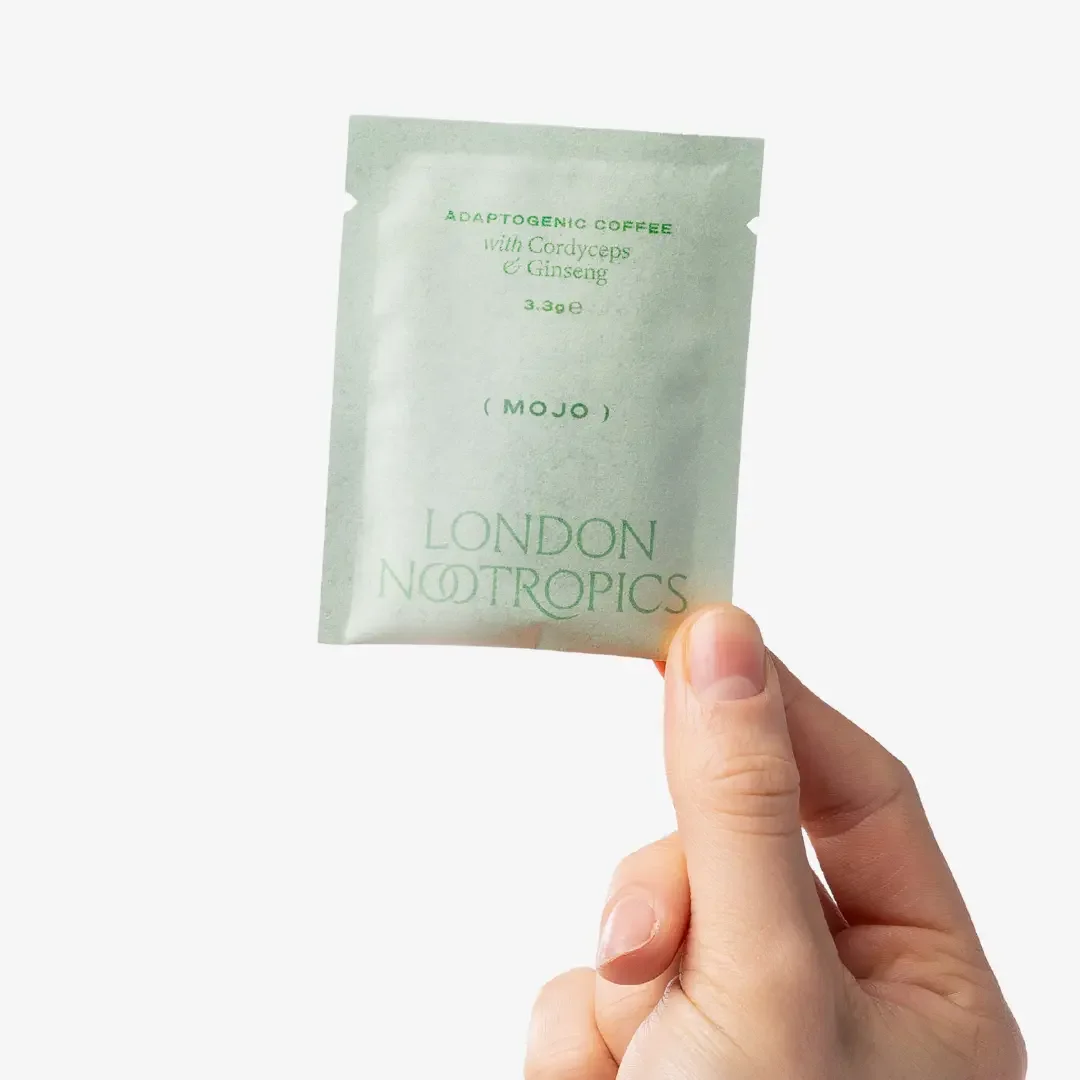
London Nootropics is a UK adaptogenic coffee brand founded in 2020 by Zain Peer and Shez Shaikh, two friends who met at school. The company produces instant coffee sachets blended with adaptogens - natural compounds that research suggests may help the body manage stress, focus, and energy.
The brand appeared on BBC One's Dragons' Den in February 2022, securing a £50,000 investment from Deborah Meaden and Sara Davies. Since then, it has expanded into Selfridges, Harrods, Holland and Barrett, Boots, and Ocado. The company reports approximately 10,000 customers purchasing directly through its website each month, according to NutraIngredients (2024).
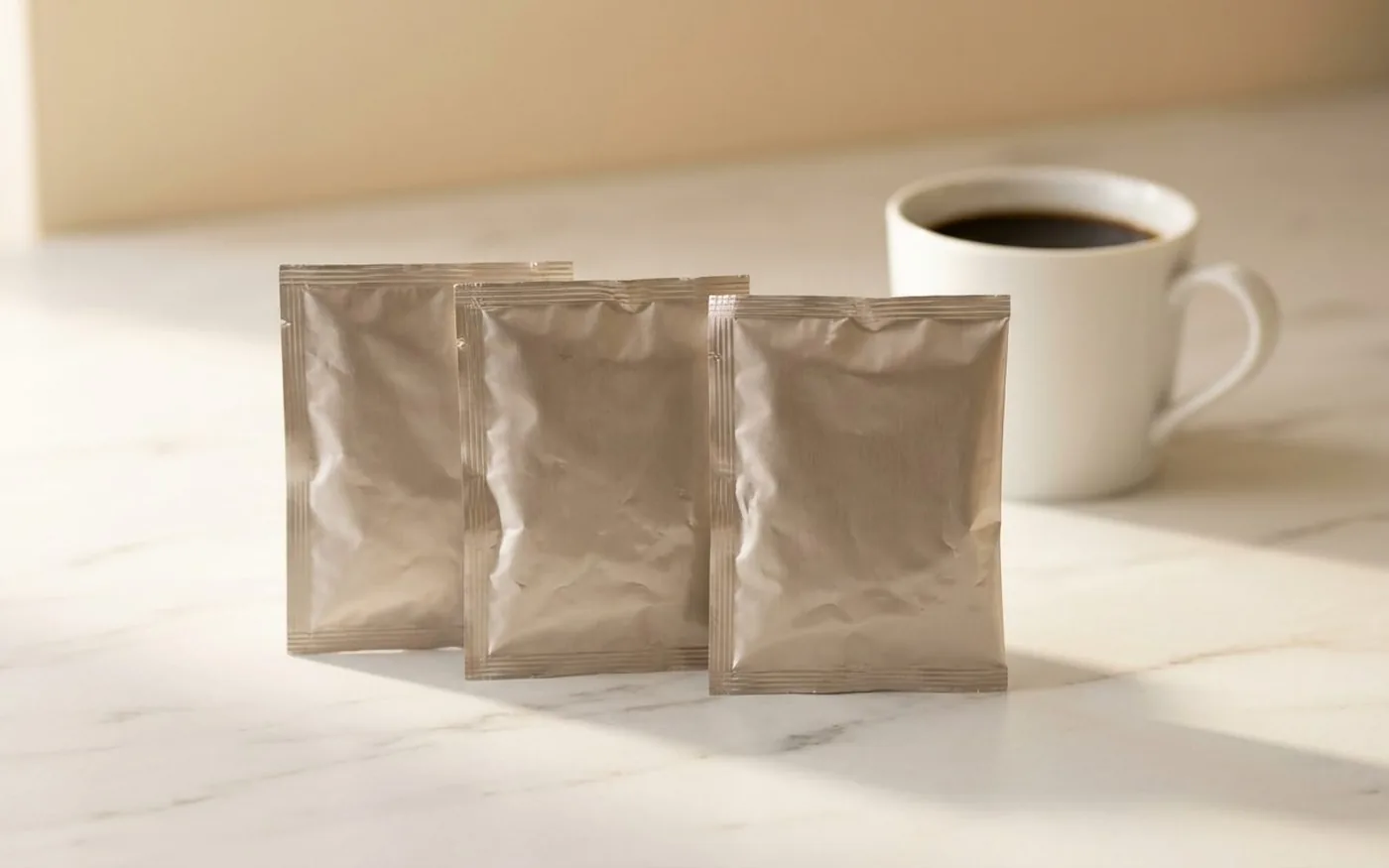
London Nootropics offers three core blends, each combining micro-ground coffee with two adaptogens. The format is simple: tear open a sachet, add hot water, stir. No brewing equipment required. The coffee itself is a blend of South American and South Asian arabica and robusta beans - not single origin, not speciality grade, but a step above typical instant.
What We Tested
We tested all three London Nootropics blends - Flow, Zen, and Mojo - over a 30-day period through The Editor Lab. Each blend was prepared according to the sachet instructions: one sachet dissolved in approximately 200ml of hot water (not boiling, around 85 degrees Celsius).
Testing covered four areas. Taste and coffee quality, assessed using our standard nose-body-finish framework across multiple brews. Ingredient transparency, comparing listed adaptogen doses against published clinical research. Convenience and dissolving performance. And value, measured as cost per serving against comparable UK products.
We did not test for health outcomes. Adaptogen research is promising but early-stage, and a 30-day editorial test is not a clinical trial. What we can assess is whether the product tastes good, whether the ingredient doses are meaningful relative to the published evidence, and whether the price is justified.
Taste and Quality
The coffee base across all three blends uses micro-ground arabica and robusta beans. It dissolves cleanly with minimal sediment, which puts it ahead of several functional coffee powders that leave gritty residue at the bottom of the cup.

Flow (Lion's Mane and Rhodiola)
Dark chocolate and roasted grain on the nose. Through the body, the coffee is smooth with a medium weight - not thin, but not full either. The Lion's Mane is not detectable as a separate flavour, which is a good sign. Some mushroom coffees leave an earthy, almost damp undertone that fights the coffee. Flow avoids that entirely. The finish is clean, with a gentle bitterness that fades within a few seconds.
Zen (L-Theanine and KSM-66 Ashwagandha)
Slightly softer on the nose than Flow. The body carries a malty sweetness that reads almost like Horlicks mixed with decent coffee. It is the smoothest of the three blends, which makes sense given that L-theanine is specifically associated with reducing the jittery edge of caffeine. No ashwagandha taste detectable, which is notable because ashwagandha can be bitter in higher concentrations.
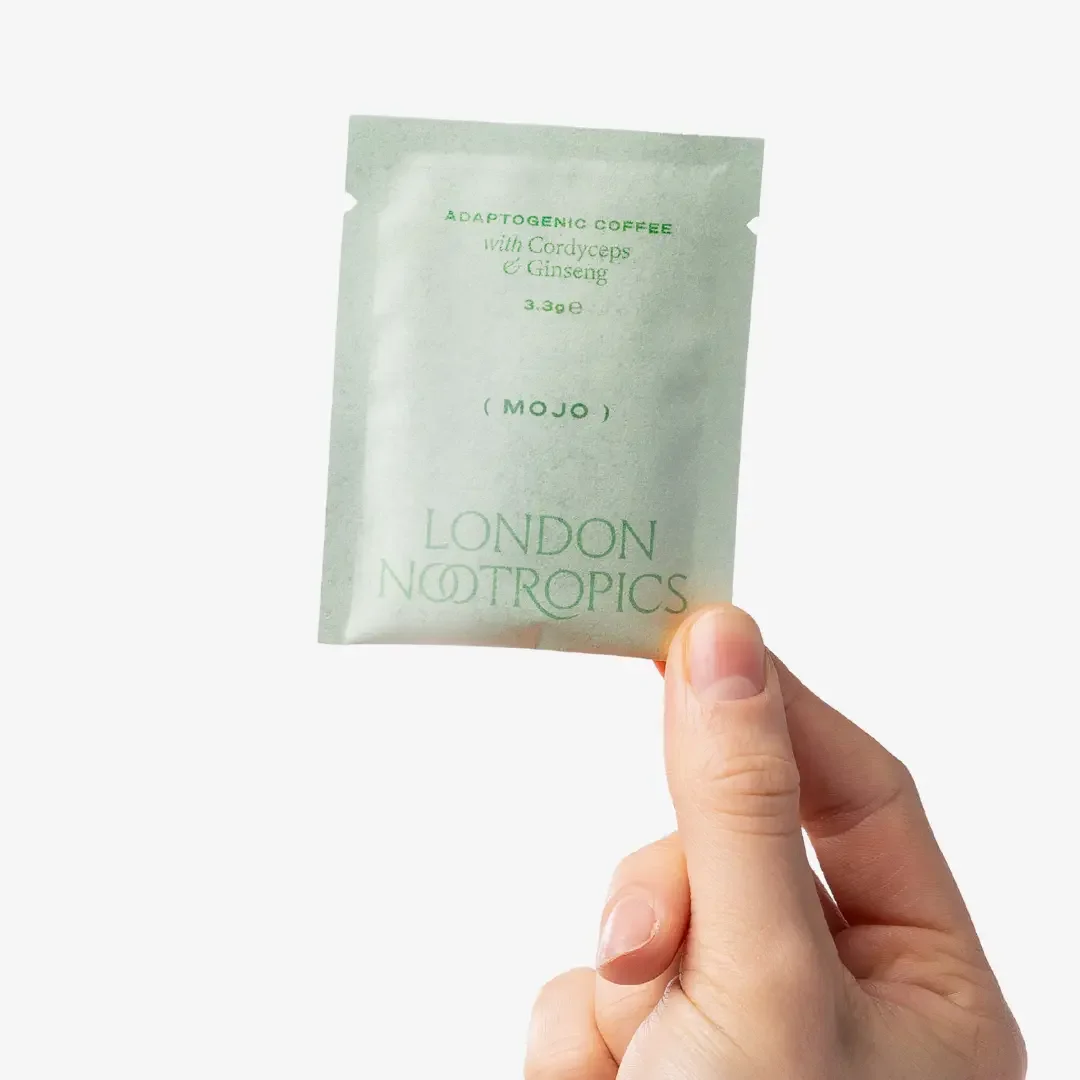
Mojo (Cordyceps and Siberian Ginseng)
The boldest of the three. Toasted walnut and a slight smokiness on the nose. The body is fuller than Flow or Zen, with the ginseng contributing a faint herbal warmth in the background. On the finish, there is a peppery bite that lingers slightly longer. Of the three, this one tastes most like a coffee you chose for flavour rather than function.
It is still instant coffee. It does not compete with freshly ground speciality beans on depth or complexity. But within the category of functional instant coffees, the taste is genuinely above average. The sachets do not taste medicinal, and that is not something every adaptogenic brand can say.
Ingredients and Dosing
Most adaptogenic coffee brands list ingredients without specifying doses. London Nootropics publishes exact milligrams per sachet, and they use branded, standardised extracts rather than generic powders.
Flow: Hifas da Terra Lion's Mane extract at 250mg (45% beta-glucans) plus Rhodiolife Rhodiola Rosea extract at 83mg (3% rosavins, 1% salidroside).
Zen: L-theanine at 153mg plus KSM-66 Ashwagandha root extract at 110mg (5% withanolides).
Mojo: Hifas da Terra Cordyceps extract at 305mg (5% cordycepin, 25% beta-glucans) plus Siberian Ginseng extract at 102mg (0.8% eleutherosides).
How do these doses compare to published clinical research? Lion's Mane studies have used doses ranging from 250mg to 3,000mg daily, with a 2023 double-blind study published in the Journal of Dietary Supplements finding cognitive improvements at 1,800mg per day over 16 weeks. Flow's 250mg sits at the very bottom of that range.
KSM-66 Ashwagandha has been studied at 300 to 600mg daily, with a landmark study in the Indian Journal of Psychological Medicine (2012) finding significant cortisol reduction at 600mg per day over 60 days. Zen's 110mg is below the lowest studied dose.
Rhodiola Rosea studies typically use 200 to 600mg daily. Flow's 83mg is below most clinical protocols.
The pattern is consistent across all three blends: the ingredients are genuine and well-sourced, but the doses are lower than what most clinical studies have tested. London Nootropics is transparent about this - they publish the exact figures, which is more than many competitors offer. The question for buyers is whether sub-clinical doses in a daily coffee provide cumulative benefit over time, which the current research has not yet answered.
Price and Value
| Pack Size | Price | Per Serving |
|---|---|---|
| 12 sachets (one-time) | £12.00 | £1.00 |
| 60 sachets (subscription) | £48.00 | £0.80 |
| 240 sachets (subscription) | £160.00 | £0.67 |
Subscribers also receive 20 per cent off all top-ups and gifts, with free UK delivery on subscriptions.
For context, here is how that compares to alternatives in the UK functional coffee space:
| Brand | Format | Per Serving | Key Adaptogen Dose |
|---|---|---|---|
| London Nootropics Flow | Instant sachet | £0.80-£1.00 | Lion's Mane 250mg |
| Balance Coffee Lion's Mane Coffee | Ground (brew required) | £1.13 | Lion's Mane 1,800mg |
| DIRTEA Mushroom Coffee | Instant powder | £0.40-£0.55 | Lion's Mane 1,000mg |
| Spacegoods Rainbow Dust | Instant powder | £1.00-£1.17 | Lion's Mane + 5 other adaptogens |
London Nootropics sits in the mid-range on price. DIRTEA is cheaper per serving with higher Lion's Mane dosing. Balance Coffee's Lion's Mane blend costs slightly more but delivers six times the Lion's Mane dose, though it requires a coffee maker or cafetiere. Spacegoods is similarly priced but takes a different approach with a broader adaptogen stack.
The value proposition for London Nootropics is convenience plus ingredient quality. You are paying for branded extracts (Hifas da Terra, KSM-66, Rhodiolife), a pleasant taste, and zero preparation time. Whether that trade-off is worth it depends on whether convenience or dose strength matters more to you.
Who Is London Nootropics Best For?
London Nootropics works best for people who want to add adaptogens to their daily coffee without changing their routine. If you already drink instant coffee or buy a flat white on the way to work, swapping in a London Nootropics sachet is a seamless switch.
It is a strong choice for three groups. First, people new to adaptogenic coffee who want to test the category without committing to a grinder, a cafetiere, and a bag of functional beans. Second, office workers and commuters who need a portable option that dissolves in any mug. Third, anyone sensitive to high caffeine who wants the calming effect of L-theanine (Zen) or ashwagandha without a separate supplement.
It is not the right choice if you prioritise high adaptogen doses. At 250mg of Lion's Mane per sachet, you would need multiple servings per day to approach the doses used in clinical research. It is also not the right choice if coffee quality is your primary concern - this is good instant coffee, but it is still instant coffee. Buyers who brew at home and care about origin, roast profile, and extraction will find more satisfaction in a ground functional blend.
How London Nootropics Compares
London Nootropics vs Balance Coffee Lion's Mane Coffee. Balance Coffee uses 1,800mg of organic dual-extraction Lion's Mane in speciality-grade ground coffee, compared to London Nootropics' 250mg in instant format. The coffee quality gap is significant - Balance Coffee is freshly roasted single-origin arabica versus a blended instant. But London Nootropics requires zero equipment and takes 30 seconds to prepare. If you already brew coffee at home, Balance Coffee delivers more on both taste and dose. If convenience is the priority, London Nootropics wins. (Full review: best lions mane coffee uk)
London Nootropics vs Spacegoods. Spacegoods Rainbow Dust takes a kitchen-sink approach with Lion's Mane, Chaga, Cordyceps, Ashwagandha, maca, and natural caffeine in a chocolate-flavoured powder. London Nootropics takes the opposite approach: two targeted adaptogens per blend, each from a named supplier. Spacegoods may appeal to people who want maximum breadth. London Nootropics appeals to people who prefer knowing exactly what each ingredient is doing and where it came from. (Full review coming: Spacegoods review)
London Nootropics vs DIRTEA. DIRTEA's mushroom coffee offers 1,000mg of Lion's Mane per serving at roughly £0.40 to £0.55 on subscription - cheaper and higher-dosed. But DIRTEA is a loose powder that requires measuring, while London Nootropics sachets are pre-portioned. DIRTEA also lacks the secondary adaptogens (rhodiola, ashwagandha) that give London Nootropics its blend-specific targeting. (Full review coming: Dirtea review)
Our Verdict
| Evaluation Criteria | Our Findings |
|---|---|
| Full Review | You are reading our London Nootropics review |
| Best For | Beginners to adaptogenic coffee who want a convenient, no-equipment format |
| Format | Instant sachet (three blends: Flow, Zen, Mojo) |
| Adaptogen Doses | Flow: Lion's Mane 250mg, Rhodiola 83mg | Zen: L-Theanine 153mg, Ashwagandha 110mg | Mojo: Cordyceps 305mg, Ginseng 102mg |
| Price | £0.67-£1.00 per serving (£12 for 12 sachets one-time, from £48 on subscription) |
| Shop | Shop London Nootropics → |

A wellness entrepreneur and biohacker, James explores the intersection of hospitality and health - from clean fuel and recovery tools to mindful routines that build balance into daily life.

Where London Nootropics Gets Featured
| Article | Ranking | Best For |
|---|---|---|
| Best Lions Mane Coffee Uk | #2 | Best Adaptogenic Sachets |
| Best Healthy Coffee Beans Uk | #4 | Best Adaptogenic Coffee |
| Best Mushroom Coffee Brands Uk | #5 | - |
Final Thoughts
London Nootropics has done the hard work that many adaptogenic brands skip: named suppliers, published doses, and a product that actually tastes good. The dose levels are lower than clinical research protocols, but the transparency around that is itself a differentiator. Most competitors either hide their doses or use generic extracts without supplier attribution.
The instant format is a genuine advantage for its target customer. If you want adaptogenic coffee without any friction, this is the best version of that product currently available in the UK.
If you want higher doses and better coffee, you are looking at ground functional blends like Balance Coffee's Lion's Mane Coffee - more preparation required, but six times the mushroom per cup.
For a wider look at the category, see our guide to the best Lion's Mane coffee UK.