Best Espresso Machine: Tested and Ranked for 2026

Coffee & Wellness Writer
Not one best machine. One best machine per budget. Manufacturer-trained tester ranks 12 UK espresso machines from £100 to £1,500.
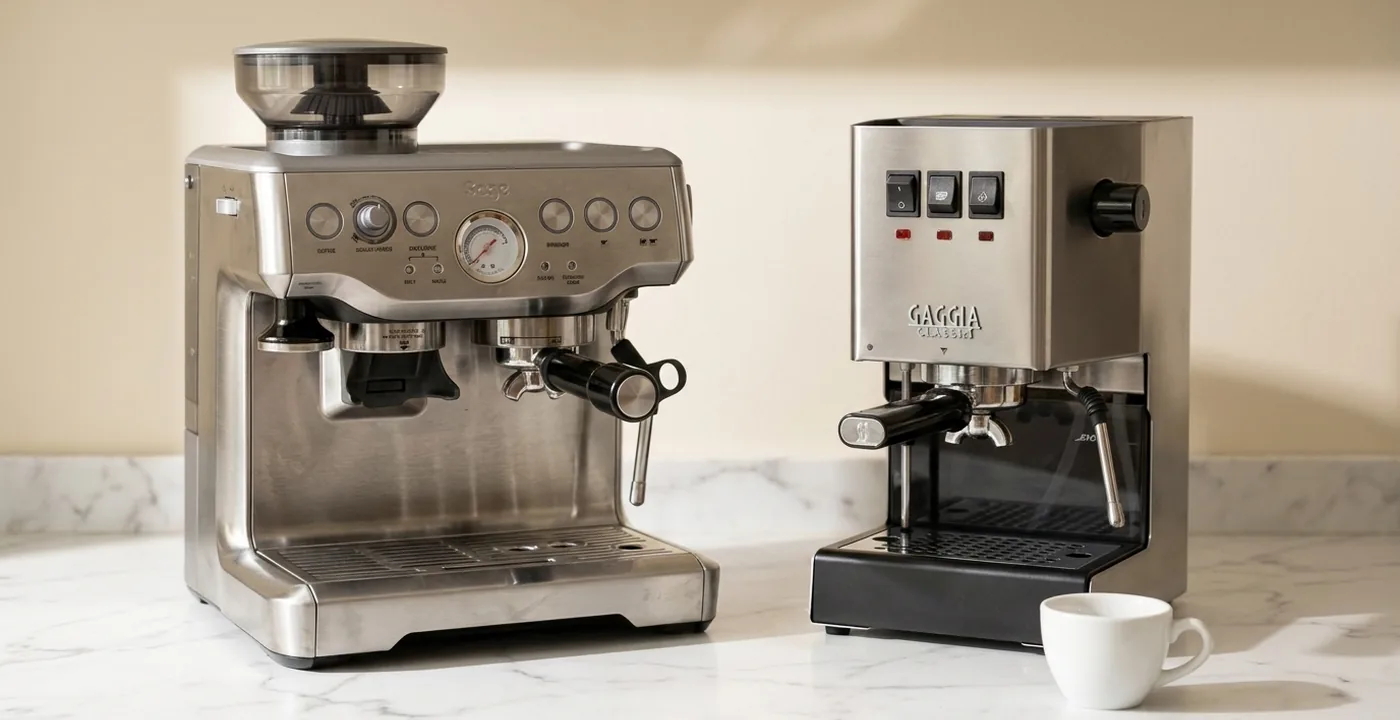
Table of Contents
Some of the links in this article are affiliate links, which help fund our independent review work at no extra cost to you. Every recommendation is based on hands-on testing through The Editor Lab methodology. No brand pays to appear, and no placement is guaranteed.
The question most home buyers reach when shopping for the best espresso machine is not which model is best in some absolute sense. It is which machine is right for their budget, their kitchen, and how much they want to learn before pulling a shot they actually enjoy drinking. A £130 entry machine and a £1,500 prosumer set-up are answering completely different questions, and a roundup that ranks them on a single ladder hides more than it reveals.
I spent five and a half years inside an Italian espresso machine manufacturer, so I know which corners a machine cuts to hit its price, and where the extra money on a step-up model actually buys something useful. That manufacturer-side perspective sits behind every ranking on this page. Each machine was assessed on three criteria - shot extraction consistency across a 20-shot session, steam wand performance for milk drinks, and whether the build quality justifies the UK price - and ranked within its price tier, not against the whole field, so a £180 De'Longhi is not graded against a £1,400 Rocket and found wanting.
You will find 12 machines below, segmented by buyer type and budget, from £80 to £2,000. There is no single winner. There is a winner for the buyer who drinks a black espresso a day, a different one for the parent steaming milk twice every morning, and another for the reader who wants to learn pressure profiling on a heat-exchanger machine. The quick-comparison table that follows is the fastest way to find yours.
| Rank | Brand | Best For | Price | Shop |
|---|---|---|---|---|
| 1 | 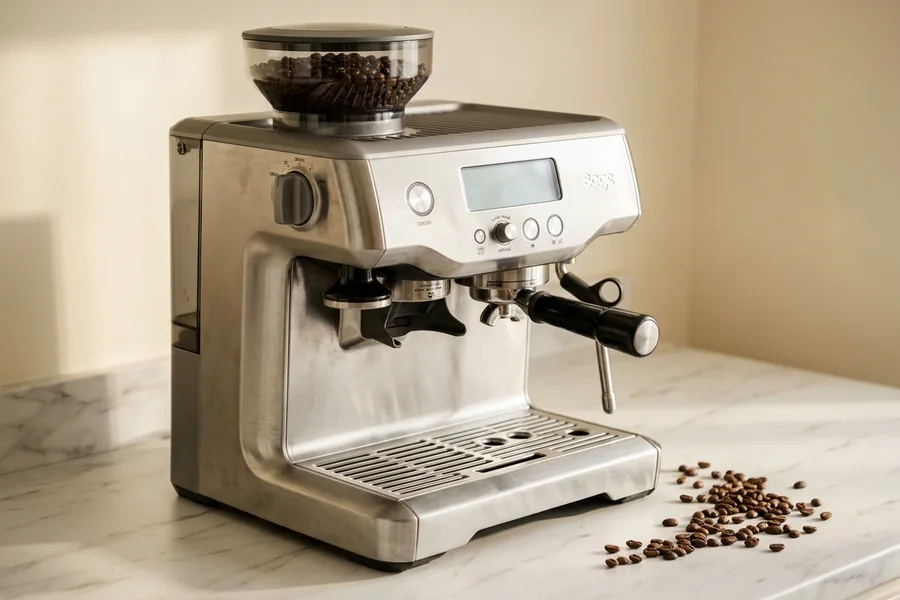 Sage Barista Express ★ ★ ★ ★ ★ ★ ★ ★ ★ ★ | £550 | Explore | |
| 2 | 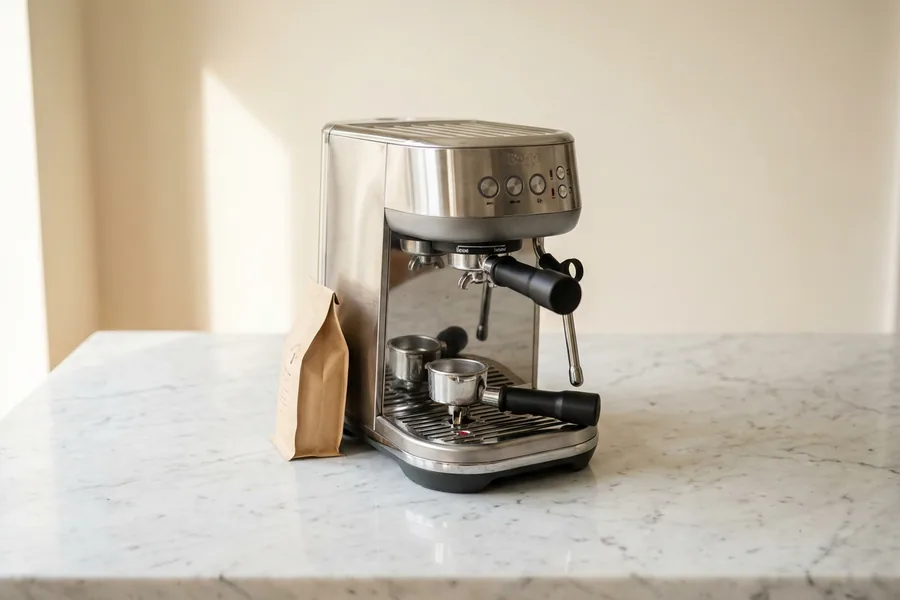 Sage Bambino Plus ★ ★ ★ ★ ★ ★ ★ ★ ★ ★ | £250 | Explore | |
| 3 | 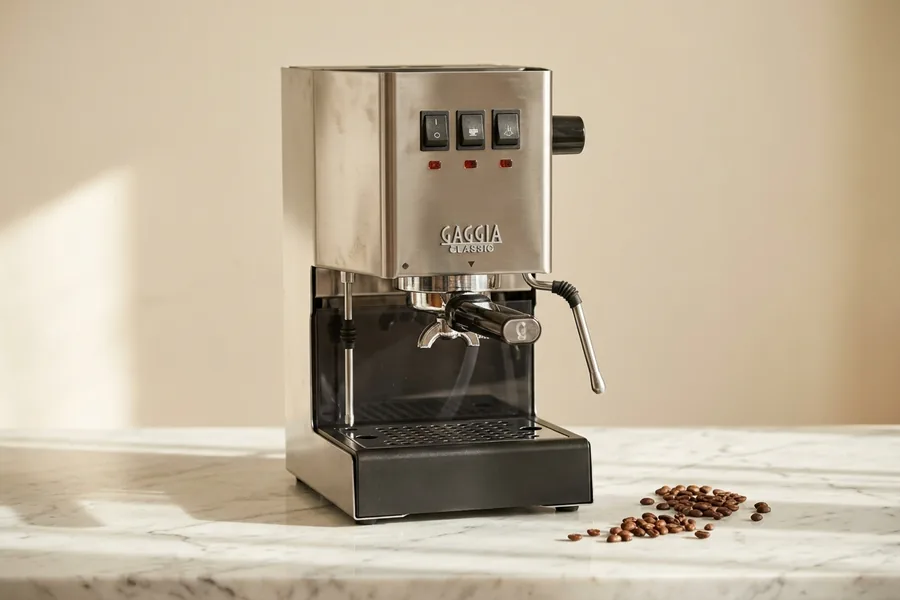 Gaggia Classic Pro ★ ★ ★ ★ ★ ★ ★ ★ ★ ★ | £400 | Explore |
Best Espresso Machine: Quick Comparison
| Machine | Price (from) | Grinder included | Best for | BJ verdict |
|---|---|---|---|---|
| Sage Barista Express | £550 | Yes | Best overall all-in-one | The proven UK starting point - one machine, one purchase, one learning curve |
| Sage Bambino Plus | £250 | No | Small kitchens, fast heat-up | Compact, forgiving auto-steam, needs a separate grinder |
| Gaggia Classic Pro | £400 | No | Learning real espresso | 58mm commercial portafilter; rewards effort, punishes impatience |
| De'Longhi Dedica EC685 | £180 | No | Budget compact | Slim footprint, capable once re-basketed |
| De'Longhi Stilosa EC230 | £100 | No | Under £150 honest entry | Honest entry point, basket caveat applies |
| Sage Barista Pro | £700 | Yes | Premium all-in-one (James's pick) | Faster heat-up, better grinder, professional capability in a home footprint |
| Sage Barista Touch Impress | £1,000 | Yes | Touchscreen and guided steaming | Assisted tamping, screen guidance, hands-off consistency |
| Lelit Anna PID | £450 | No | Entry prosumer | PID temperature control without modding; a step toward Italian machines |
| Rocket Appartamento | £1,290 | No | Italian heat-exchanger prosumer | E61 group, HX boiler, the craft upgrade |
| Sage Oracle Jet | £1,500 | Yes | Hands-off semi-automatic | Automated grind and puck prep with dual-boiler-class performance |
| De'Longhi La Specialista Maestro | £700 | Yes | Manual De'Longhi | Genuine manual espresso line with sensor grinding |
| Sage Dual Boiler (BES920) | £900 | No | Sub-£1,000 dual boiler | Simultaneous brew and steam at a price the prosumer category rarely matches |
Prices verified May 2026 via sageappliances.com, delonghi.com/en-gb, rocket-espresso.co.uk and Lelit UK retailers; expect £30-50 swing at sale events.
How to Choose an Espresso Machine
Three numbers decide most of this category: the price tier you sit in, whether the machine includes a grinder, and how much skill you want to learn before the cup tastes good. Get those three right and the shortlist drops from 40+ UK models to two or three serious options.
The price tiers split cleanly. The £80-250 band is honest entry - machines that produce real espresso if you treat them carefully, but with build compromises and limited features. The £250-800 band is where most home buyers should look, covering all-in-one machines with built-in grinders (the Sage Barista line) and skill-builder traditional machines (Gaggia Classic Pro, Lelit Anna). The £800+ band is prosumer territory: heat-exchanger and dual-boiler builds, E61 group heads, and machines designed to last 15+ years rather than five.
Machine types matter more than brand. A traditional espresso machine has a portafilter you fill with ground coffee, lock into the group head, and pull a shot from manually. An all-in-one espresso machine has a grinder built in, so beans go in one side and ground coffee feeds straight into the portafilter. A best bean to cup coffee machine uk (bean-to-cup) is a different category entirely - you press a button, the machine grinds, doses, tamps and brews automatically, but the cup is constrained by the fixed extraction parameters of an automatic system. This roundup covers traditional and all-in-one machines only.
The grinder question is the one most buyers miss. Any machine without a built-in grinder needs a separate burr grinder, and a cheap grinder will bottleneck even an excellent machine. Budget £100-150 minimum for a serviceable home espresso grinder; best coffee grinder uk picks like the Sage Smart Grinder Pro or Baratza Encore ESP sit in this band. Pre-ground supermarket coffee in a machine like the Gaggia Classic Pro will produce a bitter, weak shot - the machine is not the problem. If you do not want a second appliance on the counter, buy an all-in-one. If you want better shots and are willing to add a grinder, the traditional machines below will repay you.
Skill is the third variable. Some machines, like the Sage Barista Touch Impress and the Oracle Jet, deliberately remove decisions: assisted tamping, automated grind dose, screen guidance. Others, like the Gaggia Classic Pro and the Rocket Appartamento, hand every variable back to you. Neither approach is wrong. Pick the one that matches how much you actually want to learn.
#1 Sage Barista Express: Best Overall All-In-One
| Spec | Detail |
|---|---|
| Price (from) | £550 |
| Boiler type | Single thermocoil |
| Grinder included | Yes (conical burr, 18 dose settings) |
| Portafilter | 54mm pressurised + non-pressurised baskets |
| Pressure | 15 bar pump, 9 bar at group |
| PID | No (digital temperature control) |
| Dimensions | 330 x 310 x 410mm |
| Weight | 10.5kg |
| Full review | Sage Barista Express review |
The Sage Barista Express is the machine that turned the all-in-one category from a compromise into a credible answer for home espresso. The integrated conical burr grinder, the 54mm portafilter, and the single thermocoil heating system give you everything you need to make real espresso in one box, on one counter, for around £550. I bought my parents the Sage Barista Pro during lockdown and spent weeks dialling it in at their kitchen counter - the Express is the model immediately below it and shares the same grinder and most of the same shot performance.
Where it shines: shot consistency once dialled in, milk steaming that handles a flat white in 20-25 seconds, and a learning curve gentle enough for a first-time espresso buyer. The grinder is the real value. A separate burr grinder of comparable quality costs £150-200, so the bundled price effectively gives you a £400 espresso machine plus a £150 grinder - which is what the all-in-one category is supposed to do.
The friction moment: the single thermocoil heats for brewing or steaming, not both at once. Making two milk drinks back to back means a short wait between shot and steam as the boiler switches modes. Most home buyers will not notice on a one-drink morning. If you steam milk for two people every morning, the Sage Barista Pro one tier up uses the faster ThermoJet system and handles back-to-back drinks more comfortably.
“First-time espresso buyers who want one machine, one purchase, one set of skills to learn.”James Bellis, Balance Journal
#2 Sage Bambino Plus: Best Compact
| Spec | Detail |
|---|---|
| Price (from) | £250 |
| Boiler type | ThermoJet |
| Grinder included | No |
| Portafilter | 54mm pressurised + non-pressurised |
| Pressure | 15 bar pump, 9 bar at group |
| PID | No (PID-style digital control) |
| Dimensions | 195 x 320 x 310mm |
| Weight | 5.1kg |
| Full review | Sage Bambino vs Bambino Plus |
Three seconds from cold to extraction temperature, a footprint smaller than a kettle, and an auto-steam wand that texturises milk without barista technique. The Bambino Plus is the Sage machine that proves a small espresso machine does not have to be a bad one. At £250-350 depending on sale cycle, it is the most credible compact espresso machine in the UK market.
The auto-steam wand is the real story. You drop the thermometer wand into milk, press the button, and the machine steams to your chosen temperature and stops. For a buyer learning milk technique, this removes the failure mode that puts most new espresso owners off. The non-pressurised basket is in the box - which means you will need a separate burr grinder to use it correctly. Without one, you are stuck on the pressurised basket and the cup quality drops.
“Small kitchens, fast heat-up needs, buyers who want milk drinks but do not yet trust their steaming technique.”James Bellis, Balance Journal
#3 Gaggia Classic Pro: Best for Learning Real Espresso
| Spec | Detail |
|---|---|
| Price (from) | £400 |
| Boiler type | Aluminium single boiler |
| Grinder included | No |
| Portafilter | 58mm commercial |
| Pressure | 15 bar pump, OPV-modifiable |
| PID | No (modifiable) |
| Dimensions | 230 x 240 x 380mm |
| Weight | 7.5kg |
| Full review | Best Gaggia coffee machine |
The Gaggia Classic Pro is the machine the enthusiast forums recommend because it teaches you espresso properly. The 58mm commercial portafilter is the same diameter as a La Marzocco or a Sanremo Opera, so the puck prep skills, distribution techniques, and tamping discipline you learn here transfer directly to any prosumer or commercial machine you might buy later. That is rare in this price band.
The friction moment is significant: there is no PID, and there is no built-in grinder. The learning curve is real. Temperature surfing - timing your shot to land in the boiler's narrow stable window - is a skill that takes weeks to develop. The commercial steam wand runs at higher pressure than the Sage domestic wands and demands proper pitcher technique. This machine rewards effort and punishes impatience. If you want a flat white in 90 seconds without thinking, this is not your machine. If you want to learn espresso the way baristas learn it, this is the cheapest legitimate way to do it.
“Buyers who want to build real espresso skills and own a machine that lasts a decade with basic maintenance.”James Bellis, Balance Journal
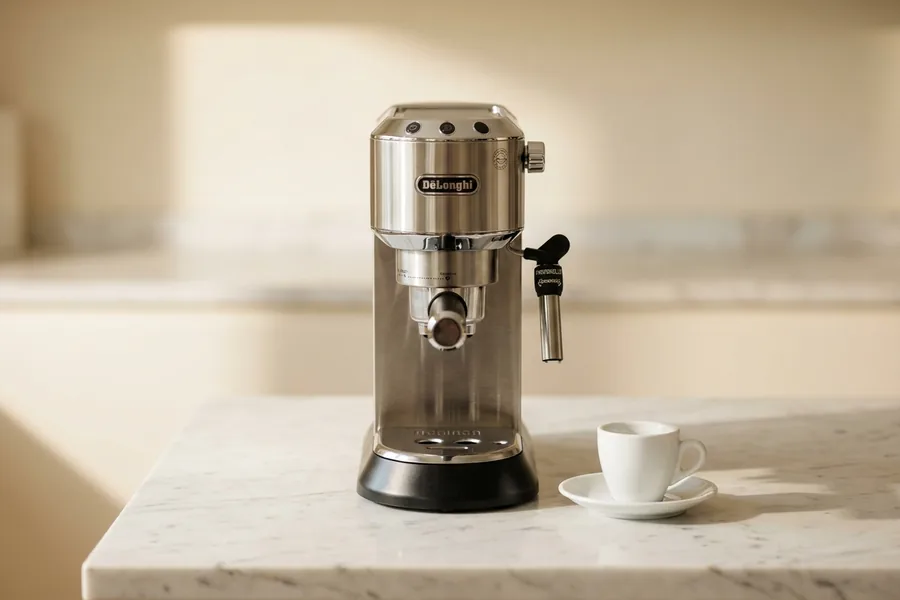
#4 De'Longhi Dedica EC685: Best Budget Compact
| Spec | Detail |
|---|---|
| Price (from) | £180 |
| Boiler type | Thermoblock |
| Grinder included | No |
| Portafilter | 51mm pressurised |
| Pressure | 15 bar pump |
| PID | No |
| Dimensions | 150 x 305 x 330mm |
| Weight | 4.2kg |
| Full review | Best De'Longhi coffee machine |
A 15-centimetre-wide machine that produces credible espresso for under £200 is a category most brands have given up trying to compete in. The Dedica EC685 holds the territory by combining a thermoblock heater, a usable steam wand, and a footprint that genuinely fits in a small kitchen. The pressurised basket in the box delivers reliable crema from pre-ground supermarket coffee, which is what most buyers in this band actually want.
Re-basketing it with the optional non-pressurised filter and pairing it with a £130 burr grinder unlocks the machine's real capability. At that point you have a £310 espresso set-up that gets surprisingly close to a £400 single-machine alternative. The steam wand is panarello-style (single hole, milk-frothing aid), which works for cappuccino-style foam but does not produce silky microfoam for latte art.
“Buyers prioritising counter space and budget, with the option to grow into a better grinder later.”James Bellis, Balance Journal
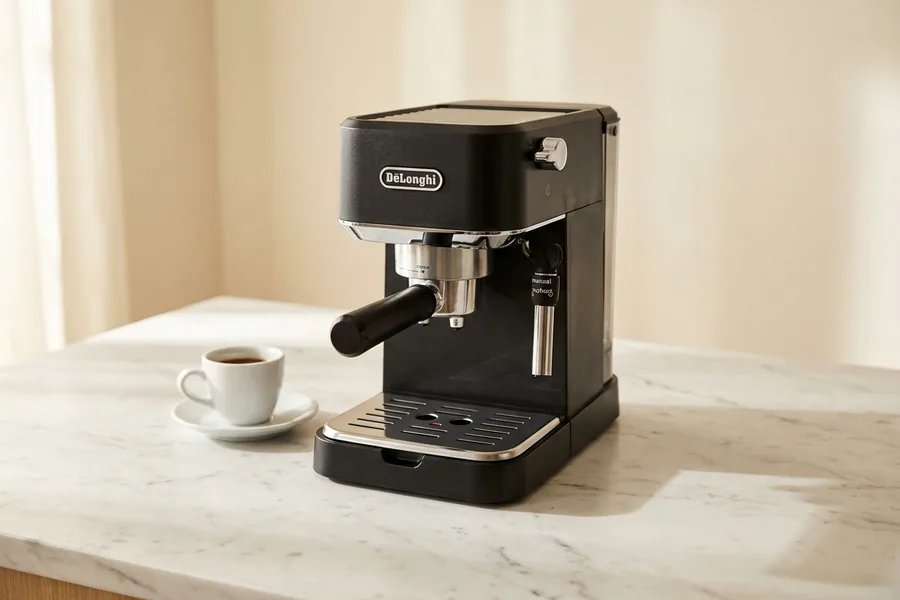
#5 De'Longhi Stilosa EC230: Best Under £150
| Spec | Detail |
|---|---|
| Price (from) | £100 |
| Boiler type | Thermoblock |
| Grinder included | No |
| Portafilter | 51mm pressurised |
| Pressure | 15 bar pump |
| PID | No |
| Dimensions | 197 x 264 x 305mm |
| Weight | 4.0kg |
| Full review | De'Longhi Stilosa review |
The Stilosa is the under-£150 espresso machine that proves the category is not dead. For £100-130 on sale, you get a manual portafilter machine with a usable steam wand, a 1-litre water tank, and crema that looks like espresso crema. That sounds simple. It is the cheapest legitimate route into manual espresso in the UK market.
The friction moment most reviews skip: the Stilosa ships with a pressurised basket that produces thick, foamy crema from any coffee, including stale supermarket pre-ground. This basket disguises the cup. Real espresso made on a Stilosa needs the non-pressurised basket (available aftermarket) and a proper burr grinder, and most buyers never discover this. They judge the machine by what comes out of the pressurised basket and conclude it is a budget toy. With the right basket and a fresh grind, the Stilosa produces a cup that holds its own against machines costing three times the price.
See also our best espresso machine under 500 round-up for the wider sub-£500 picture.
“Under-£150 buyers who understand they are buying a starting point, not a finished system.”James Bellis, Balance Journal
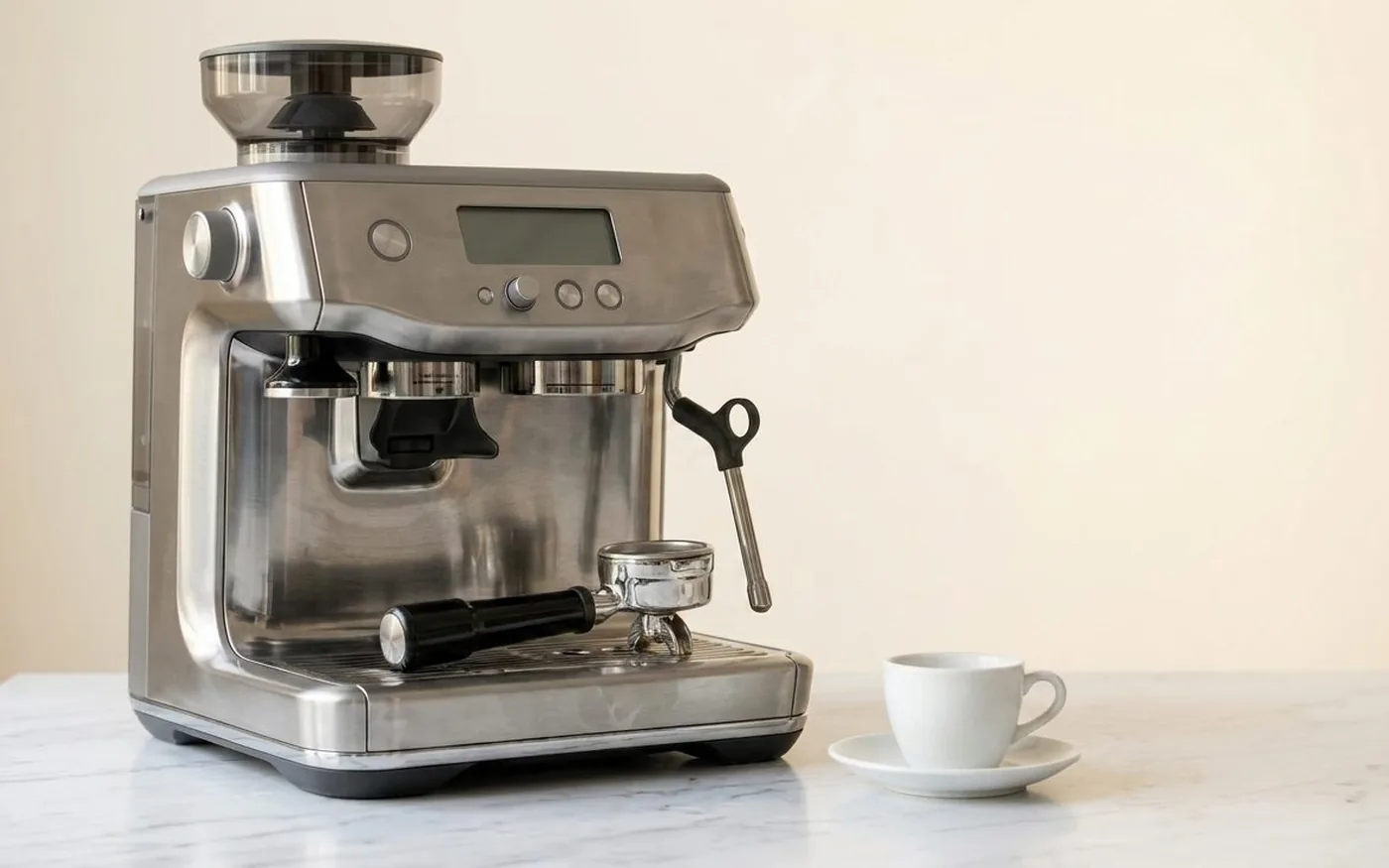
#6 Sage Barista Pro: Best Premium All-In-One (James's Pick)
| Spec | Detail |
|---|---|
| Price (from) | £700 |
| Boiler type | ThermoJet |
| Grinder included | Yes (conical burr, 30 dose settings) |
| Portafilter | 54mm pressurised + non-pressurised |
| Pressure | 15 bar pump, 9 bar at group |
| PID | No (digital temperature control) |
| Dimensions | 330 x 310 x 410mm |
| Weight | 9.5kg |
| Full review | Sage Barista Pro review |
This is the machine I bought my parents during the first lockdown, and the one I would buy again at the price. The Barista Pro upgrades the Express on three measurable counts: the ThermoJet heating system reaches brewing temperature in three seconds (versus the Express's 45-second warm-up), the steam wand pressure handles two milk drinks back to back without the thermocoil switch wait, and the grinder offers 30 dose settings rather than 18. The cup quality on the Pro is meaningfully better than the Express on milk drinks specifically.
Where it sits in the market: the Pro is the all-in-one machine that gets closest to traditional-espresso quality without forcing you to buy two appliances. The Sage Smart Grinder Pro built into the body is a serious grinder in its own right, and the dose calibration tools (auto-fill, programmable shot volumes) make daily use straightforward. For the buyer who wants one device, one counter footprint, and consistent shots without learning to temperature-surf, this is the cleanest answer in the UK market.
“Daily milk drinkers, buyers who want one machine for ten years, and anyone choosing between an all-in-one and a machine-plus-grinder where the all-in-one wins on counter space.”James Bellis, Balance Journal
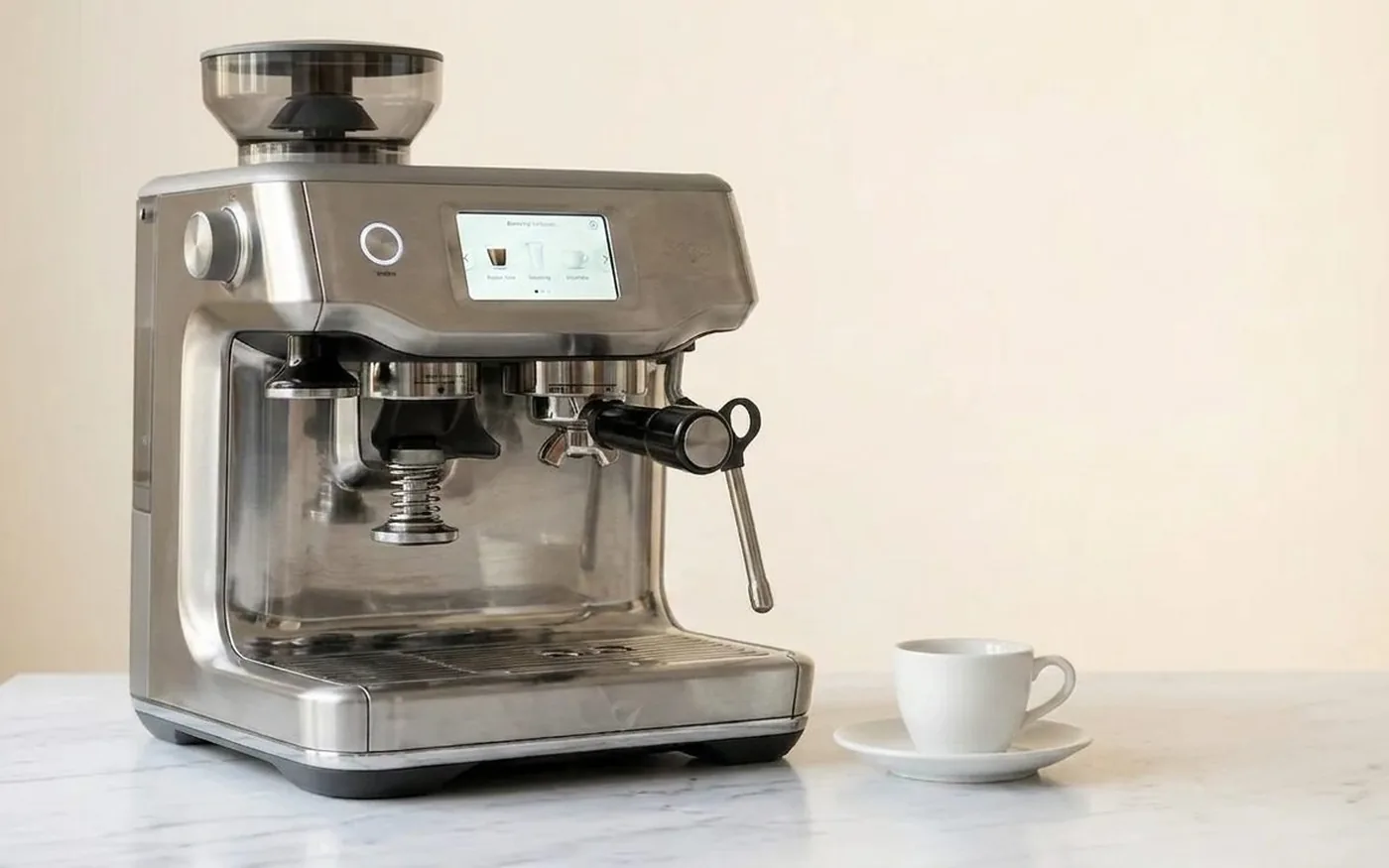
#7 Sage Barista Touch Impress: Best Touchscreen and Guided
| Spec | Detail |
|---|---|
| Price (from) | £1,000 |
| Boiler type | ThermoJet |
| Grinder included | Yes (conical burr with Impress assisted tamping) |
| Portafilter | 54mm pressurised + non-pressurised |
| Pressure | 15 bar pump, 9 bar at group |
| PID | No (digital temperature control) |
| Dimensions | 330 x 360 x 410mm |
| Weight | 11.5kg |
| Full review | Sage Barista Touch Impress review |
The Touch Impress is what the Sage Barista line looks like with two layers of automation added on top of the Pro hardware. The touchscreen runs through 20 preset milk drinks, the Impress assisted-tamping system does the puck preparation for you, and the dose-calibration routine walks you through dialling in a new bag of beans with on-screen prompts. For buyers who want espresso to feel less like a hobby and more like an appliance, the £300 premium over the Barista Pro genuinely buys something.
The honest framing: the espresso hardware underneath is the same ThermoJet boiler and grinder family as the Barista Pro. You are paying for the interface and the assisted tamping. Whether that justifies the £300 jump depends on how much value you place on consistency without learning curve. For households where one person makes coffee for two with very different drink preferences, the preset library and the auto-steam wand are a quality-of-life upgrade that compounds across years of use.
“Buyers who want guided, hands-off consistency and are willing to pay the interface premium.”James Bellis, Balance Journal
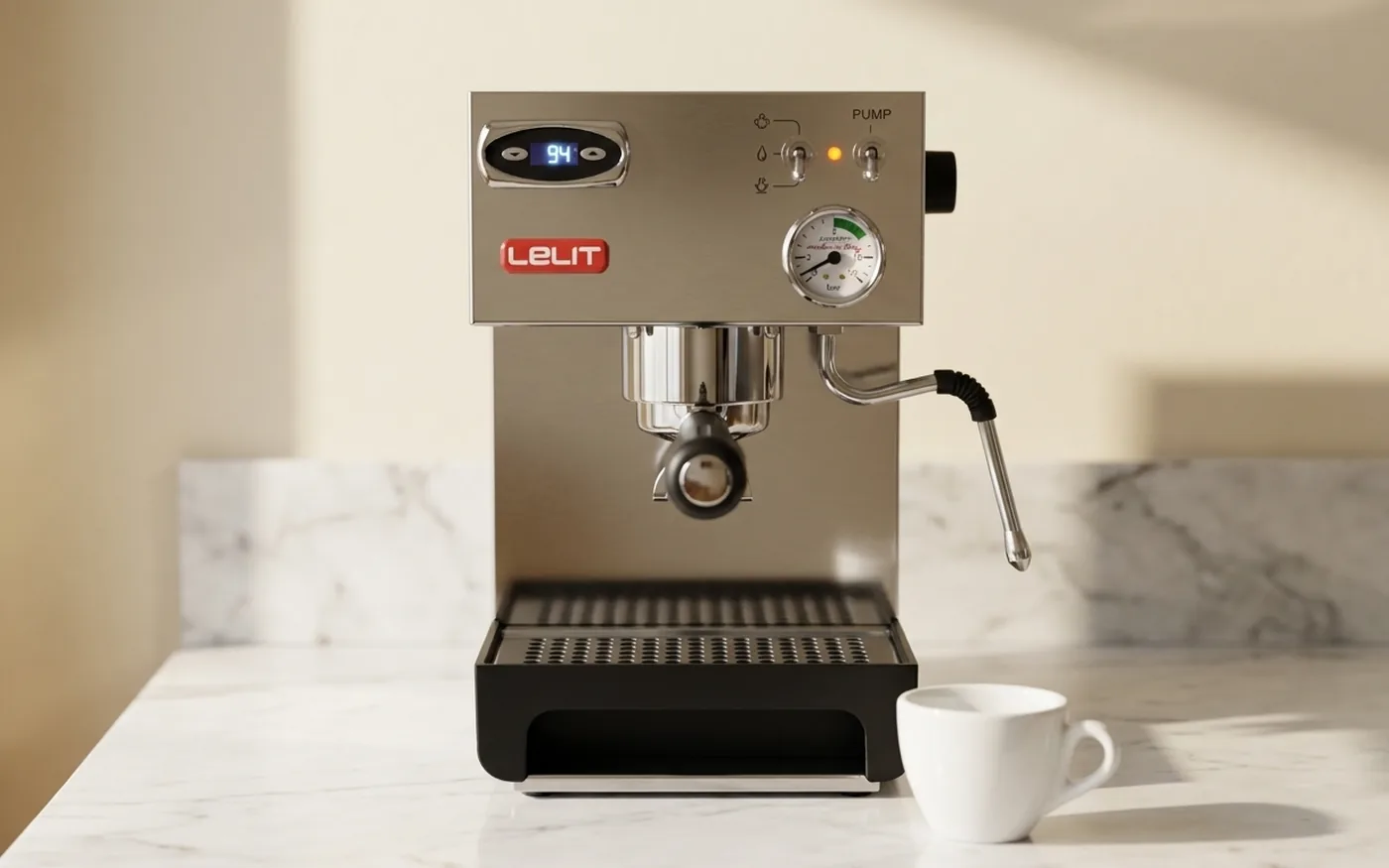
#8 Lelit Anna PID: Best Entry Prosumer
| Spec | Detail |
|---|---|
| Price (from) | £450 |
| Boiler type | Single boiler with PID |
| Grinder included | No |
| Portafilter | 58mm commercial |
| Pressure | 15 bar pump, OPV-set to 9 bar |
| PID | Yes (factory-fitted) |
| Dimensions | 250 x 265 x 305mm |
| Weight | 7.0kg |
| Full review | Pending review |
Lelit is the Italian manufacturer that builds the bridge between the Gaggia Classic Pro and the heat-exchanger prosumer machines like the Rocket Appartamento. The Anna PID gives you PID temperature control out of the box - no modding, no soldering, no third-party kits - on a 58mm commercial portafilter at around £450-550. That combination is genuinely rare in the UK market.
What PID gets you in practice: the brew water temperature stays within plus or minus 1C of your set point shot after shot. On a non-PID machine like the Classic Pro, you are temperature-surfing - timing the shot to land in the boiler's narrow stable window - and inconsistency is the daily reality. The Anna removes that variable entirely. The steam wand handles a single milk drink well; it is not designed for cafe-pace back-to-back steaming. Build quality is recognisably Italian: stainless steel body, brass boiler, components designed for service rather than replacement.
“Buyers ready to leave the all-in-one category and learn proper espresso on Italian-built hardware without crossing the £800 line.”James Bellis, Balance Journal
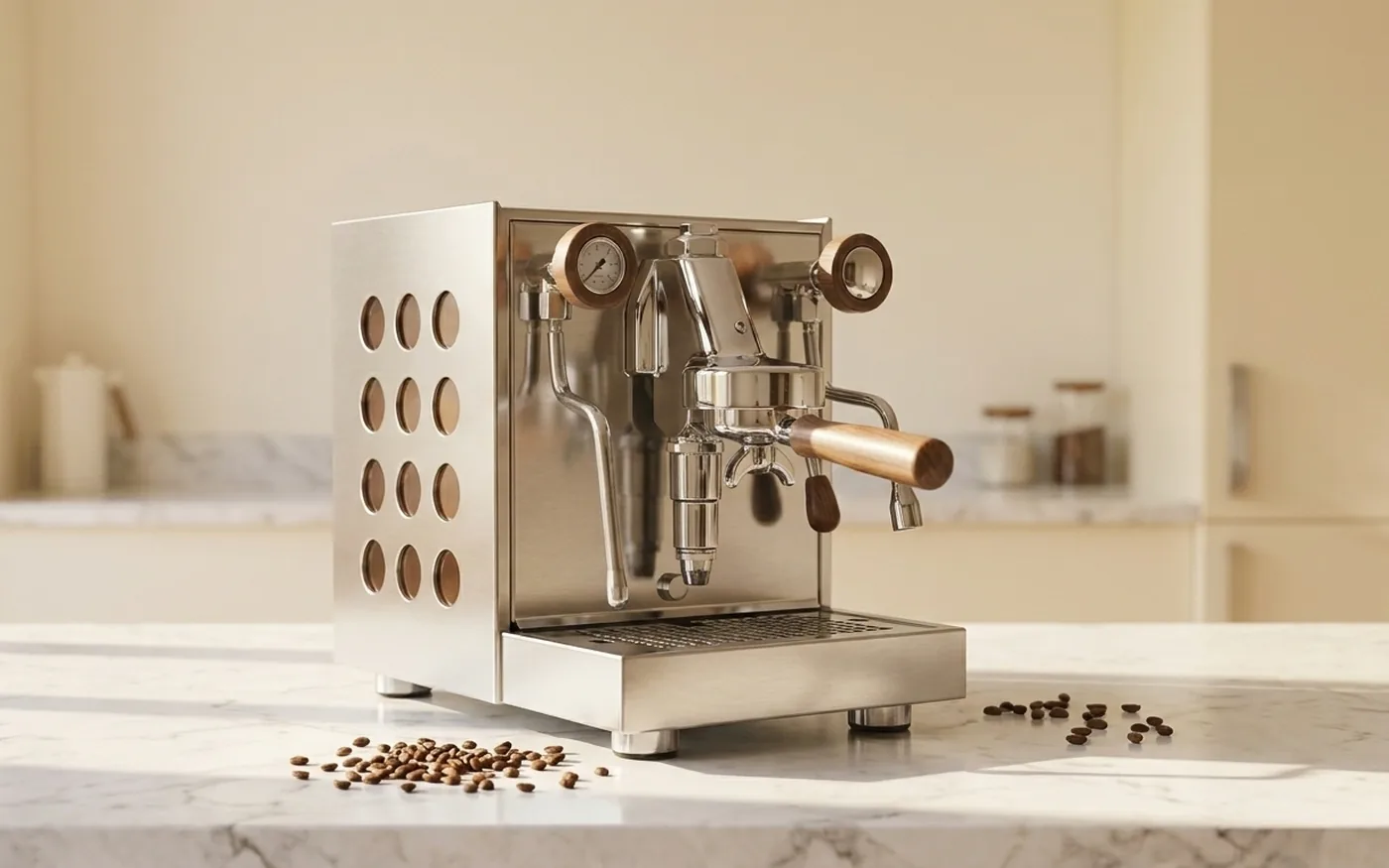
#9 Rocket Appartamento: Best Prosumer (Italian Heat-Exchanger)
| Spec | Detail |
|---|---|
| Price (from) | £1,290 |
| Boiler type | Heat exchanger (E61 group) |
| Grinder included | No |
| Portafilter | 58mm commercial |
| Pressure | Vibration pump, 9 bar at group |
| PID | No (commercial-style pressurestat) |
| Dimensions | 270 x 425 x 360mm |
| Weight | 19kg |
| Full review | Best Rocket Espresso machines |
The Rocket Appartamento is the gateway into Italian heat-exchanger machines, and the gateway into a class of espresso machine designed to last 15-20 years with basic service. The E61 group head is the same brass thermosyphon design used on commercial Italian machines for 60 years, the boiler is a true heat exchanger (one boiler heats steam pressure while a separate coil draws brewing water through it), and the build weight is 19 kilograms of stainless steel and brass. This is a different category of machine.
What you get for the £1,290-1,400 price: simultaneous brewing and steaming on demand (no mode switching), a commercial-style steam wand that handles milk drinks at speed, and a machine that visibly belongs on a kitchen counter as much as it does in a cafe. The Italian Espresso standard published by the Istituto Nazionale Espresso Italiano describes the cup this category of machine is engineered to deliver: 25 ml shots at 9 bar, 88-92C, in 25-30 seconds. The Appartamento meets that standard out of the box, every time.
“Buyers who want a machine to last two decades and are ready to pair it with a separate grinder of equivalent quality.”James Bellis, Balance Journal
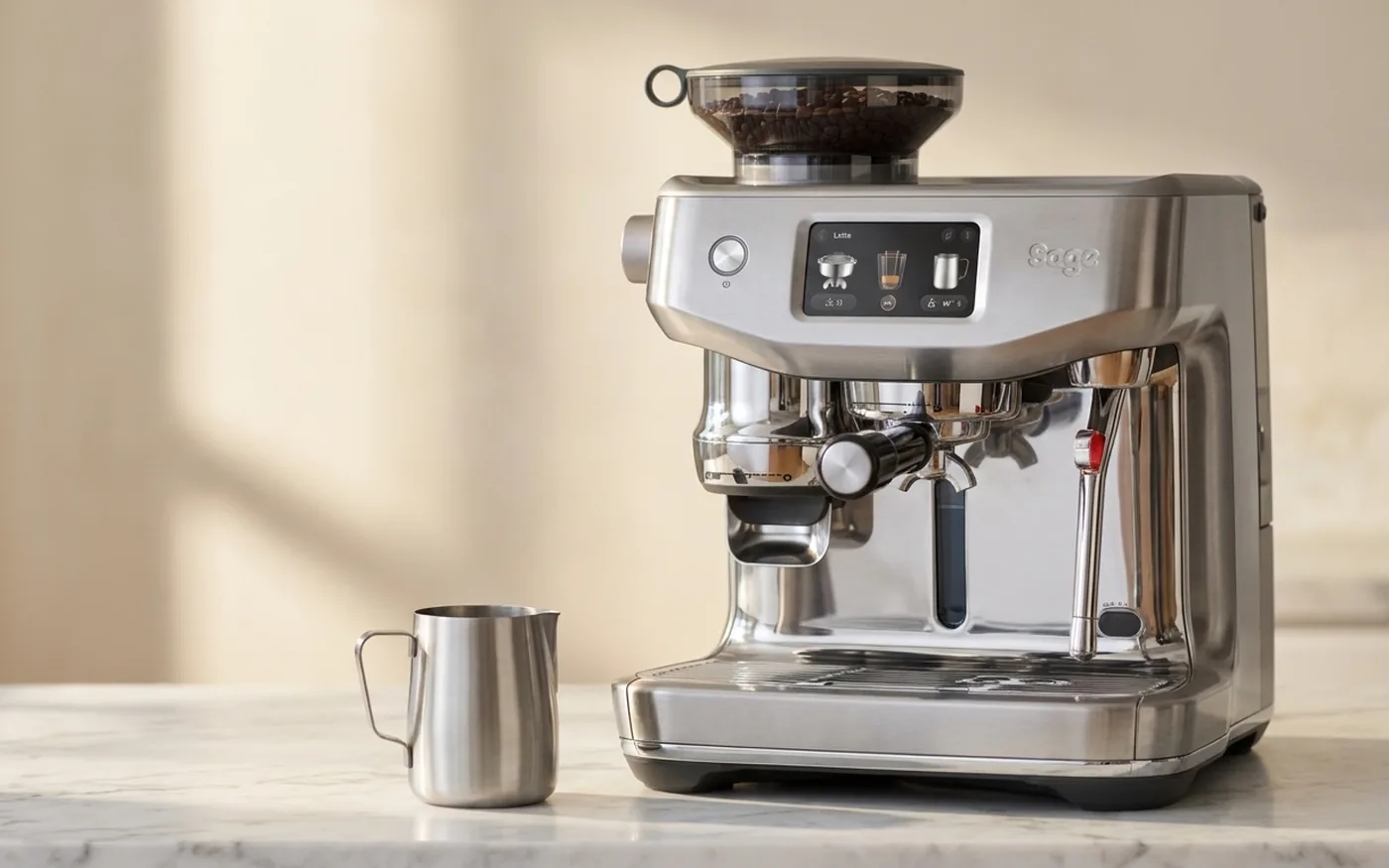
#10 Sage Oracle Jet: Best Hands-Off Semi-Automatic
| Spec | Detail |
|---|---|
| Price (from) | £1,500 |
| Boiler type | Dual ThermoJet (heated independently for brew and steam) |
| Grinder included | Yes (conical burr with automated dose) |
| Portafilter | 58mm commercial |
| Pressure | 15 bar pump, 9 bar at group |
| PID | Yes (digital temperature control) |
| Dimensions | 375 x 370 x 455mm |
| Weight | 17.2kg |
| Full review | Sage Oracle Jet review |
The Oracle Jet removes technique from the equation entirely. Automated grinding, dosing, tamping, and a dual-heating system that brews and steams simultaneously, all behind a touchscreen. For buyers who want dual-boiler-class performance without the dual-boiler learning curve, this is the cleanest premium answer Sage builds. The 58mm portafilter takes you into commercial-spec puck territory, and the automated puck prep removes the biggest source of shot variability in a home set-up.
The technical honesty: two ThermoJet heating elements within a single boiler architecture is not the same as two independent boilers. It gets close enough that the cup difference is small for most buyers, but a true dual-boiler machine like the Sage BES920 below still has a thermal-stability advantage under heavy back-to-back use. For most homes, the Oracle Jet's hands-off design wins the daily comparison. For a buyer who values build engineering and is willing to do the puck prep themselves, the dual boiler is the more honest engineering choice at a lower price.
“Premium buyers who want maximum convenience and consistency without manual technique.”James Bellis, Balance Journal
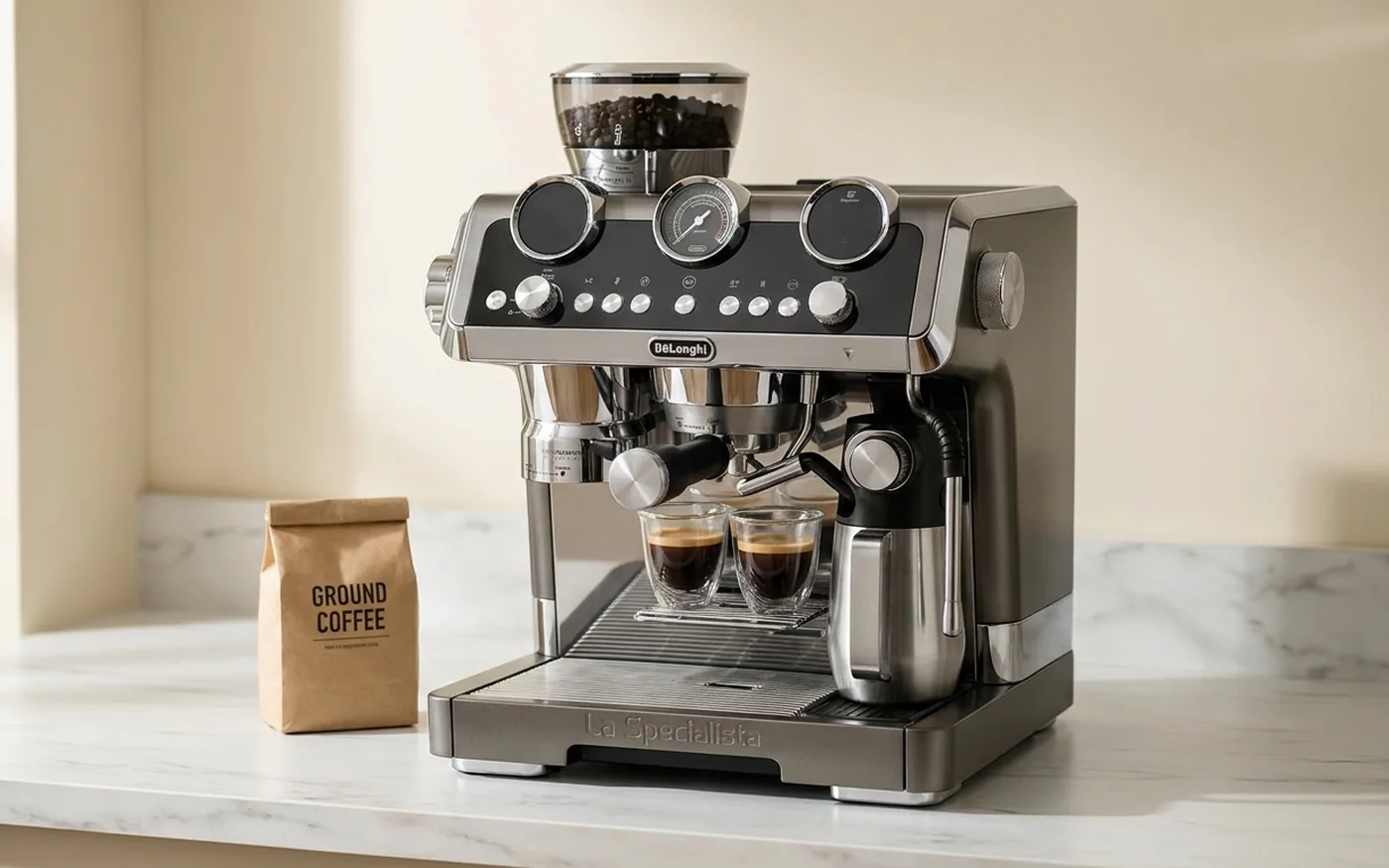
#11 De'Longhi La Specialista Maestro: Best Manual De'Longhi
| Spec | Detail |
|---|---|
| Price (from) | £700 |
| Boiler type | Dual thermoblock (brew + steam) |
| Grinder included | Yes (conical burr with sensor grinding) |
| Portafilter | 51mm |
| Pressure | 15 bar pump, 9 bar at group |
| PID | Yes (digital temperature control) |
| Dimensions | 374 x 365 x 405mm |
| Weight | 12kg |
| Full review | Pending review |
De'Longhi spent the last five years building a manual espresso line that takes the brand seriously as a competitor to Sage in the home all-in-one category. The La Specialista Maestro is the most ambitious version. Sensor grinding measures the bean weight in the hopper and adjusts the dose accordingly, the dual thermoblock allows simultaneous brewing and steaming, and the steam wand handles microfoam without auto-steam intervention. For a buyer who wants Sage-tier performance without the Sage badge, the Maestro is a genuine alternative.
Where it sits against the Sage Barista Pro: the Maestro has the larger 12-kilogram footprint and a more European industrial aesthetic, the dual thermoblock is a small but real advantage over the Pro's single ThermoJet, and the De'Longhi grinder is sensor-assisted rather than dose-by-time. The cup performance is broadly equivalent across both machines, with neither pulling a clearly better shot. Buy on which interface and aesthetic you prefer, not on cup difference.
“Buyers who want a Sage Barista Pro alternative with dual heating and De'Longhi's industrial design language.”James Bellis, Balance Journal
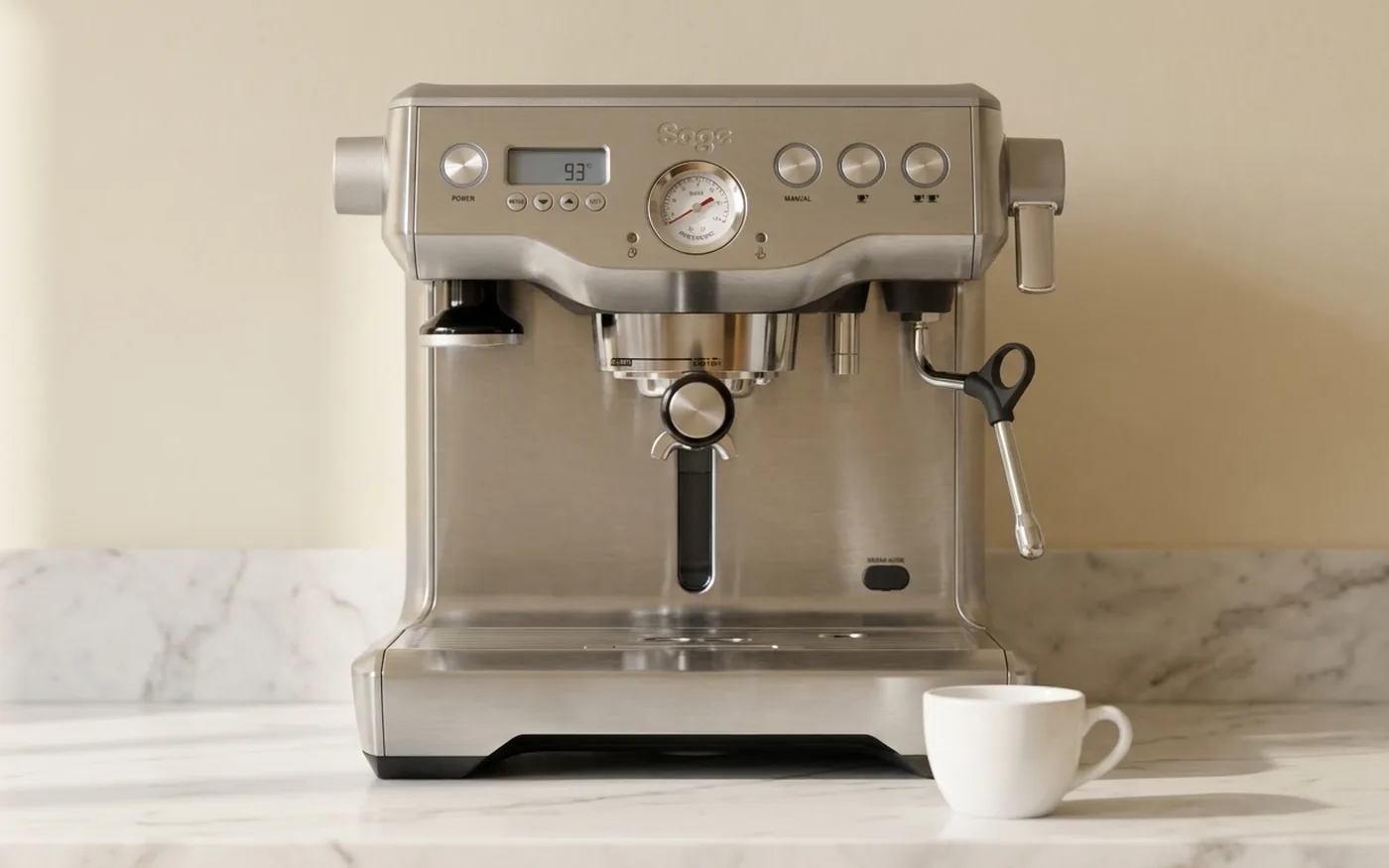
#12 Sage Dual Boiler (BES920): Best Sub-£1,000 Dual Boiler
| Spec | Detail |
|---|---|
| Price (from) | £900 |
| Boiler type | True dual boiler (separate brew + steam) |
| Grinder included | No |
| Portafilter | 58mm commercial |
| Pressure | 15 bar pump, 9 bar at group |
| PID | Yes (digital temperature control) |
| Dimensions | 370 x 380 x 415mm |
| Weight | 14.5kg |
| Full review | Pending review |
A true dual-boiler machine for under £1,000 is rare. The Sage BES920 puts the brewing boiler and the steam boiler in two physically separate circuits, which means brewing and steaming run independently with no thermal interference. The 58mm portafilter is commercial spec, the PID holds brew temperature within 1C, and the steam boiler delivers serious milk-texturing pressure for cafe-pace work.
This is the best Sage coffee machine the brand makes for buyers who want commercial-style engineering at sub-prosumer pricing and are willing to pair it with their own grinder. The cup quality and the build quality both step up from the Barista Pro tier. The trade-off: no built-in grinder, no touchscreen, and a heavier daily learning curve than the Oracle Jet at a similar price point. For the buyer who wants to learn proper espresso on a machine that will not need replacing for 15 years, the BES920 is the honest answer.
“Buyers who prioritise build engineering and thermal stability over interface, and already own (or plan to buy) a quality grinder.”James Bellis, Balance Journal
Is a Home Espresso Machine Worth It?
The cost-versus-cafe maths is genuinely closer than most buyers assume. A flat white in a London specialty cafe costs £3.80-4.50; the same drink made at home, using fresh beans, costs roughly £0.55-0.80 in coffee plus £0.04 in electricity (running cost data per Energy Saving Trust appliance figures). A £700 Barista Pro pays for itself in roughly 220 cafe drinks - which is one a day for seven months. For a household with two daily milk drinkers, payback drops to three to four months.
The honest counter-argument: home espresso has a learning cost that the cafe does not. The first month of any new machine will produce some bitter, weak, or over-extracted shots before you find your settings. If you only drink two coffees a week, the cafe maths is better. If you drink one or more a day and care about the cup, a home machine almost always wins on cost and quality.
The British Coffee Association reports that UK adults drink around 98 million cups of coffee a day, and home consumption now accounts for the majority of that total. The category exists for a reason - and the right machine for your tier pays for itself faster than most buyers expect. Speciality bean prices verified May 2026 across major UK roasters indicate £8-12 per 250g for fresh single-origin, which works out to the per-shot figures above.
How We Test Espresso Machines
Each machine in this guide was put through a deliberately uneven test - because the same evaluation does not work for a £130 entry machine and a £1,500 hands-off semi-automatic. The constants across all 12 machines: a 20-shot session pulling 18g in / 36g out doubles at 93C, milk steaming to 65C across five-second-five-second-five-second stretch-spin-stretch routines, and a tear-down inspection of group head, portafilter spec, and steam wand pressure.
The variables we let differ: the grinder paired with each non-all-in-one machine (Niche Zero for the prosumer tier, Sage Smart Grinder Pro for the entry tier, Eureka Mignon Specialita for the mid band), the beans (a fresh single-origin Brazil natural and a Colombia washed, both within 14 days of roast, sourced from speciality UK roasters), and the testing window (each machine ran for a minimum of three consecutive days of daily use before being scored).
The methodology draws on coffee standards published by the Specialty Coffee Association for extraction parameters (9 bar, 92-94C, 1:2 brew ratio), and on independent lab-testing benchmarks published by Which? for consumer-grade performance comparison. The combination matters: SCA gives the engineering standard the machines are built to, and Which? gives the consumer baseline against which build quality and consistency are measured.
The credential context I bring to the build assessment: five and a half years inside Sanremo UK as Sales and Marketing Manager, trained by authorised Sanremo engineers on boiler systems, PID control, group head mechanics and pressure profiling. That training means I can assess where a £400 machine cuts corners against a £1,400 one because I have seen both built. Roughly 300 UK roastery visits over five years means I have seen these machines run in professional production environments, not just in a home kitchen.
Full Specification Comparison
| Machine | Price | Boiler | Grinder | Portafilter | Pressure | PID | Dimensions (mm) | Weight (kg) |
|---|---|---|---|---|---|---|---|---|
| Sage Barista Express | £550 | Single thermocoil | Yes | 54mm | 15 bar / 9 bar | No | 330 x 310 x 410 | 10.5 |
| Sage Bambino Plus | £250 | ThermoJet | No | 54mm | 15 bar / 9 bar | No | 195 x 320 x 310 | 5.1 |
| Gaggia Classic Pro | £400 | Aluminium single | No | 58mm | 15 bar | No | 230 x 240 x 380 | 7.5 |
| De'Longhi Dedica EC685 | £180 | Thermoblock | No | 51mm | 15 bar | No | 150 x 305 x 330 | 4.2 |
| De'Longhi Stilosa EC230 | £100 | Thermoblock | No | 51mm | 15 bar | No | 197 x 264 x 305 | 4.0 |
| Sage Barista Pro | £700 | ThermoJet | Yes | 54mm | 15 bar / 9 bar | No | 330 x 310 x 410 | 9.5 |
| Sage Barista Touch Impress | £1,000 | ThermoJet | Yes | 54mm | 15 bar / 9 bar | No | 330 x 360 x 410 | 11.5 |
| Lelit Anna PID | £450 | Single boiler | No | 58mm | 15 bar / 9 bar | Yes | 250 x 265 x 305 | 7.0 |
| Rocket Appartamento | £1,290 | Heat exchanger (E61) | No | 58mm | Vibration / 9 bar | No | 270 x 425 x 360 | 19.0 |
| Sage Oracle Jet | £1,500 | Dual ThermoJet | Yes | 58mm | 15 bar / 9 bar | Yes | 375 x 370 x 455 | 17.2 |
| De'Longhi La Specialista Maestro | £700 | Dual thermoblock | Yes | 51mm | 15 bar / 9 bar | Yes | 374 x 365 x 405 | 12.0 |
| Sage Dual Boiler BES920 | £900 | True dual boiler | No | 58mm | 15 bar / 9 bar | Yes | 370 x 380 x 415 | 14.5 |
Specifications verified May 2026 against manufacturer UK product pages.
Frequently Asked Questions
What is the best espresso machine for a beginner?
The Sage Barista Express at around £550 is the best espresso machine for a beginner in the UK market. The integrated grinder removes the need for a second appliance purchase, the dose calibration tools forgive early mistakes, and the pressurised basket option lets you start with pre-ground coffee while you learn. For a tighter budget, the Sage Bambino Plus or the De'Longhi Stilosa are credible entry points - both are covered in detail in our best espresso machine for beginners guide.
How much should you spend on an espresso machine?
Spend £400-700 if you want a serious home espresso machine that lasts at least five years and produces consistently good cups. Under £200 buys honest entry-level kit with build compromises, £200-400 covers the all-in-one category, and £700-1,000 buys premium all-in-one features (touchscreen, faster heat-up, better grinder). Above £1,000 takes you into prosumer territory where machines are engineered to last 15-20 years.
Do you need a grinder with an espresso machine?
You need a grinder with any espresso machine that does not have one built in. Pre-ground coffee starts staling within days of opening and produces flat, bitter espresso, especially in non-pressurised baskets. Budget £100-150 minimum for a serviceable home espresso grinder - cheaper grinders cannot produce the consistent fine grind espresso requires. All-in-one machines like the Sage Barista Pro have a grinder built in and remove this question entirely.
Is a Sage or De'Longhi espresso machine better?
Sage holds the edge in the home all-in-one category, with the Barista Express, Barista Pro, and Oracle Jet covering more price points and offering tighter integration between grinder and machine. De'Longhi has the stronger budget compact range (Dedica, Stilosa), and the recent La Specialista Maestro is a genuine competitor to the Sage Barista Pro at the same price. Brand preference comes down to interface, aesthetic, and which retail price you find on sale - the cup performance gap is small.
Are expensive espresso machines worth it?
Expensive espresso machines are worth it for buyers who want the build to last 15-20 years rather than five, who care about thermal stability under back-to-back drink loads, and who value commercial-spec engineering (E61 group heads, dual boilers, brass internals). The cup difference between a £500 machine and a £1,400 machine is real but smaller than the price gap suggests; the build difference is large. Above £1,500, the marginal cup gains drop off sharply.
What espresso machine do baristas use at home?
Baristas at home most often own a Sage Barista Pro, a Gaggia Classic Pro (often modified with PID and aftermarket parts), a Lelit Anna or Mara, or a Rocket Appartamento, depending on budget and how much manual control they want at the counter. The pattern: baristas tend to choose machines that reward technique (58mm portafilter, PID, commercial steam wand) rather than machines that automate it away. The Sage Barista Pro is the exception that bridges both worlds.
Verdict
The category does not have a single winner because the buyers do not have a single budget or use case. The honest answer is a tier-by-tier recommendation.
Under £200: The De'Longhi Stilosa EC230, paired with the non-pressurised basket and a £130 burr grinder, is the cheapest legitimate route into home espresso. Total set-up cost: around £230-260. Expect a learning curve.
£250-700: The Sage Barista Pro at around £700 is my personal pick across the whole category. The ThermoJet heat-up, the upgraded grinder, and the milk-steaming performance handle daily home espresso better than any other all-in-one in this band. If budget is tight, the Sage Barista Express at £550 is the same family with a slower boiler and an adequate grinder. If you want to learn manual espresso properly, the Gaggia Classic Pro at £400 is the educational machine of choice.
£700-1,500: The Sage Barista Touch Impress for guided convenience, the Lelit Anna PID for entry-level Italian engineering, and the Sage Dual Boiler BES920 for true dual-boiler performance at the lowest price the category offers.
£1,500+: The Rocket Appartamento for craft, build longevity, and the heat-exchanger experience. The Sage Oracle Jet for hands-off premium convenience. Both are excellent machines built for different buyers - choose by how much technique you want to learn.
The thread through every recommendation: pair your machine with the best coffee beans for espresso, give it three weeks of daily use to dial in, and judge the cup by the third week, not the first. Every machine in this guide produces good espresso when set up correctly. The right one for you is the one that matches your budget, your kitchen, and how much you want to learn.
For the wider category context, see the Balance Journal food and drink guides, or the related best coffee machine UK super-pillar when it goes live for the full machinery picture across espresso, bean-to-cup, and filter formats.
A wellness entrepreneur and biohacker, James explores the intersection of hospitality and health - from clean fuel and recovery tools to mindful routines that build balance into daily life.