Best Coffee Beans for Espresso UK 2026 - Tested and Ranked


Most lists come from people without a machine. A former Sanremo manager made these calls.
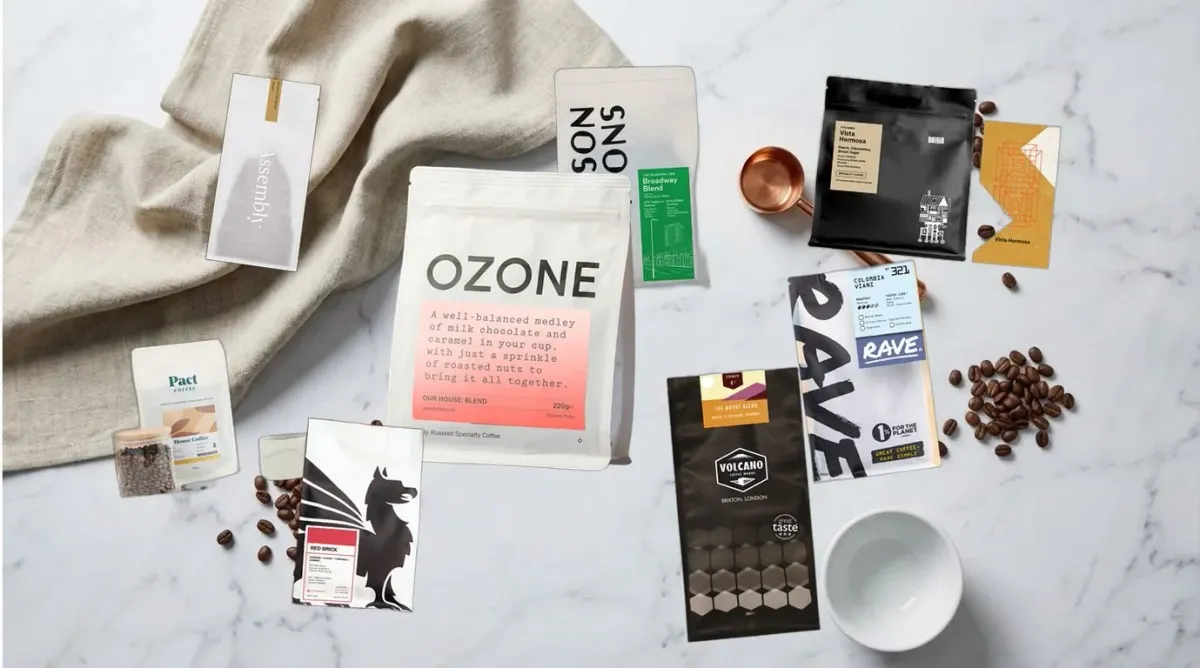
Table of Contents
Some of the links in this article are affiliate links, which help fund our independent review work at no extra cost to you. How we assessed these products is explained in this article and our Editor Lab methodology. No brand pays to appear, and no placement is guaranteed.
Why You Can Trust This Ranking
I spent five and a half years at Sanremo Coffee Machines UK, working directly with over 60 roasteries across the country. My role was not just selling machines. It was helping roasters and their wholesale clients extract the best possible espresso from every coffee they served. That meant pulling shots on Sanremo Opera and Cafe Racer platforms, weighing every dose on scales, and learning exactly how different beans behave under pressure.
Working alongside the Sanremo SWAT team - including Sasa Sestic, the 2015 World Barista Champion, and Maxwell Colonna-Dashwood, three-time UK Barista Champion - taught me that espresso is where precision meets intuition. A bean that performs beautifully as a V60 can fall apart in a portafilter. The grind window tightens. The margin for error shrinks. And the roast profile matters more than origin when the contact time is 25 to 30 seconds.
That background shapes every ranking in this guide. As of early 2026, I have tasted each of these beans as espresso specifically - not as filter, not as cafetiere, not as a cupping exercise. The extraction, the crema quality, the body under milk, and the consistency across multiple doses are what determined their positions. These are not the 10 best coffees in the UK. They are the 10 best coffees for the espresso basket.
James Bellis, Coffee Writer & Biohacker
What Makes a Good Espresso Bean?
Not every coffee works as espresso. As the Specialty Coffee Association (SCA) defines it, espresso is a concentrated extraction method where 9 bars of pressure amplify everything - good and bad. A slightly underdeveloped roast that tastes fine in a cafetiere becomes aggressively sour through a portafilter. An oily, over-roasted bean that smells bold in the bag chokes the grinder and leaves a bitter, ashy residue in the cup.
The beans that perform best under pressure share a few qualities. They are roasted with enough development to be soluble at short contact times. They have balanced oil content for stable crema without excessive channelling. And they are fresh enough to produce CO2 for texture, but rested enough - typically 7 to 14 days post-roast - that the puck does not gas and splutter during extraction.
Quick View: Our Top 3 Espresso Bean Picks
Blend vs Single Origin for Espresso
Blends dominate commercial espresso for a reason: they offer consistency. A well-constructed blend balances sweetness, body, and acidity so that every shot falls within a predictable flavour window, regardless of minor grind drift or temperature fluctuation. Red Brick from Square Mile and Resolute from Origin are textbook examples - built for repeatability.
Single origins as espresso are a different proposition. They reward precision. A washed Ethiopian through a well-dialled machine can produce espresso with clarity and fruit intensity that no blend replicates. But miss the dose by half a gram and the shot turns sharp. For home baristas confident with their workflow, best single origin espresso beans UK options are worth pursuing. For those still building consistency, a blend forgives more.
Top 3 Coffee Beans for Espresso
| Brand | Best For | Price | Shop |
|---|---|---|---|
 1st Place 1st Place | Save 20% | ||
 2 2 | £11.00per 200g | Explore | |
 3 3 | £8.00per 200g | Explore |
Roast Level - Why Medium Works Best for Most Machines
Most home espresso machines operate at a fixed temperature between 92 and 96 degrees Celsius with a pump pressure of 15 bars (reduced to 9 at the group head on most consumer machines). Medium roasts are the sweet spot for this setup. They are soluble enough to extract fully in 25 to 30 seconds without the bitterness of a dark roast or the sourness of an underdeveloped light roast.
Light roasts can produce exceptional espresso, but they demand higher brew temperatures, finer grinds, and longer pre-infusion - features found on machines like the Sage Dual Boiler or Decent, not on a DeLonghi Dedica. Dark roasts extract quickly and forgive imprecision, but they compress the flavour range into chocolate and ash territory. Medium roast gives the widest flavour window on the widest range of machines.
Freshness - Why Roast Date Matters More for Espresso
Espresso is the most sensitive brew method to bean freshness. Stale beans produce flat, crema-less shots. Beans that are too fresh (under five days from roast) produce explosive, gassy pucks that channel and produce uneven extraction. The optimal window for espresso is 7 to 21 days post-roast for most medium roasts, extending to 28 days for darker profiles.
Every bean in this guide is available with a roast date printed on the bag. If a bag does not carry a roast date, do not buy it for espresso. Best-before dates are meaningless for this brew method.
The 10 Best Coffee Beans for Espresso UK - Tested and Ranked
1. Balance Coffee Darkfire Energy - Best Dark Espresso
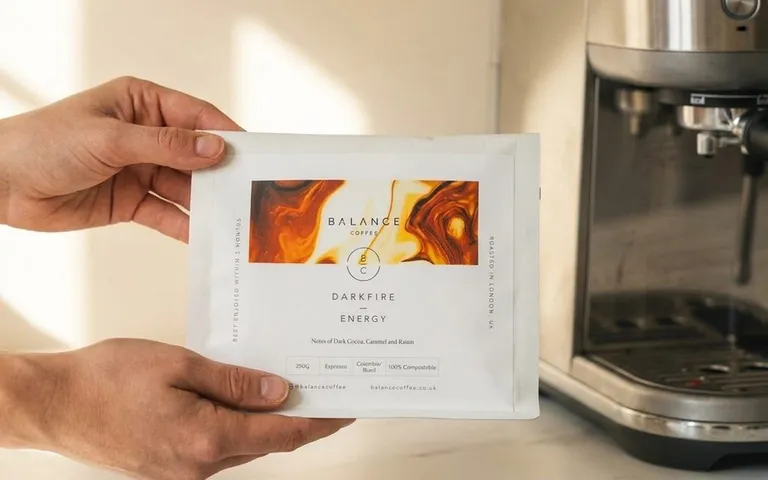
Location: London | Founded: 2020
I founded Balance Coffee in 2020. Darkfire Energy is our espresso-focused dark roast and it appears at number one. I roasted it specifically for the espresso basket and I will explain exactly why.
Darkfire Energy is a Colombia and Mexico blend, dark roasted for maximum espresso body and energy. A full 18g dose pulls cleanly at standard pressure, with a forgiving grind window that suits both stepped and stepless grinders.
On the nose, bold cocoa and a touch of berry sweetness. Through the body, a thick, syrupy mouthfeel that carries sweetness without tipping into bitterness. The finish is clean and rounded, with a gentle fruit acidity that lifts the aftertaste rather than flattening it. Under milk, Darkfire holds its character - the chocolate deepens into something closer to brownie batter, and the berry sweetness becomes a background warmth.
An independent lab tests the coffee monthly for mycotoxins, mould, heavy metals, and pesticide residues, with results published on our website. For espresso drinkers who care about what is in the bean as much as how it extracts, that transparency is the differentiator.
“Editor's verdict: The espresso I built because I could not find a single origin that held together under pressure without sacrificing origin character. Forgiving enough for a Sage Barista Express, complex enough for a lever machine.”
| Evaluation Criteria | Our Findings |
|---|---|
| Full Review | Read our Balance Coffee review |
| Best For | Clean, health-focused London roaster |
| Origin | Colombia & Mexico |
| Flavour Profile | Bold cocoa depth, touch of berry sweetness, full body |
| Price | From £15.99 / 250g (£12.79 with JOURNAL) |
| Shop | Sip clean coffee - save 20% → |
2. Assembly Coffee House Espresso - Best for Milk Drinks
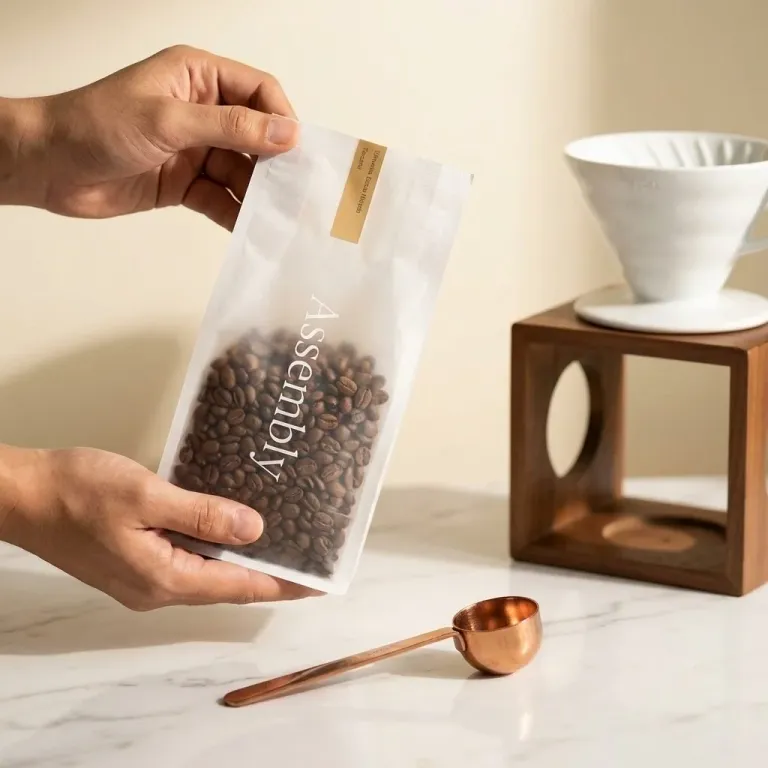
Location: Brixton, London | Founded: 2015
Assembly's Brixton roastery produces some of the most focused espresso in London. Their House Espresso is built for one purpose: to perform with milk. That sounds narrow, but it is the reality of how most home baristas drink their coffee - flat whites, cortados, and lattes account for the majority of espresso consumption in UK households.
The blend draws on origins across South and Central America and East Africa, refined seasonally to maintain a consistent profile. In the cup as a straight shot, prominent chocolate and caramel with a weighty, syrupy texture. The sweetness is natural, not roasted in. On the nose, warm biscuit and brown sugar. Through the body, a dense mouthfeel that carries through to a clean, toffee-tinged finish.
Where Assembly's House Espresso earns its position is the milk test. Steamed into a flat white, the chocolate intensifies and the caramel becomes a banoffee-like sweetness that most blends cannot reach without tipping into cloying territory. The balance holds at every milk ratio I tested, from a thin cortado to a full latte.
“Editor's verdict: The best milk espresso on this list. If your morning coffee involves steamed milk, Assembly's House Espresso was built for that exact purpose.”
| Evaluation Criteria | Our Findings |
|---|---|
| Full Review | Read our Assembly Coffee review |
| Best For | Ethical and transparent roaster |
| Origin | Seasonal blend (South/Central America, East Africa) |
| Flavour Profile | Chocolate, caramel, biscuit, banoffee in milk |
| Price | From £11.00 / 200g |
| Shop | Shop Assembly Coffee → |
3. Volcano Mount Blend - Best South London Roaster
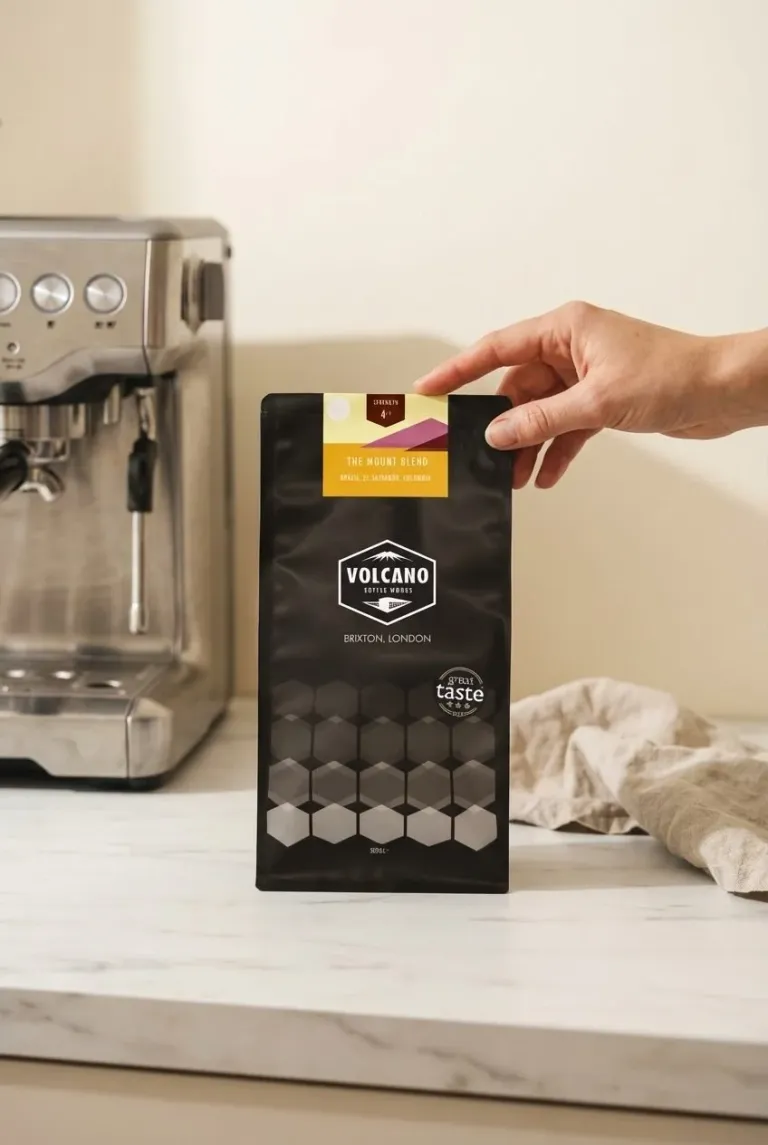
Location: Brixton, London | Founded: 2010
Volcano roast out of a converted Victorian firehouse in Brixton, and the Mount Blend is their signature espresso. Three-star Great Taste Award winner, sourced from Brazil, El Salvador, and Peru, and roasted to a medium profile that sits right in the centre of the espresso sweet spot.
Caramel and red grape make an unusual but effective opening. Milk chocolate dominates the palate with a smooth, medium-weight texture, and the cup resolves sweet and approachable, with a gentle fruitiness that distinguishes it from the chocolate-and-nut blends that crowd this category. Under milk, the grape note becomes a subtle berry warmth that adds complexity without confusion.
The Mount Blend is not the boldest espresso on this list, and that is its strength. It occupies the middle ground between the light, fruity approach of Ozone's Hodson and the dark, punchy style of Rave's Italian Job. For home baristas who want something interesting without the extraction precision that lighter roasts demand, Mount Blend delivers consistently.
“Editor's verdict: A well-balanced espresso with enough character to stay interesting but enough forgiveness to work on most home machines. The Great Taste pedigree is earned.”
| Evaluation Criteria | Our Findings |
|---|---|
| Full Review | Read our Volcano Coffee Works review |
| Best For | Award-winning South London roaster |
| Origin | Brazil, El Salvador, Peru |
| Flavour Profile | Caramel, milk chocolate, red grape, smooth body |
| Price | From £8.00 / 200g |
| Shop | Shop Volcano Coffee Works → |
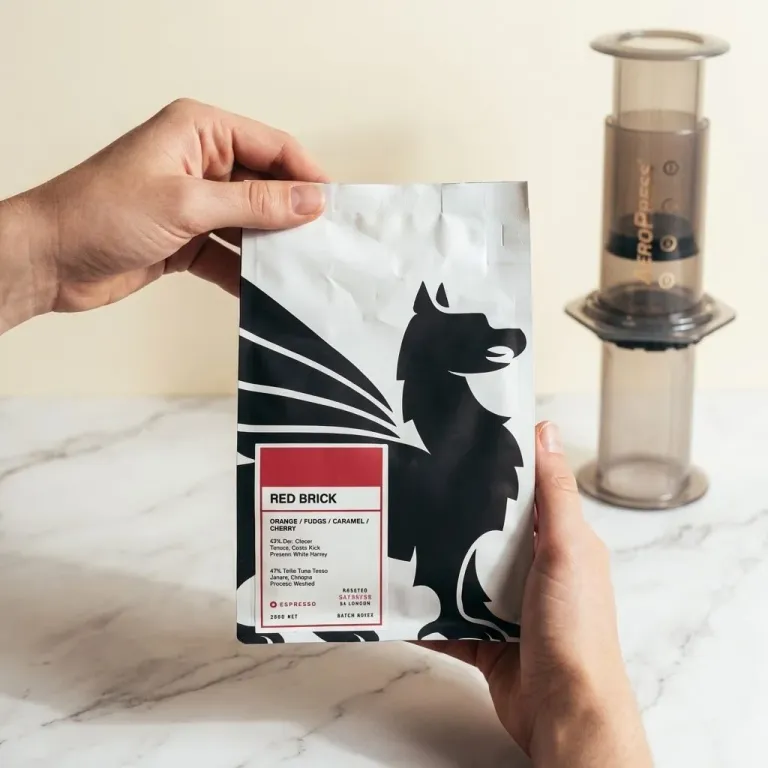
4. Square Mile Red Brick - Best Espresso Blend
Location: London | Founded: 2008
Red Brick is the default recommendation for anyone asking which blend to start with on a new espresso machine. Square Mile, founded by James Hoffmann and Anette Moldvaer, have iterated this seasonal blend for over 15 years, and the consistency is the point.
The composition rotates with the seasons, but the flavour target stays fixed: sweet, balanced, and forgiving. The current version leads with stone fruit and pear, layered over a caramel and milk chocolate base. Warm toffee and a gentle nuttiness greet you in the aroma. The texture is velvety, coating the palate without heaviness, and it drops off cleanly with a pleasant sweetness that invites the next sip.
Red Brick is medium roasted and designed to extract well across a wide range of home equipment. It is not going to challenge you with acidity or surprise you with a floral high note. What it will do is pull a consistent, satisfying shot every morning without demanding constant grind adjustments. That reliability is exactly why it has become a staple in coffee shops and home setups across the UK.
At 350g per bag, the sizing is deliberate - enough to dial in properly and still have plenty of shots left before the beans lose their edge.
“Editor's verdict: The benchmark UK espresso blend. If you are buying your first bag of speciality beans for a new machine, start here. You will understand what balanced espresso tastes like before branching out.”
| Evaluation Criteria | Our Findings |
|---|---|
| Full Review | Read our Square Mile Coffee review |
| Best For | Home baristas who want a reliable, crowd-pleasing espresso |
| Origin | Seasonal blend (South and Central America, East Africa) |
| Flavour Profile | Stone fruit, caramel, milk chocolate, velvety body |
| Price | From £14.00 / 350g |
| Shop | Shop Square Mile → |
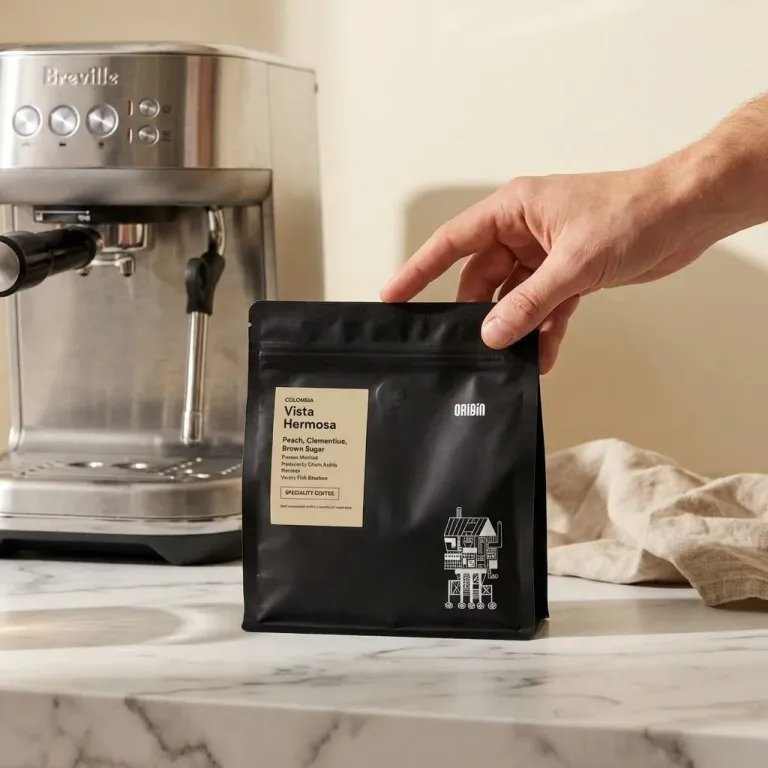
5. Origin Coffee Resolute - Best Award-Winning Espresso
Location: Cornwall | Founded: 2004
Origin have been roasting in Cornwall for over two decades, and Resolute is the blend that built their reputation. It has won multiple Great Taste Awards, and the profile explains why: this is espresso that tastes like most people imagine espresso should taste before they have ever tried speciality coffee. Dark chocolate, defined nut character, and a big, comforting body.
The current composition features Colombian and Peruvian lots, selected for sweetness and low acidity. Roasted hazelnut and cocoa set the tone from the first sip. The mouthfeel is full and rounded, coating every part of the palate, and the dark chocolate lingers for several seconds before fading slowly into warmth. There is acidity in there - subtle, well-balanced, and designed to provide lift rather than sharpness.
Resolute works equally well as a black espresso or with milk, which is rare. Most blends optimise for one or the other. Origin have somehow managed both, and they have maintained that consistency across seasonal component changes for years.
“Editor's verdict: The blend for people who know they like espresso but have not yet explored single origins. Resolute is a masterclass in approachable, award-winning consistency.”
| Evaluation Criteria | Our Findings |
|---|---|
| Full Review | Read our Origin Coffee review |
| Best For | Traditionalists who want rich, chocolate-forward espresso |
| Origin | Colombia, Peru |
| Flavour Profile | Dark chocolate, hazelnut, full body, warm finish |
| Price | From £10.95 / 250g |
| Shop | Shop Origin Coffee → |
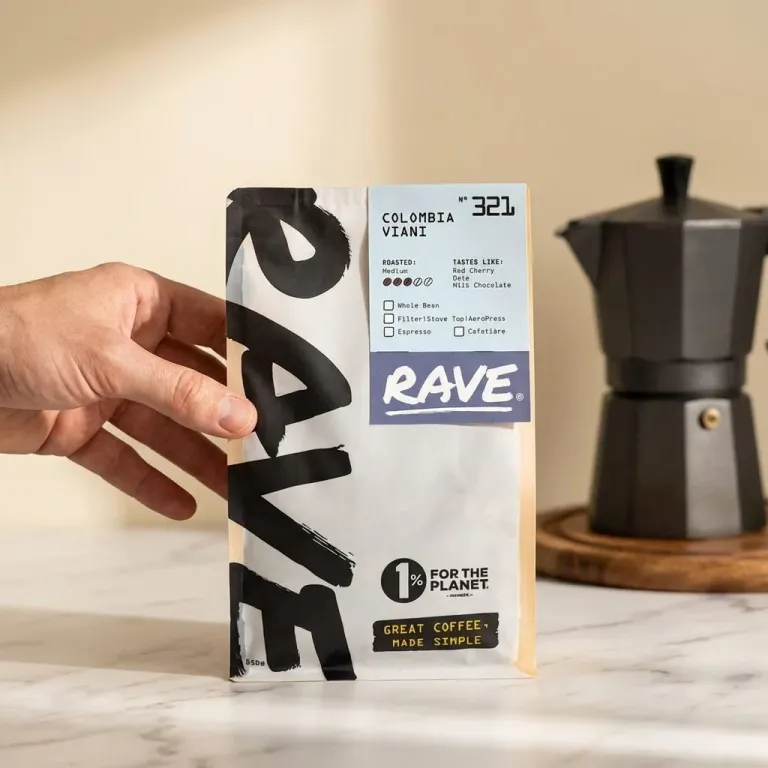
6. Rave Coffee The Italian Job - Best Budget Espresso
Location: Cirencester | Founded: 2011
There is a reason The Italian Job is one of the best-reviewed espresso beans on Amazon UK. At under £8 for 250g, it sits well below the speciality price bracket, but the cup quality punches above its weight. Rave have managed this by including a small percentage of high-quality Indian Robusta alongside their Arabica base from Colombia and Brazil.
That Robusta addition is deliberate. It boosts crema thickness, adds body, and brings a caffeine kick that pure Arabica blends lack. Walnut and dark cocoa hit immediately. The cup is bold and punchy - this is not a subtle coffee. It closes short and direct, with a pleasant bitterness that sits in the espresso tradition rather than the speciality one. Under milk, the boldness translates into a strong, defined coffee flavour that does not disappear behind the dairy.
Rave roast darker than most speciality roasters on this list, which makes The Italian Job forgiving on less precise equipment. If your grinder has stepped adjustments or your machine has limited temperature control, this blend will still deliver a decent shot.
“Editor's verdict: The best espresso beans under £10 in the UK. Not the most nuanced, but the most reliable at this price point.”
| Evaluation Criteria | Our Findings |
|---|---|
| Full Review | Read our Rave Coffee review |
| Best For | Budget-conscious espresso drinkers and beginners |
| Origin | Colombia, Brazil, India (Robusta) |
| Flavour Profile | Walnut, dark chocolate, bold, punchy |
| Price | From £7.95 / 250g |
| Shop | Shop Rave Coffee → |
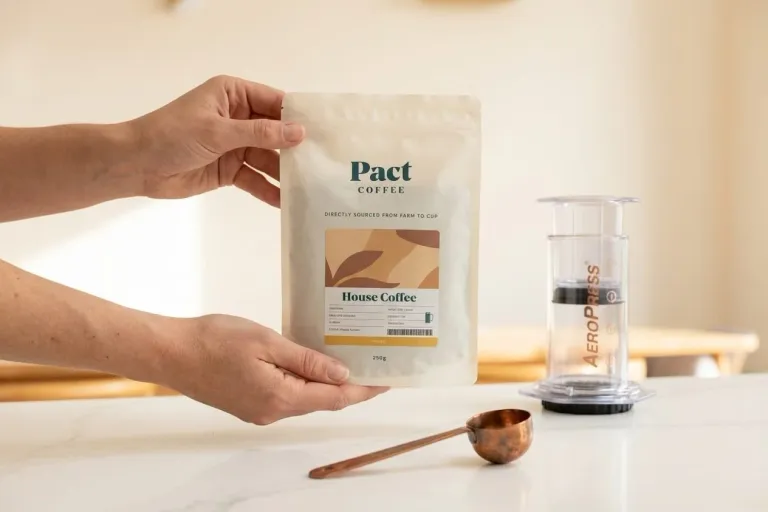
7. Pact Coffee Bourbon Cream - Best Subscription Espresso
Location: London | Founded: 2012
Pact built their business on subscriptions, and Bourbon Cream is the espresso that keeps people subscribed. The name references the flavour profile rather than the bourbon variety, though the beans are 100% Arabica from Brazil and Colombia. Dark roast, Great Taste Award winner, and available through Pact's flexible subscription model that adjusts frequency based on your consumption.
Milk chocolate and a warm biscuit sweetness arrive in the aroma - the Bourbon Cream biscuit reference is accurate. The acidity is creamy, the weight smooth and medium, and it does not challenge or surprise. It tapers biscuity and gentle, without bitterness. This is comfort espresso. It is not trying to educate your palate. It is trying to be the coffee you drink every day without thinking about it.
Pact pay coffee farmers 55% above the Fairtrade base price through their direct trade model, and the beans are roasted in their Surrey roastery. The subscription delivers freshly roasted to your door on a schedule you set, which solves the freshness problem that plagues supermarket espresso beans uk options.
“Editor's verdict: The easiest espresso subscription in the UK. Set it, forget it, and drink consistently good shots. The barrier to entry is as low as it gets for speciality espresso.”
| Evaluation Criteria | Our Findings |
|---|---|
| Full Review | Read our Pact Coffee review |
| Best For | Subscription drinkers who want hassle-free, consistent espresso |
| Origin | Brazil, Colombia |
| Flavour Profile | Milk chocolate, biscuit, creamy, gentle finish |
| Price | From £6.95 / 200g |
| Shop | Shop Pact Coffee → |
8. Ozone Coffee Hodson Blend - Best Light Espresso

Location: London (roasted in Stafford) | Founded: 2012 (UK)
Ozone started in New Zealand in 1998 and opened their Shoreditch cafe in 2012. The Hodson Blend is their flagship espresso, named after the street where it all began in London. It sits at the lighter end of what most people would call a medium-dark roast, and that positioning makes it the most flavour-forward blend on this list.
Red fruit and brown sugar are immediate and inviting in the aroma. The acidity is lively but held in check by a caramel sweetness that prevents the brightness from becoming aggressive. It resolves clean and defined, with a lingering berry note that fades slowly. As a straight espresso, Hodson is for drinkers who want to taste the coffee rather than the roast. Under milk, the red fruit translates into a pleasant tartness that cuts through dairy sweetness.
Hodson demands slightly more attention than forgiving blends like Red Brick or Resolute. The lighter roast means the grind window is narrower and the extraction time needs to be precise. On a Sage Barista Pro or a Gaggia Classic with a PID mod, it shines. On a pressurised basket with a blade grinder, it will not.
“Editor's verdict: The espresso for drinkers who have moved past chocolate-and-nut profiles and want fruit clarity in their shot. Requires decent equipment to extract properly.”
| Evaluation Criteria | Our Findings |
|---|---|
| Full Review | Read our Ozone Coffee review |
| Best For | Experienced home baristas who want a brighter, fruit-led espresso |
| Origin | Seasonal (typically Central/South America, East Africa) |
| Flavour Profile | Red fruit, brown sugar, caramel, clean finish |
| Price | From £10.00 / 250g |
| Shop | Shop Ozone Coffee → |
9. Climpson and Sons Estate Espresso - Best East London Roaster
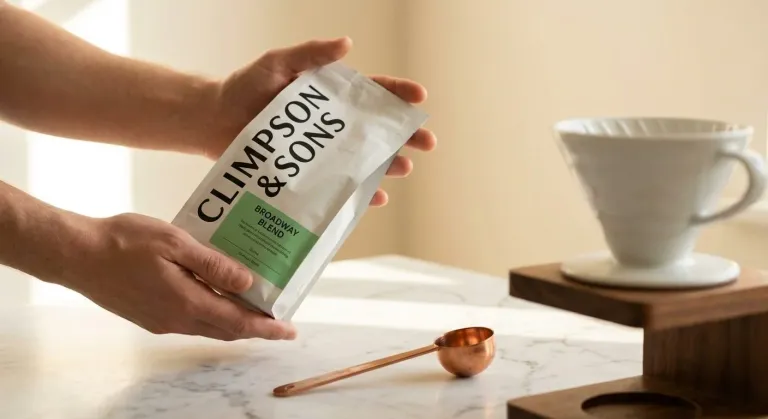
Location: Hackney, London | Founded: 2004
Climpson and Sons have been part of East London's coffee identity since they opened on Broadway Market over two decades ago. The Estate is their house espresso - a single origin Ethiopian that rotates by lot but maintains a consistent flavour target across each iteration.
The current Estate features washed Ethiopian coffee from 1,800 metres, and the cup is everything that good Ethiopian espresso should be: bright, balanced, and complex. On the nose, milk chocolate and orange zest. Through the body, a medium weight that carries a toffee sweetness without obscuring the citrus acidity. The finish is clean and uplifting, with an orange marmalade character that lingers.
Running a single origin Ethiopian as your house espresso is a bold choice. It means accepting more variability than a blend, and it means the extraction parameters need adjusting with each new lot. Climpson and Sons make it work by selecting lots specifically for espresso compatibility and roasting with enough development to keep the grind window manageable.
“Editor's verdict: The most interesting house espresso in London. If you want single origin complexity without the unpredictability, Climpson and Sons have cracked the formula.”
| Evaluation Criteria | Our Findings |
|---|---|
| Full Review | Read our Climpson and Sons review |
| Best For | Single origin enthusiasts who want Ethiopian espresso |
| Origin | Ethiopia (washed), 1,800 MASL |
| Flavour Profile | Milk chocolate, orange zest, toffee, citrus finish |
| Price | From £12.00 / 250g |
| Shop | Shop Climpson and Sons → |
10. Workshop Coffee Cult of Done - Best for Straight Shots
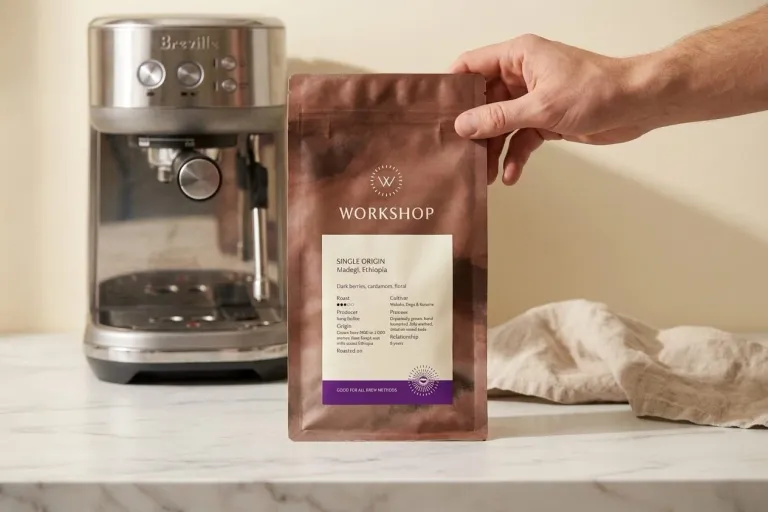
Location: London | Founded: 2009
Workshop serve espresso at some of London's finest restaurants, including Claridge's and Scott's of Mayfair. That hospitality pedigree runs through their Cult of Done espresso blend - a coffee designed to be drunk straight, without milk, as a punctuation mark at the end of a meal.
The name captures the philosophy. This is not a coffee that asks you to analyse it. On the nose, rich and slightly fruity with a caramel undertone. Through the body, sweet and full, with a syrupy weight that coats the palate. The finish is short and decisive - satisfying rather than lingering. It is the espresso equivalent of a full stop.
Workshop use ColorTrack technology to ensure roast consistency across batches, and the Cult of Done benefits from that precision. Each bag tastes the same as the last, which matters for straight espresso where there is nowhere for inconsistency to hide. The roast level sits at medium, developed enough to extract cleanly but not so dark that the origin character disappears.
“Editor's verdict: Espresso for the purist. If you drink your shots straight and want something refined enough for a Michelin-starred restaurant, this is the one.”
| Evaluation Criteria | Our Findings |
|---|---|
| Full Review | Read our Workshop Coffee review |
| Best For | Purists who drink espresso straight, no milk |
| Origin | Seasonal blend (typically Colombian base) |
| Flavour Profile | Rich, sweet, caramel, syrupy, decisive finish |
| Price | From £12.50 / 250g |
| Shop | Shop Workshop Coffee → |
Which Beans for Which Machine?
This is the section no other espresso bean guide provides. The machine you own determines which beans will extract well and which will fight you. Pressure profiles, boiler stability, and basket type all interact with bean density and roast level.
Sage Barista Express, Pro, and Touch
The Sage range offers PID temperature control, adjustable pressure, and unpressurised baskets as standard. This opens the door to lighter roasts and single origins that demand precision. Best picks: Rotate Espresso, Red Brick, Hodson Blend. The integrated grinder on the Barista Express is adequate for medium roasts but struggles with the finer adjustments that lighter roasts require. If running Hodson or Estate, consider an external grinder.
For a full breakdown of the Barista Pro specifically, see our Sage Barista Pro review. If you are choosing your first Sage machine, our Sage Bambino vs Bambino Plus comparison covers the two most popular entry-level options from the range and the one practical difference that separates them.
DeLonghi Dedica
The Dedica is a pressurised basket machine with limited temperature control. It extracts best with medium to dark roasts that are forgiving on grind size. Best picks: The Italian Job, Bourbon Cream, Resolute. Avoid light roasts and single origins with narrow extraction windows on this machine - the pressurised basket will mask their character and produce a flat shot regardless.
Gaggia Classic
The Gaggia Classic with a standard setup runs hot and delivers consistent pressure, making it a strong performer with medium roasts. With a PID modification and OPV spring adjustment (common upgrades), it handles lighter espresso confidently. Best picks (stock): Red Brick, Resolute, Mount Blend. Best picks (PID modded): Rotate Espresso, Estate Espresso, Hodson Blend. The Gaggia's brass group head retains heat well, which benefits denser, medium-roasted beans.
Manual Lever Machines (La Pavoni, Flair, Robot)
Lever machines give full control over pressure profiling, making them the best platform for single origin espresso. The trade-off is thermal management - most lever machines cool rapidly, so extraction needs to be precise and quick. Best picks: Rotate Espresso, Estate Espresso, Cult of Done. The Flair 58 with its electric heating system handles lighter roasts better than a La Pavoni Europiccola, where the small boiler limits temperature stability.
What to Avoid When Buying Espresso Beans
Knowing what to look for is only half the equation. The mistakes below cost home baristas time, money, and bad shots. Avoid them and you will save yourself frustration before your first dose hits the basket.
Pre-Ground "Espresso" Coffee
Pre-ground coffee begins losing CO2 the moment it is ground. Within 15 minutes, a significant portion of the volatile aromatics that create crema and flavour complexity have dissipated. For filter brewing, pre-ground is an acceptable compromise. For espresso, it is not. The pressurised extraction amplifies every deficiency, and stale grinds produce thin, crema-less shots with a flat, papery taste. If you cannot grind fresh, buy whole beans and grind immediately before each shot.
No Roast Date on the Bag
A best-before date tells you nothing about freshness for espresso. Supermarket bags stamped "best before October 2027" could have been roasted six months ago. Espresso needs beans within 7 to 21 days of roast. If there is no roast date, walk away. Every roaster on this list prints one. Treat its absence as a disqualifying signal.
Blade Grinders
A blade grinder chops beans into random particle sizes. Espresso requires a narrow, uniform grind distribution to ensure even water flow through the puck. Mixed particle sizes cause simultaneous over-extraction of fines and under-extraction of boulders, producing a shot that is both bitter and sour at the same time. A decent burr grinder is the single most important investment for espresso quality - more important than the machine itself.
Supermarket "Espresso" Labels
The word "espresso" on a supermarket bag is a marketing term, not a roast specification. It typically indicates a dark roast, but it says nothing about freshness, grind calibration, or whether the bean is suitable for pressurised extraction. Many supermarket "espresso" beans are over-roasted to mask stale or low-quality green coffee. The result is a one-dimensional, ashy shot that bears little resemblance to what a properly sourced and roasted espresso bean delivers.
Final Thoughts
The UK espresso bean market has matured significantly. Five years ago, the choice was between supermarket dark roasts and a handful of speciality blends. Today, every roaster on this list treats espresso as a distinct category requiring specific sourcing, profiling, and roasting decisions. The gap between the best and the rest has widened.
Your machine matters as much as your beans. A premium coffee on entry-level equipment will not outperform a well-chosen blend on a properly maintained Gaggia Classic with a naked portafilter and decent grinder. Match your beans to your equipment, use the machine-specific recommendations in this guide, and buy on roast date rather than brand reputation.
If you are exploring the broader best coffee beans in the UK across all brew methods, our pillar guide covers filter, cafetiere, and cold brew recommendations alongside espresso. For roaster profiles and sourcing stories behind the brands in this guide, see our best coffee roasters UK directory.
Frequently Asked Questions
What Are the Best Espresso Beans in the UK?
Should I Use a Blend or Single Origin for Espresso?
How Fresh Should Espresso Beans Be?
What Grind Size for Espresso?
Can I Use Espresso Beans for Filter Coffee?
What Roast Level Is Best for Espresso?
How Much Should I Spend on Espresso Beans in the UK?
Can I Use Espresso Beans in a Pod Machine?
What Does 'Espresso Roast' Mean on a Bag?
How Should I Store Espresso Beans?

A wellness entrepreneur and biohacker, James explores the intersection of hospitality and health - from clean fuel and recovery tools to mindful routines that build balance into daily life.