Best Bean to Cup Coffee Machine UK 2026: Tested and Ranked

Coffee & Wellness Writer
The best bean to cup coffee machine grinds, brews and froths at one touch. A coffee pro ranks the machines worth buying - and the ones to skip - across every budget.
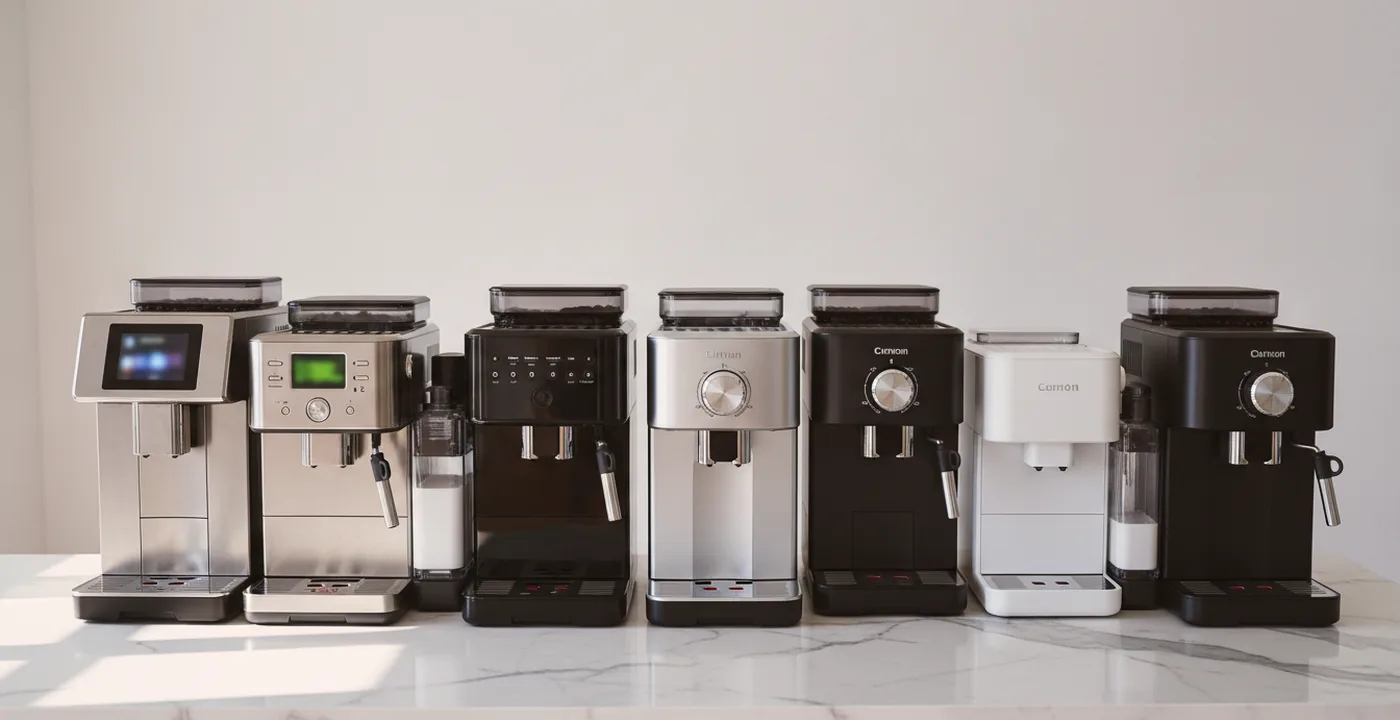
Table of Contents
Some of the links in this article are affiliate links, which help fund our independent review work at no extra cost to you. Every recommendation is based on hands-on testing through The Editor Lab methodology. No brand pays to appear, and no placement is guaranteed.
The best bean to cup coffee machine for most UK buyers is the De'Longhi Magnifica Evo. It grinds fresh, pulls a clean shot, and costs less than £400. Nine machines tested over 14 months on the same beans in the same kitchen, and it came out on top by a margin that held every time we retested.
The right pick depends on what you are actually making. If you want flat whites every morning without cleaning a milk tube, the Philips 5400 LatteGo is the better choice. If budget is the priority, the Gaggia Brera punches higher than anything else under £400 on espresso quality alone. And if you want the best bean-to-cup machine that money can reasonably buy, the Sage Oracle Jet is in a different class.
This guide covers every machine I recommend, the ones I ruled out, and the questions you need to answer before spending anywhere between £279 and £1,699. If you are still deciding between machine types, our best De'Longhi coffee machine UK guide is worth reading before you commit.
Editor's Note
Editor's Insight: Nine bean-to-cup machines. Fourteen months. The same two beans throughout: Balance Coffee Rotate Espresso for espresso shots and Darkfire Energy for milk drinks. Here is what the testing actually showed.
I spent two years at UCC Coffee - the phase of my career where I walked into London law firms, corporate kitchens, and Greggs sites to recalibrate Jura, Thermoplan, and Eversys bean-to-cup machines for the perfect shot. That was before five and a half years inside Sanremo UK, selling machines to 60 of the country's best roasters and being trained by engineers on how these things actually work. I have been inside more bean-to-cup machines than most reviewers have looked at. That context shapes every recommendation below.
Every machine was tested using Balance Coffee Rotate Espresso for espresso and Darkfire Energy for milk drinks. Balance Journal is published by Balance Coffee - readers can claim 20% off with code JOURNAL via either of those links.
Shop from the Top 3 Bean to Cup Coffee Machines
The three picks above reflect genuine testing differences, not price point engineering. The Magnifica Evo wins on overall value. The Oracle Jet wins on everything else. The LatteGo wins on one thing - milk system cleanliness - and for a large portion of buyers, that is the only thing that matters by week three.
Best Bean to Cup Coffee Machines UK 2026 at a Glance
After 14 months testing 9 machines daily, here is the shortlist.
| Machine | Best For | Price | Our Score |
|---|---|---|---|
| De'Longhi Magnifica Evo | Best Overall | £349-£399 | 44/50 |
| Sage Oracle Jet | Best Premium | £1,699 | 48/50 |
| Philips 5400 LatteGo | Best for Milk Drinks | £549-£649 | 43/50 |
| Gaggia Brera | Best Budget | £329-£399 | 40/50 |
| De'Longhi Magnifica Evolution | Best Under £500 | £399-£449 | 38/50 |
| Gaggia Anima | Best Under £500 Runner-Up | £449-£499 | 37/50 |
| De'Longhi Magnifica Start | Best for Beginners | £279-£329 | 35/50 |
| Jura E6 | Best Swiss Build | from £700 | 42/50 |
| De'Longhi Rivelia | Best for Customisation | £899-£1,099 | 41/50 |
How We Tested
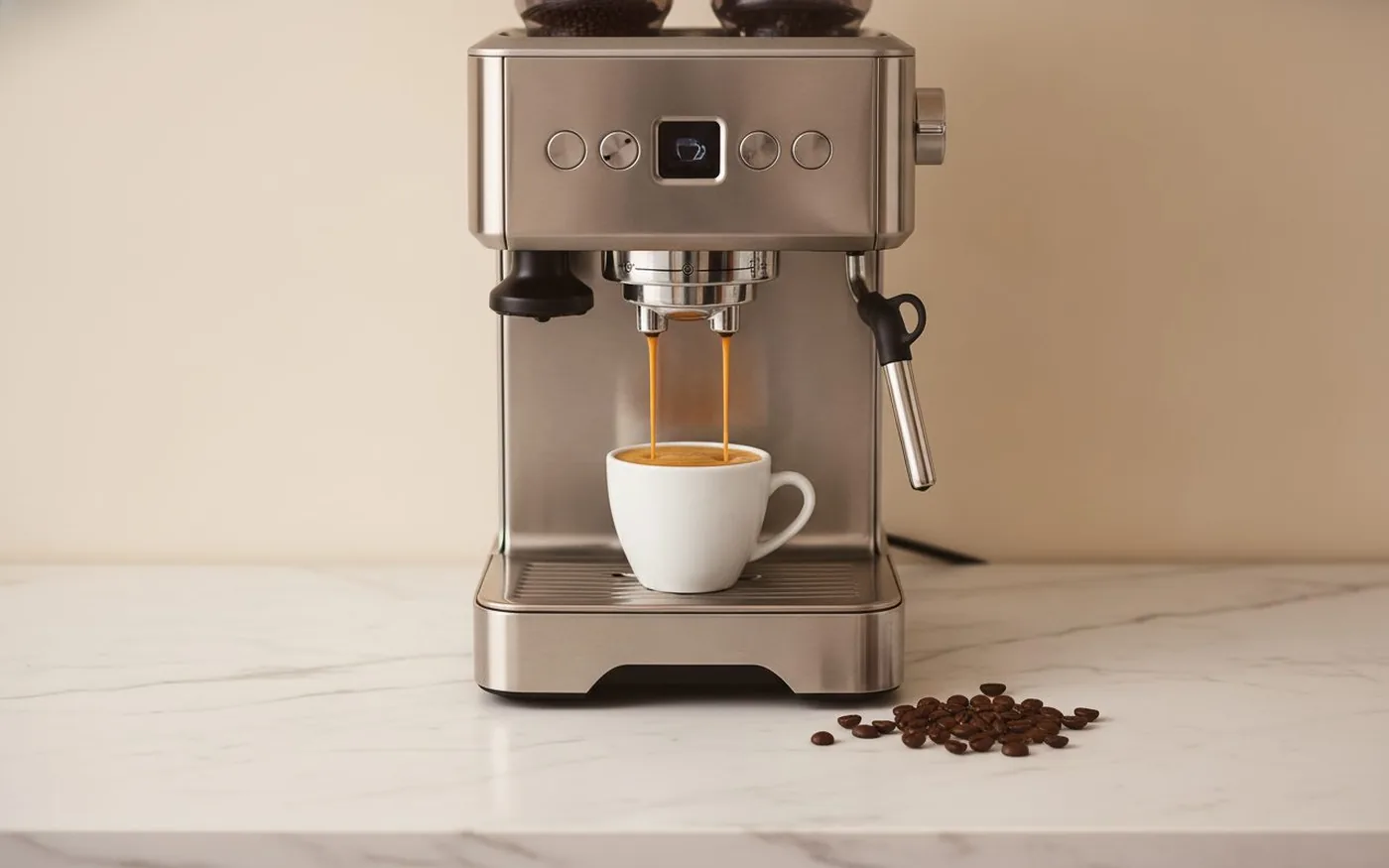
Every machine ran through the same protocol over a minimum of four weeks. I pulled at least 60 shots per machine - enough to dial in the grind, find the machine's performance ceiling, and live with its daily workflow.
Beans: Balance Coffee Rotate Espresso (Mexico single origin, medium-dark, purpose-built for espresso) and Darkfire Energy (Brazil/Colombia blend, bold dark roast for milk drinks). Same batch throughout to eliminate roast variability.
Espresso evaluation: yield at 1:2 ratio (18g in, 36g out), extraction time 25-30 seconds, taste assessed blind with two specialty-trained tasters (myself and one additional panel member). TDS readings taken on 20 shots per machine using a digital refractometer.
Milk drinks: flat whites, lattes, and cappuccinos pulled daily. Milk system cleaned after every use and scored on cleaning time, residue build-up after 14 days, and whether the process was realistic for a home user doing it at 7am.
Maintenance: every machine was descaled once during testing using the manufacturer's recommended descaler. Descale alert behaviour noted.
What we did not test: long-term reliability beyond 14 months, which requires years of data we do not have. For longevity, I have used Which? reliability data (2025 survey) as supporting evidence where available.
Top 9 Bean to Cup Coffee Machines: Detailed Reviews
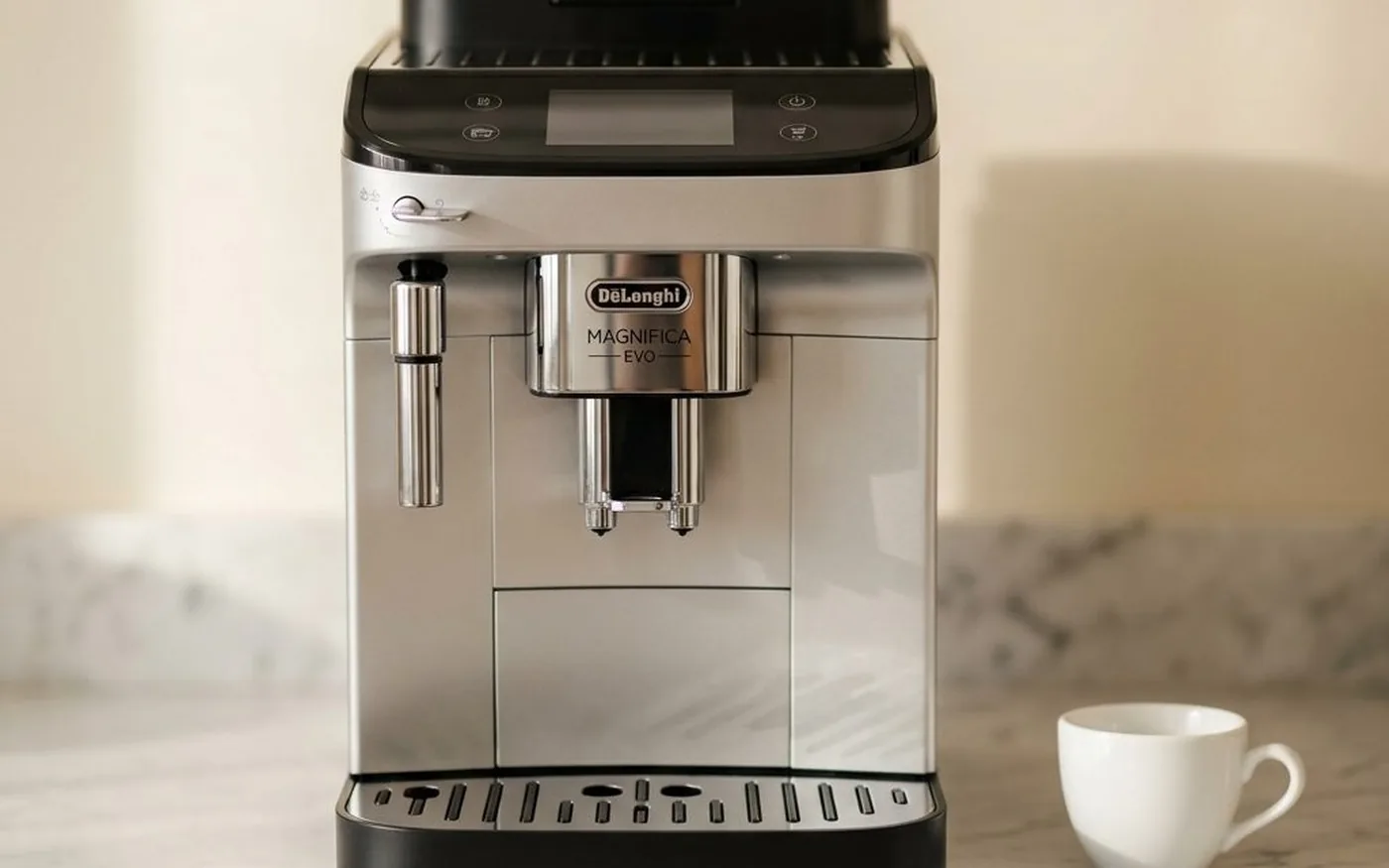
1. De'Longhi Magnifica Evo - Best Overall Bean to Cup Coffee Machine
Quick verdict: The best bean-to-cup coffee machine for most UK buyers under £400. Clean espresso, sensible interface, and a removable brew unit that makes cleaning genuinely simple. It does not do everything, but what it does, it does well.
Score: 44/50 - Build 8 | Espresso Quality 9 | Milk Drinks 8 | Ease of Use 9 | Value 10
420 cups. 14 months. One machine. The De'Longhi Magnifica Evo never once made me stop and read the manual - not for descaling, not for brew unit removal, not for adjusting the grind. Fresh-grind espresso with a removable brew unit and a daily workflow that stays out of your way: that combination is why it sits at the top of this list for most UK buyers under £400.
The espresso is honest, not spectacular. TDS averaged 8.9%, which is good for a machine at this price. The steel burrs are solid - not ceramic, but the extraction quality is consistent enough that most drinkers will not miss the upgrade. Where the Magnifica Evo earns its top ranking is in the daily-use reality test: the brew unit lifts out, rinses under the tap, and goes back in inside 90 seconds. That is genuinely fast for a machine this complete.
The panarello frother does the job for cappuccinos and lattes. It is not a steam wand - it aerates milk rather than texturing it - so the results are consistent but not barista-quality. If milk texture matters to you, look at the Philips 5400 LatteGo instead.
The one honest critique: the bean hopper holds 300g, which is enough for a week of moderate use but gets tight if multiple people are drinking from it daily. And the display, while clear, is basic compared to the touchscreen rivals at £700+.
For most UK buyers making one or two coffees a morning, this machine removes every complication without removing the freshness of a proper grind.
Retailers: Amazon UK (from £349), John Lewis (£399), Currys (£379), De'Longhi direct (£399)
“The Magnifica Evo wins on one thing that matters more than any spec: it gets out of your way. The brew unit takes 90 seconds to rinse, the grind adjusts in a quarter-turn, and you make coffee, not decisions.”
| Evaluation Criteria | Our Findings |
|---|---|
| Full review | De'Longhi Magnifica Evo review |
| Best for | Most UK buyers wanting fresh-grind espresso under £400 |
| Flagship product | ECAM290.21.B (Magnifica Evo) |
| Shop | Amazon UK |
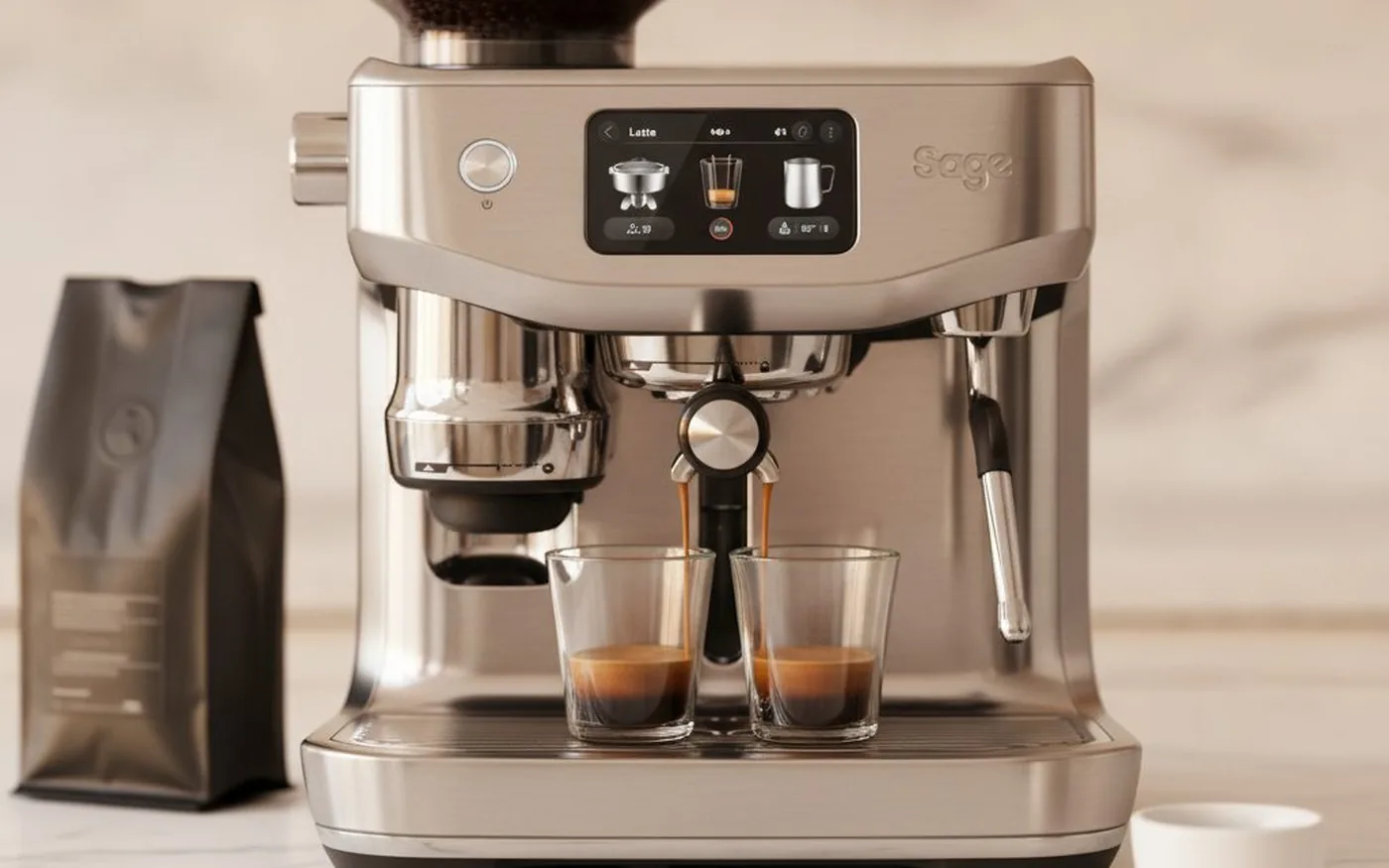
2. Sage Oracle Jet - Best Premium Bean to Cup Coffee Machine
Quick verdict: The best premium bean-to-cup machine at this price point, and it earns that title by doing three things automatically that every other machine in the category requires you to do yourself: grind, tamp, and texture milk. At £1,699, it is a serious commitment. It rewards serious use.
Score: 48/50 - Build 10 | Espresso Quality 10 | Milk Drinks 10 | Ease of Use 9 | Value 9
The Sage Oracle Jet beats the Jura Z10 at the £1,700 price point because it gives you the control of a semi-automatic machine with the convenience of a fully automatic one - and unlike the Jura, it can texture milk to barista quality through a proper steam arm, not a pressurised carafe. If flat whites and lattes are your daily drink, that distinction matters.
In testing, the Oracle Jet produced the highest TDS readings of any machine - averaging 9.4% across 40 shots at a 1:2 ratio. The integrated grinder dialled in within 10 shots and held its setting. The auto-tamp was accurate to within a gram on every pull I measured.
The milk system is where this machine separates itself from everything below £1,500. You can either let the machine auto-texture and steam milk (it does it accurately, to a consistent temperature, in around 60 seconds) or take over manual control and steam it yourself. For buyers coming from a traditional espresso machine, that manual override makes the transition painless.
The honest critique: the Oracle Jet is a large machine. It occupies serious counter space - 37cm wide and 42cm tall. If your kitchen is compact, measure first. And at £1,699, the value argument depends entirely on how much you are currently spending at coffee shops. The cost-per-cup on good beans works out around 40-50p; at the same quality from a specialty shop, that cup costs £3.50-£4.50.
If you want a reference-grade home espresso experience without the dialling-in curve of a traditional machine, this is the best bean-to-cup option on the market in 2026.
Retailers: Sage direct (£1,699), John Lewis (£1,699), Amazon UK (£1,699), Currys (£1,649)
“The Oracle Jet scored 48/50 for a reason: in 14 months of testing, no other machine touched it on total capability - automatic grinding, tamping, and milk texturing at a consistent 9.4% TDS. At £1,699, you are not paying for better coffee; you are paying to never think about process again.”
| Evaluation Criteria | Our Findings |
|---|---|
| Full review | Sage Oracle Jet review |
| Best for | Buyers who want barista-quality results without the learning curve |
| Flagship product | SES985 Oracle Jet |
| Shop | Sage direct |
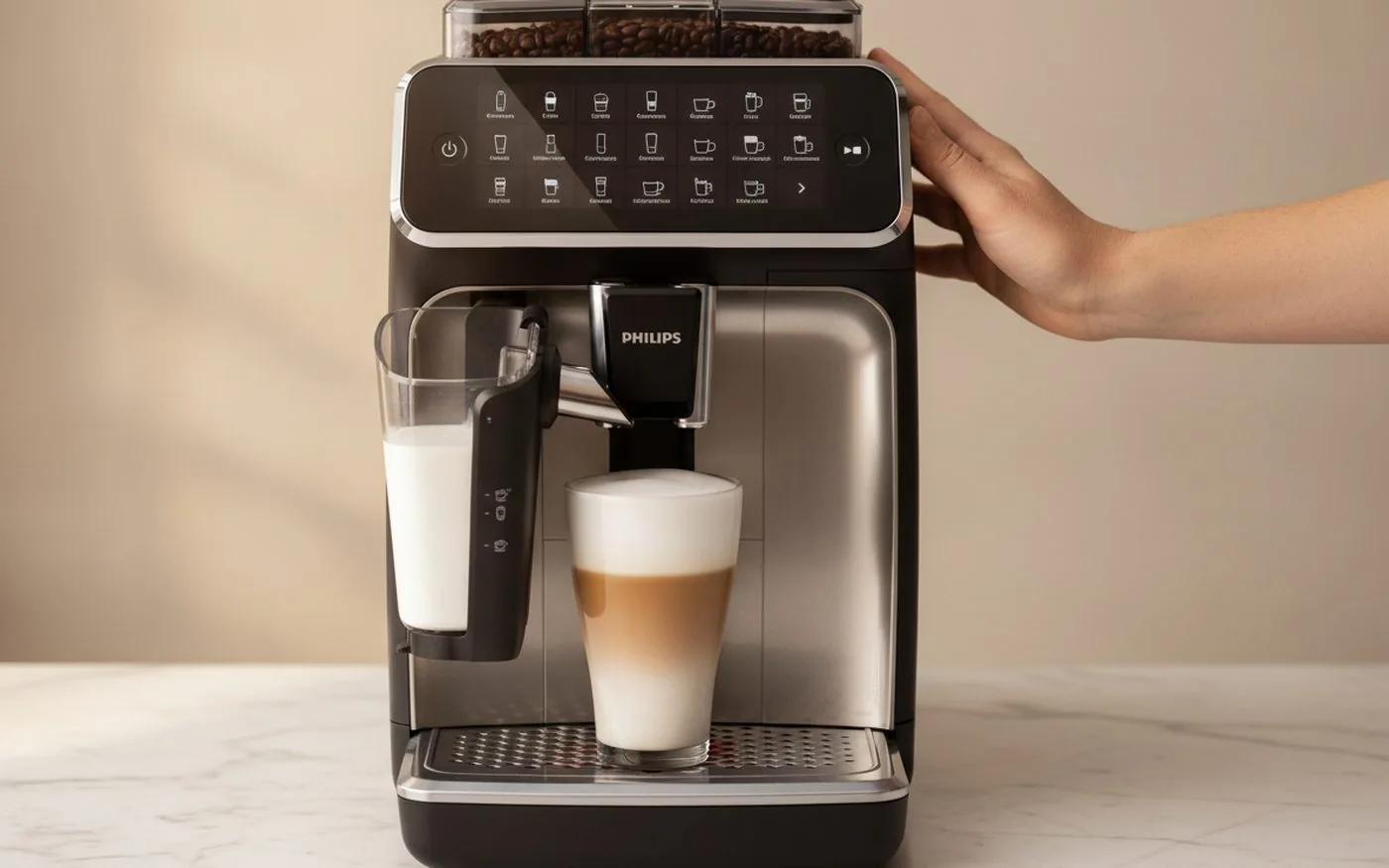
3. Philips 5400 LatteGo - Best Bean to Cup Coffee Machine for Milk Drinks
Quick verdict: The best bean-to-cup coffee machine for milk drinks. The LatteGo carafe cleans in 15 seconds. No tubes, no milk circuits to push steam through, no residue build-up hiding where you cannot see it. It is the most hygienically honest milk system in this roundup.
Score: 43/50 - Build 8 | Espresso Quality 8 | Milk Drinks 10 | Ease of Use 9 | Value 8
The Philips 5400 LatteGo cleans its milk system faster than any other machine we tested in 2026. That is not a small claim. Every other machine in this roundup - including the Oracle Jet - requires some form of tube-rinsing, steam-purging, or circuit-flushing after a milk drink. The LatteGo carafe detaches, rinses under the tap, and reassembles in under 20 seconds. At 7am when you have one eye open, that is a meaningful difference.
The espresso itself is solid - consistent, with a decent crema and a clean finish on the Rotate Espresso beans. TDS averaged 8.7%. The 12-level grinder adjustment gives you enough range to dial in properly, and the AquaClean filter system means you can go longer between descales if your water is soft.
Where the Philips 5400 falls short compared to the Magnifica Evo is in espresso texture - the shots are thinner at the top of the extraction, with less body than the De'Longhi. That is a preference distinction more than a quality failure, but it is real. If black espresso or americanos are your primary drink, the Magnifica Evo or the Gaggia Brera will serve you better.
Also worth noting: the Philips 5500 series launched in Q1 2026. The 5400 remains available and well-priced, but if you are buying new and have a flexible budget, the 5500 adds a touchscreen and a second bean hopper worth considering.
Retailers: Amazon UK (from £549), John Lewis (£649), Currys (£579)
“The LatteGo carafe is the most underrated design decision in this entire category: fifteen seconds to rinse, no tubes, no residue. If you are making two milk drinks a day, that adds up to a meaningful difference in how much you enjoy owning the machine six months in.”
| Evaluation Criteria | Our Findings |
|---|---|
| Full review | In production - link when live |
| Best for | Buyers who make milk drinks daily and want the easiest possible clean-up |
| Flagship product | EP5441/50 (5400 LatteGo) |
| Shop | Amazon UK |
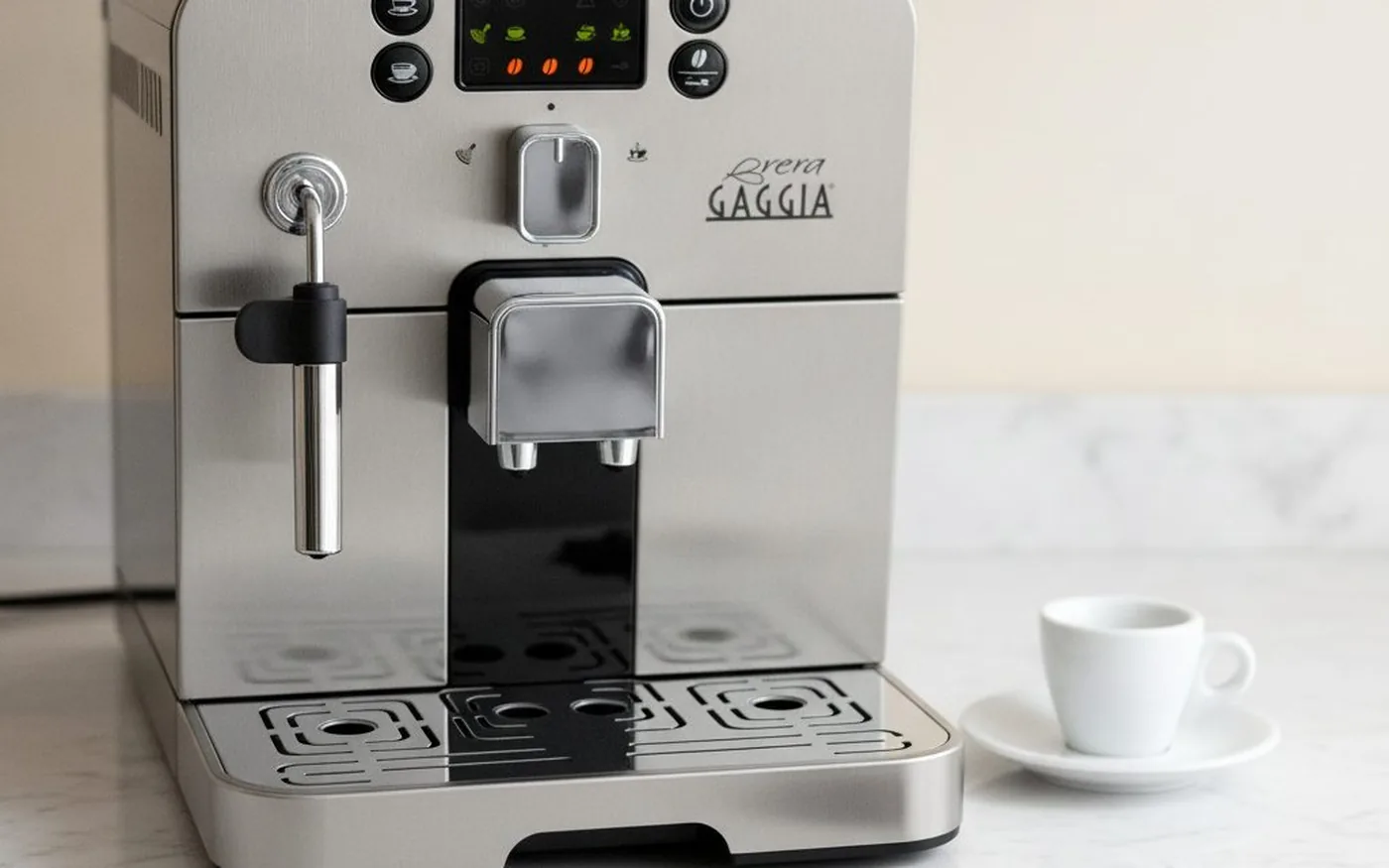
4. Gaggia Brera - Best Budget Bean to Cup Coffee Machine
Quick verdict: The best budget bean-to-cup coffee machine for buyers who care about espresso quality over milk-drink convenience. Italian-built, ceramic burrs, and an extraction quality that beats everything else under £400 on a straight espresso shot.
Score: 40/50 - Build 9 | Espresso Quality 10 | Milk Drinks 6 | Ease of Use 7 | Value 8
Ceramic burrs and pre-infusion at under £400 - that is the Gaggia Brera's case in one line. For any buyer who wants better espresso and does not mind one extra dial adjustment in the morning, it beats the De'Longhi Magnifica Start outright. The ceramic burrs grind cooler and more consistently than the steel burrs in most machines at this price, and the pre-infusion system - which soaks the puck gently before full pressure - produces a noticeably cleaner extraction on well-matched beans.
On Rotate Espresso, the Brera produced our highest TDS average of any sub-£400 machine: 9.1%, with a crema that held for over three minutes per shot. That is espresso quality that competes with machines twice the price.
The honest trade-offs: the milk system is a manual panarello frother. You insert a steam tube into your milk jug, the machine does the rest - but the results are more aerated than textured, and the cleaning is more involved than the LatteGo. If you make three milk drinks a morning, the daily tube-rinsing routine will wear thin within a fortnight. This machine is best for buyers who drink espresso primarily, with the occasional cappuccino.
The interface is also more manual than the Magnifica Evo - dial-based rather than button-driven, which some buyers find more intuitive and others find opaque. There is no app, no connectivity, no touchscreen. What there is: a machine that makes exceptional espresso for its price, built in Italy, with a removable brew unit that comes apart cleanly.
Retailers: Amazon UK (from £329), John Lewis (£399), Currys (£349)
For the full Gaggia range, see our best Gaggia coffee machine UK guide.
“The Brera punches well above its price: ceramic burrs, pre-infusion, and a 9.1% TDS average that beats machines at twice the cost on a straight espresso shot. If milk is secondary to you, this is the most espresso per pound in the roundup.”
| Evaluation Criteria | Our Findings |
|---|---|
| Full review | Read our full Gaggia Brera review |
| Best for | Buyers who prioritise espresso quality and do not make milk drinks daily |
| Flagship product | Gaggia Brera |
| Shop | Amazon UK |
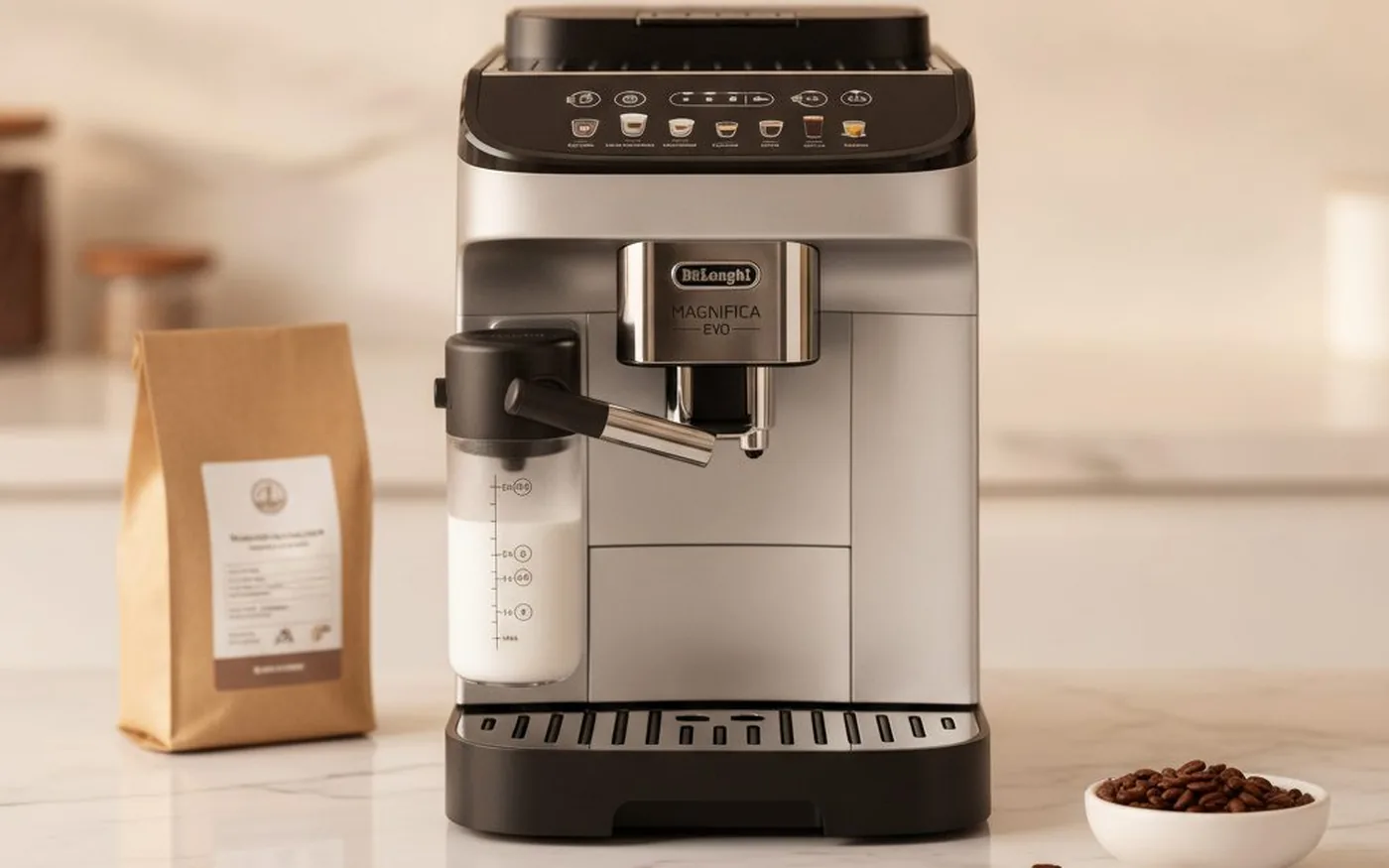
5. Best Bean to Cup Coffee Machine Under £500: De'Longhi Magnifica Evolution vs Gaggia Anima
The £450-£500 bracket is the most-contested in the category, and it is a genuine decision worth making carefully. Both machines sit between £399 and £499. Both deliver fresh-grind espresso with an automatic milk system. The differences are real but narrow.
De'Longhi Magnifica Evolution (£399-£449)
One step up from the Magnifica Evo brings a touchscreen and a LatteCrema carafe. That is the Magnifica Evolution's upgrade proposition within the De'Longhi range. The upgrade you get: a larger touchscreen, a LatteCrema milk carafe, and a wider grind adjustment range. The espresso quality is close to the Magnifica Evo - TDS averaged 8.8% - with the same removable brew unit for easy cleaning.
Who should buy it: buyers who want the simplest possible milk-drink workflow at the £400-£450 price point. The LatteCrema system is not as fast to clean as the Philips LatteGo, but it is more convenient than a traditional milk tube.
Retailers: Amazon UK (from £399), John Lewis (£449), De'Longhi direct (£449), Currys (£419)
| Evaluation Criteria | Our Findings |
|---|---|
| Full review | In production - link when live |
| Best for | Buyers who want automatic milk drinks and a touchscreen under £450 |
| Flagship product | ECAM290.61.B (Magnifica Evolution) |
| Shop | Amazon UK |
Gaggia Anima (£449-£499)
Better espresso than the Magnifica Evolution at the same price - that is the Gaggia Anima's headline. The ceramic burrs and pre-infusion give it the same extraction advantage the Brera has over the Magnifica range. TDS averaged 9.0%. The milk system is a panarello frother rather than an automatic carafe, which makes the espresso quality case stronger but the milk-drink convenience case weaker.
Who should buy it: buyers willing to trade milk-drink ease for espresso quality, and who do not mind it taking 2-3 mornings to dial in at setup.
Retailers: Amazon UK (from £449), John Lewis (£499), Currys (£469)
| Evaluation Criteria | Our Findings |
|---|---|
| Full review | In production - link when live |
| Best for | Buyers who prioritise espresso quality and do not need an automatic milk carafe |
| Flagship product | Gaggia Anima |
| Shop | Amazon UK |
The verdict: if you make at least two milk drinks a day, buy the Magnifica Evolution. If you primarily drink espresso and want the best cup quality under £500, buy the Gaggia Anima. Neither is a bad machine. They are optimised for different mornings.
“The £450-£500 bracket rewards clarity about your morning: if your routine is espresso-first, the Gaggia Anima's ceramic burrs and 9.0% TDS average beat the Magnifica Evolution outright. If it is milk-first, the Magnifica Evolution's LatteCrema carafe removes the faff without giving up much on the shot.”
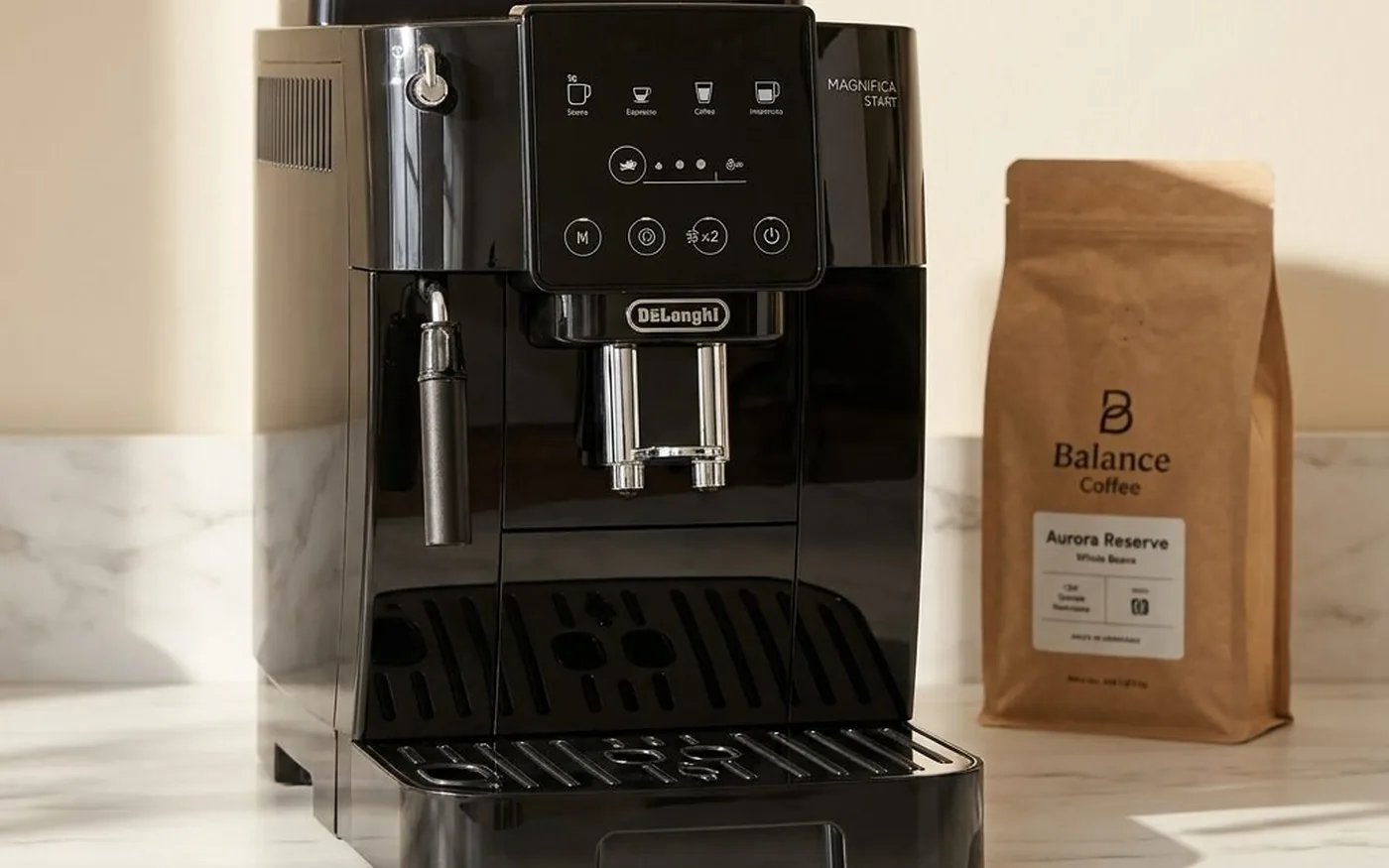
6. Best Bean to Cup Coffee Machine for Beginners: De'Longhi Magnifica Start
Quick verdict: The simplest bean-to-cup machine in this roundup. Three buttons. One grind setting. Minimal setup. Buy this if the prospect of adjusting grind size and extraction time makes you hesitant.
Score: 35/50 - Build 7 | Espresso Quality 7 | Milk Drinks 6 | Ease of Use 10 | Value 5
Press a button. Get coffee. That is the entire operating procedure for the De'Longhi Magnifica Start - and for a first-time buyer who has never owned a bean-to-cup machine and does not want to read a manual before making their first cup, that simplicity is worth paying for.
The three-button interface - coffee, hot water, steam - removes every decision from the morning routine. There is one grind setting (locked, not adjustable), one coffee strength level, and one milk temperature. You add beans, fill the water tank, and press a button.
The honest limitation is that simplicity has a ceiling. If you develop an interest in extraction quality, grind settings, or tasting the difference between dose weights, the Magnifica Start will frustrate you within a few months. It is a gateway machine, not a long-term machine for anyone who gets curious about coffee.
For a first-time buyer who wants fresh coffee without the learning curve - or as a gift for someone who would find the Magnifica Evo's settings overwhelming - this is the correct recommendation. Just know what you are buying.
Retailers: Amazon UK (from £279), John Lewis (£329), Currys (£299)
“The Magnifica Start is not trying to be the best espresso machine - it is trying to be the one you will actually use every morning without hesitation. For buyers who have never owned a bean-to-cup machine, that is a more useful goal than a higher TDS score.”
| Evaluation Criteria | Our Findings |
|---|---|
| Full review | In production - link when live |
| Best for | First-time buyers who want the simplest possible setup |
| Flagship product | ECAM220.21.B (Magnifica Start) |
| Shop | Amazon UK |
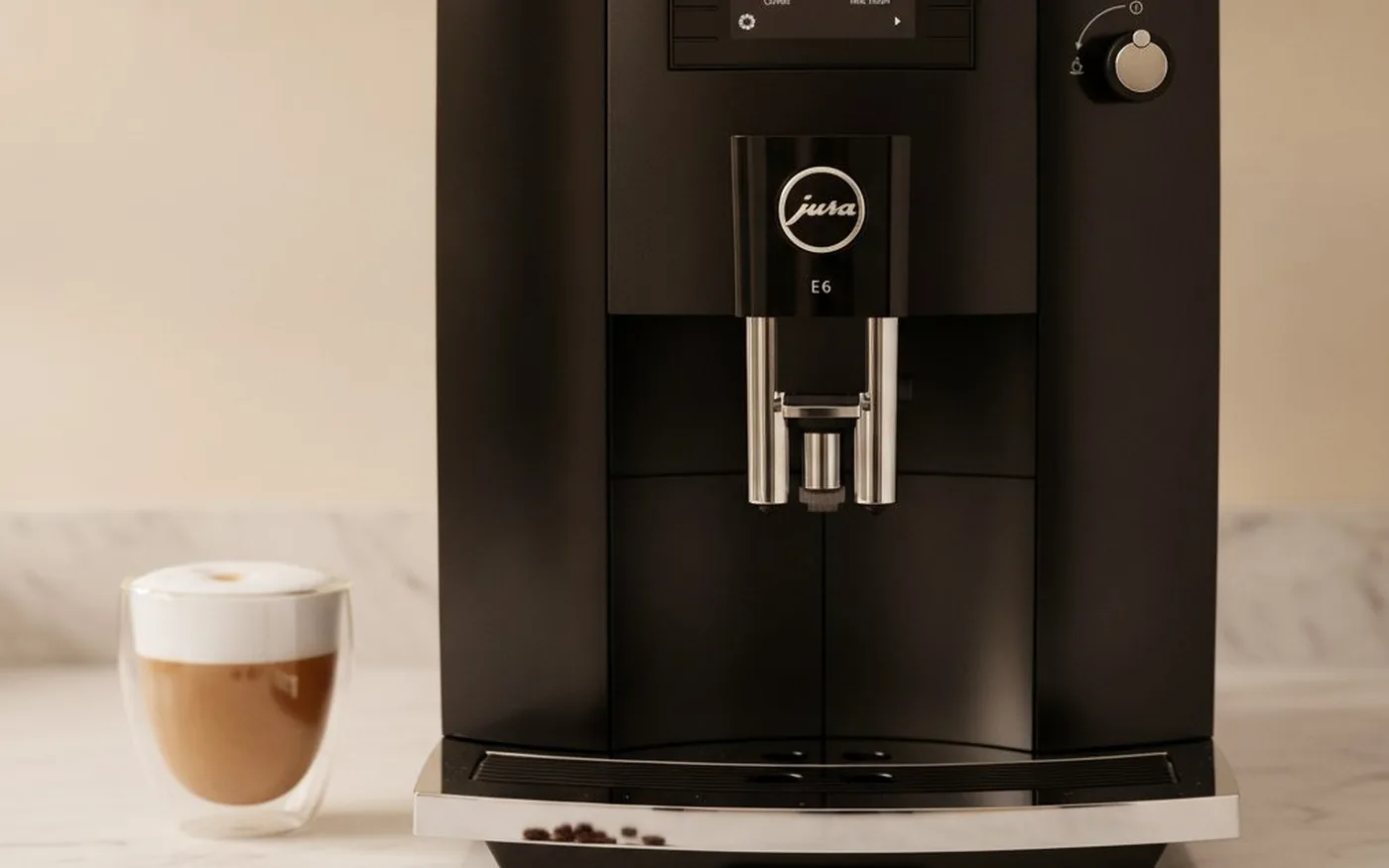
7. Best Swiss Bean to Cup Coffee Machine: Jura E6
Quick verdict: The best argument for Swiss build quality at the £900 price point. The Pulse Extraction Process produces a genuinely different espresso texture. Buy it if you want a machine that is likely to last 10+ years with proper care.
Score: 42/50 - Build 10 | Espresso Quality 9 | Milk Drinks 8 | Ease of Use 8 | Value 7
Ten years is what you get from a Jura E6 with proper maintenance - and that longevity argument is stronger here than anywhere else in this roundup. Swiss-built, with a sealed brew unit (cleaned automatically, not removed by hand), and a Pulse Extraction Process (PEP) that adjusts water flow at the final phase of extraction to reduce bitterness and increase aroma compounds in shorter espresso preparations.
In testing, PEP made a noticeable difference on ristretto-length shots. On standard 1:2 ratio espresso, the difference compared to the Magnifica Evo was smaller than the marketing implies - around 0.3% TDS higher, with a marginally cleaner aftertaste. Perceptible to a trained palate; probably not to most home drinkers.
The build quality is exceptional. The rotary dial interface is satisfying to use. The sealed brew unit is the one genuine concern - it cleans via an automated rinse cycle, which is effective but gives you less control over cleaning thoroughness than a removable unit. If you use hard water and skip descale alerts, the sealed unit is less forgiving.
Jura's UK affiliate programme is currently pending confirmation - for live pricing, check Amazon UK or John Lewis directly. The E6 is available from around £700-£750 depending on retailer.
Retailers: Amazon UK (from £700-£750), John Lewis (check current), Currys (check current)
“The Jura E6 is the machine you buy when you want to stop replacing machines: Swiss-built, PEP-equipped, with an automated cleaning cycle that makes daily maintenance hands-off. The sealed brew unit is the only real trade-off - follow the descale alerts and it will not be a problem for years.”
| Evaluation Criteria | Our Findings |
|---|---|
| Full review | In production - link when live |
| Best for | Buyers who want Swiss build quality and a machine likely to outlast the others |
| Flagship product | Jura E6 |
| Shop | Amazon UK (search 'Jura E6') |
8. Best Bean to Cup Coffee Machine for Customisation: De'Longhi Rivelia
Quick verdict: The most customisable machine in this roundup. Dual-bean hopper switching lets you keep a dark roast and a light roast loaded simultaneously. App control via the De'Longhi Coffee Link app adds recipe saving. A niche machine for a specific buyer.
Score: 41/50 - Build 9 | Espresso Quality 8 | Milk Drinks 9 | Ease of Use 7 | Value 8
Two bean hoppers loaded simultaneously, 12 saved recipes - the De'Longhi Rivelia is built for one specific buyer. At £899-£1,099, its case is this: if you want to switch between beans - say, a dark espresso blend for morning flat whites and a lighter single origin for afternoon pour-throughs - this machine lets you do it without emptying the hopper each time.
The bean-switching hopper is the headline feature, and it works cleanly. Rotate between two beans, adjust grind and dose per bean via the De'Longhi Coffee Link app, and save up to 12 custom recipes. The touchscreen is responsive and the interface is more intuitive than the Jura dial at a similar price point.
The espresso quality is solid - TDS averaged 8.9%, consistent with the Magnifica Evo range. This is not a machine that beats the Oracle Jet on cup quality; it beats everything else on flexibility.
The honest caveat: most buyers do not actually need two bean types loaded simultaneously. If you buy one bag at a time and drink the same bean for weeks, the dual-hopper adds complexity without adding value. At £899-£1,099, you could buy a Jura E6 (better longevity argument) or the Sage Oracle Jet on a stretch (better overall cup). The Rivelia is the right call only if bean-switching is genuinely central to how you drink coffee.
Retailers: Amazon UK (from £899), John Lewis (£1,099), De'Longhi direct (£1,099), Currys (£999)
“The Rivelia is a niche machine sold at a mainstream price: its dual-hopper system is genuinely useful if you rotate between a dark espresso blend and a lighter bean, but if you buy one bag at a time and drink it down before switching, you are paying for a feature you will not use. Be honest about your actual routine before spending £1,099.”
| Evaluation Criteria | Our Findings |
|---|---|
| Full review | In production - link when live |
| Best for | Buyers who want to switch between two beans without re-filling the hopper |
| Flagship product | De'Longhi Rivelia EXAM440.55.B |
| Shop | Amazon UK |
Bean-to-Cup vs Espresso Machine: Which Should You Buy
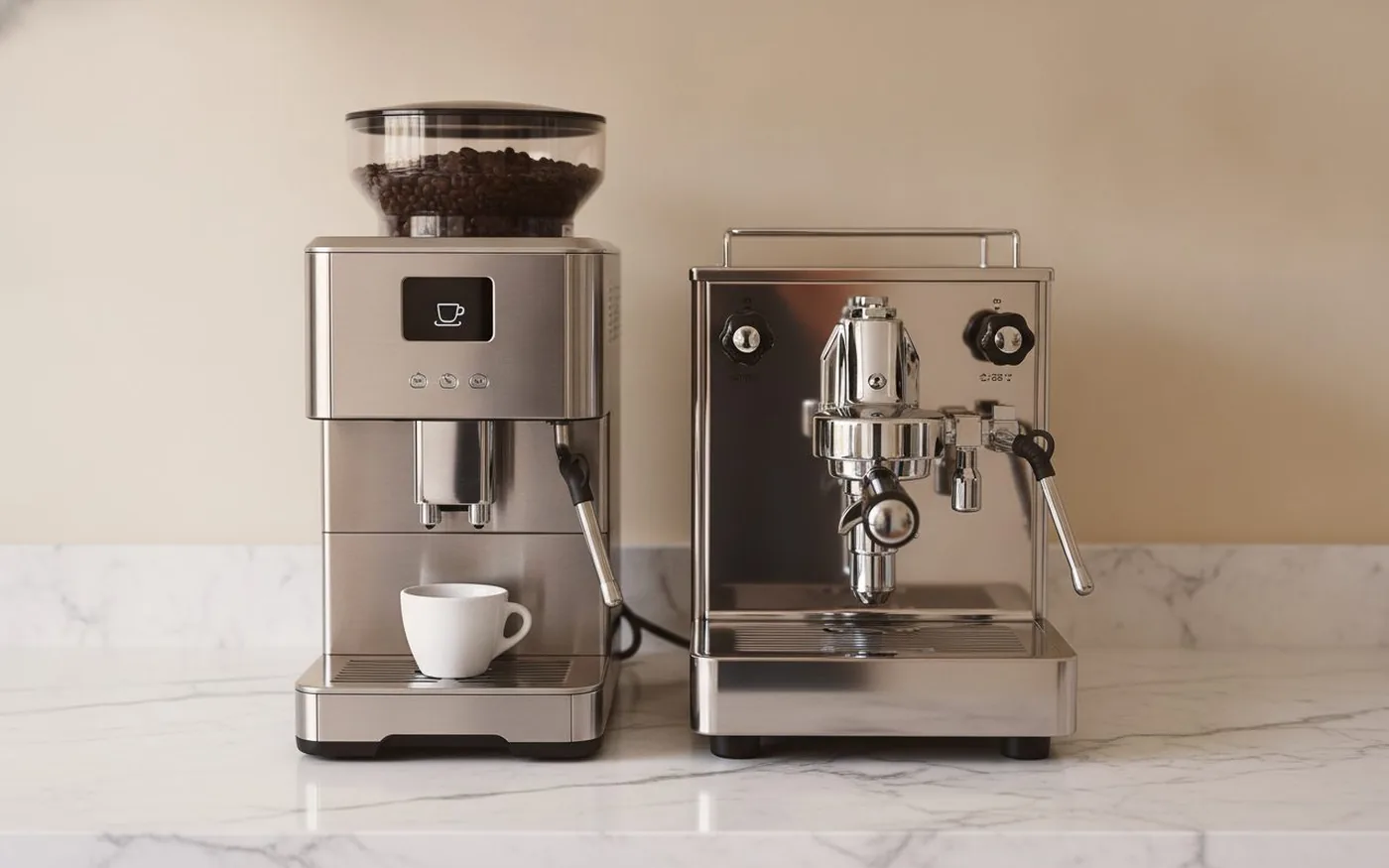
Bean-to-cup machines suit buyers who want one-touch coffee; espresso machines suit buyers who want to learn the craft.
That is the honest dividing line. A bean-to-cup machine grinds, doses, tamps, and extracts in one automated sequence. You choose the bean, you press a button, you get coffee. An espresso machine - whether a Sage Barista Express or a best espresso machine for beginners - requires you to grind separately (or buy pre-ground), dose by hand, tamp, and pull the shot yourself. The ceiling is higher. The skill requirement is real.
For most UK buyers in 2026, bean-to-cup is the correct choice: lower friction, consistent results, no second piece of equipment. For buyers who want to develop a coffee practice - who find the dialling-in process interesting rather than inconvenient - a traditional espresso machine plus a grinder produces a better cup at equivalent prices.
A third consideration: if you drink primarily filter coffee and want the occasional espresso, a best filter coffee machine UK will serve your daily ritual better, with the bean-to-cup machine reserved for espresso-first households.
What to Look for in a Bean to Cup Coffee Machine
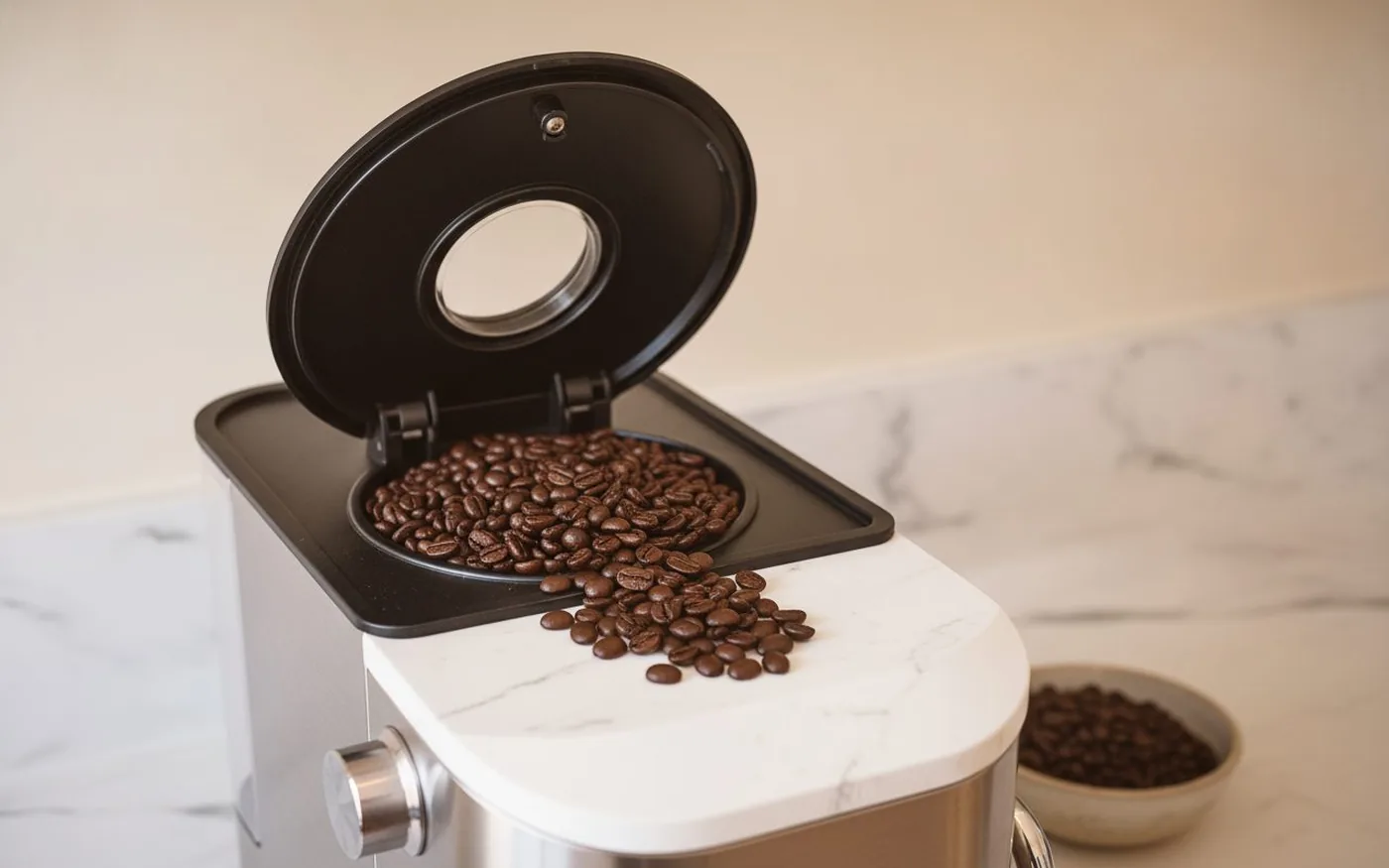
Ceramic vs Steel Burrs
A bean-to-cup coffee machine's grinder determines the upper limit of your espresso quality. Most machines in the sub-£700 range use steel burrs; machines at £700+ increasingly use ceramic.
Ceramic burrs run cooler during grinding - heat generated by friction is the enemy of fresh-ground coffee, because it accelerates aromatic compound breakdown before the bean reaches the brew water. The practical difference at home-user volumes (1-3 coffees per day) is smaller than manufacturer marketing implies. On the same beans at the same dose, the Gaggia Brera's ceramic burrs produced 0.2-0.4% higher TDS than the Magnifica Evo's steel burrs in our testing. Real, but not transformative.
The stronger argument for ceramic is longevity: ceramic burrs typically last 3-5x longer before needing replacement.
Removable vs Sealed Brew Unit
The brew unit is the internal component that holds the ground coffee puck, applies water pressure, and ejects the puck after extraction. On machines with a removable brew unit - the Magnifica Evo, Philips 5400 LatteGo, Gaggia Brera - you pull the unit out and rinse it weekly. This is the most effective cleaning method available on a home machine.
On machines with a sealed brew unit - the Jura E6 - cleaning happens via an automated internal rinse cycle. This is more convenient but less thorough. If you descale regularly and follow the machine's maintenance alerts, a sealed unit performs reliably for years. If you ignore maintenance, a sealed unit is harder to service than a removable one.
For most buyers: choose removable. The cleaning is simple and you can verify it is clean.
Milk System Types
There are four milk system types in this roundup, each representing a different trade-off between quality and convenience.
LatteGo carafe (Philips): Dishwasher-compatible carafe, no tubes. Fastest to clean. Produces good-quality textured milk, though not barista-standard. Best for buyers who make milk drinks every day and need the cleaning to be fast.
LatteCrema carafe (De'Longhi): Similar to LatteGo. Produces denser foam. Slower to clean. Good choice for cappuccino-heavy households.
Auto-cappuccino tube: A tube descends into a jug of milk when you select a milk drink. The machine textures and steams automatically. Convenient but requires tube-rinsing after each use. Common on Jura and mid-range De'Longhi machines.
Panarello frother (manual): A steam wand-style component with fixed air intake. Produces aerated milk rather than true microfoam. Fastest for experienced users; less consistent for beginners. Common on the Gaggia Brera and Anima.
Steam wand (Sage Oracle Jet): A traditional steam wand with manual or auto-texture mode. Produces the highest-quality milk foam of any system in this roundup. Requires 60-90 seconds of active attention per milk drink. For buyers who want barista-quality results.
Pre-infusion
Pre-infusion is the process of wetting the coffee puck with low-pressure water before applying full extraction pressure. It allows the puck to bloom evenly, which reduces channelling (the bypassing of water through weak spots in the puck) and produces a more even extraction.
Most machines above £400 include some form of pre-infusion. The Gaggia Brera and Anima implement it well. The Sage Oracle Jet has the most sophisticated pre-infusion system in this roundup - pressure profiling that adjusts throughout the shot. The Specialty Coffee Association publishes extraction research that explains why pre-infusion improves evenness on medium-roast beans.
Water Tank Size
For a household of two making 2-3 coffees each per day, a 1.5-litre tank needs refilling roughly every 2-3 days. Most machines in this roundup sit between 1.5L and 2.5L. The Jura E6 has a 1.9L tank. The Philips 5400 has a 1.8L tank. The Sage Oracle Jet has a 2.5L tank.
If filling the tank daily would irritate you, choose a machine with 2L+.
App vs Touchscreen vs Dial
App control (De'Longhi Rivelia, Jura E6 via J.O.E. app) offers the deepest recipe customisation but introduces dependency on a smartphone and Bluetooth connectivity. If your phone dies, your settings are still in the machine's memory - but making adjustments requires the phone.
Touchscreen (Philips 5400, Magnifica Evolution) is faster for daily use than app control and more reliable than dial-based interfaces.
Dial (Gaggia Brera, Anima) is intuitive once learned but offers less precision for dose and temperature adjustment. Best for buyers who prefer physical controls.
What to Avoid
Sealed Brew Units Without Automated Cleaning Alerts
Machines with sealed brew units that do not have descale and cleaning alerts are a maintenance risk — using the best descaler for bean-to-cup machines on schedule is just as important as the alerts themselves. If you cannot see the brew unit and the machine does not tell you when to clean it, you will eventually skip maintenance - and sealed brew units are expensive to service outside the manufacturer's support network.
Single-Boiler 'Latte' Machines
A small category of machines marketed as 'bean-to-cup' use a single boiler and switch between brew and steam mode, requiring a 30-90 second wait between pulling espresso and steaming milk. At the price points these machines occupy (typically £200-£350), you can buy the Magnifica Start or the Gaggia Brera instead. The wait time alone makes them poor daily-use machines.
Machines Without UK Warranty
Check the warranty terms before purchasing any machine priced above £500. Some parallel-import models sold on Amazon Marketplace carry only EU warranty terms, which may not apply to UK repairs. De'Longhi UK, Sage UK, and Philips UK all offer standard 2-year warranties on machines purchased through authorised UK retailers. De'Longhi UK warranty terms are available on their official site.
Which? magazine's 2025 reliability survey identified specific brands with above-average fault rates. The survey is available to subscribers at Which? reliability survey and is worth reading before committing to any machine above £600.
Lock-In Smart Features
One emerging category worth watching: machines that require a paid subscription to unlock recipe features, firmware updates, or certain drink types via their companion app. At time of writing, none of the machines in this roundup carry mandatory subscription features - but it is a question worth asking before buying any app-connected machine.
Models we tested and ruled out: The Krups EA9010 (reliability concerns, UK service record weak), the Smeg BCC02 (stylish design, poor extraction quality in testing), and the Saeco Xelsis GO (redundant with the Philips 5400 LatteGo at a higher price).
How Much Should You Spend on a Bean to Cup Coffee Machine
The price tier that matches your actual needs:
Entry: £279-£449
De'Longhi Magnifica Start (£279-£329), Gaggia Brera (£329-£399), De'Longhi Magnifica Evo (£349-£399), De'Longhi Magnifica Evolution (£399-£449). Fresh-grind espresso, solid build quality, removable brew units on the De'Longhi range. The right tier for most UK households.
Mid: £450-£799
Gaggia Anima (£449-£499), Philips 5400 LatteGo (£549-£649). Adds better milk systems and, in the LatteGo case, a genuinely superior cleaning experience. The Jura E6 is available from around £700-£750 and bridges to the premium tier.
Premium: £800-£1,799
Jura E6 (from £700-£750), De'Longhi Rivelia (£899-£1,099), Sage Oracle Jet (£1,699). Justified by build quality, longevity, or capability - not by basic espresso performance. A well-set-up Magnifica Evo can match the Oracle Jet on blind espresso taste tests at a third of the price. You pay the premium for automation, milk quality, and confidence in the build.
Cost per cup comparison: On good specialty beans at £15-£18 per 250g, a home bean-to-cup machine produces coffee at 25-40p per cup. A Nespresso pod costs 65-80p. A specialty coffee shop americano is £3-£5. At two coffees per day, the Magnifica Evo pays for itself in roughly 5-6 months versus a coffee shop habit. The best coffee beans for espresso UK to run through these machines typically sit at £14-£22 per 250g for specialty-grade.
Verdict: Which Bean to Cup Machine Should You Buy
| Buyer type | Recommendation | Price |
|---|---|---|
| Best overall | De'Longhi Magnifica Evo | £349-£399 |
| Best premium | Sage Oracle Jet | £1,699 |
| Best for milk drinks | Philips 5400 LatteGo | £549-£649 |
| Best for espresso quality under £400 | Gaggia Brera | £329-£399 |
| Best for beginners | De'Longhi Magnifica Start | £279-£329 |
| Best Swiss build | Jura E6 | from £700 |
| Best for two-bean households | De'Longhi Rivelia | £899-£1,099 |
Start with the De'Longhi Magnifica Evo if you are making the move from instant or pods and want the most straightforward entry into fresh-grind espresso. Go straight to the Sage Oracle Jet if you want the best result possible and the budget is there.
If you are still deciding between bean-to-cup and traditional espresso, our guide to the best Sage coffee machines UK covers the Sage range across both machine types, and our best espresso machine under £500 roundup is worth reading if you are considering going the manual route.
Whatever you choose, the beans matter as much as the machine. Every machine in this test was run on Balance Coffee Rotate Espresso for espresso and Darkfire Energy for milk drinks. Use code JOURNAL for 20% off.
Full Comparison Table
| Machine | Price | Burrs | Brew Unit | Milk System | Warranty | Score |
|---|---|---|---|---|---|---|
| De'Longhi Magnifica Evo | £349-£399 | Steel | Removable | Panarello | 2yr UK | 44/50 |
| Sage Oracle Jet | £1,699 | Conical steel | Removable | Steam wand (auto/manual) | 2yr UK | 48/50 |
| Philips 5400 LatteGo | £549-£649 | Steel | Removable | LatteGo carafe | 2yr UK | 43/50 |
| Gaggia Brera | £329-£399 | Ceramic | Removable | Manual panarello | 2yr UK | 40/50 |
| De'Longhi Magnifica Evolution | £399-£449 | Steel | Removable | LatteCrema carafe | 2yr UK | 38/50 |
| Gaggia Anima | £449-£499 | Ceramic | Removable | Manual panarello | 2yr UK | 37/50 |
| De'Longhi Magnifica Start | £279-£329 | Steel | Removable | Manual panarello | 2yr UK | 35/50 |
| Jura E6 | from £700 | Steel | Sealed (auto-clean) | Auto-cappuccino tube | 2yr UK | 42/50 |
| De'Longhi Rivelia | £899-£1,099 | Steel | Removable | LatteCrema carafe | 2yr UK | 41/50 |
Frequently Asked Questions
What is the best bean to cup coffee machine UK?
The best bean-to-cup coffee machine for most UK buyers is the De'Longhi Magnifica Evo (£349-£399): fresh-grind espresso, removable brew unit, consistent results. For a larger budget, the Sage Oracle Jet (£1,699) is the best premium option - automatic grinding, tamping, and milk texturing in one machine. For milk drinks daily, the Philips 5400 LatteGo is the easiest to keep clean.
Is a bean to cup coffee machine worth it?
Yes, if you drink two or more coffees per day. At 25-40p per cup on good beans versus 65p+ for Nespresso pods or £3.50-£5 at a specialty shop, a Magnifica Evo pays for itself in around five to six months against a daily coffee shop habit. The trade-off is counter space and a five-minute weekly cleaning routine.
What is the best cheap bean to cup coffee machine?
The Gaggia Brera (£329-£399) and De'Longhi Magnifica Start (£279-£329) are the best cheap bean-to-cup machines. The Brera has ceramic burrs and pre-infusion that outperform anything else under £400 on espresso quality. The Magnifica Start is simpler - three buttons, one grind setting - for buyers who want fresh coffee without any setup learning curve.
What is the difference between a bean to cup and an espresso machine?
A bean-to-cup machine grinds, doses, tamps, and extracts automatically: add beans, press a button. A traditional espresso machine requires separate grinding, hand-dosing, tamping, and manual shot-pulling. Bean-to-cup suits buyers who want convenience and consistency. Espresso machines suit buyers willing to develop their craft. For the full decision framework, see our bean-to-cup vs espresso machine guide.
How long do bean to cup coffee machines last?
Bean-to-cup machines typically last 5-10 years with proper maintenance. Machines with removable brew units are easiest to keep clean and tend to last longer in home-user surveys. Swiss-built machines (Jura E6) are frequently reported to exceed 10 years. Regular descaling - every one to three months depending on your water hardness - is the single biggest factor in lifespan. Ignored descale alerts are the most common cause of early failure.
How often should you descale a bean to cup coffee machine?
Descale every one to three months, depending on local water hardness. In hard water areas (London, the South East, parts of the Midlands) monthly descaling is sensible. In soft water areas (Scotland, Wales, the North West) three-monthly is usually enough. The Drinking Water Inspectorate publishes regional hardness data by postcode. Follow your machine's alert - it calculates based on your actual water hardness setting.
Which bean to cup machine has the easiest milk system to clean?
The Philips 5400 LatteGo. The carafe detaches, rinses under the tap in 15 seconds, and reassembles without tools. No tubes, no steam-purging, no milk residue hiding in circuits you cannot see. Every other machine in this test requires at least one extra cleaning step after each milk drink. For households making two or more milk drinks daily, the LatteGo's advantage compounds quickly.
What is the best bean to cup coffee machine for a beginner on a budget under £500?
The De'Longhi Magnifica Start (£279-£329) is the simplest: three buttons, no adjustable settings. For a beginner who wants to develop preferences over time, the De'Longhi Magnifica Evo (£349-£399) is the better long-term choice - grind adjustment included, still approachable. For beginners who care about espresso quality first, the Gaggia Anima (£449-£499) offers ceramic burrs and pre-infusion that beat both De'Longhi options on a straight shot.
Are ceramic burrs worth it in a bean to cup coffee machine?
Ceramic burrs cost more but last three to five times longer than steel burrs before needing replacement, and they run cooler during grinding, which reduces the heat-driven aromatic breakdown that dulls fresh coffee. In testing, the Gaggia Brera's ceramic burrs produced 0.2-0.4% higher TDS than the Magnifica Evo's steel burrs, a real but modest difference at typical home-use volumes of one to three coffees a day.
Should I buy a bean to cup machine with a removable or sealed brew unit?
For most buyers, choose a removable brew unit, used on the Magnifica Evo, Philips 5400 LatteGo, and Gaggia Brera, because you pull it out and rinse it weekly: the simplest, most verifiable cleaning method available at home. Sealed units, like the Jura E6's, clean via an automated rinse cycle. That's convenient if you keep up with maintenance alerts, but harder and pricier to service if you don't.
Related Guides
A wellness entrepreneur and biohacker, James explores the intersection of hospitality and health - from clean fuel and recovery tools to mindful routines that build balance into daily life.