Sage Oracle Jet Review: Is Sage's Super-Automatic Worth £1,699?
Rated at three seconds to heat. Zero manual steps from bean to cup.
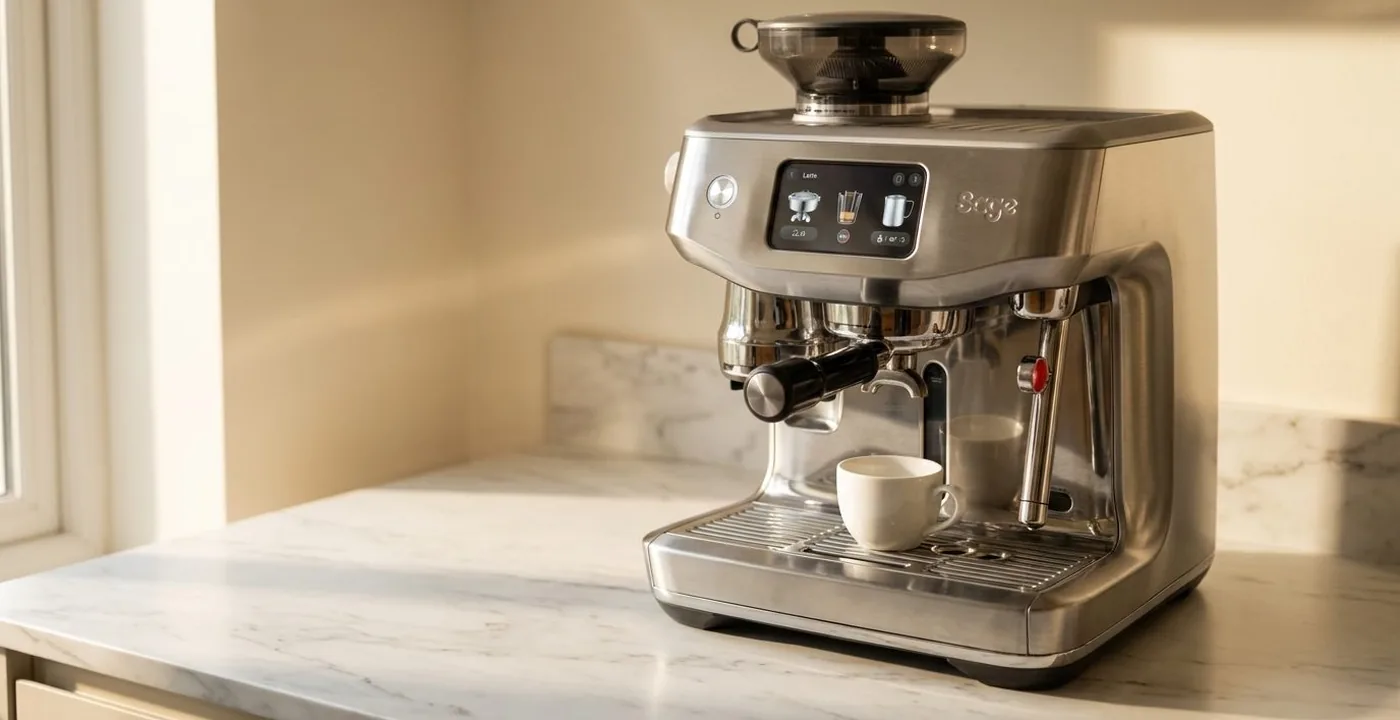
Table of Contents
Some of the links in this article are affiliate links, which help fund our independent review work at no extra cost to you. Every recommendation is based on hands-on testing through The Editor Lab methodology. No brand pays to appear, and no placement is guaranteed.
I set the Sage Oracle Jet on the counter and ran it from cold. Sage advertises a ThermoJet heat-up of three seconds from a cold start to extraction temperature, and in my testing the machine was ready almost as soon as I switched it on. I pressed the single-shot button. The grinder ran, the tamper engaged, and the extraction began. I went from a cold start to a finished espresso in the cup without touching a portafilter or a tamper once.
That is the proposition Sage is making at £1,699. This review works through whether it holds. I evaluated the Oracle Jet through The Editor Lab, Balance Journal's structured methodology for assessing coffee equipment, drawing on fourteen years in the coffee industry - including five and a half years inside an espresso machine manufacturer where Sanremo's own engineers trained me on PID temperature control, dual-boiler mechanics, and the extraction systems that machines at this price point use.
“I have worked in coffee since 2012, starting in commercial bean-to-cup machines at UCC Coffee before moving to Sanremo UK as Sales and Marketing Manager. Over five and a half years there, Sanremo's authorised engineers trained me on PID controllers, dual-boiler systems, and group head mechanics - the engineering foundations that the Oracle Jet's performance rests on. I later founded Balance Coffee, a specialty coffee brand built around independent third-party lab-testing for mycotoxins and pesticides. The Oracle Jet is not trying to replicate what a trained barista produces. It is trying to make what a trained barista produces available to someone who does not want to become one. I went into this evaluation wanting to know how close it gets.”James Bellis, Editor
What Is the Sage Oracle Jet?
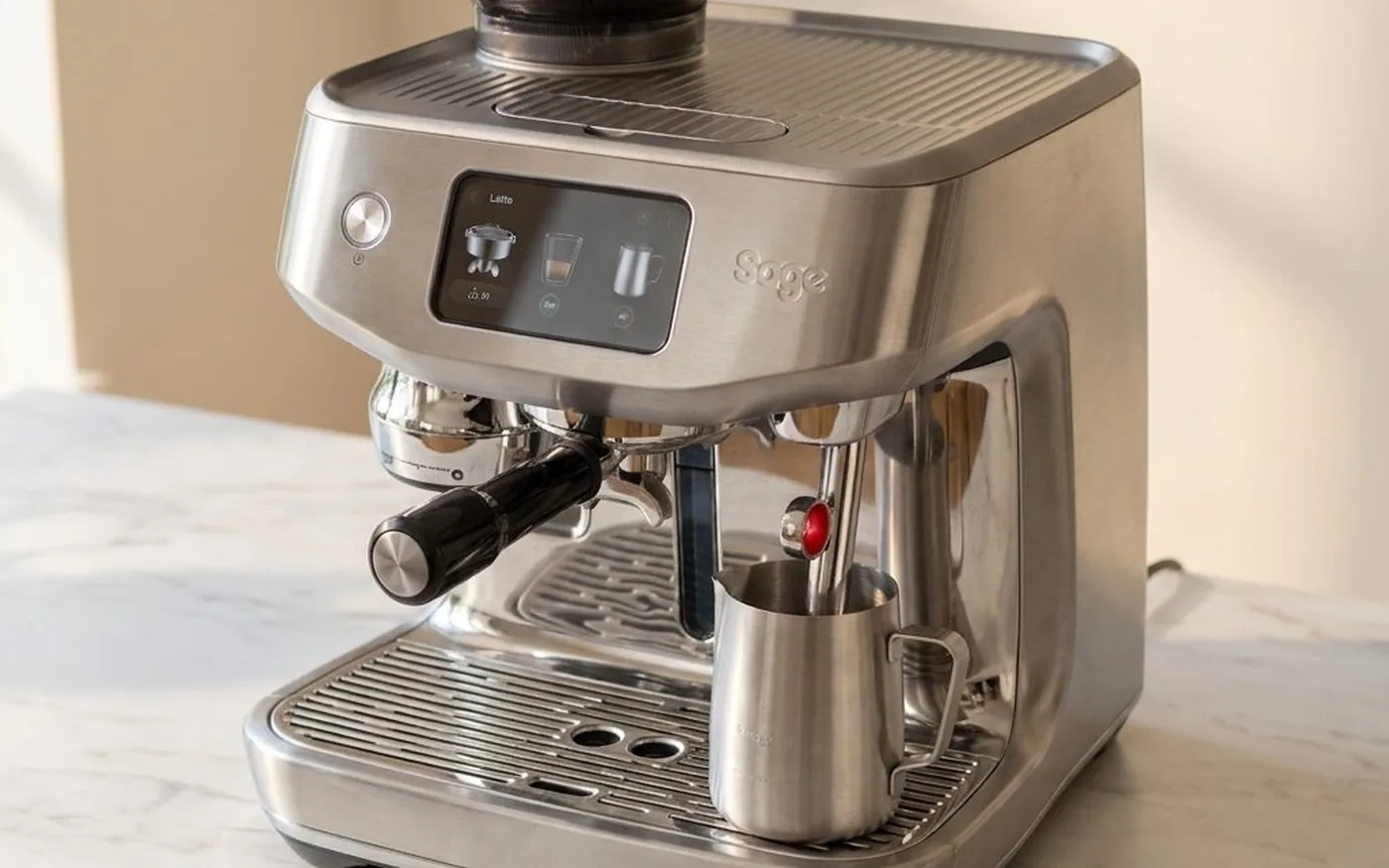
A super-automatic espresso machine handles the entire espresso process without manual input from the user. The machine grinds the beans, doses the grounds into the brewing chamber, tamps them automatically to a calibrated pressure, extracts the shot, and - on the Oracle Jet - textures the milk. You set your preferences once: grind size, dose weight, milk temperature, texture level. The machine replicates them from that point forward. If you are still deciding between bean-to-cup and the other formats, our guide to the types of coffee machines sets them side by side.
The Oracle Jet sits at the top of Sage's domestic espresso range. If you are still weighing options across the full Sage lineup, our best Sage coffee machine UK guide covers every machine from the Bambino through to the Oracle range. This review focuses on the Oracle Jet exclusively.
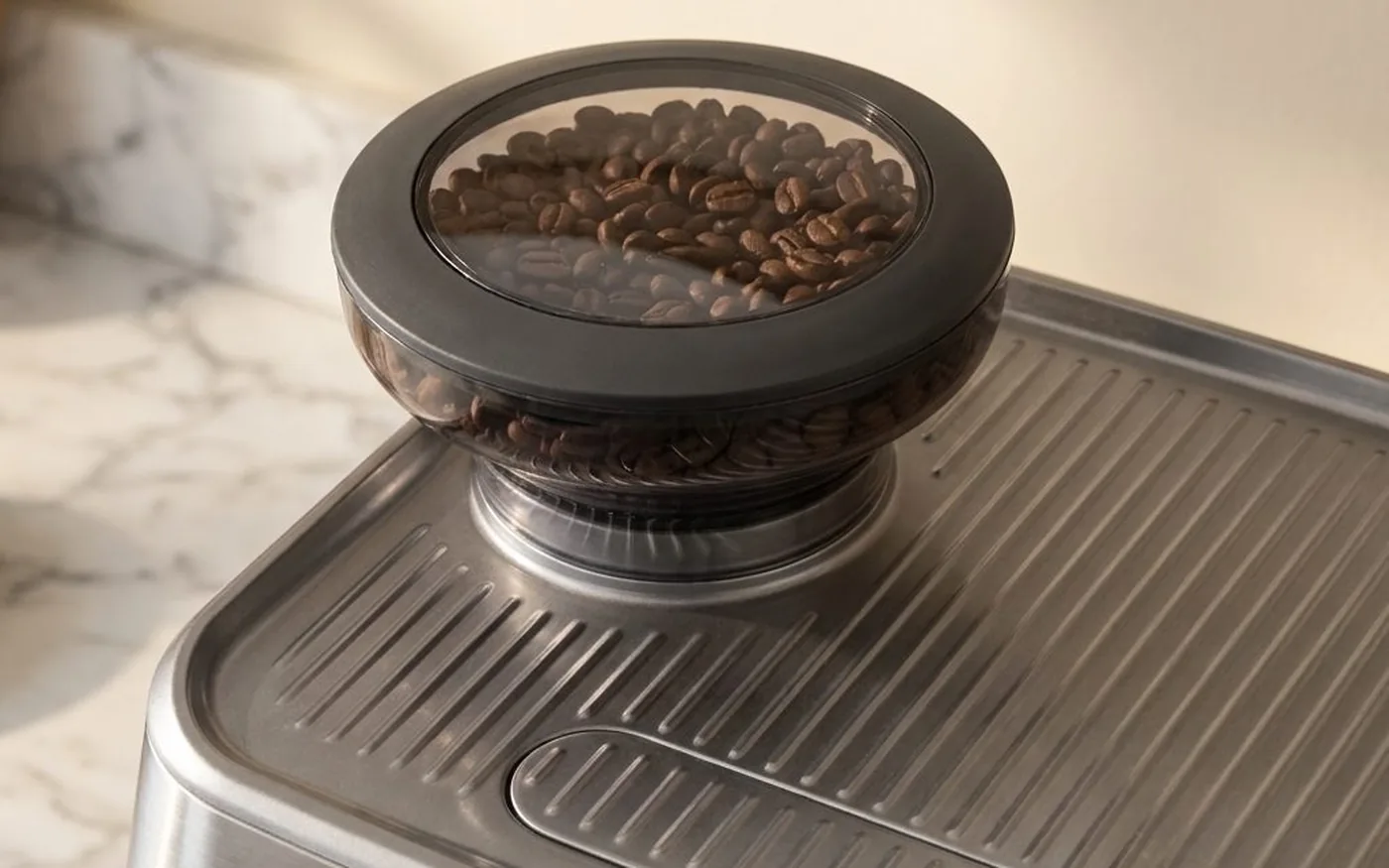
The machine's technical foundation is Sage's ThermoJet heating system, which brings the brew boiler from cold to extraction temperature in approximately 3 seconds, compared to 25 to 30 seconds on a thermocoil system. A dual-boiler architecture separates brew and steam circuits, meaning extraction and milk texturing can run simultaneously without temperature interference between the two. At the core of the grinder are 64mm conical burrs with thirty grind settings - the same engineering approach you find in traditional espresso machines costing two to three times as much, applied inside a machine that runs automatically without the user understanding how any of it works.
Who Is the Sage Oracle Jet For?
The Oracle Jet suits a specific buyer. You want cafe-quality espresso at home, every morning, without learning or maintaining a manual process. You understand that good espresso requires consistent grinding, precise dosing, and calibrated tamping - you simply do not want to do those steps by hand each day.
This is not a beginner machine, for two reasons. At £1,699, the investment is disproportionate to the learning stage. And because the machine manages the process entirely, beginners learn nothing about espresso while using it - which means if you later decide you want to understand what is happening in the cup, you have nothing to build on. Beginners are better served starting with a Sage Barista Express review, where the manual process is visible and the financial commitment fits the stage.
If you already own a semi-automatic and love the dialling-in ritual, the Oracle Jet is not an upgrade. It is a trade: you exchange control and involvement for speed and consistency. For a buyer who has moved past the learning phase and simply wants excellent espresso produced reliably each morning without daily adjustment, that trade is reasonable. For everyone else, it is giving up the thing you probably bought an espresso machine to have.
Sage Oracle Jet Specs
| Specification | Detail |
|---|---|
| Machine type | Super-automatic |
| Boiler type | Dual boiler (ThermoJet brew + dedicated steam) |
| Heat-up time | Approximately 3 seconds (ThermoJet) |
| Extraction pressure | 9 bar |
| Grinder | Integrated 64mm conical burr |
| Grind settings | 30 |
| Water tank | 2.5L |
| Bean hopper | 450g |
| Weight | 12.7kg |
| Wattage | around 1,680W |
| Dimensions (W x D x H) | 338 x 388 x 437mm |
| UK RRP | £1,699 (as of May 2026) |
The dual-boiler architecture is the specification that matters most at this price. A single-boiler machine requires purging the boiler between espresso extraction and milk steaming to stabilise temperature - adding 30 to 90 seconds per drink cycle. The Oracle Jet's separate steam boiler removes this entirely: extraction and steaming run simultaneously, which is relevant if you are making multiple milk drinks in sequence.
The 9-bar extraction pressure aligns with the Specialty Coffee Association's extraction standards for espresso, which define the standard range as 9 bar through a 25 to 30 second pull. The Oracle Jet adds a pre-infusion stage that wets the puck at lower pressure before ramping to 9 bar - this reduces channelling risk in automated dosing and is a meaningful addition in a machine that tamps without human adjustment.
Espresso Performance
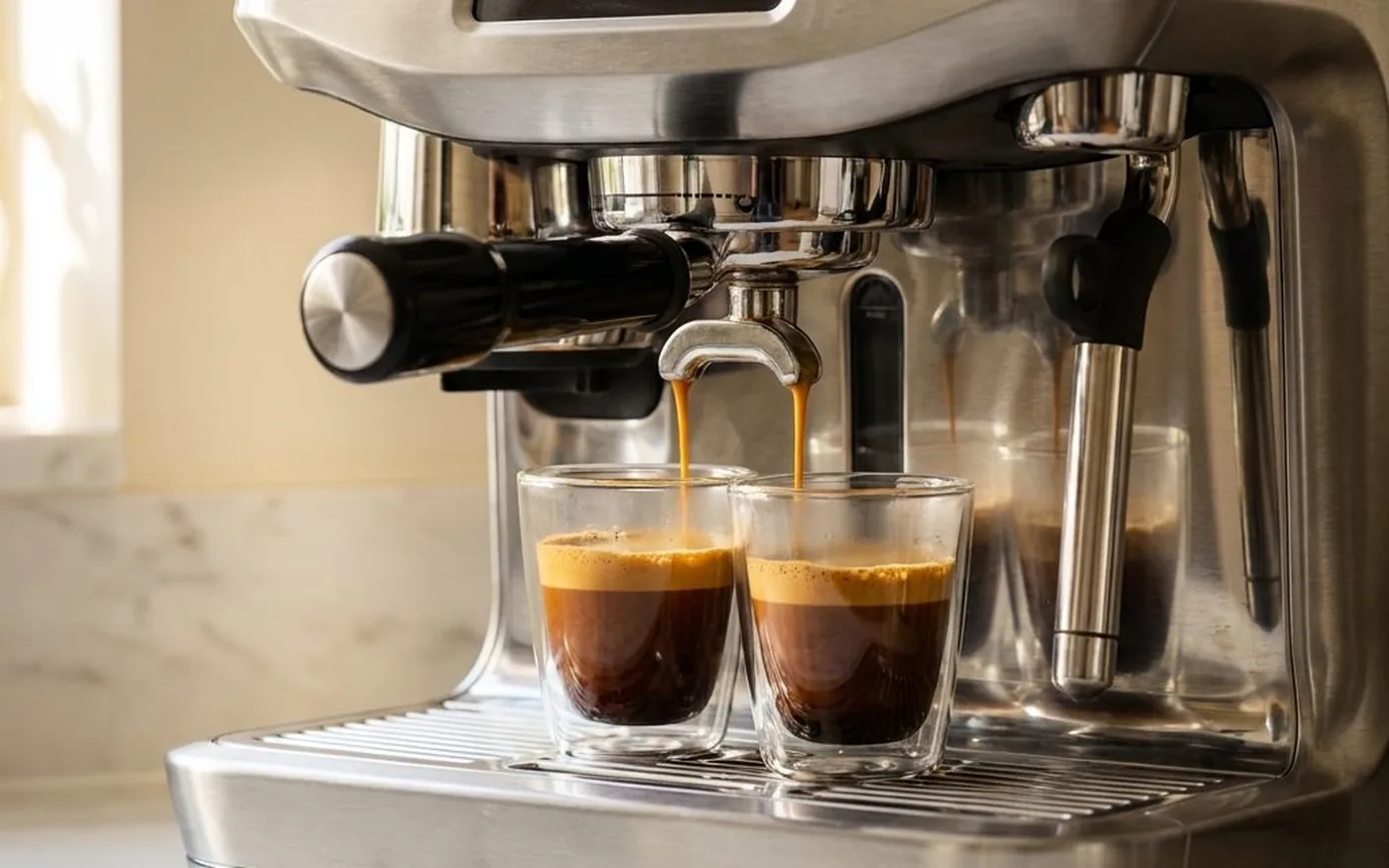
The Oracle Jet's extraction quality is its strongest argument. Across my testing, starting from cold each morning and pulling shots through the session on both light-to-medium and medium-dark roasts, the consistency was the notable finding. Shot-to-shot variation was narrow. The machine doses, tamps, and extracts to the same parameters each time, which removes the human variables that account for most espresso inconsistency at the domestic level.
On a medium Ethiopian natural processed bean, the cup gave dark cherry brightness on the nose, a rounded and sweet body through the mid-palate, and a clean close without the bitterness that indicates over-extraction. On a Brazilian natural at a medium-dark roast profile, the shot gave roasted cacao on the nose, a dense and full body, and a long finish that sweetened as it cooled. Both profiles were defined - not muddied in the way that low-pressure or poorly calibrated machines can produce.
The honest assessment: automatic tamping performs well within its limits. The Oracle Jet applies consistent tamping pressure, but it does not replicate the 15 to 20 kilogram force a trained barista produces with feel and adjustment. The tamp distribution relies on dosing accuracy rather than a barista's tactile read of the puck. Against the same beans extracted on a manual semi-automatic with careful technique, the Oracle Jet was marginally less precise on lighter roasts where extraction evenness matters most. On medium and dark roast profiles, the difference was difficult to detect in the cup.
I used Balance Coffee's Cerrado Brazil throughout testing - a natural-processed Brazilian single origin that produces a dense, sweet extraction and dials in cleanly on the Oracle Jet's integrated burr without extended calibration. Note: I founded Balance Coffee, which sells the beans referenced here. I recommend them because they are specialty grade, independently lab-tested for mycotoxins and pesticides, and they pair well with integrated grinder machines at this price point. Make your own call - any well-sourced natural-processed Brazilian will behave similarly on the Oracle Jet. View Balance Coffee beans
Milk Texturing and Steam Performance
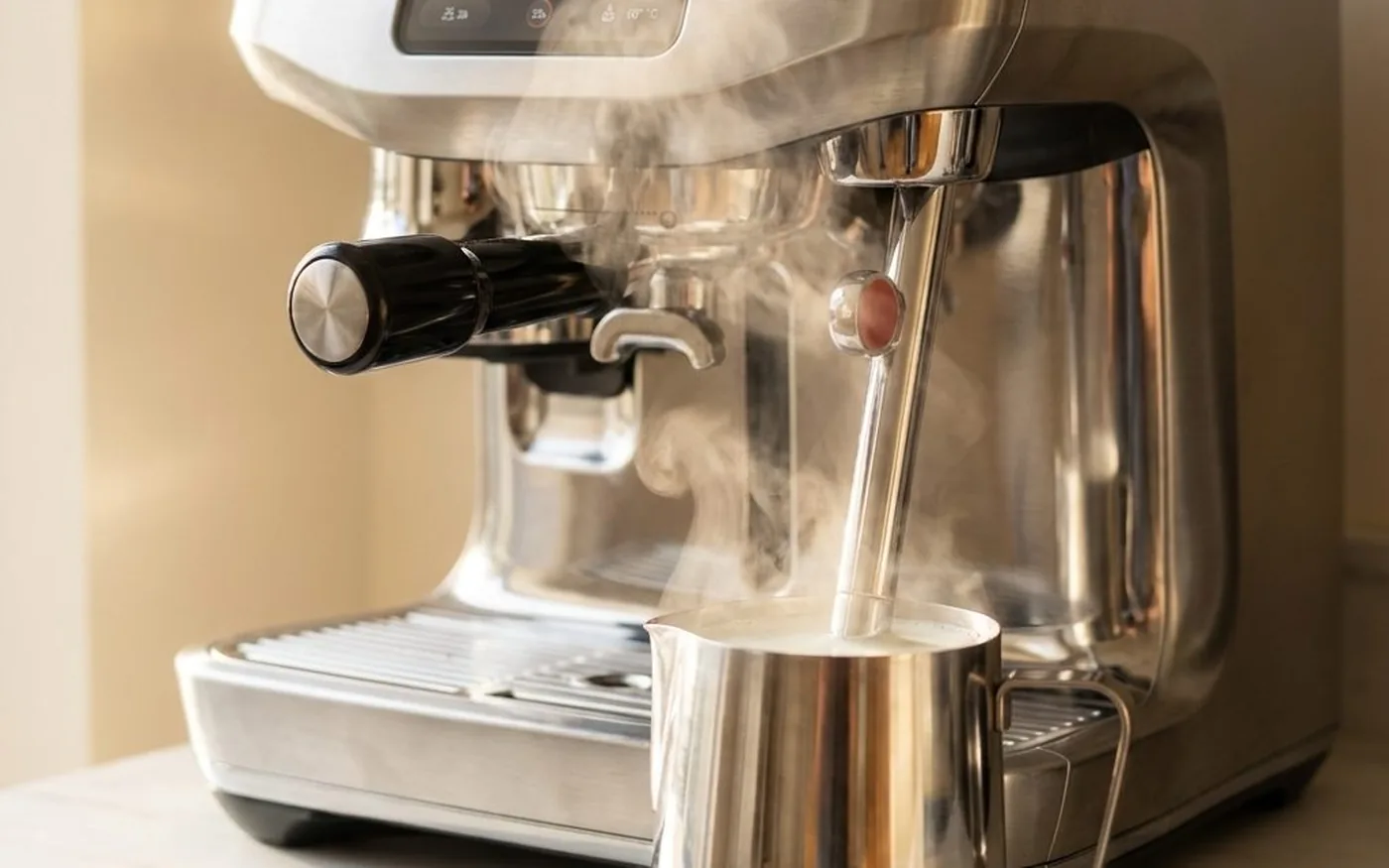
The Oracle Jet's milk system - Sage's Intelligent Steam System - sequences the steaming automatically based on milk type, temperature, and texture level you set at initial configuration. You lower the steam wand into the jug, select your preferences, and press the button. The machine heats, textures, and cuts off automatically at the target temperature.
What the automation actually costs you: the auto steam produces impressive consistency but removes the tactile feedback loop that teaches you how milk behaves. Pull flat whites on the Oracle Jet every morning for a year and you will have a year of good flat whites, but you will not know how to steam milk on any other machine. This is not a criticism unique to the Oracle Jet - it is the defining trade-off of the super-automatic category. If skill development matters to you, the Sage Oracle Touch review is the better purchase: its guided steam sequence means you are doing the work, with the machine prompting each step.
On texture quality, the Oracle Jet produces clean microfoam for flat whites and lattes. Wet, integrated, without visible bubbles. It is not the microfoam a skilled barista produces on a commercial steam wand at higher boiler pressure - a trained operator on a commercial machine produces tighter, silkier texture faster - but for domestic use, the Oracle Jet's output is consistent enough to make good milk drinks daily without variation. That is its actual value: the same result, every morning, regardless of how much attention you are paying.
Grinder Quality and Grind Settings
The integrated 64mm conical burr grinder on the Oracle Jet performs above category expectation. Most integrated grinders on super-automatic machines compromise on burr size and quality to fit the machine's overall footprint. Sage has not done that here.
In testing, the grinder produced consistent particle distribution across the espresso fineness range. Moving between settings 6 and 12 - the usable espresso range on the Oracle Jet's 30-setting scale - produced predictable changes in extraction time and flavour profile. The step between each grind setting is narrow enough to make meaningful adjustments without overshooting, which matters when dialling in a new bean.
The honest figure to hold in mind: the Oracle Jet's integrated grinder does not match the output of a dedicated standalone grinder at the same price bracket. A Niche Zero at approximately £500 or a Eureka Mignon Specialita at around £400 will produce more consistent particle distribution and finer adjustment resolution than the Oracle Jet's built-in burr. This is not a flaw specific to the Oracle Jet - no integrated grinder matches a same-priced standalone. The question is whether the convenience of a single-machine setup is worth the marginal extraction quality reduction. For most buyers at this price, it is.
If you are moving from a dedicated grinder setup, the Oracle Jet's integrated burr will feel slightly less precise at its finest settings. If the Oracle Jet is your first home espresso machine, you will not notice what you are not comparing it against.
Design, Build Quality, and Daily Use
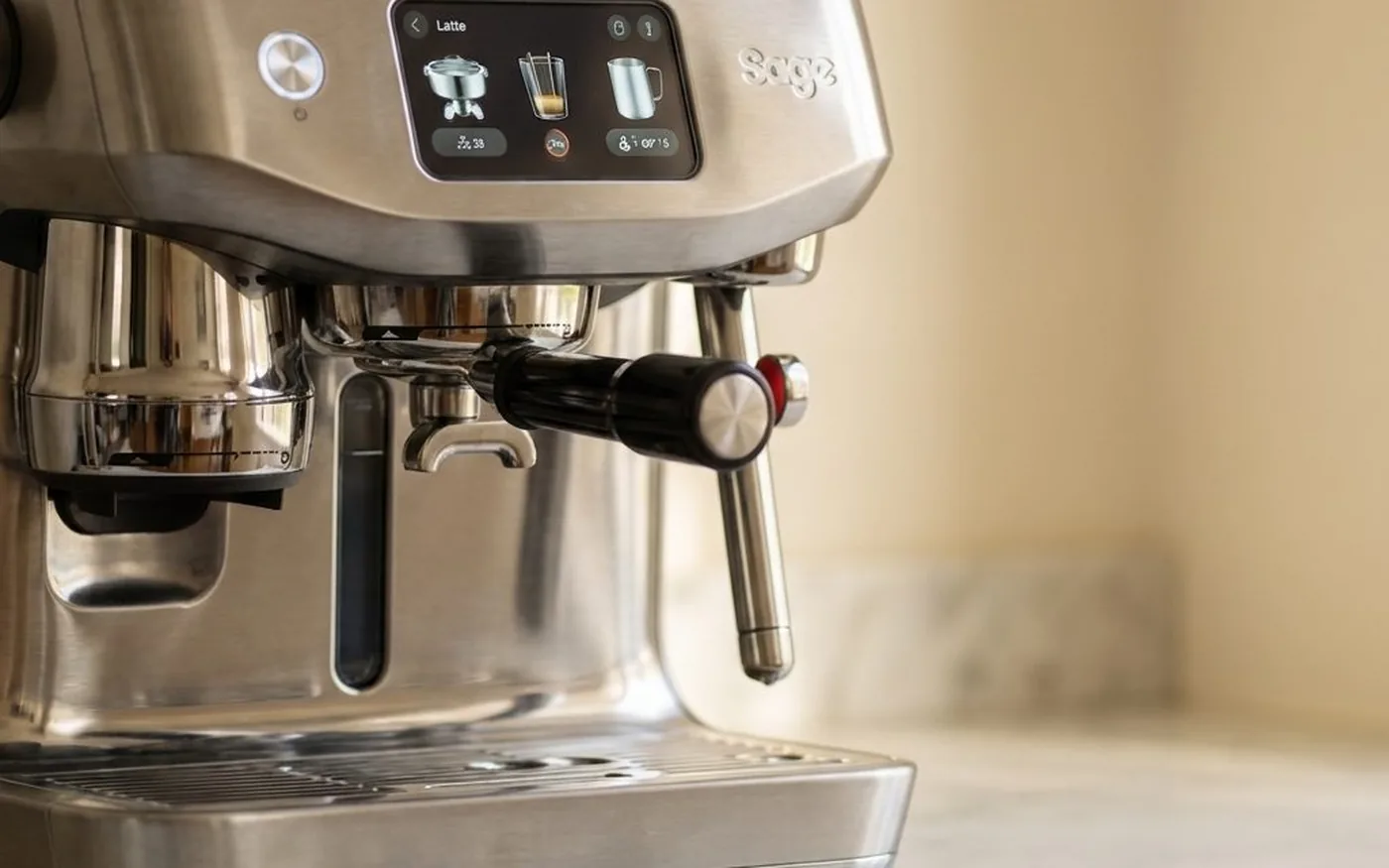
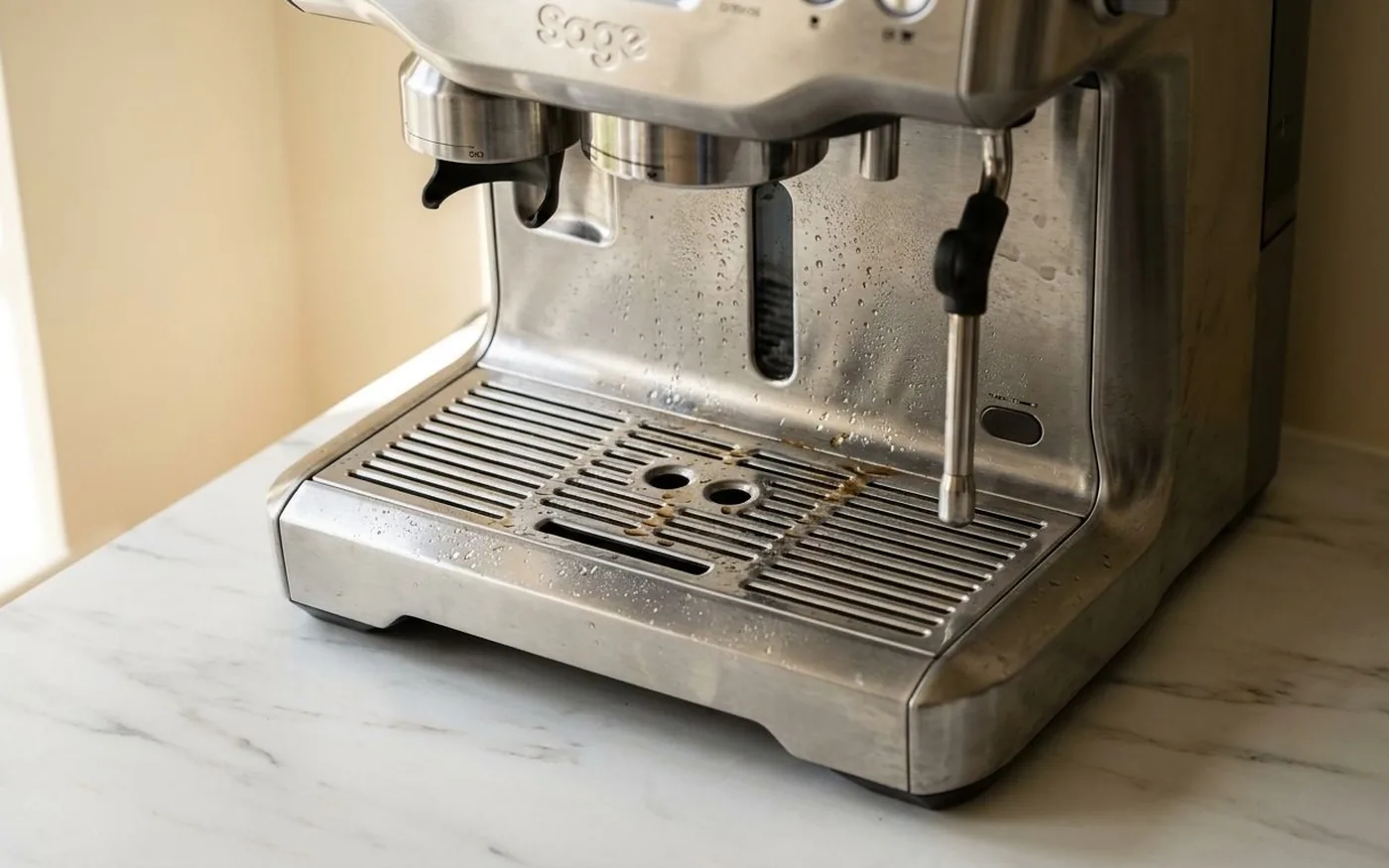
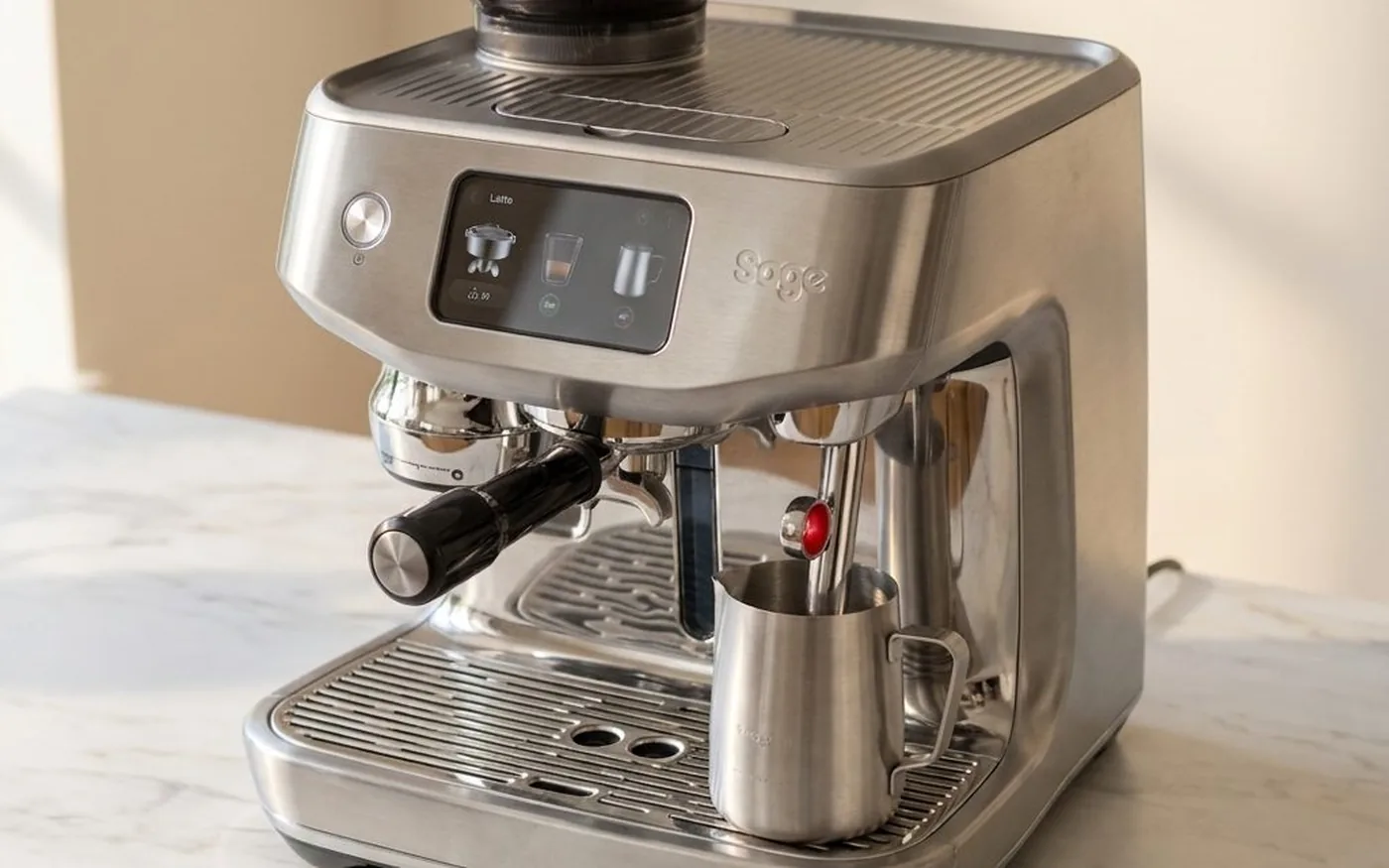
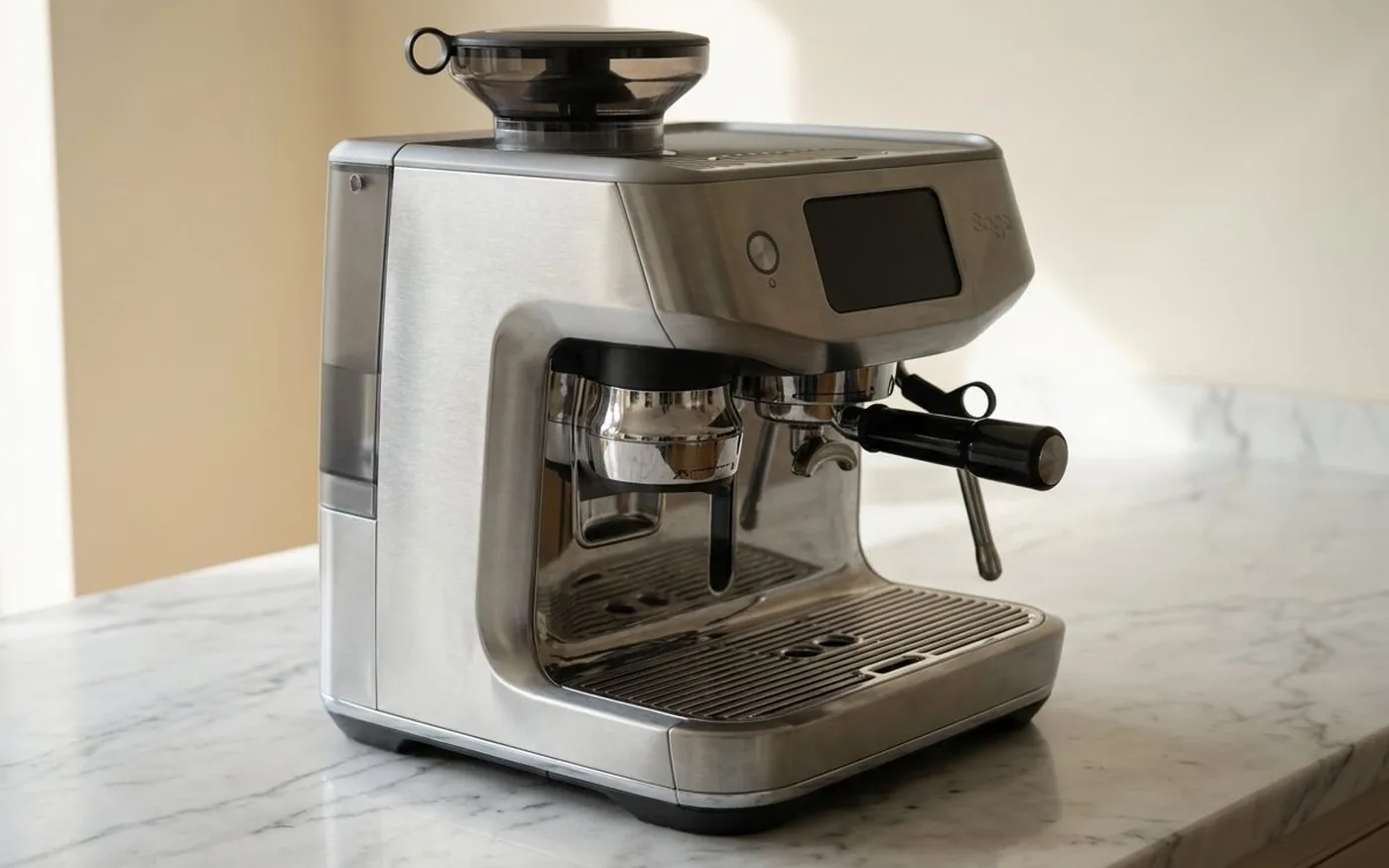
The Oracle Jet is built from brushed stainless steel and the build quality matches the price. It does not flex or creak under use, the controls have a definite action, and the display reads clearly in most kitchen lighting conditions.
The footprint is significant. At approximately 338 x 388mm on the counter, plus 437mm of height, the machine occupies a substantial portion of a standard kitchen worktop - roughly a third of the average 1,500mm run. Plan the counter space before you buy. The Oracle Jet is not a machine you move: at over 12kg, it stays where you place it.
The drip tray and grounds bin have adequate capacity for daily use. At typical home use, neither the drip tray nor the 450g bean hopper needs daily attention. Both reservoirs have visible capacity indicators, which removes the guesswork.
Cleaning cycles are well designed. The machine guides you through the cleaning programme via the display, and the descaling cycle runs automatically when the machine prompts it. Daily maintenance - wiping the steam wand, emptying the drip tray, clearing the grounds bin - runs under five minutes. Weekly maintenance adds the internal cleaning cycle, which operates mostly unattended while you get on with something else.
Noise levels are present but manageable. The grinder is audible at a volume comparable to a standalone entry-level burr grinder at medium speed. In a shared flat or apartment with early-morning sensitivity, this is worth noting before purchase.
Sage Oracle Jet vs Oracle Touch: Which Should You Buy?
The Sage Oracle Jet is a super-automatic machine, while the Sage Oracle Touch review covers a semi-automatic. The Jet handles grinding, dosing, tamping, extraction, and milk texturing automatically. The Oracle Touch has the same grinder and dual-boiler ThermoJet system, but requires manual tamping and guides you through milk steaming with touchscreen prompts rather than doing it automatically. If you want to be involved in the process, buy the Oracle Touch. If you want the machine to manage the process entirely, buy the Oracle Jet.
| Feature | Oracle Jet | Oracle Touch |
|---|---|---|
| Machine type | Super-automatic | Semi-automatic (guided) |
| Tamping | Automatic | Manual |
| Milk texturing | Fully automatic | Guided - user operates wand |
| Grinder | 64mm conical burr, 30 settings | 64mm conical burr, 30 settings |
| Boiler | Dual boiler (ThermoJet) | Dual boiler (ThermoJet) |
| Display | Digital | Touchscreen |
| Skill development | None (machine manages process) | Yes (tamping and milk by hand) |
| UK RRP | £1,699 (May 2026) | £1,499 |
The Oracle Touch costs approximately £200 less and gives you more involvement in the process. The touchscreen guides each step without requiring prior knowledge - it is a machine that teaches while it produces, which makes it the more balanced choice for most buyers stepping into this price bracket. The Oracle Jet costs more and removes your involvement entirely, which is the right answer if you specifically do not want any manual input. The question you are answering with the additional £200 is whether removing the last two manual steps - tamping and milk steaming - is worth it for your daily routine.
Is the Sage Oracle Jet Worth £1,699?
At £1,699, the Oracle Jet sits above a decision point worth making explicit. For the same budget, you could buy a Sage Barista Pro at £729 and a Niche Zero grinder at approximately £500, totalling around £1,229. That combination, with the time investment to develop manual technique, will produce comparable or superior espresso at the extraction ceiling. A skilled operator on a manual setup extracts more from a good bean than any automated machine at this price.
The case for buying the Oracle Jet anyway: the manual route requires skill, time to develop it, and consistent effort to maintain it. The Oracle Jet produces very good espresso every morning regardless of your skill level, your schedule, or how much attention you are paying. If you calculate consistency and convenience over a two to three year ownership period, the premium over a manual setup is smaller than the headline price difference suggests.
The gap worth naming directly: the Oracle Jet is excellent espresso for someone who does not want to make espresso. If you love the process - the dialling in, the adjustment, the gradual improvement in the cup - this machine removes the thing you find rewarding. If you want the result without the process, this machine delivers it reliably.
One limitation stated plainly: the Oracle Jet does not perform consistently on very light roast, high-altitude coffees at the finest grind settings. The automated tamping combined with the finest burr positions can over-extract certain delicate light roasts. If your preference runs to washed Ethiopians at lighter roast profiles, allow additional dialling-in time when switching beans - the Oracle Jet is calibrated most reliably for medium and medium-dark espresso roasts.
For context, the De'Longhi Magnifica Evo - a super-automatic at approximately £399 to £699 depending on variant, as of 2026 - is the strongest value option in the super-automatic category below the Oracle Jet's price point. It compromises on burr quality, temperature stability, and steam output relative to the Oracle Jet. At £1,699, you are paying for the dual-boiler architecture and 64mm burrs that the Magnifica Evo does not include. The performance gap between the two is real and observable in the cup.
Verdict
The Sage Oracle Jet is the strongest super-automatic domestic espresso machine available in the UK at this price point in 2026. The extraction quality is genuinely good, the milk system produces consistent results daily, and the build quality is commensurate with £1,699. For a buyer who wants excellent espresso and milk drinks at home every morning without the manual process, there is no better option in this category at this price.
Score: 8.5/10
Buy it if: You want cafe-quality espresso daily without the time or interest to develop manual technique. You value consistency over involvement. You drink one to three espresso-based drinks each morning and want them to be reliably excellent.
Skip it if: You enjoy the manual espresso process and would miss it. You are a complete beginner for whom the price is disproportionate to your stage. You primarily use light roast specialty beans. Sage Barista Pro at £729 is the better starting point for any of these profiles.
- Dual-boiler ThermoJet architecture delivers genuine temperature stability
- Shot-to-shot extraction consistency is the machine's clearest strength
- 64mm integrated grinder outperforms most competitors in the super-automatic category
- Automatic milk texturing produces clean, consistent microfoam daily
- Three-second heat-up time is accurate and practically useful
- Build quality and finish match the price point
- Removes manual involvement entirely - wrong machine for buyers who value the process
- Integrated grinder does not match a standalone burr grinder at this price bracket
- Light roast specialty beans require extended dialling-in with automated tamping
- Large counter footprint for a UK kitchen at over 338mm wide
- Auto milk produces consistency but teaches nothing - no skill transfer to other machines
Frequently Asked Questions
Is £1,699 too much to spend on a home espresso machine?
For the right buyer, no. The Oracle Jet produces the quality that previously required daily manual skill or a trained barista. If you drink two or more espresso-based drinks each morning and consistency matters, the cost per drink across a two to three year ownership period is reasonable against a UK cafe habit. If you drink coffee occasionally or would be satisfied with a £300 machine, £1,699 is disproportionate.
What is the difference between the Sage Oracle Jet and Oracle Touch?
The Oracle Jet is a super-automatic: it handles grinding, dosing, tamping, extraction, and milk texturing without your involvement. The Oracle Touch is a guided semi-automatic with the same ThermoJet dual-boiler system, but you tamp manually and it walks you through steaming on screen. The Touch costs approximately £200 less and keeps you in the process. The Jet removes your involvement entirely.
Does the Sage Oracle Jet have a built-in grinder?
Yes. The Oracle Jet includes a 64mm conical burr grinder integrated into the machine, with thirty grind settings. The grinder doses directly into the brewing chamber based on your preset configuration and tamps automatically. There is no separate grinding step - the machine handles the full sequence from bean to extraction with one button press.
How long does the Sage Oracle Jet take to heat up?
The Oracle Jet uses ThermoJet to reach extraction temperature in approximately 3 seconds from cold - among the fastest on any domestic espresso machine as of 2026. That is a genuine practical benefit if you pull shots immediately after waking rather than starting a warm-up cycle the night before.
Is the Sage Oracle Jet suitable for beginners?
No. At £1,699, the investment is disproportionate to the learning stage. More importantly, because the machine handles everything automatically, beginners learn nothing about espresso while using it - there is no foundation to build on later. A Sage Barista Express or Bambino at a lower price gives beginners the manual process in visible steps and a proportionate commitment.
What coffee beans work best in the Sage Oracle Jet?
Medium and medium-dark roast whole beans produce the most reliable results. The machine is calibrated for espresso-grade fineness at these roast levels, and natural-processed Brazilian or Colombian beans dial in cleanly. Very light roasts can over-extract with automated tamping and need additional adjustment time. If light roast specialty is your primary interest, a manual machine with direct tamp control is a better fit.
How often does the Sage Oracle Jet need cleaning and descaling?
The Oracle Jet displays a cleaning prompt every 200 shots. Sage specifies descaling every 60 to 90 days depending on your water hardness - the machine includes a test strip. A cleaning tablet run weekly keeps the group head clear. In hard-water areas, following the shorter interval makes a noticeable difference to flavour over time. Water hardness determines which schedule applies to your machine.
Does the Sage Oracle Jet work with oat milk and plant-based alternatives?
Yes. The Oracle Jet includes Auto MilQ, which adjusts steam temperature and pressure when you select oat, soy, or almond from the milk menu. The machine runs the appropriate program for each type rather than applying a fixed dairy setting. Eight texture levels let you set between flat white consistency and drier cappuccino foam. Dairy alternatives produce reliable microfoam without manual technique adjustments.
Can the Sage Oracle Jet make cold brew or iced coffee?
Yes. The Oracle Jet includes Cold Brew, Cold Espresso, and Espresso Martini as preset drink modes - the first Sage portafilter machine to offer cold options. Cold espresso uses chilled water for a concentrated extraction; cold brew runs slower for a lower-acid result. The Oracle Touch does not have these modes. If iced drinks are part of your daily routine, this is a meaningful distinction between the two machines.
A wellness entrepreneur and biohacker, James explores the intersection of hospitality and health - from clean fuel and recovery tools to mindful routines that build balance into daily life.