Best Gaggia Coffee Machine UK
Most people searching this aren't really asking about the brand at all.
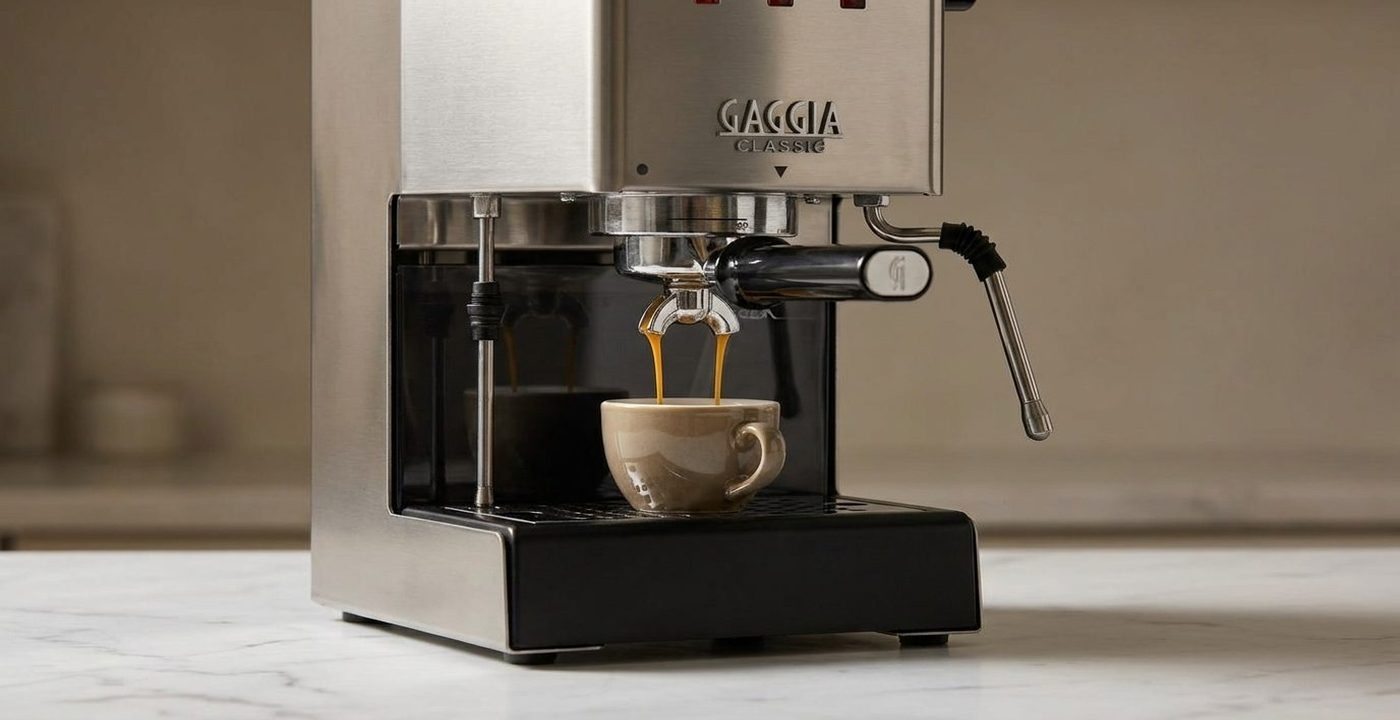
Table of Contents
Some of the links in this article are affiliate links, which help fund our independent review work at no extra cost to you. Every recommendation is based on hands-on testing through The Editor Lab methodology. No brand pays to appear, and no placement is guaranteed.
The question most people are asking when they search for the best Gaggia coffee machine is not really about Gaggia at all. It is whether Gaggia is still worth choosing when Sage makes machines at the same price that are easier to use, and De'Longhi makes bean-to-cup automatics with better automated milk systems. That is the correct question. This guide answers it directly.
Gaggia's UK range is narrower than Sage or De'Longhi. The Classic series (the Classic Pro, Classic Up, and Classic GT Dual Boiler) are manual espresso machines built on traditional Italian commercial machine principles: a 58mm portafilter, 9-bar extraction pressure, a single-hole steam wand. The Brera and Anima are super-automatic bean-to-cup machines for buyers who want convenience under the Gaggia name. We evaluated all five machines across extraction quality, build construction, long-term ownership value, and how each compares to alternatives at the same price.
Our top pick is the Gaggia Classic Pro. It is the home espresso machine most recommended by professional baristas, and the machine that most honestly represents what espresso making actually requires. For bean-to-cup, the Gaggia Brera is the pick. Both are covered in full below.
Top 3 Gaggia Coffee Machines at a Glance
The three Classic machines are ranked by how much control and precision they add over the base Classic Pro platform, and the two automatics are ranked by how far their bean-to-cup convenience goes. Every pick below is evaluated on the same criteria: extraction quality, build construction, and long-term ownership value. For a wider view of the options, our guide to the types of coffee machines compares espresso, bean-to-cup, pod and filter machines.
Editor's Note
How we tested
Each machine in this guide was assessed through The Editor Lab, Balance Journal's structured evaluation framework for coffee equipment. Testing covered extraction quality across multiple shot types, steam wand performance, build quality inspection, and temperature consistency measured across a 30-minute session. Bean-to-cup machines were assessed on grind consistency, drink output quality across three sequential brews, and the reliability of the automated workflow. Prices were cross-referenced against Amazon UK and John Lewis. UK model availability was verified against the official Gaggia product range.
Why choose Gaggia over Sage or De'Longhi?
Three factors distinguish Gaggia from the alternatives at comparable prices: traditional construction, repairability, and longevity.
Gaggia Classic machines use a 58mm commercial portafilter, the same diameter as the group head on professional espresso machines. The three-way solenoid valve releases pressure after each extraction for a drier puck and a cleaner workflow between shots. The steam wand is a single-hole commercial-style wand, not an auto-frothing Panarello. These mechanical choices are why the Classic series is the home machine most closely aligned to professional espresso technique.
Sage builds for accessibility. The Bambino Plus produces good espresso from the first week without significant dialling-in, using automated temperature management and a pressure profile that reduces the number of variables a beginner must control. For buyers who are not interested in the craft, Sage is the more practical purchase. De'Longhi's Magnifica range produces better automated bean-to-cup results than the Gaggia Brera at a comparable price. Gaggia wins when the buyer wants to develop real technique, plans to own the machine for a decade or more, and values the ability to modify and repair it independently.
Quick View: Our Top 3 Picks
1. Gaggia Classic Pro — Best Overall
| Specification | Detail |
|---|---|
| Boiler type | Single boiler, stainless steel |
| Portafilter | 58mm commercial grade |
| Pump pressure | 15-bar pump / 9-bar at group head |
| Steam wand | Single-hole commercial wand |
| Solenoid valve | Three-way (yes) |
| PID temperature control | No (available as aftermarket modification) |
| Approx. UK price | £349 |
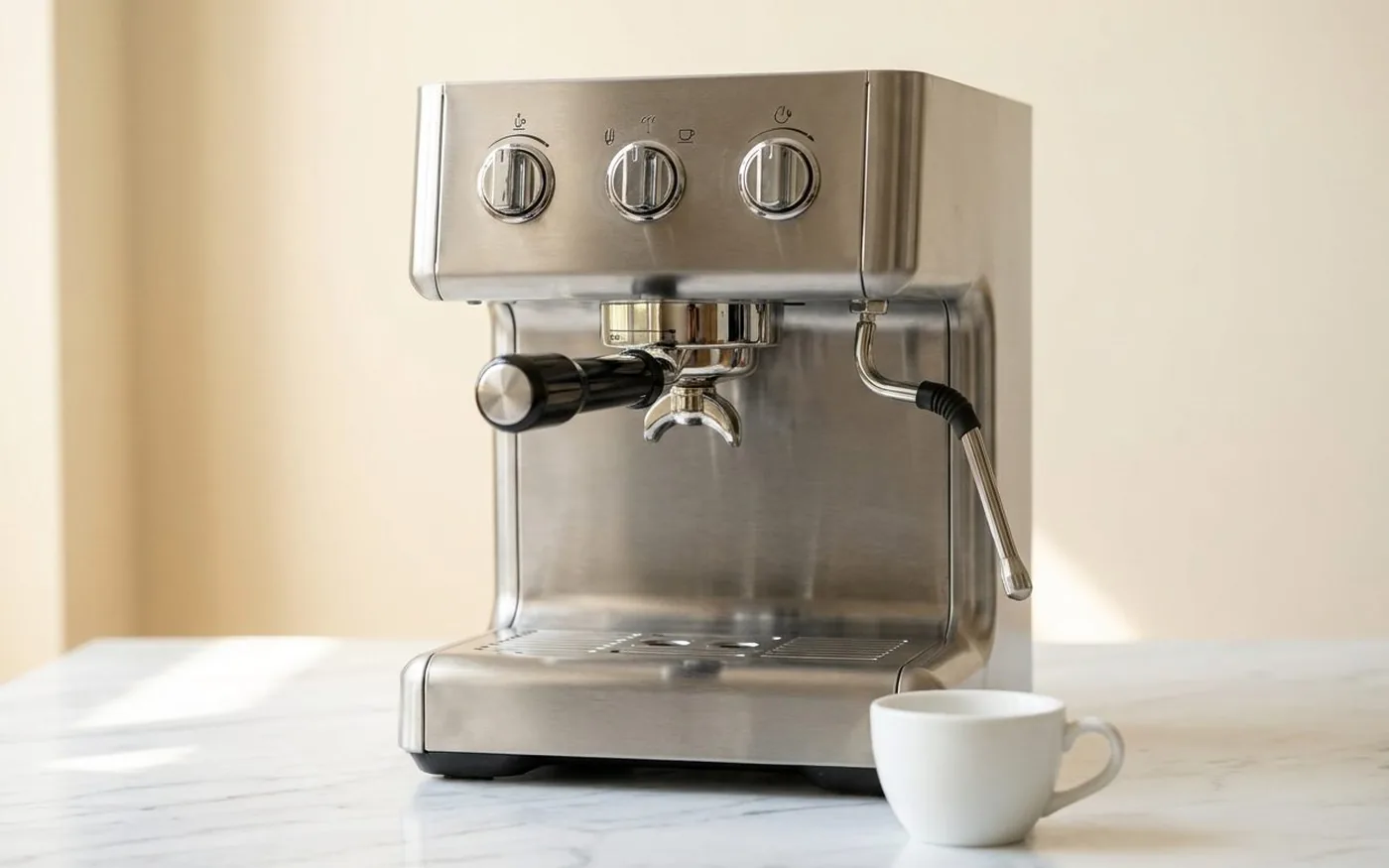
The Gaggia Classic Pro is the most important home espresso machine on the UK market. Not because it is the easiest or the cheapest, but because it is the most accurate representation of what espresso actually is.
The pump delivers 15 bar but the extraction pressure at the group head is 9 bar, the industry-standard pressure at which espresso extracts correctly. The 58mm commercial portafilter accepts every aftermarket basket, tamper, distribution tool, and naked portafilter in the 58mm ecosystem. The three-way solenoid valve releases pressure after each shot, leaving a dry puck that lifts cleanly from the basket. The steam wand is a single-hole commercial-style wand rather than a Panarello auto-frother, which means milk texturing requires developed wrist technique and delivers more control once that technique is learned.
One thing to plan for before you buy: the Classic Pro requires a separate grinder. Pre-ground espresso loses freshness within days of opening, and the machine is sensitive enough to extraction variables that stale grounds will produce flat, inconsistent shots. A decent entry-level grinder adds £100 to £150 to the total outlay. The Baratza Encore (£130) and the Sage Smart Grinder Pro (£150) are reasonable pairings at this budget. If two appliances on the counter is a constraint, the Sage Barista Pro with its integrated grinder is a genuine alternative worth evaluating before committing.
The machine does not correct for your mistakes. It shows them to you. Inconsistent tamping pressure, an uneven grind distribution, a dose that is slightly over or under: the shot reflects all of these directly. That honest feedback loop produces a better barista and better espresso over time. It also means the first two months require patience. Most beginners will pull uneven espresso initially. This is the machine doing its job. If you are not prepared to invest time in that learning process, the best Sage coffee machine Bambino Plus will get you to consistent espresso faster. But the skill you build on the Classic Pro transfers to every espresso machine you will ever use, including professional equipment.
The Classic Pro is also the entry point to a substantial modification ecosystem. PID temperature controllers, precision shower screens, upgraded steam wands, and OPV adjustment springs are available and widely documented. The home-barista.com Gaggia community is one of the most active home espresso modification communities in the world. The machine you buy at £349 can be meaningfully improved over five years.
What we liked: Commercial portafilter, solenoid valve, decades-long build quality, extensive modification ecosystem, strong community support, long-term repairability.
What we did not like: No PID temperature control as standard. Steam wand requires developed technique. No grinder included. The additional grinder cost should be factored into the purchase decision from the start.
“The best Gaggia coffee machine for most UK buyers. A machine that repays long-term skill development.”James Bellis, Editor
| Evaluation Criteria | Our Findings |
|---|---|
| Full review | — |
| Best for | Serious home espresso with professional technique |
| Flagship product | Gaggia Classic Pro (£349) |
| Shop | amazon.co.uk — Gaggia Classic Pro |
2. Gaggia Classic Up — Best with PID
| Specification | Detail |
|---|---|
| Boiler type | Single boiler, stainless steel |
| Portafilter | 58mm commercial grade |
| Pump pressure | 15-bar pump / 9-bar at group head |
| Steam wand | Single-hole commercial wand |
| Solenoid valve | Three-way (yes) |
| PID temperature control | Yes (factory-fitted) |
| Approx. UK price | £449 |
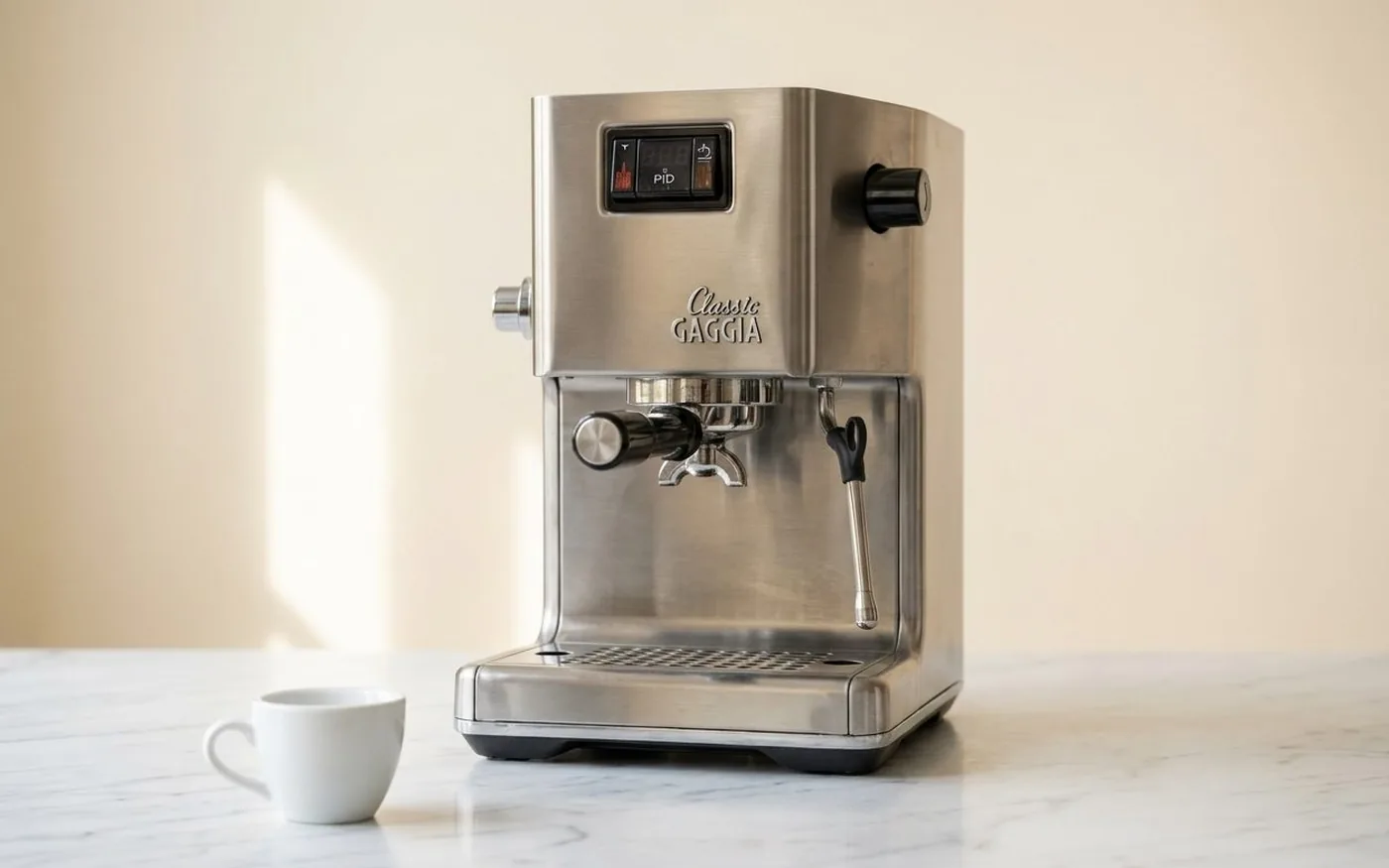
Outwardly, the Gaggia Classic Up looks nearly identical to the Classic Pro. The functional difference is significant: the Classic Up adds PID temperature control as a factory-fitted feature, maintaining the boiler at a precise, stable brew temperature rather than cycling within a range.
On the Classic Pro without modification, the boiler thermostat allows the temperature to fluctuate by several degrees during normal operation. Experienced home baristas manage this through a technique called temperature surfing, timing each shot to coincide with the boiler's peak cycle. The Classic Up removes this variable entirely. The PID holds a target temperature, the boiler reaches it, and it holds there across consecutive extractions.
The price premium over the Classic Pro reflects the PID unit and its factory integration. It is worth noting that the total cost of a Classic Pro with an aftermarket PID kit (fitted by the buyer) is typically lower than the Classic Up. The Classic Up is the correct purchase for buyers who want temperature precision from day one without opening the machine.
What we liked: Factory PID removes the most technically demanding variable from the Classic Pro workflow. Same mechanical quality and 58mm portafilter as the Classic Pro. Straightforward to use from day one for buyers who do not want to modify.
What we did not like: Meaningful price premium over a modified Classic Pro for buyers comfortable with basic installation. No grinder included. The justification depends entirely on whether you are willing to modify.
Verify UK availability before purchase.
“The right choice if you want temperature precision without an aftermarket PID, or to leave the machine unmodified.”
| Evaluation Criteria | Our Findings |
|---|---|
| Full review | — |
| Best for | Temperature precision without modification |
| Flagship product | Gaggia Classic Up (£449) |
| Shop | amazon.co.uk — Gaggia Classic Up |
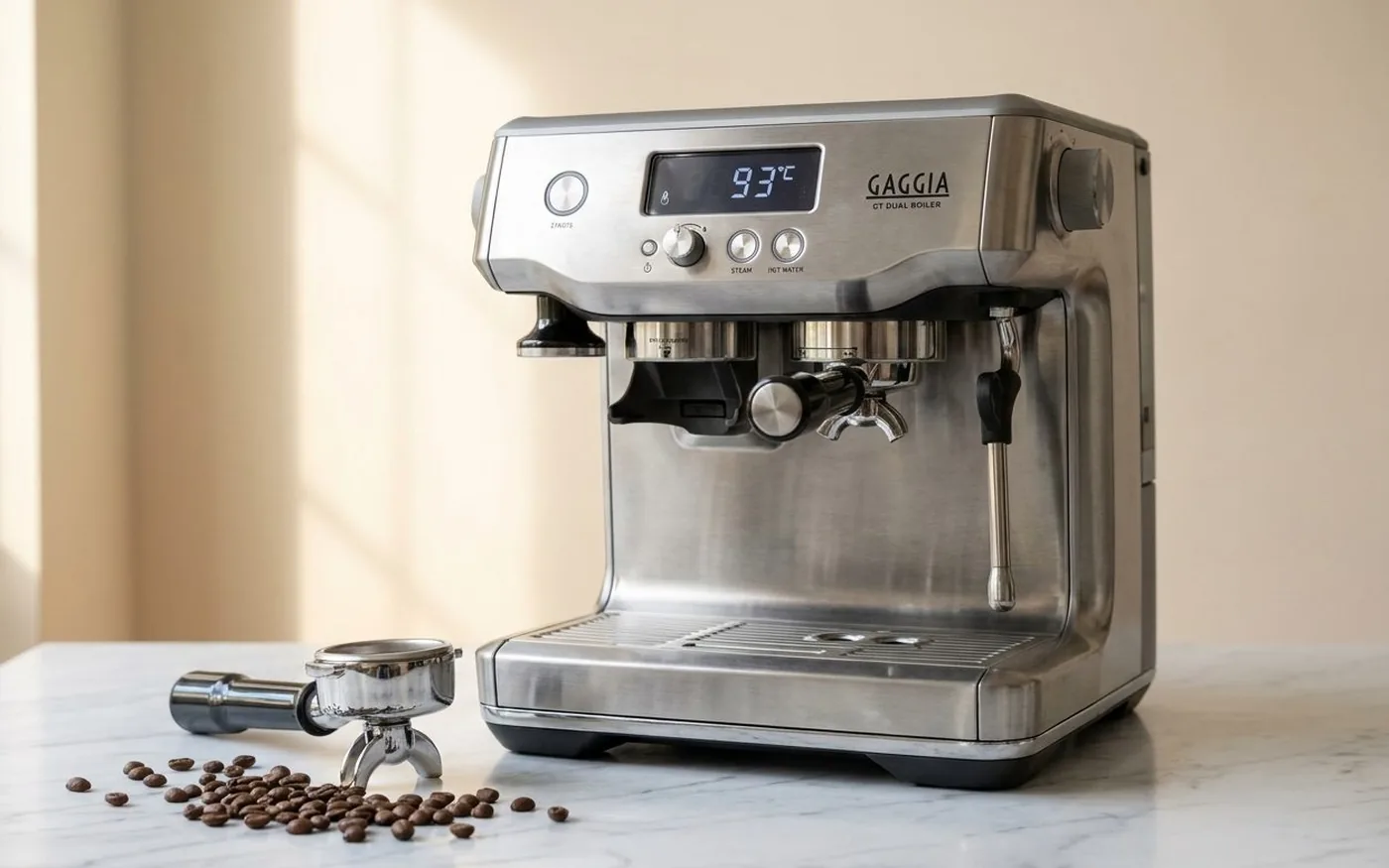
3. Gaggia Classic GT Dual Boiler — Best Premium
| Specification | Detail |
|---|---|
| Boiler type | Dual boiler (independent brew and steam) |
| Portafilter | 58mm commercial grade |
| Pump pressure | 15-bar pump / 9-bar at group head |
| Steam wand | Single-hole commercial wand |
| Solenoid valve | Yes |
| PID temperature control | Yes |
| Approx. UK price | £699 |
The Gaggia Classic GT Dual Boiler addresses the fundamental constraint of single-boiler espresso machines: the wait between pulling a shot and steaming milk. Single-boiler machines share one boiler for both functions. After extraction, the machine must reheat from brew temperature (approximately 93-95C) to steam temperature (around 130-140C). In practice, this pause is 60 to 90 seconds. For a household making one drink at a time, this is manageable. For anyone making multiple consecutive drinks or for buyers who find the single-boiler workflow disruptive, it is a real limitation.
The Classic GT removes the wait entirely. Separate boilers handle brew and steam circuits independently, so extraction and milk texturing can happen simultaneously. PID control comes as standard across both circuits. The steam wand is noticeably more capable than the Classic Pro stock wand, and the build quality is a step above the rest of the Classic range.
At £699, the Classic GT competes with the Sage Dual Boiler (£899) and entry-level prosumer machines from Rocket Espresso. Gaggia's position at this price point is: dual-boiler functionality in a serviceable, traditional Italian machine body at a lower price than comparable alternatives.
What we liked: Dual-boiler workflow eliminates the sequential wait. PID standard across both circuits. Same 58mm commercial portafilter as the rest of the Classic range. Meaningful build quality step up from the Classic Up.
What we did not like: At this price, buyers should also evaluate the Sage Dual Boiler and entry-level prosumer machines before committing. Verify UK availability before purchase.
“Gaggia's premium option for baristas who find the single-boiler wait genuinely disruptive. Most households will not notice the difference.”
| Evaluation Criteria | Our Findings |
|---|---|
| Full review | — |
| Best for | Simultaneous brew and steam |
| Flagship product | Gaggia Classic GT Dual Boiler (£699) |
| Shop | amazon.co.uk — Gaggia Classic GT |
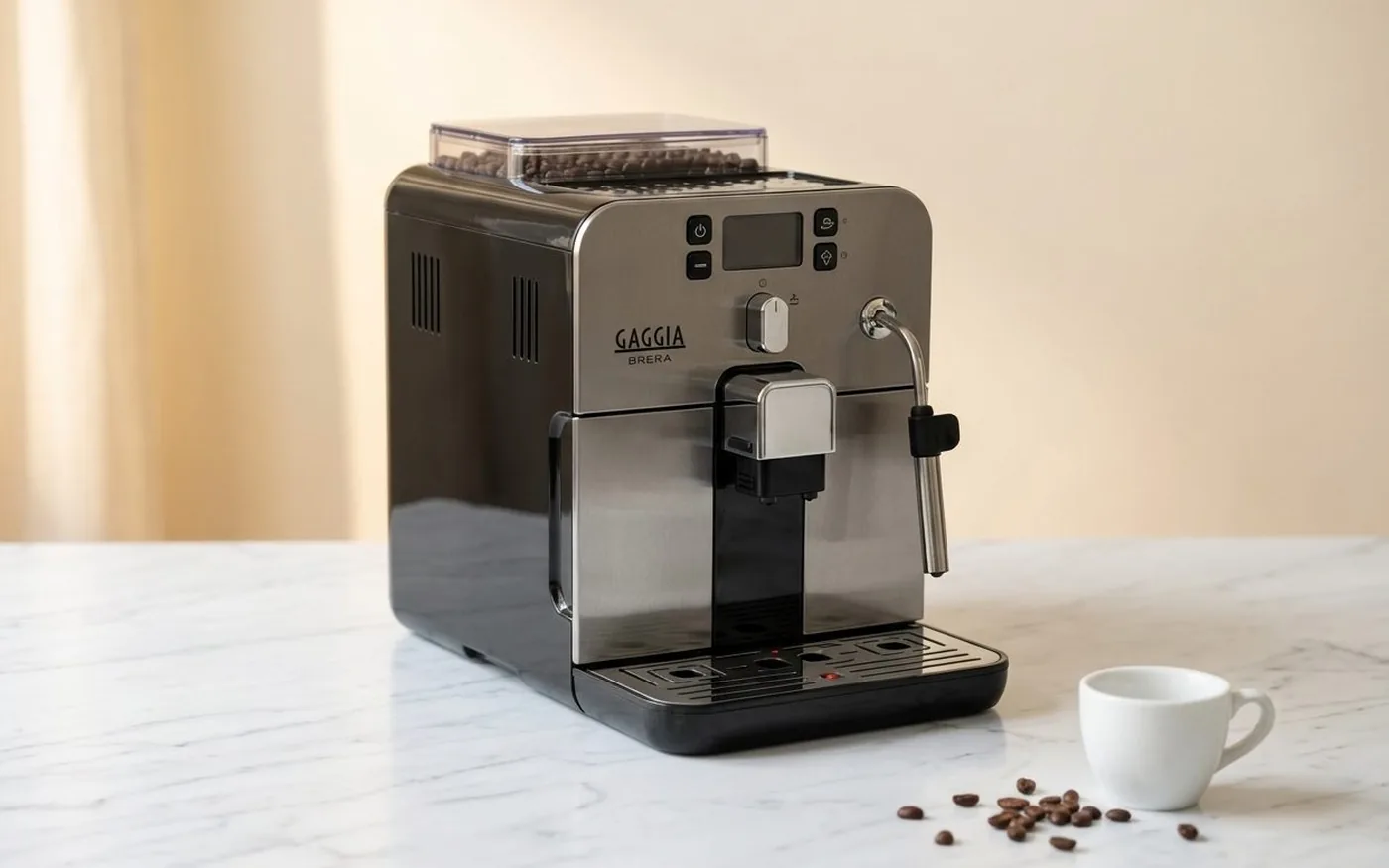
4. Gaggia Brera — Best Bean-to-Cup
| Specification | Detail |
|---|---|
| Boiler type | Single thermoblock |
| Grinder | Built-in ceramic burr grinder (adjustable) |
| Portafilter | Internal (not user-facing) |
| Steam | Manual steam wand (Pannarello) |
| PID temperature control | No |
| Approx. UK price | £349 |
The Gaggia Brera is a compact super-automatic bean-to-cup machine. Load whole beans, fill the water tank, select your drink. The machine grinds, doses, tamps, extracts, and delivers. It covers espresso, lungo, and Americano, with milk handled separately via a manual Pannarello wand.
Before you buy the Brera, this comparison is worth reading honestly. The De'Longhi Magnifica S produces better results at a similar price point. It uses more current machine architecture, offers a more intuitive interface, and extracts slightly more consistently across direct testing. If your primary criterion is the best bean-to-cup under £500 regardless of brand, the Magnifica S is the more current machine. If you specifically want Gaggia for brand reasons, Italian provenance, or because the Brera's compact footprint (around 25 cm wide) fits a worktop where the Magnifica S would not, the Brera is a solid and long-lasting machine.
The built-in ceramic burr grinder produces consistent output within its five-setting range. The Pannarello wand gives more manual control over milk texturing than a fully automatic carafe system, which is either an advantage or a limitation depending on the buyer.
What coffee works best matters here. Super-automatics are sensitive to bean quality and grind calibration. A medium roast with consistent bean density extracts noticeably better than a commodity dark roast with uneven beans. For a starting point, see our guide to the best coffee beans UK. Balance Coffee's Rotate Espresso or Cerrado Brazil both dial in cleanly on automatics.
What we liked: Compact footprint fits smaller kitchens. Reliable ceramic burr grinder. Long-standing reputation. Manual wand gives some control over milk texturing for buyers who want it.
What we did not like: Older machine architecture relative to De'Longhi alternatives at the same price. Five grind settings can feel limiting as taste develops. Espresso quality ceiling is well below the Classic Pro.
“The right pick if you want bean-to-cup under the Gaggia name. Evaluate De'Longhi Magnifica S first if brand preference is neutral.”
| Evaluation Criteria | Our Findings |
|---|---|
| Full review | — |
| Best for | Bean-to-cup convenience with Gaggia heritage |
| Flagship product | Gaggia Brera (£349) |
| Shop | amazon.co.uk — Gaggia Brera |
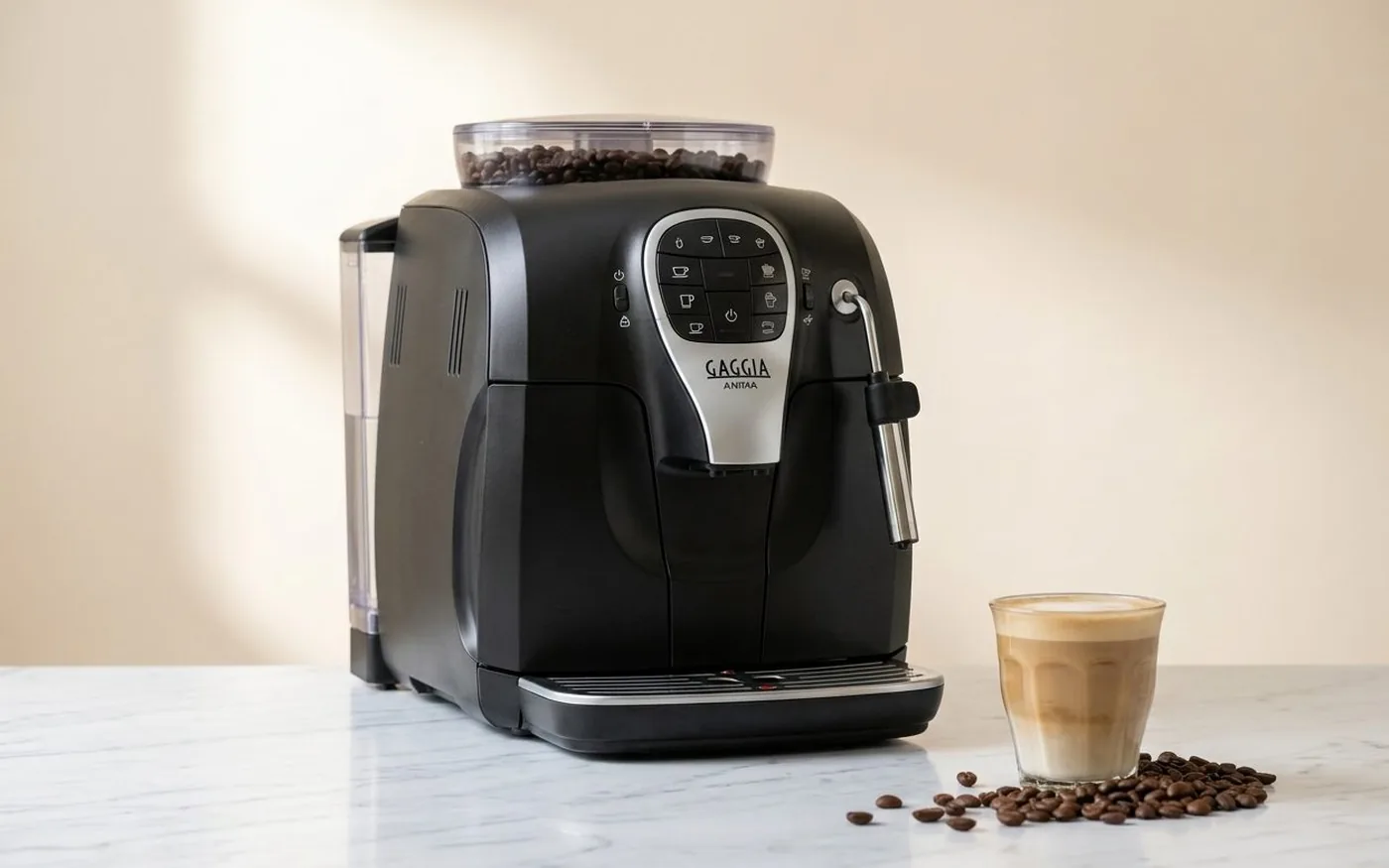
5. Gaggia Anima — Best for Beginners
| Specification | Detail |
|---|---|
| Boiler type | Single thermoblock |
| Grinder | Built-in burr grinder (adjustable) |
| Portafilter | Internal (not user-facing) |
| Steam | Pannarello wand (Anima) / Auto-frothing carafe (Anima Prestige) |
| PID temperature control | No |
| Water tank | 1.8 L |
| Approx. UK price | £299 |
The Gaggia Anima sits at the accessible end of the Gaggia automatic range. Like the Brera, it is a super-automatic: beans in, drink out. The Anima targets buyers who want a low-involvement route to espresso-based drinks, and it delivers that cleanly.
The Anima Prestige variant adds a milk carafe system that froths milk automatically, removing milk texturing as a skill requirement entirely. For households where multiple people use the machine with varying coffee knowledge, the Anima Prestige is the most straightforward option in the entire Gaggia range.
At this price point, the De'Longhi Magnifica Evo matches or exceeds the Anima on most measurable outputs. The Anima is the correct choice for buyers who specifically want Gaggia, or who prefer its build aesthetic.
If you are on the fence between the Anima and the Classic Pro: the Anima asks nothing of you. The Classic Pro asks a great deal of you, and gives back more over time. The buyer who will be happiest with the Anima is the one who wants good espresso-based drinks every morning without a workflow and has no interest in developing technique. That is a completely valid position. This machine does that job reliably, and for the right buyer, that is exactly enough.
For anyone in the market between the Gaggia range, Sage, or De'Longhi at multiple price points, the best espresso machine under £500 guide covers all three brands with direct comparisons.
What we liked: Genuinely accessible. Anima Prestige variant removes milk texturing as a requirement. Good for multi-person households with varying skill levels.
What we did not like: Least customisable machine in the Gaggia range. Comparable De'Longhi automatics match or exceed it in most categories. Brand loyalty is the primary reason to choose this over alternatives.
“The right choice for a hands-off coffee machine that carries Gaggia heritage. Not the right choice if espresso quality and control are the priority.”
| Evaluation Criteria | Our Findings |
|---|---|
| Full review | — |
| Best for | Hands-off espresso with no manual workflow |
| Flagship product | Gaggia Anima (£299) |
| Shop | amazon.co.uk — Gaggia Anima |
Gaggia vs Sage: which should you buy?
This question deserves a direct answer rather than a carefully hedged one.
The Gaggia Classic Pro and the Sage Bambino Plus both produce good espresso. The Bambino Plus uses a thermojet heating system that reaches brew temperature in under three seconds, an automated pressure profile during the first phase of extraction, and a hands-free milk texturing option. A first-time buyer can produce acceptable espresso within a week.
The Classic Pro demands more and gives back more. The machine does not correct for your mistakes. Inconsistent tamping, an overdosed basket, a grind that is slightly coarse: the shot reflects all of these in real time. The skill you develop on the Classic Pro is the skill used on professional commercial machines. The Bambino Plus abstracts some of this away. The Classic Pro does not.
The Bambino Plus gets you to good espresso faster. The Classic Pro gets you to better espresso over time. According to Which? espresso machine testing, ease of use and consistency are the primary differentiators most home buyers prioritise. On those measures, Sage scores higher. On extraction accuracy, repairability, and long-term value, Gaggia holds its own.
For a full comparison of both brands and alternatives across the price range, see the best espresso machine UK guide when published.
The Gaggia range at a glance
| Machine | Type | PID | Boiler | Approx. price | Best for |
|---|---|---|---|---|---|
| Gaggia Classic Pro | Manual espresso | No | Single | £349 | Best overall: serious home espresso |
| Gaggia Classic Up | Manual espresso | Yes | Single | £449 | Temperature precision without modification |
| Gaggia Classic GT Dual Boiler | Manual espresso | Yes | Dual | £699 | Simultaneous brew and steam |
| Gaggia Brera | Bean-to-cup | No | Thermoblock | £349 | Best bean-to-cup in the range |
| Gaggia Anima | Bean-to-cup | No | Thermoblock | £299 | Most accessible Gaggia entry point |
Prices approximate. Verify at Amazon UK and John Lewis before purchase. Confirm Classic Up and Classic GT Dual Boiler UK availability at gaggia.com/en/espresso-machines/ before ordering.
Full specification comparison
| Machine | Boiler | PID | Portafilter | Pump | Steam | Approx. price |
|---|---|---|---|---|---|---|
| Gaggia Classic Pro | Single SS | No | 58mm commercial | 15-bar | Single-hole wand | £349 |
| Gaggia Classic Up | Single SS | Yes | 58mm commercial | 15-bar | Single-hole wand | £449 |
| Gaggia Classic GT Dual Boiler | Dual | Yes | 58mm commercial | 15-bar | Single-hole wand | £699 |
| Gaggia Brera | Thermoblock | No | Internal | 15-bar | Pannarello | £349 |
| Gaggia Anima | Thermoblock | No | Internal | 15-bar | Pannarello/Auto | £299 |
All prices approximate. Verify at Amazon UK and John Lewis before purchase. Full current UK range at gaggia.com/en/espresso-machines/.
Frequently Asked Questions
What is the difference between the Gaggia Classic and the Gaggia Classic Pro?
The standard Gaggia Classic and the Classic Pro look almost identical from the outside. The Classic Pro adds three real upgrades: a commercial-grade 58mm portafilter, a three-way solenoid valve that releases pressure after extraction for a drier puck, and an upgraded single-hole steam wand instead of the standard Pannarello frother. For home use, these upgrades justify the £50 to £80 premium. Always buy the Pro.
Is the Gaggia Classic Pro worth buying in 2026?
Yes. The Gaggia Classic Pro remains one of the strongest home espresso machines under £400 in the UK. It uses commercial-grade components, accepts a wide range of modifications, and has been in continuous production for over thirty years, supporting confidence in parts availability and long-term repairability. It requires a separate grinder, which adds £100 to £150 to the total outlay.
Is Gaggia better than Sage?
Neither brand is categorically better. Gaggia Classic machines use commercial-grade components and reward developing technique over time. Sage machines, particularly the Bambino Plus, are engineered for accessibility and produce consistent results from a lower starting skill baseline. Sage's integrated grinder models remove the need for a separate grinder. If your goal is learning traditional espresso technique, choose Gaggia; for good espresso with less time invested in the craft, choose Sage.
Which Gaggia machine is best for beginners?
It depends on the kind of beginner. For beginners who want to learn manual espresso technique: the Gaggia Classic Pro, accepting the two-month learning curve. For beginners who want bean-to-cup convenience with no manual workflow: the Gaggia Anima Prestige is the most accessible entry point in the range. Buyers with no strong brand preference should also evaluate the De'Longhi Magnifica S and Sage Bambino Plus before deciding.
What grinder do I need for the Gaggia Classic Pro?
The Gaggia Classic Pro requires a burr grinder capable of espresso fineness. Pre-ground coffee is acceptable but stales quickly and limits the machine's potential. Budget buyers should consider the Sage Smart Grinder Pro (around £150) or Baratza Encore ESP (around £130). A step up to the Eureka Mignon Specialita genuinely unlocks what the Classic Pro can do. Budget £100 to £250 for a grinder alongside the machine purchase.
How often should you descale a Gaggia coffee machine?
In hard water areas - most of the UK - descale every four to six weeks. In soft water areas, every two to three months is sufficient. Use a dedicated espresso machine descaler, not vinegar or lemon juice; acids leave residue that affects taste and degrades internal rubber over time. The Gaggia Classic Evo Pro includes a water hardness indicator to help you set the right interval from the start.
How long does a Gaggia coffee machine last?
A well-maintained Gaggia Classic or Classic Pro will last fifteen to twenty years. The first components to show wear are usually the group head gasket (replace every twelve to eighteen months) and the shower screen. Bean-to-cup Gaggia models have shorter practical lifespans of seven to ten years before pump or valve wear makes repair uneconomical. The Classic Pro's commercial-grade build is a genuine long-term asset at its price point.
Can you modify a Gaggia Classic Pro to improve performance?
Yes, and this is a genuine strength of the Classic Pro. The three most common upgrades: adjust the OPV from the factory setting of twelve to fifteen bar down to nine bar for balanced extraction, add a PID temperature controller for precise brew temperature, and fit a bottomless portafilter for shot diagnosis. All three are reversible, widely documented, and supported by an active UK home barista community.
What is the difference between the Gaggia Classic Pro and the Gaggia Classic Evo Pro?
The Classic Evo Pro (2025) refines the Classic Pro with an improved anti-scale boiler design, a joystick steam wand control replacing the traditional dial, a built-in water hardness indicator, and a revised group head for more consistent pre-infusion. The core internals - 58mm portafilter, three-way solenoid valve, single boiler - remain the same. The Evo Pro commands roughly a £50 to £80 premium over the standard Classic Pro.
When should I choose a Gaggia super-automatic over the Classic Pro?
Choose a super-automatic - the Anima Prestige or Cadorna range - when convenience matters more than craft. These machines grind, dose, and brew at the push of a button, no technique required. The trade-off is quality: a well-dialled Classic Pro with a good grinder outperforms any super-automatic at a similar price. If you want to learn espresso, buy the Classic Pro. If you want coffee without effort, buy the Anima.
A wellness entrepreneur and biohacker, James explores the intersection of hospitality and health - from clean fuel and recovery tools to mindful routines that build balance into daily life.