De'Longhi Dinamica Review: Is This Bean-to-Cup Machine Worth It?
Hands-on De'Longhi Dinamica review by a coffee industry pro. Honest verdict on coffee quality, milk system, noise, and whether the Plus is worth it.
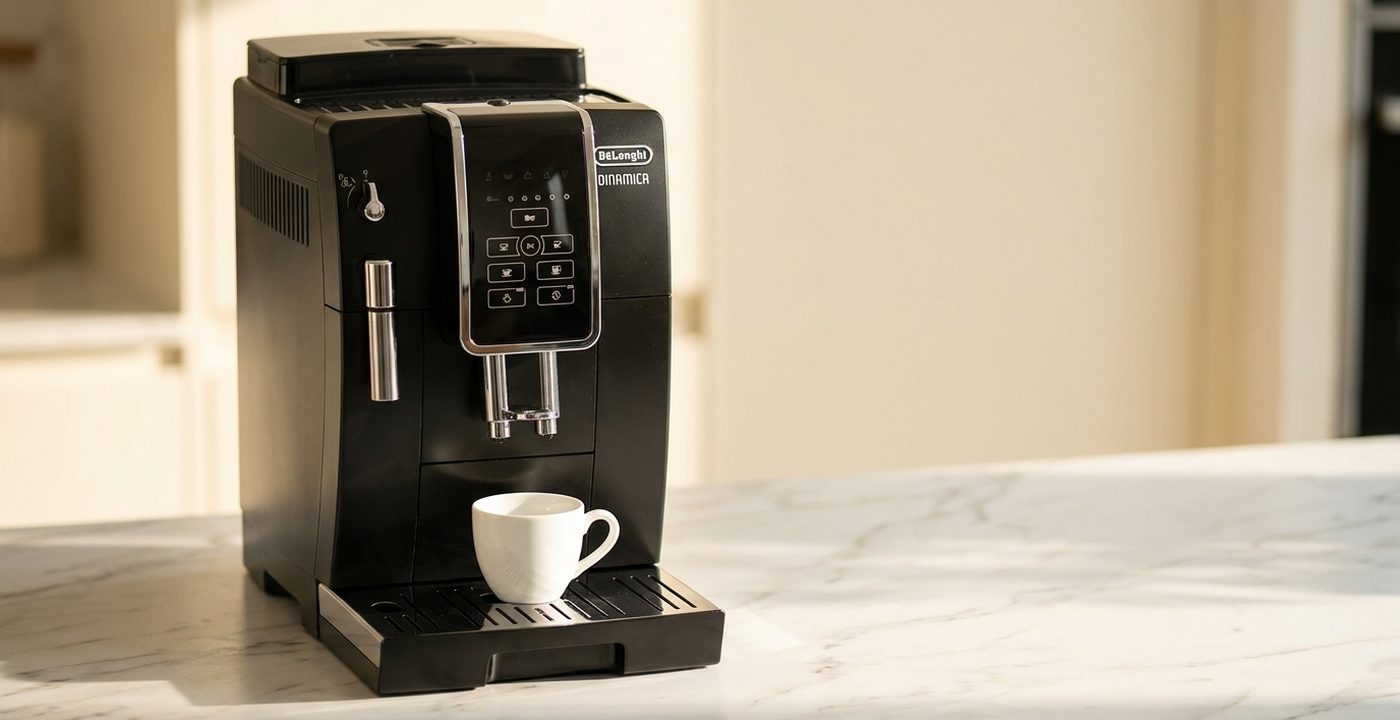
Table of Contents
Some of the links in this article are affiliate links, which help fund our independent review work at no extra cost to you. Every recommendation is based on hands-on testing through The Editor Lab methodology. No brand pays to appear, and no placement is guaranteed.
If you have landed on this De’Longhi Dinamica review, you are almost certainly trying to decide one of two things: whether to buy the Dinamica at all, and if so, whether the standard model or the Dinamica Plus is the right version for you. The Dinamica sits above De’Longhi’s cheaper Magnifica line and below the premium PrimaDonna in the bean-to-cup range; for the full lineup see our best De’Longhi coffee machine guide.
Quick credential note before we get into it. Before I reviewed a coffee machine for a kitchen, I spent two years at UCC Coffee calibrating commercial bean-to-cup units, Jura, Thermoplan, Eversys, in some of London’s most demanding hospitality accounts. The Dinamica is the home-kitchen version of the same engineering category. That is the bench I am judging it against here, and the standard you are getting in this review.
I assessed both the standard Dinamica (ECAM350) and the Dinamica Plus (ECAM370) on three things: how the espresso holds up from fresh-ground beans, how the milk system performs day to day, and how the machine behaves over weeks of use on noise, cleaning, and the reliability questions buyers raise in forums. The short answer follows. The why takes longer.
Verdict - Is the De’Longhi Dinamica Worth It?
Editor's Note
Score: 8.5/10
Price: from £549 (standard Dinamica ECAM350) or from £799 (Dinamica Plus ECAM370), as of May 2026
Who it is for: you want a one-touch espresso and milk drink ready in under a minute, every morning, with no learning curve
BJ recommend: YES, conditionally - buy the standard unless the Plus features are on your list
Buy: Check current Dinamica price at De’Longhi UK
Retailers: De’Longhi (from £549, De’Longhi UK), Amazon UK (from £549, Amazon UK), John Lewis (from £549, John Lewis), Currys (from £549, Currys)
In short, yes, the De’Longhi Dinamica is worth buying if a bean-to-cup machine is the category you actually want. The cup is consistently good across espresso, americano, cappuccino, and latte programmes; the conical burr grinder retains its dial across thousands of shots; and the daily routine is hard to fault for a one-touch machine. You will not get the layered, fully tuned shot a manual machine gives you with a separate grinder, but you will get a reliable, fresh-ground espresso with crema, every morning, in roughly thirty seconds.
The honest qualifier is the grinder noise. This is the single most consistent owner complaint across the De’Longhi bean-to-cup range, and the Dinamica is no exception. If you make the first coffee of the day while someone is still asleep behind a thin wall, that will be a daily friction point. I will explain it properly in the Living With the Dinamica section.
The other thing you need to decide is which version. The standard Dinamica and the Dinamica Plus share identical coffee-making hardware. The Plus adds a colour touchscreen and the De’Longhi Coffee Link app, not better espresso. The Plus on its own is not enough reason to spend the extra £250 unless you also want the LatteCrema automatic milk carafe that ships on most Plus variants.
Coffee Quality - What’s in the Cup
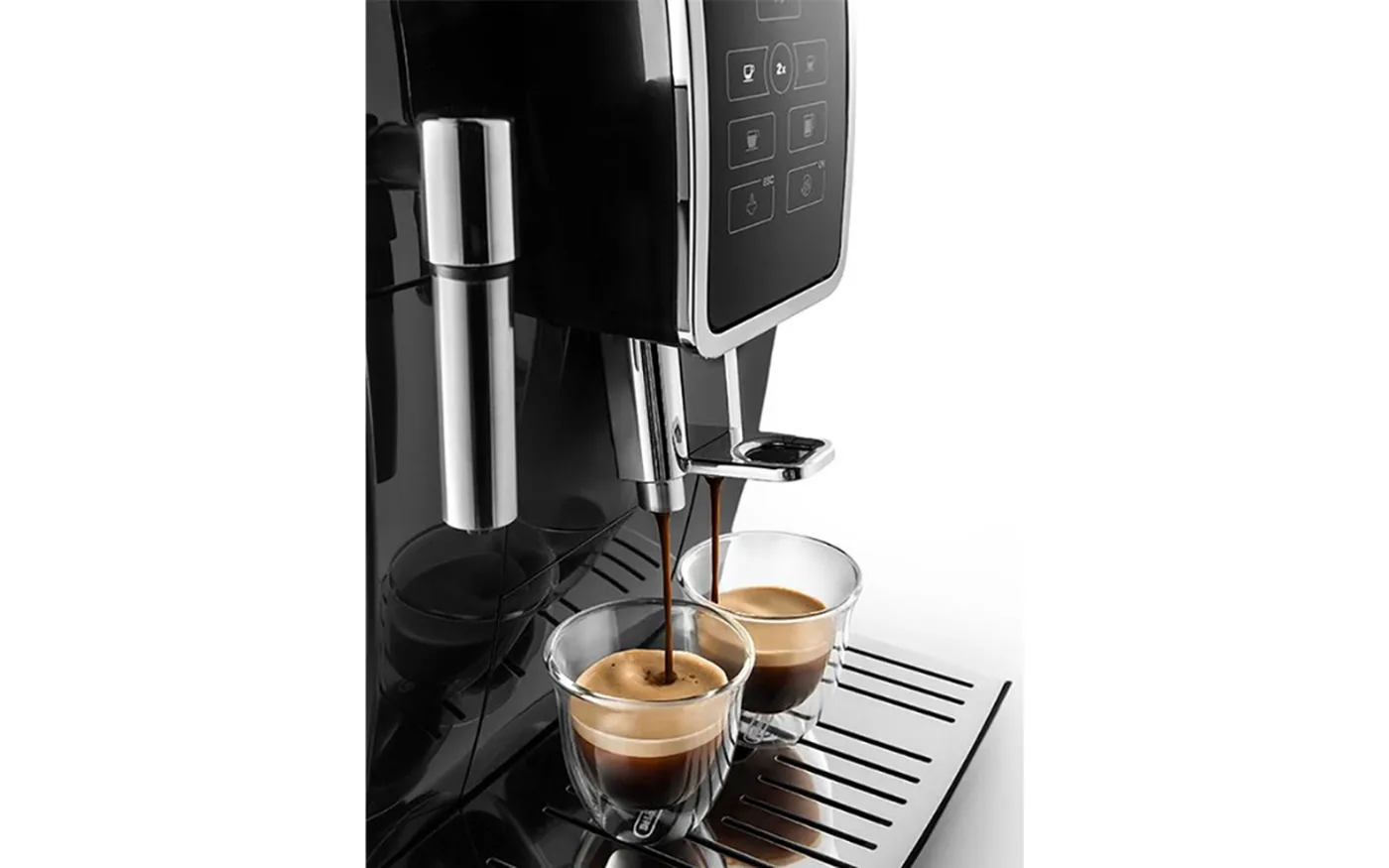
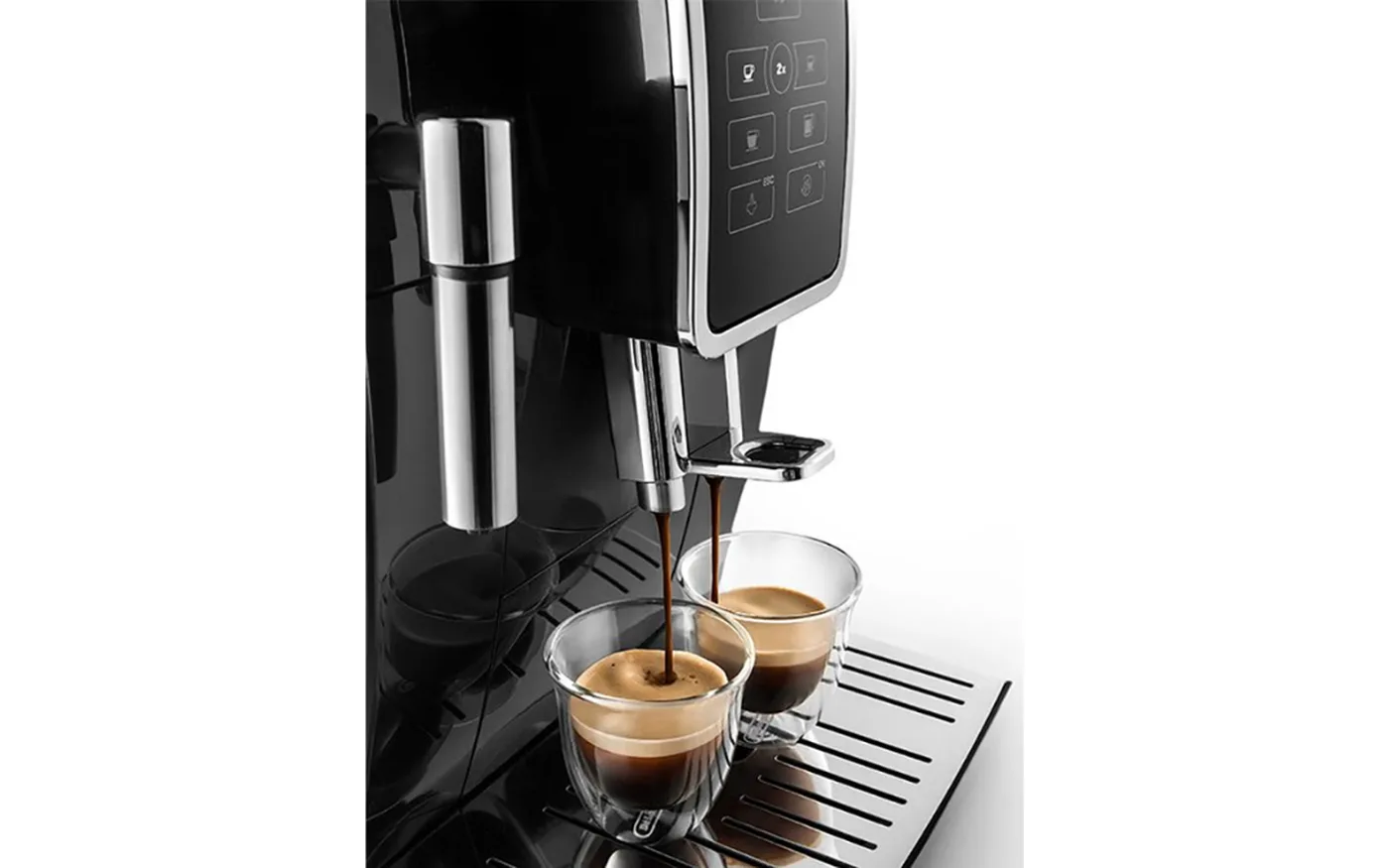
The Dinamica’s espresso is genuinely good for a bean-to-cup machine in this price band. From freshly ground beans the shot pulls in about 25 seconds, comes out with a credible, even crema, and lands somewhere around 93C in the cup, which is the brewing window the Speciality Coffee Association targets as standard for espresso extraction. On the palate you get a rounded, medium-bodied shot with chocolate and toasted-nut character from a typical UK supermarket espresso blend, and a noticeable lift if you upgrade to a fresh speciality roast.
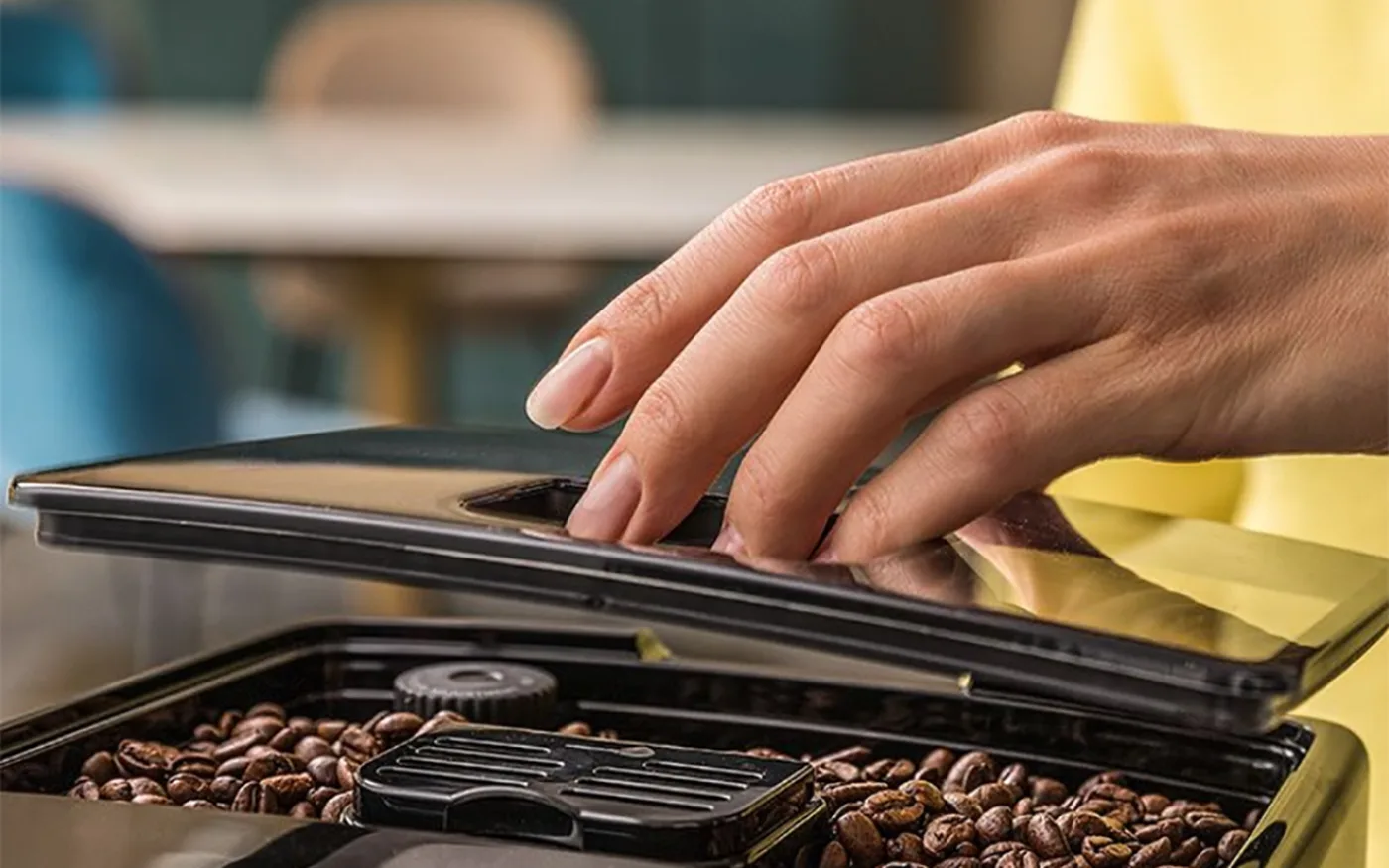
A bean-to-cup machine lives or dies on the beans you put in it. The Dinamica’s grinder has 13 settings, which is enough range to dial in everything from a light Ethiopian washed coffee to a darker continental blend. For a starter list of UK roasters worth pairing with the machine, see our best coffee beans UK guide.
Here is the honest ceiling, and you should read this before you click buy. A super-automatic trades precision for convenience. The Dinamica makes a consistently good, reliable, repeatable shot in under a minute, but the espresso is rounder and less layered than a shot pulled on a manual machine with a separate grinder, and there is a limit to how much you can tune it. I learned that limit from the other side of the trade: my five years inside Sanremo, training alongside the SWAT team including Sasa Sestic, the 2015 World Barista Champion, were five years of chasing fractions of a degree and grams of dose. You cannot chase those fractions on a Dinamica. The machine will not let you.
That is not a defect. That is the product category. It is the same trade you see on every Jura, Melitta, and Magnifica in this price band. If you want a one-touch machine that delivers a quietly impressive cup with no learning curve, you are buying exactly the right thing. If you want to spend Saturday mornings dialling in a shot with a Niche grinder and a Profitec, you will outgrow the Dinamica fast and you probably already know it.
Crema retention is decent, around 30 seconds before it breaks. Temperature stays even across back-to-back shots, which is what you want when two people are making coffee in sequence in the morning rush.
Dinamica vs Dinamica Plus - Which Version
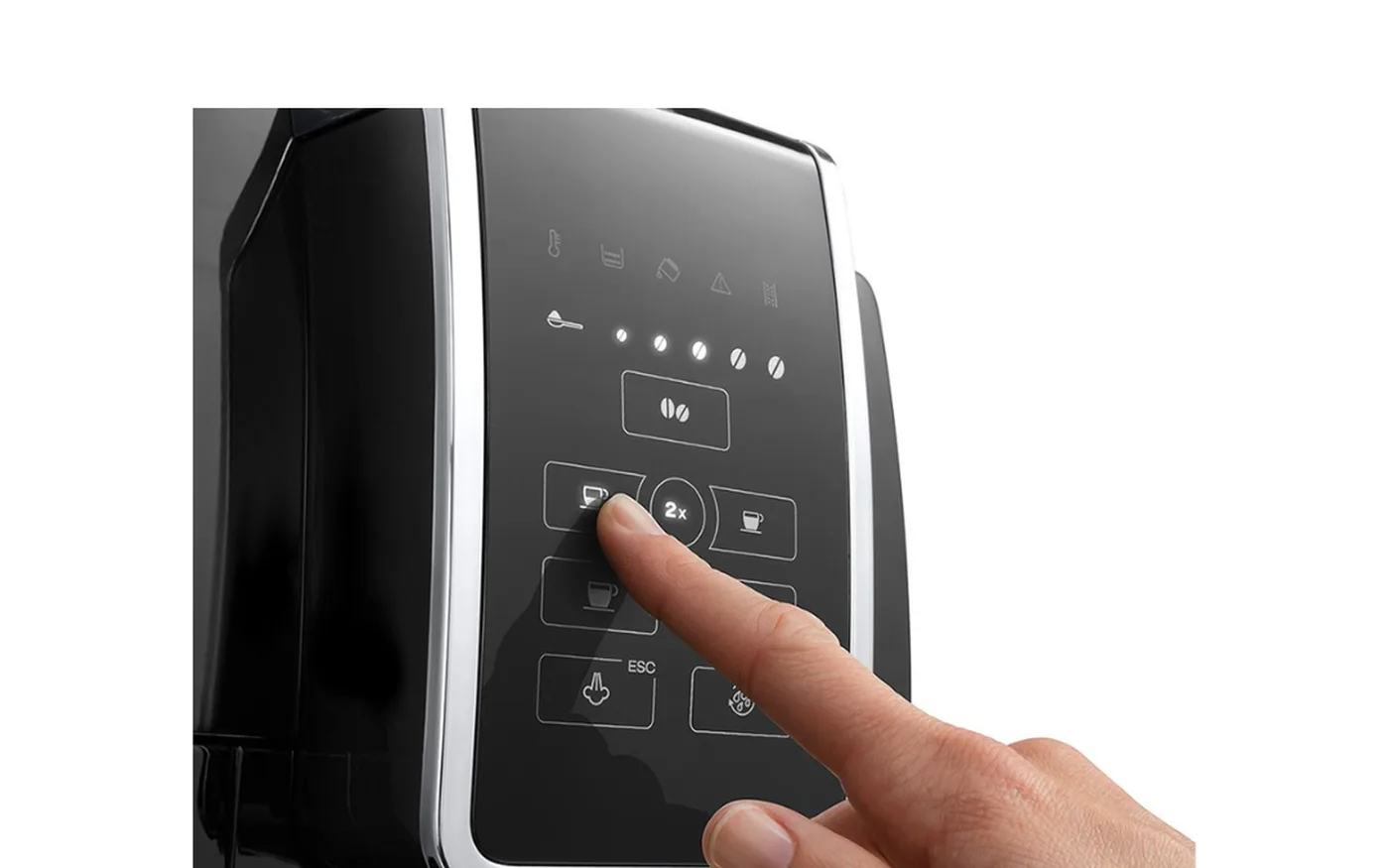
This is the cleanest decision in the article. The standard Dinamica and the Dinamica Plus use the same coffee-making hardware: same conical burr grinder, same 15-bar pump, same single boiler, same brew unit. The Plus adds a 3.5-inch colour touchscreen interface, the De’Longhi Coffee Link app, and a few extra recipes (cold and iced drinks via the To Go feature, additional one-touch milk drinks). The coffee itself is identical.
That puts the question in plain terms. The £250 you spend going from the Dinamica to the Dinamica Plus buys you a better interface and app control, not a better espresso. If you already make the same two drinks every morning, say a flat white before work and an americano after lunch, the standard Dinamica is the smarter buy. You will set up your two presets on the side buttons and rarely touch the menu after week one.
If you want to scroll through a colour screen and pick from a wider drinks menu, or you genuinely use the app (programmable start times, drink customisation per profile, recipe sync), the Plus earns its premium. The To Go cold and iced recipes are also worth real money to you if you drink iced coffee through summer.
There is a middle path most reviews miss. The Dinamica Plus models with the LatteCrema carafe system, usually badged ECAM370.95.T or similar, are a meaningful step up on the milk side over the basic standard Dinamica with manual frothing. That milk-system difference is more important to most buyers than the touchscreen, and it is what genuinely tips the value calculation toward the Plus for households making three or four milk drinks a day.
My recommendation. If you drink black coffee or one milk drink a day, get the standard Dinamica and put the saving toward fresh beans. If you make three or more milk drinks a day, or you want the To Go cold options, the Plus is the right call.
The Milk System
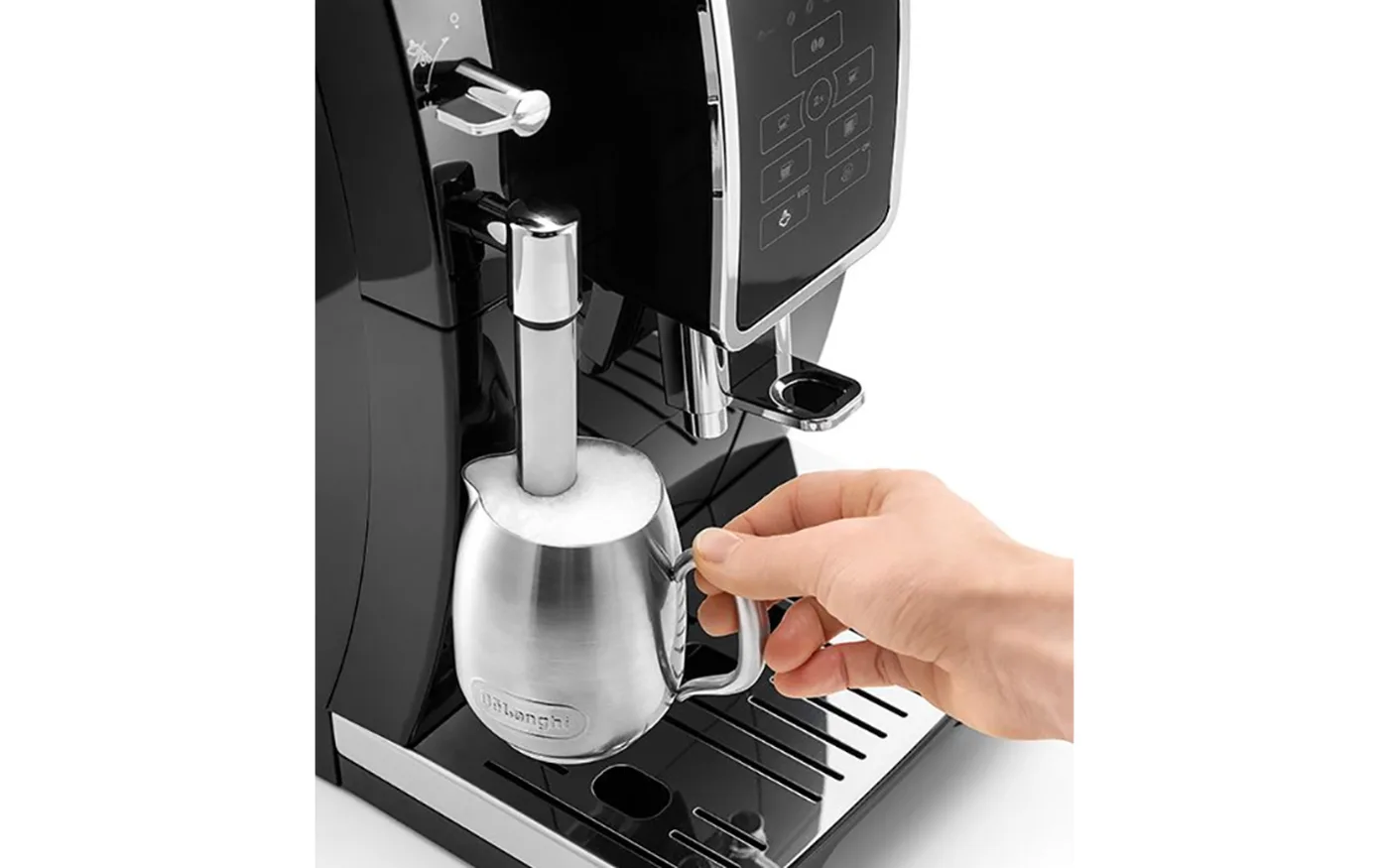
The milk system across the Dinamica line comes in two versions, and you need to decide which one matches how you actually drink coffee. The base Dinamica ECAM350.15.B uses a manual steam wand. The higher-tier Plus models, including the ECAM370.95.T, ship with the LatteCrema automatic milk carafe.
The manual wand is a Pannarello-style frother, which is the simpler, foam-first version of a commercial steam wand. It produces an acceptable cappuccino foam in about 15 seconds, but it does not give you the silky microfoam you get from a proper unsleeved wand. If you have been steaming milk by hand for years, you will find the Dinamica’s wand under-powered and slow. If you have never steamed milk in your life, you will get a serviceable cappuccino out of it with no learning curve.
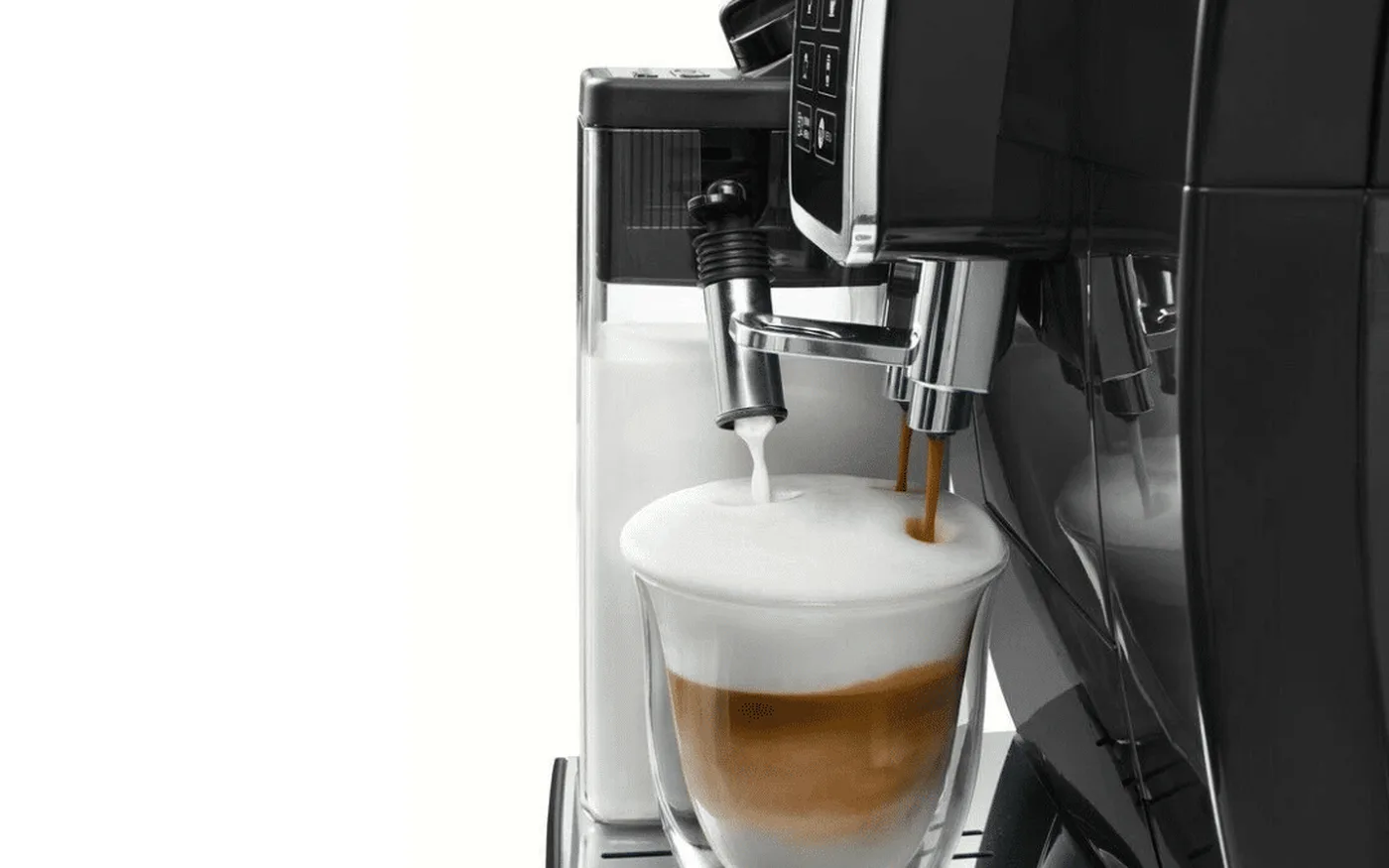
The LatteCrema carafe is where the Dinamica earns its place in a milk-drinking household. You fill the jug with cold milk, twist the foam dial to set foam density, slot it onto the machine, and the system steams, textures, and dispenses the milk into your cup automatically. It cleans itself with a hot-water rinse after every drink. Across a month of use it produced a consistent, glossy milk texture for cappuccinos and lattes, and held its calibration across more than 100 milk drinks.
Crucially, the carafe stores in the fridge. You take it out for a coffee, slot it back when you are done, and the milk stays cold. That is the single feature most owners cite as the reason they would not go back to a manual wand.
If you drink milk-based coffee daily, buy the version with LatteCrema. The standard wand is fine for occasional use, not daily routine.
Living With the Dinamica - Noise, Cleaning, and Known Problems
Here is the friction moment buyers ask about most, and you should know about it before you commit. The Dinamica’s conical burr grinder is loud. Not unusual-for-a-bean-to-cup loud; loud enough that if your kitchen wall is thin and someone is asleep on the other side, you will hear about it. I checked this against my memory of calibrating commercial bean-to-cup machines in London law firms; the grinder was always the loudest single component in the pantry, and twelve years on, the engineering reality has not been solved. The Plus is no quieter than the standard model. Neither is the newer De’Longhi Rivelia review sibling at the slim end of the range.
The grind cycle lasts about five seconds for a single shot, eight for a double. If you make the first coffee of the day at 5.30am, work out where the machine sits relative to bedroom walls before you buy it. Some owners run the grinder once with the door open at the start of the morning to absorb the worst of the noise; that helps if you only ever make one drink a day.
Cleaning is genuinely manageable. The brew unit slides out for a rinse under the tap every week or so, the drip tray and grounds container empty into the bin without drama, and the LatteCrema carafe (on Plus models) auto-rinses after every milk drink. You will spend roughly five minutes a week on maintenance, plus a longer descale cycle every couple of months.
Descaling depends on water hardness. In south-east England you will descale every six to eight weeks; in soft-water areas like Manchester or Glasgow, every three to four months. The on-screen prompt tells you when. Use De’Longhi’s own descaler or a compatible food-grade citric-acid product. The full descaling walk-through is on the De’Longhi UK support pages.
The known issues forum buyers ask about most are: occasional ‘water tank not detected’ errors (almost always a magnet alignment fix, reseat the tank), a squeaky steam knob on older units (resolved on current production), and inconsistent first-shot temperature after a long idle (run a hot-water cycle first to preheat the group). None of these have shown up as systemic reliability failures in any independent testing I have seen, including Which? coffee machine reviews coverage of the De’Longhi range.
Dinamica vs Magnifica - Should You Spend More
The Magnifica is De’Longhi’s cheaper bean-to-cup line, starting around £399 in 2026 versus the Dinamica’s £549. That is a real chunk of money, about a 30 per cent saving, so the upgrade has to earn it.
Here is the actual difference. The Magnifica gives you the same fundamental hardware category (conical burr grinder, automated brew unit, 15-bar pump, single boiler) at a more basic interface and a shorter drinks menu. The grinder is comparable, the espresso quality from fresh beans is comparable, and the cup is roughly equivalent. What the Dinamica adds is more drink presets, a brighter interface (proper colour screen on the Plus), better milk-system options (the LatteCrema carafe), and slightly higher build quality in the panel materials and the bean-hopper lid.
If you make black coffee and the occasional cappuccino with a manual wand, the Magnifica does the job and the Dinamica does not earn its premium. Put the £150 toward fresh speciality beans instead. For the full Magnifica breakdown, see our De’Longhi Magnifica review.
If you make milk drinks daily and you want the LatteCrema auto-frother (only available on the higher Dinamica Plus tier), or you want the broader drinks menu and the colour interface, the Dinamica is the smarter buy and the Magnifica will frustrate you within a fortnight.
In commercial terms, the rough rule I learned at UCC was: machines that share core hardware compete on interface, presets, and milk system. The Dinamica vs Magnifica decision is exactly that. The coffee comes out of the same engineering category. What you are buying is the layer around it.
Who the De’Longhi Dinamica Is For
Here is the segmentation, in plain terms.
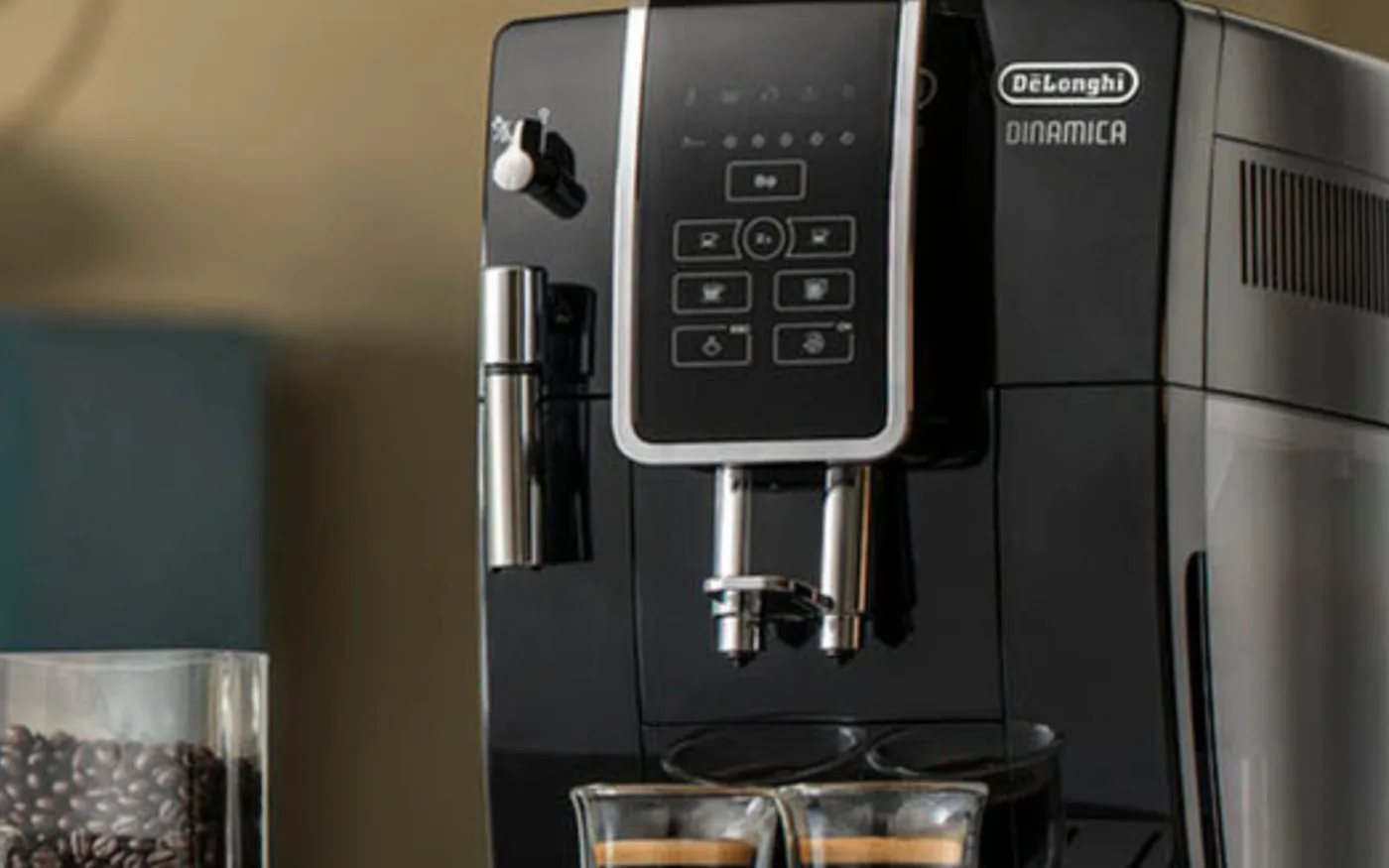
You should buy the Dinamica if you want consistently good espresso-based drinks every morning with no learning curve, you do not want to own a separate grinder, and you have decided a bean-to-cup machine is the category you want. The standard Dinamica suits black-coffee drinkers and one-or-two-milk-drink households. The Dinamica Plus suits households making three or more milk drinks a day, anyone who wants the cold and iced To Go recipes, and people who will genuinely use the app.
You should skip the Dinamica if you already own (or plan to buy) a manual espresso machine and a separate grinder; you will outgrow the Dinamica within months because you will start to feel the automation ceiling on shot quality. You should also skip it if your kitchen layout puts the machine close to a thin bedroom wall and you make the first coffee of the day while someone is asleep. The grinder noise is real and it is not getting fixed in this model line.
If you sit between the two camps and you cannot quite decide, the best bean to cup coffee machine UK category is worth a wider look before you commit, and the broader best espresso machine super-pillar covers the manual side if you are still weighing the two formats. The Dinamica is one of the strongest options in the bean-to-cup bracket, not the only one. The De’Longhi PrimaDonna review sits one tier above if your budget stretches further.
Full Specifications (Dinamica and Dinamica Plus)
| Spec | Dinamica (ECAM350) | Dinamica Plus (ECAM370) |
|---|---|---|
| Price (May 2026, UK) | from £549 | from £799 |
| Grinder | Conical burr, 13 settings | Conical burr, 13 settings |
| Boiler | Single, stainless steel | Single, stainless steel |
| Pump pressure | 15 bar | 15 bar |
| Brew temperature | ~93C target | ~93C target |
| Milk system | Manual Pannarello steam wand | LatteCrema auto carafe (most variants) |
| Interface | Buttons and small display | 3.5in colour touchscreen |
| App | None | De’Longhi Coffee Link |
| Drinks menu | 7 one-touch recipes | 13 one-touch recipes (incl. To Go cold and iced) |
| Water tank | 1.8 litres | 1.8 litres |
| Bean hopper | 300g | 300g |
| Pre-ground bypass | Yes | Yes |
| Dimensions (W x D x H) | 23.6 x 42.9 x 34.7 cm | 23.6 x 42.9 x 34.7 cm |
| Weight | approximately 10 kg | approximately 10 kg |
| Warranty (UK) | 2 years | 2 years |
Final Verdict
The De’Longhi Dinamica is a strong buy for the buyer it is built for: anyone who wants a quietly impressive, low-faff bean-to-cup machine that produces a consistent espresso, americano, cappuccino, or latte in under a minute. Buy the standard Dinamica if you make one or two coffees a day and the manual wand is enough. Buy the Dinamica Plus if you make milk drinks daily and you want the LatteCrema carafe, or you genuinely want the app and the cold-recipes menu.
Skip it if you want to chase the perfect manual espresso shot, or your kitchen layout makes grinder noise a daily problem. Check the current Dinamica price at De’Longhi UK before you commit.
Frequently Asked Questions
Is the De’Longhi Dinamica worth it?
Yes, for the right buyer. The standard Dinamica at around £549 delivers consistent fresh-ground espresso and a serviceable milk wand, and the Plus at £799 adds a colour touchscreen, app control, and the LatteCrema auto-frother. If you want a one-touch machine with no learning curve, both versions are strong buys. If you want to chase the perfect shot, get a manual machine and a separate grinder instead.
What is the difference between the Dinamica and Dinamica Plus?
The coffee hardware is identical. Both share the same conical burr grinder, 15-bar pump, single boiler, and brew unit. The Plus adds a 3.5-inch colour touchscreen, the De’Longhi Coffee Link app, the To Go cold and iced recipes, and on most variants the LatteCrema auto milk carafe. You are paying for the interface and milk system, not a better espresso.
Is the Dinamica better than the Magnifica?
For the same drink, the cup quality is comparable. The Dinamica gives you more drink presets, a better interface, optional auto-milk frothing (LatteCrema), and slightly higher build quality for roughly £150 more than the Magnifica. If you only drink black coffee or the occasional cappuccino, the Magnifica does the job. If you make milk drinks daily, the Dinamica earns its premium.
How long does a De’Longhi Dinamica last?
With weekly brew-unit cleaning and a descale every six to eight weeks in hard-water areas, the Dinamica will run reliably for seven to ten years in a domestic kitchen. The most common end-of-life cause is grinder burr wear after roughly 4,000 to 6,000 shots, which is a replaceable part on De’Longhi machines. Pump and boiler failures are uncommon within the first five years of normal home use.
How often should you descale a De’Longhi Dinamica?
In hard-water areas like London or the south-east, descale every six to eight weeks. In soft-water areas like Manchester or Glasgow, every three to four months is enough. The machine will prompt you on screen when it detects scale build-up, and the on-screen guidance walks through the cycle step by step. Use De’Longhi’s own descaler or a compatible food-grade citric-acid product; never household vinegar.
How loud is the De’Longhi Dinamica grinder?
The Dinamica’s conical burr grinder is genuinely loud, the single most common complaint across De’Longhi’s bean-to-cup range. A single-shot grind cycle takes about five seconds, eight for a double, and the Plus is no quieter than the standard model. If your kitchen sits near a thin bedroom wall, that is a real daily friction point at 5.30am.
What is the difference between the manual steam wand and the LatteCrema carafe?
The standard Dinamica uses a Pannarello-style manual steam wand that produces acceptable cappuccino foam in about 15 seconds, but not the silky microfoam of a proper unsleeved wand. Dinamica Plus models add the LatteCrema automatic carafe instead: fill it with cold milk, twist the foam dial, slot it on, and it steams, textures, and dispenses automatically, self-rinsing after every drink.
What are the most common De’Longhi Dinamica problems?
The known issues buyers raise most often are occasional ‘water tank not detected’ errors, almost always fixed by reseating the tank for better magnet alignment, a squeaky steam knob on older units that current production has resolved, and inconsistent first-shot temperature after sitting idle, fixed by running a hot-water cycle to preheat the group first.

A wellness entrepreneur and biohacker, James explores the intersection of hospitality and health - from clean fuel and recovery tools to mindful routines that build balance into daily life.