Electrolytes vs Sports Drinks: Which Hydrates Better?
A straight answer on electrolytes vs sports drinks — what genuinely differs and which to choose.
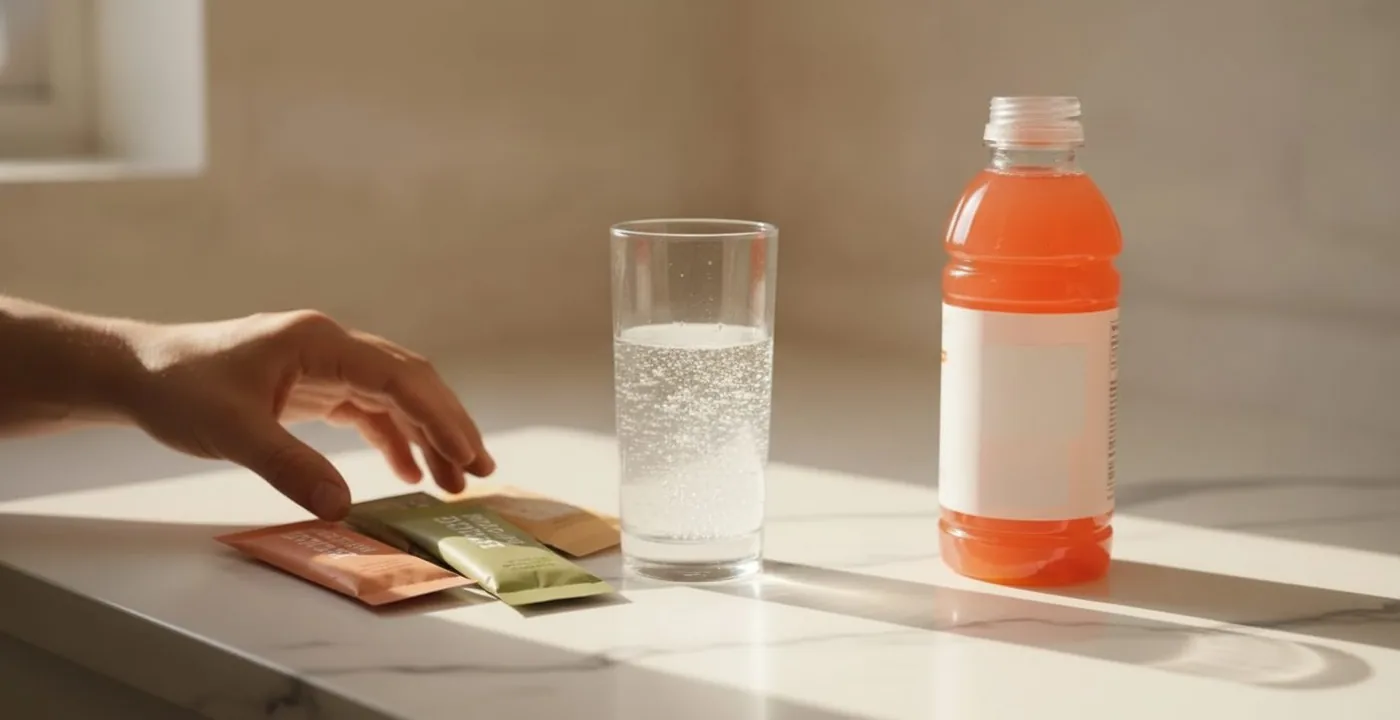
Table of Contents
Some of the links in this article are affiliate links, which help fund our independent review work at no extra cost to you. Every recommendation is based on hands-on testing through The Editor Lab methodology. No brand pays to appear, and no placement is guaranteed.
The short answer: electrolytes replace minerals, sports drinks deliver carbohydrate fuel - and most people need the first far more than the second.
I spent years telling clients that sports drinks were fine for post-workout recovery. Then a marathon runner arrived at my clinic with sodium deficiency so pronounced she was cramping in her sleep. She had been drinking Lucozade Sport throughout her training. Plenty of carbohydrates, plenty of sugar - but nowhere near enough sodium to replace what she was losing through sweat.
That consultation changed how I explain the difference between electrolytes vs sports drinks. They are not rivals. They are not interchangeable. They solve entirely different problems, and choosing the wrong one will not fail to help you - it can actively work against you.
I am a BANT-registered Nutritional Therapist whose clinical practice has included The Wellness Clinic at Harrods, working alongside the Kyros Project at Google DeepMind. This article draws on that clinical experience and on the physiology of hydration and fuelling to give you a clear decision guide - not marketing copy dressed as advice.
The Short Answer
Electrolyte products replace the minerals your body loses through sweat: primarily sodium, but also potassium and magnesium. Sports drinks replace those minerals too, but their primary function is carbohydrate delivery - fuelling endurance exercise rather than simply rehydrating you.
If you are hot, sweaty, and need to rehydrate, an electrolyte product does that better. If you are running a half-marathon and need fuel to keep moving, a sports drink may serve you alongside your hydration strategy.
Which one is 'better' depends entirely on what you are asking it to do.
What Is Actually in Each?
The difference starts in the formulation.

| Component | Electrolyte products | Sports drinks (e.g. Lucozade, Gatorade) |
|---|---|---|
| Sodium | High (500-1,000mg per serving) | Low to moderate (150-300mg per serving) |
| Potassium | Moderate | Low |
| Magnesium | Often included | Rarely included |
| Carbohydrates | Low or zero | High (20-35g per serving) |
| Sugar | Low or zero (stevia/none) | High (simple sugars - glucose, sucrose) |
| Calories | Low (0-30kcal) | Moderate (80-150kcal) |
| Primary purpose | Fluid and mineral replacement | Carbohydrate fuelling + some electrolytes |
Electrolyte powders, tablets, and drinks - products like LMNT, Precision Hydration, or SIS GO Hydro - are designed around the sodium gradient. Sodium is what holds fluid in your cells. Without adequate sodium replacement, you can drink water all day and still feel dehydrated.
Sports drinks are carbohydrate-electrolyte solutions. The carbohydrate drives their primary value: delivering rapid energy to working muscles during sustained effort. The electrolytes present are a secondary feature, often included in amounts too low to serve as a standalone rehydration strategy.
The European Food Safety Authority's guidance on carbohydrate-electrolyte solutions makes this distinction clearly: the authorised claim is about "enhancing water absorption during exercise" - not rehydration at rest, and not sodium replacement.
When Electrolytes Win
Electrolyte products are the right choice in four clear situations.
You are sweating heavily but not exercising for long. A 45-minute spin class or outdoor work in summer heat produces significant sweat sodium loss. You do not need carbohydrates for that duration - but you do need mineral replacement. A sugary sports drink adds calories you did not earn and sugar that slows gastric emptying.
You are following a low-carbohydrate or ketogenic approach. Carbohydrate restriction reduces insulin, which increases sodium excretion through the kidneys. The result is accelerated electrolyte loss even without exercise. This is the mechanism behind what some clients call 'keto flu'. Replacing electrolytes on keto is not optional - it is how you feel functional on a low-carb approach.
You are managing a hangover. Alcohol is a diuretic. Overnight sodium and potassium depletion is one reason hangovers feel so physically rough. A high-sodium electrolyte drink addresses the dehydration mechanism directly. A sports drink adds sugar that may worsen the nausea.
You want to rehydrate without the sugar load. Everyday hydration in heat, or recovery from illness-related fluid loss, does not require carbohydrate fuelling. The NHS guidance on hydration and fluid intake recommends plain water and low-sugar options as the baseline.
This is the friction point I see most often in clinic: the client who reaches for a sports drink because they feel flat and dehydrated, drinks it, and feels temporarily better from the sugar hit - but the underlying sodium deficit remains. The carbohydrate is doing the work, not the hydration.
When a Sports Drink Wins
There is one scenario where a sports drink has a clear physiological advantage: sustained endurance exercise lasting more than 60-90 minutes.
During extended effort, muscle glycogen depletes. The carbohydrate in a sports drink - typically a glucose-fructose blend - can be absorbed and oxidised quickly enough to spare glycogen and maintain pace. This is the role they were designed for.
If you are running a marathon, cycling a sportive, or doing a long-course triathlon, a sports drink provides carbohydrate fuelling alongside some electrolyte support in a single product. That is genuinely useful.
The friction here is the reverse: the endurance athlete who switches entirely to electrolyte-only hydration during a long event and runs out of fuel. Electrolytes will not prevent that bonk. Carbohydrates will.
For events longer than 90 minutes, the evidence-based approach - supported by guidance from bodies including the British Dietetic Association - is to use both: electrolytes for fluid and mineral replacement, carbohydrates for fuel. These are separate needs that a single product rarely meets optimally.

What About Plain Water?
Water is sufficient for most people in most situations.
If you exercise for less than an hour at moderate intensity, you are unlikely to lose enough sodium to require electrolyte supplementation. If you are not exercising at all and simply going about your day, water is the correct hydration choice for the majority of the population.
The electrolyte industry's marketing sometimes implies that everyone needs supplemental minerals every day. That is not the clinical picture. The real need is situational: heavy sweat loss, extreme heat, prolonged exercise, dietary restriction, or illness-related fluid loss.
If your urine is pale yellow, you are adequately hydrated. If it is dark, drink water before reaching for anything else.
Sugar, Calories and Everyday Use
Sports drinks were not designed for everyday consumption. They were formulated for competitive athletes in training. The NHS and public health guidance consistently note that the sugar content in standard sports drinks - typically 30-35g per 500ml bottle - is inappropriate as a daily hydration habit for non-athletes.
For context, that is roughly equivalent to eight teaspoons of sugar in a single bottle.
The category has responded to this with zero-sugar sports drink formulations using artificial sweeteners. These reduce the caloric load, but they also remove the primary physiological justification for using a sports drink in the first place: the carbohydrate fuel. A zero-sugar sports drink with no carbohydrate is, functionally, a low-sodium electrolyte drink.
If you are choosing between the two for everyday use, an electrolyte product - particularly one without artificial sweeteners or sugar - is the more appropriate choice. The best electrolytes UK options are formulated for exactly this: daily hydration support without the sugar or caloric cost.

How to Choose
| Your situation | What to reach for |
|---|---|
| Hot day, sweating, not exercising | Electrolyte drink |
| Short gym session (<60 min) | Water, or electrolyte drink |
| Long run or cycle (>90 min) | Sports drink for carbs + electrolyte drink for sodium |
| Low-carb or keto diet | Electrolyte drink (daily) |
| Hangover | Electrolyte drink |
| Marathon or endurance event | Both, as separate strategies |
| Everyday hydration | Water first, electrolyte drink if needed |
| Office / desk work / mild heat | Water |

For product guidance, our best electrolytes UK roundup covers tested options across price points, and our reviews of LMNT and Precision Hydration go into product-level formulation detail.
One honest note on caffeine and pre-exercise hydration: some athletes use black coffee as a pre-workout fluid. Moderate caffeine does not cause the net dehydration effect it was once thought to. If you are curious about the best coffee beans UK options for pre-workout use, the evidence on caffeine and exercise performance is more favourable than the old received wisdom suggested.
Balance Journal is published alongside Balance Coffee, founded by James Bellis. Balance Coffee does not sell electrolytes or sports drinks.
Frequently Asked Questions
What is the difference between electrolytes and sports drinks?
Electrolyte drinks are formulated primarily to replace sodium, potassium, and magnesium lost through sweat. They are typically low or zero in sugar and calories. Sports drinks are carbohydrate-electrolyte solutions - their main function is delivering glucose and fructose to working muscles during sustained endurance exercise, with electrolytes included as a secondary feature. The core difference is rehydration versus fuelling. Most people need electrolytes far more often than they need sports drinks.
Are sports drinks good for replacing electrolytes?
Sports drinks contain some electrolytes, but not in quantities that make them effective standalone rehydration tools. A standard 500ml sports drink typically contains 150-300mg of sodium - well below the 500-1,000mg in a dedicated electrolyte product. If sodium replacement is your goal - after heavy sweating, in heat, or during illness - a dedicated electrolyte drink will do that job more effectively than a sports drink.
Is it better to drink or eat electrolytes?
Both approaches work because the body absorbs electrolytes through the gut regardless of the delivery format. Drinking electrolytes during or after exercise provides faster gastric emptying and hydration alongside the minerals. Eating electrolytes - through foods like bananas (potassium), salted foods (sodium), or nuts (magnesium) - is a good baseline strategy for everyday intake. In an acute dehydration situation or during exercise, liquid delivery is more practical and faster-acting.
Is Lucozade an electrolyte drink?
Lucozade Sport contains electrolytes, but it is primarily a carbohydrate-electrolyte solution rather than a dedicated electrolyte drink. Its formulation is built around glucose and fructose delivery for endurance fuelling, with sodium and potassium included at lower levels than you would find in a dedicated electrolyte product. If you need carbohydrate fuel during long exercise, Lucozade Sport serves that purpose. If you need to replace significant sodium loss, the electrolyte content is insufficient as a standalone strategy.
What are the signs that you need electrolytes?
The most common signs of electrolyte depletion are muscle cramps (particularly leg cramps during or after exercise), fatigue disproportionate to your activity level, headache, dizziness, and a sensation of thirst that persists even after drinking water. Dark urine suggests dehydration generally. Cramping specifically during prolonged exercise is a strong signal that sodium replacement is needed. If you experience these symptoms regularly without obvious cause, it is worth reviewing your hydration and sodium intake before assuming a supplement is necessary.
Is there a downside to drinking electrolytes?
For most people, no - particularly if choosing a low-sugar or sugar-free formulation without artificial sweeteners. The main risks are overconsumption of sodium in people with hypertension or kidney disease, for whom high-sodium electrolyte products may not be appropriate without medical guidance, and reliance on sweetened formulations that add unnecessary calories. If you have a cardiovascular or kidney condition, speak to a clinician before adding high-sodium electrolyte products to your daily routine.
Can I drink electrolyte water every day?
Yes, for most healthy adults, daily electrolyte consumption is safe and can support hydration - particularly if you exercise regularly, live in a warm climate, follow a low-carbohydrate diet, or do not retain fluids well. The caveats are: choose formulations without artificial sweeteners or excessive sugar, and if you have hypertension or kidney disease, seek clinical advice first. Plain water remains the baseline. Electrolytes support it where your needs are higher than water alone can meet.
Can electrolytes and sports drinks be used together?
Yes, and in endurance events lasting more than 90 minutes, that is often the most effective strategy. Sports drinks provide the carbohydrate fuel your muscles need to sustain effort; dedicated electrolyte products ensure you are replacing the sodium and minerals that sports drinks do not provide in adequate quantities. Many experienced endurance athletes carry both - taking carbohydrate gels or sports drinks for fuel, and electrolyte tablets or high-sodium drinks separately for mineral replacement. Using both is not doubling up unnecessarily - it is addressing two distinct physiological needs.

A registered Nutritional Therapist and member of BANT, Clemmie blends science with a holistic approach to wellbeing.