Single Boiler vs Heat Exchanger vs Dual Boiler: Espresso Machine Architecture Explained

Coffee & Wellness Writer
Five years inside Sanremo taught me one thing: boiler architecture changes your daily workflow more than any other spec.
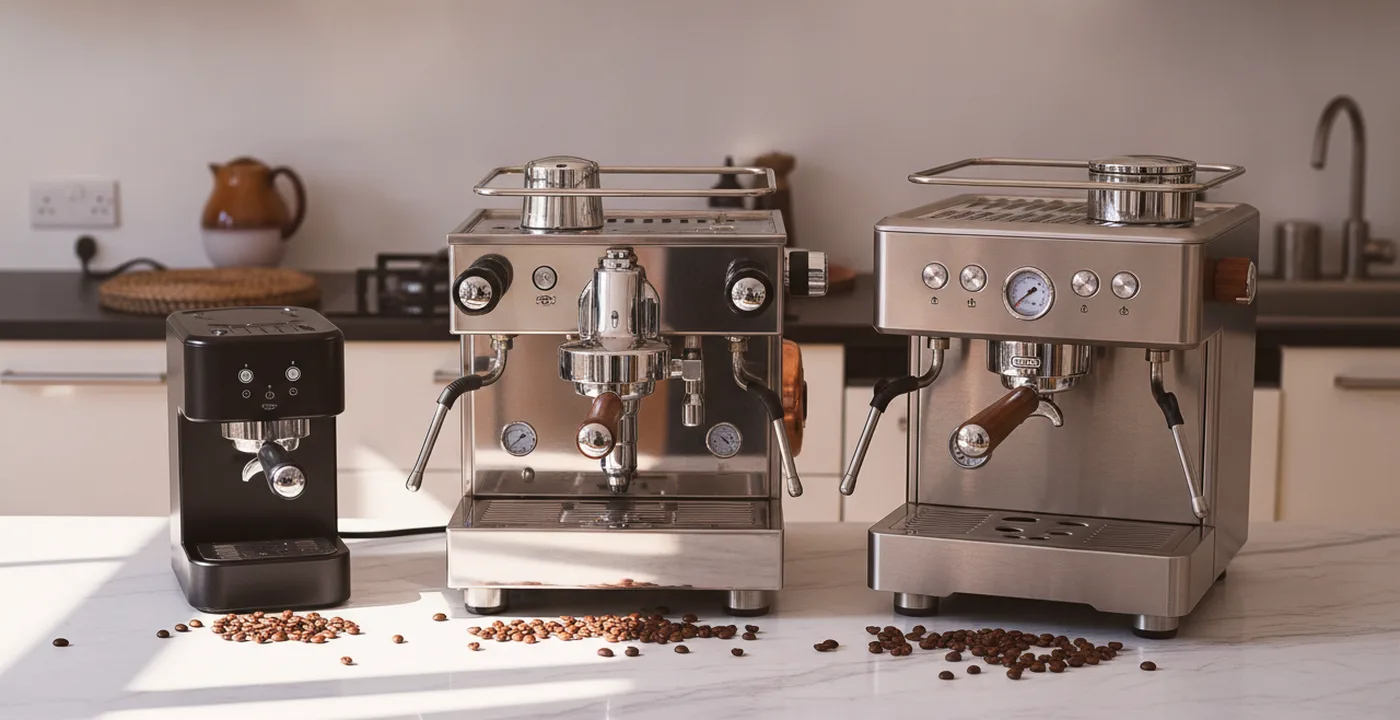
Table of Contents
Some of the links in this article are affiliate links, which help fund our independent review work at no extra cost to you. Every recommendation is based on hands-on testing through The Editor Lab methodology. No brand pays to appear, and no placement is guaranteed.
When you start shopping for a proper espresso machine, you will quickly hit a wall of terminology. Single boilers are the most affordable option but cannot brew and steam simultaneously; heat exchangers allow both at once; dual boilers add independent temperature control for each. Single boiler, heat exchanger, dual boiler - the machines get more expensive as you move along that list, but most guides never explain what you are actually paying for. I spent five and a half years inside Sanremo, one of Italy's leading espresso machine manufacturers, working alongside their engineers and supporting the UK's best roasters. Boiler architecture is the single variable that changes more about your daily workflow than any other spec on the sheet.
This guide explains each system in plain English, shows you what it changes at the cup and at the steam wand, and ends with a decision framework that maps your actual situation to the right architecture. Whether your budget is £400 or £3,000, the right answer depends on how you make coffee, not on which system sounds most impressive. If you want the broader context on where each of these machines sits in the market, the best espresso machine guide covers the full picture first.
I started on a Gaggia Classic Pro. I moved to a Rocket Appartamento. Both decisions were right at the time, for different reasons. Here is what I learned.
What Are the Three Espresso Boiler Architectures?
A boiler is a sealed water tank inside your espresso machine that heats water to the temperatures needed for brewing and steaming. The problem: brewing espresso requires water at roughly 90-96°C - the range specified by the Specialty Coffee Association's brewing standards - while steaming milk requires water above 120°C as pressurised steam. You need two different temperatures, often at the same time, and how the machine delivers both determines the entire ownership experience.
Single boiler: One boiler does both jobs. It switches between them, which means you wait between pulling a shot and steaming milk.
Heat exchanger (HX): One large boiler holds water hot enough for steaming. A copper or stainless coil runs through it, heating fresh water to brew temperature as it passes through. You can brew and steam simultaneously because the two water paths never cross.
Dual boiler: Two separate boilers, one for brewing and one for steaming. Each is independently controlled, typically with a PID (proportional-integral-derivative) temperature controller. The most precise architecture, and the most expensive.
One distinction worth making early: a thermoblock is not a boiler. Machines like the Sage Bambino use a thermoblock - a small heating element that heats water on demand as it passes through a narrow channel. Thermoblocks heat faster but hold less thermal mass than a brass or stainless boiler, which affects temperature stability over multiple shots. Neither is inherently better than the other; they are simply different engineering approaches for different price points and use cases.
Single Boiler Espresso Machines: What They Are and Who They Suit
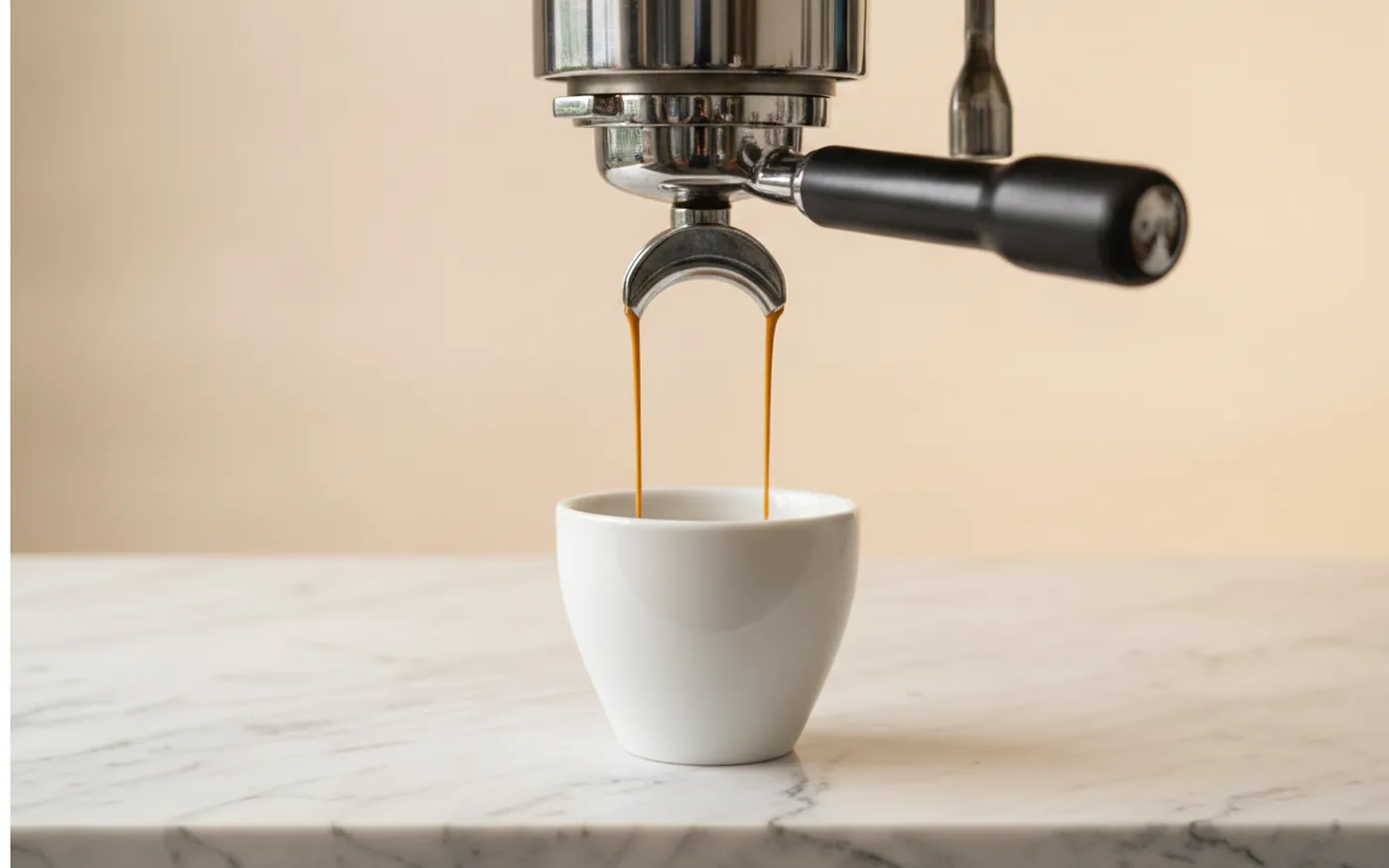
A single boiler machine is exactly what the name says. One boiler. It heats to brew temperature for your espresso shot, then you switch it to steam mode, wait for it to climb to steaming temperature, texture your milk, then wait for it to drop back to brew temperature before you can pull another shot. That cycle - brew, wait, steam, wait - is what home baristas call the brew-steam-brew dance, and how much it bothers you depends entirely on your coffee habits.
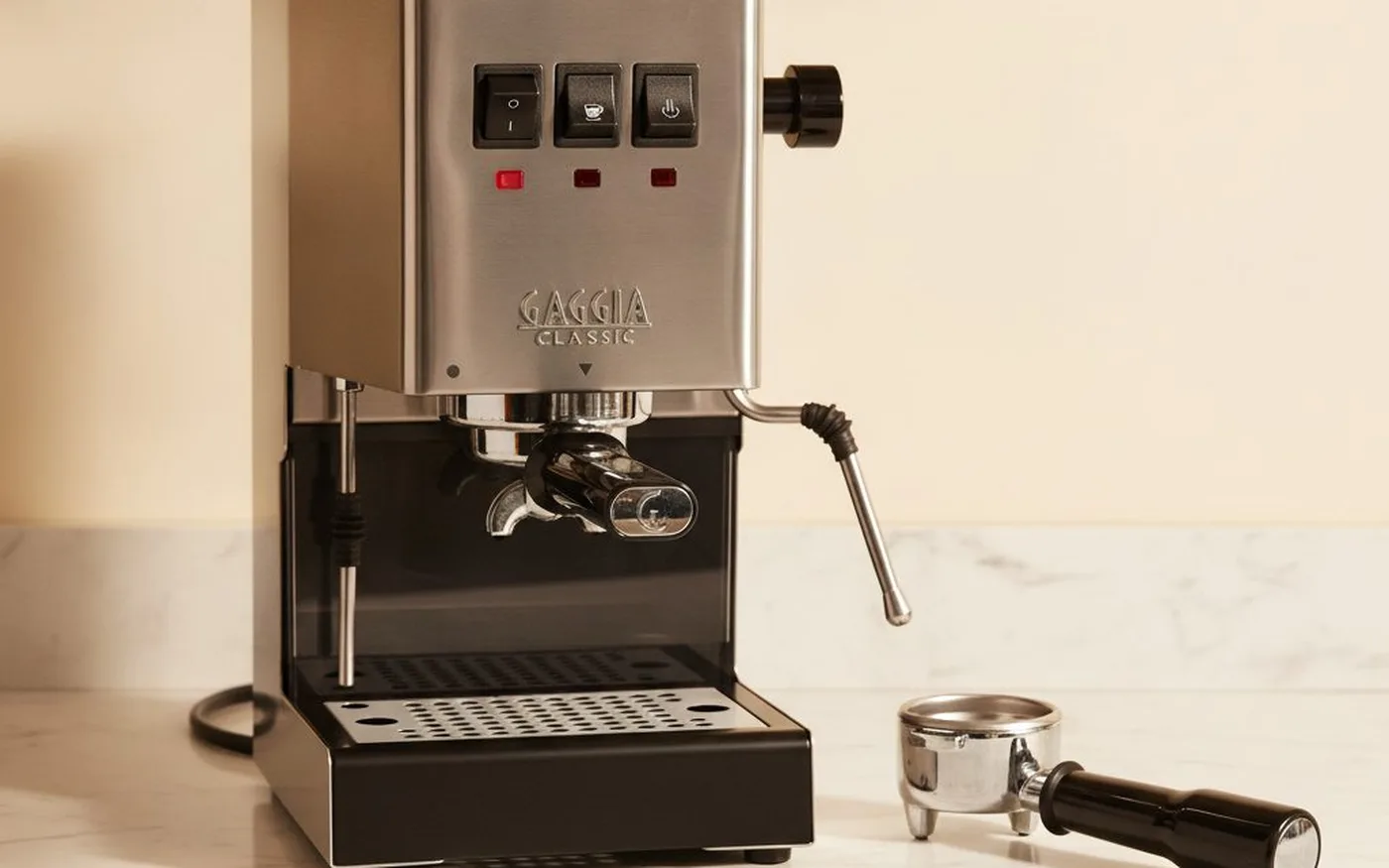
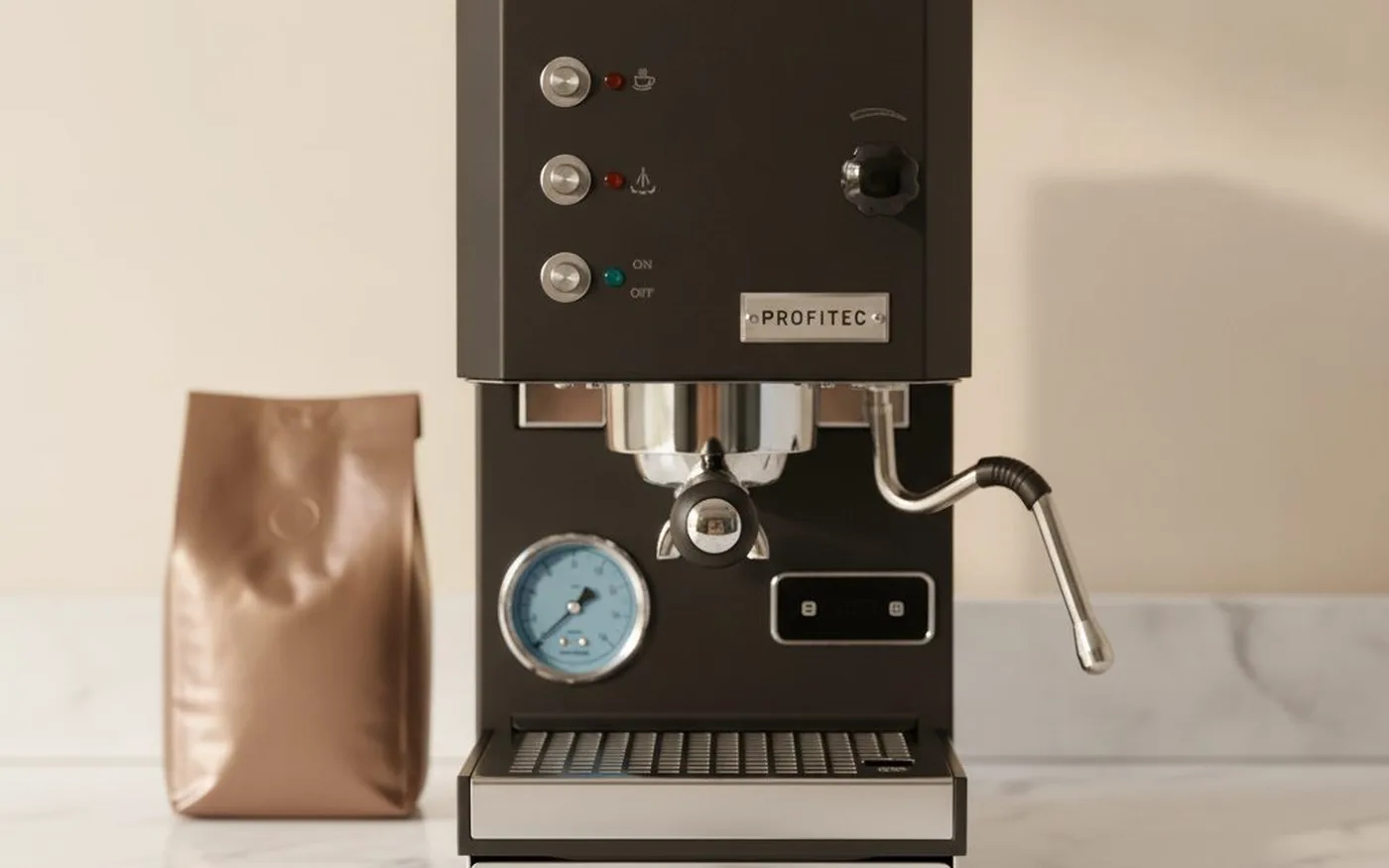
On a quality single boiler like the Gaggia Classic Pro (around £429), brew temperature stability is genuinely good once the machine is properly warmed up - typically 20-30 minutes from cold. The boiler is brass, which holds heat well. The switch between brew and steam mode takes 45-60 seconds in each direction on most entry-level single boilers. On PID-equipped single boilers like the Lelit Anna (around £580) or the Profitec Go (around £750), that temperature management is handled automatically, and you can dial in your brew temperature to within a degree.
Who does a single boiler suit? If you make one espresso or one flat white in the morning, the wait is a minor inconvenience, not a workflow problem. If you regularly make two or three drinks back-to-back for a partner, housemate, or small household, the wait compounds quickly and becomes a real friction point. The Rancilio Silvia (around £685) sits at the premium end of the single-boiler category - a machine with a devoted following and a larger boiler than most in its class, which gives it better thermal recovery between shots.
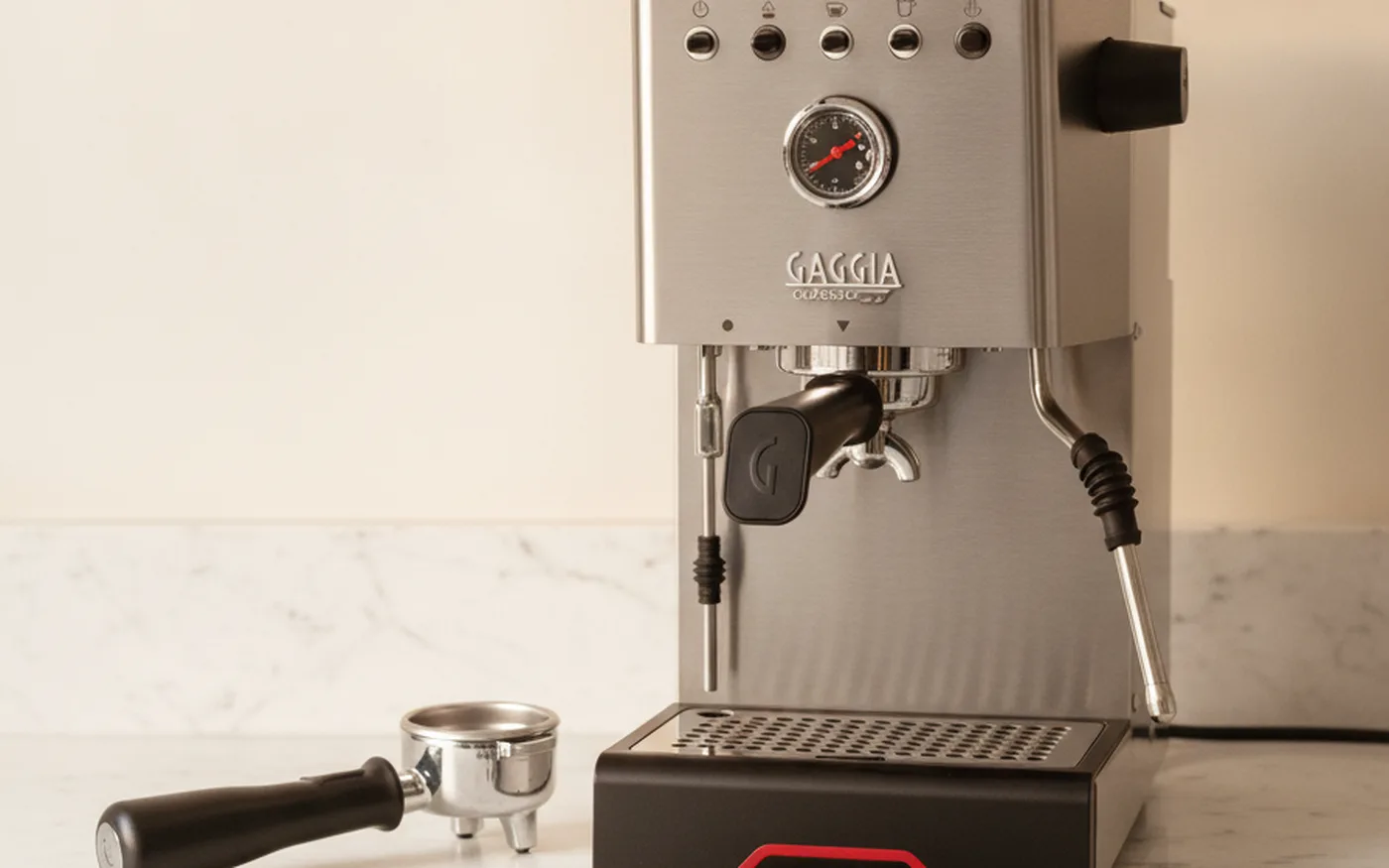
The Gaggia Classic Pro is the single-boiler I would recommend to someone starting out. It is the benchmark for a reason: repairable, tuneable, and honest about what it is. There are no surprises with it. For the full Gaggia Classic Pro review, all the testing notes are there.
One thing worth knowing if you are coming from a pod machine or a superautomatic: single boiler machines require fresh beans and a quality grinder. Pre-ground espresso coffee is always a compromise - ground coffee loses freshness within days of opening, and espresso is more sensitive to stale grounds than any other brew method. Budget for a separate grinder, or look at a machine with one built in.
Heat Exchanger (HX) Espresso Machines: What They Are and Who They Suit
The heat exchanger was the industry's answer to the single boiler problem before dual boilers became affordable at the prosumer level. It is clever engineering, and it works well once you understand its quirk.
An HX machine has one large boiler maintained at steaming temperature (typically 120-125°C). Running through that boiler is a coil - usually copper - that carries fresh cold water from the reservoir to the group head. As that water passes through the coil inside the hot boiler, it picks up heat and arrives at the group head at brew temperature. The coil is long enough that the water reaches the right temperature naturally, without a separate heating element.
The result: you can pull a shot and steam milk at the same time. A guest wants a flat white while you are already mid-extraction. No problem. That is the core value proposition of the HX architecture, and it is a significant one once you have felt the frustration of the single-boiler wait.
The catch is the cooling flush. Because the group head sits idle between shots, water sitting in the coil near the group head overshoots brew temperature - it gets too hot. Before pulling a shot, you flush a small amount of water through the group head to purge that overheated water and drop the coil temperature back to the correct range. Most experienced HX users develop this into muscle memory: flush, let the temperature settle for 30-45 seconds, then pull. On a well-tuned machine like the Lelit Mara X (around £1,195), the HX design includes a clever thermosiphon circuit that largely manages this automatically, reducing the need for a pronounced cooling flush. The Lelit Mara X review covers how that plays out day-to-day.
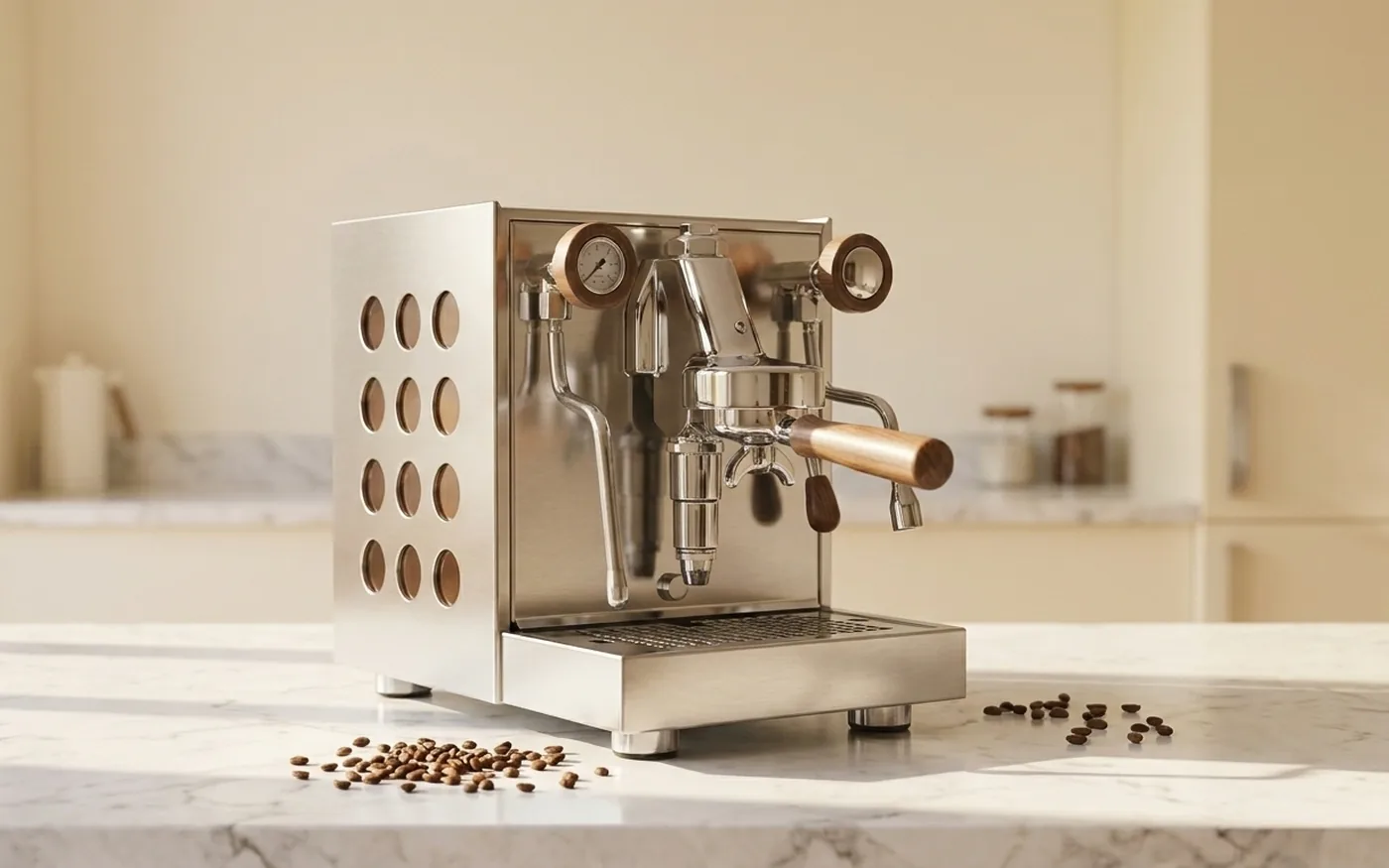
The flagship HX recommendation in this category is the Rocket Appartamento (around £1,400 per the Rocket Espresso UK product page). I have owned and used one. It is the machine that convinced me HX was not a compromise architecture but a legitimate choice for a certain type of home barista - someone who wants back-to-back milk drinks, a machine that heats up fast, and a build quality that outlasts any PID-equipped entry-level machine. The brass boiler and E61 group head on the Appartamento give it exceptional thermal stability once it is up to temperature - typically 25-30 minutes from cold. For the full picture, the Rocket Appartamento review has the testing detail. You can buy through Rocket Espresso's UK site via the Rocket Appartamento page.
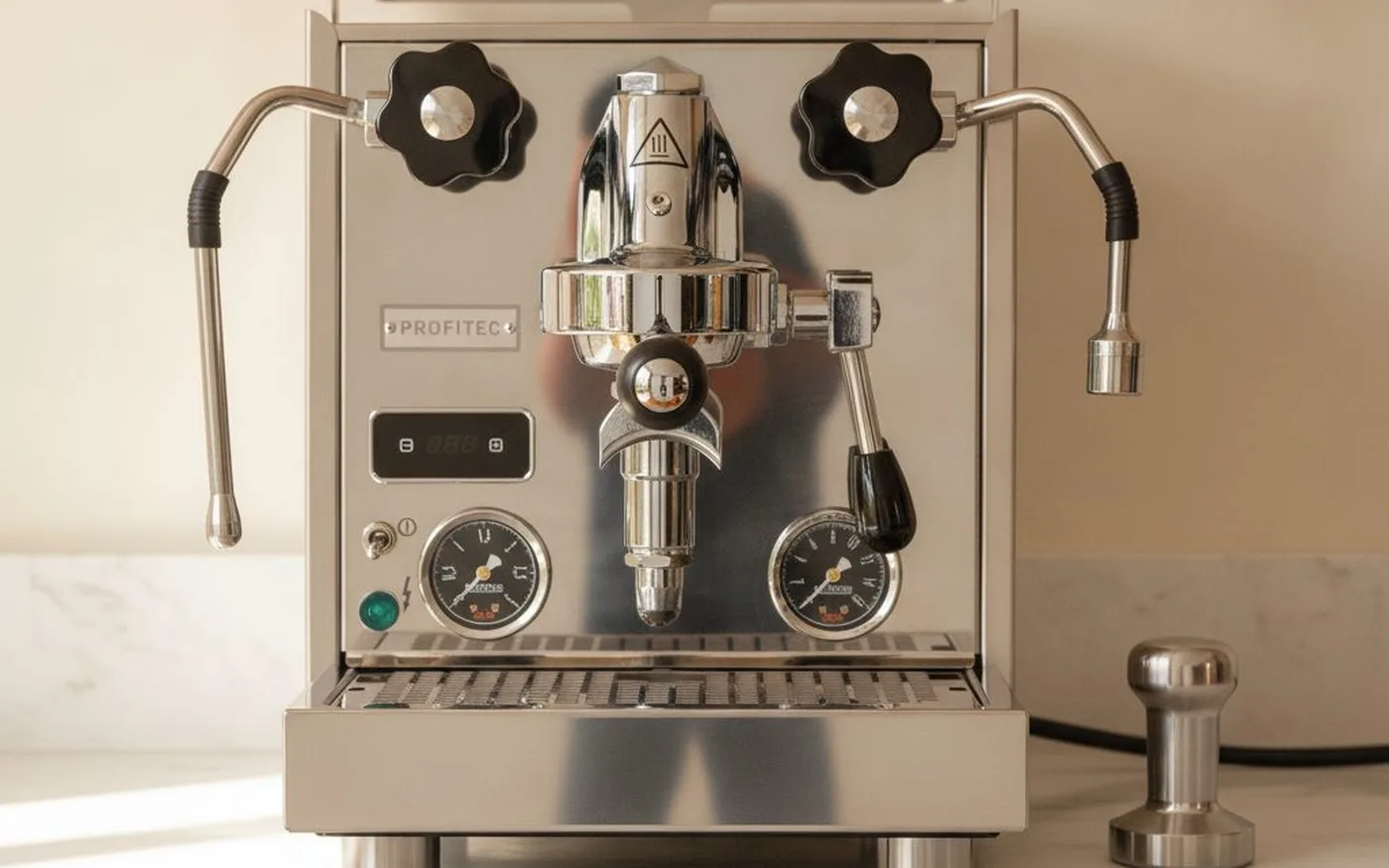
Other notable HX options: the Rocket Mozzafiato (around £1,650) steps up to a larger boiler and a rotary pump for quieter operation, the ECM Classika PID (around £1,899) adds PID temperature control to the HX architecture for finer brew temperature precision, and the Profitec Pro 300 (around £1,650) gives you PID and pre-infusion in a compact HX chassis.
One important point for new buyers: the term 'HX' often gets used as shorthand for 'the category between single boiler and dual boiler' rather than as a precise technical descriptor. The Lelit Mara X is technically an HX machine, but with PID control and thermosiphon management, it behaves more like a dual boiler in daily use. Keep that in mind when you see price comparisons.
Dual Boiler Espresso Machines: What They Are and Who They Suit
A dual boiler machine does what the name promises. Two separate boilers: one for brewing, one for steaming. Each is independently controlled by its own PID. The brew boiler stays at your target brew temperature - let us say 93°C - while the steam boiler sits at 130°C, ready to go. There is no cooling flush. There is no waiting between shots. You pull a shot and steam simultaneously with zero workflow management.
This is the architecture that professional espresso bars have used for decades. What changed in the last ten years is that dual boilers have become achievable at home prices - not cheap, but no longer exclusively the domain of six-figure commercial installs.
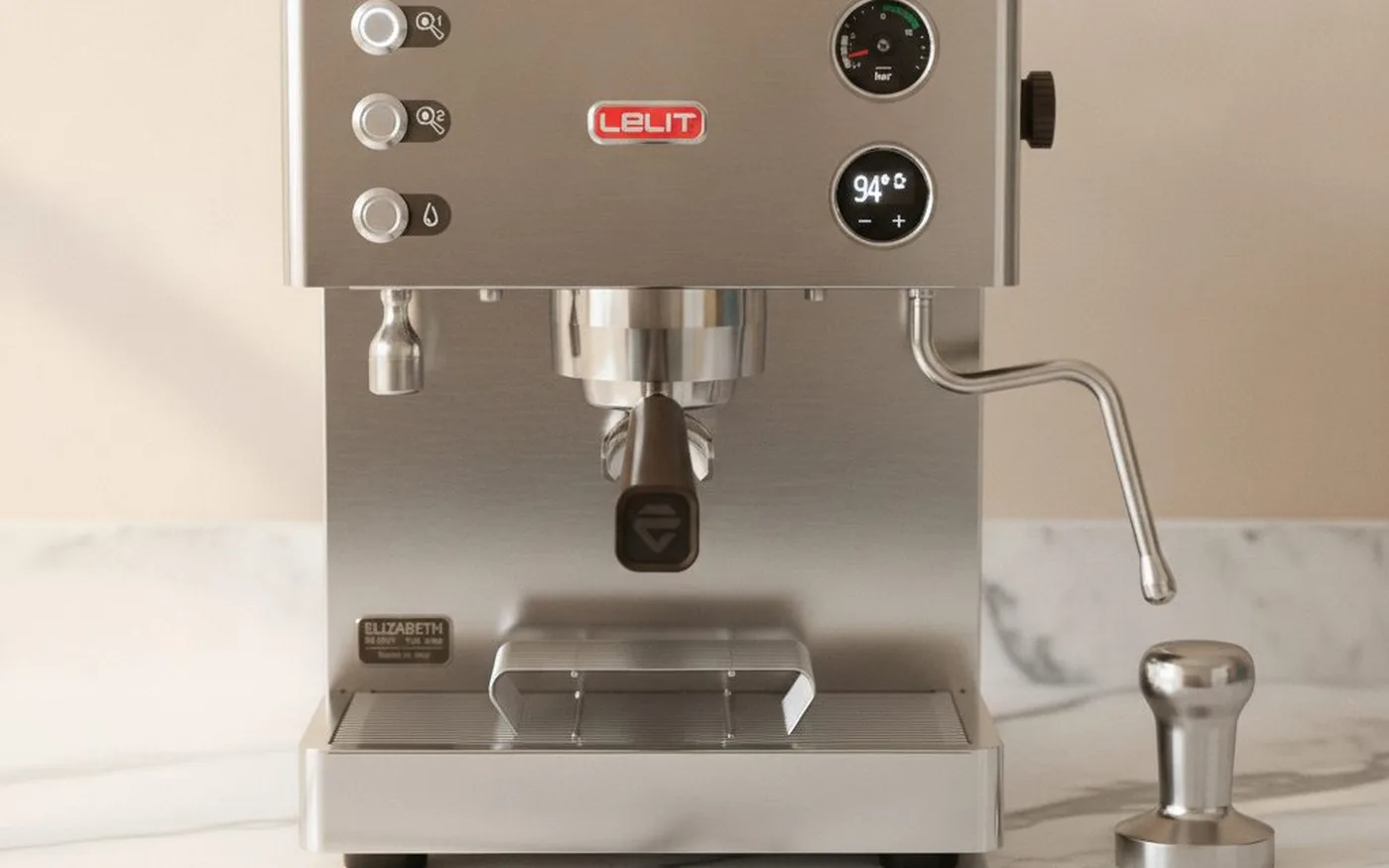
The entry point for dual boiler at home is the Gaggia Classic GT Dual Boiler (around £849) - genuinely impressive for its price, and a machine the Gaggia Classic GT review covers thoroughly. Above that, the Lelit Elizabeth (around £1,295) delivers dual-boiler performance at what was previously HX money. The Lelit Elizabeth on Amazon UK is worth checking for current pricing - this is the dual boiler that changed the value calculation.
Moving up: the Lelit Bianca (around £2,395) adds flow control to the dual-boiler architecture - the ability to adjust water pressure during extraction, which opens up advanced espresso techniques most home baristas eventually want to try. The Lelit Bianca review covers what flow control actually does in practice. The Profitec Pro 600 (around £2,099) and the Rocket R58 (around £2,995) are the other serious dual-boiler options in the prosumer range - the Profitec Pro 600 review and Rocket R58 review are both live if you want the specifics.
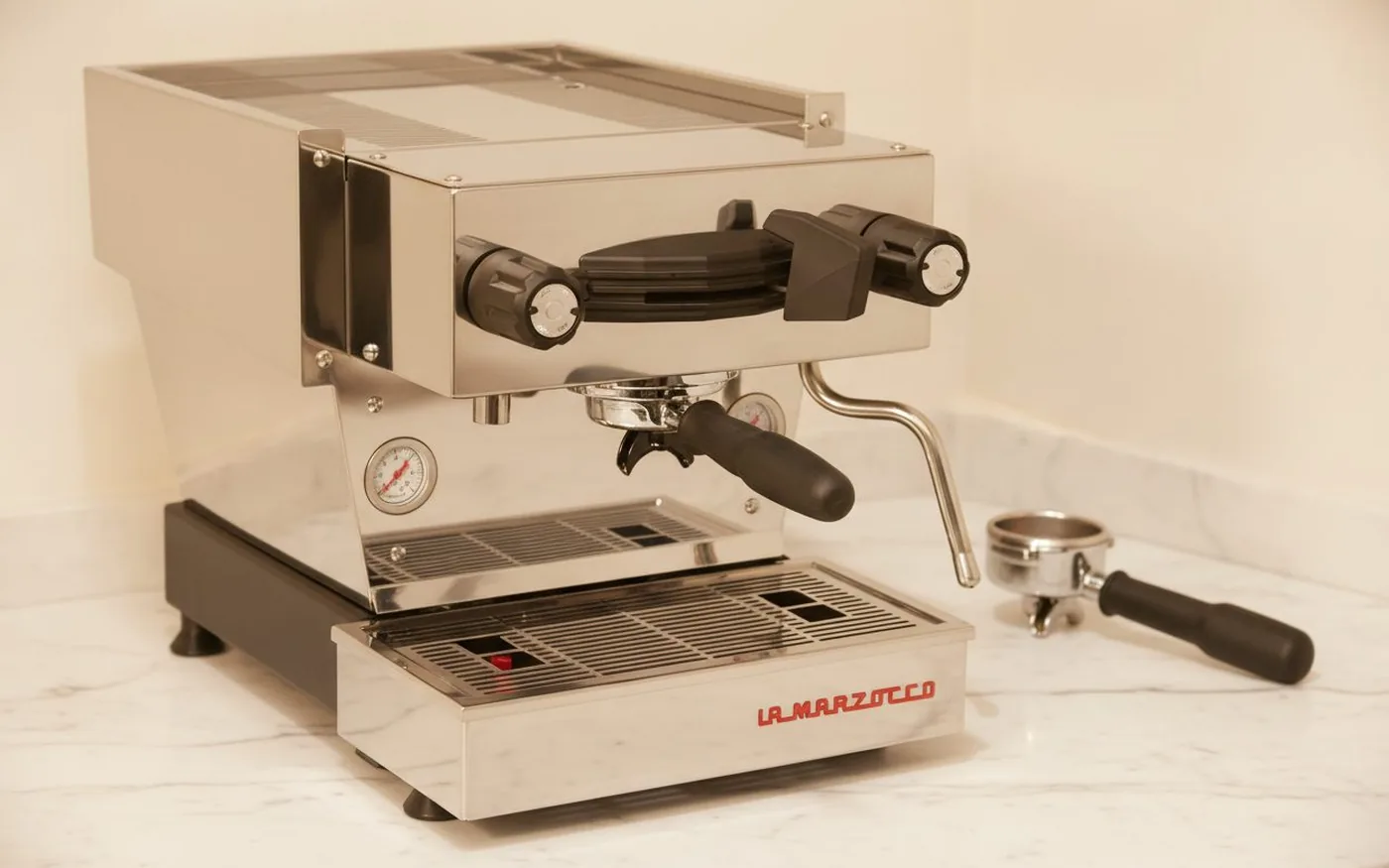
At the aspirational end: the La Marzocco Linea Mini (around £4,945) is the machine that most serious home baristas eventually point at when someone asks them what they actually want. Saturated group head. Commercial build quality in a domestic footprint. The La Marzocco Linea Mini review covers why it is the benchmark. This one routes through the Caffeine Limited programme if you are comparing purchase options.
Warm-up time on dual boilers is longer than HX machines because you have two boilers bringing to temperature. Expect 30-45 minutes on most dual boilers, though the Lelit Elizabeth and Gaggia GT are faster than their price suggests.
Single Boiler vs HX vs Dual Boiler: Head-to-Head
Here is the direct comparison, and then I want to address the question I get asked more than any other in this category: is the heat exchanger dead now that dual boilers are coming down in price?
Comparison Table
| Feature | Single Boiler | Heat Exchanger | Dual Boiler |
|---|---|---|---|
| Temperature stability | Good with PID | Good (coil-dependent) | Excellent (PID per circuit) |
| Simultaneous brew + steam | No | Yes | Yes |
| Warm-up time | 15-25 min | 20-30 min | 30-45 min |
| Cooling flush required | No | Yes (some models minimal) | No |
| Price range | £350-£800 | £1,200-£2,500 | £850-£5,000+ |
| Maintenance burden | Low (smaller boiler, simpler) | Medium (E61 group needs backflushing) | Medium-High (two boilers to descale) |
| Best use case | 1-2 drinks, one person | Multiple drinks, simultaneous steaming | High-volume, precision extraction |
Is the HX Architecture Dead?
No, and the people who claim it is have confused the architecture with the price bracket. What is true: the Lelit Elizabeth at £1,295 puts genuine dual-boiler functionality at a price point that used to belong exclusively to HX machines. That is a significant shift. If you are comparing those two machines at that price point, the Elizabeth wins the technical argument.
But the HX architecture has real advantages the comparison-table specs do not capture. HX machines with E61 group heads - the Appartamento, the Mozzafiato, the ECM Classika - have exceptional thermal mass. The group head itself acts as a heat reservoir, producing shot consistency that many users find hard to distinguish from a dual boiler in practice. They also tend to be simpler mechanically: one boiler means one set of seals, one descaling circuit, and fewer failure points over a 10-year lifespan.
The HX sweet spot is still real: if you want simultaneous brew and steam, build quality that lasts a decade, and a machine that fits on a standard kitchen counter, the Rocket Appartamento at £1,400 is hard to argue against. The dual boiler wins on precise temperature control. The HX wins on thermal mass and often on repairability. Both beat a single boiler for multi-drink households.
Workflow and Warm-Up: What It Is Like to Make Coffee on Each
Specs tell you what a machine is. Workflow tells you what it is like to live with.
Single boiler morning routine: Machine on, 20 minutes for warm-up. Pull your shot. Switch to steam mode, wait 60 seconds. Steam your milk. If your partner wants a second coffee, switch back to brew mode, wait 45 seconds, pull the shot, switch to steam, wait again. Total time from first shot to second completed drink: around 5-6 minutes of active waiting, spread across the process. If you make black espresso only, the wait between brew and steam never applies. Single boiler for black coffee drinkers is a non-issue.
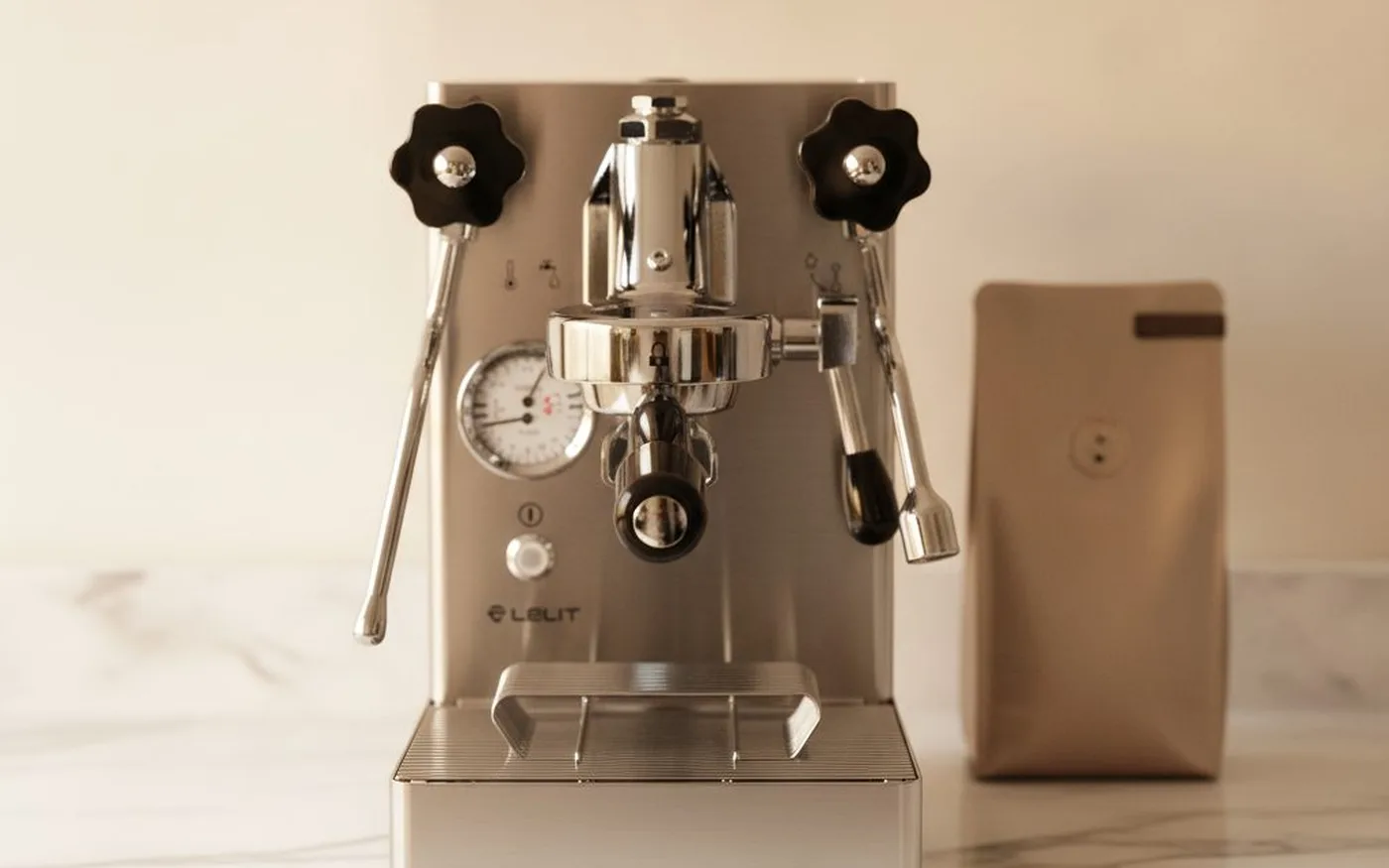
HX morning routine: Machine on, 25-30 minutes for warm-up (the boiler is larger). Before your first shot, do a short cooling flush - 5-10ml through the group head - and wait 30-40 seconds. Pull your shot and steam simultaneously. Second drink: same process, with a brief flush if the machine has been idle for more than a minute or two. The Mara X reduces this flush to a brief purge on most extractions. Once you have the rhythm, HX workflow is genuinely fast and satisfying.
Dual boiler morning routine: Machine on, 35-45 minutes. No cooling flush ever. Pull your shot and steam milk at the same time from the first drink. The PID shows you exact boiler temperatures. Change the brew temperature for a different bean - adjust the PID, wait two minutes, pull. The workflow overhead is almost zero once the machine is up to temperature. The only trade-off is that warm-up time.
Spec Reference Table
| Spec | Gaggia Classic Pro (SB) | Rocket Appartamento (HX) | Lelit Mara X (HX+PID) | Lelit Bianca (DB) |
|---|---|---|---|---|
| Boiler material | Brass | Copper HX in SS boiler | HX with E61 | Dual SS |
| Boiler size | 0.25L | 1.8L total | 1.5L | 0.75L brew / 1.5L steam |
| PID | No (stock) | No | Yes | Yes |
| Warm-up time | 20-25 min | 25-30 min | 25-30 min | 35-40 min |
| Simultaneous brew + steam | No | Yes | Yes | Yes |
| UK price | around £429 | around £1,400 | around £1,195 | around £2,395 |
A note on beans: what you put in the machine shapes the extraction as much as the boiler does. Stable brew temperature matters most with lighter roasts and single-origin coffees where you are trying to highlight specific flavour notes. For espresso beans designed to pull well across a range of temperatures - a well-developed blend with a medium-dark roast profile - the temperature precision of a dual boiler is less decisive. Rotate Espresso from Balance Coffee is the bean I reach for when testing machines in this category - developed specifically to pull cleanly across different machine types and brew temperatures.
For dialling in your grind across any of these machines, the espresso grind size guide covers the process in detail.
Which One Should You Buy? The Decision Framework
Five questions. Answer them in order. The right architecture becomes clear.
Question 1: How many milk drinks do you make per session? One milk drink, then done: single boiler is fine. The wait is 60 seconds, not a crisis. Two or more milk drinks back-to-back: HX or dual boiler. The waiting compounds into a genuine problem at two drinks, and becomes intolerable at three.
Question 2: Are you the only coffee drinker in the household? Solo: single boiler. No simultaneous demand, no simultaneous workflow problem. Partner or family: HX or dual boiler. The value of simultaneous brew-and-steam goes up with every additional person who wants a drink at the same time.
Question 3: What is your honest counter space situation? Under 40cm width: most single boilers fit. Some HX machines (the Appartamento is notably compact for an HX at 27cm wide) also fit. Most dual boilers add width. Measure before buying - not after.
Question 4: What is your actual budget ceiling? Under £800: single boiler is your category. The Gaggia Classic Pro at £429 and the Profitec Go at £750 are the benchmarks. £800-£1,500: this is HX territory (Appartamento, Mara X) or the entry dual boiler range (Gaggia GT, Lelit Elizabeth). The Elizabeth makes dual boiler genuinely available here. Over £1,500: dual boiler earns its price at this level. The Lelit Bianca, Profitec Pro 600, and Rocket R58 are all serious machines. La Marzocco Linea Mini if you are building for the long term.
Question 5: How likely are you to upgrade again in 18 months? High likelihood: buy the single boiler now. Do not over-capitalise on a machine you will outgrow before you have fully explored it. The Gaggia Classic Pro taught me more about espresso than any more expensive machine I have since used. Low likelihood (you want to buy once and keep for 5-10 years): go up one level from where your budget currently sits. The cost-per-shot maths favour the more expensive machine at longer time horizons.
Our Recommendations: One Machine Per Architecture
Single Boiler: Gaggia Classic Pro
The call: Buy this one. Not the budget option above it, not the premium option below. The Gaggia Classic Pro at around £429 is the single-boiler benchmark for a reason.
It has a commercial-spec brass boiler (0.25L per the Gaggia Classic Pro spec sheet), a 3-way solenoid valve that releases pressure after extraction for clean puck removal, and a 58mm portafilter - the same group head diameter used by machines costing ten times more. It is repairable, tuneable, and honest. Every adjustment you make on this machine teaches you something about espresso. When you eventually outgrow it, you will know exactly what you want from the next machine because this one showed you. It is available on Amazon UK with Associates pricing - search for the current model.
Runner-up for PID single boiler: Profitec Go at around £750. You get precise temperature control and a more refined build for the extra spend.
Heat Exchanger: Rocket Appartamento
The call: If you want simultaneous brew-and-steam, back-to-back milk drinks, and build quality that lasts a decade, the Rocket Appartamento is the machine I would buy again.
I have owned one. The E61 group head and copper HX coil produce shot consistency that is indistinguishable from a dual boiler in normal daily use. The cooling flush becomes second nature within a week. At around £1,400, it sits at the same price as the Lelit Mara X - a machine that technically out-specs it on paper (the Mara X has PID, the Appartamento does not). My recommendation is still the Appartamento for most buyers: it is simpler, the thermal mass is excellent, and the build quality is in a different class.
If PID matters to you: Lelit Mara X at around £1,195. The HX-with-PID workflow on the Mara X is genuinely excellent, and the thermosiphon management largely eliminates the cooling flush. The Lelit Mara X review has the specifics.
Dual Boiler: Lelit Elizabeth or Lelit Bianca (by budget)
Entry dual boiler: Lelit Elizabeth at around £1,295. This is the machine that changed the dual-boiler value argument. Dual boilers, PID, independent temperature control, at a price that used to only buy you an HX. The Lelit Elizabeth review covers whether the real-world performance matches the spec sheet.
Aspirational dual boiler: Lelit Bianca at around £2,395. You get flow control on top of the dual-boiler foundation - the ability to shape the pressure profile of your shot. Once you have used a single boiler, then an HX, then a standard dual boiler, flow control is the feature that genuinely changes how you think about extraction. The Lelit Bianca review explains what that actually means at the cup.
For the full context on the prosumer machine category, the best prosumer espresso machine guide covers the complete picture with ranked options across all three architectures.
The Cost-Per-Shot Reality Check
A Gaggia Classic Pro at £429, used for 5 years at two shots per day, costs you 12p per shot in machine depreciation alone (ignoring beans, water, electricity). A Rocket Appartamento at £1,400 over the same period costs 38p per shot. A Lelit Bianca at £2,395 costs 65p per shot.
A standard flat white from a specialty coffee shop in London costs £4.50-£5.50. If you make two flat whites per day and switch from buying them to making them at home, the Rocket Appartamento pays for itself in roughly 300 days. The Lelit Bianca pays for itself in around 520 days - assuming you are already buying two cafe coffees daily. That is the maths the headline price hides. At those numbers, the question is not whether a £1,400 machine is expensive. It is whether you are going to use it every day. If yes, it is almost certainly the cheapest coffee you will ever make.
Editor's Note
When I started in coffee in 2012 - training baristas at UCC, learning the full chain from green bean to extraction - I assumed espresso machines were complicated equipment that only professionals could navigate properly. I bought a Gaggia Classic Pro when I moved into my first flat that had counter space for it. Spent a year with it, learned where it had limits, and started to understand exactly what I wanted that it could not give me.
The limit was the same one it always is with a single boiler: back-to-back milk drinks. I was making two or three espresso drinks in the morning for myself and anyone who happened to be around, and the wait between brew and steam mode was the friction point that mattered. Moving to a Rocket Appartamento - the HX architecture in practice - was not a revelation in cup quality. The shots were not dramatically better. What changed was the workflow. Pulling a shot and steaming milk simultaneously, every time, without planning around a boiler switch. That is what the extra spend bought, and it was worth it for the way I use coffee.
The architecture question is a workflow question. Answer that honestly first, and the machine follows.
James Bellis, founder, Balance Coffee
Frequently Asked Questions
What is the main difference between a single boiler and a dual boiler espresso machine?
A single boiler uses one water tank for both brewing espresso and steaming milk. It has to switch between the two temperatures sequentially, which means waiting 45-60 seconds between pulling a shot and steaming milk. A dual boiler has two separate, independently controlled boilers - one for brewing at around 93°C and one for steaming at around 130°C. You can brew and steam simultaneously, with no switching time, and both temperatures are held precisely by independent PID controllers.
Is a heat exchanger better than a dual boiler?
It depends on what you are optimising for. A heat exchanger lets you brew and steam simultaneously, which it shares with a dual boiler. The HX advantage is thermal mass - the large boiler and E61 group head hold heat consistently across multiple shots. The dual boiler advantage is independent temperature control: you can dial in your brew temperature to the exact degree without a cooling flush. For most home baristas making two to four drinks per session, the practical difference in the cup is smaller than the spec sheets suggest.
How long does a heat exchanger machine take to warm up?
Most HX machines with an E61 group head take 25-35 minutes to reach stable operating temperature. The group head needs to reach thermal equilibrium alongside the boiler - rushing this results in inconsistent shot temperatures. Some machines with larger boilers (like the Rocket Mozzafiato) take slightly longer. PID-equipped HX machines like the Lelit Mara X can signal readiness more accurately, but the physical warm-up time remains similar.
Can you steam milk and pull a shot at the same time on a single boiler?
No. A single boiler machine cannot brew and steam simultaneously because it only has one boiler, and that boiler must be at two very different temperatures to perform the two tasks. You pull your shot at brew temperature (90-96°C), then switch the machine to steam mode and wait for the boiler to climb above 120°C before you can steam milk. This is the core workflow limitation of the single boiler architecture, and the main reason buyers move up to an HX or dual boiler.
What is the cooling flush on an HX machine?
The cooling flush is a short burst of water - typically 5-10ml - that you run through the group head before pulling a shot on a heat exchanger machine. When the machine sits idle between shots, water in the HX coil near the group head absorbs extra heat and overshoots your target brew temperature. The flush purges that overheated water and brings the coil back down to the correct range. On most HX machines you then wait 30-40 seconds before extracting. On the Lelit Mara X, the thermosiphon circuit largely manages this automatically.
Are dual boiler espresso machines worth it for home use?
Yes, if your household makes two or more espresso drinks regularly and temperature precision matters to you. The arrival of dual boiler machines at under £1,300 (Lelit Elizabeth, Gaggia Classic GT) has made the architecture genuinely accessible for home use. If you are a solo black coffee drinker who pulls one shot per day, you are paying for capability you will never use. If you regularly make back-to-back flat whites, cortados, or cappuccinos for more than one person, the workflow improvement of a dual boiler is immediate and daily.
Which boiler type is best for back-to-back milk drinks?
Heat exchanger and dual boiler machines both handle back-to-back milk drinks well because both allow simultaneous brewing and steaming. For two to four drinks in a session, either architecture works. Where dual boiler has an edge is consistency across a longer session - independent temperature control means the brew temperature does not drift as the machine works harder. For most home use cases, a quality HX machine like the Rocket Appartamento handles back-to-back drinks without issue.
For a £1,500 budget, should I buy a heat exchanger or a dual boiler espresso machine?
At £1,500 in 2026, you can reach either architecture. The Rocket Appartamento (HX, around £1,400) and the Lelit Elizabeth (dual boiler, around £1,295) are both within reach. My recommendation depends on your priorities: if you want simultaneous brewing and steaming with outstanding build quality and minimal workflow management, the Appartamento. If you want independent temperature control, PID precision, and the dual-boiler architecture at the lowest entry point, the Elizabeth. Both are excellent machines. The Elizabeth edges ahead on pure specification; the Appartamento edges ahead on build quality and long-term reliability.
A wellness entrepreneur and biohacker, James explores the intersection of hospitality and health - from clean fuel and recovery tools to mindful routines that build balance into daily life.