Gaggia Classic Pro Review
The last machine before professional territory, and the best long-term value in entry espresso for the buyer willing to learn.
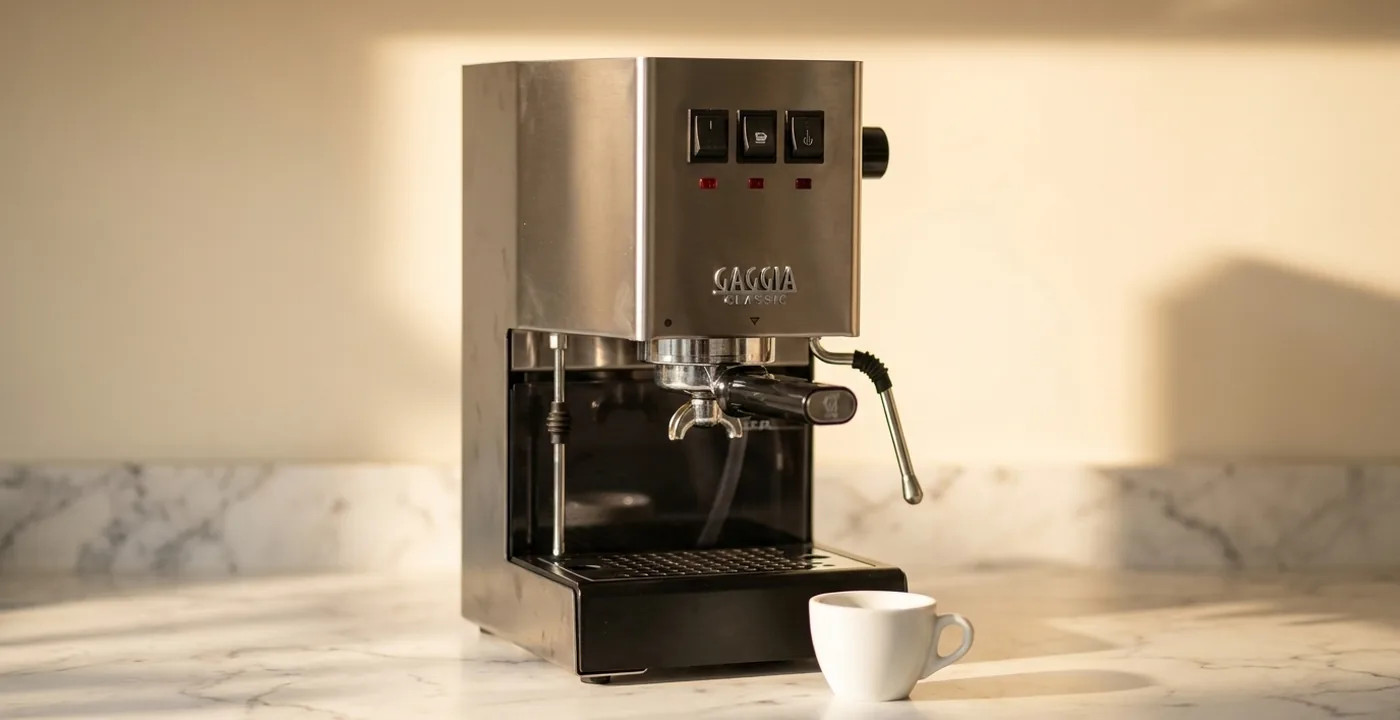
Table of Contents
Some of the links in this article are affiliate links, which help fund our independent review work at no extra cost to you. Every recommendation is based on hands-on testing through The Editor Lab methodology. No brand pays to appear, and no placement is guaranteed.
The Gaggia Classic Pro is the cult traditional espresso machine that has barely changed in decades because it did not need to. Same Italian shell, same commercial 58mm portafilter, same single aluminium boiler that has anchored the line since the 1990s. The 2019 Pro revision tightened a few internals, the solenoid valve, the steam-knob actuation, the wiring, but the philosophy stayed intact. This is a manual machine that gives you everything a professional barista uses, in a kitchen-sized footprint, and nothing else. There is no PID as standard, no pre-infusion, no on-board display. You learn how to dial in espresso on it, or you walk away from it.
I tested the Classic Pro against three questions: whether the 58mm commercial basket genuinely lifts the espresso ceiling above the prosumer competition, what the stock machine actually delivers before any of the famous modifications, and whether the decades of parts, PID kits, OPV adjustments and Rancilio Silvia wand swaps are real value or repeated folklore. All specifications and the current UK price were web-verified at the time of writing, and the verdict draws on first-hand use plus the manufacturer-side espresso training I picked up across five and a half years inside an Italian espresso machine company.
Disclosure: I founded Balance Coffee in 2020. We do not sell coffee machines, so this review recommends no product of mine.
Editor's Note
- Score: 4.5 / 5
- Best for: Buyers who want to learn real espresso and keep one machine for a decade.
- Not for: Anyone wanting push-button convenience or built-in grinding.
- UK price: Around £429 as of May 2026.
- One-line verdict: The last machine before professional territory, and the best long-term value in entry espresso for the buyer willing to learn.
Gaggia Classic Pro Review: The Verdict
Two facts decide whether the Classic Pro is right for you. The first is that it uses a 58mm commercial portafilter, which is the same size used on professional espresso machines in cafes across the country. The second is that the stock machine gives you no automation, no PID, no pre-infusion, no gauge as standard. Put those facts together and you have a home espresso machine with a professional ceiling and no safety net underneath it.
That combination is the source of every conversation about this machine. On the upside, it means a Classic Pro with a decent grinder will pull espresso that holds its own against far pricier prosumer rivals. The basket is the same size, the puck behaves the same way, and the technique you learn here transfers directly to a commercial bar. On the downside, it also means the machine cannot rescue a bad grind, a sloppy distribution or an impatient hand. If you do not want to learn, you will be unhappy.
A buyer with no barista experience can absolutely start here. The honest caveat is that you have to want to learn. The Classic Pro will reward patience and punish hurry, and on day three when the shot still tastes off, the machine is not the problem. With a sensible grinder, a kitchen scale and a few weeks of practice, the Classic Pro produces espresso that justifies its decade-long cult status. Anyone wanting a one-touch flat white on the way out the door should look at the sage barista express review or a bean-to-cup instead.
For most buyers prepared to learn, this is the best long-term value in entry espresso. The score: 4.5 out of 5.
What Makes the Classic Pro Different: Commercial-Grade Components
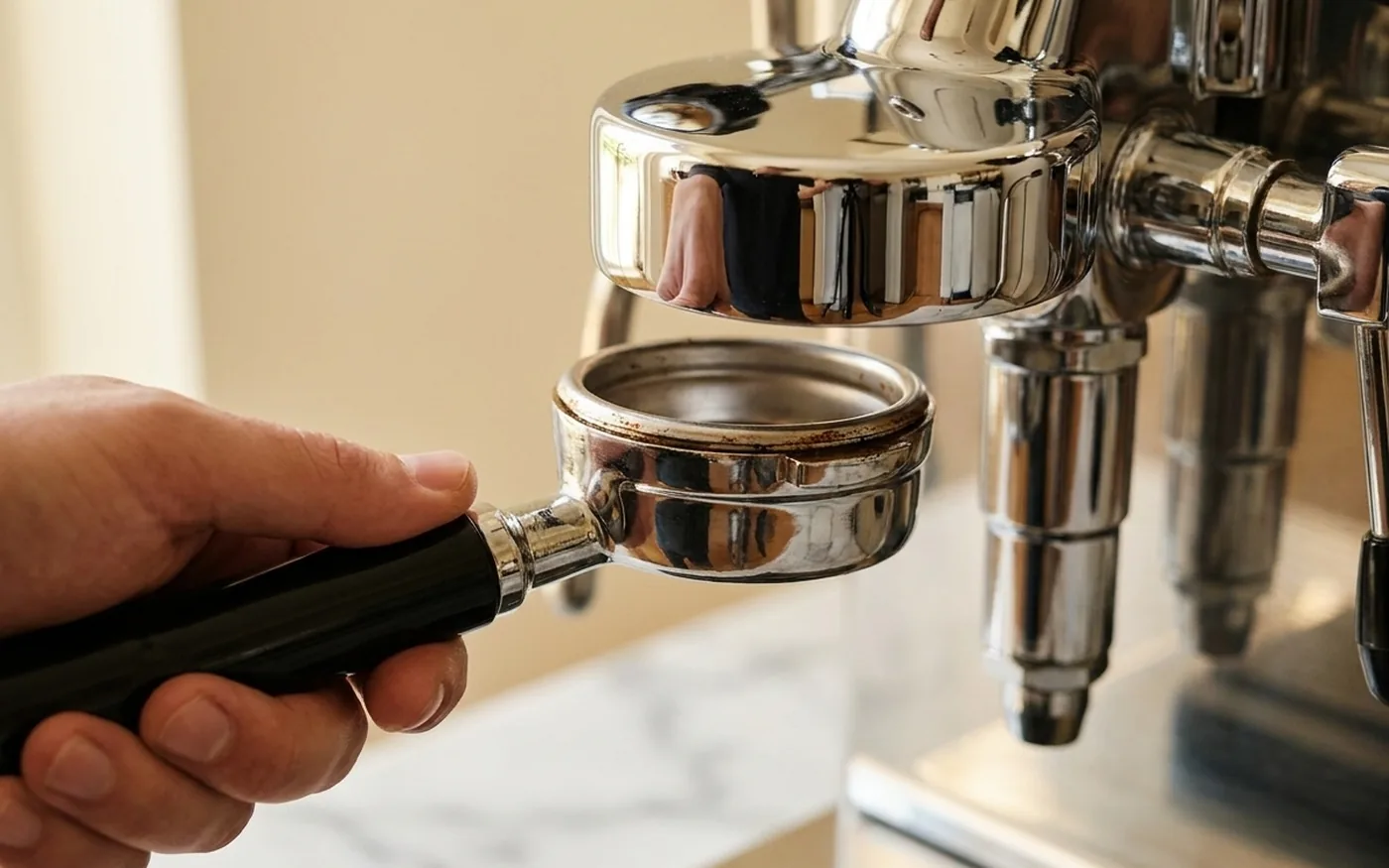
The differentiator on the Classic Pro is not a feature on the spec sheet. It is the parts inside. The portafilter is 58mm, brass, and chrome-plated, which is the same dimension used on professional espresso machines you see behind cafe bars. The pump is a vibratory pump rated to 15 bar that drives water through an OPV (over-pressure valve) factory-set high, more on that in the modifications section. The boiler is a single aluminium boiler with a brass group, heavy enough to give the machine real thermal inertia for its size. The housing is stainless steel. The machine weighs around 7.5kg and feels it.
None of this is unusual for a commercial machine. It is unusual at this price. Most home espresso machines in the £400 to £500 band use 54mm or 51mm portafilters, plastic-bodied groups, and pressurised baskets that mask grind issues. The Classic Pro uses commercial sizing and a non-pressurised basket option, which is why the technique you develop on it transfers cleanly to a professional bar. According to the Specialty Coffee Association, the espresso brewing standard sits at 9 bar of pressure at the puck, and the 58mm puck geometry is what most extraction research assumes.
The other consequence of using commercial sizing is the aftermarket. Replacement gaskets, dispersion screens, shower screens, portafilter baskets, steam wands, PID kits and OPV springs all exist for this machine because the components are interchangeable with parts the cafe trade has stocked for decades. People keep a Classic Pro for ten years because it can be modified and repaired, not replaced. The 58mm portafilter on the Classic Pro is the same dimension I worked with daily at espresso-manufacturer level, which is exactly why the technique transfers in both directions.
For full Gaggia range context and where the Classic Pro sits against the rest of the line, see the best Gaggia coffee machine ranking.
Espresso Quality: The 58mm Portafilter Advantage
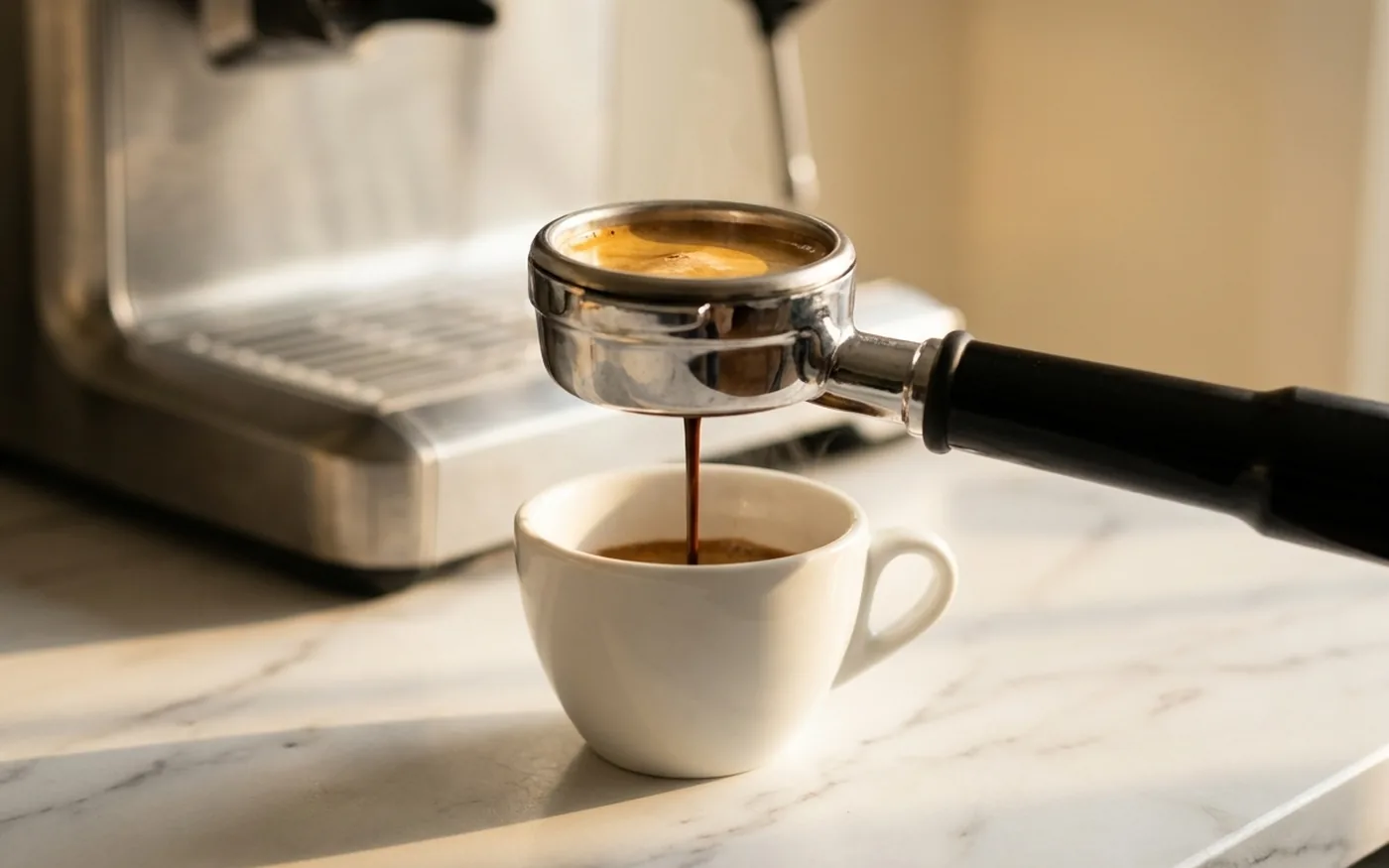
This is the section that decides the review. With a good grinder and the standard, non-pressurised basket the Classic Pro ships with, the espresso is excellent. Not "good for the price." Excellent. The 9-bar puck behaves the way a 9-bar puck on a commercial machine behaves, the dose window is the same, and the shot times are the same. A 18g VST-style basket pulled into a 36g cup in 27 to 32 seconds, with a coarse-fine grinder adjustment as the only variable. That is the same dialling-in process I learned on traditional commercial machines, and the Classic Pro is the one home machine that rewards that same discipline rather than hiding it.
The taste in the cup is unambiguous. Single-origin Ethiopian naturals come through with the floral and stone-fruit clarity you expect from speciality coffee. A washed Colombian holds its sweetness through the body without going thin. A darker espresso blend pulls into a heavy chocolate, with the crema sitting tight and slow-fading rather than the thick foam a pressurised basket produces. Anyone moving up from a pod machine or an entry bean-to-cup will hear and taste the difference on the first decent shot.
Now the friction. The Classic Pro gives you nothing for free. No PID, no pre-infusion, no gauge, so if your grind, dose or technique is off, the machine will not save the shot. That is the point, and it is also exactly why an impatient buyer will hate it. Boiler temperature creeps over the course of a session, which means the second and third shots taste different from the first unless you cool-flush the group. A bad bag of beans, or beans more than a few weeks past roast, will show up in the cup with no hiding place. There is no algorithm between you and the puck.
The grinder matters more here than on any other machine in this category. With pre-ground espresso, the Classic Pro will give you something drinkable, but the ceiling you are paying for stays out of reach. With fresh-roasted beans and a £150 to £250 grinder, the Classic Pro lifts into the kind of cup that a commercial cafe would happily serve. The beans themselves are the second variable that decides the cup, and our best coffee beans uk ranking is a sensible starting point if you are dialling in for the first time. Treat the grinder budget and the bean budget as part of the machine cost, not as optional extras. Buyers looking at the wider entry-prosumer field should also see the best espresso machine under 500 comparison once it is live.
Milk Steaming and the Panarello Wand
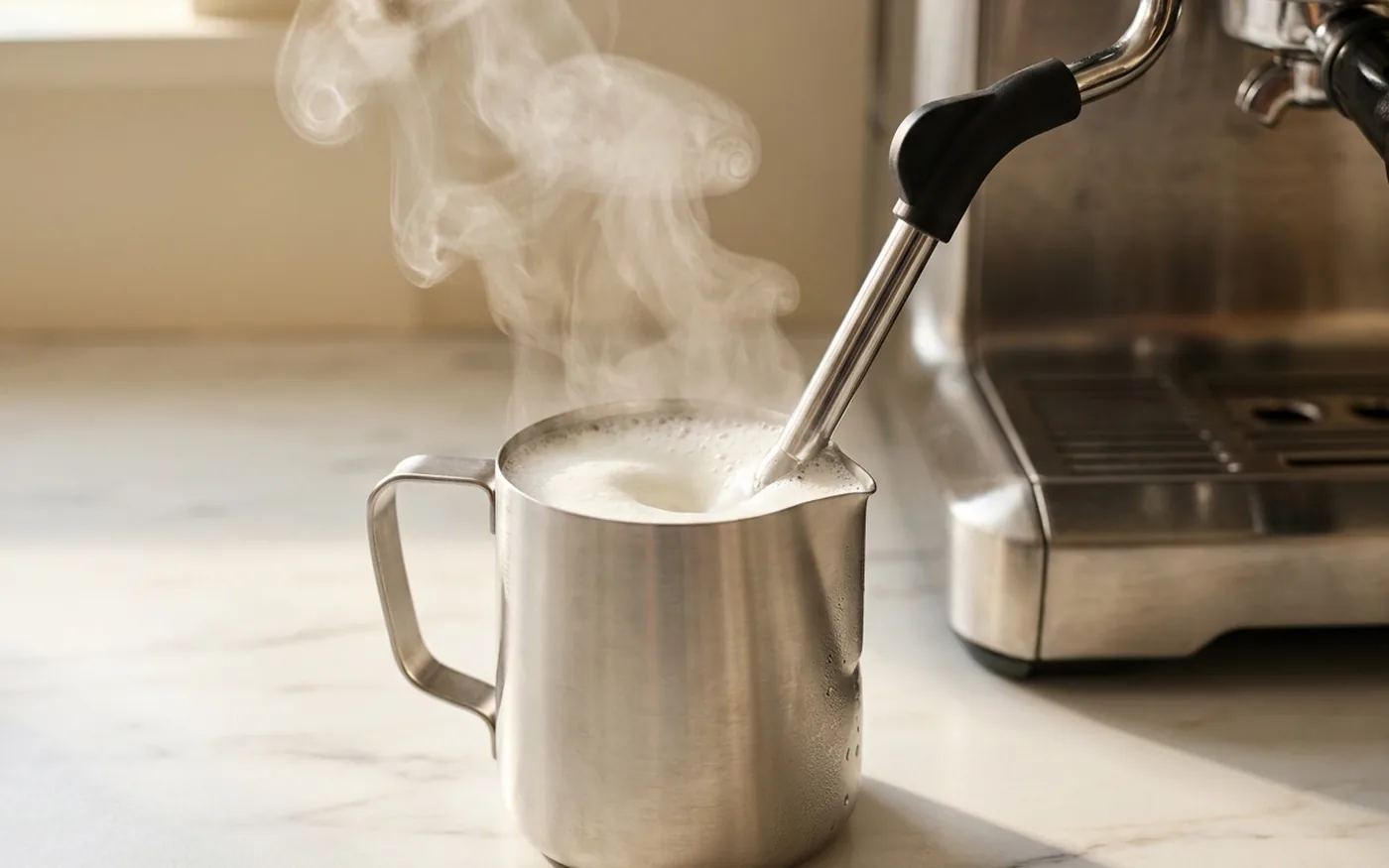
The Classic Pro's single boiler delivers genuinely strong steam. Stronger, in fact, than several pricier rivals with more sophisticated electronics. The boiler heats to steam temperature quickly, the steam comes out dry rather than wet, and the volume is enough to texture a 350ml jug of milk to drinking temperature in around 30 to 40 seconds. The mechanics of the steam side are not the issue.
The wand is. Out of the box, the Classic Pro ships with a Panarello-style wand, which is a dual-hole wand wrapped in a plastic sleeve that draws air into the milk automatically. It is forgiving for a first-time user and produces the bubbly foam most home coffees ride on. What it does not produce is true microfoam. The bubbles are larger and less stable, and the texture does not pour into the tight rosetta or tulip shapes that latte art depends on. You can make a perfectly acceptable cappuccino. You cannot make a Saturday-morning flat white that looks like the one in the cafe.
The stock Panarello steam wand makes foam, not microfoam. If latte art matters to you, factor in a Rancilio Silvia steam wand swap from day one. The Classic Pro is brilliant value, but the milk side is the part that quietly expects a modification. The Rancilio Silvia wand is a direct fit on the Classic Pro, costs around £30 to £50, and converts the milk performance from "decent home cappuccino" into "professional-bar microfoam" in one screw-on swap. It is the single highest-impact modification on the machine and the one I would budget for before the PID. With the Silvia wand fitted, properly stretched microfoam has a specific sound during the stretch phase, a quiet hiss rather than a roar, and the Classic Pro's boiler has the steam power to produce it consistently.
If milk drinks are the centre of your coffee day rather than the side dish, this is the trade-off you need to price in. The machine is more capable than the wand it ships with.
The Learning Curve: An Honest Assessment
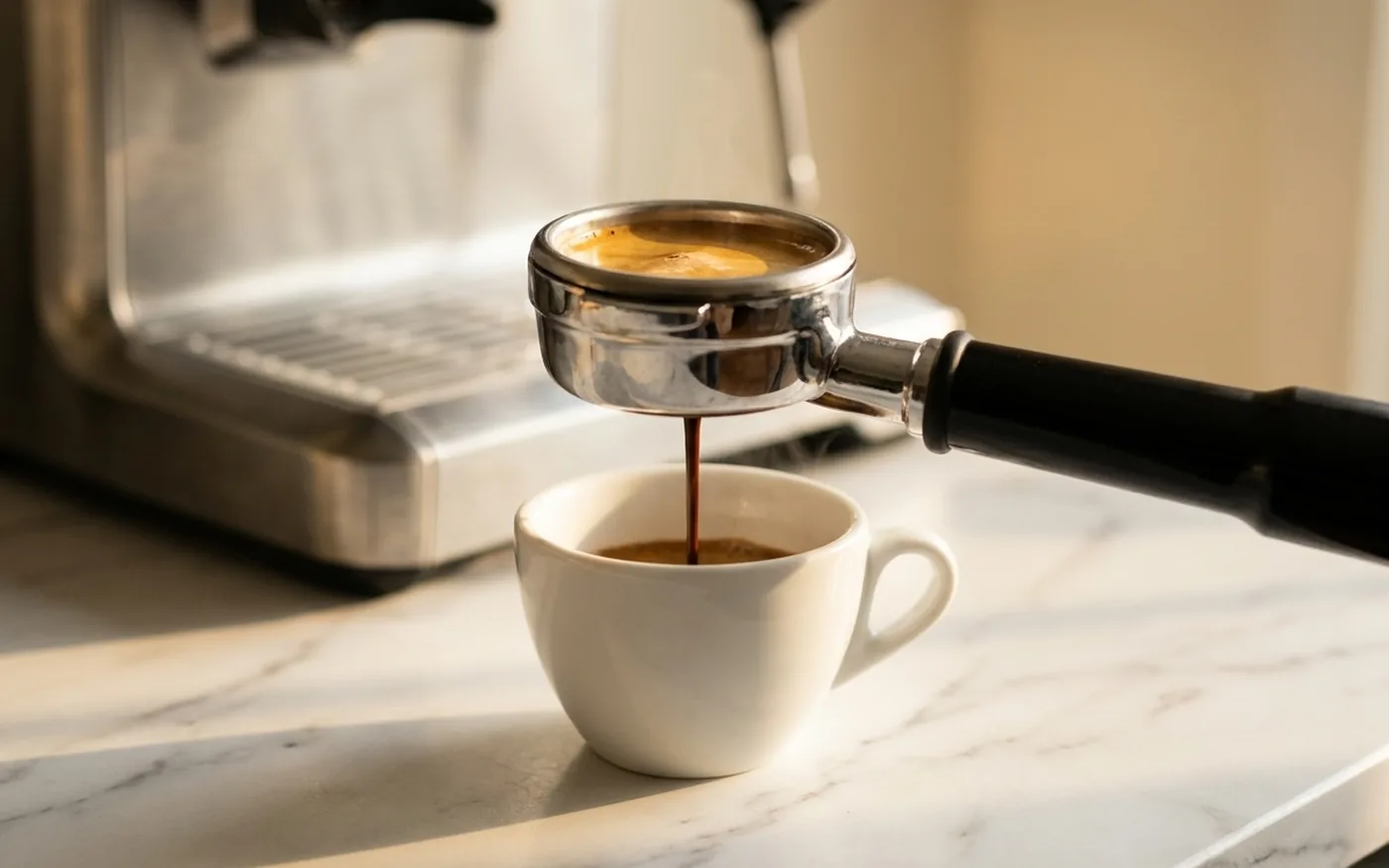
The Classic Pro does nothing automatically. It heats water, it pumps water through a puck, and it produces steam. Every other variable, grind size, dose, distribution, tamp pressure, shot time, milk technique, lives with you. That is either the best news in the review or the worst, depending on the buyer.
A total beginner can learn on this machine. I have seen it happen in plenty of home kitchens, including with people who had never pulled a shot in their life before unboxing a Classic Pro. The path looks like this: a week of bad shots while you find the grinder setting, a week of shots that work intermittently while you stabilise dose and tamp, then a week where the cup starts to be reliably good. After a month, you have technique that transfers directly to any 58mm commercial machine. That is a real skill, and the Classic Pro is one of very few home machines that genuinely teaches it.
The impatient buyer will be miserable. If your expectation is to push a button on day one and pour a perfect flat white, the Classic Pro will frustrate you and you will return it. There is no PID telling you the boiler is ready, so you learn to time the warm-up. There is no pre-infusion smoothing the start of the shot, so you learn to grind finer than you think. There is no shot timer, so you learn to count or use a phone. Every absence is a learning opportunity that the machine assumes you want to take.
Fourteen years across coffee training, espresso-machine sales and Balance Coffee has shown me one thing about the Classic Pro: people keep it for a decade because it can be modified and refined, not replaced. The technique you build on it ages with you. Anyone weighing up entry options should also see the best espresso machine for beginners roundup for a wider field once it is live, but the Classic Pro sits at the demanding end of that list, not the gentle one.
Modifications: PID, OPV and What's Worth Doing
The Classic Pro is the machine the modification culture grew up around. Stock, it is genuinely good. Modified, it edges into territory that should not be possible at this price.
The three modifications worth pricing in are well-known. The PID controller replaces the stock pressurestat with a digital temperature controller, holding the boiler at a stable target rather than letting it cycle. PID kits run roughly £80 to £150 and either solder in or plug in depending on the kit. The benefit is consistent shot temperature from the first cup to the fifth, which is the variable that quietly causes most "why does shot three taste off" mysteries on a stock machine. The OPV adjustment drops the over-pressure valve from the factory setting of around 11 to 12 bar down to the 9-bar SCA standard used on commercial machines, which gives a slightly slower, sweeter extraction with less channeling at the basket edge. The Silvia steam wand swap is the milk-side fix covered in the section above.
Beyond those three, the optional layer is preference rather than upgrade. IMS or VST precision baskets give you tighter tolerances on the puck and a marginally cleaner extraction. A naked, or bottomless, portafilter lets you see channeling directly, which is a fast feedback tool for learning rather than a flavour change in itself. A dispersion screen mod improves water flow across the puck on heavily used machines. None of these are required for good coffee.
Here is the reassurance worth stating clearly. The stock Classic Pro produces excellent espresso before any of these modifications. The PID, the OPV, the Silvia wand are upgrades to a machine that already works, not fixes for a machine that does not. If you cannot or do not want to modify, buy a stock Classic Pro, fit a decent grinder, and you will still be ahead of every push-button machine at this price. The platform is real, the parts are available, and the path from stock to fully modified is one you can walk at your own pace.
Classic Pro vs the Alternatives
Three machines come up in every Classic Pro decision. The first is the Sage Barista Express, which packs a built-in conical burr grinder, a PID, pre-infusion and a pressurised basket option into a single unit. The Barista Express is easier from day one, removes the second-purchase question, and gets you to a passable cup faster. The trade-off is the ceiling. The Barista Express grinder is decent, not great, the steam wand is single-hole on a single boiler, and the platform does not have the Classic Pro's two-decade modification ecosystem behind it. For a buyer who wants one machine on the counter and one button to push, it is the right call. For a buyer who wants to learn, the Classic Pro wins on long-term return.
The second is the delonghi dedica review, our forthcoming take on the slim 15-bar entry machine. The Dedica is significantly cheaper, sits in a far smaller footprint, and is one of the most forgiving entry espresso machines on the market. It is the right answer for a buyer with a tight kitchen and a tight budget. The ceiling is lower, the portafilter is 51mm rather than 58mm, and the technique you learn does not transfer to commercial sizing. Different machine, different buyer.
The third comparison is internal to the Gaggia line. The Classic Evo Pro is the latest revision, with cosmetic updates and small internal changes including a re-spec of some materials and an updated wiring loom. The Classic Pro remains in stock through many UK retailers and is in many cases the more cost-effective option. Day-to-day, the cup is the same. Both use the same 58mm group, the same boiler architecture and the same parts ecosystem. The Evo Pro is the most current model, the Classic Pro is the one with the longer modification track record. For an independent UK testing perspective on the wider field, Which? coffee machine reviews is a useful cross-reference.
Who Should Buy the Gaggia Classic Pro
Buy the Classic Pro if you want to learn real espresso. The buyer this machine is built for has read the spec sheet, understands a grinder is also coming, and is happy to spend a few weeks dialling in before the shot reliably tastes the way it should. You drink your coffee straight or with a small amount of milk, you care about what the bean is doing in the cup, and you are planning to keep one machine on the counter for the next ten years rather than rotate through three in three years. If that is you, this is the machine.
Skip the Classic Pro if you want a one-touch flat white on the way out the door. There is no shame in that, it is just a different machine. A bean-to-cup or a pod machine will make you happier, faster, with less counter space and less learning curve. The Classic Pro is not pretending to be those machines, and you should not pretend it is.
The grinder question is part of the buying decision, not separate from it. Plan on £150 to £250 for an entry grinder alongside the machine, or factor in pre-ground speciality coffee with the honest caveat that ground espresso loses freshness within days and the Classic Pro will show that loss in the cup. Buy the machine, the grinder and a kitchen scale together, and you have a setup that produces cafe-grade espresso for a decade.
Specification Table
| Spec | Detail |
|---|---|
| Boiler | Single aluminium boiler with brass group |
| Pump | Vibratory, 15 bar rated |
| OPV pressure (stock) | Approximately 11 to 12 bar (adjustable to 9 bar) |
| Portafilter | 58mm commercial, chrome-plated brass |
| Steam wand | Panarello, dual-hole (Rancilio Silvia swap-compatible) |
| Heat-up time | Approximately 5 to 7 minutes |
| Water tank | 2.1 litres |
| Dimensions | 230 x 240 x 380mm (W x D x H) |
| Weight | Approximately 7.5kg |
| Housing | Brushed stainless steel |
| Price (UK, May 2026) | Around £429 |
| Source | Verified against the official Gaggia product page, May 2026 |
Frequently Asked Questions
Is the Gaggia Classic Pro good for beginners?
Yes, if the beginner wants to learn. The Classic Pro is teachable, and the technique you build on it transfers directly to commercial machines, which is rare at this price. The honest caveat is that there is no automation, so the first few weeks involve dialling in grind, dose and tamp by hand. Anyone wanting push-button results on day one will be happier with a bean-to-cup or a pod machine.
Do you need to modify the Gaggia Classic Pro?
No, the stock Classic Pro produces excellent espresso with a decent grinder and fresh beans. The three popular modifications, a PID controller for temperature stability, an OPV adjustment to 9 bar, and a Rancilio Silvia steam wand swap, are upgrades to a machine that already works, not fixes for a machine that does not. Buy stock first, modify later if a specific gap appears.
Is the Gaggia Classic Pro better than the Sage Barista Express?
Neither is universally better, the right choice depends on the buyer. The Sage Barista Express is easier, has a built-in grinder, a PID and pre-infusion, and produces a good cup faster. The Classic Pro has a higher espresso ceiling, a 58mm commercial basket, and a far deeper modification ecosystem. Choose the Barista Express for convenience, the Classic Pro for longevity and skill.
What is the difference between the Gaggia Classic Pro and the Classic Evo Pro?
The Evo Pro is the latest revision of the same machine, with cosmetic updates, some material re-specs and an updated wiring loom. Architecturally, both use the same 58mm commercial group, the same single aluminium boiler and the same parts ecosystem. Day-to-day, the cup is the same. The Evo Pro is the current model, the Classic Pro often offers better value where it is still stocked.
Is the Gaggia Classic Pro worth it?
Yes, for the buyer who wants to learn real espresso and keep one machine for a decade. The Classic Pro pairs commercial-grade components, a 58mm portafilter, an aluminium boiler, a stainless housing, with a deep modification ecosystem and parts stocked for over 20 years. The caveat is the learning curve, the stock machine offers no automation. Treat the grinder and the time investment as part of the cost.
Does the Gaggia Classic Pro come with a grinder?
No, the Classic Pro is a manual espresso machine only and does not include a built-in grinder. Budget around £150 to £250 for a separate grinder, since grind quality decides most of what ends up in the cup. Pre-ground coffee will work in a pinch, but it loses freshness within days, and the machine's higher ceiling stays out of reach without fresh beans ground to order each time.
How long does the Gaggia Classic Pro take to heat up?
The single aluminium boiler takes roughly 5 to 7 minutes to reach brewing temperature from cold. Because there is no PID as standard, boiler temperature also drifts across a session, so shots pulled later can taste noticeably different from the first unless you cool-flush the group between drinks. Learning this warm-up rhythm is one of the first habits beginners pick up on the Classic Pro.
Is the Gaggia Classic Pro good for making milk froth?
Steam power is genuinely strong, texturing a 350ml jug of milk to drinking temperature in around 30 to 40 seconds. The stock Panarello wand produces bubbly foam rather than true microfoam, which suits cappuccino-style drinks well but will not pour into rosetta or tulip shapes. For latte art, a Rancilio Silvia wand swap, around £30 to £50, converts the milk performance to professional-bar standard.

A wellness entrepreneur and biohacker, James explores the intersection of hospitality and health - from clean fuel and recovery tools to mindful routines that build balance into daily life.