The La Marzocco Linea Mini puts a cafe-grade saturated group in your kitchen - but a £2,000 dual boiler makes objectively comparable espresso. This review, written by a coffee professional trained manufacturer-side, answers the only question that matters: are you paying for performance or for the badge?
Table of Contents
Some of the links in this article are affiliate links, which help fund our independent review work at no extra cost to you. Every recommendation is based on hands-on testing through The Editor Lab methodology. No brand pays to appear, and no placement is guaranteed.
The La Marzocco Linea Mini review most people want is a simple one: does the badge justify the price, or are you paying four thousand pounds and change for a logo. I have spent more than a decade around espresso machines, including five and a half years inside the Italian manufacturer Sanremo being trained by their engineers on the exact systems this machine is built around, so I came to it sceptical rather than starstruck. This is the honest version. What the Linea Mini does brilliantly, where it does not earn its premium, and the specific buyer who should quietly close the tab and put the difference toward a better grinder.
Is the La Marzocco Linea Mini worth it? For the buyer who values cafe-grade build, a genuinely commercial group head, and decades of reliability, yes. The Linea Mini is one of the most temperature-stable home espresso machines you can buy, and it holds its value better than almost anything in the category. For most home users chasing the best possible shot on a budget, no. A cheaper dual boiler paired with a far better grinder will out-pour it.
Quick Verdict: Who the Linea Mini Is For and Who Should Buy Something Else
If you want one machine that will sit on your counter for fifteen years, pull a flawless shot every morning, and never make you think about temperature stability again, the Linea Mini is the right call. You are buying the same saturated group head philosophy that runs La Marzocco's commercial Linea machines, in a body that belongs in a home kitchen. That is a real thing, not marketing, and I will explain why it matters in the brewing section.
If your goal is the best espresso your money can buy right now, you should probably buy something else. The uncomfortable truth, and the one most reviews skip, is that grind quality shapes your cup more than the machine above a certain price. A dual boiler such as the ECM Synchronika at around £2,800, paired with a £625 Niche Zero, will pull better espresso than a Linea Mini paired with a budget grinder. The money has to go somewhere, and grind is where it works hardest.
You should also pause if your kitchen is tight or your budget is borrowed. This is a heavy, deep machine, and stretching to it when a Synchronika or a Profitec Pro 700 would serve you better is the most common mistake I see. Want is not the same as need. The Linea Mini rewards the buyer who can comfortably afford it and values the things it does not compromise on. It punishes the buyer who overreached to get there.
Editor's Score: 9.0 overall. Build 9.5, espresso 9.5, steam 9.0, usability 8.5, value 7.5. The value score is the honest one. Everything else this machine does is close to the top of the category. What you pay for that last increment of refinement is where the debate lives.
La Marzocco Linea Mini at a Glance: Specs, Price, and What Is in the Box
The Linea Mini is a compact, dual-boiler home espresso machine built around a saturated brew group, with a separate 3-litre steam boiler and built-in PID temperature control. It is single-group, paddle-actuated, and designed for one or two drinks at a time rather than back-to-back cafe volume. The 2024 revision, the Linea Mini R, adds app connectivity and an updated, more adjustable paddle. In plain terms, it is La Marzocco's commercial design language shrunk to fit a kitchen.
UK pricing sits in the region of £4,100 to £4,950 depending on the retailer, the colour, and whether you choose the standard Linea Mini or the connected Linea Mini R (as of 2026, across Bella Barista, Sustain Coffee, and Coffee Hit). It is sold in stainless steel and a range of powder-coated colours including black, white, red, yellow, and blue. The colour does not change the machine, only the bill.
In the box you get the machine, a single and a double portafilter, a blank basket for backflushing, a tamper, and the standard La Marzocco documentation. It runs on a removable 2.5-litre water tank as standard, and it can be plumbed in directly, which I cover in the usability and install sections below. You will want a grinder, a scale, and a distribution tool on day one. None of those come in the box, and the grinder in particular is not optional if you care about the result.
Here is the part the spec sheet will not tell you. The numbers on this machine are not what make it special. Plenty of cheaper machines list a dual boiler and a PID. What you are actually paying for is how the brew boiler is built and how the group head holds temperature, which is a quieter, more structural advantage than any line on a spec table.
Spec
La Marzocco Linea Mini
Type
Dual boiler, single group
Brew group
Saturated group (commercial-derived)
Steam boiler
3 litres
Temperature control
Integrated PID
Pre-infusion
Line-pressure (paddle-actuated); adjustable on Linea Mini R
Water supply
2.5L tank or direct plumb-in
Connectivity
App on Linea Mini R only
Finish
Stainless steel and powder-coated colours
UK price (2026)
From around £4,100 to £4,950 by retailer and model
Build Quality: Stainless Steel, Side Panels, Footprint, and Weight
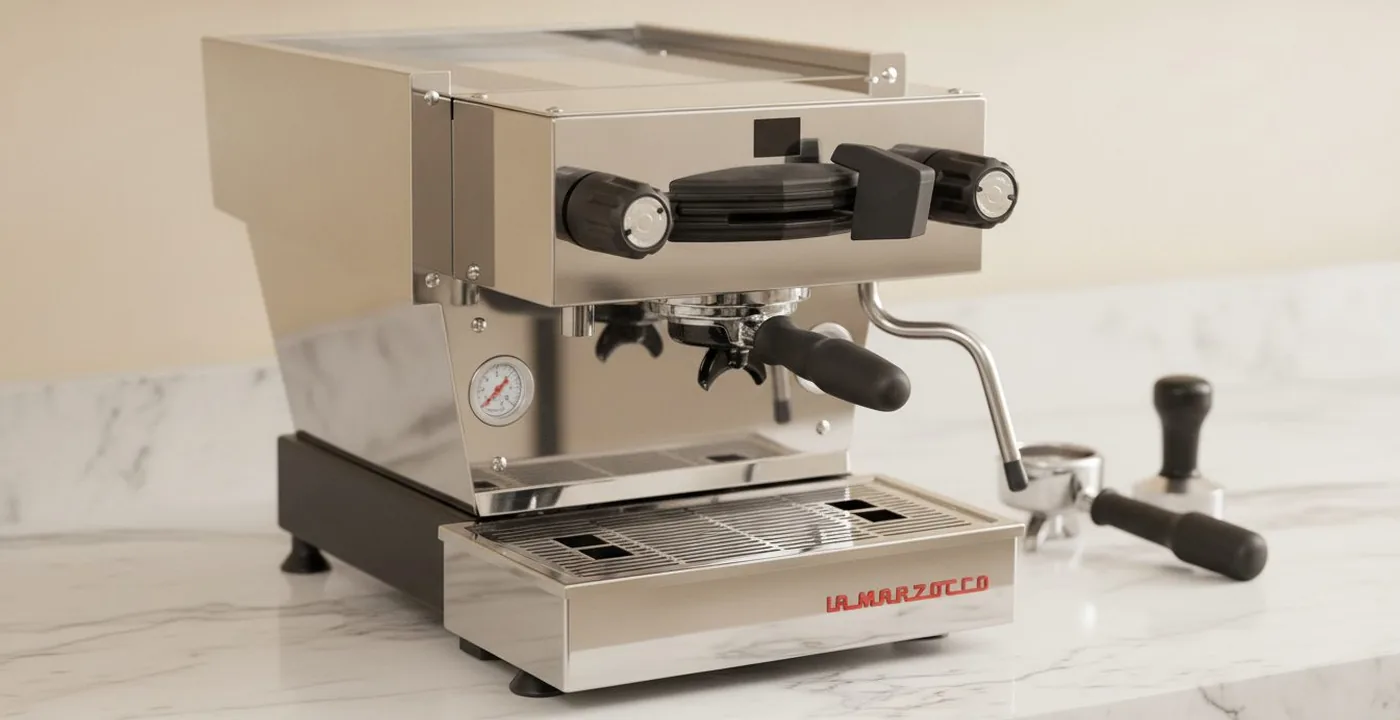
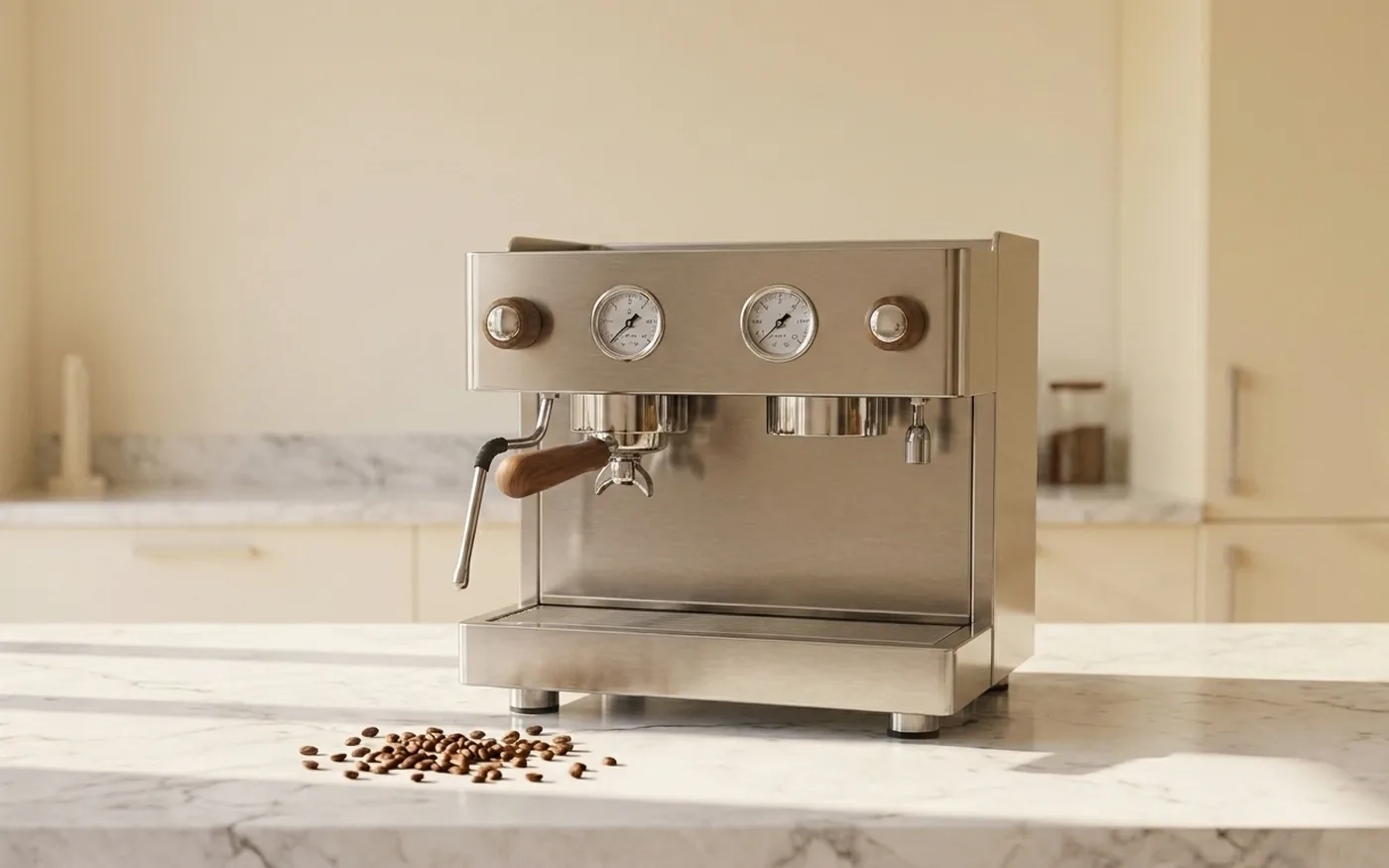
The Linea Mini's stainless steel body and compact box footprint.
Why is La Marzocco so expensive. The first honest part of the answer is what your hands tell you when you touch the machine. The Linea Mini is built like a piece of commercial equipment that happens to be small, not like a home machine dressed up to look serious. The stainless steel side panels are a real structural choice, the chassis has heft that you feel the moment you lift it, and the panels come off cleanly for service in a way that home machines rarely match.
I have spent years around La Marzocco machines in professional settings, including one in our roastery cupping room alongside a Sanremo Opera and a Victoria Arduino Eagle. What carries across from those commercial machines to the Linea Mini is the build philosophy. La Marzocco designs the Linea range to be opened, serviced, and kept running for a decade or more, and the Mini inherits that. Fewer machines in this price bracket are genuinely built to be maintained rather than replaced. This one is.
The trade-off is footprint and weight. This is a deep machine, and it is heavy. If your counter is shallow or your kitchen is busy, measure before you commit, because the Linea Mini does not shrink to fit. It is not the largest prosumer machine you can buy, but it is dense, and the depth in particular catches people out.
Fit and finish is where the premium starts to feel earned rather than charged. Panel gaps are tight, the powder coating on the colour models is even and durable, and the paddle and switches have the kind of mechanical feel you only get when a company has been making the same parts for a long time. None of this changes the taste in the cup. All of it changes how the machine feels to own, and at this price, ownership is part of what you are buying.
Brewing Performance: Dual Boiler, Saturated Group, and Temperature Stability
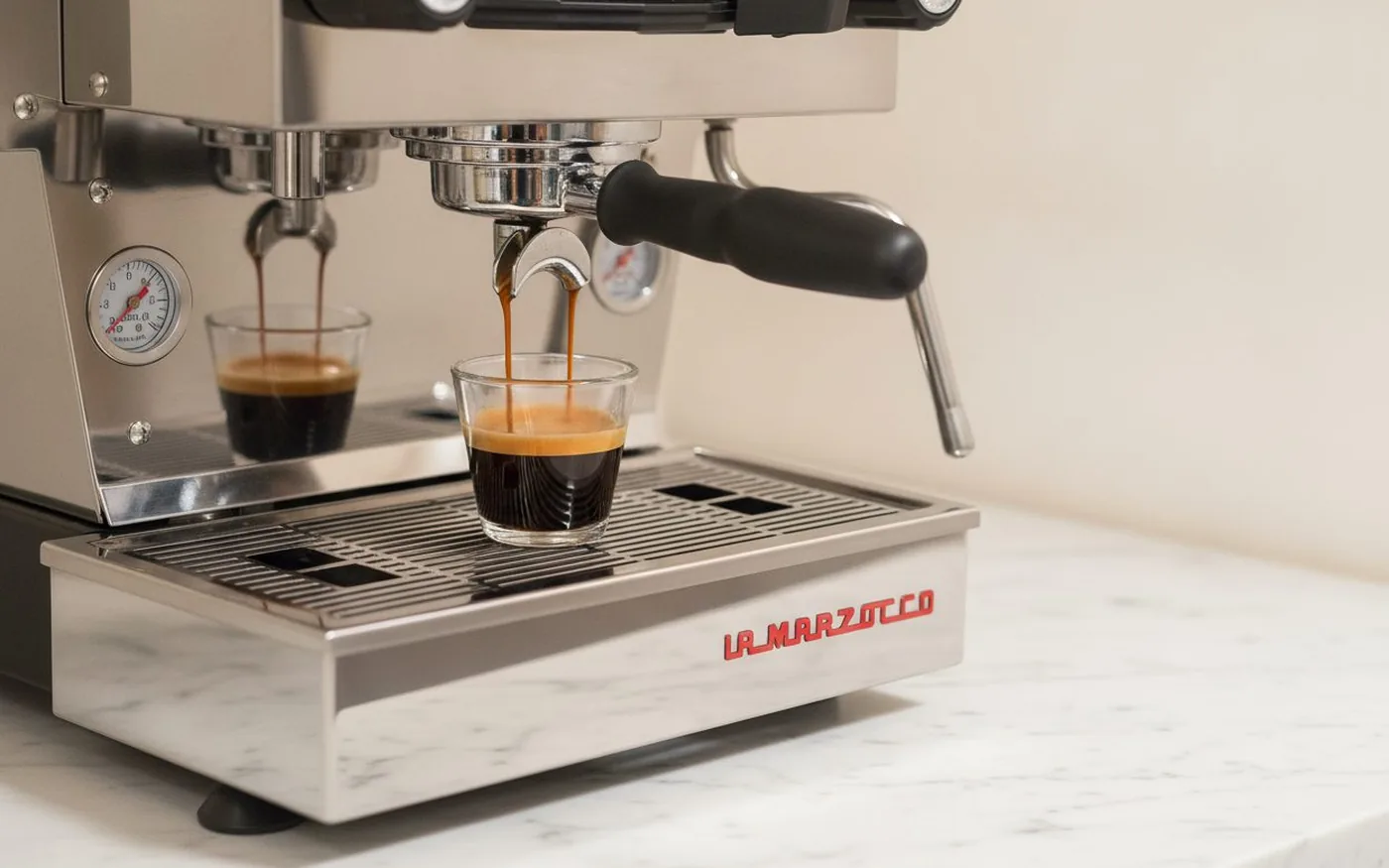
The saturated group head delivers temperature-stable extraction.
This is the section that matters most, and it is where the Linea Mini earns its reputation. The headline is temperature stability, and the reason it is so good comes down to the saturated group head.
What is a saturated group head, and why does it matter. In most home machines, the brew water passes through a heat exchanger or a separate boiler and then into a group head that is not itself part of the boiler. In a saturated group, the group head is effectively an extension of the brew boiler, surrounded by the same heated water, so it sits at brew temperature constantly rather than warming up and cooling down between shots. The result is that the temperature of the water hitting your coffee barely moves from the first shot of the day to the tenth. La Marzocco's commercial Linea machines use this design, and the Linea Mini uses the same principle. The ECM Synchronika and Profitec Pro 700, both excellent machines, do not.
This is the part of my background that is directly relevant. At Sanremo I was trained by the manufacturer's own engineers on PID control, multi-boiler systems, and what actually drives temperature stability inside an espresso machine. I have run side-by-side temperature consistency tests on machines using handheld calibration tools, the same method professional baristas use to benchmark extraction. From that perspective, the saturated group is not a marketing line. It is the single biggest reason the Linea Mini extracts so consistently, and it is the hardest thing for a cheaper machine to replicate.
In the cup, consistency is what you taste even when you are not looking for it. Pull the same coffee, same dose, same grind across a morning, and the shots land in the same place. There is no drift, no warm-up shot you quietly tip away, no second-shot bitterness creeping in as the group heats up. For anyone who has fought a machine that needs a flush-and-wait ritual before every espresso, this steadiness is the thing you feel most.
Does the Linea Mini have PID. Yes. The brew boiler is PID-controlled, and on the Linea Mini R you can adjust the target temperature through the app. In practice the PID and the saturated group work together: the PID holds the boiler to your set point, and the saturated group makes sure the group head never drags that set point around. One without the other is good. Both together is why this machine pulls the way it does.
The friction worth naming is that all of this consistency only shows up if the rest of your setup is dialled. A flawless thermal platform pouring through an uneven grind still gives you an uneven shot. The machine removes one major variable. It does not remove the others, and it will faithfully reproduce a bad grind ten times in a row.
Pre-Infusion and Pressure Profiling: Paddle Behaviour and Line Pressure
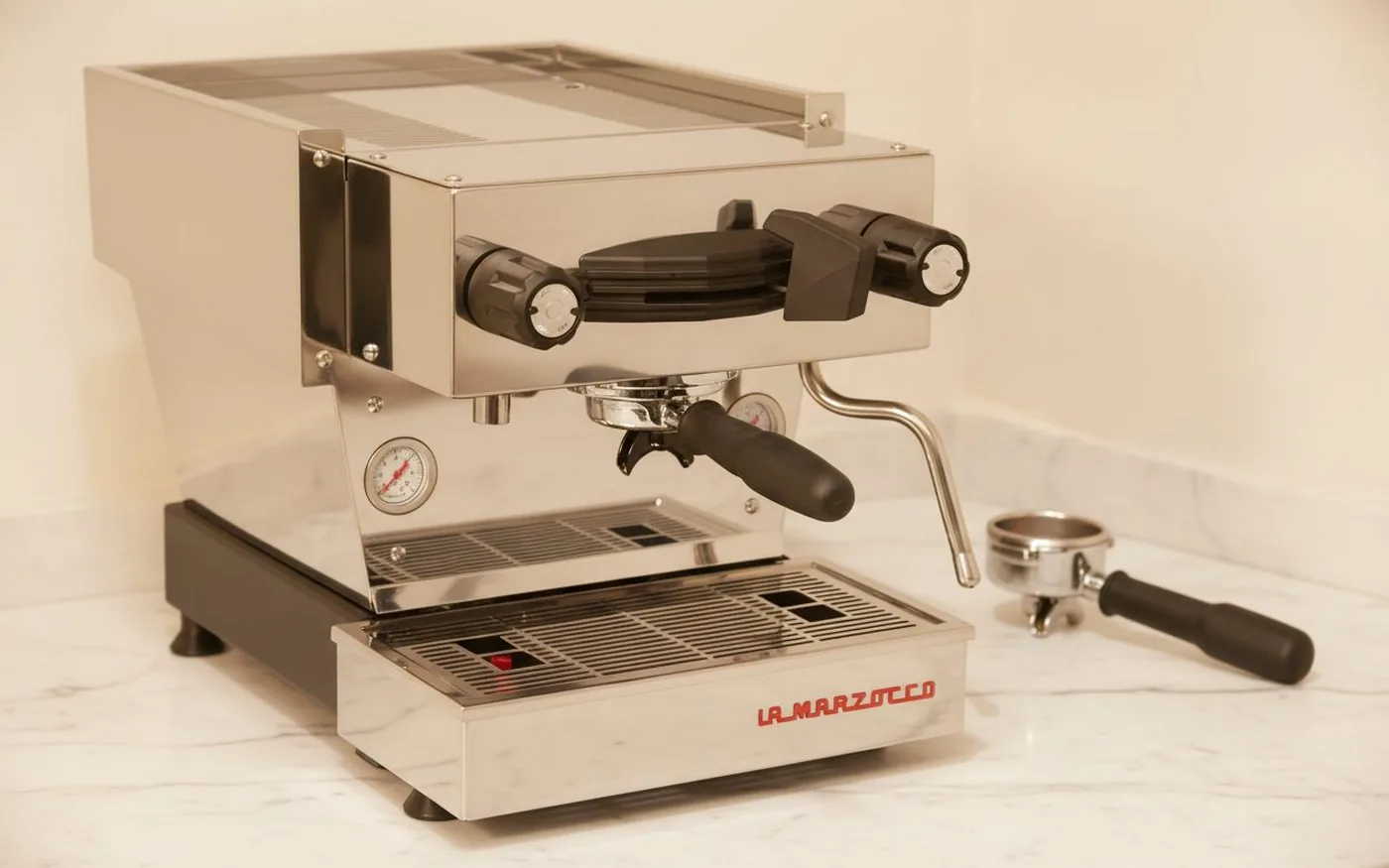
The brew paddle controls manual pre-infusion on the Linea Mini.
The paddle on the front of the Linea Mini is not a gimmick, but it is widely misunderstood. It is a brew lever, and on the original Linea Mini the pre-infusion you get depends on your incoming line or tank pressure rather than a fully programmable pressure curve. Move the paddle to the first position and water enters the puck gently at line pressure before the pump engages, which is a soft pre-infusion that helps wet the coffee evenly and reduce channelling. Move it fully across and the pump brings the machine up to full extraction pressure.
What is pre-infusion, and how does the Linea Mini paddle control it. Pre-infusion is a low-pressure phase at the start of a shot that wets the coffee bed gently before full pressure arrives, which gives the water a more even path through the puck and tends to produce a sweeter, less harsh extraction. On the Linea Mini, the paddle lets you hold that low-pressure phase for as long as you like before committing to full pressure, so you control pre-infusion with your hand and your timing rather than a preset program. It is tactile and repeatable once you learn it, but it is manual.
This is one of the clearest differences between the original Linea Mini and the Linea Mini R. The Linea Mini R adds adjustability and connectivity the original lacks, including more control over the pre-infusion behaviour and the redesigned paddle, so you are not relying purely on whatever your line pressure happens to be. If pressure profiling is a priority for you, the R is the version to look at, and the gap between the two is genuinely about control, not just an app.
For most drinkers, the practical takeaway is simpler than the theory. The paddle gives you a gentle, consistent pre-infusion that improves the shot, and you do not need to understand flow meters to benefit from it. If you want to go deeper into manipulating the curve, the machine rewards that, but it does not demand it. That balance, approachable by default and deep when you want it, is one of the Linea Mini's quieter strengths.
Steam Power and Milk Texturing: The 3-Litre Steam Boiler in Practice
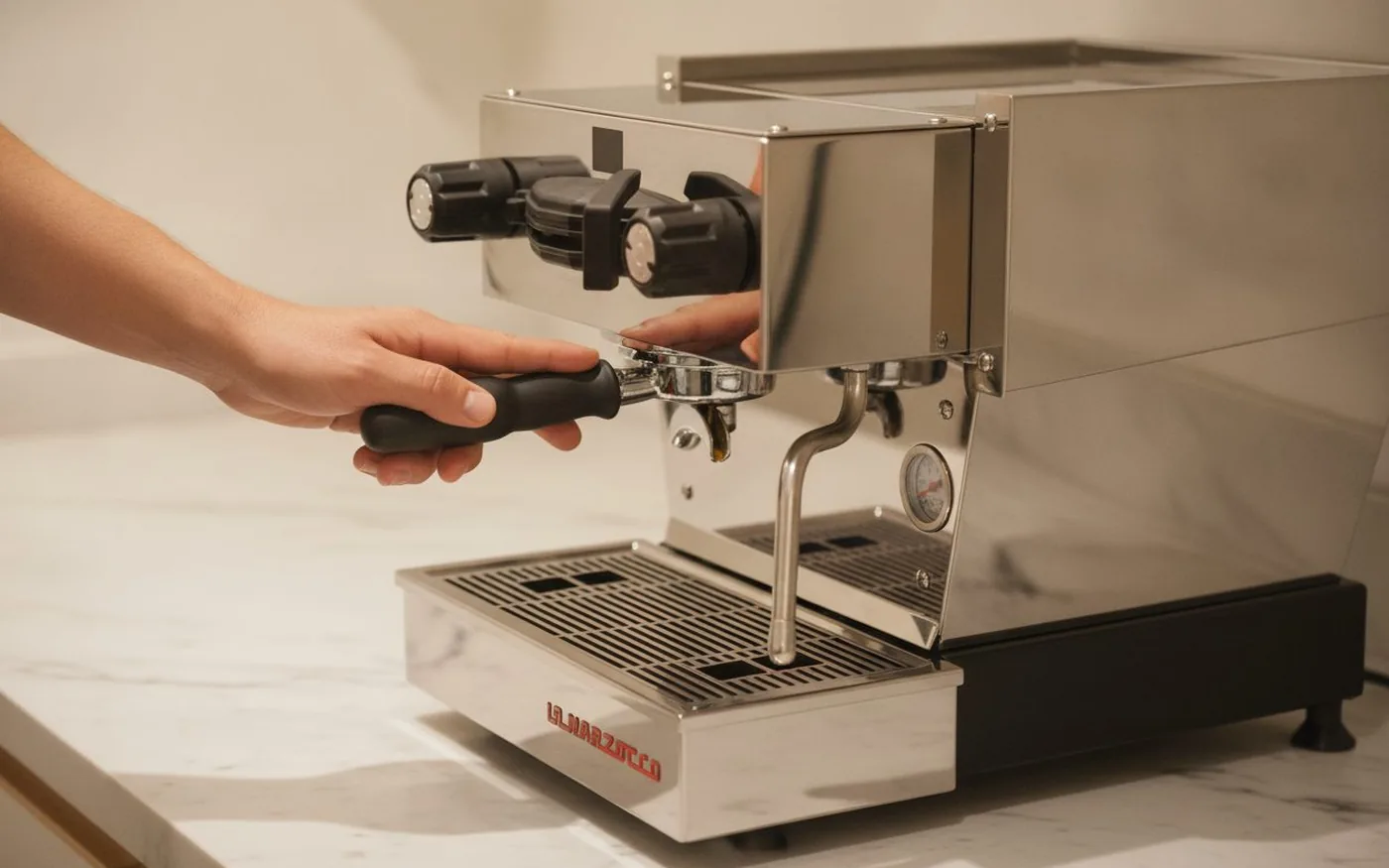
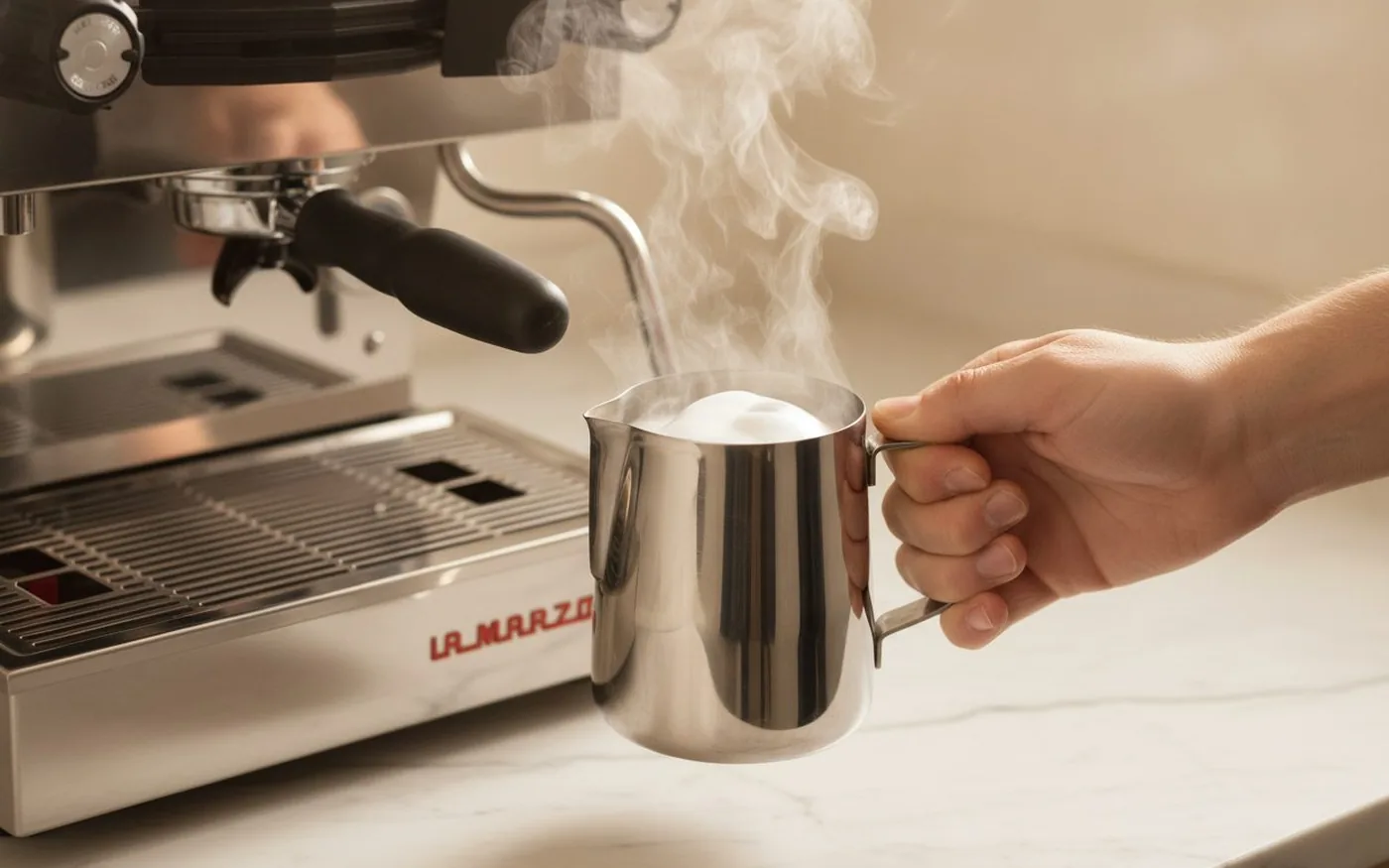
The 3-litre steam boiler powers fast, glossy milk texturing.
The 3-litre steam boiler is the part of this machine that flatters you. Steam power on the Linea Mini is strong and fast, with enough pressure to texture milk quickly and build proper microfoam rather than the loose, bubbly foam that lower-pressure home wands produce. If you make milk drinks daily, this is one of the most enjoyable home steam wands you can use.
I want to be precise here, because it is easy to overclaim. Having worked on commercial machines most home baristas will never touch, a Sanremo Opera, La Marzocco and Victoria Arduino Eagle among them, there is a real and noticeable step up at that commercial level. The Linea Mini does not match a full commercial machine, and it does not need to. What it does is bring you closer to that experience than almost anything else at home, with steam that is genuinely quick and forgiving once your technique is sound.
Against its direct rivals, the difference is one of feel more than capability. The Profitec Pro 700 and Rocket R58 both texture milk well, and a competent barista will get excellent results on any of the three. The Linea Mini's steam feels slightly more immediate and recovers quickly between drinks, which matters when you are making two or three coffees in a row. For a single morning latte, all three are more than enough.
The honest caveat is that steam power cannot teach technique. A strong wand makes good milk easier to achieve, not automatic. If you are new to steaming, expect a learning curve regardless of which of these machines you buy, and budget some practice milk while you find your wrist position and pitcher angle. The Linea Mini shortens that curve. It does not remove it.
Daily Workflow and Usability: Water, Drainage, Warm-Up, and Noise
Living with the Linea Mini day to day is mostly a pleasure, with a few honest rough edges. The 2.5-litre tank is easy to refill and sits accessibly, though heavy daily users will refill it more often than they would like, which is one reason plumbing in is worth considering. The Linea Mini can be plumbed in directly, and if you are using it enough to justify the machine, you are probably using it enough to justify a plumb-in and a drain line too.
Warm-up is the trade-off you accept for a saturated group and a substantial steam boiler. This is not a machine you flick on and use ninety seconds later. From cold it wants time to bring both boilers and that group mass up to temperature, so the practical move is a timer plug or the app on the Mini R so it is ready when you are. Plan for it and it is a non-issue. Forget, and you will stand around waiting for your first coffee.
Noise is moderate and brief. The pump is audible during the shot, as it is on any vibration or rotary pump machine, but it is not intrusive in a normal kitchen, and it is quiet at idle. The drip tray is a reasonable size, removes easily for cleaning, and the drain routing is sensible. None of the daily-handling details are frustrating, which at this price they should not be.
The single biggest usability question is space, and it loops back to the footprint. This is a deep, heavy machine that you will not want to move once it is positioned. Set it up where it will live, give it room behind for the tank or plumbing, and accept that it is a permanent fixture rather than something you shuffle around. Treated as a fixture, it is genuinely easy to live with. Treated as a portable appliance, it will frustrate you.
La Marzocco Home App and Connectivity (Linea Mini R)
Connectivity is the headline change on the 2024 Linea Mini R, and it is worth being clear about what it actually does day to day rather than what the announcement implied. The app lets you turn the machine on remotely, schedule warm-up so it is ready before you get to the kitchen, adjust the brew temperature, and monitor the machine's status. For the warm-up problem in particular, scheduling is the single most useful thing the app adds.
What is the difference between the Linea Mini and the Linea Mini R. The Linea Mini R is the 2024 revision of the original Linea Mini, adding app connectivity, scheduling, remote temperature adjustment, and an updated, more adjustable paddle with greater control over pre-infusion. The original Linea Mini has neither the app nor the revised paddle, so the R is the more flexible and more future-proofed machine, while the original remains an excellent, simpler version of the same core design. The shot quality between them is closely matched. The R buys you control and convenience, not a different cup.
Whether the connectivity justifies the price step depends entirely on how you use the machine. If you value walking into the kitchen to a machine that is already at temperature, the scheduling alone may pay for itself in mornings reclaimed. If you would rather flick a timer plug and never open an app, you are not missing much in the cup. The app is a genuine quality-of-life improvement, not a performance one.
What I would not do is buy the R purely for the badge of having the newer model. Buy it for the paddle adjustability and the scheduling if those matter to you. If they do not, the original Linea Mini remains a superb machine, and the money saved is better spent on your grinder. The version that suits you is a usage question, not a status one.
Maintenance, Descaling, and Long-Term Ownership
How long does the La Marzocco Linea Mini last. This is where the price starts to make more sense, because the honest answer is a decade or more with proper care, and that is not a marketing claim. La Marzocco builds the Linea range to be serviced and kept running, parts are available, and the machine is designed to be opened rather than thrown away. Long-term owner threads on forums such as Home-Barista document Linea Minis running well past ten years, which is rare in home espresso.
Day-to-day maintenance is straightforward and familiar to anyone who has owned a serious espresso machine. Backflush with the blank basket regularly to keep the group clean, descale on a schedule appropriate to your water hardness, replace gaskets and shower screens as they wear, and keep the steam wand clean. None of this is exotic, and the machine's serviceable design makes each task easier than it is on machines that fight you for access. Using filtered or softened water meaningfully reduces descaling frequency and is the single best thing you can do for longevity.
The reliability anxiety you see on forums, the people asking whether they will regret the spend, is worth addressing directly. The Linea Mini is not maintenance-free, and pretending otherwise would be dishonest. It is a real machine that needs real upkeep. What it offers in return is that the upkeep keeps it running for years rather than postponing an inevitable replacement. That is a different ownership model from disposable home machines, and it is part of what the price buys.
The genuine criticism here is cost of ownership over time, not reliability. Service, descaling supplies, and the occasional part add up across a decade, and if you ever need a professional service the bill reflects the machine's quality. None of this is unreasonable for what you own, but it should be in your budget from the start. A machine built to last ten years should be planned for across ten years, not just the day you buy it.
“The Linea Mini is one of the few home espresso machines genuinely built to be serviced and kept for a decade rather than replaced. That longevity is the strongest part of its value case.”
La Marzocco Linea Mini vs the Prosumer Field
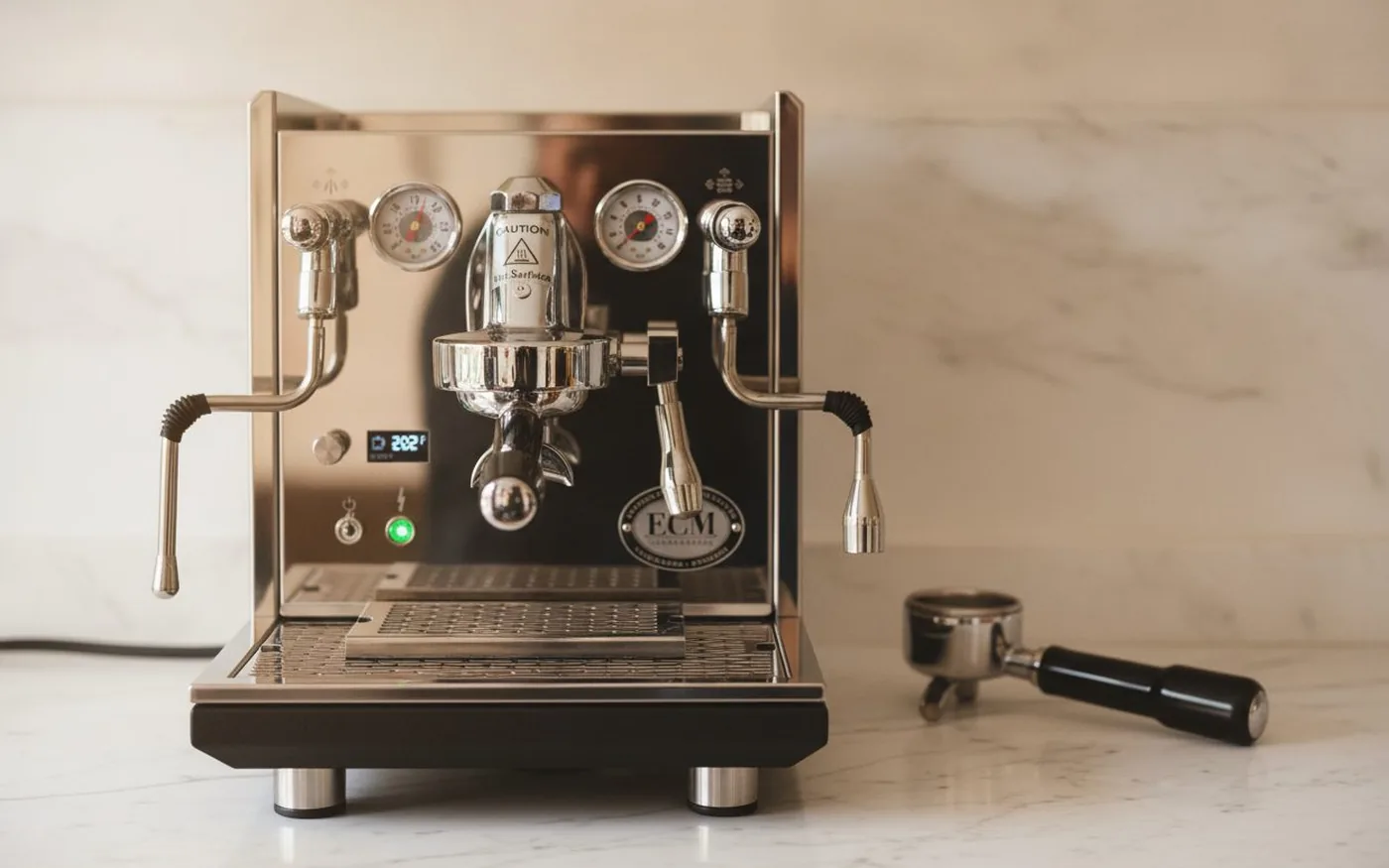
The ECM Synchronika, an E61 dual-boiler prosumer alternative.
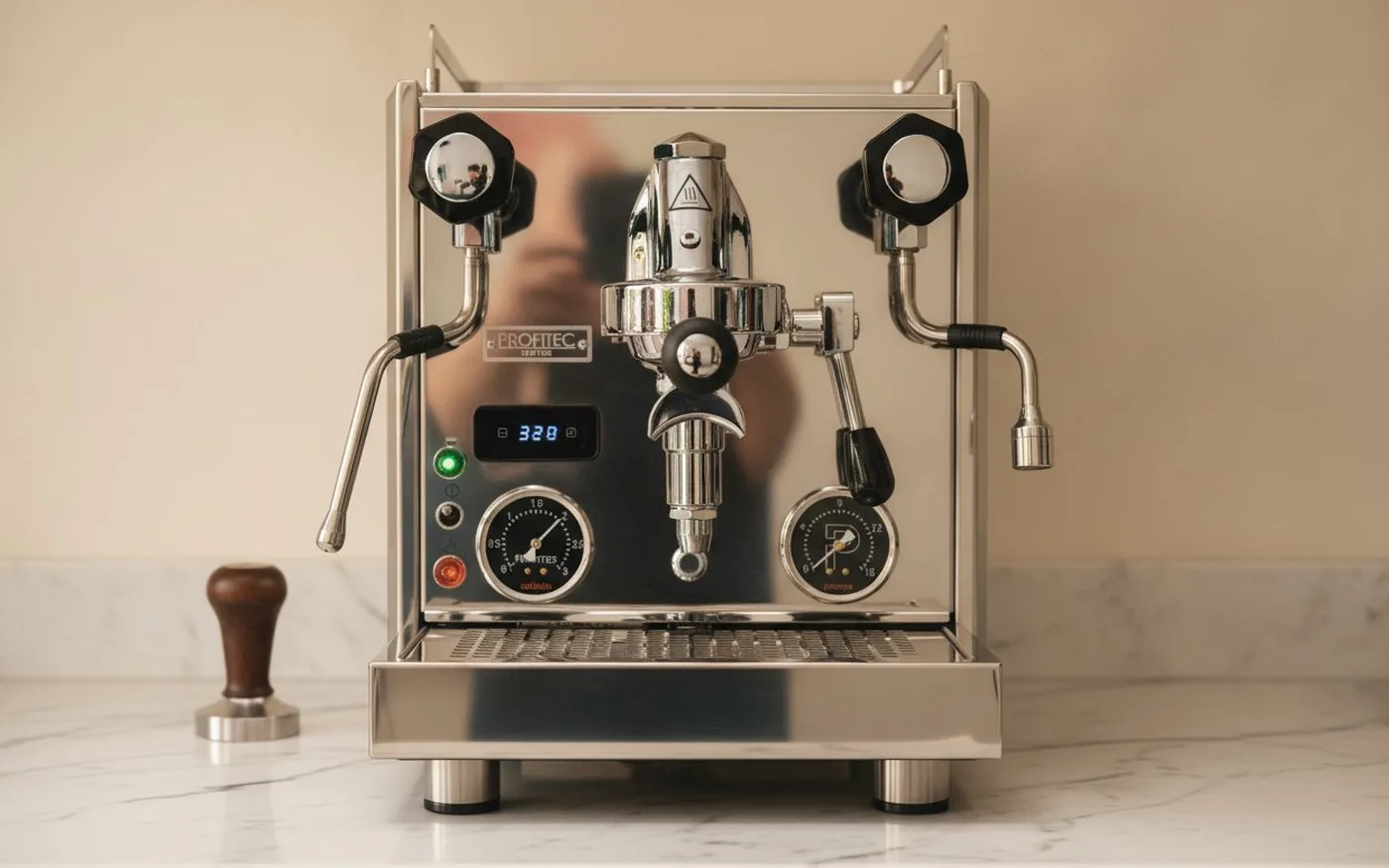
The Profitec Pro 700 offers PID control at a lower price.
The Rocket R58, a dual-boiler E61 prosumer machine.
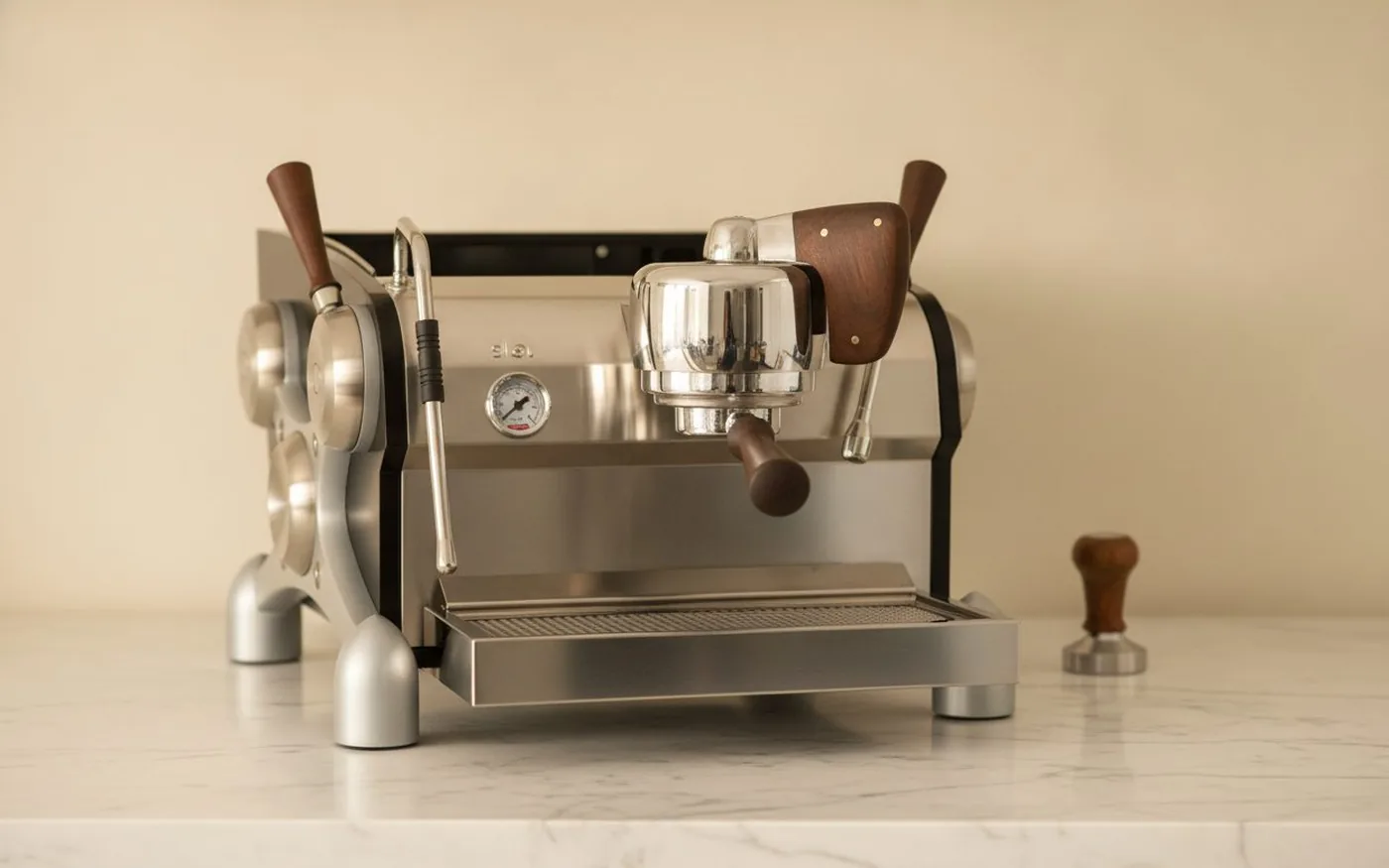
The Slayer single-group, a premium flow-control machine.
The most useful thing I can do is tell you plainly when to choose each of the main alternatives, because the Linea Mini is not the right answer for everyone in this bracket. The honest comparison matters more than the brand loyalty.
For context, the Linea Mini costs roughly £4,100 to £4,950 in the UK, compared with around £2,800 for the ECM Synchronika, around £2,700 for the Profitec Pro 700, around £3,000 for the Rocket R58, and £7,500 or more for the Slayer Single Group. The Linea Mini uses the same saturated group head as La Marzocco's commercial Linea range, which the ECM Synchronika and Profitec Pro 700 do not, and that thermal advantage is the core of its case. Whether it is worth the premium over those two is the real question.
Is La Marzocco better than Breville. They are not really competing for the same buyer, and that is the most useful answer. A Breville, sold as Sage in the UK, machine such as the Barista Pro is an excellent entry into home espresso at a fraction of the price, with a built-in grinder and far lower commitment. The Linea Mini is a different category of machine in build, thermal stability, and longevity. Better depends on your budget and intent. For a first machine on a sensible budget, the Sage is the smarter buy. For a forever machine where build and consistency lead, the La Marzocco is in another league, and the price reflects exactly that gap.
Machine
UK price (2026)
Boiler
Saturated group
Choose it if
La Marzocco Linea Mini
From around £4,100 to £4,950
Dual
Yes
You want cafe-grade build and a forever machine
ECM Synchronika
Around £2,800
Dual
No
You want top thermal stability for less and to spend more on the grinder
Profitec Pro 700
Around £2,700
Dual
No
You want a refined dual boiler at the best value in the field
Rocket R58
Around £3,000
Dual
No
You want Rocket's build and rotary pump with plumb-in ease
Slayer Single Group
£7,500 or more
Dual
Yes
Flow control is your priority and budget is no object
Here is the recommendation I would give a friend. If you can comfortably afford the Linea Mini and you value build and longevity above squeezing out the last few percent of shot quality, buy it. If your priority is the best espresso your total budget can produce, buy a Synchronika or a Pro 700 and put the £1,500 or more you save into a Niche Zero or better. The grinder will do more for your cup than the difference between these machines. The Slayer only makes sense if active flow control is the specific thing you want, and most people do not need it.
Total Cost of Ownership: Machine, Grinder, Beans, Electricity, and Service
The machine is the start of the bill, not the end of it. Why is the Linea Mini so expensive becomes a fuller question once you add up five years of real ownership, and being honest about that total is more useful than quoting the sticker alone.
A realistic five-year picture starts with the machine itself, then adds a grinder you genuinely need. Budget at minimum a Niche Zero at around £625, with a Eureka Mignon Specialita at around £450 as a more affordable route and a Mahlkonig E65S at around £1,800 as the aspirational ceiling (all as of 2026). Skipping the grinder to afford the machine is the single most common and most damaging budget mistake in this category, because the grinder shapes the cup more than the machine above this price point.
Then come the running costs. Beans are the largest ongoing line, and at speciality prices a daily espresso habit adds up across five years, though that is a cost you would pay on any machine. Electricity is modest but not nothing, since a saturated group and a steam boiler held at temperature draw more than a machine you switch off between drinks, which is exactly why scheduled warm-up on the Mini R earns its keep. Descaling supplies, filters, gaskets, and the occasional service round out the picture.
5-year ownership line
Indicative cost (2026)
Machine
From around £4,100 to £4,950
Grinder (essential)
From £450 to £1,800
Beans (speciality, daily)
Largest ongoing line, machine-independent
Electricity
Modest; lower with scheduled warm-up
Descaling, filters, gaskets, service
Plan for across the five years
The point of laying this out is not to talk you out of the machine. It is to make sure you buy it with eyes open. The Linea Mini is a strong long-term value proposition precisely because it lasts, but only if the grinder, the upkeep, and the running costs are in your plan from day one. Buy the machine and starve the grinder, and you will own a beautiful platform pouring mediocre coffee.
Where to Buy in the UK: Retailers, Warranty, and Install
In the UK the Linea Mini is sold through La Marzocco Home directly and through specialist retailers including Bella Barista and Coffee Hit. Buying from an established specialist matters more on a machine like this than on a cheaper one, because setup advice, warranty handling, and the option of professional install are part of what you are paying for, and a good retailer makes the difference if anything ever needs attention.
What is the warranty on the La Marzocco Linea Mini in the UK. Warranty terms vary by retailer and by whether you buy direct from La Marzocco Home or through a specialist, so confirm the exact length and what it covers at the point of purchase rather than assuming. The important practical point is that buying through an authorised UK channel keeps you inside the official warranty and support network, which on a machine intended to run for a decade is worth more than a small saving from a grey-market or overseas seller. Always confirm warranty and UK servicing before you pay.
On install, you have a genuine choice. The Linea Mini runs perfectly well on its tank straight out of the box, so you do not need a plumber to start using it. If you decide to plumb it in and add a drain line, which heavy users will appreciate, that is a job worth doing properly, and several specialist retailers can arrange or advise on it. Decide tank-versus-plumb before delivery, because moving this machine after it is positioned is not something you will want to do twice.
The buying advice in one line: buy from an authorised UK specialist, confirm the warranty in writing, and choose your water setup before the machine arrives. Get those three right and the ownership experience starts smoothly. Get them wrong and you create friction on a machine that should have none.
Best Beans to Brew on a Linea Mini
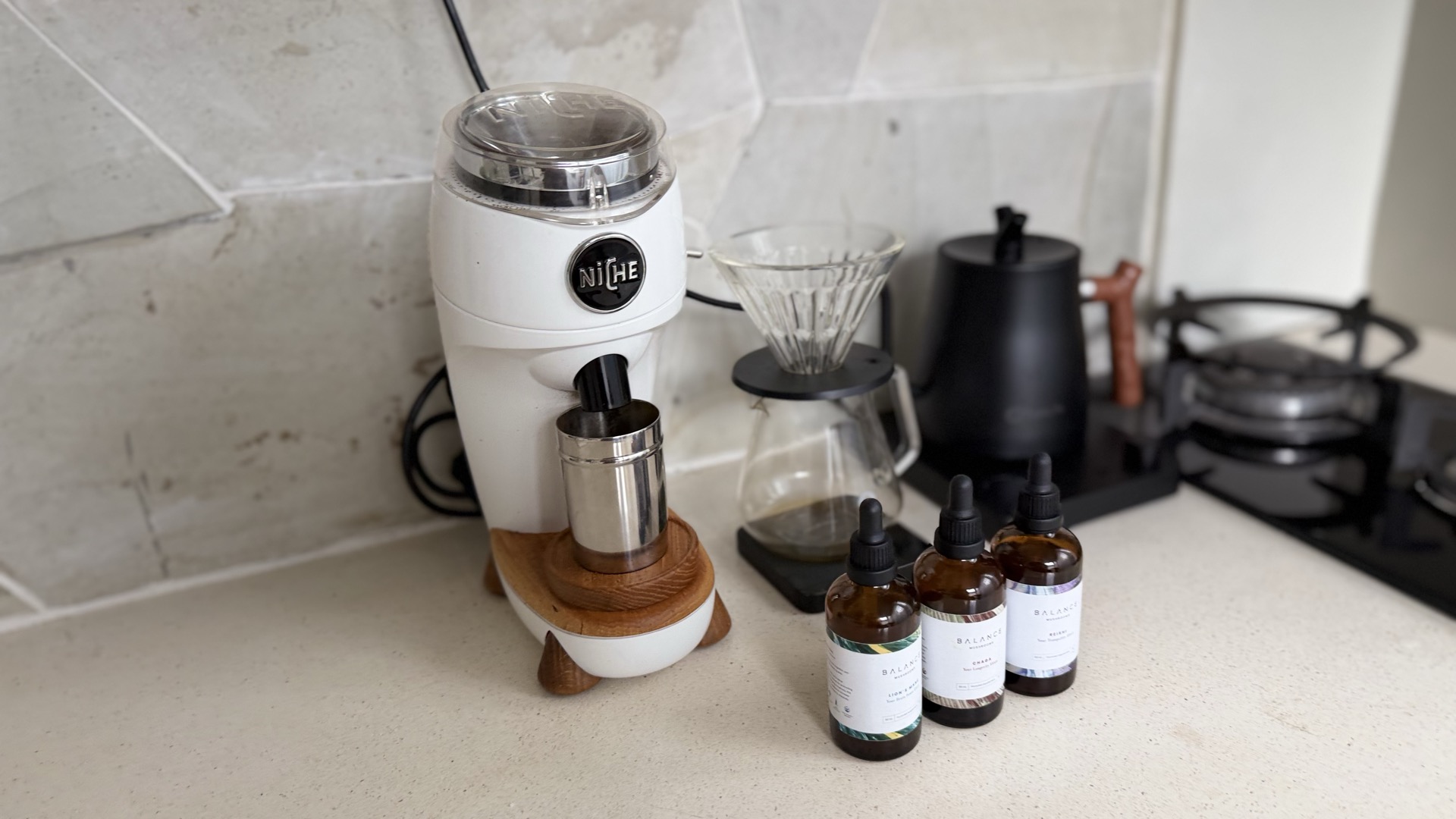
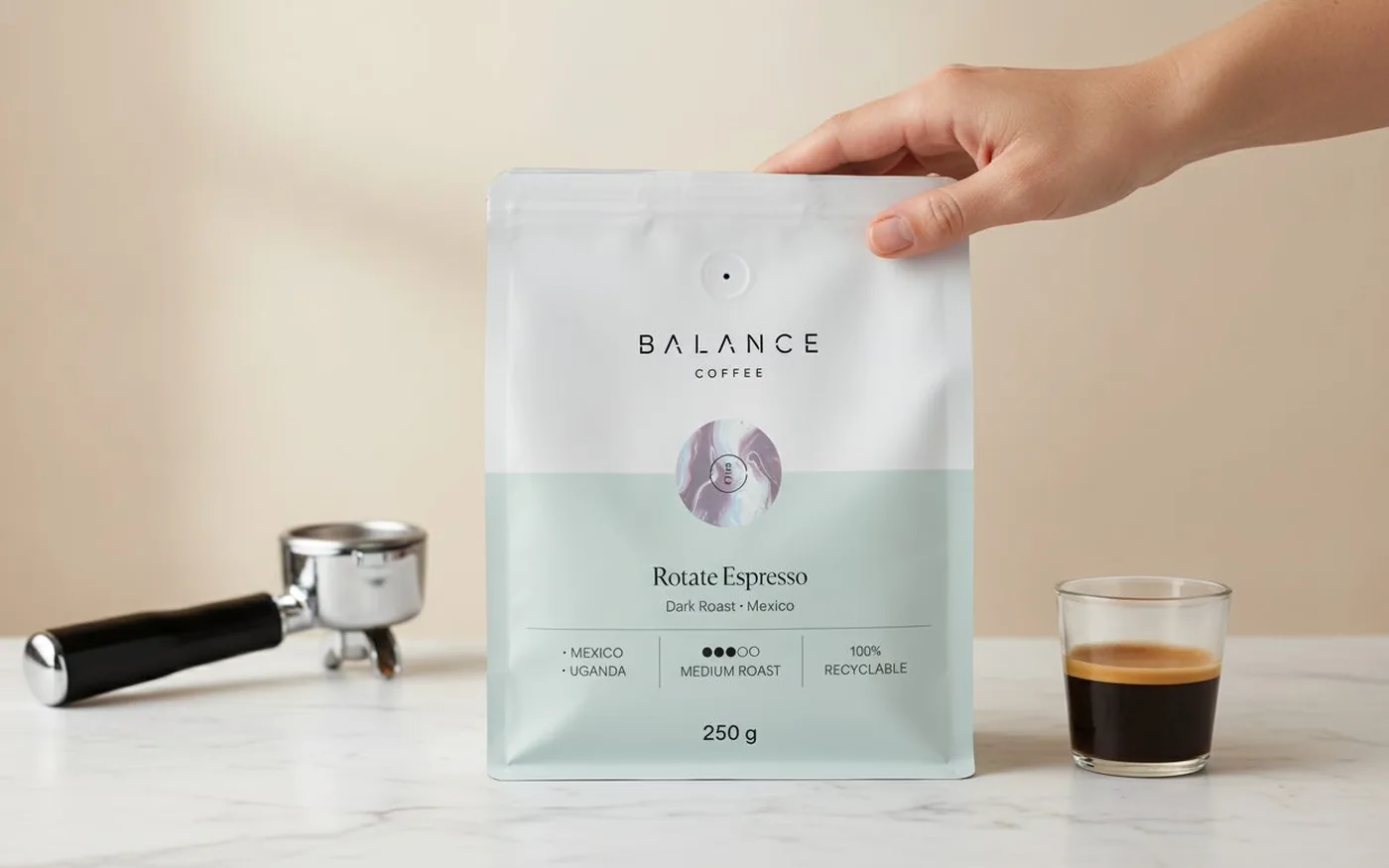
Balance Coffee whole-bean espresso pairs well with the Linea Mini.
A machine this capable deserves coffee worth its precision, and the Linea Mini in particular rewards a well-developed espresso roast because the thermal stability lets the roast's character come through cleanly shot after shot. The general rule is to feed it fresh, well-roasted speciality beans and let the consistency do its work. A medium espresso roast with body and sweetness is the safest starting point while you dial the machine in.
Full disclosure: I founded Balance Coffee in 2020, and the beans I dial shots with are ones we roast ourselves, lab-tested for mycotoxins, mould, and pesticide residues. Treat the recommendation accordingly and pair the machine with whichever espresso roaster you trust. For transparency, here are the three roasts I actually reach for on a machine like this. Rotate Espresso, a 100% Mexico espresso, is my default for milk drinks and straight shots alike because it is forgiving while you dial in. Aurora Reserve, a Brazil single origin with a chocolatey base and fruity undertones, is the one I pull when I want a single origin in the cup. Halcyon Decaf, a Guatemalan sugarcane-process decaf, is the evening espresso that does not keep you up.
The wider point stands whatever roaster you choose. The Linea Mini will not fix stale or poorly roasted coffee, and its consistency means it will faithfully reproduce a mediocre bag every morning. Buy fresh, buy speciality, and rotate through roasts to find what your palate wants. The machine is the instrument. The beans are the music, and on a platform this stable, the quality of the bean is exactly what you will taste.
Final Verdict and Our 2026 Recommendation
The La Marzocco Linea Mini is one of the finest home espresso machines you can buy, and it is not the right machine for most buyers. Both of those are true, and holding them together is the whole point of an honest review. It earns its reputation on build, thermal stability, and longevity, and it loses its value argument the moment a buyer overreaches to afford it or starves the grinder to pay for it.
Buy it if you can comfortably afford it, you value a forever machine built to be serviced for a decade, and you want the cafe-grade saturated group that the cheaper dual boilers cannot match. For that buyer, the Linea Mini is a genuine joy to own and one of the few machines in this category you will likely never need to replace. The premium is real, and so is what it buys.
Skip it, or rather buy smarter, if your goal is the best possible shot for your total budget. A £2,800 ECM Synchronika or a £2,700 Profitec Pro 700 paired with a serious grinder will give most people a better cup for less money, and that is the recommendation I would make to a friend without hesitation. Wait, finally, if you are not yet sure espresso is your long-term hobby, because a Sage Barista Pro will tell you that for a fraction of the spend.
“Buy the Linea Mini for the build and the decade of ownership, not for a shortcut to a better shot. The grinder, not the machine, is where the cup is won at this price.”
Frequently Asked Questions
Is the La Marzocco Linea Mini worth it?
For the buyer who values cafe-grade build, a commercial saturated group, and a machine built to run for a decade, yes. It is one of the most temperature-stable home espresso machines available and holds its value well. For most home users chasing the best shot on a budget, a cheaper dual boiler paired with a far better grinder is the smarter spend.
How long does the La Marzocco Linea Mini last?
With proper care it lasts a decade or more, which is rare in home espresso. La Marzocco builds the Linea range to be serviced and kept running, parts are available, and long-term owner threads document machines past ten years. Regular backflushing, scheduled descaling, and filtered water are the keys to that longevity.
What is the difference between the Linea Mini and Linea Mini R?
The Linea Mini R is the 2024 revision, adding app connectivity, remote scheduling, temperature adjustment, and an updated, more adjustable paddle with greater pre-infusion control. The original Linea Mini has neither the app nor the revised paddle. Shot quality is closely matched between them; the R buys you control and convenience rather than a different cup.
Can the Linea Mini be plumbed in?
Yes. The Linea Mini runs on a 2.5-litre tank as standard and can also be plumbed in directly with a drain line. Heavy daily users tend to prefer plumbing it in to avoid frequent refills. Decide tank versus plumb-in before delivery, since the machine is heavy and you will not want to reposition it afterwards.
Does the Linea Mini have PID?
Yes. The brew boiler is PID-controlled, and on the Linea Mini R you can adjust the target temperature through the app. The PID works alongside the saturated group head, which keeps the group at brew temperature constantly. Together they deliver the consistent shot-to-shot temperature stability the machine is known for.
What grinder is best for the La Marzocco Linea Mini?
A serious grinder matters more than most buyers expect. A Niche Zero at around £625 is a popular pairing, with a Eureka Mignon Specialita at around £450 as a more affordable option and a Mahlkonig E65S at around £1,800 as the ceiling. Whatever you choose, do not starve the grinder budget to afford the machine.
Is the Linea Mini better than the GS3?
They serve different buyers. The GS3 sits above the Linea Mini with more features and flow control, at a higher price and larger footprint. The Linea Mini is the more practical home machine for most kitchens, delivering the same saturated-group stability in a smaller, simpler package. The GS3 is the upgrade for those who specifically want its extra control.
Why is the La Marzocco Linea Mini so expensive?
You are paying for commercial-grade build, the saturated group head that drives its temperature stability, and a machine designed to be serviced and kept for a decade. Fit, finish, and longevity all sit well above typical home machines. The honest caveat is that a cheaper dual boiler with a great grinder will out-pour it, so the premium is about ownership as much as the cup.
A wellness entrepreneur and biohacker, James explores the intersection of hospitality and health - from clean fuel and recovery tools to mindful routines that build balance into daily life.