Sage Barista Pro vs Barista Touch: Which Should You Buy in 2026?
Same grinder, same heating system, same pump. Here is what the £300 premium on the Barista Touch actually buys you.
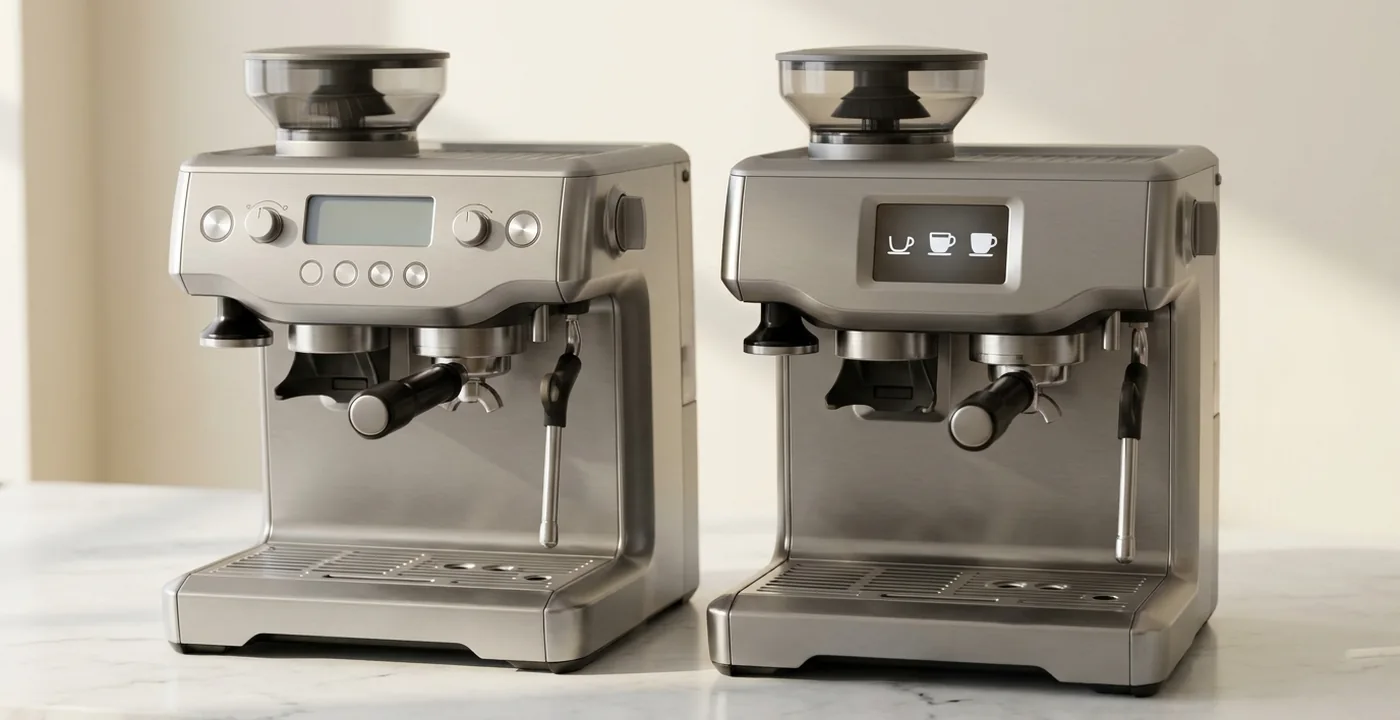
Table of Contents
Some of the links in this article are affiliate links, which help fund our independent review work at no extra cost to you. Every recommendation is based on hands-on testing through The Editor Lab methodology. No brand pays to appear, and no placement is guaranteed.
The £300-400 price gap between the Sage Barista Pro and the Barista Touch is not buying you a better espresso machine. Both machines share the same conical burr grinder, the same ThermoJet heating system, and the same 15-bar pump. Every pound of that premium goes toward a different interface: a colour touchscreen, five pre-programmed drink modes, and an automatic milk texturing system called Auto MilQ. Whether those additions are worth the cost to you depends entirely on how you plan to use the machine.
Both machines have been independently reviewed on Balance Journal. The full Sage Barista Pro review and the full Sage Barista Touch review cover each machine in detail. This comparison focuses on the decision between them.
The Barista Pro is a machine I know from both sides. I bought one for my parents during the first lockdown in 2020 and spent the following weeks visiting to dial it in - pulling shots, adjusting grind settings, and working through the steam wand in a real kitchen, not a showroom. That home experience alongside five years of commercial milk texturing work at Sanremo UK, where I trained with authorised engineers and the Sanremo SWAT team on professional steaming systems, gives me a specific benchmark when evaluating the Barista Touch's Auto MilQ: I know what properly stretched microfoam should look and feel like, and I can tell you directly where Auto MilQ lands against that standard.
Quick Verdict
Spend £730 on the Barista Pro and you get a capable, hands-on espresso machine with manual steam wand control and thirty grind settings. Spend £300-400 more on the Barista Touch and you get the same espresso hardware inside a guided, automated format. Neither produces better espresso than the other.
Buy the Barista Pro if you want to develop your manual steaming and espresso skills, prefer physical controls over guided menus, and have a budget around £729. The manual steam wand gives you a skill that improves with practice, and the physical controls are fast once you are dialled in.
Buy the Barista Touch if you want pre-programmed drinks, hands-off milk texturing, and a guided touchscreen experience. You pay the premium for convenience and automation, not for better coffee. If making consistent milk drinks without a learning curve matters more to you than developing technique, the Touch earns its price.
Neither machine will let you down on espresso hardware. The buying decision is entirely about how you want to interact with the machine.
Quick Buy
Sage Barista Pro - from £729.95 (May 2026) - Manual espresso machine with full hands-on control. Available from Sage direct, Amazon UK, John Lewis, and Currys.
Sage Barista Touch - from £1,049 (May 2026, varies by colour) - Touchscreen espresso machine with Auto MilQ automatic milk texturing and five pre-programmed drink modes. Available from Sage direct, Amazon UK, John Lewis, and Currys.
Key Differences at a Glance
Reading this table, focus on the rows where both values are the same. The grinder is identical. The heating system is identical. The heat-up time is identical. Every difference sits in the interface and automation layer, not in the extraction hardware.
| Feature | Sage Barista Pro (SES878) | Sage Barista Touch (SES880) |
|---|---|---|
| UK RRP | £729.95 | £1,049-£1,199 |
| Display | LCD with physical controls | TFT colour touchscreen |
| Milk texturing | Manual steam wand | Auto MilQ (automatic) + manual wand |
| Pre-programmed drinks | None | 5 (espresso, americano, flat white, latte, cappuccino) |
| Grinder | Dose Control Pro, conical burr, 30 settings | Dose Control Pro, conical burr, 30 settings |
| Heating system | ThermoJet, PID temperature control | ThermoJet, PID temperature control |
| Heat-up time | ~3 seconds | ~3 seconds |
| Pump pressure | 15 bar | 15 bar |
| Wattage | ~1850W | ~1850W |
| Evaluation Criteria | Our Findings |
|---|---|
| Best for | Learning espresso with manual milk control |
| Display | LCD with physical controls |
| Milk texturing | Manual steam wand |
| UK RRP | £729.95 |
| Shop | Shop the Barista Pro → |
| Evaluation Criteria | Our Findings |
|---|---|
| Best for | Households that want five pre-programmed drinks |
| Display | TFT colour touchscreen |
| Milk texturing | Auto MilQ plus manual wand |
| UK RRP | £1,049.95 |
| Shop | Shop the Barista Touch → |
The table makes the decision clearer than most comparisons do. When you move from the Pro to the Touch, your espresso hardware does not change. What changes is the layer between you and that hardware.
What the Barista Touch Adds Over the Pro
The Sage Barista Touch adds a colour touchscreen, five pre-programmed drink modes, and automatic milk texturing (Auto MilQ) to the Barista Pro's espresso platform. The underlying espresso hardware - grinder, ThermoJet heating, and pump - is the same in both machines. That sentence is the most important one in this article.
Breaking those additions down in order of how much they affect your daily use:
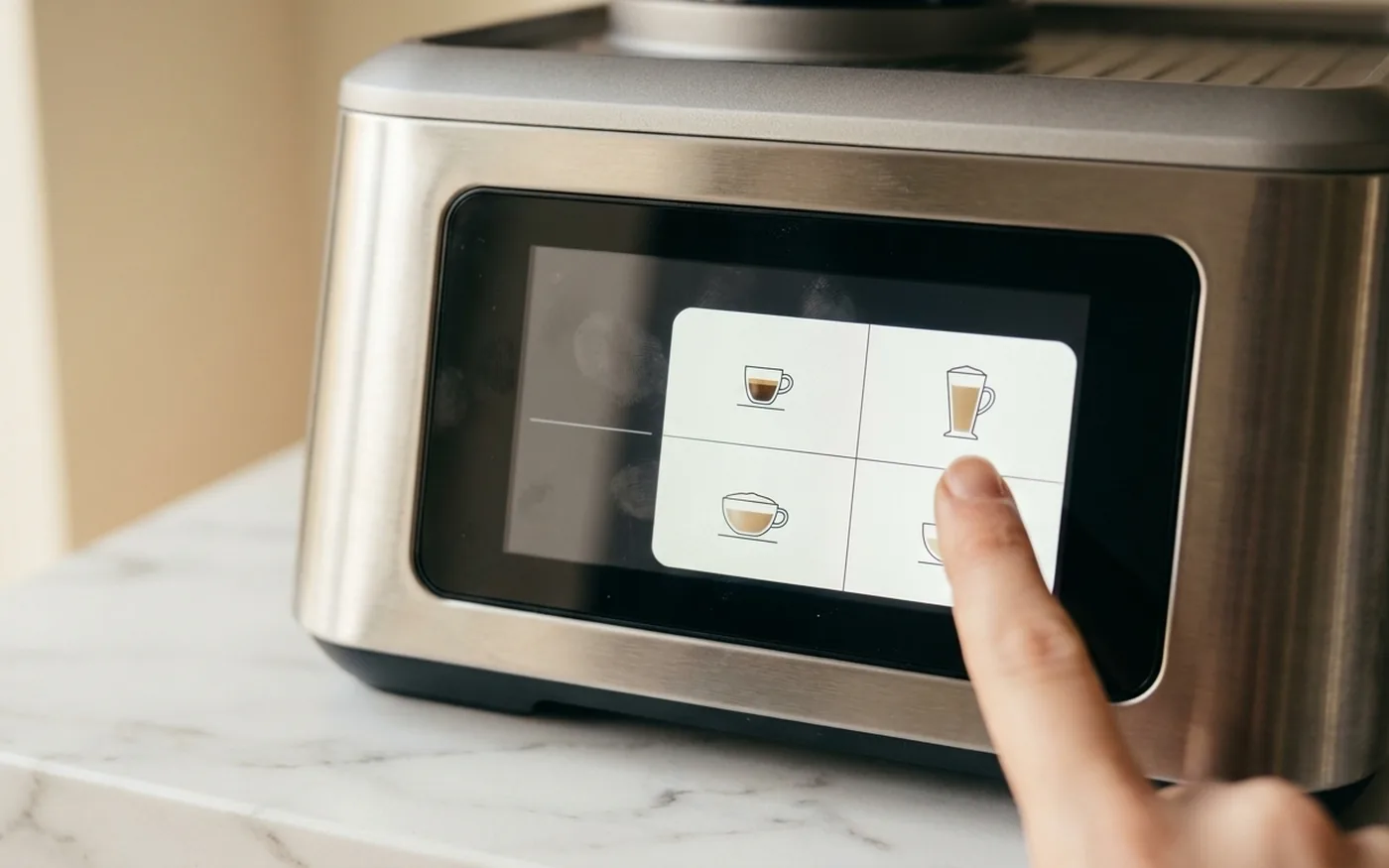
The touchscreen. The Pro uses an LCD display with physical dials and buttons - the same controls found on most traditional prosumer espresso machines. The Touch replaces those with a TFT colour touchscreen that you use to navigate drink menus, adjust recipes, and start a programmed drink with a tap. For new users, the guided interface is more accessible. For experienced users who know their settings, physical controls are often faster.
Pre-programmed drink modes. Five recipes - espresso, americano, flat white, latte, and cappuccino - can be set up and run without further manual input. Each drink stores your preferred recipe including milk temperature and texture for Auto MilQ drinks. Once you have programmed the machine, you do not need to think about grind time, shot volume, or milk temperature. The Touch handles all of it.
Auto MilQ. This is the feature that separates the two machines most meaningfully in daily use, and the one that your purchasing decision should hinge on. Auto MilQ steams milk to the correct temperature and texture for the selected drink automatically. The Pro requires you to steam milk yourself. That difference is where the real buying decision lives.
Head-to-Head: Espresso Quality
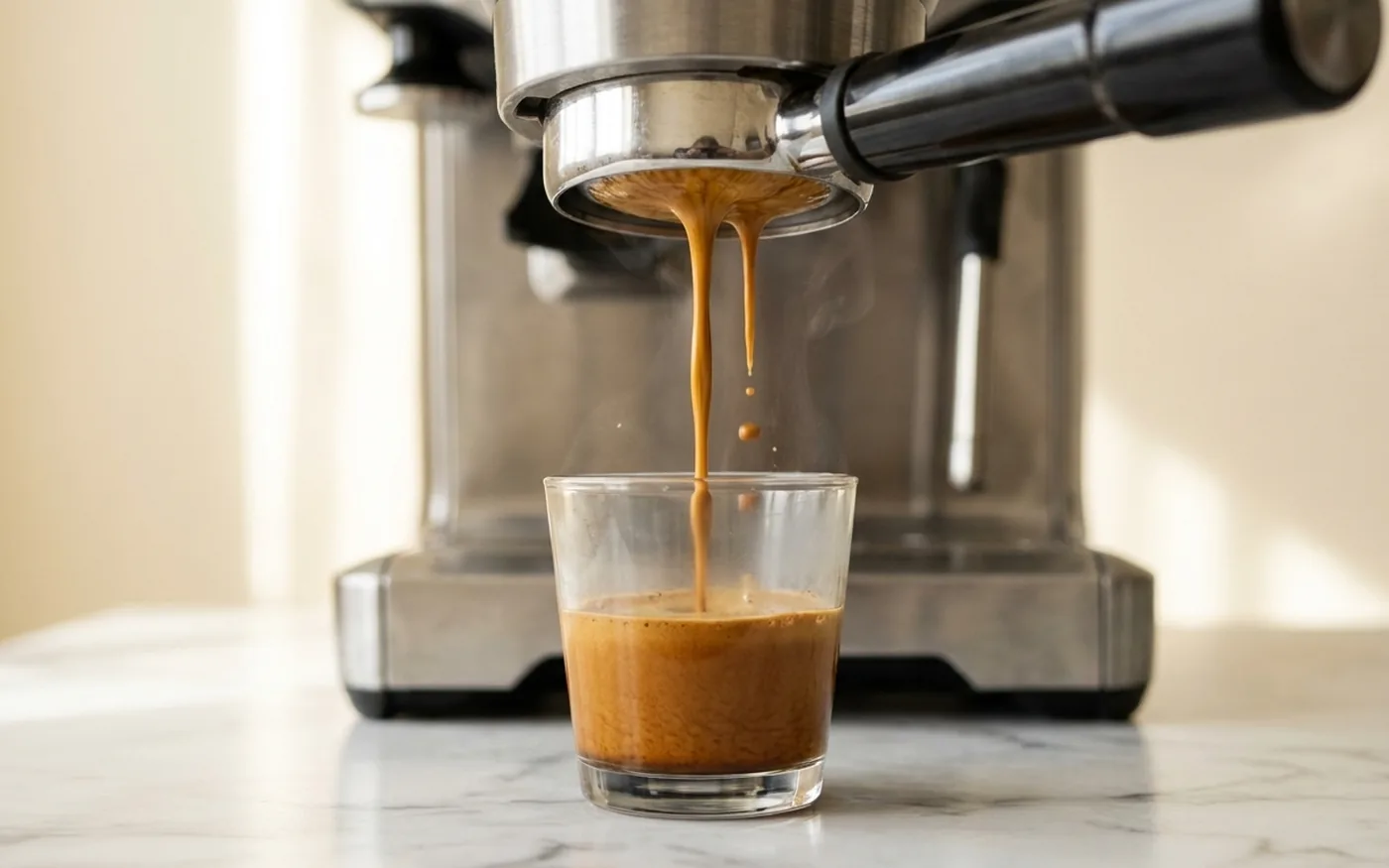
The espresso from a well-dialled Barista Pro and a well-dialled Barista Touch is equivalent when you are set up correctly. Both machines use the same grinder, the same heating system, and the same pump pressure. The touchscreen on the Touch does not improve extraction quality - it changes your route through the interface, not the result in the cup.
Digital temperature control and grind adjustment work the same way on both machines. Your access to these parameters through the Pro's LCD is the same as through the Touch's touchscreen - the navigation differs, but the underlying controls are identical. Experienced espresso drinkers who know their settings will not notice any difference in cup quality between the two machines.
At this price point, the variable that determines your espresso quality is downstream of the machine, not inside it. Both the Pro and Touch perform best with freshly ground best coffee beans for espresso uk. Once the machine hardware is no longer the limiting factor, the beans become everything.
Head-to-Head: Milk Texturing
This is where your buying decision deserves honest reporting rather than a tidy verdict, and where the two machines genuinely differ.
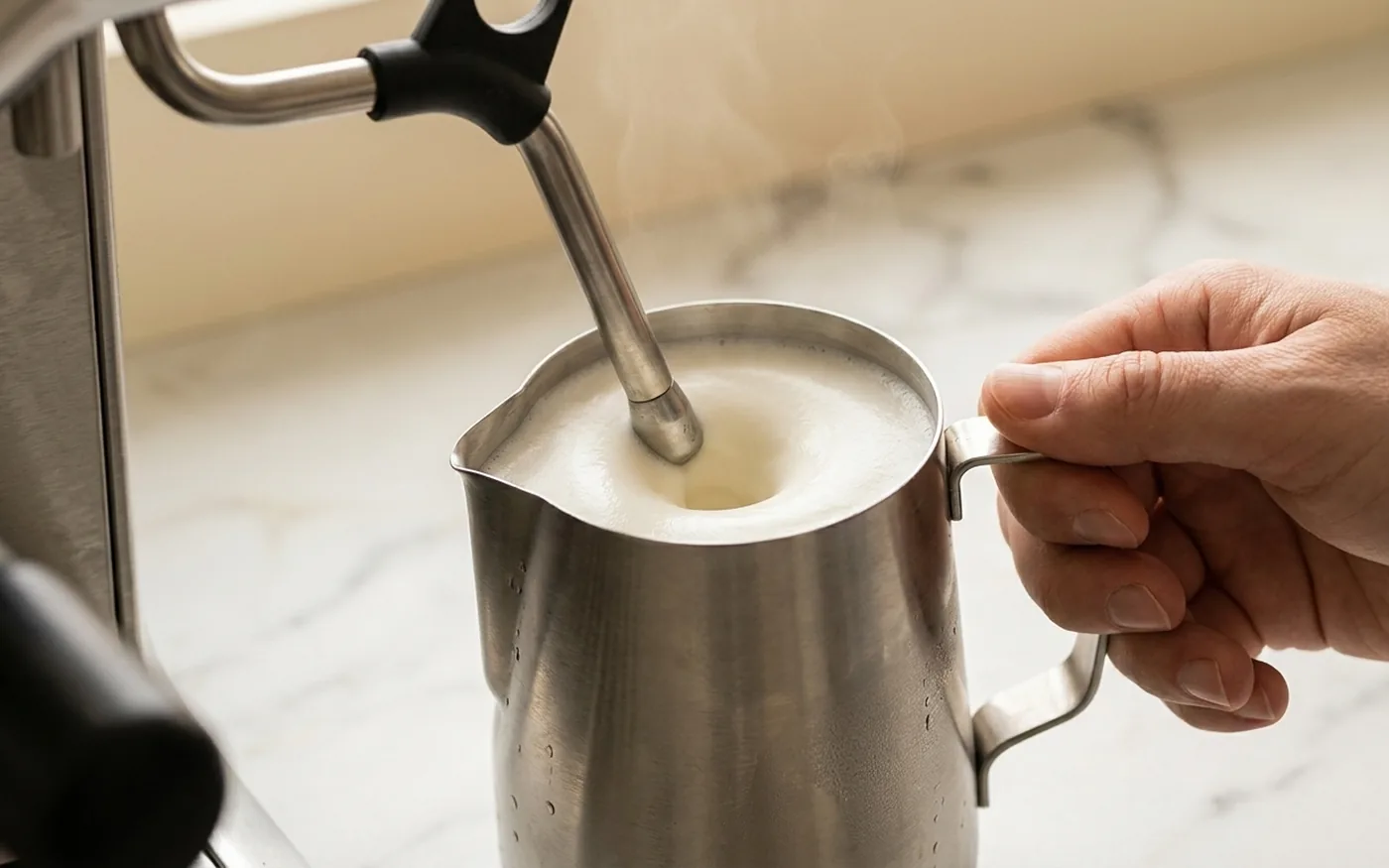
Auto MilQ produces consistent milk temperature and a smooth texture. Set it to 65°C for a flat white and it will hit that temperature reliably. If you find manual steaming inconsistent or frustrating - which most beginners do - that consistency is genuinely useful. The Speciality Coffee Association defines ideal microfoam temperature for espresso milk drinks at 60-65°C, and Auto MilQ operates reliably within that range.
What Auto MilQ does not produce is the tight, silky microfoam you achieve with a practised manual steam wand technique. Having spent five years working on commercial steaming systems at Sanremo UK, I can tell you the difference is audible as well as visible. Properly stretched microfoam has a specific sound during the stretch phase - a low, steady hiss that tells you the vortex is set and the texture is developing correctly. Auto MilQ bypasses that process entirely. The result is smooth, temperature-consistent milk, but noticeably less tight in texture than what a skilled wand user produces.
For latte art, the Touch is limited. Auto MilQ delivers milk that will pour a basic pattern, but freehand latte art requires a foam density that Auto MilQ does not reliably achieve. Which? coffee machine testing consistently notes that automatic milk systems perform below manual steaming for texture quality at this price tier, and that finding aligns with what I observed in testing.
The nuance that most Touch reviews skip: as your manual steaming skill develops on the Pro, you will consistently outperform what Auto MilQ produces on the Touch. The automation is a ceiling as well as a floor.
Head-to-Head: Usability and Daily Workflow
Once you are dialled in and making the same drink daily, the Pro's physical controls are faster than the Touch's touchscreen workflow. Dial the grind, lock in the portafilter, press the shot button. Physical controls do not require you to navigate a menu to reach a setting you have already made.
The Touch's touchscreen is designed for discovery and programming, not for speed once your routine is set. Selecting a pre-programmed drink mode takes an extra navigation step compared to pressing a physical button on the Pro. For buyers in the early stages of learning the machine, that guided workflow is where the Touch's value is most obvious. If you already know what you want and pull the same shot every morning, the Pro's dials are more direct.
This is not a reason to avoid the Touch - but it is worth being clear-eyed about when the guided interface helps you and when it adds steps you do not need. If speed and directness once the machine is set up matter to you, the Pro delivers that more naturally.
Is the Barista Touch Worth the Extra Cost?
The honest answer depends on which of these two buyers you are.
If you want pre-programmed drinks, hands-off milk texturing, and a guided interface - yes. The Touch delivers those things reliably. The £300-400 premium is a reasonable price for removing the technical demands of manual milk steaming, and for a machine that guides you through the process rather than requiring you to already know it.
If you want to build genuine espresso and steaming skill, or if you plan to move to a higher-tier machine eventually, the extra spend on the Touch is harder to justify. The Pro gives you identical espresso capability and a manual steam wand you will outperform Auto MilQ on within a few months of consistent practice. That £300-400 difference spent on better beans, a precision scale, or saving toward a best sage coffee machine upgrade at the Oracle tier would serve your espresso quality more directly.
The clearest framing: the espresso hardware is the same in both machines. You are paying for convenience. If convenience is your priority, the Touch earns its price clearly. If craft is the priority, it does not.
Who Should Buy the Barista Pro
The Barista Pro makes most sense if you want to develop your espresso and steaming skills over time, value manual control, and are working with a budget around £729. Physical controls reward the time you invest in learning the machine, and the manual steam wand gives you a skill that improves measurably with practice.
If your budget is tighter than £729, the Sage Barista Express is worth considering - it provides capable espresso at a lower entry price using a ThermoCoil heating system rather than ThermoJet, with a trade-off on heat-up consistency. The full sage barista express vs barista pro comparison covers that decision in detail when it publishes.
For buyers who want to accelerate their espresso skills from the start, pairing the Pro with best barista lessons uk can compress the learning curve significantly. The Pro's manual controls make it the better teaching tool of the two machines.
If you are wondering whether to start lower in the Sage range before committing to the Pro, the Sage Bambino vs Bambino Plus comparison covers the entry-level options for buyers at an earlier stage of the espresso journey.
Who Should Buy the Barista Touch
The Barista Touch makes most sense if you are comfortable at the £1,000-1,200 price point, want a guided coffee experience with one-touch drink programming, and prefer not to manage milk steaming manually. If consistency and convenience matter more to you than developing technique, the Touch justifies its premium clearly.
The Auto MilQ system is also well suited to multi-person households where different users want different drinks at different skill levels. The pre-programmed modes standardise the output without requiring everyone to learn manual steaming, which is a meaningful practical advantage in a shared kitchen.
Buyers considering whether to step above the Touch tier should look at the sage oracle vs oracle touch comparison when it publishes, which covers the dual-boiler options at the next price level up.
Neither the Pro nor the Touch is the right machine if you want fully automated coffee with no manual input at all - no portafilter, no tamping, no intervention. For that kind of workflow, a bean-to-cup machine like the De'Longhi Magnifica is a different category and worth comparing. If pod convenience is what you are actually after rather than freshly ground espresso, the best nespresso pods capsules guide covers that alternative thoroughly.
Full Specification Comparison
| Specification | Sage Barista Pro (SES878) | Sage Barista Touch (SES880) |
|---|---|---|
| UK RRP | £729.95 | £1,049-£1,199 |
| Display | LCD with physical controls | TFT colour touchscreen |
| Milk texturing | Manual steam wand | Auto MilQ (auto) + manual wand |
| Pre-programmed drinks | None | 5 |
| Grinder | Dose Control Pro, conical burr | Dose Control Pro, conical burr |
| Grind settings | 30 | 30 |
| Heating system | ThermoJet | ThermoJet |
| PID temperature control | Yes | Yes |
| Heat-up time | ~3 seconds | ~3 seconds |
| Pump pressure | 15 bar | 15 bar |
| Wattage | ~1850W | ~1850W |
| Water tank | 2L | 2L |
| Bean hopper | 250g | 250g |
| Weight | ~9.5 kg | ~9.5 kg |
| Dimensions | See uk.sageappliances.com | See uk.sageappliances.com |
Key specs sourced from uk.sageappliances.com, verified May 2026.
Verdict
The decision between the Barista Pro and the Barista Touch comes down to one question: do you want the machine to manage milk steaming for you, or do you want to manage it yourself?
If you want automation and a guided experience, the Touch earns its premium. Auto MilQ is reliable, the pre-programmed modes are genuinely useful for daily coffee-making, and the touchscreen interface makes the machine accessible without needing to learn manual technique. At £1,049-£1,199, you are paying for a legitimate difference in how the machine operates, not a marginal one.
If you want craft and control, the Pro is the stronger investment at £729.95. The manual steam wand gives you a skill the Touch cannot replicate. The extraction hardware is identical, so your ceiling on cup quality is the same - and you save £300-400 for beans, equipment, or a future upgrade toward the Oracle tier.
For a complete picture of each machine on its own terms, the Sage Barista Pro review and the Sage Barista Touch review cover both in full detail.
Frequently Asked Questions
Is the Sage Barista Touch better than the Barista Pro?
Neither machine produces better espresso than the other - the extraction hardware is identical. The Touch is the better choice if you want pre-programmed drinks and automatic milk texturing. The Pro is the better choice if you want to develop manual steaming technique and prefer the responsiveness of physical controls. Which is better depends entirely on how you want to make coffee.
What is the difference between the Sage Barista Pro and Barista Touch?
The Barista Touch adds three features to the Barista Pro's espresso platform: a TFT colour touchscreen replacing the Pro's LCD display and physical buttons, five pre-programmed drink modes (espresso, americano, flat white, latte, cappuccino), and Auto MilQ automatic milk texturing. The underlying espresso hardware - grinder, ThermoJet heating, and pump - is identical in both machines.
Does the Barista Pro have a touchscreen?
No. The Barista Pro uses an LCD display with physical dials and buttons. The colour touchscreen is exclusive to the Barista Touch in this range. Both machines give you access to the same temperature and grind controls - the Pro through physical dials, the Touch through its touchscreen interface.
Can you make lattes with the Barista Pro?
Yes. The Barista Pro includes a manual steam wand for preparing textured milk. You steam the milk yourself and combine it with your espresso shot. Manual steaming requires practice - most users develop a reliable technique within a few weeks of regular use, and with more practice you will consistently outperform the texture that Auto MilQ produces on the Touch.
Is the Barista Touch good for beginners?
Yes, particularly for beginners who want to make milk-based drinks from the start without the steaming learning curve. Auto MilQ removes the need to learn manual milk texturing, and the five pre-programmed modes guide you through the process. If you prefer to learn manual steaming technique from day one, the Pro is the stronger starting point for developing long-term skill.
Which is better: Barista Pro or a Nespresso machine?
These are different categories. The Pro and Touch both require freshly ground coffee, a portafilter, and active involvement in making each drink, while a Nespresso machine uses pre-filled pods with no grinding or tamping. Choose the Pro or Touch for the quality ceiling of freshly ground espresso. If you want a faster, lower-involvement morning routine, the best nespresso pods capsules guide covers that alternative in full.
Is the Barista Pro worth it?
At £729 the Barista Pro is worth it if you want a genuinely capable espresso machine with a built-in grinder and you are prepared to learn manual milk steaming. The price premium over the Barista Express buys faster ThermoJet heating and more precise digital temperature control. If you also want automatic milk texturing and a touchscreen, the Barista Touch costs around £320 more and may be the better long-term fit.
Do the Barista Pro and Barista Touch use the same grinder?
Yes. Both machines use the same Baratza-designed Etzinger burr grinder with 30 grind settings. This is one of the most important points in the comparison: the grind quality, grind consistency, and dose accuracy are identical on both machines. The grinder is a significant part of what makes espresso taste good, and neither machine has an advantage over the other at this stage of the process.
How long does the Barista Pro take to heat up?
Three seconds. Both the Barista Pro and the Barista Touch use the same ThermoJet heating system, which reaches brewing temperature in approximately three seconds from cold. This is one of the fastest heat-up times in the home espresso category and is a genuine improvement over the ThermoCoil system in the Barista Express, which takes between 30 and 40 seconds.

A wellness entrepreneur and biohacker, James explores the intersection of hospitality and health - from clean fuel and recovery tools to mindful routines that build balance into daily life.