Sage Barista Touch Review: Is It Worth £699 in 2026?
Three seconds from cold to first shot. Here's what daily use gets you.
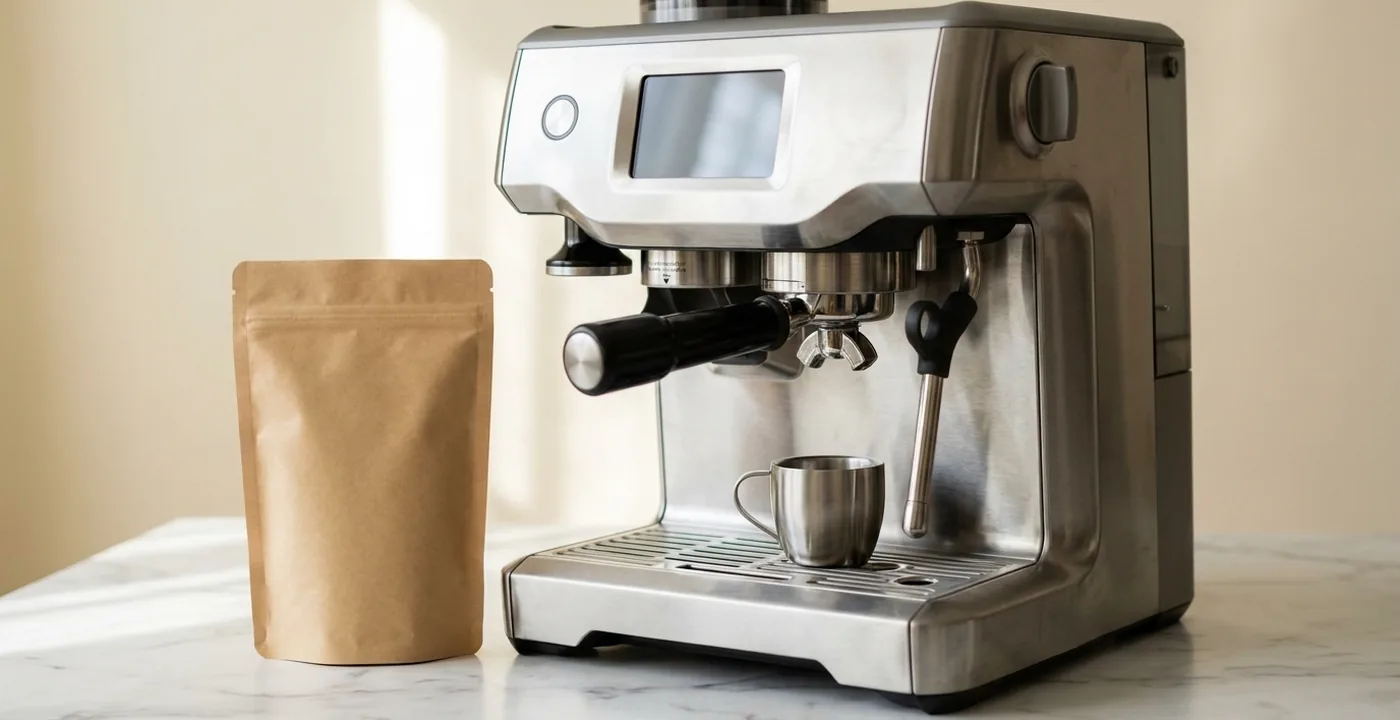
Table of Contents
Some of the links in this article are affiliate links, which help fund our independent review work at no extra cost to you. Every recommendation is based on hands-on testing through The Editor Lab methodology. No brand pays to appear, and no placement is guaranteed.
The Sage Barista Touch takes three seconds to warm up. Not three minutes. Not the seven or eight minutes you build into the morning routine with an older machine waiting for its boiler to stabilise. Three seconds, from cold to extraction-ready, through Sage's ThermoJet heating system. That single fact changes the daily workflow of owning this machine more than any other specification on the sheet.
At £699, the Sage Barista Touch sits in the middle of Sage's semi-automatic espresso range, above the best espresso machines UK buyers typically shortlist on a tighter budget and below the more automated machines at the top of the line. This review gives you the specific grind settings, extraction results, and workflow observations from actual use, so you can make a properly informed decision before committing to that spend.
“I started in coffee in 2012 and spent five and a half years working for Sanremo, a traditional Italian espresso machine manufacturer, where I was trained by their engineers on PID temperature control, multi-boiler systems, and extraction mechanics. During that time I supported around 60 of the UK's best specialty roasters in choosing and dialling in their equipment. I have owned and tested machines across every category since founding Balance Coffee in 2020. When I bought a Sage Barista Pro for my parents during the first lockdown and spent weeks dialling it in at their kitchen counter, it gave me a reference point for how this machine family performs in a real home environment rather than a showroom. The Barista Touch sits one step above the Pro in the Sage range, and this review is assessed through The Editor Lab, Balance Journal's structured evaluation framework for coffee equipment.”James Bellis, Editor
Quick verdict
The Sage Barista Touch is the right machine for most home baristas who want a genuine espresso setup without buying two separate pieces of equipment. The integrated grinder, PID temperature control, automatic steam wand, and three-second heat-up time combine to deliver a daily workflow that is practical rather than aspirationally impressive. Not sure an espresso machine is the right format for you? Our guide to the different types of coffee machine walks through the alternatives.
One limitation stated upfront, before you reach the comparison section: this is a single-boiler machine. After pulling a shot, the boiler needs a short pause to reach steam temperature before you can texture milk. For one or two daily drinks, this is not a problem. For back-to-back milk orders, it is the machine's defining constraint.
| Overall score | 8/10 |
| Espresso quality | 8/10 |
| Integrated grinder | 7/10 |
| Steam wand | 7/10 |
| Value at £699 | 7/10 |
| Ease of use | 9/10 |
| Current RRP | £699 (as of May 2026) |
| Best for | Upgrading from a pod machine, first integrated-grinder setups |
| Not for | Those who own a quality grinder, high-volume milk drinks, pressure profiling |
How we tested the Sage Barista Touch
I used the Sage Barista Touch daily at home, starting from cold each morning and working through speciality beans at both light and medium roast profiles. Criteria assessed: extraction quality across multiple shot types, grind consistency from the integrated burr grinder, steam wand performance in automatic and manual modes, workflow timing from cold start to first extraction, cleaning burden in daily use, and build quality under regular handling.
Testing framework referenced Specialty Coffee Association extraction guidelines throughout: target extraction yield of 18-22%, brew temperature of 90-96 degrees Celsius. All shots were evaluated on nose, body, and finish. Grind settings were varied systematically across the 30-position dial to identify the productive range for both single-origin and blend espresso, assessed through The Editor Lab.
What is the Sage Barista Touch?
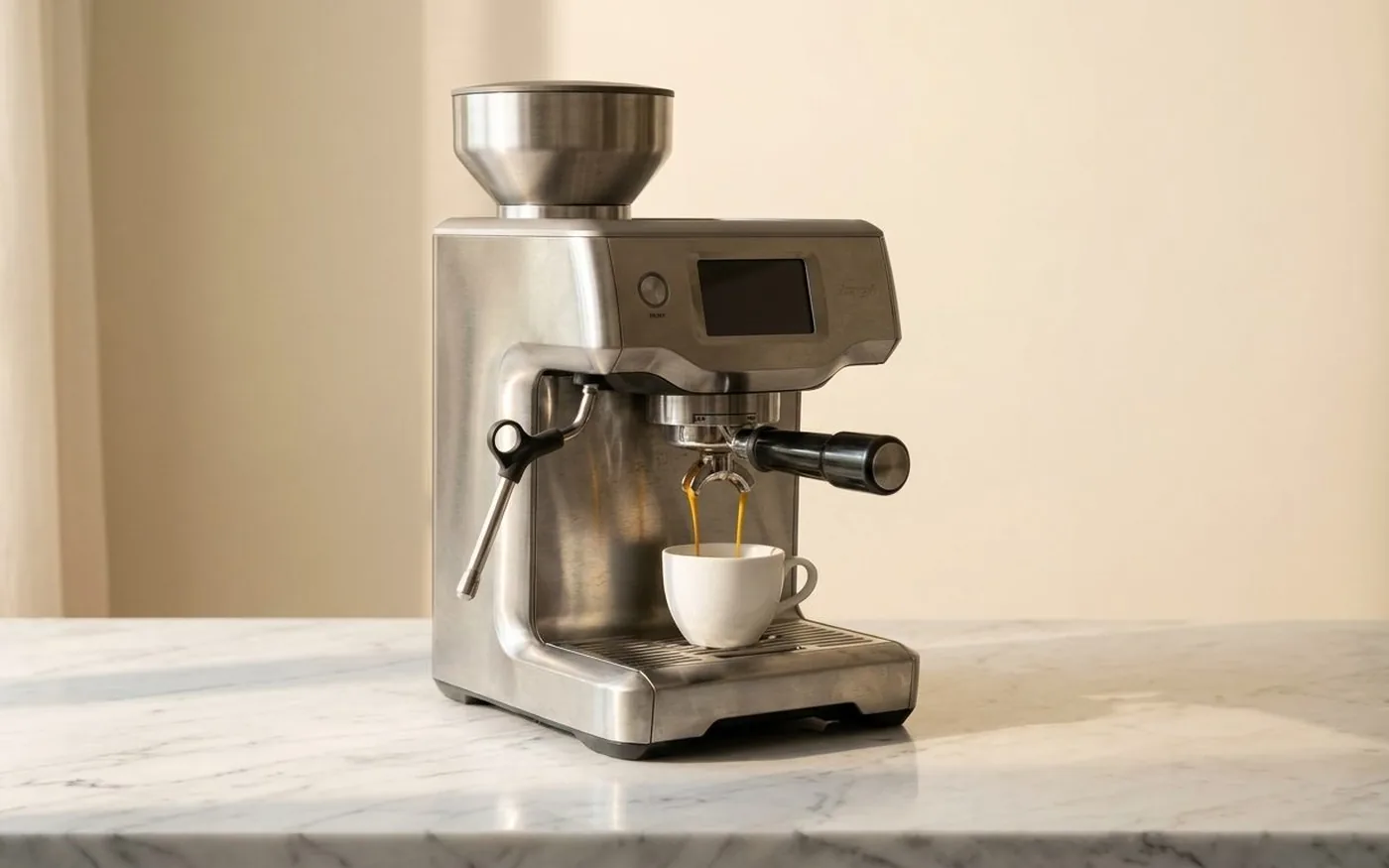
A semi-automatic espresso machine automates pump pressure and temperature control while leaving grind, dose, distribution, and tamping to the user. The Sage Barista Touch is this category: it manages extraction mechanics through PID temperature control and a fixed pressure profile, but the quality of your espresso depends directly on how you set up the grinder and prepare your dose. Sage sells the same machine as the Breville Barista Touch in the US and Australia.
PID temperature control means the machine regulates brew water temperature to within a fraction of a degree across consecutive shots. This matters because inconsistent brew temperature is one of the most common causes of shot-to-shot variation in home espresso, and most machines at this price point do not correct for it as precisely. According to the official Sage Barista Touch specifications, key specs are: 15-bar pump (regulated to 9 bar at the group head, which is the extraction pressure that actually matters), a 54mm portafilter, a conical stainless steel burr grinder with 30 grind settings, automatic steam wand with adjustable milk temperature and texture, and an LCD touchscreen interface.
Where the Barista Touch sits in the Sage range: above the Barista Express (no touchscreen, manual steam wand, smaller conical burr) and below the Barista Touch Impress (adds automated tamping) and the Oracle Touch (dual boiler, automated grinding and tamping). This is the machine for the buyer who wants meaningful control over their espresso without the steepest learning curve or the highest price in the range.
Espresso quality - does it hit speciality standards?
PID temperature control translates directly into shot-to-shot consistency. Once you establish your grind setting, the machine holds brew temperature reliably, which means you are dialling in your coffee variables rather than fighting equipment variables. In testing, this produced a stable baseline that is genuinely difficult to achieve at this price point with a machine that lacks PID control.
For most speciality beans, your productive grind range on the Barista Touch sits between settings 6 and 9 on the 30-position dial, and most of your dialling-in will happen within that window. Lighter roasted, higher-density single-origin beans tend to find their range at settings 6-7. Medium roasts and house espresso blends typically dial in at 8-9. At settings below 5, the grind is too fine for this grinder to dose consistently, and settings above 12 produce extraction that is too coarse for espresso, pulling in under 20 seconds.
The extraction results from testing: brewed stone fruit and dark chocolate on the nose, a dense and rounded body through the mid-palate, and a finish that stays clean without carrying bitterness forward when grind and dose are correctly set. This is genuinely good home espresso. It is not the same character you get from a pressure-profiled machine, where ramp and decline through the shot adds textural complexity that the Barista Touch's fixed pressure profile cannot replicate. If you want that level of extraction control, your budget needs to rise substantially, to a Decent Espresso or a La Marzocco Linea Mini.
If you are looking for espresso beans to pair with this machine, Balance Coffee's Espresso Taster Pack is our recommendation. The Rotate Espresso (Mexico 100%, organic, independently lab-tested) performs consistently in the 6-8 grind range on the Barista Touch. I founded Balance Coffee in 2020. We have recommended their espresso here on editorial merit: the Rotate Espresso is one of the cleaner, lab-verified options available for machines at this price point.
The built-in grinder - genuine quality or a compromise?
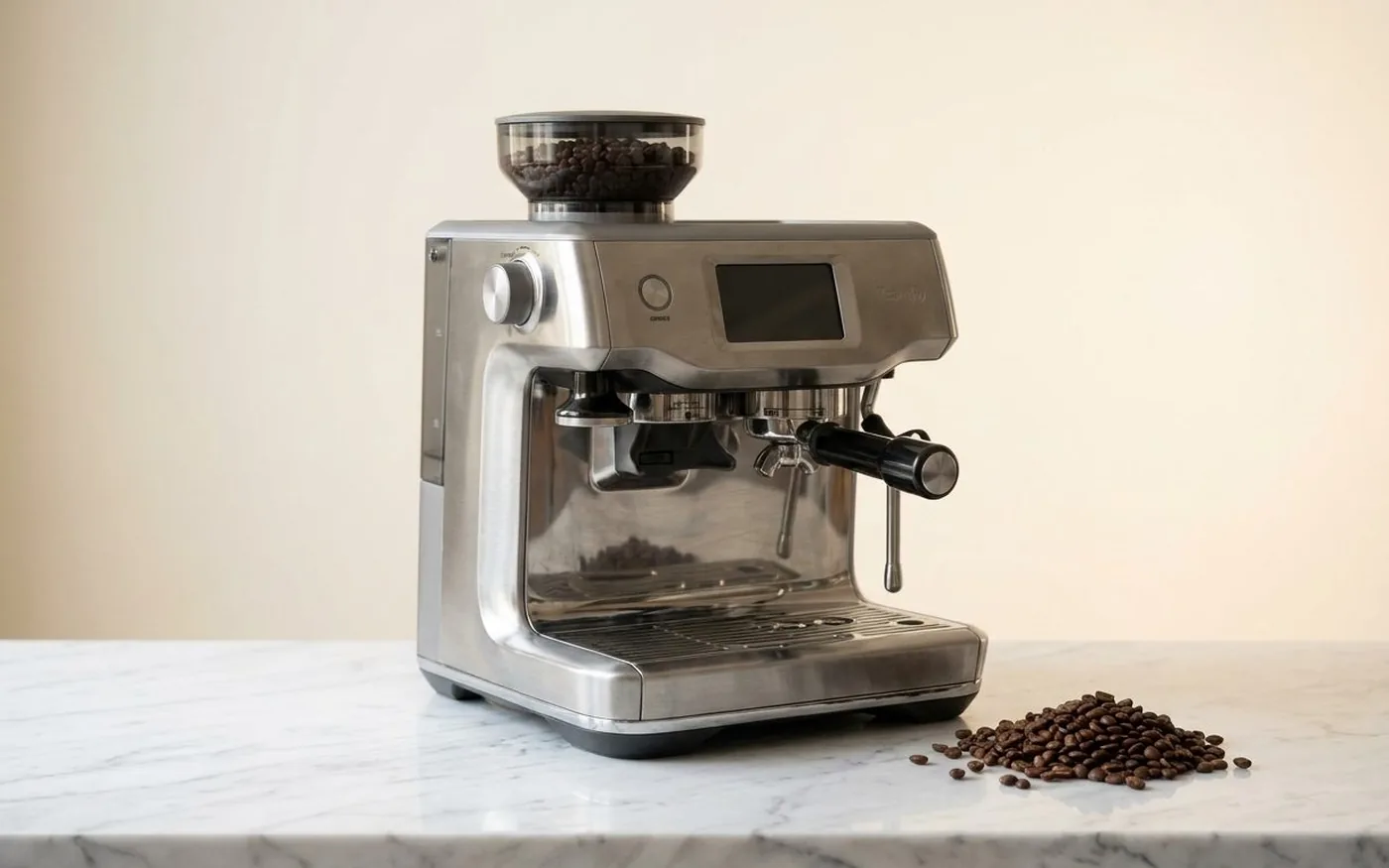
The Barista Touch grinder uses a conical stainless steel burr, a step above the conical burr in the Barista Express, which is the comparison most buyers at this decision point will draw. In testing, the larger burr set produced more even grind distribution and lower retention, meaning you lose less coffee between doses than with the Express's smaller burr.
Grinding a standard dose is quick. Noise is audible but not exceptional by home grinder standards. In a kitchen context, this is not the machine you would switch on at 6am and immediately regret waking the household.
Something worth stating plainly: thirty grind settings sounds generous, but your usable range for espresso is narrower than the number suggests. Settings 1-5 are too fine for reliable dosing from this grinder. Settings 13 and above fall outside the espresso extraction window. Your working range is roughly settings 6-12, which gives you seven or eight meaningful increments to dial in with. You will find your setting for a given bean and rarely need to move more than one or two positions.
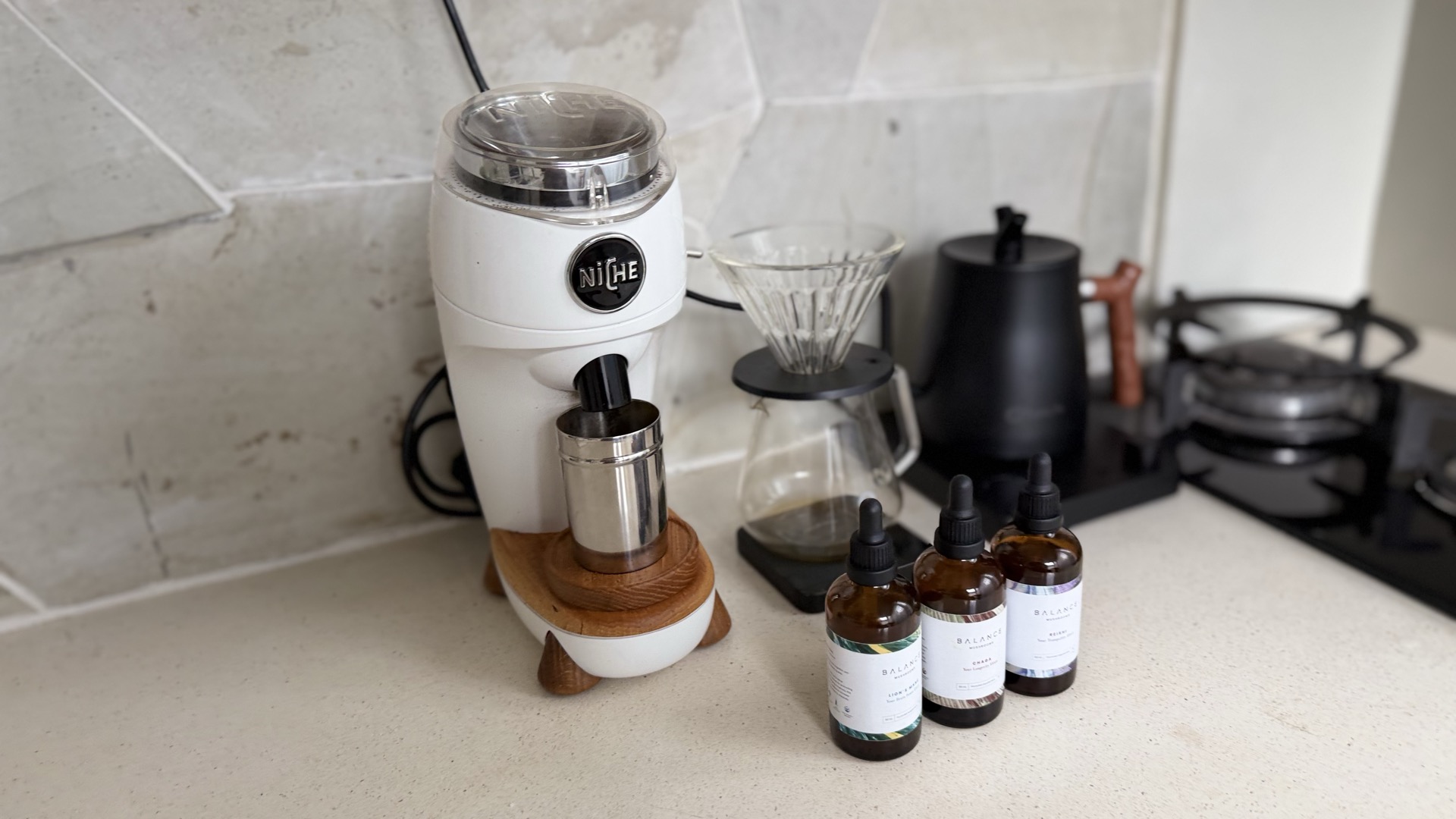
For buyers who already own a quality standalone grinder, the Sage Barista Pro - the same machine body without the integrated grinder, at a lower price - is worth serious consideration before you commit to the Barista Touch. The integrated grinder adds genuine convenience and saves counter space, but if you already have a Baratza Encore or a Niche Zero, you are paying for a component you do not need. See our guide to the best burr coffee grinders UK for a clear-eyed comparison of what the Barista Touch's integrated grinder is competing against in the standalone category.
Steam wand and milk texturing
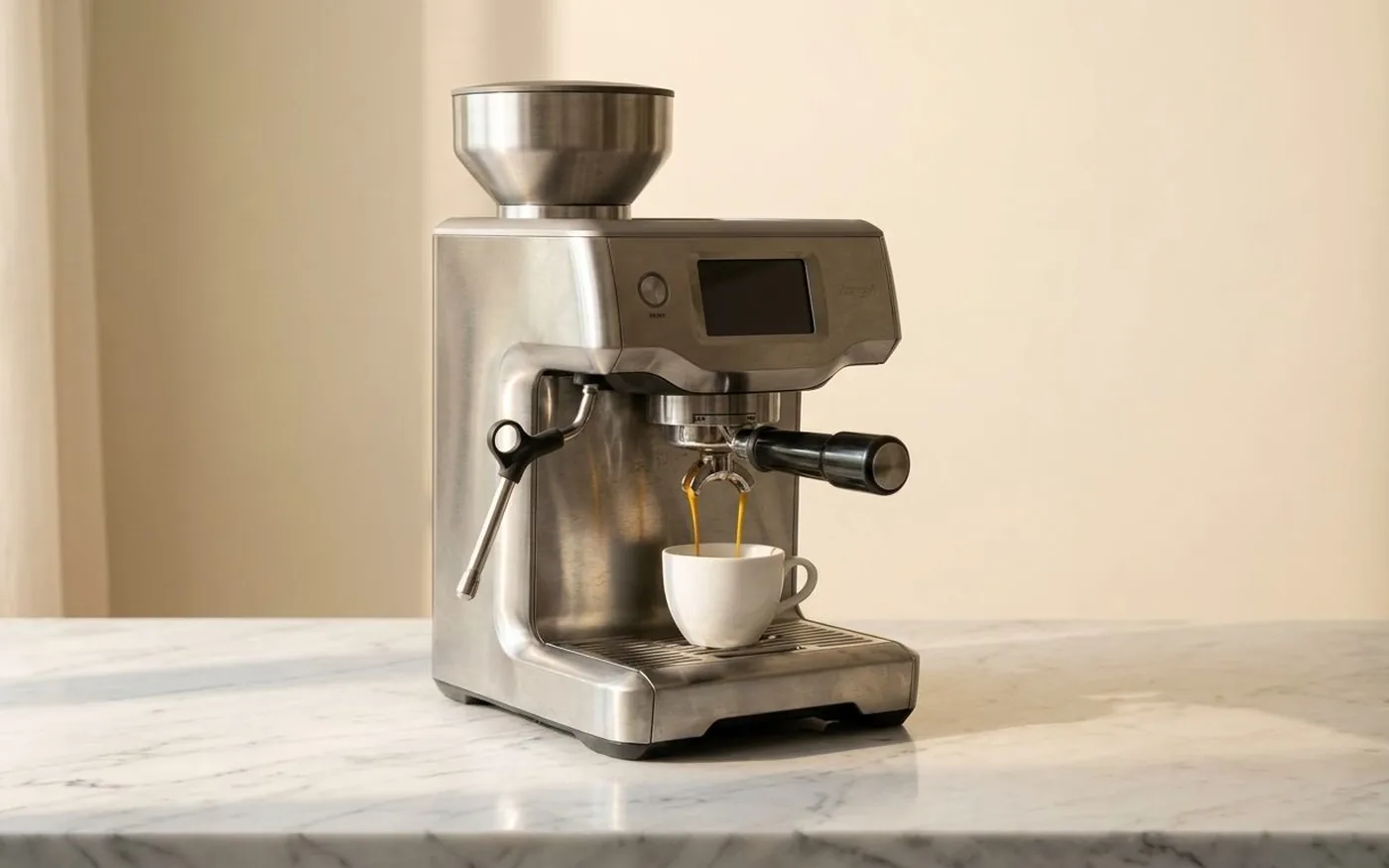
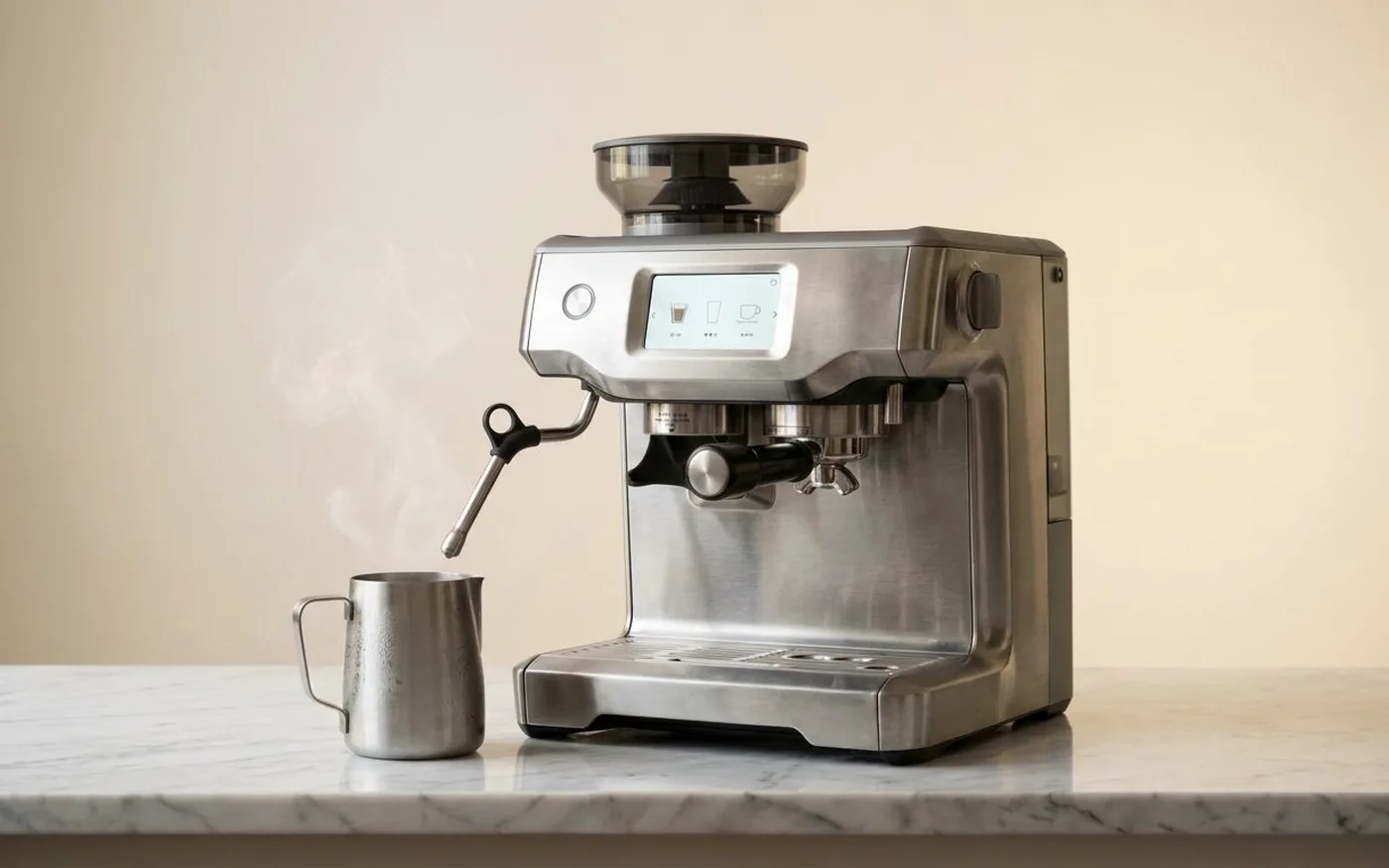
The Barista Touch includes an automatic steam wand with three milk temperature settings and three texture settings, all controlled via the touchscreen. If you are new to milk steaming, this is where the machine earns its premium over the Barista Express: the automatic mode removes the timing judgment that takes months to develop manually, and it produces usable microfoam for flat whites and cappuccinos from the first attempt.
A single boiler limitation: the Barista Touch uses one boiler for both brewing and steaming. After pulling your shot, the boiler needs to reach steam temperature before you can texture milk. In testing, that transition is short but noticeable. For making one drink at a time, this is not a meaningful interruption. For making four consecutive cappuccinos in a row, it is the defining constraint of the machine, and no amount of technique changes it.
In manual steam mode, the wand performs adequately. The pressure from a single domestic boiler is lower than on a commercial or dual-boiler machine, which means milk texturing requires more deliberate technique than you would use on a La Marzocco or comparable commercial wand. Having worked on machines at that level, there is a real and noticeable step up in steam pressure and response at the commercial end. The Barista Touch is not trying to compete with them. For someone learning to steam milk at home, or using it daily at an intermediate level, the automatic mode handles the job well. The manual mode rewards patience rather than speed.
Daily use - workflow, cleaning, and maintenance
Three seconds from cold to brewing temperature. You turn the Barista Touch on, grind your dose while it heats, and pull your shot. The realistic time from switching on to extracting your first espresso is approximately 60-90 seconds, including dosing and tamping. For a daily coffee routine, this is as close to frictionless as a non-automatic machine gets.
The blind filter backflush cleaning cycle is straightforward: insert the blind basket, add a cleaning tablet, run the cycle from the touchscreen menu. Sage recommends running this approximately once a week with regular daily use, and the machine prompts you via a cleaning indicator on the display, removing the need to track it manually. The drip tray is adequate for two to three days of single-drink use before emptying.
Descaling is required approximately every 60-90 days with regular use, with the machine prompting you via the touchscreen display. The full descaling cycle takes approximately 25 minutes from start to finish. Sage descaling solution costs around £10-12 for a single-use sachet, with third-party citric acid alternatives widely available at lower cost. Your most consistent daily friction point, echoed consistently across Sage community forums, is grinder retention and loose grounds on the counter after dosing. This is a genuine quirk of the design. Position a grounds container or tamping mat directly under the portafilter from day one and it becomes a manageable non-issue.
Build quality is solid, and the brushed stainless steel construction handles daily use without visible wear. The footprint is 340mm wide, 343mm deep, and 400mm tall. Measure your available counter space before ordering, as this is a meaningful physical commitment.
Sage Barista Touch vs Barista Express vs Barista Touch Impress
| Feature | Barista Express (£499) | Barista Touch (£699) | Barista Touch Impress (£799) |
|---|---|---|---|
| Price (as of May 2026) | £499 | £699 | £799 |
| Integrated grinder burr | Conical stainless steel | Conical stainless steel | Baratza European Precision Burrs |
| Grinder quality | Good for entry level | Better grind distribution | Upgraded hardware - different burr set |
| Steam wand | Manual only | Automatic + manual | Automatic + manual |
| Touchscreen | No | Yes | Yes |
| Auto-tamping | No | No | Yes (Impress system) |
| Heat-up time | 3 seconds | 3 seconds | 3 seconds |
| Learning curve | Steeper | Moderate | Lower |
| Best for | Hands-on learners, tighter budget | Most buyers: quality and convenience balance | Those specifically blocked by tamping consistency |
The De'Longhi La Specialista Arte offers a direct competitor at a comparable price, with an integrated sensor grinder and its AdvancedBrewSystem temperature management. In testing, it extracts competently, and the sensor dosing function is a genuine differentiator if your struggle is dose consistency rather than grind setting. If you are open to non-Sage options, it belongs in your shortlist. The practical difference comes down to workflow preference: the Sage touchscreen interface and automatic steam wand feel more intuitive for most buyers in daily use, while the De'Longhi requires more careful initial configuration.
One-sentence verdicts on each: the Barista Express is the machine for buyers who want hands-on espresso learning at the lowest entry point in the integrated-grinder Sage range. The Barista Touch Impress is worth the extra £100 only if tamping consistency is your specific, identified barrier to better espresso, not a general concern. For most buyers who have done the research to arrive at this price point, the Barista Touch is the machine the arithmetic argues for.
Who should buy the Sage Barista Touch?
Buy the Barista Touch if you are upgrading from a pod machine and want your first genuine espresso machine, or if you want one machine on the counter rather than a separate espresso machine and standalone grinder. The automatic steam wand also makes a clear case for itself if you are new to milk steaming, or if you simply want consistent results in your daily workflow without developing the manual technique. If your budget sits between £650 and £750, this is the best-integrated package at that tier in the Sage range.
Do not buy the Barista Touch if you already own a quality standalone grinder, where the Sage Barista Pro gives you the same extraction capability at a lower price without the integrated component you do not need. It is also not the right machine if you regularly make four or more consecutive milk drinks and cannot tolerate a pause between shot and steam. And if pressure profiling is what you are after, your budget needs to move above this tier: the Barista Touch's fixed pressure profile is genuinely capable for home espresso, but it does not offer the extraction control of a Decent Espresso or a Lelit Bianca. The best bean to cup coffee machines UK category is worth considering if full automation is your actual priority.
The verdict
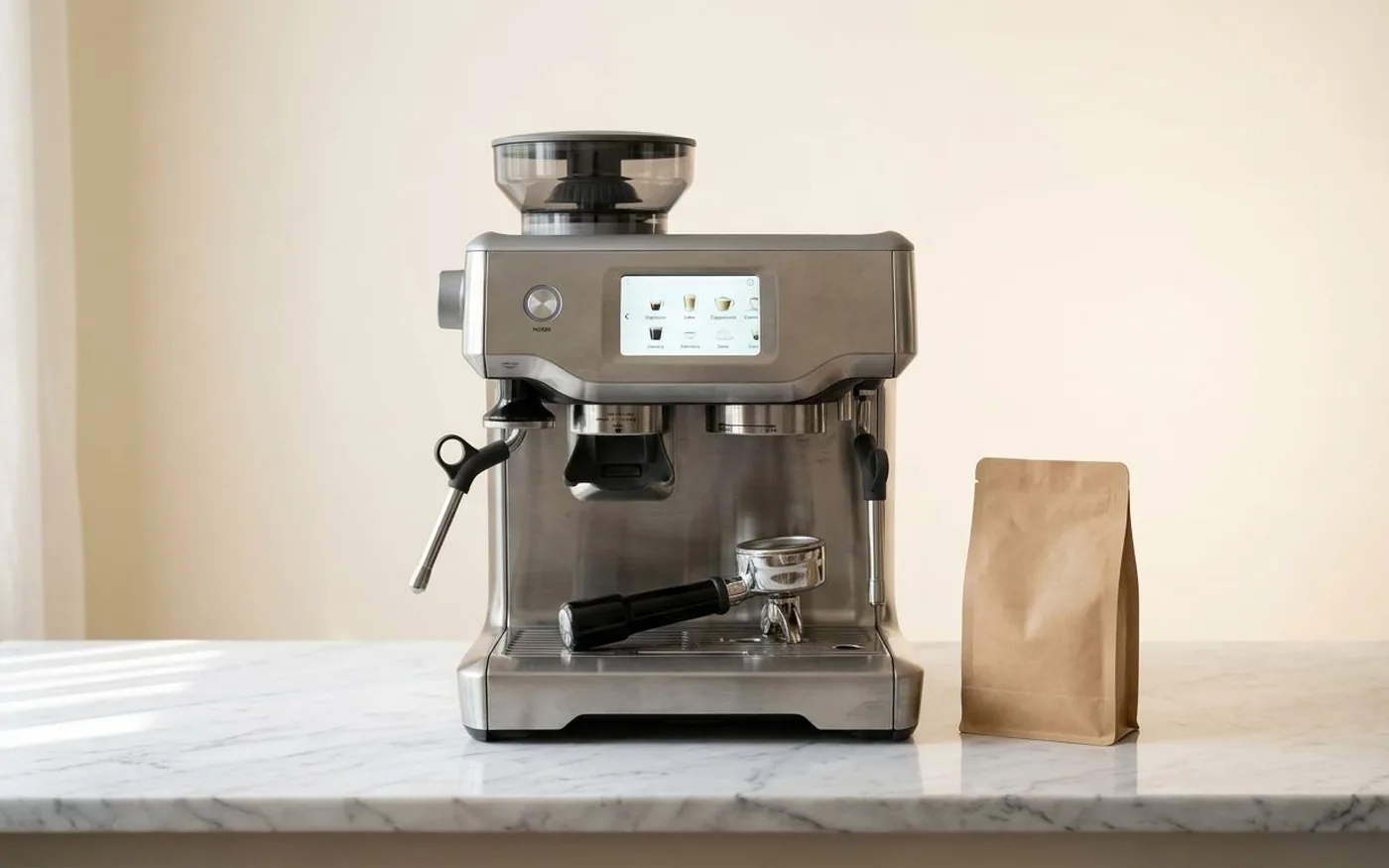
The Sage Barista Touch is a well-executed mid-tier espresso machine that deserves its place in your shortlist if you are a home barista working within a £650-750 budget and want a one-machine solution. The three-second heat-up time, the conical burr grinder, and the automatic steam wand combine to produce a daily workflow that most buyers will find genuinely workable from the first week rather than aspirationally achievable eventually.
| Dimension | Score |
|---|---|
| Espresso quality | 8/10 |
| Integrated grinder | 7/10 |
| Steam wand | 7/10 |
| Value at £699 | 7/10 |
| Ease of use | 9/10 |
| Overall | 8/10 |
The caveat before you commit: this machine produces excellent home espresso, but if you are already deep into extraction theory and chasing performance beyond the home-barista ceiling, it will start to feel limited sooner than you expect. For everyone else at this price point, it is one of the most capable integrated-grinder machines currently available in the UK under £750.
Frequently Asked Questions
Is the Sage Barista Touch worth the money?
Yes, for most buyers upgrading from a pod machine or building their first home espresso setup. The combination of a conical burr grinder, PID temperature control, and automatic milk wand at around £700 represents solid value against building an equivalent setup from separate components. The caveat: if you already own a quality standalone grinder, the Sage Barista Pro gives you the same extraction capability at a lower price.
What is the difference between the Sage Barista Touch and the Barista Touch Impress?
The Barista Touch Impress adds three functional differences: Sage’s Impress Puck System (automated tamping to a consistent 10kg of pressure), upgraded Baratza European Precision Burrs, and additional plant milk texture settings. These come at around £100 more than the standard Barista Touch. If tamping consistency is your specific, identified barrier to better espresso, the Impress is worth the premium. If not, the standard Touch produces excellent results for less.
What grind setting should I use for espresso on the Sage Barista Touch?
Start at setting 7 and adjust from there. Lighter, denser single-origin beans typically perform at settings 6-8. Medium roasts and blends dial in at 8-10. If your shot pulls in under 20 seconds, move one setting finer. If it runs over 35 seconds, move one setting coarser. Your productive espresso range on this grinder is roughly settings 5-12, and most beans settle within two or three adjustments.
Can I use pre-ground coffee in the Sage Barista Touch?
Yes. Press the Grinds button on the touchscreen to bypass the integrated grinder and dose pre-ground coffee directly into the portafilter. The quality trade-off is real: ground coffee loses freshness within days of opening, and espresso is particularly sensitive to stale grounds. Pre-ground is a workable starting point if budget is the constraint, but freshly ground beans make a material difference to what this machine can produce.
How long does the Sage Barista Touch take to warm up?
Three seconds. The ThermoJet heating system reaches extraction temperature in 3 seconds from cold. From switching on to pulling your first shot, including grinding and dosing, your realistic total time is 60-90 seconds. This is a clear competitive advantage over machines using conventional thermoblock or single-boiler systems, which typically require a 10-15 minute warm-up before extraction temperature is stable enough for consistent espresso.
How do I clean the Sage Barista Touch?
The machine prompts you via the touchscreen when each cycle is needed. The back-flush runs roughly once a week for daily users and takes around 5 minutes using the included cleaning tablet and disc. Descaling follows a separate prompt, typically every 2-3 months for moderate use, or more frequently in hard water areas. The water filter should be replaced every 3 months to slow limescale build-up in the boiler.
What is the difference between the Sage Barista Touch and the Barista Pro?
The internal components are near-identical: same ThermoJet heater, same 30-setting conical burr grinder, same manual espresso workflow. The Touch adds a touchscreen interface and Auto MilQ automatic steam wand, which handles milk texturing without manual technique. The Pro uses a manual wand. The Touch costs around £150-200 more depending on retailer. If you want hands-off milk frothing and find touchscreen navigation more intuitive, the Touch is the better fit.
How does the automatic milk steaming work on the Sage Barista Touch?
When you select a milk-based drink, the touchscreen lets you set the texture (ranging from silky flat white to dense cappuccino foam) and temperature. You then place the jug on the sensor tray with the wand submerged and press start. The Auto MilQ system monitors milk temperature via sensor and stops automatically when your target is hit. The result is consistent, correctly textured milk without any manual wand technique.
A wellness entrepreneur and biohacker, James explores the intersection of hospitality and health - from clean fuel and recovery tools to mindful routines that build balance into daily life.