Pesticides in Coffee: What's Really in Your Cup

Coffee & Wellness Writer
Roasting destroys up to 99% of pesticide residue. The real worry about coffee is different.

Table of Contents
Some of the links in this article are affiliate links, which help fund our independent review work at no extra cost to you. Every recommendation is based on hands-on testing through The Editor Lab methodology. No brand pays to appear, and no placement is guaranteed.
The most reassuring fact about pesticides in coffee is the one nobody tells you up front. Roasting your beans at around 200 degrees Celsius destroys most pesticide residue before it ever reaches your cup. Published studies put the reduction at up to around 99%. That single piece of process chemistry reshapes what the worry is actually about.
This guide answers what searchers are really asking. How often residues turn up in commercial coffee. Which compounds appear. Whether the doses you ingest pose a real health risk. And what genuinely lowers your exposure if you want to lower it further.
It is built on peer-reviewed residue studies, the UK and EU regulatory framework, and my own experience screening every Balance Coffee batch for pesticide residue at an independent lab as of early 2026. The honest answer is calmer than the worry, and the reasons are worth knowing.
Editor's Note
Does Coffee Contain Pesticides?
Coffee can contain pesticide residue, but not all coffee does, and not at the levels alarmist coverage implies. Pesticides are used on coffee farms in the same way they are used on most non-organic crops worldwide. The relevant question is how often residues survive processing, transport, roasting, and brewing - and the published market surveys answer it directly.
A pesticide residue is the trace amount of a chemical compound that remains on a food product after the active substance has been applied to the crop and broken down through weather, time, and processing. Residues are measured in milligrams per kilogram (mg/kg) and are regulated by legal maximum residue levels in every developed market.
Across the published literature, detection rates in roasted coffee samples sit well below 100%. A peer-reviewed review of pesticides in coffee collated multiple market studies and found residues in a minority of samples, with the proportion varying significantly by origin, processing method, and roast level. Some surveys put detection in around 15 to 21% of conventional roasted samples; others, particularly when testing green beans before roasting, find higher rates. The headline framing of “coffee is full of pesticides” does not match the data.
It is also tempting, and good for our business, to make this sound scary. The published risk assessments do not support that. Pesticide exposure from coffee is, on the current evidence, negligible for the ordinary drinker.
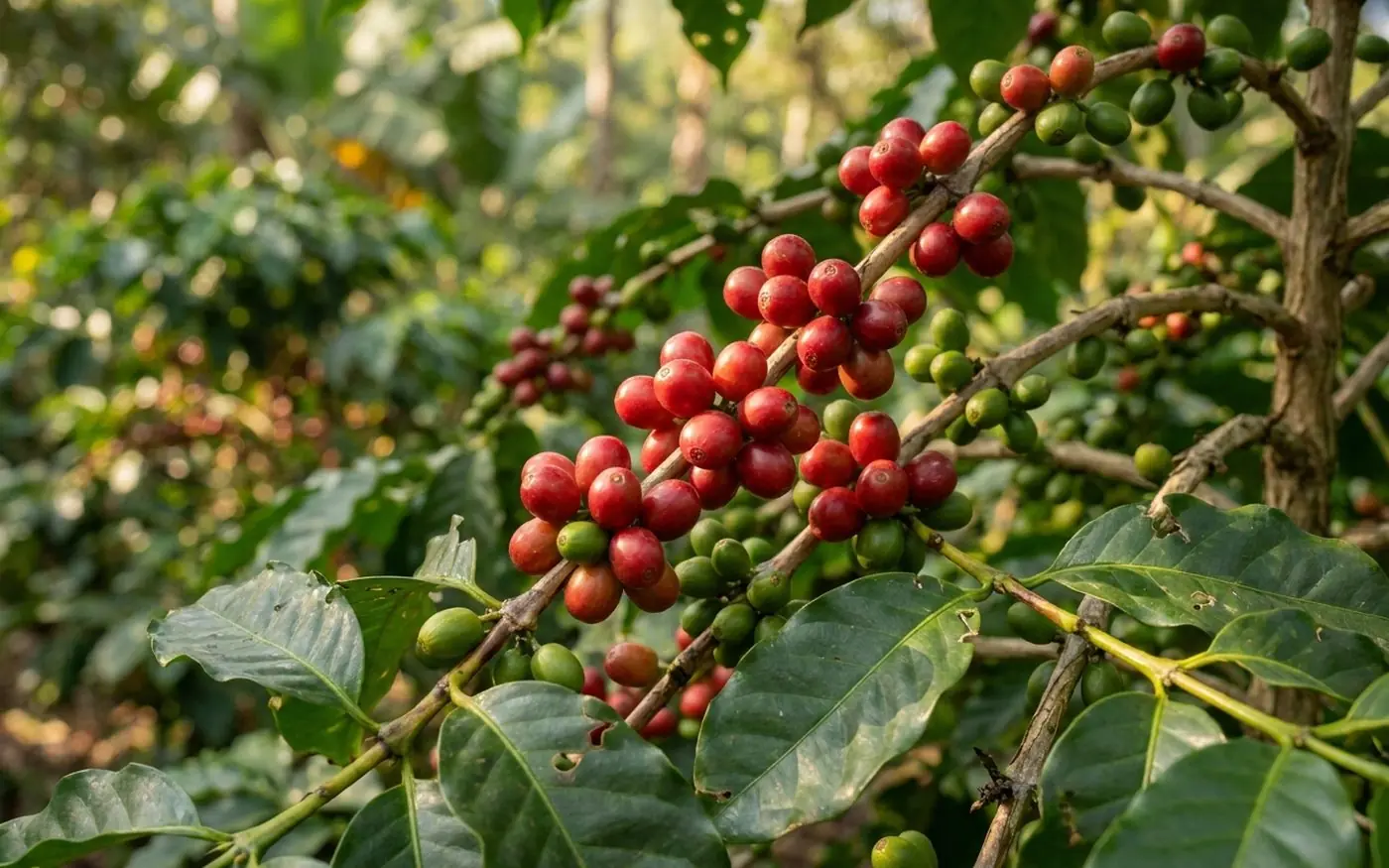
What does drive variation is where the coffee is grown, how the farm is managed, and how the beans are processed. Conventional Robusta from low-altitude commodity farms is more likely to show residue than washed Arabica from a small organic estate. The best organic coffee beans roundup explains the farm-side detail. The next section covers which specific compounds show up most often.
Which Pesticides Show Up in Coffee
The pesticide residues detected most frequently in coffee are insecticides used to control coffee berry borer, leaf rust, and storage pests. The same three compound families appear repeatedly across market studies: organophosphates (notably chlorpyrifos), neonicotinoids (notably imidacloprid), and pyrethroids (notably cypermethrin). Capsules show a slightly different residue profile from beans.
Coffee farms in conventional production typically apply pesticides at two points. During cultivation, against borers, leafminers, and fungal disease. And during post-harvest storage, against weevils and moths. Most farm-applied residue is washed off during the wet processing of Arabica, but residue can remain on naturally processed coffees and on Robusta, which is more often dry-processed.
A 2025-era market study covered in the peer-reviewed coffee residue review flagged a striking pattern. Coffee capsules tested in one European market showed the highest contamination rate for ortho-phenylphenol, a fungicide used in capsule storage. The probable explanation: capsules sit in a controlled storage environment for longer than packaged ground coffee, and post-harvest fungicide treatment is more likely to persist. The pod-specific contaminants question is covered in detail in are coffee pods bad for you.
Chlorpyrifos is notable because it has been banned in the UK and the EU since 2020 for human-food crops, yet it can still appear at trace levels in imports from countries where it remained legal for longer. That is regulation lag, not regulatory failure.
The table below summarises the four compounds most often named in published surveys.
| Pesticide | Type | Where commonly detected |
|---|---|---|
| Chlorpyrifos | Organophosphate insecticide | Green and roasted beans (banned in the UK since 2020, still detected in some imports) |
| Imidacloprid | Neonicotinoid insecticide | Green and roasted beans, conventional farms |
| Cypermethrin | Pyrethroid insecticide | Stored beans, both green and post-roast |
| Ortho-phenylphenol | Fungicide | Coffee capsules and stored ground coffee |
Sources: peer-reviewed pesticide review (PMC9681499), EU pesticide residues database. As of early 2026, the UK sets its own maximum residue levels post-Brexit. Lab tested coffee is one credible way to verify what is and is not in a given batch.
Are Pesticides in Coffee a Real Health Risk?
On the current evidence, pesticide residues in coffee pose a negligible health risk to the ordinary drinker. Published cumulative risk assessments put the hazard index well below 1, the threshold above which regulators would flag concern. The reasons are dose, regulation, and what roasting and brewing remove before the coffee reaches your cup.
A maximum residue level (MRL) is the highest concentration of pesticide residue legally permitted in a food product. MRLs are set well below the level at which any adverse health effect could be observed, and they apply across the supply chain. In the UK, MRLs are set and policed by the UK Health and Safety Executive, which operates an independent pesticide residues monitoring programme. Post-Brexit, the UK sets its own MRLs through the GB framework rather than defaulting to the EU.
The cumulative pesticide risk assessment in the peer-reviewed review on coffee residues calculated a hazard index of well under 1 for normal coffee consumption. That figure is the sum of every detected residue measured against its acceptable daily intake, scaled to typical UK coffee intake of around 2 to 3 cups per day. The conclusion across the published literature is consistent. The dose you ingest is far below the dose at which any residue would cause harm.
At higher occupational or dietary exposures, such as farm workers handling concentrate, or populations consuming residue-heavy diets across many food groups, some pesticides are associated with nervous-system or endocrine effects. That is well-documented in toxicology. It is not the same as saying a daily flat white poses that risk. The health concern attaches to dose, not to the presence of any detectable trace.
The honest verdict for the average UK coffee drinker is this. Residues exist in a minority of conventional samples. The amounts are tiny. The regulatory MRL framework was built around exactly this kind of trace exposure. Mycotoxins in coffee are a separate category and worth understanding for a complete picture of contaminant risk. For now, on pesticides, the evidence supports calm, not concern.
Does Roasting or Brewing Remove Pesticides?
Roasting reduces pesticide residues in coffee dramatically - studies report reductions of up to around 99% - which is why brewed coffee carries far less residue than green beans. Washing the beans before roasting cuts residues further. The brewing method also matters: traditional espresso and filter methods reduced residues more than some alternative methods in published testing.
This is the most genuinely useful piece of pesticide knowledge a consumer can have. The bean you see in the shop has already passed through several stages of residue reduction before it ever touches your grinder.
The Journal of Agricultural and Food Chemistry study on household coffee processing tested pesticide reduction across washing, roasting, and brewing. Pre-roast washing of green beans cut residues meaningfully. Roasting at typical commercial temperatures of 200 to 230 degrees Celsius, held for several minutes, then destroyed the bulk of what remained. The combined effect across all stages reached around 99% for several common compounds, including chlorpyrifos and several pyrethroids.
There is a physical reason for this. Most pesticide compounds are organic molecules that break down at elevated temperatures. Roasting is, in effect, a long, controlled thermal treatment of the bean. The same heat that creates the Maillard browning, the chocolate notes, and the espresso crema also degrades residue.
Brewing performs a smaller second reduction. Pour-over and espresso pull residues into the cup at different rates because of pressure, water volume, and contact time. The differences are not large enough to make a brewing-method recommendation. The major reduction has happened by the time the bean is roasted.
The implication for the drinker is simple. The point of intervention that genuinely matters is the roast, not your home brewing decisions. The best coffee beans in the UK that are roasted properly are already a long way from the residue level a green bean carries.

How to Lower Your Pesticide Exposure
If you want to lower your pesticide exposure from coffee, three steps cover most of what is achievable. Choose certified-organic coffee. Choose roasters who test their beans and publish results. And do not lose sleep over the occasional non-organic cup, because the marginal exposure is small to begin with.
Organic certification, in the UK most often the Soil Association mark, restricts the use of synthetic pesticides at the farm level. Organic farms can still use a defined list of natural pesticides, and certified beans are not residue-free by definition. Organic certification limits synthetic pesticides; it does not mean a crop saw zero pesticide of any kind, and organic-approved substances exist too. “Organic” is a strong signal, not a perfect one. The best mycotoxin-free coffee roundup applies the same logic to a sibling contaminant.
The stronger signal is third-party lab testing. A roaster who screens every batch and publishes the results gives you direct evidence rather than a marketing claim. Lab tested coffee is the simplest filter most consumers can apply.
For transparency: I founded Balance Coffee in 2020, our beans carry Soil Association organic certification, and we screen every batch for pesticide residue, so I have a clear interest here, and I would rather you knew that up front. Pesticide residue is one of the four things every Balance Coffee batch is screened for at an independent lab, alongside mycotoxins, mould, and heavy metals.
If you want a UK-specific starting point, best healthy coffee beans UK and low acid coffee UK both tend to lean toward organic, lab-tested roasters.
The honest framing: the gap between an organic, lab-tested coffee and a conventional supermarket bag is real but small. The bigger gap, by far, is between coffee that has been roasted properly and green beans that have not.
Frequently Asked Questions
Does decaf coffee have pesticides?
Decaf coffee can contain pesticide residue at similar trace levels to regular coffee, because pesticides are applied at the farm before any decaffeination step. The decaffeination process itself does not specifically target pesticides, though water-based methods such as Swiss Water can reduce some residues incidentally. Roasting still removes the bulk of any remaining residue, regardless of the decaffeination method used on the green beans.
Is instant coffee high in pesticides?
Instant coffee is not consistently higher in pesticide residue than ground coffee. It is processed from roasted beans that have already gone through the residue reduction of roasting, then extracted and dried. Some market surveys have found similar or lower residue levels in instant samples compared with whole-bean coffee, because the additional processing steps further reduce trace compounds before the product reaches your jar.
Does organic coffee have no pesticides at all?
Organic coffee is grown without synthetic pesticides under certified standards such as Soil Association, but it can still contain trace residues. Organic-approved natural pesticides are permitted at the farm level, and cross-contamination from neighbouring conventional farms is possible. “Organic” significantly reduces pesticide exposure rather than eliminating it. The cleanest signal is certified-organic plus published independent lab results showing residue levels per batch.
Are coffee pods worse for pesticide residue?
Coffee pods showed the highest contamination rate for one specific fungicide, ortho-phenylphenol, in one published European market study. The likely cause is post-harvest storage treatment combined with the controlled, sealed storage environment of capsules. Whole-bean and ground coffee typically show different residue profiles from pods. Choosing pods from a roaster who screens for residues is the most reliable way to lower this specific exposure.
A wellness entrepreneur and biohacker, James explores the intersection of hospitality and health - from clean fuel and recovery tools to mindful routines that build balance into daily life.