Tested against Sanremo benchmarks: seven UK models, real shot data, and which one to buy.
Table of Contents
Some of the links in this article are affiliate links, which help fund our independent review work at no extra cost to you. Every recommendation is based on hands-on testing through The Editor Lab methodology. No brand pays to appear, and no placement is guaranteed.
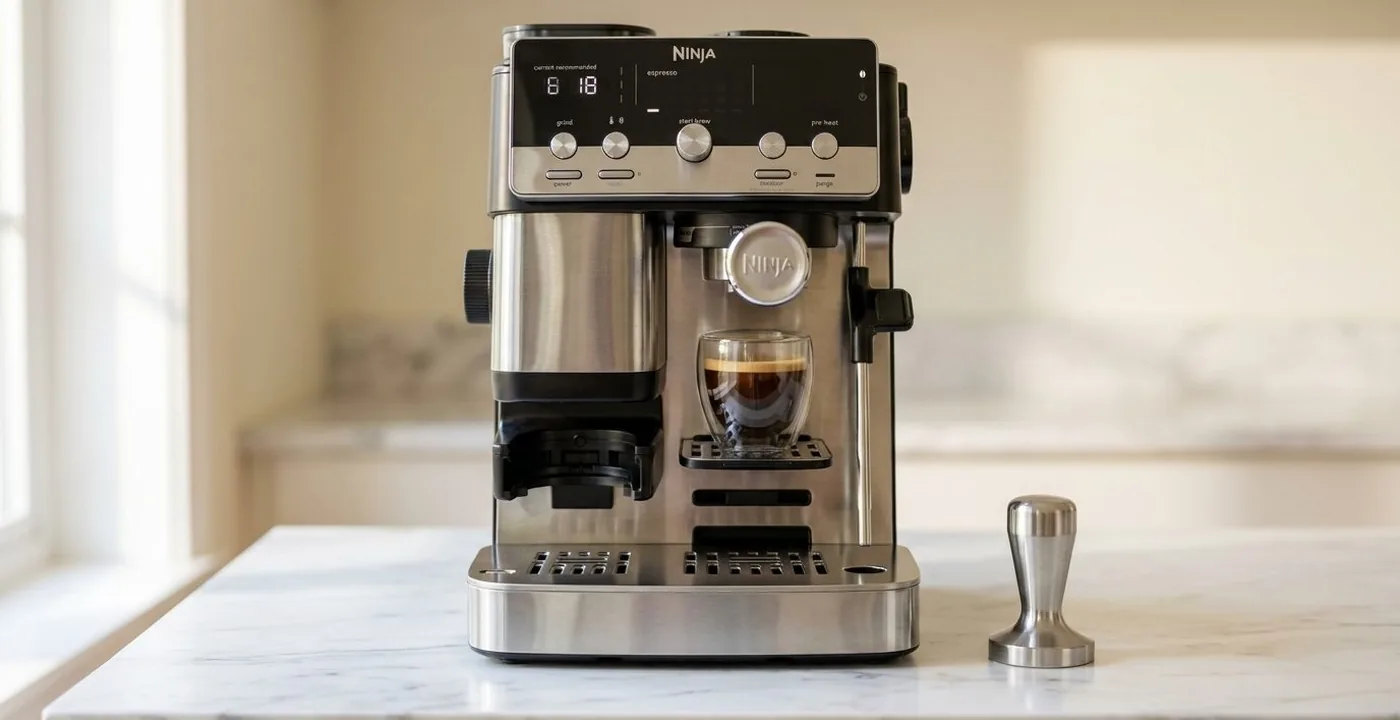
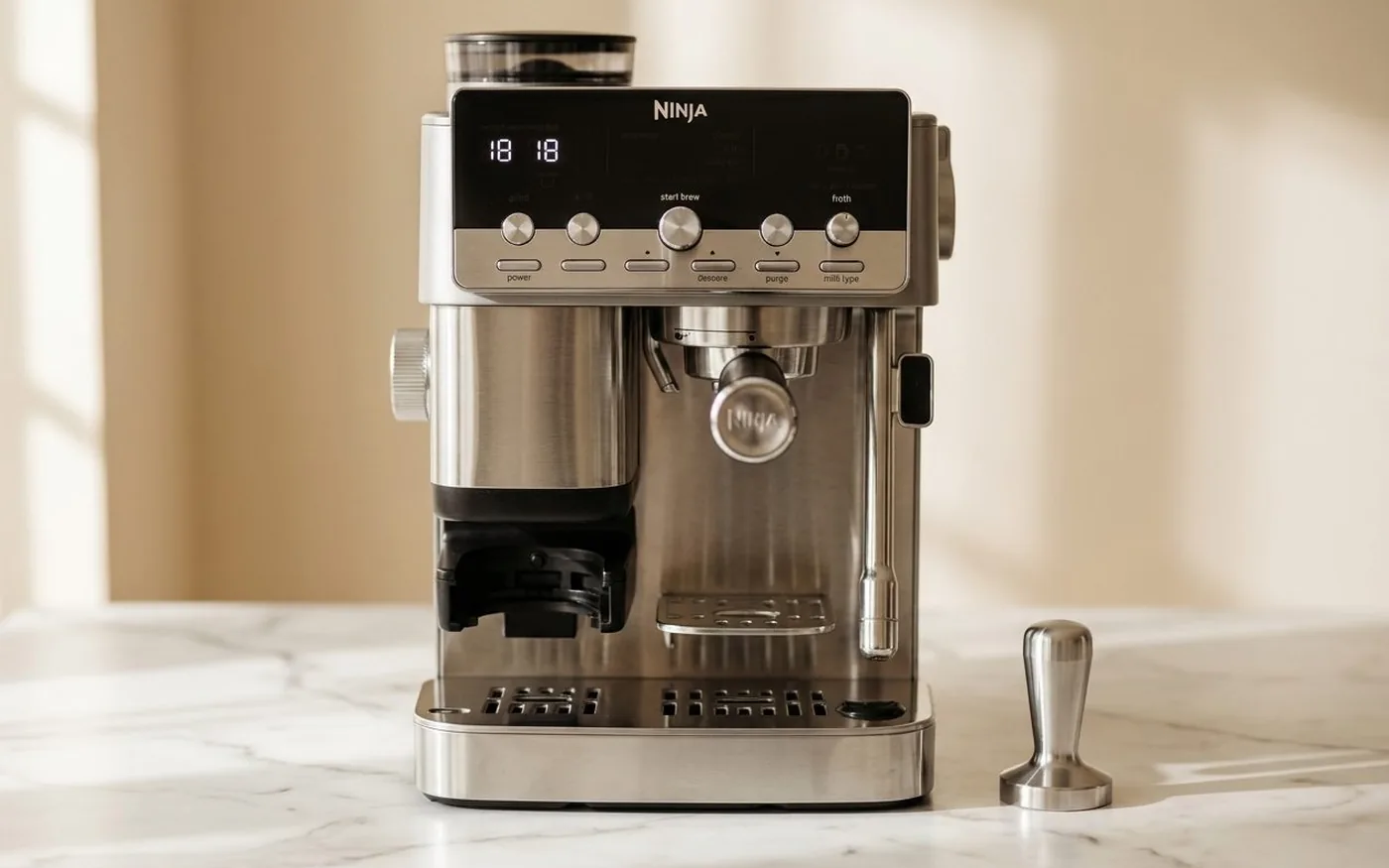
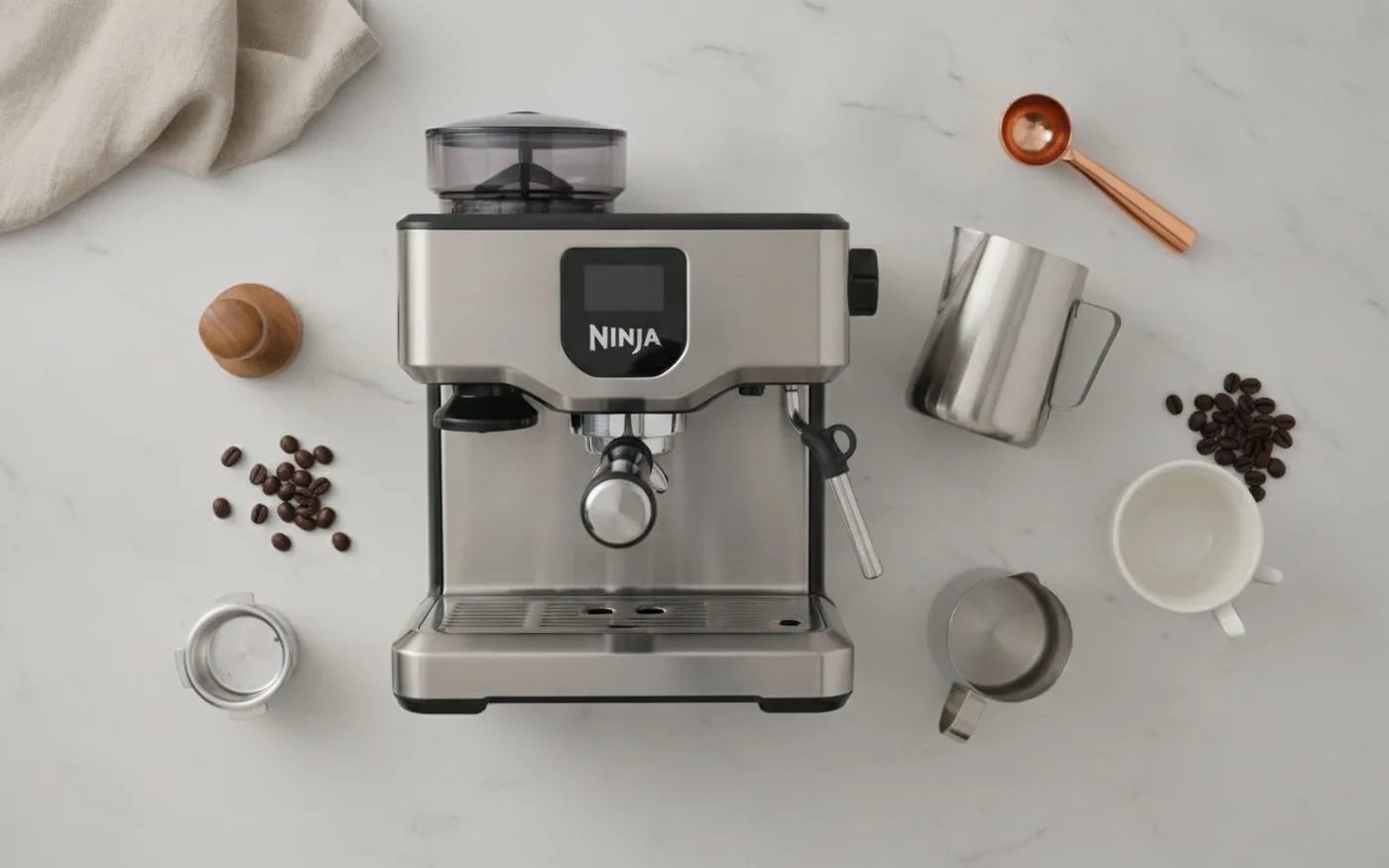
The Ninja Luxe Café is a semi-automatic espresso machine with a built-in grinder and an automated grind-and-dose system called Barista Assist. It suits a household upgrading from pods, instant or a cheap bean-to-cup machine that wants milk drinks with no learning curve, not someone chasing shot-by-shot espresso control. Ninja sells it as seven UK models, priced £449.99 to £849.99.
No coffee machine gets argued about in UK forums quite like this one. Half the room says it is the smartest £500 a household will ever spend on coffee; the other half says it is a toy wearing an espresso machine's clothes. Neither side is being dishonest, and the argument is not really about the machine - it is about what a £500 coffee machine is actually supposed to do for you.
Every machine here was assessed against the same benchmarks I used across five and a half years selling and supporting Sanremo's own espresso machines: extraction consistency against the manufacturer's own stated target, milk-system performance, and how the machine behaves after the first month, not the first morning. I pulled shots on a bag of Redemption Roasters' espresso blend and a supermarket own-label bag for contrast, full method in the Editor Lab. UK pricing was checked at Currys, John Lewis and sharkninja.co.uk on 8 August 2026: the Luxe Café Premier (ES601UK) ranged from £448.98 to £549.99.
The Verdict In One Paragraph
Against the manual's own stated target of 18g in, 45g out, 30-40 seconds, the machine landed close in my testing. Barista Assist genuinely removes the guesswork of grind size for a new user, and it is also the single most complained-about feature in owner communities, because recommendations shift on the same beans from the same bag. Both are true at once, and this review will not pretend otherwise.
Buy It If
Skip It If
You are upgrading from pods or instant and want milk drinks with zero learning curve
You already know how to dial in a grinder and want shot-by-shot control
A non-enthusiast partner needs to be able to use it too
You are chasing café-quality espresso specifically, not milk drinks
You want the assisted tamper as a genuine accessibility feature (Pro)
You will not tolerate a unit-variance lottery without checking it early
Which Ninja Luxe Café Should You Buy In The UK?
Seven Luxe Café models are currently listed on sharkninja.co.uk, and no competing review names all of them. Owners routinely conflate the range with Ninja's separate AutoBarista line, so start here before the money question.
Model
UK SKU
RRP (sharkninja.co.uk, 8 Aug 2026)
Luxe Café Mini
ES301UK
£449.99
Luxe Café Mini Plus
ES352UK
£499.99
Luxe Café Premier
ES601UK
£549.99
Luxe Café Premier Plus Series
ES655UKGY
£579.99
Luxe Café Pro
ES701UKBR
£699.99
Luxe Café Pro Premium Edition
ES701UKBK2
£799.99
Luxe Café Pro designed by David Beckham
ES771UKBK
£849.99
Separately, the Ninja AutoBarista line (AE1001UK, AE1051UK, AE1052UK, £799.99 to £899.99) is a different product family, a super-automatic bean-hopper machine, not a Luxe Café - any video or listing referencing it is not about the machine in this review.
Here is the callout no US-sourced comparison gets right: the UK and EU ES601UK ships with a hot water spout, an Americano programme and a single basket; the US ES601 has none of those. One UK owner writes: "We have a EU601 and it has the Americano mode plus hot water spout. I think the US models are different and they use US images. I was also confused during my purchase." Watching a US YouTube comparison and concluding you need the Pro to get features the UK 601 already has is the single most common way UK buyers overspend on this range.
For most UK buyers, the ES601UK Premier is the right buy. Step up to the Pro for four specific reasons: the assisted tamper as an accessibility feature, a larger frothing jug and improved wand, and Ristretto and Lungo shot options. If none apply to you, the extra £150 buys very little.
How We Tested It
The Redemption Roasters blend came from a roastery whose founders I knew before it became widely known, chosen alongside a supermarket own-label bag to see how the machine handled cheaper beans.
The five and a half years I spent inside Sanremo UK selling and supporting the company's own espresso machines meant sitting through Sanremo's own engineers walking me through PID control and multi-boiler temperature stability, the fundamentals that decide whether a shot on Monday tastes the same as a shot on Friday. That is the standard this machine is measured against here, not a first-impressions unboxing.
Espresso Quality: How Shots Compare to Ninja's Target
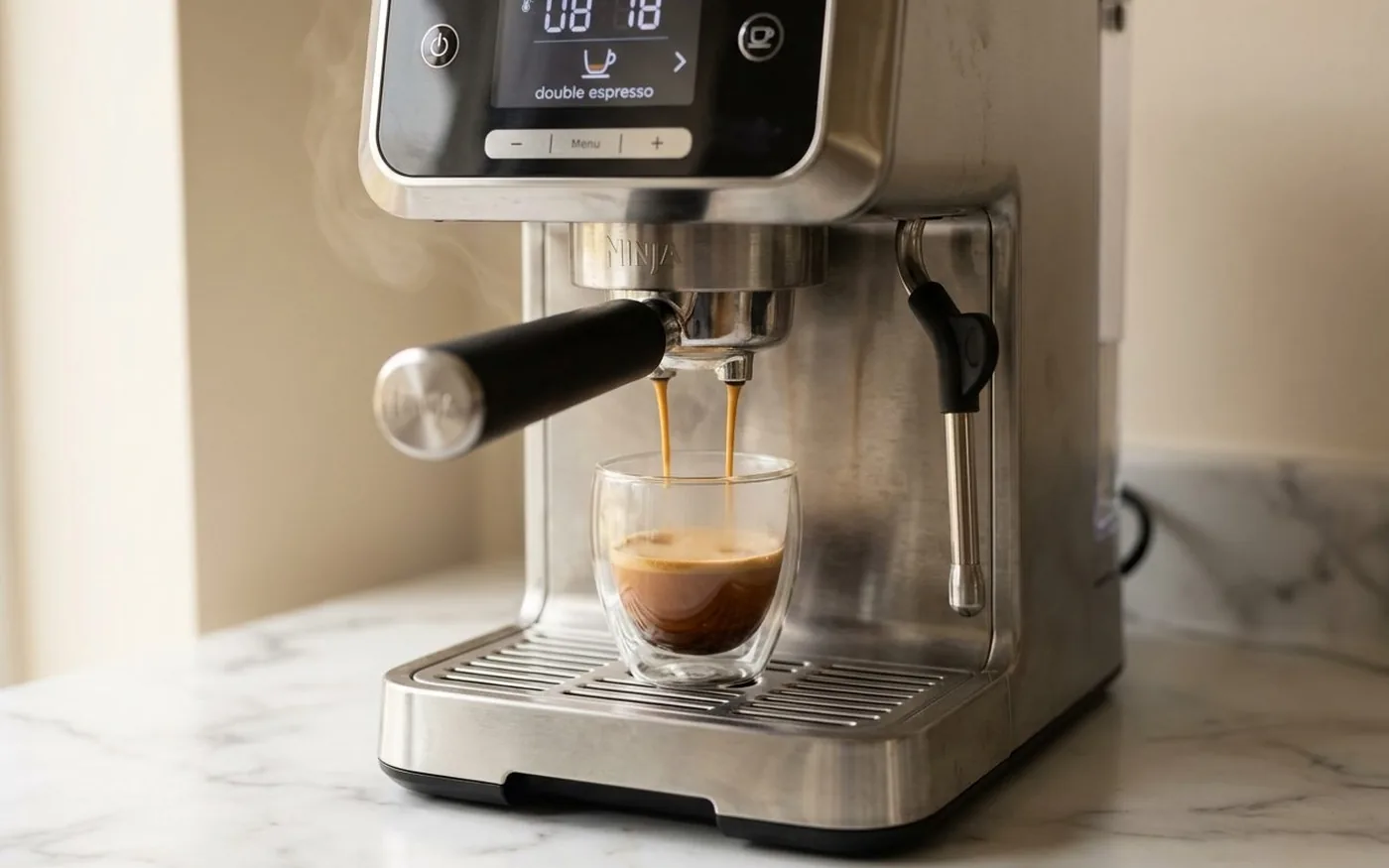
Ninja's own manual states a target of 18g in, 45g out, 30-40 seconds for a standard double. That is the benchmark UK owners quote back and forth in forum threads, and it is the one used here.
In my testing, most shots landed inside or close to the manual's own target band. The exception was the first shot of the day, which ran noticeably faster and thinner than the second, a cold-start pattern multiple owners describe independently on Reddit. Run and discard a blank shot before your first real drink of the day, or budget for a weaker first cup.
Crema was consistent and persistent on the espresso blend, thinner and paler on the supermarket own-label bag, tracking with cheaper, staler beans rather than a machine-specific fault. CoffeeGeek's full review of the Premier scored it 88.5 out of 100 on a US-priced $549 unit; the extraction character here lines up: competent, consistent, not espresso-bar quality, and not trying to be.
Barista Assist: The Feature You Are Paying For, Honestly Assessed
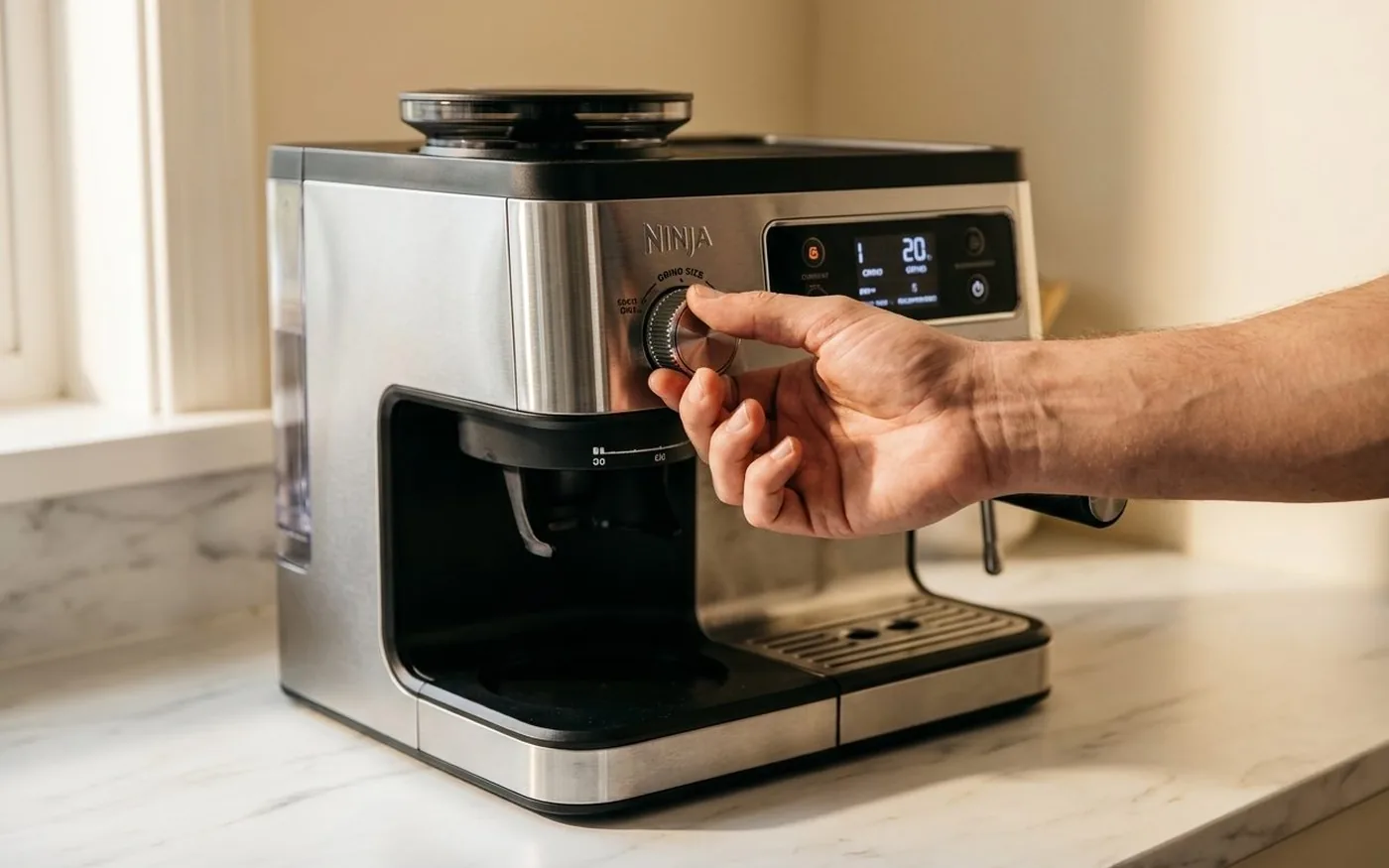
Barista Assist is the headline reason this range costs more than a basic pod machine: the built-in grinder recommends a grind size and dose based on the drink you select, removing the guesswork that stops most new owners dialling in a grinder-equipped machine. For a household with no espresso experience, that is a genuine head start.
It is also the most complained-about function in owner communities. Grind recommendations shift on the same beans from the same bag, sometimes mid-week, as shot 10 in the log above shows. Two years calibrating commercial bean-to-cup machines, Jura, Thermoplan and Eversys, in law firms, McDonald's, Wetherspoons and Greggs during my time at UCC Coffee taught me what automated grind-and-dose systems are capable of at their best, and Barista Assist's targeting is looser than that commercial-grade calibration. Owners describe wasting real money on beans while the system finds its footing.
The practical fix: treat Barista Assist's first recommendation as a starting point, not a fixed setting. If a shot runs fast and thin twice in a row on the same beans, override the suggested grind one step finer yourself; the system usually does not correct itself.
The Milk System
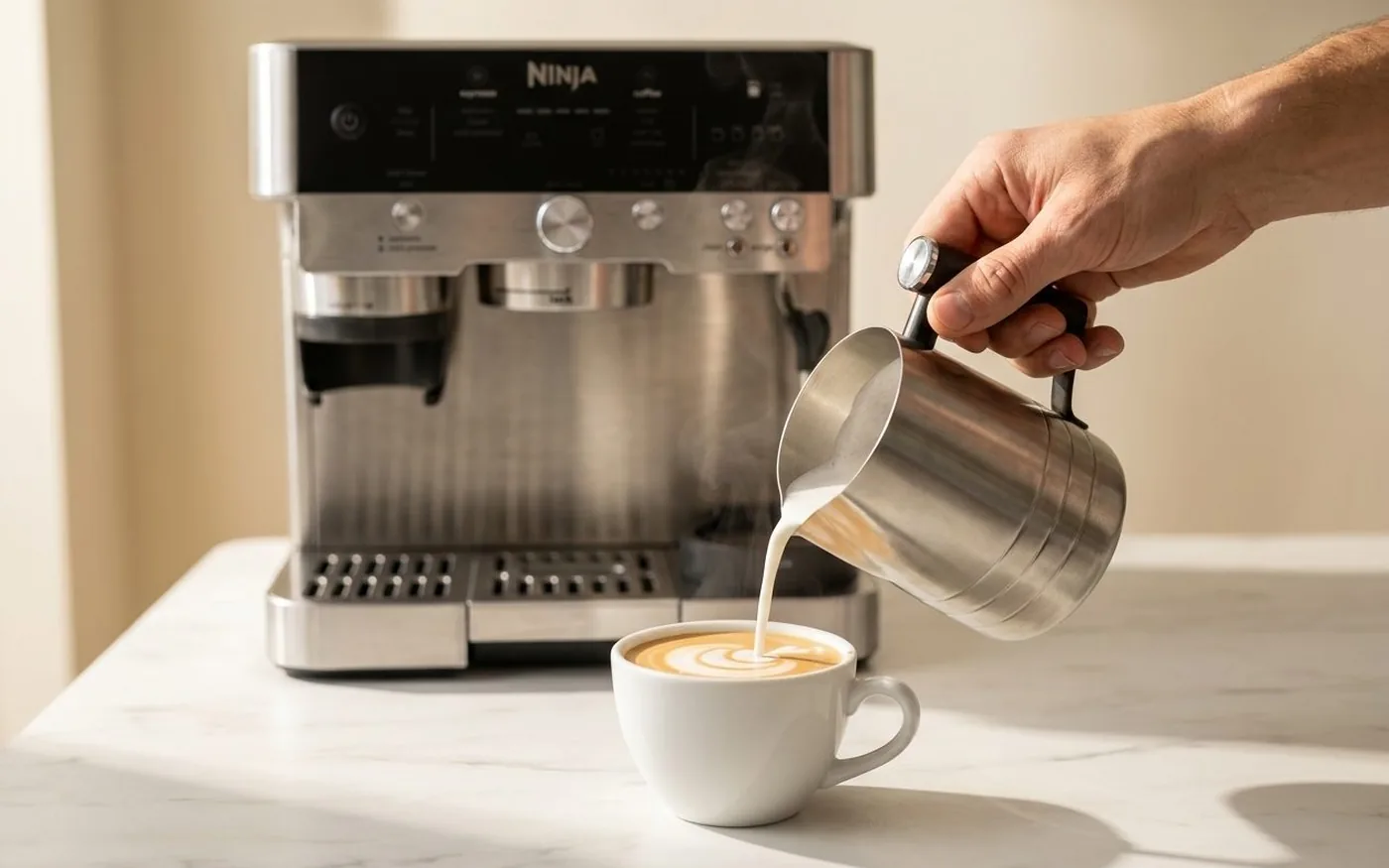
Automatic frothing sits behind a set of drink presets, and this is the part of the machine that earns the least argument. Owners rate it consistently well on plant milk, oat especially, given how many buyers here have already switched off dairy.
The honest limitation is speed and microfoam quality against a manual wand: a competent user working a jug by hand still produces finer, more stable microfoam, faster, once they know what they are doing. That is the trade every automated system makes: consistency for a first-time user, at a slight ceiling on the best possible result. If silky latte art is the actual goal, our best milk frother guide and a separate wand will out-perform any automatic system, this one included.
Ninja Luxe Café vs Sage: The Comparison Everyone Is Actually Making
Google keeps asking whether the Ninja Luxe is better than "Breville", and that question is really about Sage: Breville is the brand's US name for the identical company that sells these machines in the UK as Sage, so "Ninja vs Breville" reviews are really Ninja against Sage.
I bought a Sage Barista Pro for my parents during COVID and spent weeks dialling it in at their kitchen counter, so this comparison is not theoretical.
Neither machine wins outright. A real UK owner in the research moved from a Sage Bambino Plus and a separate Smart Grinder Pro to the Ninja because two boxes and two learning curves were more hassle than the household wanted. If you want competence without practice, the Ninja is the right call; if you want to learn to make better coffee and do not mind the extra weeks it takes, a Sage machine or the wider best Sage coffee machine range out-performs it on the one axis it cannot fix: espresso quality once you know what you are doing. De'Longhi's La Specialista barely came up in the owner research, so it is not built into this comparison the way Sage is.
Living With It: Drip Tray, Water Tank, Footprint And Back-To-Back Drinks
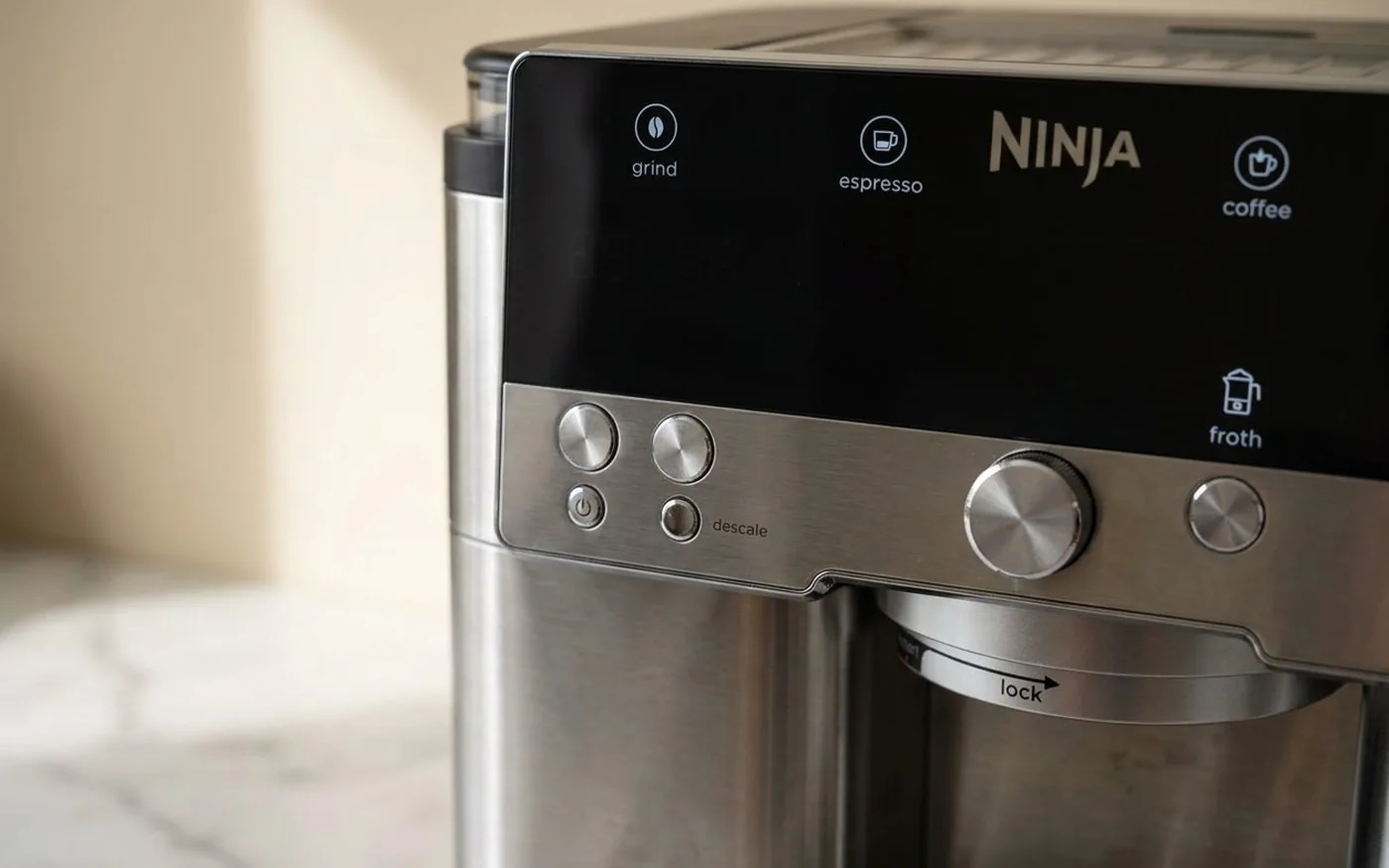
The drip tray and water tank are the single most-repeated daily gripe in owner research: the machine purges water on heat-up and clean cycles, so expect to empty the tray every three to four days at modest use, daily on three drinks between two. At 37.7cm to its highest point (Currys spec sheet), it clears most UK cabinets - check your own gap first. Wipe the group area and run the auto-purge daily, and follow our how to clean a coffee machine guide on descale frequency.
Reliability, The QC Lottery, And Your UK Rights
There is a documented unit-variance problem in owner communities: some buyers are on their third or fourth machine, with shot yields swinging from roughly 14g to 70g at a fixed setting - a faulty unit, not a dialling-in problem.
The 48-hour test protocol. Run this in your first two days rather than assuming a bad first shot means a bad machine:
Weigh yield across five consecutive doubles at one fixed grind and dose setting. A spread beyond roughly 10g each way, not just one outlier shot, signals a faulty unit.
Compare the first shot of the day against the third. A gap this wide every single day (not just occasionally) is the cold-start pattern, not a fault.
Run the frother on every preset, dairy and a plant milk, and check the result is consistent across repeats.
Check under the drip tray for leaks after five full heat-up and purge cycles.
If your unit fails step one or four, escalate now. Ninja's UK warranty runs two years, with the second year activated by registration. Beyond that, the Consumer Rights Act 2015 gives you a separate UK route, and Citizens Advice explains how to use it.
The honest counterweight: John Lewis shows 4.50 out of 5 and Currys 4.6 out of 5 from 1,058 reviews, both strongly positive at scale. One flag: the John Lewis score is pooled across the Premier and Pro, not model-specific, and a product-specific subreddit self-selects for people with problems.
What It Really Costs To Run (Including The Beans Nobody Counts)
The RRP is not what most buyers actually pay: the ES601UK Premier ran £448.98 at John Lewis against £549.99 at Currys, both checked 8 August 2026. Ninja-certified refurbished units (warrantied) run £260 to £440 on eBay UK, and Costco UK's catalogue price sits at £380.
The cost nobody budgets for is wasted beans while Barista Assist finds its footing. One owner in the research put it plainly: "I feel like I've wasted £20 on beans trying to dial the machine in!" Another logged £150 of beans in twelve weeks getting consistent results. Set aside £20 to £40 above your normal bean spend for the first month.
Run the arithmetic the other way and the machine still wins for the right household: two people buying coffee-shop drinks daily easily clears £1,500 a year, and even a rocky first month of home bean spend comes in well under that. Our best coffee beans UK guide covers what to buy once you move past the settling-in period.
One disclosed note here: I founded Balance Coffee in 2020, so treat this as a disclosed interest rather than an impartial pick. Balance Coffee's Rotate Espresso, a 100% Mexico single origin roasted for espresso, is the one bean in the range suited to a machine like this. Available via Balance Coffee.
What Owners Say After Three Months
Two camps exist in the long-term ownership data. The enthusiast verdict, from Coffee Forums UK: "These types of machines are life style kitchen appliances and not serious espresso machines." Fair as a technical assessment, but not what most buyers are solving for.
The owner verdict, from the most-upvoted post in the research, 152 upvotes: "My wife and I would every morning go to Costa, McDonald's or Starbucks for a coffee before work. We no longer need to do that." A third voice sits between the two: "I have learnt to just enjoy it for what it is, a good machine for milkier drinks, and it does an okay espresso. I think I have stopped chasing this perfect espresso." Know which camp you are before you buy.
Who Should Buy It, And Who Genuinely Should Not
Buy it if you are upgrading from pods, instant or a cheap bean-to-cup and want milk drinks with no learning curve, especially if a non-enthusiast partner needs to operate it too. The assisted tamper on the Pro deserves a mention nobody else covers: for a buyer with limited mobility, it removes a barrier manual tamping does not, a real accessibility case, not a marketing line.
Do not buy it if you are chasing shot-by-shot espresso control, or if you will not tolerate checking a new unit against the 48-hour protocol above. If you want out of the maintenance and dialling-in business entirely, our best Nespresso capsules guide and the wider best coffee pod machine roundup are the better starting point than this one. Weighing this against the rest of the market, our best espresso machine under £500 and best espresso machine for beginners guides cover where the Luxe Café sits against its closest rivals, and our best Ninja coffee machine roundup ranks it against the rest of the Ninja range. For a fully automatic machine that grinds, doses and tamps without a lever, our best bean-to-cup coffee machine guide covers that category instead.
“Barista Assist genuinely gets a new owner further than they would get alone, and it is also the reason experienced owners complain the loudest. Both of those things are true, and a £500 machine that is honest about that trade earns its price.”
James Bellis, founder, Balance Coffee
Full UK Specifications
Dimensions, weight and tank size below refer to the ES601UK Premier, the model recommended above; other models in the range vary slightly.
Specification
Detail
Dimensions (W x D x H)
370 x 340 x 330 mm
Weight
11.7 kg
Water tank
2 litres
Power
1650 W
Grinder
Integrated conical burr
Grind guidance
Barista Assist (automated grind and dose recommendation)
Milk system
Automatic frother, multiple presets
UK-specific features (ES601UK)
Hot water spout, Americano programme, single basket
Yes, if you are a household upgrading from pods or instant that wants milk drinks with no learning curve, and no, if you are chasing shot-by-shot espresso control. It answers a specific need extremely well rather than trying to be an enthusiast's machine, and the buyer segment matters more than a blanket verdict here.
Is the Ninja Luxe Cafe worth the money?
At real UK transaction prices rather than RRP, yes: £448.98 at John Lewis against a £549.99 RRP is a meaningful gap, and Ninja-certified refurbished units from £260 add a lower-risk entry point. Budget an extra £20 to £40 in wasted beans during your first month while Barista Assist settles, since that cost rarely gets counted.
What's the difference between Ninja Cafe Luxe and Pro?
For UK models specifically, the Pro adds an assisted tamper, including as a genuine accessibility feature, a larger frothing jug and improved wand, and extra Ristretto and Lungo shot options. The UK Premier already has the hot water spout, Americano mode and single basket that US-sourced comparisons wrongly claim only the Pro offers.
Is Ninja Luxe better than Breville?
In the UK, Breville's espresso machines are sold under the Sage name, so this question is really asking Ninja versus Sage. Neither wins outright: the Ninja removes the learning curve, while Sage machines have a higher espresso ceiling once you know how to use them.
Which is better, Ninja Luxe Cafe or Breville?
Framed against the specific machines UK buyers actually cross-shop, the Sage Barista Express and Barista Pro, the Ninja wins on ease of use and milk automation, while Sage wins on espresso quality with practice. A UK owner in this research moved from a Sage Bambino Plus and a separate grinder to the Ninja specifically to cut that learning curve.
Which coffee machine is better, the Sage or Ninja?
Apply this rule to yourself rather than looking for a winner: if you want competence without practice and a non-enthusiast partner needs to use it too, buy the Ninja. If you want to learn to pull a genuinely better shot and do not mind the extra weeks it takes, buy the Sage.
How long does a Ninja Luxe Cafe last?
Ninja backs it with a 2-year UK guarantee, with the second year activated by registering the machine. Reliability is uneven: a documented unit-variance pattern exists in owner communities, though Currys shows 4.6 out of 5 from 1,058 reviews. Run the 48-hour test protocol early and the Consumer Rights Act 2015 covers you beyond the guarantee period.
Which Ninja Luxe Café model should I buy in the UK?
For most UK buyers, the ES601UK Premier at £549.99 RRP (from £448.98 at John Lewis) is the right default. Step up to the Pro only for one of four specific reasons: the assisted tamper as an accessibility feature, a larger frothing jug and improved wand, or Ristretto and Lungo shot options, since the espresso and milk system are otherwise near-identical between the two.
Can the Ninja Luxe Café make two coffees back to back?
Yes, one after another rather than simultaneously. The machine reheats between drinks, so a two-person morning routine works fine, just expect a short gap between the first and second cup rather than both brewing at once. Run the frother straight after the second shot rather than waiting, since that is when the auto-purge cycle is already primed and ready.
A wellness entrepreneur and biohacker, James explores the intersection of hospitality and health - from clean fuel and recovery tools to mindful routines that build balance into daily life.
James Bellis, founder, Balance Coffee