Plant Protein vs Whey: Digestion, Muscle and Taste Compared
A nutritionist settles the plant protein vs whey debate with dose-matched evidence - no supplement industry spin.
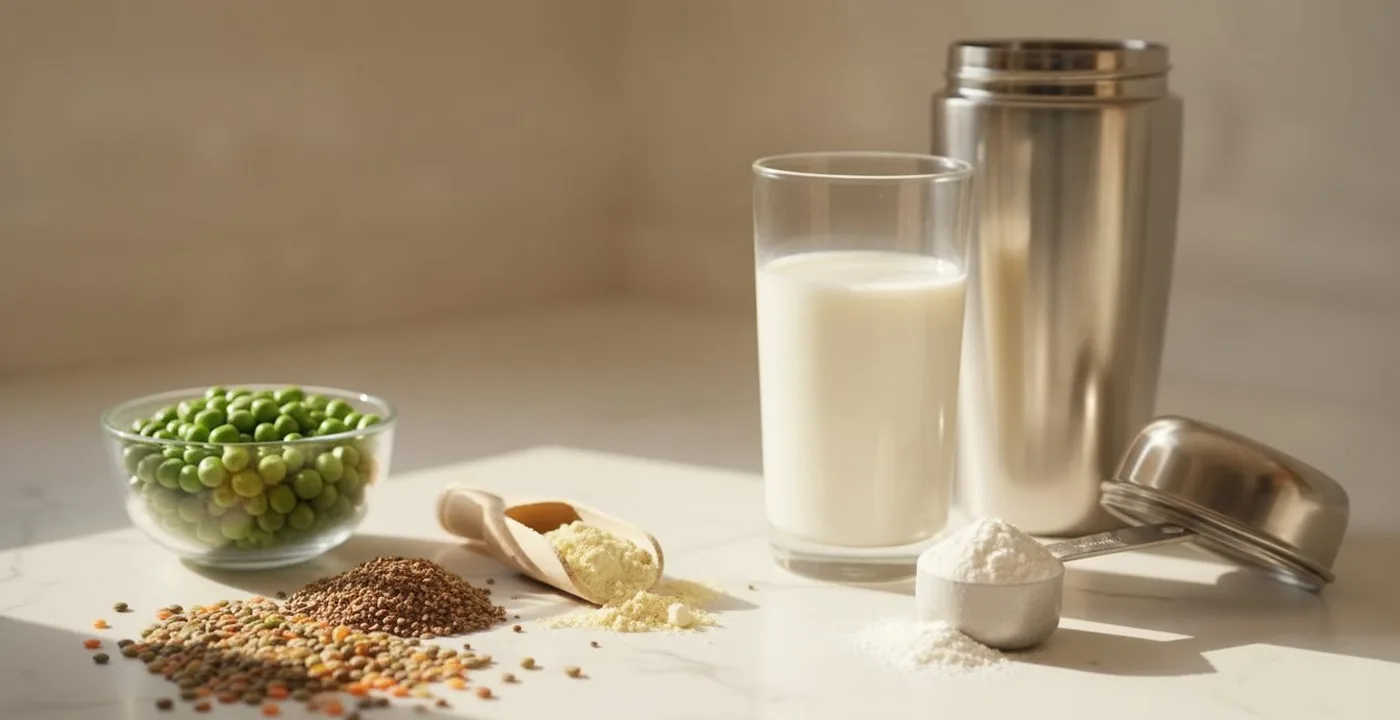
Table of Contents
Some of the links in this article are affiliate links, which help fund our independent review work at no extra cost to you. Every recommendation is based on hands-on testing through The Editor Lab methodology. No brand pays to appear, and no placement is guaranteed.
A dermatologist tells a patient in a consultation room to stop taking whey protein. The patient leaves and immediately searches for whether plant protein can replace it. That is one of the three most common decision moments I see when the plant protein vs whey question comes up - alongside the gym-goer anxious about leucine and the vegan who just wants the best option in their category.
All three people are asking the same underlying question: will plant protein get them the same results? The honest answer, as a registered Nutritional Therapist with clinical experience spanning Google DeepMind, Harrods, and international longevity summits, is that for most goals, at the right dose, it will. The detail is in understanding where the two proteins genuinely differ - and where the gap is smaller than the supplement industry implies.
Plant Protein vs Whey: The Quick Verdict
Whey protein is derived from dairy. It is a fast-absorbing, complete protein with a high leucine content - the amino acid most directly linked to triggering muscle protein synthesis. Plant protein is a broad category: it typically means a blend of pea, rice, and sometimes hemp or soy, each contributing a different amino acid profile, combined to achieve completeness.
The headline difference is not quality. It is speed of absorption, leucine content per gram, and how each behaves in the gut. Whey absorbs quickly and delivers a high leucine spike. Blended plant proteins absorb more slowly and provide a lower leucine dose per gram - which matters, but is manageable with dose adjustment.
Who whey suits better: people without dairy sensitivities who prioritise speed of delivery and want a simple, single-ingredient source; post-workout windows where a fast leucine spike is the goal.
Who plant protein suits better: anyone with lactose intolerance or dairy sensitivity, people following a vegan or dairy-free diet, those who find whey causes bloating, and anyone building a longer-term supplement routine where digestive comfort matters as much as protein delivery.
Neither is universally superior. Both can support muscle growth, weight management, and daily protein targets when dosed and used correctly.
Side-by-Side Comparison
| Factor | Whey Protein | Plant Protein (blended) |
|---|---|---|
| Protein per 30g serving (typical) | 22-25g | 18-22g |
| Complete protein (all 9 essential amino acids) | Yes - naturally | Yes - when blended (pea + rice) |
| Leucine content | High (approx. 2.5-3g per 30g) | Moderate (approx. 1.5-2g per 30g, blend-dependent) |
| Absorption speed | Fast (peaks 60-90 min post-ingestion) | Slower (peaks 2-3 hours post-ingestion) |
| Digestibility (DIAAS score) | High (approx. 1.09 for whey isolate) | Moderate to good (approx. 0.64-0.82 for pea; higher in blends) |
| Suitable for lactose intolerance | No (unless isolate, which is very low lactose) | Yes |
| Suitable for vegans | No | Yes |
| Typical price band (UK, per kg) | from around £20 | from around £22 |
| Taste and texture | Smooth, neutral to mild | Earthier, grainier unless well-formulated |
Protein figures and DIAAS scores are approximate ranges across common UK products. Verify at point of purchase. Leucine figures are indicative benchmarks referenced in sports nutrition literature.
Muscle Building: Does Whey Perform Better?
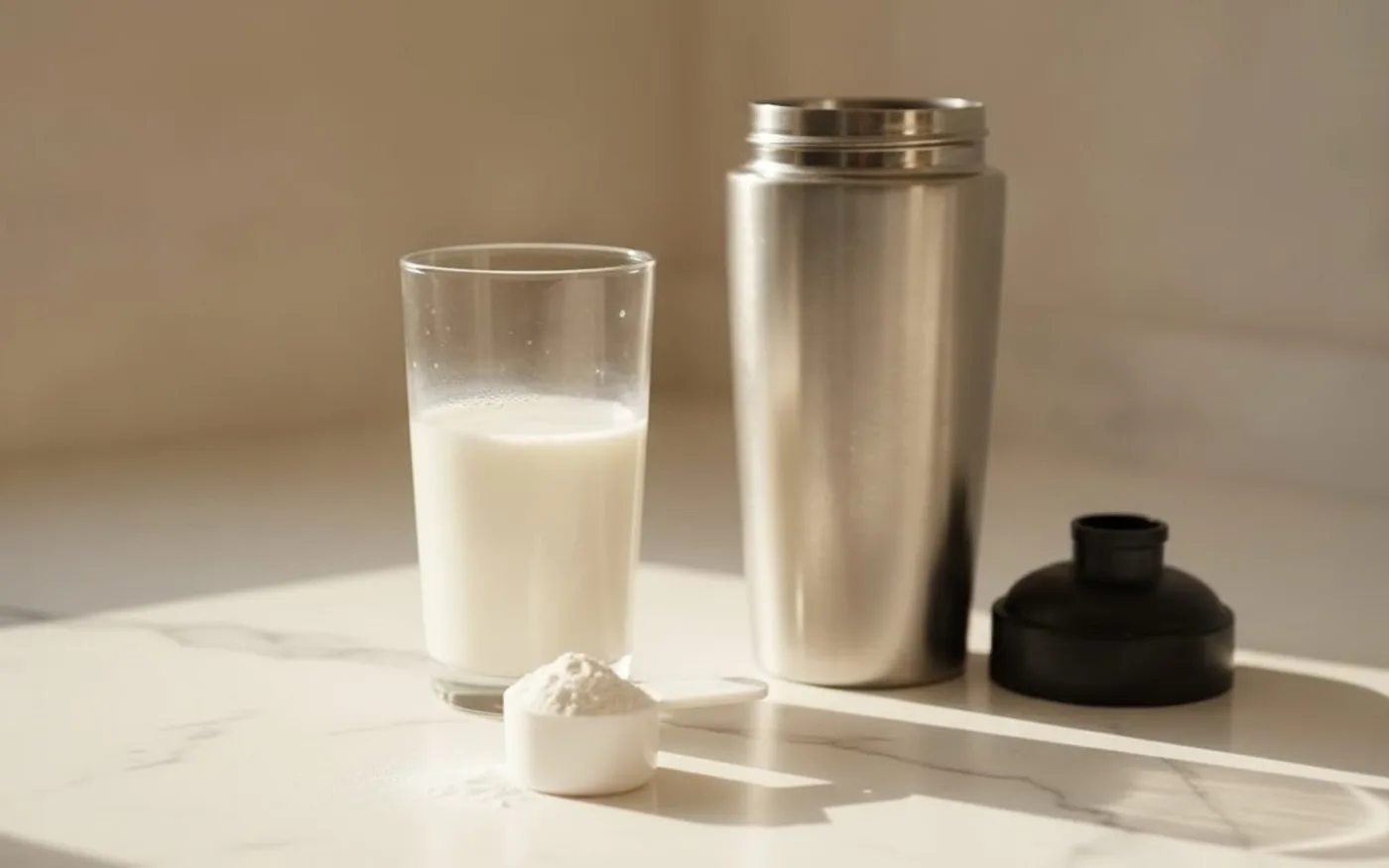
The short answer: whey has a modest advantage in acute muscle protein synthesis due to its higher leucine content and faster absorption. The longer answer is that this advantage largely disappears when you match doses and look at outcomes over weeks and months rather than hours.
A 2018 meta-analysis by Morton et al. (published in the British Journal of Sports Medicine) found that total daily protein intake was the primary driver of muscle gain, with protein source contributing a secondary effect. More recently, a 2021 systematic review concluded that plant protein supplementation produced comparable increases in muscle mass and strength when dose was equated with whey. The EFSA Panel on Dietetic Products, Nutrition and Allergies has confirmed that plant-derived proteins can meet amino acid requirements when dietary variety is adequate.
The practical implication: if you are consuming 25g of whey post-workout, you may need 30-35g of a quality pea-rice blend to land a comparable leucine dose and trigger a similar protein synthesis response. That is not a reason to avoid plant protein - it is a reason to buy a well-formulated blend and be precise about serving size.
The leucine nuance: Leucine is crucial for muscle protein synthesis. Whey delivers it at around 2.5-3g per standard scoop. Blended plant proteins typically land at 1.5-2g. Research suggests the leucine threshold for triggering maximal muscle protein synthesis is around 1.7-3g per meal. A 35g serving of a quality plant blend can clear this threshold. A 20g serving may not.
The dose-matching protocol: think in terms of matching leucine, not matching scoops. If your normal whey serving is around 20-25g, the equivalent plant protein serving is roughly 25-35g of a genuine complete blend - pea and rice together, not a single source. That extra 5-10g closes the leucine gap rather than the protein gap; total grams of protein were never the limiting factor.
Weigh a serving once with kitchen scales rather than trusting the scoop that comes in the tub, since scoop sizes vary between brands and a whey scoop dropped into a plant tub will under-dose you by design. Beyond the per-serving adjustment, remember that your total daily protein intake across all meals still outweighs any single-serving source difference - get that right first, and the whey-versus-plant leucine gap becomes a minor optimisation, not a deciding factor.
The anxiety that plant protein "cannot build muscle" is not supported by the dose-matched evidence. Pair it with a resistance training programme, hit your daily protein target, and the outcomes are comparable to whey for most people in most contexts.
For more on daily targets, see our guide to how much protein per day for muscle (once live).
Digestion and Bloating
This is where the difference is most practically significant for many people. Whey contains lactose. For anyone with lactose intolerance or dairy sensitivity, this is the direct mechanism behind the bloating, gas, and discomfort that often gets attributed to "protein powder" generically. Whey isolate has most of the lactose removed and is tolerated by many people with mild intolerance, but it is not dairy-free.
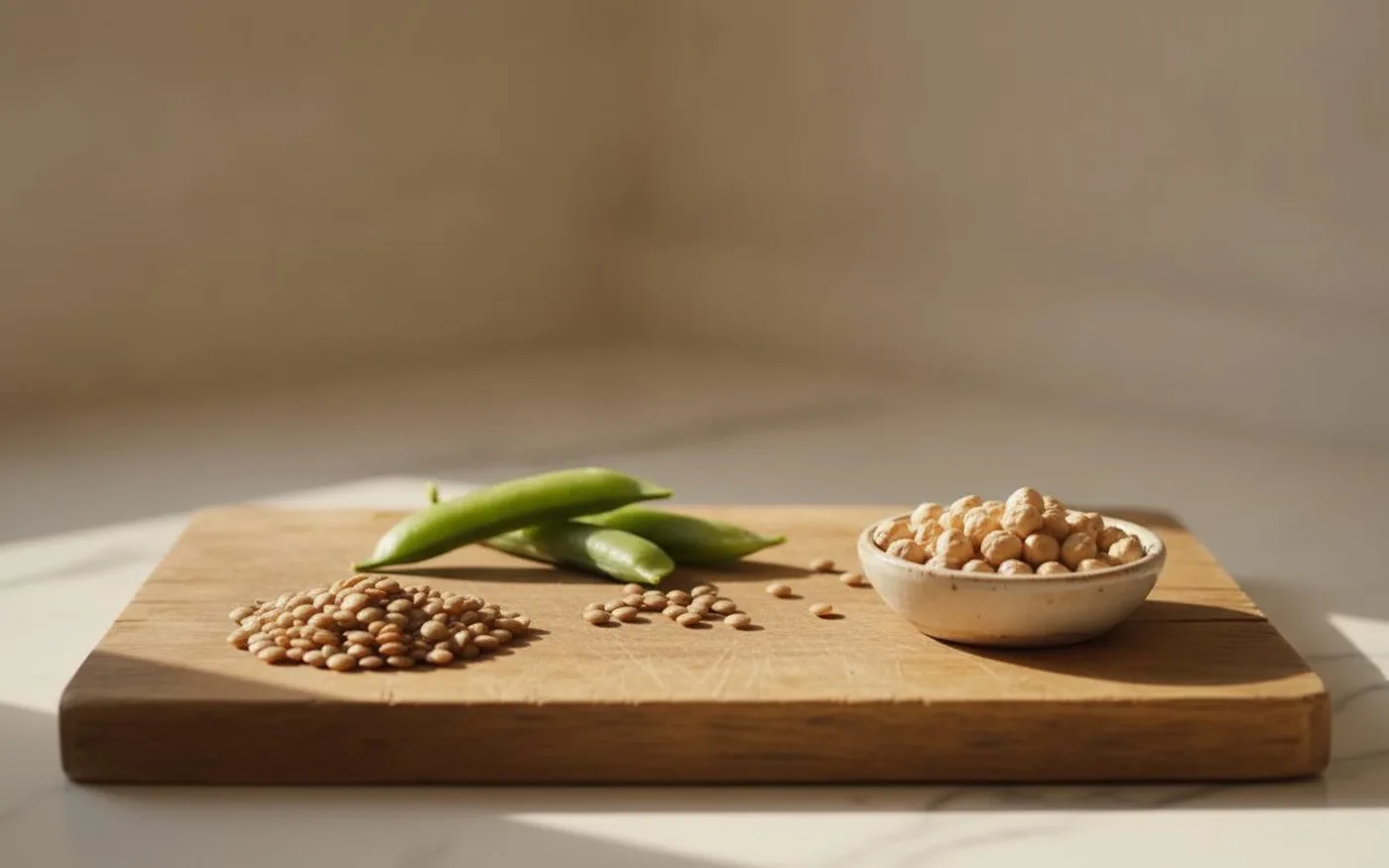
Plant protein introduces a different set of digestive considerations. Pea protein, the most common base, is derived from a legume and contains fermentable fibres that can cause bloating in some people, particularly those who are not used to a high-legume diet. This is usually transient - the gut adapts within a few weeks.
The clinical pattern I observe most frequently: whey causes consistent, predictable bloating that does not improve with time; pea-protein bloating tends to reduce after two to four weeks as the gut microbiome adjusts. If bloating persists beyond four weeks on a plant blend, consider switching the base (rice-dominant or hemp-forward blends) or reviewing total fibre intake.
"Why do doctors say no to whey protein?" surfaces regularly as a search question, and the most honest answer is that clinicians flag whey for dairy-intolerant patients, people with inflammatory skin conditions that can be aggravated by dairy (acne being the most documented), and in some cases those with IGF-1 sensitivities. These are context-specific cautions, not general prohibitions. If your GP or dermatologist has flagged whey for a specific reason, the plant-protein switch is well-supported.
Taste and Mixability
Whey has the advantage here for most people. It mixes cleanly into water or milk, has a mild to neutral flavour, and the texture is smooth even in a shaker. This is partly why it became the default for gym use.
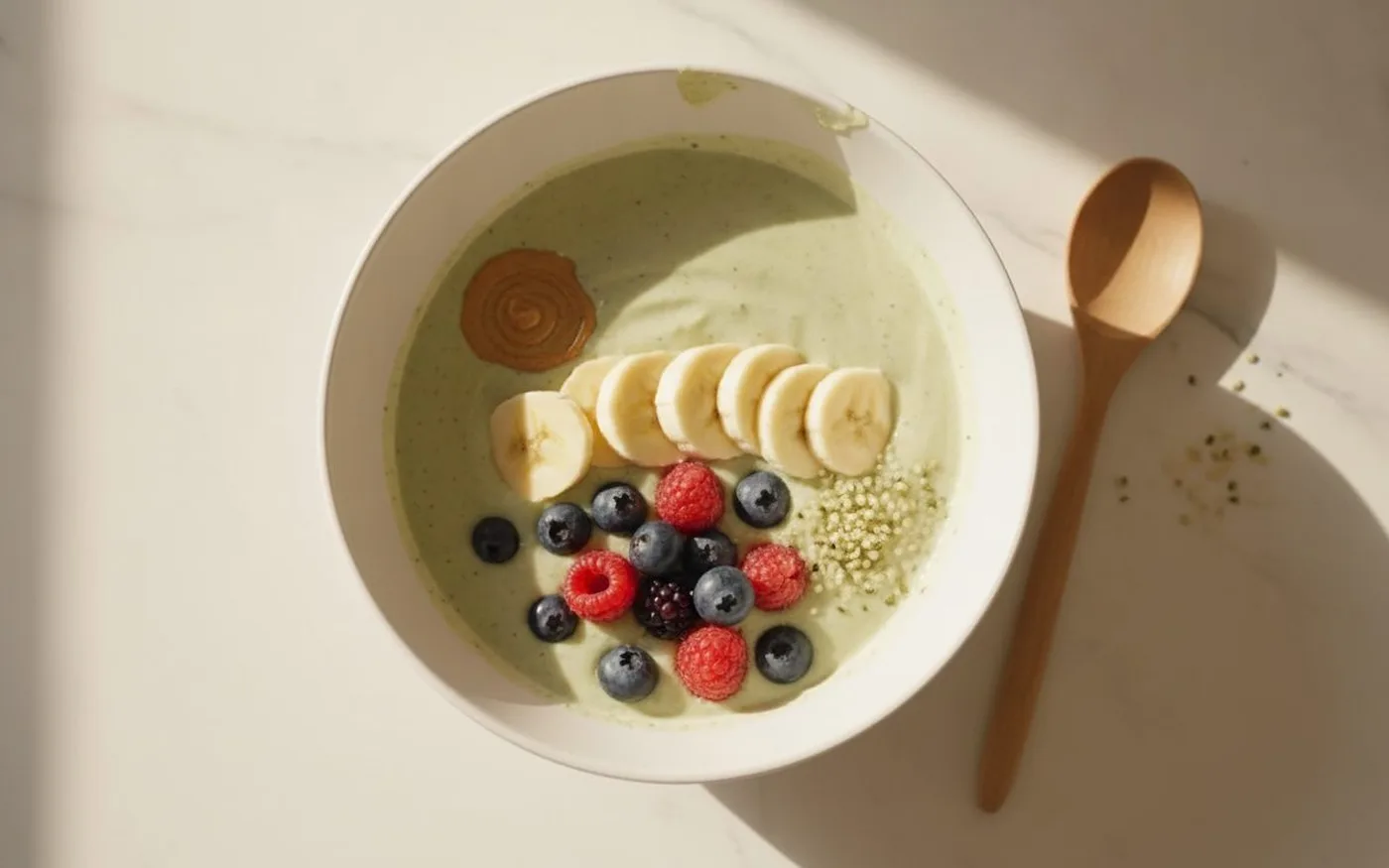
Plant protein has improved substantially in the last three years. Well-formulated pea-rice blends from quality brands are now smooth, not gritty, and the earthy undertone that used to be a significant deterrent has been largely engineered out in premium products. The texture in oat milk or blended into a smoothie is indistinguishable from whey for most people.
Where plant protein still lags is in plain-water mixability. If you are shaking it cold with water only, cheaper or single-source pea proteins can be gritty and have a pronounced legume aftertaste. This is a formulation quality issue, not an inherent plant-protein problem - it is worth buying from a brand that specifically addresses it.
For UK-tested plant protein recommendations, our best plant-based protein powder UK roundup covers the current field in detail.
Which Should You Choose?
Use this as a decision guide, not a verdict that applies to everyone:
Choose whey if:
- You have no dairy sensitivity or lactose intolerance
- You prioritise post-workout speed and a naturally high leucine spike
- You want the simplest, most widely available supplement option
- Digestive tolerance on whey has never been an issue for you
Choose plant protein if:
- You are lactose intolerant, dairy-free, or following a vegan diet
- You experience consistent bloating on whey that has not resolved after several weeks
- You have been advised by a clinician to avoid dairy (including for skin or inflammatory reasons)
- You want a supplement that integrates more easily into a whole-food, varied diet
If you are vegan-curious but not fully committed: the dose-matched evidence gives you permission to make the switch. You are not sacrificing meaningful gains. Buy a quality pea-rice blend, add 5-10g to your usual portion size to account for the leucine differential, and give it four weeks before making a final judgement.
Morning routine aside: if your morning already involves a functional coffee - lion's mane, cordyceps, or a nootropic blend - a plant protein shake pairs cleanly with that routine without the dairy and digestion variables. See our guide to the best lion's mane coffee UK for context on where protein and functional energy can combine.
The environmental angle: for buyers who weight sustainability alongside performance, plant protein carries a meaningfully lower environmental footprint. Dairy production - including whey as a by-product of cheese manufacturing - is associated with higher greenhouse gas emissions, land use, and water consumption per gram of protein than pea and rice cultivation. Life cycle analysis data published by Our World in Data places pea protein among the lowest-footprint protein sources by a significant margin. This does not make plant protein the automatic choice, but for people building long-term supplement habits where environmental impact is a real decision factor, it is a substantive and relevant difference - not a marketing claim.
What to avoid: choosing a protein supplement on protein percentage alone. A 25g protein label on a plant product that is low in leucine and uses only single-source pea will deliver less in terms of muscle protein synthesis than the label implies. Look at the amino acid profile, the leucine content specifically, and whether the blend is complete. Completeness requires at least two complementary plant sources - pea and rice is the most common and most validated combination.
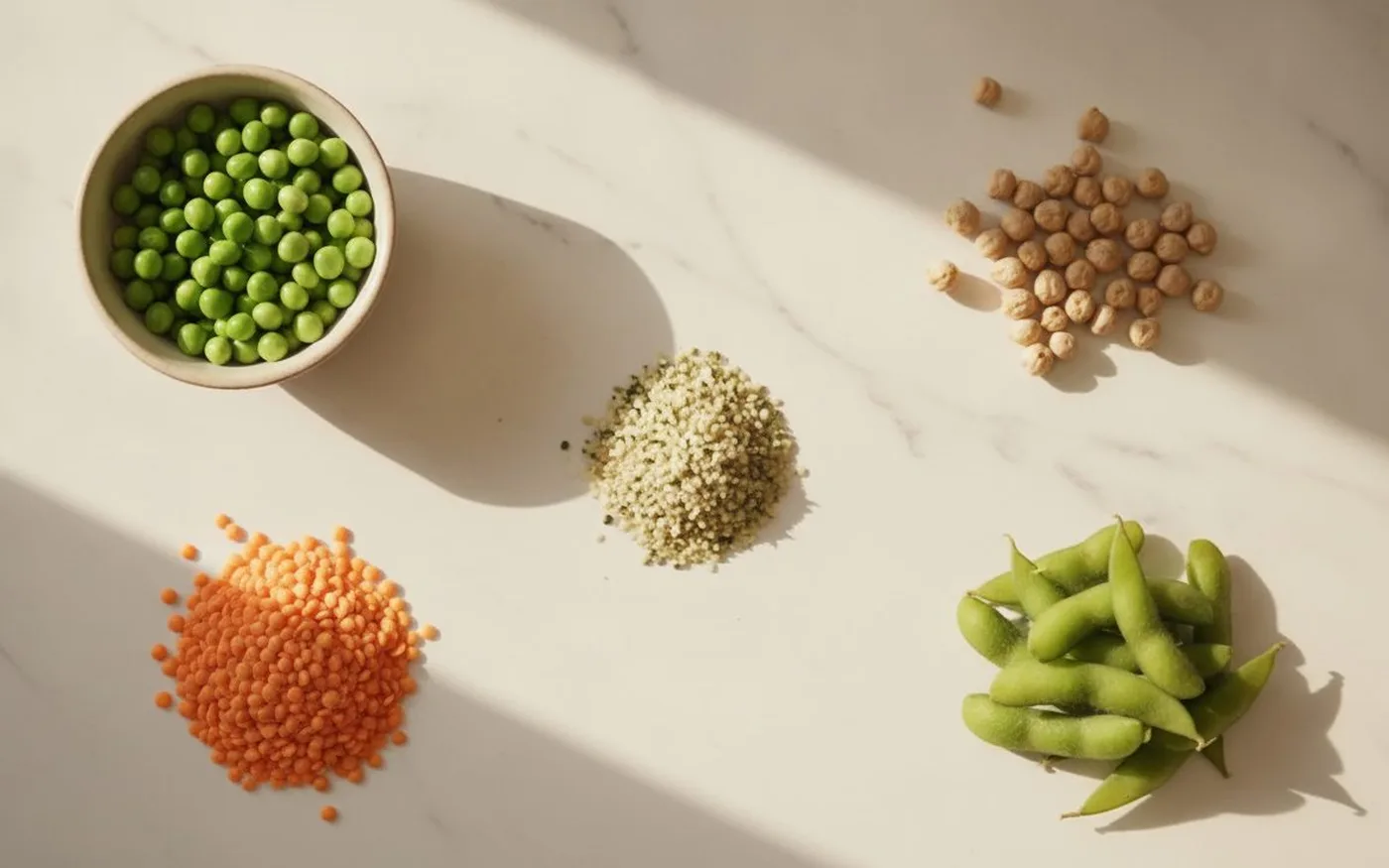
For the broader context on plant based protein sources and how they fit into a full nutrition plan, the Balance Journal pillar covers the complete picture.
Frequently Asked Questions
Is plant protein as good as whey for building muscle?
When doses are matched to account for the lower leucine content per gram, the muscle-building outcomes from plant protein are comparable to whey in most contexts. Dose-matched trials and meta-analyses show no clinically significant difference in muscle mass or strength gains over eight-to-12-week periods. The key is using 25-35g of a complete pea-rice blend per serving rather than defaulting to the same scoop size as whey. Total daily protein intake matters more than the source.
Which is healthier, plant protein or whey protein?
Neither is universally healthier - it depends on the individual. Whey is a high-quality, well-researched protein with a strong leucine profile. Plant protein brings additional fibre, avoids dairy, and suits people with lactose intolerance or inflammatory conditions aggravated by dairy. For long-term dietary variety and gut microbiome support, a plant-forward approach has merit. For acute muscle protein synthesis efficiency, whey has a modest structural advantage. The healthier choice is the one that suits your digestion, dietary pattern, health context, and - increasingly for many buyers - environmental values.
Which is easier to digest, plant protein or whey?
This depends on the individual's dairy tolerance. Whey contains lactose, which causes bloating, gas, and discomfort in people with lactose intolerance or dairy sensitivity. Whey isolate reduces this but does not eliminate the dairy source. Plant protein - particularly pea-based blends - can cause initial bloating in people not used to high-legume intake, but this typically resolves within two to four weeks as the gut adapts. For people with confirmed dairy sensitivity, plant protein is consistently easier on the digestive system.
Is whey or plant protein better for weight loss?
Both support weight loss when used as part of a calorie-controlled diet. Protein's satiety effect - reducing hunger hormones and increasing feelings of fullness - is consistent across sources. The deciding factor for weight loss is not the protein type but the total calorie and protein context. If dairy causes bloating that discourages consistent use, plant protein is the better choice for adherence. If you tolerate whey without issue and prefer the taste, it is equally effective. Neither has a meaningful metabolic advantage over the other for fat loss specifically.
Can you mix plant protein and whey together?
Yes. Combining a small amount of whey (for its leucine and absorption speed) with plant protein (for fibre and digestive tolerance) is a strategy some people use to get the benefits of both. There is no nutritional reason to avoid it. If you are lactose intolerant, even a small amount of standard whey concentrate may cause issues - use whey isolate if mixing, or stick to plant protein only. The combination makes practical sense for people who want to transition gradually from whey to plant protein.
Can I build muscle with plant protein?
Yes. The concern that plant protein cannot build muscle is not supported by dose-matched evidence. Studies comparing equated doses of pea-rice blend protein with whey find comparable gains in muscle mass and strength over eight-to-12-week training periods. The caveat is dose: you typically need a slightly larger serving of plant protein to match the leucine content of a standard whey scoop. A well-formulated blend of 30-35g per serving, combined with consistent resistance training and an adequate total daily protein intake, will support muscle growth effectively.
Who should avoid plant protein?
People with known legume allergies - particularly soy or pea - should avoid plant proteins that use these as a base. Those with thyroid conditions should be cautious with soy protein specifically, as soy isoflavones can interfere with thyroid hormone absorption when consumed in large amounts, particularly around medication timing. People who struggle to meet calorie targets should note that some plant protein products contain more fibre and lower calorie density per gram than whey, which can affect overall intake. If you are on immunosuppressants or have a diagnosed digestive condition such as IBS or Crohn's, check with your GP before adding any high-fibre protein supplement. Always check the ingredient list if you have a specific food sensitivity.
What is the main nutritional difference between plant protein and whey?
The main difference is amino acid delivery. Whey is naturally a complete protein with a high leucine content (around 2.5-3g per standard 30g serving) and a high DIAAS digestibility score, meaning the body absorbs a high proportion of the amino acids. Plant proteins vary by source: single-source pea or rice is incomplete. When combined in a blend, they become complete, but leucine per gram remains lower than whey. The practical solution is a slightly larger serving size of a quality blend - not a different supplement category.
What is the downside of plant protein?
The real downside is not safety, it is protein quality on paper. A single-source pea or rice powder is an incomplete protein, and even a blended pea-rice formula runs lower in leucine per gram than whey, which can make plant protein look weaker in a spec-sheet comparison. This is not a reason to avoid it. It is a formulation issue with a known fix: choose a genuine blend rather than a single source, and size your serving to the leucine target rather than assuming a like-for-like scoop swap.
Do I need a bigger serving of plant protein than whey?
Usually, yes. To land a comparable leucine dose, aim for roughly 25-35g of a complete pea-rice blend against roughly 20-25g of whey protein. The gap exists because plant protein carries less leucine per gram, so a like-for-like scoop undershoots the threshold that triggers muscle protein synthesis. Using the same serving size as whey is the single most common reason people conclude that plant protein "did not work" for them. Adjust the scoop, not the product, and the outcomes converge.
Why do doctors sometimes say no to whey protein?
It is rarely about muscle-building performance. The usual reasons are dairy or lactose sensitivity, a skin condition or gut flare being managed through diet, or a general preference for whole-food protein over a processed supplement. If a dermatologist or GP has told you to steer clear of whey, as the reader in our opening example was told, it is unlikely to be because whey fails to build muscle. It is a health management decision specific to your case, and plant protein is a legitimate, evidence-backed swap.
Is it okay to have plant protein every day?
Yes, for most people. Plant protein is well suited to daily use, and there is no dose ceiling that makes everyday use inadvisable. You get fibre and a wider spread of micronutrients alongside the protein itself, which whey does not provide. The main thing to expect is the same two-to-four-week digestive adjustment period covered above, particularly if you are new to a high-legume intake. Once your gut adapts, daily use presents no additional concern beyond hitting your normal total protein target.
Authority Sources
- Morton RW et al. (2018). A systematic review, meta-analysis and meta-regression of the effect of protein supplementation on resistance training-induced gains in muscle mass and strength in healthy adults. British Journal of Sports Medicine. PubMed
- EFSA Panel on Dietetic Products, Nutrition and Allergies. Scientific opinion on dietary reference values for protein. EFSA Journal. EFSA
- British Dietetic Association. Protein: Food Fact Sheet. BDA

A registered Nutritional Therapist and member of BANT, Clemmie blends science with a holistic approach to wellbeing.