How Much Protein Per Day Muscle: g/kg Targets Explained
A nutritionist's evidence-based guide to how much protein per day muscle.
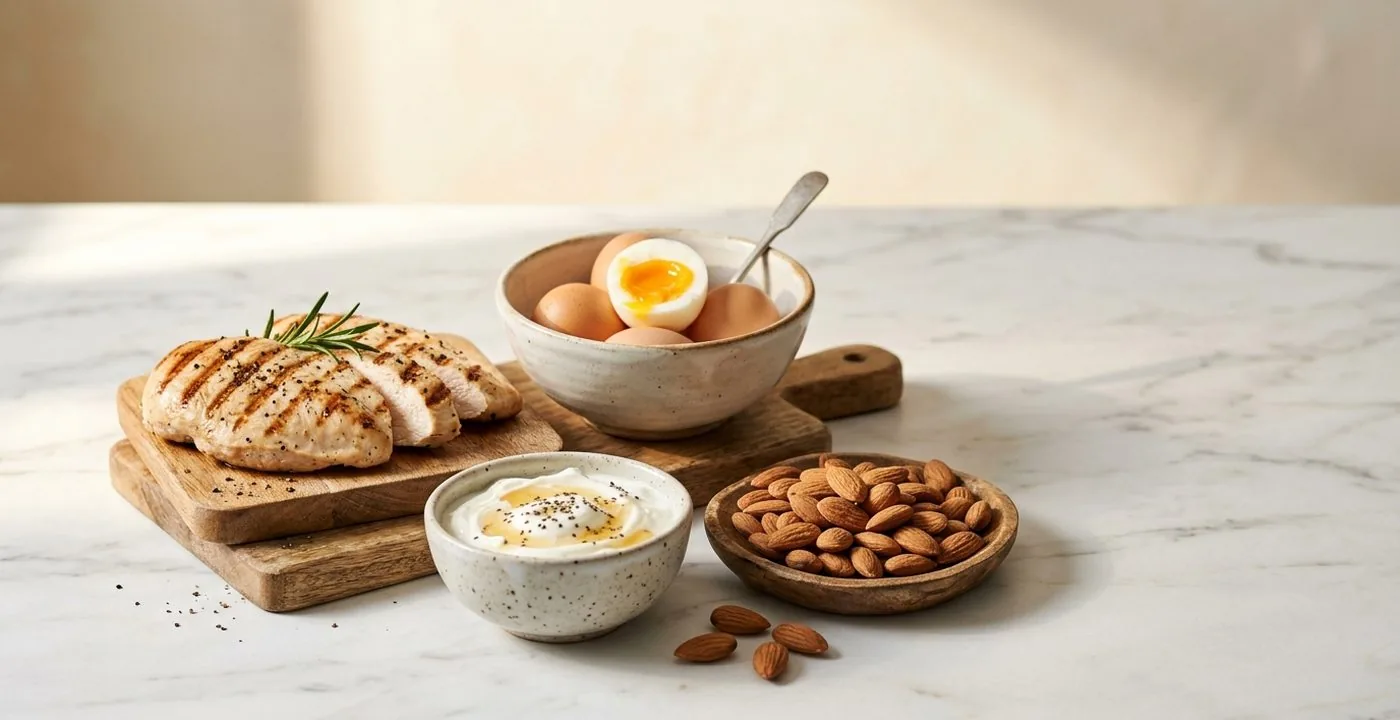
Table of Contents
Some of the links in this article are affiliate links, which help fund our independent review work at no extra cost to you. Every recommendation is based on hands-on testing through The Editor Lab methodology. No brand pays to appear, and no placement is guaranteed.
Most people chasing muscle gain are not getting the answer they need. The short answer: 1.6g to 2.2g of protein per kilogram of bodyweight per day. The question is not whether protein matters - everyone agrees it does. The question is: how many grams, per kilogram of your bodyweight, on training days and rest days, and can you hit that number without eating chicken at every meal?
Editor's Note
“In clinic, I typically start clients at 1.6g/kg and review over four to six weeks. If recovery is slow or strength plateaus before that review point, we move toward 2g/kg rather than jumping straight to the upper end of the range.”Clemmie Rose, Nutritional Therapist
The Short Answer: Grams Per Kilogram of Bodyweight

For muscle gain, the research-supported range is 1.6g to 2.2g of protein per kilogram of bodyweight per day. That is the window where muscle protein synthesis is meaningfully stimulated without significant evidence of further benefit above the upper end.
Below is what that looks like across common bodyweights:
| Bodyweight | Lower target (1.6g/kg) | Upper target (2.2g/kg) |
|---|---|---|
| 55 kg | 88g | 121g |
| 60 kg | 96g | 132g |
| 65 kg | 104g | 143g |
| 70 kg | 112g | 154g |
| 75 kg | 120g | 165g |
| 80 kg | 128g | 176g |
| 85 kg | 136g | 187g |
| 90 kg | 144g | 198g |
| 95 kg | 152g | 209g |
| 100 kg | 160g | 220g |
The 1.6g/kg figure comes from a 2017 meta-analysis of 49 randomised controlled trials published in the British Journal of Sports Medicine (Morton et al.), which identified 1.62g/kg/day as the point at which muscle protein accretion plateaus in resistance-trained individuals. The 2.2g/kg upper end is often cited for those in a caloric deficit, early training phases, or with higher lean body mass targets.
The NHS notes that most adults need 0.75g of protein per kilogram of bodyweight per day for general health maintenance - the muscle-building target sits significantly above that baseline.
If you are new to tracking, start at 1.6g/kg and evaluate over four to six weeks. If recovery is slow or strength stalls, move toward 2g/kg before going higher.
Why That Range, Not More

Protein is not a case of more always being better. Muscle protein synthesis - the biological process that repairs and builds muscle tissue after training - has a ceiling per session and per day. Consuming more protein than required to saturate that ceiling does not produce additional muscle. It is converted to energy or excreted.
The 2017 meta-analysis by Morton et al. found that further protein intake beyond approximately 1.62g/kg/day produced no statistically significant additional lean mass gains in most resistance-training contexts. Research on collegiate strength and power athletes has similarly found no significant difference in strength or body composition between those consuming protein at recommended levels and those consuming above recommended levels, reinforcing that the ceiling effect on muscle protein synthesis is real and not simply a conservative estimate.
This matters for practical planning. Chasing 250g of protein per day when you weigh 75kg is not only unnecessary - it is expensive and crowds out other macronutrients and food variety your body needs. It also creates an unrealistic dietary baseline that is hard to sustain.
The European Food Safety Authority (EFSA), in its dietary reference values for protein (EFSA Journal 2557), confirmed that no tolerable upper intake level has been established for protein in healthy adults. That means very high intakes are not acutely toxic, but it also does not mean they are useful for muscle gain.
What to avoid: crash-loading protein in one or two large sittings (more on why below), and treating total protein as a substitute for adequate total calorie intake. Without a calorie surplus or at least calorie maintenance, even a perfect protein target will not produce meaningful muscle gain.
How to Split Protein Across the Day

Total daily protein matters. So does distribution. This is where a lot of people leak gains without realising it.
Muscle protein synthesis is most efficiently stimulated when you provide a sufficient leucine threshold per meal - roughly 2.5g to 3g of leucine, which in practice corresponds to approximately 25g to 40g of complete protein per meal. Below that threshold, the anabolic stimulus is blunted. Above it, there is no additional benefit until the next meal window.
The implication: spreading your daily protein across three to four meals is more effective than consuming the same total in one or two. A person targeting 150g per day does better with 37g at four meals than 10g at breakfast, 20g at lunch, and 120g at dinner.
| Meals per day | Approximate protein per meal (at 150g daily target) |
|---|---|
| 3 meals | 50g per meal |
| 4 meals | 37-38g per meal |
| 5 meals | 30g per meal |
The common friction point here is breakfast. Most people eating a standard UK diet arrive at dinner having consumed less than 40% of their daily protein target. The fix is not dramatic - a two-egg breakfast with Greek yoghurt and a protein source (smoked salmon, cottage cheese, or a plant-based powder mixed into porridge) can shift morning protein intake from 8g to 30g in the same time and calorie budget.
For the question of timing protein around training specifically, the evidence on the precise pre- versus post-workout window has softened. What remains clear is that consuming an adequate per-meal dose within a few hours of training - either side - is more important than hitting an exact minute. Daily protein timing is the framing that matters most at this stage of your programme.
Can You Build Muscle on Plant Protein Alone?

Yes - with an understanding of two things that omnivores do not need to account for.
First: complementary amino acid profiles. Most plant proteins are limited in one or more essential amino acids. Soy protein and quinoa are exceptions (both are complete proteins), but pea protein is low in methionine, and rice protein is low in lysine. The practical fix is combining sources across the day - pea and rice protein together cover each other's gaps, as do combinations like lentils with rice, or tofu with edamame. You do not need to combine them in a single meal. Eating a variety of plant protein sources across the day achieves the same outcome.
Second: the leucine gap. Because plant proteins tend to have a lower leucine content per gram of protein than whey or casein, some research suggests that plant-based eaters benefit from sitting at the higher end of the recommended range - closer to 1.8-2.2g/kg rather than 1.6g/kg - to ensure the per-meal leucine threshold is consistently reached. A June 2023 study published in The Journal of Nutrition confirmed that plant-protein diets can support equivalent muscle hypertrophy when total intake is adequate and sources are varied.
The plant-based protein pillar guide covers sources, amino acid profiles, and how to build a complete plant protein diet in full. For those working out whether pea or soy protein fits their specific goals, our pea protein vs soy protein comparison covers the trade-offs directly.
A note on the coffee-routine angle: if your training is morning-based and you are looking for functional support beyond protein - mental clarity, focus, and steady energy during a fasted or semi-fasted session - a lion's mane coffee taken 30 to 45 minutes before training has become a popular pairing in the plant-based athlete community. It is not a protein source; it is a cognitive-support tool. One functional cup does not replace a post-workout protein hit, but the two are compatible in the same morning routine.
Do You Need a Protein Powder to Hit Your Target?
No - but it makes hitting consistent daily targets considerably easier, and for plant-based eaters navigating the leucine threshold, a high-quality powder is often the most practical lever available.
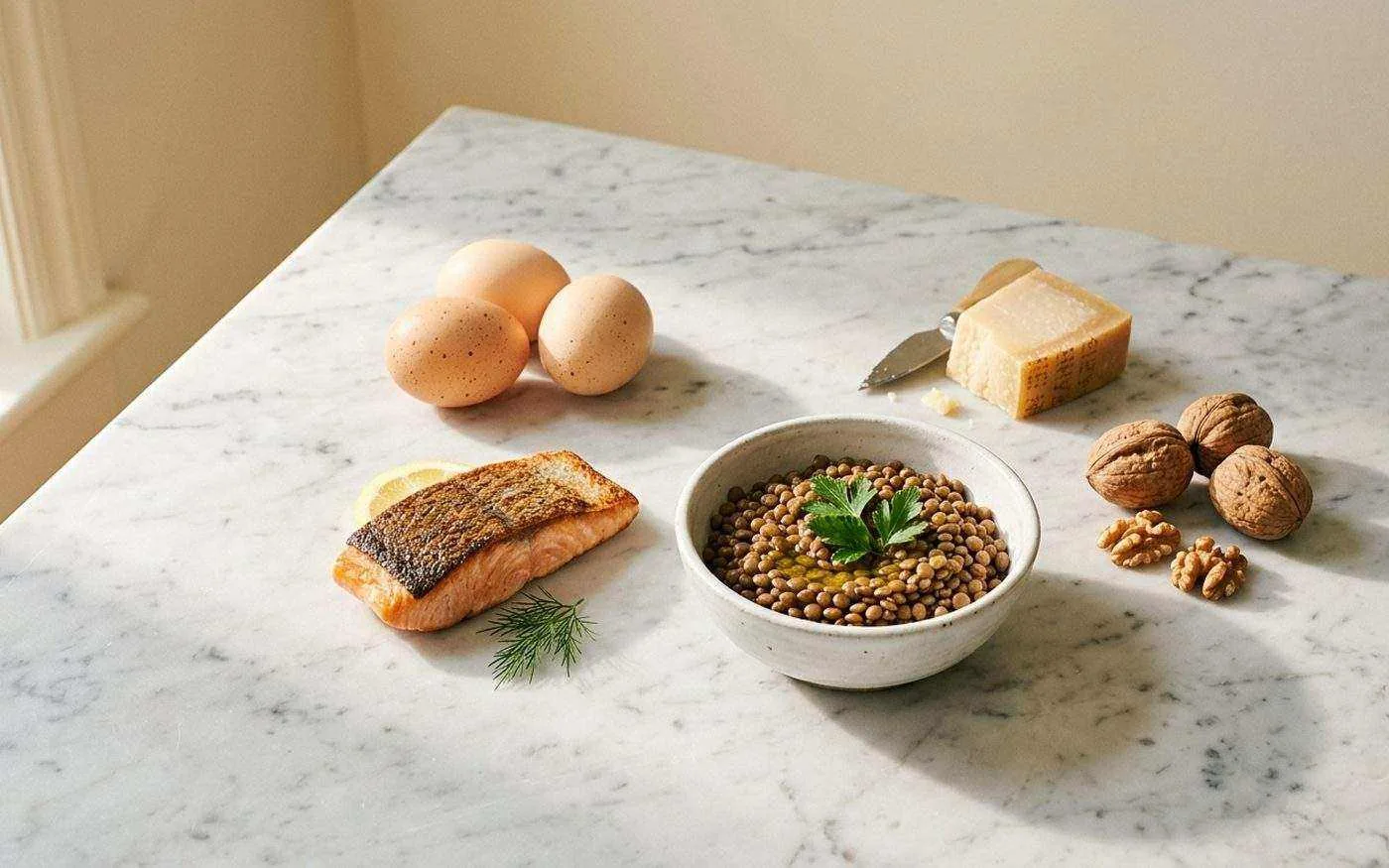
Whole food sources of protein are always the foundation. A 150g daily target can theoretically be met with chicken, eggs, Greek yoghurt, lentils, tofu, edamame, and tempeh. In practice, for people with busy schedules or smaller appetites, filling the last 20-40g of the daily target with a protein powder is far less cognitively demanding than planning and preparing additional whole-food protein sources.
The case for powder is strongest when:
- You train in the morning and want a fast post-workout protein source
- You are eating plant-based and need a leucine-dense supplement to close the gap
- You have a high target (above 160g/day) and are not eating meat
For plant-based options rated on protein quality, mixability, and ingredient honesty, see our roundup of the best plant-based protein powders in the UK, our guide to the best protein powder for weight loss, and our best protein powder for women guide - each covers the specific use-case rather than ranking generically.
If you are pairing a creatine supplement with your protein strategy for muscle-building support, our guide to creatine covers dosing, timing, and which form is best supported by evidence. Similarly, if your training is particularly sweat-heavy, electrolyte balance and magnesium supplementation are worth reviewing alongside protein targets, as deficiencies in both can impair recovery and sleep quality in a way that blunts muscle-building progress regardless of protein adequacy.
Is Too Much Protein Dangerous?
For healthy adults with normal kidney function, consuming protein in the 1.6-2.2g/kg range poses no documented health risk. The idea that high protein intake damages healthy kidneys is not supported by current evidence - it is a concern that applies specifically to people with existing chronic kidney disease, where protein restriction is sometimes clinically warranted.
The NHS notes that a diet high in red and processed meat has separate cardiovascular and colorectal cancer associations - but those are risks tied to specific protein sources, not to protein quantity in isolation. For those eating plant-based or white-meat-and-fish diets, the source risk is not the same.
EFSA has not established a tolerable upper intake level for protein in healthy adults, as the evidence for harm at high intakes in the healthy population is absent. What does exist is a practical ceiling on usefulness: above 2.2g/kg/day, there is no meaningful additional muscle-building benefit, so going higher has no performance rationale.
If you have pre-existing kidney disease, liver disease, or are pregnant, consult a registered dietitian before significantly increasing protein intake. Nutritional therapists can provide structured guidance on protein targets within a broader dietary plan, but clinical conditions require dietitian input.
Frequently Asked Questions
How much protein does a 70 kg person need to build muscle?
A 70 kg person aiming to build muscle should target 112g to 154g of protein per day, based on the evidence-supported range of 1.6g to 2.2g per kilogram of bodyweight. The lower end (112g) is appropriate for beginners and those in a caloric surplus. The upper end (154g) suits those in a deficit, at an advanced training level, or eating predominantly plant-based sources where leucine density is lower.
Is 200g of protein a day too much?
For most people, yes - 200g per day exceeds what muscle protein synthesis can productively use unless you weigh over 90 kg and are training at a high volume. The evidence-supported range for muscle-building sits at 1.6-2.2g/kg/day; for a 75 kg person, that is 120-165g. Beyond the ceiling, excess protein is metabolised for energy rather than converted to muscle tissue. It is also an expensive and time-consuming way to eat without additional benefit.
Can 100 grams of protein a day build muscle?
Yes - for lighter individuals. A person weighing 60-65 kg has a muscle-building target of 96-143g per day, so 100g sits inside the evidence-based window. The answer is bodyweight-dependent, not a fixed number. For anyone over 70 kg, 100g falls below the 1.6g/kg lower threshold and is likely to produce sub-optimal results. Tying your target to your bodyweight rather than a flat gram figure gives a more accurate and personalised answer.
Is 2 eggs a day enough protein?
No, not as a primary source. Two large eggs provide approximately 12-13g of protein - a useful contribution to a meal, but far short of the 30-40g per-meal target that supports muscle protein synthesis, and a small fraction of a daily 120-160g goal. Eggs are an excellent protein source within a varied diet; the issue is relying on them as the sole or primary source. Build the rest of the meal - and the day - around a mix of protein sources to reach the daily target.
What does 30g of protein look like in the UK?
Thirty grams of protein can be reached through: approximately five large eggs; one medium chicken breast (around 150g cooked); 170g of canned tuna in brine; 200g of Greek yoghurt (full-fat, strained variety); one scoop of most plant-based protein powders mixed with 250ml of oat milk; or a combination of 150g of firm tofu with 80g of edamame. UK-branded powders tend to provide 20-25g per scoop, making the oat milk pairing a reliable way to reach 30g in one drink.
Is 1.6g/kg enough to build muscle on a plant-based diet?
It can be, but research suggests plant-based eaters benefit from sitting toward the upper end of the 1.6-2.2g/kg range - approximately 1.8-2g/kg - to account for the lower leucine density and variable digestibility of plant protein sources relative to whey or casein. The key is variety: combining pea, rice, soy, lentils, hemp, and quinoa across the day closes the amino acid gaps that any single plant source leaves open. A June 2023 analysis published in The Journal of Nutrition confirmed equivalent hypertrophy outcomes for plant-based diets when total intake is adequate and sources are complementary.
A registered Nutritional Therapist and member of BANT, Clemmie blends science with a holistic approach to wellbeing.