Vega Protein Review UK 2026: Tested and Rated by a Nutritionist
Hands-on nutritionist verdict on Vega: dose, sourcing, taste and whether it earns its price.
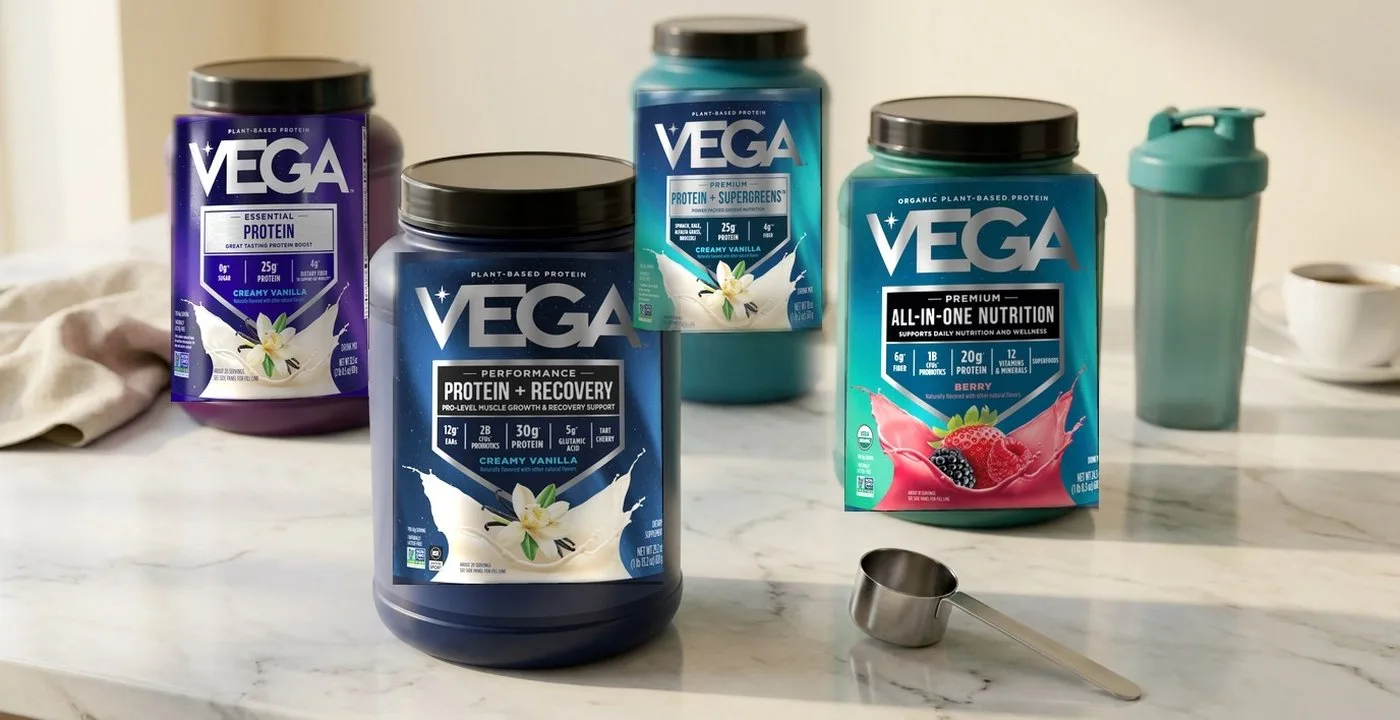
Table of Contents
Some of the links in this article are affiliate links, which help fund our independent review work at no extra cost to you. Every recommendation is based on hands-on testing through The Editor Lab methodology. No brand pays to appear, and no placement is guaranteed.
At roughly £1.10 to £1.55 per serving, Vega sits comfortably above most plant-protein powders on the UK market. The short answer: Vega Sport is a well-formulated plant protein with a genuine amino-acid story, but the cost per 30g of protein is materially higher than certified UK alternatives that deliver equivalent nutrition. What the serving price does not tell you is the cost per 30g of actual protein delivered - and that figure is where this vega protein review gets interesting.
I tested four SKUs from the current UK Vega range across two weeks, tracking protein density, mixability, and taste against cheaper own-brand alternatives. What I found is that Vega is a genuinely well-formulated product with a real amino-acid story to tell - but the price-per-gram maths requires close reading before you commit.
Editor's Note
Quick Verdict
Rating: 3.8 / 5
In one sentence: Vega Sport is the best option in the range - 30g protein per serving, a complete amino acid profile, and a taste that is tolerable rather than pleasant - but at £1.40 to £1.55 per serving, the cost per 30g of protein is higher than several own-brand UK alternatives that deliver equivalent nutrition.
| Field | Detail |
|---|---|
| Best for | Plant-based athletes wanting a complete amino profile without dairy |
| Avoid if | You are sensitive to stevia aftertaste, gums, or inulin |
| Protein per serving (Sport) | 30g |
| Calories per serving (Sport) | 170 |
| Price per serving (Sport, UK) | approximately £1.40 to £1.55 |
| Price per 30g of protein (Sport) | approximately £1.40 to £1.55 |
| Sweetener | Stevia |
| Mixability | 3.5 / 5 - dissolves adequately at 400ml, thickens noticeably below 300ml |
What Is Vega and Who Makes It
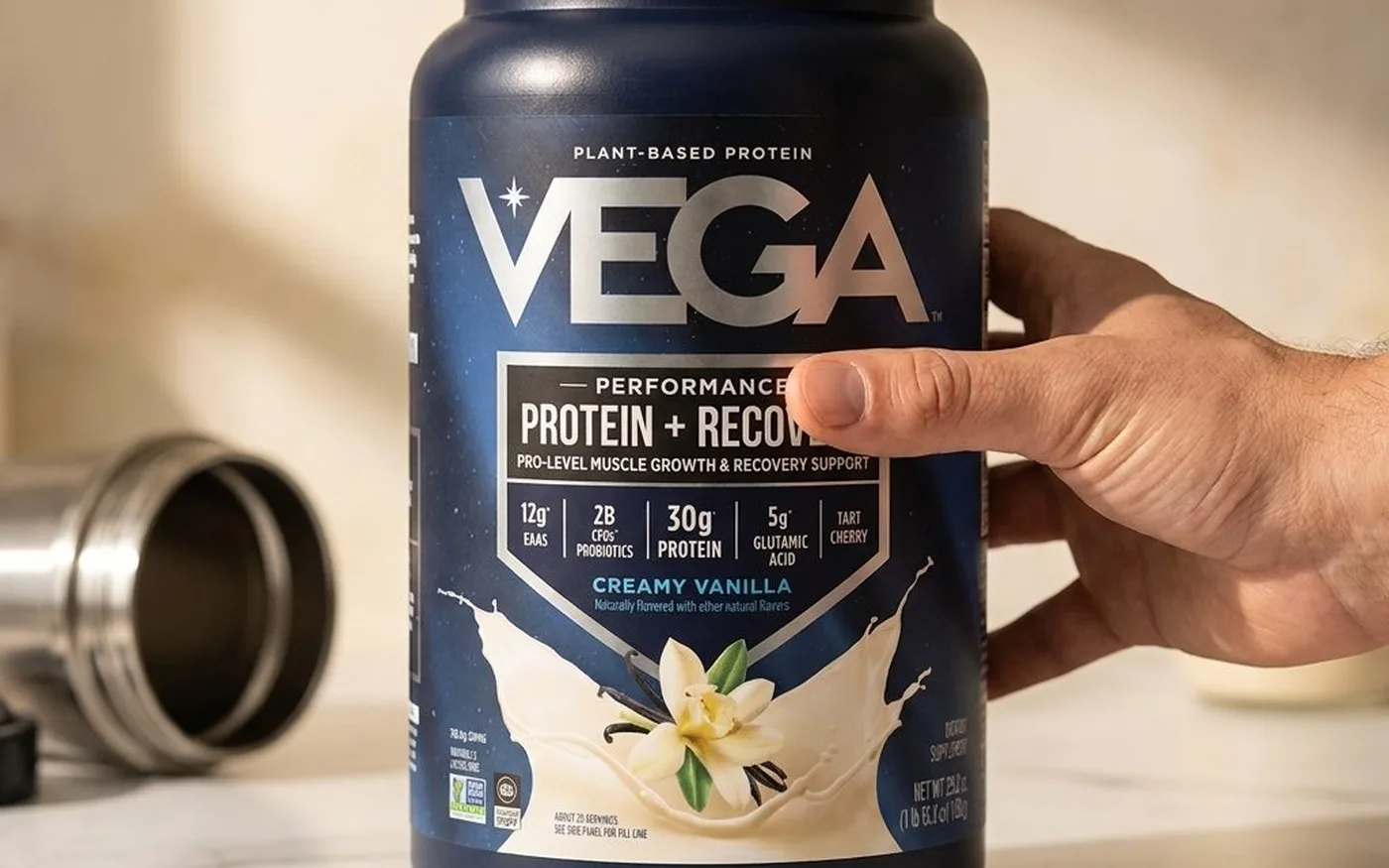
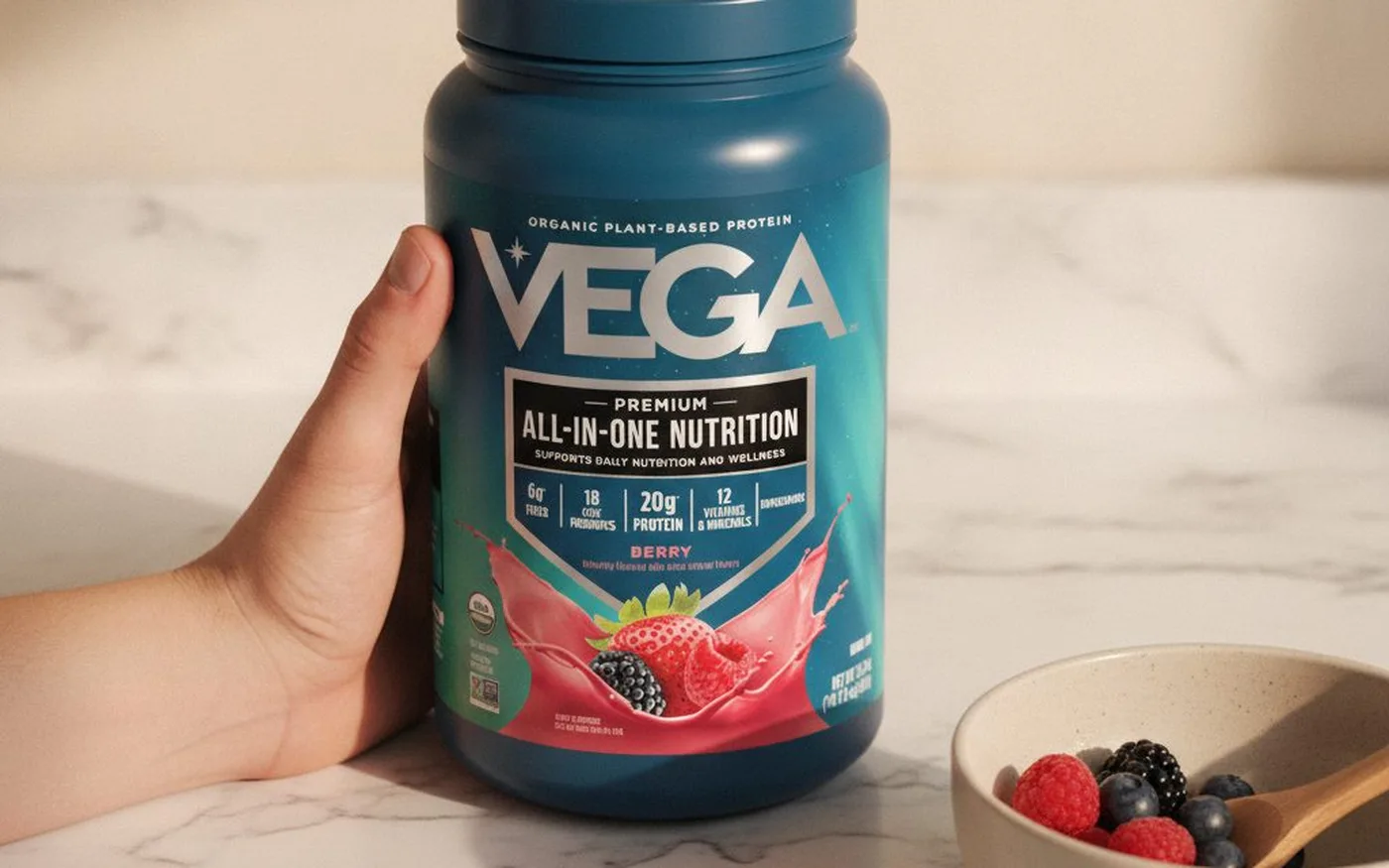
Vega is a Canadian plant-based nutrition brand, founded in 2004 and acquired by WhiteWave Foods before passing to Danone through Danone's 2017 WhiteWave acquisition. In the UK, the brand is sold primarily through Amazon UK, iHerb, and Healf, with no confirmed direct-to-consumer affiliate storefront as of July 2026.
The current UK range includes four main protein SKUs:
| Product | Protein per serving | UK price range |
|---|---|---|
| Vega Sport Premium Protein / Performance + Creatine | 30g | approximately £29 to £47 |
| Vega Essentials Plant-Based Protein | 20g | approximately £34 to £41 |
| Vega Protein and Greens | 20g | approximately £28 to £41 |
| Vega One Organic All-in-One Shake | 15g to 20g | approximately £16 to £33 |
The range is tiered by protein dose and functional add-ons: Sport is the performance product, Essentials is the everyday blend, Protein and Greens adds supergreens, and One is the most nutritionally comprehensive but lowest in protein density.
Ownership note: Vega was sold by Danone to WM Partners in July 2021. The brand continues to operate independently under WM Partners ownership. Independent third-party testing for heavy metals and contaminants is listed by Vega, though specific batch certificates are not publicly available on the UK site.
Protein Dose and Amino Profile
The figure on the tub is the starting point, not the whole story. What matters clinically is whether the protein source delivers a complete amino acid profile - meaning it contains all nine essential amino acids, including leucine, isoleucine, and valine (the three branched-chain amino acids, or BCAAs, central to muscle protein synthesis).
Vega Sport's protein blend draws from pea protein, organic sunflower seed protein, and organic pumpkin seed protein. Pea protein is high in lysine but lower in methionine; the addition of sunflower and pumpkin seed proteins compensates for this, creating a more complete amino distribution.
Vega has published amino acid profiles for Vega Sport showing the product contains all nine essential amino acids, with a BCAA content of approximately 5-6g per 30g serving. This is comparable to whey concentrate on a per-serving basis, though the bioavailability of plant-based amino acids is generally somewhat lower due to digestive processing differences - a distinction the British Nutrition Foundation's guidance on protein and the NHS's eat well guidance both acknowledge.
Evaluation: Protein Dose vs Alternatives
| Metric | Vega Sport | Bulk Vegan Protein | Myvegan Vegan Protein Blend |
|---|---|---|---|
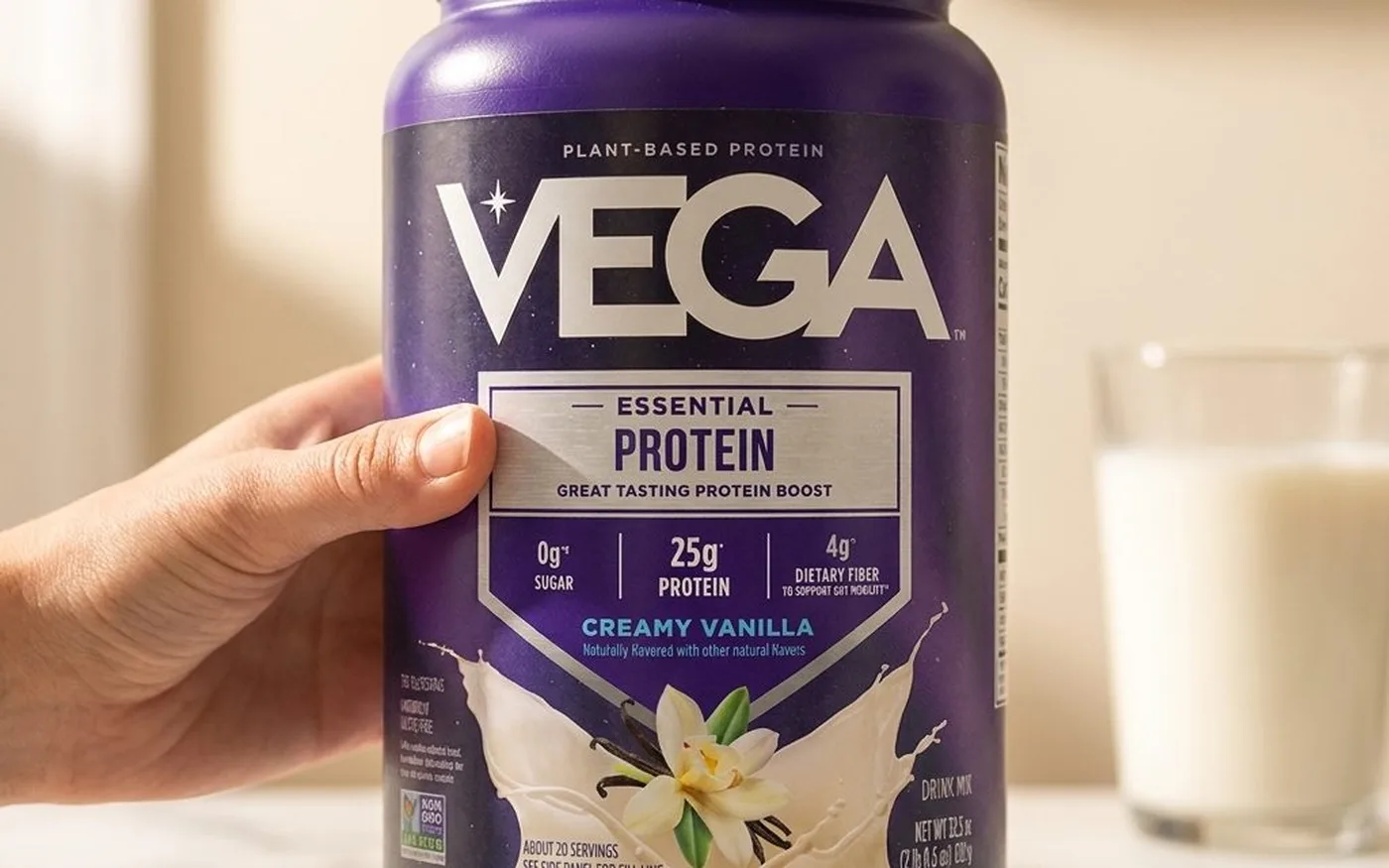
| Protein per serving | 30g | 25g (typical) | 22g (typical) |
| Price per serving (UK) | approximately £1.40 to £1.55 | approximately £0.75 to £0.90 | approximately £0.65 to £0.80 |
| Price per 30g of protein | approximately £1.40 to £1.55 | approximately £0.90 to £1.08 | approximately £0.89 to £1.09 |
| Complete amino profile | Yes (tri-blend) | Pea-only (incomplete without diversity) | Yes (blend) |
| Third-party tested | Declared by Vega | Bulk offers Informed Sport certified products in its range | Informed Choice certified |
At the price-per-30g level, Vega Sport costs approximately 40% to 70% more than the supermarket-tier UK alternatives. Whether that premium is justified is the central question this review answers.
Taste, Texture, and Mixability
This is where Vega's online reputation divides. The most-cited review on the UK SERP is a Reddit thread from r/fitmeals where the top comment reads: "It's the worst protein powder I've ever had... very very sandy, grainy, and dry. It's kind of like drinking a desert."
I tested the Chocolate flavour of Vega Sport and the Vanilla flavour of Vega Protein and Greens. The Reddit comment is not wrong, but it is not the full picture either.
At 300ml of water, both products are thick, slightly grainy, and carry the muted stevia aftertaste that polarises most plant-protein users. At 400ml, the texture becomes noticeably more palatable - the grittiness reduces and the stevia sweetness softens into something closer to a lightly sweetened drink. This is a formulation characteristic of the pea-sunflower-pumpkin blend, not a defect.
The 2026 reformulation flagged on r/veganfitness ("Vega Protein New formula? Yuck") appears to relate primarily to the Protein and Greens product, where the greens blend has been modified. Based on my testing of the current UK formulation, the greens variant does carry a more vegetal, earthy note than the Sport variant - more pronounced than in previous reports. If you are sensitive to earthy flavour profiles, the Sport variant is the better choice.
Mixability with a shaker is adequate. There is no significant clumping. The texture does not fully smooth out the way whey or a more refined pea isolate would, but it integrates into 400ml of liquid without requiring a blender.
Ingredients and Sweeteners
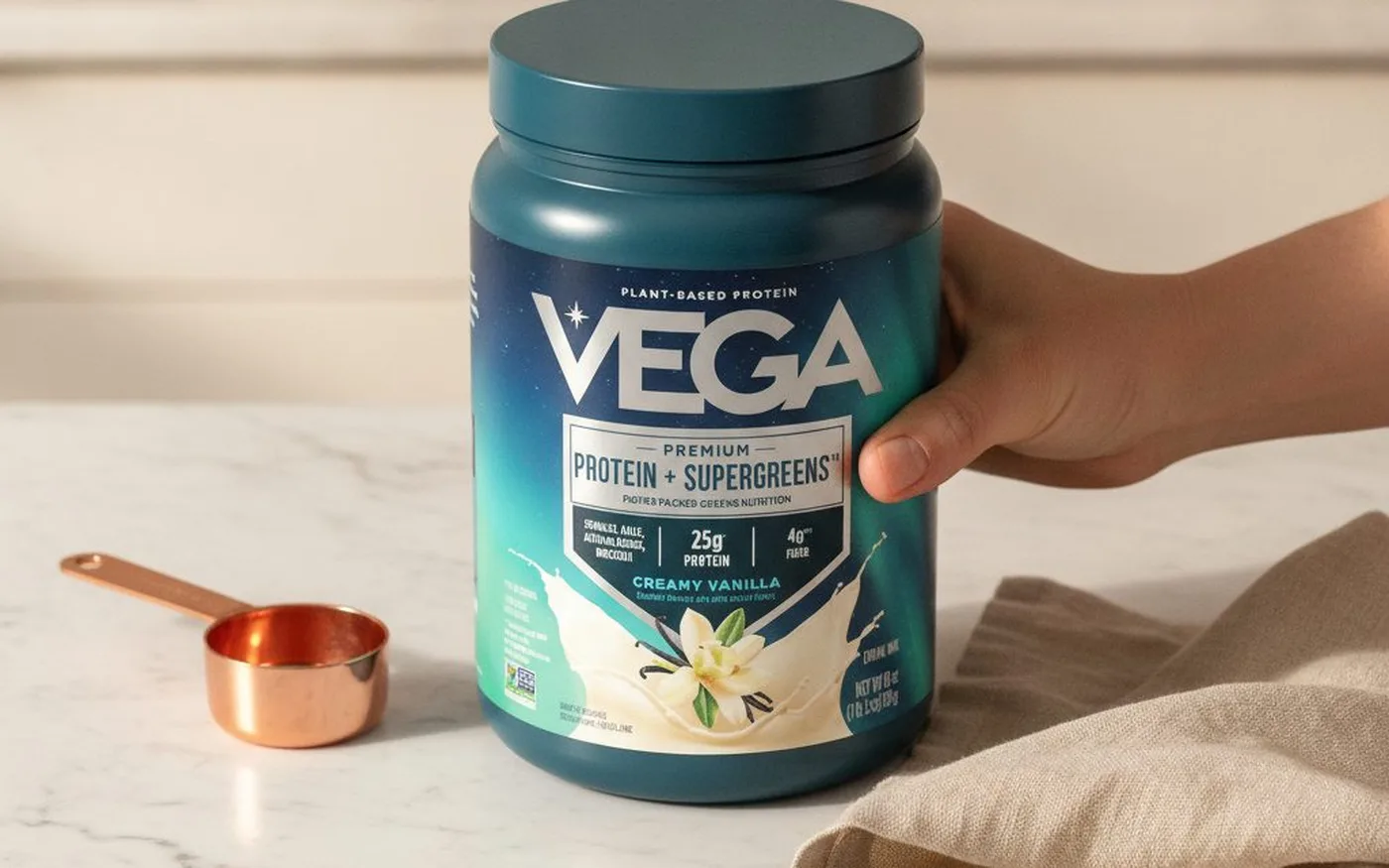
Vega Sport's sweetener is stevia (Stevia rebaudiana extract). For most users this is a neutral-to-positive feature - stevia carries zero calories and has a reasonable safety profile. For users with a specific sensitivity to the bitter-sweet rebound flavour that stevia leaves, it will be a deal-breaker.
The product also contains guar gum and sunflower lecithin as emulsifiers. Guar gum is generally well tolerated but can cause bloating in users with irritable bowel syndrome or those following a low-FODMAP protocol. A thread on r/FODMAPS ("Does anyone have experience with Vega protein powder?") flags this explicitly - digestive discomfort from the gum and inulin content in some Vega SKUs is a recurring theme for users with sensitive guts.
Vega One All-in-One also contains inulin (a prebiotic fibre). Inulin is fermented by gut bacteria and can cause bloating, gas, and discomfort at higher doses, particularly in users new to prebiotic supplementation or those with underlying digestive sensitivities. The NHS's guidance on digestive health and the British Nutrition Foundation's protein resource both note that individual digestive responses to fibre sources vary considerably.
What to Watch For
- Stevia aftertaste - present at 300ml, reduced but detectable at 400ml
- Guar gum - potential bloating trigger for IBS or low-FODMAP users
- Inulin (Vega One only) - gas and bloating risk if introduced quickly
- Earthy/vegetal notes in Protein and Greens following the 2026 reformulation
- Grittiness at standard serving volumes below 400ml
Price and Value vs Alternatives
The price-per-30g-of-protein figure is the right lens for evaluating whether Vega justifies its premium over UK own-brand alternatives.
Vega Sport at approximately £47 per tub (30 servings) works out to approximately £1.55 per serving and approximately £1.55 per 30g of protein. Bulk Vegan Protein at approximately £19 (varying serving sizes) delivers 25g of protein per serving at approximately £0.85 per serving. On a cost-per-30g-of-protein basis, Bulk is approximately 45% cheaper.
The question is what the premium buys you. Three things distinguish Vega Sport from the own-brand tier: a tri-blend amino profile that is more complete than a pea-only powder, Vega's declared third-party testing programme, and the functional add-ons (2g of BCAAs from tart cherry, 2g of glucosamine, and 1g of turmeric in Sport). If those factors matter for your training context, the premium is defensible. If you want the highest protein dose at the lowest cost per gram and are comfortable sourcing a separate BCAA supplement, the own-brand tier delivers better pure protein value.
One further consideration: Myvegan carries Informed Choice certification for contamination and banned substances, and Bulk offers Informed Sport certified products in its range. Vega declares its testing but does not publish Informed Sport or NSF Sport certification for its UK products. For competitive athletes where certification matters, this is worth noting.
Final Verdict
On formulation alone, Vega Sport stands out in the UK plant-protein market - 30g of protein per serving, a tri-blend amino profile, and functional add-ons that most own-brand alternatives do not offer. The 30g protein dose, tri-blend completeness, and functional add-ons make it one of the more thoughtfully built products in the UK plant-protein market.
The case against it is straightforward: the taste and texture are functional rather than enjoyable, the stevia aftertaste is present at standard serving volumes, and the cost per 30g of protein is materially higher than Informed Sport certified UK alternatives that deliver comparable or superior nutrition at lower cost.
Buy it if: You want a complete plant-protein blend with added BCAAs and performance support, you can tolerate stevia, and you mix at 400ml or above.
Skip it if: You are primarily motivated by cost per gram of protein, you are sensitive to stevia or gums, you follow a low-FODMAP protocol, or you need Informed Sport batch certification.
The Vega One and Protein and Greens products serve a different purpose - they are all-in-one nutrition products rather than protein-first supplements. Evaluated on that basis, they offer reasonable value. Evaluated purely on protein delivery, the Sport variant is the only SKU in the range that competes seriously on dose.
For a broader comparison across the UK plant-protein market, our guide to the best plant-based protein powder UK has full rankings. If you are comparing plant and animal protein sources, our pea protein vs soy protein breakdown covers the ingredient science in detail. For women specifically, protein powder for women addresses dosing, formulation, and the practical differences that matter.
If you pair your morning protein shake with coffee, our guide to the best coffee beans UK is worth reading - a clean single-origin morning coffee is an effective natural caffeine complement to a plant-protein AM routine without the sugar load of pre-workout blends.
Frequently Asked Questions
Is Vega protein good quality?
Vega Sport is a good-quality plant protein with a complete amino acid profile from a pea, sunflower seed, and pumpkin seed blend. It delivers 30g of protein per serving and approximately 5-6g of BCAAs. The main limitation is that Informed Sport batch certification is not confirmed for the UK range, and the cost per 30g of protein exceeds several certified alternatives.
Is Vega protein a complete protein?
Yes. Vega Sport's tri-blend of pea, sunflower seed, and pumpkin seed proteins provides all nine essential amino acids, making it a complete protein. Pea protein alone is low in methionine; the sunflower and pumpkin seed additions compensate for this gap. The British Nutrition Foundation identifies variety and complementation as the key principles for complete plant-protein coverage.
Is Vega better than whey protein?
Whey has a slight bioavailability advantage because animal-derived proteins are absorbed more efficiently than plant sources. Vega Sport's tri-blend closes much of that gap but does not eliminate it. For dairy-free users or those on a plant-based diet, Vega is the better choice. Our plant-based protein guide covers the bioavailability evidence in full.
Is Vega protein safe? Are there side effects?
Vega protein is safe for healthy adults. The most reported side effects are digestive - bloating from guar gum and, in Vega One, inulin. Low-FODMAP users should check ingredient lists before use. Stevia is recognised as safe at normal consumption levels. The 'Vega protein lawsuit' refers to a 2020 US heavy metals class action that was settled; Vega now publishes its testing commitment.
Is Vega protein worth it in the UK?
It depends on your priorities. Vega Sport costs approximately 40% to 70% more per 30g of protein than Informed Sport certified alternatives like Bulk Vegan Protein. The premium pays for a tri-blend amino profile and performance add-ons. If cost per gram is your primary metric, own-brand UK options deliver better protein value at lower cost.
Can Vega protein help with weight loss?
Protein supports weight management by promoting satiety and preserving lean muscle in a calorie deficit, and Vega Sport's 30g per serving contributes meaningfully to a daily protein target. No protein powder is a weight loss product in isolation; the effect depends on total dietary context. Our guide to protein powder for weight loss covers the clinical evidence.
Does Vega protein cause bloating?
Some users report bloating, particularly with Vega One, which contains inulin - a prebiotic fibre that ferments in the gut and can cause gas in sensitive users. Vega Sport contains guar gum, which is generally well tolerated but may trigger discomfort for IBS-prone users. Starting at a half serving and building gradually reduces the risk for most people.
What is the difference between Vega Sport and Vega Essentials?
Vega Sport delivers 30g of protein per serving with performance add-ons including BCAAs from tart cherry, glucosamine, and turmeric. Vega Essentials delivers approximately 20g per serving and is positioned as an everyday nutritional supplement with added vitamins and minerals. For protein dose and amino-acid density, Sport is the stronger option; for broader micronutrient coverage, Essentials or Vega One offers more nutritional range.

A registered Nutritional Therapist and member of BANT, Clemmie blends science with a holistic approach to wellbeing.