Bovine Collagen: What It Is, Sourcing and the Evidence

Qualified Nutritionist
Bovine collagen has a small evidence base and no authorised UK health claim. Here is what the trials show.
Table of Contents
Some of the links in this article are affiliate links, which help fund our independent review work at no extra cost to you. How we assessed these products is explained in this article and our Editor Lab methodology. No brand pays to appear, and no placement is guaranteed.
You bought a tub of collagen, turned it over, and found the word 'bovine' on the label. Bovine collagen is collagen taken from cattle hides and bones, sold mostly as hydrolysed peptides, and it has a small but real evidence base with no authorised UK health claim behind it.
That sentence is the whole answer in miniature, and the rest of this page is the working. If you want the wider picture first, our complete guide to collagen supplements covers every source, and this article goes one level down into the cow.
I am a registered Nutritional Therapist and BANT member (dipNT), and in October 2026 I reviewed the randomised controlled trials of bovine-derived collagen peptides on PubMed and checked every claim against the Great Britain nutrition and health claims register. Evidence checked October 2026.
Bovine Collagen in Short
Bovine collagen is collagen taken from cattle hides and bones, sold mostly as hydrolysed collagen peptides. It supplies mainly types I and III collagen, the types found in your skin and bone.
Trials of specific peptides at 2.5 g to 10 g a day have shown small improvements in skin elasticity and bone density. In the UK, no collagen health claim is authorised, so you should treat any collagen promise on a tub with caution. Only vitamin C carries an authorised claim for normal collagen formation.
What Is Bovine Collagen?
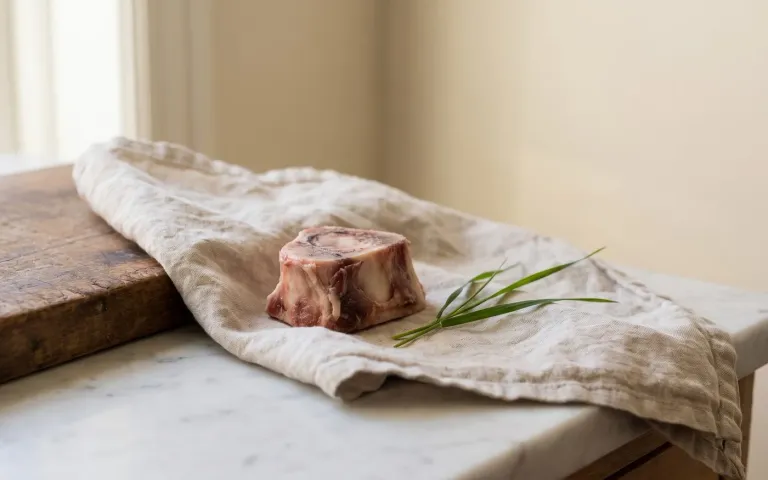
Collagen is the main structural protein in your body, and bovine collagen is simply that protein taken from a cow. Cattle hides, bones and connective tissue are the raw material.
Healthline describes the process plainly: cow bones or other cattle by-products are boiled in water. After the collagen is extracted, it is dried and powdered to form a supplement. That is the whole journey from carcass to the tub in your cupboard.
Search engines now summarise it the same way, as a protein supplement sourced from cow hides and bones that provides Type I and Type III collagen.
You should know where this sits in the food system. Bovine collagen is a by-product of the beef industry, which means the hides and bones are used rather than discarded. Whether that is a point in its favour or against depends on how you feel about beef, and I will not tell you which way to lean.
You may also have eaten collagen without noticing. Gelatin foods such as jelly, gravy and custards contain it, so a supplement is a concentrated version of something already in the food supply.
The difference is the dose and the form. A spoonful of powder in a drink gives you a measured amount, while a bowl of gravy gives you an unknown one, and that is the practical reason people reach for the supplement.
Types I and III: What Bovine Collagen Supplies
More than 20 types of collagen exist in your body, and the supplement aisle talks about only a few. Bovine collagen supplies mainly types I and III.
Type I collagen is the main structural collagen in your skin, bone and tendons. Type III collagen works alongside type I in your skin and blood vessels, which is why the two are almost always named together.
The collagen in your skin is primarily made up of types I and III, according to Healthline. That is the reason bovine products lead with skin on the label.
It is a sensible match between source and target, though a match on the label does not prove a result in your body.
Healthline also notes that bovine collagen has been found to increase types I and III collagen, whereas marine collagen boosts types I and II. If you want the full source-against-source comparison, we cover it in marine vs bovine collagen, and there is a short table further down this page.
How Bovine Collagen Is Made: Gelatin vs Hydrolysed Peptides
The two main types of bovine collagen supplements are gelatin and hydrolysed collagen. They start from the same material and behave very differently in your kitchen.

Gelatin is cooked collagen. It sets liquids, which is why your hot stock turns into a wobbly jelly as it cools.
Hydrolysed collagen has been broken down into short chains. These collagen peptides dissolve in cold and hot drinks without setting, which is why almost every powder you will find on a UK shelf is hydrolysed.
Check which one you are holding. If you wanted something to stir into a flat white and you bought gelatin, you will end up with a lumpy surprise.
I would not put a Dalton figure on any of this, because I have not seen one I can verify for a retail product, and you should be wary of any label that quotes one without a source. A precise-sounding number is easy to print and hard to check, so it earns no extra trust from you until someone shows the working.
What the Bovine Collagen Trials Show
This is the section you probably skipped to, and it is where the honest answer is least exciting. The trials most often cited for bovine collagen peptides show small, measurable changes, not dramatic ones.
I read trial design, not press releases. Here is what the four key studies did, so you can judge them yourself.
A placebo-controlled, double-blind trial is the format you want to see. It means neither you nor the researchers know who is taking the real powder, which stops hope from tilting the result. It does not remove every problem, and the numbers below show where the gaps are.
Skin. A 2014 double-blind, placebo-controlled trial by Proksch and colleagues gave 69 women aged 35 to 55 either 2.5 g or 5 g of collagen hydrolysate, or a placebo, every day for eight weeks. Skin elasticity improved significantly against placebo in both dose groups. Skin moisture and evaporation were positive only in a subgroup and were not statistically significant, and the authors noted that no side effects appeared throughout the study.
That is a modest result, and you should read it as one.

If skin is your reason for reading, our guide to the best collagen for skin shows which products match those doses.
Bone. A 2018 randomised, placebo-controlled, double-blind trial by König and colleagues followed 131 postmenopausal women with age-related reduced bone mineral density. They took 5 g of specific collagen peptides daily for 12 months, and 102 finished the trial. Bone mineral density in the spine and femoral neck increased significantly compared with the control group.
You should note who was studied: postmenopausal women with reduced density, not the general population.
If you are in or near menopause, you may find our piece on collagen and menopause more useful than another trial summary. Please read the safety section below before you change anything about your bone health routine.
Joints. A 2008 randomised, placebo-controlled trial by Clark and colleagues at Penn State studied 147 athletes with activity-related joint pain but no joint disease. They took 10 g of collagen hydrolysate in 25 mL of liquid daily, or a placebo, for 24 weeks. Data from 97 of the 147 athletes were evaluable, which is a large drop-out to keep in mind when you read the headline.
You can see how the joint products compare in our best collagen for joints guide.
The wider picture. A 2021 systematic review and meta-analysis by de Miranda and colleagues pooled 19 studies of hydrolysed collagen and skin ageing, covering 1,125 participants aged 20 to 70, 95 per cent of them women. It is the broadest look at the skin question, and it tells you who has been studied. If you are a man, or you are under 20, the evidence is thin for you.
The funding point you should know. Steffen Oesser is listed among the authors of both the Proksch and König papers, and the König author list names the CRI Collagen Research Institute in Kiel. The König authors declare no conflict of interest, and I could not confirm from the records who paid for each trial. What I can say is that the evidence is real but sits close to the industry that sells peptides, so you should read the results as encouraging rather than settled.
Funding links do not make a trial worthless, and you should not throw the findings out. They do mean you should weigh the size of the effect, not only its direction, and prefer a modest expectation to a confident one.
The 'nothing happened' point. Nothing in these trials promises you will feel anything. A member of the Royal Osteoporosis Society community thread on collagen supplements wrote in July 2026 that "I've been taking it for about 4 months but can't say that anything is different". The same person added that "It doesn't hurt to try these things if they are safe".

That is a fair summary of where most people land, and it fits the trial timelines. You may be waiting for a change that these studies never measured.
The skin trial measured elasticity at eight weeks, and the bone trial ran for 12 months. Collagen does not give you a feeling in your body the way caffeine does, so a quiet four months is not proof of failure and not proof of success.
If you want the all-collagen evidence beyond bovine sources, you can read our does collagen work guide.
What UK Law Lets Brands Claim About Collagen
This is the section that changes how you read a tub. In Great Britain, the health claims you see on food and supplements must be authorised and listed on the nutrition and health claims register, which is published on GOV.UK. I checked the version dated 19 May 2026.
Here is what you will find if you look. The register lists the collagen joint claim, "Collagen can/could contribute to the maintenance of the healthy function of joints", as non-authorised. It lists the collagen skin claim, "Collagen is a natural component of the skin. Helps the skin to preserve its firmness and elasticity", as non-authorised too.
The collagen hydrolysate cartilage and joint claims are recorded as non-compliant and not authorised, so you will not find a safe way to quote them.
So where does that leave you when a tub says 'supports skin firmness' in big letters? It means the brand is leaning on wording the register does not allow for collagen itself, and you are right to be sceptical. A non-authorised claim is not a lie in every case, but it is a flag that you should look at the evidence yourself before you pay a premium.
The claim you can trust belongs to vitamin C. The register carries "Vitamin C contributes to normal collagen formation for the normal function of skin", and the same authorised wording extends to bones, cartilage, blood vessels, gums and teeth. That is why so many collagen tubs add vitamin C to the recipe you are buying.
You may not need the added vitamin C at all. The NHS says adults aged 19 to 64 need 40 mg of vitamin C a day, and that you should be able to get all the vitamin C you need from your daily diet. A tub that charges extra for vitamin C is selling you something a kiwi would cover.
This is permission, not a rule. You are allowed to take collagen because you want to try it, and you are allowed to feel unconvinced by the packaging. You are owed an honest account of what the law does and does not say.
Grass-Fed and Sourcing Labels: What They Tell You
'Grass-fed' describes how the cattle were raised. It is a welfare and farming statement about the animal, and it is not a statement about the powder in your tub.
I noticed that a Reddit r/30PlusSkinCare poster bought a collagen powder because "I noticed it said grassfed on the front", then found out it was beef-derived. A Reddit r/zerocarb reply argued that "grain fed affects fat quality not protein quality. Grass-fed if you're picky." That second line is a Reddit opinion, and I am reporting it as one, not as science.
Here is the plain position: I found no trial comparing grass-fed and grain-fed collagen, so you cannot say one is more potent.
If you prefer grass-fed for animal welfare or farming reasons, that is a perfectly good reason to pay for it. Just be honest with yourself that you are buying a value, not a measured benefit in your skin or bones.
What I would look for instead is traceability. A country of origin named on the pack and a single-ingredient powder are the cleanest defaults, because they let you see what you are buying. Ancient + Brave is one example of a brand that leads on grass-fed sourcing, and our review shows how it handles the detail.
Is Bovine Collagen Safe? Who Should Not Take It
For most healthy adults, the trial record is reassuring. The Proksch authors reported that no side effects were noted throughout their study, which is the boring line you want to read.
A trial of 69 women over eight weeks cannot tell you everything, though. If you want the general picture, our collagen side effects guide covers the common complaints, and this section covers what is specific to the cow.
BSE. If you are old enough to remember the 1990s, a cow-derived product may make you hesitate. The European Food Safety Authority explains that the classical BSE epidemic started in 1986 in the UK. BSE is the only form that can be transmitted to humans through contaminated meat, causing variant Creutzfeldt-Jakob disease, which was first diagnosed in 1996.
I am stating that history as it stands and I am not putting a present-day risk figure on it, because I do not have a verified one. If it worries you, ask a supplier where the raw material comes from, and choose a product that names its origin. A good supplier will answer you plainly, and a supplier that goes quiet has told you something useful.
Who should not take it. Some people should skip bovine collagen or speak to a professional first. Check this list against your own situation, and be generous with yourself if more than one line applies.
- Vegetarians and vegans. Bovine collagen is an animal product, so it is not for you. Our upcoming look at the best vegan collagen UK options will cover the alternatives.
- Anyone with a beef allergy. If beef causes you a reaction, a beef-derived protein is not a sensible experiment.
- Anyone who avoids beef for faith reasons. The animal alone does not decide this. Unless the pack carries a recognised halal or kosher certification, assume it is not suitable, and check the mark yourself.
- Anyone pregnant or breastfeeding. Ask your GP or pharmacist before you add any supplement.
- Anyone on prescribed medication. Ask your GP or pharmacist first. This matters most if you take bone medication, because collagen is not a replacement for anything your doctor has prescribed, and you should never swap one for the other.
I hear the faith and diet questions in clinic more often than the safety ones. People are rarely worried about the powder itself, and far more often worried about whether they are quietly breaking a household rule. Your own search habits suggest the same, since halal queries about collagen are real on this site.
Bovine vs Marine Collagen at a Glance
If you are choosing between sources, this table gives you the short version. It does not declare a winner, because the right source depends on your diet more than on a league table.
| Question | Bovine collagen | Marine collagen |
|---|---|---|
| Source | Cattle hides and bones | Fish |
| Main types (per Healthline) | Types I and III | Types I and II |
| Who it suits | People who eat beef | Pescatarians and people who avoid beef |
| Typical form | Hydrolysed powder or gelatin | Hydrolysed powder |
For the full verdict, read our marine vs bovine collagen comparison. If you avoid beef but eat fish, our best marine collagen UK guide is the better next stop.
How to Take Bovine Collagen
The trial doses give you a sensible range. Proksch used 2.5 g and 5 g, König used 5 g, and Clark used 10 g, so the studied range runs from 2.5 g to 10 g a day.
That range is the ingredient audit that matters most. Check the grams of collagen per serving on your tub, because a product with a lovely label and a tiny dose is not doing what the trials did. Our guide on how much collagen per day goes deeper on dose.
Hydrolysed powder dissolves in hot or cold drinks, and coffee is the carrier most UK readers reach for. Stirring collagen in coffee is fine for a hydrolysed powder, and it makes the habit easy to keep. If you already take greens powders or a magnesium supplement in the morning, adding collagen to the same moment helps you remember it.
Start at the lower end if you are new to it, and write the date on the tub so you can judge it properly after eight weeks. A written start date beats a vague memory of 'a few months ago' every time.
Consistency matters more than the clock, and you can lean on that.
Our guide to when to take collagen explains why you should pick the time you will keep. Weirdly, the boring answer is the one that works. If you miss a day, you carry on the next day, because nothing in the trials suggests you need to make up for it.
How to Choose a Bovine Collagen: Label Checklist
You do not need a lab to read a tub. You need about two minutes and this checklist.
- 'Hydrolysed' or 'collagen peptides' on the label. This tells you the powder will dissolve in a drink. If it only says 'gelatin', it will set instead.
- Collagen grams per serving stated. You need this number to compare against the 2.5 g to 10 g in the trials.
- A single ingredient or a short list. Flavoured and sweetened blends add ingredients you did not come for, so read what rides along with the collagen.
- Origin or country named. Traceability is the cleanest sign of a supplier that expects questions.
- Certification marks, if they matter to you. A halal or kosher mark on the pack is what settles the faith question, not the word 'bovine'.
- Vitamin C, if you want the one authorised claim. You can also get it from food, so you do not have to pay for it in the tub.
- No proprietary blend hiding the collagen dose. If you cannot see how much collagen is in it, you cannot compare it with anything. Do the sum on serving size too, because a tub that looks cheap per kilo can be dear per useful dose.
If you want to see these checks applied, our roundup of the best collagen powder UK applies them to tested products you can buy. For an example of a single-ingredient bovine powder reviewed in detail, see our Edible Health collagen review.
If you decide to buy, screenshot the checklist and hold it against the tub in the shop or the basket online. You will not find a ranking on this page, and that is deliberate. Understanding the source first makes you a better judge of any product list, ours included.
The Bovine Collagen Studies in One Table
This table gathers the studies discussed above, so you can compare them side by side. Every figure comes from the published records.
Read across a row, not down a column. The doses, lengths and people differ so much that you cannot add the studies together into one verdict, and you should treat each line as its own small piece of evidence.
| Study | Year | Participants | Dose | Duration | Outcome | Funding or affiliation |
|---|---|---|---|---|---|---|
| Proksch et al. | 2014 | 69 women aged 35 to 55 | 2.5 g or 5 g collagen hydrolysate daily | 8 weeks | Skin elasticity improved vs placebo in both dose groups; moisture not significant | Oesser S listed among the authors |
| König et al. | 2018 | 131 postmenopausal women (102 completed) | 5 g specific collagen peptides daily | 12 months | Spine and femoral neck bone mineral density increased vs control | Oesser S and CRI Collagen Research Institute GmbH, Kiel listed; authors declare no conflict of interest |
| Clark et al. | 2008 | 147 athletes with activity-related joint pain (97 evaluable) | 10 g collagen hydrolysate daily | 24 weeks | Activity-related joint pain assessed against placebo | Run at Penn State; funding not confirmed in the record |
| de Miranda et al. | 2021 | 1,125 participants aged 20 to 70, 95% women | Pooled across 19 studies | Pooled | Systematic review and meta-analysis of hydrolysed collagen on skin ageing | Funding not confirmed in the record |
Frequently Asked Questions
What is bovine collagen?
Bovine collagen is collagen taken from cattle hides and bones, sold mostly as hydrolysed collagen peptides. It supplies mainly types I and III collagen, the types found in your skin and bone. You will find it as a powder, in capsules, and in gelatin foods such as jelly, gravy and custards.
Is taking bovine collagen good for you?
The trials show small improvements in skin elasticity after eight weeks and in bone density after 12 months, at doses of 2.5 g to 10 g a day. No collagen health claim is authorised in the UK, and some of the evidence sits close to industry. You can try it, but you should expect modest results at best.
Who should not take bovine collagen?
Vegetarians, vegans and anyone with a beef allergy should avoid it. If you avoid beef for faith reasons, look for a recognised halal or kosher mark on the pack. If you are pregnant, breastfeeding or taking prescribed medication, ask your GP or pharmacist before you start.
Which collagen is better, marine or bovine?
Neither wins outright. Bovine collagen supplies mainly types I and III, while marine collagen supplies mainly types I and II, according to Healthline. Choose by what you eat and what you avoid, then check the dose per serving. Our full comparison of marine vs bovine collagen sets out the detail.
Can I take a collagen supplement with citalopram?
This article makes no claim about interactions between collagen and citalopram. If you take citalopram or any prescribed medicine, ask your prescriber or pharmacist before you add a supplement. They know your full history and can give you an answer that fits your situation, which a general article cannot.
Is taking bovine collagen safe?
For most healthy adults the record is reassuring. The Proksch trial noted no side effects throughout its eight weeks. BSE began in the UK in 1986, and the European Food Safety Authority describes it as the only form transmissible to humans. Choose a product that names its origin, and read our collagen side effects guide.
Is bovine collagen halal?
Only if the product carries a recognised halal certification. The source animal alone does not decide it, because the way the raw material is processed also matters. Check the mark on the pack yourself, and contact the supplier if the pack is silent. I have not named a certifier, because I have not verified one.
How long does bovine collagen take to work?
The trials measured skin elasticity at eight weeks and bone density at 12 months. So you should give a daily habit at least two months before judging skin, and far longer for bone. A quiet four months does not prove it failed, and it does not prove it worked either.
Can I put bovine collagen in coffee?
Yes, if the powder is hydrolysed. Hydrolysed collagen dissolves in hot and cold drinks, and mixing collagen in coffee is one of the most common ways people take it. Gelatin is different, because it sets as it cools. Check the label says 'hydrolysed' or 'collagen peptides' before you stir it in.

A registered Nutritional Therapist and member of BANT, Clemmie blends science with a holistic approach to wellbeing.