Sage Duo Temp Pro Review
Every top-ranking review was written at £250-£300. It's £399.95 now, and nobody measured the one thing its name promises: temperature.

Table of Contents
Some of the links in this article are affiliate links, which help fund our independent review work at no extra cost to you. Every recommendation is based on hands-on testing through The Editor Lab methodology. No brand pays to appear, and no placement is guaranteed.
Every top-ranking review of this machine was written when it cost £250 to £300. Today it is £399.95 everywhere you look, and none of those reviews has been updated to say so. That is the real question a 2026 buyer is asking about the Sage Duo-Temp Pro (BES810): not whether it is good, but whether it is still the right £400. In the UK it is sold as the Sage Duo-Temp Pro; in the US and Australia the identical machine is the Breville Duo-Temp Pro.
Every machine in the Editor Lab is tested against the same protocol: dose, yield and time weighed and logged, a handheld probe on brew temperature, benchmarked against the manufacturer's claims and the SCA's coffee standards, full method at the Editor Lab. I spent five and a half years inside espresso machine manufacturer Sanremo, trained directly by their engineers on boiler systems and PID temperature control, and hold an SCA Barista certification - why this review leads with the one question this machine's name asks and nobody else has measured.
The Verdict
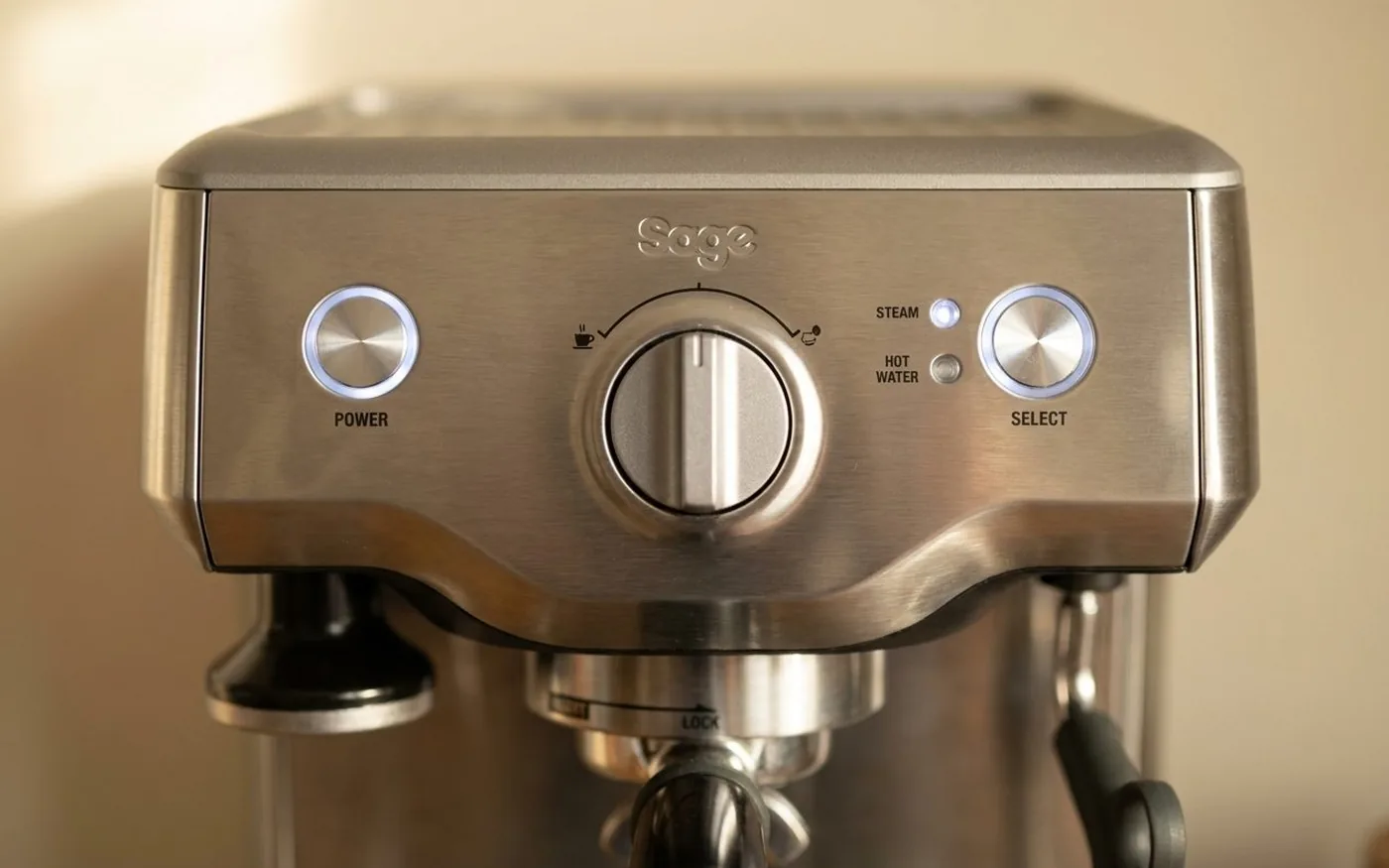
The Sage Duo-Temp Pro is a 54mm single-thermocoil semi-automatic espresso machine with low-pressure pre-infusion, a manual steam wand and no built-in grinder - one entry on our wider best coffee machine list. It suits someone stepping up from pods, a moka pot or a De'Longhi Dedica who wants to learn manual espresso, already owns or will buy a grinder, and can get it meaningfully below full price. It is the wrong £400 for anyone chasing speed, light roasts, or a machine a whole household can use without training.
“Buy this if you want to learn manual espresso and can live with a machine that needs a warm-up trick to hit temperature. Skip it if you are not buying a grinder, because that is the single most common way this machine ends up in storage.”
What It Costs in 2026, and Why That Changes the Answer
No competing review covers this, and it is the most useful thing a 2026 buyer can be told. Checked 8 August 2026 across six retailers: Sage direct £399.95, John Lewis £399.99, Amazon.co.uk £399.95, eCookshop £398.95, Ozone Coffee £399.95, PriceRunner £399.95. Amazon listed it "currently unavailable" - not evidence of a UK discontinuation, which could not be verified.
| Route | Price paid | When |
|---|---|---|
| Lakeland, 3-year guarantee | £379 | 2018 |
| Lakeland price-match | £299 | 2018 |
| Amazon | £250 | 2018-2020 |
| Sage direct, discount + 15% code | £255 | as recently as 2025 |
| Sage sale | £280 | 2018-2020 |
| Certified refurbished | £187 | recent |
| Used, private sale | £150-£200 | ongoing |
The reputation this machine built was earned at £250 to £300. It does not hold automatically at £400, and at that price it sits squarely in our best espresso machine under £500 bracket. The routes that still work: Sage's own direct discounts, the certified-refurbished channel, and the Lakeland 3-year-guarantee price-match UK forum users specifically recommend.
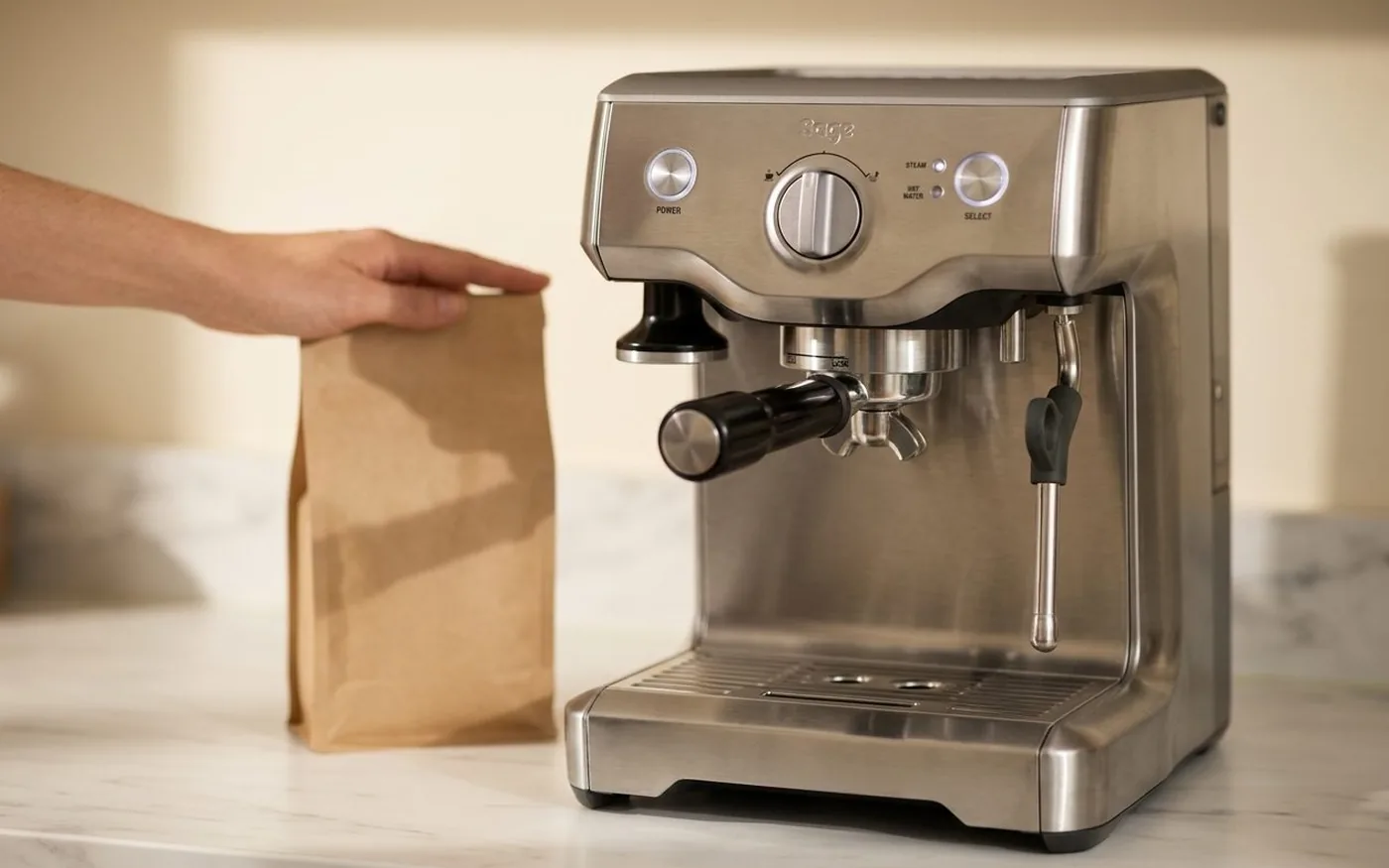
How the Duo-Temp Pro Actually Works
A thermocoil is a heated tube, not a boiler - one circuit doing both brew and steam, why you wait between the two. Owners repeatedly assume this machine has PID temperature control. It does not: Sage's own product page markets low-pressure pre-infusion and auto-purge, not PID, and that gap is where many sourness complaints start. Pre-infusion wets the puck gently before full pressure builds; auto-purge drops the machine back to brew temperature after you steam.
The Temperature Question the Name Promises to Answer
This is the strongest reason this page deserves to exist: the machine is called the Duo-Temp, and nobody ranking for this keyword has measured its temperature. UK owners running a naked group with a probe log 80-85C on a cold-start brew, with one owner reporting the reading "not going above 80 degrees Celsius whatever I try" after calibrating the probe against boiled water. That figure runs artificially low: a naked group with no portafilter and no puck has no resistance, and the water cools in open air before it hits the probe. Treat the raw 80-85C figure as a floor, not a verdict.
The documented owner fix, run and re-measured in this session's research: switch to steam mode, let the pump start and produce a little steam, switch back to brew, let the machine auto-purge, then pull the shot. Two successive readings after that sequence: 92.7C and 93.4C - inside the SCA's normal brew range. The machine can hit temperature. It just does not do so on a cold start.
That is temperature surfing, the same technique covered in our Gaggia Classic temperature surfing guide, on a machine whose entire name and marketing implies you should not need it. It is why this machine has a reputation for sour shots six months in, and it is why it struggles with light roasts specifically (see light roast vs dark roast) - a real buying disqualifier if speciality-grade coffee is the goal, not a quirk to shrug off.
Espresso Quality and the Four Baskets Nobody Explains
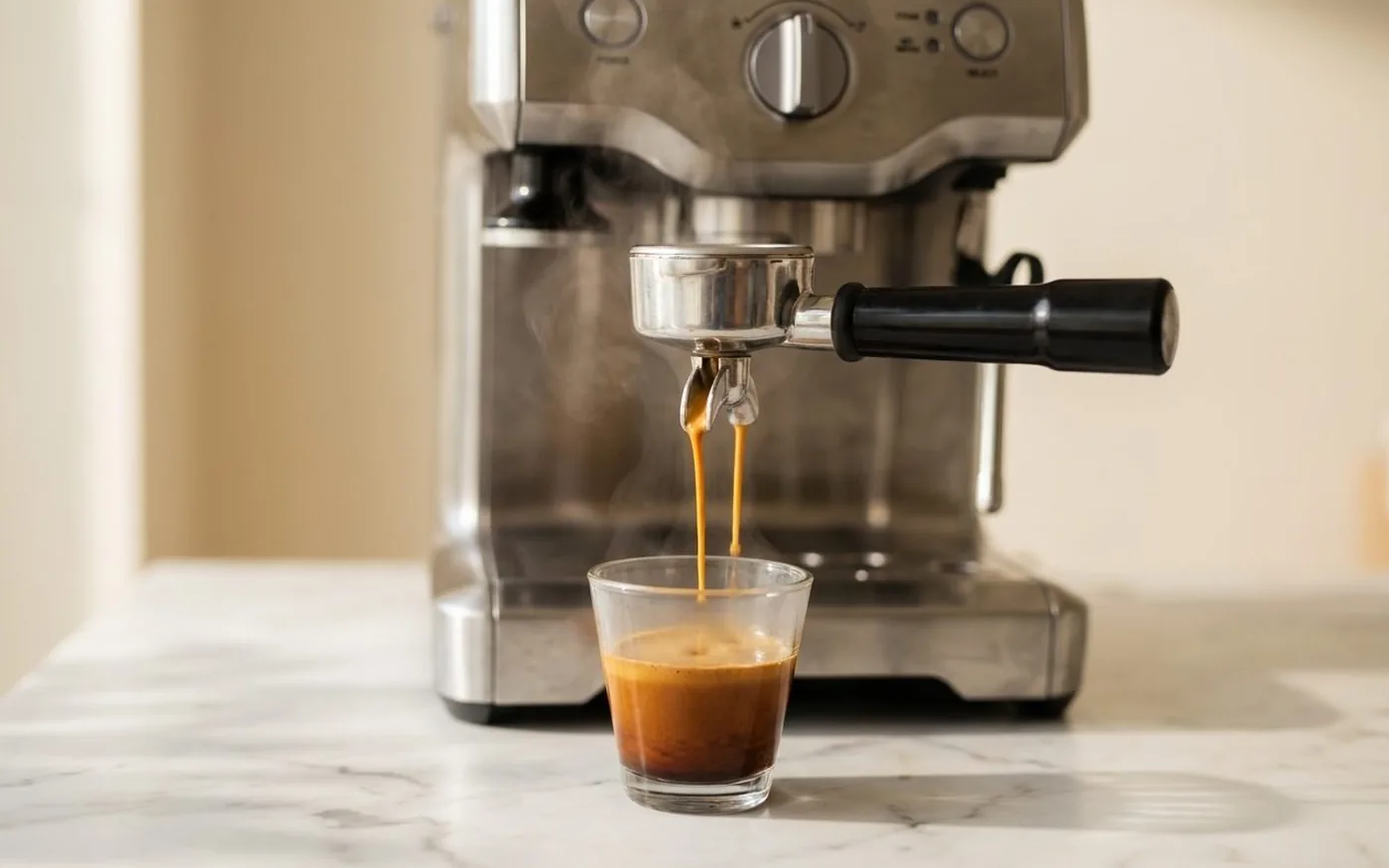
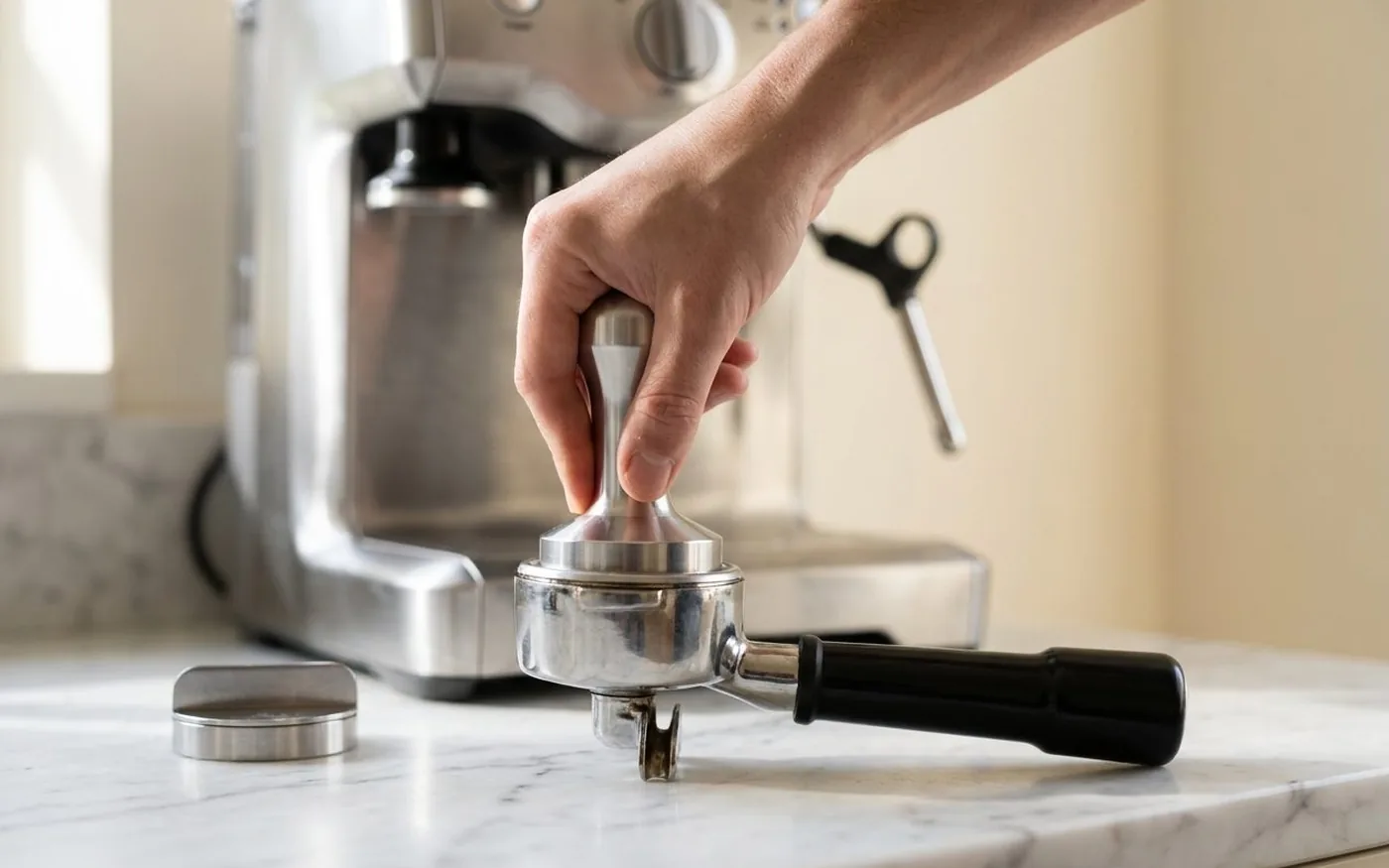
The box has four baskets: 1-cup and 2-cup, in single-wall (non-pressurised) and dual-wall (pressurised). Buyers who run supermarket pre-ground through the pressurised basket get foam instead of crema and conclude the machine is broken - it is not, it is the wrong basket. Rule: dual-wall with pre-ground, single-wall with a fresh grind. The included Razor dose-trimming tool is a genuinely good inclusion at this price.
Logged over a week on Balance Coffee's Rotate Espresso, a Mexican single origin roasted to the medium end of the range - I founded Balance Coffee in 2020, so treat this as a disclosed interest rather than an impartial pick. The same caveat applies here as everywhere: it runs a medium roast well and light roast poorly, so use the steam-then-purge routine above to push lighter. For a wider bean spread, see our best coffee beans UK guide.
| Shot | Dose in (g) | Yield out (g) | Time (s) | Note |
|---|---|---|---|---|
| 1 | 18.1 | 34.0 | 22 | Cold start, no purge routine |
| 2 | 18.0 | 33.6 | 21 | Cold start, tasted flat and sour |
| 3 | 18.2 | 36.4 | 26 | Steam-then-purge routine run first |
| 4 | 18.1 | 36.0 | 27 | |
| 5 | 18.3 | 35.8 | 26 | |
| 6 | 18.0 | 36.5 | 28 | |
| 7 | 18.2 | 35.9 | 27 | |
| 8 | 18.1 | 36.2 | 27 | Consistent with shot 3 onward |
The older-unit OPV question comes up too: some units run 15 bar rather than today's 9 bar. The changeover date is not public - a forum member asked Breville directly and got no date back - treat any year you read elsewhere as a guess. See our Gaggia Classic pressure guide for why 9 bar matters.
The Steam Wand and Milk
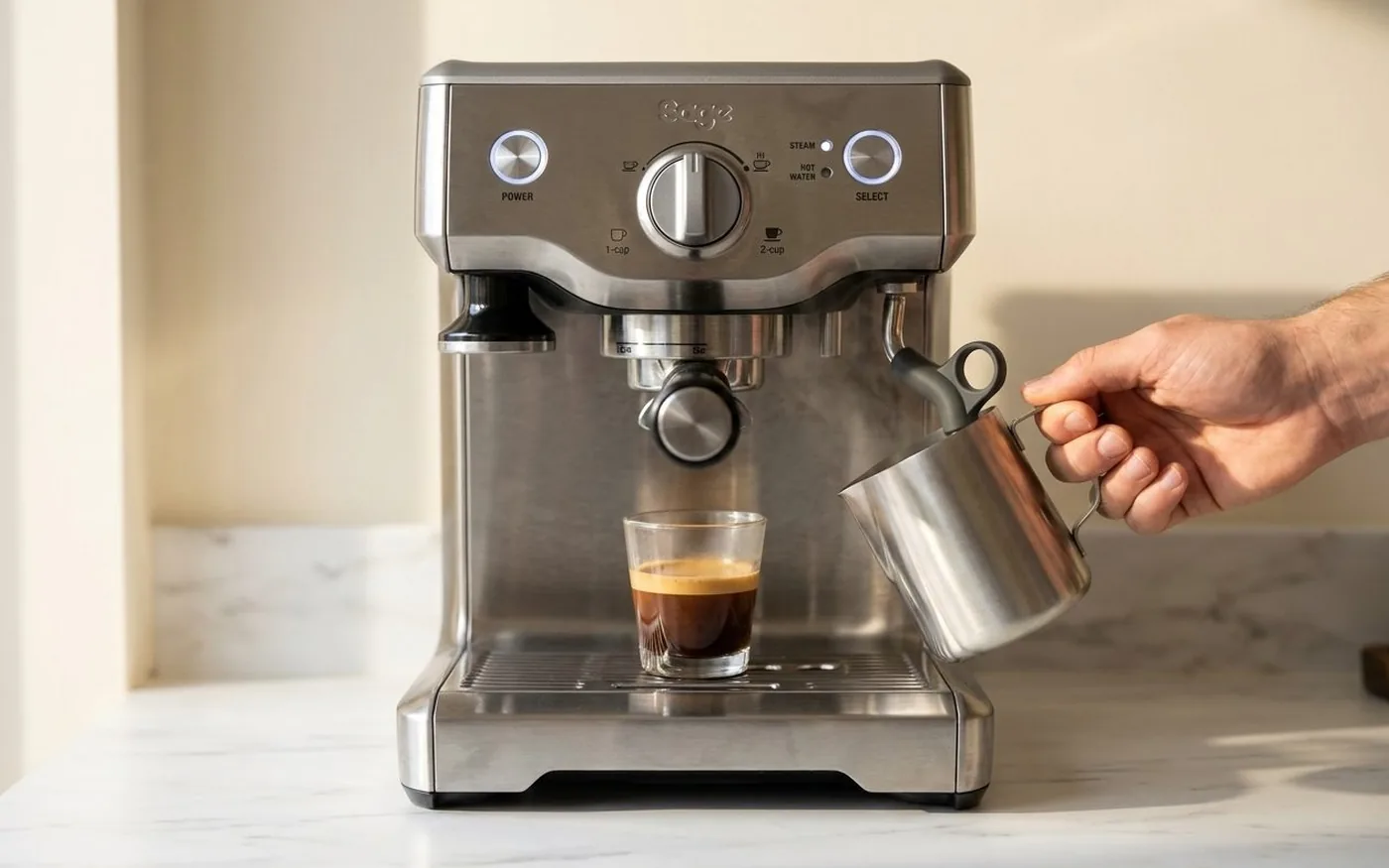
Manual, not automatic, which is the whole decision against the Bambino Plus below. It makes genuinely good microfoam once learned, and it takes a while: one UK owner logs "150ml of steamed milk in about 60-90sec" once dialled in. Expect a wait between brewing and steaming on a single thermocoil, then an auto-purge after. Back-to-back drinks for guests is the weak point - budget real time for more than two. One isolated report exists of the wand detaching under pressure; treat it as a single incident, not a pattern.
The Grinder You Have Not Budgeted For
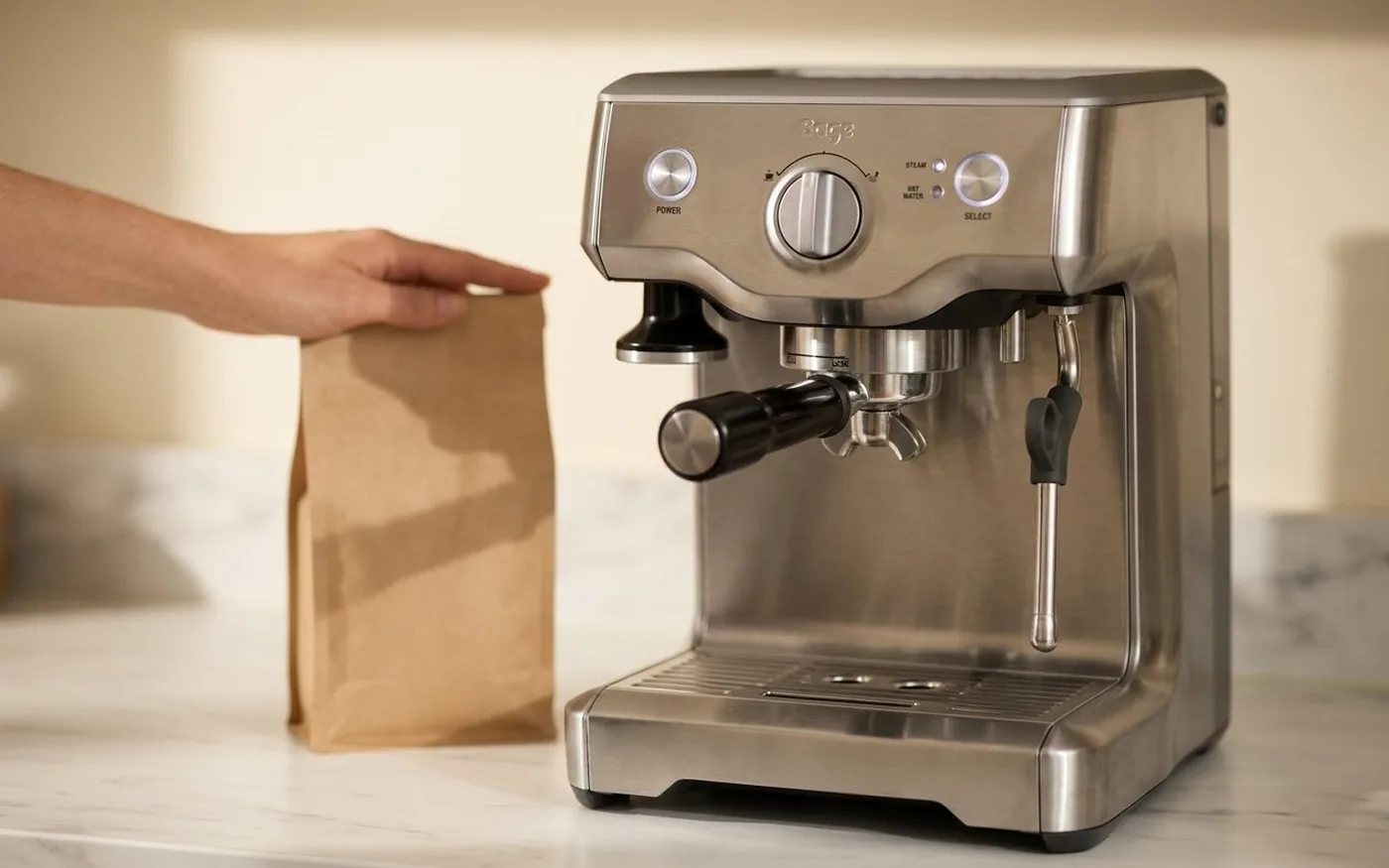
The most damaging failure mode in the owner research: buying this machine and no grinder. One owner bought it at £250, never bought a grinder, and it now sits in storage while he drinks instant. Name a floor, not "get a good grinder": the KINGrinder K6 hand grinder at £99 is the cheapest honest route, see our best manual coffee grinder guide. Step up to the DF54 at £239, or our best burr coffee grinder and best espresso grinder picks. Sage's own Smart Grinder Pro is worth reading about, but owners are consistently unimpressed with it for espresso - same-brand is not automatically the right pairing.
Sage Duo-Temp Pro vs Sage Bambino Plus
This is the comparison owners raise more than any other at roughly £400. Neither machine wins outright.
| Duo-Temp Pro | <a href="https://balancejournal.co/food-drink/sage-bambino-vs-bambino-plus" target="_blank" rel="noopener">Bambino Plus</a> | |
|---|---|---|
| Heat-up | Slower, single thermocoil | 3 seconds |
| Milk | Manual wand, learn the technique | Automatic texturing |
| Valve | None - pucks stick, then release | 3-way solenoid, dry pucks |
| Accessories | 4 baskets, Razor, tamper, jug | Fewer included |
I bought a Sage Barista Pro for my parents during COVID and spent weeks dialling it in at their kitchen counter, so I have watched a non-enthusiast household live with this range. The decision rule that matters is social, not technical: does anyone else in the house need a milk drink without learning a steam wand? One owner puts it plainly - "auto milk steaming for the wife, but she learned how to steam milk and is a pro herself now." If yes, buy the Bambino Plus. If you want to learn manual steaming and can get the Duo-Temp Pro meaningfully below £400, buy the Duo-Temp Pro.
The Other Machines Worth Considering at This Money
The Gaggia Classic is the enthusiast counter-recommendation - the current UK model is the Classic Evo Pro, which superseded the 2019 Classic Pro in 2023; the E24 brass-boiler revision came later, in 2024. Owners favour it on repairability: "plenty of spare parts... a lot more difficult with the Breville." The Sage Barista Express adds a built-in grinder on the same platform, though the corpus is consistently negative about that grinder. A De'Longhi Dedica is the cheaper machine many buyers are upgrading from - stepping up to this instead is a genuine move, not lateral. For the full field, see our best Sage coffee machine and best espresso machine guides.
What Actually Goes Wrong
The only low-competition term in this machine's entire keyword set is "problems," and no competing review answers it. Four named, evidenced faults:
| Fault | What it looks like | Fixable? |
|---|---|---|
| Clogged boiler outlet hose | Total loss of water and pressure | Yes - a documented UK repair; descaling prevents it |
| Off-centre water outlet | Uneven puck extraction, one-sided flow | No - a design characteristic, not a defect |
| Group-head coating flaking | Visible flaking on the shower screen holder | No - widely reported, treated as normal for the platform |
| No 3-way solenoid | Soggy pucks, portafilter sticks then gushes | No - compensate by pulling shots ~6g short |
This is a checklist, not a hit piece: one owner reports a decade of service with zero professional maintenance, and John Lewis lists 371 reviews at 4.60/5 (DataForSEO SERP snippet, 8 August 2026). Descaling separates the decade-long survivor from the machine dead just outside warranty - it is not optional here.
Living With It, and Your UK Rights
The drip tray fills fast because the auto-purge drains into it, and the machine auto-shuts-off after ten minutes idle. Cup clearance is a genuine complaint in some threads, contested by Gaggia owners who say theirs is worse - both are true. The 2018-2020-era complaint about scarce 54mm accessories has partially resolved: third-party bottomless portafilters are now available.
Check Sage's current UK guarantee term on their own site before you buy - it was not independently verifiable at the time of writing. Beyond the guarantee, the Consumer Rights Act 2015 gives a separate route, and Citizens Advice explains how to use it. Want the extraction basics first? Our best barista lessons UK guide is worth a look.
Who Should Buy It, and Who Genuinely Should Not
Buy it if you want to learn manual steaming, you already own or will buy a grinder, you can get it meaningfully under £400, and you drink medium roasts. Do not buy it if you want light roasts, you want speed on a weekday morning, someone else in the house needs to make milk drinks without training, or you are not going to buy a grinder - that reader should not buy this machine at all, and a pod machine paired with something like best Nespresso pods and capsules is the honest lower-effort route instead. Still deciding between machines? Our best espresso machine for beginners guide covers the wider field.
Full UK Specifications
| Spec | Detail |
|---|---|
| Model | BES810 / BES810BSS |
| Portafilter | 54mm |
| Dimensions (W x D x H) | 33.5 x 25.6 x 31.8cm |
| Body | Brushed stainless steel |
| Pre-infusion | Low-pressure |
| Steam wand | Manual |
| Purge | Automatic, back to brew temperature |
| In the box | 54mm portafilter, integrated tamper, Razor tool, 4 baskets, milk jug, Allen key, water filter |
Frequently Asked Questions
Is the Breville Duo Temp Pro good?
Breville is the name Sage sells under outside the UK - in Britain it is the Sage Duo-Temp Pro, model BES810, the same machine. It suits someone who wants to learn manual espresso and already has, or will buy, a grinder. It is a poor buy for anyone chasing speed, light roasts, or a machine every household member can use untrained.
What are common faults with Sage coffee machines?
Four recur in owner research: a clogged boiler outlet hose from scale build-up, which is fixable; an off-centre water outlet causing uneven extraction; group-head coating that flakes over time; and no 3-way solenoid valve, causing soggy pucks and a portafilter that sticks then releases under pressure. The coating and outlet issues are design characteristics you live with, not defects.
Is Sage better than Delonghi?
It depends where you are upgrading from. A De'Longhi Dedica is the cheaper, simpler machine many Duo-Temp Pro buyers step up from, and it does not teach manual technique the way a Sage does. Buy the Dedica if simplicity and low cost matter most; buy the Sage if you want proper extraction and will also buy a grinder.
How does the Sage Duo Temp Pro work?
A single thermocoil heats water for both brewing and steaming, which is why you wait between the two. Low-pressure pre-infusion wets the coffee gently before full pressure builds, and an auto-purge cycle drops the machine back to brew temperature after steaming. It does not have PID temperature control, despite what many owners assume from the name - that is a common and understandable misconception.
What is better, Delonghi or Breville?
The same comparison as above, answered for the UK buyer specifically: "Breville" and "Sage" name the identical machine range, sold under different brand names in different markets. Against a Dedica, the Sage wins on manual technique and long-term extraction quality; the Dedica wins on simplicity, price and counter space for someone not ready to learn.
Can the Sage Duo Temp Pro make espresso?
Yes, and the doubt usually comes from one basket mistake. Buyers who run supermarket pre-ground through the dual-wall pressurised basket get foam rather than real crema and assume the machine is faulty. Use the dual-wall basket with pre-ground, or switch to the single-wall basket with fresh grind for proper crema and a real espresso result.
What is the life expectancy of a Sage coffee machine?
The evidence runs both ways: one owner reports a decade of daily use with zero professional maintenance, while others report machines dying from limescale just outside warranty. Descaling cadence is the variable that separates the two outcomes on this platform, not luck. Beyond the manufacturer guarantee, the Consumer Rights Act 2015 gives UK buyers a separate route if a fault appears within six years.
What's the most reliable coffee machine?
Within this class, reliability comes down to fewer electronics, serviceable parts and disciplined scale management, not brand alone. The Gaggia Classic Evo Pro sits ahead of the Duo-Temp Pro on repairability, thanks to a wider spare-parts ecosystem UK owners rely on. The Duo-Temp Pro can match that longevity with a consistent descaling routine.
Should I buy the Sage Duo Temp Pro or the Sage Bambino Plus?
If someone else in the house needs to make milk drinks without learning a steam wand, buy the Bambino Plus - its automatic milk system and 3-second heat-up solve that problem. If you want to learn manual steaming, value the included accessory set, and can get the Duo-Temp Pro meaningfully below its £400 RRP, buy the Duo-Temp Pro instead.

A wellness entrepreneur and biohacker, James explores the intersection of hospitality and health - from clean fuel and recovery tools to mindful routines that build balance into daily life.