Sage Barista Express vs Impress: Is the Puck System Worth the Extra Cost?

Coffee & Wellness Writer
Neither machine wins outright. They serve genuinely different buyers at different stages of their espresso journey.
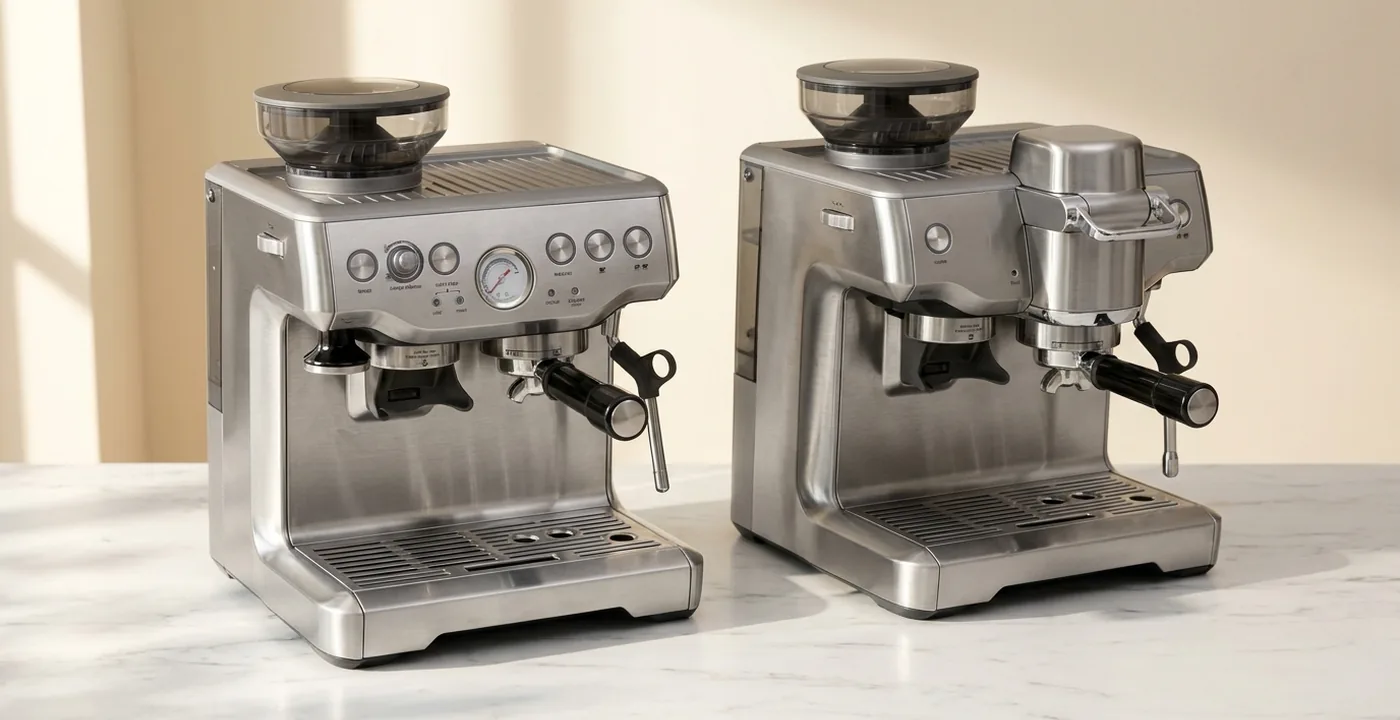
Table of Contents
Some of the links in this article are affiliate links, which help fund our independent review work at no extra cost to you. Every recommendation is based on hands-on testing through The Editor Lab methodology. No brand pays to appear, and no placement is guaranteed.
Tamp pressure is one of those variables that commercial espresso training makes physical. In my time at Sanremo UK, I spent years watching baristas - some experienced, some completely new to espresso - pull shots on identical setups and produce completely different results, with inconsistent tamp being the most common culprit. You develop a feel for the difference between 10kg and 20kg of pressure before you can articulate it. So when Sage launched the Sage Barista Express Impress with an integrated auto-tamp mechanism, my first question was whether the mechanism delivers enough pressure, and my second question was whose problem it actually solves.
Here is the comparison in plain terms. The Sage Barista Express and the Sage Barista Express Impress are built on identical hardware: the same ThermoCoil heating element, the same conical burr grinder, the same 54mm portafilter, the same steam wand. The only difference between them is the Impress Puck System, an integrated auto-dose and auto-tamp mechanism, and a price gap of approximately £170 at Sage UK RRP. Both machines have been evaluated through The Editor Lab, Balance Journal's structured methodology for coffee equipment reviews. The Impress Puck System assessment draws specifically on five and a half years calibrating traditional espresso machines at Sanremo UK, where I worked alongside engineers who design and build these systems, and where tamp consistency was a measured extraction variable, not a guideline.
“I spent five and a half years at Sanremo UK working with engineers on commercial machine calibration, including tamp consistency as a measured extraction variable. The Impress Puck System automates a step I spent years learning to do precisely, which puts me in a reasonable position to tell you whether that automation is worth paying for.”
Quick Verdict
Buy the Barista Express Impress if you want consistent espresso from day one and have no interest in developing manual tamping technique. The mechanism removes tamp pressure as a variable during the extraction process, which makes a genuine difference to shot consistency when you are still learning to dial in your grind settings.
Buy the Barista Express if you want to develop proper espresso technique, plan to own more than one machine over the next few years, or would rather put the £170 price gap toward a precision tamper and a better bean subscription. Manual tamping is the technique used on every professional espresso machine ever made, and learning it on the Express means you carry that skill forward regardless of which machine you buy next.
Neither machine wins outright. They serve genuinely different buyers at different stages of their espresso journey.
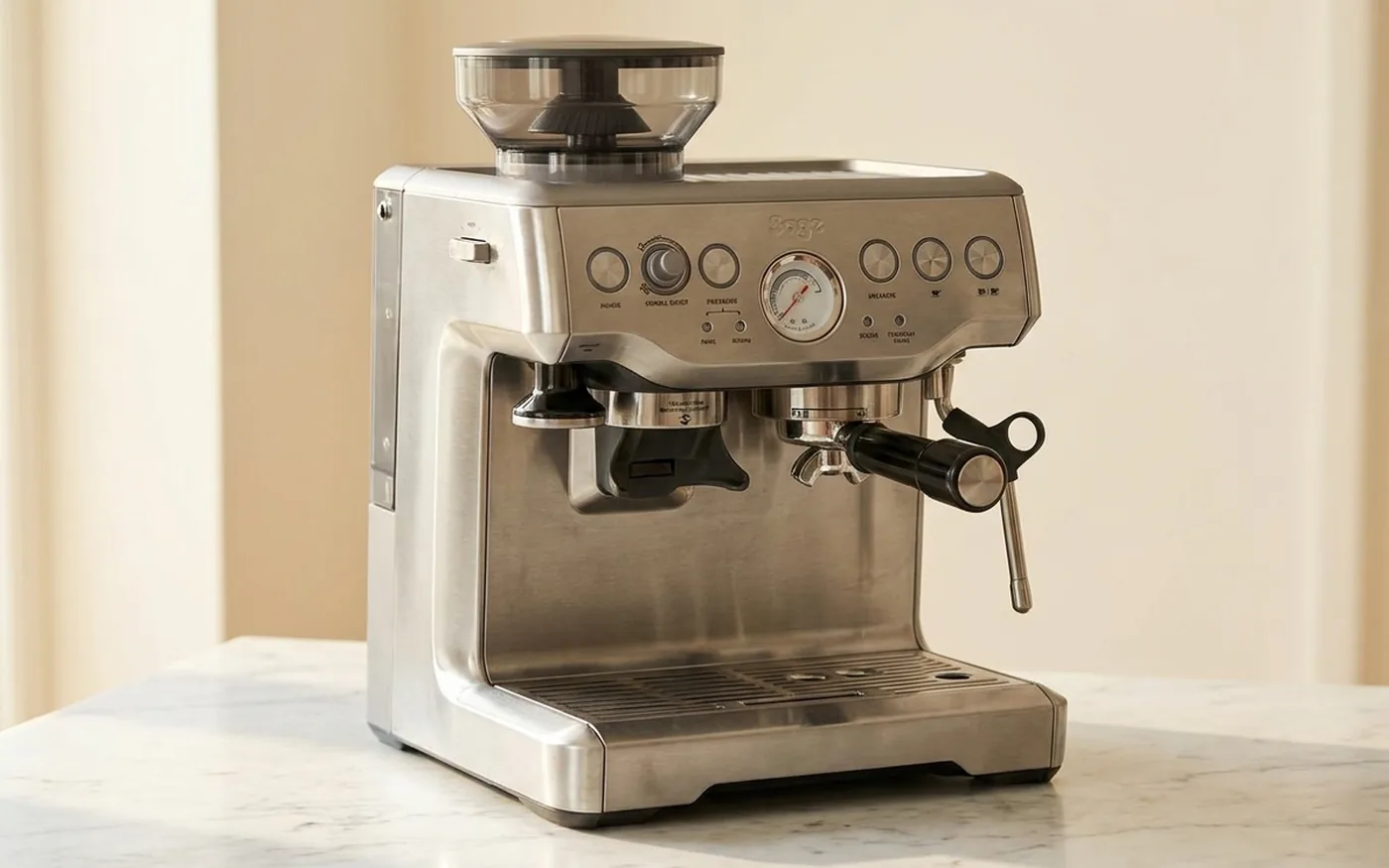
Sage Barista Express
£629The better starting point if you want to learn how espresso extraction actually works.
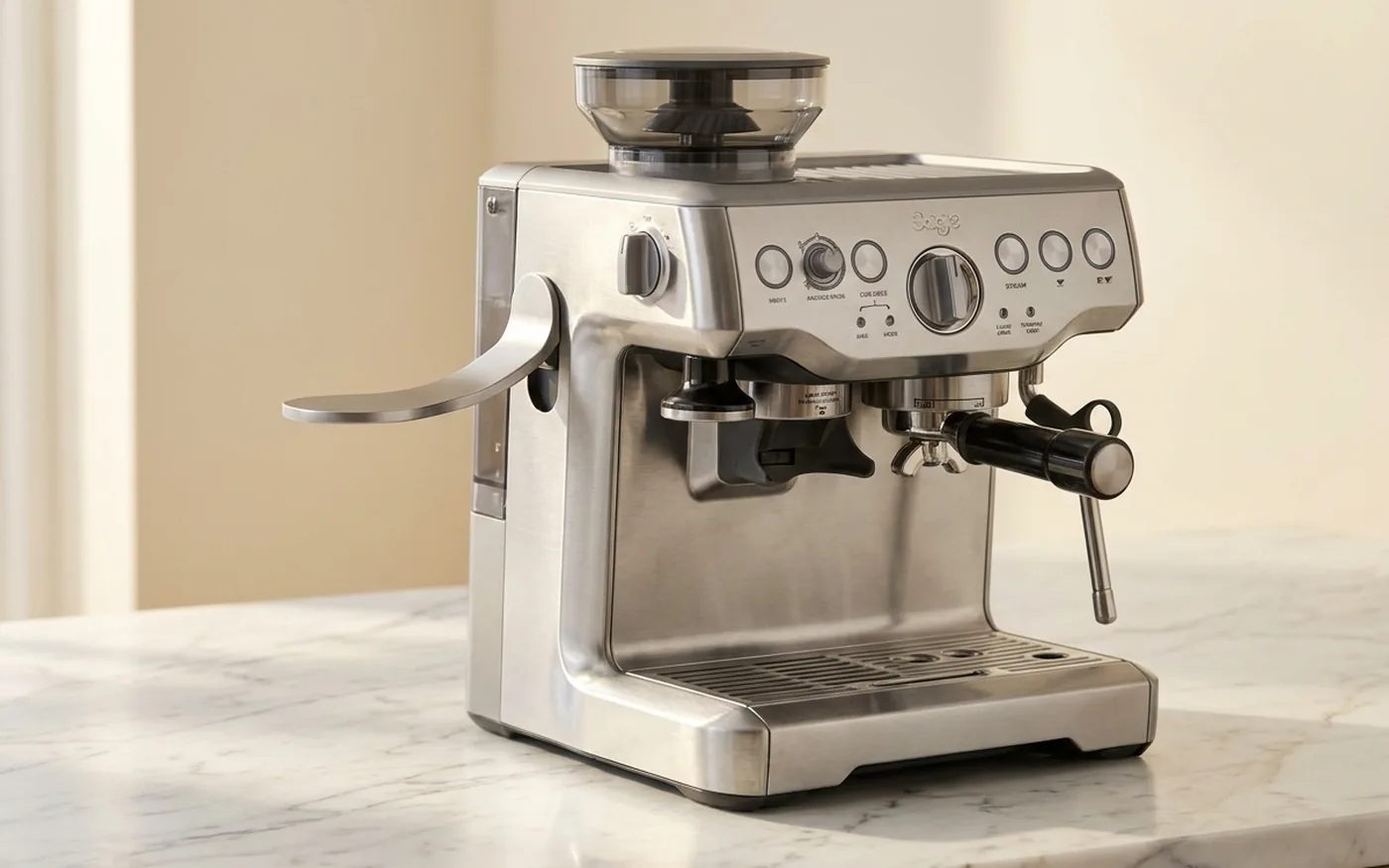
Sage Barista Express Impress
£799The cleaner daily option if consistency matters more than developing technique.
Key Differences at a Glance
| Feature | Barista Express | Barista Express Impress |
|---|---|---|
| UK RRP (Sage direct, May 2026) | £629 | £799 |
| Tamp method | Manual (tamper sold separately) | Impress Puck System (10kg auto-tamp) |
| Grinder | Integrated conical burr, 16 settings | Integrated conical burr, 25 settings |
| Heating system | ThermoCoil | ThermoCoil |
| Heat-up time | ~30 seconds | ~30 seconds |
| Portafilter | 54mm | 54mm |
| Steam wand | 360-degree swivel | 360-degree swivel |
| Display | Analogue dials + LED indicators | Analogue dials + LED indicators |
| Pressure | 9 bar | 9 bar |
Source: uk.sageappliances.com, verified May 2026.
Every row in that table is identical except the price and the tamp method. The ThermoCoil, the burr grinder, the steam wand, the portafilter size: Sage has not changed any of them between these two machines. You are paying the price difference for one mechanism. Whether that mechanism solves a problem you actually have is the entire question this comparison exists to answer.
What the Impress Puck System Actually Does
The Impress Puck System is Sage's integrated dose-and-tamp mechanism, built into the Barista Express Impress's grinder chute. After the grinder delivers your chosen dose of ground coffee into the portafilter basket, you close a lever that compacts the puck with 10kg of consistent pressure. The process takes approximately two seconds and removes manual tamping as a variable in the espresso extraction process.
In a standard espresso workflow on the Barista Express, you receive ground coffee from the grinder, distribute it in the basket by hand, and apply pressure to the puck using a separate tamper before locking the portafilter into the group head. Tamp pressure consistency matters because even puck density produces even water flow through the coffee bed. Uneven pressure creates channels: paths of least resistance that the water exploits, producing shots that extract unevenly, often sour on one side and over-extracted on the other.
The Impress mechanism replaces that step. You close the lever, the puck receives 10kg of consistent pressure via a spring-loaded mechanism, and you proceed to extraction. No separate tamper required. No deliberate technique required.
One figure is worth naming directly: 10kg is below the 15 to 20kg that many trained baristas apply as standard, and below the parameters referenced in espresso preparation guidelines from the Speciality Coffee Association. In commercial practice, the target is typically in the 15 to 20kg range. Whether the gap between 10kg and standard barista pressure matters for your espresso depends on your grind size, your dose, and your roast profile. For most buyers at the Barista Express price tier, 10kg delivers consistent and acceptable results. For buyers who want to dial in lighter roasts or adjust pressure as a deliberate extraction variable, the fixed 10kg becomes a constraint rather than a convenience.
Head-to-Head: Espresso Consistency
In beginner hands, the Impress produces more consistent shots. Tamp pressure variation is one of the most common sources of inconsistent extraction for people learning espresso, and removing it from the workflow gives you a shorter feedback loop. You can focus on grind size and dose rather than compensating for pressure inconsistency on every shot.
In experienced hands, the comparison is less straightforward. Skilled home baristas who have dialled in their grind for a specific bean will occasionally want to vary tamp pressure for different roast profiles or adjust it alongside dose changes. A light roast can respond differently to 10kg versus 18kg of tamp pressure: the extraction dynamics shift, and the cup quality shifts with them. The Barista Express gives you the flexibility to explore that variable. The Impress fixes it.
Both machines use the same conical burr mechanism - sharing identical burr geometry - but differ in grind settings range: the Barista Express offers 16 settings, the Impress 25. Both share the same ThermoCoil heating element, which stabilises brew temperature in approximately 30 seconds, and the same 54mm portafilter. If you pull shots on both machines with equivalent beans, identical grind settings, and the same dose, the only meaningful variable between them is tamp pressure. The Impress standardises that variable at 10kg. Third-party machine testing from Which? confirms that tamp consistency is among the most significant variables separating beginner and intermediate home espresso results, which aligns with what you observe in commercial settings.
For buyers still learning to dial in: the Impress is the faster route to drinkable espresso. For buyers who already understand the extraction process and want more control: the Express gives you that, at a lower price.
Head-to-Head: Usability and Cleaning
The Impress Puck System simplifies the daily workflow. On the Barista Express, your sequence is: grind, distribute, tamp, extract. On the Impress, the lever replaces the last two steps. For most buyers, particularly those who want espresso to be a quick morning routine rather than a deliberate practice, the Impress workflow is genuinely cleaner.
The friction point comes in cleaning. The auto-tamp lever and the integrated dosing mechanism in the Impress collect ground coffee residue inside the mechanism itself, not just in the portafilter basket. If you clean the portafilter basket after each use but skip the mechanism, coffee oils build up inside the chute over time, which affects the accuracy of the tamp and eventually the consistency of your shots. Sage's maintenance guidance for the Impress recommends cleaning the mechanism on a regular schedule, which involves more steps than the simpler portafilter workflow on the standard Barista Express. This is the real-world maintenance cost that you will not find featured prominently in the product marketing, and it is worth knowing before you choose.
There is a longer-term consideration that many Impress buyers do not factor in at purchase. The Barista Express workflow - grind, distribute, tamp, extract - is the workflow used on every professional espresso machine in existence, from a Sage Barista Pro to a La Marzocco. If you learn to tamp consistently on the Barista Express, that technique is transferable to any machine you use next. If you build your espresso habit on the Impress, the auto-tamp becomes invisible infrastructure. The day you use a machine without it - whether that is the Sage Barista Express vs Barista Pro step-up or anything beyond - you are learning manual tamping from scratch, with none of the benefit of having done it before.
Is the Impress Worth the Extra Cost?
The honest answer depends entirely on what you are trying to get from your espresso machine.
If your goal is consistent, enjoyable espresso from the first week without caring about the process behind it, the Impress justifies the extra cost. The mechanism works as described. Shots are more consistent for buyers without tamping experience. The simplification of the workflow is real. If you plan to use this machine long-term and have no intention of upgrading, the £170 premium buys genuine convenience that compounds every morning.
If your goal involves understanding espresso at any level, the Express is the better investment. The £170 gap is enough to buy a quality precision tamper and three months of better beans. Both of those things improve your espresso more meaningfully than the Impress mechanism does, and they help you build technique that carries forward. Buying fresher, higher-quality beans matters at this machine tier: the Impress standardises one variable, but the grind quality, the freshness, and the roast profile of your best espresso beans determine the flavour ceiling, not the tamp pressure.
Buy the Impress if you want espresso without the learning curve and plan to stay at this machine tier. Buy the Express if you want to learn how espresso extraction actually works, or if you plan to own a different or more capable machine within the next few years.
Who Should Buy the Barista Express
The Barista Express is the right choice if:
- You want to develop manual espresso technique and understand how tamp pressure, dose, and grind interact
- Your budget is closer to the Express price point and the £170 saving matters
- You plan to upgrade to a more capable machine within three to five years, including the step up covered in the Sage Barista Express vs Barista Pro comparison
- You already own a precision tamper, or you are happy to invest in one alongside the machine
- You value the flexibility to adjust tamp pressure intentionally for different roast profiles
If you are weighing the Barista Express against a simpler, lower-budget option, the Sage Bambino vs Bambino Plus comparison covers that decision. If you want to remove grinding, tamping, and most of the espresso variables from the process entirely, a super-automatic machine like the De'Longhi Magnifica handles the full workflow automatically, though you trade manual control for convenience.
Who Should Buy the Barista Express Impress
The Barista Express Impress is the right choice if:
- Consistent espresso from day one matters more to you than developing the technique behind it
- You find the standard manual workflow fiddly and want a simpler daily routine that requires less deliberate attention
- You do not plan to upgrade to a machine without the Impress system in the near term, and you are comfortable with the fixed 10kg tamp long-term
- You are buying as a gift for someone who wants good home espresso without a learning curve attached
If you are deciding between the Impress and the next tier up in the Sage range, the Sage Barista Express vs Barista Pro comparison will help you understand whether the Pro's additional controls and display justify another step up in price.
Technical Specifications
| Specification | Barista Express | Barista Express Impress |
|---|---|---|
| UK RRP | £629 | £799 |
| Boiler type | ThermoCoil | ThermoCoil |
| Portafilter | 54mm | 54mm |
| Grinder type | Integrated conical burr | Integrated conical burr |
| Grind settings | 16 | 25 |
| Tamp mechanism | Manual (separate tamper required) | Impress Puck System (10kg) |
| Steam wand | 360-degree swivel | 360-degree swivel |
| Operating pressure | 9 bar | 9 bar |
| Heat-up time | ~30 seconds | ~30 seconds |
| Wattage | 1,600W | 1,600W |
| Display | Analogue dials + LED | Analogue dials + LED |
| Dimensions (approx) | 390 x 310 x 300mm | 390 x 310 x 300mm |
| Weight (approx) | ~8.6kg | ~8.8kg |
Source: uk.sageappliances.com, verified May 2026. Dimensions and weight are approximate.
Verdict
For buyers new to espresso who want consistent results without developing technique: the Barista Express Impress is the better choice. The Impress Puck System works as claimed, removing tamp inconsistency from the equation and shortening the path to drinkable espresso.
For buyers who want to develop real espresso technique, or who plan to own more than one machine over the course of their espresso habit: the Barista Express is the better starting point. The £170 difference is significant, manual tamping is a skill worth building, and the Express gives you direct access to the extraction variables that every professional machine in the world shares.
For the full independent review of the Express, read the Sage Barista Express review on Balance Journal. The complete hands-on assessment of the Impress will be available in the Sage Barista Express Impress review once it publishes. If you are deciding whether either machine is the right tier for you, the Sage Barista Pro review covers what a step up in the range actually delivers.
Frequently Asked Questions
What is the Sage Barista Express Impress?
The Sage Barista Express Impress is a semi-automatic espresso machine with an integrated Impress Puck System that automates dosing and tamping. It shares identical hardware with the standard Barista Express, including the same ThermoCoil boiler, conical burr grinder, and 54mm portafilter, but adds a lever-activated auto-tamp mechanism that applies consistent 10kg pressure to the coffee puck without requiring a separate tamper or manual technique.
Does the Barista Express Impress tamp automatically?
Yes. After the grinder delivers ground coffee into the portafilter basket, you close the Impress lever and the integrated mechanism applies consistent 10kg pressure to the puck. The process replaces manual tamping. Note that 10kg is below the 15 to 20kg that many trained baristas apply as standard, which is worth considering if you plan to dial in lighter roasts or adjust tamp pressure as a deliberate extraction variable.
Can I use a separate tamper with the Barista Express Impress?
No. The Impress Puck System is integrated into the grinder chute and is the designed method for puck preparation. You cannot bypass the mechanism and use a standalone tamper within the Impress workflow. If the ability to manually tamp and vary pressure matters to you, the standard Barista Express is the correct choice.
Is the Barista Express Impress good for beginners?
Yes, for buyers who want consistent espresso without developing tamping technique. The Impress removes tamp pressure variation, which is one of the most common causes of inconsistent shots for people new to home espresso. If you want to learn how espresso extraction works and understand the variables yourself, the standard Barista Express is the better learning tool because it keeps those variables in your hands.
How do I clean the Impress Puck System?
Sage recommends regular cleaning of the Impress mechanism in addition to standard portafilter and group head maintenance. The auto-tamp lever and the integrated dosing chute collect coffee oil residue that affects tamp accuracy over time if left unaddressed. The cleaning process involves more steps than the simpler portafilter-only cleaning on the standard Barista Express, so factor that into your decision if a minimal daily maintenance routine matters to you.
How many grind settings does the Barista Express Impress have compared to the standard model?
The Barista Express Impress has 25 grind settings, compared to 16 on the standard Barista Express. The additional settings give you finer control over extraction, which matters when dialling in lighter roasts or adjusting for seasonal bean variation. Both machines use the same integrated conical burr grinder design, but the Impress has a wider adjustment range.
Do the Barista Express and Barista Express Impress use the same boiler?
Yes. Both machines use the same ThermoCoil heating system, which reaches brewing temperature in around 30 seconds. Neither model uses a traditional boiler. The identical heating architecture means espresso extraction temperature is consistent between the two, so the boiler is not a factor in deciding between them. The difference is purely in puck preparation, not heat management.
Is the Barista Express Impress worth the extra cost over the standard Barista Express?
It depends on where you are in your espresso journey. At £170 more, the Impress pays for itself if inconsistent tamping or dosing is your main source of bad shots. If you have already developed reliable manual technique, you are paying for automation you will not use. The standard Barista Express is the better value for experienced home baristas.
A wellness entrepreneur and biohacker, James explores the intersection of hospitality and health - from clean fuel and recovery tools to mindful routines that build balance into daily life.