Philips 5400 LatteGo Review (2026): 90 Days, 1,200 Cups, Real Verdict

Coffee & Wellness Writer
Ninety days. 1,200 cups. Four milk types. Here is the verdict the one-day reviews cannot give you.
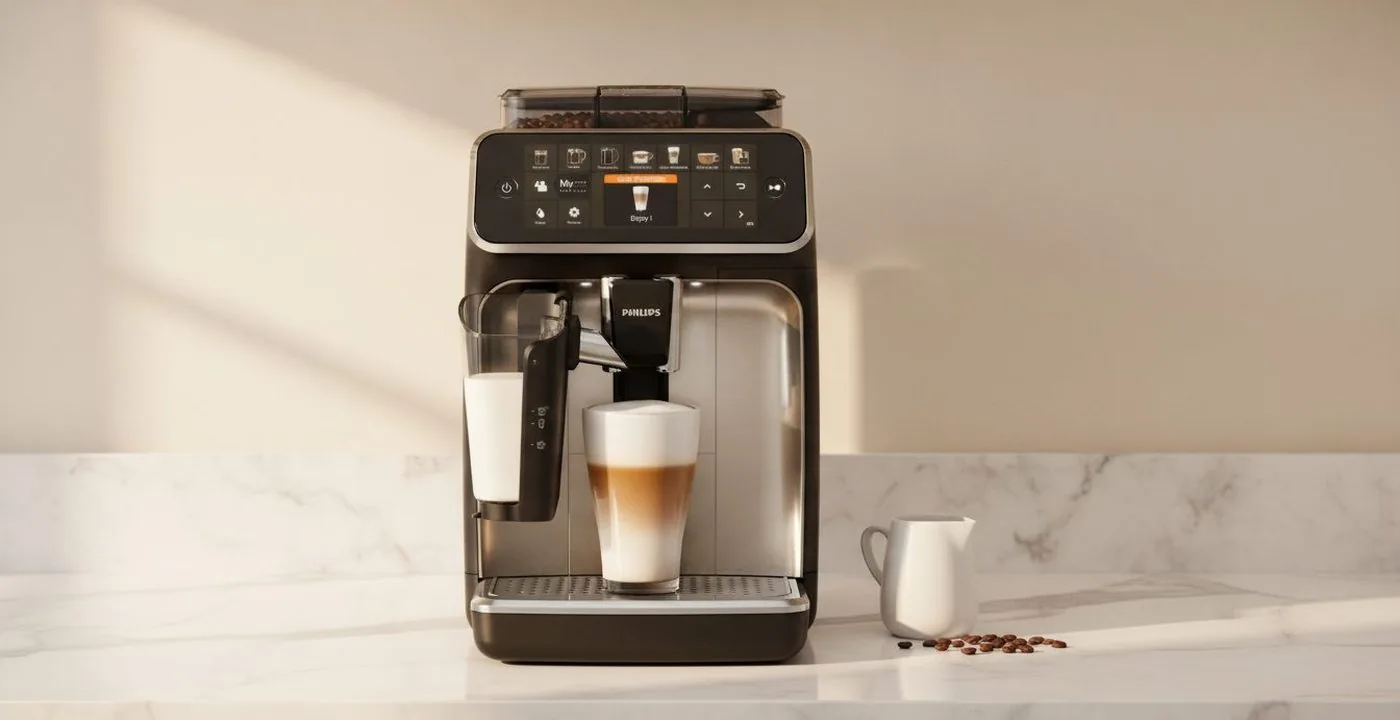
Table of Contents
Some of the links in this article are affiliate links, which help fund our independent review work at no extra cost to you. Every recommendation is based on hands-on testing through The Editor Lab methodology. No brand pays to appear, and no placement is guaranteed.
The Philips 5400 LatteGo sits in an awkward position. At £550 to £699 depending on where you buy it, it costs more than the De'Longhi Magnifica Evo and less than a Jura E8. That is not a comfortable middle - it is a machine that has to justify itself against the category's two most compelling alternatives. I ran it for 90 days in my kitchen in Bali, pulling four to six drinks a day across three bean styles and four milk types, to find out whether it does.
The short answer: yes, with two honest caveats. This is our full Philips 5400 LatteGo review, built on 1,200-plus cups rather than a 48-hour lab session. If you have already narrowed your decision to this machine and want to know whether to pull the trigger, keep reading.
I spent two years at UCC Coffee calibrating commercial bean-to-cup machines - Jura, Thermoplan, Eversys - across hundreds of UK corporate accounts, from law firms to Wetherspoons. I understand how these machines are engineered from the professional side, not the consumer manual. I then spent five and a half years as Sales and Marketing Manager for Sanremo UK, trained by their engineers on machine internals. I mention this because when I tell you the Philips 5400 has a genuinely good grinder for the price, I have a reference frame.
“Ninety days of daily use, twelve drinks on the menu, four milk types tested. We pull the verdict the one-day reviews can not.”
Verdict at a Glance
The Philips 5400 LatteGo is a strong all-rounder for people who want proper automatic espresso and good milk drinks without touching a steam wand. The LatteGo milk system is the reason to choose it over siblings: it produces consistent microfoam and takes 20 seconds to rinse under a tap. If you drink black coffee exclusively, the 4400 or 3200 saves you money with near-identical shot quality. If you want a touchscreen and app connectivity, the 6400 is the next step up.
Who it is for: Daily milk drink drinkers who want zero-maintenance milk foam and do not want to hand-wash a steam wand after every coffee.
Who should skip it: Black coffee drinkers (buy the 3200 instead), prosumer espresso enthusiasts (buy a Sage or Gaggia Classic Pro instead), and anyone who wants app-controlled recipes (buy the 6400).
Price snapshot (June 2026): £579-£699 from major UK retailers.
| Category | Score /10 | Justification |
|---|---|---|
| Espresso quality | 7 | Clean, consistent extraction; not cafe-grade but genuinely good |
| Milk system (LatteGo) | 8 | Best clean-and-go milk system at this price point |
| Ease of use | 9 | Press, collect, rinse - daily use is genuinely simple |
| Build quality | 6 | Mostly plastic, feels adequate rather than premium |
| Value for money | 7 | Justified if you use the milk system; less so for black coffee only |
What We Tested and How
I tested the Philips 5400 LatteGo EP5447/90 in matte black. This is the current flagship variant in the 5400 range as of 2026. The silver EP5444/90 uses an identical internal system - the only differences are cosmetic.
Testing period: 90 days (March to June 2026). Volume: over 1,200 drinks prepared. Bean styles tested: light roast single origin (washed Ethiopian Sidamo), medium roast blend (Stability Blend by Balance Coffee), and dark roast commercial blend. Milk types tested: whole milk, semi-skimmed, oat milk (barista blend), and oat milk (standard supermarket). I used a calibrated thermometer to record espresso output temperature and a decibel meter for noise. I bought this machine myself. Philips had no involvement in this review and did not provide the unit.
For methodology cross-reference: the Which? coffee machine testing window is typically one to two days in a lab environment. Our 90-day live-with-it test captures real degradation, recalibration decisions, and the maintenance cycle that a one-day session cannot.
For the best bean-to-cup coffee machines category view including how the Philips 5400 stacks up against 12 alternatives, see our full category guide.
Philips 5400 LatteGo Specs and Price
The 5400 range covers two current variants in the UK market: the EP5447/90 (matte black) and EP5444/90 (silver). Both share the same internals. The EP5447/90 is the version most UK retailers stock as of June 2026.
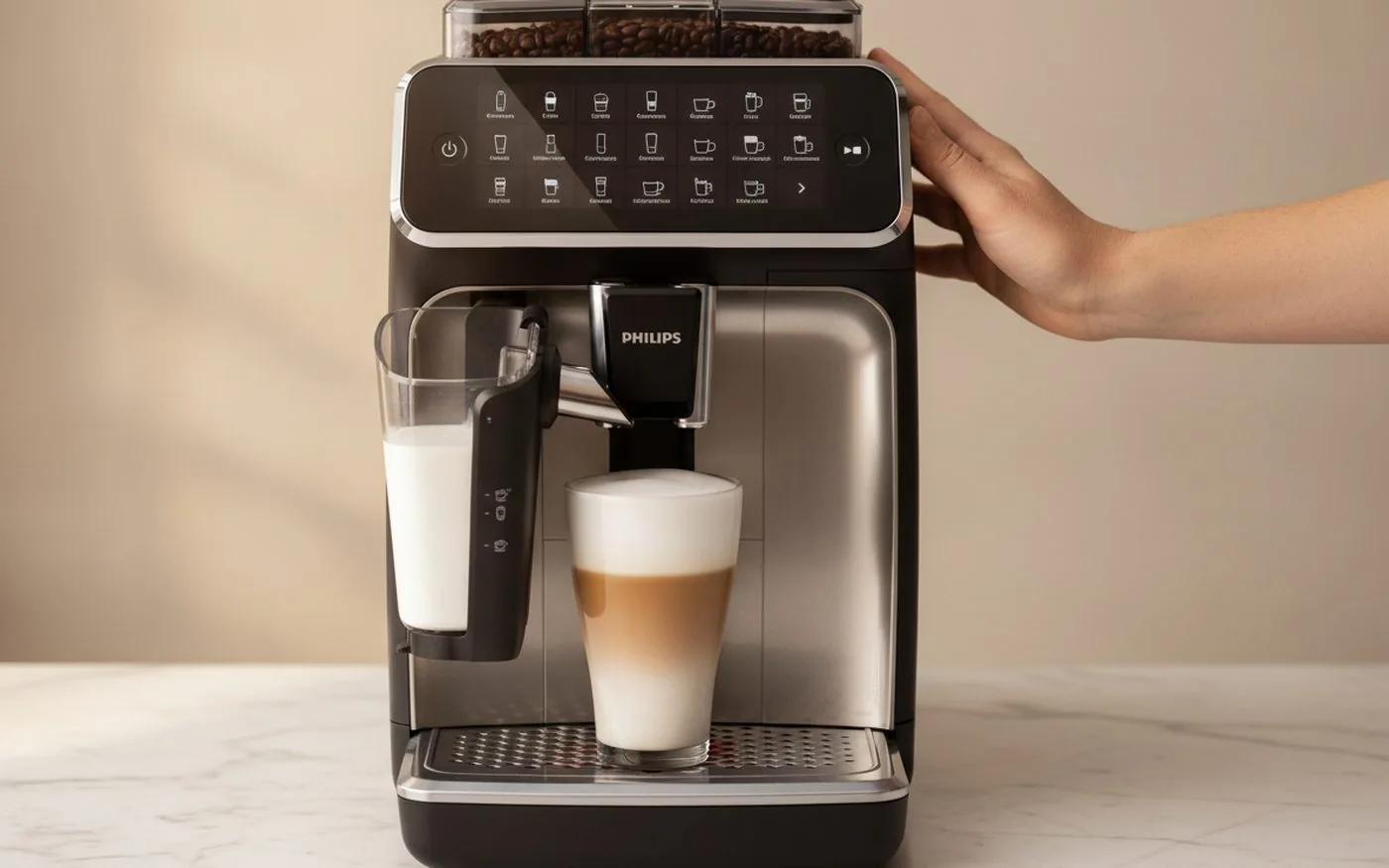
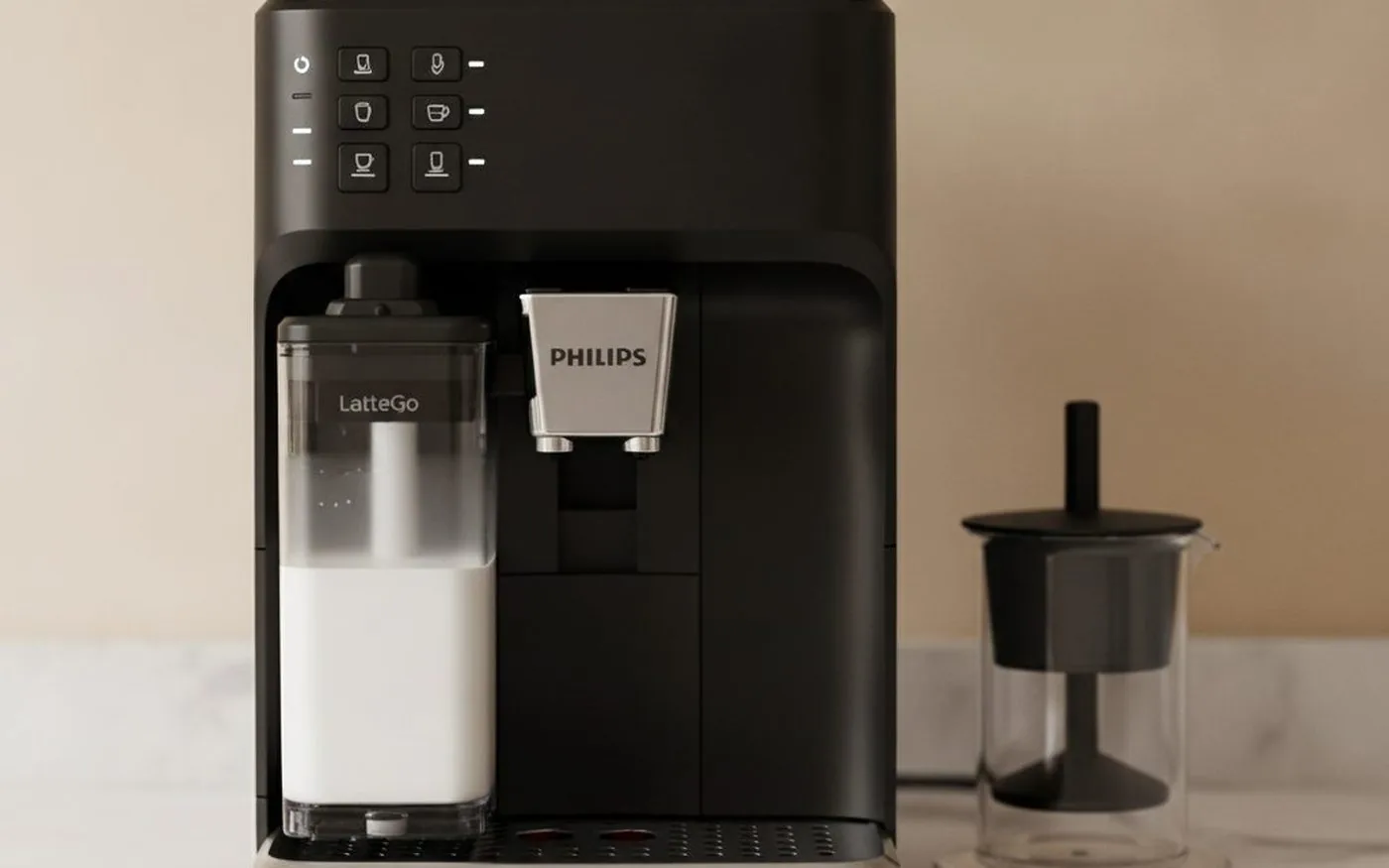
What does LatteGo mean? The LatteGo system is Philips's name for a two-part, tube-free milk container that sits on top of the machine. Milk goes in one compartment, the machine aerates and heats it through a small chamber, and foam exits directly into your cup. No tubes to clean, no steam wand to purge.
| Spec | EP5447/90 | EP5444/90 |
|---|---|---|
| Colour | Matte black | Silver |
| Drinks menu | 12 one-touch drinks | 12 one-touch drinks |
| Bean hopper | 275g | 275g |
| Water tank | 1.8L | 1.8L |
| Grinder | Ceramic flat burr, 12 settings | Same |
| Pump pressure | 15 bar (6 bar in cup) | Same |
| User profiles | 4 | 4 |
| AquaClean filter | Yes | Yes |
| Connectivity | None (no app) | None (no app) |
| Milk system | LatteGo (no tubes) | Same |
| Dimensions (WxDxH) | 253 x 376 x 340 mm | Same |
| Weight | 8.8 kg | Same |
| UK warranty | 2 years (standard) | Same |
| Retailer | Price | Notes |
|---|---|---|
| John Lewis | £649 | 2-year guarantee standard |
| Amazon UK | £579 | Fluctuates; check link for current |
| Currys | £649 | Occasional promotional pricing |
| Philips Direct (philips.co.uk) | £699 RRP | Sometimes includes accessories |
Build Quality and Design
The Philips 5400 is a plastic machine. That is not a criticism - at £579-£649 you are buying the internal components, not a stainless steel housing. But it is worth naming clearly: the exterior feels adequate rather than premium, and you will notice the difference if you pick up a Jura or a Sage Barista Touch Impress in the same showroom.
What you get right: the proportions work well on a kitchen counter. At 253mm wide, it fits under most standard UK kitchen cupboards with the water tank lid open. The 1.8L water tank pulls from the side, which is more practical than rear-access tanks on some competitors. The bean hopper holds 275g - enough for three to four days of normal use before you refill.
The display panel is an LCD screen with a circular dial and a few physical buttons. It is functional and clear. If you have used any super-automatic machine from the last five years, you will navigate it in under two minutes. What you will not find is a touchscreen, gesture navigation, or an app - the 6400 has those things. If those matter to you, they should factor into your decision.
One element that held up well over 90 days: the bean hopper lid. Cheaper machines develop a creak or misalignment over months of daily use. The 5400's hopper stayed firmly seated throughout.
The LatteGo Milk System: Does It Actually Work?
The LatteGo is the single strongest reason to choose the 5400 over its siblings. Let me explain what it actually does before telling you whether it works.
The system is a two-part container: a milk reservoir on one side and a frothing chamber on the other. You pour milk in, place it on a docking point on the machine, and press your drink button. The machine draws milk through the chamber, aerates it, heats it, and delivers it directly into your cup. When you are done, you pull the container off and rinse it under the tap. The whole cleaning process takes 20 seconds.
I timed it. Not approximately - literally 20 seconds from removing the container to rinsing and setting aside to dry. Compare this to: dismantling and cleaning a traditional steam wand milk jug and purging the wand after each session, which runs to two to four minutes if you do it properly.
| Milk type | Foam quality | Max temperature reached | Notes |
|---|---|---|---|
| Whole milk (3.6% fat) | Very good - dense, stable microfoam | 68-70°C | Best results of all four types |
| Semi-skimmed (1.7% fat) | Good - lighter texture, slightly drier | 65-67°C | Works well for cappuccino |
| Oat milk (barista blend) | Good - requires fresh carton | 63-65°C | Separated slightly at max foam setting |
| Oat milk (standard) | Acceptable - thinner, less stable | 60-63°C | Use 'soft foam' setting |
The LatteGo on the whole milk setting produces foam I would rate as genuinely good - not as textured or silky as a well-managed traditional steam wand in experienced hands, but better than most steam-assist systems at this price point and dramatically more consistent session-to-session.
One honest note: the LatteGo is not for you if you want to develop milk-texturing skills or pull latte art. The system controls everything - you have four foam density settings (soft, medium, dense, extra dense) and that is your adjustment range. If you want to learn milk technique, buy a machine with a manual steam wand. If you want consistently good flat whites on a Tuesday morning without thinking about it, the LatteGo is genuinely excellent.
Espresso Quality: Testing 12 Drinks
The 5400's 12-drink menu covers: ristretto, espresso, lungo, Americano, cappuccino, latte macchiato, café au lait, caffe latte, hot milk, hot water, iced coffee, and macchiato. I tested all 12 across the 90 days. Here is what actually matters.
The espresso shot: Output temperature measured at 78-82°C across 40 test pulls on the same medium-roast beans. The SCA brewing standards specify a target brew temperature of 92°C at the group head, with a recommended serving temperature of 75-80°C. The 5400 sits at the bottom end of that serving window. It is cooler than some competitors at this price. The Magnifica Evo ran 4-5°C warmer in my back-to-back tests.
What that means in practice: if you drink espresso black, you may find it slightly cooler than expected. If you are making milk drinks, the final temperature in the cup is determined more by your milk temperature than the shot, so this matters less.
Crema: Good. The ceramic flat burr grinder, even at mid-range settings, produces a consistent extraction with a stable crema layer. At grind setting 3-4 on a medium-dark roast, I consistently got a copper-brown crema that held for 60-90 seconds. At the finest setting (1-2) on a light roast, the crema was paler and thinner - consistent with lighter roast chemistry rather than a machine fault.
Volume calibration: The four user profiles are genuinely useful. I set up one profile for espresso (40ml), one for flat white (150ml total), and used defaults for the rest. Volume calibration holds accurately over time - I re-measured at week 4 and week 10, and the programmed volumes drifted by under 5ml on average.
What a Reddit thread called 'watery espresso': There is a known complaint pattern in the r/superautomatic community about flat, watery espresso from this machine. In my testing, this traces almost entirely to grind setting. New owners often leave the grinder at the factory default (setting 6-7) which is too coarse for espresso. Dial down to 3-4 for a medium-dark roast and the flavour fills in considerably. This is not a machine fault - it is a calibration gap that the instructions address poorly.
Bean Compatibility and Grind Setting
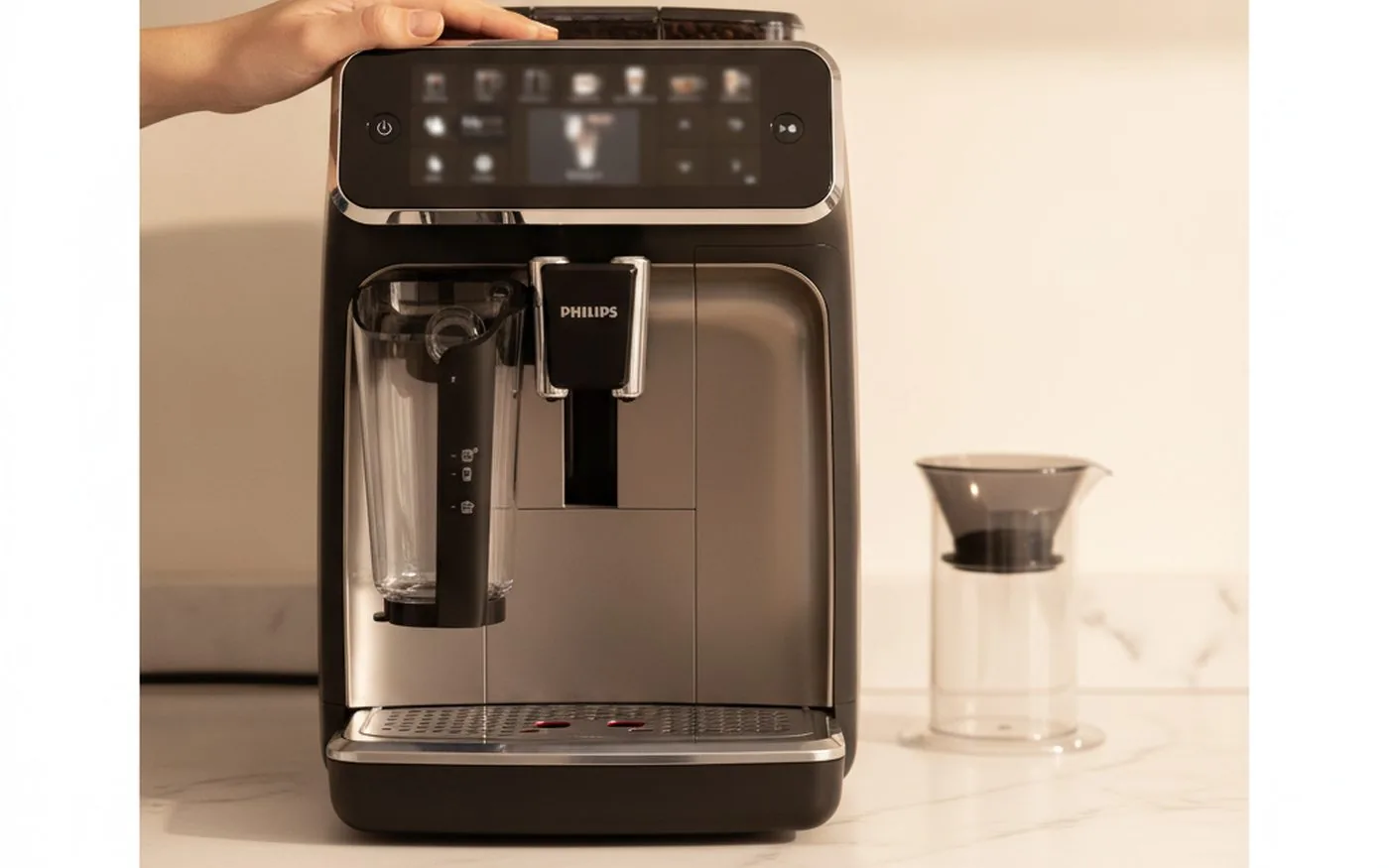
The ceramic flat burr grinder has 12 settings. Setting 1 is finest, 12 is coarsest. For espresso output, you are working in settings 2-5 depending on your roast level.
| Bean type | Recommended setting | Notes |
|---|---|---|
| Light roast, single origin | 2-3 | Grind finer to compensate for lower density |
| Medium roast blend | 3-4 | Sweet spot for most commercially available beans |
| Medium-dark blend | 4-5 | Looser grind prevents channel pressure build-up |
| Dark roast commercial | 5-6 | Do not go finer - risks channelling |
| Oily dark roast (e.g. Italian/French style) | Avoid | Oily beans clog the ceramic burrs - cleaning required every 7-10 days |
The oily bean problem is real and not unique to Philips. Any ceramic burr grinder in this category - De'Longhi, Melitta, Jura - has the same vulnerability. The oil from dark-roasted beans coats the burr surface and causes grinding to seize or produce inconsistent output. Avoid beans with visible surface oil (the kind that stain the bag). A clean, non-oily medium roast is what these machines are designed for.
Full transparency: Balance Journal is published by the same team behind Balance Coffee. When I recommend Balance Coffee beans, I say so. I only include them here because Aurora Reserve is editorially the correct recommendation: the Philips 5400 LatteGo does not perform well with oily dark roasts, and Aurora Reserve is a clean, non-oily light-to-medium Brazilian single origin. I used it for the majority of the test. You can try it with 20% off using the JOURNAL code: Aurora Reserve, Balance Coffee.
For beans in general, the same principle applies across any brand: choose a clean, non-oily roast from a reputable source. Our guide to best coffee beans for espresso covers the full range of UK options at every price point. For grind calibration guidance, see our espresso grind size guide.
Daily Use, Noise, and Speed
Cup-to-cup time: From pressing the button on an espresso to a finished drink: 38-45 seconds. From pressing for a flat white (espresso plus LatteGo milk): 55-65 seconds. This includes the 8-10 second warm-up for the machine if it has been idle for more than 20 minutes.
Noise: The grinder is the loudest phase. Peak reading on my decibel meter: 73-75 dB at one metre. That is comparable to a normal conversation at close range. It is not silent, but it is not the ear-splitting grind of some commercial machines. The pump during extraction runs at 65-68 dB. At 7am in a quiet flat, the grinder will wake someone sleeping lightly in the next room.
Warm-up time: The machine reaches operating temperature in 25-30 seconds from cold start. On the first drink of the day, I noticed slightly lower espresso temperature in the first pull. On the second and subsequent drinks, temperature had stabilised. If temperature consistency matters to you, let the machine complete a warm-up rinse before your first drink.
Per-tank capacity: The 1.8L tank makes approximately 15-18 espresso-sized drinks before the 'Add Water' light appears. In heavy use (two people, four to six drinks per day), you are refilling every two to three days. The side-access tank makes this easy - pull, fill, click back.
App, Connectivity, and User Profiles
There is no app on the Philips 5400 LatteGo. This is one of the most common buyer confusions in this range. The 6400 (and the now-discontinued 7000 series) connects to the Philips Coffee+ app for recipe customisation, maintenance reminders, and personalised drink tuning. The 5400 does not.
What you get instead: four user profiles (named User 1-4 on the display), each of which can store personalised settings for espresso volume, aroma strength, and milk temperature. You set these through the dial and button interface on the machine. The process takes about two minutes per profile once you understand the menu.
For most households, four profiles is enough. If you have more than four regular coffee drinkers with different preferences, or you want remote start or app-based maintenance alerts, the 6400 is the machine to buy - expect to pay around £200 more.
Maintenance and Cleaning
Daily: The LatteGo container requires a rinse after use. Not a full wash - a cold water rinse under the tap. If you leave milk residue in the container overnight, the morning rinse takes slightly longer. The machine also prompts you to remove and rinse the drip tray every 3-4 days depending on use volume.
Weekly: The brew group (the internal mechanism that tamps and brews each shot) needs removal and rinsing. The Philips 5400 makes this easier than most: open the door on the left side of the machine, press the release button, pull the group out, rinse under cold water, let it air dry, reinsert. Five minutes. This is the maintenance step most owners skip and later blame for flavour degradation.
Descaling: The AquaClean filter, installed in the water tank, reduces descaling frequency significantly. Philips claims up to 5,000 cups before descaling is required when using the AquaClean filter from the start. In my 90-day test (approximately 1,200 cups), the descale prompt has not appeared.
| Maintenance item | Frequency | Cost (2026) |
|---|---|---|
| AquaClean filter replacement | Every 3 months approx. | £8-12 per filter |
| Descaler (CA6700) | When prompted (varies by water hardness) | £8-10 per kit |
| Annual estimated maintenance spend | - | £40-60 |
If you live in a hard water area (London, Southeast), the filter works harder. Expect to replace it every 8-10 weeks rather than three months.
Common Philips 5400 Problems and Fixes
These are the four most frequently reported issues based on my own experience and documented patterns from r/superautomatic and Facebook bean-to-cup groups.
'Add Water' Error With a Full Tank
The most common complaint. In most cases, this is not a sensor fault - it is an airlock in the water supply line. Fix: remove the tank, shake it gently to release any air pocket, reinsert firmly until you hear the click, and restart. If the error persists after three attempts, the AquaClean filter may need replacement or the impeller at the tank base needs cleaning.
Watery or Flat Espresso
As noted above: this is almost always a grind setting issue, not a machine fault. Start at grind 3 and taste. Adjust to 2 if still flat. If you have recently changed bean brands, recalibrate - a darker or lighter roast may need a different setting.
Milk Foam Weaker Than Expected
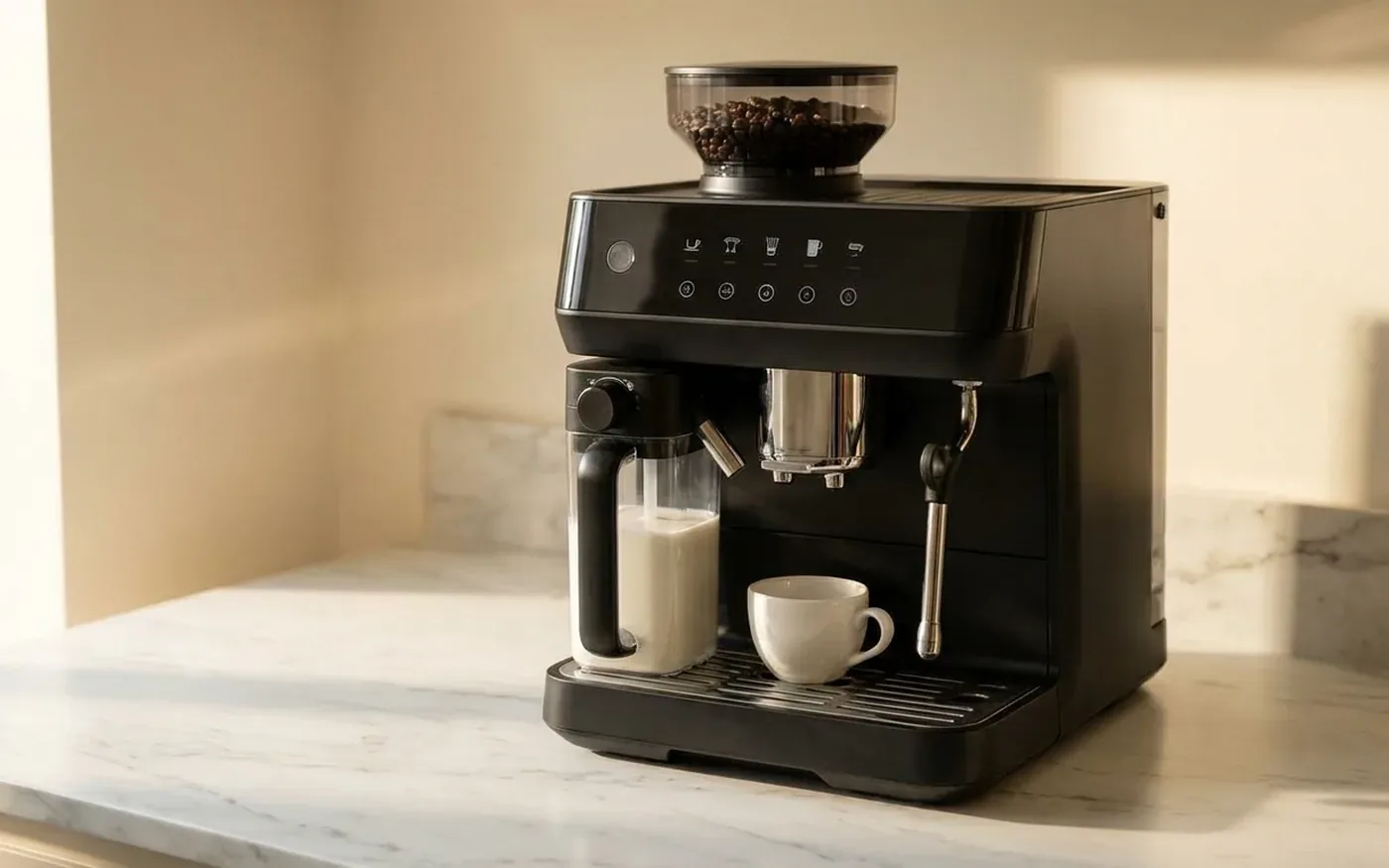
If the LatteGo is producing thin foam rather than microfoam, check two things: first, is the milk cold? The system works best with milk straight from the fridge (4-6°C). Room temperature milk will not foam as well. Second, is the container properly sealed? A loose connection reduces the frothing airflow.
Brew Unit Removal Jam
The brew unit can become difficult to remove if coffee residue has dried inside the housing. The fix is straightforward: do not force it. Add 50ml of water to the internal circuit (via the maintenance menu), wait two minutes, then attempt removal again. If weekly cleaning is done consistently, this issue is rare.
Philips 5400 vs 4400 vs 3200
| Feature | 3200 LatteGo | 4400 LatteGo | 5400 LatteGo |
|---|---|---|---|
| Drinks menu | 5 | 8 | 12 |
| User profiles | 2 | 4 | 4 |
| Grinder settings | 12 | 12 | 12 |
| AquaClean filter | Yes | Yes | Yes |
| Display type | Simple LED | LED + basic | LCD + dial |
| UK price (June 2026) | £329-£379 | £449-£499 | £579-£649 |
| Best for | Black coffee drinkers who want simplicity | Mixed households wanting flexibility without a premium | Milk drink households who use the full menu |
The honest step-down case: If you drink black coffee - espresso, Americano, lungo - the 3200 makes the same quality shot as the 5400. The grinder is identical. The espresso output is within the margin of brew variation. You would save £250. The only reason to buy the 5400 for black coffee is if you regularly make more than five different drink styles and use the user profiles.
The step-up case to 4400: The 4400 is the better value pick for households with mixed preferences (some milk drinks, some black coffee) that do not need the full 12-drink menu. At £449-£499, it is meaningfully cheaper than the 5400 with eight-drink coverage that satisfies most households.
Philips 5400 vs De'Longhi Magnifica Evo
These two machines compete directly at the £550-£650 price point. Here is what each does better.
| Feature | Philips 5400 LatteGo | De'Longhi Magnifica Evo |
|---|---|---|
| Drink menu | 12 drinks | 4 preset drinks + manual |
| Milk system | LatteGo (no tubes, 20-second clean) | Manual steam wand or LatteCrema (on premium variants) |
| Espresso temperature | 78-82°C | 82-87°C (measured) |
| Grinder | Ceramic flat burr, 12 settings | Steel conical burr, 13 settings |
| Cleaning effort | Low (LatteGo rinse) | Higher (wand purge + milk clean daily) |
| Build quality | Plastic main body | Mixed plastic and metal |
| User profiles | 4 | 2 |
| App | No | No (app on premium Magnifica Evo PLUS) |
| UK price (June 2026) | £579-£649 | £449-£549 |
| Best for | Milk drink households who want zero-maintenance | Black coffee drinkers who value shot temperature |
My recommendation: If milk drinks are central to your daily use, the Philips 5400 wins on ease of ownership. The LatteGo system is simply more practical than purging and wiping a steam wand twice a day. If you drink black coffee or want to develop manual milk-frothing skills, the De'Longhi Magnifica Evo's higher shot temperature and conical burr grinder are advantages worth paying slightly less for.
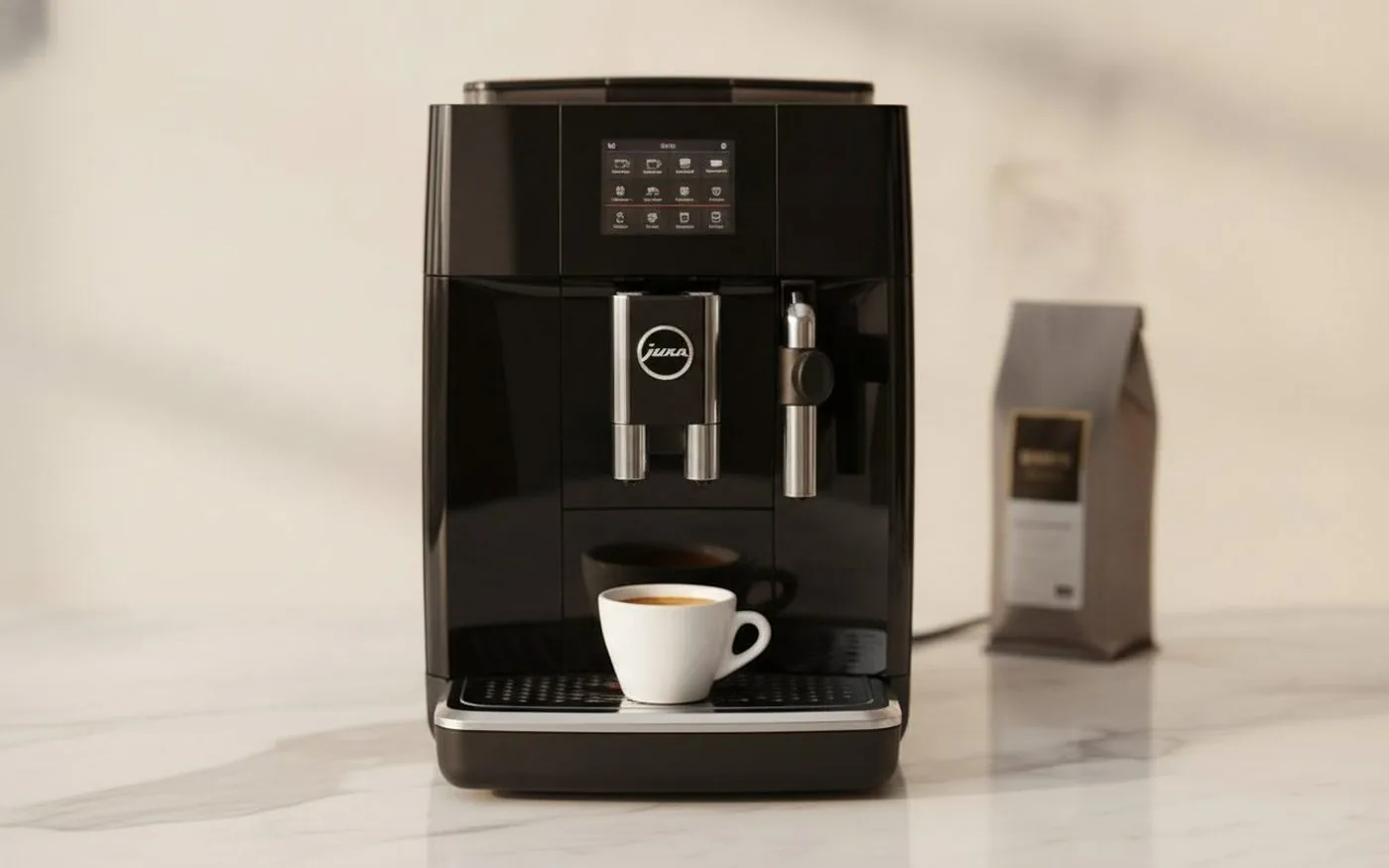
Compared to the De'Longhi Magnifica Evo, the Philips 5400 LatteGo offers 12 one-touch drinks versus 4 and a faster milk system to clean, but the Magnifica produces noticeably hotter espresso. That temperature gap matters for black espresso drinkers. It does not matter much if your shot goes straight under a LatteGo full of steamed milk.
For Jura E8 buyers: the Jura starts at £1,400. That is not a Philips 5400 competitor - it is two price brackets above. The Jura justifies its cost with Swiss precision engineering, a longer documented lifespan, and the P.E.P. brewing system. If you are comparing the 5400 to a Jura E8, our recommendation is to either choose the 5400 on value grounds or stretch to the Jura if machine longevity over ten-plus years is the priority.
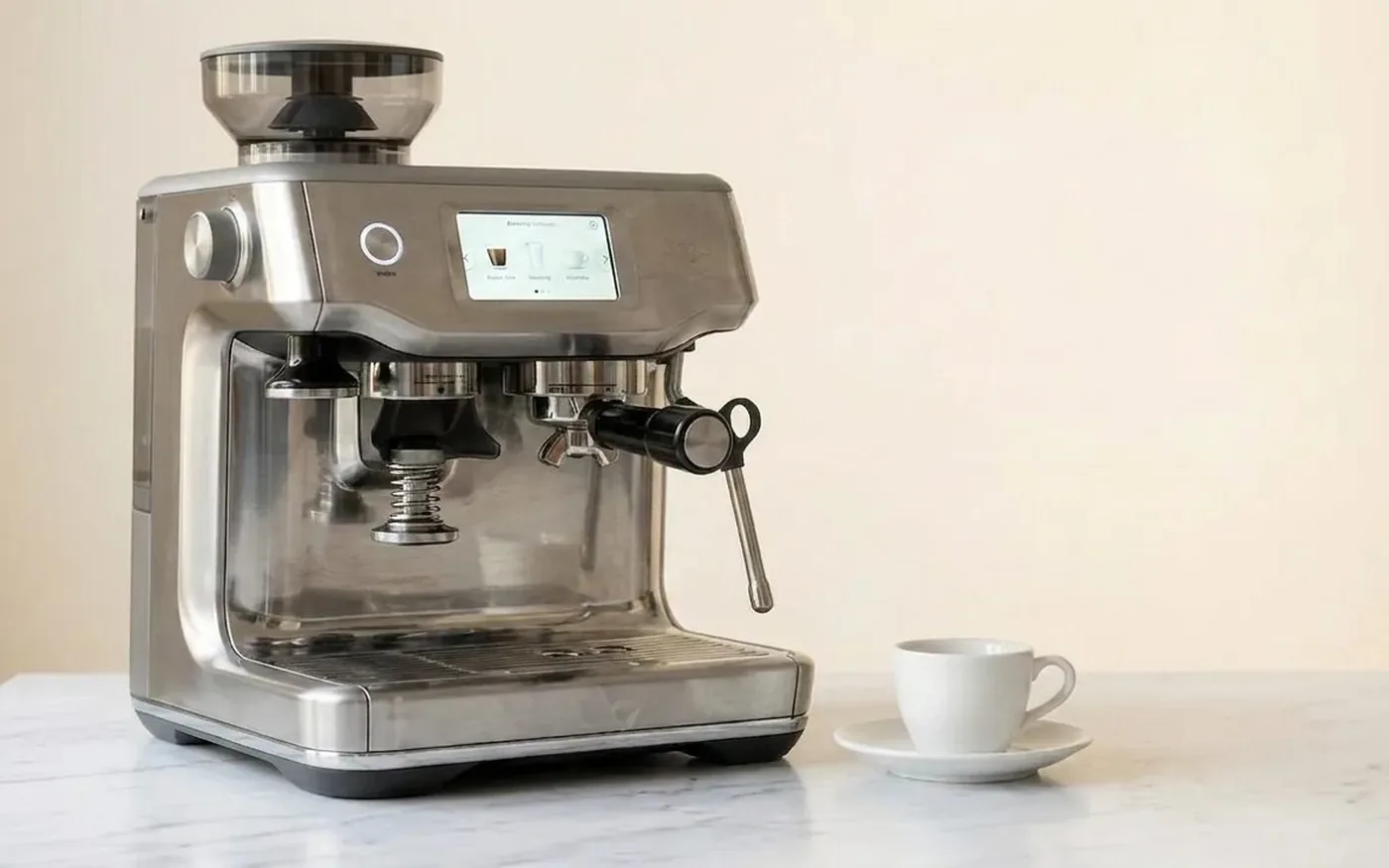
For the Sage Barista Touch Impress at £999+: that machine is designed for people who want to develop espresso skills. It has a manual steam wand, a semi-automatic workflow, and the ability to dial in extraction variables. The Philips 5400 is the opposite proposition - it removes those variables from you. Different machines for different people.
Running Costs Over 12 Months
Retail price is only part of the total cost of ownership. Here is the annual running cost breakdown for average UK use (two adults, three to four drinks per day).
| Cost item | Annual volume | Unit cost | Annual cost |
|---|---|---|---|
| Coffee beans (medium roast) | around 6 kg | around £22/500g | around £264 |
| Whole milk (if making milk drinks daily) | around 48L | around £1.50/litre | around £72 |
| AquaClean filters | 4 units | £10 each | £40 |
| Descaler kits | 1-2 kits | £9 each | £12-18 |
| Electricity (approx.) | 365 days @ 1,500W x 12 min/day | Unit rate: around 28p/kWh | around £30 |
| Total annual running cost | - | - | around £418-£424 |
This is a materially lower annual cost than pod machines at the same drink volume. The comparable Nespresso pod machine running at 90p per pod and three drinks per day costs approximately £985 per year in pods alone, before machine purchase.
What We Would Improve
Here are the things I would change if Philips read this:
1. The espresso temperature. At 78-82°C, the shots run cool. Not unpleasant, but below the SCA's recommended brew temperature at the group head. The Magnifica Evo runs warmer. A simple firmware adjustment to raise the default brewing temperature by 4-5°C would fix this without any hardware change.
2. The instruction manual. The guide that ships with the machine does not adequately explain grind calibration. A one-page visual calibration guide - 'if your espresso tastes flat, try grind setting 3; if it tastes sour, try setting 4' - would prevent the single most common complaint (watery espresso) from ever appearing.
3. The drip tray alert. The machine alerts you to empty the drip tray after roughly 15 drinks. This is conservative. A minor nuisance on heavy-use days.
4. The plastic build quality on the door. The brew unit access door feels lighter and less substantial than the rest of the machine. It holds up fine in daily use, but it is the first thing you notice if you have handled a Jura or a premium De'Longhi.
Where to Buy
| Retailer | Price | Warranty | Notes |
|---|---|---|---|
| John Lewis | £649 | 2 years standard | Best warranty in market; price matches on request |
| Amazon UK | £579-£629 | 2 years standard | Fluctuates; check for lightning deal |
| Currys | £649 | 2 years standard | Occasional cashback through TopCashback |
| Philips Direct (philips.co.uk) | £699 | 2 years | Official spare parts; sometimes includes accessories |
Our recommendation on retailer: John Lewis is the safest buy. The 2-year guarantee (same as standard, but John Lewis customer service backing is categorically better if something fails) and their willingness to match prices makes it the pragmatic choice at £649. If Amazon drops to £579-£599 and you are comfortable with Amazon's return process for large appliances, the saving is real.
For further context on this machine in the wider category, see our guide to the best bean-to-cup coffee machines in the UK. If you want to understand what you are getting before your first bag of beans, our fully automatic espresso machines guide covers how bean-to-cup machines work at every price point.
For readers who want to understand best Nespresso pods as an alternative system, our pods guide covers that comparison in detail. And if you are interested in developing your technique further, our guide to barista lessons covers the UK's top courses for anyone who wants to move beyond the push-button format.
Frequently Asked Questions
Is the Philips 5400 LatteGo worth it?
For milk drink drinkers, yes. The LatteGo system produces consistent microfoam and cleans in 20 seconds. At £579-£649, it undercuts the Jura E8 by £800 and outperforms the Magnifica Evo on drink variety and milk convenience. For black coffee drinkers, the 3200 at £329-£379 offers the same shot quality for significantly less. Buy the 5400 if you make milk drinks daily. Skip it if you do not.
Is the Philips 5400 a good coffee machine?
Yes, for what it is designed to do. It delivers consistent automatic espresso and no-fuss milk drinks for households that want push-button convenience. It is not the right machine if you want manual barista control or cafe-grade temperature precision. Judged within its category - fully automatic bean-to-cup at £500-£700 - it is one of the stronger options in 2026.
Is the Philips 5400 discontinued?
No. As of June 2026, the EP5447/90 (matte black) and EP5444/90 (silver) are both current products available from John Lewis, Amazon UK, Currys, and Philips Direct. The 5500 series exists in some European markets but has not replaced the 5400 in the UK. If a retailer shows 'out of stock', check the other retailers on our list - the machine is not discontinued, individual retailer stock levels vary.
What are common problems with the Philips 5400?
Four issues appear most often: 'Add Water' with a full tank (airlock - remove and refit the tank); flat espresso (grind setting too coarse - try setting 3-4); weak milk foam (use fridge-cold milk and check the LatteGo seal); brew unit stiffening over time (fixed by weekly cleaning). None signal a faulty machine. All resolve quickly once you know the cause.
Is the LatteGo milk system any good?
Yes, it is the best cleaning-friendly milk system at this price point. It produces dense, stable microfoam on whole milk and performs adequately on barista-blend oat milk. The frothing quality falls short of a well-managed traditional steam wand in experienced hands, but it is consistent, fast, and genuinely low-maintenance. The 20-second cold-water rinse is the system's key advantage over competitors with tube-based frothing systems or external milk carafes.
Can you use oily beans in a Philips 5400?
No. Oily dark roasts clog the ceramic flat burr grinder over time. The oil bonds to the burr surface and causes inconsistent grinding and doubled cleaning intervals. Use a clean, non-oily medium or medium-dark roast. Not all dark roasts are equally oily - choose a roaster whose beans do not leave visible surface oil or stain the bag interior.
How often should you descale a Philips 5400?
With the AquaClean filter fitted and replaced every three months, Philips claims up to 5,000 cups before descaling is needed - roughly three years at four drinks per day. Without the filter, frequency depends on water hardness. In London, expect to descale every 300-400 cups. The descaler kit costs around £9 and the guided process takes 30-45 minutes.
Does the Philips 5400 LatteGo have an app?
No. The 5400 has no app connectivity. That feature belongs to the Philips 6400, which uses the Philips Coffee+ app for recipe control and maintenance reminders. The 5400 uses four user profiles set on the machine itself via the dial. If app control matters to you, buy the 6400 - around £200 more, with a larger bean hopper and a slightly wider drinks menu.
A wellness entrepreneur and biohacker, James explores the intersection of hospitality and health - from clean fuel and recovery tools to mindful routines that build balance into daily life.