Gaggia Classic Up Review
A Gaggia Classic Pro with the factory-fitted PID controller solving the single most frustrating variable in the line.
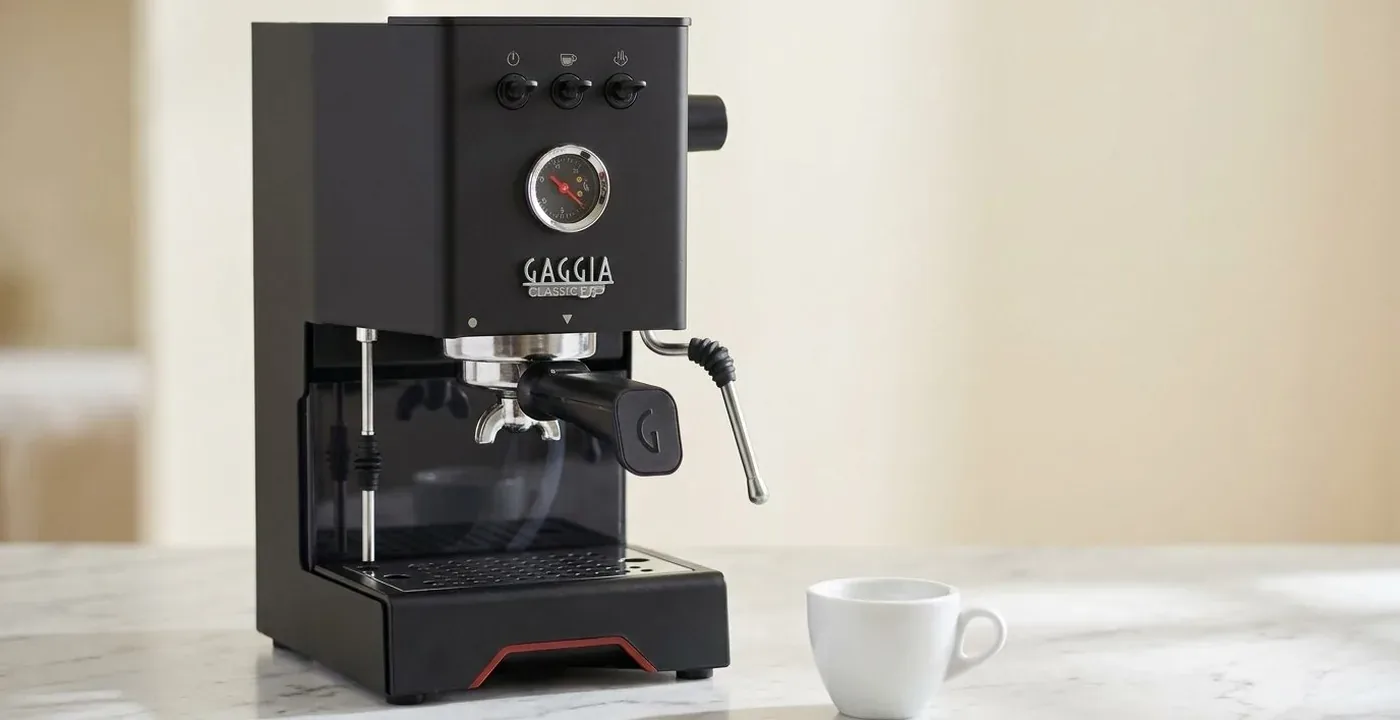
Table of Contents
Some of the links in this article are affiliate links, which help fund our independent review work at no extra cost to you. Every recommendation is based on hands-on testing through The Editor Lab methodology. No brand pays to appear, and no placement is guaranteed.
If you are weighing up the gaggia classic up review verdict against the Classic Pro, the question is not whether this machine makes good espresso - it does - it is whether the factory PID is worth the price step. The Classic Up is the Gaggia Classic Pro chassis with one factory upgrade: a built-in PID temperature controller that holds brew temperature within a precise window across consecutive shots, rather than letting it drift the way the standard Pro thermostat does on its own.
This review reflects first-hand use of the Classic Up plus the manufacturer-side training I received at Sanremo UK on PID temperature control, single-boiler architecture and 9-bar group head mechanics. All specifications and the current UK price were web-verified at the time of writing, and the Classic Up still sits inside Gaggia's current UK range, widely stocked through Amazon UK and John Lewis as of May 2026.
Editor's Note
Editor's Note
Score: 4.2 / 5
Best for: A patient first-time buyer who wants temperature precision from day one and intact manufacturer warranty
Not for: An impatient drinker, or anyone willing to fit a £40 aftermarket PID kit to a Classic Pro
Headline price: Around £449 as of May 2026
One-line verdict: A Gaggia Classic Pro with the factory-fitted PID controller solving the single most frustrating variable in the line.
Gaggia Classic Up Review: The Verdict
The Classic Up is the right traditional espresso machine for the buyer who wants a Gaggia Classic Pro with the single most frustrating variable solved on the production line, rather than on the kitchen table.
Pull a shot on a standard Classic Pro and the brew thermostat lets temperature swing several degrees between shots. Experienced users learn to work around this with temperature surfing, flushing the group at a measured interval before pulling. The factory PID on the Classic Up replaces that ritual with a precise temperature target the machine holds across consecutive shots. You stop managing the boiler and start managing your grind.
That is the entire reason this machine exists, and it is genuinely useful if you intend to pull two or three milk-based drinks back to back on a Saturday morning without your second shot tasting different to your first. The honest tension sits in the maths. A Classic Pro plus an aftermarket PID kit fitted at home generally comes in cheaper than the Classic Up, often by £20 to £40 once the kit and a basic install are accounted for.
You get the same temperature precision, the same chassis, the same 58mm portafilter, the same single-hole steam wand. The Classic Up is the right purchase if you will never open the machine. The Classic Pro plus a self-fitted kit is the right purchase if you will.
For the wider Gaggia line, see our best Gaggia coffee machine roundup - the Classic Up sits mid-range, between the entry Brera and the dual-boiler Classic GT.
What the Factory PID Does
A PID temperature controller is an electronic loop that holds a target temperature by continuously measuring the boiler and modulating power to the heating element. On the Gaggia Classic Up that target is set at a precise brew temperature and held within a tight band across consecutive shots, rather than allowed to cycle several degrees the way a simple thermostat does on the standard Classic Pro.
The practical effect at the cup is consistency. Shot one and shot three taste like the same coffee. On a non-PID Classic Pro you have to flush the group head at a measured interval before pulling - a technique known as temperature surfing - because the boiler will otherwise be sitting somewhere between its on and off cycle. Get the timing wrong and your shot is either under-extracted and sour, or scalded and bitter.
Sanremo's engineers trained me on PID temperature control directly during my time as Sales and Marketing Manager at the brand's UK arm. PID logic is the same whether the boiler holds 100ml in a domestic single-boiler Classic or 18 litres in a commercial dual-boiler machine. The controller measures temperature, predicts the lag in the heating element and adjusts the power output to compensate. The mathematics are not the part you need to understand. The result is.
What the factory PID does not do is remove your skill from the equation. Temperature is one of four variables in an espresso shot - the others being grind, dose and tamp - and the Classic Up still hands you all three. You do not adjust the PID setpoint mid-shot, and you do not bypass the need for fresh, well-ground beans.
Temperature stability is a floor under your craft, not a substitute for it. According to the Specialty Coffee Association, espresso brewing temperature should sit between 90.5 and 96 degrees Celsius for optimal extraction, and the Classic Up's PID lets you hold that window with confidence across a full morning of drinks.
Espresso Quality and the 58mm Portafilter
With a good grinder and standard non-pressurised baskets, the Gaggia Classic Up produces espresso that rivals far pricier machines. The 58mm commercial portafilter is the foundation that makes that statement true.
A 58mm basket is the diameter used on professional commercial machines, which means two things for you. It transfers technique - if you have ever pulled shots on a La Marzocco, a Sanremo Opera or a Victoria Arduino Eagle, your dosing, distribution and tamping habits move across without recalibration. It also opens up the entire 58mm accessory ecosystem to you: precision-engineered tampers, distribution tools, bottomless portafilters, dosing funnels and weighing baskets. Cheaper espresso machines that ship with 51mm or 53mm portafilters cut you off from that ecosystem entirely.
In the cup, with freshly roasted beans and a level grind, the Classic Up extracts cleanly. Pull a single-origin natural Ethiopian and you get the boozy strawberry character intact through the body, with a clean close on the finish that does not linger into bitterness. Pull a washed Colombian and you taste the milk chocolate and citrus the roaster intended. With the factory PID holding temperature, that profile repeats from shot one to shot four.
Here is where most reviews skip the friction. The Classic Up gives you no safety net. There is no pressurised basket workaround for a bad grind in the standard kit. There is no Bean Adapt routine that fixes a stale bag on your behalf. If your grinder is inconsistent, if your beans are two months past their roast date, or if your distribution is uneven, the Classic Up will tell you immediately and ruthlessly.
That honesty is the reason it sits in the same conversation as machines costing twice as much. It is also the reason a buyer expecting plug-and-play convenience will find it frustrating.
In our espresso testing, the Classic Up paired well with both medium and dark roasts. For pairing recommendations, see our best coffee beans for espresso UK guide - the 58mm non-pressurised basket rewards fresh, well-ground beans the way no pressurised system can.
Espresso, Steam and the Single-Boiler Workflow
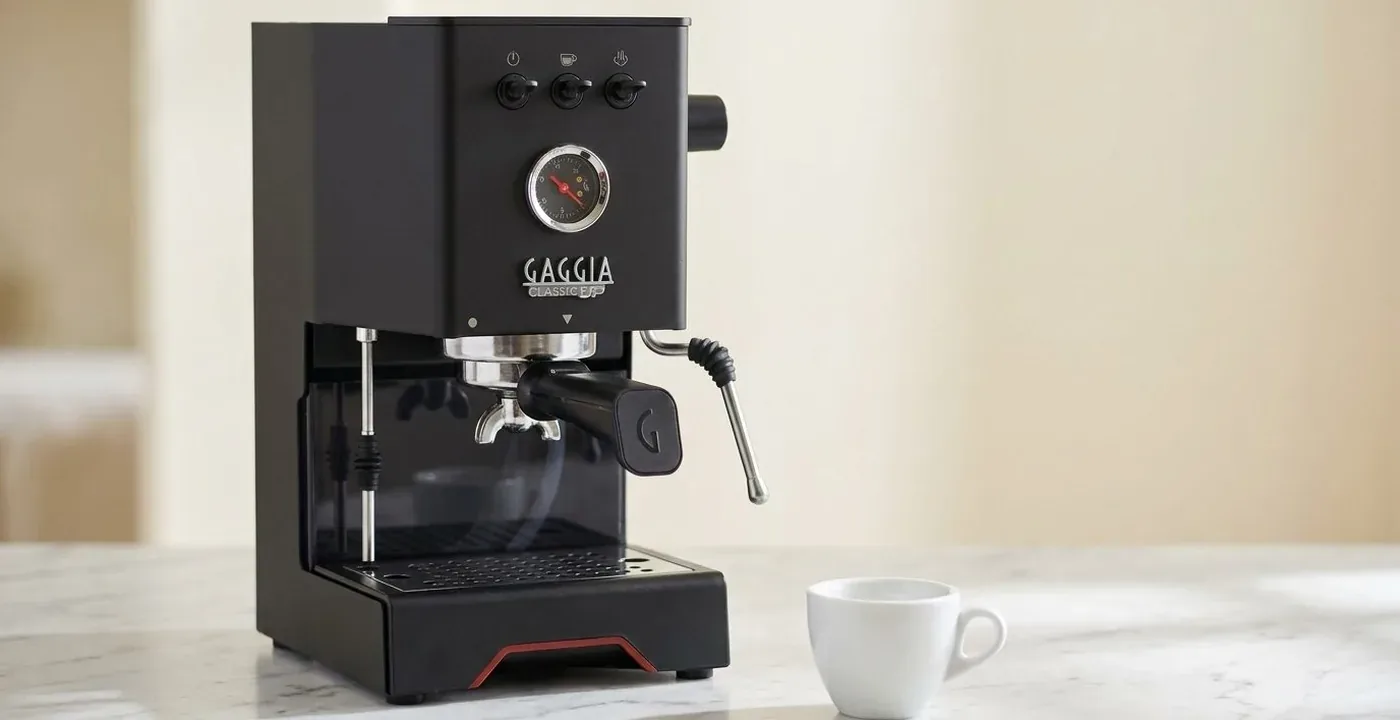
The Classic Up is still a single-boiler machine. It shares one boiler between brew and steam, which means you wait between pulling a shot and steaming milk while the boiler reheats from brew temperature, around 93 degrees, up to steam temperature, around 130 degrees.
In practice that wait is roughly 60 to 90 seconds. Pull your shot first, then switch the boiler to steam, then texture your milk while the espresso rests. The workflow is sequential, not parallel. If you are making a single cappuccino for yourself, the wait is invisible. If you are making three milk drinks in a row for guests, you will feel it.
The stock steam wand is a commercial-style single-hole wand. The pressure is strong enough to texture milk properly, but a single-hole tip requires developed wrist technique to produce the silky microfoam you see on a latte art Instagram reel. Get the pitcher angle and the depth of the wand tip right and the milk stretches cleanly. Get either wrong and you get bubbles instead of foam.
This is worth saying plainly, because I have worked on commercial machines most home baristas will never touch - Sanremo Opera, La Marzocco, Victoria Arduino Eagle - and there is a real and noticeable step up at that level. The Classic Up is not trying to compete with them, and for someone learning to steam milk at home it does not need to. The single-hole wand teaches you milk technique that scales upward to commercial wands cleanly.
You will not buy the Classic Up for fast back-to-back milk drinks. You will buy it because the single-boiler architecture is genuinely simpler, easier to service and proven to last across the Gaggia Classic line stretching back decades.
The Learning Curve and Who It Suits
The factory PID removes the temperature variable from your craft. It does not remove the craft.
Grind, dose, tamp and milk technique still have to be learned. A patient beginner can absolutely start here, and many do - the Classic Up is forgiving in the variables it controls and unforgiving in the variables it leaves to you. If you are the sort of buyer who watches three James Hoffmann videos before pulling your first shot, weighs your dose, times your extraction and reads back what came out of the spouts, you will be making espresso you actually like inside a week.
If you are the sort of buyer who wants the machine to do the thinking for you, the Classic Up is the wrong machine. There is no touchscreen. There is no automatic milk frother. There is no recipe menu. You twist a knob, you push a button and the rest is your job. The hardware will not save you from a stale bag of beans or an inconsistent grind.
Fourteen years in coffee has taught me that the question with the Classic Up is never 'is it good' - it is 'is the factory PID worth more than fitting one yourself'. The buyer it suits is the one who has decided that espresso is going to be part of their morning for the next five years and wants to skip the day one calibration ritual. For that buyer, the Classic Up is excellent.
For the wider entry-to-mid espresso market, this machine sits alongside the integrated-grinder alternatives in the prosumer category. See our Sage Barista Express review if counter space is your constraint and you would rather one box than two.
What You Still Need to Budget For
The Gaggia Classic Up does not include a grinder, and that is the single biggest hidden cost most buyers miss.
Pre-ground espresso goes stale within days of the bag opening. Espresso is particularly unforgiving here - you will taste the loss of crema, the flat body and the muted aromatics within the first week. The Classic Up's 58mm non-pressurised basket is designed for freshly ground coffee, and using stale pre-ground in it will produce a shot that bears no resemblance to what the machine can actually do.
You have two real options. Option one is pre-ground espresso from a local roaster on a tight grind-to-cup window, which works if you are realistic about drinking the bag inside seven to ten days. Option two, and the one I recommend, is a separate grinder. A decent entry-level grinder runs £100 to £150 - the Baratza Encore at around £130 and the Sage Smart Grinder Pro at around £160 are both reasonable pairings for the Classic Up.
Whole beans hold flavour for weeks. Freshly ground coffee makes a material, not marginal, difference to your espresso. Factor this into the total cost before you compare the Classic Up to anything else. A £449 Classic Up plus a £130 grinder is £579 of counter equipment, and that changes the conversation - particularly when you start comparing this machine to the best espresso machine under 500 options that ship with built-in grinders.
Classic Up vs Classic Pro: Which Should You Buy
The single decision in front of you is whether factory PID is worth the price step over the Classic Pro. The Gaggia Classic Up is a Gaggia Classic Pro with factory-fitted PID temperature control, and that is the only meaningful difference between the two machines.
Both ship with the same chassis, the same 58mm commercial portafilter, the same 9-bar pump pressure, the same single-boiler architecture, the same commercial single-hole steam wand and the same solenoid valve. The Classic Up adds the PID and a slightly redesigned control interface. Everything else is identical hardware.
The Classic Up costs around £100 more than the Classic Pro, and that £100 buys exactly one thing: factory PID. A Classic Pro plus an aftermarket PID kit you fit yourself usually comes in cheaper, frequently by £20 to £40 once the kit and a basic install are accounted for. The kits are widely sold by UK specialist retailers, the installation is a documented job involving thermocouple placement and a small controller box, and once fitted the Pro becomes functionally equivalent to the Up.
The PID solves temperature. It does not solve the rest. The Classic Up still ships with the single-hole commercial steam wand and no grinder, so the milk-texturing learning curve and the £100 to £150 grinder you still have to buy are both unchanged whichever model you pick.
The Classic Up only makes financial sense if you will never open the machine. For the buyer who wants to plug in, switch on and pull a shot at a precise temperature from day one with manufacturer warranty intact, the Classic Up is the right purchase. For the buyer who is comfortable opening a kettle, fitting a thermocouple and wiring a controller, the Classic Pro plus a kit is the better-value route to the same end state.
The independent Which? coffee machine reviews team consistently rates the Classic Pro highly for build and shot quality - and the Up is the Pro with one variable solved. For the full deep dive on the cheaper sibling, our Gaggia Classic Pro review lays out the manual temperature-surfing workflow in detail. For the more capable sibling with a true dual boiler and a separate steam circuit, see our Gaggia Classic GT Dual Boiler review.
Specification Table
| Specification | Gaggia Classic Up |
|---|---|
| Price | Around £449 as of May 2026 |
| Boiler | Single, aluminium, approximately 100ml |
| PID | Yes, factory-fitted |
| Pump | 15 bar pump, 9 bar OPV-regulated brew pressure |
| Portafilter | 58mm commercial |
| Steam wand | Single-hole, commercial-style |
| Solenoid valve | Yes |
| Heat-up time | Approximately 30 to 40 seconds |
| Water tank | 2.1 litres, removable |
| Dimensions | 230 x 240 x 380mm |
| Weight | Approximately 7.5kg |
Frequently Asked Questions
What is the difference between the Gaggia Classic Up and the Classic Pro?
The Gaggia Classic Up is a Gaggia Classic Pro with factory-fitted PID temperature control added on the production line. The hardware is otherwise identical: 58mm commercial portafilter, 9-bar brew pressure, single boiler, single-hole commercial steam wand and solenoid valve. The Up costs around £100 more than the Pro, and that price step buys exactly one thing, the factory PID and a slightly redesigned control interface.
Does the Gaggia Classic Up have PID?
Yes. The Classic Up has a factory-fitted PID temperature controller that holds brew temperature within a precise window across consecutive shots, removing the need for temperature surfing on the standard Pro. The controller measures the boiler continuously and modulates the heating element to compensate, so shot one and shot three taste like the same coffee rather than drifting as the boiler cycles between its on and off state.
Does the Gaggia Classic Up come with a grinder?
No. You will need a separate grinder. Budget £100 to £150 for a decent entry-level grinder such as the Baratza Encore at around £130 or the Sage Smart Grinder Pro at around £160. Pre-ground espresso goes stale within days, and the Classic Up's 58mm non-pressurised basket is built for freshly ground coffee, so factor the grinder into the total cost before comparing this machine to models with a built-in grinder.
Is the Gaggia Classic Up worth it?
Yes if you want factory PID with manufacturer warranty intact and will never modify the machine. A Classic Pro plus an aftermarket PID kit usually costs less for the same end result and is the better-value route if you are comfortable with a documented modification.
How long does the Gaggia Classic Up take to switch between brewing and steaming?
The Classic Up shares one boiler between brew and steam, so you wait for the boiler to climb from brew temperature, around 93 degrees, up to steam temperature, around 130 degrees. In practice that takes roughly 60 to 90 seconds. Pull your espresso first, switch the boiler to steam, then texture your milk while the shot rests. The workflow is sequential, not parallel.
What does the Gaggia Classic Up cost in the UK?
The Gaggia Classic Up has a headline price of around £449 as of May 2026, roughly £100 more than the standard Classic Pro. That price step buys exactly one thing: the factory-fitted PID temperature controller and a slightly redesigned control interface. Everything else, including the chassis, portafilter, pump pressure and steam wand, is identical between the two machines.
Is the Gaggia Classic Up a good machine for beginners?
A patient beginner can start on the Classic Up. The factory PID removes the temperature variable from the craft, but grind, dose, tamp and milk technique still have to be learned. There is no touchscreen, automatic frother or recipe menu, so if you are willing to weigh your dose and dial in your grind, you will be making espresso you like within a week.
Where does the Gaggia Classic Up sit in Gaggia's espresso machine range?
The Classic Up sits mid-range in Gaggia's UK lineup, above the entry-level Brera and below the dual-boiler Classic GT. It shares its chassis, 58mm portafilter, 9-bar pump and single-boiler architecture with the Classic Pro, with the factory-fitted PID temperature controller as the one meaningful upgrade separating the two models.

A wellness entrepreneur and biohacker, James explores the intersection of hospitality and health - from clean fuel and recovery tools to mindful routines that build balance into daily life.