De’Longhi Dedica Review
The De'Longhi Dedica makes real espresso from a machine barely wider than a paperback, but the workflow it demands is the part the listings never mention.
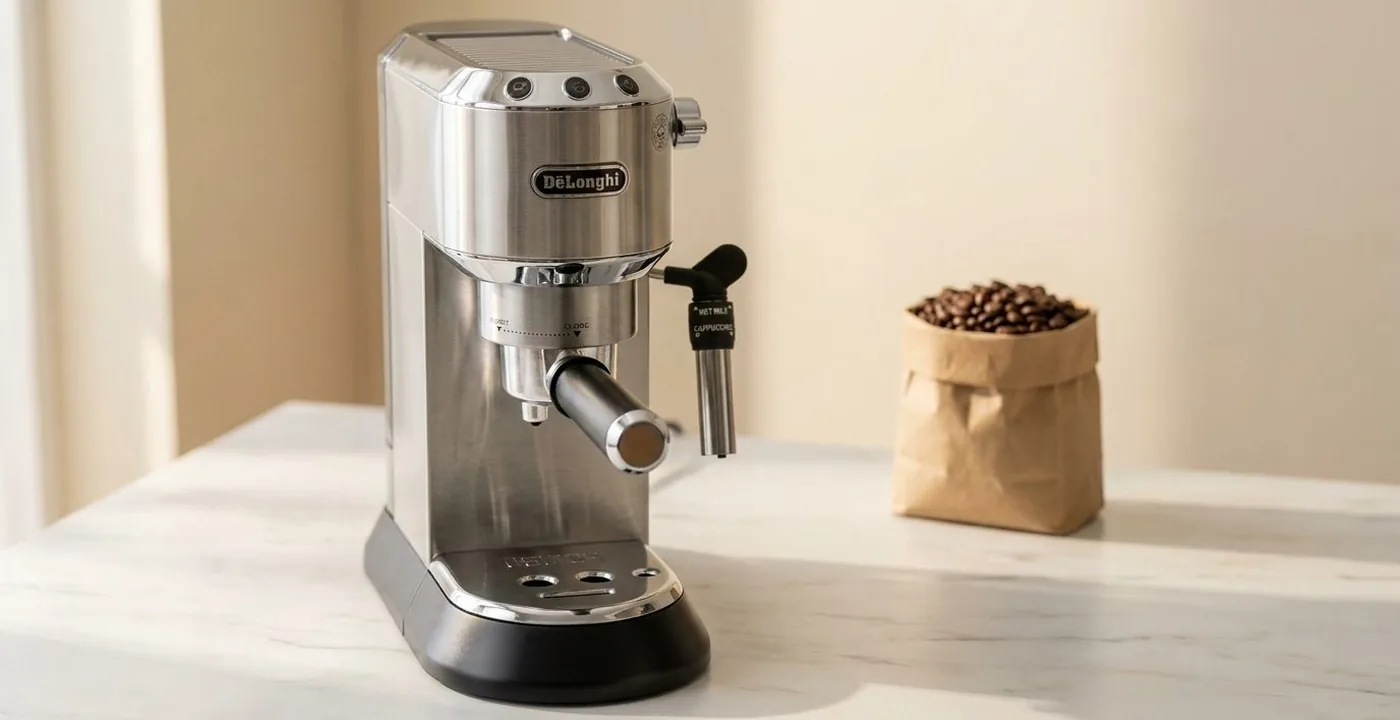
Table of Contents
Some of the links in this article are affiliate links, which help fund our independent review work at no extra cost to you. Every recommendation is based on hands-on testing through The Editor Lab methodology. No brand pays to appear, and no placement is guaranteed.
The question most readers searching for a delonghi dedica review are really asking is whether a sub-£200 manual espresso machine can pull a shot worth drinking, and whether the Dedica is the one to buy. The Dedica Style EC685 is De’Longhi’s slimline 15-bar pump espresso machine, barely 15cm wide, and one of the most-bought entry-level espresso machines in the UK. It sits below the Dedica Maestro Plus in the same range and above the more basic De’Longhi Stilosa.
This review reflects first-hand use of the EC685 over multiple weeks, combined with the manufacturer-side training I received at Sanremo UK on traditional espresso machine internals. Every specification and the current 2026 UK price was cross-checked against the De’Longhi UK product page and the main retailers before writing.
Disclosure: I founded Balance Coffee in 2020. Balance Coffee is a UK coffee roaster and does not sell coffee machines, so this review has no product of mine to recommend.
Editor's Note
Score: 3.8 / 5
Best for: First-time espresso buyers on a tight budget, small kitchens, and anyone who wants a manual machine without spending £400 or more.
Not for: Latte-art hopefuls chasing true microfoam, enthusiasts who want to dial in single origins, or households making back-to-back drinks for three plus people.
Price: £199.99 RRP, often £179.99 at major UK retailers (as of May 2026).
Verdict: A genuinely capable budget espresso machine that does exactly what its category allows, and stops cleanly where its price stops.
De’Longhi Dedica Review: The Verdict
The Dedica is a good machine for what it is, and the things people criticise it for are mostly things every machine at this price omits. Judged against its category, a manual 15-bar pump espresso machine under £200, it is one of the more capable options on the UK market and the slimmest by some distance.
I judge machines at this level on what is actually happening at the puck, not on the spec sheet. The Dedica uses a pressurised, dual-wall basket, which produces a thick layer of crema from almost any grind, freshness, or dose. That is the right design choice for a machine aimed at people who do not yet own a burr grinder and may never buy one. It is also the reason an enthusiast will feel boxed in within months.
You are buying three things in real terms: a fast thermoblock that heats up in around 30 to 40 seconds, a small footprint that genuinely fits in a one-metre run of counter, and a manual workflow that teaches you something about espresso without punishing you on day one. What you are not buying is the kind of grind sensitivity that lets you chase single-origin clarity, or a steam wand that builds latte-art microfoam.
Fourteen years in coffee has taught me that the cheapest way into espresso is rarely the cheapest machine, it is the one whose limits you understand before you buy. The Dedica’s limits are clear, predictable, and reasonable for the price.
What You Get for the Money
For around £180 to £200 in 2026, the Dedica gives you a 1300W single-thermoblock machine, a 15-bar Italian-made vibration pump, a 1.1-litre removable water tank, a 51mm portafilter, and three baskets. The baskets included are a single-wall single-shot, a single-wall double-shot, and an ESE pod adapter for paper-wrapped pods. The body is stainless steel with the now-familiar 15cm width that gives the line its name.
The thermoblock is the single most important component to understand. Instead of a boiler, the Dedica heats water on demand through a coiled metal block, which is why it hits brewing temperature in about half a minute and why it draws less power than a traditional dual-boiler machine. It is also why the same heater has to switch between brewing and steaming with a wait in between. This is standard at this price.
A Pannarello-style steam wand sits on the right of the unit. It is the silver sleeve type that mixes air and steam through holes in the casing, designed to produce dense foam quickly with no technique required. The cup tray adjusts to fit espresso cups, taller mugs, and a small jug.
You are also paying for three things that do not show up on the spec sheet. The slim footprint frees up genuine counter space in a small kitchen. The thermoblock means you are not waiting five or six minutes for the machine to be ready. And the manual workflow, even at this price, gives you a basic feel for the variables that matter, dose, tamp, time, and yield. It is the cheapest legitimate way to learn what a real shot of espresso looks like as it comes out, which is one of the reasons it consistently appears on lists like best espresso machine under 500 and best delonghi coffee machine.
For honest expectations, set this on the counter expecting a beginner-friendly pressurised-basket machine. Not a prosumer machine. Not a quiet machine. Not a microfoam machine. The price is the most accurate description of the category.
Espresso Quality: What the Dedica Can and Cannot Do
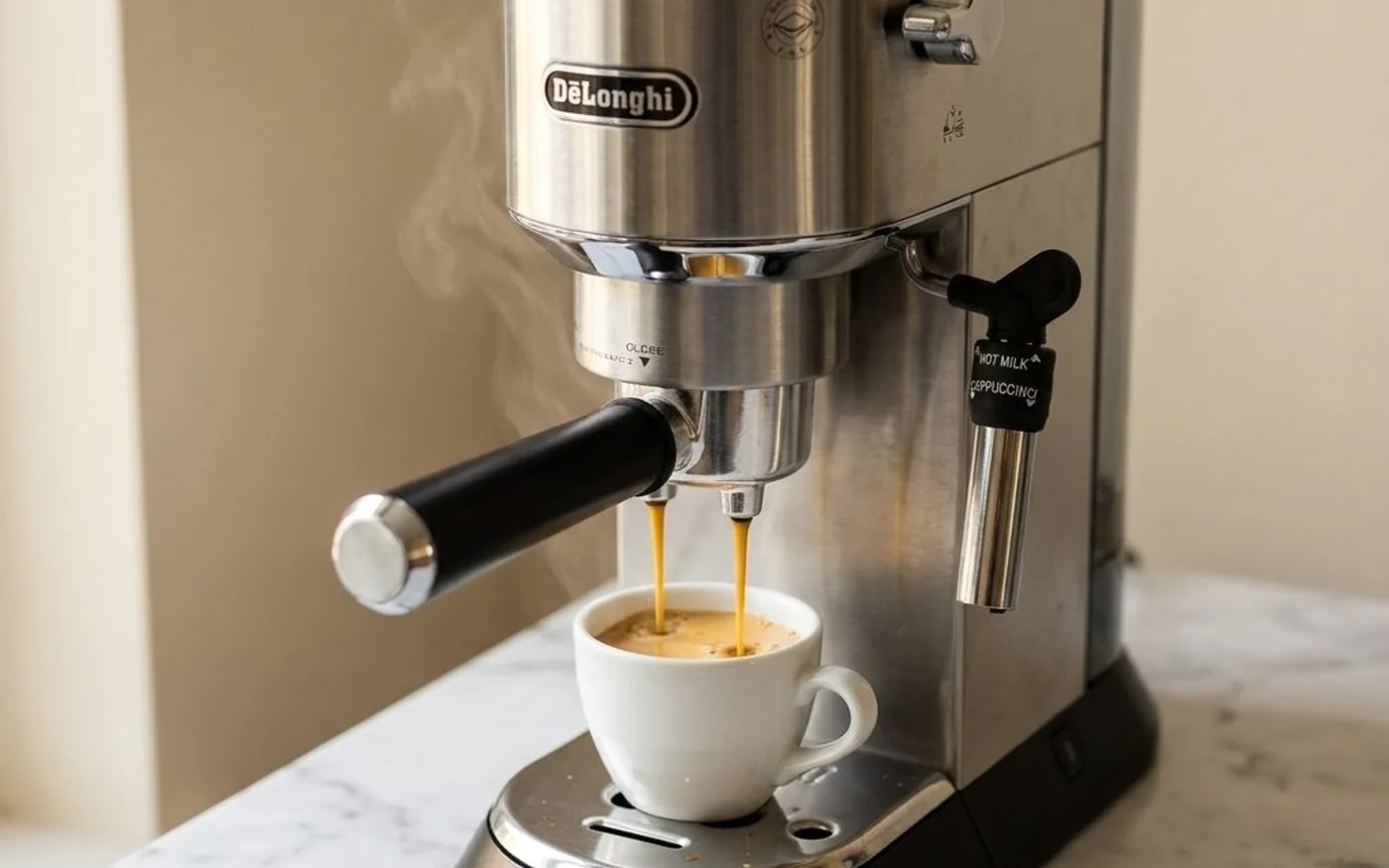
Here is the most honest sentence I can write about this machine: with decent fresh beans and a small amount of practice, the Dedica pulls a genuinely enjoyable shot of espresso. The crema is consistent, the body is fuller than any pod or capsule will deliver, and a 25 to 35 second extraction tastes the way an entry-level espresso should taste, sweet, mildly chocolatey, with a clean enough finish to drink without sugar.
The reason it pulls that shot is also the reason it has a ceiling. The De’Longhi Dedica uses a pressurised basket, which makes it forgiving for beginners but limits how far you can dial in espresso. A pressurised basket manufactures back-pressure inside the basket through a small exit hole and a valve, so the machine produces crema and the right resistance even if your grind is wrong, your dose is rough, and your tamp is uneven. That is what every reviewer means by ‘great for beginners’. It is also the engineering reason you cannot meaningfully improve a shot by improving your grind. The basket does the work the puck would normally do.
The Specialty Coffee Association defines properly extracted espresso as a balance of solubles between 18 and 22 percent yield, achieved through controlled grind, dose, time, and pressure. A pressurised basket compresses three of those four variables into one fixed outcome. You can change the beans, but the puck is no longer doing the talking.
The Dedica’s pressurised basket is the reason a beginner can pull a credible shot on day one, and the exact reason an enthusiast will feel boxed in within months. It manufactures pressure rather than rewarding a good grind, so the skill ceiling is low by design.
A note worth its own sentence: this machine rewards fresh beans far more than it rewards a fancy grinder. Because the basket is doing most of the technical work, the variable you can still control is bean quality. If you are buying a Dedica, spend the £15 to £20 you might have spent on the Maestro Plus upgrade on a better bag of beans from a UK roaster. Our guide to the best coffee beans uk is a useful starting point.
What the Dedica cannot do is satisfy a buyer who wants single-origin clarity. The pressurised basket flattens origin character. A pour-over or AeroPress will give you more of what a great Ethiopian natural actually tastes like than the Dedica ever will.
The Milk Steaming Reality
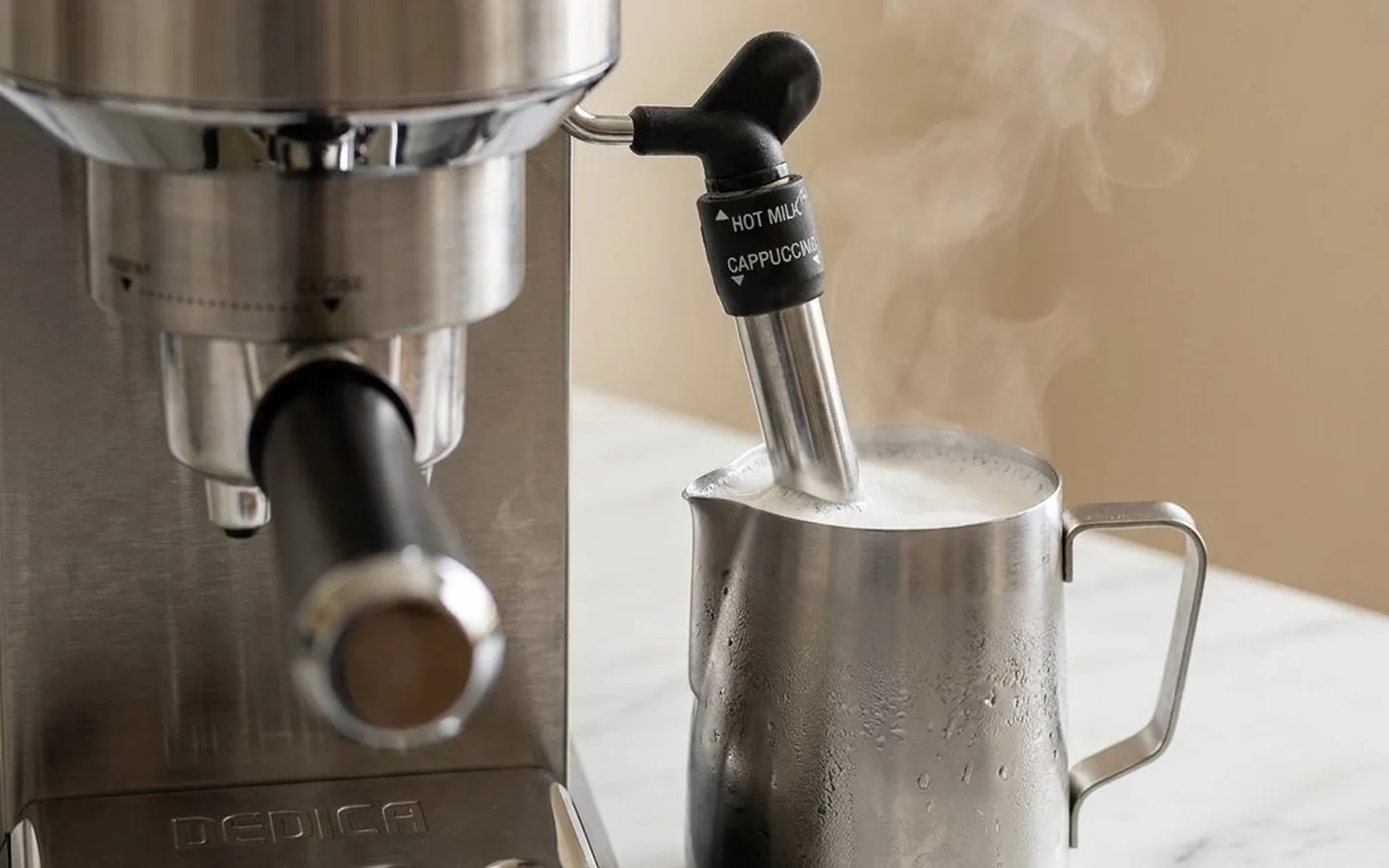
The Pannarello wand on the Dedica is the right tool for cappuccinos and the wrong tool for flat whites. It produces a stable cap of dense foam quickly, which is what the average buyer wants. It does not produce true microfoam, which is what latte art needs.
Microfoam, the glossy, paint-like milk that holds a rosetta, requires a bare metal steam wand, enough pressure to texture milk in 25 to 35 seconds, and the technique to incorporate air during the stretch phase only. The Pannarello sleeve injects air through fixed holes throughout the steaming process, so the foam is always foamy rather than silky. Once you remove the sleeve, the underlying wand on the Dedica is short, single-hole, and lower-pressure than a commercial machine, so even bare-wand technique is limited. You can get acceptable textured milk for a flat white. You cannot reliably pour a heart on top of it.
Having worked on commercial machines most home baristas will never touch, the Sanremo Opera, the La Marzocco Linea, and the Victoria Arduino Eagle, there is a real and noticeable step up at that level. The Dedica is not trying to compete with them, and for someone learning to steam milk at home, it does not need to. Buy this machine for cappuccinos, not for latte art.
The other reality is the wait. Because the thermoblock has to switch between brewing and steaming, you pull the shot, push the steam selector, wait around 30 to 40 seconds for the block to heat to steam temperature, then texture the milk. For one or two drinks this is fine. For a household making four flat whites before school, it is the wrong machine.
Living With the Dedica: Counter, Speed, Cleaning
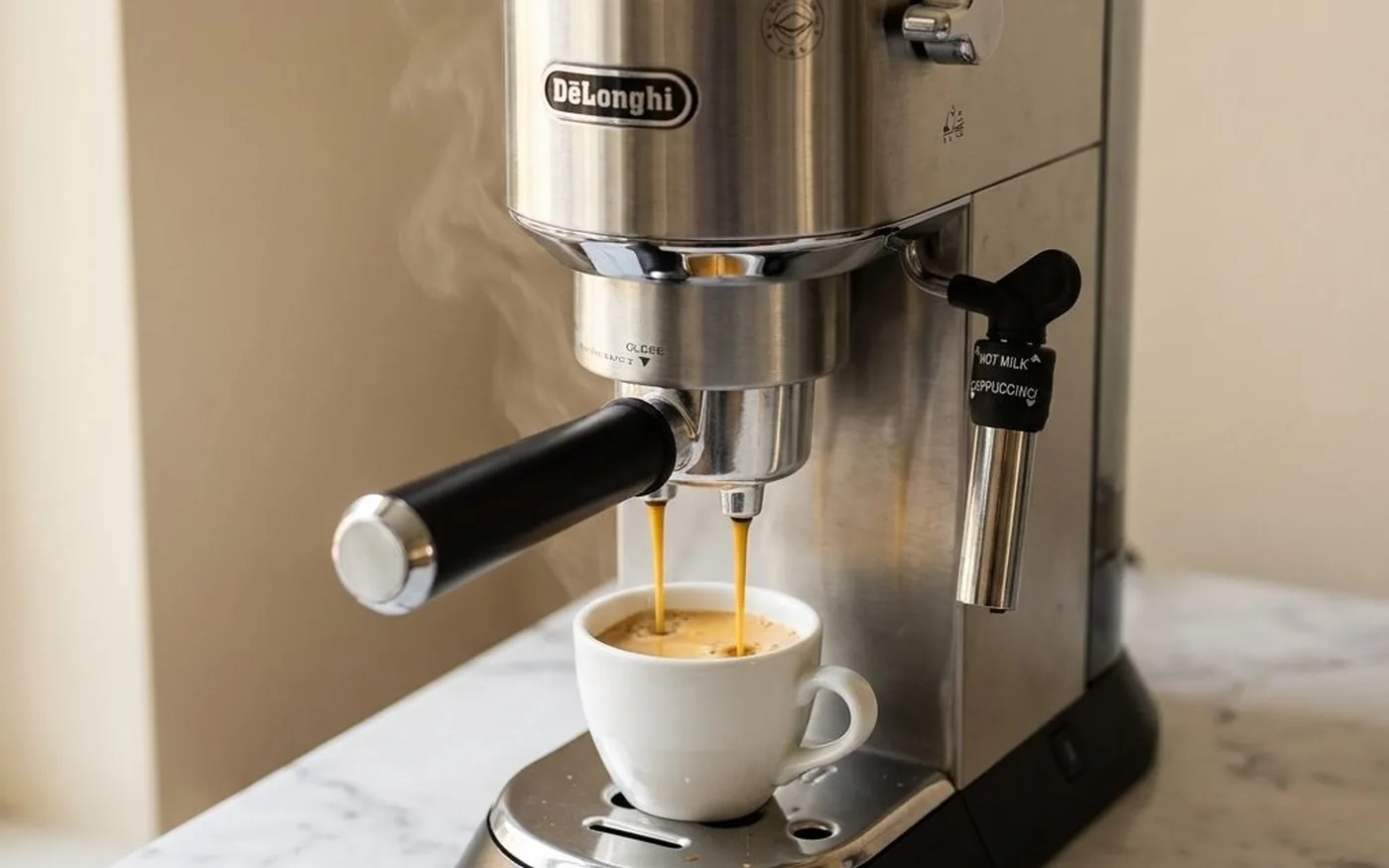
The slim footprint is the headline feature and it earns the marketing. At around 15cm wide, the Dedica is one of the narrowest espresso machines sold in the UK and one of the few that genuinely fits next to a kettle and toaster without rearranging the kitchen. If counter space is the constraint, this is the most important thing about the machine.
Speed-wise it is fast at first and slow second. The thermoblock means you are ready to brew within roughly 30 to 40 seconds of switching on, which is faster than almost any home machine with a real boiler. The trade-off shows up when you make more than one drink in a row. The thermoblock is small, so it cools between shots, and back-to-back doubles will show a temperature drop in the cup before the third shot. For one or two drinks at a time, none of this matters. For a busy weekend morning, you are working in pairs, brew, steam, drink, then start again.
A few things the product listing does not mention. The portafilter keeps dripping after you pull a shot, because there is no pressure-relief valve to bleed the system, so a small puddle ends up in the drip tray each time. The 1.1-litre water tank is genuinely small, and if you drink two flat whites a day with a partner, you are refilling it every two to three days. Neither is a dealbreaker at this price, but nobody mentions them in the listing.
Cleaning is mercifully simple. The drip tray and the basket lift out and rinse. The Pannarello sleeve slides off for a deeper wash. The brew head benefits from a backflush wipe roughly every two weeks. The Dedica has a built-in descale alert that fires every couple of months depending on your water hardness, and the descaling routine takes around 20 minutes with the De’Longhi solution. None of this is more involved than a basic kettle.
Dedica vs the Step-Up Options
If your budget can stretch, the obvious step up is the Sage Bambino Plus at around £349 to £399. The Bambino Plus uses a single-wall (non-pressurised) basket as standard, which means a real grinder is required to make it work, but in return you get genuine microfoam from its auto-frothing steam wand and a noticeable jump in espresso clarity once the grind is dialled in. The Bambino Plus is the right move for anyone who is already committed to buying a grinder and learning to pour latte art.
The Sage Barista Express is a bigger jump again at around £549 to £649, and it brings the grinder built in. That removes the need for a second appliance on the counter, which is exactly the reason most people choose the Dedica in the first place. If you are about to buy a Dedica and a separate grinder, the Express deserves a serious second look before you commit.
Inside De’Longhi’s own range, the delonghi dedica maestro plus review is the natural step up from the Dedica. The Maestro Plus adds a hot-water spout, a refined steam wand, and small build improvements. The basket design and the manufactured-pressure approach are essentially the same. Beneath the Dedica, the delonghi stilosa review covers De’Longhi’s most basic 15-bar pump machine. The Stilosa undercuts the Dedica on price but loses the slim body and the build quality.
For broader context, Which?, the independent UK consumer testing body, tests these machines side by side in its coffee machine reviews and is a useful sanity check. Inside the De’Longhi range, our De’Longhi Magnifica review covers the bean-to-cup side of the same brand for buyers who want espresso without the manual workflow at all.
Where the Dedica still wins against every machine in this comparison is price and counter space. Nothing under £400 fits in 15cm of width.

Who Should Buy the De’Longhi Dedica
Buy the Dedica if you are making your first move into manual espresso and you want to spend under £200 to find out whether you enjoy the process. The pressurised basket makes the first few weeks low-friction, the thermoblock makes the routine quick, and the price keeps the risk small if the conclusion is that you would rather buy pods. This is also the right machine for a small kitchen where 15cm of counter is the constraint, for a flexible household that wants to switch between fresh ground coffee and ESE pods depending on the day, and for a casual cappuccino drinker who is not chasing latte art.
Do not buy the Dedica if you are buying your way into a hobby. Anyone who already knows they want to learn to dial in single origins or pour rosettas should skip straight to the Sage Bambino Plus and budget for a grinder. The pressurised basket flattens the variables you would actually be trying to learn, and the Pannarello wand caps how good your milk can get. You will outgrow the machine within months, and reselling a £180 espresso machine to buy a £400 one is more expensive than starting at £400 in the first place.
Settle the question by being honest about which buyer you are. The Dedica rewards realistic expectations and punishes ambitious ones.
Specification Table
| Specification | Detail |
|---|---|
| Pump pressure | 15 bar |
| Heating system | Single thermoblock |
| Heat-up time | ~30-40 seconds |
| Portafilter size | 51mm |
| Baskets supplied | Single-wall single, single-wall double, ESE pod adapter |
| ESE pod compatible | Yes |
| Steam wand | Pannarello (manual frother sleeve) |
| Water tank | 1.1 litres, removable |
| Width | ~15cm |
| Height | ~33cm |
| Depth | ~33cm |
| Weight | ~4.3kg |
| Power | 1300W |
| Body material | Stainless steel |
Specifications cross-checked against the De’Longhi UK product page as of May 2026.
Frequently Asked Questions
Is the De’Longhi Dedica good for beginners?
Yes, the Dedica is one of the best entry points into manual espresso in the UK. The pressurised, dual-wall basket compensates for inconsistent grind, dose, and tamp, so a credible shot is achievable from day one without a separate grinder. That basket is also the ceiling, which is why enthusiasts move on within a year. As a first machine to learn the workflow, it is hard to beat under £200.
Does the De’Longhi Dedica use ground coffee or pods?
The Dedica uses both. It ships with three baskets, a single-wall single shot, a single-wall double shot, and an ESE pod adapter for paper-wrapped pods. It is not compatible with Nespresso, Dolce Gusto, or any aluminium or plastic capsule. The flexibility between ground coffee and ESE pods is one of the genuine advantages of this machine for households where one person wants the ritual and the other wants speed.
Why does my Dedica portafilter keep dripping?
The dripping is normal and is not a fault. The Dedica has no pressure-relief valve, so residual pressure bleeds out through the portafilter for 20 to 30 seconds after the shot ends. As long as the drip stops within half a minute, the machine is fine. Persistent dripping beyond a minute can indicate a worn group-head gasket, which is a cheap part to replace.
Can you do latte art with the De’Longhi Dedica?
Not reliably. The Pannarello-style steam wand injects air through a sleeve, which produces dense foam quickly but not the silky microfoam that latte art needs. Removing the sleeve exposes a short, lower-pressure wand, so even bare-wand technique is limited. The Dedica is a cappuccino machine, not a latte-art machine. For latte art on a budget, the Sage Bambino Plus is the realistic step up.
Is the De’Longhi Dedica worth it?
Yes, if you understand what you are buying. At around £180 to £200 in 2026, the Dedica is one of the most capable manual espresso machines under £200 and has the slimmest footprint in its category. It is worth it for first-time buyers, small kitchens, and casual cappuccino drinkers. It is not worth it for buyers chasing single-origin clarity or latte art.
How long does the De’Longhi Dedica take to heat up?
Around 30 to 40 seconds. The Dedica uses a single thermoblock rather than a boiler, heating water on demand through a coiled metal element, which is why it is ready to brew faster than almost any home machine with a real boiler. The trade-off is the same thermoblock has to switch between brewing and steaming, so there is a short wait before you can froth milk after pulling a shot.
What’s the difference between the De’Longhi Dedica and the Dedica Maestro Plus?
The Dedica Maestro Plus is the natural step up inside De’Longhi’s own range. It keeps the same pressurised-basket design and manufactured-pressure approach as the Dedica, so espresso quality is essentially unchanged, but it adds a hot-water spout, a refined steam wand, and small build improvements. Choose the Maestro Plus if you want those extras and can stretch the budget slightly beyond the standard Dedica.
How do you descale the De’Longhi Dedica?
The Dedica has a built-in descale alert that fires every couple of months depending on your local water hardness. Run the descaling routine with De’Longhi’s own solution, which takes around 20 minutes from start to finish. Regular cleaning is simpler: the drip tray and basket lift out and rinse, the Pannarello sleeve slides off for a wash, and the brew head benefits from a backflush wipe roughly every two weeks.

A wellness entrepreneur and biohacker, James explores the intersection of hospitality and health - from clean fuel and recovery tools to mindful routines that build balance into daily life.