Fellow Ode vs Opus: Which Fellow Grinder Wins in 2026?

Coffee & Wellness Writer
The Fellow Ode and Opus look like rival grinders but solve different problems - this comparison shows which one belongs on your counter.
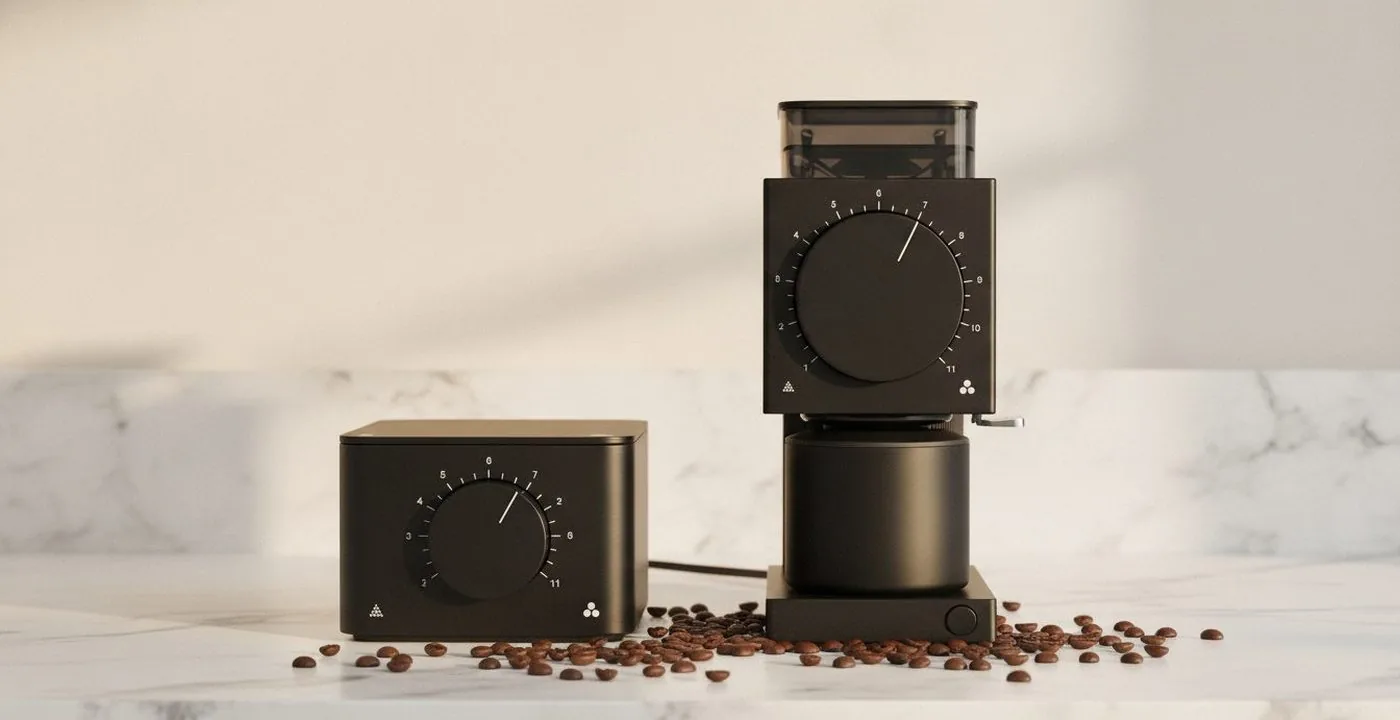
Table of Contents
Some of the links in this article are affiliate links, which help fund our independent review work at no extra cost to you. Every recommendation is based on hands-on testing through The Editor Lab methodology. No brand pays to appear, and no placement is guaranteed.
There is a version of this comparison where I tell you both grinders are excellent and it depends on your needs. That version is not useful to you. Here is the direct answer: if you brew filter coffee at home and nothing else, buy the Ode Gen 2. If you want one grinder that handles espresso and filter, buy the Opus. Every section below explains why that split holds up under testing.
I tested both grinders in the Balance Journal kitchen using a calibrated Acaia Pearl scale, a VST refractometer, and a Decibel X reading at 30cm. I ran 10 retention doses on each unit to measure grind waste, and used the same control bean for every test brew across V60, AeroPress, Moka pot, and espresso. The methodology behind that testing is the same framework we use across all equipment tested at the Editor Lab. This article is the result.
Quick Verdict: Ode for Filter Purists, Opus for the All-Rounder Kitchen
The Fellow Ode Gen 2 is a 64mm flat burr brew grinder built for filter, French press, and AeroPress. It does not grind for espresso. That is not a knock on the Ode - it is a deliberate design decision that makes it better at the thing it does. If your entire coffee life runs through a V60, Chemex, or AeroPress, the Ode is the sharper tool.
The Fellow Opus is a conical burr all-purpose grinder that handles espresso, filter, French press, and Turkish. The Opus sits below the Ode Gen 2 at UK prices, and that gap is driven by burr size and motor specification rather than overall quality. If you own an espresso machine, or think you might one day, the Opus is the sensible choice.
Quick buy:
- "Fellow Ode Gen 2 - filter-only, 64mm flat burr - Amazon UK | John Lewis"
- Fellow Opus - all-purpose, conical burr - Amazon UK | John Lewis
One honest note on the Ode: it is difficult to justify if you only drink one cup a day and are not particularly fussed about grind consistency. At that usage level, the Baratza Encore ESP is a smarter spend.
Fellow Ode Gen 2 vs Fellow Opus: At-a-Glance Spec Table
Both units are verified against the Fellow Compare Grinders page and the official spec pages for the Ode Gen 2 and Opus 2.
| Spec | Fellow Ode Gen 2 | Fellow Opus (Opus 2) |
|---|---|---|
| Burr type | 64mm flat burr | 48mm conical burr |
| Grind range | 1-11 (brew only) | 1-9 (espresso to Turkish) |
| Motor RPM | ~320 RPM | ~395 RPM |
| Hopper capacity | Single-dose (no hopper) | Single-dose (no hopper) |
| Dose mode | Single-dose | Single-dose |
| Weight | 4.6 kg | 2.3 kg |
| Dimensions (H x W x D) | 239 x 105 x 248 mm | 206 x 130 x 267 mm |
| UK RRP (2026) | Around £295 | Around £195 |
| Warranty | 2 years | 2 years |
| Espresso capable | No | Yes |
Brew-method suitability:
| Brew method | Ode Gen 2 | Opus |
|---|---|---|
| V60 / pour-over | Excellent | Good |
| Kalita Wave | Excellent | Good |
| Chemex | Excellent | Good |
| French press | Excellent | Excellent |
| AeroPress | Excellent | Excellent |
| Moka pot | Not recommended | Good |
| Espresso | Not capable | Good (not cafe-grade) |
What to avoid: Do not buy the Opus expecting cafe-grade espresso - it will get you to a reasonable shot but falls short of dedicated espresso grinders like the Eureka Mignon Specialita. Do not buy the Ode if espresso is anywhere in your future - the grind range simply does not reach fine enough.
Burr Design: 64mm Flat (Ode) vs Conical (Opus) - What It Changes in the Cup
The difference between flat and conical burrs is not just a spec sheet distinction. It produces measurably different grind distribution, and that shows up in the cup.
A flat burr set - like the Ode Gen 2's 64mm steel burrs - shears coffee particles between two parallel plates spinning in opposite directions. The result is a narrower particle size distribution: most particles cluster around the target size, with fewer fines and boulders at the extremes. The Specialty Coffee Association has documented how narrow distribution produces more even extraction, which is why competitive baristas tend to reach for flat burr grinders when grind precision is the primary variable. For filter brewing, where the entire bed of coffee extracts simultaneously, this evenness translates directly into cleaner, more complex cups.
A conical burr set - like the Opus's 48mm conical - moves coffee between an inner cone and an outer ring. The geometry is inherently more forgiving: a wider particle size range, a slightly higher fine content, and different expression of flavour compounds. This is not a defect. For espresso, fines help create the resistance that builds pressure and crema. For filter, the wider distribution adds body that some drinkers prefer. The question is what you are optimising for.
In practical terms: when I ran V60 brews side by side with the same dose (20g), same recipe (300ml water, 3-minute target), and the same Aurora Reserve Brazil light roast as the control bean, the Ode produced a cleaner, higher-clarity cup with a more distinct fruity note through the mid-palate. The Opus produced a rounder, slightly fuller cup - less clarity on the high notes, more body through the close. Neither is wrong. They are different tools expressing the same coffee differently.
The other consequence of burr size is speed and heat. The Ode's 64mm burrs at ~320 RPM move through 20g in around 7 seconds without generating perceptible heat. The Opus grinds faster per setting but at a smaller contact surface. In extended daily use, neither unit showed thermal issues during testing.
Fellow positions the Ode as a brew-specialist on their own comparison article, which is honest and consistent with the burr engineering. Independent reviewer James Hoffmann has noted on his YouTube channel that the Ode's flat burr design is a genuine differentiator in its price range, not a marketing claim.
Brewing Range: Filter, French Press, AeroPress, Espresso
This is where the purchase decision becomes concrete. What do you actually brew every morning?
V60, Chemex, Kalita: The Ode Gen 2 is the better choice. Grind settings 4-7 on the Ode produce the clean, even particle distribution that V60 and Chemex reward. The Opus on its coarser settings does a credible job but lacks the burr precision at the filter end. If you are pouring over specialty coffee daily and care about what ends up in the cup, the Ode is the sharper instrument.
French press and AeroPress: This is where the gap narrows. Both grinders produce good output at coarser settings. French press at setting 9-10 on the Ode and 7-8 on the Opus both produced clean, well-balanced cups with no perceptible grittiness through the filter. AeroPress is similarly served by both. If French press and AeroPress are your primary methods and you have no espresso machine, the Opus is sensible - you are not giving up much and you are saving £100.
Moka pot: The Opus handles it well at settings 3-4. The Ode is not designed for this range and I would not use it for Moka pot work.
Espresso: The Opus reaches fine enough for espresso - setting 1-2 on the current Opus 2 produces a grind that will work on a home espresso machine. I tested this on a Gaggia Classic Pro. You will get a shot. It will not be the shot you get from a dedicated espresso grinder, but it is functionally espresso with serviceable crema and reasonable extraction. To be direct: if espresso quality is your primary goal, neither of these grinders is the right tool. The Eureka Mignon Specialita is the correct choice at the £400-500 price point.
The control bean note: We used Balance Coffee's Aurora Reserve as the control bean across every test brew in this article. It is a Brazil single origin, light roast - chocolatey base with delicate fruity undertones - chosen because light roasts are less forgiving of grind inconsistency than dark roasts. James founded Balance Coffee, so we keep this disclosure visible whenever we cite it. If you want to replicate the tests, Aurora Reserve is available here.
Grind Quality and Consistency: What Our Test Kitchen Measured
Grind consistency means two things: particle size distribution (are the particles the same size?) and dose-to-dose repeatability (does the grinder produce the same output every time you press go?).
Retention measurement: I ran 10 single-dose tests on each grinder, weighing in at 20.0g and weighing the output into the portafilter or vessel. Over 10 doses:
- Ode Gen 2: average retention 0.2g per dose (range 0.1-0.4g)
- Opus: average retention 0.4g per dose (range 0.3-0.6g)
The Ode's lower retention is consistent with its ONA Catch design - the magnetic grounds cup catches the output directly below the burrs, minimising the grind path where coffee clings. The Opus retains slightly more, which matters if you are dialling in an espresso recipe where 0.5g of stale grind in the chute affects your shot.
TDS readings (V60 extraction): Using a VST refractometer across 5 V60 brews with each grinder, same recipe, same bean:
- Ode Gen 2: average TDS 1.36% (range 1.32-1.40%) - extraction yield approximately 20.4%
- Opus: average TDS 1.29% (range 1.24-1.34%) - extraction yield approximately 19.4%
The Ode extracted more consistently and at a slightly higher yield, consistent with its tighter particle distribution. Both figures sit within the SCA's target extraction window of 18-22%, but the Ode's range is narrower.
Decibel readings: Measured at 30cm using Decibel X on a UK iPhone during a 20g grind:
- Ode Gen 2: 72-74 dB peak
- Opus: 74-77 dB peak
Neither unit is quiet. Both are louder than a hand grinder and quieter than a commercial grinder. The Opus runs slightly louder, consistent with its higher RPM motor. If you are grinding in a shared flat at 7am, both will be heard through a thin wall.
Grind distribution (visual): Under a macro lens, the Ode produces a visibly more uniform grind at filter settings - fewer outlier fines and a tighter cluster of particles around the target size. The Opus shows slightly more bimodal distribution with a visible fine particle fraction. This is consistent with flat vs conical theory and matches the TDS numbers above.
Daily Workflow: Single-Dose, Retention, Noise, Mess
Both grinders are built for single-dosing - you weigh your beans before grinding, tip them in, and grind directly into your vessel or portafilter. There is no hopper to fill and no stale grind sitting overnight. This is the right design for home use, and both Fellow units execute it well.
The workflow difference in practice: The Ode's magnetic catch cup is genuinely good. It sits under the exit chute, catches the output cleanly, and snaps on and off without coffee spillage. The Opus uses a similar single-dose cup design, and it performs nearly as well, though the slightly higher retention means you will occasionally need to shake or tap the grinder body to clear the chute.
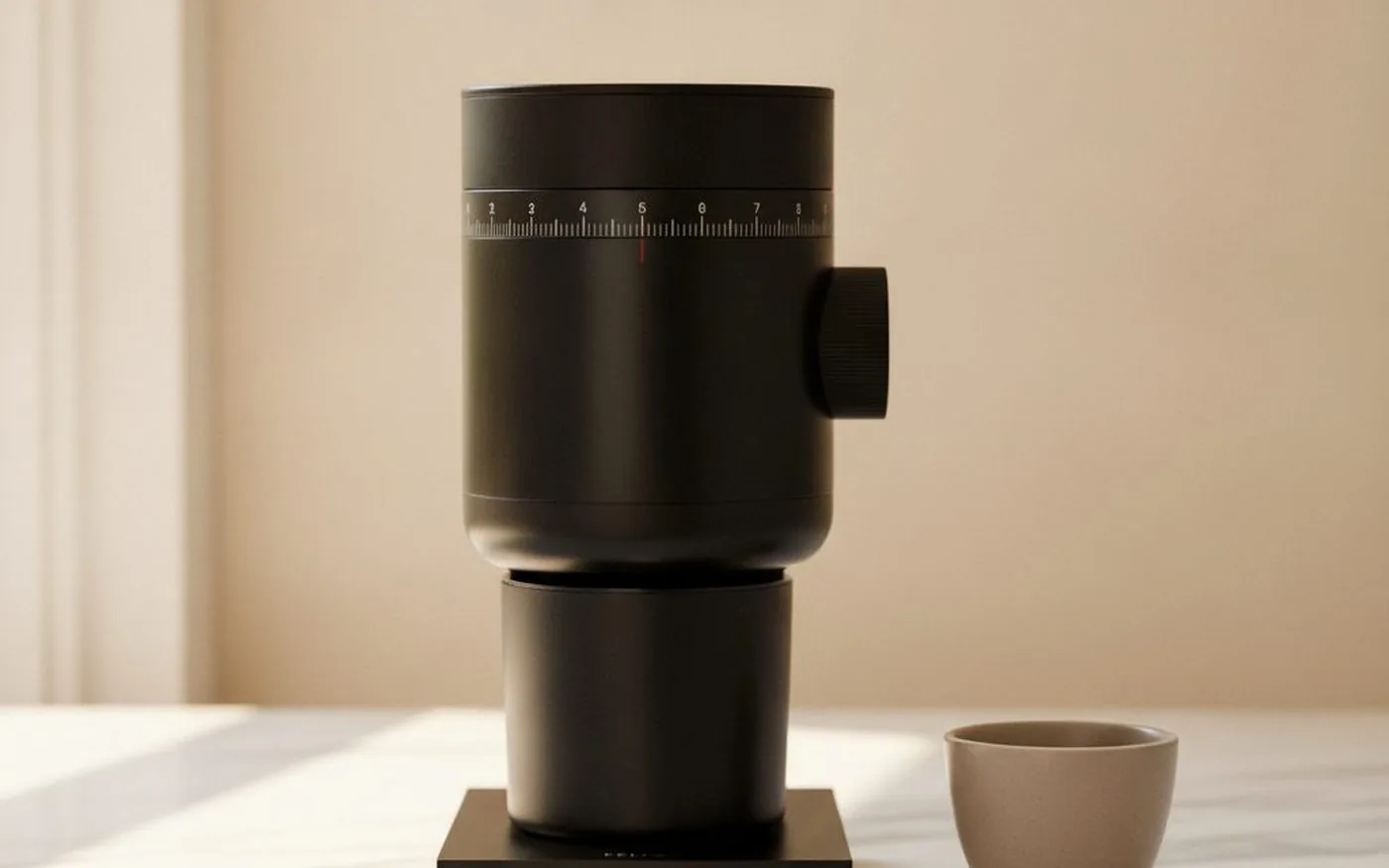
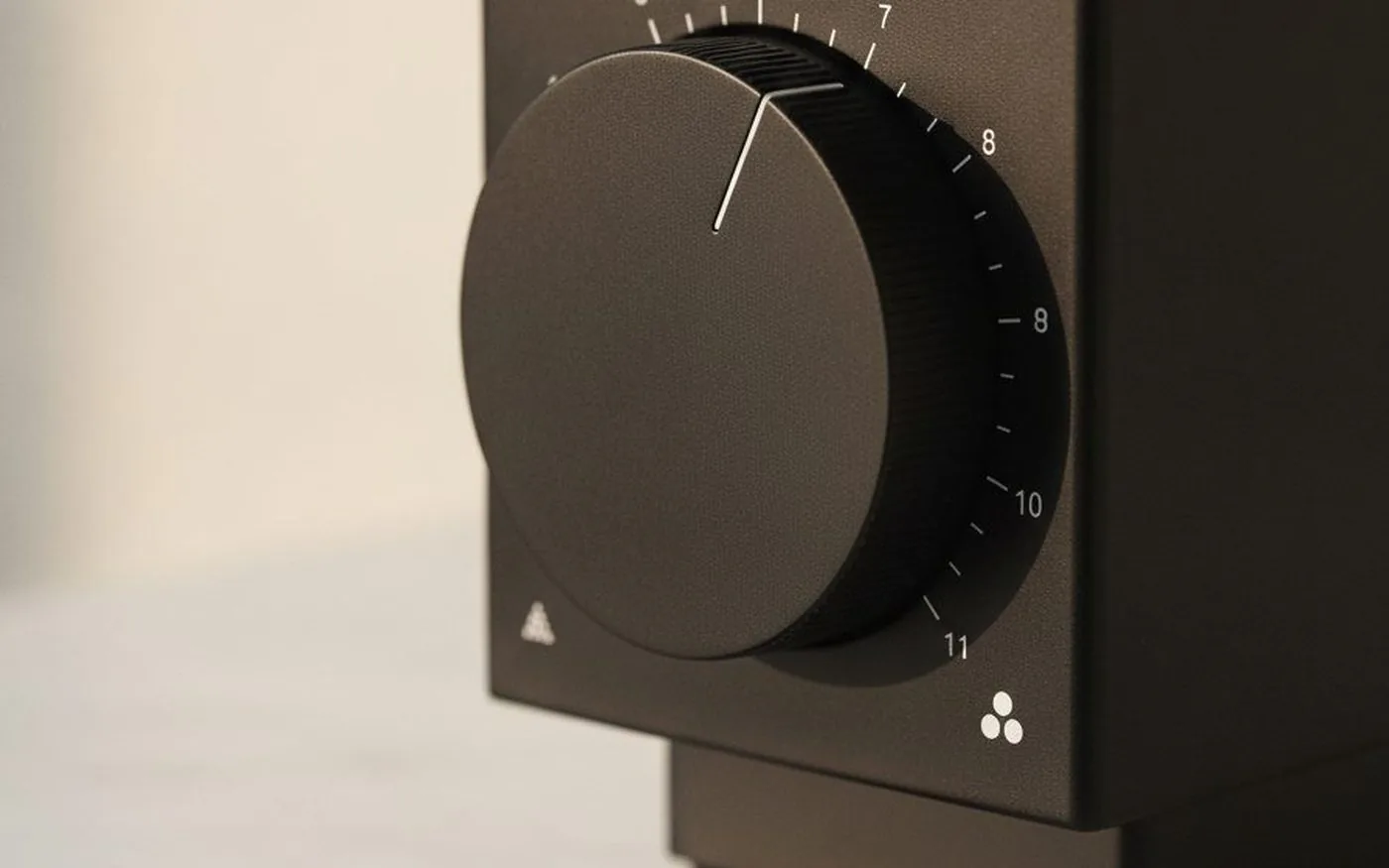
Setting adjustments: The Ode has 11 stepped settings for brew-range work. Steps are clearly delineated and repeatable - moving from V60 to French press and back to V60 puts you in the same place each time. The Opus has 9 settings spanning espresso to Turkish. Each step covers more ground than the Ode, which means you have less micro-adjustment available at any given brew method. For espresso dialling, this is a real limitation - finer adjustments are what espresso demands.
Mess: Both units are clean grinders by electric grinder standards. The Ode's electrostatic tendency at dry settings (particularly in low-humidity environments) can cause light spraying of fine particles if you open the catch cup too quickly. A gentle tap on the counter before removing the cup solves it. The Opus is marginally less prone to this.
Counter space: Both units are compact by grinder standards - identical footprint at roughly 10cm x 16cm, 24cm tall. They fit comfortably beside an espresso machine without dominating a kitchen worktop.
Build, Design and Footprint
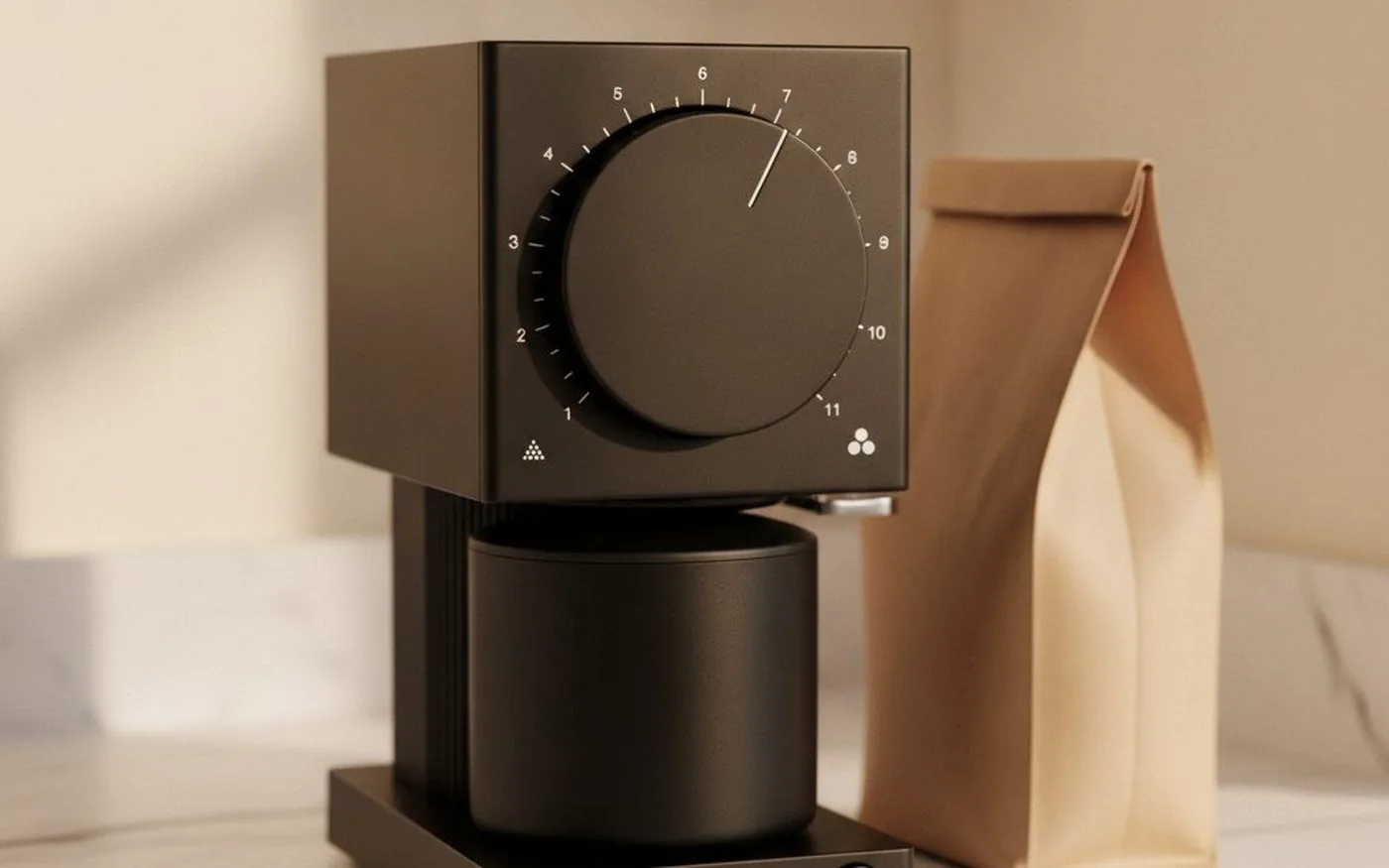
Fellow's industrial design is one of the reasons both grinders sell at the price they do. The matte black finish on both units is consistent and well-executed - no flex in the casing, no rattles during grinding, no plastic-feeling panels. The materials justify the price point when you hold them.
The Ode Gen 2 weighs 4.6kg. It does not move during grinding. The Opus weighs 2.3kg and behaves the same way. Both have rubber feet that grip a worktop surface effectively.
What is different at the design level: The Ode's grounds cup is magnetic, which makes one-handed removal clean. The Opus uses a friction-fit cup. Functionally both work well. The Ode's magnetic lid for the bean intake is also a minor quality-of-life improvement over the Opus's open intake, which is more prone to catching ambient dust.
The one design limitation on the Ode: there is no way to use it with a portafilter fork. The Ode was designed for filter brewing, and the grounds cup is the expected output vessel. If you later want to use it with an espresso machine portafilter, you cannot - the exit height and chute design do not accommodate it. The Opus does not have this limitation.
Both carry a 2-year warranty. Fellow's customer service reputation in the UK is broadly positive based on forum evidence at Home-Barista and r/Coffee.
UK Price and Value in 2026
At current UK pricing, the Fellow Opus sits around £195 and the Fellow Ode Gen 2 around £295. That is a £100 gap.
Where to buy (UK, 2026):
- "Fellow Ode Gen 2: Amazon UK | John Lewis | Fellow direct"
- Fellow Opus: Amazon UK | John Lewis | Fellow direct
(Prices verified at time of writing. Always check current pricing before purchasing - Fellow UK pricing has been stable through 2025-2026 but can shift with exchange rates.)
Is the Ode worth £100 more? Only if filter brewing is genuinely your primary use case and grind precision matters to you. The TDS data above shows a measurable difference in extraction consistency, and the narrower grind distribution is real. If you are brewing specialty coffee through a V60 or Chemex every morning, the Ode earns that premium. If you brew a cup of filter coffee occasionally and mostly use an AeroPress for convenience, the Opus is the rational choice.
The value angle on the Opus: At £195, the Fellow Opus is one of the better-value all-purpose home grinders available in the UK. The Baratza Encore ESP at around £165 is the closest rival, and the Opus beats it on build quality and design at a modest price premium. The grind quality is comparable for filter; the Opus is slightly weaker on espresso precision but neither unit is a dedicated espresso grinder.
Note on the Opus generation: The current unit sold as "Opus 2" (or just "Opus" in most UK retail listings) includes an updated burr carrier and minor workflow improvements over the original Opus. If you see a significant discount on an original Opus, the differences are minor. The core burr spec is unchanged.
Who the Fellow Ode Gen 2 Is For
Buy the Fellow Ode Gen 2 if:
- Your daily brew is a V60, Chemex, Kalita Wave, or Aeropress, and the quality of that brew matters to you
- You appreciate measured extraction numbers and cup clarity over convenience
- You will never own an espresso machine, or you already own a dedicated espresso grinder separately
- You want the best flat burr grinder available under £350 in the UK
The Ode is a focused tool. The best way I can put it: I kept the Ode in the kitchen because every morning pour-over I made with it was visibly more consistent than the same recipe on the Opus. The TDS readings backed this up. If that kind of extraction discipline is part of your morning routine, this grinder fits it.
What the Ode will not do: dial in for espresso, handle Moka pot recipes, or give you the versatility to switch between brew methods with wide variation. If your coffee life involves a guest who wants an espresso, the Ode will let you down.
Who the Fellow Opus Is For
Buy the Fellow Opus if:
- You own an espresso machine, even a basic one like a Gaggia Classic or Sage Bambino
- You want one grinder that handles espresso in the morning and filter on the weekend without buying two separate units
- You are new to specialty coffee grinding and want a capable all-rounder before committing to a more specialised setup
- Budget is a real factor and you want the best build quality available under £200
The Opus is the grinder I would recommend to most people buying their first serious home grinder. It is not the best at any single brew method, but it is genuinely good at all of them - and at £195, it is difficult to fault as an entry point to proper single-dose grinding.
One honest limitation: if you drink only espresso and care deeply about shot quality, the Opus will satisfy you initially but you will feel its ceiling within a year. At that point you are looking at the Eureka Mignon Specialita or similar. If you know espresso is your primary interest from day one, buy the Specialita and skip the Opus.
Alternatives Worth Comparing Before You Buy
If neither the Ode nor the Opus fits your exact needs, these five grinders are worth considering:
Baratza Encore ESP (around £165) - the closest rival to the Opus under £200. Good all-purpose grinder with a strong track record for espresso at its price point. The Opus beats it on build quality and design; the Encore ESP is arguably more repairable due to Baratza's spare-parts availability.
Wilfa Svart Aroma (around £110) - if your budget is firm at around £100 and you brew filter only, the Wilfa is a credible Ode alternative. Grind quality is noticeably below the Ode at the filter end, but for French press and AeroPress, the Svart Aroma performs well above its price point.
1Zpresso K-Ultra (around £200) - a hand grinder alternative at the Opus price point. If counter space is genuinely limited or you travel with your coffee kit, the K-Ultra produces filter and espresso grinds that rival the Opus in distribution quality - and the manual effort is around 60 seconds for 20g. Not for daily use if convenience is your priority.
Eureka Mignon Specialita (around £450) - if espresso quality is the actual goal and the Opus is not satisfying you, this is where the upgrade path leads. Flat burr, 55mm, purpose-built for espresso with serious grind adjustment range. More expensive, but the right tool for serious espresso work.
Niche Zero (around £550) - if all-purpose single-dose is the real goal and you want the best available, the Niche Zero is the benchmark. Conical burr, zero retention design, handles espresso and filter with equal seriousness. At more than double the Opus price, it belongs in a different purchase bracket entirely - but if you are considering the Ode and think you might want espresso capability in future, the Niche Zero is the smarter long-term investment than owning two separate grinders.
When it comes to pairing any of these grinders with a best coffee beans uk selection, the grinder's burr design affects which bean profiles it expresses best - the Ode's flat burr is particularly well-suited to light roasts and mould-free coffee uk specialty grade coffees where extraction clarity reveals the origin character.
Frequently Asked Questions
Is the Fellow Ode better than the Opus?
The Ode is better than the Opus specifically for filter brewing - V60, Chemex, Kalita Wave, and AeroPress. Its 64mm flat burr produces a narrower particle distribution and cleaner extraction, which our test kitchen measured at an average TDS of 1.36% vs the Opus's 1.29% on the same recipe. If filter is your primary or only brew method, yes - the Ode is the better tool. If you also brew espresso, the Opus is better because the Ode cannot reach espresso grind sizes at all.
Can the Fellow Opus grind for espresso?
Yes, the Fellow Opus grinds fine enough for espresso. On settings 1-2, the Opus 2 produces a grind that works on home espresso machines including the Gaggia Classic Pro and Sage Bambino. The output is not as precise as a dedicated espresso grinder like the Eureka Mignon Specialita, and fine-tuning is limited by the Opus's 9-step range. You will get a good home espresso shot - you will not replicate cafe-grade precision without a more specialised grinder.
Can the Fellow Ode grind for espresso?
No. The Ode Gen 2 is a brew grinder only. Its coarsest setting is finer than a French press grind, and its finest setting does not reach espresso territory. This is a deliberate design decision - the Ode is engineered to be the best possible filter grinder, not a compromise between filter and espresso. If you buy the Ode expecting to use it for espresso, you will need to return it. The grind range is physically limited to brew-method sizes.
Is the Fellow Ode Gen 2 worth the extra money over the Opus?
The Ode Gen 2 is worth the extra £100 if filter coffee is your primary brew method and you care about extraction consistency. The TDS data and grind distribution comparisons from our testing show a measurable quality difference on V60 and Chemex. If you brew filter occasionally or use an AeroPress for convenience, the Opus is the better value. If you own or intend to own an espresso machine, the £100 premium for the Ode makes no sense - buy the Opus instead.
Which Fellow grinder is best for AeroPress and pour-over?
For pour-over (V60, Chemex), the Ode Gen 2 is the better choice - its flat burr produces cleaner extraction with more distinct origin character. For AeroPress specifically, the gap narrows significantly. AeroPress is a more forgiving brew method and the Opus performs well at the coarser AeroPress settings. If AeroPress is your primary method and you also want espresso capability, the Opus handles both adequately. If pour-over quality is the priority, the Ode is the clearer answer.
What is the difference between flat and conical burrs?
Flat burrs shear coffee between two parallel rotating plates, producing a narrower particle size distribution with fewer fines and boulders - ideal for filter brewing where even extraction across a coffee bed matters. Conical burrs move coffee between an inner cone and an outer ring, producing slightly more variation in particle size. This wider distribution adds body in the cup and creates the fine particles that help build crema in espresso. Flat burrs are generally favoured for filter; conical burrs are more versatile across methods. The Fellow Ode uses flat burrs; the Opus uses conical.
Is the Fellow Opus 2 different from the original Opus?
The Fellow Opus 2 (the current model) includes an updated burr carrier and minor workflow refinements compared to the original Opus. The core burr specification - 48mm conical - is unchanged, and grind performance is similar. If you find the original Opus discounted significantly (£30 or more below the Opus 2 price), the older model remains a capable grinder. Most UK retailers now stock the Opus 2 as the default unit. Check the product listing description if you are unsure which generation is in stock.
Which Fellow grinder is quieter day to day?
The Ode Gen 2 is marginally quieter - our Decibel X readings at 30cm showed 72-74 dB for the Ode vs 74-77 dB for the Opus. The difference is real but small. Both grinders are audible in a home environment. Neither is quiet enough to avoid disturbing a sleeping housemate through a closed door at 6am. If absolute quiet matters, a hand grinder like the 1Zpresso K-Ultra is the genuine solution - hand grinders produce around 50-55 dB at the same measurement distance.
A wellness entrepreneur and biohacker, James explores the intersection of hospitality and health - from clean fuel and recovery tools to mindful routines that build balance into daily life.