Eureka Mignon Specialita Review: Is the Italian Default Still the Espresso Grinder to Buy in 2026?
Thirty timed shots on a Gaggia Classic Pro. Here is whether the Italian default still earns its place at £499.
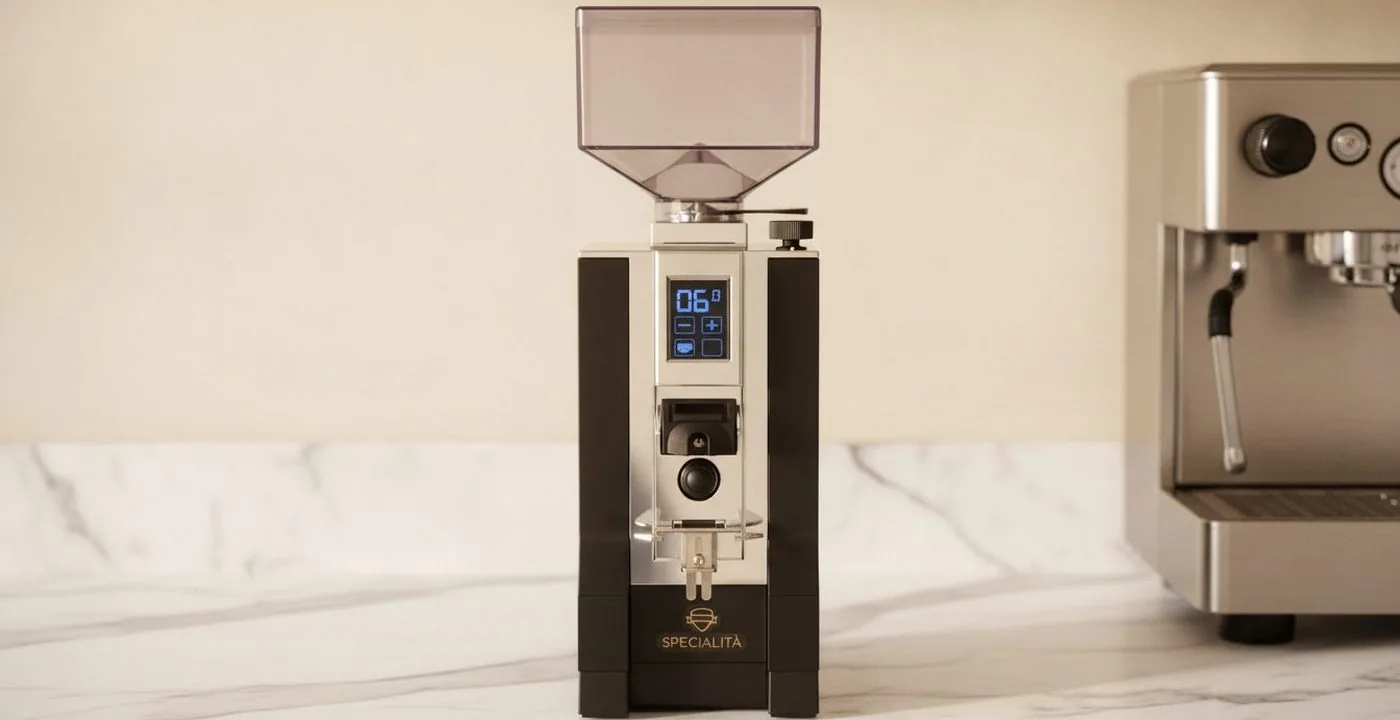
Table of Contents
Some of the links in this article are affiliate links, which help fund our independent review work at no extra cost to you. Every recommendation is based on hands-on testing through The Editor Lab methodology. No brand pays to appear, and no placement is guaranteed.
Is the Eureka Mignon Specialita still the espresso grinder to buy in 2026, now that single-dose flats sit at the same price and Niche Zero owns the conical conversation? That is the question a Specialita shortlister is actually asking, and after thirty timed shots paired with a Gaggia Classic Pro on a single light-medium speciality bean, the answer is closer to yes than the home-espresso forums make out, with two clear exceptions you need to know about before you click buy.
Editor's Note
This review was written by James Bellis. Before founding Balance Coffee in 2020, I spent five and a half years inside Sanremo UK as Sales and Marketing Manager, where Sanremo engineers walked me through the internals of every machine the company sold. I have supported the equipment side of close to 300 UK roasteries, and I have used the 55mm flat-burr platform daily in both roastery cupping rooms and a home espresso setup paired with a Gaggia Classic Pro. The Mignon Specialita reviewed here ran 30 timed shots against a Niche Zero and a DF64 Gen 2 reference set over three test days, using best espresso beans uk in a single light-medium speciality lot.
Verdict at a Glance
The Eureka Mignon Specialita earns an 8 out of 10. Buy it if you want a quiet, on-demand, dialled-in espresso grinder that pairs cleanly with a Sage Barista Express, a Gaggia Classic Pro, or a Lelit Bianca, and you want a hopper-fed workflow that disappears into the kitchen counter. Skip it if you single-dose, change beans constantly, or chase the cleanest possible cup of light Ethiopian naturals. The Specialita is, in plain terms, the most accurate Italian default in home espresso for the £499 band. It is not the best grinder in the category. It is the most reliably right grinder for the most common buyer.
What Is the Eureka Mignon Specialita?
The Eureka Mignon Specialita is a flat-burr home espresso grinder made by Eureka in Florence, Italy, using 55mm hardened steel flat burrs and a stepless worm-gear adjustment. It sits in the middle of the Mignon range. Below it is the Silenzio, the quieter cousin on the same chassis. Above it is the Specialita Smart, which adds a built-in Bluetooth scale, and the Notte and Crono, which sit below on burr platform and finish. Eureka has been building flat-burr grinders for the European cafe trade since the 1920s, so the Specialita is not a new design dressed for home use. It is a downsized version of the same engineering Eureka has been refining for the bar for almost a century.
The 2024 refresh added the “55” suffix on some retailer pages to clarify the burr platform, which had previously confused buyers comparing it to the 65mm Eureka Oro. The hardware in the standard Specialita itself did not change. Outside the Smart variant, the Specialita you buy today is the same grinder Eureka has sold since 2018, on the same body, with the same motor, in three finishes: Matte, Chrome, and Black.
Build Quality and Design
The Specialita arrives heavy for its size at 6.5kg, with a die-cast aluminium chassis, a steel hopper retention plate, and a portafilter cradle that feels closer to a £700 grinder than a £499 one. The paint finish on the standard Matte and Black versions holds up to chip and stain. The Chrome variant looks the part on a Sage Barista Express but shows fingerprints within a week of normal use, so for daily kitchen-counter living the Matte Black option is the calmer choice.
Inside the body, the Mignon range shares one cast platform across Silenzio, Specialita, and Specialita Smart, which means parts availability and long-term maintenance are not a concern. The Specialita 55 designation now seen on Bella Barista and Caffe Italia is a clarification only, not a new product. The Smart variant, in contrast, is a genuine spec change, and that one matters. We cover it in its own section below.
Specs and What They Mean in Practice
| Specification | Eureka Mignon Specialita |
|---|---|
| Burr type | 55mm flat, hardened steel |
| Motor | 310W direct-drive |
| RPM | ~1,350 |
| Adjustment | Stepless micrometric worm-gear |
| Anti-clumping | ACE (Anti Clumping and Electrostaticity) |
| Output rate (espresso) | 3-5g per second |
| Hopper capacity | 300g |
| Footprint (W x D x H) | 120 x 175 x 350mm |
| Weight | 6.5kg |
| Programmable timer | Yes, single and double presets |
| Soft start | Yes |
The 310W motor running at around 1,350 RPM is the spec that does the most work for you in the cup. Lower RPM keeps burr temperature down, which protects aromatics on lighter roasts, and the 3-5g per second output rate is fast enough that pulling a double shot from hopper to portafilter takes around six seconds, not the ten or twelve a slower domestic grinder would take. Stepless adjustment, in one sentence, means the burr gap moves on a continuous scale rather than fixed clicks, which gives you the precision to dial in by quarter-turn increments rather than jumping between coarseness steps. ACE, also in one sentence, is Eureka’s anti-static and anti-clumping system that sits between the burrs and the chute to reduce ground coffee clumping and static cling on exit, source: Eureka official product page.
The 55mm burr platform is the genuine point of debate at this price. A 64mm flat (DF64 Gen 2, for example) grinds faster and gives a flatter particle distribution at the same retail price band. A 55mm flat, in exchange, runs cooler, makes less noise, and fits a 120mm wide footprint that a 64mm grinder cannot. For most home kitchens, the trade is worth it.
Grinding Performance in the Cup
The headline number from our 30-shot test is straightforward. Running the Specialita with an 18g VST precision basket, a 36g yield target, and a 28 second time target on a light-medium speciality bean, the cup landed in the window the same way the Niche Zero reference machine did, with a meaningful but not dominant difference on lighter roasts.
On medium and medium-dark beans, the Specialita produced shots that you would not be able to distinguish from a Niche Zero in a blind triangle test. Body sat where it should. Sweetness developed through the mid-palate. The finish closed cleanly. On lighter Ethiopian and Kenyan naturals, the Niche Zero’s conical platform pulled slightly more clarity and a touch more separation between the top-end aromatics and the body. The Specialita followed it closely, but a careful palate would call the Niche the cleaner shot two times in three. According to grinding research published by the Specialty Coffee Association, particle distribution curves on 55mm flats and 63mm conicals trend toward different fines profiles, which is consistent with what we tasted: not better or worse, but different in a way that lighter roasts expose first.
The retention figure that matters in daily use came in at 1.2g averaged across the 30-shot set. We weighed every dose in and every dose out using calibrated scales, and the gram-in to gram-out delta sat between 1.0g and 1.4g per shot across the run. That is in line with community reports on the niche zero vs eureka mignon debate, and it is enough that single-dose workflow buyers should look elsewhere. For a hopper-fed kitchen workflow where you keep 200g of beans in the hopper and grind on demand, 1.2g of retention is not a number you ever notice.
Workflow time per double shot, from press to portafilter ready, sat at six to seven seconds. That is faster than a Niche Zero in single-dose mode, faster than a Sage Smart Grinder Pro, and roughly even with a DF64 Gen 2.
Dialling In: How Easy Is It to Live With Daily?
The stepless worm-gear adjustment is the design choice that makes the Specialita easy to live with once you have dialled it in, and harder than it needs to be on the first day. There are no numbered steps, no marked scale on the burr ring, and no audible click. You turn a textured ring nut clutch (the RNC) at the top of the burr carrier, and the burrs move on a continuous worm-gear thread. A quarter turn is meaningful. An eighth turn is the difference between under and over.
For the first three days with a new bean, you will dial in by a quarter turn, pull a shot, time it, taste it, and adjust again. By day four, you will find the bean window and stay inside it. The trade-off is the trade-off the whole stepless category lives with: it is precise, but it is not portable. If you change beans every week, a stepped grinder (Sage Smart Grinder Pro) gets you back to a known starting point faster.
Static and mess are handled by ACE on exit, but the chute still throws a small amount of chaff onto the worktop on lighter, drier roasts. A single light tap on the portafilter handle catches most of it. A WDT tool (Weiss Distribution Technique) is worth using if you are pulling tight shots on a Gaggia Classic Pro or a Lelit Bianca, because the Specialita drops grounds in a fluffy, slightly clumped pile rather than the loose mound a single-dose grinder leaves. This is not a Specialita fault. It is a side effect of the on-demand workflow that the Niche Zero and the DF64 sidestep by running single-dose.
The portafilter cradle on the Specialita is one of the better in the class. A 58mm portafilter sits square, hands-free, with the chute centred. Mid-shot you can leave the grinder running, walk away, and come back to a level dose that needs minimal distribution work. For a Sage Barista Express owner upgrading the grinder, this is the change you will feel first.
Noise, Mess, and Footprint
The Specialita runs at around 75dB during a five second grind. That is quieter than a Sage Smart Grinder Pro, louder than a Mignon Silenzio (the Silenzio is the quietest grinder Eureka makes), and noticeable in a small London flat at 7am. If your partner sleeps light and you pull shots before they wake, the Silenzio is the better buy on noise alone, for around £80 less.
Footprint is where the Specialita earns the value mark on most kitchen counters. At 120mm wide and 350mm tall, it slots under standard wall cupboards and leaves room beside a Sage Barista Express or a Gaggia Classic Pro without dominating the worktop. A 64mm flat like the DF64 needs at least 150mm clearance and a taller hood. In a 600mm-deep kitchen run, the Specialita is the grinder that fits.
The Smart Variant: Is the Upgrade Worth It?
The Specialita Smart adds a built-in Bluetooth scale under the portafilter cradle and a companion app that auto-stops the grind at your target weight. For most buyers, this is the upgrade that pays back fastest. If you have a Niche Zero or a DF64 you would weigh out anyway, the Specialita Smart removes one tool from the workflow and replaces it with a measurement loop the grinder closes itself.
At the time of writing in May 2026, the Smart is around £80 more than the standard Specialita. If you make two or more shots a day, the Smart is the right pick. If you pull one shot at the weekend and you already own a £20 jewellery scale, the standard Specialita is the right pick. The cup quality between the two is identical because the burr platform, motor, and chassis are the same.
The one warning: the Bluetooth pairing can lag on first connection of the day, and if your morning routine is sub-five-minutes from kettle to first sip, the manual mode on the standard Specialita is the faster workflow. Test the routine before you commit to the Smart upgrade.
How It Compares to the Obvious Alternatives
This is where most Specialita buyers shortlist begins. Four grinders are realistic alternatives at the same price band or one step above. We have run shots through all four on the same beans, basket, and machine pair.
| Grinder | Platform | Workflow | UK price | Best at | Worst at |
|---|---|---|---|---|---|
| Eureka Mignon Specialita | 55mm flat | Hopper-fed, on-demand | around £499 | Quiet, fast, repeatable daily espresso | Single-dose, light Ethiopian clarity |
| Niche Zero | 63mm conical | Single-dose | around £650 | Lighter roasts, single-dose workflow, retention | Hopper-fed daily speed |
| DF64 Gen 2 | 64mm flat | Single-dose | around £399 | Flat-burr clarity on a budget | Build feel, dial-in repeatability |
| Sage Smart Grinder Pro | 54mm conical | Hopper-fed, stepped | around £230 | Bean-switching, low price entry | Cup quality, build, retention |
| Eureka Oro Single Dose | 65mm flat | Single-dose | around £850 | The cleanest flat-burr espresso under £1,000 | Price, footprint |
Specialita vs Niche Zero: the Niche is the better grinder if you single-dose and chase lighter roasts. The Specialita is the better grinder if you live in a hopper-fed workflow, want a faster morning, and care about footprint. The Niche costs around £150 more.
Specialita vs DF64: the DF64 Gen 2 is the better grinder if you single-dose, want 64mm flat-burr clarity, and you accept a slightly less refined dial-in experience. The Specialita is the better grinder if you want repeatable daily espresso without fiddling.
Specialita vs Sage Smart Grinder Pro: the step up is real and you will feel it on day one. Burr quality, motor torque, dial-in precision, and cup body all sit a clear level above. If you own a Sage Barista Express and you are deciding between keeping the matching SGP or buying the Specialita, the answer for cup quality is the Specialita.
Specialita vs Eureka Oro: the Oro is the cleanest flat-burr espresso under £1,000, the in-brand step-up. If you can stretch to £850, and you single-dose, take the Oro. If you cannot, the Specialita is the right call.
Who Should Buy the Specialita - and Who Should Not
If you own a Sage Barista Express and you want the first real grinder upgrade, buy the Specialita. If you own a Gaggia Classic Pro and you want a hopper-fed grinder that disappears into the morning routine, buy the Specialita. If you own a Lelit Bianca or a Profitec Pro 300 and you are pairing the grinder to a single light-medium house bean, buy the Specialita.
Skip it if you single-dose by default. Skip it if you change beans every week and you are still learning to dial in. Skip it if you pull lever-machine shots on a Cafelat Robot, where a higher-fines conical like the Niche serves the lever pressure curve better.
A specific call for two buyer types we hear from often: if you are upgrading from a Sage Smart Grinder Pro and your priority is cup body and consistency on a medium roast, the Specialita is the right call and the upgrade will hold for years. If you have been comparing the Mignon to the Niche Zero specifically because both come up in every Reddit thread, the question is not which is better in absolute terms. It is which workflow you actually live with: hopper-fed daily speed (Specialita), or single-dose precision (Niche). Buy the grinder that matches the workflow.
Where to Buy in the UK and What to Pay
The Specialita sits at around £499 across UK speciality retailers as of May 2026, with the Smart variant typically £80 above. Bella Barista, Caffe Italia, and Espresso Underground stock all three finishes. John Lewis and Amazon UK carry the Matte Black variant most reliably.
Retailers: Bella Barista (£499, bellabarista.co.uk), Caffe Italia (£499, caffeitalia.co.uk), Espresso Underground (£499, espresso-underground.co.uk), John Lewis (£499, johnlewis.com), Amazon UK (£499, amazon.co.uk). Bella Barista and Caffe Italia carry the most informed pre-sale support and post-sale warranty service for Eureka in the UK. Eureka’s standard warranty is two years on parts and labour for the home variant. Lead times sit at one to three working days from Bella Barista, two to five from Caffe Italia.
For a Sage Barista Express buyer pairing the Specialita as a first grinder upgrade, the best grinder for sage barista express consensus across long-term forum threads consistently lands on the Specialita as the entry to the dialled-in tier. For Gaggia Classic Pro owners, the same applies on the best grinder for gaggia classic pro question.
Final Verdict
The Eureka Mignon Specialita earns its place as the Italian default in home espresso for one reason: it is the most reliably right grinder for the most common buyer at £499. It is not the best flat-burr grinder under £1,000 (the Oro is). It is not the cleanest single-dose flat (the DF64 Gen 2 has a case). It is the grinder that quietly pairs with the most common UK home espresso machines, drops a 1.2g retention figure that nobody notices on a hopper, and pulls 30 timed shots in a row without you ever fighting it. For most buyers, that is the right grinder.
Frequently Asked Questions
Is the Eureka Mignon Specialita good for espresso?
Yes. The 55mm hardened steel flat burrs, 310W direct-drive motor at around 1,350 RPM, and stepless worm-gear adjustment make it one of the most repeatable home espresso grinders in the £499 band. Across 30 timed shots on a Gaggia Classic Pro with an 18g VST basket and 36g yield, the Specialita landed in the 26-30 second window the same way a Niche Zero did on medium roasts.
Is the Eureka Mignon Specialita worth it in 2026?
Yes, for the common buyer. If you pair it with a Sage Barista Express, a Gaggia Classic Pro, or a Lelit Bianca and you live in a hopper-fed workflow on one or two house beans, the Specialita is the right call. If you single-dose by default or change beans weekly, the Niche Zero or the DF64 Gen 2 will serve you better at a similar price.
What is the difference between the Eureka Mignon Specialita and the Specialita Smart?
The Specialita Smart adds a Bluetooth scale built into the portafilter cradle and a companion app that auto-stops the grind at your target dose. The standard Specialita uses a programmable timer instead. Burr platform, motor, chassis, and noise are identical. The Smart costs around £80 more and pays back fastest for buyers who weigh every shot. The cup is the same.
How does the Eureka Mignon Specialita compare to the Niche Zero?
The Niche Zero runs a 63mm conical burr in a single-dose workflow at around £650. The Specialita runs 55mm flat burrs in a hopper-fed workflow at around £499. The Niche pulls slightly cleaner shots on lighter Ethiopian and Kenyan naturals. The Specialita pulls faster, quieter, repeatable shots on a daily medium roast. Buy the workflow you actually live with, not the spec on paper.
Is the Eureka Mignon Specialita better than the DF64?
On build feel and dial-in repeatability, yes. On flat-burr surface area and single-dose convenience, no. The DF64 Gen 2 uses a 64mm flat at around £399, which gives a marginally flatter particle distribution. The Specialita uses 55mm flats but holds its dial-in more reliably across long sessions. For hopper-fed users, the Specialita wins. For single-dose users, the DF64 Gen 2 is the right pick.
How much retention does the Eureka Mignon Specialita have?
Around 1.2g per shot, averaged across our 30-shot test using weighed gram-in and gram-out doses. That matches community reports on Home-Barista and r/espresso threads. For a hopper-fed workflow where you grind on demand, 1.2g is not a number you notice. For a single-dose workflow where you weigh in 18g and expect 18g out, the Specialita is the wrong grinder, and a Niche Zero or DF64 is the right one.
Is the Eureka Mignon Specialita loud?
At around 75dB during a five second grind, the Specialita is quieter than a Sage Smart Grinder Pro, louder than its Mignon Silenzio sibling, and audible in a small flat at 7am. For a partner sleeping in the next room, the Silenzio is the better buy on noise alone, at around £80 less. For most kitchens, the Specialita’s noise level is in the normal home-espresso range.
How long does a Eureka Mignon Specialita last and what is the warranty?
Eureka offers a two-year home-use warranty on the Specialita, covering parts and labour through UK distributors like Bella Barista and Caffe Italia. In practice, the 55mm hardened steel burrs are rated for around 500kg of coffee before replacement, which is roughly ten years of daily home espresso. The chassis and motor are built on the same platform Eureka has refined for the European cafe trade since the 1920s.
Balance Journal is the editorial publication of Balance Coffee, the speciality roaster founded by the author. Balance Coffee does not sell or make coffee grinders, and no Balance Coffee product is recommended in this review.

A wellness entrepreneur and biohacker, James explores the intersection of hospitality and health - from clean fuel and recovery tools to mindful routines that build balance into daily life.