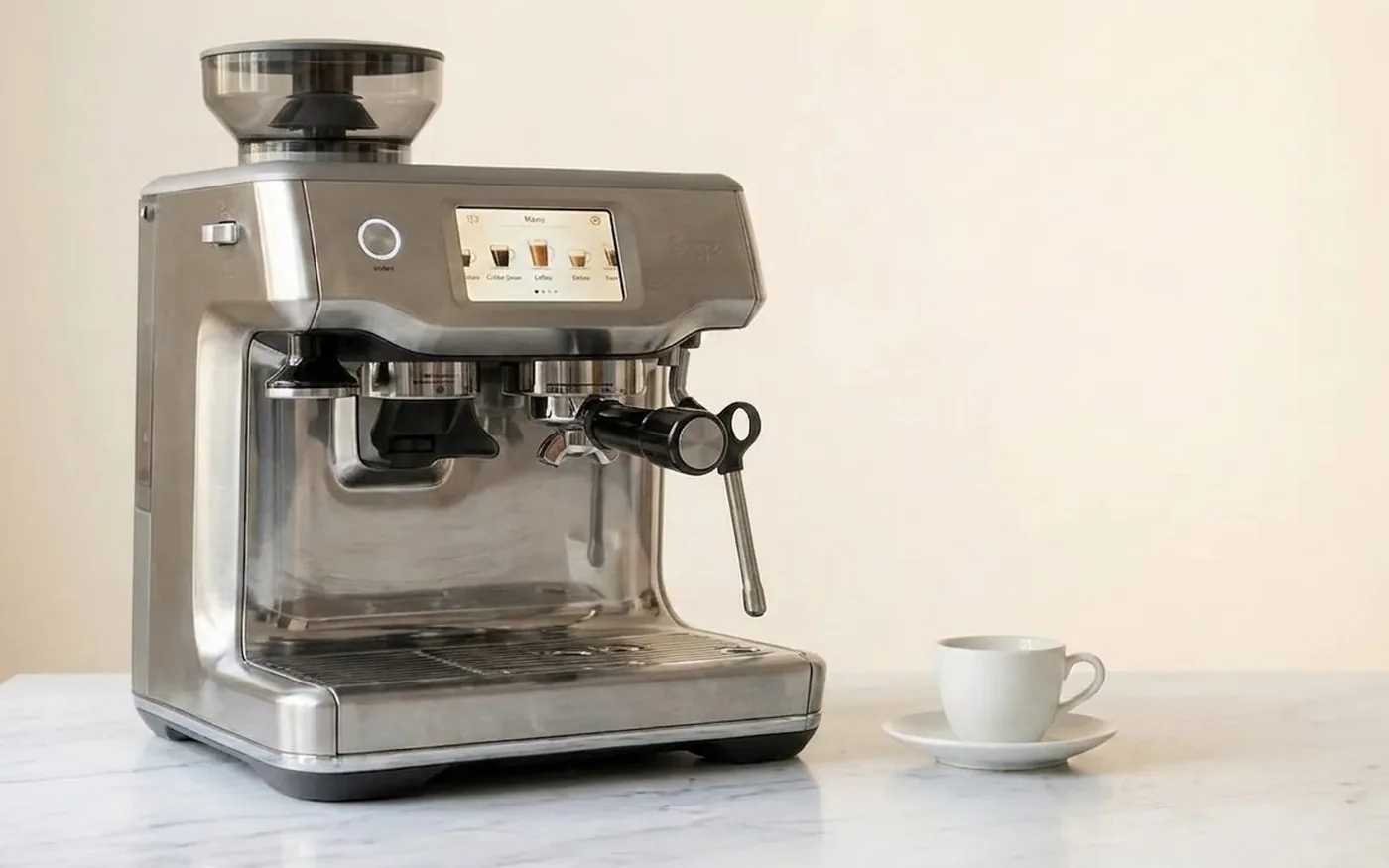
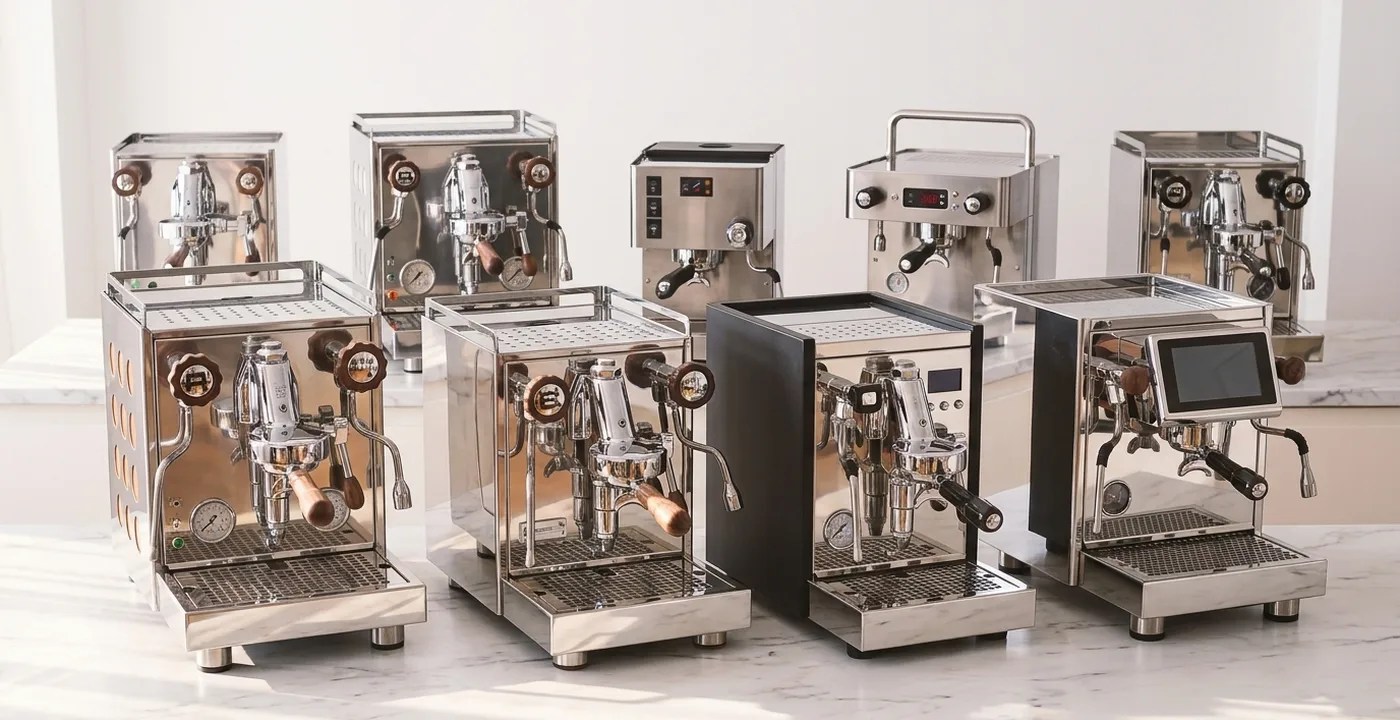
Nine machines, 60 days, probe temperature data. A former Sanremo manager ranks the prosumer tier on the cup, not the spec sheet.
Table of Contents
Some of the links in this article are affiliate links, which help fund our independent review work at no extra cost to you. Every recommendation is based on hands-on testing through The Editor Lab methodology. No brand pays to appear, and no placement is guaranteed.
A prosumer espresso machine is a home machine built to commercial standards - E61 group head, dual boiler or heat exchanger, a metal frame and serviceable parts - sized and priced for someone pulling a handful of shots a day rather than four hundred. If you have already worn out a Sage Barista Express and want to close the gap between your kitchen and your favourite cafe, this is the tier where that actually happens. We tested nine of them over 60 days, ran probe temperature readings on the top three, and ranked them on what they do in the cup, not what they claim on the box.
I should say up front where I stand. I spent five and a half years as Sales and Marketing Manager for Sanremo UK, the Italian espresso machine manufacturer, where I was trained by authorised engineers on the boiler systems, PID control units, and group head mechanics that sit inside almost every machine on this list. I also use a Rocket at home, which is why one of them appears here and why I have opinions about the brand that go beyond a spec sheet. The best prosumer espresso machine for you depends on how many milk drinks you make, how much counter space you have, and whether you already own a grinder worth the name. That last point matters more than any machine on this page, and I will keep coming back to it.
Editor's Note
Our Editor Lab team ran each of these nine machines as a daily driver for 60 days, logged shot counts, and measured group head temperature stability on the top three with a handheld calibration probe. Ranking is editorial quality first. Where a machine has an active UK affiliate partner we say so, but it never buys a higher placement.
I founded Balance Coffee in 2020 after years inside the coffee trade, and before that I started out at UCC Coffee in 2012 training baristas across commercial accounts. The Sanremo years are the relevant ones for this article: I worked alongside people like Sasa Sestic, the 2015 World Barista Champion, on the Sanremo SWAT team, and I spent those years matching equipment to the brewing goals of roasters from Scotland to Devon. The machines below are not showroom encounters for me. Several of them I have lived with, and one of them I still pull my morning shot on.
What "Prosumer" Actually Means (And What It Does Not)
The word is a portmanteau of professional and consumer, and it gets stretched until it means nothing. Here is the honest line: a prosumer espresso machine borrows commercial architecture and shrinks the duty cycle. You get the E61 group head a cafe uses, the temperature stability a cafe needs, and the build quality that survives years of daily use, but the boiler is sized for two to ten shots a day, not two hundred.
What it is not is a £400 machine with a pressure gauge bolted on. The dividing line is real. A true prosumer machine has a serviceable group head, gaskets and seals you can replace, and thermal behaviour that lets you pull the same shot twice. The reason this matters to you is repeatability. At the entry level, two shots from the same beans can taste different because the brew temperature drifted. At this tier, that variable largely disappears, which means the rest of the result is down to your beans, your grind, and your technique.
If you self-identify as a prosumer buyer, you have probably already outgrown the budget tier. We have a separate guide to the best espresso machine under £500 for anyone still in that bracket, and one for the best espresso machine for beginners if you are buying your first proper machine. This article is for the upgrade, the £1,000 to £3,000-plus decision where the spec choices genuinely change what lands in your cup.
Our Testing Methodology: How We Evaluated 9 Machines Over 60 Days
Every machine here ran as a daily driver for at least 60 days in a real kitchen, not a 48-hour review window. We pulled shots morning and evening, made milk drinks, and logged how each machine behaved cold from standby and hot after a busy run. Each unit was paired with the same grinder for the bean-side variables, and dialled in against the same reference espresso so the cup comparison was fair.
For the top three machines we went further and measured group head temperature stability with a handheld calibration probe, the same method I used during my Sanremo years to benchmark extraction consistency. A machine that holds brew temperature within a tight band across back-to-back shots scores higher than one that swings, because that swing is what you taste as inconsistency. We logged the readings rather than relying on impressions, because temperature is the one prosumer variable you cannot judge by eye.
Our brew targets follow the Specialty Coffee Association reference points: a roughly 1:2 ratio, brew temperature around 92 to 94 degrees Celsius, and a 25 to 35 second extraction window for a standard double. We assessed each machine on temperature stability, steam power, build and serviceability, daily usability, and value for the price band. We also factored in cost of ownership, because a prosumer machine is a 15-year purchase and the descaling, gaskets, and water treatment add up. If you have invested in a prosumer machine, the beans and the grinder are where the daily result is made, so we weighted real-world workflow heavily.
Quick Comparison Table: All 9 Machines at a Glance
This is the at-a-glance view. Prices are current UK pricing as at publish in 2026 and move with stock and import timing, so treat them as a guide, not a quote. The full spec table with every column sits further down, after the individual reviews.
Rank
Machine
Boiler Type
Group
Price (approx)
Best For
1
Lelit Bianca V3
Dual boiler
E61
£1,979
Overall winner, flow control
2
Rocket Appartamento Serie Nera
Heat exchanger
E61
£1,400
E61 build quality on a budget
3
Profitec Pro 500 PID
Heat exchanger, PID
E61
£1,850
Temperature precision under £2,000
4
Sage Dual Boiler BES920
Dual boiler, PID
54mm
£1,400
Value champion
5
ECM Mechanika V Slim
Heat exchanger
E61
£1,800
Compact German build
6
Quick Mill Andreja Premium
Heat exchanger
E61
£1,500
Traditional Italian feel
7
La Marzocco Linea Mini
Dual boiler
Saturated
£5,200
Aspirational, cafe-grade group
8
Sage Oracle Touch
Dual boiler, auto
54mm
£2,100
Hands-off, auto grind and tamp
9
Bezzera Magica PID
Heat exchanger
E61
£1,200
Entry-prosumer Italian workhorse
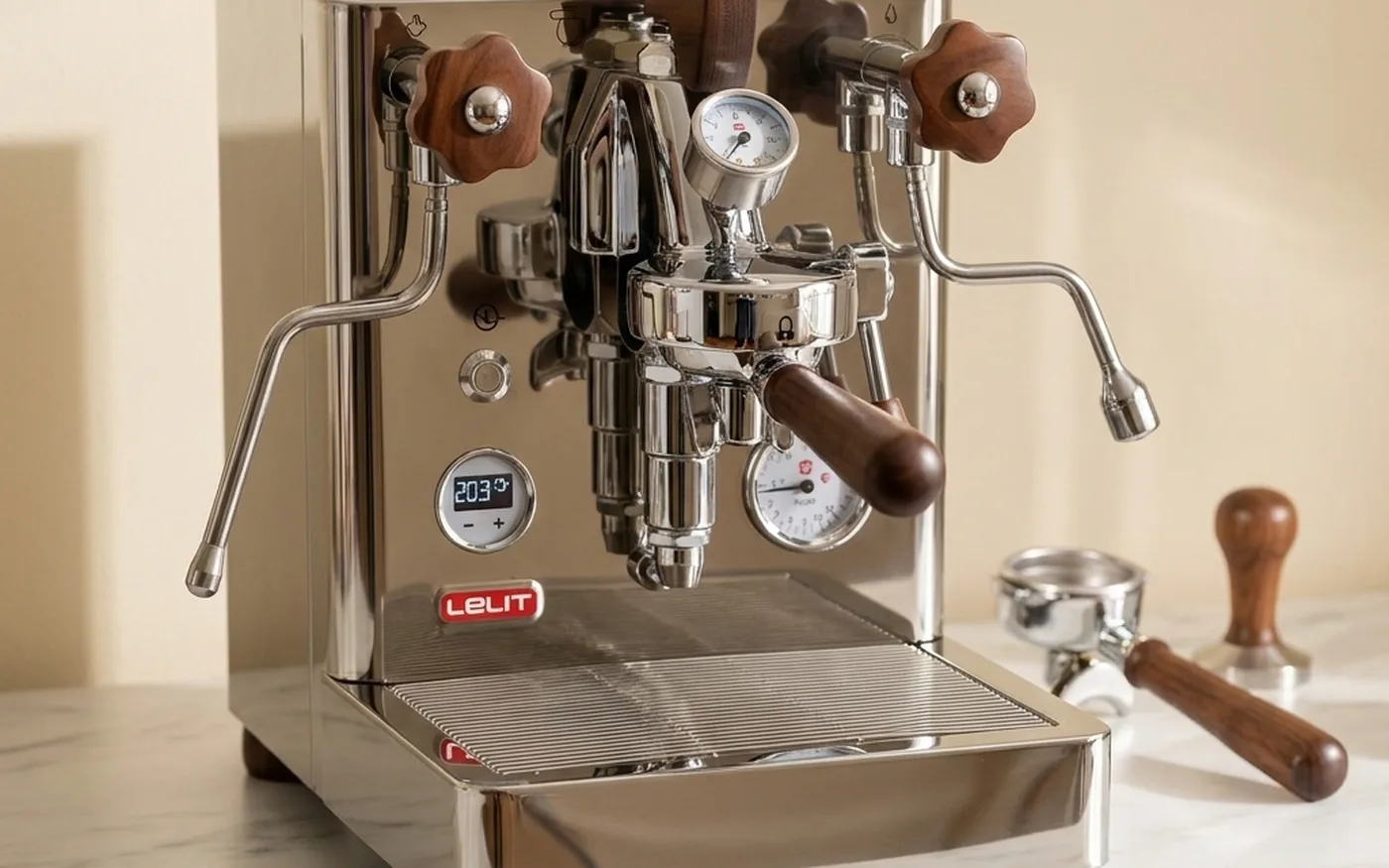
1. Lelit Bianca V3 - Best Overall Prosumer Espresso Machine
Pull a shot on the Bianca and the first thing you notice is the paddle on top of the group. It controls water flow into the puck, which lets you start gentle, build pressure, and taper off at the end. In testing this turned difficult light roasts from sharp and underextracted into something balanced, because you can slow the start and give the water time to saturate the bed evenly. Most prosumer machines give you on or off. The Bianca gives you a dial, and once you learn it you do not go back.
On the probe, the dual boiler held brew temperature within a tight band across five back-to-back shots, which is exactly what you want when you are pulling for a household rather than yourself. The steam boiler is independent, so you can texture milk and pull espresso at the same time without either circuit robbing the other. According to Lelit, the flow control is a mechanical needle valve rather than an electronic add-on, and in daily use it felt that way: direct, repeatable, no lag.
The nose on a well-dialled shot was milk chocolate and toasted hazelnut, with a rounded sweetness through the body and a clean close that did not slide into bitterness. Build quality is the usual E61 prosumer standard, with a 58mm portafilter that accepts every third-party basket and tamper you already own. The dual-mode plumbing, so you can run it from the tank or hook it to the mains, is a genuinely useful touch for a permanent kitchen install.
Here is the friction. At £1,979 it is not cheap, and the flow paddle has a learning curve that will frustrate anyone who wants to press a button and walk away. If that is you, you want the Oracle Touch lower down this list. But for the buyer who wants the ceiling of what home espresso can do without crossing into La Marzocco money, this is the one that ends the search.
“The Bianca V3 is the best prosumer espresso machine for most enthusiasts, with flow control, a true dual boiler, and E61 build at a fair price. Start here.”
James Bellis
Pros: Mechanical flow control, true dual boiler, excellent temperature stability, tank or plumbed. Cons: Price, real learning curve on the paddle. Compatible with: Any 58mm portafilter accessory, freshly ground espresso. Not a pod machine.
Evaluation Criteria
Our Findings
Best for
Overall winner, flow control and dual-boiler precision
2. Rocket Appartamento Serie Nera - Best E61 Heat Exchanger
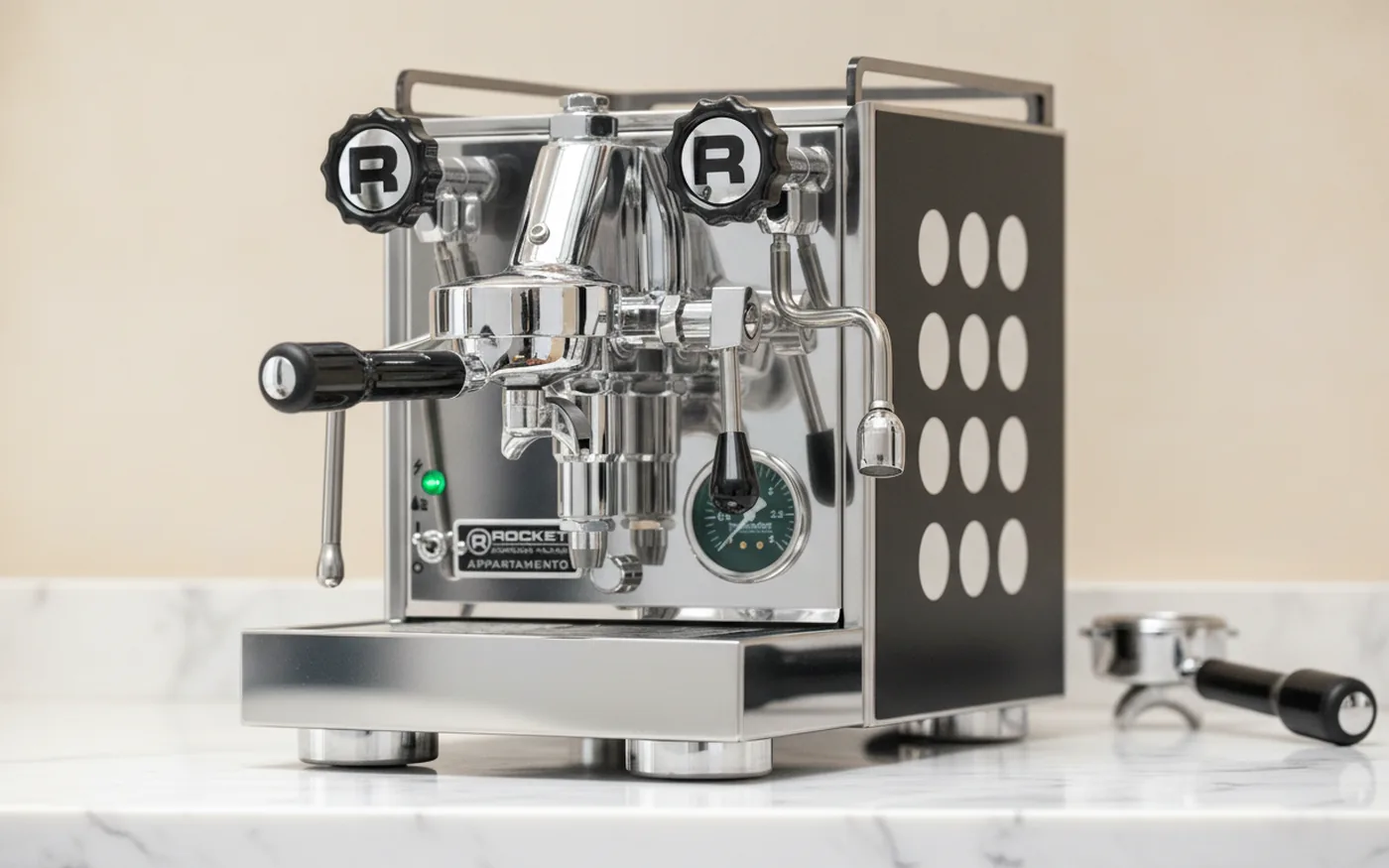
I use a Rocket at home, so I will be straight about the bias and also straight about the limits. The Appartamento Serie Nera is the machine I recommend to people who want real Italian E61 build without paying dual-boiler money, and the Serie Nera is the matte-black 2026 colourway of a machine that has been a UK enthusiast staple for years. The cult following is earned. This is a heat exchanger machine, which means a single boiler heats steam while a tube runs fresh water through it for the brew, giving you espresso and steam from one boiler.
In testing the HX held a steady brew temperature once warmed through, which on an E61 means a 20 to 30 minute warm-up before the first shot. The trade-off versus a dual boiler is that you do not get independent control of brew and steam temperature, and on a hot machine you sometimes flush a little water through the group to settle the brew temperature before pulling. For one to four shots in a sitting this is a non-issue. For a household hammering out milk drinks back to back, a dual boiler recovers faster. You can read our full Rocket Espresso review for the deeper brand history and the rest of the range, and this machine is compared against other prosumer machines throughout this guide.
The cup was classic: a deep, syrupy body, cocoa and dark sugar, and a finish that rewards a medium roast more than a bright Scandinavian light. The build is the reason to buy it. Solid stainless, a proper E61 group, and the kind of construction that, per Rocket Espresso, is meant to be serviced rather than replaced. Machines from the early Appartamento runs are still in daily use two decades on.
“The Appartamento Serie Nera is the E61 build-quality benchmark at its price. Buy it if you make one to four drinks at a time and want a machine that outlives the kitchen.”
James Bellis
Pros: Outstanding build, compact for an E61, the colourway is genuinely handsome. Cons: Single HX boiler, no PID on the standard model, slower for back-to-back milk drinks. Compatible with: 58mm accessories, freshly ground espresso. Not a pod machine.
3. Profitec Pro 500 PID - Best Dual Boiler Precision Under £2,000
Profitec is the machine for the buyer who cares about temperature precision and resents paying for it. The Pro 500 PID pairs an E61 group with a heat exchanger boiler and a PID controller, which is the part that matters. A PID is a digital thermostat that holds the boiler to within a fraction of a degree, and on the probe the Pro 500 was the most stable HX machine we tested, sitting in a tighter band than the Appartamento across back-to-back shots.
What you get for the money is German engineering discipline. The casing is clean and understated, the build is serviceable in the same E61 idiom as the rest of this list, and the PID lets you actually set and hold your target brew temperature rather than chasing it with flush routines. The 2026 unit also publishes its standby power figures, which is a small but telling sign of a brand that takes the details seriously.
On flavour, a dialled shot gave a balanced, even extraction with a clean fig sweetness through the body, no harsh edges. The Profitec Pro 500 vs Sage Dual Boiler question comes up a lot, and the honest split is this: the Sage gives you a genuine dual boiler and a built-in PID for less money, while the Profitec gives you a better-built, more serviceable E61 chassis with PID precision on the HX. If you value the long-term build and the E61 group, the Profitec wins. If you value back-to-back milk recovery and saving £450, the Sage does.
“The Pro 500 PID is the temperature-precision pick under £2,000, and the PID does what marketing copy usually promises and rarely delivers. A serious machine for a serious daily drinker.”
James Bellis
Pros: PID precision, excellent build, restrained design, published efficiency data. Cons: HX not dual boiler at this price, the design is deliberately plain. Compatible with: 58mm accessories, freshly ground espresso. Not a pod machine.
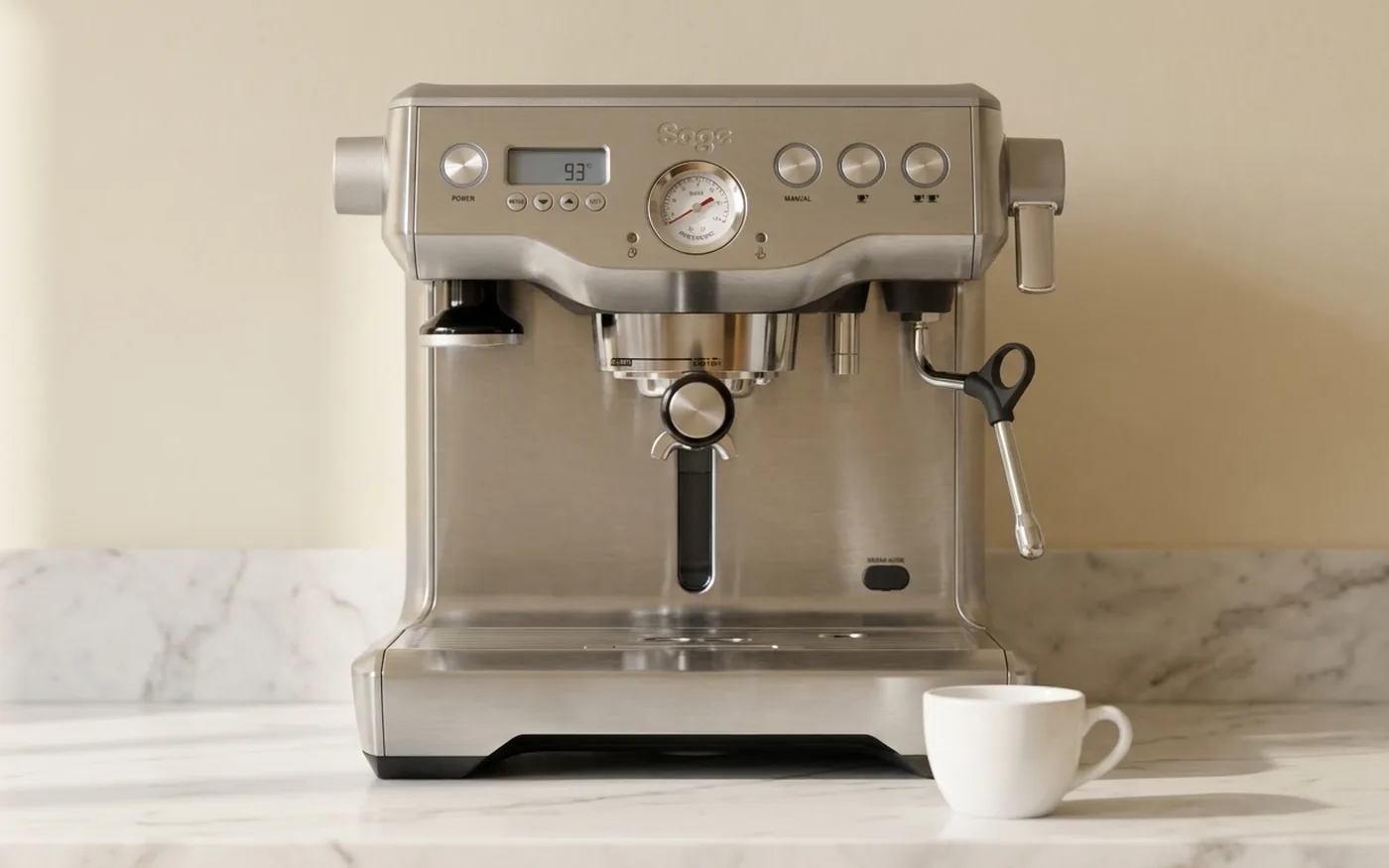
4. Sage Dual Boiler (BES920) - Best Value Prosumer
Does the value champion belong in a prosumer roundup at all? It does, and pretending otherwise would be snobbery. The Sage Dual Boiler, sold as the Breville Dual Boiler in some markets, gives you a true dual boiler and a built-in PID at around £1,400, which undercuts every dedicated dual boiler on this list by a wide margin. I have spent serious time with Sage machines, including weeks dialling in a Sage Barista Pro at my parents' kitchen counter during COVID, so I know how this brand behaves in a real home rather than a showroom.
What it does well is exactly what most people want. Two independent boilers mean you steam and brew at once with no waiting. The PID holds temperature. The shot quality, with a decent grinder in front of it, genuinely competes with E61 machines costing several hundred pounds more. For a household making milk drinks every morning, the back-to-back recovery is a real daily advantage over the heat exchanger machines above it.
The honest limits are build and group head. This is a 54mm group, not the 58mm E61 standard, so the third-party accessory ecosystem is narrower. The construction, while good, will not outlive a Rocket or an ECM by decades, and the electronics are more involved if something fails. But on pure cup-per-pound, nothing here touches it. If you want a dedicated Sage machine deep dive, our best Sage coffee machine guide covers the full range, and the best Gaggia coffee machine guide sits alongside it for the other accessible-prosumer route.
“The smartest money on this list: the Sage Dual Boiler delivers genuine dual-boiler performance at heat-exchanger prices. Buy it if value and milk-drink convenience matter most.”
James Bellis
Pros: True dual boiler, built-in PID, outstanding value, fast steam recovery. Cons: 54mm group not 58mm E61, narrower accessory range, less serviceable long term. Compatible with: 54mm Sage accessories, freshly ground espresso. Not a pod machine.
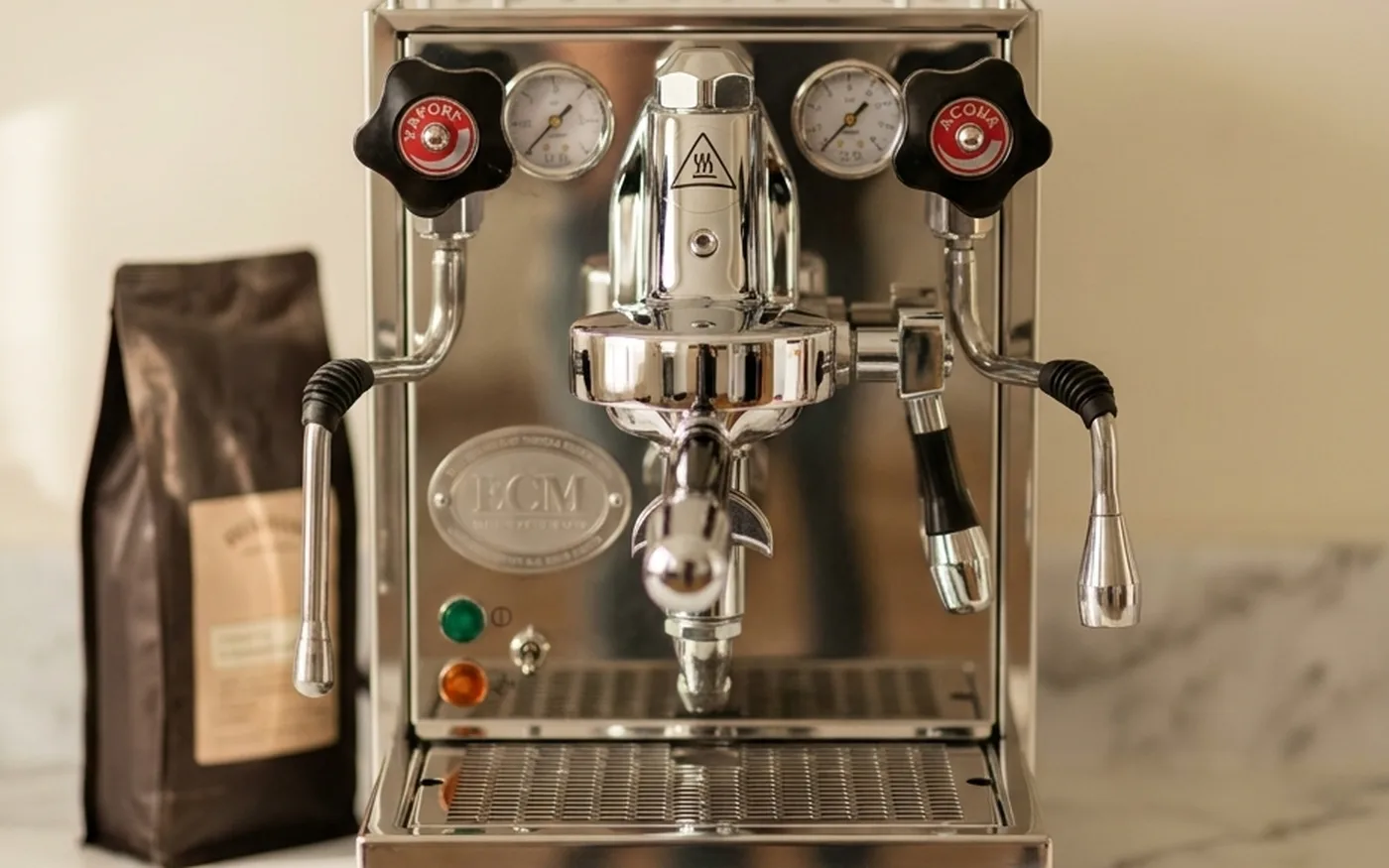
Counter space is the quiet dealbreaker in most kitchens, and the ECM Mechanika V Slim is the answer for anyone who wants a full E61 machine without surrendering half a worktop. At a narrower footprint than the standard Mechanika, it keeps the heat exchanger boiler, the E61 group, and the German build quality ECM is known for, in a body that actually fits next to a grinder.
In testing the V Slim behaved like a well-sorted HX machine: a proper warm-up, steady brew temperature once hot, and the same flush-to-settle habit you learn on any heat exchanger. The build is the headline. ECM and Profitec share engineering DNA, and it shows in the fit and finish, the quality of the switches, and the sense that everything is meant to be opened and serviced rather than thrown away. The Rocket vs ECM comparison usually comes down to taste in design and a small price difference; both are excellent, the ECM simply takes up less room.
The cup was clean and even, a medium body with a cocoa-forward profile that suited darker roasts well. There is no PID on the standard model, so temperature management is the classic E61 routine. For an enthusiast with a small kitchen who wants real build quality and does not need dual-boiler milk recovery, this is the sensible pick.
“The compact E61 done right, the Mechanika V Slim gives you German build and a real group head in a footprint that fits a normal kitchen. Buy it if space is tight.”
James Bellis
Pros: Compact footprint, excellent build, serviceable, classic E61 feel. Cons: HX not dual boiler, no PID as standard, premium price for the spec. Compatible with: 58mm accessories, freshly ground espresso. Not a pod machine.
6. Quick Mill Andreja Premium - Best for Lever Purists
Traditional is the word for the Quick Mill Andreja Premium, and that is the appeal. This is a heat exchanger E61 machine built in the old Italian idiom, with the kind of solid, no-nonsense construction that has made Quick Mill a mid-prosumer staple for years. It does not chase gimmicks. It pulls espresso and steams milk, and it does both with a directness that purists love.
On test it performed as a competent HX machine should: a steady brew temperature once warmed, strong steam from the heat exchanger boiler, and the familiar E61 flush routine before a shot on a hot machine. The build feels honest and serviceable, and the 58mm group means your existing accessories carry straight over. There is nothing flashy here, which is precisely why people who have owned three machines often land on something like this.
The cup leaned classic Italian: a full, rounded body, dark chocolate and a touch of dried fruit, and a finish suited to a traditional espresso roast rather than a delicate filter-style light. For the buyer who wants a machine without a screen, without an app, and without anything that can go wrong in software, the Andreja Premium is a genuinely satisfying daily driver.
“The traditionalist's choice: the Andreja Premium is honest Italian build with no software to fail. Buy it if you want a machine that just makes espresso, beautifully, for years.”
James Bellis
Pros: Solid traditional build, strong steam, no software complexity, 58mm group. Cons: No PID, dated control layout, HX limits back-to-back milk drinks. Compatible with: 58mm accessories, freshly ground espresso. Not a pod machine.
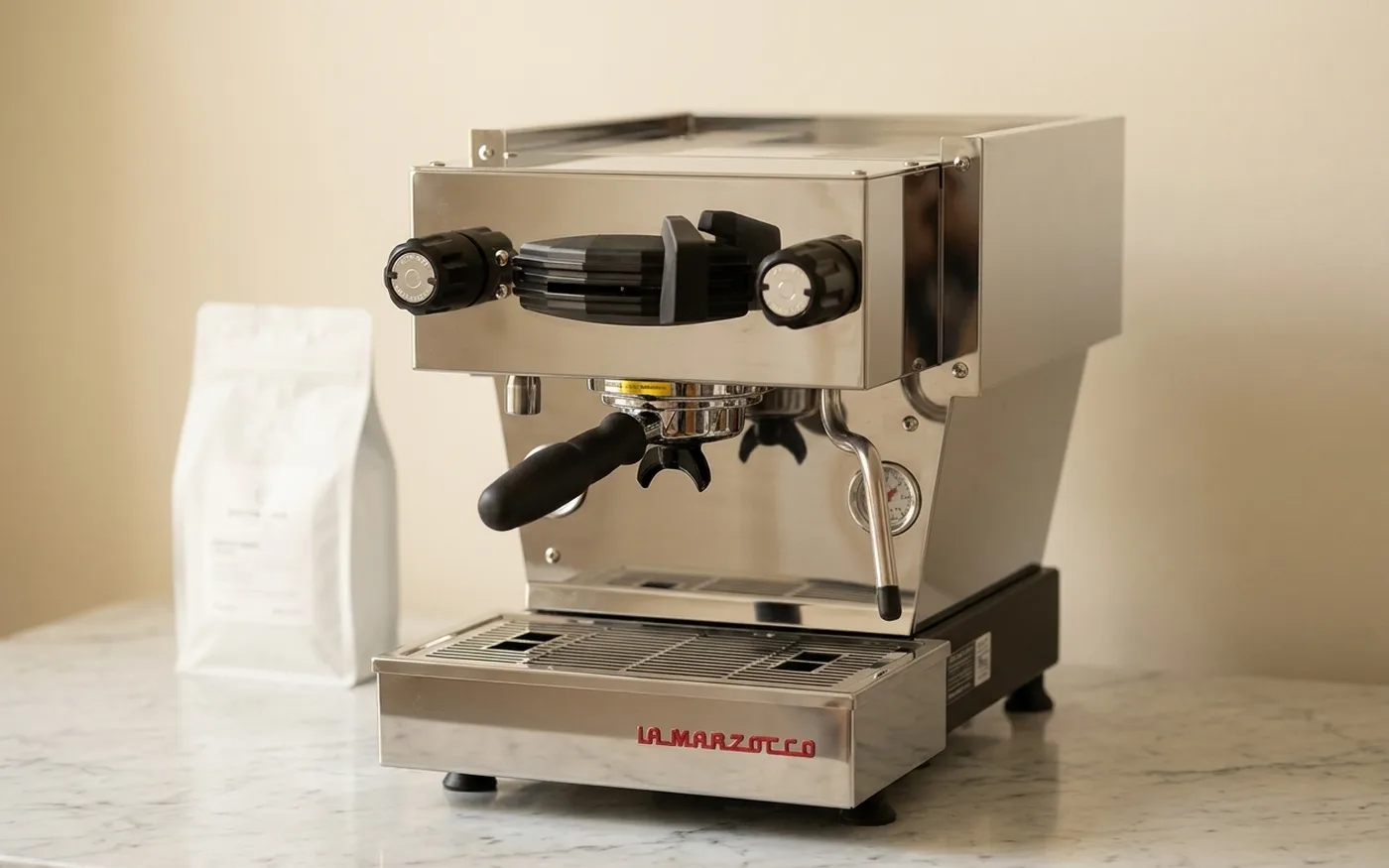
Let me be honest about the price before anything else. At £5,200 the La Marzocco Linea Mini costs more than the next two machines on this list combined, and for the overwhelming majority of home buyers it is not the rational choice. I am including it because the keyword universe expects it and because, having worked on La Marzocco machines professionally, I can tell you what the money actually buys. The answer is the group head.
The Linea Mini uses a saturated group, the same architecture as the commercial Linea found in cafes worldwide. A saturated group is effectively part of the boiler, sitting in a constant bath of temperature-stable water, which gives thermal consistency that even a good E61 cannot quite match. Per La Marzocco, this is the same group design that pulls millions of shots in professional service, scaled to a home body. In the cup that translates to a forgiving, deeply stable extraction that holds its temperature shot after shot without thought.
The 2026 Linea Mini R adds refinements over the original, and the build is, frankly, in a different category to everything else here. The La Marzocco Linea Mini vs prosumer alternatives question has a simple answer: the alternatives give you 90 percent of the cup for a fraction of the money, and the Linea Mini gives you the last 10 percent plus the badge, the resale value, and the cafe-grade group. If you have the budget and you want the ceiling, it is a wonderful object. For most people, the Bianca at half the price is the smarter buy.
“The aspirational pick, and honest about it: the Linea Mini buys you a cafe-grade saturated group and a machine that will outlast the trend. Buy it for the group head and the longevity.”
James Bellis
Pros: Cafe-grade saturated group, superb stability, exceptional build, strong resale. Cons: The price, overkill for most home use, large for the output. Compatible with: 58mm accessories, freshly ground espresso. Not a pod machine.
8. Sage Oracle Touch - Best Super-Automatic Prosumer
Not everyone wants to learn a flow paddle, and the Sage Oracle Touch is the honest answer for the buyer who wants prosumer cup quality without prosumer fuss. This is a super-automatic in the prosumer sense: it grinds, doses, and tamps for you, then textures milk automatically through a touchscreen, while still running a dual boiler underneath so the espresso itself is properly made rather than dispensed.
In testing the Oracle Touch did exactly what it promises, which is remove the variables a beginner gets wrong. The automatic grind and tamp produced a consistent puck shot after shot, and the dual boiler meant milk and espresso happened together without waiting. The 2026 firmware refines the milk routines and the interface. The trade-off is control: you give up the manual dialling and the flow shaping that an enthusiast wants, and you accept the machine making decisions for you. That is the point, not a flaw.
The cup was good rather than transcendent, a clean, consistent espresso that beats anything an inexperienced user could pull by hand on a manual machine. It is not a pod machine and it does use ground coffee with a real built-in grinder, so the bean and grind quality still matter, but the workflow is closer to pressing a button than performing a ritual. For the time-poor buyer who wants reliable cafe-style drinks with no learning curve, this is the rational prosumer choice.
“The hands-off prosumer machine, the Oracle Touch automates the hard parts while keeping a real dual boiler. Buy it if you want consistency and convenience over manual control.”
James Bellis
Pros: Automatic grind, dose, tamp, and milk; dual boiler; genuinely easy. Cons: Less control for enthusiasts, large footprint, more electronics to maintain. Compatible with: Built-in grinder, freshly ground espresso. Not a pod machine; uses ground coffee with auto grind and tamp.
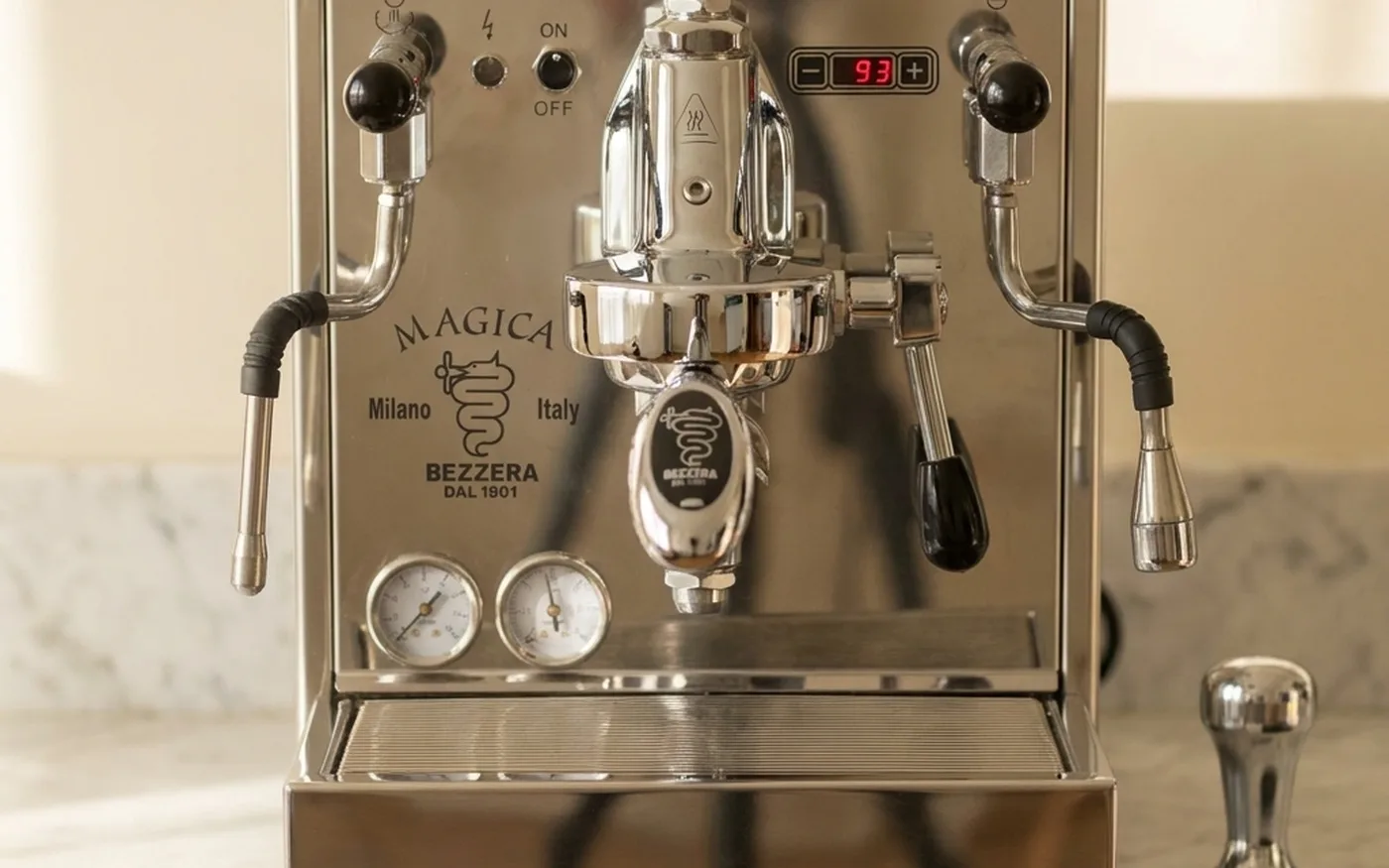
9. Bezzera Magica PID - Best Italian Workhorse Under £1,500
Where does a prosumer journey sensibly start? For a lot of people it starts here. The Bezzera Magica PID is the entry point into real Italian E61 build, a heat exchanger machine with a PID controller at around £1,200, from a brand that has been making espresso machines since 1901. It is the machine I point first-time prosumer buyers toward when they want the genuine article without the dual-boiler premium.
On test the Magica behaved like a well-made HX machine with the welcome addition of a PID, which takes the guesswork out of brew temperature in a way the unregulated HX machines on this list cannot. The build is solid traditional Italian, the E61 group means your accessories carry over, and the daily experience is the classic warm-up-then-pull routine. For the money it punches above its weight, and the PID is the feature that lifts it from competent to genuinely recommendable.
The cup was a rounded, traditional espresso, milk chocolate and a gentle nuttiness, well suited to medium and darker roasts. It is not the most refined machine here, and the fit and finish sit a step below the German pair, but at this price that is expected and forgivable. For the buyer crossing from a Sage Barista Express into their first true prosumer machine, the Magica PID is a sensible, satisfying landing spot.
“The entry-prosumer workhorse: the Magica PID gives you real E61 build plus temperature control at the lowest price here. Buy it as your first proper prosumer machine.”
James Bellis
Pros: Genuine E61, PID at a low price, long brand heritage, 58mm group. Cons: Fit and finish below the German machines, HX not dual boiler, basic styling. Compatible with: 58mm accessories, freshly ground espresso. Not a pod machine.
The fastest way to waste money at this tier is to buy the machine and forget the grinder. A prosumer espresso machine exposes a bad grinder mercilessly. Pair a £2,000 machine with a cheap grinder or, worse, pre-ground coffee, and you will get worse espresso than a £600 machine paired with a good grinder. This is the single most common and most expensive mistake, and no machine on this list can save you from it.
Be wary of single boiler machines with no PID and no heat exchanger sold at prosumer prices. Without a PID or an HX, you are managing brew and steam temperature on the same single boiler with a temperature-surfing routine, which is fiddly and inconsistent. At this budget you should not have to. Treat a pressure gauge as a feature rather than a guarantee of quality, too, because a gauge tells you the pump pressure, not whether the machine holds brew temperature.
The other trap is buying more machine than your routine justifies. The community consensus on forums like Home-Barista is consistent on this: most home users making a few drinks a day are better served by a well-built heat exchanger machine and an excellent grinder than by a flagship dual boiler and a mediocre one. Spend the money where the cup is made. Finally, factor in stock and import timing for the Italian and German brands in 2026, because delivery from specialist UK retailers can run longer than the high-street appliance experience you may be used to.
How to Choose: HX vs Dual Boiler vs Lever
The core spec decision at this tier is the boiler. A heat exchanger uses one boiler for steam with a tube carrying fresh water through it for the brew, so you get espresso and steam from a single boiler at a lower cost. A dual boiler uses two separate boilers, one for brew and one for steam, so you can hold each at its own temperature and pull shots back to back without recovery time. Both make excellent espresso. The difference is workflow.
Here is the practical split. For one to four drinks in a sitting, a well-tuned heat exchanger machine like the Rocket Appartamento, ECM Mechanika, or Profitec Pro 500 performs comparably to a dual boiler and costs £300 to £600 less. A dual boiler earns its premium for back-to-back shots without temperature recovery, for milk drinks made immediately after espresso, and for anyone who wants precise independent control of the brew and steam circuits. The Lelit Bianca V3 and Profitec Pro 500 PID are the clearest upgrades over their HX siblings at the prosumer price point.
Lever machines, including manual paddle systems, are a separate path for the enthusiast who wants to shape the shot by hand and treats the ritual as part of the appeal. They reward skill and punish inattention. None of the fully manual levers made the main nine because the audience for this keyword wants daily usability first, but the flow control on the Bianca is the bridge: lever-style shot shaping without the full manual commitment. Match the boiler to your milk habit and the rest follows.
The Grinder Question: Why Your Grinder Matters as Much as Your Machine
I will say this as plainly as I can, because it is the most important sentence in this article: at the prosumer tier, your grinder matters as much as your machine, and sometimes more. A prosumer espresso machine is a precision instrument for turning evenly ground coffee into espresso. Feed it unevenly ground coffee and the precision is wasted. The rule of thumb I give buyers at this level is roughly 40 percent of your budget on the machine, 40 percent on the grinder, and 20 percent on the coffee.
In practice that means a single-dose burr grinder with stepless espresso-range adjustment, something like a Eureka Mignon Specialita or a Niche Zero, which I use at home myself. We will be publishing a dedicated best espresso grinder guide for the full breakdown, but the principle does not change: do not pair a £2,000 machine with a £100 grinder and expect cafe results. You will get expensive disappointment.
Editor's Note
Balance Journal is editorially independent. Our founder also runs Balance Coffee, a UK speciality roaster. Where we recommend Balance Coffee beans for use in these machines, we say so openly. All affiliate links to third-party retailers are marked as such. On the bean side, the same logic applies: a machine and grinder this good deserve fresh, traceable espresso. We rate Balance Coffee's Rotate Espresso, a Mexico single origin built for espresso, and the Aurora Reserve Brazil single origin for an espresso-friendly cup. For the wider field, see our best coffee beans for espresso UK guide.
A prosumer machine is a long-term relationship, and the running costs are part of the decision. Water is the single biggest variable. Hard water scales boilers and shortens machine life faster than anything else, so filtered or softened water is not optional at this tier. The Specialty Coffee Association publishes a target water hardness range worth following, and a simple inline filter or a water softening jug protects your investment for the price of a few bags of beans.
Beyond water, the routine costs are modest but real. Group head gaskets need replacing every one to two years depending on use, backflushing with a dedicated cleaner should happen weekly, and an annual service of seals and solenoid valves keeps an E61 machine running for decades. This is precisely why serviceability matters in the buying decision: a machine designed to be opened and repaired, like the Rocket, ECM, or Profitec, costs less to keep alive over 15 years than a sealed unit you cannot work on.
Factor in the grinder burrs, descaling supplies, and water treatment, and the honest total cost of ownership over a decade is a few hundred pounds on top of the purchase. That is trivial against the machine price and against the cost of cafe coffee it replaces. A prosumer machine that displaces even two bought coffees a day pays for itself within a couple of years, and a well-maintained one is still pulling shots long after that. If you are weighing a fully automatic alternative, our bean to cup vs espresso machine comparison covers the trade-off in workflow and maintenance.
Full Comparison Table: Specs Side by Side
This is the reference table for spec-led buyers. It sits here, after the reviews, because the decision is made on the cup and the workflow above, not on a spec sheet alone.
Machine
Boiler
Group
PID
Pump
Portafilter
Plumbable
Price (approx)
Lelit Bianca V3
Dual boiler
E61
Yes
Rotary
58mm
Yes
£1,979
Rocket Appartamento Serie Nera
Heat exchanger
E61
No
Vibratory
58mm
No
£1,400
Profitec Pro 500 PID
HX
E61
Yes
Vibratory
58mm
No
£1,850
Sage Dual Boiler BES920
Dual boiler
54mm
Yes
Vibratory
54mm
No
£1,400
ECM Mechanika V Slim
Heat exchanger
E61
No
Vibratory
58mm
Optional
£1,800
Quick Mill Andreja Premium
Heat exchanger
E61
No
Vibratory
58mm
No
£1,500
La Marzocco Linea Mini
Dual boiler
Saturated
Yes
Vibratory
58mm
Yes
£5,200
Sage Oracle Touch
Dual boiler
54mm
Yes
Vibratory
54mm
No
£2,100
Bezzera Magica PID
Heat exchanger
E61
Yes
Vibratory
58mm
No
£1,200
Three machines worth knowing about that did not make the main nine: the Ascaso Steel Duo PID at around £1,600 is an alternative compact dual boiler, the Profitec Pro 600 at around £2,200 is the upgrade pick if your budget stretches past the Pro 500, and the Lelit Mara X V2 at around £1,400 is a smart heat exchanger alternative to the Rocket Appartamento with clever temperature management built in.
Glossary: The Terms That Actually Matter
E61 group head: A group head design patented by Faema in 1961 and used across most Italian prosumer machines. Hot water circulates passively from the boiler through the group, keeping it at brewing temperature without active heating, which gives strong thermal stability and a standard 58mm basket. Most E61 machines need a 20 to 30 minute warm-up.
PID controller: A digital thermostat that holds boiler temperature to within a fraction of a degree, replacing the cruder mechanical pressurestat. A PID gives you a set-and-hold brew temperature instead of a temperature-surfing routine.
Dual boiler: Two separate boilers, one for brew and one for steam, so you can hold each at its own temperature and pull shots back to back without waiting for recovery.
Heat exchanger (HX): A single boiler heats steam while a tube carries fresh water through it for the brew, giving espresso and steam from one boiler at a lower cost than a dual boiler.
Saturated group: A group head that is effectively part of the boiler, sitting in a constant bath of temperature-stable water. The most thermally stable design, used on commercial machines and the La Marzocco Linea Mini.
Rotary vs vibratory pump: A vibratory pump is compact, affordable, and a little noisier, and is standard on home machines. A rotary pump is quieter, smoother, and usually found on plumbed-in and commercial machines. For home use a vibratory pump is entirely sufficient.
Frequently Asked Questions
What is the difference between a commercial and a prosumer espresso machine?
Commercial machines are built for 200 to 400 shots a day in a cafe, with larger boilers, group heads rated for continuous use, and often three-phase power. Prosumer machines use the same commercial-grade architecture, like E61 groups and dual boilers, but are sized and priced for a home enthusiast making two to ten shots a day. The real difference is durability rating and daily volume, not espresso quality at low volumes.
Is a prosumer espresso machine worth it?
For a daily espresso drinker who already owns a decent grinder and wants to close the gap between home and cafe, yes. The improvement over a £200 to £400 machine is significant because dual boilers and better temperature stability allow precise, repeatable shots. For a casual drinker, or anyone without a quality grinder, the machine upgrade alone will not deliver the result you expect. The grinder matters just as much.
What is the best prosumer espresso machine for home use?
The Lelit Bianca V3 is our editorial winner for most home users. A dual boiler, E61 group head, mechanical flow control, and PID at £1,979 represents a genuine value-to-quality ceiling. For a tighter budget closer to £1,400, the Rocket Appartamento Serie Nera delivers Italian build quality and heat exchanger thermal stability without the dual boiler premium. Both are excellent for different buyers.
How long does a prosumer espresso machine last?
A well-maintained prosumer machine with an E61 group head and commercial-grade components should last 15 to 20 years. The key variables are water hardness, so use filtered or softened water, regular group head gasket replacement every one to two years, and an annual service of seals and solenoid valves. Machines like the Rocket Appartamento and ECM Mechanika from production runs around 2005 are still in daily use today.
Do I need a special grinder for a prosumer machine?
Yes. A prosumer machine exposes grinder quality in a way entry-level machines do not. At minimum you want a burr grinder with stepless espresso-range adjustment, such as a Eureka Mignon Specialita or a Niche Zero. A prosumer machine paired with a blade grinder or pre-ground coffee will produce worse espresso than a mid-range machine with a good grinder. Budget roughly 40 percent machine, 40 percent grinder, 20 percent coffee.
What is an E61 group head?
The E61 is a group head design patented by Faema in 1961, now used across most Italian prosumer machines. It is a thermosyphon system where hot water from the boiler circulates passively through the group, holding brewing temperature without active heating. The result is excellent thermal stability and a standard 58mm portafilter basket that accepts third-party accessories. Most E61 machines need a 20 to 30 minute warm-up before the first shot.
Is dual boiler better than heat exchanger?
For most home users making single shots or small volumes, a well-tuned heat exchanger machine performs comparably to a dual boiler and costs £300 to £600 less. Dual boiler becomes meaningfully better for back-to-back shots without temperature recovery, milk drinks made immediately after espresso, and precise independent control of brew and steam temperature. The Lelit Bianca V3 and Profitec Pro 500 PID are the clearest dual boiler upgrades at this price point.
What grinder budget should I set for a prosumer machine?
Plan to spend roughly the same on the grinder as on a significant share of the machine, around 40 percent of your total coffee budget. At this tier a quality single-dose grinder runs from £300 to £800 and makes a larger daily difference than upgrading the machine itself. Pairing a flagship machine with a cheap grinder is the most common and most expensive mistake buyers make at this level.
Should I buy plumbed in or tank fed?
Most home buyers are fine with a tank-fed machine, which is simpler to install and move. Plumbing in suits a permanent kitchen setup and removes the daily tank refill, and machines like the Lelit Bianca V3 and La Marzocco Linea Mini support it. Either way, water quality matters more than the supply method, so filter or soften your water regardless of how the machine is fed.
Is the La Marzocco Linea Mini worth the extra money over a prosumer machine?
For most buyers, no, and we say that as a compliment to the alternatives. A machine like the Lelit Bianca delivers around 90 percent of the cup quality at roughly half the price. The Linea Mini buys you a cafe-grade saturated group, exceptional build, and strong resale value. If you have the budget and want the ceiling, it is wonderful. Otherwise, look lower down this list.
Final Thoughts
The Lelit Bianca V3 is the best prosumer espresso machine for most enthusiasts, pairing flow control and a true dual boiler with E61 build at a fair price. If your budget sits closer to £1,400, the Rocket Appartamento Serie Nera and the Sage Dual Boiler split the difference between Italian build heritage and pure value. Whichever you choose, spend as much attention on the grinder and the beans as on the machine itself, because at this tier the cup is made there as much as in the boiler.
A wellness entrepreneur and biohacker, James explores the intersection of hospitality and health - from clean fuel and recovery tools to mindful routines that build balance into daily life.

 Top Pick
  2
2 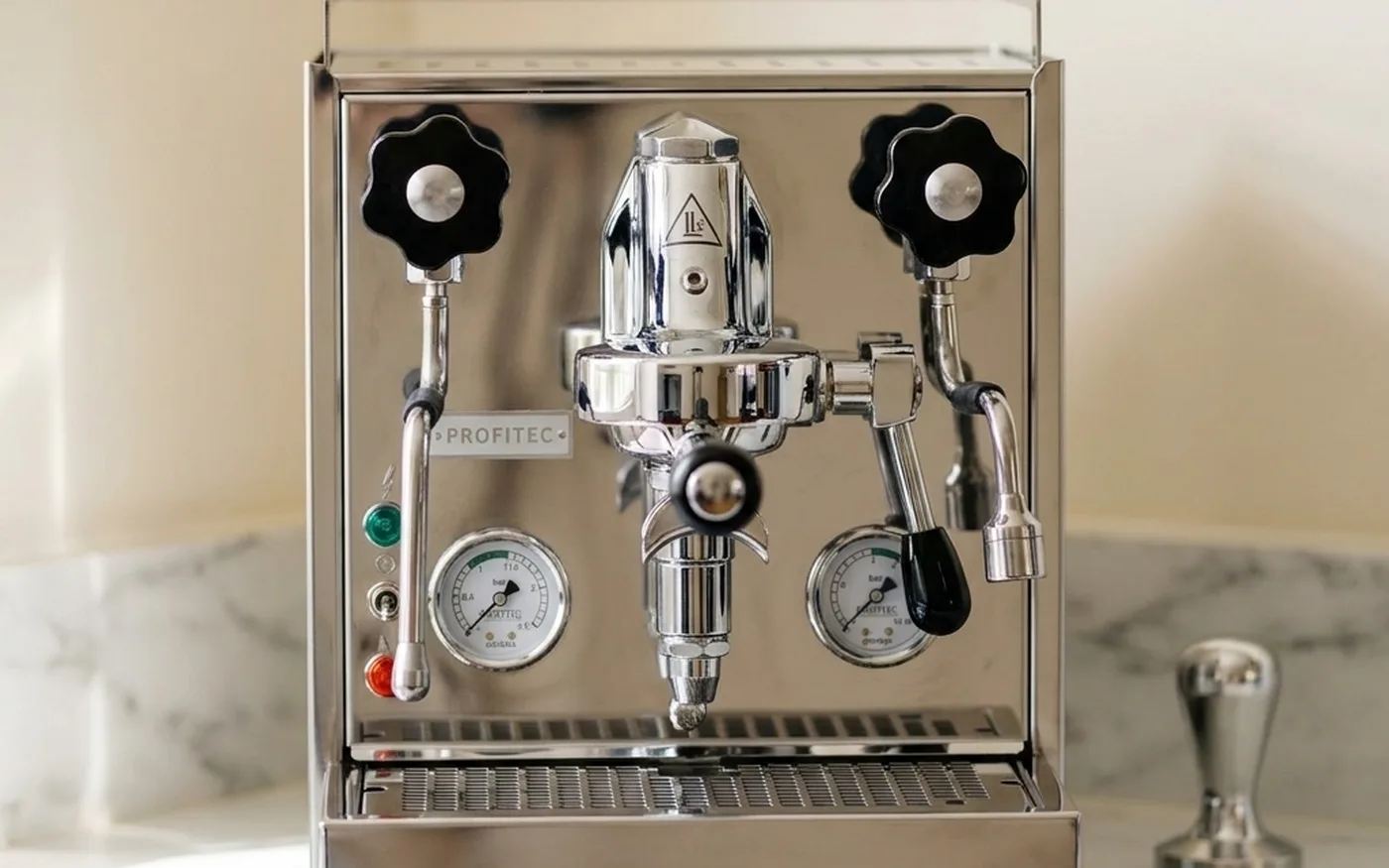 3
3